All posts by Dmitry Filipoff

A Conversation with Steve Wills on the Decline of U.S. Navy Strategy

By Dmitry Filipoff

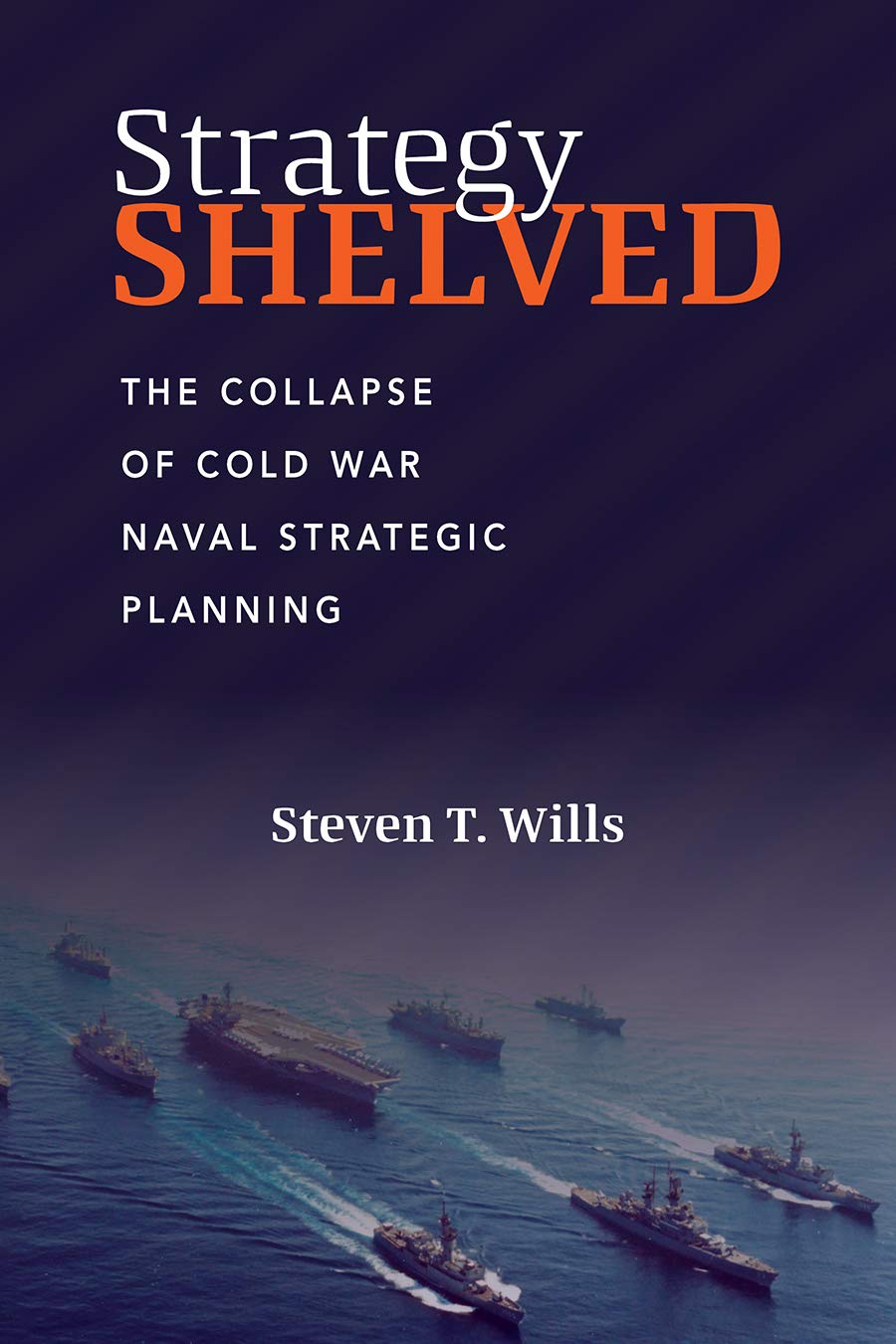
In this conversation on U.S. Navy strategy, Steve Wills discusses themes and lessons from his new book, Strategy Shelved: The Collapse of Cold War Naval Strategic Planning. From the effects of the Goldwater-Nichols act, to tensions between analysis and strategy offices in OPNAV, Wills discusses how Navy strategy and strategy development has changed over recent decades.

You point to several critical events that combined to affect Navy strategy: The passage of the Goldwater-Nichols Act, the collapse of the Soviet Union, and the Gulf War. How did these events affect Navy strategy and strategy development?
The Goldwater-Nichols Act changed the Navy’s strategic outlook at the institutional and individual level of experience. The shift to a focus on the regional commanders vice the services tended to change the Navy’s outlook from a global force to one focused on providing forces to land-based regional commanders. It is difficult to think globally about the size and composition of naval forces when the focus is on satisfying regional demands.

At the individual level, the Goldwater-Nichols Act focus on filling joint positions tended to draw rising young officers away to joint positions as they offered more upward mobility than service staffs. I think the most significant of these changes however was empowering the regional commanders (COCOMs) at the expense of Washington-based service chiefs and their staffs. The legislation turned upside down the traditional U.S. system of centralized planning and decentralized execution of military operations.

In its place today we have regional commanders doing their own strategies separate of their fellow leaders while the JCS is trying to manage operational and even tactical levels of war through measures like the Joint Warfighting Concept (JWC). In World War II, Chief of Naval Operations Admiral Ernie King set strategy, but he and Army Chief of Staff General George C. Marshall did not tell Admiral Chester Nimitz and General Douglas MacArthur how they should organize their forces or how they should fight in their theaters. Goldwater-Nichols is directly responsible for this unbalanced condition that is seriously damaging the ability of the U.S. to create global strategies for combating global rivals like China and Russia.

You reference the 1980s Maritime Strategy and the “…From the Sea” document as among the more influential Navy strategy products in recent decades. Among the many strategy documents referenced in the book, what made these stand out? How can we assess the influence and impact of a strategy document?

The 1980’s Maritime Strategy stood out for a number of reasons. It was directly tied to a specific Navy force structure (the 600-ship navy) unlike more recent strategies that do not have a specific ship requirement. The Maritime Strategy had broad, bipartisan support from Congress. It was also tied to the national strategy of containment and, if necessary, combat against the Soviet Union. Unlike most other strategic concepts, the Navy exercised Maritime Strategy concepts at sea in multiple regions as noted by former Navy Secretary John Lehman in his book Oceans Ventured.

Finally, the Maritime Strategy was easy to engage with whether the reader or recipient of the brief was a seasoned navy professional or a civilian with little naval knowledge. It included maps with specific forces and arrows depicting an outline of what the Navy planned to do, and when and most notably where it would act. Strategies since the 1980s Maritime Strategy have largely eschewed maps in favor of glossy images of ships and sailors doing their thing at sea. Nice, but not really helpful in explaining what the Navy is strategically trying to accomplish.

The 1992 “…From the Sea” white paper was not a strategy with maps and goals as was its 1980s predecessor, but was rather a white paper suggesting what concepts the Navy and the Marine Corps would employ in the post-Cold War era. Its central point that the Navy would be a supporting force for operations fought primarily on land around the Eurasian littoral became the central focus of the service for the next 25 years. In that regard, “…From the Sea” was more influential and long-lasting than the 1980s Maritime Strategy. The Navy’s primary focus since 1992 has been being a supporting force for conflicts with regional powers and non-state actors without significant naval forces of their own. Perhaps this is now why it has been challenging to get the service to return to a “war at sea” mentality where major combat operations would primarily be conducted against opponents with similar or even in some cases superior naval capabilities.

An important theme in the book is the evolving power differential between systems analysis and strategy. How did strategy development change when analysts were more influential than politico-military strategists, and vice versa? What should the analyst-strategist relationship look like?

I think the influence of different factions on the Chief of Naval Operations (OPNAV) staff in terms of the creation of naval strategy matters a great deal. There was a relative balance between these two disciplines from the late 1960s through the mid-1980s until the advent of the Maritime Strategy and the 600-ship navy. The naval analyst discipline believed that the 600-ship navy was unsustainable in the long term and that the Maritime Strategy was too aggressive and dangerous in the face of the assumed Soviet threat. Chief of Naval Operations Admiral James Watkins and Navy Secretary John Lehman did not agree and subsequently severely reduced the size and scope of naval analyses offices supporting the CNO’s staff.

When the Cold War ended and the Navy had no opponent around which to organize either by geography or threat, the naval analyses community returned in the guise of the OPNAV staff element producing the Navy’s annual budget input. In a world without notable opponents the only long-range strategy document turned out to be the budget and as a result the analyses community prospered while the strategy community declined to low levels of influence. As a result of this decline, and analyses’ domination of OPNAV for over three decades, it is challenging for the Navy to think in terms of threats and geographic requirements that current budget levels do not support. The analyses community in return has labeled any strategy document that strays beyond current funding as “unsustainable,” ignoring the fact that any one CNO or SECNAV might be able to secure that additional funding if the strategy is well-conceived and well-argued.

The right choice is often a balance between these two communities that allows for innovative strategy concepts to meet the threat, but balanced by budget limitations. It cannot be “all or nothing” as it has been since 1991.

As the Navy faced budget cuts after the end of the Cold War the preservation of diminishing force structure became an overriding priority. How did this focus on force structure assessment affect strategy development? 

That is an excellent question. Being so focused on the preservation of the newest force structure, the capabilities it provided for present-day operations, and the math needed to sustain that effort caused the Navy to often ignore evolving threats. If your strategy is based only on your budget, then why think further afield? Force structure assessments used to be tied to the threat, but without a notable threat like a major competitor, the force then becomes a set of capabilities the navy has to argue for and defend against the needs of other services. The strategy starts to become about how to beat the other services for more of the budget and not about meeting an outside challenge.

The U.S. now faces two major outside challengers (China and Russia) so the force structure assessment needs to again be tied to combating a threat rather than just preserving a capability in the face of interservice rivalry. Goldwater-Nichols did not get rid of service “parochialism;” instead it created what some have called a “tyranny of jointness” where getting the joint balance right is seen as more important that getting the right services the right equipment for the task.

The book examines decades of critical reorganizations of the OPNAV staff. How did these reorganizations strengthen or weaken Navy strategy development over the years?

Reorganizations of the OPNAV staff are the prerogative of the CNO and done to support what that officer wants to accomplish. In the absence of an opponent since 1991, those reorganizations have placed more power and emphasis on the Navy’s budgetary and warfare roles rather than strategy. It is also difficult to return to a culture of strategy development after decades of what naval historian Peter Haynes calls a “strategy of means” where the budget became the de facto navy strategy.

How would you assess the quality of Navy strategy and strategy development today? Are there areas that have room for improvement? 

The Navy has always had a dedicated core of strategy experts; both uniformed and civilian (government and think tank personnel). The events I describe in the book (the end of the Cold War, the Goldwater-Nichols provisions, and the outcomes of the First Gulf War) have tended to make it more difficult for strategists to gain the ear of senior leaders.

I think that situation is changing. The United States again faces peer rivals at sea in China and Russia. The Tri-Service Maritime Strategy signed by the Navy, the Marine Corps and the Coast Guard late last year was a good first step toward crafting an effective global strategy to address those adversaries in peace and war. The Naval War College and the Naval Postgraduate School are educating more naval strategy experts. There are many more sources on naval and maritime strategy than in the past, including books by John Lehman, John Hattendorf, Peter Haynes, Seth Cropsey, Jerry Hendrix, and of course my mentor Peter Swartz, whose many CNA works on naval strategy are now available on the CNA website. CNA itself has never stopped working on navy strategy products and continues to advise OPNAV on maritime strategy issues. Other voices including members of Congress such as Elaine Luria and Mike Gallagher who have called on the naval services to better explain the strategy behind their POM requests. These are all positive changes.

There are of course challenges and the provisions of the Goldwater-Nichols Act still create roadblocks to the traditional naval means of organizing strategy and operations. Traditionally, the Navy and Marine Corps have engaged in centralized strategic planning, but decentralized execution of those plans at the operational and tactical levels of war. This is how the Cold War unfolded with an overall strategy of containment of the Soviet Union as a baseline for both the strategies of regional commanders and those of the services to deal with naval-specific issues.

The provisions of Goldwater-Nichols have changed this over time. In the absence of a peer opponent around which to organize a global strategy, regional combatant commanders plan their own strategies and demand forces to execute them independent in most cases of the needs of their peers or service providers of forces. Instead of centralized planning, the Joint Staff now seeks to tell operational forces how to fight through documents like the Joint Warfighting Concept. While this problem was not as acute in the period after the Cold War when the U.S. did not have active peer rivals, the current situation of two peer rivals again demands a return to traditional practice. The Goldwater-Nichols Act stands in the way of such a return.

The Navy once produced detailed strategies such as War Plan Orange for Pacific operations before the Second World War and the Maritime Strategy for potential operations in the 1980s. CIMSEC recently covered the 1980s Maritime Strategy process in excellent detail. While many leaders today believe that the Navy and Marine Corps should not be producing strategies, where is the alternative, centralized global plan for operations against China and/or Russia? The JCS and Joint Staff don’t do strategy products. Who does, other than civilian authorities who potentially change every four years?

In conclusion, while the Navy has made great strides in understanding how it used to do strategy and how it might do so in the future, structural barriers such as the Goldwater-Nichols provisions that empowered regional commanders are impeding the naval services from again creating strategy.

Steven Wills is a Research Analyst at CNA, a research organization in Arlington, VA, and an expert in U.S. Navy strategy and policy. He is a Ph.D. military historian from Ohio University and a retired surface warfare officer. These views are presented in a personal capacity and do not necessarily reflect the views of CNA or the U.S. Navy.

Dmitry Filipoff is CIMSEC’s Director of Online Content. Contact him at Content@cimsec.org.

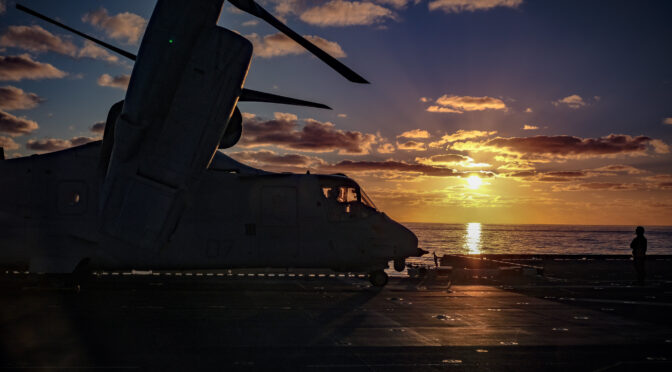
Featured Image: CORAL SEA (July 19, 2021) A U.S. Marine Corps MV-22B Osprey with Marine Medium Tiltrotor Squadron 265 (Reinforced), 31st Marine Expeditionary Unit (MEU), prepares for take-off aboard the amphibious assault ship USS America (LHA 6), during Talisman Sabre. (U.S. Marine Corps photo by Staff Sgt. John Tetrault)
Emerging Technologies Week Kicks Off on CIMSEC

By Dmitry Filipoff

This week and next week CIMSEC will be featuring submissions sent in response to our call for articles on emerging technologies, issued in partnership with the Naval Warfare Studies Institute and Lockheed Martin, for CIMSEC’s Project Trident.

Emerging technologies have the potential to radically transform naval forces and how they are developed and employed. Yet emerging technologies also pose new risks that can lay undiscovered until an adversary seizes an underappreciated vulnerability. As navies and maritime forces advance in technological sophistication they must be mindful of both opportunities and the risks.

Below are the articles and authors being featured, which will be updated with further submissions as Emerging Technologies Week unfolds.

“The Influence of Technology on Fleet Architecture,” by J. Noel Williams
“Leviathan Wakes: China’s Growing Fleet of Autonomous Undersea Vehicles,” by Ryan Fedasiuk
“Red Cell Analysis of a Mobile Networked Control System Supporting a Ground Force,” by Larry Wigington, Ruriko Yoshida, and Doug Horner
“A Roadmap to Successful Sonar AI,” by LT Andrew Pfau
“Solving Communications Gaps in the Arctic with Balloons,” by Walker D. Mills
“Cognitive Lasers: Combining Artificial Intelligence with Laser Weapon Systems,” by Dr. Bonnie Johnson
“Responding to the Proliferation of Uninhabited Underwater Vehicles,” by Andro Mathewson
“Human Factors Meets New Technology in 2025,” by John Cordle and Robert Sweetman
“Drones and Starlink: Combining Satellite Constellations With Unmanned Navy Ships,” by Brandon Wall and Nicholas Ayrton
“Use Virtual Reality to Prepare Maritime Crews For Terrorist and Piracy Attacks,” by Selina Robinson and Dr. Amy Meenaghan

Dmitry Filipoff is CIMSEC’s Director of Online Content. Contact him at Content@cimsec.org.

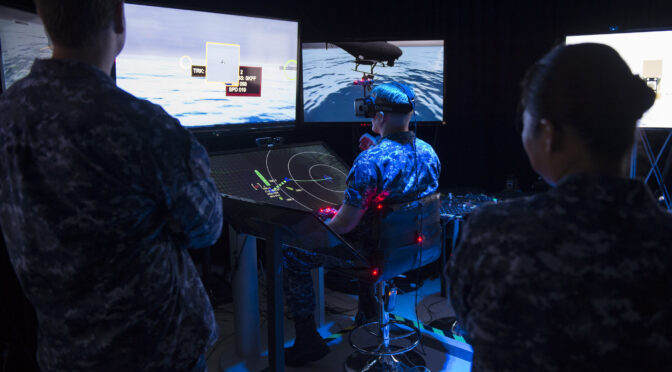
Featured Image: Lt. Jeff Kee explores the Office of Naval Research (ONR)-sponsored Battlespace Exploitation of Mixed Reality (BEMR) lab located at Space and Naval Warfare Systems Center Pacific. (U.S. Navy photo by John F. Williams/Released)

Undersea Red: Captain Eric Sager on the Submarine Force’s New Aggressor Squadron

By Dmitry Filipoff

CIMSEC shared questions with Captain Eric M. Sager to discuss the Submarine Force’s new Aggressor Squadron (AGGRON). In this conversation, Capt. Sager discusses what AGGRON is doing to enhance undersea lethality, the vital importance of connecting adversary doctrine to submarine force development, and how a dedicated Red team makes for much more realistic high-end combat training.

How would you describe the role and mission of the aggressor squadron?

The U.S. Submarine Force stood up an Aggressor Squadron (AGGRON) in October 2019 as one initiative in support of the broader Department of Defense focus on strategic competition. AGGRON enhances all undersea forces’ training and readiness for potential conflict in every area of operations around the world, focused first and foremost on our strategic competitors in the maritime/undersea domain.

AGGRON is a team focused on high-end combat training through emulating competitors in all training and certification exercises. AGGRON serves as the undersea forces’ expert in employing competitors’ potential capabilities. AGGRON is also focused on improving undersea combat tactics, techniques, and procedures to ensure all doctrine is aligned against the continually evolving capabilities of our competitors. AGGRON personnel work with submarine crews at all stages of operational and training schedules and have drastically improved the Submarine Force’s ability to win in combat.

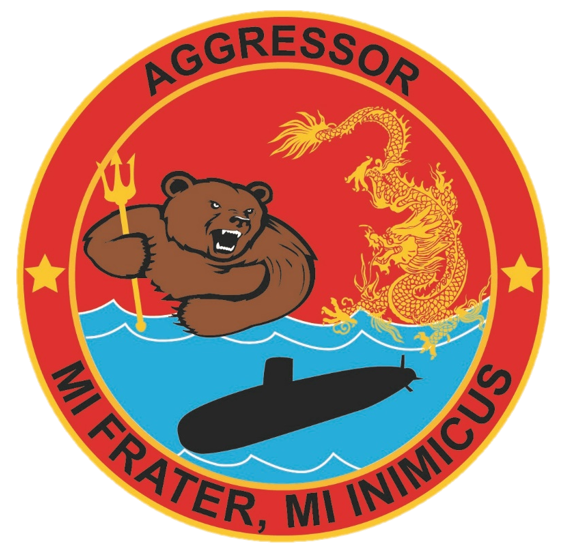
AGGRON Shirt Patch (U.S. Navy graphic)

How is the training experience different for Sailors who go up against the aggressor squadron compared to a blue-on-blue event?

AGGRON goes head-to-head with submarine crews to play the role of an active, thinking, and tactically engaged enemy force. AGGRON personnel engage with submarine leadership to ensure our forces are ready to predict and proactively position for expected adversary behaviors based on the close study of their capability and tactics.

This modeling of a capable competitor is geared toward driving the proper tactical decision-making by crews during combat operations and to develop muscle memory through repetition in combat training. AGGRON’s goal is to ensure our Submarine Force is always training against the highest fidelity. We have developed processes to refocus training and certification on higher-fidelity combat experiences and developed new tools and concepts to support high-end warfighting.

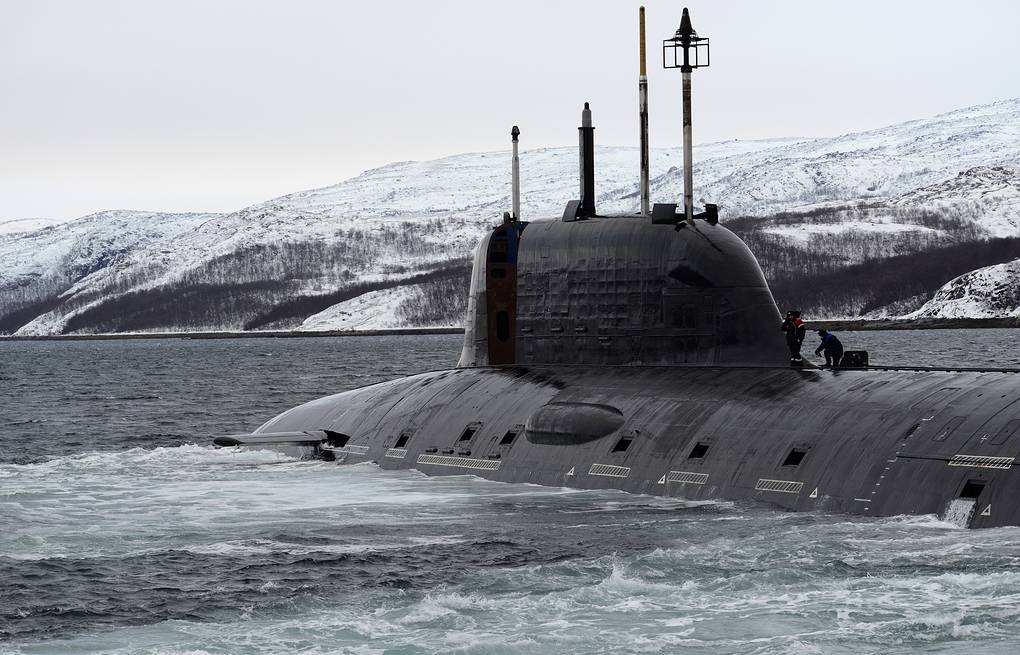
A Yasen-class nuclear-powered submarine of the Russian Navy (Photo via Lev Fedoseyev/TASS)

What are the core takeaways you hope Sailors gain from the experience? How can the Sailors use that experience going forward to independently improve their own warfighting skills?

Sailors leave every training event with a better understanding of how our competitors think and operate, with an emphasis on their current or near-term combat capabilities. Every training event better prepares each sailor to handle combat operations. We aim to produce winners and losers, just like there are in battle, and raise the force’s standards to ensure our sailors are continually more elite than the opponent. Sailors take these lessons forward, returning to the next exercise or training event more prepared to win.

What are the risks of mirror-imaging blue force methods in training and force development? What unique value and realism comes from being well-versed in adversary capabilities and doctrine? 

The risk is we will not train like we will fight; we would instead train against our own tactics, techniques, and procedures instead of that of our competitors. This methodology risks developing a false understanding of our capabilities and tactics as they relate to the competition, which would not maximize our lethality in combat.

Folding in OPFOR realism creates an entire force of warfighters that are experts on the nature of the competition. Each person is a link to success and when each person knows adversary capabilities and doctrine as well as the adversary themselves, there are less unforeseen circumstances in combat, therefore enhancing combat survivability and lethality.

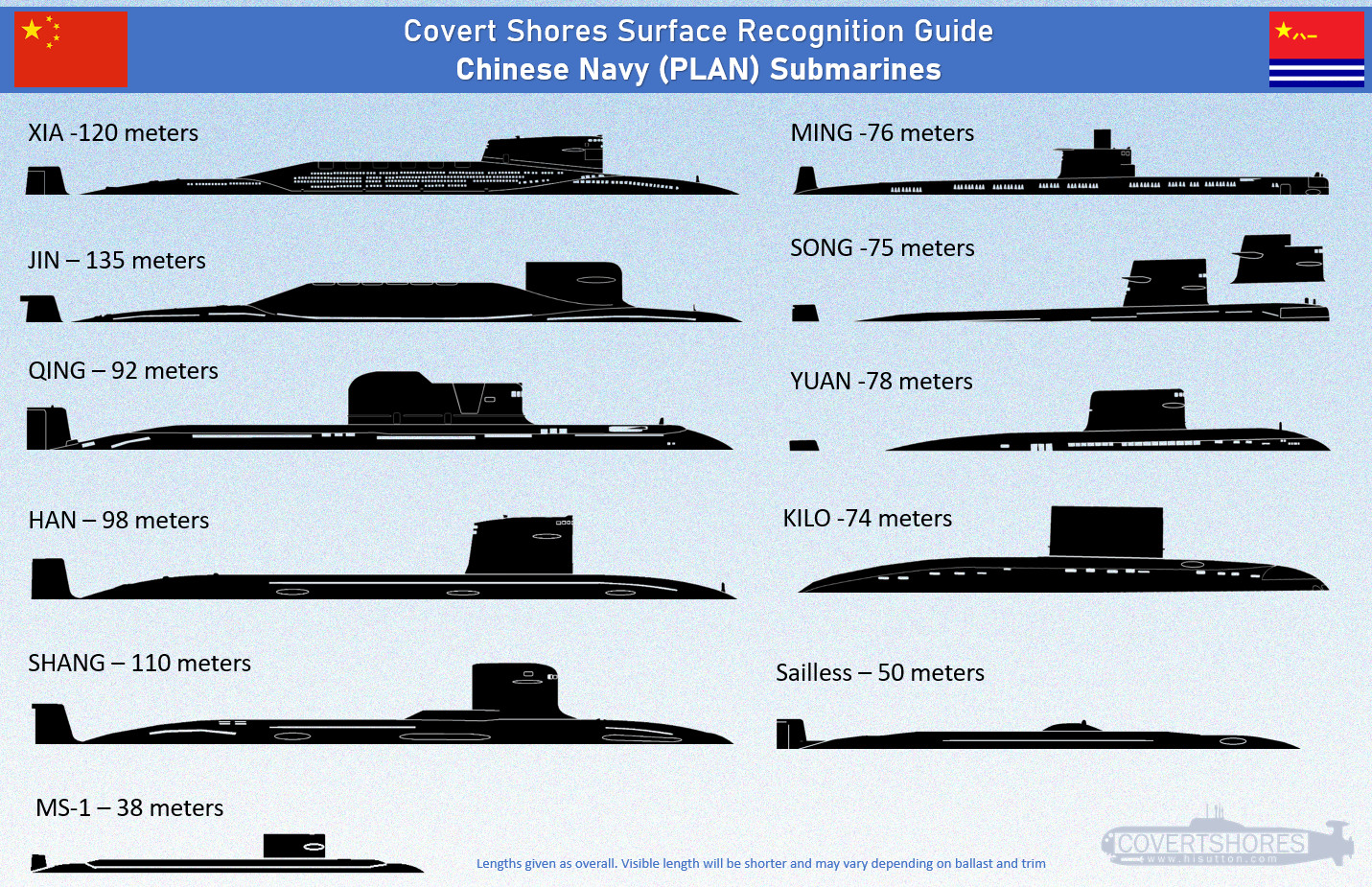
Chinese Navy submarine recognition guide. Click to expand. (Graphic via Covert Shores by H I Sutton)

What are some key enablers for the learning experience surrounding AGGRON training? 

AGGRON has worked collaboratively with the Submarine Learning Center to ensure training on competitor capabilities, tactics, movements, and strategic objectives are all folded into each area of the schoolhouse’s integration with the waterfront. An adversary-focused culture has been inculcated in all pipelining schooling as well as deployment readiness training and certification.  AGGRON is intimately involved in the Submarine Force’s doctrine and tactical development processes, so that we are continually exploring and assessing existing and new tactics, techniques, and procedures to counter evolving threats.

How do you interact with other communities, including those with an ASW role, such as the surface and aviation communities?

The AGGRON is primarily resourced to train unit-level submarine crews, submarine squadron staffs, and Submarine Learning Site (SLS) staffs about what to expect from their potential opposing counterparts, and helps explore new tactics, techniques, and procedures to counter those threats. AGGRON fosters and cultivates relationships throughout the Intelligence Community to ensure that the most current and accurate intelligence is shaping training and simulation.

Standing aggressor or “opposing force” (OPFOR) units that are trained in the doctrine and tactics of potential opponents, or the “Red” force, are crucial for improving the realism of training exercises. A submarine aggressor force could certainly provide invaluable anti-submarine warfare training opportunities for the Navy’s surface and aviation communities as well.

Captain Eric Sager was commissioned in 1998, graduating from the United States Naval Academy. Sager’s operational assignments include division officer onboard USS HONOLULU (SSN 718) where he completed a Western Pacific deployment, serving as Engineer Officer on USS RHODE ISLAND (SSBN 740)(GOLD), completing four strategic deterrent patrols, and as Executive Officer on USS NORFOLK (SSN 714) completing an AFRICOM/CENTCOM deployment. Sager commanded USS CALIFORNIA (SSN 781), leading his crew on an unplanned surge deployment and a scheduled EUCOM deployment in 2016. He received the 2017 Vice Admiral Stockdale Award for Inspirational Leadership for his time in command. Ashore, Sager has served in various positions, including on the staff of Commander, Submarine Forces as the Tactical Readiness Evaluation Team Executive Officer, Deputy Commodore of Submarine Squadron Twelve, and as the Submarine Force Atlantic Prospective Commanding Officer Instructor. Sager is currently assigned as the Director of the Undersea Warfighting Development Center’s Aggressor Squadron.

Dmitry Filipoff is CIMSEC’s Director of Online Content. Contact him at Content@Cimsec.org.

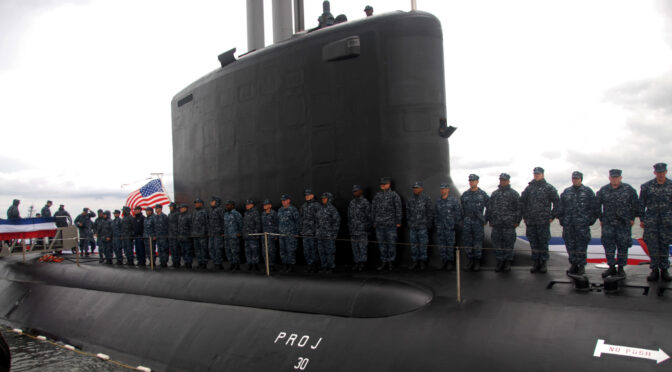
Featured Image: English: NORFOLK (Oct. 28, 2011) Sailors assigned to the Virginia-class attack submarine Pre-Commissioning Unit California (SSN 781) board the boat as they “bring her to life” during a commissioning rehearsal ceremony the day before the Navy’s newest Virginia-class submarine is commissioned. (U.S. Navy photo by Chief Mass Communication Specialist John Osborne/Released)

Strategic Sealift Week Concludes on CIMSEC

By Dmitry Filipoff

For the past two weeks, CIMSEC featured writing sent in response to our call for articles on strategic sealift, issued in partnership with U.S. Transportation Command (USTRANSCOM). The response we received was outstanding and illuminating.

American military power remains heavily dependent on sealift to surge and sustain significant operations. Yet sealift is under significant strain. From aging vessels to manning shortfalls, the overall readiness and capacity of the sealift fleet is far from ideal. Authors put forth innovative concepts to mitigate shortfalls and improve sealift capability. But whether there is enough funding and flexibility to implement some of these solutions remains an open question. What is more clear is that sealift will be indispensable in any great power conflict, and will be a prime target of interest for any adversary seeking to slash U.S. strategic- and operational-level maneuver.

Below are the authors and their articles that featured during the topic week. We thank them for their excellent contributions.

“The Fourth Arm of Defense: America’s Merchant Mariners,” by James Caponiti

“Throughout American history, the one constant has been that a strong commercial maritime capability enhances national security. This is as true today as ever. The Maritime Security Program remains the most important of the federal programs that assist U.S.-flag ships in foreign trade, and it should be supported, fully funded, and modified as necessary to keep pace with economic conditions affecting U.S.-flag shipping.”

“Across the Expanse: The Sealift Dilemma in a War Against China,” by Major John Bowser, U.S. Army

“While the MSC and MARAD aim to ensure the U.S. military is prepared to win expeditionary warfare, they feature critical vulnerabilities with respect to competition with China. The DoD’s critical sealift vulnerabilities against China include fuel distribution capacity, operational security, and vulnerability to partnerships to establish seaports of debarkation and fleet logistics centers. By focusing on these areas DoD will become more able to prosecute expeditionary conflict against China should the need arise.”

“Obsolescence, Chokepoints, and the Maritime Militia: Facing Primary Threats to U.S. Sealift,” by Nicholas Ayrton and Brandon Walls

“Challenges USTRANSCOM could face in this regard are threefold—the aging and inadequate nature of the American sealift force, the vulnerability of said forces to strategic chokepoints in the event of conflict, and the versatility and strength of the Chinese People’s Armed Forces Maritime Militia (PAFMM).”

“Recapitalizing Strategic Sealift Should Be DoD’s Number One Modernization Priority,” by Dr. Daniel Goure

“It is difficult to overstate the dependence of the U.S. military on strategic sealift to both reach the fight and sustain itself during a crisis or conflict. Personnel and some critical equipment and supplies can be moved by aircraft. But for any major deployment overseas, much less a high-end conflict, the U.S. military is and will remain dependent on sealift.”

“American Strategic Sealift in Peer-to-Peer Conflicts: A Historical Retrospective, Pt. 1,” by Salvatore R. Mercogliano, Ph.D.

“…should the United States become engaged in another peer-to-peer conflict, they may lack the requisite sealift, merchant marine, and maritime industrial base to support the Department of Defense. Current plans include a sealift recapitalization scheme that provided funds for two used ships last year, and five more this year, but none have yet to be purchased. The current situation is unsustainable. An examination of the past can provide some alternatives and solutions to the current dilemma the United States finds itself in.”

“For a Greener, More Lethal Force, Look to Strategic Sealift Recapitalization,” by Joshua Tallis and Ronald Filadelfo

“A greener merchant fleet, enabled by technology developed during the recapitalization of the aging sealift fleet (the vessels that bring US troops and materiel to foreign shores) would address an important source of climate change and increase the sustainment reach of the logistics fleet (the auxiliary vessels that keep warships on station). Such a maritime green revolution might even improve lethality.”

“Solutions to Revitalizing America’s Strategic Sealift,” by Todd M. Hiller, P.E.

“With a bi-polar hegemonic world, the U.S. needs to take an immediate and serious deep dive into guaranteeing commercial cargoes for U.S.-flag carriers. This is not a new idea, but one worth revisiting. This proposal, if enforced by treaty or legislation, would have negligible impact on shippers while significantly improving the capacity and number of both the U.S.-flag fleet and U.S.-mariners.”

“American Strategic Sealift in Peer-to-Peer Conflicts: A Historical Retrospective, Pt. 2,” by Salvatore R. Mercogliano, Ph.D.

“The challenge for the United States in a fourth peer-to-peer conflict would be the same in the previous three: to ensure that there was a requisite force of merchant ships to support their maritime strategy…based on history, it appears that the United States is ill-prepared to sustain a large military force overseas, across a contested sea. “

“One Fleet, One Fight: Four “Fs” to Give About Sealift,” by Benjamin Clark and Gregory Lewis

“MSC’s ships are too big and too tired – and those are the ships that work, but they must fight with the fleet they have, not the fleet they want. It is time for Congress and the Defense Department to build a sealift force capable of handling the multiplicity of challenges presented in competition, crisis, and conflict by giving MSC warfighters, a fleet, fuel, flexibility, and friends.”

“Sealift Forces for the Future Operating Environment: An Airlifter’s Perspective,” by Phillip Amrine

“…no one can deny that the environment in which U.S. forces operate is fluid and unpredictable; counting on the threats to remain at their current level would be both foolish and irresponsible. As the long arm of American military power, USTRANSCOM must have the capability to deliver forces anywhere in the world at lightning speed. Maintaining this capability means deliberately monitoring competitors’ capabilities and countering them when they threaten the ability to deploy military force.”

“Strategic Sealift is Broken: Which Direction Are We Headed?” by David Sloane

“It is very clear that the current model is not working. The continued use of the current model will only lead to a fleet that is less ready with fewer mariners who are capable of operating and maintaining this critical defense capability. A change in direction must be made soon and the clock is ticking.”

“Beyond MSC and Amphibs: Unconventional Sealift,” by Benjamin DiDonato

“…warships can provide sealift support for EABO forces. This would naturally have to fit in with other tasking for these ships, so it generally won’t provide predictable resupply, especially when using high-demand assets, but it would still provide additional sealift capacity at essentially no cost.”

“Strategic Sealift’s Merchant Mariner Problem,” by Geoffrey Brown

“Rear Adm. Buzby stated publicly that the Merchant Marine is at least 1,800 officers short of what would be necessary in wartime. Furthering the problem is the lack of places on a dwindling number of ships, leaving 1,100 merchant marine academy graduates worrying about their future job prospects. Given that the average age of a merchant mariner is 47, it is clear that this manpower problem will only get worse if left alone.” 

“Don’t Overlook the Medical Fleet in Distributed Maritime Operations,” by Misty Wilkins

“The medical fleet is often overlooked in discussions about Distributed Maritime Operations (DMOs). The goal of DMO is to keep warships in the fight and use all available means necessary to prevail in a modern conflict against a near-peer adversary. But what happens when all available means are simply not enough and fleet assets suffer losses? How will the U.S. Navy get personnel out of the water, into the appropriate medical care, and back in the fight when faced with an impermissible environment and large numbers of potential casualties?”

“The Future of Sea Basing for U.S. Army Transportation,” by Mike Canup, Tim Fitzgerald, and Tim Owens

“Shrinking the gap between early entry forces and the buildup of more robust forces will require the Army to develop innovative approaches to surface and vertical sea basing connectors. Doing so will allow US forces to seize, maintain, and exploit the initiative.”

“The Glutted Mariner Shortfall,” by LCDR Adena Grundy

“From the perspective of the individual U.S. mariner seeking a reliable career path, there is no real shortfall. Within the economically-driven mariner job market, there is actually a glut of mariners in the current workforce, especially in the officer ranks. Without recognizing this current condition, attempts to increase pool size could initiate a vicious circle of issues that will actually drive people from the Merchant Marine, thereby exacerbating the problem.”

“Clandestine Cargo: Hiding Sealift in Plain Sight,” by Christian Morris and Heather Bacon-Shone

“Secretly loading containerized military equipment among the millions of TEUs processed annually at key U.S. ports such as Los Angeles/Long Beach, New York/New Jersey, Houston/Galveston, and Savannah could help military sealift hide in plain sight.”

Dmitry Filipoff is CIMSEC’s Director of Online Content. Contact him at Content@cimsec.org.

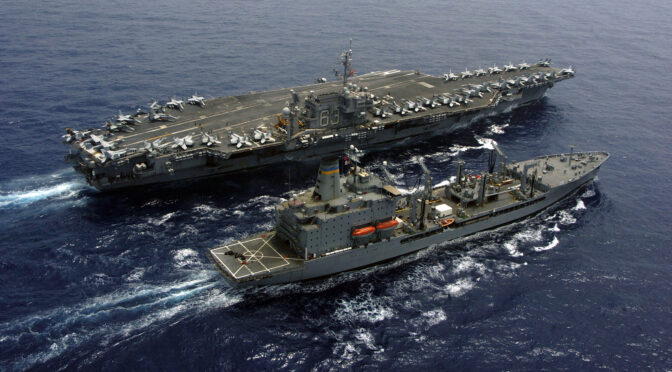
Featured Image: USS KITTY HAWK, Pacific Ocean, (June 26, 2008) The aircraft carrier USS Kitty Hawk (CV 63) receives fuel from USNS Guadalupe (T-AO 200) while steaming through the central Pacific Ocean. (U.S. Navy photograph by Mass Communication Seaman Anthony R. Martinez)