Tag Archives: India

India as the Pivotal Power of the 21st Century Security Order

India’s Role in the Asia-Pacific Topic Week

By MAJ Chad M. Pillai

“As the United States and China become great power rivals, the direction in which India tilts could determine the course of geopolitics in Eurasia in the twenty-first century.  India, in other words, looms as the ultimate pivot state.”

Robert D. Kaplan (The Revenge of Geography)

I remember reading these words several years ago and thinking back to my trip to India in 1998 at the height of the nuclear testing crisis by India and Pakistan.  During that trip, I took the opportunity to interview several Indian scholars on India’s ascent as a nuclear power and its implications.  Those interviews produce two key themes:  (1) India’s nuclear weapons program was designed as a deterrent to China, not Pakistan as many claimed, since China went nuclear in the 1950s and fought a border war with India in 1962; and (2) a disbelief of U.S. relations with an Islamic military dictatorship in Pakistan and Communist China at the expense of the world’s largest democracy.[1]  In order to accept these two observations, especially if India becomes the strategic pivot nation, the U.S. must acknowledge India’s relationship with, as Seth Cropsey described in his New American Grand Strategy article, the triple hegemonic threats in the Eurasian landmass: Iran, Russia, and China.

India and Iran’s relationship dates thousands of years from when the ancient Persian Empires and Indian Empires ruled the territories from Mesopotamia to the tip of India – occasional rivals during the period of the Indian Mughal (Sunni) Empire. Modern day Afghanistan served as the buffer zone and trade route between these two civilizations.  During the period of the of Colonial British-Russian Rivalry (The Great Game), the landmass between the Persians and British India served as a strategic buffer, and later provided the foundation for India’s relationship with Russia after “The Partition of 1947” that split India and Pakistan.[2]
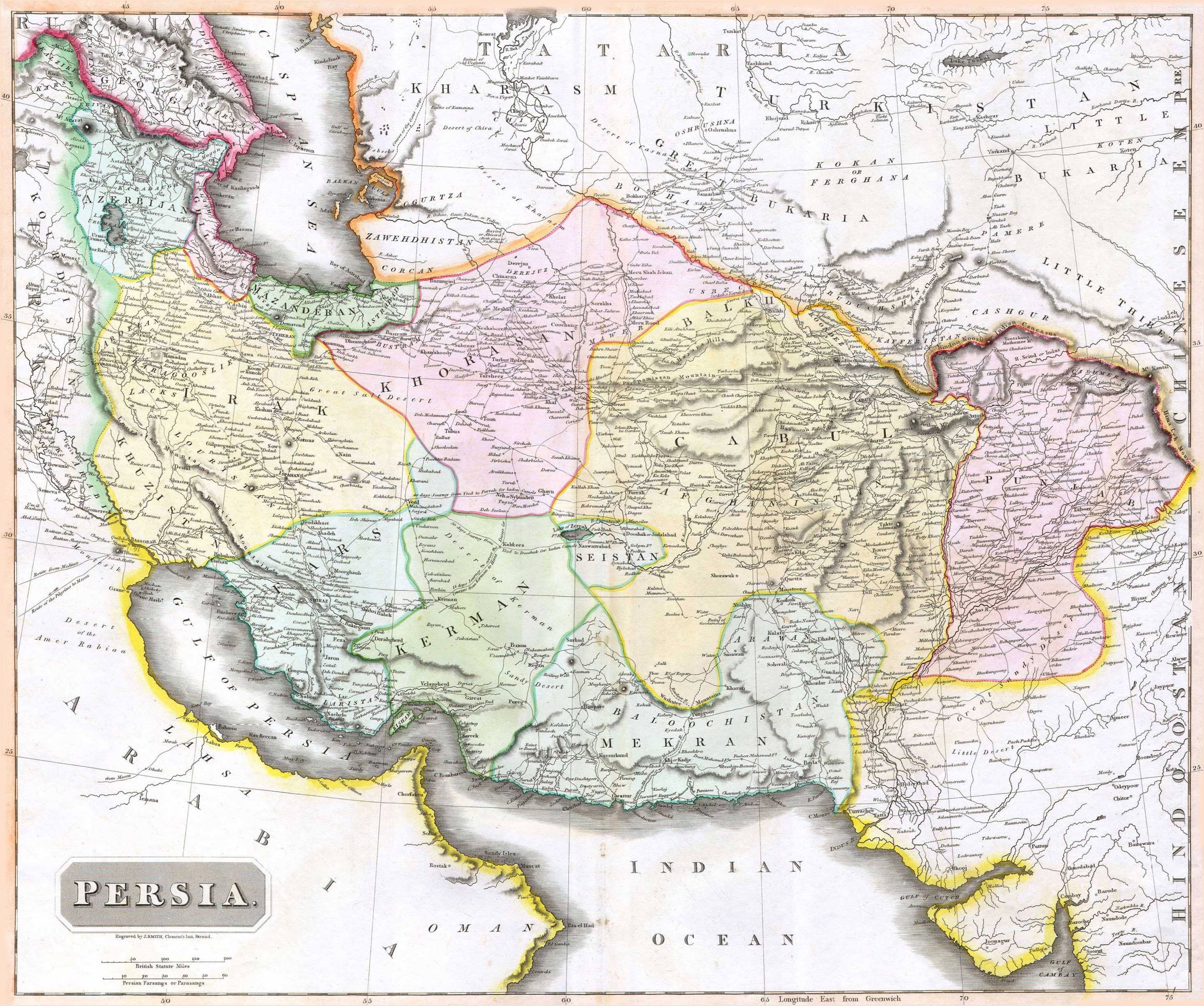
1814 map of Central Asia, where great power competition between Russia and the British became known as The Great Game.
1814 map of Central Asia, where great power competition between Russia and the British became known as The Great Game.Source: Wikipedia.

India’s relationship with Russia dates to the Cold War after it gained independence from the United Kingdom. Initially, India was a champion of the “Non-Aligned Movement” seeking not to get entangled between the two superpowers. The decline in U.S.-Indian relations during the Johnson administration pushed India into the Soviet sphere due to differences regarding the Vietnam War, India’s stance on the Nuclear Non-Proliferation Treaty (NPT), Indo-Pakistani tensions, and economic underperformance. The U.S. military relationship with Pakistan further alienated India which required India to invest heavily in Soviet armaments. India’s and Russia’s relationship has continued despite the end of the Cold War, primarily in foreign military sales and development (ex. Co-Russian and Indian joint Stealth Fighter venture). 
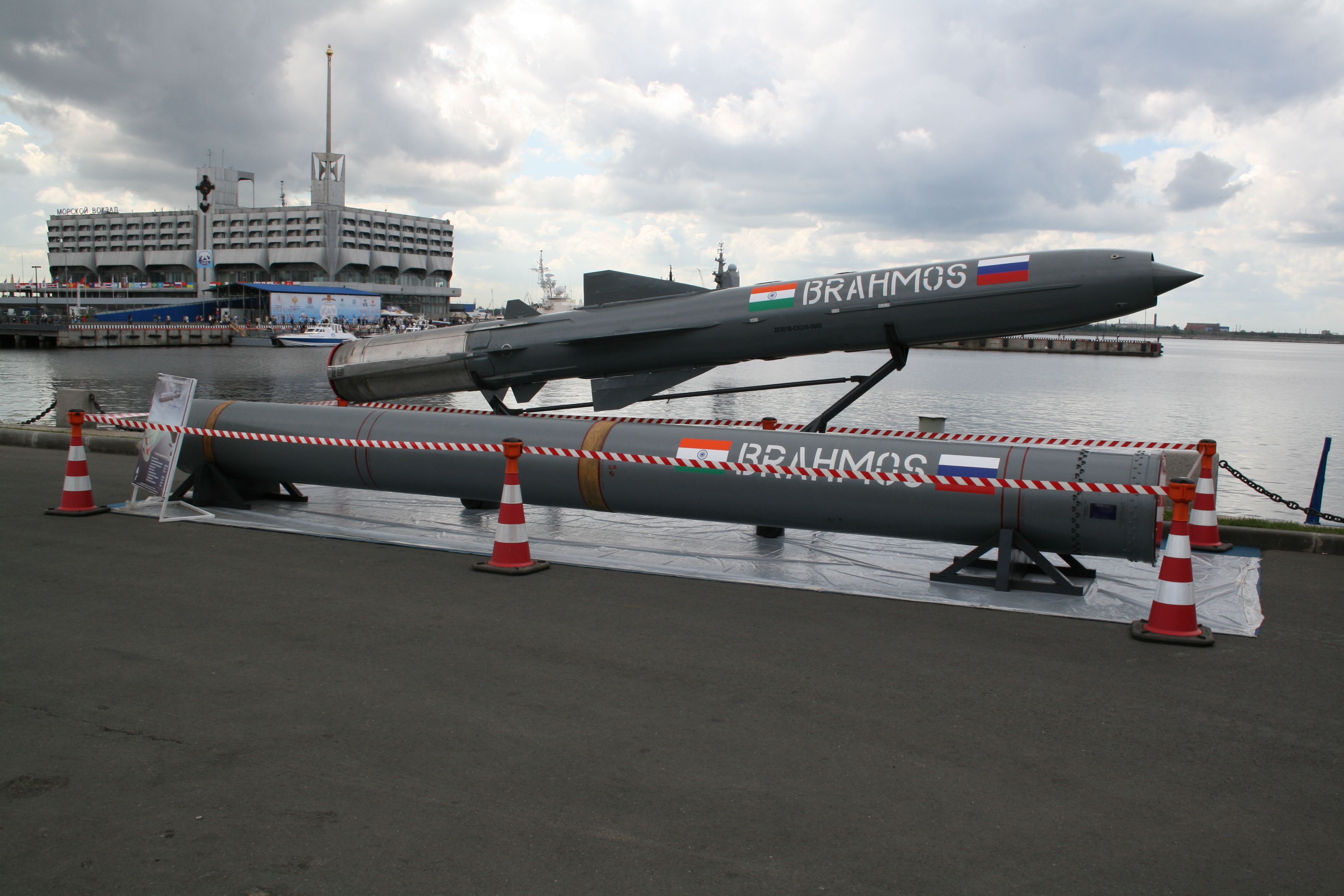
The BrahMos supersonic cruise missile, a product of a joint venture between Indian and Russian defense firms. Source: Wikipedia.

India has expanded military relations with the United States as it sees China as a growing security challenge. Additionally, Indians prefer their cultural (Bollywood and Hollywood) and linguistic (large Indian English speaking population) similarities to the United States.[3] In fact, C. Raja Mohan wrote a statement in his book Crossing the Rubicon by then External Affairs Minister Jaswant Singh issued ahead of President Clinton’s visit of ‘five wasted decades’ and his “reflection on the fact that the world’s two great democracies found it impossible to engage in any substantive cooperation-either economic or political in the country’s first  fifty years.” 

As the two most populous nations on earth, the unique and recent strategic rivalry between India and China, as Robert Kaplan stated, has no history behind it.  They are two ancient civilizations separated by the Himalayan Mountain range that traded, passed religious and cultural knowledge back and forth in the peripheral zones (Afghan region of the Silk and Spice Route and South East Asia where we see a mixed Indian-Chinese influence among populations, linguistics, and cuisine), but have no known history of major warfare between the two save for brief conflict in 1962.  What is driving the emerging competition between India and China is their re-emergence on top of the global economy. As Robyn Meredith states in her book The Elephant and the Dragon: The Rise of India and China and What it Means for All of Us that “after a centurylong hiatus, India and China are moving back toward their historic equilibrium in the global economy, and that this is producing tectonic shifts in economics as well as in geopolitics.” It is projected that India’s population will exceed China’s and both will continue to modernize and create ever greater demand for consumer goods to meet the needs and desires of their vast populations. As a result, the Achilles Heel and source of emerging friction is the need to secure access to energy from Central Asia, the Middle East, and Africa to fuel their economic growth. 

According to the U.S. Energy Information Administration (EIA), “China is the world’s second-largest consumer of oil and moved from second-largest net importer of oil to the largest in 2014.”  Meanwhile, “India was the fourth-largest consumer of crude oil and petroleum products in the world in 2013, after the United States, China, and Japan. The country depends heavily on imported crude oil, mostly from the Middle East.” While much has been written of China’s activities in Africa to secure energy and mineral rights, less has been shared about India’s competition, though less successful, in the same arena. A significant lag in its competitiveness is China’s reliance on state-owned enterprises that offer better terms due to government guarantee vs. India’s reliance on its private sector and smaller state owned enterprises.  Despite this, India has also been working with Central Asian States and Iran to develop the proposed Turkmenistan-Afghanistan-Pakistan-India (TAPI) pipeline and the Iran-Pakistan-India (IPI) pipeline with recent Indian investment ventures in Iranian oil and gas fields in the range of $20 billion. To offset the competition for energy, both countries have invested heavily in renewable energy resources such as wind and solar.

India’s strategic geography provides it a long-term competitive advantage over China due to its position between the world’s key energy chokepoints.  According to the IEA World Oil Transit Chokepoints Report, “world chokepoints for maritime transit of oil are a critical part of global energy security. About 63% of the world’s oil production moves on maritime routes. The Strait of Hormuz and the Strait of Malacca are the world’s most important strategic chokepoints by volume of oil transit.”  India’s strategic relationship with Iran and South East Asian nations such as Malaysia and Indonesia, along with its control of the Andaman and Nicobar Islands, place it in a formidable position to disrupt China’s access to its energy markets in the Middle East and Africa. China has been trying to offset its ‘Malacca Dilemma” by establishing economic-security ventures known as its “String of Pearls” to include expanded ventures with Pakistan, Burma, and Sri Lanka. 
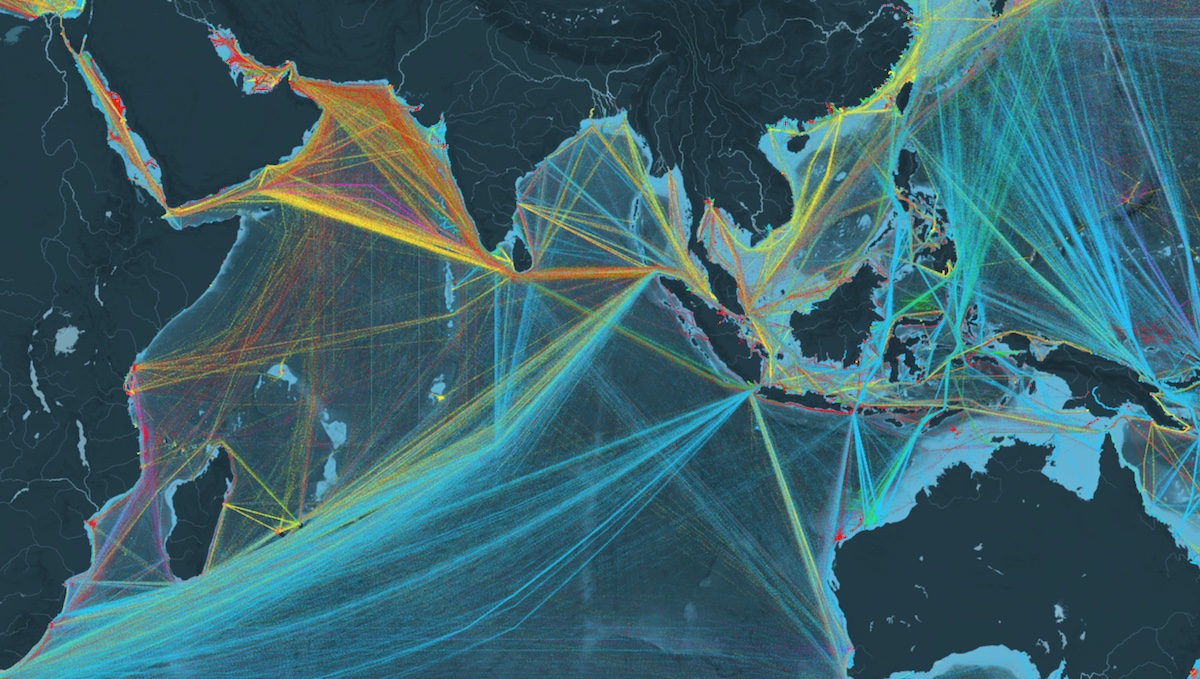
shipmap_image
India’s geography provides it excellent positioning to influence critical sea lines of communication. Source: Shipmap.org.

The ‘Malacca Dilemma’ and ‘String of Pearls” will drive each nation to invest in their missile arsenal (nuclear and non-nuclear), naval power, and airpower.  According to the International Institute for Strategic Studies (IISS) Military Balance 2016, China accounts for 41% and India for 13.5% of all defense spending in Asia. Further comparisons between the two show China spent $145 Billion (US Dollars) vs. India’s $47 Billion (US Dollars) in 2015.  Analyzing their naval power, China has the edge in numbers with more submarines (61 = 4 SSBNs and 57 SSNs), more combatant ships (74 including one carrier), and mine warfare (49).  India currently fields a navy with 14 submarines, 28 combatant (two carriers to China’s one), and 6 mine warfare ships.  However, its ability to influence the Strait of Malacca provides India the competitive advantage, especially if its efforts are combined with U.S., Australian, Japanese, and coalition nations to offset China’s numerical superiority.  Additionally, China will face its own A2/AD threat environment in the India Ocean as India expands its medium and long range missiles.

As the United States increasingly faces challenges to its global power by Iran, Russia, and China, its relationship with India will grow in strategic importance.  While India may never become a true ally of the U.S. due to its strategic relations with the other three powers, its role as a strategic pivot or fulcrum can provide a source of stability and balance.  Its democratic and cultural values align it with the United States and the West, but geography and history place India squarely within the context of its Eurasian neighbors. 

MAJ Chad M. Pillai is a U.S. Army Strategist.  He has published articles and blogs in Military Review, Small Wars Journal, Infinity Journal, The Strategy Bridge, Offizier, War on the Rocks, and CIMSEC.  He received his Masters in International Public Policy from the Johns Hopkins University School for Advanced International Studies (SAIS) in 2009.  This article was influenced by his Asian Energy Security and South Asian International Relations courses at SAIS. 

[1] In 1998, I took a trip to India for my adopted father’s mother’s death that coincided with the nuclear testing.  As a result, I proposed an extra credit project for my ROTC instructor to study the security implications and worked on it further during my internship at the Department of State that summer semester. 

[2] The strategic implications of the 1947 Partition continue in today’s conflict in Afghanistan as Pakistan views India’s relationship with the Afghan Government with suspicion and fears Indian encirclement if it loses its strategic maneuver space among the Afghan Pashtu regions.  Recommend “The Great Defile” by Diana Preston to learn more of the British Indian (manned primarily by Punjabis – Modern Pakistanis) Army’s misadventures during the Afghan Wars of 1838-1842.

[3] Indians prefer to study in the United States and migrate.  One current state governor and one former state governor are of Indian descent.

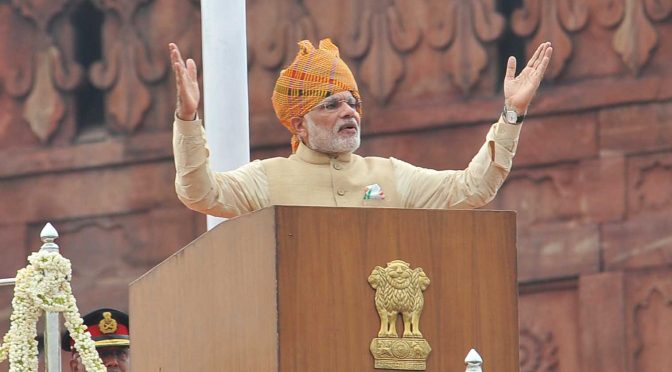
Featured Image: Prime Minister Modi speaks from the Red Fort in New Delhi on India’s 69th Independence Day in 2015.
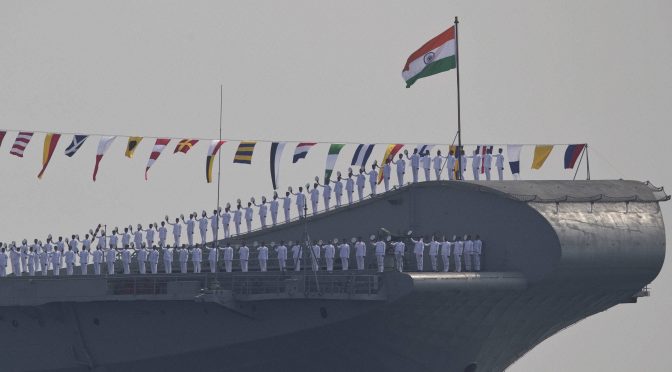
India’s Role in the Asia-Pacific Topic Week Kicks off on CIMSEC

By Dmitry Filipoff

This week CIMSEC is running a topic week on India’s Role in the Asia-Pacific. Authors responded to our Call for Articles with publications featuring in-depth analysis on Indian strategic thinking, Chinese and Indian counterbalancing power plays, and factors driving India’s rise as a regional titan. We thank our contributors for their quality contributions.

Below is a list of articles featuring during the topic week. It will be updated as the topic week rolls out and as additional publications are finalized.

India as the Pivotal Power of the 21st Century Security Order by MAJ Chad Pillai
How The Indian Ocean Remains Central to India’s Emerging Aspirations by Vidya Sagar Reddy
India-China Competition Across the Indo-Pacific by David Scott
Sino-India Strategic Rivalry: Misperception or Reality by Ching Chang
Diluting the Concentration of Regional Power Players in Maldives by MAJ Ahmed Mujuthaba
Strategic Maritime Balancing in Sino-Indian Foreign Policy by Ryan Kuhns
India in the Asia-Pacific: Roles as a ‘Balancer’ and Net Security Provider by Ajaya Kumar Das
Modi’s Asia-Pacific Push by Vivek Mishra
Understanding Sino-Indian Relations – A Theoretical Perspective by Byron Chong
India as a Net Security-Provider in the Indian Ocean and Beyond by VADM Pradeep Chauhan (ret)

Dmitry Filipoff is CIMSEC’s Director of Online Content. Reach the CIMSEC editorial team at Nextwar@cimsec.org.

Ships and Shipbuilding in India through a Sino-Indian Prism

This article originally featured on Bharat Shakti. It may be read in its original form here

By Vice Admiral Pradeep Chauhan, AVSM & Bar, VSM, IN (Ret.)

The year 2022 arrived as a harried harbinger of tidings of war and woe in the Indo-Pacific — a geo-strategic region central to the security calculus of both, regional and extra-regional players.  From the United States of America to Japan, strategic advisers and military practitioners began reading-up their several carefully-prepared contingency plans, each focused upon the increasingly violent writhing of the Chinese dragon.

Although the danger-signs of a precipitous economic decline within the People’s Republic had appeared even before 2015, the sheer speed of contraction of the Chinese economy took the world completely by surprise.  The internal repercussions within China were so extreme that news of the violent unrest within the Middle Kingdom easily transcended the efforts made by the CCP to keep matters under wraps.  Widespread rioting became commonplace as socio-economic fault lines — centred upon income inequality, curbs on rural labour becoming permanent urban-dwellers, and the huge economic disparity between southern coastal cities and the hinterland — could no longer be papered over by ‘gloss’ and ‘bling.’

The CCP’s recurring nightmare of regime-collapse threatened to become a grim reality.  Faced with increasingly belligerent responses from the USA, India, Vietnam, the Philippines — and even Indonesia — to its earlier attempts to convert the South China Sea into a Chinese lake through machinations such as the Nine Dash Line, the Chinese leadership turned to the oldest trick in the book to reunite the country.  It pointed to a ‘malevolent’ axis of alignment between India, the USA, Japan and Australia as being responsible for a series of carefully orchestrated actions designed specifically to stunt and reverse China’s economic miracle. Indian duplicity was specifically and repeatedly referred-to and, in the ensuing vituperative polemics, much was made of teaching ‘upstart’ India a lasting lesson.  Chinese media was repeatedly drawing the people’s attention to Indian adventurism along the still-unresolved border.

As a supposed ‘restrained and proportionate response’, deep incursions by Chinese troops began across the entire Sino-Indian border.  Most worrying to India was the significant Chinese build-up in Demchok and in the Chumbi Valley.  Paying scant regard to the protestations of Bhutan, Chinese troops had begun occupying the western extremities of Bhutan that they had been long been claiming as their own.  This widened the ‘point’ of the Chumbi Valley and the danger to India’s ‘Chicken’s neck’ was seen as being clear and present.

Over the past few years, Indian mountain infrastructure had certainly improved, but was far from ideal.  Nevertheless, New Delhi directed its newly raised Mountain Strike Corps (its embryonic state notwithstanding), to deploy in the Gaygong-Geegong gap.  IAF Forward Air Bases in Nyoming, Daulat Beg Oldi (DBO) and several more in Arunachal Pradesh were brought up to full combat capability and ammunition pre-positioned.  The roar of Su-30 aircraft became incessant at Tezpur.

Many forward-looking Indian planners had high hopes of the Indian Navy being able to achieve a ‘strategic outflanking’ of the Chinese at sea — yet, the Chinese Navy seemed to have pre-empted matters:  In the Gulf of Aden, the 44th Chinese anti-piracy Escort Force, comprising two Luyang-II (Type 052C) destroyers, one Jiangkai-II (Type 054A) frigate and one Fuchi Class (Type 903A) replenishment ship, was supplemented by a significant flotilla consisting of four Luyang-III (Type 052D) destroyers led by the Changsha, six Jiangkai-II frigates, an Underway Replenishment Group (URG) comprising two Fuchi Class ships, and, oneShang Class SSN.  The ships berthed at Djibouti while the SSN, having called at Karachi, was last reported at the newly-developed submarine berth at Gwadar.

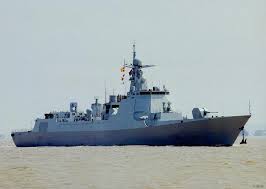
Luyang III: Chinese Missile Destroyer (Picture Courtesy: Chinese Military Review)

Luyang III: Chinese Missile Destroyer (Picture Courtesy: Chinese Military Review)

Just north of Indonesia’s Natuna Island, a confirmed sighting was registered of a Chinese amphibious flotilla centred upon the aircraft carrier Liaoning, along with three Luyang-III destroyers, three Sovremenny Class destroyers, three Jiangwei-II and four Jiangkai-I Class frigates, apparently escorting four Yuzhao Class LPDs and accompanied by two Type 901 Fast Combat Support SHIP (FCSS).  Three Zulfiquar Class frigates of the Pakistan Navy — an unusually large number — had also been deployed with the ‘Coalition Task Force 150’, while three Agosta-90B submarines (all capable of Air-Independent Propulsion) were notably absent from any of Pakistan’s naval harbours.  It was manifestly clear that battle lines had been drawn….

How and under which circumstances the Government of India might realise and decide that the Union of India — in its entirety (as opposed to just the Army) — was in a state of armed conflict against the People’s Republic of China is a matter of conjecture and debate. Yet, the above scenario provides a plausible enough backdrop against which the state of advancement of Indian warships and warship-building needs to be examined.

Tonnage is a very good indicator of the ability of a warship to endure the violence of the maritime environment — something that generally increases with distance from the coast.  Thus, warships of heavier displacement-tonnage are more likely to be suitable for protracted deployments in ‘blue waters’ than are those of lighter displacement-tonnage.

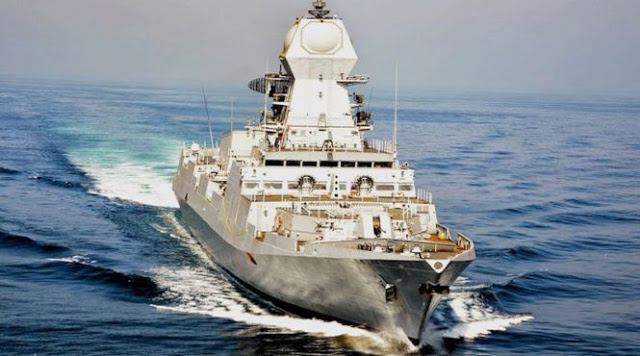
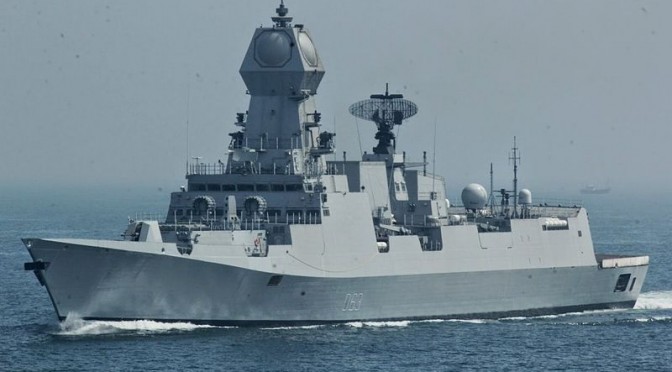
INS Kolkata (Picture Courtesy: Indian Defence News)

INS Kolkata (Picture Courtesy: Indian Defence News)

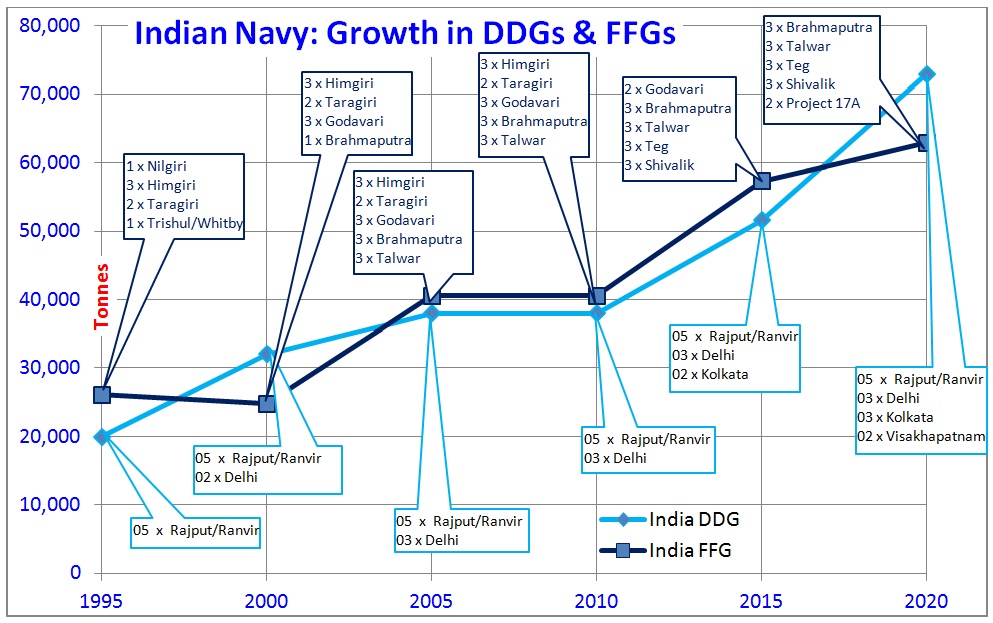
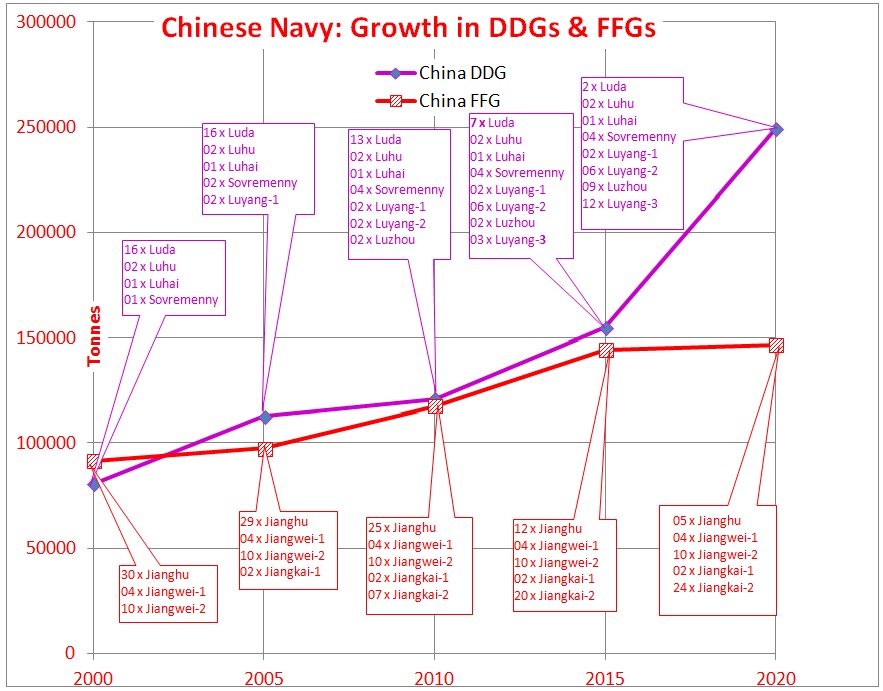
In this regard, the tonnage of the Indian Navy’s frontline surface-combatants (guided-missile destroyers and frigates) — taken individually as well as collectively over the 25-year period from 1995 to 2020 — shows a consistent and impressive increase.  However, the Chinese Navy, too, has been demonstrating a nearly identical trend.  This is a clear sign of the steady consolidation of the ‘Blue-water’ capacities of both navies, and may be readily discerned from the following graphs.  Contemporary DDGs in both navies have displacement-tonnages in the region of 7,000 tonnes, making them eminently suitable for protracted deployments in distant waters. It may also be seen that the Indian Navy has far fewer classes of Guided Missile Destroyers (DDGs) than does its Chinese counterpart.

1_PradeepChauhan

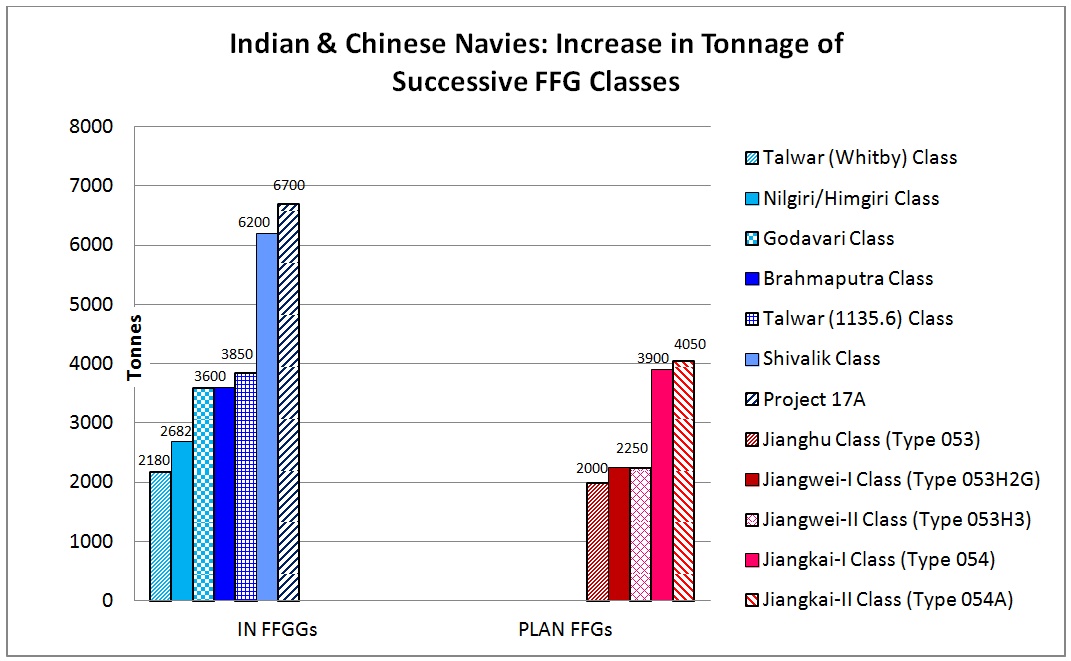
The reverse is true when it comes to Guided Missile Frigates (FFG).  Here, the Indian Navy’s contemporary classes are certainly pushing the limits of what might reasonably be termed a ‘frigate.’  In most countries, ships of the Shivalik Class and those of ‘Project 17A’ to follow — both classes displacing 7000 tonnes or more — would be certainly categorised as ‘destroyers.’  Were this to be done, the number of ship-classes in both categories (DDGs and FFGs) would be very similar in both navies.

2_PradeepChauhan

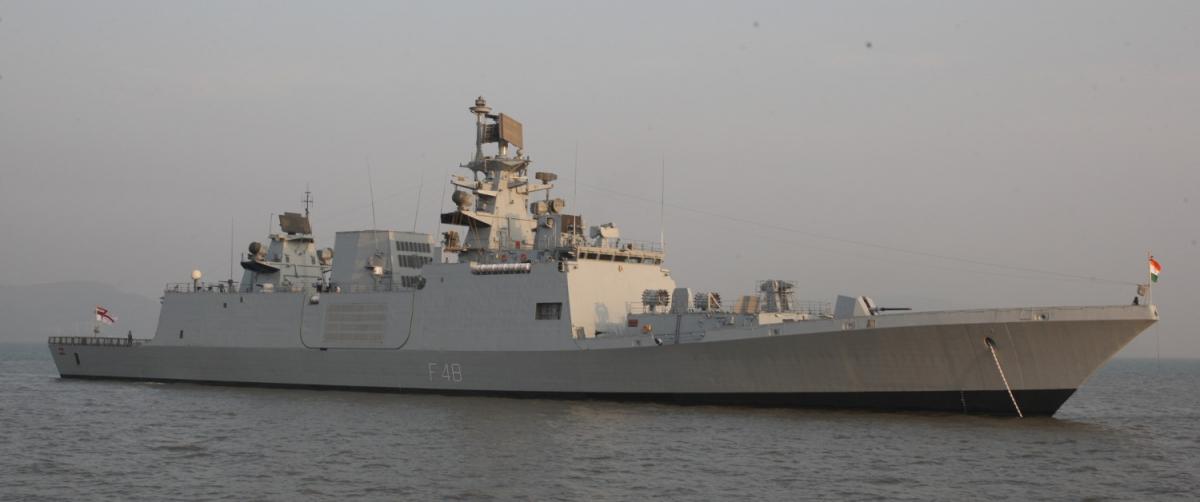
INS Satpura

INS Satpura.

The past and projected growth of the Indian Navy in terms of numbers of DDGs and FFGs over the period from 1995 to 2020 may be seen through the following graphical depiction, which details the numbers of warships in each class of destroyers and frigates respectively.

3_PradeepChauhan

It is important to note that while the tonnage of the individual warship-classes that constitute each navy has been rising, and while

4_PradeepChauhan

there is not much to give or take between the comparative tonnages of Chinese and Indian frigates or destroyers, it is the stark disparity in the sheer numbers of Chinese and Indian warships that make the overall tonnage that each navy can put to sea so different from each other. The huge impact that these ‘numbers’ have in terms of the overall tonnage that both navies can put to sea may be readily discerned once these are plotted on the same scale.

What all this brings out quite starkly is that although Indian warship construction / induction is certainly picking-up and although the tonnage-trend is a healthy one, it is, nevertheless, very nearly a case of ‘too-little-too-late.’ Indian ship-building has to show a dramatic increase of the type shown by Chinese shipyards, most especially in the period after 2010.

This, of course, is a realisation that is somewhat more sobering than the breezy optimism that comes embedded in the official pronouncements that emanate from New Delhi.  Despite the proclivity of our defence shipyards to ‘cut-off their noses to spite their faces’ by refusing to accept their capacity-limitations and encourage private players, there is an urgent need for greenfield shipyards in the country to either build relatively low-end platforms so as to free-up capacity in the more established defence shipyards, or to take up construction of major surface-combatants themselves.  The latter could, perhaps, be under a ‘prime system-integrator’ model as was done for the Daring Class ‘Type 45’ guided-missile destroyers of the British Royal Navy. As such. there is, enormous scope for private players in the national effort to ratchet-up numbers in the Indian Navy’s DDG and FFG holdings.

5_PradeepChauhanIn the interim, the Government of India and its Navy will have to rely upon nimble-footedness at the strategic level as well as at the level of operational art, so that even if a conflict with China arise, the entire numerical strength of the principal combatants of the Chinese Navy are not capable of being arrayed against it en masse.  The plans and strategems for this, are, of course, subjects for a far more detailed analysis.

Yet, there is some cause for quiet satisfaction, too.  For instance, the overall combat capabilities — comprising the various  weapon-sensor suites, the software-intensive integration systems, the integral-air capacity, and, the propulsion and power-generation plants — of both, contemporary Indian guided-missile destroyers (DDGs) and guided-missile frigates (FFGs) compare quite favourably with those of the Chinese Navy.  In a combat encounter between major surface combatants, the Indian Navy is very likely to acquit itself well. For this, the uniformed and civilian segments of the Indian Navy (they are very nearly equal in numbers), the DRDO and our ship-builders must be given much credit. That said, naval warfare is typically one in which the ‘hunter’ and the ‘hunted’ switch roles with disconcerting frequency and often operate in entirely different mediums.  Thus, the capability of current and future Indian warships must also be assessed against air threats (including anti-ship missiles) and underwater threats emanating from both, conventionally and nuclear-propelled submarines.

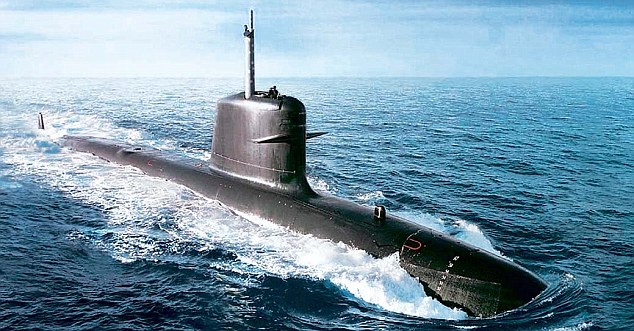
Anti-Submarine Warfare (ASW) within most parts of the northern Indian Ocean — most especially in the Arabian Sea — is adversely impacted by a ubiquitous negative temperature-gradient. This significantly shortens the detection range of hull-mounted sonars.  On the other hand, towed-array sonars and ship-mounted variable-depth sonars impose often-unaffordable operational penalties in terms of maneuverability and speed — quite apart from a host of maintenance-related technological challenges that industry needs to wrestle with.

Scorpene submarine (Picture Courtesy: Daily Mail, UK)

Scorpene submarine (Picture Courtesy: Daily Mail, UK)

Indian FFG and DDG ship-designs have long featured the carriage of two 10-13 tonne multi-role / ASW helicopters aboard every such platform. An ASW helicopter, equipped with a variable-depth sonar with high-end processing capabilities, sonobuoys, and a good EW suite, is the optimum platform for seaborne ASW and the Navy requires these in adequate numbers so as to take advantage of the potential offered by excellent ship-design.  For the present, the absence of multi-role helicopters has rendered this design-advantage null and void. Much promise was initially held out by the indigenous ‘Advanced Light Helicopter’ (ALH) Dhruv.  However, the technological challenges of folding rotor-blades and minimising the downwash while the helicopter is in hover continue to frustrate efforts to embed this helicopter within the integral-air capacity of the Indian Navy.

As and when our otherwise very-capable surface-combatants need to operate in a combat-environment characterised by a substantive subsurface threat, this lack of integral ASW helicopters might well prove decisive. In contrast, Chinese ships have a carrying-capacity of just a single helicopter, but successful reverse-engineering of the French Dauphin has resulted in the Harbin-Z that is integral to Chinese warships.

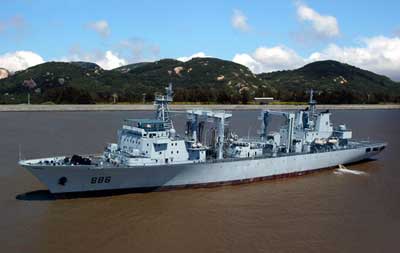
Perhaps the most telling factor weighing in favour of the ‘reach’ of the Chinese Navy is its impressive holding of refuelling-tankers and stores/ammunition-supply ships, particularly those capable of ‘underway replenishment.’

Qiandaohu Ship (Picture Courtesy: en.people.cn)

Qiandaohu Ship (Picture Courtesy: en.people.cn)

The six Qiandaohu Class (Type 903A) replenishment vessels displace 23,000 tonnes, compared with the two 19500-tonne replenishment-tankers of the Indian Navy’s Deepak Class.  Although the five Dayun Class (Type 904) stores-supply ships of the Chinese Navy are incapable of underway replenishment, they do add significantly to their Navy’s amphibious follow-on capacity.  Seeking to catch-up, the Government of India had floated a global Request for Information (RFI) for the construction of five large 40,000-tonne ‘Fleet Support Ships’ for the Indian Navy.  Although the delivery of the first ship has been specified as 36 months (with subsequent ships being delivered at six-monthly intervals), there is little evidence as yet of any significant progress. This notwithstanding, opportunities for Indian industry in terms of the equipment-fit of these ships is, once again, enormous.

In conclusion, if India is to be able to handle the fictitious 2022-scenario that this brief piece began with, there is an urgent need to address the shortfall in numbers of major-combatants and fleet-support ships. It is true that over 45 warships are currently building in Indian shipyards, but the rate of production is painfully slow and as a consequence, the numbers may not be enough in the available time before such a scenario shifts from absorbing fiction into frightening fact.

Vice Admiral Pradeep Chauhan (ret.) retired as Commandant of the Indian Naval Academy at Ezhimala. An alumnus of the prestigious National Defence College.

(Disclaimer: The views and opinions expressed in this article are those of the author and do not necessarily reflect the official policy or position of BharatShakti.in)

Call for Articles: India’s Role in the Asia-Pacific Topic Week

By Dmitry Filipoff

Week Dates: Apr. 25 – May 2. 2016
Articles Due: Apr. 24 2016
Article Length: 800-1800 Words (with flexibility)
Submit to: Nextwar@cimsec.org

Much has been made of great power competition in the Asia-Pacific, with the U.S. and China considered the main actors, but India is a powerhouse in the making. India’s rapidly growing economy and modernizing military ensures its relevance as a regional power to be reckoned with. 

India and China have a longstanding strategic rivalry. Both nations engaged in a brief but intense war in 1962, and to date have an unresolved border dispute that still experiences incursions and tension. Reports of a Chinese submarine transiting into the Indian Ocean for the first time in 2015 were met with alarm in India. China remains wary of strengthening defense ties between India and the U.S., which have manifested in various ways including aircraft carrier technology sharing. The Indian peninsula juts 1000 km into the Indian ocean, providing India’s carrier equipped navy superb positioning to affect sea lines of communication flowing towards the strait of Malacca. 

INDIA-CHINA-DIPLOMACY
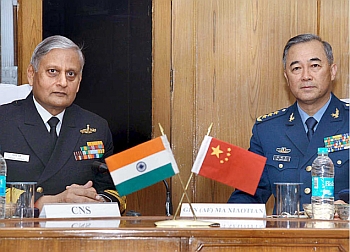
The Deputy Chief of General Staff of the Chinese PLA, Gen. Ma Xiaotian calls on the Chief of Naval Staff, Admiral Nirmal Verma, in New Delhi on December 09, 2011.

Prime Minister Modi aligned India with U.S. policy towards South China Sea maritime disputes in a joint statement affirming “the importance of safeguarding maritime security and ensuring freedom of navigation and over flight throughout the region…” Senior U.S. defense officials such as Defense Secretary Ash Carter and Under Secretary of Defense for Acquisition, Technology, and Logistics Frank Kendall will be visiting India this month to discuss strengthening defense bonds and military technology sharing agreements. Additionally, India plans on increasing its military expenditures by 13% from 16-17, and its defense budget is experiencing greater growth than any other major power

ED-AU906_SCHWAR_J_20160328092134
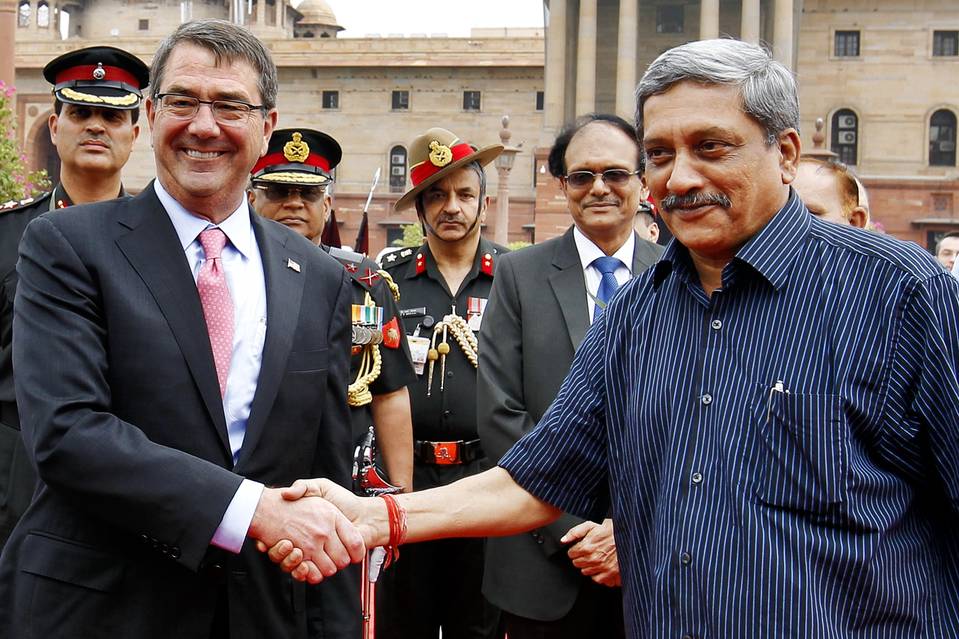
U.S. Secretary of Defense Ashton Carter, left, with India’s Defence Minister, Manohar Parikkar, in New Delhi last year. PHOTO: HINDUSTAN TIMES VIA GETTY IMAGES.

How might the strategic rivalry between India and China evolve? How may India’s role in Asia-Pacific security broaden? What are the larger implications of India rapid defense modernization and stronger ties to the U.S.? Prospective contributors can analyze these topics and more. Please submit draft contributions to Nextwar@cimsec.org.

Editor’s Note: This topic week has since concluded and the writings submitted in response to this call for articles may be viewed here

Dmitry Filipoff is CIMSEC’s Director of Online Content. Reach the CIMSEC editorial team at Nextwar@cimsec.org.