Tag Archives: Russia

China’s Military Strategy: Assessment of White Paper 2015

This article can be found in its original form at the National Maritime Foundation here and was republished with permission. 

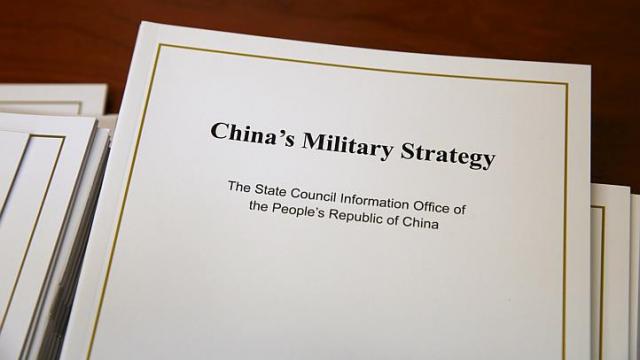
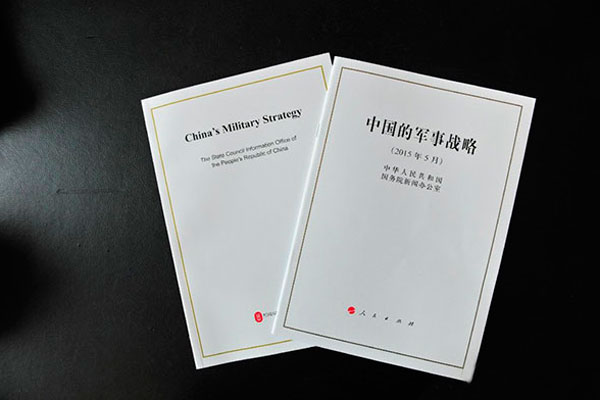
China has been issuing Defence White Papers biennially since 1998. The ninth White Paper of 2014 titled ‘China’s Military Strategy’ was released recently in May 2015. This essay seeks to analyse the salient aspects of the document, particularly in context of the preceding document of 2012 released in April 2013.

In comparison to the Defence White Papers published by China in the preceding years, the 2014 document is very concise. Nonetheless, it reveals substantial content and context, disproportionate to the size of its text. While much of the revelation is likely to be Beijing’s ‘strategic communications’, the document is nonetheless insightful.  

Title of White Paper

The present White Paper has continued the trend of using a thematic title – a trend that was initiated with the 2012 document titled ‘The Diversified Employment of China’s Armed Forces’. The trend and the specific title spelling out “China’s Military Strategy” signify the increased self-confidence of an emerging global military power, which until a few years ago, preferred to be opaque to the world on ‘matters military’.  The document also reflects an increased self-assurance as a nation, stating that “China’s comprehensive national strength, core competitiveness and risk-resistance capacity are notably increasing, and China enjoys growing international standing and influence”.

Core National Objectives

In the document, China has maintained its earlier stance of avoiding war through its military strategy of “active defence” (that envisages an ‘offensive’ only at the operational and tactical levels). However, the document mentions “preparation for military struggle (PMS)”, which indicates its strong desire to retain the option of first use of military force, if it cannot achieve its core objectives otherwise. Furthermore, the emphasis on “maritime PMS” indicates that these objectives pertain to Taiwan’s “reunification”, and fructification of its maritime-territorial claims in the Western Pacific. Furthermore, the inclusion of the phase “You fight your way and I fight my way” indicates that China’s war-fighting concept to meet its core objectives is likely to be based on use of asymmetric capabilities.

Maritime Interests

The previous 2012 document stated the PLA Navy’s mandate to preserve China’s sovereignty over its territorial seas and its maritime rights and interests in ‘offshore areas’ against complex security threats, thereby portraying China as a victim or an underdog reacting to the actions of Japan, and implicitly, of the U.S. The new document, however, emphasises a more proactive protection of its interests in ‘open waters’, thereby enlarging its strategic depth. Notably, the document also calls upon the need to shed the mindset that peace, stability, and development of China is linked to affairs on land rather than the sea. This indicates a maritime emphasis of China’s military strategy.

With regard to the security of sea-lanes, it uses the term “strategic Sea Lines of Communication (SLOCs)”. Although the term ‘SLOC’ itself bears a ‘strategic’ connotation, the addition of the adjective indicates that China considers itself vulnerable to commodity denial during war, thereby severely limiting its option of use of military force. Although the document does not specifically mention the ‘Indian Ocean’, the reference to Indian Ocean SLOCs may be inferred.
 Naval Presence in Indian Ocean

Alike the previous 2012 document, the 2014 White Paper states that the PLA Navy would maintain “regular combat readiness patrols…(and maintain)…military presence in relevant sea areas.” While the former may refer to the Western Pacific, the latter is a likely reference to the Indian Ocean. This is buttressed by the statement that the PLA Navy would “continue to carry out escort missions in the Gulf of Aden and other sea areas as required, enhance exchanges and cooperation with naval task forces of other countries, and jointly secure international SLOCs.” This implies that China’s naval presence in the Indian Ocean would continue, and may even increase. While such presence may be primarily for undertaking ‘Military Operations Other than War’ (MOOTW), it is likely to be dovetailed with preparing for ‘wartime’ operations. This assertion is borne out by Beijing’s assertion in September 2014 that its Song-class submarine deployed in the Indian Ocean was meant for counter-piracy. (The credibility of this rationale was dismissed by naval analysts on operational grounds). The document adds that the “PLA Navy will work to incorporate MOOTW capacity building into…PMS” thereby implying the China would also seek to develop fungible capabilities.

Furthermore, the White Paper lays emphasis on ‘sustenance’ of the forward-deployed naval platforms through “strategic prepositioning”. This indicates that China is likely to seek overseas access facilities (if not military bases) in the Indian Ocean, or even resort to the U.S. concept of ‘sea-basing’. The latter possibility is supported by recent news-reports about China developing large ‘Mobile Landing Platforms’ (MLP) similar to those used by the U.S. expeditionary forces.

Military Interface with Major Powers

The mention of Russia in the White Paper precedes all other countries. The “exchanges and cooperation with the Russian military within the framework of the comprehensive strategic partnership…to promote military relations in more fields and at more levels” indicates the imminence of a China-Russia quasi-alliance. 

The 2012 White Paper, without naming the U.S., had expressed a concern for its “pivot” to Asia strategy and “strengthening of its military alliances with the regional countries, leading to tensions.” In contrast, the 2014 document mentions the U.S. explicitly. While it does state the need for “cooperative mechanisms with the US Navy, including exchange of information in the maritime domain”, its tone and tenor indicates a precursor to a ‘Cold War-style’ military interface between the two major powers. It talks about a “new model of military relationship” with the US based on “major-country relations”, with “strengthening of defence dialogue (and)…CBMs to include notification of major military activities (and) rules of behaviour” to prevent “air and maritime encounters…strengthen mutual trust, prevent risks and manage crises.” However, it is yet unclear what kind of bipolar interface will eventually emerge since the current global environment marked by close China-U.S. economic ties is vastly dissimilar to the erstwhile Cold War era.

 The 2012 White Paper had mentioned India’s combined Army exercises with PLA and increased anti-piracy coordination with India. Since the 2014 document is more succinct, the lack of details is understandable. However, the lack of even a mention of defence exchanges with India, or any other Asian country is remarkable.

Also ‘conspicuous by absence’ are the various facets of ‘transparency’ that the preceding Defence White Papers had addressed, ranging from China’s defence budget to its nuclear weapons policy of no-first use (NFU). Evidently, China has ‘arrived’ on the world stage with a single-minded preoccupation of how it could challenge the unipolar world order dominated by the U.S.

Captain (Dr.) Gurpreet S Khurana is the Executive Director, National Maritime Foundation (NMF), New Delhi. The views expressed are his own and do not reflect the official policy or position of the NMF, the Indian Navy or the Government of India. He can be reached at gurpreet.bulbul@gmail.com
 

The Sea Power of the State in the 21st Century

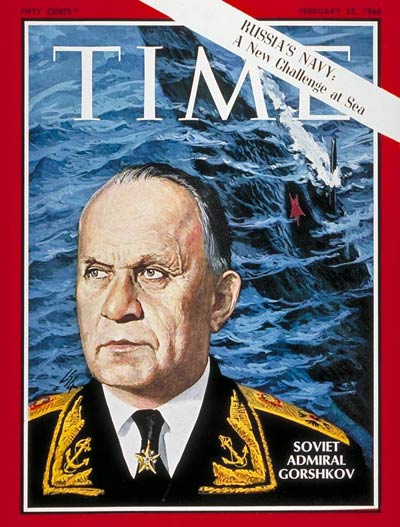
Admiral Sergei S. Gorshkov’s legacy as a naval leader and strategic thinker has not been entirely forgotten. Reports of his death, however, were not greatly exaggerated. Largely ignored by the NATO navies that once studied him so intently as the head of the Soviet Navy for much of the Cold War, Gorshkov remains an inspirational symbol in the two countries that should come as no surprise: Russia and China.

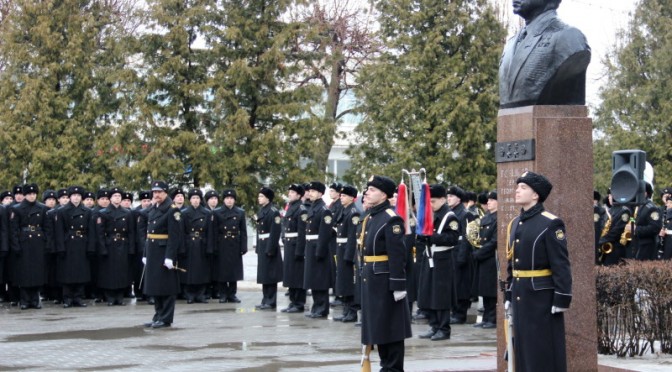
Earlier this year, Admiral Viktor Chirkov, the current commander-in-chief of the Russian Navy, pointedly chose the 105th anniversary celebration of Gorshkov’s birthday in his childhood home of Kolomna to make some bold statements about the navy’s future in the 21st century. After laying flowers at Gorshkov’s monument, Chirkov formally announced that Russia will be back in the aircraft carrier business with plans to build a new-generation one comparable in size to a U.S. supercarrier. Given the current state of Russian shipyards and the tremendous costs involved, defense analysts greeted the announcement with skepticism.  There was good reason to doubt this most recent news: Russia had already announced in 2005, and again in 2008, that it would begin to build carriers by 2010. According to Jane’s Defence Weekly, the new multipurpose, dual-design (two ski-jump ramps and electromagnetic catapults each) carrier is called Project 23000E or Shtorm (Storm).

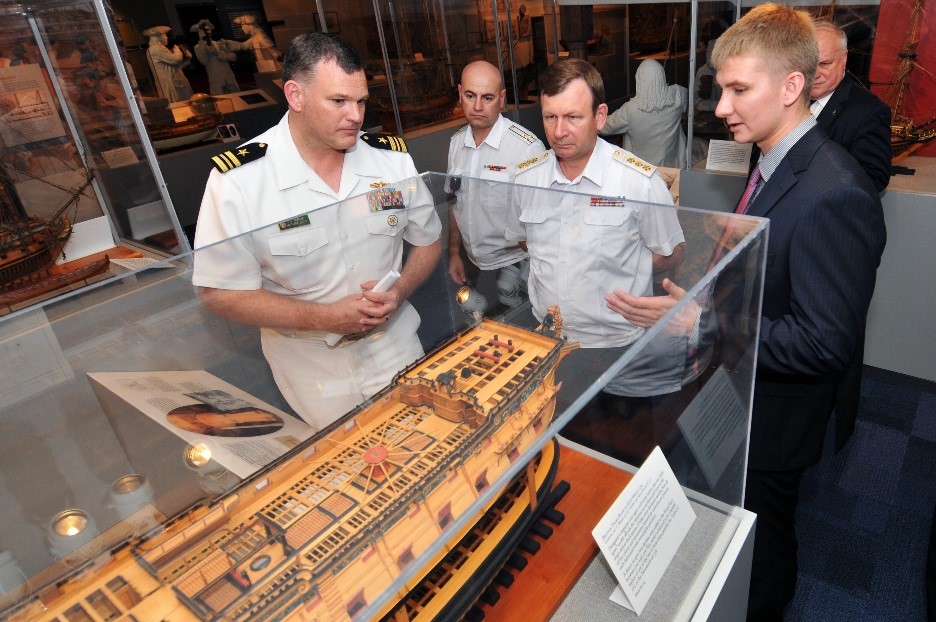
USNA17th-19th C. Sea Power of the State: Admiral Chirkov getting a tour of USNA Museum in 2013 from CIMSEC member Claude Berube. Was the Russian navy chief trying to get advance info on the #CarrierDebate? (Photo credit: USNA PAO)

 Of course, Admiral Gorshkov once promoted the virulent anti-carrier stance of the Soviet Union. He mocked the platform as too expensive and too vulnerable and echoed Premier Nikita Khrushchev’s view that they were “floating coffins.” Yet, the Soviet Navy’s need to be untethered from the sole support of land-based naval aviation first resulted in helicopter carriers for anti-submarine warfare and amphibious operations in 1967, then eventually in large-deck carriers for fixed wing aircraft toward the end of the Cold War – the Kuzntesov (still in service, although with considerable time in the repair dock, in the Russian fleet) and the Gorshkov (sold to India).

Gorshkov would likely have applauded Chirkov’s ambitious 50 ship building plan for 2015 that included a mixture of surface and subsurface vessels. In particular, the resurgence of nuclear submarine production, especially the Borei-class ballistic missile sub, is a reminder of how Gorshkov once used submarines as the cornerstone of Soviet naval power and prestige for decades.

Chirkov also announced that 30 ships and submarines were currently deployed around the world, which indicated a modest but nonetheless significant return to the pattern of out-of-area patrols and presence missions for the Soviet Navy that Gorshkov introduced to much fanfare in the mid-1960s. This May’s joint Russian-Chinese naval exercises in the Mediterranean also supports the views that the Russian Navy is “rebalancing” to the region while the Chinese Navy may intend to secure its energy supply lines at the western edge of the “New Silk Road.”

Above all, Gorshkov would probably have approved of Chirkov’s vision: the adoption of an “ocean strategy” that will seek to reestablish Russia’s global reach and promote its political and economic interests. Chirkov’s choice of language harkened back to the efforts of his Cold War-era predecessor to justify a blue-water navy. Notably, Chirkov did not directly challenge the supremacy of the U.S. Navy as Gorshov did in the late 1960s. Rather, Admiral Chirkov’s mission, at least for the moment, is to put Russian naval forces back on the path to restoration, not on one toward great power rivalry. 

TimeCover

Gorshkov was associated with the phrase “’better’ is the enemy of ‘good enough.’” In other words, Chirkov must get the Russian Navy back to Gorshkov-era “good enough.”

There is also nothing revolutionary in Chirkov’s pronouncements. The navy’s primary missions are still, as in the Cold War, strategic deterrence and defense. It will likely not be as rapid as the transformation after the Cuban Missile Crisis, either. The Russian Navy, according to defense analyst Dmitry Gorenburg, will slowly grow through a phased recapitalization scheme that will unfold over 20 years. The pace of naval construction is, of course, subject to change based on evolving political and economic imperatives.

To further underscore that Admiral Gorshkov has not passed entirely into irrelevance, a pair of Russian military writers (one a retired navy captain) paid homage to him in a recent article for Voyennaya Mysl [Military Thought], the elite journal of Russia’s Defense Ministry for nearly a century. In “The Sea Power of the State in the 21st Century,” the authors noted that Gorshkov’s seminal 1976 book, The Sea Power of the State, took an expansive view of sea power that included naval, merchant, fishing, and exploration capabilities. Gorshkov envisioned the World Ocean as one immense domain upon which to assert Russian national power. These authors, however, wished to scope the definition of “the country’s sea power” down to “the navy’s real combat power” in order to illustrate the special place that navies hold in geopolitics.

A central theme of their essay, based on historical examples, was that countries without sea power do not have “a decisive voice in world affairs.” Russia used a strong navy in the past, the authors argued, to maintain its place in the top tier of nations. The blow to Russian prestige was great at the end of the Cold War with the demise of the Soviet Navy:

… the loss of the core of its powerful oceangoing navy during the political and economic reforms in the late 1980s and early 1990s cost the country dearly. It caused other nations, Russia’s neighbors and rivals on the high seas, in the first place, to rethink their attitude to this country. It was deserted by many allies and friends, and its image of a great sea power has faded.

Thus, the article indirectly endorsed Admiral Chirkov’s current strategy of “looking to the ocean” and his plan for a navy that can once more defend Russia’s national interests and secure it against threats. The authors acknowledged, however, the huge lead by the U.S. Navy in air-sea battle concepts and that of American expertise in network-centric naval warfare. Indeed, “it is difficult, even hopeless at times, for Russia to take up this challenge for economic considerations.” Nonetheless, they concluded, it is a price that must be paid for the return to greatness on the world stage.

Writers in Chinese open source literature have also found reasons for optimism in the example set by Admiral Gorshkov during the Cold War. According to Lyle J. Goldstein at the Naval War College’s Chinese Maritime Studies Institute, some naval analysts in China “are extremely interested in Gorshkov, his legacy, and Soviet naval doctrinal development in general” [per his correspondence with this author]. They are impressed by the rapid transformation of Soviet naval power under Gorshkov as well as his ability to check U.S. power with his own oceangoing navy. Moreover, they also appreciated, based on Gorshkov’s lesson, that a “balanced fleet” can also emphasize undersea platforms while never reaching parity with U.S. carriers.

China’s recent strategy white paper elevated the PLA Navy’s status and explicitly tied naval power to China’s geopolitical ambitions and economic development with the navy’s dual missions of “open seas protection” and coastal defense. Indeed, sea power will play a central role for the Chinese state in the 21st century: 

The seas and oceans bear on the enduring peace, lasting stability and sustainable development of China. The traditional mentality that land outweighs sea must be abandoned, and great importance has to be attached to managing the seas and oceans and protecting maritime rights and interests.

On the other hand, Gorshkov’s legacy shows that sea power, once achieved, can be transitory due to geographic, economic, and political factors. His is also a cautionary tale, for Russians and Chinese alike, not to pursue sea power beyond what a nation can support. As Goldstein noted, “… the [Chinese] authors do indeed directly connect the all-out Soviet naval expansion of the later Cold War, and the commensurate enormous investment of Russian national resources, to the demise of the USSR.” Moreover, there is the potential risk involved in Russia’s attempt under Vladimir Putin to return to the past glories of the Soviet superpower era yet fall well short of his goals. This naturally includes naval ambitions for aircraft carriers that never make it beyond the concept stage. Even the modernization of smaller surface ships such as frigates (including the new Admiral Gorshov-class) is now endangered by Russian actions in the Ukraine.

Both Russia’s and China’s navies may also face the same dilemma as that of the Soviet Navy by the mid-1960s if naval construction outpaces professional knowledge and practical experience. As Robert Farley noted, the Soviet Union “built blue water ships long before it built the experience needed to conduct long range, blue water operations.” A more provocative and aggressive stance toward the U.S. Navy, coupled with the deficiencies in Soviet training and this lack of a “blue water look,” resulted in repeated incidents at sea such as collisions that many feared might escalate during the Cold War.

Ultimately, sea power as an expression of great power status is beginning to look in the early 21st century much as it did in the 20th century. The investment in costly blue-water navies still speaks volumes about a country’s geopolitical ambitions and its strategic calculus – where it sees itself in the world and hopes to be in the future. The writings and accomplishments of Admiral Sergei Gorshkov are also a timeless reminder that in order to assess navies, one must still look at what they say, what they build, and what they do. In Gorshkov’s case, what he did remains much more memorable than anything he wrote.

Jessica Huckabey is a researcher with the Institute for Defense Analyses (IDA) and a retired naval reserve officer. She is writing her doctoral dissertation on American perceptions of the Soviet naval threat during the Cold War. The opinions are her own and not those of IDA or the Department of Defense.

Russia’s Supersonic Tu-160 Bomber Is Back: Should America Worry?

The article can be found in its original form at The National Interest here and was republished with permission.

By Dr. Tom Nichols

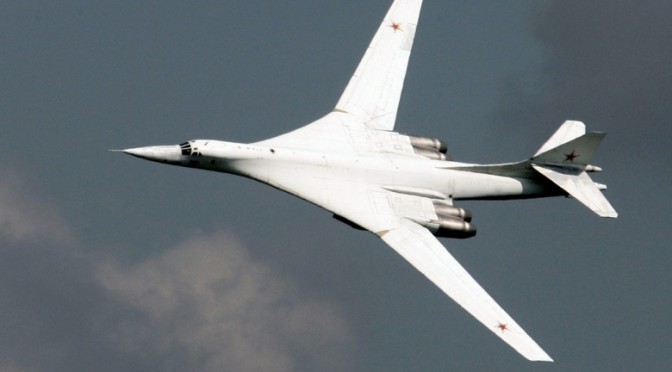
Russian defense minister Sergei Shoigu announced recently that Russia is going to begin production of the Tu-160, a Soviet-era bomber known as the “Blackjack.” The Tu-160 is a nuclear platform, basically something like the Soviet version of an American B-1 bomber: a big, heavy, swing-wing bomber meant to deliver nuclear weapons at long distances. The Soviets built about thirty-five of them in the 1980s, of which only fifteen remain in service.

So what does this mean to the strategic balance between the United States and the Russian Federation in 2015? In reality, it means absolutely nothing in military terms. As a political signal, however, Shoigu’s announcement is just the latest in a series of provocations. No American response is required and none would matter.

The Blackjack, assuming the Russians even manage to build any more of them, is a perfectly capable nuclear bomber that, in time of war, would fold back its swan-like wings and dart toward its targets at top speed. Once in range, it would launch cruise missiles that would make the last part of their journey low and slow under enemy radar. This is pretty much what all bombers would do in a nuclear war. (The one major advantage of the American B-2 is that it could penetrate farther into enemy airspace with less chance of detection.)

To worry about the extra capability of additional Blackjacks, however, requires believing that nuclear bombers matter at all in 2015. During the Cold War, when a “triad” of land, air and sea weapons were the guarantee against a massive surprise attack, both sides invested in various tripartite combinations of ICBMs, sea-launched weapons and bombers. In a massive first-strike, at least some of these weapons would survive and destroy the aggressor, which is why no one could contemplate doing it. (The Soviets likely did not contemplate it very seriously in any case. There’s an interesting declassified CIA report from 1973 you can read here.)

Today, no one seriously worries that the Russians or the Americans will, or can, execute a disabling first strike against the other. A “BOOB,” or “Bolt-Out-Of-the-Blue,” is neither politically likely, nor militarily feasible. The days when command and control, satellites and even strategic delivery systems themselves were all far more shaky are long gone. The ideological competition between two global systems, in which one would seek to destroy the other as rapidly as possible, is also over.

Moreover, the sheer number of strategic weapons isn’t up to the job. In 1981, the United States and the Soviet Union fielded a total of nearly 50,000 weapons against each other. Strategic targets, including opposing nuclear forces, numbered in the thousands. Today, in accordance with the New START treaty, Russia and America will only deploy 1550 warheads each. (Coincidentally, this week marks the fourth anniversary of New START.) Even if both sides were committed to a first strike, there aren’t enough weapons to do it: 1550 means 1550, and it doesn’t matter what platform—bomber, ICBM or submarine—is carrying them.

So why are the Russians even bothering to do this?

For starters, not everything is about us. The Russians have a huge nuclear infrastructure, and a military obsessed with symbols of nuclear power. Building more nuclear toys makes everyone happy: Russia’s nuclear military-industrial complex gets jobs and money, the military gets its nuclear security blanket, and Russian leaders like Shoigu and President Vladimir Putin get to thump their chests about holding back the nuclear savagery of Barack Obama. Outside of Russia, no one except nuclear wonks like me even know what a Tu-160 is, but Russians know of it and many are likely proud of it.

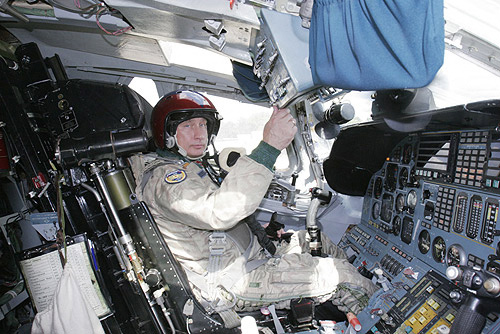
President Vladimir Putin in the cockpit of a TU-160 in August 2005

The part that is about us is more disturbing. The Russians, and Putin in particular, have decided to forego any further pretense of accepting the outcome of the Cold War. Some foreign-policy realists lay Putin’s aggressiveness at NATO’s door, and rightly point out that NATO expansion needlessly handed Russian nationalists a cause. But Putin, it should now be obvious, was never going to accept the Soviet loss. His feints at cooperation were unsustainable, and his Soviet-era nostalgia for the days of the USSR has reasserted itself with a vengeance. If Putin can’t get along with a U.S. president as passive and accommodating as Barack Obama, he can’t get along with anyone.

That’s why the United States has no play to make here, other than to remind the Russians of two things.

First, if we react to Shoigu, we should note only that the United States has a fully capable deterrent that cannot be destroyed, and that we have no interest in Russian bombers, so long as they do not exceed New START’s warhead limits. We do not need to create a new nuclear system, or start returning nuclear weapons to Europe. If Russia means war, they know it will end in 2015 the way it would have ended in 1965: with the destruction of most of Russia and North America, and the deaths of millions of innocent people.

More important, we must reaffirm our commitment to NATO, because Europe, not America, is really the intended audience for Russia’s nuclear antics. Bringing back the Tu-160 is another of the Kremlin’s many attempts to scare the Europeans with the same threat the Russians have been harping on since the 1950s: “If war comes, the Americans will be so afraid of us they will not lift a finger to help you.” Each time we ignore these threats, we encourage more of them.

The way to reassure NATO is match Russian moves not with nuclear threats, but with conventional forces, as U.S. ambassador Steven Pifer and others have argued. This is what the Russians fear most, because they know that the Cold War equation is now flipped, with Russia the weaker conventional power. If Shoigu wants to build more of his pretty bombers, that’s his business, but no Russian leader should think that an attack on NATO can produce anything but a Russian conventional loss, at which point the Russians will have to think about whether they want to face the escalatory burden that once haunted NATO.

Our reaction to Russia’s nuclear threats should be no reaction at all, other than to affirm our ability to defend ourselves—and the most populous, wealthy and powerful alliance in human history—as the mature and confident superpower that we are.

Tom Nichols is Professor of National Security Affairs at the Naval War College and an adjunct at the Harvard Extension School. His most recent book is No Use: Nuclear Weapons and U.S. National Security (University of Pennsylvania, 2014) The views expressed are solely his own. You can follow him on Twitter: @RadioFreeTom

Strategic Insights Arctic Special Issue – Call for Papers

The December 2015 special issue of Strategic Insights magazine will deal with maritime security problems associated with the Arctic. Although international attention in recent months has shifted to places such as Russia/Ukraine, Syria/Iraq, Greece, or the South China Sea, the High North retains its unique position and potential as a future site of conflict and cooperation, disruptive technology, and a major maritime trade shortcut. We are looking for thought-provoking contributions that address challenges and risks in the High North, and provide fresh perspectives for our readers. Whether it is a particularly Canadian, American, Russian, Norwegian, Danish, or any other nation-state view, a discussion of current and future operations, or perspectives on maritime security from your particular point of view, all suggestions are welcome.

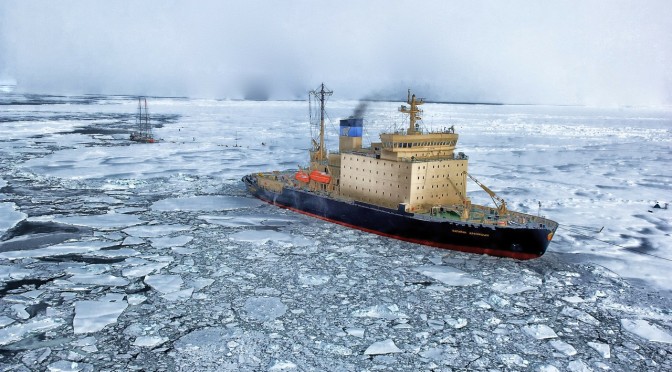
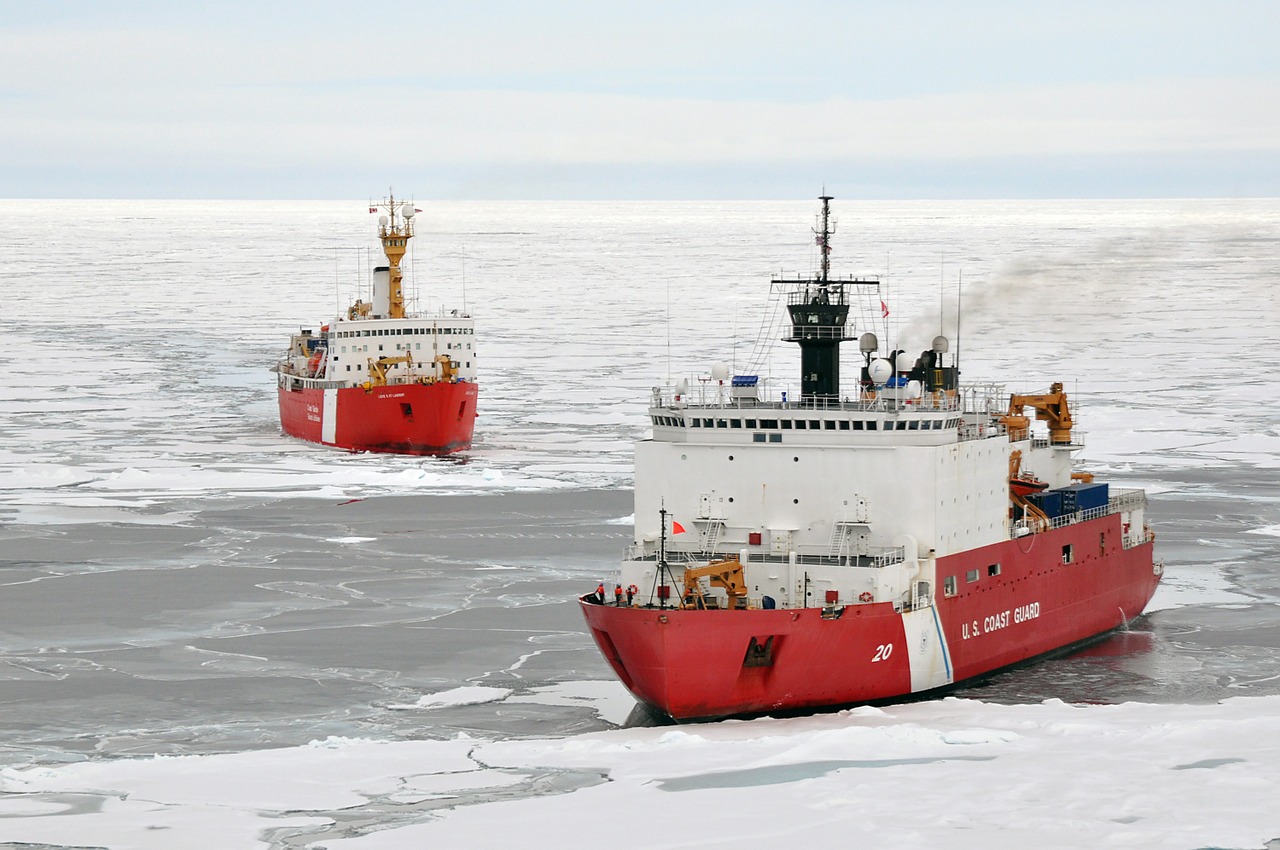
It doesn't happen often that an entire ice-breaking fleet is in one picture... but when it does, it's set to be cool.
It doesn’t happen often that an entire ice-breaking fleet is in one picture… but when it does, it’s set to be cool.

Anyone with an interest in writing an article should send a short note Sebastian Bruns, member of the SI editorial board and fellow CIMSECian, at sb@riskintelligence.eu. Please include a short bullet-point list of what you would like to discuss and provide 2-3 sentences on your professional background. If your article is accepted for publication, remuneration is 300.00 € (or – currently – 335.00 USD) per article and will be paid via bank transfer on the first of the month after publication of the respective issue. The deadline for your final article is 15 November 2015.

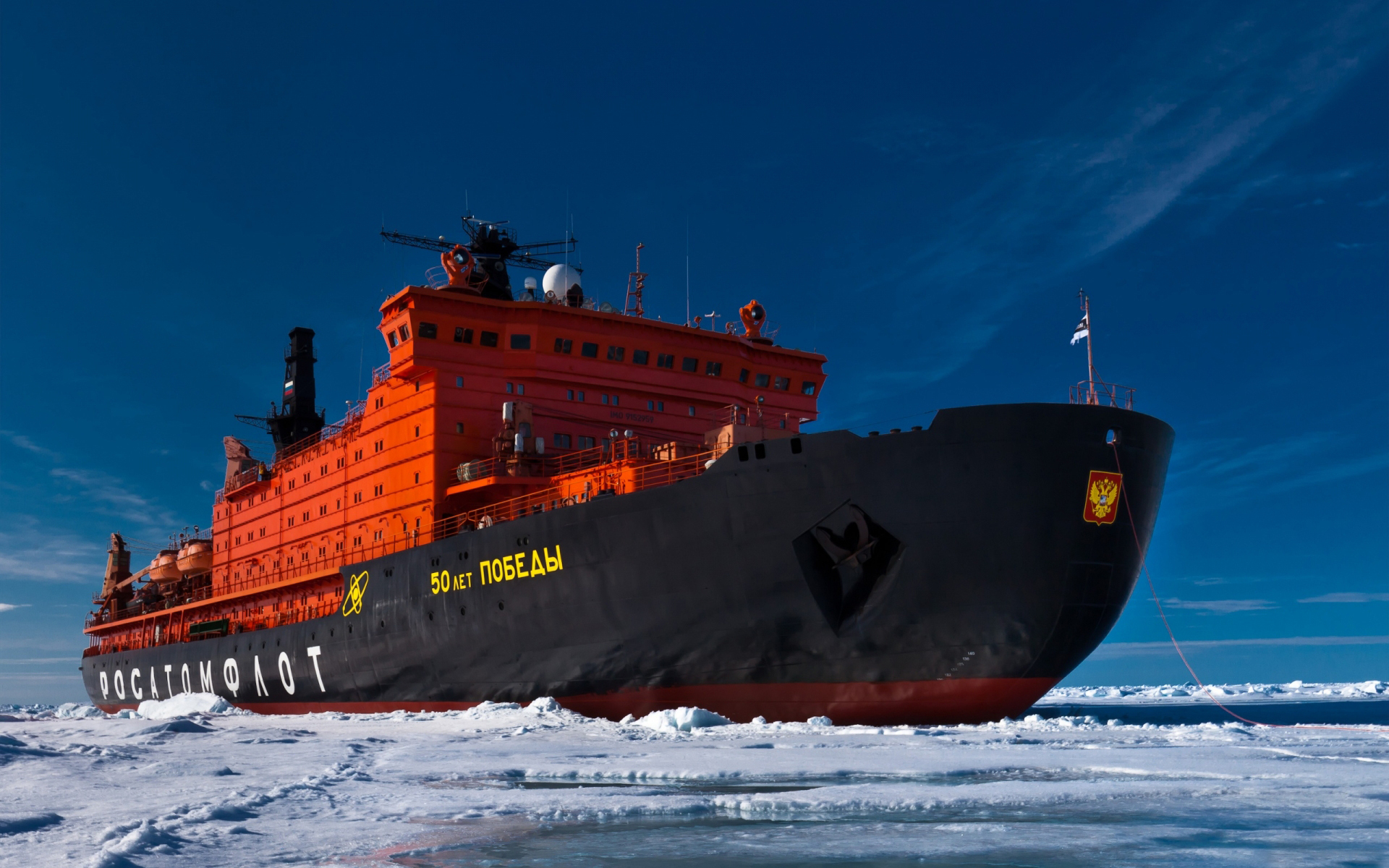
From Russia with love.

Strategic Insights draws on the focus and geographical coverage of Risk Intelligence’s MaRisk maritime security monitor, but takes a wider look at the nature of maritime risk in different threat locations around the world. Each issue goes beyond facts and figures to consider the drivers of maritime security challenges and how these challenges will evolve in the future.
The focus of Strategic Insights is on security threats and political-military developments with a maritime dimension, particularly non-traditional security issues such as piracy, maritime terrorism, insurgency, smuggling, and port security. The journal is read by players in the maritime industry, law enforcement agencies, think tanks and institutions, and inter-governmental regional security bodies. A particular emphasis is placed on articles that offer policy-relevant and operational analysis relevant to the maritime community. The style is a mix of journalism and academic, length about 2,500-3,000 words. Visit the website for more info and to download your complimentary free issue.

Sebastian Bruns is a Research Fellow at the Institute for Security Policy at Kiel University where he is responsible for all things maritime. He is also one of the editors for Strategic Insights magazine.