
Category Archives: Strategic Outlook

Predictions and forecasting.

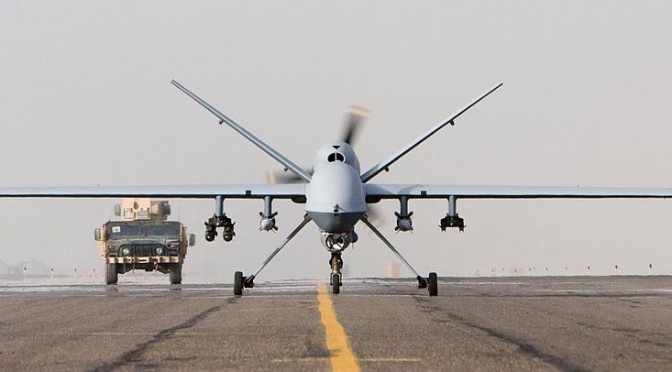
Death From Above

Kill Chain

Andrew Cockburn. Kill Chain: The Rise of the High-Tech Assassins. Henry Holt Publishers. 307pp. $28.00.

It’s not often that a book review coincides with current events. Books, particularly nonfiction, are usually written and published months, if not years after an event has occurred. That’s because good nonfiction is written in retrospect: writers have spent some time absorbing their subject, researching and analyzing the facts; authors are hesitant to be rash in judgment or thought.

However, there are exceptions. Some pieces of nonfiction, particularly journalists’ works, are appropriate now — not later. Andrew Cockburn’s new book, Kill Chain: The Rise of the High-Tech Assassins, is one of them.  Cockburn’s book is timely.  In just the past few weeks there has been a flood of reporting from media outlets stating that a drone strike killed an American and an Italian hostage when targeting a group of Al-Qaeda members operating near the Afghanistan-Pakistan border.

Suddenly, questions about drone strikes, the debate about targeted killing, and the transparency of the drone program are on the front page of print and online news media worldwide.

Yes, timely indeed.

Although Cockburn’s book cover is plastered with silhouettes of unmanned aerial vehicles — with what appears to be the X-47B, Predator, Global Hawk, and Fire Scout, among others — he is making a larger argument.  Cockburn it seems, is arguing that all technology is suspect.  It’s not simply unmanned aerial vehicles, but it’s the idea that human beings are continuously so bold as to come up with technological solutions that will win our wars.   History, however, tells us a much different story.

Cockburn, then, starts his book with an interesting tale.

In 1966 the Vietnam War was not going well.  Secretary McNamara, a man who was fond of scientific solutions to difficult problems, turned his attention to “The Jasons.”  The Jasons, Cockburn says, were a small group of scientists and scholars, many of whom would go on to become Nobel Prize winners. These were also some of the same men — Carl Kaysen, Richard Garwin, George Kistiakowski — that were part of the Manhattan Project some twenty years earlier.

The Jasons tried to do what Rolling Thunder could not — they tried to figure out a way to defeat North Vietnam’s ability to use the Ho Chi Minh trail — to cut off their supply routes.  They ended up deploying small sensors along the trail that could, presumably, pick up the noise, vibration, and in some cases, the ammonia of someone urinating, all in an attempt to locate men and machines moving goods to the South.  Then, if they could hear them and find them, U.S. commanders could task air strikes against the communists on the trail.  It didn’t take long, Cockburn says, for the North Vietnamese to find a work-around.  How long?  It took one week.  Cockburn notes that all the North Vietnamese had to do was to use cows and trucks, often running over an area of the trail multiple times to create a diversion while the real logistical effort was moved elsewhere.  So simple and so effective — and relatively inexpensive.  However, Cockburn says the cost of the electronic barrier for the U.S. was around six billion dollars.

This formula is repeated throughout the rest of the book.  That is 1) There is a military problem 2) Someone always tries to find a technological solution, and then 3) Spends a lot of money only to find out the U.S. has made the problem worse.

Now fast forward almost sixty-years to the age of drones, and Cockburn introduces us to Rex Rivolo, an analyst at the Institute of Defense Analysis.  It’s 2007 and improvised explosive devices are a major problem; they are killing and maiming hundreds of U.S. troops in Iraq.  Asked to analyze the networks behind the IEDs, Rivolo, Cockburn says, discovers that targeted killings of these networks  lead to more attacks, not fewer.  This is because someone more aggressive fills the place of the leader who was recently killed.  Rivolo would return to D.C., even getting the ear of the Director of National Intelligence, Dennis Blair, telling him that attacking high- value targets was not the right strategy — the IED networks and individuals setting them off were more autonomous then was initially thought.  Going after the senior guy, Rivolo noted, was not the answer.  But, as Cockburn says, nothing changed. Now people simply refer to the continous cycle of targeting and killing  high-value targets as “mowing the grass.”

The idea of killing  senior leaders or HVTs is not new, it’s been around for a long time (think Caesar).  Cockburn, then, brings up one of the more interesting “what if’s” that military officers — or any student of military history — likes to debate.  That is, what if someone had killed Hitler before the end of the war?  Would the war have ended?  Or would he have become a martyr and someone worse or someone better have taken his place?  Cockburn tells us about British Lieutenant Colonel Robert Thornley, who argued during WWII that, no, the Fuhrer should not be killed.  Thornley noted, that if Hitler was killed, his death would likely make him a martyr for national socialism.  And that Hitler was often a man that “override completely the soundest military appreciation and thereby helped the Allied cause tremendously.”  Therefore, the thinking went, we should let Hitler live and dig his own grave.

However, the problem with this debate is that context matters.  Was it Germany in 1933? 1938? Or 1944? It matters because while Cockburn does not differentiate between the killing of a leader of a state and the leader of a terrorist network, they are indeed different systems that have different levers of power and legitimacy.

He is on firmer ground when he rightly notes how difficult it is for anyone to predict systemic effects when targeting a network.  He reiterates these difficulties throughout the book.  The most historical compelling case is WWII and the strategic bombing campaign.  All one has to do is pick up the WWII U.S. Strategic Bombing Survey and read the fine work done by John K. Galbraith, Paul Nitze, and others.  Disrupting or destroying networks from the air — in this case, Germany’s economy — was incredibly difficult.  In many cases, assumptions of German capabilities or weaknesses were far from correct.  And as Cockburn notes, the term “effects based operations,” namely, operations that are military and nonmilitary that can disrupt complex systems while minimizing risk, was a term that was outlawed in 2008 by General Mattis while the head of Joint Forces Command.

Ultimately, the debate over drones — who should control them, what should they be used for, should the U.S. target particular individuals — will continue.  It’s an important topic.  There are, however, a few shortcomings in this book.  One of the biggest questions that goes unanswered is this: If the U.S. should not strike identified enemies or high-value targets…then what?  Do nothing? Allow a Hitler to simply remain in power?  Is this not a form of moral ignorance?

The questions military planners and policy makers should ask is this:  Do we understand the character of this war?  And are these the right tools we should use to win this war?  We should not blame a drone — or any other type of tech for that matter — for bad strategies, poor operational planning, and gooned up tactics.

Drones are the future.  But we should read Cockburn’s book as a cautionary tale.  We should disabuse ourselves of the illusion that future technologies will be our savior.  And finally, we should not let those illusions crowd out the very difficult task  of understanding our adversaries and the enduring nature of war.

Andrew Cockburn’s book is worth reading.  But have your pencil ready — you’ll want to  argue with him in the margins.

Lieutenant Commander Christopher Nelson, USN, is a naval intelligence officer and recent graduate of the U.S. Naval War College and the Navy’s operational planning school, the Maritime Advanced Warfighting School in Newport, RI.  LCDR Nelson is also CIMSEC’s book review editor and is looking for readers interested in reviewing books for CIMSEC.  You can contact him at books@cimsec.org.  The views above are the authors and do not necessarily represent those of the US Navy or the US Department of Defense.

China’s Maritime Silk Road Gamble

This is republished from the Johns Hopkins SAIS Foreign Policy Institute.

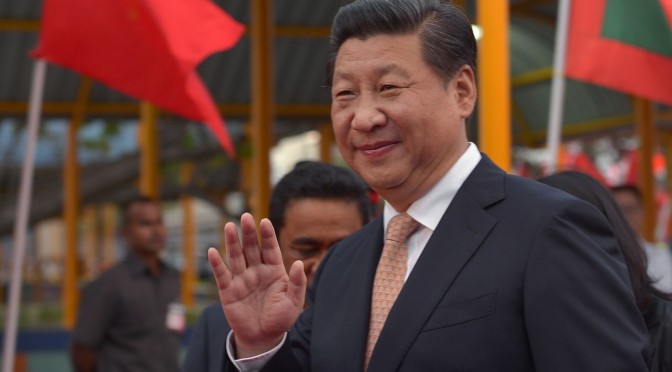
Ever since Xi Jinping announced the creation of a Maritime Silk Road in an October 2013 speech to the Indonesian parliament, China’s vision for “one road” running through Southeast and South Asia has driven a significant portion of Chinese foreign policy in its periphery. This has led to both the controversial Asian Infrastructure Investment Bank (AIIB) (announced in the same speech) and complementary investment funds such as the Maritime Silk Road Bank, as well as high-level diplomatic visits by Chinese leaders to countries in the region. In addition, China sees its “Silk Road Economic Belt” among its Central Asian neighbors as indivisible from the “21st Century Maritime Silk Road,” as seen by China’s slogan 一带一路 (“one belt, one road”) and its public diplomacy effort to promote both policies together. All of this indicates that, like many Chinese foreign policy initiatives, the “21st Century Maritime Silk Road” is multi-pronged: it is intended to serve diplomatic, economic, and strategic purposes.

First and foremost, the Maritime Silk Road is designed to pacify neighboring countries threatened by China’s aggressive territorial claims in the South China Sea. Curiously, China has attempted to both aggravate tensions among its Southeast Asian neighbors and soothe them at the same time, contrary to its normal pattern of swinging back and forth between aggressive brinksmanship and diplomatic rapprochement (such as in China’s relationship with Taiwan or its cutting off and then reestablishing of military to military ties with the United States). Despite the idealistic claims of ‘peaceful economic development absent political strings’ made by Chinese leaders and state media about the Maritime Silk Road, China has continued unabated to strengthen its unilateral claim to vast maritime territory in the South China Sea, turning reefs and other undersea maritime features into full-fledged islands, complete with airstrips that could be used by the People’s Liberation Army.

Conversely, the Maritime Silk Road is also designed to cement relationships with countries that are tacitly friendly to China such as Malaysia, Cambodia, Sri Lanka, and Pakistan. This will be accomplished primarily through economic incentives like infrastructure development and trade deals. In this sense, the Maritime Silk Road not only stands side by side with the Silk Road Economic Belt, but also as part of a historical continuum that includes China’s past investment in maritime-related infrastructure, which has been referred to by some as a “String of Pearls” policy. If one wants to know what kind of infrastructure projects China will fund in the future, look to what it has done in the past: oil and natural gas links to Myanmar’s port in Sittwe, ports in Sri Lanka such as the Hambantota and Colombo Port City projects, and the Pakistani port in Gwadar. Indeed, China and Malaysia have already announced a joint port project in Malacca. Meanwhile, China, which is already the largest trading partner for most countries in Southeast and South Asia, is also signing new free trade agreements with countries such as Sri Lanka.

Chinese infrastructure investment, intended primarily to strengthen China’s energy security and increase trade between China and its neighbors, will now get a huge boost with the creation of both the AIIB and more specialized investment vehicles such as the Maritime Silk Road Bank and the Silk Road Fund. While the AIIB has had the flashiest rollout with China contributing $50 billion USD to a planned $100 billion USD in capital, the other two funds are no slouches: the Silk Road Fund has plans for $40 billion USD in capital, while the Maritime Silk Road Bank hopes to attract $100 billion RMB in investment.

Finally, unmentioned in authoritative Chinese sources is that the Maritime Silk Road, and especially Chinese infrastructure investment, is implicitly intended to facilitate more frequent People’s Liberation Army Navy (PLAN) deployments in the Indian Ocean and beyond. The PLAN needs reliable logistics chains across Sea Lines of Communication (SLOCs) throughout Southeast and South Asia; ships cannot go far without a reliable supply of fuel, food, and armaments. But for the foreseeable future, China is at a serious disadvantage in this regard: the US Navy and allied navies have such a preponderance of force and ability to project power throughout the region that the PLAN is ill-equipped to compete. Given the PLANs current capabilities, China’s logistics capacity would only be dependable during peacetime; they would not survive in a contested environment, particularly if the US decided to close off key chokepoints like the Malacca and Sunda Straits. Therefore, the first step to strengthen the PLAN’s capabilities is to build reliable logistical infrastructure in key friendly states, such as the aforementioned projects in Malaysia, Sri Lanka, and Pakistan. These logistical links would still be quite vulnerable in a conflict scenario, given the tenuous relationship China would have with even putatively friendly countries if China went to war. Therefore, the primary benefit for the PLAN is to demonstrate presence in peacetime, and to show that it can operate far from its own shores.

The Maritime Silk Road, along with the attendant Silk Road Economic Belt, is truly a multi-headed dragon, so large that it is difficult to disaggregate its many parts. The most difficult challenge for China, however, will not be building infrastructure and signing trade deals—these are no doubt massive undertakings, but they are fundamentally instrumental tasks that will not receive much opposition from countries in the region. The more difficult objective for China is translating investment and trade into building a coalition of states in the region that align their values and foreign policy goals with those of China, and indeed identify with China at the expense of competitors like the US. China will likely find this kind of bandwagoning hard to pull off—when it comes down to it, the Maritime Silk Road may wash away like sand.

William Yale is the Director of Operations at CIMSEC, an Adjunct Fellow at the American Security Project, and a Research Associate at the SAIS Foreign Policy Institute.

Raid Breaker: Robert Work’s Soft Kill on Hard Costs

Winston Churchill noted that, “it is better to jaw-jaw than to war-war” – so too once the war-war has started, “it is better to buzz-buzz, then to bang-bang.” U.S. Deputy Secretary of Defense Robert Work’s desire for new electronic-warfare (EW) solutions AKA Raid Breaker, aimed at large missile salvos in particular, is necessary not only for the arena of physical war, but the internal war of budgets and force planning that enable such critical fights.

For the following argument I assume the effectiveness of soft-kill (EW) over hard-kill options. I also assume that ultimately shooting down a guided missile is more expensive than confusing it; as Secretary Work states,for relatively small investments, you get an extremely high potential payoff.

However, beyond the immediate cost/effectiveness argument, we are forced to spend more in other areas due to the increasing amount of space/weight/weapon systems we dedicate to missile defense on our surface ships. That dedication to defense pushes out offensive capabilities, which we must then buy in other areas. Some might argue that the “need” for the F-35 and its stealth capabilities were, in part, driven by destroyers whose long-range weapons weapons were almost wholly turned over to defense – requiring a carrier for offensive punch. That technological bias towards the defensive has become so extreme that it has required VADM Rowden’s new “Distributed Lethality” effort – a course change back into a realm that should be a natural instinct for the surface force: distributed operations and killing enemy ships.

Of course, the pricetag and weight of kinetic systems has also prevented the fleet from finding more cost-effective ways to increase the ship count – requiring DDG’s or, in the case of the original LCS plan, expanding smaller ships to take on additional responsibilities. With significant investments in defensive systems not requiring a vast VLS magazine, we could build smaller ships with bigger relative punches at a lesser cost. We could more aggressively pursue the Zumwaltian dream of the High-Low Mix: more ships for more effect for less money – every CNO and SECNAV’s dream.

Raid Breaker is a case of finding, and exploiting, competitive advantage. We have been using our best offensive capabilities – the kinetic weapons – for defense. We have let the best defensive options languish, and in so doing pushed expensive requirements into other areas where we must find our offensive edge. A firm dedication to electronic warfare for “soft-kill” options gives us our ships, and our procurement flexibility, back.

In the end, the excitement over Raid Breaker should not primarily involve its awesome war fighting impact if successful – but all the other ideas it will all the Navy to pursue. What makes Raid Breaker so beautiful is that the raid it breaks, in the long-term, is the one on our bottom line.

Matthew Hipple is a Naval Officer and Director of Online Content at CIMSEC. He also produces our Sea Control podcast, hosting the US edition.  

House of Cards: Finding a Winning Political Strategy for the Navy

I was already at work when I heard about the article in Politico Magazine. After descending from Capitol South Metro Station on another windy and frosty day in Washington, D.C., I overheard some staffers talking near the security checkpoint in the Rayburn House Office Building. Unsurprisingly, they were on their phones, retweeting and sharing a link about the Navy with their friends. “The Navy ship count could be a political gamechanger,” a boyish-looking aid in a dark suit remarked. Another staffer, who looked like he was fourteen, claimed it would be a tragedy to decommission the aging Oliver-Hazard Class Frigate. I removed my iPhone from my pocket, took off my winter gloves, and then perused my Facebook news feed to see if anyone posted anything. CDR Salamander – unsurprisingly – had fired the first salvo: “We’ve been saying this for years.”

 The article in question was “The Navy’s Hidden Crisis,” written by Robert C. O’Brien, a former advisor to Presidential Candidate Mitt Romney. In his muddling attempt to explain the Navy’s Crisis – once again using ship count as the only metric to assess fleet strength – he politically mischaracterizes the need for an agile and robust fleet. This type of rhetoric is predictable from Mr. O’Brien, who has always claimed the “waters are getting more dangerous” in explaining the need to build more ships. One could surmise this was a response to President Obama mocking Romney two years ago in the third and final presidential debate. “You mention the Navy, for example, and that we have fewer ships than we did in 1916,” President Obama rebuked that evening, “well governor, we also have fewer horses and bayonets.” The President went on, “We have these things called aircraft carriers and planes land on them . . . we have these ships that go underwater, nuclear submarines.”

With only a few weeks left before the election, this decisive broadside to Romney’s foreign policy battleship, combined with the former governor’s “47 percent comments,” sank him in the national election.

It is unlikely the Navy’s ship count will take center stage in 2016 as a campaign talking point. After all, the Navy and foreign policy matters rarely decide elections. The more salient economic issues are, the more likely they will affect which way voters’ decide the next Electoral College. As New Yorker staff writer Amy Davidson has pointed out, “Boat confusion is an old and telling political problem.” The number of ships does not necessarily register as a national imperative, even though open sea lines of communication provide the American culture of consumption. When politicians like Representative Randy Forbes or Senator John McCain talk about the number of ships and its relationship to national security, the public mind simply floats away.

By focusing on ship count, O’Brien’s argument is antiquated and politically irrelevant.

The Capitol Dome is under reconstruction – perhaps the Navy’s political message should also be rebuilt.

Although the public either misinterprets or ignores the need for a strong Navy, in recent years, the Pentagon has provided a strong and clear political narrative to Congress. Through multiple hearings to the House and Senate Armed Service Committee (HASC / SASC) subcommittees in Readiness and Seapower, combined with an aggressive strategy informing our nation’s policymakers, Navy leaders have successfully conveyed the need for a multifaceted force. On the Hill, the House and Senate Offices of Legislative Affairs meet regularly with the Armed Service Committees and ensure their full participation in ongoing strategies and fiscal matters. These engagements, which began centuries ago, have always been the winning political strategy for the Navy.

Lieutenant Junior Grade Rosende makes a convincing argument in the January issue of Proceedings about the Navy’s engagement with the people, but it is not accurate to suggest that the advocates of naval power convinced an “inward-looking citizenry” that a navy was a vital to American interests. History reveals the opposite is true. Leaders in the Gilded Age either made executive decisions or lobbied Congress in backroom deals to pursue the requisite platforms. There was no public discourse on the future of the force and to presume it took place is flatly absurd.

The Navy should not concern itself too much with generating an informed public. Rather, we should continue to educate politicians on both sides of the aisle. While I would certainly like the public to understand where the Navy fits within the national debate on the size and breadth of DoD writ large, it is not a political reality to suggest the Navy will take center stage in 2016. Unfortunately, the Navy does not attract voters. A position we are likely to hear in primaries will be the support of a large and robust naval force, and the continued fiscal support for research and development to keep ahead of our potential adversaries. There will be little discussion on the “right number of ships” because it will be met with the same type of strategy President Obama used in 2012.

Rethinking political messaging in order to avoid the same quagmire that sealed the Navy’s fate the last four years is recommended. Over time, especially after the collapse of the USSR and the reduction of capital ships, the sea services drifted away from counting and tried a new strategy: catchwords. In recent years, the term “readiness” has become the major criterion of training and the political lexicon in the Navy.

  • Individual Ready Reserve
  • Physical Readiness
  • Deployment Readiness
  • Navy Surge Readiness
  • Family Readiness
  • Fleet Readiness
  • CNO’s Warfighting Tennant No. 3: “Be Ready”
  • Sequestration Hurts Readiness

Evidently, Readiness is a bad way for the Navy to assess and encompass the breadth of our problems. Exhibit A: U.S. Navy Ship Count is down to 279 – and falling.

The word “Readiness” may make waves in Congress and especially in HASC and in SASC, but due to the Navy’s inherent complexity in meeting maritime challenges, we should redefine and expand our political employment. As Lincoln Paine aptly points out in The Sea and Civilization, “Maritime Activity includes not only the high seas and coastal voyaging, but also inland navigation.” Thereby the world was shaped in obvious ways by the economic, demographic, and technological attributes by the development of maritime transportation. Maintaining this flow of ideas, goods, people, and perspectives is essential for the global way of life. The oceans inherently knit the world together.

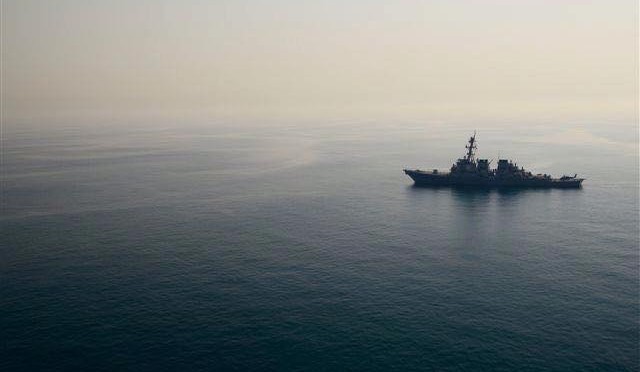
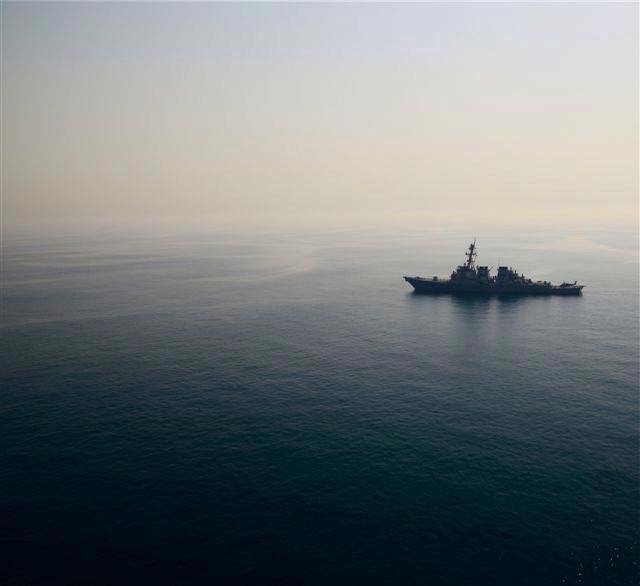
USS MILIUS (DDG-69) underway in the Persian Gulf.

So does the nation need to be educated on the need for a powerful fleet? American history reveals that naval power has been sustainable for centuries without an informed public, but if the Navy decides to move that way, ship count should not be the only metric in which judge the value of the sea service. Many defense critics and the public at large view the Navy’s budget proposal with skepticism. While most naval strategists believe that we should be building ships as quickly as possible for the Pivot to Asia, branding it correctly to Congress means everything, not just proclaiming, “Build! Build! Build!” over and over.

 The Navy is inherently different from the other services – and perhaps infinitely more complicated – so it should stop compartmentalizing itself politically in the same fashion as the Army or the Air Force.   Tell the complete story – not the tale of “Readiness.”


LT Alex Smith is a Surface Warfare Officer who serves as a Navy Liaison Officer at the U.S. House of Representatives. He recently completed his Masters in American History at the George Washington University while serving as an NROTC Instructor.