Tag Archives: drones

Operating in an Era of Persistent Unmanned Aerial Surveillance

By William Selby

In the year 2000, the United States military used Unmanned Aerial Systems (UASs) strictly for surveillance purposes and the global commercial UAS market was nascent. Today, the combination of countries exporting complex UAS technologies and an expanding commercial UAS market advances the spread of UAS technologies outside of U.S. government control. The propagation of this technology from both the commercial and military sectors will increase the risk of sophisticated UASs becoming available to any individual or group, regardless of their intent or financial resources. Current and future adversaries, including non-state actors, are likely to acquire and integrate UASs into their operations against U.S. forces. However, U.S. forces can reduce the advantages of abundant UAS capability by limiting the massing of resources and by conducting distributed operations with smaller maneuver elements.

Leveraging the Growth in the Commercial UAS Market

While armed UAS operations are only associated with the U.S., UK, and Israel, other countries with less restrictive export controls are independently developing their own armed UAS systems. Chinese companies continue to develop reconnaissance and armed UASs for export to emerging foreign markets. Earlier this year, social media reports identified a Chinese CH-3 after it crashed in Nigeria. Reports indicate China sold the system to the Nigerian government for use against Boko Haram. Other countries including Pakistan and Iran organically developed armed UAS capabilities, with claims of varying levels of credibility. In an effort to capitalize on the international UAS market and to build relationships with allies, the U.S. eased UAS export restrictions in early 2015 while announcing the sale of armed UASs to the Netherlands. Military UAS development is expected to be relatively limited, with less than 0.5 percent of expected future global defense spending slated to buying or developing military drones. For now, long range surveillance and attack UASs are likely to remain restricted to the few wealthy and technologically advanced countries that can afford the research costs, training, and logistical support associated with such systems. However, short range military or civilian UASs are likely to be acquired by non-state actors primarily for surveillance purposes.

Still captured from an ISIS documentary with footage shot from a UAS over the Iraqi city of Fallujah(nytimes.com)

Still captured from an ISIS documentary with footage shot from a UAS over the Iraqi city of Fallujah(nytimes.com)

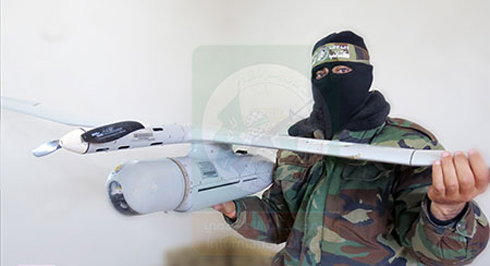
Hamas, Hezbollah, Libyan militants, and ISIS are reportedly using commercial UASs to provide surveillance support for their military operations. Current models contain onboard GPS receivers for autonomous navigation and a video transmission or recording system that allows the operators to collect live video for a few thousand dollars or less. Small UASs, similar in size to the U.S. military’s Group 1 UASs, appeal to non-state actors for several reasons. Namely, they are inexpensive to acquire, can be easily purchased in the civilian market, and are simple to maintain. Some systems can be operated with very little assembly or training, which reduces the need for substantial technical knowledge and enables non-state actors to immediately integrate them into daily operations. These UASs are capable of targeting restricted areas as evidenced by the recent UAS activity near the White House, French nuclear power plants, and the Japanese Prime Minister’s roof. The small size and agility of these UASs allow them to evade traditional air defense systems yet specific counter UAS systems are beginning to show progress beyond the prototype phase.

Economic forecasters may dispute commercial UAS sales predictions, but most agree that this market is likely to see larger growth than the military market. Countries are currently attempting to attract emerging UAS businesses by developing UAS regulations that will integrate commercial UASs into their national airspace. The increase of hobby and commercial UAS use is likely to lead to significant investments in both hardware and software for these systems. Ultimately, this will result in a wider number of platforms with an increased number of capabilities available for purchase at a lower cost. Future systems are expected to come with obstacle avoidance systems, a wider variety of modular payloads, and extensive training support systems provided by a growing user community. Hybrid systems will address the payload, range, and endurance limitations of the current platforms by combining aspects of rotor and fixed wing aerial vehicles. The dual-use nature of these commercial systems will continue to be an issue. Google and Amazon are researching package delivery systems that can potentially be repurposed to carry hazardous materials. Thermal, infrared, and multispectral cameras used for precision agriculture can also provide non-state actors night-time surveillance and the ability to peer through limited camouflage. However, non-state actors will likely primarily use hobby and commercial grade platforms in an aerial surveillance role, since current payload limitations prevent the platforms from carrying a significant amount of hazardous material. 

Minimizing the Advantages of Non-State Actor’s UAS Surveillance

As these systems proliferate, even the most resource-limited adversaries are expected to have access to an aerial surveillance platform. Therefore, friendly operations must adapt in an environment of perceived ubiquitous surveillance. Despite the limited range and endurance of these small UASs, they are difficult to detect and track reliably. Therefore, one must assume the adversary is operating these systems if reporting indicates they possess them. Force protection measures and tactical level concepts of operations can be modified to limit the advantages of ever-present and multi-dimensional surveillance by the adversary. At the tactical level, utilizing smoke and terrain to mask movement and the use of camouflage nets or vegetation for concealment can be effective countermeasures. The principles of deception, stealth, and ambiguity will take on increasing importance as achieving any element of surprise will become far more difficult. 
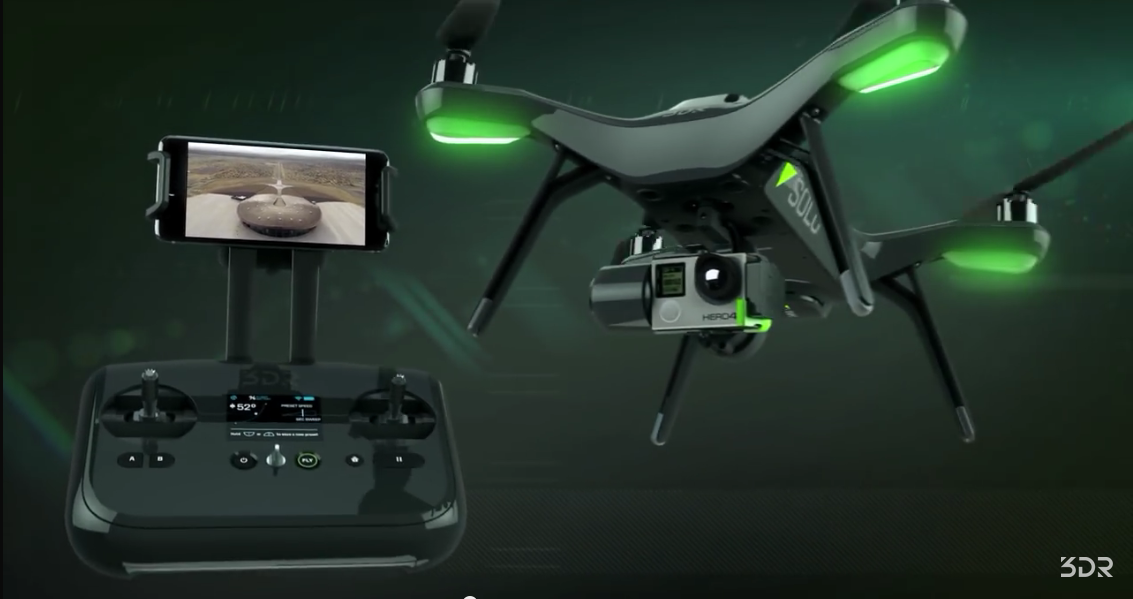
The upcoming 3DR Solo UAS will feature autonomous flight and camera control with real time video streaming for $1,000 (3drobotics.com)

At static locations such as forward operating bases or patrol bases, a high frequency of operations, including deception operations, can saturate the adversary’s intelligence collection and processing capabilities and disguise the intent of friendly movements. Additionally, massing strategic resources at static locations will incur increasing risk. In 2007 for example, insurgents used Google Earth imagery of British bases in Basra to improve the accuracy of mortar fire. The adversary will now have near real time geo-referenced video available which can be combined with GPS guided rockets, artillery, mortars and missiles to conduct rapid and accurate attacks. These attacks can be conducted with limited planning and resources, yet produce results similar to the 2012 attack at Camp Bastion which caused over $100 million in damages and resulted in the combat ineffectiveness of the AV-8B squadron.

In environments without the need for an enduring ground presence, distributed operations with smaller maneuver elements will reduce the chance of strategic losses while concurrently making it harder for the adversary to identify and track friendly forces. Interestingly, operational concepts developed by several of the services to assure access in the face of sophisticated anti-access/area denial threats can also minimalize the impact of the UAS surveillance capabilities of non-state actors. The Navy has the Distributed Lethality concept, the Air Force is testing the Rapid Raptor concept, and the Army’s is developing its Pacific Pathways concept. The Marine Corps is implementing its response, Expeditionary Force 21 (EF21), through several Special Purpose Marine Air Ground Task Forces.

The EF21 concept focuses on using high-speed aerial transport, such as the MV-22, to conduct dispersed operations with Company Landing Teams that are self-sufficient for up to a week.  In December 2013, 160 Marines flew over 3,400 miles in KC-130s and MV-22s from their base in Spain to Uganda in order to support the embassy evacuation in South Sudan, demonstrating the EF21 concept. Utilizing high speed and long-range transport allows friendly forces to stage outside of the adversary’s ground and aerial surveillance range. This prevents the adversary from observing any patterns that could allude to the mission of the friendly force and also limits exposure to UAS surveillance. Advances in digital communications, including VTCs and mesh-networks, can reduce the footprint of the command center making these smaller forces more flexible without reducing capabilities. The small size of these units also reduces their observable signatures and limits the ability of the adversary to target massed forces and resources.

Confronting the Approaching UAS Free-Rider Dilemma

Non-state actors capitalize on the ability to rapidly acquire and implement sophisticated technologies without having to invest directly in their development. These organizations did not pay to develop the Internet or reconnaissance satellites, yet they have Internet access to high-resolution images of the entire globe. It took years for the U.S. to develop the ability to live stream video from the Predator UAS but now anyone can purchase a hobby UAS that comes with the ability to live stream HD video to YouTube for immediate world-wide distribution. As the commercial market expands, so will the capabilities of these small UAS systems, democratizing UAS technology. Systems that cannot easily be imported, such as advanced communications relays, robust training pipelines, and sophisticated logistics infrastructure can now be automated and outsourced. This process will erode the air dominance that the U.S. enjoyed since WWII, now that commercial investments allow near peers to acquire key UAS technologies that approach U.S. UAS capabilities.

The next generation of advanced fighters may be the sophisticated unmanned vehicles envisioned by Navy Secretary Ray Maybus. However, other countries could choose a different route by sacrificing survivability for cheaper, smaller, and smarter UAS swarms that will directly benefit from commercial UAS investments. Regardless of the strategic direction military UASs take, commercial and hobby systems operating in an aerial surveillance role will remain an inexpensive force multiplier for non-state actors. Fortunately, the strategic concepts developed and implemented by the services to counter the proliferation of advanced anti-air and coastal defense systems can be leveraged to minimalize the impact of unmanned aerial surveillance by the adversary. Distributed operations limit the massing of resources vulnerable to UAS assisted targeting while long-range insertions of small maneuver elements reduces the exposure of friendly forces to UAS surveillance. Nation states and non-state actors will continue to benefit from technological advances without investing resources in their development, pushing U.S. forces to continually update operational concepts to limit the increasing capabilities of the adversary.

William Selby is a Marine officer who completed studies at the US Naval Academy and MIT researching robotics and unmanned systems. He previously served with 2nd Battalion, 9th Marines and is currently stationed in Washington, DC. Follow him @wilselby or www.wilselby.com 
CIMSEC content is and always will be free; consider a voluntary monthly donation to offset our operational costs. As always, it is your support and patronage that have allowed us to build this community – and we are incredibly grateful.
Select a Donation Option (USD)

Enter Donation Amount (USD)

Call for Articles: Future of Naval Aviation Week, Sep 14-18

Week Dates: 14-18 Sept 15
Articles Due: 9 Sept 15
Article Length: 500-1500 Words
Submit to: nextwar(at)cimsec(dot)org

Back in January, CAPT Jerry Hendrix (USN, Ret) and CDR Bryan McGrath (USN, Ret) had a stirring debate on the future of Aircraft Carriers. However, the debate quickly shifted from the carrier itself to the nature of the airwing it carried. Indeed, the carrier is nothing more than a host for the platforms provided by naval aviation – and only one of many ships that can carry aviation assets.

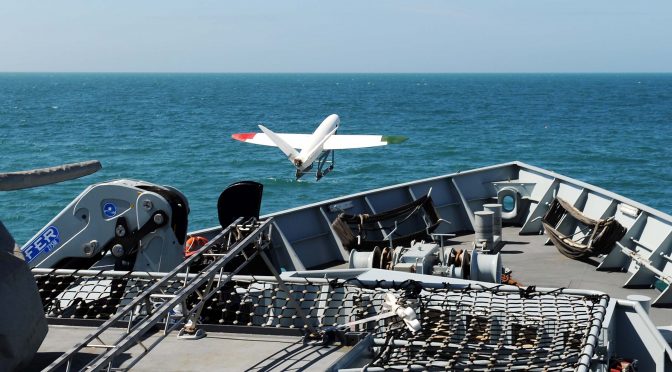
That discussion, driving into the world of the carrier air wing, was the inspiration for this week of discussion on naval aviation in general. From the maritime patrol aircraft deployed from the reclaimed Chinese reefs in the South China Sea, to US Army Apaches operating from amphibious assault ships, to 3-D printed drones flown off a Royal Navy offshore patrol vessel, to manned and unmanned ideas for the carrier air wing as carriers proliferate around the Pacific  -we want your ideas and observations on where global naval aviation will and can go next.

How will the littoral navies of the world change with new, lower-cost unmanned aviation assets? Are carriers armed with legions of long-range unmanned drones the future for global powers – will these technologies exponentially increase the importance of smaller carriers – or is unmanned technology a limited path that may be resisted (rightfully?) by pilots and their communities? Will surface fleets embrace the potential from easily produced drone swarms deployed from ships of the line… should they? What is the future of land-based naval aviation? What innovations will be ignored, what will be embraced, and what will the air assets of future fleets around the world look like? What will the institutions, the leadership, and C2 structures that support all these assets of their varied nations look like? The topic is purposefully broad to bring forward a myriad of topics and inspire future topic weeks on more specific subjects.

Contributions should be between 500 and 1500 words in length and submitted no later than 9 September 2015. Publication reviews will also be accepted. This project will be co-edited by LT Wick Hobson (USN) and, as always, Sally DeBoer from our editorial pool.

Matthew Hipple, President of CIMSEC, is a US Navy Surface Wafare Officer and graduate of Georgetown’s School of Foreign Service. He hosts the Sea Control podcast and regularly jumps the fence to write for USNI and War on the Rocks.

Sea Control 89 – ONR Autonomous Swarm Boats

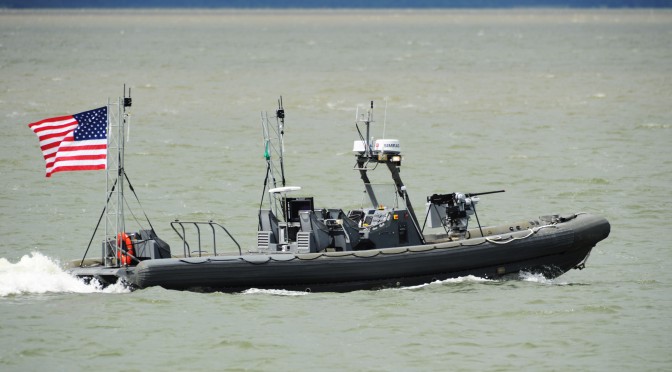
Wseacontrol2e discuss the Office of Naval Research (ONR’s) James River test of an autonomous swarm of boat drones, or Unmanned Surface Vehicles (USV’s). These USV’s were modified version of boats found on most US Navy ships. CAPT Carl Conti (USN, ret) is one of the developers and leaders on this project, and will discuss the history, technology, future, and human interaction of this exciting project.
DOWNLOAD: ONR Autonomous Boat Swarm

Music: Sam LaGrone

CIMSEC content is and always will be free; consider a voluntary monthly donation to offset our operational costs. As always, it is your support and patronage that have allowed us to build this community – and we are incredibly grateful.
Select a Donation Option (USD)

Enter Donation Amount (USD)

Where is the Navy Going To Put Them All? (Part One)

Where is the U.S. Navy Going To Put Them All?

Part 1: More Drones Please. Lot’s and Lot’s of Them!

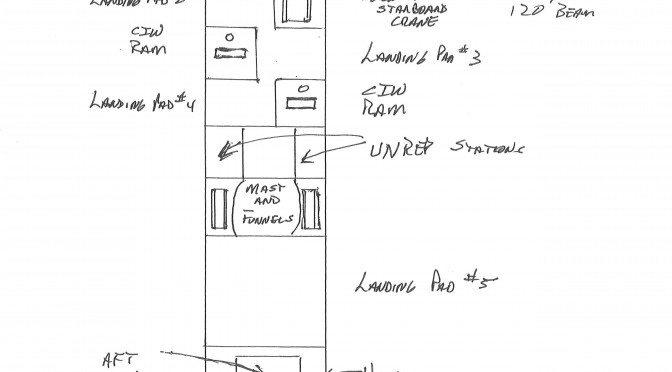
AORH class jpeg

Sketch by Jan Musil. Hand drawn on quarter-inch graph paper. Each square equals twenty by twenty feet.

Recent technological developments have provided the U.S. Navy with major breakthroughs in unmanned carrier landings with the X-47B. A public debate has emerged over which types of drones to acquire and how to employ them. This article suggests a solution to the issue of how to best make use of the new capabilities that unmanned aircraft and closely related developments in UUVs bring to the fleet.

The suggested solution argues for taking a broader look at what all of the new aerial and underwater unmanned vehicles can contribute, particularly enmasse. And how this grouping of new equipment can augment carrier strike groups. In addition, there are significant opportunities to revive ASW hunter killer task forces, expand operational capabilities in the Arctic, supplement our South China Sea and North East Asia presence without using major fleet elements and provide the fleet with a flexible set of assets for daily contingencies.

These sorts of missions provide opportunities for five principal types of drones. Strike, ISR and refueling drones as winged aircraft to fly off fleet platforms, UUVs and the Fire Scout helicopter. So we have five candidates to be built, in quantity, for the fleet. Let’s examine each of the suggestions for what they should be built to accomplish, what sort of weapons or sensors they need to be equipped with and what doctrinal developments for their use with the fleet need to happen.

Strike drone

The current requirements are calling for long range, large payload, and the ability to aerially refuel and are to be combined with stealth construction techniques for the airframe, even if not stealth coated. These size and weight parameters mean this drone will require CATOBAR launching off an aircraft carrier’s flight deck. Which also means it will be supplementing, and to some extent replacing, the F-35C in the air wings for decades to come. The merits of how many strike drones versus F-35Cs, and the level of stealth desired for both, will be an ongoing debate for the foreseeable future.

Given that a strike drone built with these capabilities will be tasked with similar mission requirements to the F-35C, we will assume for now that the weapons and ISR equipment installed will be equivalent, if not exactly the same as the F-35C. This implies that whatever work the U.S. Navy has already done in developing doctrine for use of the long range strike capacity the F-35Cs brings to the fleet should only need to be supplemented with the addition of a strike drone.

It is worth remembering that while these drones are unmanned, since they are CATOBAR they will still require sailors on deck to move, reload and maintain them. Sailors who also need a place to eat, sleep, etc.

And the carriers are already really busy places. However welcome the strike drone winds up being, there is not going to be enough room on the carriers to be add even more equipment. Therefore each drone will be replacing something already there, both physically within the hangar bay and financially within the Navy’s budget.

ISR drone

Most of the current public discussion surrounding an ISR equipped drone is rather hazy about what sort of sensors, range and weapons, if any, are wanted. However, the philosophical debate over mission profile, including a much smaller size, localized range requirement and the presumed emphasis on ISR tasks is revealing. The key points to concentrate on for such a drone are the suggested set of missions to be conducted by an arc of ISR drones around a selected location, sensor and networking capabilities, range and durability requirements and a limited weapons payload.

The traditional use of aerial search capabilities onboard a carrier task force was over the horizon, well over the horizon thank you very much, locating of the opponents surface assets. Over the years the extended ranges of aircraft and the development of airborne ASW assets changed the nature of the search and locate mission and the assets being used to conduct it. Adding space based surveillance changed things once more. The coming improvements in networking and data processing capabilities inside a task force, a steadily rising need for over the horizon targeting information coupled with the need to function within an increasingly hostile A2AD environment has once more altered the requirements of the search and locate mission. Search and locate essentially has become search, locate, network and target.

Being able to fund as well as field large numbers of anything almost always means keeping it smaller, and deleting anything not strictly needed beyond occasional use is an excellent way to accomplish this. For the ISR drone, not arming it with anything beyond strictly self-defense weapons is an excellent way to keep size and costs down. Since the primary missions of the ISR drone will be the new search, locate, network and target paradigm, concentrating funding on those capabilities is an excellent way to limit both development and operating costs.

Particularly since putting a large number of the drones, each capable of at least 24-30 hours on station, supplemented by refueling, in an arc around a task force in the direction(s) of highest concern means that the SuperHornets of the fleet can largely be freed from the loiter and defend mission and return to being hunters.

Since I am assuming the railgun will also be joining the fleet in large numbers some discussion about the range of the search, locate, network and target arc suggested above as it relates to the railgun is in order. The publicly disclosed range of the railgun is 65 miles, so an arc of ISR drones needs to be farther out from the task force than that, quite some way beyond that to provide time to effectively network location and target data developed back to the shooters. In the anticipated A2AD environment the primary threat is very likely to be a missile, mostly subsonic but the potential for at least some of them being hypersonic exists. Therefore, the incoming missiles or aircraft will need to be located, networked information sent to the surface assets armed with railguns and the targeting information processed quickly enough that the bars of steel launched as a result will be waiting for the incoming missile at 65 miles. Precisely how far out beyond the railguns effective range the arc of ISR drones will need to be will almost certainly vary by circumstance and the nature of the opponent’s weaponry. Nevertheless, whether subsonic or hypersonic, missiles move rapidly and this means an effective arc of ISR drones will have to be a long distance out from the task force. The farther out the arc is, a higher number of drones will be needed to provide adequate coverage.

This implies a need for a minimum of 6-8 ISR drones on station, 24/7, in all kinds of weather. Since there are inevitable maintenance problems cutting into availability time, this implies a task force will need take twice that number to sea with it. Particularly if a second arc of two or three ISR drones is maintained just over the horizon, or simply overhead. This inner group can also provide local networking abilities for the ASW assets of the task force. Having at least one ISR drone close in to provide a rapid relay of information around the task force by its sub hunters should also be planned for as a doctrinal necessity.

This arc of ISR drones is a wonderful new capability to have, but…., but fifteen drones are not going to fit on a CVN. Not when an essentially equivalent number of something else needs to be removed to make room for the newcomers. Our carriers are packed as it is with needed airframes and trading out fifteen of them from the existing air wing is not going to happen.

Nor is there room elsewhere in the fleet. The CCGs and DDGs have limited space on their helo decks, but even if the new ISR drone were equipped with the modified VTOL engine from the Osprey program, there still wouldn’t be space for more than a few of them. Once more, it is a case of needing to take something out of the fleet to put the new capability in.

This means we have to build a new class, or classes, of ships to operate and house the quantities of drones desired, including operating space, hanger and maintenance space and sailor’s living spaces.

Refueling drone

A drone primarily dedicated to the refueling mission takes on another of the un-glamorous, but unending tasks involved in operating a task force. Instead of the proposed return of the S-3 Vikings as tankers, a somewhat larger drone can be designed from scratch to be a flying gas station with long range and loitering times, presumably with vastly more fuel aboard and built to only occasionally load weapons or sensors under the wings. It could have ISR capabilities or ASW weapons slung under the wings as distinctly secondary design characteristics. In understanding when to use manned versus unmanned systems obviously any extra weight and space gained by losing a cockpit allows for more fuel carried, longer loitering times and extra range. These advantages need to be balanced against the occasional need for a pilot’s skills on scene.

UUVs

As for the UUVs in development, much has been made of their ability to dive deeply and search for things as well as their ability to autonomously operate far out in front of a task force, including the possibility of submarine launched missions. While interesting a more incremental use of the roughly six feet long torpedo shaped UUV currently in use for deep diving missions might be more appropriate.

While we wait on further research developments to establish ways to effectively utilize a long range, long duration UUV reconnaissance drone, a more mundane use of what we have right now can readily be used for ASW purposes. We could equip a six-foot UUV with the sensors already in use for ASW purposes and cradle it in open sided buoy in order to hoist the UUV in and out of the water. This buoy could be used over the side, or far more usefully, launched and recovered by helicopter. Wave and say hello Fire Scouts.

Fire Scouts

Any helicopter asset that the U.S. Navy has can be used of course, but without a pilot aboard the Fire Scouts are much better suited for the long hours required to successfully prosecute ASW. Taking off with the UUV cradled inside it’s buoy, the Fire Scout can deploy the buoy, allow the tethered UUV to swim to the thermocline or other desired depth, hover while allowing the UUV to transmit or simply silently listen, wait for the resulting data that is collected to be reported via the tether and broadcast by an antenna on the buoy and then once the UUV has swum back into it’s cradle within the buoy, drop back down and relift the buoy and move it to the next needed position. This redeployment can be hundreds or thousands of yards away at the mission commander’s discretion. This cycle can be repeated as many times as wanted or fuel for the Fire Scout allows. A difficulty that can be resolved aboard the nearest surface ship with a helo deck, leaving the buoy drifting in place, UUV on station and transmitting as refueling takes place. Shift changes by pilots should not materially interrupt this cycle. The most likely limitation that will force the Fire Scout to lift buoy and UUV out of the water for return aboard will be the exhaustion of the power source aboard the buoy being used to operate the reel for the tether and broadcast the data collected to an overhead airframe. Which just happens to be another use for the ISR drone or a ScanEagle.

In the next article we will examine how the Navy can make profitable use of UUVs and buoys, deployed and maneuvered across the ocean by the Fire Scout helicopter, in quantity, in pursuit of the ASW mission. Read Part Two here

Jan Musil is a Vietnam era Navy veteran, disenchanted ex-corporate middle manager and long time entrepreneur currently working as an author of science fiction novels. More relevantly to CIMSEC he is also a long-standing student of navies in general, post-1930 ship construction thinking, and design hopes versus actual results and fleet composition debates of the twentieth century.

CIMSEC is and always will be free for everyone, but we would be grateful for those who wish to provide a modest regular donation to support our operations.
Select a Donation Option (USD)

Enter Donation Amount (USD)