CIMSEC content is and always will be free; consider a voluntary monthly donation to offset our operational costs. As always, it is your support and patronage that have allowed us to build this community – and we are incredibly grateful.
This post originally appeared on Navy Grade 36 Bureaucrat. It can be found in its original form here.
At first glance, the recently released Asia-Pacific Maritime Security Strategy looks like a rehash of a lot of old points about the US’ position on Pacific matters. But upon closer examination, there is a key shift in language that those of us who watch the region will take note of. Here are ten things you might have missed:
1. It calls out the Senate directly on UNCLOS, but doesn’t address ISA.
Normally DoD publications don’t delve too much into policy matters with Congress. But it’s hard to say that about this statement:
“This is why the United States operates consistent with – even though the U.S. Senate has yet to provide its advice and consent – the United Nations Convention on the Law of the Sea”
UNCLOS was originally opposed due to the International Seabed Authority (ISA), which does such un-American things like taxing sea bed mining for distribution to other countries and mandating technology transfer. The military normally focuses on the navigation portion of UNCLOS, which it has abided by since the Regan era. The problem comes when the US is encouraging nations to use UNCLOS while not actually having ratified the treaty. There isn’t an easy solution, short of removing the ISA from UNCLOS, but expect to see UNCLOS ratification cries in the near future.
2. It calls out everyone on the South China Sea.
It’s not just China. Every claimant in the South China Seas has issues. This document clearly spells that out, taking away a talking point from the PRC that the US is overlooking the other countries to focus on China. But it pulls no punches on China, going after the “so-called Nine-Dash Line” as an excessive claim.
3. It spells out why the Senkakus became a problem.
Most people view the Senkakus as a bunch of rocks that China and Japan hold in dispute. Very few know that the Japanese government bought them in order to prevent the Governor of Tokyo from buying them. This was actually an attempt to prevent a clash with China, since the Governor was rightwing and would likely have stoked the issue. This narrative has been lost to China’s narrative about how Japan “changed the status quo,” so it’s good to see it spelled out here.
4. It puts India as a model for dispute resolution.
Comparing the India/Bangladesh maritime dispute resolution to what is occurring in the South China Sea is no accident. This document clearly spells out US support to India, likely in an attempt to spur continued Indian investment in their “Look East” strategy.
5. It denies territorial sea around reclaimed islands.
This is big.
“At least some of these features were not naturally formed areas of land that were above water at high tide and, thus, under international law as reflected in the Law of the Sea Convention, cannot generate any maritime zones (e.g., territorial seas or exclusive economic zones). Artificial islands built on such features could, at most, generate 500-meter safety zones, which must be established in conformity with requirements specified in the Law of the Sea Convention.”
This is a clear US denial of any Chinese territorial claim of these features. This has been implied before, but not ever strongly stated. On that same note…
6. Freedom of Navigation (FON) is coming to you.
One paragraph in particular tells us to expect more FON operations:
“Over the past two years, the Department has undertaken an effort to reinvigorate our Freedom of Navigation program, in concert with the Department of State, to ensure that we regularly and consistently challenge excessive maritime claims.”
Coming on the heels of stating that PRC reclaimed land is an excessive claim, this is a really good sign, although realize that future FON operations will likely include challenges to all claimants (and make diplomatic efforts interesting).
7. It accuses China of changing the status quo.
If you sit on a beach, you’ll watch the waves crash against rocks. The seawater slowly erodes the rocks until they split open at seams you couldn’t have seen before. This is analogous to China’s strategy in the East and South China Seas. They have slowly worn away at seams around every other claimant, always claiming to “maintain the status quo” when in reality they are waiting for the other claimant to make the first move, then instantly cry that they are the victim. Scarborough Reef is a classic example, yet the media has essentially ignored the issue. Luckily, this document calls it out, stating “China is unilaterally altering the physical status quo in the region.”
8. It calls out A2/AD and how we would stop any short war.
It gives vague language to DoD efforts to combat A2/AD, but it does say that it’s happening, with “robotics, autonomous systems, miniaturization, big data, and additive manufacturing.” It also later mentions that we’ll be dispersing around the Pacific, into more Japanese bases and places like Australia. This complicates PRC targeting. Will the PRC risk war with the US if we have units spread out everywhere? They don’t have enough missiles to hit everything, and striking into a country like Australia means that any sort of “short, sharp war” on their part quickly expands…something that will cause a lot of angst on their end.
9. It calls out information sharing with allies.
“This is why DoD is working closely with partners in the Asia-Pacific region to encourage greater information sharing and the establishment of a regional maritime domain awareness network that could provide a common operating picture and real-time dissemination of data.”
I’ve long argued that sharing data with allies is too hard. At the CJOS-COE we worked hard to make Carrier Strike Groups use networks that supported integrating ships from non-“Five Eyes” countries, like Germany and Norway. We proved that successfully, and in the Pacific we’ve integrated South Korean and Japanese ships before. But what about Malaysia? Indonesia? Brunei? We get some play at RIMPAC, but not enough. The disaster that was ABDA in World War 2 wasn’t that long ago. We need to get friendly nation integration right before any shooting starts.
10. It’s got great graphics.
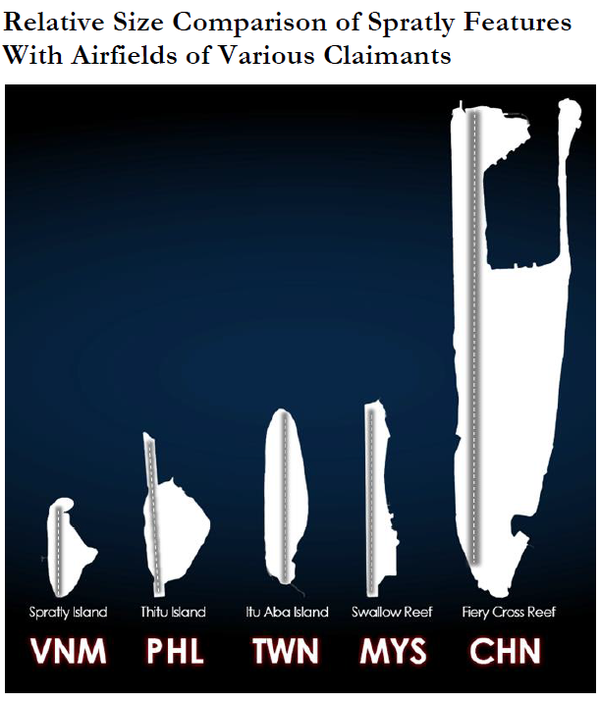
From the scale model of Fiery Cross Reef reclamation to a very nice and detailed map of South China Sea features, this is one of the few documents that uses more than just pretty pictures of military equipment. Well done to the authors who picked quality illustrations to help drive their points home…almost as good as my choice of memes 🙂
Ryan Haag is the Hawaii CIMSEC President and an Information Warfare Officer navigating the uncharted waters of the Information Dominance Corps. He can be reached through his blog at The Navy’s Grade 36 Bureaucrat.
CIMSEC content is and always will be free; consider a voluntary monthly donation to offset our operational costs. As always, it is your support and patronage that have allowed us to build this community – and we are incredibly grateful.
The logistical side to the US Pivot to the Pacific. One of the aspects not often discussed of the US “Pivot to the Pacific” is that it is not just combat forces (US Army, US Air Force, US Navy and US Marine Corps) moving, but also the Military Sealift Command, which constitutes the cornerstone of logistical support for US operations all over the world. Just to get an idea of its size, if this command’s ships belonged to another nation they would be the fourth-largest navy in the world. As a consequence, NATO European members must reinforce their logistical capabilities.
The best-prepared naval forces to achieve this are the Royal Navy (the Royal Fleet Auxiliary, to be more precise) and France’s Marine Nationale. Germany is beginning to boost her global-scale force projection capabilities, limited to date due to well-known historical reasons. Now, the economic crisis and ensuing budget cuts are providing added impetus to the development of shared capabilities. While there is a growing pressing to achieve this, it is nothing new. For example, we can mention the United Kingdom and the Netherlands as a model of force integration, with their UK/NL Landing Force. By the way, there is a Catalan angle to this. Anglo-Dutch cooperation in amphibious operations dates back to the 1704 landing in Gibraltar, where a 350-strong Catalan battalion under General Bassett also took part. Therefore, should a future Catalan contingent join the UK/NL Landing Force, they would just be coming back home. Another significant example are the three Baltic Republics, which combine their naval forces in the BALTRON (Baltic Naval Squadron).
Barcelona and Tarragona Harbours: two key dual-use infrastructurs in the Western Mediterranean. When we talk logistics, one of its key elements are ports. It is precisely when countries are pondering how to cut costs that the concept of dual-use infrastructures comes to the fore. In this area, the ports of Barcelona and Tarragona can make a much greater contribution that they do at present. Right now, other than the occasional port visit by the US and other Allied navies, they are not the permanent home of any Spanish Navy unit. Furthermore, despite healthy growth in terms of tonnage, much of their necessary connecting infrastructure remains incomplete. In particular, a European gauge connection to the French railway network. However, in addition to featuring in plans for a future Catalan Navy, they could also become an strategic asset for NATO, being home to a portion of the Atlantic Alliance’s logistical units in the Mediterranean Theatre.
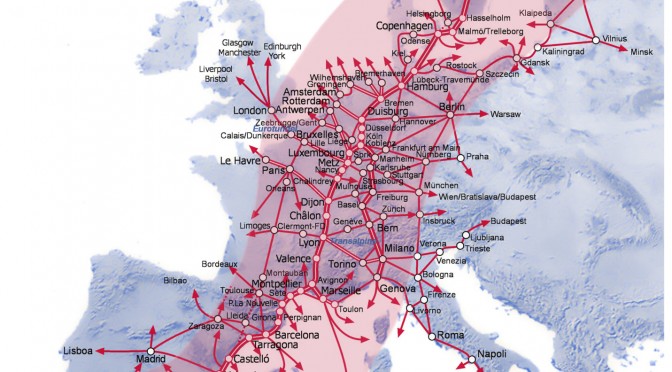
It is not just a matter of size. Both infrastructures are located in areas sporting a concentration of industry and transportation links. These links must certainly be improved, in line with the EU’s 2013 decision to confirm the “Mediterranean Corridor” as a key element of the Old Continent’s transportation networks. This label refers to a railroad transportation axis connecting cities and ports along the Spanish southern and eastern seaboards to France. Since most EU member states also belong to NATO, there is no reason to expect any discrepancy between the two organizations when it comes to the logistical map of Europe.
The benefits on the civilian economic front of completing this infrastructure have already been explained at length by myriad economists, such as for example Ramon Tremosa, currently serving as member of the European Parliament, who has written extensively on the project and worked hard as a lawmaker to see it come to fruition. This explains the support of the French Government and the European Commission, which have rejected alternative proposals to drill a tunnel in the Central Pyrenees, connecting Spain and France through the Aragon region. From a naval logistics perspective, this alternative plan would not have benefited NATO and allied navies to the same extent, since it would have meant bypassing Tarragona and Barcelona. The benefits of the “Mediterranean Corridor”, on the other hand, also extend to the field of defense. For example, should NATO’s Response Force (NRF) need to project one of its battle groups in a crisis scenario, we may ask ourselves whether Toulon, Marseilles, and Naples harbors would suffice. While it would not be impossible, it may make it harder to label it a rapid-reaction force.
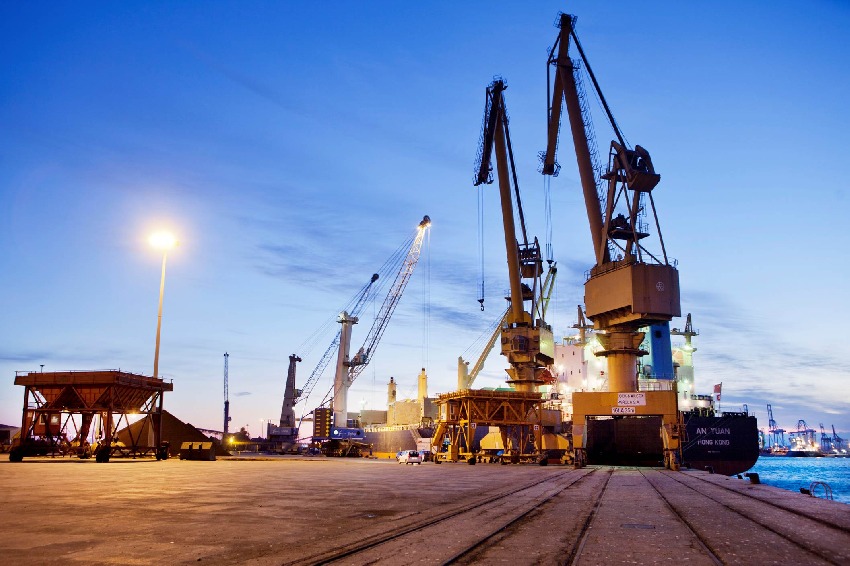
Tarragona Harbor
The Pivot to the Pacific rests on a strong NATO and a secure Mediterranean. The US Pivot to the Pacific, and more widely the growing coordination among the maritime democracies in the Indian-Pacific Ocean Region, are based on the assumption that the Mediterranean will be secured by NATO. Thus, any move reinforcing security in this body of water has a direct, positive, impact on the struggle for the rule of law at sea in the Indian-Pacific Region. A struggle, let us be realistic about it, that is surely to be bitterly tested in the future ahead. As a historical reminder of the connection between the two regions, we may mention the failed British strategy to defend Singapore. Built at a time of scarce resources, the naval base was supposed to provide the necessary facilities for a strong naval and air force to be moved in the event of a crisis, without the expense involved in a permanent presence. However, the need to protect home waters, the Atlantic, and the Mediterranean, meant that all that London could send were HMS Prince of Wales and HMS Repulse, sunk by Japanese land-based naval aircraft in the South China Sea in the opening days of the Second World War in the Pacific.
Conclusions. Barcelona and Tarragona are key dual-use facilities in the Western Mediterranean, whose naval logistical potential to date has not been fully exploited. Their worth will multiply once the “Mediterranean Corridor”, backed by Paris and Brussels, is completed. Their potential contribution to NATO is growing as pressure on defense budgets forces countries to get as much bang for the buck as possible, and as moves to reinforce the Indian-Pacific Ocean Region make it imperative to fully secure the Mediterranean.
Alex Calvo is a guest professor at Nagoya University (Japan) and member of CIMSEC, Pol Molas is a naval analyst and regular contributor to the Blau Naval blog
On March 12, 2015, Marine General John Kelly, commander of U.S. Southern Command (SOUTHCOM), testified before the Armed Services Committee about the security challenges that the United States and its Western Hemispheric allies face throughout the continent. In his Posture Statement, the general noted that SOUTHCOM is the U.S. military’s “lowest priority Geographic Combatant Command, hence the maxim ‘doing less with less’ has a disproportionate effect on our operations, exercises, and engagement activities.”
One particular focus of General Kelly’s remarks was transnational crime, specifically drug trafficking that originates in South America and crosses the Greater Caribbean towards the United States. There are several types of transnational crime occurring throughout Caribbean waters; due to space constraints, this commentary will only focus on the transportation methods utilized to move drugs throughout the Caribbean Sea and what this means for the security of the United States and its allies.
Low Priority & Insufficient Assets?
In his Posture Statement, General Kelly stated that Washington’s allies in the Western Hemisphere “are frustrated by what they perceive as the low prioritization of Latin America on our national security and foreign policy agendas, which is especially puzzling given the shared challenge of transnational organized crime.”It is not surprising that Latin America and the Caribbean are a low security priority for the United States, as the White House has had to deal with security crises elsewhere over the past years, such as the conflict in Ukraine, tensions with Russia, the Iran nuclear deal, and the Islamic State. Moreover, sequestration and other defense budget cuts have forced SOUTHCOM to try to do more, or at least the same as before, with less funds. The SOUTHCOM commander went on to explain how “force allocation cuts by the Services… are having the greatest impact… We are already feeling the impact at our headquarters, where we have implemented a 13% reduction in civilian billets and an 11% reduction in military ones.”
A similar situation is occurring with the U.S. Coast Guard, which has a wide area of operations in the
A USCG counter-narcotics operation
Caribbean. For the USCG, one immediate challenge is upgrading its aging equipment. Admiral Paul Zukunft, the Coast Guard’s Commandant, stated in April, “much of the Coast Guard’s infrastructure and many of our platforms are well beyond their service life.”
Both the SOUTHCOM commander and the Coast Guard Commandant have pointed out the challenge that transnational organized crime (TOCs), e.g. drug trafficking organizations, pose to U.S. security. General Kelly has highlighted the types of illegal goods that criminals are moving throughout the Western Hemisphere, like“drugs—including marijuana, counterfeit pharmaceuticals, and methamphetamine—small arms and explosives, precursor chemicals, illegally mined gold, counterfeit goods, people, and other contraband.” Meanwhile, the Coast Guard’s 2014 security blueprint, the Western Hemisphere Strategy(WHS), explains how “organizations are able to quickly adapt to changes in their external environment, including everything from advances in technology to an increase in law enforcement activity… As maritime trade and travel have grown, criminal organizations have taken to the sea, using complex operations and tactics to avoid detection while in transit.” (Click here for an analysis of the Coast Guard’s WHS).
In other words, both Southern Command and the Coast Guard are well aware of the challenges posed by TOCs. However, defense cuts and other security priorities are affecting how well these agencies, among others, can play a role in improving security in the region. The United States’ Caribbean allies and extra-hemispheric partners (like the United Kingdom and the Netherlands) are actively working to crack down on Caribbean drug trafficking. However, given that the United States is the final destination for most of the drugs being moved around the Caribbean Sea, and given the still-limited resources of Caribbean states to stop drug trafficking through their territories (land and maritime), it would be ideal for U.S. security agencies to maintain a vibrant presence in the region, particularly since Caribbean drug trafficking entities have the funds, creativity, and willingness to constantly expand their methods of transporting drugs.
Narco-Methods of Transportation
As for criminals themselves, they are nothing if not (infuriatingly) resourceful and creative when it comes to thinking of new ways to move drugs across the Caribbean. As a disclaimer, I must highlight that one major obstacle with this analysis is that detailed information is sometimes not openly available regarding the specifications of narco-vessels. For example, U.S. Southern Command reported that the USS Kauffman, a frigate, interdicted 528 kg of cocaine aboard a vessel on June 17. Nevertheless, SOUTHCOM’s press release does not explain what kind of vessel it was, other than calling it a “narcotic-trafficking vessel in international waters in the Eastern Pacific” or a “suspected smuggling vessel.”
The information below about narco-vessels provide as much detailed information as this author has been able to find.
As part of my research for this report, I contacted the Implementation Agency for Crime And Security (IMPACS), a security branch of the Caribbean Community (CARICOM, an organization made up of 15 Caribbean states). CARICOM IMPACS explained that 80% of all illicit smuggling activity through the region that originated in South America is carried out through maritime means.
Speedboats / Go-boats: the standard method of transporting cargo. Just this past July, the Coast Guard cutter Dauntless, “along with the assistance of a Netherlands Coast Guard maritime patrol aircraft,”stopped a speedboat north of Aruba – on the vessel were six individuals carrying a cargo of 275 pounds of cocaine.
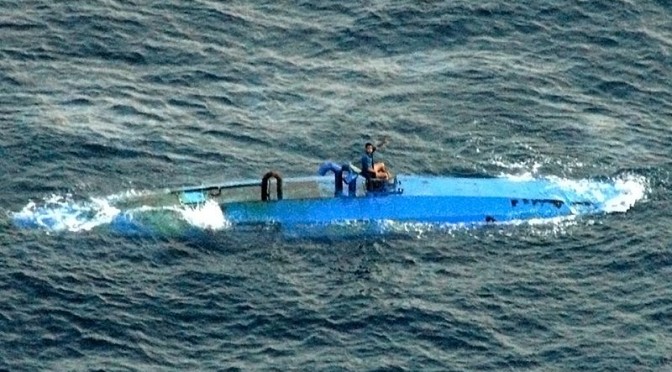
Narco Subs: The evolution of narco-submarines over the past two decades is quite remarkable. The first narco-sub was stopped in 1993 and it had a crude design: it was slow and made up of wood and fiberglass.
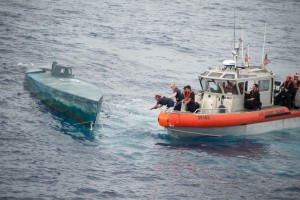
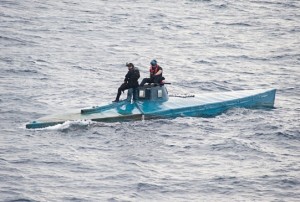
On July 18th, 2015 US Customs and Border Patrol agents along with USN and USCG counterparts seized a semi-submersible carrying 16,870 pounds of cocaine.
More modern narco-subs can be fully submersible, travel as fast as 11 miles per hour, with larger fuel tanks and space for cargo. Due to space issues, we cannot discuss the different types of narco-submarines. A comprehensive report by the Foreign Military Studies Office (FMSO) entitled “Narco Submarines: Specially Fabricated Vessels For Drug Smuggling Purposes” discusses them in detail, including estimated costs, separating them from semi-submersibles, low-profile vessels, and submarines. These vessels have become alarmingly popular in recent years, as the narco-traffickers have sufficient funds to construct them. Case in point, this past June 18, the U.S. Navy and Coast Guard intercepted a “semi-submersible craft” that was carrying the whopping cargo of 16,870 pounds of cocaine.
Narco-Torpedos: One new technology is static narco-containers (AKA Parasitic Devices). The FMSO report defines them as “containers which are bolted or magnetically placed on the bottom of freighters and other large cargo ships by cartel and organized crime frogmen.”Narco-torpedoes were found on the hulls of ships going from Latin America to Europe in 2013. I have been unable to find current examples of such containers being utilized in the Caribbean, but it stands to reason that they could be utilized as well, particularly as there is a great flow of goods through Caribbean ports en route to the U.S. and elsewhere. Narco-subs and narco-torpedoes are the next evolution of drug trafficking in the region and, so far, there seems to be no limit to how large and equipped narco-subs can become.
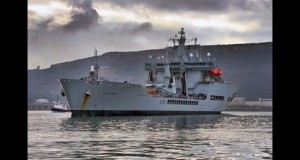
Inside cargo/fishing ships: Unsurprisingly, hiding contraband aboard vessels that apparently are carrying legitimate operations, such as fishing, continues to be an option for drug traffickers. For example, in early 2014 a U.S. Coast Guard helicopter operating out of a British Royal Fleet Auxiliary vessel, the Wave Knight, stopped a vessel that was carrying 45 bricks of cocaine. This is a memorable mission, not solely because of the amount of narcotics seized, but because this marked the first time that a U.S. Coast Guard helicopter was launched from a British ship. That same year, on March 15, a fishing boat was seized off the coast of Panama. The U.S. Coast Guard investigated the vessel and found 97 bales of cocaine.
Finally, it is important to note that smuggling aboard vessels is more prevalent in some areas. CARICOM IMPACS explained to the author that smuggling among fishing vessels is common among members of the Organization of Eastern Caribbean States (i.e. Dominica, Grenada or Saint Lucia) to French territories (i.e. Guadeloupe and Martinique) and Barbados. This is due to the fact that these nations have large fishing industries which are utilized as disguise for the flow of contraband.
Narco-Aircraft: Planes and helicopters are also utilized for moving drugs, though they seem to be less common than maritime methods of transportation. According to CARICOM IMPACS, air smuggling accounts for approximately 20% of narcotics shipments in the region, mostly around the Bahamas due to its geographical proximity to Florida (with Haiti and the Dominican Republic utilized as springboards between the two). Throughout my research for this report, I was unable to find recent incidents of air smuggling throughout Caribbean islands. A geographically close incident occurred this past May; a narco-plane, a Hawker twin-engine jet, crashed off the Colombian coast as it tried to flee from the Colombian Air Force. The aircraft reportedly left Venezuela and entered Colombian air space – authorities found 1.2 metric tons of cocaine among the wreckage. As for narco-helicopters, in 2013 the Costa Rican police cracked down on a criminal group that utilized helicopters to transport weapons and drugs along the country’s Caribbean coast.
The aforementioned list exemplifies how drug trafficking organizations employ a wide array of vessels and aircraft to move their contraband from South America, through the Greater Caribbean, and ultimately to the United States and Europe. Part of the reason for this variety is that drug trafficking groups use an “island hopping” strategy to move the narcotics – for example, a speedboat carrying cocaine may leave Venezuela and dock in Curacao; from there it will be put in another vessel until it reaches a different island, and from there it may be transferred a third time before it attempts to enter U.S. territory.
Shootouts At Sea?
One issue worth discussing is that most press releases that report on stopping suspicious vessels discuss the incidents as generally non-violent, or they are one-sided violent. At most, we hear about security forces that fire shots at suspicious vessels. For example, in January 2014, the aforementioned helicopter, launched from the HMS Wave Knight, fired warning shots at the suspicious
HMS Wave Knight
vessel. “It was a unique and successful mission,” said U.S. Coast Guard Lt. Cmdr. Gabe Somma. “We fired warning shots, and they tossed [the drug-filled] bails.” Meanwhile, a March 2014 operation included a Coast Guard helicopter shooting at the engines of a ship in order to stop it.
The interesting issue here is that both incidents include security personnel shooting at suspected drug traffickers but not the suspected criminals shooting back. There are some official videos available online of suspected drug smugglers being chased by U.S. security forces, but the footage seems to show the fleeing drug traffickers more than actively engaged in a firefight (video 1, video 2). Certainly, criminals have no problem shooting at security forces – just this past May, a Mexican military helicopter had to make an emergency landing when it was shot at by gunmen (three soldiers were killed). However, in the Caribbean, incidents of drug traffickers aboard speedboats shooting at security agencies appear to be less common (or at least, under-reported). Nevertheless, the possibility that drug traffickers could become more actively violent in order to evade capture–switching from a release cargo-and-flee strategy to actively shooting at security agents–is worrisome. (While this commentary focuses on drug trafficking, there is also an active weapons trade through Caribbean waters; hence it stands to reason that criminals could use weapons in their possession/cargo, such as rifles and handguns, to attack security agents trying to stop them).
Nowadays SOUTHCOM, U.S. Navy South/4th Fleet, and the U.S. Coast Guard must do “more with less” at a time when the U.S. defense budget is undergoing significant cuts, and, as General Kelly correctly points out, SOUTHCOM has the least priority of all the other U.S. military commands. On the other hand, drug trafficking criminals are constantly thinking of new, more ingenious ways to move their illegal merchandise across the Caribbean Sea. Spotting narco-vessels may become even more difficult in the near future, particularly if narco-subs become more advanced and if narco-torpedoes become more popular.
Moreover, drug traffickers may eventually decide to be bolder and shoot back at security forces rather than flee. This may be the case if a particular cargo is deemed as too expensive to be lost. I have been unable to find cases of narco-speedboats having built-in machine guns, but this is certainly a possibility.This is not meant as an alarmist declaration but rather an assessment of how the situation is evolving in the Greater Caribbean.
Concluding Thoughts
In his March 2015 Posture Statement to the Armed Services Committee, General Kelly declared,“I am frustrated by the lack of a comprehensive U.S. government effort to counter the [transnational organized crime] threat.” Documents like the 2014 Coast Guard’s Western Hemisphere Strategy similarly explain the problem posed by TOCs, including those involved in drug trafficking, and the steps that can be taken to counteract them. The challenge nowadays for SOUTHCOM and the Coast Guard is having a budget that allows for the necessary personnel and equipment to carry out these objectives. General Kelly stated, “If sequestration returns in FY16, our ability to support national security objectives, including conducting many of our essential missions, will be significantly undermined. “
The goal of this analysis is not to imply that the U.S. government should give SOUTHCOM and/or the Coast Guard a blank check for obtaining new weapons. Nor should Washington solely focus on stopping the transportation of drugs through the Caribbean, while dismissing the other sides of the drug-equation, which includes demand (in the U.S. and European markets) and production (in South America). Rather, while the demand and production remain (unfortunately) vibrant, the interdiction of illegal narcotics among the various narco-corridors of the Greater Caribbean must remain a priority for SOUTHCOM and its supporting agencies like the Coast Guard, the Drug Enforcement Administration, the Department of Homeland Security, just like it is a national security priority for Caribbean nations and and regional security agencies like CARICOM IMPACS.
While Washington does not regard developments in Latin America or the Greater Caribbean as a security priority (at least not comparable to developments elsewhere in the world), criminal organizations, particularly drug trafficking entities, continue to operate in areas like the Greater Caribbean. The list of vehicles used to transport drugs through that region demonstrates how drug trafficking groups continue to imagine creative new methods to move their illegal merchandise. Moreover, the rise of the narco-submarine is a problematic development as these vessels could become harder to spot in the near future, particularly as narcos have the funds to support their construction. The seizure of a narco-submarine just this past July is a clear example that narcos have not given up on these vessels.As General Kelly said, “criminal organizations are constantly adapting their methods for trafficking across our borders.”
W. Alejandro Sanchez is a Senior Research Fellow at the Council on Hemispheric Affairs (COHA) where he focuses on geopolitics, military and cyber security issues in the Western Hemisphere. The author would like to thank CARICOM IMPACS for their assistance with this project. Follow him on Twitter: @W_Alex_Sanchez.
In the year 2000, the United States military used Unmanned Aerial Systems (UASs) strictly for surveillance purposes and the global commercial UAS market was nascent. Today, the combination of countries exporting complex UAS technologies and an expanding commercial UAS market advances the spread of UAS technologies outside of U.S. government control. The propagation of this technology from both the commercial and military sectors will increase the risk of sophisticated UASs becoming available to any individual or group, regardless of their intent or financial resources. Current and future adversaries, including non-state actors, are likely to acquire and integrate UASs into their operations against U.S. forces. However, U.S. forces can reduce the advantages of abundant UAS capability by limiting the massing of resources and by conducting distributed operations with smaller maneuver elements.
Leveraging the Growth in the Commercial UAS Market
While armed UAS operations are only associated with the U.S., UK, and Israel, other countries with less restrictive export controls are independently developing their own armed UAS systems. Chinese companies continue to develop reconnaissance and armed UASs for export to emerging foreign markets. Earlier this year, social media reports identified a Chinese CH-3 after it crashed in Nigeria. Reports indicate China sold the system to the Nigerian government for use against Boko Haram. Other countries including Pakistan and Iran organically developed armed UAS capabilities, with claims of varying levels of credibility. In an effort to capitalize on the international UAS market and to build relationships with allies, the U.S. eased UAS export restrictions in early 2015 while announcing the sale of armed UASs to the Netherlands. Military UAS development is expected to be relatively limited, with less than 0.5 percent of expected future global defense spending slated to buying or developing military drones. For now, long range surveillance and attack UASs are likely to remain restricted to the few wealthy and technologically advanced countries that can afford the research costs, training, and logistical support associated with such systems. However, short range military or civilian UASs are likely to be acquired by non-state actors primarily for surveillance purposes.
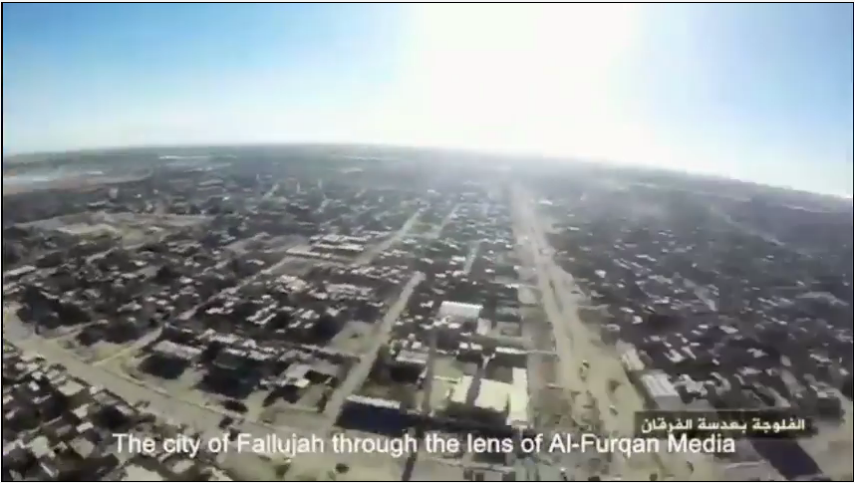
Still captured from an ISIS documentary with footage shot from a UAS over the Iraqi city of Fallujah(nytimes.com)
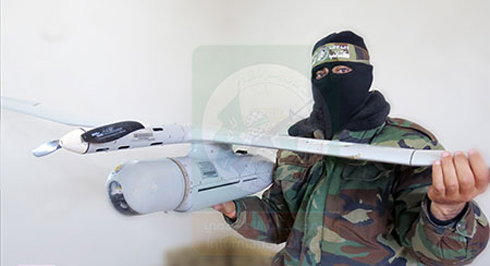
Hamas, Hezbollah, Libyan militants, and ISIS are reportedly using commercial UASs to provide surveillance support for their military operations. Current models contain onboard GPS receivers for autonomous navigation and a video transmission or recording system that allows the operators to collect live video for a few thousand dollars or less. Small UASs, similar in size to the U.S. military’s Group 1 UASs, appeal to non-state actors for several reasons. Namely, they are inexpensive to acquire, can be easily purchased in the civilian market, and are simple to maintain. Some systems can be operated with very little assembly or training, which reduces the need for substantial technical knowledge and enables non-state actors to immediately integrate them into daily operations. These UASs are capable of targeting restricted areas as evidenced by the recent UAS activity near the White House, French nuclear power plants, and the Japanese Prime Minister’s roof. The small size and agility of these UASs allow them to evade traditional air defense systems yet specific counter UAS systems are beginning to show progress beyond the prototype phase.
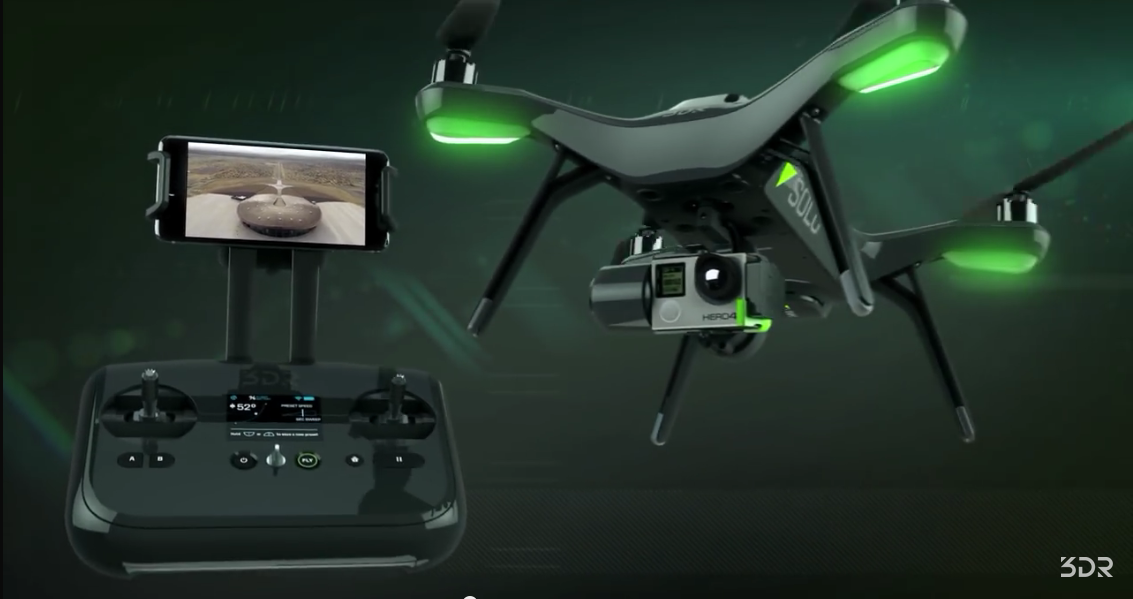
Economic forecasters may dispute commercial UAS sales predictions, but most agree that this market is likely to see larger growth than the military market. Countries are currently attempting to attract emerging UAS businesses by developing UAS regulations that will integrate commercial UASs into their national airspace. The increase of hobby and commercial UAS use is likely to lead to significant investments in both hardware and software for these systems. Ultimately, this will result in a wider number of platforms with an increased number of capabilities available for purchase at a lower cost. Future systems are expected to come with obstacle avoidance systems, a wider variety of modular payloads, and extensive training support systems provided by a growing user community. Hybrid systems will address the payload, range, and endurance limitations of the current platforms by combining aspects of rotor and fixed wing aerial vehicles. The dual-use nature of these commercial systems will continue to be an issue. Googleand Amazon are researching package delivery systems that can potentially be repurposed to carry hazardous materials. Thermal, infrared, and multispectral cameras used for precision agriculture can also provide non-state actors night-time surveillance and the ability to peer through limited camouflage. However, non-state actors will likely primarily use hobby and commercial grade platforms in an aerial surveillance role, since current payload limitations prevent the platforms from carrying a significant amount of hazardous material.
Minimizing the Advantages of Non-State Actor’s UAS Surveillance
As these systems proliferate, even the most resource-limited adversaries are expected to have access to an aerial surveillance platform. Therefore, friendly operations must adapt in an environment of perceived ubiquitous surveillance. Despite the limited range and endurance of these small UASs, they are difficult to detect and track reliably. Therefore, one must assume the adversary is operating these systems if reporting indicates they possess them. Force protection measures and tactical level concepts of operations can be modified to limit the advantages of ever-present and multi-dimensional surveillance by the adversary. At the tactical level, utilizing smoke and terrain to mask movement and the use of camouflage nets or vegetation for concealment can be effective countermeasures. The principles of deception, stealth, and ambiguity will take on increasing importance as achieving any element of surprise will become far more difficult.
The upcoming 3DR Solo UAS will feature autonomous flight and camera control with real time video streaming for $1,000 (3drobotics.com)
At static locations such as forward operating bases or patrol bases, a high frequency of operations, including deception operations, can saturate the adversary’s intelligence collection and processing capabilities and disguise the intent of friendly movements. Additionally, massing strategic resources at static locations will incur increasing risk. In 2007 for example, insurgents used Google Earth imagery of British bases in Basra to improve the accuracy of mortar fire. The adversary will now have near real time geo-referenced video available which can be combined with GPS guided rockets, artillery, mortars and missiles to conduct rapid and accurate attacks. These attacks can be conducted with limited planning and resources, yet produce results similar to the 2012 attack at Camp Bastion which caused over $100 million in damages and resulted in the combat ineffectiveness of the AV-8B squadron.
In environments without the need for an enduring ground presence, distributed operations with smaller maneuver elements will reduce the chance of strategic losses while concurrently making it harder for the adversary to identify and track friendly forces. Interestingly, operational concepts developed by several of the services to assure access in the face of sophisticated anti-access/area denial threats can also minimalize the impact of the UAS surveillance capabilities of non-state actors. The Navy has the Distributed Lethality concept, the Air Force is testing the Rapid Raptor concept, and the Army’s is developing its Pacific Pathways concept. The Marine Corps is implementing its response, Expeditionary Force 21 (EF21), through several Special Purpose Marine Air Ground Task Forces.
The EF21 concept focuses on using high-speed aerial transport, such as the MV-22, to conduct dispersed operations with Company Landing Teams that are self-sufficient for up to a week. In December 2013, 160 Marines flew over 3,400 miles in KC-130s and MV-22s from their base in Spain to Uganda in order to support the embassy evacuation in South Sudan, demonstrating the EF21 concept. Utilizing high speed and long-range transport allows friendly forces to stage outside of the adversary’s ground and aerial surveillance range. This prevents the adversary from observing any patterns that could allude to the mission of the friendly force and also limits exposure to UAS surveillance. Advances in digital communications, including VTCs and mesh-networks, can reduce the footprint of the command center making these smaller forces more flexible without reducing capabilities. The small size of these units also reduces their observable signatures and limits the ability of the adversary to target massed forces and resources.
Confronting the Approaching UAS Free-Rider Dilemma
Non-state actors capitalize on the ability to rapidly acquire and implement sophisticated technologies without having to invest directly in their development. These organizations did not pay to develop the Internet or reconnaissance satellites, yet they have Internet access to high-resolution images of the entire globe. It took years for the U.S. to develop the ability to live stream video from the Predator UAS but now anyone can purchase a hobby UAS that comes with the ability to live stream HD video to YouTube for immediate world-wide distribution. As the commercial market expands, so will the capabilities of these small UAS systems, democratizing UAS technology. Systems that cannot easily be imported, such as advanced communications relays, robust training pipelines, and sophisticated logistics infrastructure can now be automated and outsourced. This process will erode the air dominance that the U.S. enjoyed since WWII, now that commercial investments allow near peers to acquire key UAS technologies that approach U.S. UAS capabilities.
The next generation of advanced fighters may be the sophisticated unmanned vehicles envisioned by Navy Secretary Ray Maybus. However, other countries could choose a different route by sacrificing survivability for cheaper, smaller, and smarter UAS swarms that will directly benefit from commercial UAS investments. Regardless of the strategic direction military UASs take, commercial and hobby systems operating in an aerial surveillance role will remain an inexpensive force multiplier for non-state actors. Fortunately, the strategic concepts developed and implemented by the services to counter the proliferation of advanced anti-air and coastal defense systems can be leveraged to minimalize the impact of unmanned aerial surveillance by the adversary. Distributed operations limit the massing of resources vulnerable to UAS assisted targeting while long-range insertions of small maneuver elements reduces the exposure of friendly forces to UAS surveillance. Nation states and non-state actors will continue to benefit from technological advances without investing resources in their development, pushing U.S. forces to continually update operational concepts to limit the increasing capabilities of the adversary.
William Selby is a Marine officer who completed studies at the US Naval Academy and MIT researching robotics and unmanned systems. He previously served with 2nd Battalion, 9th Marines and is currently stationed in Washington, DC. Follow him @wilselby or www.wilselby.com
CIMSEC content is and always will be free; consider a voluntary monthly donation to offset our operational costs. As always, it is your support and patronage that have allowed us to build this community – and we are incredibly grateful.