
The 20th century American strategist Rear Admiral J.C. Wylie said, “I believe deeply that strategy is everyone’s business.”1 The expansion of internet-based strategic commentary, and the greater distribution of traditional sources of strategic discussion like the U.S. Naval Institute Proceedings, and The Naval War College Review have certainly played a role in achieving Admiral Wylie’s desire. The works of strategic theorists such as Carl von Clausewitz, Alfred Thayer Mahan, Sir Julian Corbett, and Wylie himself are discussed on a daily basis in multiple global mediums. Many would-be strategic thinkers are happy to drop comments from all four of these experts within their writings in support of the policy they advocate. These “hipster” strategists and their overly-familiar homilies to the teachings of “Uncle Carl” and “Sir Julian” (as if these long-dead strategists were their drinking companions) often obscure the backgrounds, geopolitical world views, and national goals of these noted military theorists. The world is rapidly leaving behind the period of the U.S. “unipolar moment” (1991-2008). It is now entering a new multipolar period of great power and non-state actor activity reminiscent of the period that ended in 1945 with the defeat of the Axis powers. While the works of all four have a role to play in determining the next U.S. military strategy, the writings of Mahan and Wylie have much more currency than those of Clausewitz and Corbett. Their focus on operational vice strategic issues is a handicap in a new age when preliminary strategic decision rather than operational art is the key. While it is evident that both Clausewitz and Corbett were masters of the strategic geography and warfare methods in their own times, their applicability in the second decade of the 21st century is problematic at best. For these reasons, the U.S. should ignore the strategic “hipsters” and their plethora of Corbett and Clausewitz quotations and instead embrace the sound combination of strategic, operational, and tactical thinking found in the works of Admirals Alfred Thayer Mahan and J.C. Wylie.
The works of Carl von Clausewitz and Sir Julian Corbett are directly influenced by their backgrounds, associations, and by the geopolitical situations of their respective nations during their lives. Clausewitz wrote On War at a time when his nation was recovering from the wreckage of Napoleonic Europe, and just beginning to compete with the Austrian Empire for domination of the Confederation of German States that emerged from the final breakdown of the Holy Roman Empire. Since the re-emergence of the nation state in the late Middles Ages, state structures have been primarily geared for the making of war for offensive and defensive purposes. Well known Ohio State University military historian Geoffrey Parker noted that in the period from 1641-1815, “hardly a decade can be found in which at least one battle did not take place.”2 The rise of the bureaucratic European state from the Renaissance forward was primarily directed toward a nation’s army, which Clausewitz described as “the center of gravity” for leaders from Alexander the Great to Frederick the Great.3 It is perhaps no wonder then that a staff officer from a land-locked garrison state organized primarily for life and death military contests against similar European monarchical elements would determine that “war is merely the continuation of policy by other means.”4 While this key phrase has been mistranslated and Clausewitz clearly desired to subordinate the military to civilian authority, his ideas on conflict are firmly rooted in the Prussian military experience.5 The geography of the book is limited to operational and tactical discussion. Geographic locations, whether the Rhine River, the fortress of Olmutz, or the forests of Russia and Poland are treated as obstacles to an army’s tactical or operational movement rather than as strategic strong points to be taken or lost. The continued existence of the armed forces of the nation as an employable tool of the monarch, rather than the possession of any one or more key geographic locations is what matters. On War was written in German and intended for the use of other Prussian Staff Officers with world views analogous to that of Clausewitz. It is very much a product of an army-centric central European world view. Prussia had a known reputation as a warlike state. Napoleon Bonaparte said, “Prussia was hatched from a cannonball” and the French aristocrat and later revolutionary the Count of Mirabeau said, “War was Prussia’s national industry.”
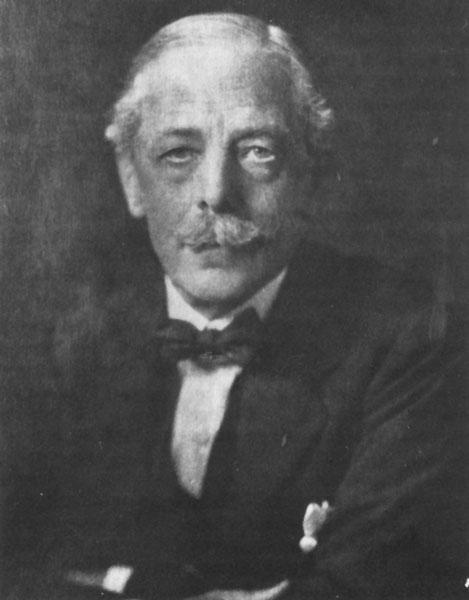
The writings of Sir Julian Corbett are equally reflective of the general mindset of the British Empire at the high noon of its existence in the late 19th and early 20th century. The Royal Navy (RN) had not faced a peer competitor in pitched battle at sea since Trafalgar in 1805. The Naval Defence Act of 1889 brought with it the” two power standard” measure of British naval superiority where the RN would maintain a number of battleships equal or superior to the next two ranking naval powers. France and Russia struggled to match the British in quality and quantity of warship construction, but largely failed in their endeavors to create equivalent fleets. The chief threats to imperial security were not from enemy battle fleets or direct attacks on the British Isles, but rather assaults on the vital imperial lines of communication and supply. The French in fact largely eschewed battleship construction for a time and instead concentrated in the construction of large commerce-raiding cruisers. The RN saw these ships as a direct threat to the security of the Empire. Protection of the lines of communication between London and Cairo, Delhi, and on to Singapore and Sidney was vital to commercial activity and provided the British the ability to rapidly reinforce beleaguered dominions threatened by external invasion. The problem of reinforcing India against a Russian invasion through Afghanistan in particular was a source of great concern to British statesmen and military leaders from the period of the Indian Mutiny of 1857 onward to the early 20th century.
It is perhaps no wonder that the writings of Corbett, and the opinions of his most significant interlocutor, First Sea Lord Admiral Sir John Fisher, focus on protecting these imperial lines of communication rather than in the engagement of enemy battle fleets in decisive combat. Corbett defined “command of the sea” as means nothing but the control of maritime communications, whether for commercial or military purposes. The object of naval warfare is the control of communications, and not, as in land warfare, the conquest of territory.”6 Corbett seldom references geography except as loci of communications. These “naval positions” he defines as “firstly, naval bases and, secondly, the terminals of the greater lines of communication or trade-routes and the focal areas where they tend to converge, as at Finisterre, Gibraltar, Suez, the Cape, Singapore, and many others.”7 Corbett’s rather loose reference to specific locations is explained by the fact that the principle audience of his book, British naval officers who sat in his War College courses, had no need of a strategic geography course. As Clausewitz’s lectures were written to inform Prussian military officers, so Corbett’s concepts of operational warfare were designed to be employed by the Royal Navy in defense of the far flung British Empire. The RN had spent the last 300 years striving to control key geographic positions around the world in order to isolate opponents and protect its own lines of communications. Admiral Fisher in 1904 said “five keys (Singapore, the Cape of Good Hope, the entrance to the Suez Canal, Gibraltar, and Dover at the entrance to the English Channel) lock up the world!”8 The radical new component of naval force structure Fisher proposed to defend these routes was the heavily armed, high speed battle cruiser.9 Corbett for his part emphasized the importance of “cruisers” and specifically labeled them as central to control of the routes communication.10 British statesmen of the period were equally well versed in the Empire’s strategic geography. It was the civilian First Lord of the Admiralty, Lord Selborne, who conceived of the masterful geographic re-balancing of the Royal Navy in reply to big geopolitical changes at the dawn of the 20th century.11 Even the average British citizen of the late 19th and early 20th century understood that the maintenance of the nation’s sea power was of vital importance to its national interest. One popular English music hall song of the period exclaimed, “We don’t want to fight but by Jingo if we do, we’ve got the ships, we’ve got the men, we’ve got the money too.” Working among such knowledgeable geopoliticians as Selborne and Fisher, Corbett could comfortably maintain focus on the operational aspects of “imperial” warfare.
Potential U.S. application of both Clausewitz and Corbett in the 2nd decade of the 21st century is problematic at best. Clausewitz’s maxim that “war is a continuation of political action (mistranslated or not)” is, however, not a useful tool for nation not as centrally organized for war as was 19th century Prussia. Admiral Wylie said, “War for a non-aggressor nation is actually a nearly complete collapse of policy.”12 In the coming of war then, he says, “nearly all prewar policy is utterly invalid because the setting in which it was designed to function no longer corresponds with reality.”13 From Wylie it is fairly clear that the paranoid Prussian garrison state model has little relevance to a democratic government committed to the preservation of peace and active deterrence of war. Corbett’s operational concepts embodied in Some Principles of Maritime Strategy are more applicable to contemporary U.S. strategic issues. His notion of “Sea Control”, however, is more constrained by its focus on the maintenance of communication with other parts of the British Empire than contemporary U.S. requirements to police global common spaces. The most important of these imperial communication routes was that from Great Britain itself to India. British historians Ronald Robinson and John Gallagher wrote, “To all Victorian statesmen, India and the British Isles were the twin centres of their wealth and strength in the world as a whole”.14 They further noted that the principal reason for the establishment of British colonies in Africa was the preservation of the communication route to India from the British Isles.15 There is no U.S. equivalent of India as a focal point around which U.S. global communications must be constructed. U.S. strategic interests are global in nature, but more distributive than those of late 19th and early 20th century Britain. The wars of the past decade in Afghanistan and Iraq also seem to have discouraged many U.S. defense and foreign policy elites from contemplating similar efforts to influence events ashore through the deployment of ground forces. Accordingly, the concept of Sea Control, as defined by Corbett may not be of the same importance for naval forces for the foreseeable future.
Most importantly, both the writings of Clausewitz and Corbett both supported well-established strategies.
The United States, by contrast, has been in a kind of strategic drift since the end of the Cold War in 1991. It has been bereft until the past several years of a specific opponent or opponents around which to construct a replacement to the successive Cold War strategy of Containment. Defense reform efforts like the Goldwater Nichols Act of 1986 reduced the power of service chiefs who traditionally formulated strategy. In their place, a distributive combination of regional military commanders supported by joint and service elements from Washington D.C. created ad hoc operational solutions to regional issues. The first Gulf War of 1991, operations in the Balkans in the mid 1990’s and even the opening battles of the War on Terrorism in Afghanistan (2001) and Iraq (2003) represent this focus on regional operational issues that often neglected wider strategic concerns. It is perhaps not surprising that the rise of joint-enabled operational solutions to these problems of the last two decades coincided with a rise in the quotation of Clausewitz and Corbett as the touchstones for this effort. Military historian Williamson Murray labeled this result as “operational solutions to strategic problems” in his description of the military policy of the German Empire, but his further description of its use of an “infallible central planning role for a general staff” and embrace of “an unquestioned cult of the offensive” could also characterize U.S. action in the period from 1991-2008.16
While it is not necessary to entirely remove Clausewitz and Corbett from the War College curriculum, it is perhaps time to limit their use in favor of those theorists who speak in terms of long range strategy, and those more relevant to the current U.S. experience. Admirals Alfred Thayer Mahan and J.C. Wylie represent such a combination of strategic thought supported by a more recent experience than either Clausewitz or Corbett. The works of Alfred Thayer Mahan cover a wide field of concepts and disciplines, but a large number combine the disciplines of history and geography as the principal components of strategic thought. Mahan described the importance of history in strategic thinking through a quote from the esteemed French naval strategist Captain Rene Daveluy as:
“History, being the record of experience, if exhaustively studied, brings out all of the variable factors which enter war; because history, however imperfect, forgets none of them. History is photographic, where as the rational processes, that is, when a man having established a basis of truth, builds up his system without checking it by history, the rational processes tend to be selective. History in short gives you all of the qualifying factors; whereas reason, in love with its own refinements, is liable to overlook that which should refine them.”17
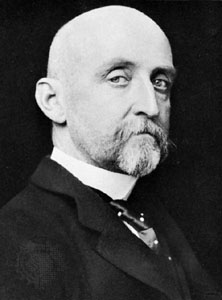
Some of Mahan’s concepts are also rooted in the geostrategic situation that confronted the United States in his lifetime. His belief in the concentration of forces as vital to combat success was as much influenced by U.S. strategic geography and potential opponents as it was by the history of past British naval wars he imparted. In the years before the First World War the primary strategic threat to the U.S. homeland was expected to come in the form of a cross-Atlantic invasion by an aggressive European power such as the German Empire. Only through concentration of its battle fleet would the U.S. likely prevail against a cross Atlantic invasion force. Mahan’s greatest contribution according to Wylie was “his recognition of seapower as a basis of national power.”18
Admiral Wylie’s works represent a synthesis of work of Clausewitz, Corbett and Mahan, as well as that of 20th century air and guerilla warfare disciplines. Wylie’s work is remarkably enduring in that it acknowledges that “terrorism is not going to disappear tomorrow” in spite of the information revolution or other aspects of advanced technology.19 He respects and anticipates that advances in missile and guidance technology will make war at sea more challenging.20 Finally, Admiral Wylie’s thinking and associated analysis are firmly grounded in the American experience of war, an aspect of his work that Clausewitz and Corbett do not necessarily reflect. The Prussian officer and the British operational theorist still have a part to play in the War College classroom, but their role in the curriculum should be adjusted for current events.
A notable naval history conference held at the Naval War College in September 1992 declared “Mahan is not Enough” and rightly suggested that the works of Corbett, and British Admiral turned historian Sir Herbert Richmond had been unfairly ignored in the study of 20th century naval history and strategy. The message was also a warning that the United States did not focus enough on operational art in the achievement of its military and national objectives. The brief period of the American “hyper power moment”, however, ended in the period 2008-2010. The rise of new competitors, the return of old challengers, and increasing disorder throughout the globe calls for an emphasis on historical strategic thinkers like Mahan and Wylie rather than operational artists like Clausewitz and Corbett. The strategic hipsters would do well to remember that “Uncle Carl” and “Sir Julian” could not have developed in the absence of underlying strategy that supported their operational theories. Rather than be concerned about numbers of strategists trained, the War Colleges would do better to improve the strategic curriculum in order to train a new generation of Mahans and Wylies to confront the nation’s present strategic challenges.
Steve Wills is a retired surface warfare officer and a PhD student in military history at Ohio University. His focus areas are modern U.S. naval and military reorganization efforts and British naval strategy and policy from 1889-1941. He posts here at CIMSEC, sailorbob.com and at informationdissemination.org under the pen name of “Lazarus”.
1. J.C. Wylie, Maritime Strategy, A General Theory of Power Control, Annapolis, MD, Naval Institute Press, 1989, p. 1.
2. Geoffrey Parker, The Military Revolution, Military Innovation and the Rise of the West, 1500-1800, Cambridge, UK, Cambridge University Press, 1996, p. 1.
3. Parker, p. 168.
4. Carl von Clausewitz, edited and translated by Michael Howard and Peter Paret, On War, Princeton, NJ, Princeton University Press, 1976, p. 87.
5. Wylie, p. 67.
6. Sir Julian Corbett, Some Principles of Maritime Strategy, Project Gutenberg E-Book, released 16 February 2005, p. 94.
7. Corbett, p. 106.
8. Peter Kemp, ed, The Papers of Admiral Sir John Fisher, Volume 1, London, NRS, 1960, p. 161.
9. Nicholas A. Lambert, Sir John Fisher’s Naval Revolution, Columbia, SC, University of South Carolina Press, 199, p. 93.
10. Corbett, pp 114, 115.
11. Aaron l. Friedberg, The Weary Titan, Britain and the Experience of Relative Decline, 1895-1905, Princeton, NJ, Princeton University Press, 1988, p. 135.
12. Wylie, pp. 67-68.
13. Wylie, p 68.
14. Ronald Robinson and John Gallagher, Africa and the Victorians, The Official Mind of Imperialism, London, Palgrave Macmillan, 1978, p. 17.
15. Robinson and Gallagher, Africa and the Victorians, p. 464.
16. Williamson Murray, McGregor Knox, and Alan Bernstein, eds. The Making of Strategy, Rulers, States, and War, 1996, Cambridge, UK, Cambridge University Press, 1996, p. 80.
17. Alfred Thayer Mahan, Naval Strategy, Compared and Contrasted with the Principles and Practices of Military Operations on Land, London, Sampson, Low, Marston, and Co., 1911, p. 16.
18. Wylie, p. 34.
19. Wylie, p. 106.
10. Wylie, p. 102.