Tag Archives: Strategy

Members’ Roundup Part 10

Welcome back to another edition of the Members’ Roundup. There is an array of contributors featured in this week’s post. Topics range from exoskeletons in the Navy to assessing China’s nuclear arsenal. To kick off proceedings Natalie Sambhi, an analyst for the Australian Strategic Policy Insitute, has her own roundup of sorts called ‘ASPI suggests’ and provides a quick review of recent foreign policy and military developments.

With 2015 just beginning it is prudent that plans set in motion several years prior are reviewed and readjusted. The Center for Strategic & International Studies recently published a report on how the Administration and Congress can work together to sustain engagement with Asia. CIMSECian, Mira Rapp-Hooper, co-authors a chapter explaining how to adequately resource the Defense aspect the ‘pivot’.

Of concern is the People’s Republic of China’s growing military power, of which its nuclear arsenal is becoming increasingly sophisticated. Kyle Mizokami writes whilst the nuclear force is modernising it is still relatively modest compared to other nuclear powerhouses, such as Russia and the United States. Kyle explores the history of Chinese nuclear pursuits and analyses some of the weapons in the nuclear arsenal in a post for The National Interest.

BNS Sao Paulo, the flagship of the Brazilian Navy

Over at Offiziere Canada-based CIMSECian, Paul Pryce, analyses recent developments of the Brazilian Navy. He argues that the label of a ‘green water’ navy was accurate in decades past but modernisation plans, however, suggest that it is well on its way to earning the ‘blue water’ title. You can access his article here.

Manpower issues will continue to be of concern for all military planners and leadership at all levels remains important during times of transition. Over at War on the rocksJimmy Drennan provides some thoughts on how to best provide leadership for personnel during ‘super deployments’ – deployments that are 9 months or longer.

Bringing the focus back to our Coast Guard colleagues, Chuck Hill continues to inform us of developments within the constabulary side  of the maritime domain. With recent debate of the LCS’ development, Chuck asks whether the Coast Guard should rethink how it designates its vessels. For the unmanned systems advocates out there, Chuck tells us that the US Customs and Border Protection Agency’s unmanned air systems program has failed to live up to expectations. You can access that post here and further discussion on the topic here.
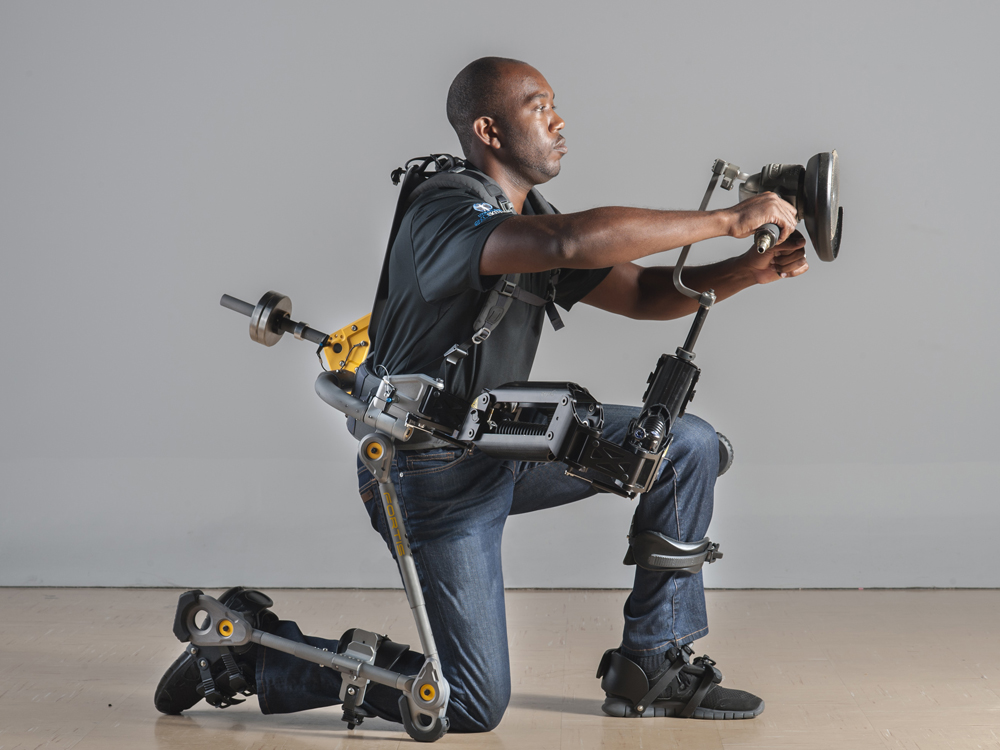
Lockheed Martin created the FORTIS exoskeleton, which can boost worker productivity up to 27 times.

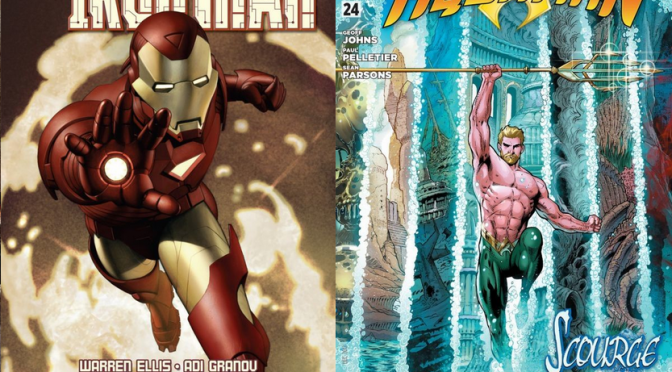
Defence industry has been developing high-tech robotic suits to enhance the capability of the average soldier. There are, however, unrealised potential for ‘exosuits’ or ‘exoskeletons’  exists within HADR and shipborne operations. The Center for a New American Security has recently published a report titled ‘Between Iron Man and Aqua Man’ and was co-authored by our very own Scott Cheney-Peters. This report will certainly open one’s eyes to other applications for the emerging technology beyond its use in combat. You can also see further discussion on the topic in Scott’s post at War on the rocks.

Continuing in the same vein as his ‘Feast of Salami and Cabbage’ article in late 2014, Scott Cheney-Peters, provides clarification to the legal jargon used within maritime disputes. For those without a background in the maritime realm or an understanding of international law this article will provide a layman’s guide to those terms being used by those in the field. This post is the first instalment in a partnership with The National Interest and you can access it here.

Finally, it would not be a CIMSEC roundup without the ‘Pacific Realist’ featuring in the post. Zachary Keck returns with four contributions this week. The first is reporting that the DPRK wants to acquire Russian fighter aircraft. The second post is Keck’s roundup of the top 5 weapons in the US arsenal that Russia should fear. The third reports that there is good evidence to suggest that the DPRK will continue to test nuclear weapons. In the final contribution, Keck summarises the various insights offered during a panel discussion on national security in the changing media landscape. You can access that article here.
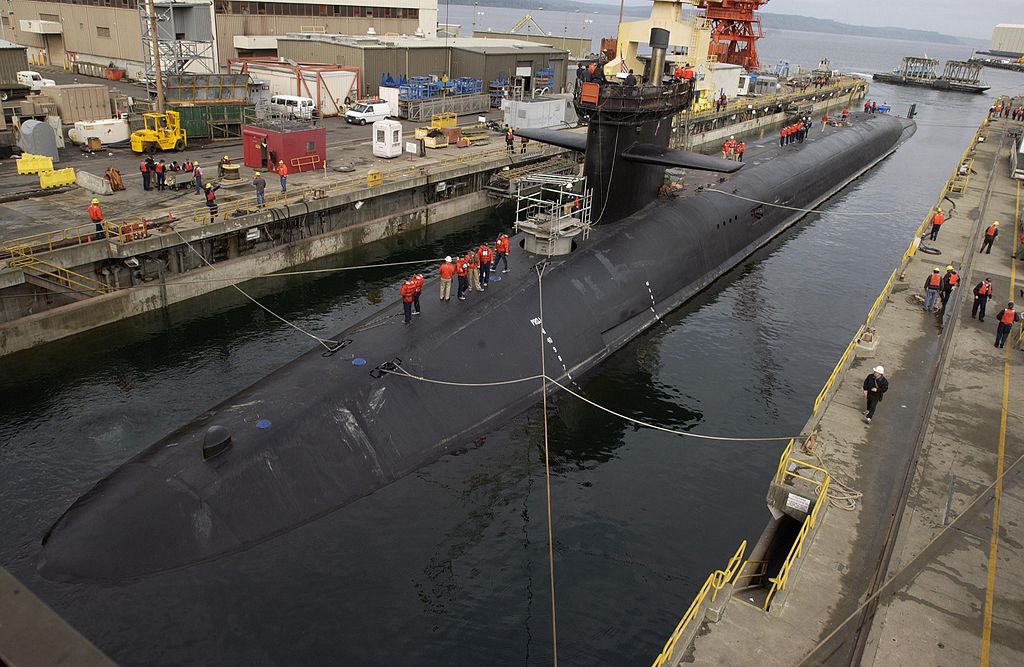
One of the 'Top 5': Ohio-class submarine USS Michigan (SSBN 727) prepares to dry dock, 2002.
One of the ‘Top 5’: Ohio-class submarine USS Michigan (SSBN 727) prepares to dry dock, 2002.

At CIMSEC we encourage members to continue writing, either here on the NextWar blog or through other means. You can assist us by emailing your works to dmp@cimsec.org.
 

Members’ Roundup Part 8

Welcome back to another edition of the Member Round-Up and the first for 2015. It has been two weeks since I last posted and CIMSECians have been busy across various blogs, journals and websites discussing all manner of topics. Whether it is a review of upcoming technology or discussion of hacking, there is an array of articles available to be enjoyed by all.

INTERNATIONAL RELATIONS & STRATEGY

With 2014 marking some positive steps to normalizing US-Cuban relations, the trade embargo still persists. Maryland-based CIMSECian, David Wise, writes that there are two key reasons why opportunities to speed up its removal were missed. Firstly, due to the influence of interest groups who benefit from the embargo and secondly, that an opportunity was lost in 1998 when the Pope’s visit to Cuba was overshadowed by the Lewinsky scandal. You can access his post on the London School of Economics and Political Science blog here.

As always, The National Interest’s Zachary Keck returns this edition with three articles, the third one will feature in a later section of this post. The first, assesses China and India’s pursuit to deploy multiple independent reentry vehicles (MIRV) on their ballistic missiles. The second article comes in the wake of the Sony hacking scandal and aims to clarify some reports by media outlets suggesting that the DPRK threatened to blow up the White House.

Although the Canadian government unveiled its National Shipbuilding Procurement Strategy (NSPS) to the public in October 2011, the exact capabilities of Canada’s future maritime forces have been largely a mystery. Over at the NATO Council of Canada, Paul Pryce gives some indications of possible contenders to build the ships. The long-term issue, however, is whether the first of the class will be ready by 2018.

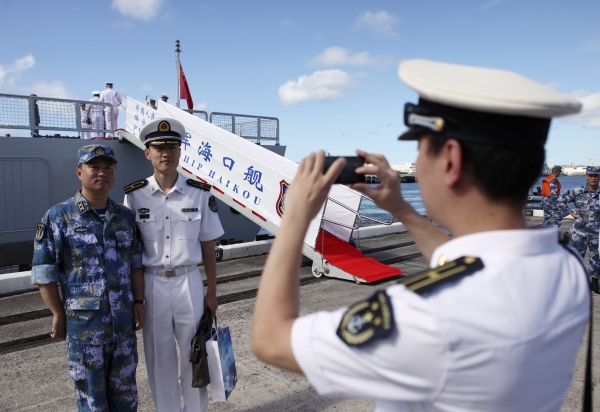
Chinese sailors take a picture together in front of guided missile destroyer Haikou (171)

Military diplomacy has been graining traction in the IR and strategy debate recently. Over at Offiziere, Patrick Truffer writes that greater transparency in US-China military relationship may be one-sided. ‘whether greater transparency of the US armed forces towards the Chinese armed forces is really profitable for the US must be critically examined,’ writes Truffer.

Moving into the new year a common feature preceding the changing of calendars is, of course, the ubiquitous ‘new year resolutions.’ This rationale can be applied in the professional realm; debating reform within any organisation is an enduring aspect of being a professional. Before becoming a naysayer and condemning any reform into the ‘too hard’ basket, consider reading BJ Armstrong’s article on innovation within the US military and its pursuit in amphibious warfare. The article can be accessed here at War on the Rocks.

TECHNOLOGY & HARDWARE

In the wake of the tragic AirAsia Flight 8501 accident many families, commentators and the general public have been raising questions such as: ‘how could we lose an aircraft when Apple can find my iPhone?’ Emotions run high during times of crisis and it is important during these times that information is delivered in a timely and accurate manner. On the MIT Technology Review, CIMSECian Dave Majumdar, explains the issues behind aircraft tracking.

Continuing with the aviation trend, Dave reports that Russia is developing a new strategic bomber called the PAK-DA as part of its post-Soviet military modernization plan. The article can be accessed here at The National Interest.

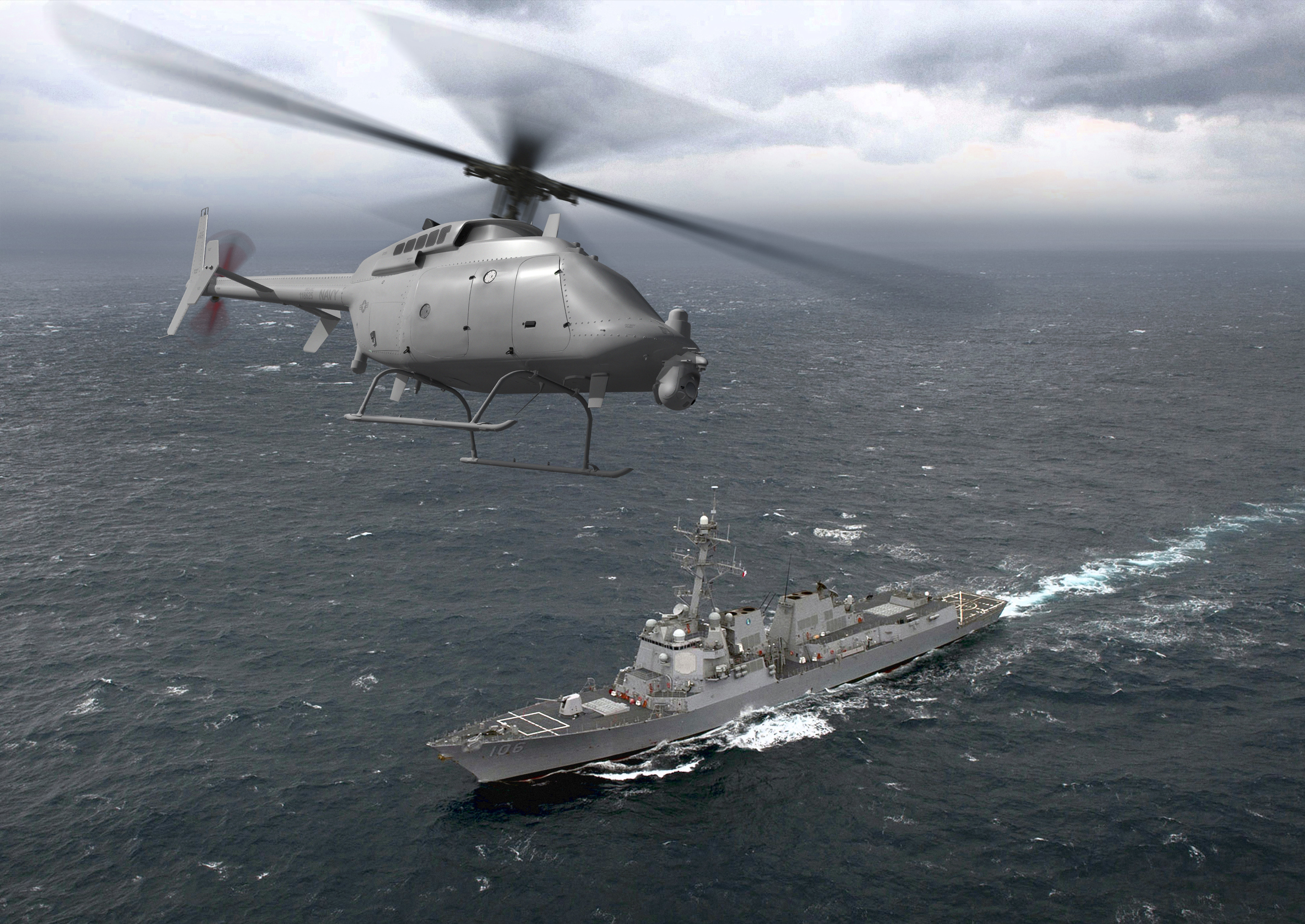
MQ-8C Fire Scout
MQ-8C Fire Scout

For the hardware fanatics a round-up of unmanned naval systems can be found over at Naval Drones and Zachary Keck is reporting that Iran has recently tested its first ‘kamikaze drone.’

ENTERTAINMENT

Over at War on the Rocks we have our NextWar blog Director, Matthew Hipple, with a review of Sony’s latest movie release: The Interview. ‘No one promised Hitchcock,’ writes Hipple, and the recent hacking affair may have actually increased interest in the movie. So if you were slightly skeptical of this film before forking out a few dollars to view it at an independent cinema then perhaps a quick peruse of this review will provide some assistance for your own expectation management.

IN REVIEW

One of our newest members, CNAS’ Jacob Stokes, will have his essay ‘Strategies of Competition’ published in the next issue of Orbis (Volume 59 Issue 1). In it, Jacob reviews the following books:

  • Strategic Reassurance and Resolve, by Jim Steinberg and Mike O’Hanlon
  • The Contest of the Century, by Geoff Dyer
  •  Maximalist, by Stephen Sestanovich

Jacob’s essay can be accessed here.

Jason Camlic provides his own round-up after attending the Chicago Maritime Museum Christmas party. You can find his post and some photos taken at the venue, here.

Finally, we also have two articles by CIMSEC members featured in Strategic Insights. Scott Cheney-Peters provides an analysis of the risks in the Taiwan Strait. Louis Bergeron analyses the chokepoint in the Mozambique Channel. They have been posted here and here on the NextWar blog.

As we begin a new year I wish to thank all of the contributions to this segment in 2014. As always please continue emailing dmp@cimsec.org so that we can all share and promote the great work that CIMSECians are producing. As a final note, if you are not yet a member and wish to be featured then simply apply to become one! Until next time.

Nam is a Maritime Warfare Officer in the Royal Australian Navy. He holds a Bachelor of Business and is currently completing a Master of Philosophy in International Security Studies at the University of New South Wales. Nam is the current Director of Member Publicity at CIMSEC.

Member Round-Up Part 7

Good evening CIMSECians and welcome back to another edition of the Member Round-Up. Our members have had a busy few weeks posting on a variety of security topics. We have shared a few of them here with you for some light reading before the holiday season.

Patrick Truffer returns this week with an article featured on the Swiss security policy blog, Offiziere. His piece on ‘traditional’ Russian institutions, such as the Orthodox Church, as well as Russian language, culture and identity, feature heavily in President Putin’s rhetoric. This is a must-read for observers and analysts who may not be well-versed in Russian culture. Without this understanding, according to Patrick, it may make Russian foreign policy appear irrational.

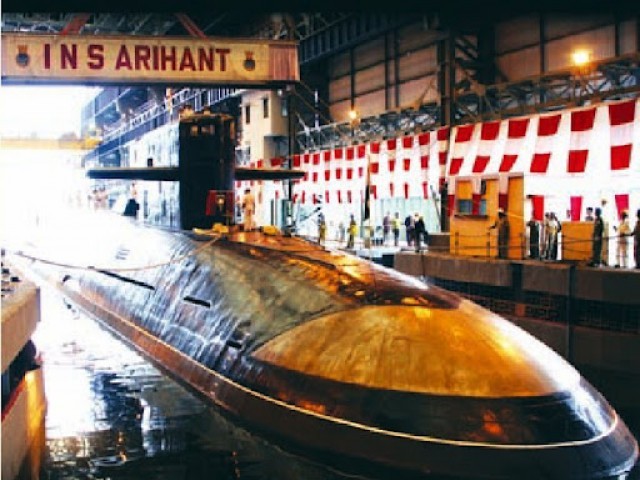
INS Arihant during its launch in 2009.

Bringing the subject back to the topic of submarines,  The National Interest’s managing editor, Zachary Keck, returns with two posts for this week’s round-up. The first post reports that India began the first-of-class sea trials for INS Arihant, India’s first ever indigenous ballistic missile nuclear submarine.

The second post reports that the Philippines wishes to continue along the same veins as other Asian nations and procure three of its own submarines. Whilst no official statement has been made regarding which submarine the Navy will procure, given the number of submarines proliferating in the region this new development will most likely be a prominent feature in any upcoming analysis of maritime security in the region.

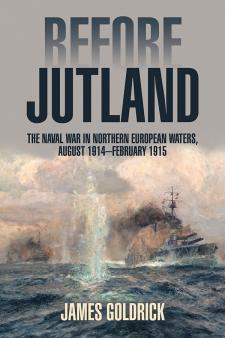
BEFORE JUTLAND: The Naval War in Northern European Waters, August 1914-February 1915.  Source: USNI Press
BEFORE JUTLAND: The Naval War in Northern European Waters, August 1914-February 1915.
Source: USNI Press

James Goldrick also returns this week with two contributions. His analysis of the US Navy’s Littoral Combat Ship, and the recent announcement by outgoing SECDEF Chuck Hagel to continue plans to purchase the remaining 20 ships, first featured on the Australian Strategic Policy Institute’s The Strategist blog here. It can also be accessed on The National Interest’s websitebefore jutland. Also, for those who are interested in all things historical (and naval) before jutlandJames Goldrick’s latest book, Before Jutland, will be available circa May 2015 through USNI Press. It provides an historical analysis of one of the key periods in naval operations during the First World War.

Over at The Daily Beast, CIMSECian Dave Majumdar, reports that several Pentagon insiders are concerned that potential adversaries, such as Russia or China, have the capability to counter any competitive advantage that the US’ latest stealth fighters may have in their long-range missiles. The article can be accessed here.

As always we continue to look for works published by CIMSEC members. If you have published, or know of another member who has published recently, please email dmp@cimsec.org so that we can promote your work. Keep an eye out for the next Round-Up in the new year.

Members’ Round-Up Part 6

Welcome back to another edition of the Member Round-Up. As always there is a wide variety of topics covered by CIMSEC members. There his, however, a distinct ‘air power’ flavour from our USAF members this week and I am sure that all of the featured articles will make for good reading leading into the weekend.

Dr Ioannis Chapsos recently joined CIMSEC and has a strong focus on researching maritime security issues. At The Conversation, he recently published an article concerning the United Kingdom’s new ‘Counter Terrorism and Security Bill.’ The danger, according to Chapsos, is that continuing to pay ransom money to pirates could lead to flow-on effects that the bill is trying to prevent. This should certainly be at the top of the weekly reading list for those interested in piracy and counter-terrorism issues.

Fellow CIMSECian, Chuck Hill, provides some brief thoughts from the recent US Naval Institute Defense Forum Washington 2014 seminar. His post, naturally, has a distinct focus on the Coast Guard elements of that session. You can also access Scott Cheney-Peters‘ points from the seminar here at CIMSEC.

SI80_preservingTheKnowledgeEdge
Preserving the knowledge edge: Surveillance cooperation and the US–Australia alliance in Asia

From down under, James Goldrick co-authors a report for the Australian Strategic Policy Institute titled ‘Preserving the knowledge edge.’ Along with co-authors Stephan Fruhling and Rory Medcalf, thereport discusses the current state of surveillance cooperation between the United States and Australia. It also goes on to discuss the ways in which the existing relationship may evolve to meet the changing security situation in the Asia-Pacific. You can access a copy of the report here.

In the Air and Space Power Journal (Africa & Francophonie), Maj David Blair, USAF, provides his thoughts on some of the organisational challenges facing military professionals. In his essay, Blair provides lessons from historical examples of how organisational failures led to strategic defeat on the battlefield. Case studies range from the fall of the Roman Empire, to the developing of the F-16. Even though he does not provide the ‘answer’, his essay will certainly provide a basis for tackling the problem.

Over at The National Interest, Dave Mujumdar continues the air power theme with his own ’roundup’ of the US Air Force’s five most lethal weapons of war. For those who are not well versed in the capabilities of the world’s largest air force, it provides an up-to-date analysis of these platforms and some of the issues concerning some of the ageing aircraft.

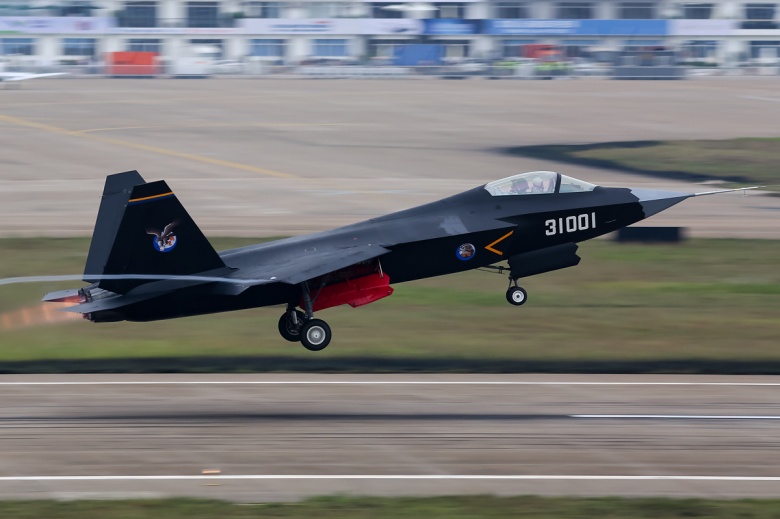
Zachary Keck, provides two articles this week concerning foreign military technology and the global market. Firstly, he reports that a senior Chinese official boasted that China’s J-31 would easily rival the F-35. If one were a betting man, it would be safe to say that that was exactly what the J-31 was intended for (see picture). In any case, the Chinese aircraft would certainly be of interest to those air forces who are unable to afford the F-35. Keck’s second article reports that the Mexican government may be looking at purchasing Iranian-made drones in order to stave off drug cartel operations. Links to the articles can be found here and here, respectively.

China's J-31 Stealth Fighter
China’s J-31 Stealth Fighter

In other news, the CIMSEC team wish to congratulate Major Jeremy Renken, USAF, for having his work recognised by the wider Air Force. Jeremy’s CIMSEC article, ‘Strategic Architectures’, was selected for inclusion in the Air War College’s Campaign Design and Execution Course. You can find a link to his article here.

As always we continue to look for works published by CIMSEC members. If you have published, or know of another member who has published recently, please email dmp@cimsec.org so that we can promote your work.