Tag Archives: Strategy

Look to the Brits for the Keys to a Successful Offset Strategy

A Geographic Rebalance, Technology, and Diplomacy Must Be Used Together

The challenges of the 2nd decade of the 21st century call for another phase in “strategic asymmetry” in order to preserve the security of the United States’ global strategic interests. The two versions of the successful Cold War Containment strategy; the “New Look” and “Flexible Response” appear on the surface to be completely different approaches. The first advocated reliance on the threat of nuclear war to deter aggressive action by the Soviet Union. The second advanced a graduated series of steps to meet the global Communist threat of which nuclear war was one component and precision-guided munitions one supporting pillar. Both however were committed to deterring nuclear war, maintaining global U.S. strategic interests, and preventing the further spread of the Communist ideology. Each too was relatively well-endowed with financial support from a U.S. government that stood at the military, political, and economic apex of a world otherwise devastated by the effects of two massive global conflicts and associated revolutions and chaos.

Unlike the Cold War period, the present United States cannot exercise the same dominance in all three disciplines of global power. The nation is in a period of relative decline. Many Eurasian nations have recovered from the effects of the conflicts of the 20th century and have assumed positions of global economic, political and in some cases military power. It is a situation similar to the situation challenging the last great liberal democratic power at the dawn of the 20th century.
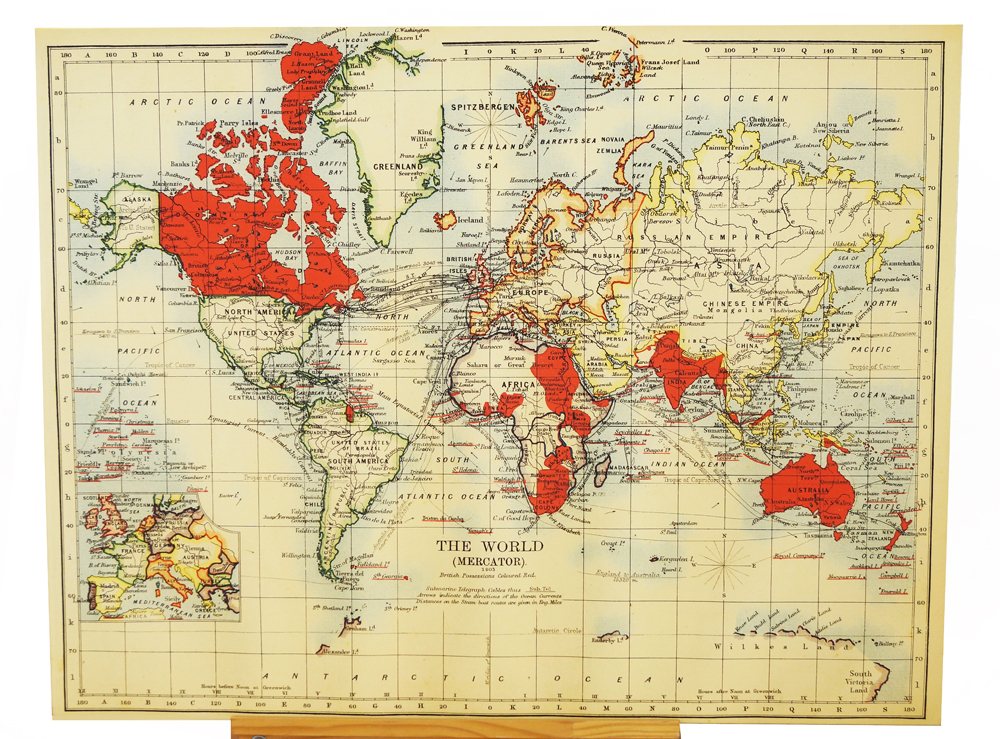
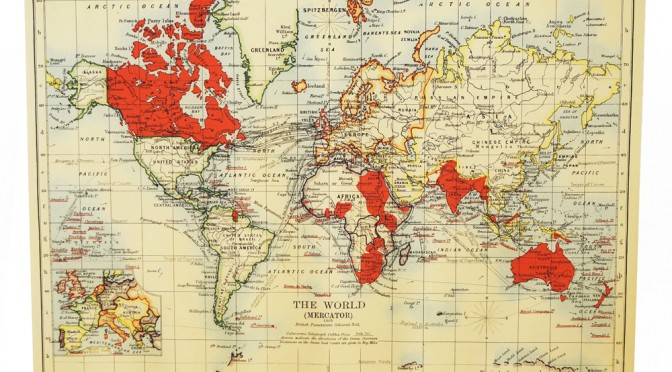
1903-british-empire-map-1000-x-760-r1750-00-jon-colman
British Empire 1903

The present U.S. situation is very similar to that of Great Britain at the end of the 19th century. The British faced many challenges to their economic and maritime supremacy. France recovered from multiple Napoleonic disasters and built a rival colonial empire; Japan emerged from centuries of isolation to compete for dominance of the Western Pacific; Germany and Russia tried to develop “webbed feet” and associated maritime ambitions; and the United States turned its energies from “winning the west” to winning the game of global economic competition. Furthermore, the “moral authority” the British had enjoyed relative to much of the rest of the world had been sullied to a degree by atrocities committed by British forces during the 1899-1901 Boer War against Dutch settlers in South Africa. That conflict also had significant financial costs that competed against those of the Royal Navy (RN), the British nation’s traditional strategic guardian, as well as those of a rising welfare state.

The United States confronts a similar scenario. Its traditional Eurasian allies have recovered from the effects of World War II and the Cold War and are now sometimes economic and political rivals. The Russian state born from the wreckage of the Soviet Union now maneuvers to regain lost territory and advantage. China has emerged as the principal U.S. economic competitor and also has maritime ambitions. The moral authority of the United States is now in question, like post-Boer War Britain, after questionable counter-insurgency conflicts in Southwest Asia and a global internet monitoring effort conducted by the National Security Agency (NSA). The wars of the last decade drew money away from efforts to maintain and improve U.S. naval and air forces. The U.S. military also competes with an expanding U.S. welfare state.
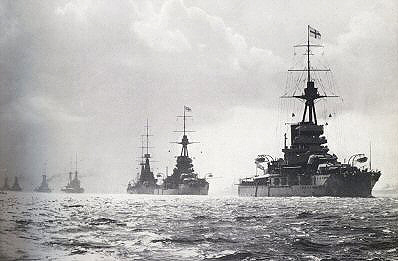
grandfleet_wwi
The British Grand Fleet

The British solution to their own period of relative decline (well detailed in Aaron Freidberg’s book The Weary Titan) is best described in three steps. British statesmen and military leaders first examined the strategic geography of the British Empire in detail and made a frank assessment of the relative importance of its physical, economic, political, and military components. They conducted a global reduction and re-balance of British naval and military assets that reflected the updated strategic geographic assessment and their own financial limitations. Finally, the British sought accords (both official and unspoken) with a number of nations to implement the new strategic geography. They came to agreements with the French and the Russians on a series of long-simmering colonial competitions, and they signed an alliance with the Japanese in order to secure their Pacific trade lines and possessions. They also accepted the peaceful rise of the United States, a “daughter” liberal democratic power, to its eventual position of leading economic power by 1914 to buttress their own economic system. The end product was a British Empire and associated armed forces better prepared to confront the changing and more volatile 20th century. Britain survived two devastating world wars and although much of its physical empire and supporting military and naval forces declined, that change was demanded and conducted by the British public under far better circumstances than would have occurred in the wake of a military defeat.

There are of course significant risks involved in such a radical re-balancing of forces. Britain’s physical retreat from the Americas and the Pacific in the face of rising American and Japanese power likely pushed the dominions of Canada, Australia, and New Zealand away from direct British influence. British leaders in the late 1920’s, allowed the strength of the British armed forces, especially the Royal Navy to significantly degrade to the point that Britain could no longer provide an effective defense of its Asian possessions. The loss of Singapore and the sinking of HMS Prince of Wales and HMS Repulse was the culmination of 25 years of poor strategic planning. It also wrecked British prestige and was a significant tipping point in the drive for Indian independence and the end of the physical British Empire.

The United States should undertake a similar realistic assessment of its global strategic position. Such a review would include not only land and maritime physical spaces, but also air, space and cyberspace “geography” which equally impact U.S. interests. This review must not be confined to mere budgetary and defense program appraisal, but must carefully examine the nation’s long-term interests. It must determine the most significant threats to the republic, and re-balance naval and military forces within budgetary limits to better confront those perils. Those forces must be both suitable for the geographic areas they defend, highly mobile and able to operationally and strategically re-position as circumstances dictate. While the present threat from both national and non-state actors is complex, some positive changes have taken place in recent years. For the first time since 1942, the United States does not face the threat of an immediate ground war other than on the Korean peninsula. The United States however cannot execute overly draconian cuts and still expect to exercise significant global influence. Some balance must be struck between the needs of the expanding U.S. welfare state, and the military forces that guard its very existence.

Finally, the United States should seek solutions to disagreements with nations and/or non-state actors whose intents and actions do not directly threaten U.S. global interest. The United States should also seek close association with present and rising states that share similar interests, since there is no “heir apparent” waiting to support and perhaps supersede the United States in its role as the defender of traditional liberal values as it was for Great Britain. One potential liberal democratic understudy is India, but other candidates may emerge. Although a rising power with aspirations toward greatness, China cannot be considered as a candidate to replace the United States as guarantor and support of the liberal capitalist system that sustains the global economy. Although perhaps no longer a full-fledged communist nation, China remains an authoritarian corporate state that continues to stifle free speech and expression. China, despite a generally warm welcome in the world economic community has instead chosen to bully its economic partners by needlessly antagonizing its neighbors and contributing to rising instability in East Asia.
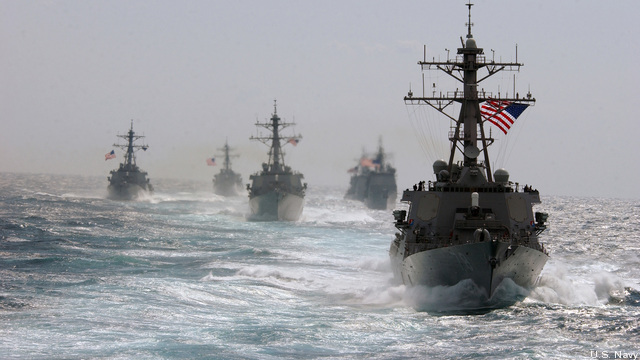
050305-N-4158S-001
US Surface Combatants At Sea

Like Great Britain, the United States can confront challenges to its global interests through an aggressive self-assessment of its strategic goals and means to which they can be accomplished. Unmanned systems, organized in support of traditional manned combat formations in a “Manned and Unmanned” battle concept, offer the United States and Western powers an offensive edge against robust Anti Access/Area Denial (A2/AD) systems. Unmanned systems, however, represent only one component of a greater post-Post Cold War U.S. grand strategy. A technological “offset” alone is insufficient given the expanding threat level that presently confronts U.S. decision-makers. Technological solutions will likely come from civilian industrial sources and be readily duplicated by potential adversaries. Framing the concept of a future grand strategy through unmanned systems, geographic military rebalance, prioritization of threats and movement to accommodate non-threatening, but distracting disputes with others represent the conditions for a successful response to the emerging strategic environment. The United States can still field a capable military force with global reach for a reasonable cost by undertaking such a broad strategic review.

Steve Wills is a retired surface warfare officer and a PhD student in military history at Ohio University. His focus areas are modern U.S. naval and military reorganization efforts and British naval strategy and policy from 1889-1941. He posts here at CIMSEC, sailorbob.com and at informationdissemination.org under the pen name of “Lazarus”.
Indonesia’s Seaward Shift: A Break from the Past

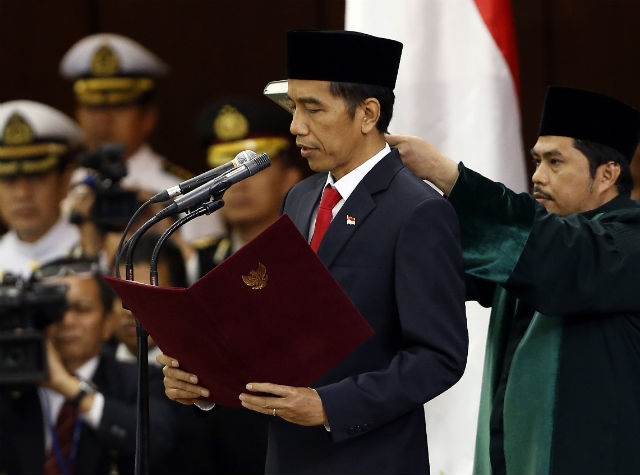
Jokowi%20oathIn his inaugural speech as the President of Indonesia, Joko Widodo communicated a vision of prosperity for his country based on a tradition of maritime trade. Indonesia, he said, is to become a sea-going trading power once again. With a new Ministry of Maritime Affairs and a US $6 billion investment in maritime infrastructure, he’s putting his proverbial money where his mouth is. While this seems like an obvious path for archipelagic Indonesia to take, there are very important reasons why this signals a profound shift in the strategic thinking of the country from an internal threat perception to an external one. Although some analysts believe Jokowi’s pronouncement is code for abandonment of Indonesia’s non-alignment policy, it is likely his words had nothing to do with external actors and everything to do with growing confidence in Indonesia’s democracy to effectively address its historically troubled internal security.

Understanding this requires a look at the history and culture of Indonesia’s security services. Like many of its counterparts in neighboring states, the Indonesian security apparatus was formed, tested, blooded, and solidified in an environment of internal insurgency. For hundreds of years, Southeast Asian nations (with the exception of Thailand) were caught up in the ebb and flow of colonial domination. In a very short time following the Japanese invasion of the region in December 1941, these nations underwent a rapid decoupling from the colonial system. By 1959 all were newly independent and all except Thailand were on a fairly shaky basis due to the newness of their institutions. Worse, they all suffered from vicious Communist insurgencies formed, trained, and supported by the Allies to counter the Japanese. In some cases, returning colonial powers (French, Dutch, and British) found themselves fighting the very the agents they had trained just a few years earlier. The chickens had come home to roost in a very real and violent way.

The Communists had two weakness: they were not a single, monolithic insurgency but a collection of disconnected national movements (Malayan, Thai, Indonesian, Filipino) vulnerable to defeat in detail, and their core membership was composed primarily of culturally distinct ethnic Chinese minorities. Their ability to blend into the local populations was limited, forcing the Communists to operate in remote, politically marginal areas. Despite this, they posed a very real threat to the stability of the young governments in the five nations that would eventually form the Association of Southeast Asian Nations (ASEAN). By 1967, these nations had had enough and decided they needed a political construct that would enable them to address the problem. The solution was the principle of non-interference enshrined in the founding declaration of ASEAN. This principle allowed member states to define their insurgencies as purely internal problems and to deal with them without fear of interference by other ASEAN member states. In its implementation over the last forty-seven years, the principle of non-interference has been used at times as a cover for the suppression of internal populations through imposition of emergency security measures such as restrictions on freedoms of the press and assembly; common factors in many ASEAN countries. Of course, the best tool for implementing these restrictions is the police. As a result, in many ASEAN countries the police, not the Army, have primacy for both internal and external security. But Indonesia went a different direction, relying more on its military special operations forces (Kopassus and others) than on its police.

Created by the Japanese to fight Dutch-trained Indonesian paramilitary formations (and ultimately the Dutch themselves), the predecessors of the Indonesian Army (TNI) and national intelligence service (BIN) adopted a heavy counter-insurgency focus during their early operations in the Second World War. With the accession of their leaders, Sukarno and Zulkifli Lubis, to political and bureaucratic power, TNI and BIN’s perception of threat from within dominated Indonesia’s strategic landscape until the end of the 20th Century. As TNI’s monopoly on political power quickly eroded after the fall of Suharto in 1998, the emphasis began to shift toward the police. A U.S. legislative prohibition on direct military engagement with individuals accused of human rights violations accelerated the situation. The prohibition disproportionately affected Kopassus after accusations that many of its leaders committed war crimes during the invasion of East Timor in 1975. Decades later, the U.S. failure to engage Kopassus remained problematic for the United States because TNI continued to block access to other Indonesian units, insisting that Jakarta, not the U.S. Congress, would decide which Indonesian formations received priority for mil-mil cooperation. The impasse left the door open for the U.S. State Department to become the lead U.S. agency for security assistance to Indonesia. Through its Anti-Terrorism Agency (ATA), the State Department drove the formation and training of the now famous police counterterrorism unit, Densus 88,1 known for its spectacular successes against a number of the country’s most wanted international terrorists. By 2007, with hotspots in Timor and Irian Jaya temporarily quiet, Indonesia’s police seemed to be firmly in control of internal security, allowing the country’s military and political leadership to begin thinking outwardly.

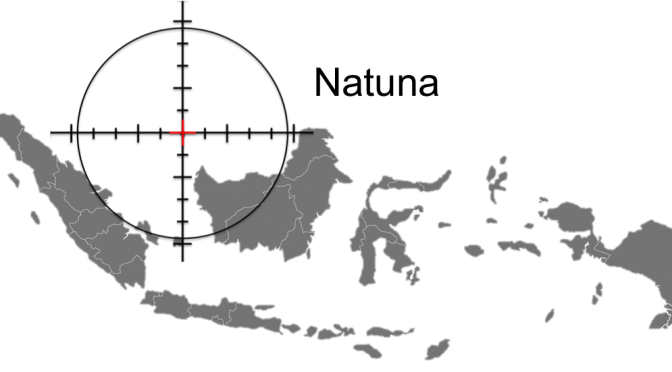
It is in this context that Jokowi’s pronouncement makes sense. Navies do not have great utility against insurgencies and it would not be feasible or advisable to emphasize naval power while under threat from within. While some happily interpret this shift to be aimed squarely at China, whose territorial claims in the South China Sea affect Indonesia’s energy rich Natuna Island, this is probably wishful thinking. China’s brushes with Natuna are a very recent development in what is a much older strategic context. Therefore we should not view such a shift as a bold break from strategic concepts of the past, rather we should take it as a reflection of Indonesia’s changing security situation going all the way back to the Japanese invasion in 1941. While it’s probably inaccurate to portray this as evidence of Jokowi’s greatness and vision, we can take heart that a shift to the sea is evidence that a mature, stable Indonesia has indeed arrived and is here to stay.

Lino Miani is a US Army Special Forces officer, author of The Sulu Arms Market, and CEO of Navisio Global LLC.  Views expressed in this article are definitely not the views of the US Government, the U.S. Army, or the Special Forces Regiment.

1 The name Detacmen Khusus 88, or Densus 88 for short, is reportedly the result of a misinterpretation of the English acronym for Antiterrorism Agency (ATA) by a senior Indonesian police official.

Members’ Roundup Part 4

This week, we are fortunate to have a variety of writers and topics to share with the CIMSEC community. Ranging from the crisis in Ukraine to nuclear deterrence, the works that CIMSEC members have produced will provide sufficient ‘food for thought’ leading into the weekend.

David Wise, a CIMSEC-ian based out of Annapolis, Maryland, recently had an article published through John Hopkins University that details ‘the writing on the wall’ regarding the situation in Ukraine. He calls for a renewed public diplomacy effort to expose the belligerents and there is, indeed, an imperative for this. In David’s words: “if the international system that has produced the longest era of peace between major powers and by far the greatest prosperity in human history is not worth defending, then nothing is.” 

Furthermore, David presents his musings of American involvement in Libya over at the Small Wars Journal. More specifically, David argues that there are four reasons as to why it is hard to argue against President Obama’s self-assessment that his greatest foreign policy error was made in Libya.

New Delhi-based CIMSEC-ian, Darshana M. Baruah, suggests that recent developments under the Modi Government will see India playing a much bigger role in reshaping the security architecture in the South China Sea. In a report for RSIS, Darshana argues that India has an opportunity to fill a leadership role in providing security in the region. This will certainly go hand-in-hand with New Delhi’s interests in Asia.

Bringing the debate back to topics of grand strategy, CIMSEC-ian Zachary Keck, from The Diplomat, provides some brief thoughts on the third ‘Offset Strategy‘. The policy was officially announced by Defense Secretary Chuck Hagel at the Reagan National Defense Forum, almost two weeks ago and is aimed at perpetuating America’s military superiority.

Adm. James Stavridis continues to feature in this series with an op-ed featured on BreakingDefense.com, and co-authored with Matthew Daniels. The piece, titled ‘Soft Power: The Vaccine Against Oppression’, builds upon the Admiral’s efforts in advocating open-source security.

Finally, we are fortunate to have access to high-level experts here at CIMSEC. Admiral John C. Harvey, USN (retd.), emailed me to give CIMSEC members his personal assessments from his time co-chairing the Independent Review of the Nuclear Enterprise, which was ordered by Secretary of Defense Chuck Hagel earlier this year. Admiral Harvey shares with us some of his personal lessons:

1) If you have nuclear weapons, you need to devote a great deal of high-level attention to their maintenance and sustainment as well as the maintenance and sustainment of the people and platforms that would deliver those weapons should the President so direct.

2) It was obvious to me that we haven’t been able to establish the right organizational construct within DoD since the late 90s that would consistently and effectively accomplish #1 above.

3) We can debate the efficacy of nuclear weapons all we want – the utility or futility of deploying nuclear weapons, whether or not we should deploy a monad, a diad or a triad of nuclear delivery systems, or whether conventional deterrence of some kind can ever replace our current posture relying fundamentally on nuclear deterrence, but, and it’s a big but, as long as we have nuclear weapons – like them or not – we’ve got to invest the required resources in their care and feeding and the care and feeding of the people who maintain the warheads, the missiles, and the delivery systems. 

There is no middle ground here, no ability to rely upon some sort of an elegant and systematic degradation that can be monitored and managed with timely intervention before either lasting damage or an untoward event occurs. 

If you are interested in further exploring this topic, Admiral Harvey has provided the report in full here, as well as a summary of the review process and methodology here.

Please email dmp@cimsec.org to continue sharing your great work with the CIMSEC community.

American Strategy in the 21st Century: Maritime Power and China – Part III

This is the third of a three-part series. See Jake’s first article here and second here.

Criticism
Justin Logan outlines an alternative critique of America’s “pivot” toward Asia and a maritime presence that counters China’s growing military power. According to Logan, the “liberal internationalist” or “optimists” (also known as “Panda Huggers”) represented by G. John Ikenberry, “elide the zero-sum nature of military questions, hang too much on faith that political liberalization will happen, and will resign China to American military dominance, and similarly place too much faith in the power of international institutions.” On the other hand, “realists” or “pessimists” (also known as “Dragon Slayers”), represented by John J. Mearsheimer, “have not shown how Washington could squash Chinese economic growth at an acceptable cost, and do not demonstrate directly how even a much more powerful China would threaten the security of the United States.” He suggests that “Beltway elites” have adopted “an inherently contradictory approach, congagement, that borrows problems from both schools of thought and creates a new problem: free riding.” [1]

“Congagement” creates several problems. America’s attempt to act as “the balancer of first resort” becomes more costly as China becomes more wealthy and capable of fielding an ever-more effective military. By “infantizing” allies in the region, they do not see the need to invest in their own defense, instead relying on American security guarantees. Japan, South Korea, Thailand, the Philippines, Australia and others should come together to deter Chinese aggression without America doing it for them. [2]

Are you a panda hugger or dragon slayer?

The United States should instead “pivot home.” It must “revisit formal and informal U.S. security commitments in Asia with a clear eye trained on what it would actually be willing to fight a war with China over, and just how likely those scenarios are.” Policymakers should “work to lessen and ultimately remove the forward-deployed U.S. military presence in the region, helping establish more powerful national militaries in like-minded states” and “encourage Asian nations to work together on security issues without the United States leading the way.” Otherwise “it likely will see its allies unable to play a larger role, and a larger share of America’s national income dedicated to containing China on their behalf.” [3]

I_didn't_raise_my_boy_to_be_a_soldier1

Logan’s critique builds upon the strong “libertarian” or “isolationist” strain in American foreign policy going back to the days of Thomas Jefferson, and perhaps best embodied today by Senator Rand Paul and his father, former Congressman Ron Paul. It has a popular appeal, one in which the United States avoids involving itself in the affairs of other nations and the “entangling alliances” of the former European powers. In this view, America can best serve its national security and foreign policy interests by having a military capable of defending its political territory and using that power only in self-defense. While America can serve as an “international example” of freedom and economic liberalization, it should avoid a muscular policy with broad strategic interests, one in which the United States is the predominant military power and international leader.

Despite its appeal, Logan’s critique leaves much to be desired. Neither the “liberal internationalist,” “realist” or “congagement” policy perspectives argue that American allies will rely solely on American security guarantees. Indeed, evidence suggests that while China’s defense spending has certainly increased substantially from 2000 to 2011 ($22.5 billion to $89.9 billion), so has that of America’s allies and other security partners. Japanese defense expenditures rose from $40 billion to $58.8 billion, South Korea’s rose from $17 billion to $29 billion, and Taiwan’s rose from $8 billion to $10 billion. Indian defense spending surged 47.6 percent over the decade, reaching $37 billion. [4] The evidence that Asian nations are “free riders” does not appear compelling as Logan would have us believe.

The historical experience since the end of the Vietnam War has shown that the American presence is Asia is a stabilizing force, counter to Logan’s claim. He does not appreciate the context of the 19th and 20th Centuries. For example, Japan’s growing role in regional security would not be possible without American leadership (and influence on) Japanese policy. Logan at one point highlights recent security agreements between the Philippines and Japan as an example where America was not needed. Yet he fails to understand that without the American security umbrella (and still tacit influence over Japanese defense policy), the Philippines would almost certainly not enter into any security agreement with their one-time occupier. The same holds true for South Korea, whose experience with Japan includes more than a century of occupation. Can one seriously believe that the Japanese and South Koreans could or would work together without America’s leadership (and forward presence) in the alliance structure?

Sailor on watch.
Sailor on watch.

Logan is right that policymakers must think seriously about under what scenarios the United States might find itself drawn into conflict with China, but he seems to downplay how likely those scenarios are. The fictional scenario considered in Part I is not out-of-the-question. Indeed, it may be more likely than any Taiwan-related scenario because the chances of miscalculation on the part of China are much higher. China may perceive territorial conflicts over small islands in the South and East China Seas much easier to accomplish than a forced reunification with Taiwan. Logan suggests that those types of conflicts would result in more economic harm to China, and it would not be in their economic self-interest. Setting aside the conceit that an American sitting comfortably in Washington D.C. is just as capable of determining Chinese self-interest as the Politburo in Beijing, he again ignores history. Economic interdependence rarely deters war. Thucydides’ observation over 2,500 years ago is still true today – nations go to war because of fear, honor and interest. Matters of security, national honor and fear will always trump trade agreements.

The siren song of isolationism is strong, and the burden of world leadership is great. However, we have already been through periods of American disengagement, especially after the First World War and we’ve seen how this plays out. While Logan is right to demand that policymakers outline the explicit threat to American national security China poses, he is wrong to suggest it is small.

Conclusion
Maritime power provides American policy makers with significant benefits, perhaps none more important than time. Forces can be replaced, space can be regained, but time cannot. Any conflict with China will require significant political considerations of the objectives to be attained while at the same time slowing escalation into a larger regional or global war. Maritime power does not pose a direct, immediate threat to the regime’s survival in Beijing, and may permit the political leadership on both sides to reach an acceptable end to the conflict should hostilities ensue. At the same time, should the conflict escalate, sea control will become a prerequisite for any hope of defeating China on land, as unpalatable as that option may be.

Maritime power is also a more politically viable alternative in an age of budget austerity. It will meet our strategic security needs while providing flexible options to policy makers on appropriate responses to security challenges. This is not to suggest that the development and modernization of long-range strike platforms, amphibious assault ships, logistic facilities or scouting systems will be cheap. They will not. Yet we need not consider maritime power solely from the perspective of large surface combatants, long-range bombers or nuclear attack submarines. Smaller, stealthier and faster surface combatants armed with ASCMs or unmanned vehicles (surface, subsurface and air) as well as improved cyberspace capabilities can provide a significant “bang for the buck”.

Political viability is also important when considering international cooperation. As John Hattendorf notes, “Of the various kinds of military forces—land, air, and maritime forces – only navies and coast guards have the ready and established ability to be both weapons in war and benign elements in peace.” [5] International political support will require a credible military deterrent while maintaining a light footprint.

The pivot to Asia demands a rethinking of American maritime power and how we are to defeat China in a conflict. Thinking about and preparing for such a conflict will reassure allies and friends while signaling to China that we are willing to fight. Showing a sense of resolve will prevent miscalculation on the part of China’s leadership, allowing us to continue our policy of engagement. Our national security depends on our continued leadership in Asia. Cole reminds us: “It will remain America’s responsibility to maintain its economic and military presence, as well as the historic character of American ideology, if Chinese maritime hegemony is not to prevail in Asia.”

About the Author
LT Robert “Jake” Bebber USN is an information warfare officer assigned to the staff of United States Cyber Command. He holds a Ph.D. in Public Policy from the University of Central Florida. He lives in Millersville, Maryland with his wife, Dana and their son, Vincent. The views expressed here are his own and do not represent the U.S. Department of Defense, Department of the Navy or U.S. Cyber Command. He welcomes your comments at jbebber@gmail.com.

Sources

[1] Logan, Justin. China, America and the Pivot to Asia. Washington, D.C.: The Cato Institute, 2013.

[2] Ibid.

[3] Ibid.

[4] AFP-Washington. China leads surge in Asian military spending, U.S. report says. Washington, D.C.: October 17, 2012.

[5] Hattendorf, John B. “The United States Navy in the Twenty-first Century: Thoughts on naval theory, strategic constraints and opportunities.” The Mariner’s Mirror 97, no. 1 (2011): 285-297. Pg. 296.

[1] Cole, op.cit., Pg. 201.