Tag Archives: Russia

Members’ Roundup: July 2016 Part One

By Sam Cohen

Welcome to Part One of the July 2016 members’ roundup. Through the first half of July, CIMSEC members examined several international maritime security issues, including the Permanent Court of Arbitration ruling in the South China Sea, Russia’s continued air campaign against ISIS, the U.S. Navy’s procurement objectives for the Virginia-class submarine successor, and the United States’ position on the United Nations Convention on the Law of the Sea (UNCLOS). Here is a roundup of their writings. 

Mira Rapp-Hooper and Patrick Cronin, at War on the Rocks, provide an analysis on the long-anticipated Permanent Court of Arbitration ruling in the Philippines vs. China case over the South China Sea. Using a ‘Choose Your Own Adventure’ format, the authors breaks down the different geopolitical and legal implications of the ruling, including potential Chinese responses, political fallout for China–Philippines relations, and the future of maritime and sovereignty claims in the South China Sea. The authors explain that for China to comply with the Court’s ruling it must not claim any water or airspace from the reefs it occupies or make a 12 nautical mile assertion from any claimed land features. With the ruling being highly unfavorable to China’s maritime objectives, the authors highlight that if Beijing begins to prioritize territorial claims while easing off claims to water and air, it would likely reflect a China looking to move beyond its defeat while saving face.

Armando J. Heredia at U.S. Naval Institute News, examines the tribunal’s decision from the perspective of Manila and how the recent election of Rodrigo Duterte as President of the Philippines will impact regional relations. He explains how the previous administration chose to accelerate the modernization process of the country’s military in response to increased hostility from China while opening the way for American forces to return to the Philippines through the Enhanced Defense Cooperation Agreement (EDCA). He notes that even under the modernization program the Philippines remain weak in terms of kinetic responses to a Chinese incursion. He also notes that any engagement by the Philippines would have to leverage the country’s poorly equipped Coast Guard, which lacks sufficient hulls to establish presence operations near disputed maritime regions and land features.

Jake Bebber, at the U.S. Naval Institute Blog, discusses the centrality of cyberspace operations in the People’s Liberation Army’s (PLA) strategy for long-term competition with the United States. He discusses aspects of informationized warfare and how the PLA is seeking to position its sources of information power to enable it to win a short, overwhelming victory for Chinese forces in a notional conflict. He notes that in response to China investing large amounts of time, energy, people and resources towards achieving the country’s cyberspace and information warfare objectives, the DoD must ensure that U.S. Cyber Strategy supports the force planning, training, and equipping of cyber forces while integrating advanced technology into information planning and acquisition.

Kyle Mizokami, at Popular Mechanics, provides an overview of Moscow’s decision to deploy the country’s only aircraft carrier to the Mediterranean to carry out airstrikes against the Islamic State until next year. Discussing some of the ship’s features, he explains that the ship’s propulsion system is unreliable and is so prone to breaking down that an oceangoing tugboat always accompanies it on long distance voyages. He also discusses the capabilities the carrier will deploy, including Su-33 air superiority fighters, Su-25UTG ground attack aircraft, and MiG-29KUB two-seater multi-role fighters.

Dave Majumdar, at The National Interest, discusses the U.S. Navy’s procurement objectives for the next-generation SSN(X) successor to the Virginia-class attack submarines. His article argues that one priority, permitting the Navy will have the technological know-how to do so, is to effectively turn the future attack submarine into an underwater platform for unmanned underwater vehicles (UUV). Another objective would be to eliminate noise-generating moving parts such as a propulsor or driveshaft in the propulsion system to decrease the possibility of detection in an increasingly competitive undersea environment.

Members at CIMSEC were also active elsewhere during the first part of July:

At CIMSEC we encourage members to continue writing, either here on CIMSEC or through other means. You can assist us by emailing your works to dmp@cimsec.org.

Sam Cohen is currently studying Honors Specialization Political Science at Western University in Canada. His interests are in the fields of strategic studies, international law and defense policy.

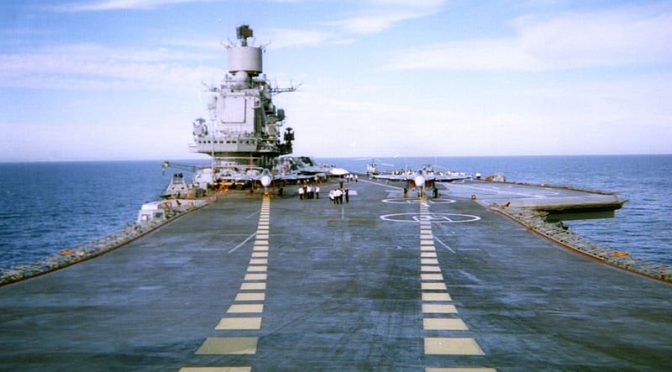
Featured Image: A view from the deck of the Russian carrier  Admiral Kuznetsov (Wikimedia commons)
Putting it Back Together Again: European Undersea Warfare for the 21st Century

The following article is adapted from a report by the Center for Strategic and International Studies, Undersea Warfare in Modern Europe.

By Andrew Metrick

Increasing Russian submarine operations over the past several years have caused considerable concern in capitals across Europe and in the United States. The resurgence of the Russian Navy in the undersea domain prompted a senior U.S. naval official to declare that we are now in the midst of the “Fourth Battle of the Atlantic.”1 Such pronouncements may overstate, to some degree, the extent of Russia’s reemergence,  however, they helpfully shine a light on the dramatic decline of anti-submarine warfare (ASW) capabilities across NATO and key partner nations, including Sweden and Finland.As part of a recently released study on the challenges posed by Russian undersea capabilities across Northern Europe, the Center for Strategic and International Studies (CSIS) analyzed the extent of the decline in U.S., allied, and partner capabilities,  and offered recommendations to reverse it in a timely, cost-effective, and strategic manner.

The CSIS report highlights two incidents that demonstrate how far NATO and partner capabilities have fallen. In a widely publicized 2014 episode, the Swedish Navy spent a week scouring the Stockholm archipelago for an alleged Russian submarine believed to be operating inside Swedish territorial waters.3 The intruder was never publicly identified, though the circumstantial evidence overwhelming suggests it was, in fact, a Russia submarine. In years past, Sweden arguably maintained the best shallow water anti-submarine warfare (ASW) capability in the world. This incident, however, calls that status into question. The UK was likewise confronted with a similar incident in late 2014 when the Royal Navy (RN) suspected that Russia was operating a submarine in close proximity to Faslane, the home of the RN’s nuclear submarine force. Given the UK’s lack of fixed-wing ASW platforms, it was forced to request allied assistance to protect this vital military installation—a less than proud moment for the former maritime heavyweight.4 The UK has since announced that it will be investing in nine P-8A Poseidon maritime patrol aircraft.  

How did once-capable ASW nations like Sweden and the UK find themselves in this position? In the mid-to-late 1990s, NATO shifted its focus from internal territorial defense to external conflict management and stability operations. We now see that this change was overly pronounced and negatively impacted investments in both platforms and skills needed for undersea warfare in and around NATO waters. For example, in 2000, Denmark, France, Germany, the Netherlands, Norway, Poland, Sweden, the UK, and the United States operated 136 submarines, with the European nations accounting for roughly half of the force.5 By 2016, the combined fleet had shrunk to 109 vessels, with the United States accounting for 65 percent of the total.6 More worrisome, a good portion of the European submarine fleet may now not be effective against the most modern Russian subs. Similar trends emerge when comparing past and present totals related to ASW-capable surface vessels and aircraft. In this case, no platform better showcases the overly executed shift in NATO priorities than the new German frigates, the F125 Baden-Wurttemberg-class. These frigates, the largest surface combatants built by Germany in over 60 years, have little to no high-end naval warfighting capabilities, including ASW.7

Beyond capabilities and platforms, ASW warfighting skills have similarly atrophied. Given highly complex operating environments, many of these skills require consistent realistic training to build and subsequently maintain. There is now an entire generation of naval officers without a detailed know-how to counter and defend against Russian undersea activities in the North Atlantic and Baltic Seas. There are signs that navies across NATO are beginning to recognize these shortcomings and are taking steps to address them. The increased frequency of NATO’s Dynamic Mongoose ASW exercise is one such example. However, nations will have to commit to robust training beyond annual NATO exercises in order to create and maintain a culture of ASW excellence.8 Dynamic Mongoose and similar exercises should not be viewed as the panacea to current training shortfalls, but rather as the culminating event for separate national training programs.

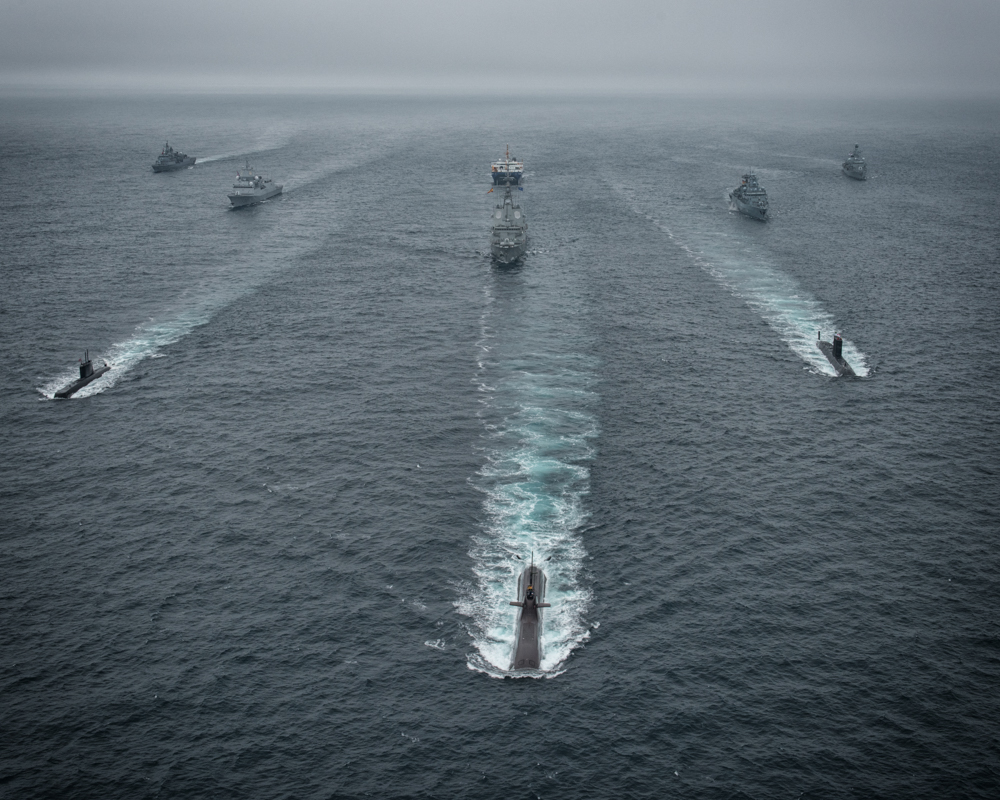
Exercise DYNAMIC MONGOOSE - All participants ships in formation - 27 JUN 2016 - Photo by WO C. ARTIGUES (HQ MARCOM PHOTOGRAPHER)
Exercise DYNAMIC MONGOOSE – All participants ships in formation – 27 JUN 2016 – (WO C. ARTIGUES/ MARCOM)

In order to meet these challenges, NATO and partners will not only have to recommit to the platforms and people required for ASW and undersea warfare, but also to working together in an operationally effective manner. There are two tasks that NATO and its partners must complete as soon as possible. First, relevant nations must establish mechanisms to bridge the organizational gap that results from critical ASW partners Sweden and Finland not being in NATO. The creation of a framework that respects the sovereignty and neutrality of Sweden and Finland while enabling close tactical and operational collaboration is vital. The deepening security relationships between these nations and NATO provides an opportunity for greater collaboration on ASW issues, which could potentially be expanded within a NATO-NORDEFCO format. Second, and looking beyond the Baltic Sea region, NATO needs to create an operationally effective theater ASW framework that distributes roles and responsibilities in a way that best leverages differing national capabilities and commitments. Such a framework will likely require changes to one of the standing NATO maritime groups, improvements to information sharing across the alliance, and continued integration of ASW elements in NATO and regional exercises. The goals represent the first steps of a longer process of rebuilding ASW capabilities across Europe. What is clear is that effective integration of national capabilities is required if the current Russian challenge is to be met.

Read the full report here.

Andrew Metrick is a research associate with the International Security Program at the Center for Strategic and International Studies and one of the authors of Undersea Warfare in Northern Europe. His work has covered a broad range of issues, including amphibious warfare, maritime capabilities, and unmanned systems. 

1. James Foggo III and Alarik Fritz, “The Fourth Battle of the Atlantic,” Proceedings, June 2016, 142.6, http://www.usni.org/magazines/proceedings/2016-06/fourth-battle-atlantic.

2. Dmitry Gorenburg, “Russian shipbuilding still in trouble,” Russian Military Reform, January 19, 2016, https://russiamil.wordpress.com/2016/01/19/russian-shipbuilding-still-in-trouble/.  

3. Peter Walker, “Sweden Searches for Suspected Russian Submarine off Stockholm,” The Guardian, October 19, 2014, http://www.theguardian.com/world/2014/oct/19/sweden-search-russian-submarine-stockholm.

4. Ben Farmer, “Britain Forced to Ask NATO to Track ‘Russian Submarine’ in Scottish Waters,” Telegraph, December 9, 2015, http://www.telegraph.co.uk/news/uknews/defence/11283926/Britain-forced-to-ask-Nato-to-track-Russian-submarine-in-Scottish-waters.html.

5. International Institute for Strategic Studies (IISS), The Military Balance 2000–2001 (London: IISS, 2000).

6. IISS, The Military Balance 2016 (London: IISS, 2016).

7. “F125 Baden-Wurttemberg Class Frigate, Germany,” naval-technology.com, accessed on: July 18, 2016, http://www.naval-technology.com/projects/f125-frigate/.

8. “NATO launches antisubmarine warfare exercise in Norwegian Sea,” North Atlantic Treaty Organization, June 20, 2016, http://www.nato.int/cps/en/natohq/news_132596.htm.

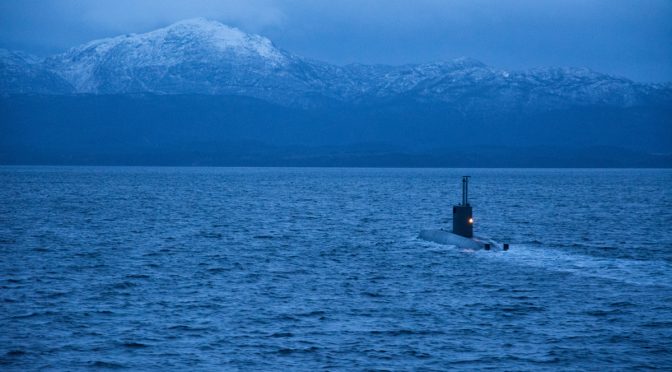
Featured Image: Norwegian submarine in the Fjord near Bergen (NATO/MARCOM)

Members’ Roundup: June 2016

By Sam Cohen

Welcome to the June 2016 members’ roundup. Throughout June, CIMSEC members examined several international maritime security issues, including increased competition in the undersea environment, the Taiwanese Navy’s pursuit of an enhanced air defense capability, Russia’s modernization of the Black Sea Fleet, developments in unmanned aerial vehicle (UAV) technology and carrier based operations, and finally, growing piracy threats off the coast of Libya. 

Beginning the roundup at the Bulletin of the Atomic Scientists, Bryan Clark discusses undersea cables and the future of submarine competition. Mr. Clark explains how at least 95% of voice and internet traffic in addition to more than $4 trillion per year in financial transactions travels through about 300 transoceanic fiber-optic cables along the seabed. Due to the likely economic and military impacts a cable break or sabotage would induce on international security and economic dynamics, the ability to threaten or protect undersea cables and their shore landings will become an increasingly important aspect of future conflict – with procurement of advanced submarine and unmanned underwater vehicle (UUV) technology being critical for  addressing this evolving threat. Mr. Clark highlights several of these technologies, including the rise of a new predominant sensing technology characterized by low-frequency active sonar, the use of undersea ‘battle networks’ and the deployment of fixed seabed-based sensors and outposts to augment UUV and submarine operations.

Harry Kazianis, for The National Interest, provides an analysis on the proliferation of anti-ship ballistic and cruise missiles around the globe and the implications the spread of these weapon systems will have on future U.S. aircraft carrier operations in peace and in conflict. Mr. Kazianis notes that the carrier has been at the forefront of every major U.S. combat operation since World War II, but the short ranges of current carrier based fighter aircraft relative to the longer ranges of certain anti-ship missiles – such as China’s DF-21D, or DF-26 ASBM – may limit the usefulness of the carrier as both an effective deterrent and a reliable platform for power projection in contested areas of operation. The article highlights additional variables affecting the relevance of the flattop in A2/AD environments, including the likelihood of successfully targeting a moving carrier at sea deploying an array of countermeasures.

Ankit Panda, for The Diplomatprovides an overview of a Chinese Naval vessel entering Japanese territorial waters and the incident’s reflection of growing tensions between the two countries. Mr. Panda explains that a Type 815 Dongdiao-class spy ship entered Japanese territorial waters on June 15, a move Beijing has not repeated since 2004, when a Chinese nuclear submarine entered Japan’s 12 nautical mile territorial sea near the Sakishima Islands. The article examines whether the Chinese spy ship was abiding by international law, particularly the provisions governing ‘innocent passage’ under the United Nations Convention on the Law of the Sea. Considering the Chinese vessel was a spy ship and sailed within Japanese waters for several hours, Mr. Panda explains that the Japanese Defense Ministry is investigating whether the PLAN vessel was operating in accordance with international law and if follow-up legal action should be taken.

Michal Thim and his colleague Liao Yen-fan, for Taiwan in Perspective, discuss the restructuring of the Taiwanese Navy, and the goal to acquire enhanced air defense capabilities for the fleet. The authors explain that modernization plans have identified interchangeable Aegis-like integrated combat systems (ACS) that pair powerful radars with advanced anti-air and anti-ship weapons as priority procurement targets. However, the recent breakdown in negotiations between Lockheed Martin and Taiwan’s National Chung-Shan Institute of Science and Technology (NCSIST) over the acquisition and technology transfer of the Mk.41 vertical launch system may limit the Navy’s ability to deploy ACS. They add that this breakdown and the resulting procurement limitations represent inherent challenges associated with Taiwan’s arms indigenization objectives.

To conclude the June members’ roundup, Sam LaGrone for U.S. Naval Institute News provides an overview of Russia’s first deployment of a new frigate to the Black Sea Fleet since the end of the Cold War. The Project 11356-class Admiral Grigorovich was sent to a Russian naval base in Crimea, which Mr. LaGrone explains is the first of many new surface ships the Russian Navy intends to base in the Black Sea. He adds that the delivery of the multi-mission surface combatant, capable of engaging submarine, air and surface threats, is part of a $2.43 billion Black Sea Fleet expansion program that will allow for increased power projection capabilities throughout the Fleet’s area of operation.

Members at CIMSEC were also active elsewhere during the month of June:

  • Bryan McGrath, for The War on the Rocks, explains how the lack of naval competition in the post-Cold War period has resulted in a U.S. fleet posture with limited offensive power. He explains how the Navy has prioritized a defensive mindset for too long, with survivability and defensive capabilities outcompeting offensive capabilities for platform space, budgetary resources and strategic inquiry. Mr. McGrath emphasizes that by adopting and implementing the distributed lethality concept across the fleet – that is increasing the unit-level lethality of virtually every ship in the Navy – U.S. naval forces will increase their capacity to successfully deter and challenge nations opposing U.S. interests and international law at sea.
  • Jerry Hendrix, for Defense One, advocates that the X-47B should be reinserted into carrier operations before the U.S. Navy begins to spend more time and fiscal resources on a new, expensive carrier-based UAV. Mr. Hendrix identifies that the Navy needs a long-range strike asset similar to the X-47B design, while it does not need a long-range surveillance platform – an asset the Navy seems to be leaning towards even though 68 unmanned MQ-4C Triton broad area maritime surveillance vehicles have recently been acquired. He also notes the possibility of evolving the X-47B into a joint strike-refueling platform, which would provide two useful, additional capabilities aboard the carrier that are more appropriate and necessary than a surveillance UAV.
  • Michael McDevitt, for The National Interest, discusses China’s ambitions as a maritime power by contextualizing the maritime environment from Beijing’s perspective. The article examines how China seeks to position itself in the maritime environment both regionally and globally, with the Coast Guard, PLA Navy, shipbuilding capacity, merchant fleet, distant-water fishing challenges, territorial disputes and both strategic and tactical level operations taken into consideration.
  • Paul Pryce, at Offiziere, provides an analysis on the current state of the Libyan Navy and the growing threat of piracy operations off of the country’s coastline. Mr. Pryce explains that the Navy’s one active ship, a Koni-class frigate, in addition to the lack of command and control governing the Navy – the same issue facing all Libyan security forces – is contributing to the refugee problem in the Mediterranean and the rising volume in piracy incidents throughout the region.
  • Robert Farley, for The National Interest, discusses Canada’s late 1950’s CF-105 Avro Arrow high-performance interceptor and the aircraft’s unsung potential as a dominating platform in early Cold War airspace, if only the program had not been cancelled due to shifts in Canadian technology, policy and security priorities. In a second article at The National Interest, Farley examines Russia’s Type 705 Lyra Cold War submarine that was regarded by the West as a profound threat to NATO’s undersea dominance.
  • Christian Davenport, for The Washington Post, highlights new technological advancements that may be transforming the way the pentagon outlines its defense strategy, particularly developments within the fields of robotics, drone swarms, and artificial intelligence. The article highlights emerging communication channels between the technology industry in Silicon Valley and the Pentagon, with Defense Secretary Ashton B. Carter recently meeting with executives at SpaceX and Google.
  • Kyle Mizokami, for Popular Mechanics, discusses the deployment of two U.S. carrier battle groups to the Philippine Sea to conduct exercises following the UN court ruling on China and its claims in the South China Sea. Mr. Mizokami explains that the carrier strike groups (CSGs) consist of two nuclear-powered aircraft carriers, two guided-missile cruisers, six guided-missile destroyers and likely two nuclear attack submarines – although their presence was not confirmed by the Navy. He adds that this is the first two-carrier exercise in the Western Pacific in two years.
  • Dave Majumdar, for The National Interest, examines the Russian submarine threat to NATO’s maritime forces and U.S. naval forces stationed throughout EuropeThe article explains how Russia has successfully incorporated highly agile, technologically advanced and lethal submarines into their overall A2/AD bubble strategy throughout European waters and the significant threat this poses to U.S. and allied undersea posture in the region.  

At CIMSEC we encourage members to continue writing, either here on CIMSEC or through other means. You can assist us by emailing your works to dmp@cimsec.org.

Sam Cohen is currently studying Honors Specialization Political Science at Western University in Canada. His interests are in the fields of strategic studies, international law and defense policy.

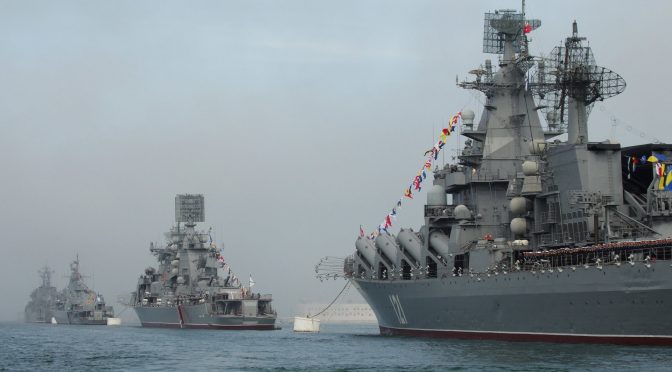
Featured Image: Naval vessels of Russia’s Black Sea Fleet (RT)

Repositioning NATO after the Warsaw Summit

This article originally featured at the Conference for Defence Associations Institute and is republished with permission. Read it in its original form here

CDA Institute guest contributor Andrew Rasiulis, a Fellow at the Canadian Global Affairs Institute, examines the challenge posed by ISIL and a revanchist Russia in advance of the NATO Warsaw Summit.

The NATO Summit in Warsaw this July offers the Alliance the opportunity to reposition itself to address the security challenges on both its Eastern and Southern flanks. In the east, the war within Ukraine, while stagnant, remains politically unresolved. In the south, the scourge of terrorism, most notably manifest through the Islamic State of Iraq and the Levant (ISIL), has wrecked violence within NATO itself as witnessed by the various terror attacks in Belgium, Canada, France, and Turkey. The impact of ISIL generated violence, and that of its allies in Africa and Asia, has been the creation of waves of refugee migration. This migration, in turn, is having a powerful impact on the politics of NATO member states.

The Alliance will therefore seek ways to reposition itself to enhance the defence of its member states along its borders with Russia, while at the same time examining ways and means of bringing forth a political resolution to the situation in Ukraine. To the south, the ongoing violence of terrorism will challenge NATO to take a long-term view of the reasons for the phenomenon of ISIL and its corresponding reaction.

Russia has emerged once again as a key player on the international stage. NATO must therefore reassess its relationship with Russia, which at times has both divergent and convergent interests. In Ukraine we find the divergence of interests being predominant, as NATO expansion after the collapse of the Warsaw Pact and Soviet Union is being rebuffed by a resurgent Russia not only in Ukraine, but in Georgia and Moldova as well. However, the ongoing terrorist actions of Muslim extremists threatens both Russia and NATO. In this latter threat context, NATO and Russia are both seen as the enemy by ISIL and its allies.

These security challenges are pushing NATO to strengthen its defence and deterrence posture along its Eastern flank with Russia. The NATO Wales Summit in 2014 also grappled with the resurgence of Russian military power and set out to craft a NATO response – a reassurance package, as it became known – for its more vulnerable members along the eastern and southeastern flanks. Essentially, this was characterized by a significant increase in NATO multinational exercises and a limited pre-positioning of armaments, such as one U.S. brigade’s worth of tanks.

The Warsaw Summit will need to take stock of the varied confluence of interests since 2014, such as the establishment of the Minsk 2 process in February of 2015 which put in place a precarious ceasefire in eastern Ukraine and, and as of yet, an unfulfilled roadmap for a political settlement. In the Middle East, developments such as the nuclear deal with Iran and the limited ceasefire in Syria were achieved with active diplomatic co-operation between the United States and Russia. The picture reflects both the divergence and convergence of NATO and Russian interests.

In tracking Summit preparations currently underway in Brussels and NATO capitals, one is able to discern that the outcome will lead to a further strengthening of the Wales reassurance package, with something akin to a deterrence/defence package. Speculation is that NATO will deploy “on a permanent rotational basis” approximately four multinational battalions within Poland and the Baltic states. The nuance on “permanent” and “rotational” is to conform to what is perceived to be the letter, if not the spirit, of the 1997 NATO-Russian Founding Act that prohibits the permanent stationing of non-indigenous NATO troops in NATO countries east of Germany. Some observers argue that the NATO pledge not to station permanent forces was, in fact, conditional on the security situation faced by the Alliance, and that under the current circumstances there is no valid prohibition.

The Russians recently reacted to this by stating that three new Russian divisions will be deployed in its Western and Southern Flanks by the end of 2016. The Russians are indicating they will respond to any NATO build-up with whatever means are deemed necessary to protect their perceived national interests. Add to this the issue of the level and type of military assistance for Ukraine in its stalemate with the Russian-supported rebel enclaves in the Donbass.

Within NATO, and particularly among its eastern member states, there is concern that should the Russians decide to use limited, non-nuclear, military force against NATO in an effort to undermine the cohesion of the Alliance, the Baltic states – vulnerable to a Russian incursion – would require reinforcement. This scenario in turn begs the question raised by Alain Enthoven in his 1971 Rand study “How Much is Enough?

A 2016 RAND Corporation study by David A. Shlapak and Micheal W. Johnson postulates an answer to that question in the context of a limited conventional Russian attack. The answer is seven brigades, three of which would need to be heavy. The Summit is unlikely to agree to such numbers for its deterrence/defence track, ergo the four battalion option.

While the threat of a limited attack against the Baltic states is a challenge that will be addressed by the Warsaw Summit, there is also the opportunity to seek a corroborating détente/dialogue ‘second track.’ There is a mutual political benefit in re-examining NATO’s 1967 Two-Track Approach, which was based on the Harmel Report. To avoid having NATO’s Eastern Flank turn into its “Eastern or Russian Front,” the second track of détente and dialogue must build on areas of political convergence between NATO and Russia.

This balance should also be reflected in the manner in which NATO continues to provide capacity-building training support to Ukraine in its standoff with the Russian backed rebel held Donbass. NATO will likely continue along the path of reform minded capacity-building with the aim of strengthening Ukrainian defence capabilities, while at the same time strongly encouraging badly required reforms along the entire spectrum of governance within Ukraine.

The goal of NATO in the context of its Eastern Flank should be to secure a stable order building on convergence of geo-political interests with Russia. The Southern Flank poses a more amorphous challenge for the respositioning of NATO. The nature of the threat from ISIL is multidimensional. It ranges from political to economic, social to military. Its geographic theatre of operations is virtually global. The Warsaw Summit should also recognize the opportunity for NATO and Russia to search for common ground in dealing with the ongoing threat of terrorism that seeks to undermine the political stability of both.

Andrew Rasiulis, retired from the public service, is now a freelance consultant with Andrew Rasiulis Associates Inc. He is also a fellow at the Canadian Global Affairs Institute.

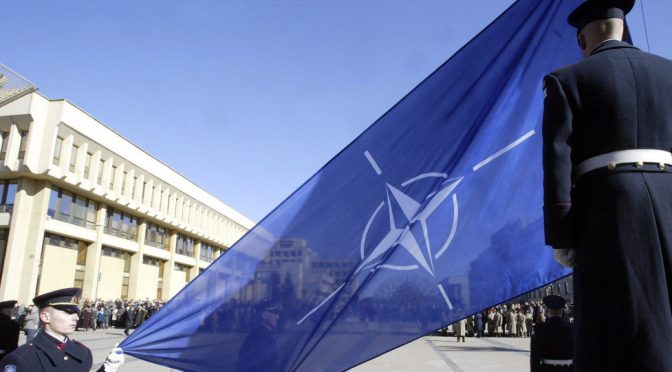
(Image courtesy of AFP Petras Malukas.)