Tag Archives: drones

Death From Above

Kill Chain

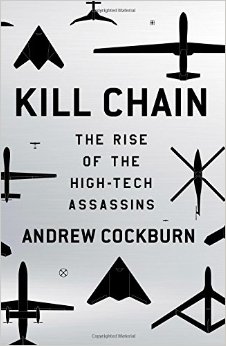
Andrew Cockburn. Kill Chain: The Rise of the High-Tech Assassins. Henry Holt Publishers. 307pp. $28.00.

It’s not often that a book review coincides with current events. Books, particularly nonfiction, are usually written and published months, if not years after an event has occurred. That’s because good nonfiction is written in retrospect: writers have spent some time absorbing their subject, researching and analyzing the facts; authors are hesitant to be rash in judgment or thought.

However, there are exceptions. Some pieces of nonfiction, particularly journalists’ works, are appropriate now — not later. Andrew Cockburn’s new book, Kill Chain: The Rise of the High-Tech Assassins, is one of them.  Cockburn’s book is timely.  In just the past few weeks there has been a flood of reporting from media outlets stating that a drone strike killed an American and an Italian hostage when targeting a group of Al-Qaeda members operating near the Afghanistan-Pakistan border.

Suddenly, questions about drone strikes, the debate about targeted killing, and the transparency of the drone program are on the front page of print and online news media worldwide.

Yes, timely indeed.

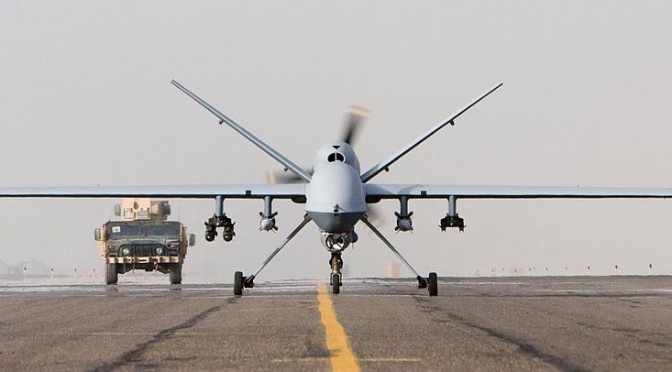
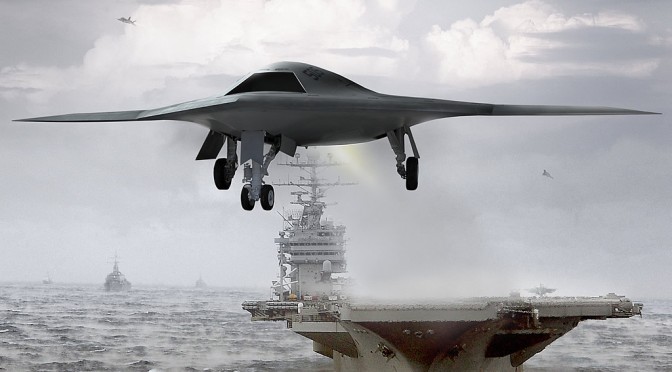
Although Cockburn’s book cover is plastered with silhouettes of unmanned aerial vehicles — with what appears to be the X-47B, Predator, Global Hawk, and Fire Scout, among others — he is making a larger argument.  Cockburn it seems, is arguing that all technology is suspect.  It’s not simply unmanned aerial vehicles, but it’s the idea that human beings are continuously so bold as to come up with technological solutions that will win our wars.   History, however, tells us a much different story.

Cockburn, then, starts his book with an interesting tale.

In 1966 the Vietnam War was not going well.  Secretary McNamara, a man who was fond of scientific solutions to difficult problems, turned his attention to “The Jasons.”  The Jasons, Cockburn says, were a small group of scientists and scholars, many of whom would go on to become Nobel Prize winners. These were also some of the same men — Carl Kaysen, Richard Garwin, George Kistiakowski — that were part of the Manhattan Project some twenty years earlier.

The Jasons tried to do what Rolling Thunder could not — they tried to figure out a way to defeat North Vietnam’s ability to use the Ho Chi Minh trail — to cut off their supply routes.  They ended up deploying small sensors along the trail that could, presumably, pick up the noise, vibration, and in some cases, the ammonia of someone urinating, all in an attempt to locate men and machines moving goods to the South.  Then, if they could hear them and find them, U.S. commanders could task air strikes against the communists on the trail.  It didn’t take long, Cockburn says, for the North Vietnamese to find a work-around.  How long?  It took one week.  Cockburn notes that all the North Vietnamese had to do was to use cows and trucks, often running over an area of the trail multiple times to create a diversion while the real logistical effort was moved elsewhere.  So simple and so effective — and relatively inexpensive.  However, Cockburn says the cost of the electronic barrier for the U.S. was around six billion dollars.

This formula is repeated throughout the rest of the book.  That is 1) There is a military problem 2) Someone always tries to find a technological solution, and then 3) Spends a lot of money only to find out the U.S. has made the problem worse.

Now fast forward almost sixty-years to the age of drones, and Cockburn introduces us to Rex Rivolo, an analyst at the Institute of Defense Analysis.  It’s 2007 and improvised explosive devices are a major problem; they are killing and maiming hundreds of U.S. troops in Iraq.  Asked to analyze the networks behind the IEDs, Rivolo, Cockburn says, discovers that targeted killings of these networks  lead to more attacks, not fewer.  This is because someone more aggressive fills the place of the leader who was recently killed.  Rivolo would return to D.C., even getting the ear of the Director of National Intelligence, Dennis Blair, telling him that attacking high- value targets was not the right strategy — the IED networks and individuals setting them off were more autonomous then was initially thought.  Going after the senior guy, Rivolo noted, was not the answer.  But, as Cockburn says, nothing changed. Now people simply refer to the continous cycle of targeting and killing  high-value targets as “mowing the grass.”

The idea of killing  senior leaders or HVTs is not new, it’s been around for a long time (think Caesar).  Cockburn, then, brings up one of the more interesting “what if’s” that military officers — or any student of military history — likes to debate.  That is, what if someone had killed Hitler before the end of the war?  Would the war have ended?  Or would he have become a martyr and someone worse or someone better have taken his place?  Cockburn tells us about British Lieutenant Colonel Robert Thornley, who argued during WWII that, no, the Fuhrer should not be killed.  Thornley noted, that if Hitler was killed, his death would likely make him a martyr for national socialism.  And that Hitler was often a man that “override completely the soundest military appreciation and thereby helped the Allied cause tremendously.”  Therefore, the thinking went, we should let Hitler live and dig his own grave.

However, the problem with this debate is that context matters.  Was it Germany in 1933? 1938? Or 1944? It matters because while Cockburn does not differentiate between the killing of a leader of a state and the leader of a terrorist network, they are indeed different systems that have different levers of power and legitimacy.

He is on firmer ground when he rightly notes how difficult it is for anyone to predict systemic effects when targeting a network.  He reiterates these difficulties throughout the book.  The most historical compelling case is WWII and the strategic bombing campaign.  All one has to do is pick up the WWII U.S. Strategic Bombing Survey and read the fine work done by John K. Galbraith, Paul Nitze, and others.  Disrupting or destroying networks from the air — in this case, Germany’s economy — was incredibly difficult.  In many cases, assumptions of German capabilities or weaknesses were far from correct.  And as Cockburn notes, the term “effects based operations,” namely, operations that are military and nonmilitary that can disrupt complex systems while minimizing risk, was a term that was outlawed in 2008 by General Mattis while the head of Joint Forces Command.

Ultimately, the debate over drones — who should control them, what should they be used for, should the U.S. target particular individuals — will continue.  It’s an important topic.  There are, however, a few shortcomings in this book.  One of the biggest questions that goes unanswered is this: If the U.S. should not strike identified enemies or high-value targets…then what?  Do nothing? Allow a Hitler to simply remain in power?  Is this not a form of moral ignorance?

The questions military planners and policy makers should ask is this:  Do we understand the character of this war?  And are these the right tools we should use to win this war?  We should not blame a drone — or any other type of tech for that matter — for bad strategies, poor operational planning, and gooned up tactics.

Drones are the future.  But we should read Cockburn’s book as a cautionary tale.  We should disabuse ourselves of the illusion that future technologies will be our savior.  And finally, we should not let those illusions crowd out the very difficult task  of understanding our adversaries and the enduring nature of war.

Andrew Cockburn’s book is worth reading.  But have your pencil ready — you’ll want to  argue with him in the margins.

Lieutenant Commander Christopher Nelson, USN, is a naval intelligence officer and recent graduate of the U.S. Naval War College and the Navy’s operational planning school, the Maritime Advanced Warfighting School in Newport, RI.  LCDR Nelson is also CIMSEC’s book review editor and is looking for readers interested in reviewing books for CIMSEC.  You can contact him at books@cimsec.org.  The views above are the authors and do not necessarily represent those of the US Navy or the US Department of Defense.

Can Small AUVs Work at Sea?

This post published on NavalDrones.com and was republished with permission. It may read in its original form here.

The researchers at CoCoRo continue to push the limits of autonomy and swarming behavior with autonomous underwater vehicles (AUVs). Recently, they’ve taken their AUVs out of the controlled laboratory tanks and into the wild, with small scale tests in ponds, lakes, and protected ocean harbors. These robots are prototypes designed to explore small scale autonomous group behavior. But the ocean tests hint at possibilities of using smaller marine robots to perform useful functions.

Unmanned Underwater Vehicles employed in military and research operations range in size from man portable, weighing less than 100 pounds, to monsters such as Boeing’s Echo Ranger, which weighs more than 5,000 kilograms. Small scale AUVs weighing less than a few kilograms or so are limited in endurance primarily due to battery size. More importantly, the ocean environment presents a number of challenges for tinier AUVs including surf and currents, poor visibility, and even hungry marine predators. But CoCoRo’s tests of their “Lily” and “Jeff” robots are early indications that these types of AUVs can operate on a limited scale in ocean conditions. What say you, readers? Can small AUV’s do real work in a maritime environment? If so, what are some potential applications for mini-AUVs? Can the obstacles the ocean presents to AUVs be overcome with larger numbers of vehicles or swarming behavior? 

Members’ Roundup Part 17

Welcome back to another edition of the Members’ Roundup, where we share with the rest of the CIMSEC readership the great work that our members have produced elsewhere. From the geopolitical situation in the Indian Ocean region to military science-fiction, there will definitely be an article for every interest.

Automation has long colonised jobs that were once performed through manual labour; changes to military operations will be no less profound. In an article for a joint War on the rocks – Center for a New American Security on military robotics and autonomous weapons, Paul Scharre reminds us that beneath all of the technological developments is the human element driving the military application. Nations and militaries that are able to better understand the policy, strategic and operational challenges will be better placed to succeed on the battlefield. You can access his article here.

Over at Real Clear Defense, Emil Maine presents a stark assessment of the state of the  United States’ munition stockpile. According to Maine: ‘unless policy makers act to raise discretionary caps on defense in the upcoming fiscal year, the severity of weapon shortfalls will only intensify.’ Given that the preference by coalition partners is to avoid committing boots on the ground, there will be a future need for a consistent supply of munitions in order to sustain the current rate of operations.

193636993
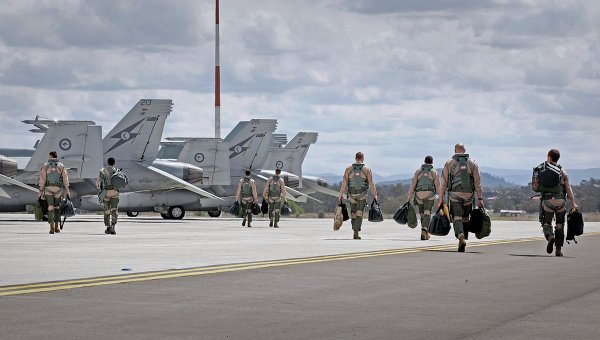
Royal Australian Air Force F/A-18 crews prepare for another mission against ISIS.

This week we have two contributions from Vijay Sakhuja. The first is an article for the National Maritime Foundation, based in India, and it analyses the bilateral relationship between India and the Seychelles.  President James Michel’s Blue Economy project presents many opportunities for cooperation, but how this will be implemented is the challenge. The second article features in the Nikkei Asian Review; Vijay discusses the nature of Chinese infrastructure development in the Indian Ocean region and the ‘maritime silk road.’ In spite of growing tensions, many Asian countries continue to invite Chinese investment, leading to a win-win situation.

CIMSEC’s very own Scott Cheney-Peters features in this week’s edition of the Roundup with his short story “Red Light Challenge” published on the Atlantic Council’s Art of Future Warfare website. The story is about a start-up team’s journey, with undertones of a hacker counterculture amongst the members, as they begin designing a flight-capable exoskeleton for the military. Throughout the piece, however, we see the human side during the project development; each character has their own traits and reasons for participating in the challenge. You can read Scott’s story here, as well as a follow-up interview about it here.

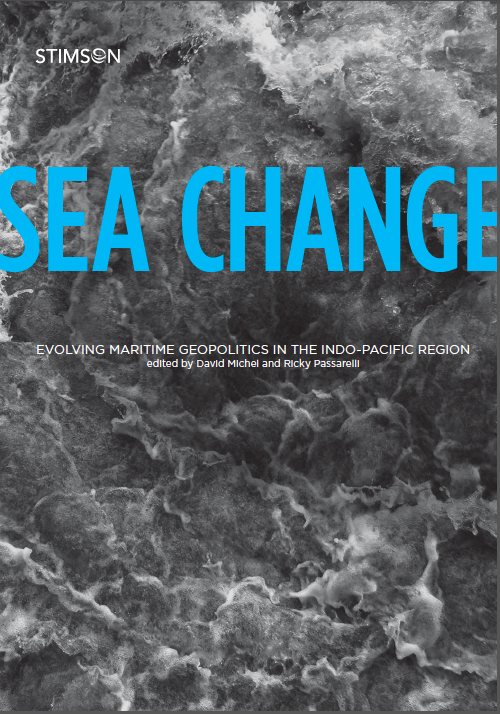
Sea ChangeThe Indo-Pacific region is rapidly emerging as a key focus of maritime geopolitics. In June last year, the Stimson Center and the Observer Research Foundation co-hosted a three-day conference titled Sea Change: Evolving Maritime Geopolitics in the Indo-Pacific Region. Two CIMSECians were invited to speak at the event; Scott Cheney Peters presented a paper on U.S. security relationships in the region and Nilanthi Samaranayake presented on the strategic importance of island states in a region of great powers. A copy of the publication can be accessed through the Stimson Center’s website.

In the latest Proceedings MagazineJohn Morton explains that the Third Offset Strategy needs more Mahanian thinking than meets the eye. Mahanian doctrine holds that a properly conceived national interest reflects the foundational sinews and national establishment of the era and must inform implicit long-term grand strategy. Today, the information age and globalised economy are what is important for long-term prosperity. You can read more of John’s article here.

Over at The National Interest there are three CIMSECians whose work I wish to draw attention to for this week’s edition of the Roundup. Zachary Keck reports that most Chinese citizens believe the PLA could seize islands in the East and South China Seas, even if the U.S. military were to intervene in the conflict. Earlier in the week, Keck cited a Heritage Foundation report that assessed America only had ‘marginal’ capacity to defend vital interests in the current threat environment. You can access that post here. Harry Kazianis continues the theme with an assessment of sequestration’s affect on America’s military readiness. Across the board, munitions levels are considerably low and it risks putting lives in danger. It is not, however, all doom and gloom. You can read more of Harry’s article to find out why. Kyle Mizokami presents his own roundup of the Top 5 most deadly anti-ship missiles of all time.

Finally, a quick and shameless spruik for my own work over at Young Australians in International Affairs. Earlier this week I wrote a blog post posing the question of what Australia’s military would look like if there was an opportunity to start with a blank canvas. Many of us in the military understand that force structure and procurement are constrained by fiscal and structural realities, but sometimes it is important to break down the fundamental requirements of national defence to truly understand what is needed to achieve the task.

At CIMSEC we encourage members to continue writing, either here on the NextWar blog or through other means. You can assist us by emailing your works to dmp@cimsec.org.

Charting a Closer Course: Obama’s Trip to India

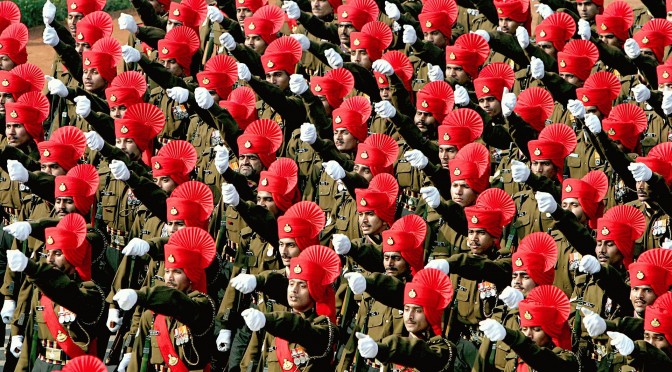
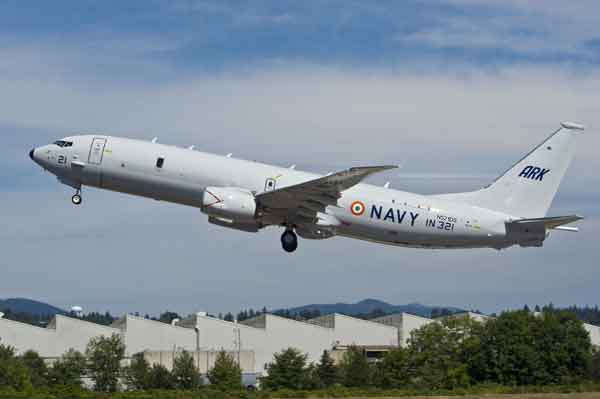
When President Obama next week attends India’s Republic Day festivities, celebrating the 65th anniversary of the country’s constitution, he’ll be the first U.S. President invited as the guest of honor and treated to a spectacle rife with symbolism. In addition to floats, bands, and regiments parading along the Rajpath on everything from mounted camel to motorcyle representing the diversity of India, the President will also witness a ceremonial flyover of a P-8I maritime patrol aircraft (MPA) in formation with two MiG-29K fighter jets (pending security concerns). This flight is symbolic in its own right for several reasons.

A Maritime Renewal

On the face of it, the flyover celebrates the induction of both aircraft into the Indian Navy. But their inclusion, the only other time than the display of Harriers in 1984 that naval aviation has taken part in the flyover, also highlights India’s renewed emphasis on bolstering its status a maritime power. India’s confidence in its naval service was shaken in the wake of a spate of nearly a dozen terrible accidents over a roughly the past year-and-a-half, resulting in the loss of more than 20 lives and significant damage to several vessels.

2nd_Boeing_P8IDespite adopting a “Look East” policy in 1991, India has in large part to this day viewed its strategic choices through the prism of its contentious relations with its neighbor to the northwest, Pakistan, promoting its air and ground forces at the expense of its naval. After Prime Minister Narendra Modi declared in November that he would follow through on the previous policy’s promise by setting out to actually “Act East,” observers are beginning to see signs of action. Modi has boosted ties with Vietnam and Japan, including inviting the latter to return last summer for its U.S.-India naval exercise Malabar and last week agreed to further strengthen US-India-Japan trilateral ties, although the effective result of this sentiment is unclear at this point. Early this year India may have also (but denies having) played a role in reversing China’s influence in Sri Lanka, seen as a key node in China’s Maritime Silk Road concept and playing host to Chinese submarine port calls to India’s displeasure, through aiding the surprise defeat of President Rajapaksa.

Additionally, the increased investments India has made of late in the sea services are starting to bear fruit, as evidenced by more than just the new aircraft. The sea trials begun in December of India’s first indigenous nuclear ballistic missile submarine, the commissioning of its first indigenous guided-missile destroyer in August, and the construction underway of its first indigenous aircraft carrier also demonstrate – despite schedule slippages – the increased priority in funding the sea services are receiving. On New Year’s Day, India received another confidence boost, reporting that its coast guard succeeded in intercepting a fishing boat operated by terrorists before they were able to execute another “Mumbai-style attack.”

Opportunities

1280px-Mikoyan_MiG-29K_of_the_Indian_NavyHowever there is another view of the symbology of the flyover. It will not be lost on most observers that the MiG is of Russian origin, and the P-8 hails from the United States. As such, the flight represents the choice for India between its traditional weapon supplier, Russia, and new options. These alternatives include India itself, as it looks to produce as much domestically as it can, at times in partnerships with those willing to share technologically advanced designs, but also those with whom it would like to cement friendships. In the Indo-Pacific such as Japan, which is attempting to finalize a deal over US-2 amphibious aircraft.

This presents the United States with several opportunities. During his trip President Obama is expected to renew a defense cooperation framework with India for another 10 years. But this is more or less the continuation of the status quo. At the same time, India is seeking suppliers of drones, and is likely to get the RQ-11 Raven, but would be well suited for sale of larger drones for maritime surveillance or as strike aircraft. Further, India is reportedly weighing the benefits of nuclear propulsion for its second indigenous carrier.

Both drones and nuclear propulsion are fields in which the United States excels, yet selling either carries risks. The sale of armed and larger drones, which U.S. export controls currently restrict, would if nothing else pique other partners already turned down from purchases. If lax safety standards led to an accident aboard a nuclear vessel, public opinion could call into question the U.S. Navy’s use of it. But the bigger risks are those of missed opportunity, the opportunity not only for business, but for binding ties between two maritime powers with much to gain through increased cooperation.


Scott Cheney-Peters is a surface warfare officer in the U.S. Navy Reserve and the former editor of Surface Warfare magazine. He is the founder and president of the Center for International Maritime Security (CIMSEC), a graduate of Georgetown University and the U.S. Naval War College, and a member of the Truman National Security Project’s Defense Council.