Tag Archives: drones

Sea Control 66: Unmanned Naval Vessels

seacontrol2Alexander Clarke (Phoenix Think Tank), Scott Cheney-Peters (CIMSEC), and Douglas Clarke (Naval Architect) discuss the future of manned, unmanned, and optimally manned naval vessels and the practical considerations of the latter categories’ expansion at sea…
DOWNLOAD: Sea Control 66 – The Brits Discuss Drones

Remember, subscribe on iTunes or Stitcher Stream Radio. Leave a comment and rate five stars!

Members’ Roundup Part 10

Welcome back to another edition of the Members’ Roundup. There is an array of contributors featured in this week’s post. Topics range from exoskeletons in the Navy to assessing China’s nuclear arsenal. To kick off proceedings Natalie Sambhi, an analyst for the Australian Strategic Policy Insitute, has her own roundup of sorts called ‘ASPI suggests’ and provides a quick review of recent foreign policy and military developments.

With 2015 just beginning it is prudent that plans set in motion several years prior are reviewed and readjusted. The Center for Strategic & International Studies recently published a report on how the Administration and Congress can work together to sustain engagement with Asia. CIMSECian, Mira Rapp-Hooper, co-authors a chapter explaining how to adequately resource the Defense aspect the ‘pivot’.

Of concern is the People’s Republic of China’s growing military power, of which its nuclear arsenal is becoming increasingly sophisticated. Kyle Mizokami writes whilst the nuclear force is modernising it is still relatively modest compared to other nuclear powerhouses, such as Russia and the United States. Kyle explores the history of Chinese nuclear pursuits and analyses some of the weapons in the nuclear arsenal in a post for The National Interest.

BNS Sao Paulo, the flagship of the Brazilian Navy

Over at Offiziere Canada-based CIMSECian, Paul Pryce, analyses recent developments of the Brazilian Navy. He argues that the label of a ‘green water’ navy was accurate in decades past but modernisation plans, however, suggest that it is well on its way to earning the ‘blue water’ title. You can access his article here.

Manpower issues will continue to be of concern for all military planners and leadership at all levels remains important during times of transition. Over at War on the rocksJimmy Drennan provides some thoughts on how to best provide leadership for personnel during ‘super deployments’ – deployments that are 9 months or longer.

Bringing the focus back to our Coast Guard colleagues, Chuck Hill continues to inform us of developments within the constabulary side  of the maritime domain. With recent debate of the LCS’ development, Chuck asks whether the Coast Guard should rethink how it designates its vessels. For the unmanned systems advocates out there, Chuck tells us that the US Customs and Border Protection Agency’s unmanned air systems program has failed to live up to expectations. You can access that post here and further discussion on the topic here.

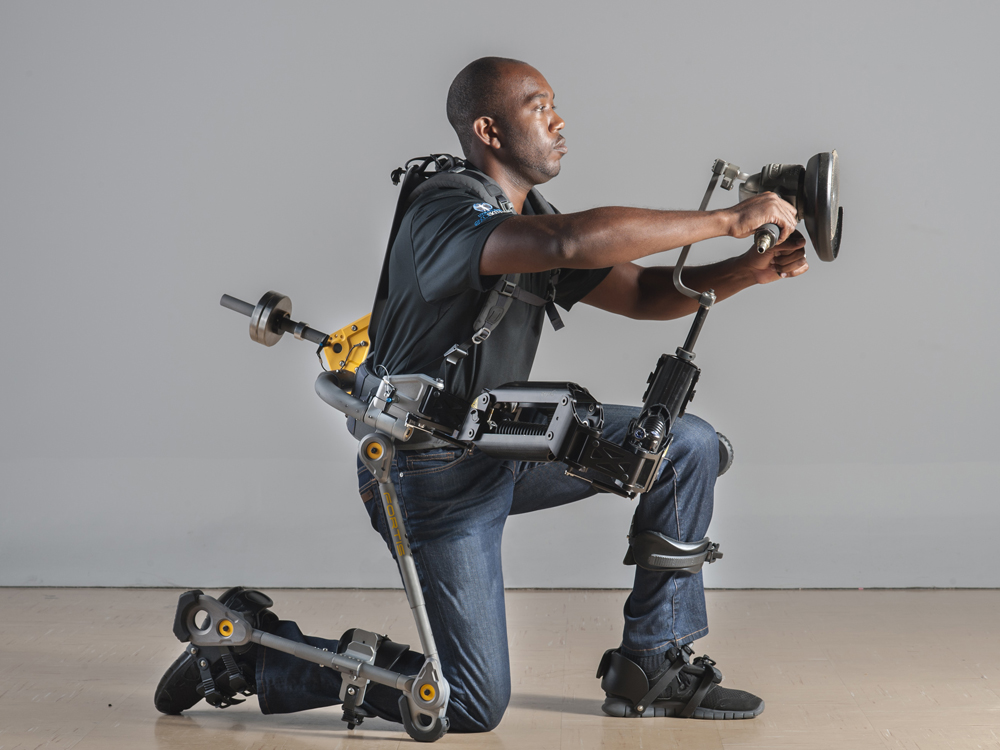
Lockheed Martin created the FORTIS exoskeleton, which can boost worker productivity up to 27 times.

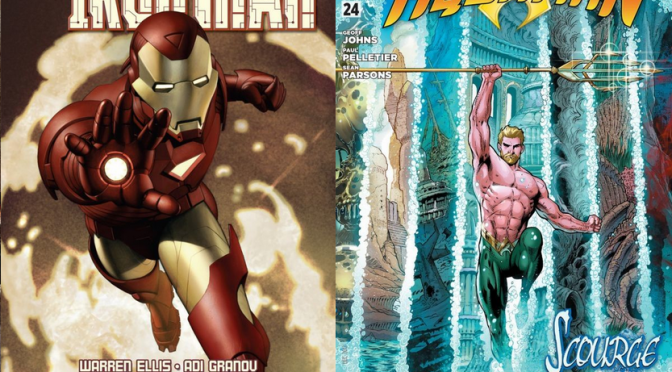
Defence industry has been developing high-tech robotic suits to enhance the capability of the average soldier. There are, however, unrealised potential for ‘exosuits’ or ‘exoskeletons’  exists within HADR and shipborne operations. The Center for a New American Security has recently published a report titled ‘Between Iron Man and Aqua Man’ and was co-authored by our very own Scott Cheney-Peters. This report will certainly open one’s eyes to other applications for the emerging technology beyond its use in combat. You can also see further discussion on the topic in Scott’s post at War on the rocks.

Continuing in the same vein as his ‘Feast of Salami and Cabbage’ article in late 2014, Scott Cheney-Peters, provides clarification to the legal jargon used within maritime disputes. For those without a background in the maritime realm or an understanding of international law this article will provide a layman’s guide to those terms being used by those in the field. This post is the first instalment in a partnership with The National Interest and you can access it here.

Finally, it would not be a CIMSEC roundup without the ‘Pacific Realist’ featuring in the post. Zachary Keck returns with four contributions this week. The first is reporting that the DPRK wants to acquire Russian fighter aircraft. The second post is Keck’s roundup of the top 5 weapons in the US arsenal that Russia should fear. The third reports that there is good evidence to suggest that the DPRK will continue to test nuclear weapons. In the final contribution, Keck summarises the various insights offered during a panel discussion on national security in the changing media landscape. You can access that article here.

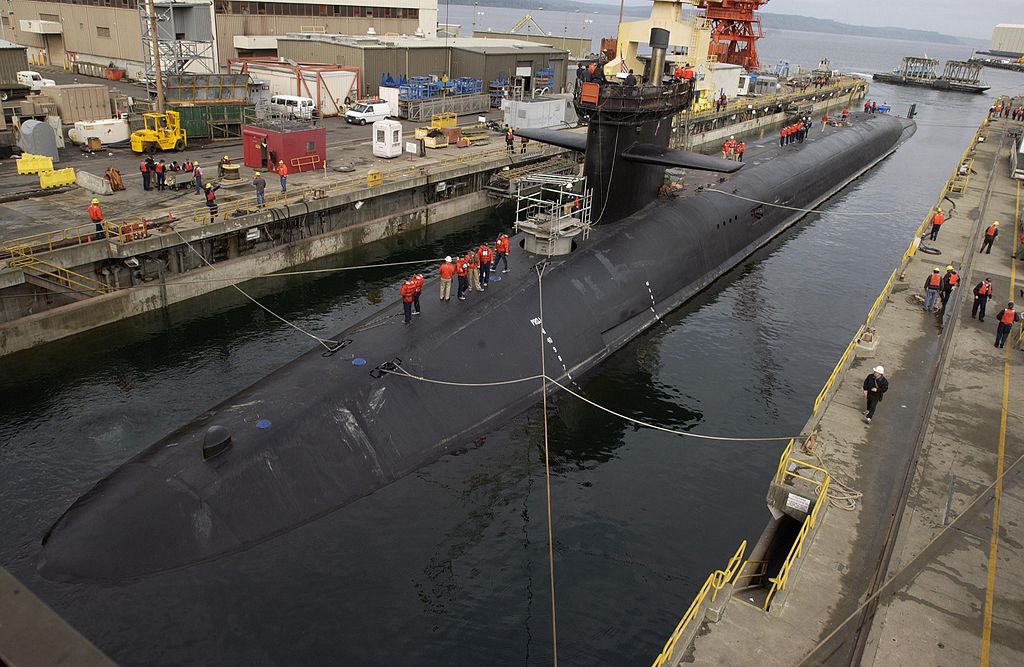
One of the 'Top 5': Ohio-class submarine USS Michigan (SSBN 727) prepares to dry dock, 2002.
One of the ‘Top 5’: Ohio-class submarine USS Michigan (SSBN 727) prepares to dry dock, 2002.

At CIMSEC we encourage members to continue writing, either here on the NextWar blog or through other means. You can assist us by emailing your works to dmp@cimsec.org.


Members’ Roundup Part 8

Welcome back to another edition of the Member Round-Up and the first for 2015. It has been two weeks since I last posted and CIMSECians have been busy across various blogs, journals and websites discussing all manner of topics. Whether it is a review of upcoming technology or discussion of hacking, there is an array of articles available to be enjoyed by all.

INTERNATIONAL RELATIONS & STRATEGY

With 2014 marking some positive steps to normalizing US-Cuban relations, the trade embargo still persists. Maryland-based CIMSECian, David Wise, writes that there are two key reasons why opportunities to speed up its removal were missed. Firstly, due to the influence of interest groups who benefit from the embargo and secondly, that an opportunity was lost in 1998 when the Pope’s visit to Cuba was overshadowed by the Lewinsky scandal. You can access his post on the London School of Economics and Political Science blog here.

As always, The National Interest’s Zachary Keck returns this edition with three articles, the third one will feature in a later section of this post. The first, assesses China and India’s pursuit to deploy multiple independent reentry vehicles (MIRV) on their ballistic missiles. The second article comes in the wake of the Sony hacking scandal and aims to clarify some reports by media outlets suggesting that the DPRK threatened to blow up the White House.

Although the Canadian government unveiled its National Shipbuilding Procurement Strategy (NSPS) to the public in October 2011, the exact capabilities of Canada’s future maritime forces have been largely a mystery. Over at the NATO Council of Canada, Paul Pryce gives some indications of possible contenders to build the ships. The long-term issue, however, is whether the first of the class will be ready by 2018.

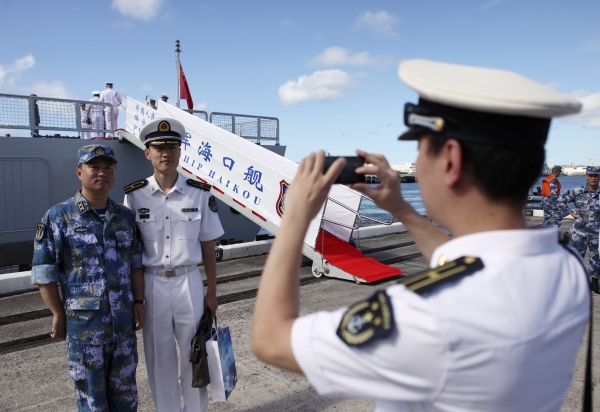
Chinese sailors take a picture together in front of guided missile destroyer Haikou (171)

Military diplomacy has been graining traction in the IR and strategy debate recently. Over at Offiziere, Patrick Truffer writes that greater transparency in US-China military relationship may be one-sided. ‘whether greater transparency of the US armed forces towards the Chinese armed forces is really profitable for the US must be critically examined,’ writes Truffer.

Moving into the new year a common feature preceding the changing of calendars is, of course, the ubiquitous ‘new year resolutions.’ This rationale can be applied in the professional realm; debating reform within any organisation is an enduring aspect of being a professional. Before becoming a naysayer and condemning any reform into the ‘too hard’ basket, consider reading BJ Armstrong’s article on innovation within the US military and its pursuit in amphibious warfare. The article can be accessed here at War on the Rocks.

TECHNOLOGY & HARDWARE

In the wake of the tragic AirAsia Flight 8501 accident many families, commentators and the general public have been raising questions such as: ‘how could we lose an aircraft when Apple can find my iPhone?’ Emotions run high during times of crisis and it is important during these times that information is delivered in a timely and accurate manner. On the MIT Technology Review, CIMSECian Dave Majumdar, explains the issues behind aircraft tracking.

Continuing with the aviation trend, Dave reports that Russia is developing a new strategic bomber called the PAK-DA as part of its post-Soviet military modernization plan. The article can be accessed here at The National Interest.

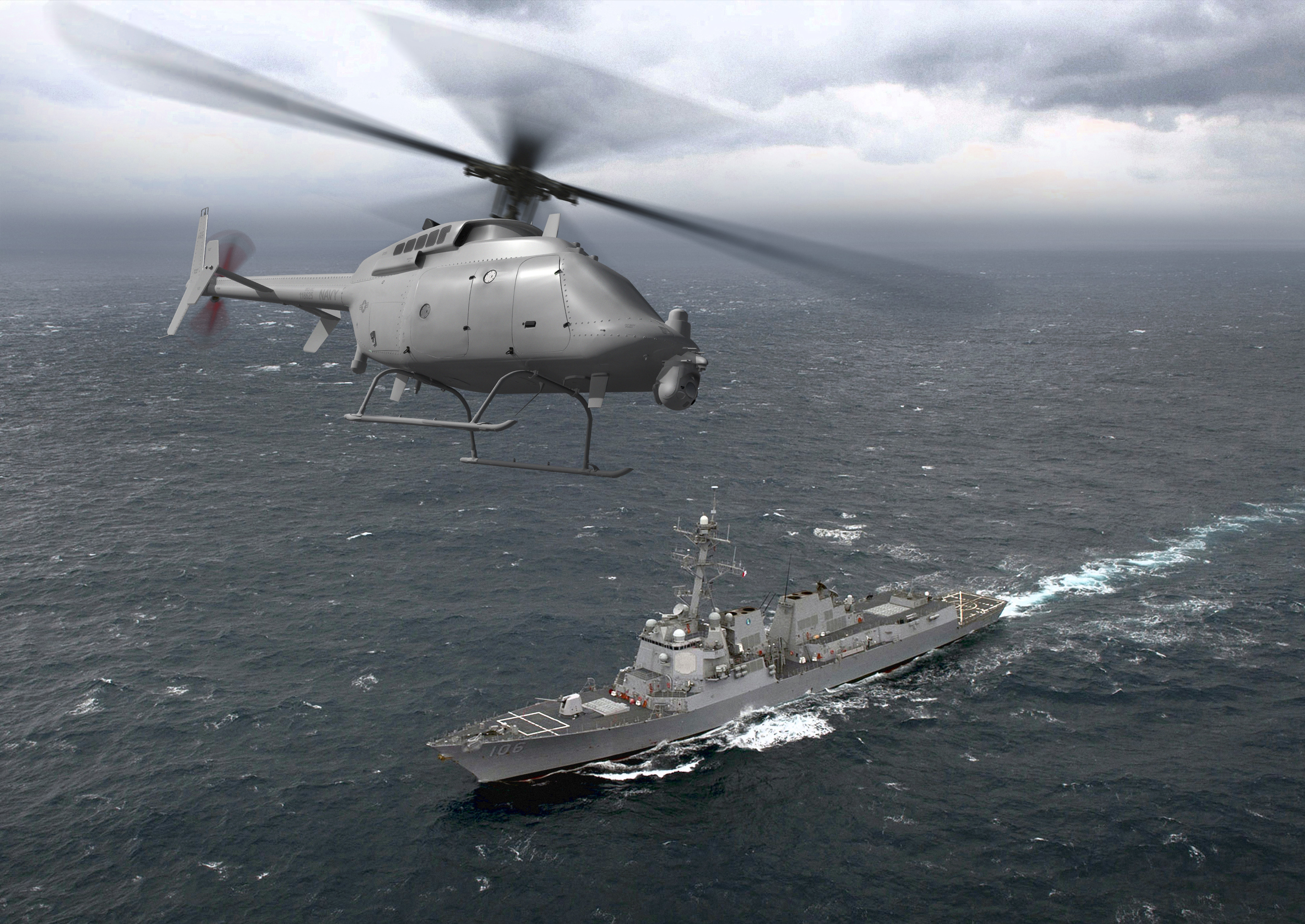
MQ-8C Fire Scout
MQ-8C Fire Scout

For the hardware fanatics a round-up of unmanned naval systems can be found over at Naval Drones and Zachary Keck is reporting that Iran has recently tested its first ‘kamikaze drone.’

ENTERTAINMENT

Over at War on the Rocks we have our NextWar blog Director, Matthew Hipple, with a review of Sony’s latest movie release: The Interview. ‘No one promised Hitchcock,’ writes Hipple, and the recent hacking affair may have actually increased interest in the movie. So if you were slightly skeptical of this film before forking out a few dollars to view it at an independent cinema then perhaps a quick peruse of this review will provide some assistance for your own expectation management.

IN REVIEW

One of our newest members, CNAS’ Jacob Stokes, will have his essay ‘Strategies of Competition’ published in the next issue of Orbis (Volume 59 Issue 1). In it, Jacob reviews the following books:

  • Strategic Reassurance and Resolve, by Jim Steinberg and Mike O’Hanlon
  • The Contest of the Century, by Geoff Dyer
  •  Maximalist, by Stephen Sestanovich

Jacob’s essay can be accessed here.

Jason Camlic provides his own round-up after attending the Chicago Maritime Museum Christmas party. You can find his post and some photos taken at the venue, here.

Finally, we also have two articles by CIMSEC members featured in Strategic Insights. Scott Cheney-Peters provides an analysis of the risks in the Taiwan Strait. Louis Bergeron analyses the chokepoint in the Mozambique Channel. They have been posted here and here on the NextWar blog.

As we begin a new year I wish to thank all of the contributions to this segment in 2014. As always please continue emailing dmp@cimsec.org so that we can all share and promote the great work that CIMSECians are producing. As a final note, if you are not yet a member and wish to be featured then simply apply to become one! Until next time.

Nam is a Maritime Warfare Officer in the Royal Australian Navy. He holds a Bachelor of Business and is currently completing a Master of Philosophy in International Security Studies at the University of New South Wales. Nam is the current Director of Member Publicity at CIMSEC.

Grail War 2050, Last Stand at Battle Site One

This piece by Dave Shunk is part of our Future Military Fiction Week for the New Year. The week topic was chosen as a prize by one of our Kickstarter supporters.

The nation state had decided not to invest in robotic armies. Autonomous killing machines were beyond their ethics. However, the enemy had no problem building autonomous robotic killing machines.

The enemy robotic land assault caught the nation state by surprise. The enemy forces especially sought to destroy the nation state’s treasure nicknamed “The Grail Project.”  The enemy’s battle plan sought to overcome the human defenders at the various Grail Project sites by overwhelming swarms.

The tactical fight went badly against the solely human forces defending the outlying Grail Project sites. The horde of enemy robotics on land, sea and air were the perfect attrition strategy.  Soul less killers, mass produced, networked together and built cheaply with advanced 3D printers in secret production facilities were deadly.

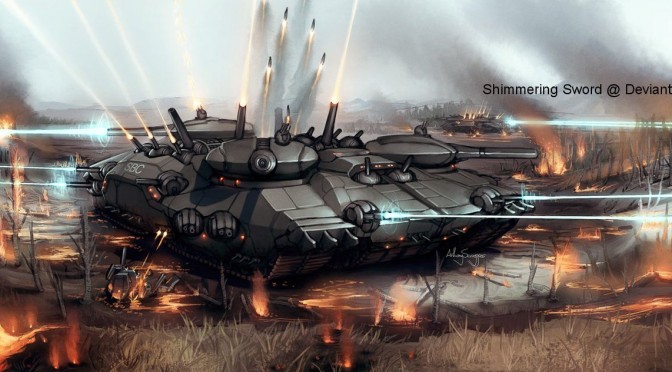
The nation state had not pursued the robotic armies but went a different route. HAL and Major Wittmann were the first experimental AI/Human team at training site “One” adjacent to one of the remaining Grail Project sites.  They were a prototype weapon – human and AI bonded together as a weapon system team within the tank with a shared neural network. However, this tank was unlike early 21st century tanks. This tank had advanced weapon systems – a tank on technology steroids.

HAL (Human Armor Liaison) is the artificial intelligence (AI) that controls the tank, the weapon systems, and communications. HAL is incorporated and encased into the advanced nanotechnology shell of the tank.  HAL has self repairing armor and neural circuits woven into the structure of the tank.  HAL also monitors the physical and mental health of Lt Wittmann via the neural connection with nanobot sensors throughout his body and bloodstream.

Major Wittmann has twelve years of service. He is a combat veteran, tank commander and human crew of one.  With genetic, physical and mental screening beginning in preschool, Major Wittmann began his military training early. He had the mental and intellectual capability for the nation state’s Human Performance Enhancement program. During his initial military training he received the neural implant for direct communication with advanced computer AIs. He also received nanotechnology enhancements in the form of nanobots in his blood stream to enhance and accelerate his cognitive and physical attributes.

HAL and Major Wittmann had trained as a team for two weeks. Due to the neural implant and nanobots, the bonding program progressed much quicker than human to human bonding. Days of training became the equivalent of months or years of purely human to human bonding. As the first AI/Human armored team they would chart the course for the fight against purely robotic forces. The speed of warfare had overtaken purely human skills due to AI and robotic technology.  At the same time science and technology opened new doors such as AI/human teaming, enhancing both warriors.

Orders came down to protect the Grail Project adjacent to HALS/Major Wittmann’s position at all costs. HAL monitored the battle flow from the network and Major Wittmann correctly anticipated the enemy tactical attack plan.  Within .01 seconds HAL detected the inbound swarm of enemy hypersonic missiles meant for the Grail Project.  HAL countered within .001 seconds by launching a counterstrike of steel flechettes which intercepted, detonated or deflected the inbound hypersonic missiles.  Inside the tank, observing from his 360 degree visual hologram of the battle, Major Wittmann thanked HAL via the neural network for his quick and decisive action to protect the Grail Project and them.

HAL and Major Wittmann knew if the enemy held to his doctrine, the robotic tanks would be next on the scene and attempt to destroy the sole AI/human tank. The twenty enemy robotic tanks announced their arrival by firing their laser cannon main weapons. Within .002 seconds of their firing HAL modified the external nanotechnology armor to disperse the energy along the entire hull and recharge the backup energy grid.

Before the last laser impacted the hull, HAL counter targeted the enemy robotic tanks. HAL fired the multiple barrel railgun and destroyed or severely damaged the robotic force. Fifteen burning hulks remained stationary and would move no more. Five other damaged tanks attempted to retreat. In .003 seconds HAL targeted the five with miniature hypersonic anti-tank missiles turning them into molten scrap. The enemy robotic scout force had been destroyed.

HAL knew they would need reinforcements to defeat the upcoming main robotic assault force. Major Wittmann came up with the “Improvise, Adapt, Overcome” solution.  On the training grounds in an underground warehouse were ten more experimental tanks – with AI’s on board but no human team member.  Due to neural limits Major Wittmann could not directly control another 10 AIs  – but HAL could.


Major Hartmann use his command emergency authority to over ride HAL’s protocol and programming limits. These limits stated that HAL could not control other AI tanks – a limit set by the nation state in peacetime.  But this was war and the Grail Project must survive.

HAL reached out to the ten tanks in warehouse by their AI battle network. Within .001 seconds the AIs received the mission, the situation, enemy order of battle, and threats. With the AI’s knowledge of military history, one other AI suggested that they form a laager around the Grail Project .

The Boers, like American wagon trains in the 19th century, formed mobile defensive laagers. The laager consisted of vehicles forming a defensive perimeter in whatever shape needed. The eleven AI tanks and one human formed a formidable interlinked mobile defensive perimeter around the Grail Project.

The battle ended quickly. The massed mobile firepower of the tanks overwhelmed the robotic attack force, but at a high cost. Tanks 1, 3 and 5 suffered catastrophic laser burn through on the armor plating destroying the AIs. Tanks 2, 4 and 8 suffered massive missile hits which destroyed various armaments reducing their offensive effectiveness to near zero.  The burning remains of the robotic army demonstrated they had fallen short of destroying the Grail Project at Site One.  In the classic struggle of over whelming force against determined defense, the combined AI/human teaming had turned the tide.


HAL watched the unfolding scene with curiosity as Major Wittmann exited the tank. The Grail Project at Site One had survived without loss. As the doors of the Grail Project opened, Major Wittmann, age 22, reached down and picked up his four year old son and gave a silent prayer of thanks as he held him once more.


His son had just been admitted with other select four year olds to the AI/Enhanced Human Performance Military Academy (The Grail Project). Eighteen years ago Major Wittmann had been in the first class of the Grail Project in 2032.


Article motivation for Grail War 2050, Last Stand at Battle Site One

The paper is meant as a wakeup that technology is changing warfare in a unique way. The era of human on human war is almost over. With artificial intelligence (AI) and robotics the speed of warfare will increase beyond human ability to react or intervene. The paper presents one possible solution.


This idea of human warfare nearing an end was presented in:

Future Warfare and the Decline of Human Decisionmaking by Thomas K. Adams

http://strategicstudiesinstitute.army.mil/pubs/parameters/articles/01winter/adams.pdf

This article was first published in the Winter 2001-02 issue of Parameters.


“Warfare has begun to leave “human space.” … In short, the military systems (including weapons) now on the horizon will be too fast, too small, too numerous, and will create an environment too complex for humans to direct. Furthermore, the proliferation of information-based systems will produce a data overload that will make it difficult or impossible for humans to directly intervene in decisionmaking. This is not a consideration for the remote science-fiction future.”


Other ideas in the paper:

  • AI/Human teaming and bonding
  • Robotic armies used with attrition strategy against human armies
  • AI controlling other AI vehicles with human oversight
  • Nanotechnology adaptable armor with embedded AI neural links
  • Human neural implants for AI link
  • Human nanobot implants
  • Multi-barrel Rail Gun for armor vehicles
  • Laser weapons for armor vehicles
  • Fletchette weapon as counter missile weapon
  • Hypersonic anti-tank missiles
  • Early military screening for youth (Ender’s Game influence)
  • Early military training for youth (Ender’s Game influence)


The second intent of the paper is a tribute to the military science fiction of Keith Laumer and his creation of Bolos – tanks with AI and teamed with military officers. His writings in the 1960s and 1970s were not really about just Bolos but about duty, honor and a tribute to the warriors. I read Last Command in the late sixties and devoured all the Bolo stories.


Last Command can be found here: (with preface by David Drake, Vietnam Vet and Author of many military science fiction books)

http://hell.pl/szymon/Baen/The%20best%20of%20Jim%20Baens%20Universe/The%20World%20Turned%20Upside%20Down/0743498747__14.htm


Dave Shunk is a retired USAF Colonel, B-52G pilot, and Desert Storm combat veteran whose last military assignment was as the B-2 Vice Wing Commander of the 509th Bomb Wing, Whitman AFB, MO. Currently, he is a researcher/writer and DA civilian working in Army Capabilities Integration Center (ARCIC), Future Warfare Division, Fort Eustis, Virginia.