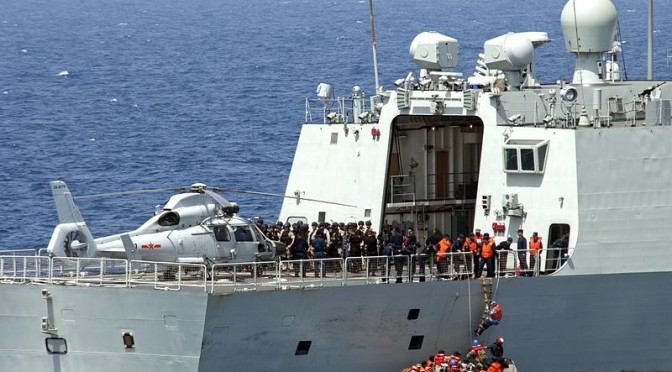
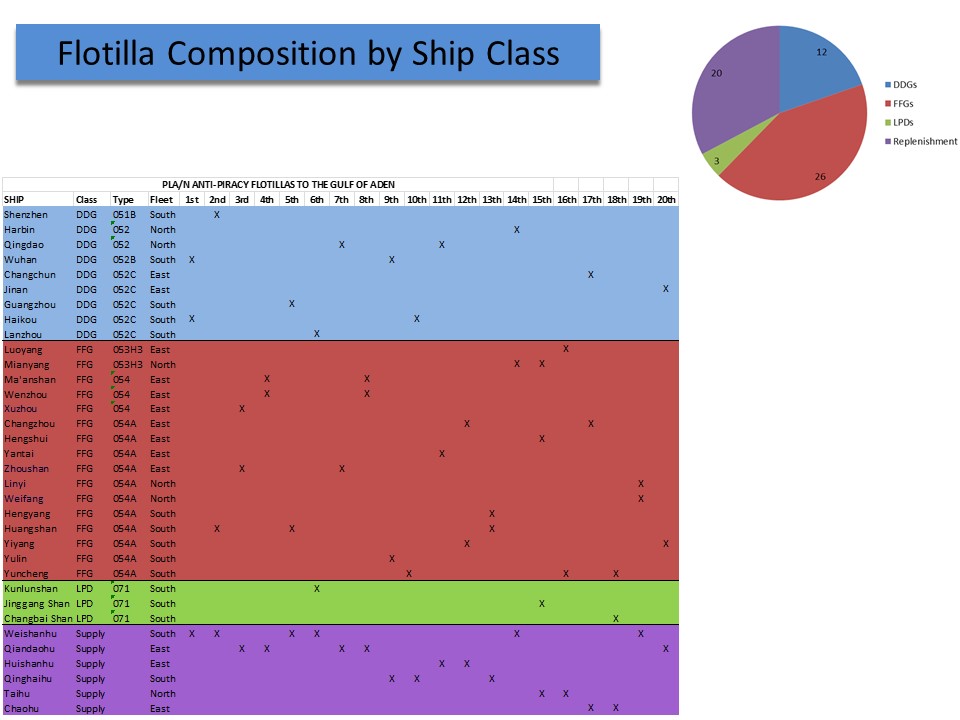
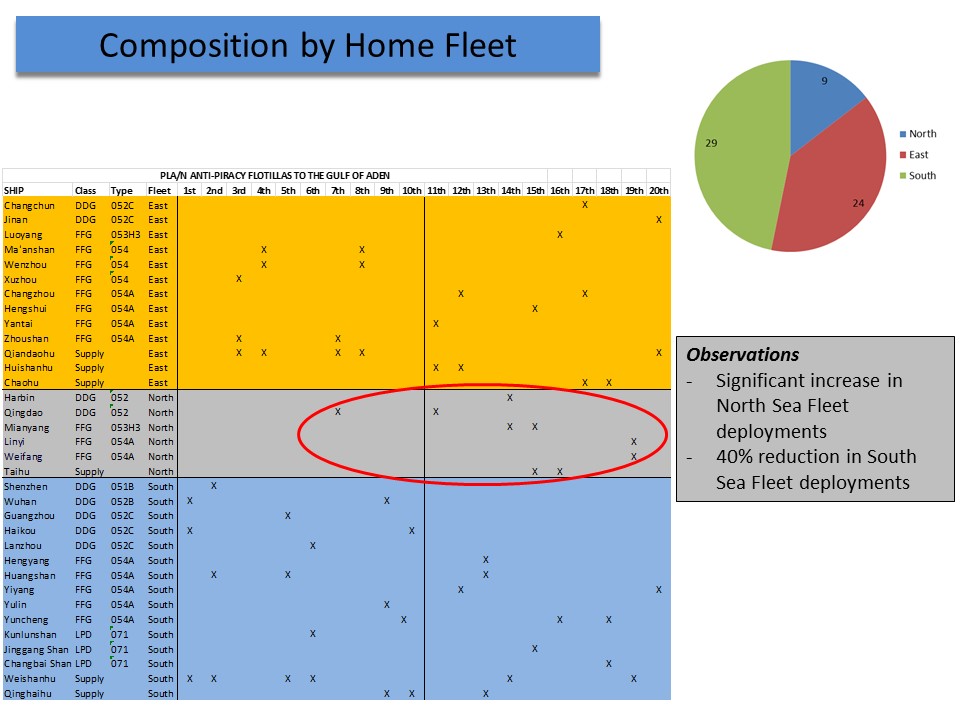
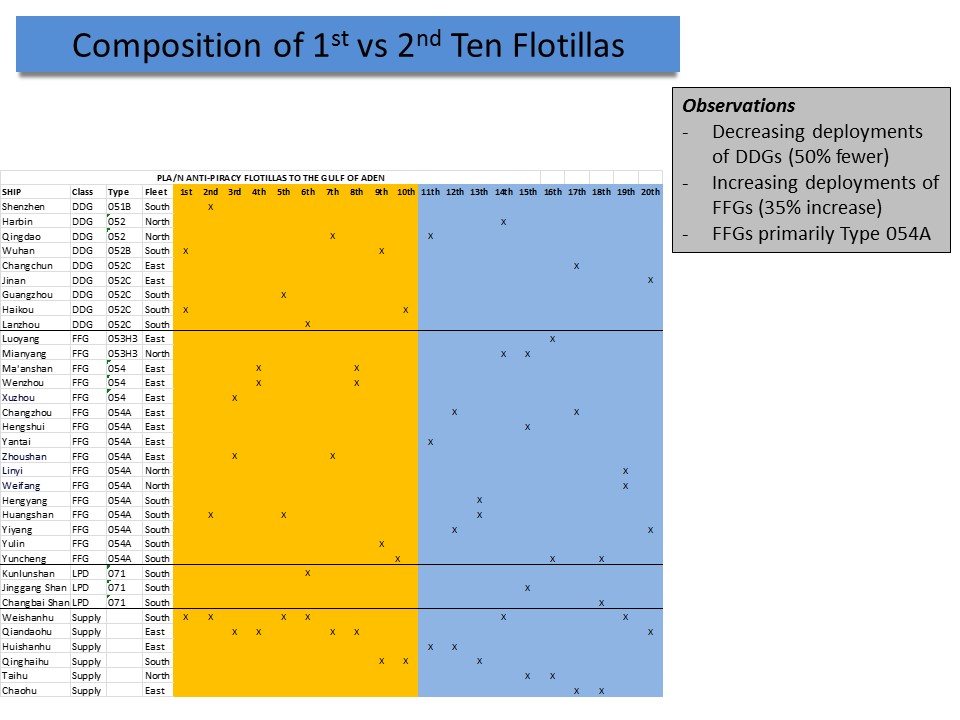
On April 3, the 20th anti-piracy flotilla of the People’s Liberation Army Navy got underway for operations off the Horn of Africa. Since the arrival off Somalia of the first Chinese anti-piracy flotilla in January 2009, approximately three flotillas have successively served annually in that region. Simple data compiled from open sources on the deployments of these flotillas is provided in the slides below. Although these only represent anti-piracy flotillas, combined with other studies, they represent a broader pattern of global presence and increased capabilities of the PLA/N. The following recent articles and studies are offered to provide readers with greater recognition of the issue:
This past week, the Japanese Maritime Self-Defense Force (JMSDF) commissioned the lead vessel of its new class of helicopter carrier at a ceremony at the Yokusuka naval base less than 10 miles south of Yokohama, Japan’s second largest city.
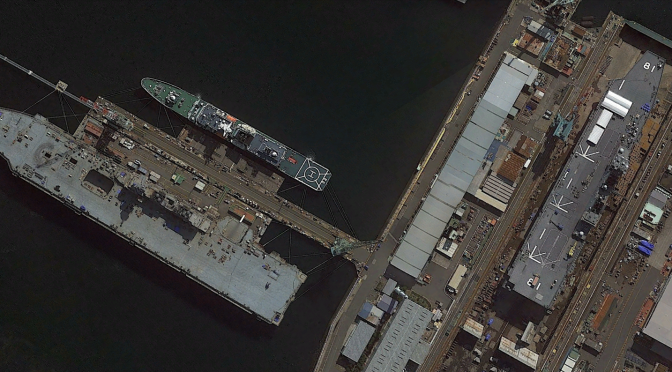
The Izumo (DDH-183) is the island nation’s largest vessel superseding the Hyūga class, Japan’s first helicopter carrier post World War II. To get a clear sense of size, satellite imagery from March 2014 shows both vessels at the IHI Marine United shipyard. At the time, the 248 meter-long Izumo was still in the fitting out process while the 197 meter-long Hyūga (DDH-181) was located in a nearby dry-dock undergoing routine maintenance.
At 24,000 tons, the fully loaded Izumo is noticeably larger than its 19,000 ton predecessor and more capable.[1] Manned by approximately 470 sailors, the vessel can support up to 14 helicopters — broken up into seven Mitsubishi-built SH-60k ASW helicoptersand seven Agusta Westland MCM-101 mine countermeasure helicopters.
“This [vessel] heightens our ability to deal with Chinese submarines that have become more difficult to detect,” an JMSDF officer told the Asahi Shimbum in late March.[2] Downplaying grander ambitions, JMSDF officials have often focused media attention on the ship’s role in undertaking border surveillance and humanitarian assistance missions.
Beyond the ship’s standard load, the vessel can also support the Bell-Boeing V-22 Osprey tilt-rotor aircraft and some have even suggested the vertical landing Lockheed Martin F-35 Lighting II Joint Strike Fighter. Although the latter has caused much controversy, putting F-35s on the Izumo seems unlikely given that the advanced fighter was acquired by Japan’s Air Force and not its sea services (to say nothing of the additional retrofit costs that would require of the vessel).
But that hasn’t stopped Chinese assertions and general concerns throughout East Asia of Japanese intent. “The Izumo proves that Japan has the technical capabilities and demand to develop aircraft carriers. It’s also possible that Japan may explore the possibility during the Izumo’s service,” Li Jie, a Beijing-based military commentator, told the Chinese Global Times newspaper. Beyond China, South Korea has also voiced concern.
While no one’s exactly sure how Japan will use the new carrier, its potential for power projection is undeniable. As geopolitical tensions increase, especially with disputed island territories and areas like the South China Sea, it’s not surprising to see Japan push to bolster her navy. With the election of officials like Prime Minister Shinzō Abe, defense spending has gone up and bans on arms exportshave been lifted—suggesting Japan is preparing to reinterpret her role on the world stage. What this will ultimately mean for the service is still too early to say.[3]
In the meantime, the USD 1.2 billion Izumo will join JMSDF’s Escort Flotilla 1, based at the Yokosuka naval base, also home of the U.S. Navy Seventh Fleet.[4] The vessel was initially laid down on 27 January 2012 and launched on 06 August 2013. It will later be joined in 2017 by the second vessel in the series, the DDH-184, currently under construction at IHI Marine United Shipyard.
This post can be found in its original form at offiziere.ch
Notes [1] Both measurements refer to the vessels at full load. [2] In 2013, Japan said it detected Chinese submarines navigating near territorial waters of Okinawa and Kagoshima prefectures. [3] Japan has in recent years participated in amphibious warfare training utilizing the Hyuga classhelicopter carrier in concert the US. For Example Dawn Blitz 2013. [4] Japan has 4 Escort Flotillas with a mix of 7-8 warships each. Bases are located at Yokosuka, Kure,Sasebo, Maizuru, and Moinato. SSKs are organized into 2 Flotillas with bases at Kure and Yokosuka. Remaining Units assigned to 5 regional districts.
Ever since Xi Jinping announced the creation of a Maritime Silk Road in an October 2013 speech to the Indonesian parliament, China’s vision for “one road” running through Southeast and South Asia has driven a significant portion of Chinese foreign policy in its periphery. This has led to both the controversial Asian Infrastructure Investment Bank (AIIB) (announced in the same speech) and complementary investment funds such as the Maritime Silk Road Bank, as well as high-level diplomatic visits by Chinese leaders to countries in the region. In addition, China sees its “Silk Road Economic Belt” among its Central Asian neighbors as indivisible from the “21st Century Maritime Silk Road,” as seen by China’s slogan 一带一路 (“one belt, one road”) and its public diplomacy effort to promote both policies together. All of this indicates that, like many Chinese foreign policy initiatives, the “21st Century Maritime Silk Road” is multi-pronged: it is intended to serve diplomatic, economic, and strategic purposes.
First and foremost, the Maritime Silk Road is designed to pacify neighboring countries threatened by China’s aggressive territorial claims in the South China Sea. Curiously, China has attempted to both aggravate tensions among its Southeast Asian neighbors and soothe them at the same time, contrary to its normal pattern of swinging back and forth between aggressive brinksmanship and diplomatic rapprochement (such as in China’s relationship with Taiwan or its cutting off and then reestablishing of military to military ties with the United States). Despite the idealistic claims of ‘peaceful economic development absent political strings’ made by Chinese leaders and state media about the Maritime Silk Road, China has continued unabated to strengthen its unilateral claim to vast maritime territory in the South China Sea, turning reefs and other undersea maritime features into full-fledged islands, complete with airstrips that could be used by the People’s Liberation Army.
Conversely, the Maritime Silk Road is also designed to cement relationships with countries that are tacitly friendly to China such as Malaysia, Cambodia, Sri Lanka, and Pakistan. This will be accomplished primarily through economic incentives like infrastructure development and trade deals. In this sense, the Maritime Silk Road not only stands side by side with the Silk Road Economic Belt, but also as part of a historical continuum that includes China’s past investment in maritime-related infrastructure, which has been referred to by some as a “String of Pearls” policy. If one wants to know what kind of infrastructure projects China will fund in the future, look to what it has done in the past: oil and natural gas links to Myanmar’s port in Sittwe, ports in Sri Lanka such as the Hambantota and Colombo Port City projects, and the Pakistani port in Gwadar. Indeed, China and Malaysia have already announced a joint port project in Malacca. Meanwhile, China, which is already the largest trading partner for most countries in Southeast and South Asia, is also signing new free trade agreements with countries such as Sri Lanka.
Chinese infrastructure investment, intended primarily to strengthen China’s energy security and increase trade between China and its neighbors, will now get a huge boost with the creation of both the AIIB and more specialized investment vehicles such as the Maritime Silk Road Bank and the Silk Road Fund. While the AIIB has had the flashiest rollout with China contributing $50 billion USD to a planned $100 billion USD in capital, the other two funds are no slouches: the Silk Road Fund has plans for $40 billion USD in capital, while the Maritime Silk Road Bank hopes to attract $100 billion RMB in investment.
Finally, unmentioned in authoritative Chinese sources is that the Maritime Silk Road, and especially Chinese infrastructure investment, is implicitly intended to facilitate more frequent People’s Liberation Army Navy (PLAN) deployments in the Indian Ocean and beyond. The PLAN needs reliable logistics chains across Sea Lines of Communication (SLOCs) throughout Southeast and South Asia; ships cannot go far without a reliable supply of fuel, food, and armaments. But for the foreseeable future, China is at a serious disadvantage in this regard: the US Navy and allied navies have such a preponderance of force and ability to project power throughout the region that the PLAN is ill-equipped to compete. Given the PLANs current capabilities, China’s logistics capacity would only be dependable during peacetime; they would not survive in a contested environment, particularly if the US decided to close off key chokepoints like the Malacca and Sunda Straits. Therefore, the first step to strengthen the PLAN’s capabilities is to build reliable logistical infrastructure in key friendly states, such as the aforementioned projects in Malaysia, Sri Lanka, and Pakistan. These logistical links would still be quite vulnerable in a conflict scenario, given the tenuous relationship China would have with even putatively friendly countries if China went to war. Therefore, the primary benefit for the PLAN is to demonstrate presence in peacetime, and to show that it can operate far from its own shores.
The Maritime Silk Road, along with the attendant Silk Road Economic Belt, is truly a multi-headed dragon, so large that it is difficult to disaggregate its many parts. The most difficult challenge for China, however, will not be building infrastructure and signing trade deals—these are no doubt massive undertakings, but they are fundamentally instrumental tasks that will not receive much opposition from countries in the region. The more difficult objective for China is translating investment and trade into building a coalition of states in the region that align their values and foreign policy goals with those of China, and indeed identify with China at the expense of competitors like the US. China will likely find this kind of bandwagoning hard to pull off—when it comes down to it, the Maritime Silk Road may wash away like sand.
William Yale is the Director of Operations at CIMSEC, an Adjunct Fellow at the American Security Project, and a Research Associate at the SAIS Foreign Policy Institute.
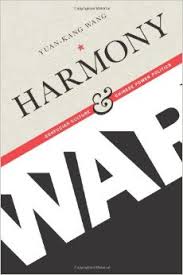
So what are we to make of this? Will China’s “Confucian exceptionalism” exempt her from the traditional historical patterns of conflict when rising powers bump up against status quo powers like the United States? Yuan-kang Wang, assistant professor at Western Michigan University addresses that question in his book, Harmony and War: Confucian Culture and Chinese Power Politics. In it, he asks, “To what extent does culture influence a state’s use of military force against external security threats?” This is the central concern to those in the world outside of China, as history tends to suggest that when a rapidly rising power threatens an established power, competition almost inevitably leads to conflict – the dreadful Thucydides’s Trap. (There is a good argument that the trap may already have been sprung.)
Returning to China and its Confucian tradition, what does history suggest? The premise of Dr. Wang’s book is to address head on whether “cultural theories [which] argue that ideational factors … can transform the harmful effects of [state system anarchy] and have an independent effect of state behavior.” Therefore, China’s strategic behavior in the past should largely reflect and be explained by the cultural traditional of “Confucian pacifism.”
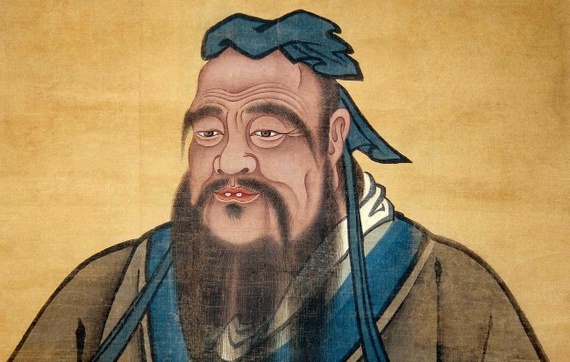
Confucian pacifism has four key features: a culture of antimilitarism, defensive grand strategy, the theory of just war and limited war aims. Antimilitarism suggests that China has a historic bias toward civil virtue over martial virtue as shown by its state promotion of Confucian ideology. Its tradition of nonviolence led it to favor a defensive grand strategy over aggressive expansion, relying on “cultural attraction” or the “benevolent way” as opposed to the Western tradition of the “hegemonic way.”
Even Confucius understood that military preparedness was important to state survival. However, he argued for “righteous war” (similar to Western just war), and suggested that force be used “only when defensive options are exhausted.” Confucius also maintained that force is justified “when the ruler of another state is morally depraved,” similar to the current theory of “humanitarian intervention.” Yet this should be punitive in nature, and not for the purpose of annexing territory or expansion. War aims should be limited to the restoration of the status quo ante, never for the total destruction of the enemy.
So does Chinese history bear out its Confucian pacifism? Dr. Wang looks at two periods in China’s history, the Northern and Southern Song Dynasty (960-1179 AD) and the Ming Dynasty (1368 – 1644 AD) and finds that “Confucian culture did not constrain the leaders’ decision to use force; in making such decision, leaders have been mainly motivated by their assessment of the balance of power between China and its adversary.” This largely aligns with the expectations ofstructural realism theory as opposed to cultural realism theory.
Dr. Wang argues that three themes emerge in Chinese history. First, “China’s decision makers frequently probed for weakness in the country’s adversaries and took advantage of it when found.” Imperial China was never reluctant to use force, nor did it use force only as a last resort. China is not as pacifist as some scholars (and its political leadership) would suggest.
Second, its use of coercive force largely correlated with its relative power position. When strong, Imperial China adopted “offensive-oriented” strategies. When it considered itself weaker, they sought to maintain a defensive posture and be more accommodating “while embarking on domestic reforms aimed at strengthening its military forces and improving its economy.” Indeed, court documents and transcripts indicate that officials would most often refer to Sun Tzu’s strategy of subduing the enemy without fighting only when in a position of weakness rather than as a matter of universal policy.
Finally, war aims were not limited to “defensive border protection” or “restoration of the status quo.” This was evident in both policy debates within the Imperial Court and in actual behavior. Indeed when China had to adopt a more defensive posture, this was less a cultural preference and more a result of insufficient offensive capabilities.
Take China’s construction of The Great Wall. This is often pointed to as an example of both Confucian pacifism and China’s historically defensive nature. However, Dr. Wang’s review of court transcripts on the decision making process and historical context that led to its construction paint a different picture. Construction of the today’s recognizable wall began in 1474 AD, during the Ming Dynasty, amid constant conflict with the Mongols. Debate amongst the Ming court showed a preference for launching an attack on the Mongols to recover lost territory and bring them to heel. However, they were constrained not by a cultural predilection for defensive strategy but rather a lack of offensive capabilities. Indeed, the Confucian traditionalists “lamented that a country as great as China should come under the mercy of the culturally inferior nomads” – themes that would be echoed by Chinese leadership today when recalling China’s “Century of Humiliation.” In short, an assessment of military weakness drove the Ming to build The Great Wall, not Confucian tradition.
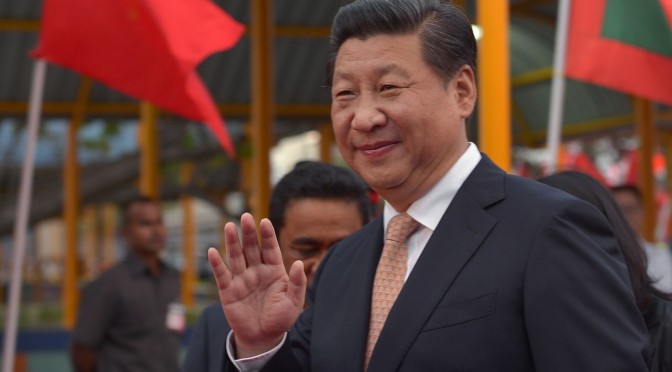
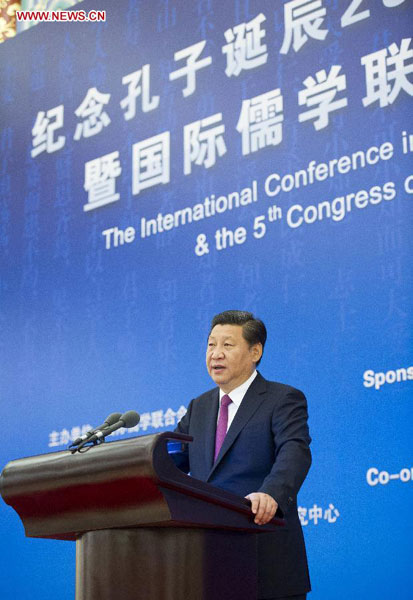
Chinese President Xi Jinping addresses an international seminar to mark the 2,565th anniversary of the birth of Confucius, which is concurrent with the Fifth Congress of the International Confucian Association (ICA), at the Great Hall of the People in Beijing, capital of China, Sept. 24, 2014. (Xinhua/Huang Jingwen)
Dr. Wang’s historical study challenges the popular narrative of China’s historic cultural pacifism. This has implications for future relations between China, her neighbors and the United States, as China’s leaders use this Confucian tradition as a legitimizing mechanism of its peaceful development and growing military power. He ends his study by suggesting that “based on theory and history, China will gradually shift to an offensive grand strategy when it has accumulated sufficient power.”
Of course, one should not be fatalistic or succumb to historical determinism. Conflict need not be inevitable. However, while history does not repeat itself, it does rhyme. American policy makers (and our friends and allies around the world) would do well to consult Dr. Wang’s book.
About the Author:
LT Robert “Jake” Bebber USN is an Information Warfare officer assigned to U.S. Cyber Command and is a contributor to the CIMSEC NextWar Blog. His articles have appeared in Orbis, Proceedings, Small Wars Journal and elsewhere. Jake holds a PhD in Public Policy from the University of Central Florida. He is supported by his wife, Dana and their son, Vincent. The views expressed here are his own and do not reflect those of the U.S. Department of Defense, the U.S. Navy or U.S. Cyber Command. He welcomes your comments at jbebber@gmail.com.