Category Archives: Capability Analysis

Analyzing Specific Naval and Maritime Platforms

Operating in an Era of Persistent Unmanned Aerial Surveillance

By William Selby

In the year 2000, the United States military used Unmanned Aerial Systems (UASs) strictly for surveillance purposes and the global commercial UAS market was nascent. Today, the combination of countries exporting complex UAS technologies and an expanding commercial UAS market advances the spread of UAS technologies outside of U.S. government control. The propagation of this technology from both the commercial and military sectors will increase the risk of sophisticated UASs becoming available to any individual or group, regardless of their intent or financial resources. Current and future adversaries, including non-state actors, are likely to acquire and integrate UASs into their operations against U.S. forces. However, U.S. forces can reduce the advantages of abundant UAS capability by limiting the massing of resources and by conducting distributed operations with smaller maneuver elements.

Leveraging the Growth in the Commercial UAS Market

While armed UAS operations are only associated with the U.S., UK, and Israel, other countries with less restrictive export controls are independently developing their own armed UAS systems. Chinese companies continue to develop reconnaissance and armed UASs for export to emerging foreign markets. Earlier this year, social media reports identified a Chinese CH-3 after it crashed in Nigeria. Reports indicate China sold the system to the Nigerian government for use against Boko Haram. Other countries including Pakistan and Iran organically developed armed UAS capabilities, with claims of varying levels of credibility. In an effort to capitalize on the international UAS market and to build relationships with allies, the U.S. eased UAS export restrictions in early 2015 while announcing the sale of armed UASs to the Netherlands. Military UAS development is expected to be relatively limited, with less than 0.5 percent of expected future global defense spending slated to buying or developing military drones. For now, long range surveillance and attack UASs are likely to remain restricted to the few wealthy and technologically advanced countries that can afford the research costs, training, and logistical support associated with such systems. However, short range military or civilian UASs are likely to be acquired by non-state actors primarily for surveillance purposes.

Still captured from an ISIS documentary with footage shot from a UAS over the Iraqi city of Fallujah(nytimes.com)

Still captured from an ISIS documentary with footage shot from a UAS over the Iraqi city of Fallujah(nytimes.com)

Hamas, Hezbollah, Libyan militants, and ISIS are reportedly using commercial UASs to provide surveillance support for their military operations. Current models contain onboard GPS receivers for autonomous navigation and a video transmission or recording system that allows the operators to collect live video for a few thousand dollars or less. Small UASs, similar in size to the U.S. military’s Group 1 UASs, appeal to non-state actors for several reasons. Namely, they are inexpensive to acquire, can be easily purchased in the civilian market, and are simple to maintain. Some systems can be operated with very little assembly or training, which reduces the need for substantial technical knowledge and enables non-state actors to immediately integrate them into daily operations. These UASs are capable of targeting restricted areas as evidenced by the recent UAS activity near the White House, French nuclear power plants, and the Japanese Prime Minister’s roof. The small size and agility of these UASs allow them to evade traditional air defense systems yet specific counter UAS systems are beginning to show progress beyond the prototype phase.

Economic forecasters may dispute commercial UAS sales predictions, but most agree that this market is likely to see larger growth than the military market. Countries are currently attempting to attract emerging UAS businesses by developing UAS regulations that will integrate commercial UASs into their national airspace. The increase of hobby and commercial UAS use is likely to lead to significant investments in both hardware and software for these systems. Ultimately, this will result in a wider number of platforms with an increased number of capabilities available for purchase at a lower cost. Future systems are expected to come with obstacle avoidance systems, a wider variety of modular payloads, and extensive training support systems provided by a growing user community. Hybrid systems will address the payload, range, and endurance limitations of the current platforms by combining aspects of rotor and fixed wing aerial vehicles. The dual-use nature of these commercial systems will continue to be an issue. Google and Amazon are researching package delivery systems that can potentially be repurposed to carry hazardous materials. Thermal, infrared, and multispectral cameras used for precision agriculture can also provide non-state actors night-time surveillance and the ability to peer through limited camouflage. However, non-state actors will likely primarily use hobby and commercial grade platforms in an aerial surveillance role, since current payload limitations prevent the platforms from carrying a significant amount of hazardous material. 

Minimizing the Advantages of Non-State Actor’s UAS Surveillance

As these systems proliferate, even the most resource-limited adversaries are expected to have access to an aerial surveillance platform. Therefore, friendly operations must adapt in an environment of perceived ubiquitous surveillance. Despite the limited range and endurance of these small UASs, they are difficult to detect and track reliably. Therefore, one must assume the adversary is operating these systems if reporting indicates they possess them. Force protection measures and tactical level concepts of operations can be modified to limit the advantages of ever-present and multi-dimensional surveillance by the adversary. At the tactical level, utilizing smoke and terrain to mask movement and the use of camouflage nets or vegetation for concealment can be effective countermeasures. The principles of deception, stealth, and ambiguity will take on increasing importance as achieving any element of surprise will become far more difficult. 
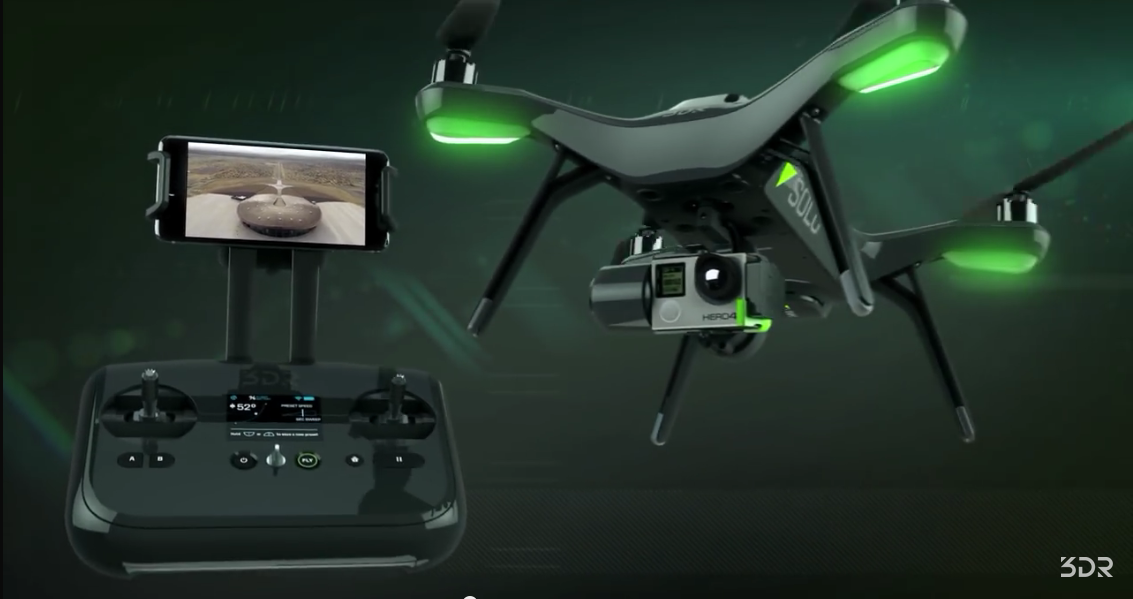
The upcoming 3DR Solo UAS will feature autonomous flight and camera control with real time video streaming for $1,000 (3drobotics.com)

At static locations such as forward operating bases or patrol bases, a high frequency of operations, including deception operations, can saturate the adversary’s intelligence collection and processing capabilities and disguise the intent of friendly movements. Additionally, massing strategic resources at static locations will incur increasing risk. In 2007 for example, insurgents used Google Earth imagery of British bases in Basra to improve the accuracy of mortar fire. The adversary will now have near real time geo-referenced video available which can be combined with GPS guided rockets, artillery, mortars and missiles to conduct rapid and accurate attacks. These attacks can be conducted with limited planning and resources, yet produce results similar to the 2012 attack at Camp Bastion which caused over $100 million in damages and resulted in the combat ineffectiveness of the AV-8B squadron.

In environments without the need for an enduring ground presence, distributed operations with smaller maneuver elements will reduce the chance of strategic losses while concurrently making it harder for the adversary to identify and track friendly forces. Interestingly, operational concepts developed by several of the services to assure access in the face of sophisticated anti-access/area denial threats can also minimalize the impact of the UAS surveillance capabilities of non-state actors. The Navy has the Distributed Lethality concept, the Air Force is testing the Rapid Raptor concept, and the Army’s is developing its Pacific Pathways concept. The Marine Corps is implementing its response, Expeditionary Force 21 (EF21), through several Special Purpose Marine Air Ground Task Forces.

The EF21 concept focuses on using high-speed aerial transport, such as the MV-22, to conduct dispersed operations with Company Landing Teams that are self-sufficient for up to a week.  In December 2013, 160 Marines flew over 3,400 miles in KC-130s and MV-22s from their base in Spain to Uganda in order to support the embassy evacuation in South Sudan, demonstrating the EF21 concept. Utilizing high speed and long-range transport allows friendly forces to stage outside of the adversary’s ground and aerial surveillance range. This prevents the adversary from observing any patterns that could allude to the mission of the friendly force and also limits exposure to UAS surveillance. Advances in digital communications, including VTCs and mesh-networks, can reduce the footprint of the command center making these smaller forces more flexible without reducing capabilities. The small size of these units also reduces their observable signatures and limits the ability of the adversary to target massed forces and resources.

Confronting the Approaching UAS Free-Rider Dilemma

Non-state actors capitalize on the ability to rapidly acquire and implement sophisticated technologies without having to invest directly in their development. These organizations did not pay to develop the Internet or reconnaissance satellites, yet they have Internet access to high-resolution images of the entire globe. It took years for the U.S. to develop the ability to live stream video from the Predator UAS but now anyone can purchase a hobby UAS that comes with the ability to live stream HD video to YouTube for immediate world-wide distribution. As the commercial market expands, so will the capabilities of these small UAS systems, democratizing UAS technology. Systems that cannot easily be imported, such as advanced communications relays, robust training pipelines, and sophisticated logistics infrastructure can now be automated and outsourced. This process will erode the air dominance that the U.S. enjoyed since WWII, now that commercial investments allow near peers to acquire key UAS technologies that approach U.S. UAS capabilities.

The next generation of advanced fighters may be the sophisticated unmanned vehicles envisioned by Navy Secretary Ray Maybus. However, other countries could choose a different route by sacrificing survivability for cheaper, smaller, and smarter UAS swarms that will directly benefit from commercial UAS investments. Regardless of the strategic direction military UASs take, commercial and hobby systems operating in an aerial surveillance role will remain an inexpensive force multiplier for non-state actors. Fortunately, the strategic concepts developed and implemented by the services to counter the proliferation of advanced anti-air and coastal defense systems can be leveraged to minimalize the impact of unmanned aerial surveillance by the adversary. Distributed operations limit the massing of resources vulnerable to UAS assisted targeting while long-range insertions of small maneuver elements reduces the exposure of friendly forces to UAS surveillance. Nation states and non-state actors will continue to benefit from technological advances without investing resources in their development, pushing U.S. forces to continually update operational concepts to limit the increasing capabilities of the adversary.

William Selby is a Marine officer who completed studies at the US Naval Academy and MIT researching robotics and unmanned systems. He previously served with 2nd Battalion, 9th Marines and is currently stationed in Washington, DC. Follow him @wilselby or www.wilselby.com 
CIMSEC content is and always will be free; consider a voluntary monthly donation to offset our operational costs. As always, it is your support and patronage that have allowed us to build this community – and we are incredibly grateful.
Select a Donation Option (USD)

Enter Donation Amount (USD)

Call for Articles: Future of Naval Aviation Week, Sep 14-18

Week Dates: 14-18 Sept 15
Articles Due: 9 Sept 15
Article Length: 500-1500 Words
Submit to: nextwar(at)cimsec(dot)org

Back in January, CAPT Jerry Hendrix (USN, Ret) and CDR Bryan McGrath (USN, Ret) had a stirring debate on the future of Aircraft Carriers. However, the debate quickly shifted from the carrier itself to the nature of the airwing it carried. Indeed, the carrier is nothing more than a host for the platforms provided by naval aviation – and only one of many ships that can carry aviation assets.

That discussion, driving into the world of the carrier air wing, was the inspiration for this week of discussion on naval aviation in general. From the maritime patrol aircraft deployed from the reclaimed Chinese reefs in the South China Sea, to US Army Apaches operating from amphibious assault ships, to 3-D printed drones flown off a Royal Navy offshore patrol vessel, to manned and unmanned ideas for the carrier air wing as carriers proliferate around the Pacific  -we want your ideas and observations on where global naval aviation will and can go next.

How will the littoral navies of the world change with new, lower-cost unmanned aviation assets? Are carriers armed with legions of long-range unmanned drones the future for global powers – will these technologies exponentially increase the importance of smaller carriers – or is unmanned technology a limited path that may be resisted (rightfully?) by pilots and their communities? Will surface fleets embrace the potential from easily produced drone swarms deployed from ships of the line… should they? What is the future of land-based naval aviation? What innovations will be ignored, what will be embraced, and what will the air assets of future fleets around the world look like? What will the institutions, the leadership, and C2 structures that support all these assets of their varied nations look like? The topic is purposefully broad to bring forward a myriad of topics and inspire future topic weeks on more specific subjects.

Contributions should be between 500 and 1500 words in length and submitted no later than 9 September 2015. Publication reviews will also be accepted. This project will be co-edited by LT Wick Hobson (USN) and, as always, Sally DeBoer from our editorial pool.

Matthew Hipple, President of CIMSEC, is a US Navy Surface Wafare Officer and graduate of Georgetown’s School of Foreign Service. He hosts the Sea Control podcast and regularly jumps the fence to write for USNI and War on the Rocks.

Where is the U.S. Navy Going To Put Them All? (Part Two)

Where is the U.S. Navy Going To Put Them All?

Part 2: UUVs, Fire Scouts and buoys and why the Navy needs lot’s of them.

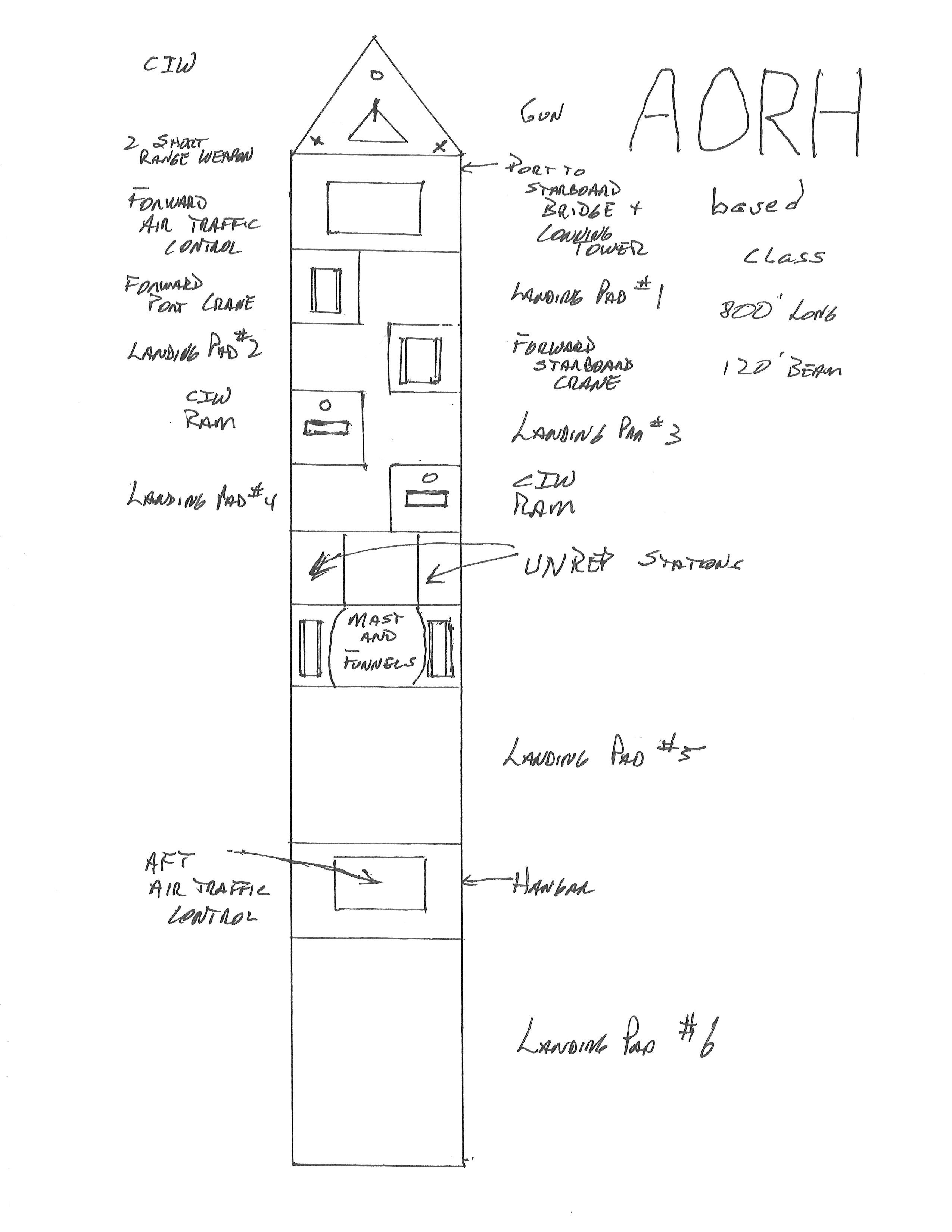
AORH class jpeg

Sketch by Jan Musil. Hand drawn on quarter-inch graph paper. Each square equals twenty by twenty feet.

This article, the second of the series, lays out a suggested doctrine for the use of a UUV or dipping sonar installed on a ten foot square buoy deployed and maneuvered by Fire Scout helicopters. It is an incremental strategy, primarily using what the Navy already has in hand, but adding the use of a new buoy design, in quantity, combined with appropriate doctrinal changes and vigorously applying the result to the ASW mission. Read Part One here

In getting this program underway the U.S. Navy can utilize existing sensors, primarily for prosecuting ASW, but also for mapping the bottom, underwater reconnaissance or other yet-to-be-envisioned missions. In practice, generating useful results is far easier to accomplish if the UUV or dipping sonar is routinely, though not exclusively, used with a tether so the data generated can easily be transmitted back to its mothership for analysis and use.

Ten-Foot Square Buoy (TFS Buoy)

At this point a brief description of the buoy noted above, to be deployed in scores at any given time, is in order. A set of eight hollow, segmented and honey-combed for strength where necessary tubes, say one foot in diameter, made of a 21st century version of fiberglass can be configured in a square. Stacking the ends of the tubes on each other log cabin style, but deliberately leaving the space between each pair of tubes empty creates as much buoyancy as possible, but very deliberately reduces freeboard. Whether the resulting buoy is equipped with a dipping sonar or UUV, both the sensors and the equipment needed to operate the tether, reel for the line and so forth are going to get soaked anyway. Simultaneously, we want a minimum of tossing about in various sea states as the sonar or UUV does its job or as a helicopter drops down to utilize a hook to grab the buoy and gently lift it clear of the water. Therefore, if the waves are moving between the pairs of tubes, this will substantially reduce the buoys unavoidable movement in the water, vastly easing the helicopters task in relifting it for redeployment.

A pyramid shaped area should be installed above the tubes to provide a double sealed compartment for the motor driving the reel and its power source. Another much smaller, triple sealed compartment for the necessary electronics, radar lure and antenna is needed just above it. At this point all that is needed is to add an appropriately sized steel ring at the top for the helicopter to snag each time it moves the buoy and we have an extremely practical piece of equipment to deploy, in large numbers and at a rather low price, across the fleet.

In the years to come, the Navy can incrementally add the ability to transmit and receive on different frequencies to measure the difference in time back to the emitting sensors thereby creating additional ways to monitor the underwater environment, detect targets and potentially be less intrusive when operating amongst our cetacean neighbors. By doing so we can build a much more sophisticated picture of surrounding water conditions such as local currents, variations in thermocline depth, salinity, water temperature at varying depths and so forth as well. A good computerized analysis of these data points and a doctrine of best practices to utilize this knowledge of water conditions will leave the mission commander in a position to make much better informed decisions on where to deploy his search assets next.

Utilizing tethered UUVs and dipping sonar with a suite of frequencies to listen and broadcast on opens up interesting opportunities for the ASW mission. By significantly expanding outward the range of ocean area being searched, the Navy can realistically anticipate creating the possibility of being able to establish a rough range estimate for a detected target. Spread the sonar emitters out far enough and the use of parallax kicks in. If there is just a little difference in vector to the target from two widely separated hunters they now have a working range number. This range estimate will almost certainly be nothing close to accurate enough to fire on, but it will certainly indicate a distinct patch of ocean to direct any orbiting P-8s or other fleet elements toward. Finding a needle in haystacks is a lot easier if you have a solid clue as to which haystack you should be searching. If Fire Scouts simultaneously drop dipping sonar equipped buoys around the area in conjunction with the UUV equipped buoys, then it will be even easier to find the metaphorical needle. For discussion purposes let’s say a Fire Scout starts its day by moving one UUV equipped and four dipping sonar equipped buoys, all transmitting locally to an ISR drone or ScanEagle just overhead, in relays, across the ocean. As the hours pass an enormous amount of ocean can be searched, further and further out from the task force, yet the buoys will be able to keep up with the task force as it travels, even in dash mode. With only one buoy being moved at a time, each one briefly out of the water as it is transported hundreds or a few thousands of yards, there will be a constant stream of much better data generated for the ASW team than the existing use of sonobuoys can provide. And the deployed equipment will be able to reliably function on station for many more hours than a manned helicopter team can provide.

Perhaps not at a 24/7 rate nor for days and days on end, but a task force with 15 Fire Scouts and 75 buoys deployed, potentially separated by many miles, has added multiple alternatives to the ASW teams.

It is suggested above that 15 Fire Scouts dynamically rotate 75 UUV or dipping sonar equipped buoys across the ocean. 15 and 75 are merely suggestions though. The real point is that to derive the greatest value from the newly developed UUVs and Fire Scouts the Navy needs to be thinking in terms of a dozen plus helicopters and scores of buoys at a time, regardless of the particular mix of equipment and sensors dangling beneath them. Again, think and operate in quantity.

Nevertheless there is always a problem or three lurking around that need to be dealt with. For now we have reached the point where we need to consider the question used as the title for the article – “Where is the Navy going to put them all?”

In the next article we will examine two new ship classes that can be used by the fleet to go to sea with the various types of drones, UUVs, Fire Scouts and buoys suggested, in quantity. Read Part Three.

Jan Musil is a Vietnam era Navy veteran, disenchanted ex-corporate middle manager and long time entrepreneur currently working as an author of science fiction novels. He is also a long-standing student of navies in general, post-1930 ship construction thinking, design hopes versus actual results and fleet composition debates of the twentieth century.

CIMSEC content is and always will be free; consider a voluntary monthly donation to offset our operational costs. As always, it is your support and patronage that have allowed us to build this community – and we are incredibly grateful.

Select a Donation Option (USD)

Enter Donation Amount (USD)

China’s Yuan-class Submarine Visits Karachi: An Assessment

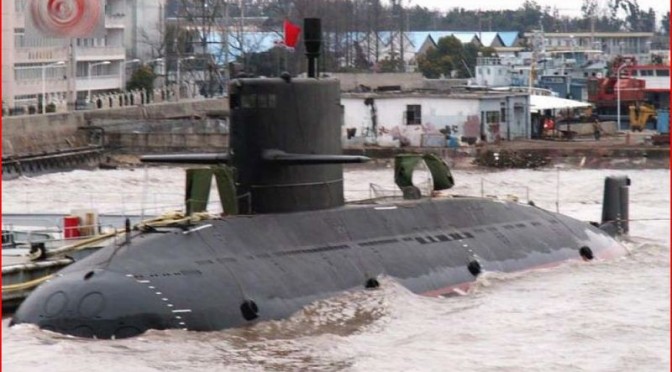
In May 2015, a Chinese Type 041 Yuan-class submarine (pennant number 335) entered the Indian Ocean and made a week-long port call at Karachi, Pakistan. This development caused alarm in India, at least in the media circles, particularly since it comes barely six months after the first-ever Indian Ocean deployment of China’s Song-class submarine between September and November 2014, and its docking in Sri Lanka’s Colombo port. Notably, following the Colombo docking, NMF view-point titled “PLA Navy’s Submarine Arm ‘Stretches its Sea Legs to the Indian Ocean” of 21 November 2014 had predicted future Chinese submarine dockings in Pakistan’s ports. These seminal developments call for an objective assessment in terms of China’s intent underlying its submarine deployments in the Indian Ocean and its implications for India.

Alike the port call in Sri Lanka, China is likely to justify the submarine visit to Pakistan as a replenishment halt enroute to PLA Navy’s ongoing counter-piracy mission in the Gulf of Aden. However, these deployments may be seen in context of the growing volatility of the security environment in the South China Sea, including the increasing brinkmanship between China and the United States. In case of a maritime conflict in the area, China’s energy shipments transiting the Indian Ocean are strategically vulnerable. Through its submarine deployments, China may be seeking to deter its potential adversaries against interdicting its Sea Lines of Communication (SLOC) in the Indian Ocean.

Route of the Yuan class submarine.

By virtue of its opaque operating medium, a submarine has always been a potent platform of war. The technological advances in satellite and air surveillance have not been able to offset the submarine’s inherent advantage of stealth. On the other hand, the advances in underwater weaponry – particularly submarine-launched anti-ship and land-attack missiles – have further enhanced the submarine’s lethality. The only constraint of a conventional (diesel-driven) submarine – like the Song-class – is to re-charge its batteries, for which its need to come up to the sea surface (for access to atmospheric oxygen) every two or three days, depending upon the usage of the batteries. This limits the submarine’s operational role and makes it highly vulnerable. However, Air Independent Propulsion (AIP) technology – such as on the Yuan class – has eased this constraint substantially, since its stored liquid oxygen enables the submarine to operate underwater for an extended durations of as much as two to three weeks.

Among the aims specific to the Yuan 335 call at Karachi, the foremost may be to showcase the Yuan to the Pakistan Navy. Notably, news-reports indicate that Pakistan Navy (PN) is likely to acquire up to eight Chinese Type 41 Yuan-class submarines. The contract between Karachi Shipyard and Engineering Works Limited (KSEW) and China Shipbuilding and Offshore International Co. Ltd. (CSOC) includes building some of these at KSEW. These submarines are equipped with Sterling AIP system, which the Chinese claim is more efficient than the AIP systems currently available in the world. The week-long docking of the Yuan at Karachi – too long merely for replenishment – may also have been utilised for training of the KSEW and PN personnel on the submarine, and its machinery and weapon systems, particularly the AIP system.

In broader terms, the two sets of Chinese submarine forays into the Indian Ocean (Colombo and Karachi) are likely to be ‘trial balloons’ for regular operational deployments of Chinese submarines in the region. The current deployments are also likely to be meant to familiarise the PLA Navy with the new operational environment in the Indian Ocean, train them for distant missions, collect intelligence, and collate hydrographic data specific to the Indian Ocean, which is essential for future submarine operations in the region. At present, the Chinese submarines need to replenish only fuel, food and fresh water. In the longer term, with the PN (and some other regional navies such as the Thai Navy) operating the same submarines, the PLA Navy is likely to benefit from a more comprehensive logistics support – technical services, machinery and equipment spare-parts and even ammunition. This will enable the Chinese submarines to remain deployed in the Indian Ocean for extended periods.

While China may continue to deploy its conventional submarines in the Indian Ocean, these are likely to be supplemented with the upgraded version of its new-generation Type 093 nuclear attack submarines (SSNs), whenever these are operationally deployable. These SSNs are likely to be armed with anti-ship and land-attack missiles, and capable of launching Special Operations Forces (SOF) via Swimmer Delivery Vehicles (SDV). Since SSNs do not need replenished, these submarines would not need to enter any regional port, unless China wants to demonstrate a deterrent posture.

China and India share a complex relationship, competitive, and even potentially adversarial. Hence, even if increasing Chinese submarine deployments in the Indian Ocean is not directly targeted at India, the development has severe national security implications for New Delhi. The response to increasing Chinese submarine forays in the Indian Ocean lies in developing affective air, ship and submarine based Anti-Submarine Warfare (ASW) capabilities, including sub-surface Maritime Domain Awareness (MDA).

Captain Gurpreet S Khurana, PhD is the Executive Director, National Maritime Foundation, New Delhi. The views expressed are his own and do not reflect the official policy or position of the Indian Navy, the NMF or the Government of India. He can be reached at gurpreet.bulbul@gmail.com.

CIMSEC content is and always will be free; consider a voluntary monthly donation to offset our operational costs. As always, it is your support and patronage that have allowed us to build this community – and we are incredibly grateful.
Select a Donation Option (USD)

Enter Donation Amount (USD)