The LCS and SSC Survivability Dilemma

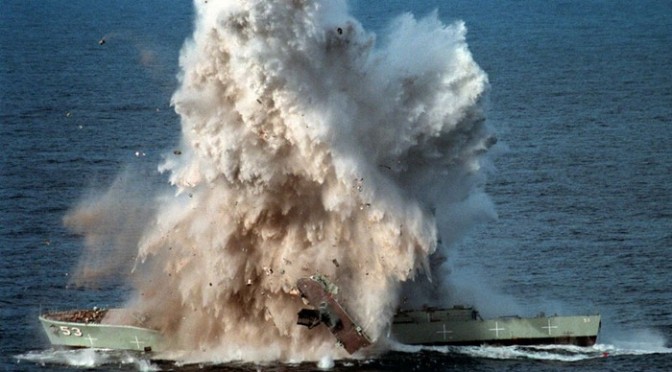
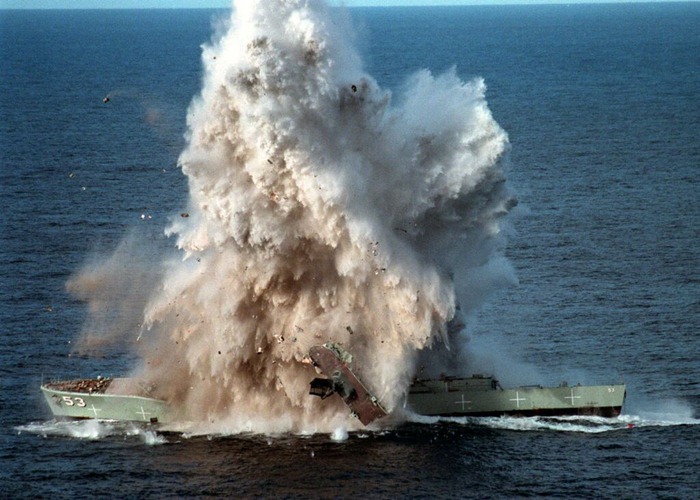
HMAS Torrens
HMS Torrens (small frigate) sunk by submarine torpedo in 1999

Chief Pentagon Weapon Tester Dr. Michael Gilmore remains fundamentally dissatisfied with the survivability of the Navy’s littoral combatant ship (LCS) and its upgraded follow-on, the small surface combatant (SSC). In an emailed statement described in a January 8th Bloomberg article, Dr. Gilmore stated, “Notwithstanding reductions to its susceptibility” compared with the design of the first 32 ships, “the minor modifications to the LCS will not yield a ship that is significantly more survivable.” It remains to be seen, however, how the Navy can improve the other legs of the “survivability triangle” on a hull of 3000 tons displacement and less than 425 feet in length. Small ships have been historically unsurvivable. Modern small warships are not in any way the equivalent of the World War 2 predecessors. Every warship is a compromise in armament, endurance, speed, and survivability. This is especially true of the LCS, as its modular operational profile demands absolute adherence to weight limitations.

Small warships are historically unsurvivable in combat. They have a shorter floodable length, reduced reserve buoyancy and more likely to be affected by fire and smoke damage than larger combatants. In both World Wars, losses in ships below 3000 tons in displacement far exceeded those of larger vessels. In World War 2, for example, the U.S. lost a total of 71 destroyers and 11 destroyer escorts; all under 3400 tons displacement and less than 400 feet in length. By comparison, only 23 larger ships were lost. Part of that figure is undoubtedly due to their operational employment, but in simple terms of engineering and physics, larger ships are inherently more survivable than their smaller counterparts.

There are stories of small combatants, such as the famous Fletcher class destroyer, surviving severe damage and yet remaining capable of inflicting damage on opponents. This history perhaps influences the opinions of those who believe small warships can somehow be made more survivable than the LCS or the SSC. Today’s weapon systems such as the 57mm gun on the LCS and SSC are much more fragile than the 5’38 caliber guns found on most U.S. Navy small combatants in the Second World War. Gun mounts became lighter and unarmored in the Cold War as the expansion of radars and mast-mounted communications equipment, among many improvements, forced warship designers to adopt lighter equipment to maintain ship stability. Current gun mounts are no longer manned to allow for a backup capability in the event of damage to centralized fire control capabilities. Many commercial off the shelf (COTS) components currently in use aboard Navy warships are much more fragile and more difficult to repair under battle conditions.

The crew size of a modern small combatant is also significantly smaller than its Second World War cousins. An LCS has a base crew of 90, with the capability to accommodate more personnel for mission modules. SSC would presumably have a similar complement. The Fletcher class destroyer had a crew of 273 and later wartime destroyers had over 300 men assigned. Crew sizes in present warships are likely to decrease in the wake of greater automation and a desire to reduce personnel costs. These additional crewmen allowed for manual weapons operation and damage control vital to the survivability of the ship. In short, comparisons with past small combatants are not an effective means to measure the survivability of the LCS or SSC.

The present Navy concept of warship survivability is described in OPNAV Instruction 9070.1A as a combination of susceptibility, vulnerability and recoverability. Dr. Gilmore noted that the SSC represents an improvement of LCS in susceptibility to attack. By Navy definition, this means “A measure of the capability of the ship, mission critical systems, and crew to avoid and or defeat an attack and is a function of operational tactics, signature reduction, countermeasures, and self-defense system effectiveness.” The SSC has an increased fit of installed weapon systems that allow the ship to defeat attack. Improvements to the other legs of the survivability triangle are more difficult. The Navy defines vulnerability as “A measure of the capability of the ship, mission critical systems, and crew to withstand the initial damage effects”, while still carrying out its mission. As previously described, that’s a tall order for a ship already disadvantaged by its physically small size.

Improving recoverability is equally difficult. The Navy defines it as “A measure of the capability of the ship and crew, after initial damage effects, whatever the cause, to take emergency action to contain and control damage, prevent loss of a damaged ship, minimize personnel casualties, and restore and sustain primary mission capabilities.” SSC is supposed to have additional armor protection, but given the weight restrictions of the LCS class, it is doubtful this will be anything beyond splinter protection. The small crew size will also limit the sort of manual-intensive damage control the U.S. Navy practiced in World War 2 and the Cold War. Installed, automated damage control systems offer some relief, but if damaged or destroyed in the first attack, they will likely be ineffective. Given all of these factors and their effect on a small ship with a small crew and little spare weight for improvement; it seems impossible that the Navy will ever reach Dr. Gilmore’s survivability demands for either the LCS or the SSC.

Every warship is a compromise of capabilities and limitations on a hull of a given size. The Navy has determined that the LCS and eventually the SSC will fulfill very specific missions on the hull size it selected during initial LCS design. Dr. Gilmore’s survivability demands on the present LCS hull are respectfully unrealistic. A larger vessel such as the Spanish Navy’s Alvaro de Bazan class frigate or its Norwegian or Australian cousins may be able to support increased survivability, but such a vessel would be inherently more expensive. A traditional frigate is also not what the Navy desired when it sought a replacement for the aging mine countermeasures and patrol ships, as well as the retiring Perry class whose dated missile capabilities were removed starting in 2003. LCS and SSC are simply not as survivable, as the Navy currently defines this term, as larger combatants due to physical constraints, smaller crew size, and fewer installed active and passive defense systems. It is unreasonable to demand that they meet a higher standard on the current hull.

Steve Wills is a retired surface warfare officer and a PhD student in military history at Ohio University. His focus areas are modern U.S. naval and military reorganization efforts and British naval strategy and policy from 1889-1941. He posts here at CIMSEC, sailorbob.com and at informationdissemination.org under the pen name of “Lazarus”.
Innovation at the Naval Postgraduate School: JIFX 15-2


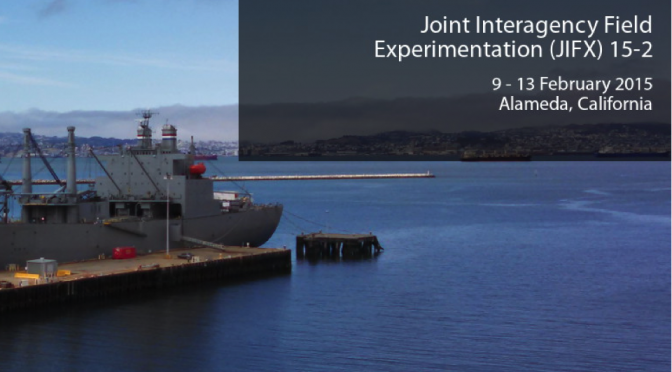
The U.S. Navy looks set to lead a bit of joint maritime innovation experimentation in February. According to the U.S. Naval Postgraduate School (NPS)’s Joint Interagency Field Experimentation (JIFX) Program website, the latest interagency field experimentation , set to run 9-13 February, will have a maritime setting and focus.  NPS will host  “JIFX 15-2” at the Department of Transportation’s Maritime Administration Facility in Alameda, CA, in a port facility and aboard a military cargo ship.  Per the primary request for information from NPS, people wanting to conduct experiments on “any and all technologies relevant to the maritime domain” were encouraged to apply. While the initial deadline for such applicants has past, those looking to attend as an observant can still do so here until 04 February.

One of the many specific areas of interest for this JIFX includes (e) Deployable Infrastructure, Power & Water:

  1. Deployed Infrastructure Building and Maintenance. Support building partnerships and stability operations through building infrastructure capabilities. Ability to reduce time and money spent increasing safety and operational capacity. Areas of interest include solutions that can assist in dust abatement, forward operating base maintenance with roads, runways, tarmacs construction & repair, expeditionary shelter support and efforts addressing fortification and ballistics. Using non-specialized equipment needed for most applications, rapidly deployable and customizable to the region of operations as needed.
  1. Deployable Lighting Technologies. Light Emitting Diodes (LEDs) are preferred. Potential solutions would be blackout capable and would be easily camouflaged for stealth day/night operations and would need to be ruggedized for all weather use and minimize energy requirements.
  1. Energy efficiencies. Solutions sought will explore renewable energy sources for mobile and austere environments; reductions in fossil fuel consumption; fused sources including diesel, wind, solar, etc.; energy saving technologies for shelter, transportation, and portable IT systems (to include DC systems, chill water cooling, ambient cooling, cloud computing); alternative shelters and HVAC (heating, ventilation & air conditioning) systems that address a reduction in energy needs, deployable field feeding systems that take into account weight, size, and avoid fuel-fired cooking appliances; deployable self-sustaining waste-to-energy  systems capable of handling approximately 1 ton per day, fit into a 1/3 of a 20ft ISO container, and with no hazardous emissions.
  1. Water Generation and Purification Systems. Solutions other than commercially procured bottled water and current Reverse Osmosis Water Purification Units (ROWPUs) are sought. Potential solutions might include atmospheric water solutions, black & gray water re-use systems, and new reverse osmosis technologies that incorporate reductions in energy demand.
  1. Safe (non-propagation/non-flammable) Lithium batteries or any related technologies (underwater submersible or like-type platforms).

This post was originally published on the Blue Value Facilities Engineering Blog and was re-published by permission. 

Re-Post: Surface Warfare: Taking the Offensive

Guest article by VADM Thomas S. Rowden, USN from June, 2014. Re-Posted during the SNA National Symposium this week.

I am indebted to the leadership of CIMSEC for providing a platform for me and senior members of my team at OPNAV N96 to lay out for readers key parts of our vision for the future direction of Surface Warfare. Captain Jim Kilby started it off with “Surface Warfare: Lynchpin of Naval Integrated Air/Missile Defense”, and Captain Charlie Williams followed up with “Anti-Submarine Warfare (ASW) – The Heart of Surface Warfare” and “Increasing Lethality in Anti-Surface Warfare (ASUW)”.   Both of these officers were recently selected for flag rank, and the Surface Force could not be more fortunate. Their years of fleet experience in these mission areas uniquely qualify them to lead our force in the future. Together with our continuing mastery of land attack and maritime security operations, the three operational thrusts they describe a Surface Force that is moving from a primarily defensive posture to one on the offense. This is an exciting development, and I want to spend a few paragraphs reinforcing their messages.

The single most important warfighting advantage that the U.S. Navy brings to the joint force is the ability to project significant amounts of combat power from the sea, thousands of miles from our own shores on relatively short notice and with few geo-political restraints. No one else can do this, and for the better part of two decades, our ability to do so was unchallenged. Without this challenge, our mastery of the fundamentals of sea control—searching for and killing submarines, over the horizon engagement of enemy fleets, and long range air and missile defense—diminished, even as the world figured out that the best way to neutralize this power projection advantage was to deny us the very seas in which we operate.

Surface Warfare must “go on the offensive” in order to enable future power projection operations. I call this “offensive sea control” and it takes into consideration that in future conflict, we may have to fight to get forward, fight through our own lines, and then fight to stay forward. Pieces of ocean will come to be seen as strategic, like islands and ports, and we will offensively “seize” these maritime operating areas to enable further offensive operations. Put another way, no one viewed the amphibious landings in the Pacific in WWII as “defensive”; there was broad understanding that their seizure was offensive and tied to further offensive objectives. It is now so with the manner in which we will exercise sea control.

What does this mean to fleet Sailors? It means that we have to hit the books, dust off old TACMEMOS and begin to think deeply again what it means to own the inner screen against submarines, to hunt down and destroy adversary surface vessels over the horizon, and to tightly control the outer air battle. We need to study the threats and devise new tactics designed to counter them. We need to master the technology that is coming to the fleet—Navy Integrated Fire Control (Counter Air), or NIFC-CA; the Air and Missile Defense Radar (AMDR); the SQQ-89 A(V)15 ASW Combat System; the LCS ASW Mission Module; the introduction of the Griffin missile in the PC class; new classes of Standard Missiles; Rail Gun; Directed Energy. We will need to use these systems and then do what Sailors always do—figure out ways to employ them that the designers never considered.

Going on the offensive is a mind-set, a way of thinking about naval warfare. It means thinking a good bit more about how to destroy that than how to defend this. Don’t get me wrong—we will still need to be able to defend high value units, amphibious forces, convoys, and logistics—but we will increasingly defend them by reaching out and destroying threats before those threats are able to target what we are defending.

We are moving to a concept of dispersed lethality in the Surface Force, one that presents an adversary with a considerably more complex operational problem. It will not be sufficient to simply try to neutralize our power projection forces. While these will be vigorously defended, other elements of the surface force will act as hunter/killer groups taking the fight to the enemy through the networked power of surface forces exercising high levels of Operational Security (OPSEC) and wielding both lethal over-the-horizon weapons to destroy adversary capabilities and sophisticated electronic warfare suites to confound adversary targeting. Especially in the Pacific, vast expanses of ocean will separate the carrier air wing from dispersed surface operations, so the paradigm of the past few decades that suggested the carrier would provide strike assets to supplement the Surface Force is no longer valid. We will leverage air wing capability, but we will not be dependent upon it.

Working in tandem with shore-based maritime patrol aircraft and our organic helicopters, we will seek out and destroy adversary submarines before they threaten high value units or fielded forces. Bringing together the networked power of surface IAMD forces and the mighty E-2D, we will dominate the outer air battle, eliminating threats to the force at range. The Surface Force will seize strategic “maritime terrain” to enable synchronized follow-on operations.

Those who may ask how the current fiscal environment impacts this vision, my answer is that it does so substantially. We will be forced to favor capability over capacity. We will favor forward deployed readiness over surge readiness. We will continue to invest in forward-looking capabilities through a strong science and technology/research and development budget, while ensuring we accelerate those promising technologies closest to fielding and most effective in advancing our offensive agenda.

We will posture more of the force forward, and more of it in the Pacific. While the total size of the fleet will likely decline if current conditions continue, more of it will be where it needs to be, it will be more effectively networked over a larger more dispersed area, and it will be equipped with the weapons and sensors necessary to enable this offensive shift.

I am bullish on Surface Warfare, and you ought to be too. I look forward to continuing this dialogue on the Renaissance in Surface Warfare, and I am proud to be part of the greatest Surface Force in the greatest Navy the world has ever known!


Vice Admiral Thomas S. Rowden’s current assignment is Commander, Naval Surface Forces. A native of Washington, D.C., and a 1982 graduate of the United States Naval Academy, VADM Rowden has served in a diverse range of sea and shore assignments.

Sea Control 65: Distributed Lethality Re-Run

seacontrol2With the Surface Navy Association national symposium featuring the topic of “distributed lethality” this week – we are re-running our interview with the boss of the Surface Fleet, VADM Rowden. At the time commander of OPNAV N96 (CNO’s Director for Surface Warfare), future Commander, Surface Forces, and author of the CIMSEC Article Surface Warfare: Taking the Offensive discusses his concepts for Sea Control, the development of LCS, perspectives on DDG 1000, and his plans as incoming Commander, Surface Forces.

DOWNLOAD: Offensive Sea Control Re-Run

Remember, subscribe on iTunes or Stitcher Stream Radio. Leave a comment and rate five stars!

[otw_shortcode_button href=”https://cimsec.org/buying-cimsec-war-bonds/18115″ size=”medium” icon_position=”right” shape=”round” color_class=”otw-blue”]Donate to CIMSEC![/otw_shortcode_button]

Fostering the Discussion on Securing the Seas.