Alexander Clarke (Phoenix Think Tank), Scott Cheney-Peters (CIMSEC), and Douglas Clarke (Naval Architect) discuss the future of manned, unmanned, and optimally manned naval vessels and the practical considerations of the latter categories’ expansion at sea…
The following was reported by the German navy blog Marine Forum:
“8 January, PIRACY– Anti-Piracy Forces: Sweden is preparing for another mission (M-04) in support of EU operation “Atalanta”, this time working jointly with the Netherlands navy … COMBAT BOAT 90 fast interceptor craft, helicopters and 70 personnel to embark on Netherlands Navy dock landing ship JOHAN DE WITT.”
As you may recall, I have advocated using WPCs supported by a mother ship to supplement the larger cutters for distant drug interdiction operations.
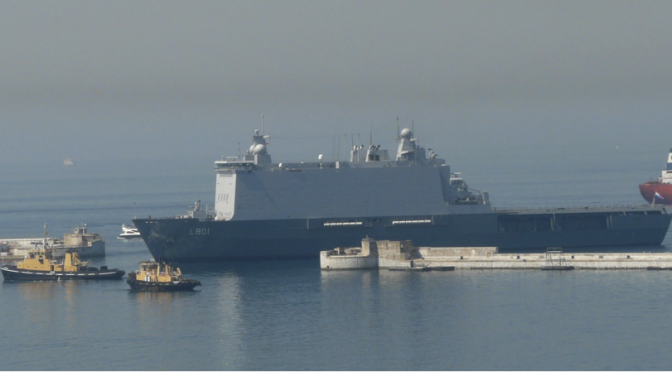
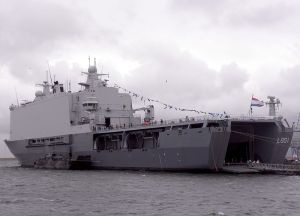
Perhaps we could run a test using the Johan de Witt or her sister ship Rotterdam to try out the mothership concept. Their crew size is similar to that of the National Security Cutters (less than that of the Hamilton class), but they have berthing for hundreds more. They have aviation facilities for up to six helicopters. They can handle boats from both davits and a well deck. They have excellent Command and Control facilities.
“The ships have a complete Class II hospital, including an operating theater and intensive care facilities. A surgical team can be stationed on board.”
That could make them welcome in a lot of ports.
L 801 Johan de Witt Uploaded by Oxyman
Would the Dutch be interested? The Dutch Navy has already demonstrated its commitment to counter-drug trafficking. They have used these ships several times for counter-piracy. Counter-drug operations are not that much different, and piracy seems to be in decline. When it was being finished, there were reports that the Dutch wanted to sell the Johan de Witt. Operating off Latin America might be seen as an opportunity to demonstrate both this class and the Netherlands’ ship building expertise in an international market.
What might the experimental effort include? In addition to the mothership, perhaps three MH-65s, add a mix of Webber class WPCs, WPBs, Response Boat Mediums (RB-M), and Navy Riverine Command Boats (the U.S. Navy version of the Combatboat 90).
In addition to its counter-drug objectives, the deployment might be seen as a partnership station effort, training as well as working with the locals, and if there should be a natural disaster while they are in the area, it would be a ready-made Coast Guard response.
Welcome back to another edition of the Members’ Roundup. There is an array of contributors featured in this week’s post. Topics range from exoskeletons in the Navy to assessing China’s nuclear arsenal. To kick off proceedings Natalie Sambhi, an analyst for the Australian Strategic Policy Insitute, has her own roundup of sorts called ‘ASPI suggests’ and provides a quick review of recent foreign policy and military developments.
With 2015 just beginning it is prudent that plans set in motion several years prior are reviewed and readjusted. The Center for Strategic & International Studies recently published a report on how the Administration and Congress can work together to sustain engagement with Asia. CIMSECian, Mira Rapp-Hooper, co-authors a chapter explaining how to adequately resource the Defense aspect the ‘pivot’.
Of concern is the People’s Republic of China’s growing military power, of which its nuclear arsenal is becoming increasingly sophisticated. Kyle Mizokami writes whilst the nuclear force is modernising it is still relatively modest compared to other nuclear powerhouses, such as Russia and the United States. Kyle explores the history of Chinese nuclear pursuits and analyses some of the weapons in the nuclear arsenal in a post for The National Interest.
BNS Sao Paulo, the flagship of the Brazilian Navy
Over at Offiziere Canada-based CIMSECian, Paul Pryce, analyses recent developments of the Brazilian Navy. He argues that the label of a ‘green water’ navy was accurate in decades past but modernisation plans, however, suggest that it is well on its way to earning the ‘blue water’ title. You can access his article here.
Manpower issues will continue to be of concern for all military planners and leadership at all levels remains important during times of transition. Over at War on the rocks, Jimmy Drennan provides some thoughts on how to best provide leadership for personnel during ‘super deployments’ – deployments that are 9 months or longer.
Bringing the focus back to our Coast Guard colleagues, Chuck Hill continues to inform us of developments within the constabulary side of the maritime domain. With recent debate of the LCS’ development, Chuck asks whether the Coast Guard should rethink how it designates its vessels. For the unmanned systems advocates out there, Chuck tells us that the US Customs and Border Protection Agency’s unmanned air systems program has failed to live up to expectations. You can access that post here and further discussion on the topic here.
Lockheed Martin created the FORTIS exoskeleton, which can boost worker productivity up to 27 times.
Defence industry has been developing high-tech robotic suits to enhance the capability of the average soldier. There are, however, unrealised potential for ‘exosuits’ or ‘exoskeletons’ exists within HADR and shipborne operations. The Center for a New American Security has recently published a report titled ‘Between Iron Man and Aqua Man’ and was co-authored by our very own Scott Cheney-Peters. This report will certainly open one’s eyes to other applications for the emerging technology beyond its use in combat. You can also see further discussion on the topic in Scott’s post at War on the rocks.
Continuing in the same vein as his ‘Feast of Salami and Cabbage’ article in late 2014, Scott Cheney-Peters, provides clarification to the legal jargon used within maritime disputes. For those without a background in the maritime realm or an understanding of international law this article will provide a layman’s guide to those terms being used by those in the field. This post is the first instalment in a partnership with The National Interest and you can access it here.
Finally, it would not be a CIMSEC roundup without the ‘Pacific Realist’ featuring in the post. Zachary Keck returns with four contributions this week. The first is reporting that the DPRK wants to acquire Russian fighter aircraft. The second post is Keck’s roundup of the top 5 weapons in the US arsenal that Russia should fear. The third reports that there is good evidence to suggest that the DPRK will continue to test nuclear weapons.In the final contribution, Keck summarises the various insights offered during a panel discussion on national security in the changing media landscape. You can access that article here.
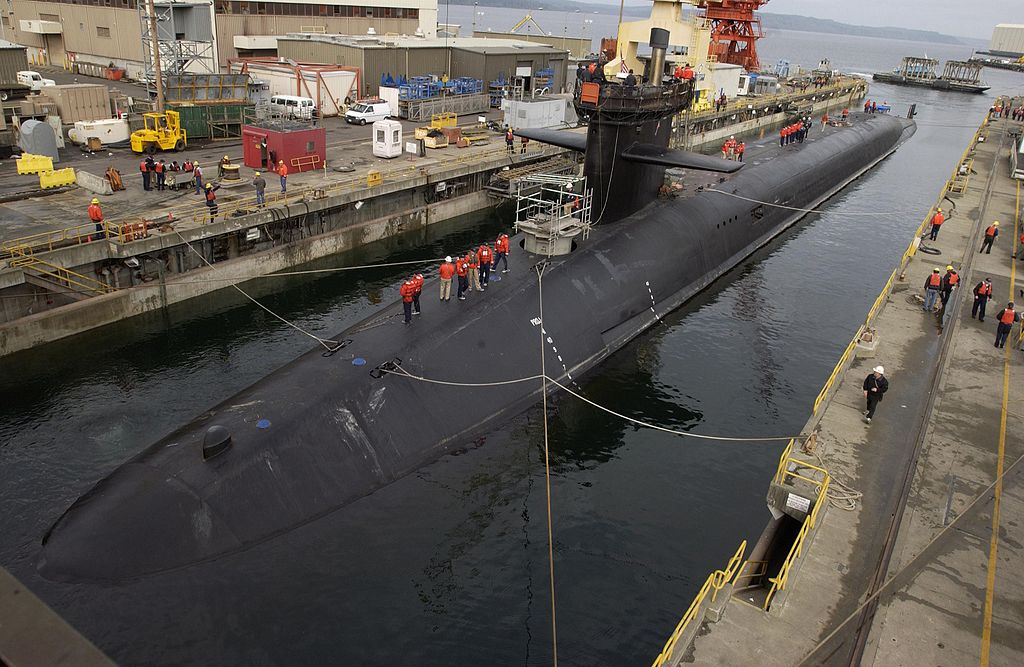
One of the ‘Top 5’: Ohio-class submarine USS Michigan (SSBN 727) prepares to dry dock, 2002.
At CIMSEC we encourage members to continue writing, either here on the NextWar blog or through other means. You can assist us by emailing your works to dmp@cimsec.org.
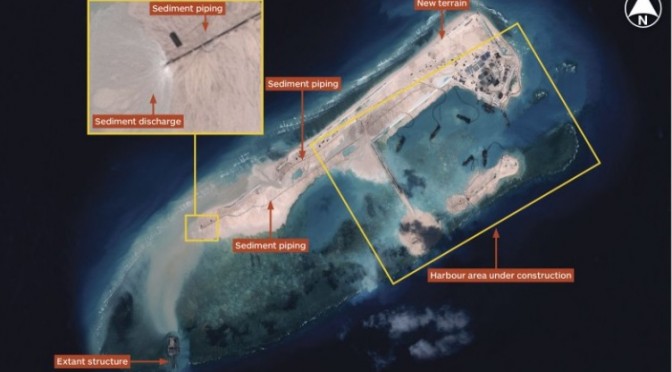
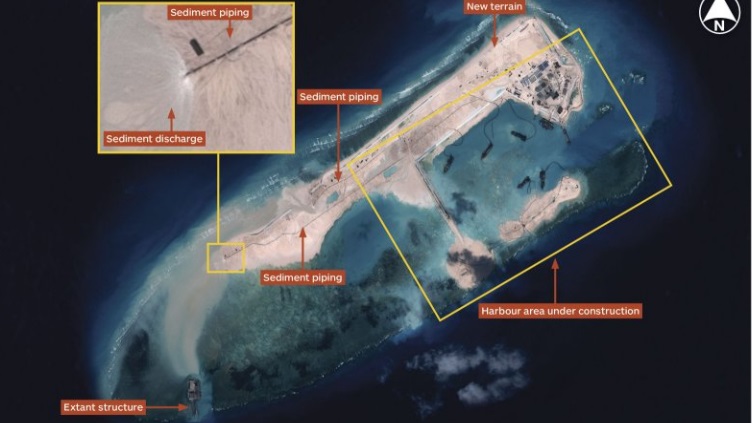
As part of a broader project of land reclamation, beginning in November China started efforts to develop Fiery Cross Reef in the Spratly Islands. As of late November the reef had been built up to 3,000 meters long and between two and three hundred wide. This makes it large enough, in the assessment of analysts with IHS Jane’s and the US-China Economic and Security Review Commission, to argue that China’s first airstrip in the Spratly Islands might be under development. China already has a growing airfield on Woody Island in the Paracels a several hundred miles north, and this would not be the first airstrip in the Spratly Islands; Taiwan, the Philippines, and Malaysia all have airstrips of their own. If a runway is truly planned for Fiery Cross Reef, what does this mean for the region’s security environment?
Given the distances involved, and the PLA’s relatively limited aerial refueling capabilities, Chinese forces stationed on or operating near the Spratly Islands cannot currently count on sustained air coverage from mainland China. The USCC report notes that an airstrip on Fiery Cross Reef would allow the PLA to project air power much further out to sea than current possible. Initially, an airstrip would allow for aerial replenishment of the small garrison on Fiery Cross Reef. The airstrip could also almost immediately be used for emergency landings or refueling, both of PLA aircraft and any civilian aircraft in distress. The PLAN or PLAAF could also deploy ISR assets, most probably unmanned, increasing PLA situational awareness for minimal footprint. This idea is supported by a statement made by Jin Zhirui, an instructor at the Air Force Command School.
The airstrip would additionally enable parts or stores to be flown to the reef and then dispatched to local PLAN vessels via helicopter. This is, for example, an advantage that the island of Bahrain provides for US Navy operations in the Persian Gulf and Diego Garcia provides in the Indian Ocean. In fact, Andrew Erickson speculates development may lead to an island twice the size of Diego Garcia. This would partly address the PLAN’s deficiency in replenishment ships and allow quick turnaround for critical repair parts to maintain vessels at sea even in the face of inevitable equipment breakdown. These uses for an airstrip are relatively benign compared with how the airstrip could develop.
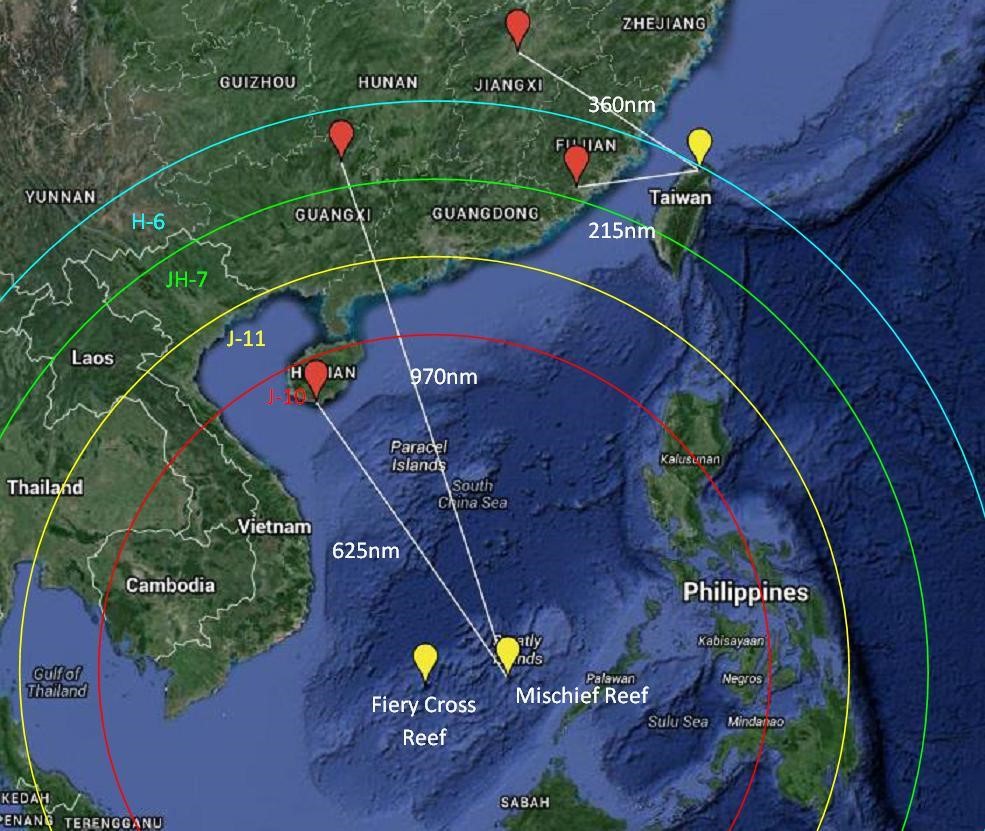
If the reef is expanded sufficiently it could serve as a platform for permanent basing of PLA combat aircraft which would alter the military balance of the region. China would be able to sustainably project air power further into the South China Sea than currently possible. The reef – or to use the potentially loaded term island, as it would realistically be – would also serve as an unsinkable adjunct to the Liaoning (CV-16). David Shlapak argues that Liaoning will significantly improve Chinese combat capabilities in the South China Sea; an island airstrip would do the same and would not have to return to the mainland for maintenance. The island could also support larger aircraft with heavier payloads than the PLAN’s carrier. Candidates for basing on Fiery Cross Reef include the J-10 air superiority fighter with a roughly 600nm operational radius, J-11 air superiority fighter with a 700nm radius, or the JH-7 attack aircraft with a 900nm range. All are capable of carrying anti-aircraft and anti-ship missiles with varying degrees of capability. A 3,000 meter runway could also support aerial refueling aircraft or the H-6 bomber, further increasing the PLA’s options for aerial patrols and strikes.
Approximate ranges of PLA aircraft from Fiery Cross Reef. Adapted from the map included with the USCC Report cited earlier.
The satellite imagery of the reclamation work originally published by IHS Jane’s also shows work progressing on a port facility. The progress to date on the port does not give a concrete indication of its final size or depth, but even a rudimentary logistics base would give the PLAN greater sustainability for operations in the area. While the airstrip would allow parts and stores delivery to PLAN vessels, pier facilities would allow more intensive repairs to be conducted in theatre, further extending the staying time of ships in the area. The port could also facilitate the permanent or rotational stationing of China Coast Guard vessels or small combatants like the Houbei-class fast attack craft, giving Beijing a more durable maritime presence.
If development of the reef plays out as current evidence indicates, it would alter the military situation by allowing Chinese aircraft and ships to more sustainably project power further from mainland China. This affects regional navies’ contingency plans for conflict in the South China Sea. They have to anticipate that Chinese maritime operations will have near-continuous air coverage throughout the area. The construction of an airstrip on Fiery Cross Reef also impacts US Navy planning for any possible conflict with China as it extends China’s A2/AD umbrella several hundred miles. Deploying air and surface search radars to the reef alongside air superiority and maritime strike aircraft would add another layer of defense capability that the US Navy or Air Force would have to account for. It is too early to say how the developments on Fiery Cross Reef will unfold, but the development of an airstrip and port facility on Fiery Cross Reef would yield significant operational benefits for Chineseforces in the South China Sea and complicate matters for Taiwan, the Philippines, and Malaysia in their disputes with China over ownership of the Spratly Islands.
Ian Sundstrom is a surface warfare officer in the United States Navy and holds a master’s degree in war studies from King’s College London. The views expressed here are his own and do not represent those of the United States Department of Defense.

 Alexander Clarke (Phoenix Think Tank), Scott Cheney-Peters (CIMSEC), and Douglas Clarke (Naval Architect) discuss the future of manned, unmanned, and optimally manned naval vessels and the practical considerations of the latter categories’ expansion at sea…