
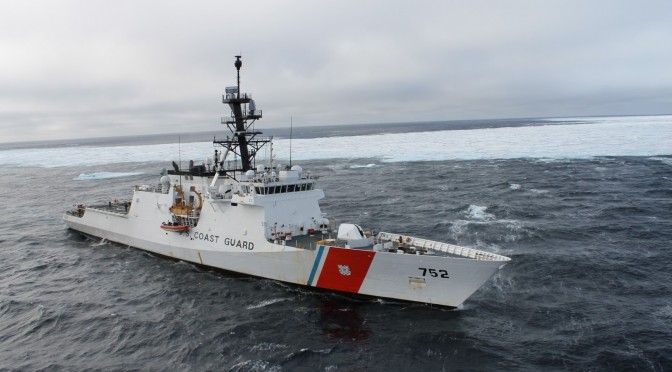
Can an Interagency Task Force Work in the Arctic?

By Jeffrey Kucik and Veronica De Allende

An increasingly accessible Arctic raises questions about U.S. responsibilities in the region. There are two core challenges. First, Russia’s (re)militarization of its Arctic coastline, coupled with growing Chinese activity—often enabled by Moscow—signals rising geopolitical competition in the region. Second, the United States has an interest in preserving a rules-based order in the Arctic, including freedom of navigation, credible deterrence, and the peaceful resolution of territorial and resource claims.

These challenges spur debate. Not everyone agrees that Arctic threats merit significant attention. Others believe the region represents a new frontier of U.S. national security. What is clear, however, is that no single service—including the U.S. Coast Guard, which bears primary operational responsibility in the region—can manage the Arctic’s growing demands alone. Securing the Arctic requires more than additional icebreakers. It requires an integrated, whole-of-government approach that combines the Coast Guard’s operational experience with law enforcement, intelligence, domain awareness, logistics. It also requires allied coordination across vast distances and unforgiving conditions.

The solution may be a joint interagency task force—a Coast Guard-led structure that establishes command and control procedures for the pressing needs in the Arctic like greater maritime domain awareness, emergency response, and credible deterrence.

Fortunately, the Coast Guard doesn’t have to start from scratch. There are important lessons to be learned from farther south, where the Joint Interagency Task Force-South (JIATF-S), a Coast Guard-led effort to disrupt drugs smuggling, has become a textbook example of effective coordination across U.S. agencies and foreign partners.

The need for coordination in the Arctic

Receding sea ice is opening new shipping routes and exposing reserves of oil, gas, and minerals, driving geopolitical competition among Arctic and non-Arctic nations alike. This competition has increased militarization in the region, evidenced by recent Russian investments in nascent Arctic facilities and by more frequent naval exercises to assert control over strategic waterways and resources. At the same time, lack of clear governance frameworks—and mixed compliance with those frameworks—further complicates efforts to manage disputes, raising the risk of conflict over territorial claims and access rights. 

The U.S. may not have the same equities in the region as Canada, Norway, or Russia. It also doesn’t have the same raw capabilities as some Arctic nations, with Russia’s icebreaker numbers towering over other countries. But taking a backseat to safeguarding the region would be a strategic mistake given U.S. interests. Outside of principled concerns over great power competition, there are several practical considerations. First, maintaining sea lines of communication (SLOCs), particularly around Alaska, is vital to ensuring freedom of navigation for commercial shipping and military logistics. Second, as a NATO member, the U.S. shares responsibility for protecting critical undersea infrastructure, including energy pipelines and communications cables, which have been the target of increased attacks in recent years. Third, a busier Arctic increases on the burden placed on the Coast Guard in terms of search and rescue operations, law enforcement efforts, and a wide variety of emergency response duties.

The Coast Guard cannot go it alone. Even with recent funding commitments, and investments in new ships, the service cannot meet the scale or complexity to confront tomorrow’s Arctic challenges. Coordination among U.S. agencies such as the Department of Defense (DoD) and the intelligence community is required to effectively address emerging military and civil threats. Looming challenges also require robust international cooperation to prevent escalation and ensure the Arctic remains safe and secure.

The Coast Guard has already taken important steps by establishing an internal Task Force-Arctic in late 2023 to assist with command and control across its two major regional commands and their nine districts. But Task Force-Arctic’s roles and responsibilities remain subject to debate, and there have been calls to transition to an “up-and-out” model aimed at coordination among U.S. government entities as well as partner nations.

Questions remain as to what, exactly, a task force’s mission ought to be and, related, which entities must be involved. What is clear, however, is that coordination and collaboration are needed. Outside of search and rescue operations, where there are formal protocols for emergency response, many of the threats emerging in the Arctic stress operational capabilities and experience. This created command and control headaches within the USCG—and it means coordination across the U.S. government and foreign partners is often ad hoc. A more formal, institutionalized set of contingency plans, communication lines, and coordination protocols can speed up crisis response and assist with allocating scarce resources across the region.  

The U.S. has similar efforts in other domains, including the recently stood up JIATF-401 for counter-drone operations and JIATF-CC and JIATF-S for counter-narcotics operations. JIATF-S in particular has been a much-lauded example of how this kind of coordination can work.

JIATF-S as a blueprint for interagency fusion

Established in 1994 to fight transnational drug trafficking, JIATF-S integrates a wide range of US government stakeholders, including the Department of State, U.S. Navy, Central Intelligence Agency (CIA), Drug Enforcement Administration (DEA), and partner nations. The task force functions as a centralized intelligence fusion and coordination center, synthesizing information and personnel from disparate agencies into a cohesive operational structure. It also integrates foreign countries, drawing on the capabilities of foreign liaison officers from 20 partner countries spanning Latin America and Europe.

JIATF-S plays a central role in coordinating maritime patrols, aerial surveillance, and logistical support to enable effective counternarcotics operations across the Caribbean, Eastern Pacific, and Latin America. Its effectiveness derives in part from its capacity to rapidly disseminate time-sensitive intelligence and assign the most appropriate operational asset to specific operations.

Commentators point to several reasons for this success. First, the JIATF-S has a clearly defined mission—combat the drug trade—which keeps daily tasking focused on core objectives while also promoting buy-in across U.S. agencies and foreign partners. Second, the task force’s structure, procedures, and operating methods have evolved over several decades in response to first-hand experiences. JIATF-S has become more efficient over time due to built-in knowledge sharing and the accumulation of trust among operating partners, even as drug traffickers have adapted to maintain effective networks. Third, the task force has reportedly become a desirable career stop for personnel. Staff performance is assessed primarily on contributions to the task force’s core mission, rather than on their home agency. This has been said to boost morale while fostering a cooperative, team-oriented culture. Fourth, participation by foreign partners increases the resources and the geographic reach of the task force. Moreover, these partners have a long history of shared strategic interests and demonstrated interoperability, further strengthening collaborative operations.

While not an exhaustive list, these factors highlight why JIATF-S is widely regarded as a model of interagency coordination, multinational cooperation, and centralized operational effectiveness. Duplicating that success elsewhere, however, is not straightforward and may not be possible in the Arctic due to a number of structural reasons.

JIATF-S is a “coalition of the willing,” relying heavily on voluntary contributions from participating agencies and foreign partners and lacking the standard military authorities of a command. This structure demands relative alignment of interests among partners, both to provide resources and to collaborate in operations. Effective interagency and multinational coordination requires overcoming barriers to burden sharing, communication, and the integration of diverse operational cultures. These issues would likely be relevant for any interagency task force. However, unique challenges in the Arctic make a simple “copy and paste” of the JIAFT-S framework impossible. The most critical is the lack of a clear organizing mission of common concern around which an Arctic task force could organize.

Is the JIATF-S model transferable to the Arctic?

There are several factors to consider in a region so vast and complex. Each of these presents strategic, operational, and tactical challenges to US entities and their partners.

Mission Diversity. JIATF-S seeks to accomplish a narrowly defined (albeit difficult) mission: countering narcotics trafficking through detection, monitoring, and interdiction efforts. The operational tempo, while inherently demanding, is directed toward that singular priority. In contrast, evolving threats in the Arctic are more diverse. These threats include illegal fishing, freedom of navigation interruptions, and increased militarization. Addressing this wide range of issues would require more combined resources and authorities, making interagency coordination significantly more complex than in the JIATF-S environment. For example, a JIATF-Arctic may be compelled to reconcile national security imperatives with civil support requirements. That means the task force’s mandate would have to be broader than that currently held by JIATF-S.

The potential breadth of the mandate has operational implications. The diffusion of missions—e.g., covering both emergency response and threat detection—would likely complicate the initial buy-in from both interagency and international stakeholders, perhaps critically.

Geography and Climate. The Arctic region’s remoteness, ice-covered waters, and extreme weather conditions demand specialized capabilities. The USCG has the most relevant experience within the U.S. government operating in these extreme weather conditions, including navigating ice. As a result, the USCG would likely bear the heaviest burden in coordinating C2 and in executing operational threat response. And yet many other agencies have roles to play in the region. Intelligence community assets contribute to maritime domain awareness, including monitoring vessel traffic. Likewise, the Department of Justice and the Federal Bureau of Investigation may have law enforcement and investigatory responsibilities.

Yet those entities have fewer resources and less operational experience in the region. In fact, even including USCG assets, the Arctic is generally characterized by minimal infrastructure, high costs, and a pervasive absence of fixed Intelligence, Surveillance, and Reconnaissance (ISR) systems. As a result, unlike JIATF-S’s relatively narrower geographic focus, the Arctic’s size and harsh conditions strain resources and capabilities. On the one hand, the challenging conditions are precisely why interagency and international coordination are important. One the other hand, those conditions place limited on who has the experience and capability to participate in joint efforts.

Geopolitical Dynamics. JIATF-S activities have at least nominal buy-in from governments across the area of responsibility. In the Arctic, however, there are more pressing geopolitical tensions, implying that Arctic nations are less aligned in their interests and willingness to cooperate with one another. Russia’s military buildup and China’s self-declared status as a “near-Arctic state” complicate consensus. Militarization concerns, particularly related to air and missile defense assets, engender significant disagreements. Even among U.S. allies and Arctic Council members, interests are not always aligned. As a result, building and sustaining a coalition of foreign partners in an Arctic task force setting will be more fraught politically, with less overlap in shared goals, interests, and missions.

Experience. JIATF-S is the product of decades of trial, error, and adjustment. It started as a heavily siloed set of independent task force efforts that was combined and refined since the late 1980s into the well-oiled machine operating today. Similar efforts in the Arctic may be able to borrow some of that experience. However, the unique challenges, including geographic, geopolitical, and mission complexities imply that achieving similar effectiveness would likely require significant time, sustained investment, and persistent trust-building among partners. The deficiency of established, routine combined operations in the High North signifies that the foundational trust required for interagency personnel to execute rapid, mission-critical decisions is currently absent.

Moving Forward

These challenges do not necessarily preclude the establishment of a JIATF-S-like organization in the Arctic. Rather, they highlight some of the inherent difficulties replicating this model from one region to another with fundamentally different mission sets, geography, infrastructure, and operating conditions. Overcoming these challenges would require two foundational features.

First, an Arctic task force must be given a clear mandate from Washington that defines its mission set, assigns dedicated resources, and clarifies the boundaries of the command’s authority across U.S. agencies and allied partners. We’ve stressed here that, at a minimum, a JIATF-Arctic must facilitate coordination and cooperation across—and outside—U.S. entities with roles and responsibilities in the region. This means ensuring that intelligence-sharing and communications channels are formalized rather than ad hoc. It also means developing defined protocols for tomorrow’s contingencies.

However, the mission set remains an open question. One thing the U.S. must consider is which foreign partners to include. If the U.S. goal is balancing adversary influence in the region, then the mission set—and membership—of the task force may focus on allied interests. But there’s also a different approach, one that includes Russia (and potentially China) to institutionalize cooperation around shared vulnerabilities in the region. That model would better approximate the Arctic Council’s structure, but could go beyond the Council’s core initiatives, which focus largely on environmental concerns.

Second, it should adopt decision-making and organizational structures that promote learning, flexibility, and adaptation, much as JIATF-S did through decades of trial and error. This would require fostering an organizational culture that incentivizes cross-agency collaboration and implements the use of embedded rotational staff to cultivate long-term personal and institutional trust. Together, these two features, when fully actualized, would provide the foundational elements for an effective joint interagency C2 model in the Arctic—enabling coordination among U.S. agencies and multinational partners, even amid the region’s extreme conditions and complex security dynamics.

Looking forward, such a task force could complement existing Arctic security structures like the Arctic Council, NORAD, and NATO, by providing a persistent, integrated U.S.-led framework for managing emerging threats, sharing intelligence, and synchronizing interagency and multinational C2 across air, land, and maritime domains. Ultimately, the question is not whether an Arctic task force could work, but whether the United States can afford to approach the region without one.

Jeffrey Kucik, Ph.D., is a Research Scientist at the Center for Naval Analyses and a Global Fellow at the Wahba Initiative for Strategic Competition at New York University.

Veronica De Allende, Ph.D., is a Senior Research Scientist at the Center for Naval Analyses.

The views expressed are solely those of the authors and do not necessarily represent the opinions of CNA, the U.S. Coast Guard, the Department of Homeland Security, or the U.S. government.

Featured Image: The Coast Guard Cutter Stratton from Alameda, Calif., steams near an ice floe in the Arctic Ocean during Operation Arctic Shield 2014 Sept. 14, 2014. (Coast Guard photo courtesy of Cutter Statton)

Enduring the Storm: Reflections on the U.S. Navy’s “Fat Leonard” Scandal

By Rear Admiral Bruce Loveless, U.S. Navy (Ret.)

Heavy Seas

Heavy seas do calm with time. Yet long after headlines fade and public attention moves on, those who endure them continue to feel their weight—professionally, personally, and often in silence.

The Glenn Defense Marine Asia (GDMA) case—widely known as the “Fat Leonard” scandal and the largest corruption case in U.S. Navy history—led to criminal charges against more than 30 uniformed and civilian officials, with lengthy investigations that disrupted hundreds of careers.¹ During that period, I was serving in key operational intelligence roles across the Indo-Pacific and later in senior positions at the Pentagon, making my own experience inseparable from the broader institutional reckoning that followed.

Now largely remembered as a case study in public corruption and accountability, the ordeal was deeply personal for me—a painful and prolonged period of uncertainty that demanded perseverance and tested character in ways I never expected. With recent decisions by a federal appeals court effectively closing the final chapters of the GDMA case, the legal story has reached its conclusion. The human story has not.²

What follows is not an effort to relitigate the case or revisit legal arguments. Rather, it is a personal reflection on what it means to serve, to be accused, and to endure when trust—personal, professional, and public trust—is strained over time.

The Storm

The storm hit long before my very public arrest.

While serving at the Pentagon in the fall of 2013, I was called into a meeting with Department of Justice (DOJ) attorneys and NCIS agents. They asked about Navy port visits from several years earlier, going back to 2005, when I sailed the Western Pacific with the U.S. Seventh Fleet. Within hours, I was suspended from my duties, stripped of security access, and thrust onto the front pages of the national news. The press seemed to have the story beforehand.³

No charges. No explanation. Just suspicion—and years of painful uncertainty followed.

For three years, I lived in that limbo—still a naval officer, still a Flag Officer, still serving my country, but largely sidelined. In the fall of 2016, believing the ordeal had passed, I retired quietly (and honorably) after more than 30 years in the Navy, living and sailing around the world in warships, along with multiple assignments in what may be the most challenging battlefield of all—Washington, DC.

Then in the spring of 2017, without any warning or follow-up from that initial DOJ meeting, I was arrested. Federal agents with handcuffs knocked on my door very early in the morning—armed, but respectful. In NCIS offices at nearby Naval Base San Diego, I sat in a holding room, waiting—the federal jail downtown wasn’t even open that early.

The agents were professional, offering coffee and water. Strangely, they didn’t ask any questions about the case, as if not interested in me for that purpose. One said quietly, almost apologetically, “This will make more sense when you see the news.” The story had already been written.

Later that day in a federal courtroom, I stood shackled, wearing a prison jumpsuit. Another naval officer—also charged—stood nearby in a business suit and tie, clearly given time to prepare, flying in from Hawaii with his attorney. The contrast seemed deliberate. Perception mattered more than fairness in that moment.

That evening the story played on national TV. No trial. No evidence. No defense. Just narrative.

The Endurance

Back home that night, I sent a short email to Tom O’Brien, my brother’s Naval Academy classmate and former U.S. Attorney: “I think I need your help.” He responded immediately. Acknowledging the legal costs ahead would be overwhelming, he said, “These are accounts you’ve already paid into with your service.”

In the days (and years) that followed, the Navy was silent. No official calls. No offers of assistance. I was retired, after all. But many individuals stepped forward: shipmates, Naval Academy classmates, neighbors, and new friends in San Diego. Unexpected allies reached out with quiet strength.

For five years awaiting trial, I chose purpose over despair, completing a PhD by studying senior leaders across business, nonprofit, and public sectors—many shaped by adversity. Study partners kept me focused. Faculty reassured that perseverance would carry me through. Friends nudged me forward, on nearby hiking trails and running paths. Neighbors kept my spirits alive. And my brother, always a role model, was steady and present when I needed him most.

Through research, interviews, and hard miles on mountain trails, my understanding of leadership was rebuilt. For most of my Navy career, leadership largely meant operational excellence and taking care of sailors. But enduring this storm demanded far more. It would take dignity when humiliation felt certain. Perseverance when anger was easier. Grace, even when bitterness seemed justified.

Nearly every morning during the forthcoming trial, a Naval Academy classmate and running partner sent me a short text message—words of encouragement, reminders to keep going. Framed in familiar language—handing me water when needed, helping me find another mile when my legs and heart were tired. His quiet consistency and the loyalty of others like him made the marathon possible.

The Trial

The trial itself didn’t come quickly. Following my arrest, we waited—year after year—as proceedings were delayed. Some co-defendants eventually pleaded guilty. Then COVID caused further delays.

When we finally went to trial in 2022—nearly nine years after that initial DOJ meeting—the federal courtroom in San Diego looked like a different world. We were five defendants on trial together, all naval officers who served in the Seventh Fleet around the same time, and more attorneys than one could count, on both sides of the aisle. Masks covered our faces. Plexiglass divided us. Jurors couldn’t see our facial expressions, nor our humanity.

Why the trial was in a federal court—rather than a military courtroom—was a frequent question. To my understanding, DOJ took jurisdiction because the broader case involved a civilian contractor and alleged violations of federal bribery laws. However, with full respect for civil authority, explaining years of operational context—overseas, over decades, involving port visit interactions with a foreign husbanding agent hired by our Navy—to a civilian jury, understandably unfamiliar with forward-deployed naval operations, proved challenging for all defendants. Even federal prosecutors struggled to present that complexity clearly.

In the middle of what would become a grueling four-month trial, the Judge suspended proceedings to hold a separate evidentiary hearing away from the jury. In a surprising turn, prosecutors took the witness stand and were questioned by defense counsel. The courtroom was packed—with attorneys, observers, even other judges—watching a rare public reckoning unfold. During that hearing, serious flaws in the prosecution’s case—withholding evidence, misrepresenting facts, deceiving the public, and even attempting to bribe witnesses—came to light. Behavior by government prosecutors and investigators that the Judge characterized as “outrageous” and “flagrant misconduct.”⁴

While that moment felt like a turning point in the case, the Judge denied several motions for a mistrial. So, after months of testimony and weeks of deliberation, the jury ultimately returned mixed verdicts. For me, the jury could not reach a decision—a hung jury—while the other four defendants were convicted on all charges (felony convictions later reduced to misdemeanors). Soon after the trial, the DOJ prosecutors themselves requested that all charges against me be dismissed (with prejudice), and the Judge agreed, bringing my legal ordeal to an end, nearly a decade after the investigation began.⁵

But that didn’t end the scrutiny, for the scars—personal, professional, and reputational—remain. And the cloud of distrust lingers.

Hard Truths

The Fat Leonard scandal was built on a story—partly true, often exaggerated—driven by a con man and too readily accepted by government prosecutors and a press eager for headlines. In my view, major media outlets, especially The Washington Post, relied too heavily on the prosecution-provided narrative, repeating sensationalized claims without nuance.6 Some even suggested I had traded military secrets—yet no charge ever alleged such a thing. Complexity rarely fits into headlines.

The Navy, bound by lawful authority, largely remained silent. In many ways, I understood that—for I was one of them, and they were me. With a major federal investigation and heavy public scrutiny, there was little space for Navy leadership to act differently. In the face of prosecutorial overreach and intense media coverage, the narrative became one-sided, and sometimes deeply misleading.

Even now, I struggle to believe that most of those in uniform who were charged truly understood that Francis was defrauding the government. In hindsight, it seems unlikely he would have wanted them to know—exposure would have jeopardized his scheme. Indeed, trial evidence showed he deliberately concealed his fraudulent actions, especially from senior officers. As the Judge pointedly told the lead prosecutor during the trial (though away from the jury): “I’m not buying it…to be part of a conspiracy, you have to know what’s going on.” Yes, there were serious lapses in judgment and troubling ethical failings, for sure. But whether those amounted to felony-level crimes is, in many cases, a far more complex legal question.

In the end, all of my charges (bribery, conspiracy, and fraud) were dismissed at DOJ’s request after years of investigation, months of trial, and a hung jury—where I was the only defendant the jury refused to convict. My charges were not dismissed because of prosecutorial misconduct, nor did it end on a technicality, as some still mistakenly believe. It ended because the prosecution failed to prove its claims against me before a jury at trial. Unlike all others charged, I was not accused of direct criminal wrongdoing, but of failing to report the alleged misconduct of others. In essence, I was accused of looking the other way. That allegation collapsed under scrutiny because the evidence was insufficient to convince the jury—and it simply wasn’t true.

Still, deeper reflection includes what I could have done differently. I wish I had kept greater distance from Francis—of course I do in hindsight—and I know many others feel the same. As the U.S. Navy’s primary husbanding agent in the Western Pacific for decades, his company (GDMA) was not viewed with enough suspicion by us, at least not back then. Naively, we placed a great deal of trust in the people and systems around us, assuming the processes responsible for vetting and hiring Navy contractors would shield us from bad actors, especially those we relied on so directly to meet critical operational needs.

Likewise, through this unfamiliar legal journey, I mistakenly believed that government prosecutors and agents would uphold the highest standards of justice and professional conduct—at least I did before this horrific experience. Those assumptions, as it turned out, were dangerously misplaced.

Even without criminal guilt, some regret remains, for not recognizing the criminality of the situation—with Francis or anyone else for that matter. And a sense of responsibility lingers, believing that if I had known, I would have spoken up, somehow, someway. Silence, even unknowing, contributes to failure.

Hard truths are never easy, but they teach.

Enduring Trust

The Navy remains an institution I love. Its ideals—honor, courage, commitment—still mean as much to me today as they did when I first took the Oath during Plebe Summer in 1982. Enduring the Fat Leonard scandal tested those ideals beyond anything I ever imagined. It also made them more real.

Character isn’t forged in calm seas; it’s revealed in crisis—we know that. Even more so when everything falls apart, when your professional life ends abruptly, when your personal life is shattered, when you’re afraid. Enduring this storm was made possible because others stood beside me—shipmates, friends, family—who refused to walk away.

I am better because I endured—because I came to understand the deeper strength that comes when character is tested. Under great strain, I chose dignity over anger, perseverance over bitterness, grace over grievance. And in the end, I chose resilience over defeat. Growth is a choice.

The foundation of character—and leadership—is trust. Trust is fragile and must be earned—every day, in every challenge, through every trial—seen and unseen. My greatest hope remains, not only to be trusted, but to continue to live and lead in a trustworthy way.

Bruce Loveless is a retired U.S. Navy Rear Admiral who served more than 30 years as a naval intelligence officer. He is a graduate of the U.S. Naval Academy and holds a PhD in Leadership Studies from the University of San Diego.

References

  1. S. Department of Justice, press releases and case summaries concerning the Glenn Defense Marine Asia corruption investigation, 2013–2024. See, for example: https://www.justice.gov/criminal-fraud/glenn-defense-marine-asia
  2. Greg Moran, “After more than a decade, the Fat Leonard scandal may finally be over — but not for everyone,” inewsource, December 29, 2025, https://inewsource.org/2025/12/29/fat-leonard-navy-case-san-diego-questions/.
  3. National media reporting on the “Fat Leonard” scandal, 2013–2024. Representative coverage in The New York Times: https://www.nytimes.com/2013/11/09/us/bribery-case-implicates-2-admirals.html
  4. Federal court proceedings and related public reporting addressing prosecutorial misconduct and evidentiary issues in GDMA-related cases, 2020–2023. See, for example: https://www.sandiegouniontribune.com/2023/09/06/felony-convictions-vacated-for-4-former-navy-officers-in-sprawling-fat-leonard-bribery-scandal/
  5. United States v. Loveless, U.S. District Court for the Southern District of California, case filings and dismissal order. Public docket available via PACER: https://pacer.uscourts.gov and also at: https://news.usni.org/2022/09/15/charges-dropped-against-retired-rear-adm-bruce-loveless-in-fat-leonard-case
  6. National media reporting on the “Fat Leonard” scandal, 2013–2024. Representative coverage in The Washington Post: https://www.washingtonpost.com/investigations/leaks-feasts-and-sex-parties-how-fat-leonard-infiltrated-the-navys-floating-headquarters-in-asia/2018/01/23/4d31555c-efdd-11e7-97bf-bba379b809ab_story.html

Featured image: Statue of lady justice holding scales indoors. (Open source photo by Albert Stoynov)

Useful Lemons

By Jason Flores Rutledge

Introduction

The People’s Republic of China (PRC) represents a strong threat to the United States due to its rapid military expansion and destabilizing actions in the Indo-Pacific theater. The Indo-Pacific represents about twenty-seven percent of US trade and is vital to remain accessible to the United States.1,2  Confronting the threat is difficult because of the vast distances and severe timeframes necessary to supply forward operating forces. Conventional means of resupply rely on shipping across that distance and on prepositioned stocks which would run out in short order. According to CSIS wargames, should conflict with the PRC begin, U.S. stockpiles are expected to be depleted within a week after conflict start even if continuous resupply could be guaranteed.3  New options are needed to address these complications involving distance and production.

This article makes two related proposals. First, it advocates the creation of sea-going factories and industrial facilities to secure decisive strategic advantages over the PRC and other future competitors. Such creations would significantly reduce the supply lines for crucial and specialized equipment and weaponry and offer strategic surprise through mobile industrial zones. Second, it proposes that the first incarnations of these new ship classes be adapted from ships presently being refitted or scheduled for decommissioning and will allow such factories and facilities to enter service quickly.

The Growing Threat

First, the PRC is laying disputed claims to many maritime territories. It presently claims the self-governing island of Taiwan.4  It lays claims to the Spratly Islands and Scarborough Reef, which has been determined by international courts as belonging to the Philippines.5  It is also laying claim to the entire South China Sea and its natural resources.6 Backing these claims is unprecedented gains in military production, technology, and increasing aggression. 

On October 12th of 2025, Chinese cutters rammed two commercial Philippine fishing vessels near Thitu Island.7 In early January of 2026, PRC forces surrounded Taiwan and conducted military drills to intimidate Taiwan and regional neighbors.8 Should these agitations continue, and increase resulting in conflict, the geography favors China should the U.S. decide to protect its interests in the region.

In the event of regional conflict, China has very short communication and supply lines in the region whereas the U.S. must cross the vast Pacific Ocean to protect its interests, the sovereignty of allies and partner nations. The U.S. will need combat and sustainment power in theater. U.S. transports are vulnerable to actions that may impede or attempt to destroy them during transit.  With the belief the U.S. has an unmatched technological advantage, that transit time may prove to be the greatest factor in the defeat of the U.S. and those nations who stand with her.

There are options to cope. Examples include prepositioning supplies and producing more cargo ships, but the U.S. should also consider factory ships as a type of force multiplier. 

The Factory Ship

A “factory ship’ is a factory found within the boundaries of a mobile sea-going vessel. Its primary purpose is to exponentially reduce the supply lines for specialized weapons and equipment though it remains reliant on local raw materials.

A factory ship’s simplest incarnation is that of a standard factory with set outputs geared to service specific needs. For example, one could specialize in drone manufacturing or perhaps missile production through traditional methods.  It would also be worth considering outfitting these vessels with additive manufacturing capabilities which allows the creation of virtually anything from the same machinery.

Traditionally, every part of a machine would need repairs and require materials to be kept in stock. Unlike civilian life where a shopping trip can get any automobile part, the military world has limited space to store replacement parts and, like the civilian world, it has no idea what part will break next. The implication being that space is wasted on parts that later turn out to be unneeded, while more urgently required items were in short supply.

Decision makers will find massive advantages by including “additive” manufacturing to allow customized outputs for both land and sea-going assets. Additive manufacturing requires just raw materials to manipulate into needed parts, so there is no wasted space used for excess parts. This has the potential to meet all demands, so long as the raw materials last.

Additionally, the customizable quality of additive manufacturing would allow the vessel to also support allied and partner forces, which use different equipment from U.S. forces. The ability to customize local production to meet sophisticated needs on the spur of the moment represents a powerful advantage that must not be neglected.

The Factory Ship in Use: An Example

In this scenario, the PRC has engaged both Taiwan and the United States in massively bloody battles to determine the island population’s destiny. Several weeks into it, both sides have suffered tremendously in lives lost and vessels sunk. Sensing a strategic victory through their decisive ability to replace ships, the PRC has refused an armistice. Both sides are preparing for the next round of battle by replacing their exhausted supply stocks. The U.S.’ only chance is to strike Chinese shipyards directly as quickly as possible.

Such a maneuver will require supplies needed by land, air, and sea-going forces. All-out efforts are being launched to resupply and re-arm the fleet while still at risk of attack by PRC forces.  There is a factory ship anchored in Port Moresby of Papua New Guinea manufacturing new missiles for the task force while supplies are also coming from Los Angeles, California. In both cases the supply ships of the “USNS Lewis and Clark” class are involved and traveling at their maximum speed of twenty knots.9 The distance from Port Moresby to the operational area is 2,531 nautical miles whereas the distance from Los Angeles , California, USA is 6,533 nautical miles.10 That means the factory ship will help replenish the fleet in just over five days while those from San Diego need over 13 days. This means the factory ship could resupply the fleet two times before the first delivery from the U.S. arrives. With the presence of a factory ship, Gettysburg will be combat ready in ten days; with factory ships the strike happens, without them the PRC once again strikes first. Having a mobile industrial base is greatly advantageous, no matter how specific its output may be.

Industrial Secrecy and a Changing World Situation

Those opposed to factory ships, but who acknowledge the problems regarding supplies and distance, could suggest building additional U.S. owned and operated factories, supply or maintenance centers on foreign soil. This option represents a significant risk of technological compromise and advanced production becoming enemy assets.

States and their industries do change alliances during conflict, either through being overrun by the enemy, defection, or voluntarily switching allegiances. In World War Two, the states of Romania, Bulgaria, Finland and Italy switched sides from the Axis to the Allies as the military and political situation changed.11 In 2016, President Duterte of the Philippines shifted away from a longstanding partnership with the United States and sought to revitalize relations with the PRC.12 Such things must be considered in future force planning.

Conversely, a factory ship has the option of hoisting its anchors and slipping away when the situation begins to turn hostile. The factory ship also represents the opportunity to manufacture sensitive products in allied/partner territories without as many political risks. 

Factory ships could be stationed in international waters, but the loading of raw materials may be difficult, time consuming, and resource intensive; a fact borne out by considering ship-to-ship transfers and the fuel requirements for onloading. While this is an option, foreign port or berthing is preferred.

Design Considerations

A key design feature for every factory ship would be a flight deck though its purpose would differ partly from traditional use. Helipads would be required to support VTOL drones responsible for transporting customized loads to various land formations and ships. Factory ships would also require space for storage and maintenance for aerial assets while navigation systems for unmanned aerial systems (UAS) would be integrated in the ships’ communication and navigation suites.

The U.S. Navy is already experimenting with drones for those supply purposes. According to The EurAsian Times, the U.S. Navy experimented with six drones meant for transporting supplies.13 Trial runs for these experimentations involved ship-to-ship and ship-to-shore deliveries. Considerable time and benefit could be realized by adopting lessons learned from these for the factory ship design and employment. An analysis is recommended to ensure a factory ship meets power generation requirements inherent in its role. Should additional power be required, power plant ships, an innovation discussed later, could be an option.

The Survivability of Factory Ships

A concern would be that a factory ship would tie down other fighting vessels as escorts when they would be desperately needed elsewhere.  A factory ship would indeed depend on other ships for its safety for the extended transit across the Pacific. The factory would sensibly need to travel with a taskforce or surface action group (SAG); however, the factory ship would not be defensively useless.  The factory ship could be retrofitted to bristle with aerial defenses. The flight deck incorporated into its design is an ideal surface for many aerial defenses including those mounted on vehicles. As an example, aerial defense would in part be provided by vehicles like the Avenger, a vehicle that can engage a variety of aerial targets such as drones, aircraft, and even cruise missiles.14 The numerous anchor points on the deck would secure the vehicles from unintended movement. This ideally would defeat everything from aircraft to missiles to ballistic missiles. Therefore, the factory ship would contribute significantly to any taskforce’s survivability.

Though strange, a practical idea would be to station VTOL fighters like the F-35B onboard. The aircraft would defend the factory ship whether at port or in transit for the domains it is suited to address. Also, the F-35 fighters could be kept on land when the factory is at port. This would cure the problem of the jets obstructing the ship’s role as a factory.

Once in a port, the factory ship’s defenses would complement the local area’s capabilities. Many of the aerial defenses could be temporary, i.e. land-going vehicles which could be offloaded and stationed in the surrounding environment. This would also free up deck space for the ship’s industrial roles. This practice would maximize defense during transit and stationing while also maximizing the ship’s industrial role.

As can be seen, the industrial factory ship would not be a burden constantly requiring escorts, and instead, could potentially add to the overall force generating capability to a task force.

Power Plant Ships

Another advantageous innovation is the “power plant” ship, a vessel that powers a given area of industrial might which has lost use of its own power plant due to enemy action, be it by conventional warfare, cyberattack, or sabotage.

Traditionally, cities blessed with the industrial prowess to source the military’s logistical needs have been targeted by the enemy to retard friendly progress. Targeting land-bound power plants serve as a relatively easy way to render entire swaths of such industry inactive, thereby denying friendly forces of the subsistence, support, and weaponry necessary to advance the country’s interests. Coping with the blow usually means accepting the loss in production and the resulting defeats and personnel sacrificed. However, the powerful innovation represented by power plant ships means rapidly restoring industrial might and all the advantages inherent in it, be it strategic or tactical.

In such a situation, a power plant ship would sail urgently into port and have the local power grid attached to it. Within hours vital industry resumes. This is the promise represented by power plant ships.

Power plant ships also open offensive options unimaginable previously. The ability to launch moderate to major offensives is in part limited by the ability to service casualties to prevent unacceptable losses; this is in reference to the “golden hour” when casualties must be serviced or they die.15 Many could state the formula will not be able to be implemented anymore and friendly forces must accept those losses or forego war-winning maneuvers. Forward medical bases can be established near or within enemy territory to support major operations of a surprising nature.  However, a power plant ship can be anchored near shore and power lines run out to the base. This would power modern medical equipment and defensive needs like Patriot batteries. The result is lives saved while giving friendly forces strategic options.          

Immediate Opportunities for Ship Construction

One opportunity to economically create an industrial factory ship is presently available. At the time of this writing, the aircraft carrier USS John C. Stennis is presently undergoing an extensive overhaul while having its nuclear reactors refueled.16 The work is so difficult that the vessel is not expected to return to service until October 2026. While unfortunate, the delay presents an opportunity.

If feasible, the USS John C. Stennis should be retrofitted into an industrial factory ship. The hull, engine, reactor, and other necessities already exist while space and available tonnage for industrial equipment can be created by removing anything deemed non-essential.

An additional benefit is that the Stennis could also work as a “mobile power plant” thanks to its nuclear reactor. This means it could power its own needs, port equipment and land facilities useful to the factory role. Using the Stennis would be an economical and time sensitive measure given the accelerating PRC threat in the near term. Trading an aircraft carrier for a factory ship may be deemed unwise, yet the need for a factory ship remains.

Good fortune has it that two nuclear powered aircraft carriers are slated for decommissioning in 2026 and 2027, the USS Nimitz and USS Enterprise respectively.17 Repurposing these prestigious vessels represents the unique opportunity to create factory ships without reducing the fleet’s combat value. They would also have all the benefits of the proposed changes to the USS John C. Stennis. However, the U.S. Navy may still not be able to afford the costs.

An excellent alternative is the USNS John Glenn. The John Glenn is an Expeditionary Transfer Dock Ship designed to transfer vast quantities of equipment and fuel to forward depots.18 Emptied out the vessel has 25,000 square feet of cargo space which can be dedicated to manufacturing instead. It also has the integral capacity to haul up to 380,000 gallons of fuel, which would be useful for manufacturing and extended voyages. Further pluses exist in that the vessel already has a vehicle staging area, a vehicle transfer ramp, and large mooring fenders which are features that greatly enhance the “factory” ship role. The best part is that the U.S. Navy officially no longer wants the John Glenn; it is to be decommissioned even though it has years left in its service life.19

Smaller vessels can be used as “power plant ships,” a possibility represented by Ticonderoga class ships. According to Naval News, all these guide-missile cruisers are to be retired by the year 2027.20 The reason for their decommissioning is not because they are too worn out, but because they are too expensive to maintain.21

But what if these vessels were used strategically as sailing power plants? What would the maintenance costs be if they were stripped down? The cost would likely be minimal though they would need to be estimated for the tear down. This is especially true since there would be inevitable costs for stripping away equipment anyway.  However, the resulting maintenance costs would very likely be affordable. That being said, a conventional ship may not suffice.

Another option would be employing a nuclear-powered vessel as a “power plant’ ship. Once again, there is the aforementioned USS Nimitz and USS Enterprise. If not used as factory ships, such vessels would provide substantial and sustained electrical output for use by ports and select industries as power plant ships. Factory ships can be introduced into the Navy quickly and economically no matter which vessels are used, and not all innovations need to be on a grand scale.

Conclusion

This article proposes the creation of sea-going factories and power plant ships to obtain decisive strategic advantages. Advantages range from shortened supply lines to specialized and customized resupply of both land and sea forces. The consideration of factory ships should not be framed as specialized vessels versus generalized ones. Factory ships should be viewed foremost as factories that happen to float and move like ships, and not primarily as ships.

Though such vessels will need to be specifically designed one day, the present threat represented by the PRC can be addressed by refitting unwanted, but functional, vessels into sea-going factory ships. This article strongly urges a study to be performed to decide the feasibility of the pure concept and its rapid implementation through retrofitting existing vessels.

Jason Flores Rutledge is a civilian friend of the US Navy. He has unfortunately been disabled but seeks to contribute to society through his writings. He also hopes to eventually earn an honorary rank. Jason enjoys studying and analyzing wargame theory and practice. Presently, he is working on further enhancing the American military through various means.

References

1. “The United States’ Enduring Commitment to the Indo-Pacific: Marking Two Years Since the Release of the Administration’s Indo-Pacific Strategy’ Indo-Pacific Strategy”. U.S. Department of State, 09 Feb. 2024, https://2021-2025.state.gov/wp-content/uploads/2024/02/Indo-Pacific-Strategy-Second-Anniversary-Fact-Sheet.pdf. Accessed 20 Jan. 2026.

2. “What is the value of US trade overall?”. USA Facts, 01 Jan. 2026, https://usafacts.org/answers/what-is-the-value-of-us-trade/country/united-states/. Accessed 20 Jan. 2026.

3. Jones, Seth. “The U.S. Defense Industrial Base Is Not Prepared for a Possible Conflict with China”. Center for Strategic and International Studies, 22 Feb. 2023, https://features.csis.org/preparing-the-US-industrial-base-to-deter-conflict-with-China/. Accessed 20 Jan. 2026.

4. BBC News. “China and Taiwan: A really simple guide.” Last modified 2024. Accessed 25 Oct 2024. https://www.bbc.com/news/world-asia-china-59900139.

5. Pompeo, Michael. “U.S. Position on Maritime Claims in the South China Sea”. U.S. Department of State, 13 July 2020, https://2017-2021.state.gov/u-s-position-on-maritime-claims-in-the-south-china-sea/. Accessed 10 Jan. 2026.

6. Center for Preventive Action. “Territorial Disputes in the South China Sea.” Last modified 2024. Accessed 25 Oct 2024. https://www.cfr.org/global-conflict-tracker/conflict/territorial-disputes-south-china-sea.

7. Lariosa, Aaron-Mathhew. “Chinese Cutters Ram Philippine Fishery Vessels in Spratly Islands”. U. S. Naval Institute, 14 Oct. 2025, https://news.usni.org/2025/10/14/chinese-cutters-ram-philippine-fishery-vessels-in-spratly-islands. Accessed 14 Jan. 2026.

8. Villarroel, Maria. “China accused of ‘intimidation’ following military drills threatening Taiwan forces”. Microsoft Network, 01 Jan. 2026, https://www.msn.com/en-us/news/world/china-accused-of-intimidation-following-military-drills-threatening-taiwan-forces/ar-AA1TbYw4?ocid=BingNewsVerp. Accessed 15 Jan. 2026.

9. Naval Technology. “Lewis and Clark Class T-AKE Dry Cargo and Ammunition Ship.” Last modified 2008. Accessed 21 Oct 2024. https://www.naval-technology.com/projects/lewisandclarke/?cf-view&cf-closed.

10. Sea-Distances.org. “Sea Distances / Port Distances.” Last modified . Accessed 21 Oct 2024. https://sea-distances.org/.

11. Land, Graham. “4 Countries That Switched From the Axis Powers to the Allies”. History Hit, 29 Oct. 2022, https://www.historyhit.com/countries-that-switched-from-the-axis-powers-to-the-allies/. Accessed 10 Jan. 2026.

12. “The Philippines’ Institutionalised Alliance with the
US: Surviving Duterte’s China Appeasement Policy”. National Security Journal, 13 June 2021, https://nationalsecurityjournal.nz/wp-content/uploads/sites/13/2021/06/NSJ-2021-March-Wong-Tan.pdf#:~:text=Duterte%20declared%20his%20intent%20to%20chart%20an%20%E2%80%9Cindependent%E2%80%9D,concessions%20in%20Manila%E2%80%99s%20maritime%20sovereignty%20conflict%20with%20Beijing.. Accessed 20 Jan. 2026.

13. Dangwal, Ashish. “RIMPAC 2024: US Navy Draws Lessons On ‘UAV Warfare’ From Ukraine to Counter China in Pacific.” Last modified 2024. Accessed 23 Oct 2026. https://www.eurasiantimes.com/tg-us-navy-integrates-drones-in-naval/.

14. “Avenger Air Defense System”. Missile Defense Advocacy Alliance, 02 July 2020, https://www.missiledefenseadvocacy.org/defense-systems/avenger-air-defense-system/. Accessed 10 Jan. 2026.

15. Smith, Nicola. “Understanding the Golden Hour in Medical Emergencies.” Last modified 2024. Accessed 20 Aug 2025. https://blog.mymedicalchoice.org/2024/03/19/understanding-the-golden-hour-in-medical-emergencies/.

16. Suciu, Peter. “1 Nimitz-Class Aircraft Carrier ‘Will Go Nowhere’ for over 5 Years.” Last modified 2024. Accessed 21 Oct 2024. https://www.msn.com/en-us/news/us/1-nimitz-class-navy-aircraft-carrier-will-go-nowhere-for-over-5-years/ar-AA1otvEc?ocid=msedgdhp&pc=DCTS&cvid=b77661df97aa49e9a31f7f786f010c45&ei=41.

17. Brodsky, Sascha. “The Navy Is Decommissioning Two Nuclear Aircraft Carriers in a Row.” Last modified 2023. Accessed 24 Oct 2024. https://www.popularmechanics.com/military/navy-ships/a43646315/navy-decommissioning-uss-nimitz-uss-eisenhower/.

18. United States Navy. “. Expeditionary Transfer Dock (ESD).” Last modified 2024. Accessed 24 Oct 2024. https://www.navy.mil/Resources/Fact-Files/Display-FactFiles/Article/2226182/expeditionary-transfer-dock-esd/.

19. Shelbourne, Mallory. “New Navy Budget Seeks 6 Battle Force Ships, Decommissions 19 Hulls in FY 2025.” Last modified 2024. Accessed 24 Oct 2025. https://news.usni.org/2024/03/11/new-navy-budget-seeks-6-battle-force-ships-10-decommissions-in-fy-2025.

20. Cavas, Chris. “U.S. Navy’s Cruiser Countdown.” Last modified 2024. Accessed 23 Oct 2024. https://www.navalnews.com/cavasships/2024/06/u-s-navys-cruiser-countdown/#:~:text=Next%20to%20leave%20service%20will%20be%20the%20Vicksburg,71%29%2C%20both%20to%20be%20decommissioned%20in%20fiscal%202027.

21. Lagrone, Sam. “After a Decade of Debate, Cruisers Set to Exit Fleet in 5 Years.” Last modified 2022. Accessed 24 Oct 2024. https://news.usni.org/2022/04/21/navy-plans-for-all-22-ticonderoga-cruisers-to-exit-fleet-in-5-years.

Featured Image: The Ticonderoga-class guided-missile cruiser USS Anzio (CG 68) conducts a fueling at sea with the Nimitz-class aircraft carrier USS Dwight D. Eisenhower (CVN 69), May 5. (U.S. Navy photo)

Archers Need Arrows: Deficiencies in U.S. Submarine Munitions

By Alana Davis

In 2023, the Center for Strategic and International Studies (CSIS) wargamed a conflict between the United States of America and the People’s Republic of China (PRC). Reflecting 24 iterations of the wargame, the study weighed if China could succeed in invading Taiwan in 2026 and examined the variables affecting the outcome. Although CSIS concluded that China is unlikely to succeed, it found the result to be highly contingent on posture, weapons, and platforms. Crucially, one of the most determinant factors is U.S. submarine dominance in the undersea domain.

The report recommended prioritizing full-spectrum undersea warfare in planning for a potential large-scale, cross-ocean military conflict. This prioritization reflects the potency of the submarine force: Fast Attack Submarines (SSNs) torpedoing adversary commercial shipping and naval forces as Guided Missile Submarines (SSGNs) strike key adversary infrastructure with long-range cruise missiles.

But what happens when the archers run out of arrows – when submarines expend their weapons in the first battle of the next war? Does the U.S. have the inventory to support necessary reloads? Are the ports, vessels, and personnel ready to conduct the rapid reloads required to maintain pressure through a protracted war? If the current munitions stagnation continues, the answer is no. The Navy should work with the Department of War (DoW) and Congress to increase weapons supply and reinforce the means to conduct expeditionary submarine weapons transfers.

Recent Weapons Production and Expenditure

The Fiscal Year (FY) 26 Defense Budget prioritizes revitalizing the defense-industrial base with a notable increase in ship and weapons production. The National Defense budget request rose 13% from last year, topping $1 trillion, while the President has called for a $1.5B topline. In December 2025 the DoW announced an expansion of an existing RTX contract to order 219 Block V Tomahawk Land Attack Missiles (TLAMs) – the largest order in years, and a nearly 10-fold increase from the 22 planned for purchase in FY25.

Unfortunately, this sharp increase barely covers recent expenditures. The Eisenhower Carrier Strike Group alone expended 125 TLAMs against Houthi targets in Yemen. SSGNs conducted multiple strikes against Houthi Targets and enabled the B-2 Bomber strikes on Isfahan, Iran. Assuming a TLAM stockpile of roughly 4,000, U.S. naval forces in the Middle East depleted this missile’s inventory by 3% in relatively limited strikes against Iran and its proxies. This is a frightening statistic when contemplating the expenditures from all-out war with a near-peer adversary like the PRC. This troubling consideration is not limited to land attack missiles: A House-commissioned CSIS simulation estimates that in a Chinese invasion of Taiwan, the Navy could run out of long-range anti-ship missiles in less than a week of fighting.

Weapons production and delivery holdups reflect 1990s production halts after the end of the Cold War, unstable procurement continuing into the 2000s, and an increasing scarcity of U.S.-based manufacturing of certain critical parts like rocket motors and processors due to obsolescence challenges. The limited missile inventory is not the only problem. Diminishing submarine weapons on-load readiness stems from aging submarine tenders (ASes), which were commissioned in the 1970s, and the logistical complexities of loading weapons in foreign submarine ports.

What should the DoW and the Navy prioritize to ensure continued lethal armament of the submarine force? Action should include a two-pronged focus: one, creatively and efficiently increasing TLAM and torpedo supply, and two, investigating and investing in the ports and support vessel ability to conduct submarine weapons transfers.

Action 1 – Advance Submarine Munitions Supply

Military leadership and civilian defense experts agree that submarines are a key asset enabling U.S. victory in future naval conflicts. Instead of throwing money broadly towards munitions production, the DoW should prioritize making weapons that the bulk of both U.S. naval forces and U.S. allies can deploy.

The U.S. should focus on TLAMs because they are versatile – launched from SSNs, SSGNs, Ticonderoga-Class cruisers (CGs), and Arleigh Burke-class destroyers (DDGs) – totaling approximately 55 submarines and 83 surface ships. The United Kingdom, Japan, Australia, and the Netherlands all use TLAM – greatly increasing weapon production efficacy through scale. For similar reasons, the U.S. should also focus on Mk-48 ADCAP production, utilized by all 69 submarines in the U.S. fleet plus many Australian, Canadian, and Dutch vessels.

Additionally, efforts must be made to expedite weapons stockpile growth through manufacturing contracts and partnerships that encourage “close enough” component solutions rather than perfection. The Navy should be allowed to make minor compromises on weapon specs without compromising safety or viability. In November 2025, the DoW’s Strategic Capabilities Office announced open solicitations for a new, affordable SSN heavyweight torpedo called the Rapid Acquisition Procurable Torpedo (RAPTOR) to augment the Mk-48 ADCAP. Producing a torpedo at $500,000 per weapon vice the current $4 million per weapon is certainly enticing, given the many potential targets, but it does not mean production efforts and methods should slow on parts for the Mk-48 ADCAP. Promoting newer, cheaper technology is key, but continuing production of the tried-and-true ADCAP is also essential.  

Furthermore, if compromises must be made between TLAM and ADCAP production investment, the Navy should prioritize the Mk-48 ADCAP because of its greater efficiency in sinking enemy ships and reinforcing a strategy of deterrence by (sea) denial.

Another production avenue worth investigating is shared weapons production with allies. The U.S. continues to lean on co-manufacturing partnerships with Australia and South Korea to re-supply depleted 155-millimeter artillery shells from the Russo-Ukrainian war. Similar co-production agreements should be signed with Australia and the UK as part of the AUKUS submarine partnership, as well as with Japan for manufacturing of parts for the TLAM and/or the ADCAP. Production of critical weapons and weapons components in strategic foreign locations strengthens U.S. logistics networks and shortens operational timelines. Weapons stockpiling in strategic locations improves deterrence, as allied power projection becomes more credible with the proximity of weapons – though this forward staging must incorporate defense, dispersal, and deception to mitigate against enemy strikes.

Action 2 – Strengthen Submarine Munitions Re-Supply Capability

In the Western Pacific, the U.S. maintains three bases capable of submarine weapons handling of TLAMs and ADCAPs: Yokosuka and Sasebo, Japan and Apra Harbor, Guam. Additional foreign port reload sites may include Subic Bay, Philippines; Souda Bay, Greece; Sterling, Australia; and Diego Garcia. These reloads are aided by the two remaining Guam-based submarine tenders, the USS Frank Cable and the USS Emory S. Land, which were specially designed to travel to submarines and assist in conducting weapons transfers, repairs, and nuclear-level maintenance. This small but mighty AS fleet continues to demonstrate its utility, such as in 2022 when the Frank Cable supported the first TLAM reload conducted by a U.S. submarine in Australia on the USS Springfield (SSN-761).

But these tenders are over 45 years old. They have outlived their intended lifespan and their ability to deploy safely comes into greater question with each passing year. As of July 2025, the Pentagon awarded $72.6 million to General Dynamics-NASSCO to continue developing up to three “AS(X)” class submarine tenders. With both existing tenders slated to decommission by 2030, time is quickly running out to replace these unique and valuable assets. Still, a net of only one additional tender by 2030, assuming production deadlines are met, is not enough given that by 2028 the Navy aims to boost submarine production to three SSNs a year (one Columbia Class and two Virginia Class). Further, one must carefully consider where to homeport these assets, focusing on Japan and/or Australia for maximum operational flexibility.

Besides investing in the rapid production of the new AS(X) class, the Navy should invest more in the infrastructure of the submarine bases themselves – namely Apra Harbor, Guam. Apra Harbor relies on the island’s public power authority which supplies energy via import-reliant petroleum plants with 50-year old generators susceptible to natural disaster, not to mention deliberate attacks. The unreliable power supply alone threatens the likelihood of efficient weapons transfer and maintenance stops for submarines on their way to a fight in the Pacific. Additionally, concerns over adequate equipment like heavy-lift cranes and trained personnel to conduct efficient submarine weapons reloads also remain.

The Navy should thoroughly investigate the real capacity of its overseas submarine ports to conduct efficient and safe submarine weapons transfers in a simulated wartime scenario. This analysis should answer the questions: How long does it take to move weapons inventory, re-load equipment and crews, and a submarine tender as applicable to various ports? Which ports lack critical equipment or trained personnel to conduct short-notice reloads? What is each port’s and each tender’s maximum reload ability and fastest reload pace? The last publicly documented transfer of a Mk-48 training shape to a submarine was in 2021 between the Frank Cable and the USS Hampton (SSN 767). Five years may as well be ancient history when facing today’s emerging adversary threats. There must be steady effort to test these vessels and ports in wartime conditions and pace, but compromises can also be made. For example – the Navy may be able to withstand AS(X) delays by ensuring all foreign submarine port call locations have heavy-lift cranes.

Conclusion: Make More of What Works and Make What Works Better

U.S. submarines remain a dominant and lethal force, but in the 21st century, their lethality is jeopardized by two weapons concerns: rapidly depleting TLAM and Mk-48 ADCAP inventories, and inadequate weapons reloading facilities. The solution is not just to throw more money toward the problem. Since FY24 the DoW has invested hundreds of millions into weapons development and submarine tender design. The DoW and U.S. Navy must make more of what works by continuing production of versatile and battle-proven weapons. The United States should make what works better by improving how allied foreign ports and strategic assets can perform in wartime.

For the U.S. submarine fleet to dominate in naval conflict, it must have ample weapons stockpiled in strategic locations with all enabling infrastructure ready to support time-sensitive reloads. The first steps in ensuring continued dominance include: acknowledging the submarine force has critical weapons-related shortfalls, and studying which inventories, which bases, and which production lines are most vulnerable.

Submarines can operate within Surface Weapons Engagement Zones and conduct long-range tactical fires. In a target-dense environment, submarine munitions will deplete rapidly. In a conflict with the PRC, some estimates suggest an SSN will expend its inventory of 20 to 50 torpedoes within two weeks on station, and an SSN or SSGN will launch all their 12 or 154 TLAMs, respectively, within three weeks. At such rates of fire, it is easy to see how weapons inventory and reload pace become critical to continuing, and winning, the future fight.

Archers need arrows. If Congress and the U.S. Navy do not act now to ensure submarines stay armed and ready for battle, munitions problems will only worsen – leaving the force, the fleet, and country more vulnerable.

Lieutenant Alana Davis, U.S. Navy, is a submarine officer serving as a Force Manpower Planner under OPNAV N1 in Arlington, VA. She is a graduate of Harvard University (BA ‘19) and The University of Florida (MBA ‘26). The views presented are hers alone and do not necessarily represent the views of Department of War or the Department of the Navy.

Featured Image: Conceptual drawing of the Virginia-class attack submarine from 2004. (Photo via Wikimedia Commons)

Fostering the Discussion on Securing the Seas.