The countdown ticks forward, each second marching the Arctic ice closer to its liquid form. Some see opportunity in what will be left behind: new sea lanes, access to resources, and expanded commercial activity. Others see danger in a region where governance structures and territorial claims are outpaced by national ambitions. Is the United States prepared for the risks of a rapidly changing Arctic?
Author Kenneth R. Rosen confronts this question through more than two years of investigative reporting with military units, scientific stations, and remote communities in Polar War: Submarines, Spies, and the Struggle for Power in a Melting Arctic. Rosen argues that the United States has fallen behind evolving threats along its northern flank, hampered by decades of inadequate investments. Although his reporting spans multiple Arctic Council states, Rosen’s greatest contribution lies in his pointed vignettes of U.S. preparedness. Through poorly suited infrastructure, broken equipment, inexperienced crews, and isolated service members, Polar War makes the consequences of neglect tangible.
Polar War by Kenneth R. Rosen (image courtesy of Simon & Schuster)
Despite the high stakes, Rosen’s depictions of deficient infrastructure can be unexpectedly comedic. He recounts his experience aboard the USCGC Healy, one of the United States’ few icebreakers, as its crew struggles with a small boat transfer alongside a Norwegian vessel:
They find “the marine off-load release—the device connecting the American small boat to a crane and winch—is stuck, frozen stiff, caked in a thin layer of ice.
“Looks like you need a mallet,” I say.
“I am a mallet,” comes the petty officer’s response as he hacks away at the device with a piece of flotsam.”
The contrast becomes sharper when Rosen describes the Norwegian vessel’s design. Its covered launch wells cradle the small boats, keeping them ice-free and ready for immediate deployment. Polar War is at its strongest in moments like these, using small failures to expose larger institutional problems.
The Healy’s recurring equipment failures and the crew’s improvised solutions create the impression of a vessel struggling with reliability, even under routine conditions. The consequences become more serious when a Russian vessel approaches the Healy and launches a helicopter overhead. Although the Healy is outfitted with aircraft hangars, budget constraints have left them empty. Icy wings delay the arrival of a P-8 Poseidon, allowing the Russian ship to depart before the United States could respond with any meaningful display of airpower. For Rosen, the encounter demonstrates how distance, weather, and limited capabilities can constrain U.S. strategy.
U.S. Coast Guard Cutter Healy (WAGB 20) and Norwegian Coast Guard Vessel Svalbard steam in formation through ice on Sep. 27, 2023 in the Barents Sea. (U.S. Department of Defense photo by Sgt. Carter Acton)
The shortcomings extend well beyond any single vessel. Throughout the book, Rosen documents how budget shortfalls and inadequate winterization affect U.S. military infrastructure across the Arctic. Runways and barracks in Alaska and Greenland suffer from structural problems. Units lack equipment suited to Arctic conditions. The Polar Security Cutter Program faces persistent delays, while Alaska continues to have insufficient deep-water port infrastructure supported by storage and container facilities. Even the basic systems that sustain personnel in the field can be inadequate. Among Rosen’s most striking accounts are nurses resorting to sous vide machines in hardware store buckets to maintain medication temperatures, despite the availability of heated medical chests. Again, Rosen captures how deficient investment leaves personnel improvising when purpose-built solutions already exist.
Rosen situates these failures within a broader pattern of deferred decision-making. The same logic that slowed U.S. investment in climate adaptation, he argues, has long shaped its approach to the Arctic. For decades, the region was treated as an expensive future problem and sidelined in favor of more immediate theaters of conflict. Even with that progress, the consequences of delay may be difficult to overcome quickly. Rosen warns that this lag could yield strategic advantages to an adversary like Russia, which has actively worked to cultivate its Arctic presence.
Still, not every gap Rosen identifies necessarily represents simple neglect. Maintaining infrastructure and specialized capabilities in one of the world’s most remote and expensive operating environments requires difficult resource tradeoffs, and the United States has faced competing priorities elsewhere. Readers may reasonably question whether some shortcomings reflect strategic prioritization rather than institutional indifference. Nevertheless, Rosen convincingly argues that the cumulative effect of these choices has left the United States with a force operating in the Arctic without the infrastructure, equipment, or experience necessary to do so effectively.
“We are an Arctic nation that doesn’t know how to be an Arctic nation,” observes Captain Krautler of the USCGC Stratton. Rosen recalls Krautler’s concern for his crew as they conduct wintertime inspections in the Bering Sea for the first time. The boardings go poorly, with Lieutenant Mike He later describing one as “embarrassing.” As these accounts accumulate, Polar War generates a sense of unease, not because personnel lack commitment or professionalism, but because they are asked to operate in an environment with limited domain-specific preparation.
These challenges are compounded by the constant rotation of personnel through Arctic assignments. At an Army readiness exercise in Alaska, a drone operator suggests that Arctic units should be all-volunteer. “Most people are only here for three years,” he explains. “By the time someone figures out their job, they are gone.” Institutional knowledge drains away just as hard-earned experience begins to accumulate. Rosen contends that addressing this churn requires more than increased recruitment; it demands an institutional culture better suited to Arctic conditions.
The human costs of failing to adapt are perhaps the book’s most sobering dimension. Rosen speaks with Delilah, a mortician in Anchorage, who has become familiar with receiving the bodies of service members from the 11th Airborne Division following suicide. Unlike rotational units that merely train in Alaska, the so-called Arctic Angels live—and sometimes die—there. Rosen’s reporting here shifts Polar War from questions of infrastructure and operational capability toward the sustainability of maintaining a military presence in such an unforgiving environment. Isolation, extreme weather, and the demands of Arctic service can become more than obstacles to readiness; they can fundamentally affect the lives of those asked to endure them.
Some tentative progress emerges through grant-funded initiatives with the Center for Alaska Native Health Research. They draw inspiration from the Qungasvik approach to reducing suicide among Alaska Native youth. The program offers avenues for improving mental health and resilience within Arctic units by fostering community connection, particularly among mid-level enlisted leadership. Targeting interventions at these leaders is intended to instill a sense of unity with and among the combat soldiers they interact with and train on a daily basis. Critically, rather than simply asking personnel to endure Arctic conditions, such efforts attempt to adapt systems of support to the realities of living and operating there.
U.S. Army Soldiers assigned to the 11th Airborne Division training in Alaska on Feb. 22, 2026. (U.S. Department of Defense photo by Spc. Brandon Vasquez)
Taken as a whole, Rosen’s reporting suggests that Russia’s advantage in the Arctic stems not only from technological superiority, but from decades of sustained presence, domain specialization, and familiarity with the region. In contrast, the United States has historically approached the Arctic more episodically, deferring infrastructure investments and rotating personnel through an environment where experience is particularly difficult to acquire and retain.
Yet the value of sustained presence should not be understood as entirely fixed. Rosen gives relatively little attention to how warming temperatures may also complicate the maintenance of Arctic infrastructure built for a different climate. As permafrost thaws, destabilized ground can damage foundations, walls, and floors, potentially turning long-established infrastructure into an increasingly expensive liability. The United States faces these challenges as well, but future investments may offer an opportunity to build with a changing Arctic in mind rather than adapting infrastructure designed for conditions that no longer exist.
Readers seeking a systematic assessment of Arctic force balances or a comprehensive academic treatment of the region’s security environment may find Rosen’s episodic approach less satisfying. The vignette-driven structure can leave readers wondering how representative individual failures are of the broader U.S. posture. For readers who are solution-oriented, the book ends with recommendations for how the United States might move forward. But its greatest strength lies more in diagnosis than prescription. Rosen excels at making strategic problems feel immediate. Taken together, his anecdotes reveal how grand strategy is experienced by the people responsible for carrying it out. In doing so, Rosen connects broad debates about Arctic competition to the realities of operating in the region. Polar War offers readers an accessible and unsettling account of what happens when a nation begins preparing for a theater only after its importance has become clear.
Climate change is wearing away the ice buffer that once insulated the United States from greater northern risks. As sea ice recedes, the margin for error may recede with it. The Arctic is no longer a distant frontier, but an operating environment whose strategic importance is increasingly difficult to defer. Rosen ultimately asks whether the United States will develop the capacity to meet that challenge or arrive too late to act.
Tatum Delaney is a Ph.D. researcher in the Ashley School of Global Development and the Environment at Cornell University. She is a National Defense Science and Engineering Graduate Fellow with the U.S. Air Force Research Laboratory in Political, Economic, and Sociocultural Sciences. Her current work primarily focuses on fisheries enforcement and management challenges in Alaska, including Coast Guard operations.
Featured image: U.S. Coast Guard Cutter Healy (WAGB 20) crew and researchers install equipment on a floe of multi-year ice in the Beaufort Sea, Aug. 9, 2023. (U.S. Coast Guard photo by Petty Officer 3rd Class Briana Carter)
As great power competition expands into new domains and climate change alters global geography, the Arctic and Antarctica have become central pieces of the national security conversation. However, the conversation around these strategic regions often lacks a nuanced understanding of the distinct governance frameworks that regulate each polar region. There is a frequent, yet flawed, tendency to view “the poles” as a single, uniform operational environment.
While both the Arctic and Antarctic regions are remote, extreme, and unforgiving maritime environments characterized by a history of cooperative scientific exploration, their legal, political, and geographic structures are fundamentally different. Navigating these regions requires more than just icebreakers and cold-weather gear; it requires a clear understanding of rules-based order that governs them.
This article provides a comprehensive yet concise overview of the primary governing mechanisms for both the Arctic and Antarctica, aiming to equip national security practitioners with the foundational knowledge necessary to operate within and strategize for these regions. For a deeper understanding, readers are encouraged to dig into the authoritative legal documents governing the Arctic, Antarctic and global maritime trade.
Why Governance Matters
Before analyzing the specific legal mechanisms, it is important to understand why these frameworks matter to the modern national security expert. Both polar regions are transitioning from peripheral zones of scientific curiosity to central arenas of geopolitical competition.
In the North, receding sea ice is opening new trans-polar shipping routes—such as the Northern Sea Route and the Northwest Passage — that drastically reduce transit times between Asia and Europe. Simultaneously, the region is rich in untapped hydrocarbons, critical minerals, and migrating fish stocks. Commercial shipping, resource extraction, and emerging military opportunities will shape the future Arctic geo-strategic environment. These factors have already prompted renewed militarization by Russia and the assertion of “Near-Arctic State” status by China, as both countries seek to secure economic and strategic advantages.
In the South, Antarctica remains a demilitarized global commons, but it is not immune to strategic competition. The proliferation of scientific research stations has raised concerns regarding “dual-use” technologies, where scientific infrastructure—such as satellite tracking facilities—may be leveraged for military intelligence and space operations. Furthermore, the increasing demand for marine resources has tested the limits of Antarctic fisheries management. Understanding how to counter malign behavior in Antarctica requires a firm grasp of the legal architecture that defines norms and acceptable state behavior.
Adding to complexity, revisionist state pressure to undermine the rules-based order is increasing while region-specific enforcement options remain geopolitically limiting. Physically, extreme weather, logistics, and remote geography limit access and response time for nations to protect their interests in both regions. Legally, the Arctic affords relatively broad enforcement choices rooted in sovereign maritime jurisdiction. Conversely, Antarctica’s strict demilitarization restricts enforcement options primarily to diplomatic means—deviations from which risk validating Russian and Chinese “salami-slicing” tactics. To effectively project presence and achieve strategic priorities, security practitioners must account for the tyranny of distance, global narrative control, and legal nuance.
The Arctic
Geographically, the Arctic is an ocean surrounded by the sovereign landmasses of eight nations (the United States, Canada, Russia, Norway, Denmark/Greenland, Iceland, Sweden, and Finland). Consequently, it is governed primarily by national sovereignty and a multi-layered framework of maritime law and executive agreements.
Given the region’s fundamental nature as a maritime domain, Arctic governance is dominated by the United Nations Convention on the Law of the Sea (UNCLOS). UNCLOS dictates territorial seas, Exclusive Economic Zones, and the rules for defining the extended continental shelf (Article 76)—the mechanism by which many Arctic states lay claim to the seabed and its resources. While the United States has not formally ratified UNCLOS, it recognizes its navigational and maritime zone provisions as customary international law. Alongside UNCLOS, the International Convention for the Safety of Life at Sea (SOLAS) and the International Convention for the Prevention of Pollution from Ships (MARPOL)—including the specialized IMO Polar Code—are critical to regulating maritime traffic and safety.
At the policy level, the Arctic Council serves as the preeminent high-level intergovernmental forum. It promotes cooperation, coordination, and interaction among the eight Arctic states, six Indigenous Peoples’ organizations (Permanent Participants), and 38 non-Arctic observers. Notably, the 1996 Ottawa Declaration that established the Council explicitly excludes matters related to military security. Although the Council does not discuss military matters, there are no legally binding agreements to prohibit military activity. While the Council is highly influential in drafting policy and fostering diplomacy, it is not a regulatory body and does not supersede the authority of sovereign states or legally binding agreements.
The tangible governance of the Arctic is heavily reliant on three principal executive agreements negotiated under the auspices of the Arctic Council:
1. Agreement on Cooperation on Aeronautical and Maritime Search and Rescue (SAR) in the Arctic (2011): This 20-article agreement represents the first legally binding instrument negotiated among all eight Arctic states. The vast tyranny of distance and lack of infrastructure in the high north make SAR a daunting operational challenge. Key provisions establish specific regions of SAR responsibility, mandate the development of national capabilities and coordination centers, and provide vital guidelines for joint operations, information sharing, and cross-border assistance during mass-casualty events.
2. Agreement on Cooperation on Marine Oil Pollution Preparedness and Response in the Arctic (2013): As maritime traffic increases, so does the risk of environmental disaster. This 22-article agreement strengthens mutual assistance for oil spill preparedness and response. It requires parties to maintain a robust national response system, proactively notify other nations of pollution incidents, and provides operational guidance for joint response efforts, including the cross-border movement of cleanup assets.
3. Agreement on Enhancing International Arctic Scientific Cooperation (2017): This agreement aims to facilitate the movement of researchers and equipment across borders. It protects intellectual property, ensures access to research infrastructure and data, and promotes the integration of traditional and local knowledge into scientific endeavors, ensuring that indigenous populations have a voice in the region’s future.
Antarctica
In contrast to the Arctic, Antarctica is a massive continent surrounded by the Southern Ocean. It is a global commons, governed by a single, comprehensive legal regime known as the Antarctic Treaty System (ATS).
Originally signed in 1959 at the height of the Cold War by twelve nations (including the US and the Soviet Union), the Antarctic Treaty was a masterclass in diplomatic pragmatism. Today, adhered to by 56 parties, the treaty establishes the legal framework for the entire continent. It is built upon three foundational principles:
1. The use of Antarctica for peaceful purposes only.
2. The absolute freedom of scientific investigation and cooperation.
3. The mandatory free exchange and availability of scientific observations and results.
The treaty consists of 14 articles. For the national security practitioner, the most consequential are:
Article 1: Explicitly prohibits any measures of a military nature, such as the establishment of military bases and fortifications, the carrying out of military maneuvers, as well as the testing of any type of weapons. (Note: It does allow for the use of military personnel or equipment for scientific research or for any other peaceful purpose, which is how militaries operate logistics in the region today).
Article 4: Freezes all historical territorial claims (asserted by seven nations) and prohibits the assertion of new ones while the treaty is in force.
Article 5: Prohibits nuclear explosions and the disposal of radioactive waste.
Article 7: Establishes a rigorous system of observation. It grants designated observers’ complete freedom of access to all areas, stations, installations, and equipment in Antarctica, as well as to all ships and aircraft discharging or embarking cargoes or personnel, ensuring compliance with the treaty’s demilitarization provisions.
The broader ATS includes subsequent additions that carry immense strategic weight. Most notable is the 1991 Protocol on Environmental Protection (The Madrid Protocol), which designates Antarctica as a “natural reserve, devoted to peace and science” and outright bans all commercial mining and mineral resource activity. Furthermore, the Convention on the Conservation of Antarctic Marine Living Resources governs the region’s fisheries, attempting to balance conservation with the growing global demand for marine resources, such as krill.
Conclusion
Effective planning requires a clear understanding of the operating environment. Without a foundational knowledge of polar legal governance, defense professionals will be unable to develop acceptable and fully informed strategies.
The Arctic is a sovereign maritime domain bordered by the territory of eight nations. It is governed by a multi-layered framework of international maritime law and targeted executive agreements. Security and sovereignty are paramount, and the region is an active theater for great power competition. In contrast, Antarctica is a vast, unpopulated landmass governed by a single, comprehensive treaty system that explicitly prohibits military activity, freezes territorial claims, and bans resource extraction.
This distinction dictates operational legality, the rules of engagement, and informs the strategic approaches required to protect U.S. and Allied polar interests. Both regions demand highly specialized assets to project presence, conduct scientific research, and ensure safety of life at sea. However, presence alone is not enough.
You cannot secure a domain you do not fully understand. As the strategic environment evolves, a working understanding of these complex legal and political landscapes is no longer an academic luxury, but an operational prerequisite for the modern national security professional.
CDR Jake Brantley currently serves as Deputy Chief – Coast Guard Office of Future Plans and Operations (CG-35) at CG Headquarters where he develops CG solutions to global maritime missions. Prior to staff, he served as a CG rescue pilot, civil engineer, and ships officer throughout North America.
The views expressed in this article are those of the author and do not reflect the official policy or position of the the U.S. Coast Guard or any other organization or official with which the author is affiliated.
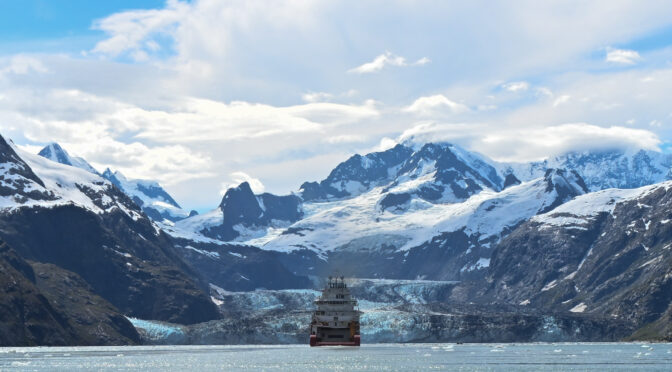
Featured image: The U.S. Coast Guard Cutter Storis transits to Johns Hopkins Glacier in Glacier Bay National Park and Preserve.(U.S. Coast Guard photo by Petty Officer 3rd Class Ashly Murphy)
An increasingly accessible Arctic raises questions about U.S. responsibilities in the region. There are two core challenges. First, Russia’s (re)militarization of its Arctic coastline, coupled with growing Chinese activity—often enabled by Moscow—signals rising geopolitical competition in the region. Second, the United States has an interest in preserving a rules-based order in the Arctic, including freedom of navigation, credible deterrence, and the peaceful resolution of territorial and resource claims.
These challenges spur debate. Not everyone agrees that Arctic threats merit significant attention. Others believe the region represents a new frontier of U.S. national security. What is clear, however, is that no single service—including the U.S. Coast Guard, which bears primary operational responsibility in the region—can manage the Arctic’s growing demands alone. Securing the Arctic requires more than additional icebreakers. It requires an integrated, whole-of-government approach that combines the Coast Guard’s operational experience with law enforcement, intelligence, domain awareness, logistics. It also requires allied coordination across vast distances and unforgiving conditions.
The solution may be a joint interagency task force—a Coast Guard-led structure that establishes command and control procedures for the pressing needs in the Arctic like greater maritime domain awareness, emergency response, and credible deterrence.
Fortunately, the Coast Guard doesn’t have to start from scratch. There are important lessons to be learned from farther south, where the Joint Interagency Task Force-South (JIATF-S), a Coast Guard-led effort to disrupt drugs smuggling, has become a textbook example of effective coordination across U.S. agencies and foreign partners.
The need for coordination in the Arctic
Receding sea ice is opening new shipping routes and exposing reserves of oil, gas, and minerals, driving geopolitical competition among Arctic and non-Arctic nations alike. This competition has increased militarization in the region, evidenced by recent Russian investments in nascent Arctic facilities and by more frequent naval exercises to assert control over strategic waterways and resources. At the same time, lack of clear governance frameworks—and mixed compliance with those frameworks—further complicates efforts to manage disputes, raising the risk of conflict over territorial claims and access rights.
The U.S. may not have the same equities in the region as Canada, Norway, or Russia. It also doesn’t have the same raw capabilities as some Arctic nations, with Russia’s icebreaker numbers towering over other countries. But taking a backseat to safeguarding the region would be a strategic mistake given U.S. interests. Outside of principled concerns over great power competition, there are several practical considerations. First, maintaining sea lines of communication (SLOCs), particularly around Alaska, is vital to ensuring freedom of navigation for commercial shipping and military logistics. Second, as a NATO member, the U.S. shares responsibility for protecting critical undersea infrastructure, including energy pipelines and communications cables, which have been the target of increased attacks in recent years. Third, a busier Arctic increases on the burden placed on the Coast Guard in terms of search and rescue operations, law enforcement efforts, and a wide variety of emergency response duties.
The Coast Guard cannot go it alone. Even with recent funding commitments, and investments in new ships, the service cannot meet the scale or complexity to confront tomorrow’s Arctic challenges. Coordination among U.S. agencies such as the Department of Defense (DoD) and the intelligence community is required to effectively address emerging military and civil threats. Looming challenges also require robust international cooperation to prevent escalation and ensure the Arctic remains safe and secure.
The Coast Guard has already taken important steps by establishing an internal Task Force-Arctic in late 2023 to assist with command and control across its two major regional commands and their nine districts. But Task Force-Arctic’s roles and responsibilities remain subject to debate, and there have been calls to transition to an “up-and-out” model aimed at coordination among U.S. government entities as well as partner nations.
Questions remain as to what, exactly, a task force’s mission ought to be and, related, which entities must be involved. What is clear, however, is that coordination and collaboration are needed. Outside of search and rescue operations, where there are formal protocols for emergency response, many of the threats emerging in the Arctic stress operational capabilities and experience. This created command and control headaches within the USCG—and it means coordination across the U.S. government and foreign partners is often ad hoc. A more formal, institutionalized set of contingency plans, communication lines, and coordination protocols can speed up crisis response and assist with allocating scarce resources across the region.
The U.S. has similar efforts in other domains, including the recently stood up JIATF-401 for counter-drone operations and JIATF-CC and JIATF-S for counter-narcotics operations. JIATF-S in particular has been a much-lauded example of how this kind of coordination can work.
JIATF-S as a blueprint for interagency fusion
Established in 1994 to fight transnational drug trafficking, JIATF-S integrates a wide range of US government stakeholders, including the Department of State, U.S. Navy, Central Intelligence Agency (CIA), Drug Enforcement Administration (DEA), and partner nations. The task force functions as a centralized intelligence fusion and coordination center, synthesizing information and personnel from disparate agencies into a cohesive operational structure. It also integrates foreign countries, drawing on the capabilities of foreign liaison officers from 20 partner countries spanning Latin America and Europe.
JIATF-S plays a central role in coordinating maritime patrols, aerial surveillance, and logistical support to enable effective counternarcotics operations across the Caribbean, Eastern Pacific, and Latin America. Its effectiveness derives in part from its capacity to rapidly disseminate time-sensitive intelligence and assign the most appropriate operational asset to specific operations.
Commentators point to several reasons for this success. First, the JIATF-S has a clearly defined mission—combat the drug trade—which keeps daily tasking focused on core objectives while also promoting buy-in across U.S. agencies and foreign partners. Second, the task force’s structure, procedures, and operating methods have evolved over several decades in response to first-hand experiences. JIATF-S has become more efficient over time due to built-in knowledge sharing and the accumulation of trust among operating partners, even as drug traffickers have adapted to maintain effective networks. Third, the task force has reportedly become a desirable career stop for personnel. Staff performance is assessed primarily on contributions to the task force’s core mission, rather than on their home agency. This has been said to boost morale while fostering a cooperative, team-oriented culture. Fourth, participation by foreign partners increases the resources and the geographic reach of the task force. Moreover, these partners have a long history of shared strategic interests and demonstrated interoperability, further strengthening collaborative operations.
While not an exhaustive list, these factors highlight why JIATF-S is widely regarded as a model of interagency coordination, multinational cooperation, and centralized operational effectiveness. Duplicating that success elsewhere, however, is not straightforward and may not be possible in the Arctic due to a number of structural reasons.
JIATF-S is a “coalition of the willing,” relying heavily on voluntary contributions from participating agencies and foreign partners and lacking the standard military authorities of a command. This structure demands relative alignment of interests among partners, both to provide resources and to collaborate in operations. Effective interagency and multinational coordination requires overcoming barriers to burden sharing, communication, and the integration of diverse operational cultures. These issues would likely be relevant for any interagency task force. However, unique challenges in the Arctic make a simple “copy and paste” of the JIAFT-S framework impossible. The most critical is the lack of a clear organizing mission of common concern around which an Arctic task force could organize.
Is the JIATF-S model transferable to the Arctic?
There are several factors to consider in a region so vast and complex. Each of these presents strategic, operational, and tactical challenges to US entities and their partners.
Mission Diversity. JIATF-S seeks to accomplish a narrowly defined (albeit difficult) mission: countering narcotics trafficking through detection, monitoring, and interdiction efforts. The operational tempo, while inherently demanding, is directed toward that singular priority. In contrast, evolving threats in the Arctic are more diverse. These threats include illegal fishing, freedom of navigation interruptions, and increased militarization. Addressing this wide range of issues would require more combined resources and authorities, making interagency coordination significantly more complex than in the JIATF-S environment. For example, a JIATF-Arctic may be compelled to reconcile national security imperatives with civil support requirements. That means the task force’s mandate would have to be broader than that currently held by JIATF-S.
The potential breadth of the mandate has operational implications. The diffusion of missions—e.g., covering both emergency response and threat detection—would likely complicate the initial buy-in from both interagency and international stakeholders, perhaps critically.
Geography and Climate. The Arctic region’s remoteness, ice-covered waters, and extreme weather conditions demand specialized capabilities. The USCG has the most relevant experience within the U.S. government operating in these extreme weather conditions, including navigating ice. As a result, the USCG would likely bear the heaviest burden in coordinating C2 and in executing operational threat response. And yet many other agencies have roles to play in the region. Intelligence community assets contribute to maritime domain awareness, including monitoring vessel traffic. Likewise, the Department of Justice and the Federal Bureau of Investigation may have law enforcement and investigatory responsibilities.
Yet those entities have fewer resources and less operational experience in the region. In fact, even including USCG assets, the Arctic is generally characterized by minimal infrastructure, high costs, and a pervasive absence of fixed Intelligence, Surveillance, and Reconnaissance (ISR) systems. As a result, unlike JIATF-S’s relatively narrower geographic focus, the Arctic’s size and harsh conditions strain resources and capabilities. On the one hand, the challenging conditions are precisely why interagency and international coordination are important. One the other hand, those conditions place limited on who has the experience and capability to participate in joint efforts.
Geopolitical Dynamics. JIATF-S activities have at least nominal buy-in from governments across the area of responsibility. In the Arctic, however, there are more pressing geopolitical tensions, implying that Arctic nations are less aligned in their interests and willingness to cooperate with one another. Russia’s military buildup and China’s self-declared status as a “near-Arctic state” complicate consensus. Militarization concerns, particularly related to air and missile defense assets, engender significant disagreements. Even among U.S. allies and Arctic Council members, interests are not always aligned. As a result, building and sustaining a coalition of foreign partners in an Arctic task force setting will be more fraught politically, with less overlap in shared goals, interests, and missions.
Experience. JIATF-S is the product of decades of trial, error, and adjustment. It started as a heavily siloed set of independent task force efforts that was combined and refined since the late 1980s into the well-oiled machine operating today. Similar efforts in the Arctic may be able to borrow some of that experience. However, the unique challenges, including geographic, geopolitical, and mission complexities imply that achieving similar effectiveness would likely require significant time, sustained investment, and persistent trust-building among partners. The deficiency of established, routine combined operations in the High North signifies that the foundational trust required for interagency personnel to execute rapid, mission-critical decisions is currently absent.
Moving Forward
These challenges do not necessarily preclude the establishment of a JIATF-S-like organization in the Arctic. Rather, they highlight some of the inherent difficulties replicating this model from one region to another with fundamentally different mission sets, geography, infrastructure, and operating conditions. Overcoming these challenges would require two foundational features.
First, an Arctic task force must be given a clear mandate from Washington that defines its mission set, assigns dedicated resources, and clarifies the boundaries of the command’s authority across U.S. agencies and allied partners. We’ve stressed here that, at a minimum, a JIATF-Arctic must facilitate coordination and cooperation across—and outside—U.S. entities with roles and responsibilities in the region. This means ensuring that intelligence-sharing and communications channels are formalized rather than ad hoc. It also means developing defined protocols for tomorrow’s contingencies.
However, the mission set remains an open question. One thing the U.S. must consider is which foreign partners to include. If the U.S. goal is balancing adversary influence in the region, then the mission set—and membership—of the task force may focus on allied interests. But there’s also a different approach, one that includes Russia (and potentially China) to institutionalize cooperation around shared vulnerabilities in the region. That model would better approximate the Arctic Council’s structure, but could go beyond the Council’s core initiatives, which focus largely on environmental concerns.
Second, it should adopt decision-making and organizational structures that promote learning, flexibility, and adaptation, much as JIATF-S did through decades of trial and error. This would require fostering an organizational culture that incentivizes cross-agency collaboration and implements the use of embedded rotational staff to cultivate long-term personal and institutional trust. Together, these two features, when fully actualized, would provide the foundational elements for an effective joint interagency C2 model in the Arctic—enabling coordination among U.S. agencies and multinational partners, even amid the region’s extreme conditions and complex security dynamics.
Looking forward, such a task force could complement existing Arctic security structures like the Arctic Council, NORAD, and NATO, by providing a persistent, integrated U.S.-led framework for managing emerging threats, sharing intelligence, and synchronizing interagency and multinational C2 across air, land, and maritime domains. Ultimately, the question is not whether an Arctic task force could work, but whether the United States can afford to approach the region without one.
Jeffrey Kucik, Ph.D., is a Research Scientist at the Center for Naval Analyses and a Global Fellow at the Wahba Initiative for Strategic Competition at New York University.
Veronica De Allende, Ph.D., is a Senior Research Scientist at the Center for Naval Analyses.
The views expressed are solely those of the authors and do not necessarily represent the opinions of CNA, the U.S. Coast Guard, the Department of Homeland Security, or the U.S. government.
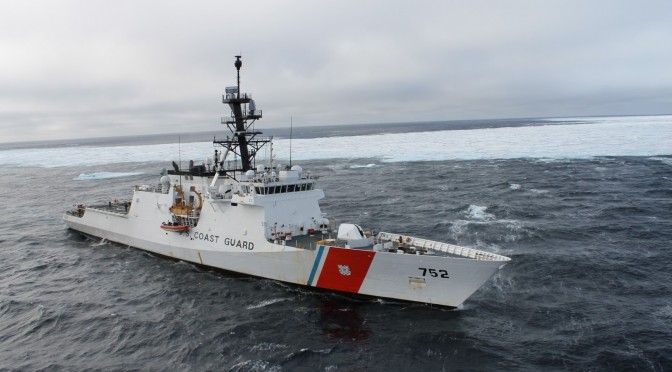
Featured Image: The Coast Guard Cutter Stratton from Alameda, Calif., steams near an ice floe in the Arctic Ocean during Operation Arctic Shield 2014 Sept. 14, 2014. (Coast Guard photo courtesy of Cutter Statton)
Over the past five years, numerous articles have called for increased U.S. defense resources focused on the Arctic. This is a strategic mistake, a distraction.
This article will outline the reasons proponents feel the high north has increased value, examine the actual strategic value of each, and show that none is sufficient to divert scarce resources from higher value theaters. Strategy should serve as an appetite suppressant to keep the nation from committing to peripheral missions at the expense of critical ones.1
The 2024 Department of Defense (DOD) Arctic Strategy was justifiably “prudent and measured,” limiting DOD actions to enhancing domain awareness, communications, intelligence, surveillance, and reconnaissance capabilities. It planned to work with Allies and partners to uphold deterrence and homeland defense.2 The 2025 U.S. National Security Strategy did not mention the Arctic.3 In contrast, proponents agitate for the United States to dedicate increased defense assets to maintain access to its vast natural resources, exploit the increased economic and shipping opportunities, and provide for national defense.
Unfortunately, the Joint Force is already overtasked in trying to meet its global and domestic missions while rebuilding the force. It is therefore prudent to examine the actual value of the far north before committing scarce resources to what is, at best, a strategic distraction.
A potential new trade route
The most exaggerated claim concerns the value of the Arctic as shortened and hence cheaper shipping routes between Asia and Europe. Many stories tout the speed and value of the shorter route for Asia to Europe shipping.4
While factual, these stories exaggerate both the volume and the value of shipping using the northern routes. To evaluate the real value of these routes, it is essential to understand their current usage and the limits that geography and oceanography impose. Figure 1, below, illustrates both routes.
“The Northern Sea Route (NSR, a.k.a. the ‘Northeast Passage’), along Russia’s northern border from Murmansk to Provideniya, is about 2,600 nautical miles in length…Most transits through the NSR are associated with the carriage of LNG from Russia’s Yamal Peninsula…The Northwest Passage (NWP) runs through the Canadian Arctic Islands…potentially applicable for trade between northeast Asia (north of Shanghai) and the northeast of North America, but it is less commercially viable than the NSR.”5
While this description sounds promising, it is important to understand the current and potential flow of shipping, the nature of containerized shipping, and the impact of oceanography on its future growth.
Almost all of the Northwest Passage lies within Russia’s exclusive economic zone (EEZ). Russia also claims that key straits on the route lie within its internal waters.6 See Figure 2, below.
Thus, almost all transits must pass through straits Russia claims as internal waters. Russia has assigned responsibility for managing the NSR to Rosatom, the state-owned nuclear power monopoly, which complicates obtaining the required permission for internal passage. In 2022, Russia also claimed the Lomonosov Ridge, a subsea mountain range, as part of its continental shelf. This pushes its claimed EEZ boundaries to the edge of those areas claimed by Greenland and Canada. See Figure 3, below.
Figure 3: Arctic Nations Territorial Claims. (Photo source: Ian Birdwell, “Rival Claims to a Changing Arctic,” Maritime Executive, August 15, 2016.)
The percentage increase in shipping along these routes may sound very impressive, but only because the baseline was miniscule. Actual shipping remains minimal. The Centre for High North Logistics recorded only 97 voyages on the NSR during 2024.7 See Figure 4, below.
Despite continued official Chinese and Russian efforts to promote the route, as of August 31, 2025, only 52 vessels had transited the NSR. Container freight represented only 20 percent of the total. See Figure 5, below.
Further restricting traffic growth, in October 2025, four of the world’s five biggest container shipping companies — MSC Mediterranean Shipping Company, A.P. Moller-Maersk A/S, CMA CGM SA and Hapag-Lloyd AG — stated they will not use the NSR due to environmental, safe navigation, and transit issues. The fifth company, Cosco Shipping, a Chinese company, has not made a statement.8
The Northwest Passage supports even less shipping than the NSR. As the 2024 shipping season concluded only 18 ships completed the full journey – eight cruise ships, nine cargo ships and one tanker.9
Factors restricting the value of shipping via NSR or NWP
Several major and enduring factors – draft restrictions, unpredictable sea ice, the requirement for ice breakers, and higher cost per container–reduce the economic viability of these routes.
Draft restrictions
Arctic hydrography is particularly restrictive for commercial shipping. The NSR has a controlling draft of 12.5 meters and the NWP is limited to 10 meters. This means the Panamax-class (5,500 TEU maximum) is the largest that can use the NSR but they draw too much water for the NWP. In addition, ships may not have a beam of more than the ice breaker escorting them, or about 30 meters maximum.10
In August 2025, the NEWNEW company proudly announced it had increased its NSR traffic from 7 voyages in 2024 to 13 voyages in 2025. In those 13 trips, it carried a total of around 20,000 TEUs.11 For comparison, the Inira-class carries over 24,000 TEUs on a single voyage. From January 2022 to April 2024, over 800 ships per week transited the Cape of Good Hope and Suez Canal,12 for a yearly total of over 41,000 transits. More ships pass the Cape every 11 hours than use the NSR in a year and many are much larger than the Panamax-class.
Unpredictable Sea Ice
While Arctic Sea ice is steadily receding, this does not mean passages are necessarily or predictably clear. Sea ice moves with prevailing currents with thicker multi-year ice moving into areas where one year ice has melted. As such, moving multi-year ice often stacks up in restricted waters. The NASA image (Figure 6 below) shows how the melting ice on the NWP flows east and closes the route despite major reductions in total ice coverage. It led NASA to conclude:
“Despite overall declines in the thickness and extent of Arctic sea ice, shipping routes along the northern coast of North America have become less navigable in recent years.”13
The fact that the sea ice floats means it is very difficult to predict exactly where the passage will be blocked. This problem is not limited to the NWP. As late as September 2025, “a non ice-class Suezmax oil tanker has been forced to wait several days due to ice conditions before proceeding along Russia’s Northern Sea Route…at very slow speeds in close proximity to the shoreline to find a route through the ice.”14 Even ice rated ships are often delayed, the Buran, an Arc4 rated Liquid Natural Gas tanker “reached the Northern Sea Route north of the Bering Strait on October 29 and for the past three days has been struggling to find a path through early winter sea ice.”15
Compounding the problem of drifting ice, the routes have notoriously shallow water. The channels are not well marked and still surprise mariners. On September 7, 2025, the Thamesborg, a Dutch bulk freighter, ran aground in the remote Franklin Strait of the NWP. It required three salvage ships to refloat the Thamesborg.16 The vessel was not unloaded and refloated until October 9 – a delay of 33 days. Canadian Coast Guard inspections also revealed damaged ballast tanks.17
In addition to ice, Arctic weather ranging from storms to heavy fog often slows transiting ships. While delays are not a significant problem for bulk shipping, they have major impacts on the timeliness required for container freight.
Icebreaker requirements
Paradoxically, as the arctic ice cap is melting, the demand for icebreakers is surging. Russia has 47 in service with 15 under construction. Canada is funding two dozen new ones. Both nations require numerous ice breakers to support domestic industries in their EEZs.
In contrast, the United States currently has two icebreakers with one of those used primarily as a research vessel. The U.S. Coast Guard has also purchased a used icebreaker and hopes to have it in operation by 2026.18 Although the Coast Guard analysis indicated it would only need three heavy and three medium icebreakers, on October 10, 2025, the Department of Homeland Security announced the United States and Finland have signed a Memorandum of Understanding for a Finnish company to produce four icebreakers with the next seven being produced in U.S. shipyards.19Given only 18 NWP passages in 2024, it is unclear why the United States needs to increase its icebreaker fleet from two to 11.
Cost
Proponents of Arctic shipping routes note that shorter northern routes will mean lower costs. Unfortunately, several factors mean the cost of shipping individual containers will often be higher. Draft restrictions, lack of ports enroute, slow emergency response, stricter construction requirements, specialized crew training, ice breaker escorts, and insurance costs all contribute to higher cost per container. While the cost of an individual ship’s voyage may be less on a shorter route, the Thamesborg and Lynx show a shorter route does not necessarily mean it is cheaper or even faster.
Bulk cargo is usually shipped point to point so can benefit from a shorter route. Obviously, it makes sense to ship coal, LNG, and oil that is produced in northern Russia to China or India via the NSR. However, due to economies of scale, bulk cargo originating elsewhere may be cheaper to ship via the much larger ships that can transit southern routes. Not only are Arctic-capable ships much smaller, but they must also meet strict construction, outfitting, and crew training requirements which make them more expensive to purchase and operate. Due to the route hazards, insurance rates are also higher. Further inflating the cost per voyage is the requirement for ice breaker escorts. Both Canada and Russia charge each vessel for icebreaking services.20
For its part, container shipping has different cost factors. The most important metric is the cost per container rather than the cost of the voyage for an individual ship. Thus, scale is an important factor.
A second critical metric for container freight is timeliness. Unlike either northern route, southern routes can be part of a shipping network. This is critical for on-time delivery and economy of scale. The desired standard for on-time delivery for containerized freight is 99%. To achieve this goal, container ships operate in networks with “strings” or routes of many ports serviced by multiple ships on a steady schedule. For example, a US east coast to Southwest Asia route taking 42 days round trip serviced by six ships means regular weekly service out of the ports serviced on that route.21
The network described limits delays to a week. Today, much of the global economy consists of subcomponents built in one country, shipped to a second for final assembly of the subcomponents, and then on to another country for inclusion in the final product. Such supply chains are based on just-in-time delivery. As the Covid-19 pandemic demonstrated, failure to deliver on time means production lines must be idled, making reliable delivery time critical. As noted, the unpredictable sea ice, infrequent sailings, and often brutal weather on the northern routes reduce reliability. Given the northern routes cover 2,500 miles with minimal infrastructure or support services, weeks-long delays are not unusual.
Access to natural resources
Minerals, particularly those yielding rare earth metals, are often touted as the primary resources of interest in the north. In fact, the Geological Survey of Norway estimated the value of rare earth minerals in the Arctic alone is $1.5-2 trillion.22 However, most of the minerals lie within the Exclusive Economic Zones of the six nations bordering the Arctic — Russia, Norway, Denmark, Canada, the United States, and Iceland. Any exploitation will be done by those nations, and so there is no special urgency to secure them against competitors. Figure 3 shows how only a small slice of the Arctic Ocean lies outside national EEZs. A paper from the Institute for Security & Development Policy also noted:
“Overall, the High North’s … resources have long attracted global interest, but their exploitation is technologically difficult and capital-intensive, and often faces local resistance due to risks to nature-based livelihoods and cultural heritage. … In short, the Arctic’s mineral wealth is both enormous and yet largely untapped…”23
Just as important, rare earths are not rare. The High North is estimated to hold only 15 percent of the world’s supply.24 In fact, in the last year major deposits have been found in Wyoming and Arkansas; these deposits have the obvious advantage of easier access. The issue is not the ore but the refining process. Currently most rare earth minerals are shipped to China for refinement into rare earth metals. If the United States continues to invest in refining facilities, supplies of rare earths will not be an issue.
Oil is another driver of interest. According to the U. S. Geological Service “roughly 22 percent of the undiscovered, technically recoverable fossil fuel resources in the world” may remain in the Arctic with 84 percent of it outside the Exclusive Economic Zones of Arctic nations.25
However, the high production cost of High North oil meant the United States government received no bids in the January 2025 Alaska Wildlife Refuge lease sale.26 Apparently, oil firms have decided it makes no economic sense to invest in very high-cost production when there is still oil in fields with much lower production costs. Russian firms are the obvious exceptions. As state-controlled firms, they must continue to invest onshore in the north of the country. Oil revenues are essential to the Russian economy and government budget.
National Security
Two threads emerge from the discussion of the need for U.S. defense of the High North. The first is the need for surveillance to detect any Russian attack coming over the pole. The second concern is the security of Greenland, Svalbard, and the protection of shipping routes.
During the Cold War, the United States and Canada operated the Defense Early Warning (DEW) radars from 1957 to 1985 to provide warning of Soviet bomber and missile attacks over the pole. From 1985 to 1988, DEW transitioned to the North Warning System (NWS). The NWS provides surveillance for the atmospheric defense of North America. Today, the United States and Canada are working to improve the surveillance element of missile defense. Re-establishing the radar system in the High North will be an extremely difficult, very expensive, and time-consuming project.27 A potential alternative is space surveillance. The Pentagon is already exploring deploying space-based sensors as part of the Golden Dome. If this very expensive project continues, it will provide the surveillance aspect of the DOD tasks.
The sudden concern that the United States must field and deploy forces to physically defend Greenland, Svalbard, and the new shipping routes is a bit puzzling. By holding the Greenland-Iceland-UK Gap, NATO credibly defended the western exit from the High North throughout the Cold War against a highly capable Soviet Navy. Even with global warming, the Gap will remain Russia’s best exit to the west. In the east, the Bering Strait is about 50 miles wide with two islands in the middle.
In fact, the most significant change since the Cold War has been the steady decline of the Russian forces in the region. “Decades of attrition, neglect, and resource depletion have left Russia’s Arctic capabilities outdated and functionally broken.”28 Against the degraded Russian air and sea forces, land-based missiles and drones can provide an affordable option. There is no requirement for U.S. or allied forces to penetrate the NSR. Containerized land-based missiles, drones, radar, command and control systems integrated with space-based surveillance can allow U.S. and allied forces to engage surface ships and aircraft transiting the Arctic. In short, the United States and its allies can control traffic that attempts to leave the Arctic. These systems can also support the most challenging mission – tracking and, if needed, engaging Russian submarines.
Conclusion
Strategy should provide discipline to guide the investment of limited defense resources. Proponents of investing in capabilities focused on the High North point to defending Greenland and Svalbard; balancing the increased Chinese and Russian interests in the region; maintaining access to its vast natural resources; and taking advantage of the shortened shipping via the Northern Sea Route and the Northwest Passage. Yet, the vastly increased range of land-based missiles supported by pervasive surveillance means it is easier and cheaper to defend the chokepoints at the exits to the Arctic Ocean than during the Cold War. And they will do so against vastly reduced Russian forces. The vast natural resources lie within the EEZs of the Arctic nations, so access requires diplomacy and businesses willing to make arrangements for western firms to exploit them. Military resources will not improve access. Finally, the shipping routes will, even with massive growth, never amount to more than a minor fraction of global trade. So, while there is some value in investing in High North capabilities, those resources will have to be taken from already under-resourced theaters with much higher strategic value. Strategy requires allotting scarce assets to priority missions – the High North is not one of them.
While there is essentially no need for major military investment in the High North, the United States should continue to engage concerning environmental issues and apply sanctions against violators. It should also reduce its icebreaker contract to the maximum of six suggested by the Coast Guard. While the current two icebreakers may be insufficient, the proposed buy is much too large. It will take shipbuilding resources away from the Navy at a time when the fleet is understrength and has no path to sufficient numbers of ships. The U.S. can continue to maintain a defense of the High North using the same terrain and maritime chokepoints used during the Cold War. The investments in new generations of cruise missiles and long-range drones necessary to support the priority theaters will also provide a flexible force to defend the north if needed. Lastly, it should not allocate limited DOD assets to the region because high-priority theaters like Indo-Pacific, Europe, and the Middle East are already under-resourced. These measures can effectively manage Arctic interests within the appropriate context of focused national strategy.
T.X. Hammes is a Senior Research Fellow at the Institute for National Strategic Studies at the National Defense University in Washington, DC. He served 30 years in the U.S. Marine Corps.
Endnotes
1. Frank G. Hoffman, “Strategy as an Appetite Suppressant,” War on the Rocks, March 3, 2020, https://warontherocks.com/2020/03/strategy-as-appetite-suppressant/.
2. U.S. Department of Defense, “2024 Arctic Strategy,” https://media.defense.gov/2024/Jul/22/2003507411/-1/-1/0/DOD-ARCTIC-STRATEGY-2024.PDF.
3. Donald J. Trump, “United States National Security Strategy, November 2025,” https://www.whitehouse.gov/wp-content/uploads/2025/12/2025-National-Security-Strategy.pdf.
4. “Arctic Shipping Update: 37% Increase in Ships in the Arctic Over 10 Years,” Arctic Council, January 31, 2024, https://arctic-council.org/news/increase-in-arctic-shipping/ and Malte Humpbert, “Chinese Containership ‘Istanbul Bridge’ Reaches UK via Arctic Route in Record 20 Days,” gCaptain, October 13, 2025, https://gcaptain.com/chinese-containership-istanbul-bridge-reaches-uk-via-arctic-route-in-record-20-days/?subscriber=true&goal=0_f50174ef03-5ee6139183-381157581&mc_cid=5ee6139183&mc_eid=64e8ec0a99.
5. “Changes in the Arctic: Background and Issues for Congress,” Congressional Research Service, Updated July 2, 2025, https://www.congress.gov/crs-product/R41153.
6. Cornell Overfield, “Wrangling Warships: Russia’s Proposed Law on Northern Sea Route Navigation,” Lawfare, October 17, 2022, https://www.lawfaremedia.org/article/wrangling-warships-russias-proposed-law-northern-sea-route-navigation.
7. ”Main Results of NSR Transit Navigation in 2024,” Centre for High North Logistics, NORD University, November 28, 2024, https://chnl.no/news/main-results-of-nsr-transit-navigation-in-2024/.
8. Brendan Murray and Danielle Bochove, “China Turns to Arctic Shortcut While Major Carriers Steer Clear,” gCaptain, October 3, 2025, https://gcaptain.com/china-turns-to-arctic-shortcut-while-major-carriers-steer-clear/.
9. “International Voyages on the Northwest Passage in 2024,” Aker Arctic, November 13, 2024, https://akerarctic.fi/news/international-voyages-on-the-northwest-passage-in-2024/.
10. Stephen M. Carmel, “Taking a Round-Turn on Reality: Commercial Shipping through the Arctic,” email to author.
11. Malte Humpert, ”Chinese Companies Dispatch Multiple Container Ships Along Arctic Route for Faster European Trade,” High North News, August 4, 2025, https://gcaptain.com/chinese-companies-dispatch-multiple-container-ships-along-arctic-route-for-faster-europe-trade/.
12. ”Ship crossings through global maritime passage: January 2022 to April 2024,” Office of National Statistics, https://www.ons.gov.uk/businessindustryandtrade/internationaltrade/bulletins/shipcrossingsthroughglobalmaritimepassages/january2022toapril2024.
13. ”Sea Ice Chokes the Northwest Passage,” NASA Visible Earth, August 8, 2024, https://visibleearth.nasa.gov/images/153166/sea-ice-chokes-the-northwest-passage.
14. Malte Humpert, “Sanctioned Suezmax Oil Tanker Without Ice Protection Stuck for Days on Russia’s Arctic Northern Sea Route,” gCaptain, September 15, 2025, https://gcaptain.com/sanctioned-suezmax-oil-tanker-without-ice-protection-stuck-for-days-on-russias-arctic-northern-sea-route/?subscriber=true&goal=0_f50174ef03-245bcea0f7-381157581&mc_cid=245bcea0f7.
15. Malte Humpbert, ” Russia Pushes ‘Shadow Fleet’ to Limit as LNG Carrier Struggles Through Early Arctic Ice on Northern Sea Route,” gCaptain, November 3, 2025, https://gcaptain.com/russia-pushes-shadow-fleet-to-limit-as-lng-carrier-struggles-through-early-arctic-ice-on-northern-sea-route/.
16. Malte Humpbert, ”Two Salvage Vessels Arrive in Canadian Arctic to Begin Refloating of Grounded ‘Thamesborg’,” gCaptain, September 23, 2025, https://gcaptain.com/two-salvage-vessels-arrive-in-canadian-arctic-to-begin-refloating-of-grounded-thamesborg/?subscriber=true&goal=0_f50174ef03-a458a9f7c7-381157581&mc_cid=a458a9f7c7&mc_eid=64e8ec0a99.
17. Malte Humpbert, ” Arctic Cargo Ship ‘Thamesborg’ Refloated AIS Data Show, Awaiting Company Confirmation,” gCaptain, October 9, 2025, https://gcaptain.com/arctic-cargo-ship-thamesborg-refloated-ais-data-show-awaiting-company-confirmation/?subscriber=true&goal=0_f50174ef03-400f2f7a4e-381157581&mc_cid=400f2f7a4e&mc_eid=64e8ec0a99.
18. Stew Magnusen, ” The Icebreaker Numbers Game,” National Defense, January 13, 2025, https://www.nationaldefensemagazine.org/articles/2025/1/13/the-icebreaker-numbers-game.
19. ”DHS Celebrates Purchase of New Coast Guard Icebreakers as President Trump Signs Deal with Finland,” Department of Homeland Security, October 10, 2025, https://www.dhs.gov/news/2025/10/10/dhs-celebrates-purchase-new-coast-guard-icebreakers-president-trump-signs-deal.
20. Nouman Ali, “The Cost of Icebreaking Services,” SeaRates, Jun 11, 2020, https://www.searates.com/blog/post/the-cost-of-icebreaking-services.
21. Stephen M. Carmel, “Taking a Round-Turn on Reality: Commercial Shipping through the Arctic,” email to author.
22. Mark Rowe, ”Arctic nations are squaring up to exploit the region’s rich natural resources,” Geographical, August 12, 2022, https://geographical.co.uk/geopolitics/the-world-is-gearing-up-to-mine-the-arctic.
23. Mia Landauer, Niklas Swanström, and Michael E. Goodsite, ”Mineral Resources in the Arctic: Sino-Russian Cooperation and the Disruption of Western Supply Chains,” Niklas Swanström & Filip Borges Månsson, editors, The “New” Frontier: Sino-Russian Cooperation in the Arctic and its Geopolitical Implications, September 2025, Institute for Security and Development Policy, https://www.isdp.eu/wp-content/uploads/2025/09/SP-Arctic-Sep-2025-final.pdf.
24. Ibid, p.109.
25. Mark Rowe, ”Arctic nations are squaring up to exploit the region’s rich natural resources,” Geographical, August 12, 2022, https://geographical.co.uk/geopolitics/the-world-is-gearing-up-to-mine-the-arctic.
26. ”Arctic National Wildlife Refuge: Status of Oil and Gas Program,” Congressional Research Service, updated July 24, 2025, https://www.congress.gov/crs-product/IF12006#:~:text=On%20January%208%2C%202025%2C%20DOI,the%20lease%20sale%20discouraged%20participation.
27. Sune Engel Rasmussen, ” Inside the West’s Race to Defend the Arctic,” Wall Street Journal, October 11, 2025, https://www.wsj.com/world/inside-the-wests-race-to-defend-the-arctic-0f04ca7a?gaa_at=eafs&gaa_n=ASWzDAi4UrfELbN8TNIpkiANQ9qkJ409UcY7ybn1KHm71Es8FzKPdjCv2Sk3_6eJxEI%3D&gaa_ts=68efa5d0&gaa_sig=X9bLexZswY1r8pD8-BgF7-BUcPWUSkNZB5DFNXcqGswh-PVRHJkHIZ_O-GK6LEEDyK8b2uDpyvgFayIxLxTHnA%3D%3D.
28. Michael S. Brown, ”Rethinking the Arctic Threat Landscape,” Proceedings, November 2025, https://www.usni.org/magazines/proceedings/2025/november/rethinking-arctic-threat-landscape?utm_source=newsletter&utm_medium=email&utm_campaign=PWNov6-25&utm_id=PWNov625&utm_source=U.S.+Naval+Institute&utm_campaign=f01c9a3224-Proceedings_This_Week_2025_6_November&utm_medium=email&utm_term=0_adee2c2162-f01c9a3224-223022301&mc_cid=f01c9a3224&mc_eid=e0ac270dd4.
Featured Image: The icebreaker USCGC Healy (WAGB 20) keeps station while conducting crane operations alongside a multi-year ice floe for a science evolution in the Beaufort Sea, Aug. 9, 2023. (U.S. Coast Guard photo by Petty Officer 3rd Class Briana Carter)