Tag Archives: Arctic Council

Can an Interagency Task Force Work in the Arctic?

By Jeffrey Kucik and Veronica De Allende

An increasingly accessible Arctic raises questions about U.S. responsibilities in the region. There are two core challenges. First, Russia’s (re)militarization of its Arctic coastline, coupled with growing Chinese activity—often enabled by Moscow—signals rising geopolitical competition in the region. Second, the United States has an interest in preserving a rules-based order in the Arctic, including freedom of navigation, credible deterrence, and the peaceful resolution of territorial and resource claims.

These challenges spur debate. Not everyone agrees that Arctic threats merit significant attention. Others believe the region represents a new frontier of U.S. national security. What is clear, however, is that no single service—including the U.S. Coast Guard, which bears primary operational responsibility in the region—can manage the Arctic’s growing demands alone. Securing the Arctic requires more than additional icebreakers. It requires an integrated, whole-of-government approach that combines the Coast Guard’s operational experience with law enforcement, intelligence, domain awareness, logistics. It also requires allied coordination across vast distances and unforgiving conditions.

The solution may be a joint interagency task force—a Coast Guard-led structure that establishes command and control procedures for the pressing needs in the Arctic like greater maritime domain awareness, emergency response, and credible deterrence.

Fortunately, the Coast Guard doesn’t have to start from scratch. There are important lessons to be learned from farther south, where the Joint Interagency Task Force-South (JIATF-S), a Coast Guard-led effort to disrupt drugs smuggling, has become a textbook example of effective coordination across U.S. agencies and foreign partners.

The need for coordination in the Arctic

Receding sea ice is opening new shipping routes and exposing reserves of oil, gas, and minerals, driving geopolitical competition among Arctic and non-Arctic nations alike. This competition has increased militarization in the region, evidenced by recent Russian investments in nascent Arctic facilities and by more frequent naval exercises to assert control over strategic waterways and resources. At the same time, lack of clear governance frameworks—and mixed compliance with those frameworks—further complicates efforts to manage disputes, raising the risk of conflict over territorial claims and access rights. 

The U.S. may not have the same equities in the region as Canada, Norway, or Russia. It also doesn’t have the same raw capabilities as some Arctic nations, with Russia’s icebreaker numbers towering over other countries. But taking a backseat to safeguarding the region would be a strategic mistake given U.S. interests. Outside of principled concerns over great power competition, there are several practical considerations. First, maintaining sea lines of communication (SLOCs), particularly around Alaska, is vital to ensuring freedom of navigation for commercial shipping and military logistics. Second, as a NATO member, the U.S. shares responsibility for protecting critical undersea infrastructure, including energy pipelines and communications cables, which have been the target of increased attacks in recent years. Third, a busier Arctic increases on the burden placed on the Coast Guard in terms of search and rescue operations, law enforcement efforts, and a wide variety of emergency response duties.

The Coast Guard cannot go it alone. Even with recent funding commitments, and investments in new ships, the service cannot meet the scale or complexity to confront tomorrow’s Arctic challenges. Coordination among U.S. agencies such as the Department of Defense (DoD) and the intelligence community is required to effectively address emerging military and civil threats. Looming challenges also require robust international cooperation to prevent escalation and ensure the Arctic remains safe and secure.

The Coast Guard has already taken important steps by establishing an internal Task Force-Arctic in late 2023 to assist with command and control across its two major regional commands and their nine districts. But Task Force-Arctic’s roles and responsibilities remain subject to debate, and there have been calls to transition to an “up-and-out” model aimed at coordination among U.S. government entities as well as partner nations.

Questions remain as to what, exactly, a task force’s mission ought to be and, related, which entities must be involved. What is clear, however, is that coordination and collaboration are needed. Outside of search and rescue operations, where there are formal protocols for emergency response, many of the threats emerging in the Arctic stress operational capabilities and experience. This created command and control headaches within the USCG—and it means coordination across the U.S. government and foreign partners is often ad hoc. A more formal, institutionalized set of contingency plans, communication lines, and coordination protocols can speed up crisis response and assist with allocating scarce resources across the region.  

The U.S. has similar efforts in other domains, including the recently stood up JIATF-401 for counter-drone operations and JIATF-CC and JIATF-S for counter-narcotics operations. JIATF-S in particular has been a much-lauded example of how this kind of coordination can work.

JIATF-S as a blueprint for interagency fusion

Established in 1994 to fight transnational drug trafficking, JIATF-S integrates a wide range of US government stakeholders, including the Department of State, U.S. Navy, Central Intelligence Agency (CIA), Drug Enforcement Administration (DEA), and partner nations. The task force functions as a centralized intelligence fusion and coordination center, synthesizing information and personnel from disparate agencies into a cohesive operational structure. It also integrates foreign countries, drawing on the capabilities of foreign liaison officers from 20 partner countries spanning Latin America and Europe.

JIATF-S plays a central role in coordinating maritime patrols, aerial surveillance, and logistical support to enable effective counternarcotics operations across the Caribbean, Eastern Pacific, and Latin America. Its effectiveness derives in part from its capacity to rapidly disseminate time-sensitive intelligence and assign the most appropriate operational asset to specific operations.

Commentators point to several reasons for this success. First, the JIATF-S has a clearly defined mission—combat the drug trade—which keeps daily tasking focused on core objectives while also promoting buy-in across U.S. agencies and foreign partners. Second, the task force’s structure, procedures, and operating methods have evolved over several decades in response to first-hand experiences. JIATF-S has become more efficient over time due to built-in knowledge sharing and the accumulation of trust among operating partners, even as drug traffickers have adapted to maintain effective networks. Third, the task force has reportedly become a desirable career stop for personnel. Staff performance is assessed primarily on contributions to the task force’s core mission, rather than on their home agency. This has been said to boost morale while fostering a cooperative, team-oriented culture. Fourth, participation by foreign partners increases the resources and the geographic reach of the task force. Moreover, these partners have a long history of shared strategic interests and demonstrated interoperability, further strengthening collaborative operations.

While not an exhaustive list, these factors highlight why JIATF-S is widely regarded as a model of interagency coordination, multinational cooperation, and centralized operational effectiveness. Duplicating that success elsewhere, however, is not straightforward and may not be possible in the Arctic due to a number of structural reasons.

JIATF-S is a “coalition of the willing,” relying heavily on voluntary contributions from participating agencies and foreign partners and lacking the standard military authorities of a command. This structure demands relative alignment of interests among partners, both to provide resources and to collaborate in operations. Effective interagency and multinational coordination requires overcoming barriers to burden sharing, communication, and the integration of diverse operational cultures. These issues would likely be relevant for any interagency task force. However, unique challenges in the Arctic make a simple “copy and paste” of the JIAFT-S framework impossible. The most critical is the lack of a clear organizing mission of common concern around which an Arctic task force could organize.

Is the JIATF-S model transferable to the Arctic?

There are several factors to consider in a region so vast and complex. Each of these presents strategic, operational, and tactical challenges to US entities and their partners.

Mission Diversity. JIATF-S seeks to accomplish a narrowly defined (albeit difficult) mission: countering narcotics trafficking through detection, monitoring, and interdiction efforts. The operational tempo, while inherently demanding, is directed toward that singular priority. In contrast, evolving threats in the Arctic are more diverse. These threats include illegal fishing, freedom of navigation interruptions, and increased militarization. Addressing this wide range of issues would require more combined resources and authorities, making interagency coordination significantly more complex than in the JIATF-S environment. For example, a JIATF-Arctic may be compelled to reconcile national security imperatives with civil support requirements. That means the task force’s mandate would have to be broader than that currently held by JIATF-S.

The potential breadth of the mandate has operational implications. The diffusion of missions—e.g., covering both emergency response and threat detection—would likely complicate the initial buy-in from both interagency and international stakeholders, perhaps critically.

Geography and Climate. The Arctic region’s remoteness, ice-covered waters, and extreme weather conditions demand specialized capabilities. The USCG has the most relevant experience within the U.S. government operating in these extreme weather conditions, including navigating ice. As a result, the USCG would likely bear the heaviest burden in coordinating C2 and in executing operational threat response. And yet many other agencies have roles to play in the region. Intelligence community assets contribute to maritime domain awareness, including monitoring vessel traffic. Likewise, the Department of Justice and the Federal Bureau of Investigation may have law enforcement and investigatory responsibilities.

Yet those entities have fewer resources and less operational experience in the region. In fact, even including USCG assets, the Arctic is generally characterized by minimal infrastructure, high costs, and a pervasive absence of fixed Intelligence, Surveillance, and Reconnaissance (ISR) systems. As a result, unlike JIATF-S’s relatively narrower geographic focus, the Arctic’s size and harsh conditions strain resources and capabilities. On the one hand, the challenging conditions are precisely why interagency and international coordination are important. One the other hand, those conditions place limited on who has the experience and capability to participate in joint efforts.

Geopolitical Dynamics. JIATF-S activities have at least nominal buy-in from governments across the area of responsibility. In the Arctic, however, there are more pressing geopolitical tensions, implying that Arctic nations are less aligned in their interests and willingness to cooperate with one another. Russia’s military buildup and China’s self-declared status as a “near-Arctic state” complicate consensus. Militarization concerns, particularly related to air and missile defense assets, engender significant disagreements. Even among U.S. allies and Arctic Council members, interests are not always aligned. As a result, building and sustaining a coalition of foreign partners in an Arctic task force setting will be more fraught politically, with less overlap in shared goals, interests, and missions.

Experience. JIATF-S is the product of decades of trial, error, and adjustment. It started as a heavily siloed set of independent task force efforts that was combined and refined since the late 1980s into the well-oiled machine operating today. Similar efforts in the Arctic may be able to borrow some of that experience. However, the unique challenges, including geographic, geopolitical, and mission complexities imply that achieving similar effectiveness would likely require significant time, sustained investment, and persistent trust-building among partners. The deficiency of established, routine combined operations in the High North signifies that the foundational trust required for interagency personnel to execute rapid, mission-critical decisions is currently absent.

Moving Forward

These challenges do not necessarily preclude the establishment of a JIATF-S-like organization in the Arctic. Rather, they highlight some of the inherent difficulties replicating this model from one region to another with fundamentally different mission sets, geography, infrastructure, and operating conditions. Overcoming these challenges would require two foundational features.

First, an Arctic task force must be given a clear mandate from Washington that defines its mission set, assigns dedicated resources, and clarifies the boundaries of the command’s authority across U.S. agencies and allied partners. We’ve stressed here that, at a minimum, a JIATF-Arctic must facilitate coordination and cooperation across—and outside—U.S. entities with roles and responsibilities in the region. This means ensuring that intelligence-sharing and communications channels are formalized rather than ad hoc. It also means developing defined protocols for tomorrow’s contingencies.

However, the mission set remains an open question. One thing the U.S. must consider is which foreign partners to include. If the U.S. goal is balancing adversary influence in the region, then the mission set—and membership—of the task force may focus on allied interests. But there’s also a different approach, one that includes Russia (and potentially China) to institutionalize cooperation around shared vulnerabilities in the region. That model would better approximate the Arctic Council’s structure, but could go beyond the Council’s core initiatives, which focus largely on environmental concerns.

Second, it should adopt decision-making and organizational structures that promote learning, flexibility, and adaptation, much as JIATF-S did through decades of trial and error. This would require fostering an organizational culture that incentivizes cross-agency collaboration and implements the use of embedded rotational staff to cultivate long-term personal and institutional trust. Together, these two features, when fully actualized, would provide the foundational elements for an effective joint interagency C2 model in the Arctic—enabling coordination among U.S. agencies and multinational partners, even amid the region’s extreme conditions and complex security dynamics.

Looking forward, such a task force could complement existing Arctic security structures like the Arctic Council, NORAD, and NATO, by providing a persistent, integrated U.S.-led framework for managing emerging threats, sharing intelligence, and synchronizing interagency and multinational C2 across air, land, and maritime domains. Ultimately, the question is not whether an Arctic task force could work, but whether the United States can afford to approach the region without one.

Jeffrey Kucik, Ph.D., is a Research Scientist at the Center for Naval Analyses and a Global Fellow at the Wahba Initiative for Strategic Competition at New York University.

Veronica De Allende, Ph.D., is a Senior Research Scientist at the Center for Naval Analyses.

The views expressed are solely those of the authors and do not necessarily represent the opinions of CNA, the U.S. Coast Guard, the Department of Homeland Security, or the U.S. government.

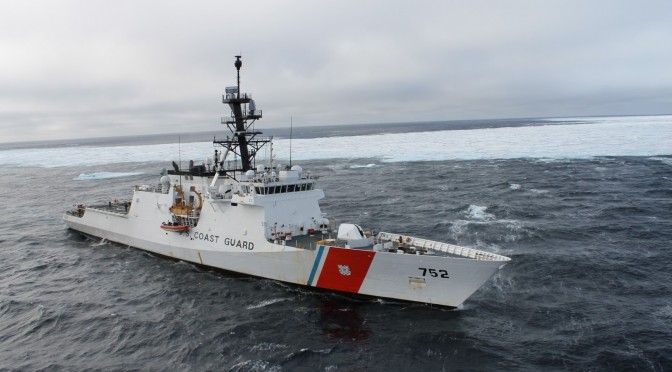
Featured Image: The Coast Guard Cutter Stratton from Alameda, Calif., steams near an ice floe in the Arctic Ocean during Operation Arctic Shield 2014 Sept. 14, 2014. (Coast Guard photo courtesy of Cutter Statton)
Why Icebreakers Matter

By Matt Hein

One week before Christmas 2017 the USS Little Rock left Buffalo, New York on its maiden voyage to its future homeport in Florida. The crew of the newest Littoral Combat Ship in the Navy proudly entered the port of Montreal seven days later as part of a goodwill port visit between the United States and Canada. A frigid cold snap sank in while Little Rock sat pier-side and the St. Lawrence river froze over three weeks earlier than anticipated. Commercial icebreakers, frequently used to navigate the St. Lawrence river, were unable to operate after January 11th due to ice thickness, and the riverway was closed to traffic by the St. Lawrence River Authority. The Little Rock, the newest ship in the Navy, left Montreal nearly three months later once ice levels decreased sufficiently for the river authority to allow commercial icebreaker operation.

The story of the Little Rock unfolds across the Arctic, albeit on smaller scales, as climate change provides unprecedented access to the region. Fishermen push farther north, cruise lines dare to operate through the Northwest Passage, merchant shipping increasingly travels along Arctic routes, and native communities are forced to travel greater distances to maintain subsistence traditions. Within American waters the Coast Guard is solely responsible for providing mariners with safety from the elements, illicit activity, and man-made disasters. With limited resources they accomplish their mission in the areas they are able to access. With only two operable icebreakers the Coast Guard is unable to safely conduct their mission in regions which are increasingly accessible due to receding ice levels. This gap in capability exacerbates international and economic consequences of an increasingly accessible Arctic against American interests. To conduct sustained Arctic operations in the national interest new icebreakers are needed and soon.

Current Capability

The U.S. Coast Guard lists three active commissioned icebreakers; USCGC Polar Star, Polar Sea, and Healy. Of the three, only the Polar Star and Healy are capable of Arctic operations. The Polar Sea suffered major propulsion problems in 2010, relegating it to a spare part depot for the Polar Star, and where both ships are over 10 years past their designed service life of 30 years.1 Furthermore, Polar Star is reserved to ensure access to McMurdo station, rendering Healey the only commissioned vessel to access Arctic ice-covered regions.

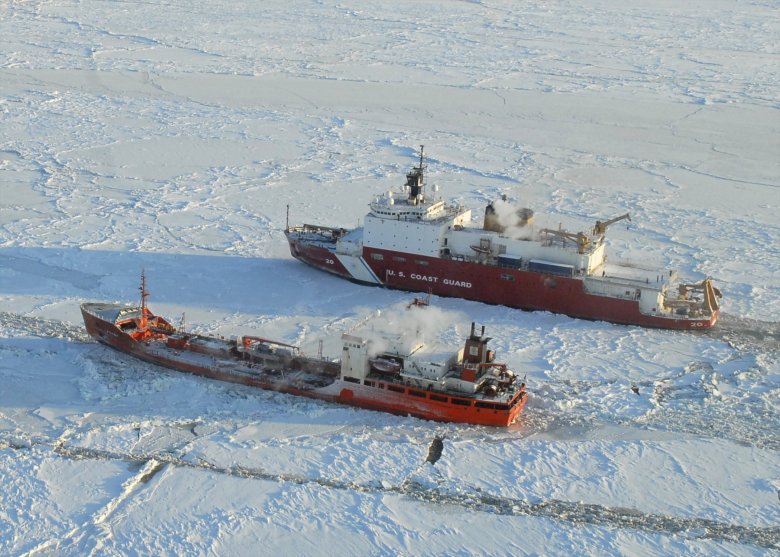
The medium-class icebreaker Healy breaks ice around the Russian-flagged tanker Renda 250 miles south of Nome Jan. 6, 2012. (P.O. 1st Class Sara Francis/US Coast Guard)

The Coast Guard has 11 statutory missions, nine of which pertain to the Arctic and require icebreaking capability.2 The Healy solely executes these missions from the sea. In 2017 these missions included extensive research with 40 embarked scientists, ice breaking patrols miles north of the Alaskan coast, and search and rescue (SAR) training. These missions also include protection of marine living resources, drug interdiction, search and rescue, and migrant interdiction, which haven’t required persistent icebreaking capabilities in the recent past. Increasing levels of human activity in the Arctic indicate those missions are increasingly relevant and the recent dearth of those mission sets reflects a period of good fortune rather than trends to be continued. Finally, the Coast Guard allots 185 “Days Away from Homeport” (DAFH) per ship per year, including transit time and port visits to actual on-scene operations.3 Budgeting Healy’s DAFH reveals, optimistically, an icebreaker availability during only one-third of every year.4 The Coast Guard’s Arctic icebreaking forces are very capable but extremely limited. They are being are asked to do more now and will be asked to do even more in the future, but this will far outstrip existing resources.

Why Icebreakers Matter

Rapidly decreasing ice levels and increased human activity in the Arctic change the mission from seasonal operations to a year-round endeavor. Historically, Arctic patrols occur during warmer months when activity levels necessitate a Coast Guard presence. In 2012 a record low minimum sea ice extent was observed, followed closely by record low sea ice maximum extent in 2016.5 Those changes allow higher levels of human activity throughout the year, requiring a concomitant year-round icebreaking capability.

The lack of capability immediately threatens U.S. interests in the region including energy security, disaster response, and Maritime Domain Awareness. In the winter of 2011 Nome, Alaska nearly ran out of fuel used for heating and cooking. A Russian ice-hardened tanker managed to break through extensive inshore ice to provide refueling but no American assets were able to provide similar services. The refueling shows a fortunate coincidence of Russian capability and American need, however, an alternative scenario can be easily imagined.6 Privatized icebreakers such as the Aiviq, an ocean-going tug owned by Dutch Shell Oil company, provide extremely limited ability to assist offshore developments in production and disaster response.7

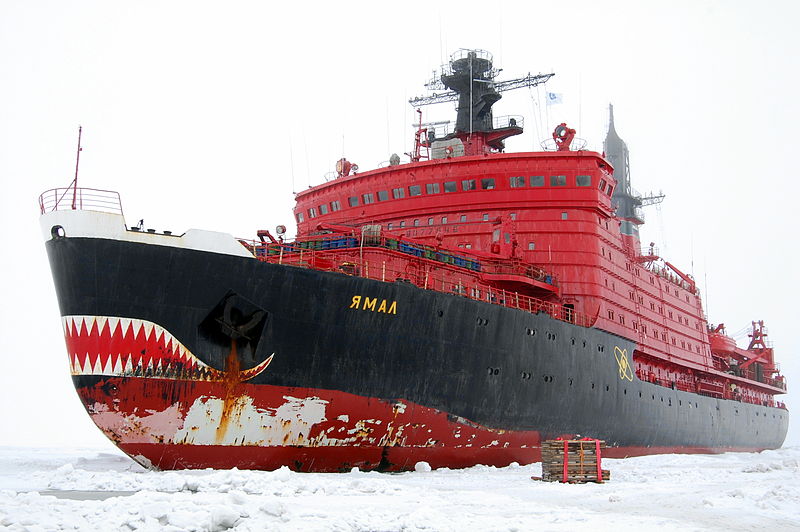
Russian nuclear Icebreaker Yamal during removal of manned drifting station North Pole-36. August 2009. (Wikimedia Commons)

In congressional testimony, following the 2010 British Petroleum Deepwater Horizon oil spill, USCG Admiral Thad Allen stated the Coast Guard doesn’t have enough icebreakers to respond to a major spill north of the Alaskan coast.8 The World Wildlife Foundation models spills in oil and gas producing regions, such as the Barents and Beaufort Seas, and claims the ecological damage of those potential spills is greatly exacerbated by a lack of access which is in turn worsened by a lack of icebreakers.9 Maritime Domain Awareness requires constant monitoring via multiple sensors and engagement from multiple platforms. Much of this can be accomplished by remote sensing but human knowledge and experience on how to operate in Arctic environments cannot be replaced.10 The crew of the Healey comprises the majority of American government maritime experience in Arctic ice-bound environments, revealing a major gap in Maritime Domain Awareness. These examples project the need for more icebreakers to operate in the Arctic, although many needs already go unmet.

A 2011 report by the Department of Homeland Security Inspector General found the Coast Guard delinquent in meeting four interagency icebreaking missions including persistent assured access for the Department of Defense, fisheries enforcement, search and rescue, and winter research for the National Science Foundation and National Aeronautics and Space Administration.11 In total, governmental agencies made 32 requests for icebreaking services from the Healy in 2017, only 25 of which went fulfilled.12 Central to each deficiency is icebreaker availability, and even more requests could have been filed. Using the aforementioned “Days away from Homeport” allotment provided by the Coast Guard, a minimum of three icebreakers is required to provide persistent access and capability in the Arctic.

Critics contend that procuring more icebreakers is optimal but untenable within current budget constraints. The Coast Guard High Latitude Mission Analysis Report in 2010 concluded six icebreakers (three medium and three heavy) are required to meet mission demands in the Arctic and Antarctic.13 That same report cites four core missions as the minimum requirements driving icebreaker acquisition: Arctic West Science, Arctic North Patrol, McMurdo Station resupply, and Polar Freedom of Navigation missions.14 The consensus of multiple sources is that specific Arctic missions are going unmet and the minimum procurement requirements to close that gap illuminate the desperate need for more icebreakers.

International Implications

Among Arctic nations the United States uniquely lacks robust icebreaking capabilities. Russia already boasts an icebreaking fleet 46 strong, including seven nuclear-powered vessels. Other nations, such as Finland, Canada, and Sweden all employ seven or more icebreakers, providing sufficient capability to operate routinely in Arctic waters.15 This disparity in capability opens the door for external intervention against American interests in the Arctic and challenges American leadership on Arctic issues.

The icebreaker gap exacerbates traditional maritime issues such as freedom of navigation and commerce by predetermining which nations can access waterways. Russia notably exploits this difference in the North Sea trade route where merchants may transit, aided by Russian icebreakers, for a hefty toll.16 Icebreakers further enable Arctic nations to conduct regular commerce in the Arctic during times the U.S. is unable to without their assistance. Additionally, as the Little Rock incident shows, ice heavily limits military mobility. The lack of domestic icebreakers makes freedom of navigation vulnerable to the whims and interests of countries with the capacity to outdo U.S. efforts. Ongoing international arbitration over Arctic economic claims under the United Nations Convention on the Law of the Sea could become a moot point if nations able to access disputed areas do so unilaterally and lay de facto claim to the resource rich region.

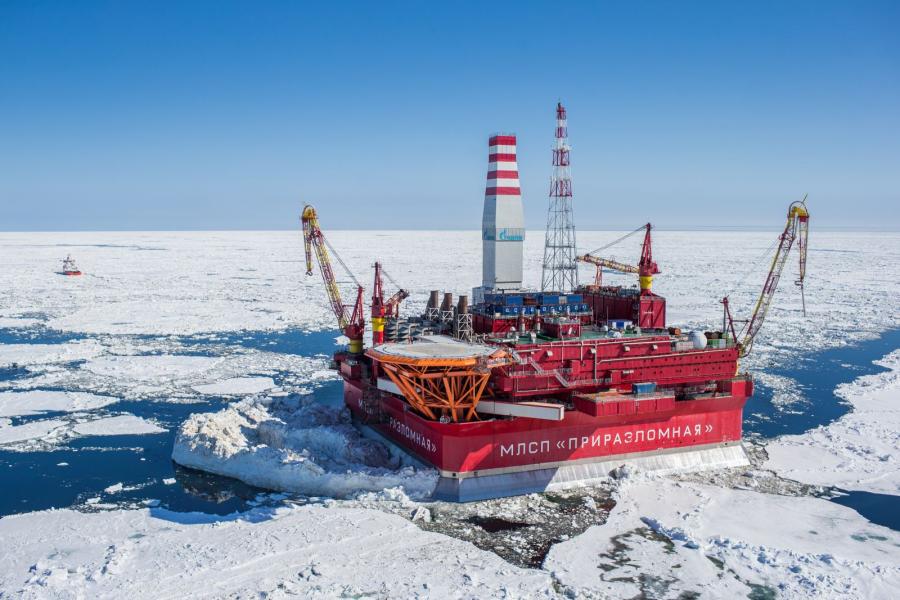
Russian oil platform in the Arctic Ocean. (Photo by Krichevsky)

Freedom of access to Arctic areas has broader implications than the immediate effect of restricted access. International institutions are resource driven. Those who hold relevant resources in an international organization (such as NATO) are able to drive the agenda for how those resources are used. To date, the Arctic Council has passed three binding agreements. Two of those agreements, on search and rescue and maritime oil spill response, pave the way for icebreaker-laden states to take larger roles in the implementation of those agreements. If the United States is unable to match resource contributions for these efforts then the U.S. bargaining position for future Arctic Council resolutions will be significantly hampered.

It might seem that parity in the number of icebreakers is a worthwhile outcome. However, icebreaker parity with Russia is an undesirable and unachievable goal for American Arctic operations. The Arctic is central to the Russian way of life, demanding more and better ways to cope. An American icebreaking fleet simply needs the ability to access areas in pursuit of national interests and contribute to international efforts under existing agreements. Given the relative size of the American Arctic coastline and population compared to other Arctic countries a small but capable icebreaking fleet is sufficient to ensure American interests.

Funding and Procurement

The lack of action to date stems from a lack of funding and not recognition of the need. The Coast Guard traditionally lacks the independent funding to procure icebreakers or other large-scale expenditures. Consequently, large Coast Guard acquisitions frequently partner with the Navy Shipbuilding and Conversion Fund (SCF) to make the size of those acquisitions tenable within the context of the Coast Guard’s meager budget. The Coast Guard’s Procurement, Construction, and Improvement Fund is responsible for all new purchases and upgrades of the Coast Guard’s entire fleet with only a $1.54 billion budget.17 Conversely, the Navy was appropriated over $20 billion in 2017 explicitly for new ship construction.18 Icebreaker procurement considerations are included in the Navy’s new shipbuilding budget as part of a “block-buy” contract system. Under a block-buy system procurement costs over multiple years provide the total cost of a project as it is built. This process, combined with fixed cost contracts, helps decrease the total cost of the project and budget demands on a yearly basis. The Consolidated Appropriations Act of 2018 allots the Navy’s Shipbuilding and Conversion Fund $150 million for domestic construction of a heavy polar icebreaker to be built and transferred to the Coast Guard.19 This initial step is crucial, but insufficient, toward reestablishing an icebreaker fleet.

Detractors argue that foreign construction or leasing provide the best path to more icebreakers. The first option happens to be illegal, requiring a waiver from the president for foreign construction of military platforms.20 The political component of the equation removes the likelihood that foreign construction is viable considering domestic shipyards are capable of producing these ships. Additionally, domestic production provides domestic shipbuilding experience, a significant factor in reduced costs for purchases of multiple icebreakers. Because of those learned efficiencies projections for purchase drop nearly $200 million as additional platforms are purchased.21 Leasing is similarly constrained by the lack of available assets on the global market to provide medium to heavy icebreaking capability.22 To lease a heavy icebreaker it would have to be built, a process that takes a comparable amount of time to building them domestically. The only commercial icebreaker available for lease, the Aiviq, has a poor track record of performance, including responsibility for the grounding of a drilling rig in 2012 when it lost propulsion. For legal, political, and marketplace reasons leasing and foreign construction are untenable options for meeting American icebreaker needs.

Conclusion

Climate change provides unprecedented Arctic access but much of the region remains restricted by ice. The United States Coast Guard uses icebreakers to meet that challenge. Established icebreaker levels fail to meet current interagency demands and are projected to meet even fewer of those demands. International icebreaker competition has immediate economic first-mover consequences and institutional repercussions for nations with adequate Arctic resources. Building heavy icebreakers in the short-term to complement Healy proves the most tenable option while meeting the minimum requirements for Arctic capabilities and international obligations. In a resource-constrained budgetary environment prioritization of other interests prevented purchase of replacement icebreakers. Recent steps toward expansion of the icebreaker fleet are encouraging but remain insufficient to meet the minimum force level needed for persistent American Arctic presence.

Matt Hein is a Surface Warfare Officer currently studying for his Masters in Security Studies at Georgetown University.  He can be found on twitter @Matt_TB_Hein. These views are presented in a personal capacity.

Works Cited

[1] O’ Rourke, Ronald. Coast Guard Polar Icebreaker Modernization: Background and Issues for Congress. Congressional Research Service, 2017, fas.org/sgp/crs/weapons/RL34391.pdf. 9

[2] The two missions not explicitly linked to the Arctic are drug interdiction and human smuggling interdiction.

[3] O’ Rourke, Ronald. Coast Guard Polar Icebreaker Modernization: Background and Issues for Congress. Congressional Research Service, 2017, fas.org/sgp/crs/weapons/RL34391.pdf. 48

[4] “One-Third” based on transit time from Seattle to Nome, and assumes three port visits of 5 days each while away from homeport subtracted from 185 days.

[5] Meador, Ron. “As Climate Change Reshapes the Arctic, Scientists Are Struggling to Keep Up.” MinnPost, 27 Apr. 2017, www.minnpost.com/earth-journal/2017/04/climate-change-reshapes-arctic-scientists-are-struggling-keep.

[6] Demarban, Alex. “Russian Icebreaker to Deliver Fuel to Nome, Highlighting Shortage of U.S. Icebreakers.” Anchorage Daily News, Anchorage Daily News, 5 Dec. 2011, www.adn.com/rural-alaska/article/russian-icebreaker-deliver-fuel-nome-highlighting-shortage-us-icebreakers/2011/12/05/.

[7] “Vessel Details for: AIVIQ (Offshore Supply Ship) – IMO 9579016| AIS Marine Traffic.” MarineTraffic.com, 7 Oct. 2017, www.marinetraffic.com/ais/details/ships/367141000.

[8] “U.S. icebreakers can’t handle Alaska oil spills: official” Reuters, 11 Feb. 2011, https://www.reuters.com/article/us-arctic-oil-vessels-idUSTRE71A5RM20110211

[9] “Oil and Gas in the Arctic.” WWF, 17 Mar. 2018, wwf.panda.org/what_we_do/where_we_work/arctic/what_we_do/oil_gas/.

[10]United States, Congress, Chief of Naval Operations. Maritime Domain Awareness Concept, 30 May 2007. www.navy.mil/navydata/cno/Navy_Maritime_Domain_Awareness_Concept_FINAL_2007.pdf.

[11] The Coast Guard’s Polar Icebreaker Maintenance, Upgrade, and Acquisition Program. Department Of Homeland Security, Office of Inspector General, 2011, www.oig.dhs.gov/assets/Mgmt/OIG_11-31_Jan11.pdf.

[12] O’Rourke, Ronald. Coast Guard Polar Icebreaker Modernization: Background and Issues for Congress. Congressional Research Service, 2017, fas.org/sgp/crs/weapons/RL34391.pdf 26

[13] United States Coast Guard High Latitude Region Mission Analysis Capstone Summary. ABS Consulting, 2010, assets.fiercemarkets.net/public/sites/govit/hlssummarycapstone.pdf. 10

[14] United States Coast Guard High Latitude Region Mission Analysis Capstone Summary. ABS Consulting, 2010, assets.fiercemarkets.net/public/sites/govit/hlssummarycapstone.pdf. 12

[15] O’ Rourke, Ronald. Coast Guard Polar Icebreaker Modernization: Background and Issues for Congress. Congressional Research Service, 2017, fas.org/sgp/crs/weapons/RL34391.pdf. 13

[16] Lavelle, Marianne. “Arctic Shipping Soars, Led by Russia and Lured by Energy.” National Geographic, National Geographic Society, 1 Dec. 2013, news.nationalgeographic.com/news/energy/2013/11/131129-arctic-shipping-soars-led-by-russia/.

[17] United States Coast Guard 2019 Budget Overview. United States Coast Guard 2019 Budget Overview, Coast Guard Office of Budget and Programs, 2018. http://www.uscg.mil/Portals/0/documents/budget/2019%20BIB_FINALw.pdf

[18] Labs, Eric. “The 2018 Outlook for Navy Shipbuilding.” Congressional Budget Office, 15 Jan. 2018, www.cbo.gov/publication/53446. 7

[19] H.R. 1625 – Consolidated Appropriations Act, 2018, 2018. www.congress.gov/bill/115th-congress/house-bill/1625/text?

[20] O’Rourke, Ronald. Coast Guard Polar Icebreaker Modernization: Background and Issues for Congress. Congressional Research Service, 2017, fas.org/sgp/crs/weapons/RL34391.pdf. 37

[21] O’ Rourke, Ronald. Coast Guard Polar Icebreaker Modernization: Background and Issues for Congress. Congressional Research Service, 2017, fas.org/sgp/crs/weapons/RL34391.pdf.19

[22] Judson, Jen. “The Icebreaker Gap.” The Agenda, 1 Sept. 2015, www.politico.com/agenda/story/2015/09/the-icebreaker-gap-000213.

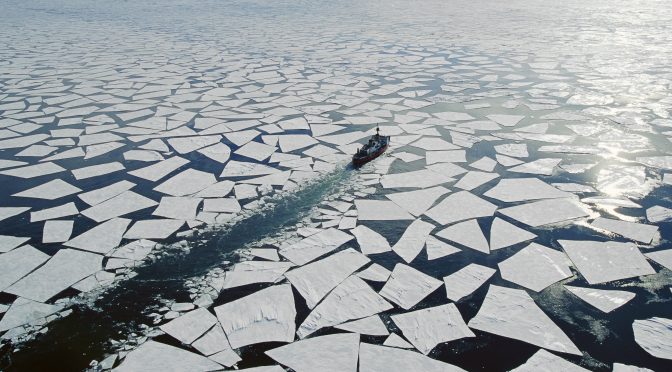
Featured Image: 16 May 2003, Antarctica — Coast guard icebreaker travels through ice floes which have broker off sea ice edge in late summer, McMurdo Sound, Antarctica (Image by Norbert Wu/Minden Pictures/Corbis)