In 2023, the Center for Strategic and International Studies (CSIS) wargamed a conflict between the United States of America and the People’s Republic of China (PRC). Reflecting 24 iterations of the wargame, the study weighed if China could succeed in invading Taiwan in 2026 and examined the variables affecting the outcome. Although CSIS concluded that China is unlikely to succeed, it found the result to be highly contingent on posture, weapons, and platforms. Crucially, one of the most determinant factors is U.S. submarine dominance in the undersea domain.
The report recommended prioritizing full-spectrum undersea warfare in planning for a potential large-scale, cross-ocean military conflict. This prioritization reflects the potency of the submarine force: Fast Attack Submarines (SSNs) torpedoing adversary commercial shipping and naval forces as Guided Missile Submarines (SSGNs) strike key adversary infrastructure with long-range cruise missiles.
But what happens when the archers run out of arrows – when submarines expend their weapons in the first battle of the next war? Does the U.S. have the inventory to support necessary reloads? Are the ports, vessels, and personnel ready to conduct the rapid reloads required to maintain pressure through a protracted war? If the current munitions stagnation continues, the answer is no. The Navy should work with the Department of War (DoW) and Congress to increase weapons supply and reinforce the means to conduct expeditionary submarine weapons transfers.
Recent Weapons Production and Expenditure
The Fiscal Year (FY) 26 Defense Budget prioritizes revitalizing the defense-industrial base with a notable increase in ship and weapons production. The National Defense budget request rose 13% from last year, topping $1 trillion, while the President has called for a $1.5B topline. In December 2025 the DoW announced an expansion of an existing RTX contract to order 219 Block V Tomahawk Land Attack Missiles (TLAMs) – the largest order in years, and a nearly 10-fold increase from the 22 planned for purchase in FY25.
Unfortunately, this sharp increase barely covers recent expenditures. The Eisenhower Carrier Strike Group alone expended 125 TLAMs against Houthi targets in Yemen. SSGNs conducted multiple strikes against Houthi Targets and enabled the B-2 Bomber strikes on Isfahan, Iran. Assuming a TLAM stockpile of roughly 4,000, U.S. naval forces in the Middle East depleted this missile’s inventory by 3% in relatively limited strikes against Iran and its proxies. This is a frightening statistic when contemplating the expenditures from all-out war with a near-peer adversary like the PRC. This troubling consideration is not limited to land attack missiles: A House-commissioned CSIS simulation estimates that in a Chinese invasion of Taiwan, the Navy could run out of long-range anti-ship missiles in less than a week of fighting.
Weapons production and delivery holdups reflect 1990s production halts after the end of the Cold War, unstable procurement continuing into the 2000s, and an increasing scarcity of U.S.-based manufacturing of certain critical parts like rocket motors and processors due to obsolescence challenges. The limited missile inventory is not the only problem. Diminishing submarine weapons on-load readiness stems from aging submarine tenders (ASes), which were commissioned in the 1970s, and the logistical complexities of loading weapons in foreign submarine ports.
What should the DoW and the Navy prioritize to ensure continued lethal armament of the submarine force? Action should include a two-pronged focus: one, creatively and efficiently increasing TLAM and torpedo supply, and two, investigating and investing in the ports and support vessel ability to conduct submarine weapons transfers.
Action 1 – Advance Submarine Munitions Supply
Military leadership and civilian defense experts agree that submarines are a key asset enabling U.S. victory in future naval conflicts. Instead of throwing money broadly towards munitions production, the DoW should prioritize making weapons that the bulk of both U.S. naval forces and U.S. allies can deploy.
The U.S. should focus on TLAMs because they are versatile – launched from SSNs, SSGNs, Ticonderoga-Class cruisers (CGs), and Arleigh Burke-class destroyers (DDGs) – totaling approximately 55 submarines and 83 surface ships. The United Kingdom, Japan, Australia, and the Netherlands all use TLAM – greatly increasing weapon production efficacy through scale. For similar reasons, the U.S. should also focus on Mk-48 ADCAP production, utilized by all 69 submarines in the U.S. fleet plus many Australian, Canadian, and Dutch vessels.
Additionally, efforts must be made to expedite weapons stockpile growth through manufacturing contracts and partnerships that encourage “close enough” component solutions rather than perfection. The Navy should be allowed to make minor compromises on weapon specs without compromising safety or viability. In November 2025, the DoW’s Strategic Capabilities Office announced open solicitations for a new, affordable SSN heavyweight torpedo called the Rapid Acquisition Procurable Torpedo (RAPTOR) to augment the Mk-48 ADCAP. Producing a torpedo at $500,000 per weapon vice the current $4 million per weapon is certainly enticing, given the many potential targets, but it does not mean production efforts and methods should slow on parts for the Mk-48 ADCAP. Promoting newer, cheaper technology is key, but continuing production of the tried-and-true ADCAP is also essential.
Furthermore, if compromises must be made between TLAM and ADCAP production investment, the Navy should prioritize the Mk-48 ADCAP because of its greater efficiency in sinking enemy ships and reinforcing a strategy of deterrence by (sea) denial.
Another production avenue worth investigating is shared weapons production with allies. The U.S. continues to lean on co-manufacturing partnerships with Australia and South Korea to re-supply depleted 155-millimeter artillery shells from the Russo-Ukrainian war. Similar co-production agreements should be signed with Australia and the UK as part of the AUKUS submarine partnership, as well as with Japan for manufacturing of parts for the TLAM and/or the ADCAP. Production of critical weapons and weapons components in strategic foreign locations strengthens U.S. logistics networks and shortens operational timelines. Weapons stockpiling in strategic locations improves deterrence, as allied power projection becomes more credible with the proximity of weapons – though this forward staging must incorporate defense, dispersal, and deception to mitigate against enemy strikes.
In the Western Pacific, the U.S. maintains three bases capable of submarine weapons handling of TLAMs and ADCAPs: Yokosuka and Sasebo, Japan and Apra Harbor, Guam. Additional foreign port reload sites may include Subic Bay, Philippines; Souda Bay, Greece; Sterling, Australia; and Diego Garcia. These reloads are aided by the two remaining Guam-based submarine tenders, the USS Frank Cable and the USS Emory S. Land, which were specially designed to travel to submarines and assist in conducting weapons transfers, repairs, and nuclear-level maintenance. This small but mighty AS fleet continues to demonstrate its utility, such as in 2022 when the Frank Cable supported the first TLAM reload conducted by a U.S. submarine in Australia on the USS Springfield (SSN-761).
But these tenders are over 45 years old. They have outlived their intended lifespan and their ability to deploy safely comes into greater question with each passing year. As of July 2025, the Pentagon awarded $72.6 million to General Dynamics-NASSCO to continue developing up to three “AS(X)” class submarine tenders. With both existing tenders slated to decommission by 2030, time is quickly running out to replace these unique and valuable assets. Still, a net of only one additional tender by 2030, assuming production deadlines are met, is not enough given that by 2028 the Navy aims to boost submarine production to three SSNs a year (one Columbia Class and two Virginia Class). Further, one must carefully consider where to homeport these assets, focusing on Japan and/or Australia for maximum operational flexibility.
Besides investing in the rapid production of the new AS(X) class, the Navy should invest more in the infrastructure of the submarine bases themselves – namely Apra Harbor, Guam. Apra Harbor relies on the island’s public power authority which supplies energy via import-reliant petroleum plants with 50-year old generators susceptible to natural disaster, not to mention deliberate attacks. The unreliable power supply alone threatens the likelihood of efficient weapons transfer and maintenance stops for submarines on their way to a fight in the Pacific. Additionally, concerns over adequate equipment like heavy-lift cranes and trained personnel to conduct efficient submarine weapons reloads also remain.
The Navy should thoroughly investigate the real capacity of its overseas submarine ports to conduct efficient and safe submarine weapons transfers in a simulated wartime scenario. This analysis should answer the questions: How long does it take to move weapons inventory, re-load equipment and crews, and a submarine tender as applicable to various ports? Which ports lack critical equipment or trained personnel to conduct short-notice reloads? What is each port’s and each tender’s maximum reload ability and fastest reload pace? The last publicly documented transfer of a Mk-48 training shape to a submarine was in 2021 between the Frank Cable and the USS Hampton (SSN 767). Five years may as well be ancient history when facing today’s emerging adversary threats. There must be steady effort to test these vessels and ports in wartime conditions and pace, but compromises can also be made. For example – the Navy may be able to withstand AS(X) delays by ensuring all foreign submarine port call locations have heavy-lift cranes.
Conclusion: Make More of What Works and Make What Works Better
U.S. submarines remain a dominant and lethal force, but in the 21st century, their lethality is jeopardized by two weapons concerns: rapidly depleting TLAM and Mk-48 ADCAP inventories, and inadequate weapons reloading facilities. The solution is not just to throw more money toward the problem. Since FY24 the DoW has invested hundreds of millions into weapons development and submarine tender design. The DoW and U.S. Navy must make more of what works by continuing production of versatile and battle-proven weapons. The United States should make what works better by improving how allied foreign ports and strategic assets can perform in wartime.
For the U.S. submarine fleet to dominate in naval conflict, it must have ample weapons stockpiled in strategic locations with all enabling infrastructure ready to support time-sensitive reloads. The first steps in ensuring continued dominance include: acknowledging the submarine force has critical weapons-related shortfalls, and studying which inventories, which bases, and which production lines are most vulnerable.
Submarines can operate within Surface Weapons Engagement Zones and conduct long-range tactical fires. In a target-dense environment, submarine munitions will deplete rapidly. In a conflict with the PRC, some estimates suggest an SSN will expend its inventory of 20 to 50 torpedoes within two weeks on station, and an SSN or SSGN will launch all their 12 or 154 TLAMs, respectively, within three weeks. At such rates of fire, it is easy to see how weapons inventory and reload pace become critical to continuing, and winning, the future fight.
Archers need arrows. If Congress and the U.S. Navy do not act now to ensure submarines stay armed and ready for battle, munitions problems will only worsen – leaving the force, the fleet, and country more vulnerable.
Lieutenant Alana Davis, U.S. Navy, is a submarine officer serving as a Force Manpower Planner under OPNAV N1 in Arlington, VA. She is a graduate of Harvard University (BA ‘19) and The University of Florida (MBA ‘26). The views presented are hers alone and do not necessarily represent the views of Department of War or the Department of the Navy.
Featured Image: Conceptual drawing of the Virginia-class attack submarine from 2004. (Photo via Wikimedia Commons)
This two-part article focuses on how the submarine force can more effectively prepare for safe deployments in peace and combat-effective operations in war. Part One focused on time constraints affecting the submarine fleet’s ability to focus on training. Part Two focuses on other problems that arise once submariners find time to train, both in their homeports and while deployed. Those problems include limited trainer (simulator) availability and extensive administrative burdens placed on deployed submarines.
Factor 2: Limited Training Resources
“My expectation is that commanders will give high priority to training and developing their junior leaders and teams. No commander can do very wrong if you are training and empowering your junior leaders.”1 – ADM John M. Richardson, Chief of Naval Operations Message on Navy-Wide Operational Pause
As discussed in Part One, time constraints are the first factor limiting submariners’ ability to effectively train for at-sea operations. However, when they fight through that obstacle and allocate time to dedicated in-port practice, scarce trainer resources prove to be another hurdle.
The Navy’s various nuclear, ship-handling, navigation, and tactical trainers are extremely important for submarine training. During long in-port periods, they are the best way to keep officers’ and sailors’ operational skills sharp and to prepare junior personnel for new roles. Trainers also allow submariners to practice evolutions and drills—such as large nuclear casualties, complex wartime engagements, or dangerous ship-handling maneuvers—that cannot be completed at sea, either due to the inability to effectively simulate the scenario or safety concerns. These trainers are also the best way to safely let officers and sailors fail and learn from their mistakes, seldom an option at sea.
Build More Shore-Based Trainers
Submarine force trainers are constantly in high demand. After all the required sessions are scheduled, such as tactical evaluations, courses for boats, schools for sailors and officers, re-examinations, and midshipmen and VIP tours, there are rarely slots available that coincide with a boat’s free time. Busy homeports such as Pearl Harbor, where there are twenty-one submarines sharing very limited trainer time, face an even greater challenge.2 As a result, some Pearl Harbor and Bangor submarines sail to San Diego to use their trainers for tactical evaluations, forcing them to expend some of their hull and reactor life and lose more time with their families simply because there are not enough trainers available in their homeport.
In his Comprehensive Review of recent surface fleet collisions and mishaps, Admiral Philip Davidson cited multiple deficiencies in shore-based team training.3 The submarine fleet should minimize the risk of similar mishaps by building more trainers. These trainers, covering scenarios such as surfaced ship driving, nuclear operations, and submerged warfighting, will cost money. They will cost significantly less than the estimated $600 million required to repair USS Fitzgerald and USS McCain after their collisions.4
Hire More Submarine Greybeards
Even if the submarine fleet does not build any additional shore-based trainers, it should hire more “Tactical Advisors,” or “Greybeards,” to staff them. Greybeards are retired submarine COs attached to submarine homeport training centers. They use their knowledge and experience to provide outstanding senior-level feedback, training, and evaluation to boats with a focus on tactics and contact management.
The problem is that the Greybeards are strapped for time and rarely available. Most submarine homeports have just one Greybeard who must cover all submarine evaluations. As a result, they are generally not available to assist a boat with preparations for these evaluations or for deployment. Even in San Diego, which has just a few boats, the Greybeard is often unavailable because he is travelling to other busier homeports to support their evaluations.
To better use these excellent resources, the submarine fleet should achieve a five-to-one ratio of submarines to Greybeards. This would make them more available for submarine training sessions, courses, and schools. Greybeards would also be available to come down to the waterfront and give requested training, drawing on their vast experience and available time to produce a quality product. Every year, highly successful submarine captains are leaving command, and many of them will go on to retirement or jobs where the Navy is unable to take advantage of their tactical expertise. Hiring a small fraction of these officers as additional Greybeards would produce a markedly safer and tactically proficient force.
Many college courses are taught by very capable graduate teaching assistants (TAs). Although they do a good job at educating their students, TAs are rarely as capable as a full professor due to their relative lack of experience and knowledge. Similarly, most submarine trainer feedback comes from JOs and sailors on their shore duty, dedicated men and women who—through no fault of their own—are not as effective at training as Greybeards. The Navy should hire more Greybeards—professors with a focus in at-sea operations and combat.
Factor 3: Administrative Burdens While Deployed
“We need to get back to owning our jobs, concentrating on the operational excellence piece of what our Navy is about, and reducing these administrative distractions that pull us away from that.”5 – ADM John M. Richardson, Chief of Naval Operations Online All Hands Call
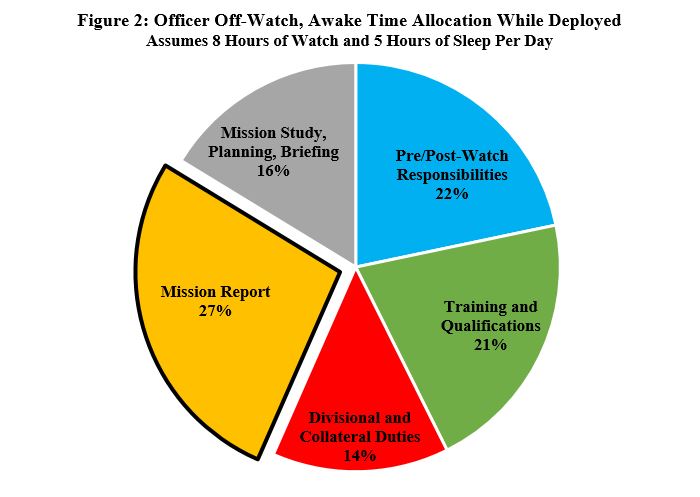
Despite the challenges of Factor 1 (limited training time) and Factor 2 (limited training resources), submarines are fighting through these limitations to safely depart for deployment. While deployed, most off-watch time should be spent studying tactics and preparing for upcoming operations. Instead, as shown in Figure 2, officers are spending approximately 2.5 hours each day—27 percent of their awake, off-watch hours—writing and editing a massive report detailing the ship’s operations.
Figure 2: Officer Off-Watch, Awake Time Allocation While Deployed
While deployed, submarines typically employ four officers in control: an OOD, Junior OOD (JOOD), Contact Manager (CM), and Junior Officer the Watch (JOOW). While the OOD, JOOD, and CM fight to keep the ship safe and execute the mission, the JOOW’s sole responsibility is to record everything that the ship is doing. Even though virtually all the required data is already automatically recorded on numerous other systems, the JOOW is required to manually type everything into Microsoft Word. After eight hours of this on watch, the OOD, JOOD, CM, and JOOW all spend several hours refining the document. Some of this time is spent clarifying the ship’s operations and providing important commentary for the report’s end users, but most of the time is spent transcribing data from other systems, fixing grammar, and adjusting formatting. Once complete, the XO and then CO carefully review the consolidated product, often sending it back to the OOD for clarification or corrections and to fix incorrectly transcribed data.
The opportunity cost of the mission report is a degree of submarine safety and warfighting readiness. A typical wardroom, while off-watch, will devote roughly 4,000 officer-hours to the mission report throughout a deployment.6 While they are working on writing, formatting, and editing the report, these officers are not studying tactical references, analyzing external information as it comes in, or preparing the boat for the next operation, forcing them to often sacrifice sleep to complete this task. Deployed submarine officers are generally in a perpetual state of near-exhaustion, and the mission report is the primary reason for that lack of rest. In the surface fleet’s Comprehensive Review, Admiral Davidson cited lack of sleep as a contributing factor to both the USS Fitzgerald and USS McCain collisions.7 The mission report’s massive requirements and lack of automation make it the epitome of an “Administrative Distraction” keeping submariners from focusing on the safe, tactical employment of their warship.8
Consider the Federal Aviation Administration’s (FAA) response to a hypothetical commercial airline using a similar process. In this airline, the pilot, co-pilot, and navigator focus on safely flying to the destination while a fourth flight officer records every change in course, speed, and altitude, every other plane flying by, and countless other details despite the Black Box recording the same data simultaneously. When the plane lands after a long eight-hour flight, the pilot, co-pilot, and navigator then spend several hours reading and editing the document before getting five or six hours of sleep and doing it all over again the next day. The FAA would likely deem that a terrible and unsafe use of time and demand an automated alternative.
The mission report also has important implications for submarine force manning. Submarines do not have enough officers to support a three-section watch-bill with the JOOW. As a result, when detailers send additional officers to boats entering shipyard availabilities, many of those officers get dispatched to deploying units to fill the role of JOOW. Serving as JOOW, essentially acting as a secretary for ship’s operations, negatively affects their ability to complete required nuclear and tactical qualifications, meaning that each wardroom is less knowledgeable and that the submarine fleet needs to recruit and train more officers, a constant struggle.
Despite the substantial effort that its officers are devoting to the mission report, the submarine fleet gains little benefit from the final product. Other boats’ reports could be valuable tools for wardrooms preparing for an upcoming mission, but instead the reports’ size, quantity, and tediousness makes it very difficult to pull out useful information or lessons, limiting the reports’ utility.
Fortunately, the mission report problem could be easily solved. Most of the data the JOOW writes is already recorded by other systems, so the submarine fleet simply needs to devote resources to develop and approve an automated program to combine these sources. Not only would this help the officers, but it would yield a better final product; there would be fewer formatting and transcription errors and the wardroom would have more time to add meaningful commentary. Alternatively, all that data could be left on those separate systems and only be pulled and consolidated if needed, such as during an event of interest. Factor 1 (massive time obligations) discussed how many of the submarine force’s tasks are important to complete, but could be better done by a supporting command. This same approach could be used to solve the mission report dilemma; the submarine fleet could leave all that data on those separate systems and have shore-based end users pull and analyze what they desire. This would allow them to complete this time-consuming administration with staff officers or civilians in a safe office environment instead of demanding unrestricted line officers complete this work at sea while also attempting to keep their ship safe and combat ready.
On August 2, 1945, Commander Eugene Fluckey completed USS Barb’s twelfth war patrol. During this patrol, Commander Fluckey sank 11,000 tons of shipping, conducted the first-ever submarine-launched rocket attack, and destroyed a train, yet submitted a War Patrol Report of just 66 pages.9 Today, our submarines can complete a mission of the same duration without ever encountering a single foreign warship or submarine and still be expected to type and submit a report exceeding 1,000 pages. Just because Commander Fluckey could not use automation and had to manually type his report does not mean today’s submarine force needs to do the same.
Putting Warfighting First
Today’s Navy is faced with serious yet surmountable challenges. The deadly incidents involving Fitzgerald and McCain revealed a hard-pressed fleet fighting to safely operate at sea at the same time that foreign navies rapidly improve their technologies and capabilities. In response, the Navy’s leadership is rightfully charging the fleet with ensuring that warfighting comes first. Yet many submariners, swamped with watch, administration, and collateral duties, are responding with, “Hooyah, but how?”
Consolidated Recommendations
The Navy has devoted incredible time and energy to designing, building, maintaining, and manning its submarine fleet. To maximize that return on investment and ensure those submarines are ready for war, the Navy should address three key factors using the following solutions:
Reduce time obligations on the officers and crew
Allow non-ship’s force officers or CPOs to augment EDO watch-bills
Allow non-ship’s force officers or CPOs to augment SDO watch-bills
Allow non-ship’s force sailors to augment topside security watches
Outsource maintenance procedure development and approval
Shift some QAO responsibilities to regional QA offices
Remove the requirement for SSNs to man Scuba Diving Divisions
Shift security clearance investigation responsibilities to squadron SSOs
Shift in-port Radiation Health Responsibilities to squadrons
Outsource some duties such as manual page updates and gage calibration
Conduct a holistic review and reduction in submariners’ time commitments
Improve shore-based training resources
Build more shore-based team trainers
Hire more submarine Greybeards
Reduce deployment administrative burdens
Reduce the data required in the mission report
Automate the mission report as much as possible
Shift some mission report responsibilities to civilians or restricted line officers
Reduce the number of required reports and naval messages while deployed
If the Navy can adopt these recommendations, it will result in a significantly safer and more combat-effective force. Officers and sailors with significantly higher levels of knowledge will form experienced teams aided by deep benches. Those teams will form the backbone of a truly professional naval force, yielding a fleet made stronger through personnel and administrative changes alone.
As with any profession, there is an abundance of material to study in the submarine force. Mastering topics such as nuclear systems, Nautical Rules of the Road, advanced weapon systems, coordinated fleet tactics, ship maneuvering characteristics, and submerged navigation requires a great deal of time and study. A refocused submarine fleet will have more bandwidth to attack these topics. They could even expand their study into topics such as naval history or geopolitics, which are currently not required but would better the officers and crew. A fleet protected from countless administrative burdens will be able to better study the numerous intelligence products, tactical manuals, lessons learned, and order-of-battle analyses that are currently only being skimmed or skipped altogether due to lack of time.10
Those more knowledgeable officers and sailors would also have more time to train together as a team. Instead of rushing to train watch-sections for the next upcoming inspection, submarines would have the time and resources to maintain a constant strain on learning and practicing. That constant strain would allow teams to try new tactics and approaches—and potentially fail—and still be better prepared for the next challenge.
A submarine force with a higher level of knowledge and better-tested teams will be comprised of true naval professionals instead of jacks of all trades. Doctors, baseball players, engineers, and lawyers all require incredible amounts of time focused on learning and practicing their trade; why do we think the naval professional is any different?
Five decades ago, poor maintenance practices likely led to the loss of USS Thresher and USS Scorpion. The submarine force attacked the problem, greatly improving its boats’ physical conditions through processes such as the SUBSAFE Program.11 In contrast, personnel and training failures were the primary cause of more recent mishaps, including those of USS Hartford, USS Montpelier, USS Jacksonville, USS Fitzgerald, and USS McCain. Our weakness appears to have shifted from equipment to training.
Today’s submarine operations are succeeding not because of robust training programs but rather due to the extremely high-quality people onboard and just-in-time training. That is not a resilient model, and it will invariably lead to failure. Fortunately, there are options to solve the problem before it leads to more fatal mishaps, the loss of an entire boat, or subpar performance in conflict. Those solutions would produce a force ready to safely take their ships to sea in peace, and ready to expertly wield them in time of war.
The Navy’s leaders have directed the fleet to make combat preparations its primary concern. The officers and sailors on the deckplates are wholly committed to that goal. Reduced time demands, increased training resources, and fewer deployed administrative requirements would make that warfighting focus a reality.
LT Vandenengel is the Weapons Officer on USS Alexandria (SSN 757). He developed this paper with a working group of submarine officers. The views expressed here are those of the author alone and do not represent those of the Department of Defense. You can reach him at jeff.vandenengel@gmail.com.
Endnotes
[1] Admiral John M. Richardson, USN. “CNO Richardson Message on Navy Operational Pause,” USNI News, October 6, 2017, https://news.usni.org/2017/10/06/cno-richardson-message-navy-operational-pause.
[2] “SUBPAC Commands,” Submarine Force Pacific, accessed November 11, 2017, http://www.csp.navy.mil/subpac-commands/.
[3] Admiral Philip S. Davidson, USN. “Comprehensive Review of Recent Surface Force Incidents.” (Washington, D.C.: U.S. Fleet Forces Command, October 26, 2017), 63.
[4] Sam LaGrone “USS Fitzgerald Repair Will Take More Than a Year; USS John M. McCain Fix Could be Shorter,” USNI News, September 20, 2017, https://news.usni.org/2017/09/20/uss-fitzgerald-repair-will-take-year-uss-john-s-mccain-fix-shorter.
[5] Admiral John M. Richardson, USN and Master Chief Petty Officer of the Navy Steven Giordano, USN. “Facebook Live All Hands Call: ‘Administrative Distractions.’” August 30, 2017. YouTube video, 1:33. Posted September 4, 2017. https://www.youtube.com/watch?v=W2QTpnaeqiM.
[6] Estimating each section’s four officers spending 2.5 hours on the mission report each day that it is being recorded, with the CO and XO working on it one hour and two hours per day, respectively. This time is in addition to the roughly 3,000 officer-hours that JOOWs will spend writing the mission report while on watch.
[7] Admiral Philip S. Davidson, USN. “Comprehensive Review of Recent Surface Force Incidents.” (Washington, D.C.: U.S. Fleet Forces Command, October 26, 2017), 38.
[8] Rear Admiral Herman Shelanksi, USN. “Taking Action-Reducing Administrative Distractions Implementing Change in Phase III,” Navy Live, September 25, 2013, http://navylive.dodlive.mil/2013/09/25/taking-action-reducing-adminstrative-distractions-implementing-change-in-phase-iii/.
[9] Commander Eugene Fluckey, USN. “USS Barb (SS 220), Report of Twelfth War Patrol.” (Midway Island, August 2, 1945), 97-163, https://www.scribd.com/document/175964974/SS-220-Barb-Part2.
[10] Surface ships can be subjected to as many as 238 separate inspections, certifications, and assist visits per 36-month period, all requiring officer time investment, and the submarine fleet is likely subject to a comparable number. Admiral Philip S. Davidson, USN. “Comprehensive Review of Recent Surface Force Incidents.” (Washington, D.C.: U.S. Fleet Forces Command, October 26, 2017), 78.
[11] Sam LaGrone “After Thresher: How the Navy Made Subs Safer,” USNI News, April 4, 2013, https://news.usni.org/2013/04/04/after-thresher-how-the-navy-made-subs-safer.
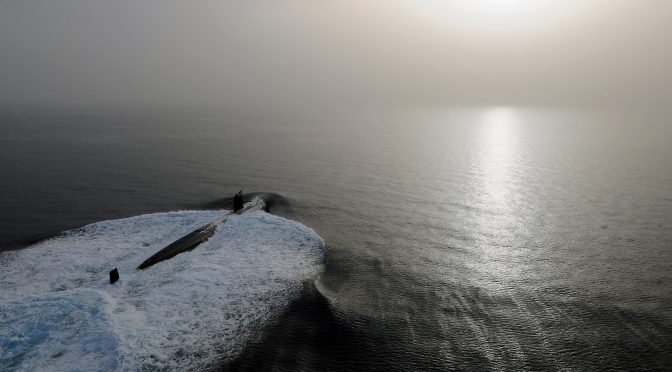
Featured Image: ARABIAN SEA (April 22, 2012) The Los Angeles-class attack submarine USS Pittsburgh (SSN 720) transits the Arabian Sea. Pittsburgh is deployed to the 5th Fleet area of responsibility. (U.S. Navy photo by Mass Communication Specialist 3rd Class Tim D. Godbee/Released)
The submarine force is highly capable but not near its full warfighting potential. Several factors limit submariners’ ability to prepare for safe deployments during peace and combat-effective operations during war. These factors include:
Massive time obligations
Limited training resources
Extensive deployment administrative burdens
This two-part article outlines options to address these problems and thus enable submarine officers and crews to better prepare for the job only they can perform: at-sea operations and combat.
Introduction
Training for at-sea operations and combat has always been a primary concern in the U.S. Navy, and today those missions are more important and more difficult than they have been for decades. The recent fatal mishaps involving USS Fitzgerald, USS John S.McCain, and ARA San Juan, along with potential adversaries’ rapid technological advances, underscore the importance of training in the naval profession.
Warfighting training and preparations are especially crucial in the submarine force, which the Navy will rely on heavily in war. Today’s force of just fifty-three fast attack (SSN) and four guided-missile (SSGN) platforms are accomplishing vital missions during peacetime and will play a disproportionately important role in wartime.1 That outsized role will be accomplished by submarine wardrooms comprising less than two percent of all active duty naval officers and by crews comprising approximately three percent of all active duty sailors.2 With so much riding on so few, the submarine fleet must ensure its officers and crews are trained and ready to employ the warships the Navy has worked so hard to build and maintain.
Unfortunately, massive time obligations, limited training resources, and extensive deployment administrative burdens are severely impairing submariners’ ability to conduct effective training. As a result, the submarine force is not near its full warfighting potential, despite incredible technology, excellent material readiness, and the best people the country has to offer. Fortunately, there are numerous personnel and administrative solutions that would significantly improve each boat’s warfighting ability.
The Navy recently completed two excellent analyses of recent fleet mishaps: the Comprehensive Review3 and Strategic Readiness Review.4 These meticulous, constructive products closely analyzed the fleet’s problems to make substantive recommendations. To complement those high-level studies, this bottom-up “deckplate review” is submitted as an analysis of the Navy’s challenges from the viewpoint of an operational warship, with recommendations that would enable that ship to operate more safely and effectively.
It is important to note that the author and his fellow officers made these recommendations with a limited frame of reference and without complete knowledge of the Navy’s status with regards to personnel, budgets, training facilities, equipment, certification processes, logistics, and legal requirements. However, as the end users of all those lines of effort, it seems this feedback should be worth some measure of consideration.
The Navy and submarine force’s leadership have wisely instructed the fleet to focus on warfighting above all else. This paper details recommendations that would enable operational warships to meet that commander’s intent. Part One focuses on time constraints affecting the submarine fleet’s ability to focus on training. Part Two focuses on other problems that arise once submariners find time to train, both in their homeports and while deployed.
Factor 1: Time Constraints
“The ships, aircraft, and men and women of the Navy are finite resources. Those who man our ships are limited in the amount of time they have to perform equipment maintenance and build their warfighting skills…The core and primary competence of sailors must be mastery of naval warfighting skills.”– ADM Gary Roughead, USN (Ret.), and the Hon. Michael Bayer Secretary of the Navy Strategic Readiness Review5
The single largest factor limiting submarine warfighting training is officer and crew time. With numerous demands on their time, submariners are too often prevented from focusing on the job only they can do —tactically employ their warship — because they must accomplish tasks that supporting commands can assist with or perform more effectively.
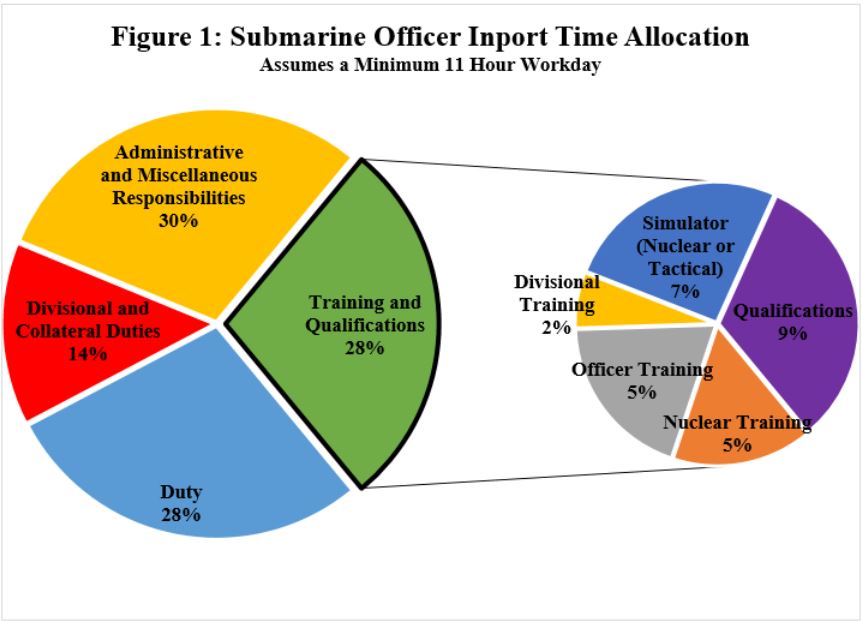
The wardroom is the best example of a submarine training group limited in its ability to prepare because of time constraints. As the only group to span the nuclear and non-nuclear worlds, the officers have numerous responsibilities that occupy almost the entirety of their workweek. Assuming an eleven-hour workday in port, officers spend an estimated 28 percent of their time standing duty, 30 percent of their time completing administrative and miscellaneous tasks (meetings, monitors, planning, etc.), and 14 percent of their time fulfilling divisional and collateral duties, leaving 28 percent of their time to complete training and qualifications.6 However, this time encompasses a vast array of training topics and requirements which span the tactical, nuclear, divisional, and maintenance areas, in addition to simulators and qualification interviews for junior personnel. This in-port time allocation is summarized in Figure 1.
Figure 1: Submarine Officer Inport Time Allocation
What results is a strapped wardroom running from event to event, regularly working into the night and on the weekends to catch up. Despite carefully planned schedules, it is rare for all officers to attend all mandatory events because of overlapping demands. Even when an officer finds him or herself with free time, it is often in small blocks and rarely coincides with the rest of the wardroom, limiting the training he or she can effectively accomplish.
When the Navy assigns an officer to a task, part of that decision is based on the importance of the task and a lack of faith that someone else — a Chief Petty Officer (CPO) or non-ship’s force individual — could execute it properly. These many tasks help the ship improve its combat potential, either through improving its material condition, finding and fixing deficiencies, or developing the crew. While the importance of these tasks is not up for debate, the ability for someone besides an officer to accomplish them is debatable in every single instance except one: combat. No other group on a submarine has the training, holistic ship knowledge, access to information, and experience to fight the ship. However, when the vast majority of officers’ time is accounted for, the unintended consequence is that there are fewer opportunities for concentrated training on the numerous important warfighting topics that only they can perform. With so much information to teach officers and so little time to do it, most warfighting training is stuck at the basic level.
Fortunately, three categories of officer and crew time — in-port watch-standing, divisional and collateral duties, and administrative responsibilities — have opportunities for improvement that would allow for more focus on the fourth category of training and qualifications.
In-Port Duty
Standing duty, both as the Ship’s Duty Officer (SDO) and Engineering Duty Officer (EDO), undoubtedly improves the ship’s material condition and warfighting readiness. However, with a limited number of qualified officer watchstanders available, each officer must stand on average more than one duty day per workweek. Swamped with work controls, maintenance execution, inspections, and administration, there is little hope of study or training on those days. The amount of time spent on watch in port increases when ships use work control production officers or enter shiftwork, periods that can last days or weeks at a time. Throughout the author’s recent four-month dry-docking maintenance availability, an average of 29 percent of available qualified officers were on watch at any one time.7
The challenge is to reduce the time officers stand duty, allowing them to conduct more effective training together, without causing a reduction in the maintenance execution, security, or professionalism onboard. To meet those requirements, some basic ground rules were used when developing these options. There should always be at least one ship’s force unrestricted line officer onboard, either as SDO or EDO. There cannot be a reduction in watchstanding ability, as both SDO and EDO are challenging positions pivotal to fixing the ship and getting it back out to sea. Additionally, the use of duty alternatives should only occur during the day when needed to support training, with the wardroom resuming its normal duty roles at night to minimize the effect on supporting commands and individuals. Ship’s force would still stand most of the watches during the workweek and all of the watches outside normal working hours.
Engineering Duty Officer
For EDO alternatives, the submarine force could train and qualify Limited Duty Officers (LDOs), officers from the Engineering Duty community, submarine junior officers (JOs) on shore duty, Naval Sea Systems Command (NAVSEA) civilian Shift Test Engineers (STEs), or nuclear-trained CPOs. Most of these options are already being executed in different parts of the submarine fleet.
LDOs, with their years of nuclear training and experience, are already standing duty on pre-commissioning submarines. Similarly, members of the Engineering Duty community are already heavily involved in maintenance planning and execution onboard ships, with many of their officers laterally transferring from the submarine community. Another easy option would be to use submarine JOs on their shore duty as “duty augment officers.” Submarine JOs are already standing 24-hour watches on their shore duty, such as Shift Engineers at the Nuclear Power Training Units (NTPU) or as duty officers on pre-commissioning units, and so it is likely that many would be interested in being “duty augment officers” where they are only required to stand duty on weekdays during normal working hours. Alternatively, submarine JOs who have transferred to the Reserve Component (RC) could also be activated to perform this function.
In addition to using different officers for EDO, the submarine force could employ the highly trained STEs of NAVSEA’s Nuclear Engineering and Planning Department.8 During major availabilities, these dedicated civilians, with more than two years of nuclear training and an in-depth knowledge of the engineering plant, work with the EDO to complete numerous complex evolutions. The EDO and STE literally stand next to each other throughout the entire day, giving orders that they must both concur on before executing. The submarine force should authorize STEs to relieve as EDO in order to not duplicate supervision, allow the STE to lead the complex engineering evolutions that he or she knows best, and allow the submarine line officer more time to focus on the warfighting task that only he or she can execute.
The final option for EDO alternatives are nuclear-trained CPOs. This is also a proven model, as CPOs are already successfully standing EDO at the NPTUs. However, with a limited number of nuclear-trained CPOs on board SSNs and SSGNs, there are not enough of them available to support their watch bill plus the EDO position without changing their manning.
None of these options—LDOs, Engineering Duty community officers, shore duty JOs, STEs, or CPOs—would be attached to the ship. Rather, they would work from squadrons and be shared amongst the boats, ready to relieve as EDO during the day as needed, granting the ship’s force officers much-needed time to conduct training. This way, just a few augment options could serve an entire squadron, assisting whichever boats are in port.
Ship’s Duty Officer
There are also numerous options to augment SDOs, with the right controls in place. Currently, SDOs must be qualified Surfaced Officer of the Deck (OOD) so that they are ready to get the ship underway in the event of an emergency. However, there are many days that it would be impossible for the ship to get underway in any reasonable amount of time, such as when in drydock or during major engineering maintenance evolutions, negating the need to keep an OOD continuously onboard. If the submarine fleet relaxes this requirement as a function of the ship’s readiness condition, then there are alternatives to making the ship’s force officers always stand SDO. Additionally, augmenting SDO instead of EDO has the added benefit of avoiding the extensive although necessary certification and administration associated with standing watch on a naval nuclear power plant.
Shore duty JOs would be an attractive option for SDO just as it is for EDO. Some of these officers could be from the Naval Reserve, serving a year of obligated service before retirement. If the ship is not going underway and there is a line officer standing EDO, then Supply Officers should qualify and stand SDO to ease the duty rotation, as they are already doing on surface ships. Finally, CPOs could qualify SDO to temporarily relieve during the workday. This option is more attractive for SDO than EDO because of the larger number of non-nuclear vs nuclear CPOs available to flex to watch-bill burdens.
Enlisted Duty
Enlisted duty also stands in the way of better tactical training. Sonar, Fire Control, Torpedo, Navigation, and Radio Divisions would all greatly benefit from more in-port time to focus on their advanced skillsets. However, when they are manning a three- or four-section duty rotation, it becomes very difficult to free a majority of the division for any extended period while also completing necessary maintenance.
Most in-port watches require ship’s force sailors due to the level of knowledge required, but topside security watches could easily be outsourced to supporting commands. These watches are vital to protecting the ship, but do not require extensive training or certification. This off-hull support could come from Masters at Arms, Naval Reservists, or sailors on their shore duty attached to squadrons, again ready to support whatever boats are in port. Just as with officer support, ship’s force sailors would still stand the majority of the watches, but would receive assistance from these augment alternatives. Reservists have already assisted with SSGN security watches while overseas, and this model should be expanded to SSNs in their homeports during normal working hours.
Making Tough Choices About In-Port Duty
There are numerous options for standing SDO and EDO: ship’s force officers, LDOs, Engineering Duty community officers, augment shore duty JOs, NAVSEA STEs, and CPOs. However, only the ship’s officers can stand OOD, Contact Manager, and Engineering Officer of the Watch at sea and in battle. Similarly, there are numerous options for standing enlisted security watches in port, but only the submarine’s sailors can stand Fire Control Technician of the Watch, Torpedo Room Watch, and Passive Broadband Operator underway. Shifting a small portion of the in-port duty burden to these alternatives would free up desperately needed time for the ship’s officers and sailors to focus on the jobs that only they can perform.
Collateral Duties
Common themes when the Navy assigns collateral duties to submariners:
Smart, hard-working submariners will put in the time and energy to tackle the challenge
Those submariners will be completing their collateral duties at a steep opportunity cost: preparing for at-sea operations and combat
In many cases, supporting commands can accomplish those collateral duties more effectively and efficiently
When submariners are not on watch, they have an array of collateral duties that again occupy their time and inhibit an at-sea focus. Responsibilities such as Quality Assurance Officer (QAO), Scuba Diving Officer, Radiation Health Officer, and Cryptologic Security Manager all make the submarine a more capable warship. However, significant parts of these jobs can be more effectively completed by specialized supporting commands, freeing submariners to focus on their primary functions.
The many shore commands and organizations that task submarines each rightfully strive to execute their respective programs. Most designate a ship’s force officer to be responsible for those programs knowing that it will maximize their chances of administrative success. Many of these programs are not individually overwhelming, and so the external commands apply moderate pressure to ensure the officers properly execute them. However, the cumulative effect of these various commands’ dictated programs is a culture in which submarine officers are constantly pulled in all directions except training for safe and combat-effective operations at sea.
To the junior sailors and officers on the deckplates, the Navy’s decisions to implement many new programs or requirements can seem to be made in a vacuum and without consideration of the reality of shipboard life. Each task is a good idea by itself, but crammed into already full workdays they rob those sailors and officers of time to focus on what matters.
Lots of good ideas with lots of unintended consequences are improving the submarine force’s collateral duties while distracting it from its primary function.
When everything is important—Audit and Surveillance Programs, Radiation Health Programs, Full Speed Ahead Training, Lessons Learned messages—nothing is important, including warfighting.
Procedure Development and Quality Assurance
Properly researched and written maintenance procedures are key to the ship’s material condition. While most of these are provided to the fleet, there are still numerous maintenance evolutions that have no provided procedure. This forces sailors and officers to research, write, review, and approve their own procedures, typically as Formal Work Packages (FWPs) or Controlled Work Packages (CWPs).9 This is a challenging process that requires numerous technical manuals, access to parts research, and a significant amount of time to do an adequate review. During a maintenance period, petty officers, divisional CPOs, division officers, department heads, and at times even the commanding officer (CO) must write, review, or approve several of these each week, with much of this effort duplicated on each boat in a class. Incorrect FWPs and CWPs can lead to critiques, rework, lost underway days, personnel injury, equipment damage, or loss of the ship in extreme cases.
Many of these maintenance packages are reviewed by the QAO, a JO who has attended a two-week school. Because that JO is dedicated to his submarine’s success, he will devote significant time and energy to properly execute the QA program. He will dig into the technical manuals, carefully review the Joint Fleet Maintenance Manual (JFMM), and conduct thorough parts research to ensure the work is done correctly and the ship can safely get to sea. Despite his intelligence and diligence, his lack of experience and time will prevent him from ever being as proficient in Quality Assurance (QA) as the people running the squadrons’ and regional maintenance centers’ QA offices. These administrators are typically retired CPOs and LDOs working full time on QA, able to draw on their expertise to produce quality products without the distractions of submarine life.
To both alleviate a time demand on the QAO and numerous other submariners and to ensure they execute maintenance correctly the first time, more procedures should be written and approved off the ship. These could be standardized as Reactor Plant Manual (RPM) procedures and Maintenance Requirement Cards (MRCs) or provided as FWPs and CWPs. This will reduce the duplication of administration across boats, improve the quality of procedures, and allow the ships to focus on their execution. This will not work for all procedures, as many will still have to be tailored to a ship’s unique conditions or equipment.
The newly developed Automated Work Package Generator (AWPG) is a great start to combating this problem. Retired QA experts research and write CWPs and periodically provide them to the fleet for use. However, boats are not allowed to simply use these quality packages, but must still complete the full review process. Additionally, the AWPG only covers a small fraction of all the procedures submarines must write on their own.
Maintenance and engineering organizations off the ship are better at writing and approving technical procedures than submariners are. Submariners are better at employing their warships at sea. To produce a submarine fleet that is both in better material condition and more effectively trained for sea, the submarine fleet should transfer as many procedure writing responsibilities from the boats to supporting commands as possible.
Scuba Diving
SSN’s Scuba Diving Divisions perform important functions including hull inspections, component cleanings, and serving as rescue swimmers. They are also another example of a program that makes the ship more capable but at a cost.
To meet the required number of personnel in Dive Division, submarines must send an officer and several sailors to Dive School. During this six-week period they are lost to the ship and completely unable to train on their primary warfighting duty. When they return, they must perform all the required maintenance, training, dives, and inspections in addition to their normal duties.
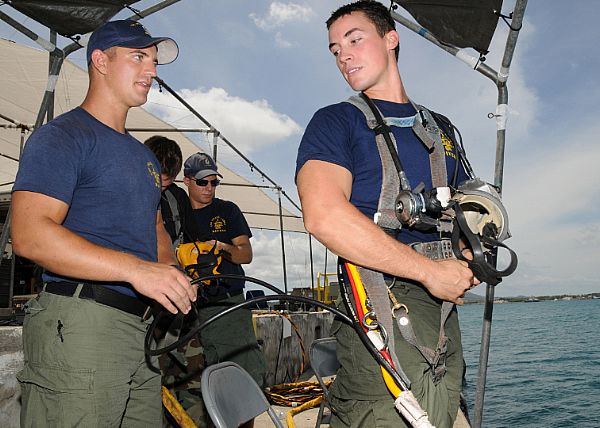
POLARIS POINT, Guam (April 7, 2011) Navy Diver 3rd Class Kyle Fox, of the submarine tender USS Frank Cable (AS 40), assists Hospital Corpsman 3rd Class Jason Kantorik with an air hose check before a dive. Frank Cable maintains and supports submarines and surface vessels deployed in the U.S. 7th Fleet area of responsibility. (U.S. Navy photo by Mass Communication Specialist 2nd Class David R. Krigbaum/Released)
The Supplemental Preliminary Inquiry on USS Fitzgerald’s June 2017 collision contained numerous examples of astonishing courage exhibited by the crew as they struggled to save their ship. It also contained a statement likely surprising to many submariners: Fitzgerald and surface ships “have no dive equipment aboard, nor do they have trained and qualified divers.”10 If surface warships and SSBNs are not required to man Dive Divisions, then the rest of the submarine fleet, with smaller crews and less space for gear stowage, should follow their example.
All SSN homeports have specialized divers that perform all the boats’ advanced maintenance and inspections, and these could be used to accomplish the dives currently being done by ship’s force. These specialized divers are highly trained, well equipped, and dive as their primary responsibility, making them a more proficient and safer alternative than submariners fulfilling a collateral duty. When pulling in for deployment port calls, most US Navy ports again have divers that could perform required inspections or maintenance. Additionally, flyaway teams could support boats when in foreign ports without U.S. Navy diver presence, a model the surface fleet is already employing. In war, port calls would all likely be at U.S. Navy ports, negating the need for those flyaway teams. Boats at sea could employ Search and Rescue (SAR) swimmers as surface ships already do, ready to respond in case of a man overboard. Transforming the ship’s divers into SAR swimmers would greatly cut down on the time lost to school, administration, maintenance, and inspections.
Just like QAOs, Scuba Diving Officers are going to work tenaciously to lead a safe and effective program. However, with their schedule so packed, the time they spend focusing on Dive Division is time they do not spend studying the Nautical Rules of the Road, how to safely proceed to periscope depth, or how to recover the reactor in the event of a scram at sea. Finally, just as with QA, there are supporting organizations off the boat that will always be better at the task because of their experience, specialized equipment, and singular focus.
Miscellaneous
There are numerous other collateral duties that follow a similar theme of being important to the submarine, but more effectively performed by someone not aboard that submarine. The Navigation and Operations Officer, as the security officer, initiates Secret security clearances for everyone onboard when it comes time for their renewal. However, squadron Special Security Officers (SSO) could easily take on this task and free the Navigator to focus on the safe planning and operation of his ship. SSOs already initiate Top Secret clearances for submariners, as well as all Secret clearances when the boat is out of contact on deployment. SSOs should continue that support when boats pull back in.
The Radiation Health Program, led by the executive officer (XO), helps ensure the crew’s long-term health by tracking their radiation exposure. However, the administratively burdensome program detracts from the XO’s ability to fulfill his primary duty of Training Officer. To refocus XOs—and prepare them to be the next Dick O’Kane under the next Mush Morton—much of the Radiation Health programs should be outsourced to squadron Undersea Medical Officers or squadron Independent Duty Corpsmen. These specialists are better suited to yield a quality product, allowing the XOs to focus on crew training. At sea, XOs would still be responsible for the Radiation Health program, but in port they would be relieved of these duties.
Maintaining proper inventories and controls of cryptologic keys are an obviously vital task for the submarine and the entire fleet. Because it is a painstaking process that the fleet is obviously concerned with, a CPO and JO are tasked with leading the program with a great deal of oversight from the CO. However, there are options to shift the administration off the boats by making them simple end-users, significantly cutting down on the time and paperwork associated with the program. The Navy should fully implement this proposal to free a CPO and JO from yet another task and, more importantly, give the CO more time to focus on what only he can accomplish.
Other tasks such as the Safety Program, Ship Systems Manual (SSM) page updates, gauge calibration, and painting could all be partially outsourced to a combination of shore duty sailors, reservists, specialized supporting teams, or civilians. Each task is small, but when sailors are sleeping at work for duty every third or fourth day, accomplishing incredible amounts of maintenance, and pushing to accomplish numerous qualifications and training sessions, every little bit helps.
Conclusion
“In many cases, our biggest challenges and opportunities for improvement are at [the junior officer and chief] scale of the command. By virtue of piling on meaningless collateral duties and programs that contribute little to operational and warfighting excellence, we have confused these leaders, making it hard for them to see through the chaff and to prioritize the personal and professional development of their people.”- ADM John M. Richardson, Chief of Naval Operations Message on Navy-Wide Operational Pause11
None of these tasks — maintenance procedure development, scuba diving, radiation health, security investigation initiation, cryptologic security management— are by themselves a huge burden on the ship. Together, they are a constant pull on submarine officers and crews, minimizing the time they can devote to what truly matters — warfighting.
The submarine force can continue to use ship’s force officers to stand SDO and EDO, to demand they write and review numerous FWPs and CWPs each week, and to expect them to execute numerous collateral duties. That would be the simplest option because it is how the undersea fleet has operated for decades and because it is the safest choice for when the submarine is in port. However, the unintended consequence is that once the submarine returns to sea, its officers and crew will be less safe and tactically adept than they could be if they were given the time to properly prepare.
Part Two of this article will focus on other problems that arise once submariners find time to train, both in their homeports and while deployed.
LT Vandenengel is the Weapons Officer on USS Alexandria (SSN 757). He developed this paper with a working group of submarine officers. The views expressed here are those of the author alone and do not represent those of the Department of Defense. You can reach him at jeff.vandenengel@gmail.com.
Endnotes
1.“Fleet Size,” Naval Vessel Register, last modified April 9, 2018, accessed April 15, 2018, http://www.nvr.navy.mil/NVRships/fleetsize.html.
2. “Navy Demographics,” U.S. Navy Fact File, last modified September 29, 2017, accessed October 1, 2017, www.navy.mil/navydata/nav_legacy.asp?id=146. Assuming 53 SSN crews and 8 SSGN crews of 16 officers and 140 sailors each.
3. Admiral Philip S. Davidson, USN. “Comprehensive Review of Recent Surface Force Incidents.” (Washington, D.C.: U.S. Fleet Forces Command, October 26, 2017).
4. The Honorable Michael Bayer and Admiral Gary Roughead, USN (Ret.). “Strategic Readiness Review.” (Washington, D.C.: Office of the Secretary of the Navy, December 3, 2017).
5. Ibid, 78-79.
6. Assumes each officer stands six duty days per month, equating to 1.4 duty days per five-day work week. “Administrative and Miscellaneous Responsibilities” include monitors, audits, meetings, planning sessions, miscellaneous requirements (such as flag visits or one-time training sessions), a thirty-minute lunch, and 2.5 hours of unaccounted for time weekly.
7. Estimating twelve qualified watch officers, with two unavailable due to the Prospective Nuclear Engineer Officer (PNEO) course. Various engineering evolutions and testing periods required additional watches such as night-shift EDOs and SDOs, Senior Supervisory Watches, and production officers.
8. “Nuclear Engineering and Planning Department, Code 2300,” Naval Sea Systems Command, accessed November 25, 2017, http://www.navsea.navy.mil/Home/Shipyards/Norfolk/Department-Links/C2300-Nuclear-Engineering-and-Planning-Department/.
9. Executive Director SUBMEPP, “Joint Fleet Maintenance Manual,” Revision C Change 5. (Portsmouth, NH.: Portsmouth Naval Shipyard, Department of the Navy, 11 August 2016), Part I Volume V Chapter 2.
10. “Supplemental Preliminary Inquiry and Line of Duty Determination Regarding Injuries and the Deaths of Seven Sailors Aboard USS FITZGERALD (DDG 62) On or About 17 June 2017.” (Yokosuka, Japan: Commander, Carrier Strike Group FIVE, 2017), 16.
11. Admiral John M. Richardson, USN. “CNO Richardson Message on Navy Operational Pause,” USNI News, October 6, 2017, https://news.usni.org/2017/10/06/cno-richardson-message-navy-operational-pause.
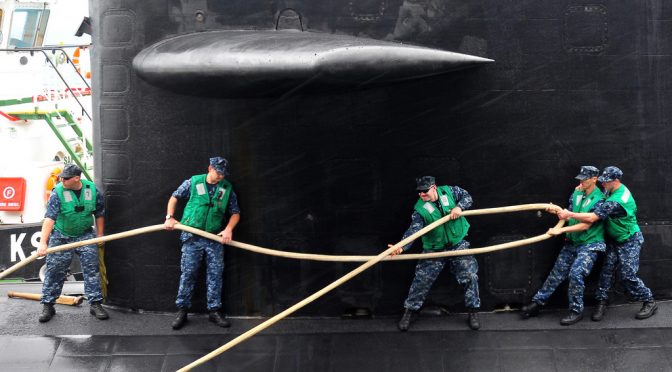
Featured Image: DIEGO GARCIA (Sept. 8, 2011) Sonar Technician (Submarine) 2nd Class Jeff Wiesmaier, left, Chief Fire Control Technician Johnathan Taylor, Missile Technician 2nd Class David Laymon, MachinistÕs Mate 1st Class Cody Henry and MachinistÕs Mate 3rd Class Christopher Smith secure the Los Angeles-class attack submarine USS Dallas (SSN 700) in Diego Garcia. (U.S. Navy photo by Mass Communication Specialist 2nd Class Chris Williamson/Released)
Written by W. Alejandro Sanchez, The Southern Tide addresses maritime security issues throughout Latin America and the Caribbean. It discusses the challenges regional navies face including limited defense budgets, inter-state tensions, and transnational crimes. It also examines how these challenges influence current and future defense strategies, platform acquisitions, and relations with global powers.
“The security environment in Latin America and the Caribbean is characterized by complex, diverse, and non-traditional challenges to U.S. interests.” Admiral Kurt W. Tidd, Commander, U.S. Southern Command, before the 114th Congress Senate Armed Services Committee, 10 March 2016.
By W. Alejandro Sanchez
The Argentine Navy’s submarine ARA San Juan (S-42) disappeared in the South Atlantic, off the coast of Argentina, on 15 November. At the time of this writing, a multinational effort is underway to locate the platform and its 44-person crew. This tragic accident has prompted a discussion in Argentina regarding whether the country’s armed forces are being allocated sufficient budgets to repair or replace aging equipment. Additionally, the San Juan incident must be placed in a wider discussion about civil-military relations, defense budgets, and the present and future of South American submarines.
ARA San Juan
Theories revolving around what happened to San Juan focus on an electrical malfunction that was reported by the crew prior to disappearing, though it was reportedly solved. The platform was returning to its home port of Mar del Plata when communications were lost. Naval protocol dictates that San Juan should have surfaced and traveled back to port, and it is unclear why the submarine continued its voyage submerged in spite of the aforementioned electrical problem. Adding to the mystery and overall concern was an apparent underwater explosion that reportedly occurred around 23 November in the general area where San Juan disappeared. The fear is that the explosion may have actually been an implosion due to pressure on the submarine’s hull.
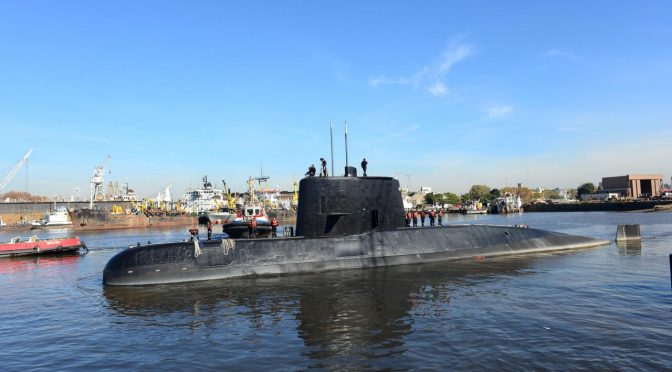
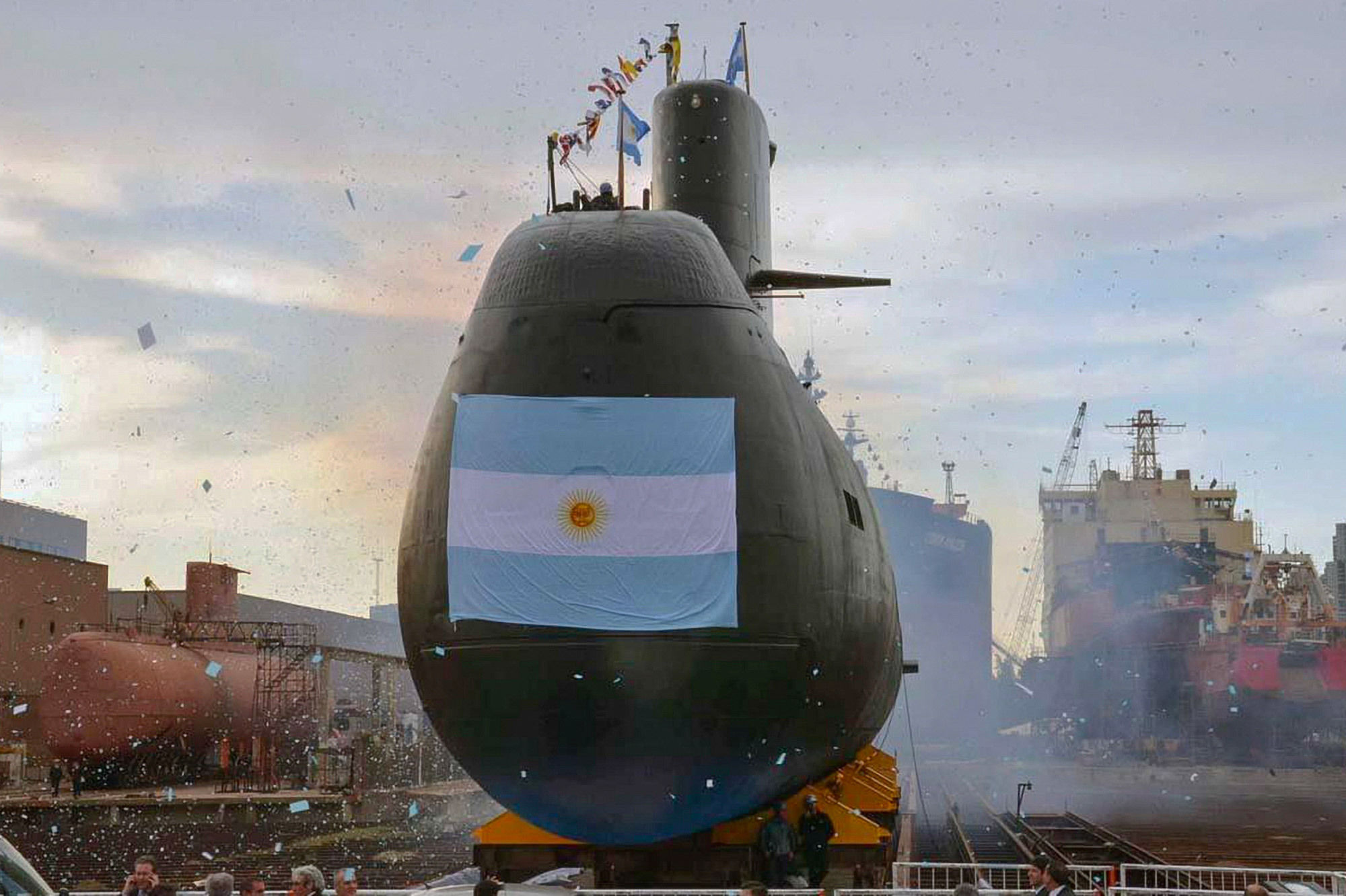
ARA San Juan at an exhibition in Buenos Aires. (Photo: AFP/Ministerio de Defensa de Argentina)
San Juan, constructed by the West German shipyard Thyssen Nordseewerke, was commissioned by the Argentine Navy in 1985. The platform, a TR-1700 class, weighs slightly over two thousand tons, measures 66 m in length, with a max speed between 15 kts (surfaced) or 25 kts (submerged), and as it is powered with diesel engines – it went through mid-life repairs in 2008. Its sister vessel is ARA Santa Cruz (S-41).
Other South American Submarine Incidents
The disappearance of San Juan prompted a plethora of articles listing other notable incidents regarding submarines. One recent example that is often mentioned is the loss of the Russian submarine Kursk (K-141), an Oscar-class platform that suffered an explosion in the Barents Sea in August 2000. The U.S. has also lost submarines, like the USSThresher (SSN-593), a nuclear-powered platform, in 1963, and the USS Scorpion (SSN-589), which disappeared in May 1968. That same year Israel’s INS Dakar and France’s Minerve (S-647) also disappeared.
When it comes to South America, submarine accidents are rare but, unfortunately, they have occurred. For example in 1919, the Chilean submarine Rucumilla, an H-class platform, was carrying out maneuvers, when it started to flood; thankfully, all 23 members of the crew were rescued alive. More recently, the Brazilian submarine Tonelero (S-21) sank while it was undergoing repairs at a harbor in Rio de Janeiro in 2000. The crew members aboard also managed to escape safely and the diesel-powered, Oberon-class submarine constructed in the 1970 was successfully refloated only to be decommissioned shortly after.
There has also been one reportedly deadly accident: in 1988 the Peruvian submarine BAP Pacocha (SS-48), a Balao-class platform, was rammed by the Japanese fishing trawler Kiowa Maru off the Peruvian coast, close to the Callao port. Pacocha settled on the seabed, at a depth of around 144 ft (43 m). A massive rescue operation involving several vessels, including another Peruvian submarine, BAP Abtao (SS-42), was carried out and the 52-person crew was rescued in groups. Tragically, eight sailors including Pacocha’s commander, Captain Daniel Nieva Rodríguez, perished. Additionally, some of the survivors would live face health issues, as since they “were exposed to gradually increasing pressure for nearly twenty-four hours, their tissues were saturated with nitrogen at a depth deep enough to produce decompression symptoms.”
The Region’s Aging Submarines
Because submarines are a key element of a nation’s naval deterrent, detailed information regarding their status, including armament, is a sensitive issue. With that said, we can provide some general points from what is publicly known, and how these platforms fit into regional maritime strategies.
South America’s submarines are generally old, as most platforms were constructed in the 1970s or 1980s. Regional navies have focused on mid-life and other upgrades in order to extend their operational life. For example, the Ecuadorian daily El Universo has reported that the country’s two submarines, Shyri and Huancavilca, type U209, were purchased in the late 1970s and have undergone three modernization processes already, “1980-1983 in Germany, 1991-1994 in Ecuador, and 2008-2014 in Chile.”
While most regional submarines are operational, others have been undergoing repairs for a significant amount of time. For example Argentina’s San Juan underwent mid-life repairs that required over five years of work (the Argentine media has critiqued this). Meanwhile the ARA Santa Cruzhas been undergoing repairs at an Argentine shipyard since 2016, leaving the navy with only one submarine, ARA Salta (which was constructed in the early 1970s). Additionally, Venezuela’s Caribe (S-32) has been in a dry dock since 2004-2005, awaiting repairs. It is somewhat bizarre that in spite of the billions of dollars spent on the Venezuelan military during the Hugo Chavez era, the submarine fleet was not modernized or expanded, and it consists of only two platforms, Caribe and Sabalo (S-31), both are U209A/1300 constructed in the mid 1970s.
In recent years, there have been a few new acquisitions. A decade ago (in 2005-2007), Chile incorporated O’Higgins (SS-23) and Carrera (SS-22), two Scorpene-class submarines constructed by DCN-Bazan (now Navantia), to replace the old Oberon-class platforms. Additionally, in 2015 the Colombian Navy received two refurbished German submarines, U206A-class, for its Caribbean and Pacific fleets. The platforms, now renamed ARCIntrépido (SC-23) and ARC Indomable (SC-24), were constructed in the 1970s and served in the German Navy until 2010-2011, when they were retired and sold to Bogota the following year.
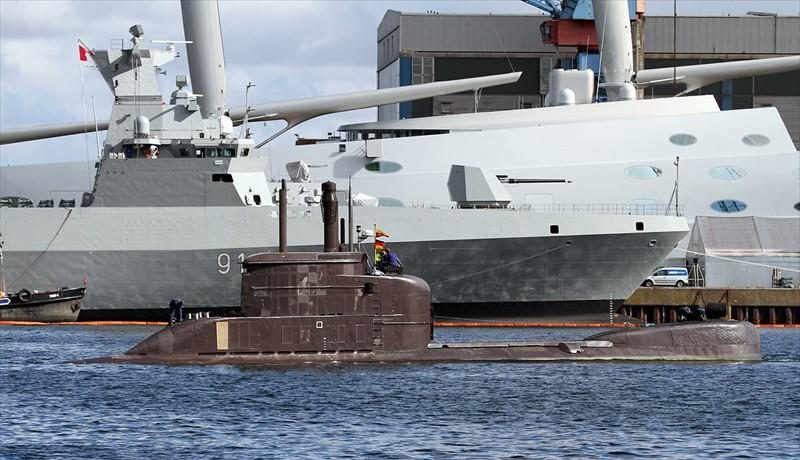
ARC Intrépido. (Helwin Scharn/MarineTraffic.com)
Finally, Brazil has the ambitious goal of domestically manufacturing submarines, as it is currently constructing with French support four Scorpene-class submarines and one nuclear-powered platform (the author has discussed this program in a November 2016 commentary for CIMSEC, “The Status of Brazil’s Ambitious PROSUB Program”). Of the region, the country has the most modern fleet as its current submarines (four Tupi-class and one Tikuna-class) were manufactured in the late 1980s and 1990s.
Why Do South American Navies Want Submarines?
Ultimately, what is exactly the role of undersea forces in South America in 2017 and beyond? The last conflict in the region was the Cenepa War in 1995 (Ecuador vs. Peru), while the last conflict with a maritime theater of operations was the Falklands/Malvinas War of 1982 (Argentina vs. United Kingdom).
While inter-state warfare in South America is not unthinkable, it is highly unlikely. Thus as regional naval strategies continue to evolve to properly address broad-spectrum maritime security threats (illegal fishing, drug trafficking, and humanitarian relief), the raison d’être of undersea forces must adapt, too.
In an interview with the author, Christian J. Ehrlich, Director of Intelligence at Riskop and Non-Resident Fellow at the Mexican Navy Institute for Strategic Research, explained that navies have three main missions: maritime security, naval diplomacy, and defense. Latin American navies have focused, particularly in recent decades, on the first objective – given the lack of inter-state conflict and generally peaceful diplomatic relations. This new reality has made it “financially difficult to maintain naval platforms that are mostly, if not exclusively, aimed at defense operations.” Mr. Ehrlich adds that navies that possess attack submarines have had to find a new “role” for these platforms, such as supporting surveillance or combating illegal fishing, such as when Ecuador’s submarine Huancavilca was deployed to combat illegal fishing after a recent incident involving a Chinese vessel off the Galapagos Islands.
Without a doubt, submarines are a powerful naval deterrent, a “just in case” tool if relations between two countries should deteriorate to the point that armed conflict is a real possibility. There are still occasional incidents, including maritime disputes, that highlight how South America is far from being a peaceful region where inter-state warfare is unthinkable. Hence, these hypotheses of conflict, combined with adapting to new security threats, ensures, as Mr. Ehrlich explains, that “the silent service will continue to be part of [South American] navies, which have invested decades in these platforms.”
Final Thoughts
The tragic disappearance of San Juan has brought to light a number of issues. In Argentina, the media and public are demanding both answers and culprits, and it is likely that the navy’s high command will have to resign. The Argentine media has discussed the military’s current status, blaming the civilian leadership of not providing adequate budgets to the armed forces to replace old equipment. At a regional level, this incident has brought to light the problematic reality of South American submarine fleets. Generally speaking, they are quite old, in need of replacement, and they need to find new roles to be relevant to contemporary maritime security strategies.
Thankfully, submarine-related incidents have been scarce, though the 1988 incident of Peru’s Pacocha and the current disappearance of Argentina’s San Juan exemplifies how just one accident can claim so many lives instantaneously. Such is the perilous life of the submariner.
W. Alejandro Sanchez is a researcher who focuses on geopolitical, military, and cyber security issues in the Western Hemisphere. Follow him on Twitter: @W_Alex_Sanchez
The views presented in this essay are the sole responsibility of the author and do not necessarily reflect those of any institutions with which the author is associated.
The author would like to thank Erica Illingworth for editorial advice.
Featured Image: The Argentine military submarine ARA San Juan and crew are seen leaving the port of Buenos Aires, Argentina June 2, 2014. (Armada Argentina/Handout via REUTERS)