
By Rear Admiral Bruce Loveless, U.S. Navy (Ret.)
Heavy Seas
Heavy seas do calm with time. Yet long after headlines fade and public attention moves on, those who endure them continue to feel their weight—professionally, personally, and often in silence.
The Glenn Defense Marine Asia (GDMA) case—widely known as the “Fat Leonard” scandal and the largest corruption case in U.S. Navy history—led to criminal charges against more than 30 uniformed and civilian officials, with lengthy investigations that disrupted hundreds of careers.¹ During that period, I was serving in key operational intelligence roles across the Indo-Pacific and later in senior positions at the Pentagon, making my own experience inseparable from the broader institutional reckoning that followed.
Now largely remembered as a case study in public corruption and accountability, the ordeal was deeply personal for me—a painful and prolonged period of uncertainty that demanded perseverance and tested character in ways I never expected. With recent decisions by a federal appeals court effectively closing the final chapters of the GDMA case, the legal story has reached its conclusion. The human story has not.²
What follows is not an effort to relitigate the case or revisit legal arguments. Rather, it is a personal reflection on what it means to serve, to be accused, and to endure when trust—personal, professional, and public trust—is strained over time.
The Storm
The storm hit long before my very public arrest.
While serving at the Pentagon in the fall of 2013, I was called into a meeting with Department of Justice (DOJ) attorneys and NCIS agents. They asked about Navy port visits from several years earlier, going back to 2005, when I sailed the Western Pacific with the U.S. Seventh Fleet. Within hours, I was suspended from my duties, stripped of security access, and thrust onto the front pages of the national news. The press seemed to have the story beforehand.³
No charges. No explanation. Just suspicion—and years of painful uncertainty followed.
For three years, I lived in that limbo—still a naval officer, still a Flag Officer, still serving my country, but largely sidelined. In the fall of 2016, believing the ordeal had passed, I retired quietly (and honorably) after more than 30 years in the Navy, living and sailing around the world in warships, along with multiple assignments in what may be the most challenging battlefield of all—Washington, DC.
Then in the spring of 2017, without any warning or follow-up from that initial DOJ meeting, I was arrested. Federal agents with handcuffs knocked on my door very early in the morning—armed, but respectful. In NCIS offices at nearby Naval Base San Diego, I sat in a holding room, waiting—the federal jail downtown wasn’t even open that early.
The agents were professional, offering coffee and water. Strangely, they didn’t ask any questions about the case, as if not interested in me for that purpose. One said quietly, almost apologetically, “This will make more sense when you see the news.” The story had already been written.
Later that day in a federal courtroom, I stood shackled, wearing a prison jumpsuit. Another naval officer—also charged—stood nearby in a business suit and tie, clearly given time to prepare, flying in from Hawaii with his attorney. The contrast seemed deliberate. Perception mattered more than fairness in that moment.
That evening the story played on national TV. No trial. No evidence. No defense. Just narrative.
The Endurance
Back home that night, I sent a short email to Tom O’Brien, my brother’s Naval Academy classmate and former U.S. Attorney: “I think I need your help.” He responded immediately. Acknowledging the legal costs ahead would be overwhelming, he said, “These are accounts you’ve already paid into with your service.”
In the days (and years) that followed, the Navy was silent. No official calls. No offers of assistance. I was retired, after all. But many individuals stepped forward: shipmates, Naval Academy classmates, neighbors, and new friends in San Diego. Unexpected allies reached out with quiet strength.
For five years awaiting trial, I chose purpose over despair, completing a PhD by studying senior leaders across business, nonprofit, and public sectors—many shaped by adversity. Study partners kept me focused. Faculty reassured that perseverance would carry me through. Friends nudged me forward, on nearby hiking trails and running paths. Neighbors kept my spirits alive. And my brother, always a role model, was steady and present when I needed him most.
Through research, interviews, and hard miles on mountain trails, my understanding of leadership was rebuilt. For most of my Navy career, leadership largely meant operational excellence and taking care of sailors. But enduring this storm demanded far more. It would take dignity when humiliation felt certain. Perseverance when anger was easier. Grace, even when bitterness seemed justified.
Nearly every morning during the forthcoming trial, a Naval Academy classmate and running partner sent me a short text message—words of encouragement, reminders to keep going. Framed in familiar language—handing me water when needed, helping me find another mile when my legs and heart were tired. His quiet consistency and the loyalty of others like him made the marathon possible.
The Trial
The trial itself didn’t come quickly. Following my arrest, we waited—year after year—as proceedings were delayed. Some co-defendants eventually pleaded guilty. Then COVID caused further delays.
When we finally went to trial in 2022—nearly nine years after that initial DOJ meeting—the federal courtroom in San Diego looked like a different world. We were five defendants on trial together, all naval officers who served in the Seventh Fleet around the same time, and more attorneys than one could count, on both sides of the aisle. Masks covered our faces. Plexiglass divided us. Jurors couldn’t see our facial expressions, nor our humanity.
Why the trial was in a federal court—rather than a military courtroom—was a frequent question. To my understanding, DOJ took jurisdiction because the broader case involved a civilian contractor and alleged violations of federal bribery laws. However, with full respect for civil authority, explaining years of operational context—overseas, over decades, involving port visit interactions with a foreign husbanding agent hired by our Navy—to a civilian jury, understandably unfamiliar with forward-deployed naval operations, proved challenging for all defendants. Even federal prosecutors struggled to present that complexity clearly.
In the middle of what would become a grueling four-month trial, the Judge suspended proceedings to hold a separate evidentiary hearing away from the jury. In a surprising turn, prosecutors took the witness stand and were questioned by defense counsel. The courtroom was packed—with attorneys, observers, even other judges—watching a rare public reckoning unfold. During that hearing, serious flaws in the prosecution’s case—withholding evidence, misrepresenting facts, deceiving the public, and even attempting to bribe witnesses—came to light. Behavior by government prosecutors and investigators that the Judge characterized as “outrageous” and “flagrant misconduct.”⁴
While that moment felt like a turning point in the case, the Judge denied several motions for a mistrial. So, after months of testimony and weeks of deliberation, the jury ultimately returned mixed verdicts. For me, the jury could not reach a decision—a hung jury—while the other four defendants were convicted on all charges (felony convictions later reduced to misdemeanors). Soon after the trial, the DOJ prosecutors themselves requested that all charges against me be dismissed (with prejudice), and the Judge agreed, bringing my legal ordeal to an end, nearly a decade after the investigation began.⁵
But that didn’t end the scrutiny, for the scars—personal, professional, and reputational—remain. And the cloud of distrust lingers.
Hard Truths
The Fat Leonard scandal was built on a story—partly true, often exaggerated—driven by a con man and too readily accepted by government prosecutors and a press eager for headlines. In my view, major media outlets, especially The Washington Post, relied too heavily on the prosecution-provided narrative, repeating sensationalized claims without nuance.6 Some even suggested I had traded military secrets—yet no charge ever alleged such a thing. Complexity rarely fits into headlines.
The Navy, bound by lawful authority, largely remained silent. In many ways, I understood that—for I was one of them, and they were me. With a major federal investigation and heavy public scrutiny, there was little space for Navy leadership to act differently. In the face of prosecutorial overreach and intense media coverage, the narrative became one-sided, and sometimes deeply misleading.
Even now, I struggle to believe that most of those in uniform who were charged truly understood that Francis was defrauding the government. In hindsight, it seems unlikely he would have wanted them to know—exposure would have jeopardized his scheme. Indeed, trial evidence showed he deliberately concealed his fraudulent actions, especially from senior officers. As the Judge pointedly told the lead prosecutor during the trial (though away from the jury): “I’m not buying it…to be part of a conspiracy, you have to know what’s going on.” Yes, there were serious lapses in judgment and troubling ethical failings, for sure. But whether those amounted to felony-level crimes is, in many cases, a far more complex legal question.
In the end, all of my charges (bribery, conspiracy, and fraud) were dismissed at DOJ’s request after years of investigation, months of trial, and a hung jury—where I was the only defendant the jury refused to convict. My charges were not dismissed because of prosecutorial misconduct, nor did it end on a technicality, as some still mistakenly believe. It ended because the prosecution failed to prove its claims against me before a jury at trial. Unlike all others charged, I was not accused of direct criminal wrongdoing, but of failing to report the alleged misconduct of others. In essence, I was accused of looking the other way. That allegation collapsed under scrutiny because the evidence was insufficient to convince the jury—and it simply wasn’t true.
Still, deeper reflection includes what I could have done differently. I wish I had kept greater distance from Francis—of course I do in hindsight—and I know many others feel the same. As the U.S. Navy’s primary husbanding agent in the Western Pacific for decades, his company (GDMA) was not viewed with enough suspicion by us, at least not back then. Naively, we placed a great deal of trust in the people and systems around us, assuming the processes responsible for vetting and hiring Navy contractors would shield us from bad actors, especially those we relied on so directly to meet critical operational needs.
Likewise, through this unfamiliar legal journey, I mistakenly believed that government prosecutors and agents would uphold the highest standards of justice and professional conduct—at least I did before this horrific experience. Those assumptions, as it turned out, were dangerously misplaced.
Even without criminal guilt, some regret remains, for not recognizing the criminality of the situation—with Francis or anyone else for that matter. And a sense of responsibility lingers, believing that if I had known, I would have spoken up, somehow, someway. Silence, even unknowing, contributes to failure.
Hard truths are never easy, but they teach.
Enduring Trust
The Navy remains an institution I love. Its ideals—honor, courage, commitment—still mean as much to me today as they did when I first took the Oath during Plebe Summer in 1982. Enduring the Fat Leonard scandal tested those ideals beyond anything I ever imagined. It also made them more real.
Character isn’t forged in calm seas; it’s revealed in crisis—we know that. Even more so when everything falls apart, when your professional life ends abruptly, when your personal life is shattered, when you’re afraid. Enduring this storm was made possible because others stood beside me—shipmates, friends, family—who refused to walk away.
I am better because I endured—because I came to understand the deeper strength that comes when character is tested. Under great strain, I chose dignity over anger, perseverance over bitterness, grace over grievance. And in the end, I chose resilience over defeat. Growth is a choice.
The foundation of character—and leadership—is trust. Trust is fragile and must be earned—every day, in every challenge, through every trial—seen and unseen. My greatest hope remains, not only to be trusted, but to continue to live and lead in a trustworthy way.
Bruce Loveless is a retired U.S. Navy Rear Admiral who served more than 30 years as a naval intelligence officer. He is a graduate of the U.S. Naval Academy and holds a PhD in Leadership Studies from the University of San Diego.
References
- S. Department of Justice, press releases and case summaries concerning the Glenn Defense Marine Asia corruption investigation, 2013–2024. See, for example: https://www.justice.gov/criminal-fraud/glenn-defense-marine-asia
- Greg Moran, “After more than a decade, the Fat Leonard scandal may finally be over — but not for everyone,” inewsource, December 29, 2025, https://inewsource.org/2025/12/29/fat-leonard-navy-case-san-diego-questions/.
- National media reporting on the “Fat Leonard” scandal, 2013–2024. Representative coverage in The New York Times: https://www.nytimes.com/2013/11/09/us/bribery-case-implicates-2-admirals.html
- Federal court proceedings and related public reporting addressing prosecutorial misconduct and evidentiary issues in GDMA-related cases, 2020–2023. See, for example: https://www.sandiegouniontribune.com/2023/09/06/felony-convictions-vacated-for-4-former-navy-officers-in-sprawling-fat-leonard-bribery-scandal/
- United States v. Loveless, U.S. District Court for the Southern District of California, case filings and dismissal order. Public docket available via PACER: https://pacer.uscourts.gov and also at: https://news.usni.org/2022/09/15/charges-dropped-against-retired-rear-adm-bruce-loveless-in-fat-leonard-case
- National media reporting on the “Fat Leonard” scandal, 2013–2024. Representative coverage in The Washington Post: https://www.washingtonpost.com/investigations/leaks-feasts-and-sex-parties-how-fat-leonard-infiltrated-the-navys-floating-headquarters-in-asia/2018/01/23/4d31555c-efdd-11e7-97bf-bba379b809ab_story.html
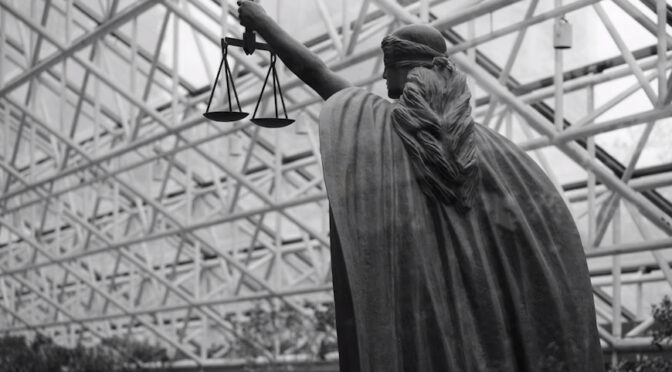
Featured image: Statue of lady justice holding scales indoors. (Open source photo by Albert Stoynov)
Discover more from Center for International Maritime Security
Subscribe to get the latest posts sent to your email.
Thank you for sharing. I had several friends who were impacted by this process. Justice was not served in many cases. Additional thoughts here: https://www.usni.org/magazines/proceedings/2017/december/fat-leonard-scandal-fallout-will-damage-navy-years
https://www.usni.org/magazines/proceedings/2017/december/fat-leonard-scandal-fallout-will-damage-navy-years
It’s really striking how the impact of these kinds of situations can linger long after the immediate news cycle is over. The ripple effects on people’s careers are something that’s often overlooked.
Why publish this? It’s one person’s defense of their own conduct and thus totally self-serving, and parties with any evidence to contradict it are not at liberty to disclose it. How does this “essay” benefit anyone other than its author?
I’m a retired Naval Officer and a current federal civil servant (GS14) for the DoW (DSCA/DSCU). My activity is known as the Defense Institute of International Legal Studies (DIILS). I am the Course Director for one of our major resident courses – the Legal Aspects of Combating Corruption (LCC). For years, we have covered the Fat Leonard matter as a case study in our course. After reading RADM Loveless’ article above (Enduring the Storm), I realized that our coverage of this topic could benefit from his perspective and experience. Our course covers how to prevent, mitigate, identify, investigate, analyze, prosecute and learn lessons from corruption in the defense and security sector. But his article has identified for me a potential blind spot in our coverage of this matter. Could you reach out to the author (RADM Loveless) and ask him if I could contact him to discuss his possible participation/presentation in our course? Thank You. V/R
Hi Benny, how can I help?
The Fat Leonard scandal exposed serious weaknesses in oversight and ethics within the United States Navy.
It serves as a powerful reminder that transparency and accountability are essential to maintain trust in military institutions.