Category Archives: History

Naval and maritime history section.

Enter the SCAGTF: Combined Distributed Maritime Ops

By Nicolas di Leonardo

SURFACE * CYBER * AIR * GROUND * TASK FORCE

 “…The supreme art of war is to subdue the enemy without fighting.” –Sun Tzu, The Art of War 
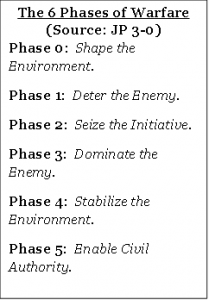
Six Phases of Warfare
Source: JP 3-0

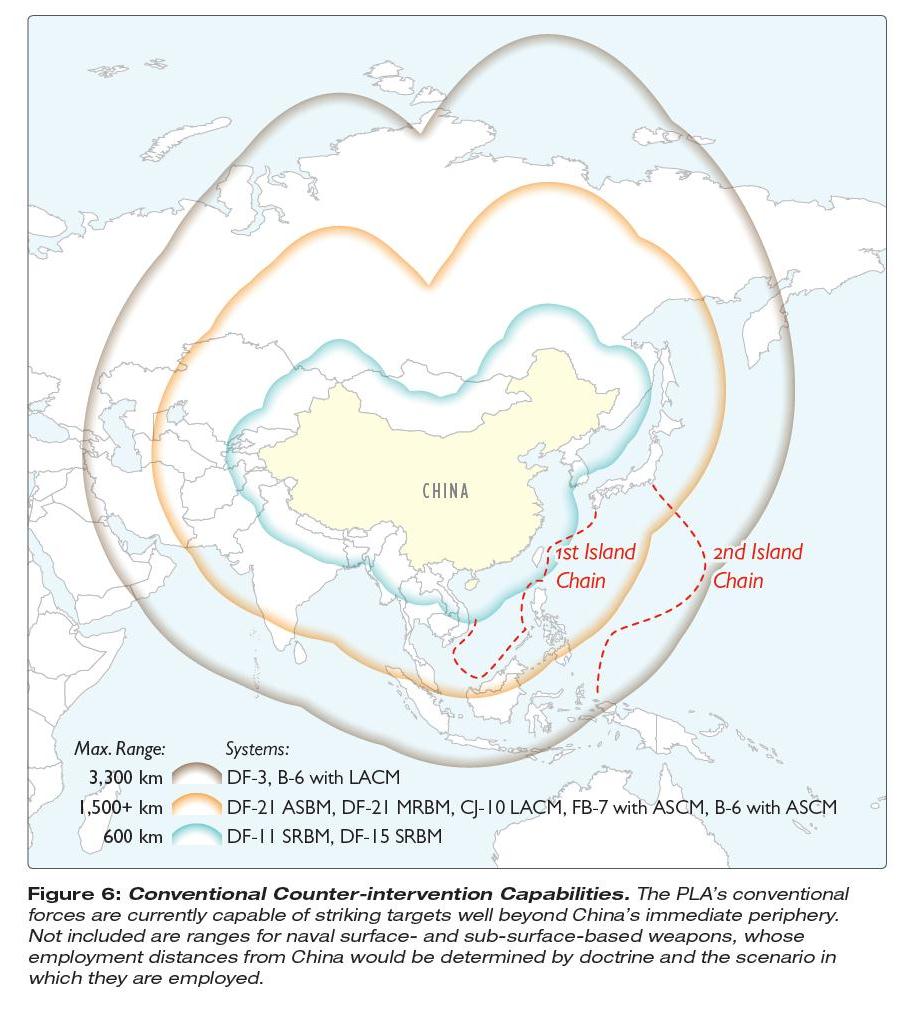
In modern parlance, winning without fighting is accomplished in Phases 0 and 1 of a campaign.  China is seeking to achieve a Phase 0-1 victory in the Pacific through its acquisition / deployment of Anti-Access Area Denial (A2AD) weaponry and economic / military coercion of its peripheral neighbors. When the two are coupled, US operational and diplomatic freedom of maneuver becomes severely constrained, and decisive counter-strategy is required.

Historically, the US has attempted to counter each of China’s weapon systems / diplomatic moves individually without attacking its overall strategy.  When new Chinese weapons systems are deployed, new American countermeasures are fielded.  When China builds new islands where disputed sandbars and reefs once existed, the US flies freedom of navigation sorties overhead.  When individual South East Asian countries are coerced by China to abandon multilateral UNCLOS negotiations and sign bilateral agreements, the US reaffirms support of multilateralism.  The American strategy demonstrates
Source: InformationDissemination.net

resolve and intent, but does little to shape the environment, and deter the near peer competitorIt plays like a precipitated withdraw and ceding of the South China Sea to China—a stunning admission that there is seemingly little that the US can do when faced with the Chinese dominated political-economic landscape on one hand and a potential naval – air war of attrition on the other. 

The potential Chinese A2AD environment is particularly daunting for the US Pacific Fleet.  Chinese forces could elect to deploy their anti-surface / land attack ballistic and cruise missiles to keep American carriers outside of the 9-Dash Line; disable reconnaissance satellites; jam communications necessary for secure / centralized command & control; threaten to overwhelm remaining forces with vast numbers of aircraft while using the majority of their ships and submarines to counter the US asymmetric advantage in undersea warfare. By asymmetrically threatening American Navy “kill chains”, and especially by holding its naval center of gravity—the CVNs—at risk, the Chinese can effectively turn the American critical strength into a critical vulnerability.  The US cannot afford to lose even one CVN and thus when confronted with the threat of a paralyzing strike against its Pacific CVNs followed by an attrition war, it is prudent to assume that the US would not risk the losses and would exit the battlespace. A potential de-facto Chinese victory in Phases 0-2 could thus be achieved without a decisive Mahanian sea battle–just a credible threat.

Solution sets to countering Chinese A2AD Phase O-2 victory are under development from multiple sources—US  Naval Surface Forces (Distributed Lethality); Marine Corps Combat Development Command (Distributed STOVL [F-35B] Operations); US Marine Corps Advanced Studies Program (Engagement Pull).  All have one thing in common: strategic distribution of mobile offensive power to hold China’s freedom of maneuver in the South China Sea at risk, and inhibit their sea control over key sea lines of communication (SLOC). These solution sets represent a significant evolution in the strategic thought surrounding the US pivot to the Pacific:  attacking China’s strategy vs countering its individual asymmetric capabilities.

In Distributed Maritime Operations: Back to the Future, Dr. Benjamin Jensen states that

“…integrating land and naval forces as a ‘fleet in being’ denying adversary sea control is at the core of the emerging distributed maritime operations paradigm.” 

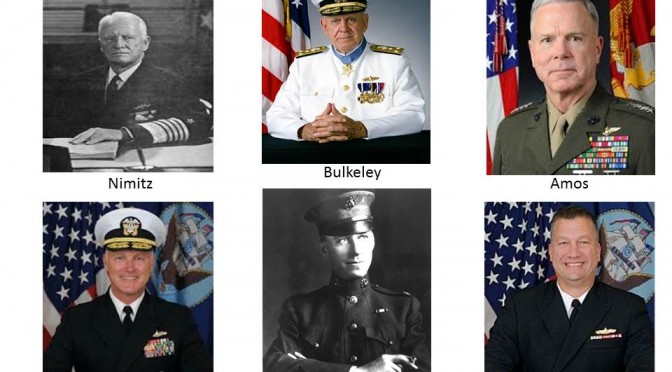
The defining of the pieces parts and the organizational construct of this paradigm is at the heart of the matter.  General Al Gray, USMC (ret) and Lt. General George Flynn, USMC (ret) recently presented at the Potomac Institute their thoughts on Sea Control and Power Projection within the context of The Single Naval Battle.  In their vision, the forces would include:

To this list I would add tactical level cyber capabilities.

Forces engaged in these missions will likely operate in near proximity to each other and in joint / combined operations, as the American, Australian, New Zealand and British sea, air and land forces of Guadalcanal did.  They will be required to pose sufficient threat to Chinese forces without significant reinforcement due to anticipated Chinese A2AD.  The inter-complexity of their likely combined Sea, Cyber, Air, Ground operations dictates that their task force command and control should not be ad-hoc, but must be defined well in advance to allow for the emergence, experimentation and exercising of command knowledge, skills, abilities and tactics / doctrine. US and allied lack of exercising joint/ combined, multi-domain operations prior to Guadalcanal led to tactics and command and control (C2) doctrine being written in blood.  This lack of foresight should not be repeated.

A SCAGTF construct allows for the US to shape the environment with its allies, deter the [Chinese], and if necessary to seize the initiative, buying time for the massing of forces to dominate the battlespace.  The SCAGTF is one way to integrate the great ideas of our best strategists on distributed maritime operations into a single, flexible organizational structure that is capable of mobile, simultaneous combined / joint multi-domain operations in all phases of warfare.  Such a force could aid the US in reversing its Pacific fortunes, in reinforcing multilateral peace and security for the region, and ultimately in realizing Sun Tzu’s bloodless victory.

Nicolas di Leonardo is a graduate student of the US Naval War College.  The views expressed here are his own and do not necessarily reflect those of the War College or the United States Navy.
Return of the Clandestine Merchant Raider?

By Chuck Hill

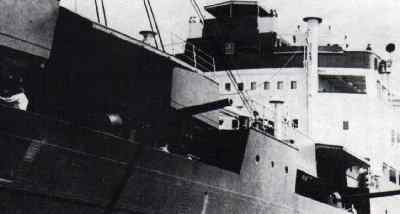
Since before recorded history, merchant vessels have been adapted for offensive purposes by navies, pirates, and privateers to destroy enemy commerce or to launch attacks ashore. Frequently they employed disguise and deception. The UK employed Ships Taken Up From Trade (STUFT) during the 1982 Falklands War, the Malaysian Navy has converted two container ships into pirate hunters, and the US Navy has leased ships to support special operations, but I think the last time they were used to attack commerce was WWII. By the end 1943, it appeared that technology, primarily in the form of reliable radios, plus robust challenge-and-reply procedures, a comprehensive naval control of shipping organization, and a seemingly impervious blockade of the German coast, had made this type of  warfare very dangerous, but new technology may now be working in favor of using converted merchant ships as clandestine warships.

The German Experience

During World Wars I and II, the German Navy achieved considerable success using armed merchant ships as clandestine merchant raiders. At small cost they sank or captured a large number of allied merchant vessels, tied down a number of warships searching for the raiders, and even managed to sink allied warships.

In World War I, three raiders, Wolf, Moewe, and Seeadler (a full rigged sailing ship), sank or captured 78 ships totaling 323,644 tons. In addition to the merchant ships they captured or sank directly, merchant raiders proved effective mine layers. One victim of a mine laid by the raider Moewe was the pre-dreadnought battleship EdwardVII, sunk on 6 January, 1915.

In World War II nine German Merchant raiders, Atlantis, Komet, Kormoran, Michel, Orion, Pinguin, Stier, Thor, and Widder, sank or captured 129 ships, totaling 800,661 tons. While this pales in comparison to the sinkings by U-boats, they were far more effective than the regular navy surface raiders, including the vaunted pocket battleships, heavy cruisers, and battleships Scharnhorst and Gneisenau, that managed to sink or captured only 59, totaling 232,633 tons. The merchant raider Kormoran even managed to torpedo and sink the light cruiser HMAS Sidney, before the Kormoran herself was also sunk.

Typically, the raiders of WWII were equipped with six obsolescent 5.9″ guns and large numbers of torpedoes to allow ships to be sunk rapidly. Most were also equipped with aircraft and some with torpedo boats.  They were also equipped to change their appearance while underway.

Several of their voyages were extraordinarily long. Michel’s first voyage was 346 days. Orion’s was 510 days. Thor was away 329 days and managed to sink HMS Voltaire, an armed merchant cruiser. Pinguin for 357 days. Komet for 512 days. Kormoran for 350 days before her fatal encounter with HMAS Sydney. The ships were refueled and rearmed by supporting vessels that also took their prisoners. Raiders were also used to resupply submarines.

Perhaps surprisingly, none of these WWII raiders were underway when the war began, when they might have been most effective. They were sortied in two waves in 1940 and 1942.

End of the Merchant Raider

Despite their successes, by the time the last German raider at sea was sunk on 7 September, 1943, by a US submarine shortly after it had sortied from Japan, it had become impossible for ships to sortie from Germany and make it to open sea. Komet and a tenth raider were both sunk attempting to do so.  Three of the nine, Atlantis, Pinguin, and Kormoran, were sunk in distant seas by British cruisers. One, Stier, was sunk by the Naval Armed Guard on the Liberty ship Stephen Hopkins. One was destroyed by a nearby explosion while moored in Yokohama. Two, Orion and Widder,  survived their career as raiders long enough to return to Germany and be repurposed.

Rebirth–Weapons and Sensors, Old and New

Technological changes in the form of containerized cruise missiles, satellites and UAVs and other Unmanned Vehicles may have made the merchant cruiser once again a viable option.

Cruise missiles mean that the raider no longer needs to come with visible range of the their victim. With sufficient range and use of way points, the shooter can be over 100 miles from its victim and the missile can come from any direction, not necessarily from the direction of the raider. Plus they can now attack land targets as well as ships. The US has begun to think seriously about the threat of a cruise missile attack on the US and innocent looking container ships are a possible source.

UAVs can provide over the horizon targeting and are likely to be undetected by the target.

Satellites may help or hurt potential raiders. If they have the support of satellites, it may help them find their pray. If the defenders are sufficiently sophisticated (and they are looking in the right place) they may be able to recognize a missile launch as the first step in finding, fixing and destroying the raider.

Similarly the Automatic Identification System may help the raider or the defender. It may help the raider find targets, but it may also help the defender react more swiftly to an attack or help him identify the raider from among all the other ships in the area. There is always the possibility the information may be bogus. Unmanned Surface Vessels might be used to create false targets. We might want to plan for a system of encrypted information for contingencies. Limiting use of the systems is an option that may require careful consideration.

Mines are still potentially effective. The large carrying capacity of cargo ships means they could potentially lay large mine fields. A raider could knowing a war will start soon might lay a large field to be activated when hostilities begin. If hostilities have already begun, the raider is unlikely approach a port closely enough to lay the mines itself, but mobile mines already exist, and Unmanned Underwater Vehicles or even simple semi-submersible unmanned vessels that can lay an minefield should be relatively easy technology.

China, Perpetrator or Target

From an American point of view, China with its huge merchant fleet and large inventory of cruise missile may appear a possible user of Merchant Raiders, but their large merchant fleet and need to import may also make them vulnerable to this this type of warfare if employed by weaker nations.

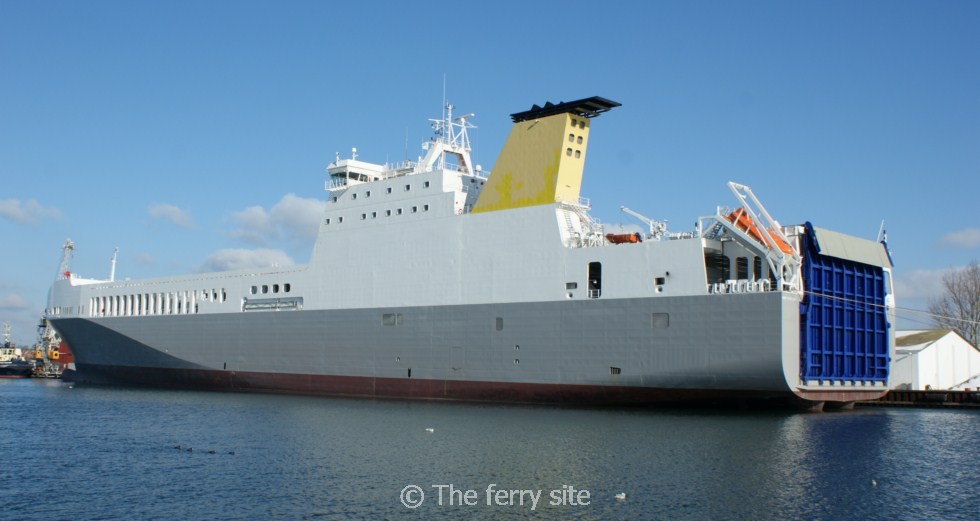
We know China has a Naval Militia. that will allow them to rapidly increase the size of their naval force. China has recently said it would require its ship builders to incorporate features that would make them usable for military purposes in wartime. These requirements are to be applied to five categories of vessels – container, roll-on/roll-off, multipurpose, bulk carrier and break bulk.  What these additional features are to be, is not clear. This could mean upgraded communications, either external or internal. It could mean improved survivability, greater speed, or foundations for weapons upgrades. They may only be thinking of using these ships to support amphibious operations, but these improvements may also make a large number of ships potential merchant raiders.

China’s large merchant fleet and need to import raw materials may make her vulnerable to Guerre d’Course. In the kind of low intensity conflict we have seen between China and her neighbors, it has seemed China has had all the advantages, but if they are pushed too far, China’s neighbors might see this form of warfare as a way to push back.

Non-State Actors

There is also the possibility of terrorist organizations attempting something similar, but they are more likely to attack highly visible targets of a symbolic nature, such as port facilities or major warships. Cruise missile could of course be used to attack major landmarks. They may also be less interested in living to fight another day.

Conclusion: I don’t think we have seen the end of offensive use of Merchant vessels.

Sources:

Addendum:

Some photos of vessels that are being used for military purposes:

MSC has chartered the MV Craigside to support SOCOM requirements. It is undergoing conversion in Mobile.

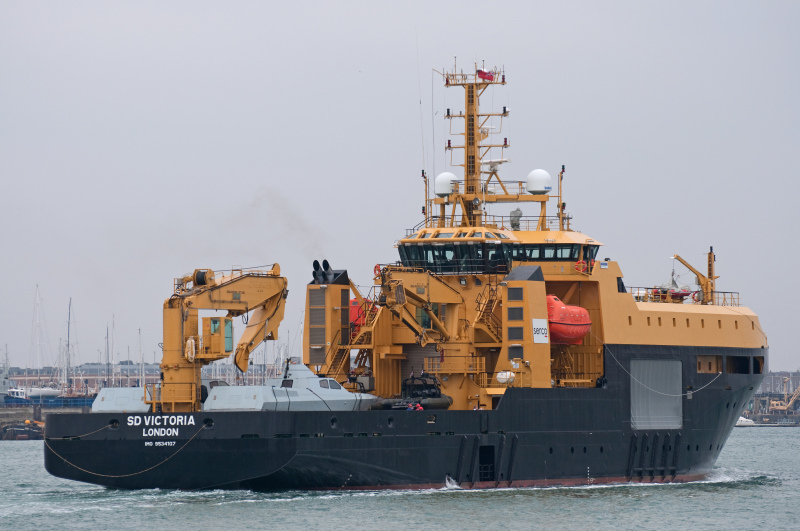
SD Victoria lifts boats and supports crews for UK Special Forces (SBS and SAS).

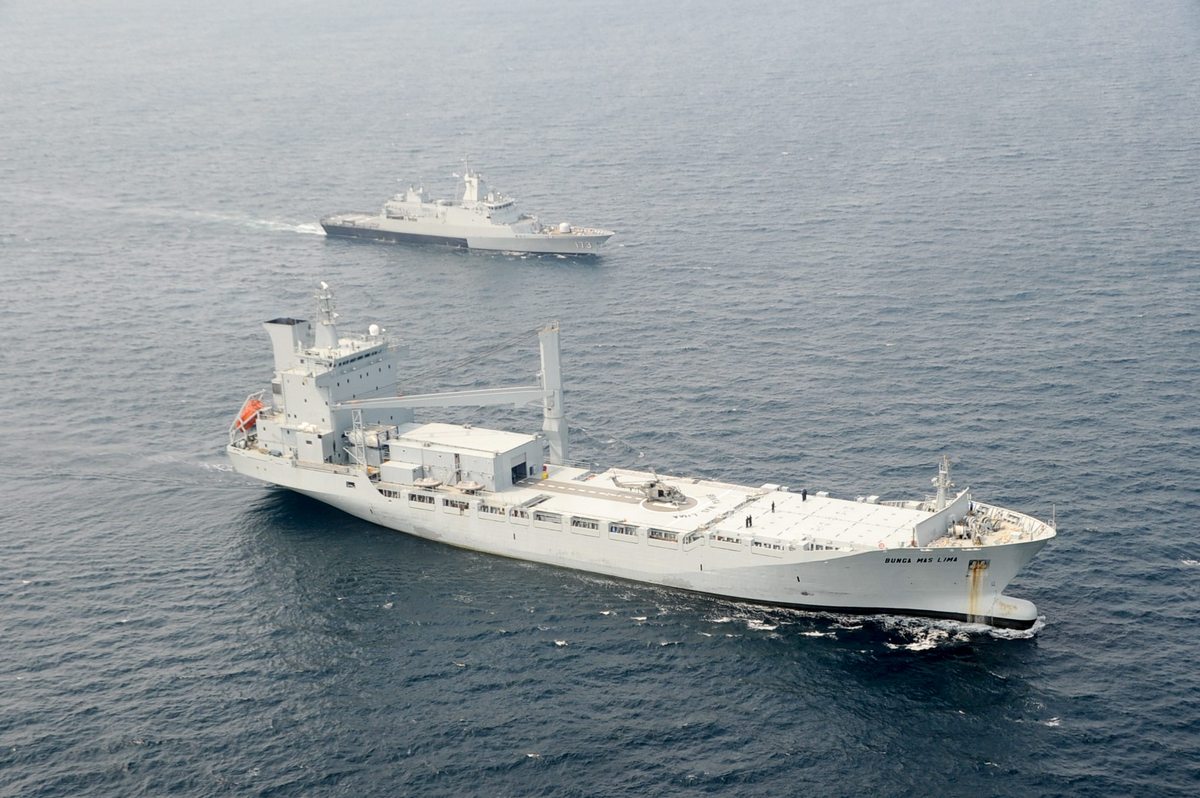
Malaysian auxiliary warship Bunga Mas Lima

Chuck retired from the Coast Guard after 22 years service. Assignments included four ships, Rescue Coordination Center New Orleans, CG HQ, Fleet Training Group San Diego, Naval War College, and Maritime Defense Zone Pacific/Pacific Area Ops/Readiness/Plans. Along the way he became the first Coast Guard officer to complete the Tactical Action Officer (TAO) course and also completed the Naval Control of Shipping course. He has had a life-long interest in naval ships and history.

Sea Control 85 – The Melian Dialogue, More Than Meets the Eye

seacontrol2The Melian Dialogue is one of the classics in IR theory – often cited to show the realism and brutality of the international system, it is often taken at face value by students and teachers alike. However, these adherents brush over over a long conflict in which Melos plays an important role, the more complicated nature of Melos and its relationships, and the biases and purpose of the author, Thucydides. NDU Professor Col Jay Parker (USA Ret.) joins us to discuss the whole of the Melian dialogue, and see the deeper lessons we can learn.

DOWNLOAD: The Melian Dialogue – More Than Meets the Eye

Host & Production: Matthew Hipple
Music: Sam LaGrone

CIMSEC content is and always will be free; consider a voluntary monthly donation to offset our operational costs. As always, it is your support and patronage that have allowed us to build this community – and we are incredibly grateful.
Select a Donation Option (USD)

Enter Donation Amount (USD)

The God of Submarines


Unknown

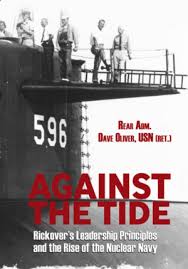
Rear Admiral Dave Oliver, USN (Ret.),  Against the Tide: Rickover’s Leadership Principles and the Rise of the Nuclear Navy. Naval Institute Press. 178pp. $27.95.

Admiral Hyman George Rickover, USN, (1900 – 1986), has been gone now for almost thirty-years.  Yet his legacy remains — and not only in the boats he built, or the submarine culture he shaped, or even the incessant attention to detail and excellence — but also the theatrical.  Thus, most stories of the great man are told in either a tone of reverence or disbelief, but regardless, they tend to be entertaining.

I’ll never forget the first story that I had heard about the old man. When I was a young ensign, somehow his name came up during a conversation:

Officer: Hey, have you ever heard of Admiral Rickover and what he did when he interviewed officers for command?

Me: No, I haven’t heard about him.  What did he do?

Officer: Well, Rickover would interview every prospective commanding officer of a nuclear submarine. So, this one time, an officer was in his office and Rickover said to him, “Do something to make me mad.” The guy looks at Rickover, and then he knocks everything off Rickover’s desk, including a valuable model of a submarine.  Rickover was furious — but apparently it worked, the officer got the job and ended up commanding a nuclear submarine.  Crazy, huh?

Me: (Stunned silence).

A few years later, more stories would come up — and they always had something to do with his infamous interviews: Rickover stuffed officers in the broom closet next to his office if they gave a poor response to a question; Rickover sawed a few inches off the legs of the chair in front of his desk to confuse an officer interviewing for the program; and Rickover had no qualms about calling you an idiot.  The best, and really the only complete transcript of a Rickover interview comes from the late-Admiral Elmo Zumwalt, who, as a commander, interviewed with Rickover in the late 1950s for command of a submarine.  While Zumwalt passed the interview (although with a few stops in the broom closet along the way) he ended up going a different direction.  He became the first commanding officer of a  guided-missile frigate, and  years later,  the youngest chief of naval operations in U.S. naval history. His memoir, On Watch, is worth the price of admission for the interview alone.

Rear Admiral Dave Oliver, USN(ret.), however, has less to say about his interview with Rickover in his new book, Against The Tide.  Rather, Oliver has written an entertaining, slim volume that is a series of anecdotes and stories tied to leadership and management principles gleaned from years of observing and studying “the father of the nuclear navy.”

On Leadership: “I have the charisma of a chipmunk, so what difference does that make?”

– Admiral Hyman Rickover

Early in the book, Oliver tells us one of the more interesting stories about Rickover and his ability to expect the unexpected.  It is worth telling in full.

It was the late 1960s the U.S. and the U.S.S.R. were in the middle of the Cold War. Oliver was deployed on his first nuclear-powered submarine, USS George Washington Carver (SSBN-656).  While returning from a patrol, somewhere in the Barents Sea, they received an encoded message from the boat that was enroute to relieve them.  The boat set to relieve them experienced a “technical problem.”  Oliver can’t say what kind of technical problem because, well, it “remains classified to this day.”  Thus, he simply refers to it as a “giraffe.”

The “giraffe” that this boomer had experienced was unheard of: “It was serious and was the first time this particular problem had ever arisen in the fledgling nuclear-power industry.” A message was immediately sent to Navy Nuclear Reactors.  Rickover would find out about the problem — it was only a matter of time.  Meanwhile, Oliver and the officers of the Carver sat down and tried to figure out a solution to the problem themselves, treating it as a real-world training evolution.  In a few hours they came up with a solution.  Oliver says that Carver’s solution took up twelve single spaced type-written pages.  They thought that they had figured it out and then hit the rack.  Hours later, Navy Reactors sent a message to “their sister ship” with instructions on how to proceed.  The length of the message?  Four words. 

And in those four words, Oliver says, they recognized its wisdom and — as a group — missed a safety consideration that just might have killed the entire crew.  Years later, Oliver ran into Rickover’s deputy for submarines, Bill Wegner.  Oliver says he thanked Wegner for that great four word response from what he assumed, was a group of Navy Reactor engineers.

As it turned out, the engineers came up with the same response as the officers on the Carver — something close to a twelve page type-written response to address the problem of the “giraffe.”  And this is where it gets interesting.  Wegner relayed to Oliver that when the event occurred, he went to Rickover’s apartment in Washington D.C. with a response in hand for the admiral’s approval to send to the boat. As Wegner tells Oliver:

“The admiral stood in the hall reading without comment and then invited me inside.  He went over to the rolltop desk that was just off the living room, reached into one of the pukas, and took out a half-inch thick package of yellowed envelopes encased by a rubber band.  He fanned through the pile, slipped one out from the pack and handed it to me. ‘Tell them this,“he said.”

“On the outside of the envelope, in Rickover’s handwriting was written ‘Giraffe’ … also inside, in Rickover’s distinctive scribble, was a three-by-five card with the four words we sent you.”

This pack of “emergency contingency plans” were there, sitting in Rickover’s desk, for the day the unexpected might happen.  Why they weren’t already onboard boats in the fleet, well, Wegner went on to tell Oliver that “…Rickover was not interested in anyone else in the Navy knowing how far he was willing to stretch engineering limits in an emergency situation.  Rickover believed in operating conservatively and safely.  In those envelopes he was going to give up a great deal of his safety cushion to provide an additional operating margin…” [Italics mine].

But not interested in letting anyone else know?  A story like this, then, can be seen in at least two ways: Rickover the genius; a man prepared for all seasons.  Or its opposite: Rickover was a micromanager that could have empowered his crews with information that in a different and deadlier circumstance could save their lives.  What does Oliver say at the end of this story?  He asks two of his own questions for the reader to ponder: “Do directors of companies sometimes accept risks they cannot evaluate until the bell tolls? And second, how do leaders avoid fooling themselves about the true condition of their own start-ups?”  Oliver ends every chapter with these kind of questions for self-reflection or discussion.  However, it would be nice to also hear Oliver’s take on the same questions he asks.

“There were a few times, yeah, that I hated him — because he demanded more from me than I thought I could deliver.”

– President Jimmy Carter

Leadership books that dip into the anecdotal stories of great men and women’s lives are often hagiographic. Oliver, as he says, respected Rickover second only to his father.  This admiration does not necessarily take anything away from the value of the work or the merit of Rickover’s principles.

But for every leadership book that sits on the shelf it is important to remember that one can learn just as much about leadership from a leader’s failures and shortcomings.  Rickover was a paradox on this count.  Oliver reminds us that one of Rickover’s mantras was  “Do the right thing.” Yet in 1986 Rickover was censured by the secretary of the navy for accepting over $60,000 in gifts from General Dynamics (twelve shower curtains?).  Rickover did not deny it, and he would later say that his “conscience was clear,” the gifts, he said, never influenced his decisions when it came to the submarine force.

Rickover was a contentious man, a brilliant man, and he had magical bureaucratic skills and vision: Imagine Peter Drucker and Steve Jobs all rolled up into one slight, white haired, five foot wiry frame.  And he could write.  Name a flag officer today that can wrap up Robert Browning, Walter Lippmann, I-Ching, Voltaire, Ralph Waldo Emerson, Teddy Roosevelt, and Aristotle into a single cogent essay.

Dave Oliver’s book is a nice volume to have on the shelf.  But it should not be read alone.  Rickover, his cult of personality, and his  legacy in the U.S. Navy needs a  larger context.  Polmar and Allen’s exceptional biography should sit right next to Oliver’s book for anyone who is considering learning more about this, the “father of the nuclear navy.”


Lieutenant Commander Christopher Nelson, USN, is a naval intelligence officer and recent graduate of the U.S.  Naval War College and the Navy’s operational planning school, the Maritime Advanced Warfighting School in Newport, RI.  LCDR Nelson is also CIMSEC’s book review editor and is looking for readers interested in reviewing books for CIMSEC.  You can contact him at books@cimsec.org.  The views above are the author’s and do not represent those of the US Navy or the US Department of Defense.