Six years ago, in November 2008, a group of Pakistan-based terrorists landed at unsecured waterfronts in Mumbai, the financial capital of India, and attacked public places such as hotels, restaurants, and a railway station. Although the Indian security forces were quick to respond, the attack, popularly referred to as 26/11, exposed three significant gaps in India’s maritime security apparatus: a. the porous nature of India’s coastline; b. the poor surveillance of the maritime domain; and c. the lack of inter-agency coordination.
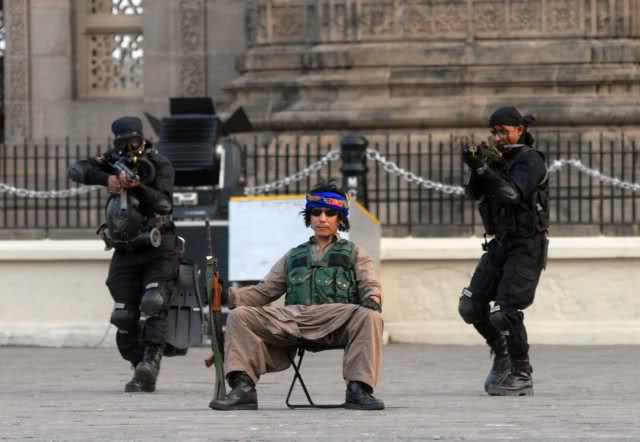
Indian Navy’s marine commandos in action during a mock rescue demonstration at the Gate of India during the Navy Day celebrations in Mumbai, India, 04 December 2010.
Post the 26/11 attacks, the Indian government undertook a number of proactive measures to restructure coastal security and push the defensive perimeter further away from the coast into the seas. The focus was on building national maritime domain awareness (NMDA) grid via a number of organisational, operational and technological changes. The Indian Navy has now set up the National Command Control Communication Intelligence (NC3I) network that hosts the Information Management and Analysis Centre (IMAC).
It connects 41 radar stations (20 Indian Navy and 31 Coast Guard) located along the coast and on the island territories, and helps collate, fuse and disseminate critical intelligence and information about ‘unusual or suspicious movements and activities at sea’. There are plans for additional coastal radar stations to cover gap/shadow zones in the second phase; these are currently addressed through deployment of ships and aircraft of the Indian Navy and the Coast Guard.
The IMAC receives vital operational data from multiple sources such as the Automatic Identification System (AIS) and the long-range identification and tracking (LRIT), a satellite-based, real-time reporting mechanism for reporting the position of ships. This information is further supplemented by shore based electro-optical systems and high definition radars. Significantly, maritime domain awareness is also received through satellite data.
There are 74 AIS receivers along the Indian coast and these are capable of tracking 30,000 to 40,000 merchant ships transiting through the Indian Ocean. The AIS is mandatory for all merchant ships above 300 tons DWT and it helps monitoring agencies to keep track of shipping and detect suspicious ships. However the AIS a vulnerable to ‘data manipulation’. According to a recent study, the international shipping manipulates AIS data for a number of reasons, and the trends are quite disturbing.
In the last two years, there has been 30 per cent increase in the number of ships reporting false identities. Nearly 40 per cent of the ships do not report their next port of call to prevent the commodity operators and to preclude speculation. Interestingly, there is growing tendency among merchant ships to shut down AIS, and ‘go dark’ and spoofing (generating false transmissions) is perhaps the most dangerous. It can potentially mislead the security forces who have to respond to such targets and on finding none, leads to loss and wastage of precious time and human effort which adversely affects operational efficiency of the maritime security forces.
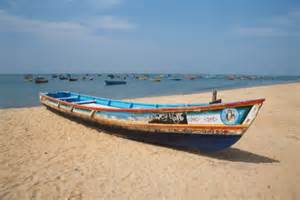
At another level, small fishing boats can complicate maritime domain awareness; however, it is fair to say that they can also be the ‘eyes and ears’ of the security agencies. Indian authorities have undertaken a number of steps, including compulsory identity cards for fishermen; registration of over 200,000 fishing boats and tracking them through central database; security awareness programmes, etc. Furthermore, Marine Police Training Institutes have been established. They are coordinated by the apex National Committee for Strengthening Maritime and Coastal Security (NCSMCS) that is headed by the Cabinet Secretary.
The Indian government has also drawn plans to reinforce the NMDA via multilateral cooperation. It is in talks with at least 24 countries for exchanging information on shipping to ensure that the seas are safe and secure for global commerce. India has placed maritime security high on the agenda through active participation in the Indian Ocean Rim association (IORA), the Indian Ocean Naval symposium (IONS), the East Asia Summit (EAS), the ASEAN Defence Ministers Meeting (ADMM) Plus. Additionally, it is in talks with other countries to institutionalise intelligence exchange among the respective security agencies.
The Indian Navy and the Coast Guard have been at the helm and have developed a sophisticated strategy that involves joint exercises, hot lines, exchange of intelligence and training with a number of navies. It will be useful to explore if the NC3I is suitably linked to the Singapore-based Information Fusion Centre (IFC) established at Changi Command and Control Centre (CC2C), which has received much acclaim as an effective MDA hub.
It is fair to argue that weak legislations can compromise maritime security. In this connection, it is important to point out that the Coastal Security Bill drafted in 2013 is yet to be tabled in the Indian Parliament. Unfortunately, the draft Piracy Bill placed before the law makers in 2012 lapsed due to priority given to other issues.
Dr Vijay Sakhuja is the Director, National Maritime Foundation, New Delhi. The views expressed are those of the author and do not reflect the official policy or position of the National Maritime Foundation. He can be reached at director.nmf@gmail.com.
This article is courtesy Institute of Peace and Conflict Studies (IPCS), New Delhi and originally appeared at http://www.ipcs.org/article/india/india-reinforces-maritime-domain-awareness-but-challenges-remain-4764.html.
This is the first installment in a series of primers produced in partnership with The Diplomat.
“Words have meanings.” It’s easy to dismiss this statement as a truism. But words – and their meanings – do hold particular import in the multi-layered realm of maritime territorial disputes, where the distinction between a rock and an island can mean the difference between hundreds of square miles of Exclusive Economic Zone. At times, usage of words has itself opened new fronts in conflicts as nationalist fights over place names in textbooks have shown. Those wishing to understand and accurately describe maritime Asia’s long-standing territorial disputes must wade through a colorful and evolving vocabulary. So, in an effort to help bring clarity to the lexicon we offer this guide to common terms in use.
A Starter Legalese
U.N. Convention on the Law of the Sea (UNCLOS): UNCLOS is the international agreement that resulted from the Third UN Conference on the Law of the Sea from 1973-1982. It establishes the maritime zones that divide the modern seas, and the rights and sovereignty of states within them. It also provides means for determining sovereignty within disputed areas. The United States has neither signed nor ratified UNCLOS but regards all but several clauses relating to the International Seabed Authority as customary international law that it therefore follows. Several additional key international terms below are defined in UNCLOS. A full reading of the Convention is highly recommended for any serious student of international affairs to gain a better appreciation of the nuances of the terms than can be spelled out here:
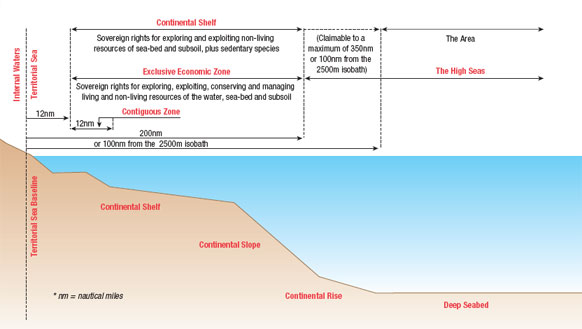
Territorial Waters: Extends 12nm from a country’s internationally agreed upon baseline. A coastal state has full sovereignty over its territorial waters, but other states’ vessels (including military, but not aircraft) enjoy the Right of Innocent Passage through these waters so long as their passage is “continuous and expeditious,” and not “prejudicial to the peace, good order or security of the coastal State.” For example naval vessels cannot engage in spying during the transit and submarines must transit surfaced. A similar concept is that of Transit Passage, enabling the “continuous and expeditious” passage of all ships and aircraft through most international straits, as well as archipelagic states’ sea lane passages (straits formed by two islands of the same state).
Contiguous Zone: Extends from 12nm out to 24nm from a country’s baseline. Coastal states here enjoy rights limited to “customs, fiscal, immigration [and] sanitary laws and regulations.”
Exclusive Economic Zone (EEZ): Extends 200nm out from the baseline, wherein a state enjoys exclusive rights to natural resources such as fish and oil. States may also enjoy some resource exploitation rights in the seabed and subsoil beyond the EEZ depending on the lay of the Continental Shelf.
Artificial Islands: Of importance due to recent activity in the South China Sea, “Artificial islands, installations and structures do not possess the status of islands. They have no territorial sea of their own, and their presence does not affect the delimitation of the territorial sea, the exclusive economic zone or the continental shelf.”
High Seas: Anything beyond a state’s EEZ. “No State may validly purport to subject any part of the high seas to its sovereignty.” The high seas are sometimes also referred to synonymously as International Waters, but this latter term is not well defined as it can also be used for everything outside a nation’s territorial waters. Note: Per UNCLOS, Piracy can technically occur only on the high seas or “in a place outside the jurisdiction of any state,” such as the waters of a failed state. This is why reporting of piracy statistics can be inaccurate unless it uses the term Piracy and Armed Robbery to capture piracy occurring within a nation’s EEZ.
The Freedom of Navigation: The overarching right of ships (and aircraft with Freedom of Overflight) to transit the sea unimpeded except as restricted by international law. Some states, such as China, claim rights not afforded to it by UNCLOS or customary international law, namely the ability to restrict activities of military assets and aircraft not inbound within its contiguous zone and EEZ (see for example the recent dispute over the right of U.S. P-8 Poseidon aircraft to fly outside of its territorial waters). The United States conducts Freedom of Navigation operations to register its non-concurrence with China’s position on territorial rights, thereby preventing it from becoming accepted customary international law.
ITLOS (International Tribunal for the Law of the Sea): Established by UNCLOS, its mandate is to “adjudicate disputes arising out of the interpretation and application of the Convention.” The Philippines has a case before the tribunal asking it to declare China’s Nine-Dash Line not in accordance with UNCLOS (and therefore not a valid basis for its South China Sea claims) – the ruling is expected in the next two years, but China is not taking part in the proceedings and has indicated it will not abide by the ruling.
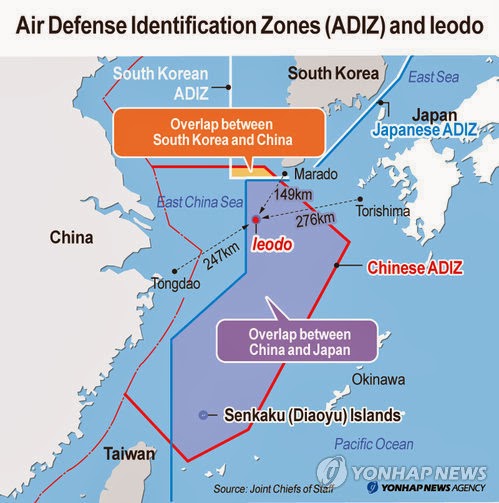
Air Defense Identification Zone (ADIZ): According to Foreign Affairs, an ADIZ is “a publicly defined area extending beyond national territory in which unidentified aircraft are liable to be interrogated and, if necessary, intercepted for identification before they cross into sovereign airspace.” An ADIZ is not covered by any international agreement and does not confer any sovereignty over airspace or water, but has arguably become a part of customary international law due to its growing usage and acceptance. The rules China stipulated with its establishment of an ADIZ in the East China Sea in late 2013 however garnered widespread criticism and non-observation due to its surprise announcement and application to those flights not intending to enter sovereign airspace.
Conduct for Unplanned Encounters at Sea (CUES): CUES provides a set of non-binding “safety procedures, a basic communication plan and basic maneuvering instructions” when naval vessels and aircraft unexpectedly encounter each other at sea. It was agreed upon at the 14th Western Pacific Naval Symposium in April 2014, and while a code of conduct CUES should not be confused with the much-discussed and as yet elusive ASEAN Code of Conduct below.
Code of Conduct (CoC): In 2002, the member states of ASEAN and China signed a voluntary Declaration on the Conduct (DoC) of parties in the South China Sea “to resolve their territorial and jurisdictional disputes by peaceful means, without resorting to the threat or use of force, through friendly consultations and negotiations by sovereign states directly concerned.” This was to be the precursor to a binding CoC, but as Carl Thayer ably documentsimplementation of the CoC was kept in check for a decade by China and focus on Guidelines to Implement the DoC, which were approved in 2012. However, promises in the DoC such as to refrain from then uninhabited maritime features and to handle differences in a constructive manner have since been violated by actions including several parties’ ongoing construction and expansion on features under their control. As a result of this and because the Guidelines have been removed as the focus by adoption, many ASEAN states, with the Philippines foremost among them, have returned attention to reaching agreement on a legally binding CoC. There have been recent indications that China may be willing to soon start serious discussions about the Code of Conduct, but it is unclear whether it will be willing to accede to (let alone adhere to) any potent enforcement mechanisms.
A Strategic Buffet
Cabbage Strategy: In a television interview in May, People’s Liberation Army (PLA) Maj. Gen. Zhang Zhaozhong described China’s approach towards securing control over and defending the Scarborough Shoal, after reneging on an agreement with the United States whereby both they and the Philippines would back down from a standoff in 2012:
Surrounding a contested area with so many boats — fishermen, fishing administration ships, marine surveillance ships, navy warships — that “the island is thus wrapped layer by layer like a cabbage.”
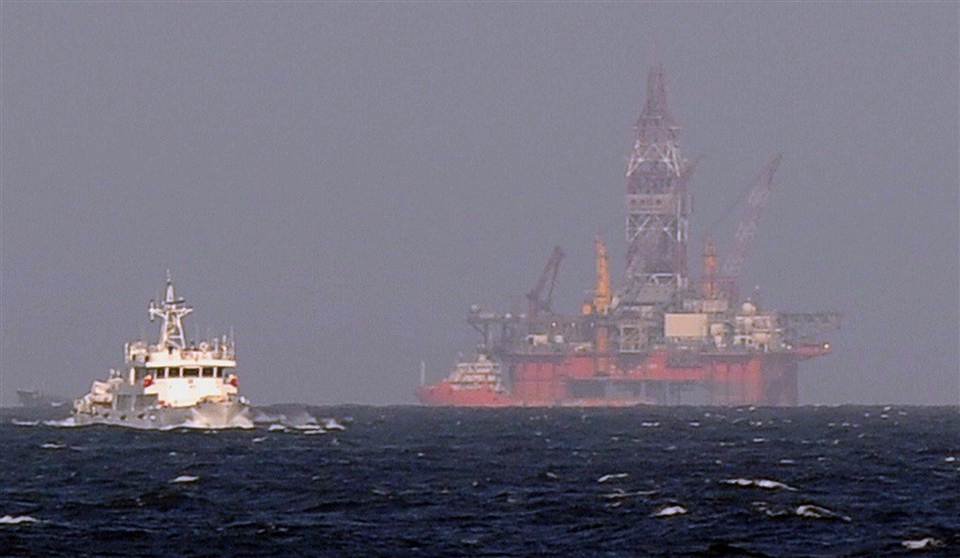
Analysts note this approach forces those opposing China’s actions to contend not only with layers of capabilities but also rules of engagement and public relations issues such as would arise from a confrontation between naval vessels facing fishing boats at the outermost layer. A more recent example of this layered approach occurred this summer with thearrival of a CNOOC oil rig in Vietnam’s claimed EEZ.
Salami Tactics (A.K.A. Salami Slicing): This term was coined by Hungary’s Cold War Communist ruler Matyas Rokosi to depict his party’s rise to power in the 1940s. The emphasis is on incremental action. In the initial usage it described the piecemeal isolation and destruction of right wing, and then moderate political forces. In maritime Asia it has come to be used to describe China’s incremental actions to assert sovereignty over areas of disputed territory. A key aspect of Salami Tactics is the underpinning rationale that the individual actions will be judged too small or inconsequential by themselves to provoke reaction strong enough to stop further moves.
Psychological Warfare: Undermining “an enemy’s ability to conduct combat operations” by “deterring, shocking, and demoralizing enemy military personnel and supporting civilian populations.”
Media Warfare: “Influencing domestic and international public opinion to build support for China’s military actions and dissuade an adversary from pursuing actions contrary to China’s interests.”
Legal Warfare (also known as Lawfare): Using “international and domestic law to claim the legal high ground or assert Chinese interests. It can be employed to hamstring an adversary’s operational freedom and shape the operational space.” This type of warfare is also tied to attempts at building international support.
Anti-Access / Area Denial(A2/AD): describes the challenges military forces face in operating in an area. According to the U.S. DoD A2 affects movement to a theater: “action intended to slow deployment of friendly forces into a theater or cause forces to operate from distances.” AD, meanwhile, affects maneuver within a theater: “action intended to impede friendly operations within areas where an adversary cannot or will not prevent access.” Advances in weapons such as mines, torpedoes, submarines, and anti-ship missiles are commonly cited examples of those that can be used for A2/AD.
Air-Sea Battle (ASB): A warfare concept designed by the United States military to counter A2/AD challenges and ensure freedom of action by trying to “integrate the Services [primarily the Navy and Air Force] in new and creative ways.” ASB is not a “strategy or operational plan for a specific region or adversary.” There has been much debate and confusion about ASB, in part because it requires the development and balancing of new complimentary capabilities, many of them classified.
Offshore Control: A strategy for the United States to win in the event of a conflict with China put forward in 2012 by USMC Col. T.X. Hammes (Ret.). In Offshore Control, the United States focuses on bringing economic pressures to bear via a tailored blockade, working with and defending partners along the first island chain rather than strikes against mainland China.
Four Respects: The Four Respects is a new term fellow The Diplomat contributor Jiye Ki, based on remarks made by Chinese Foreign Minister Wang Yi earlier in September. They are the four guiding principles by which Wang says South China Sea negotiations should proceed, namely:
The dispute over the Spratlys “is a problem left over by history,” and that “handling the dispute should first of all respect historical facts.”
“Respect international laws” on territorial disputes and UNCLOS.
Direct dialogue and consultation between the countries involved should be respected as it has proven to be the most effective way to solve the dispute.
Respect efforts that China and ASEAN have made to jointly maintain peace and stability. Wang says China hopes countries outside the area can play constructive roles.
Mutual Economic Obliteration Worldwide (MEOW): A term coined by yours truly to describe the deterrent effect of the threat of economic side-effects of a conflict between the United States and China on their actions towards each other.
See any we missed? Part 2 will cover the Geography of Asian Maritime Disputes
Scott Cheney-Peters is a surface warfare officer in the U.S. Navy Reserve and the former editor of Surface Warfare magazine. He is the founder and president of the Center for International Maritime Security (CIMSEC), a graduate of Georgetown University and the U.S. Naval War College, and a member of the Truman National Security Project’s Defense Council.
This is the second of a three-part series. See Jake’s first article here.
China is a Land Power
While China continues to invest heavily in a navy, it still remains a continental for several reasons. First, China must maintain a large land force for internal stability and as a deterrent to regional competitors such as India, Vietnam and Russia. It faces demographic, economic and social challenges which threaten the Communist Party’s grip on power. Bernard D. Cole states, “Economic priorities and the need to defend the world’s longest land border with the most nations … still argue against [the PLA(N)’s] ambition for a global navy.”[1] That being said, China continues to develop a navy capable of meeting security interests within the first island chain and most of the South China Sea up to 1,000 nm off the coast.
Second, while China has vastly improved “blue water” capabilities, it has not yet capable of protecting maritime interests beyond the first island chain. Investing heavily in “anti-access/area denial” (A2AD) capabilities is a defensive strategy designed to make the cost of U.S power projection too high. However, A2AD is not a sea control strategy. It does little to prevent the cumulative effect[2] of American (and allied) maritime power to strangle China beyond the first island chain, as outlined by Thomas Hammes.[3] Finally, China’s substantial investment in a navy will likely lead to organizational pressure not to risk it to heavy losses, something which Arquilla and others have also noted. [4]
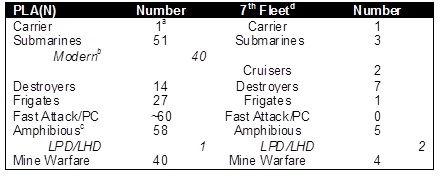
“Quantity has a quality of its own,” and China will enjoy early numerical superiority against forward-deployed American forces. It would take two to three weeks for additional forces to reach the Western Pacific in the event of an unexpected crisis. A comparison of the PLA(N) and forward deployed American naval forces is found below.
Figure 1. 2012 Comparison of PLA(N) and U.S. 7th Fleet Derived from China Naval Modernization (2012) [5] a- CV 16 “Liaoning”, while commissioned, does not have a carrier air wing. b- Does not include “Jin” class SSBN or “Ming” class SS c- Derived from Table 4, pg. 41 of China Naval Modernization (2012) d- U.S. 7th Fleet derived from public information available at http://www.c7f.navy.mil/forces.htmNoting the numerical superiority of the PLA(N) over local American forces, the PRC may miscalculate on American resolve (or that of allies such as Japan and South Korea) and initiate a conflict.
Also, while the U.S. has not fought a traditional fleet action since World War II, the Navy has been conducting combat operations around the globe for the past two decades. China, for all the investment and exercises, has not engaged in maritime combat since 1988 in the Spratly Islands with Vietnam. PLA(N) commanders may assume their combat capabilities are better than they actually are, providing unfounded assurance to their own political leadership, increasing the odds of miscalculation.
American Maritime Power and the Strategy to Defeat China
America’s super power status is preserved through the ability to project power across the oceans. While the most obvious component of maritime power is the Navy, it is in jointness with the land, air, space and cyberspace components that makes it formidable. The “pivot” to the Asia-Pacific region must include a reallocation of forces and capabilities. China has continued to aggressively pursue territorial disputes, which have had the effect of driving many Asian countries to seek a greater American presence in the region. A larger land presence is out of the question, but naval and air assets – especially airborne ISR platforms – are much less intrusive and appealing. Space and cyberspace will play a significant (perhaps decisive) role, not only in sensor capabilities but also in defeating A2AD systems and PRC ISR.
The core of American maritime power is built upon destruction of enemy naval forces while preserving its own. Around this core are five pillars: scouting effectiveness, long-range strike, logistics and supply, amphibious assault and coalition warfare.
The Core – Sea Combat and Survivability
The ability to destroy or render inoperable the enemy’s navy – on the surface, in the air or under the sea – is the sine qua non of maritime power. At the same time, the survivability of forces enables the Navy to follow up on success and execute further operations, such as additional combat, blockade, escort or other sea control/sea denial tasks. The introduction of amphibious forces also requires sea combat and may be undertaken in contested waters. A maritime war with China will pit numerically inferior American forces against a formidable yet untested larger PLA(N). U.S. forces must be able to fight, win and survive to carry the war closer to China’s shores.
The Pillars Scouting effectiveness. Wayne Hughes defines scouting as “the gathering and delivery of information,” a more compact and encompassing term than the currently used “ISR.”[6] It also includes the processing and analysis of vast quantities of all-source information – including space and cyberspace – to provide commanders the best picture possible from which they can make timely decisions. Scouting effectiveness is judged by how quickly information can be turned into actionable intelligence. If commanders can remain inside the decision-making loop of their enemy, they can have a distinct advantage.
Long-range strike. American military development continues to pursue the goal of projecting power from extreme distances or from a position of stealth or sanctuary. Long-range strike should be thought of as a “family of systems,” including land-based bombers, carrier-based strike aircraft (manned and unmanned), rail guns, cruise missiles and supporting airborne electronic attack aircraft.[7] The ability to strike the PRC’s A2AD systems, which are located not only on the coast but also far inland, will be crucial in a maritime fight. In this case, space and cyberspace offensive operations should also be considered in the family of “long range” strike.
Amphibious assault. War is ultimately decided by the “man on the scene with a gun.” The ability to insert land forces onto hostile shores in contested seas may be the ultimate arbiter in a maritime conflict with China, especially in the scenario described above. Even if not used immediately, the credible threat of an amphibious landing could have the effect of tying down Chinese naval, land and air forces hundreds of miles away.
Logistics and supply. In a conflict with China, we should expect that forward supply bases such as those in Japan, South Korea and Guam will become targets, along with supply ships. The flow of food, fuel, forces and ammunition will be the determining factor in our ability to sustain a long-term conflict, so our defense of “sea lanes of communication” (SLOCs) will be tested. Concurrently, the ability to restrict or deny China’s SLOCs should be an early objective of operational planning. A prolonged conflict will test both American and Chinese logistical capacity. The longer America is able to sustain a conflict while controlling SLOCs, the more untenable the Chinese position becomes.
Coalition warfare. The scenario we introduced highlights the importance of coalition and allied warfare. From a perspective of legitimacy, American national security policy has largely adopted the position that the unilateral use of force, while retained, is undesirable. World, and more importantly American, public opinion matters significantly in our ability to conduct and sustain military operations. More importantly, the participation of allies is necessary to offset the quantitative advantages of the PLA(N). The Japan Maritime Self-Defense Force (JMSDF) and the Republic of Korea Navy (ROKN) are significant forces in their own right, and combined with the U.S. Navy, would match up well against the PLA(N). Third, while some of our coalition partners and allies such as the Philippines, Thailand, Australia, New Zealand or Singapore may not directly participate, they may provide critical logistical hubs or basing. The pillars described above – scouting effectiveness, long-range strike, amphibious assault and logistics and supply – will hinge on the participation and/or support of our allies and friends.
Preparing to Pivot – Restructuring Forward Deployed American Forces
Former Secretary of Defense Leon Panetta suggested that approximately 60 percent of the U.S. naval forces will be postured toward the Pacific region by 2020. How those forces are configured remains a central question.[8]
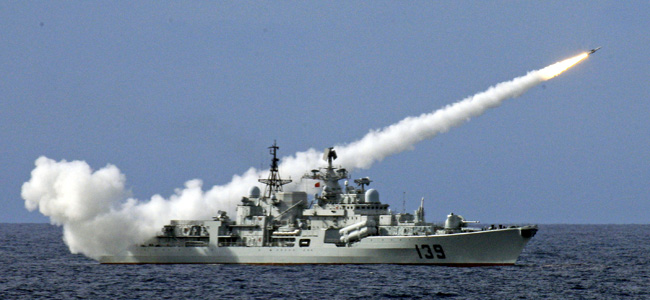
A Chinese warship launches a missile during a live-ammunition military drill held by the South China Sea Fleet last year.
Current maritime forces are centered on the USS George Washington carrier strike group and a large amphibious task force, CTF 76. The Air Force, Army, Marines and special forces also have a significant presence in the region in Japan, South Korea and Guam.
Future force realignment in the region should include an increase in the number of forward deployed U.S. submarines. The immediate availability of subsurface assets would tip the balance against the numerical advantage of the PLA(N) and allow commanders the option to operate immediately in the first island chain without risking large surface combatants.
In that vein, the development and construction of small fast and stealthy surface missile combatants would provide another avenue to commanders for operations closer in to Chinese waters.[9] Significant investment has already been made in both the littoral combat ship (LCS) and joint high speed vessel (JHSV), which represents a starting point. If equipped with next-generation anti-ship cruise missiles (ASCM’s) such as the Harpoon Block III, advanced capability (ADCAP) torpedoes and SM-2 missiles, these surface combatants could sortie into the East China and Yellow Seas conducting “hit and run” attacks on the PLA(N) surface units as well as protect Japanese and Korean home waters. Further out from the first island chain, they can also be utilized from the Philippines to the Spratly Islands and Singapore to participate in off-shore blockade of the Malacca strait.
Much like the Navy, the Air Force will operate at a numerical disadvantage to the Chinese air and naval air forces. It will fight further from bases, requiring tanker support making them vulnerable and limiting their attack depth. Both the Navy and Air Force will depend on advantages in electronic warfare to blind China’s air forces and air defense systems while fifth generation stealth fighters, such as the F-22, will be critical to achieve air superiority.
Land forces in a maritime conflict are naturally built around maritime assault. However, the presence of a significant force on the Korean peninsula serves as both a deterrent to North Korea attempting to take advantage of a conflict as well as representing a pool of forces to draw from to conduct amphibious operations. Soldiers and Marines stationed on Okinawa, Guam, Korea, Japan and Australia, have to be sufficient in number to conduct a forced entry and capture of any number of island-war scenarios, whether in the tiny Spratly, Paracel or Senkaku Islands to larger ones such as Taiwan.
Land forces also have a role in our own ability to contest the seas and defeat PRC A2AD systems. They can be used to station our own ASCM capabilities among the many islands and littorals in the East and South China Seas. Coupled with land-based rail or traditional gun systems, they could provide an effective deterrence against a PLA(N) sortie and give the PRC leadership pause before initiating conflict.
The opening stages of a maritime conflict with China will be a contest of sea denial. Large American surface combatants will not be operating within the first island chain until Chinese land-based ASCM capabilities are sufficiently neutralized. Control of the undersea, air and space will be bitterly contested. The PRC will attempt to “blind” American ISR and “command and control” capabilities using cyber attacks and anti-satellite (ASAT) missile systems.
U.S. submarines will play a crucial role attriting Chinese naval forces as well as executing strikes against ports and logistic facilities. U.S. land-based and carrier aircraft will begin to contest the skies. With stealthy, fast missile boats, surface forces could sortie out into contested seas. America will not have initial sea control within the first island chain, but should pursue sea denial to limit the PLA(N)’s freedom of action.
At the same time, larger surface action groups made up of guided missile destroyers and cruisers can begin to choke off China’s economic lifelines, especially south of the Spratly Islands and in the Western Pacific. Long-range strike platforms and airborne electronic attack, coupled with space and cyberspace warfare operations, will attempt to roll back China’s formidable integrated air defense (IAD) and A2AD systems. This will create an ever-tightening grip on Chinese economic activity and achieve air superiority in areas critical to the conflict.
About the Author LT Robert “Jake” Bebber USN is an information warfare officer assigned to the staff of the United States Cyber Command. He holds a Ph.D. in Public Policy from the University of Central Florida. The views expressed here do not represent those of the Department of Defense, Department of the Navy or the U.S. Cyber Command. He welcomes your comments at jbebber@gmail.com.
Sources
[1] Cole, Bernard D. The Great Wall at Sea: China’s Navy in the Twenty-First Century (2nd Ed). Annapolis: Naval Institute Press, 2010. Pg. 201.
[2] Wylie outlined two types of strategies: sequential and cumulative. A sequential strategy is one in which each success is built upon the other in a march toward victory. He suggests the “island hopping” campaign in the middle Pacific as an example. A cumulative strategy is “made up of a series of lesser actions” which are not “sequentially interdependent.” See pg 22-27 of Military Strategy.
[3] Hammes, T. X. Offshore Control: A Proposed Strategy for an Unlikely Conflict. Washington DC: Institute for National Strategic Studies, National Defense University, 2012.
[4] However, this risk aversion may apply only to newer, modern platforms. The PLA(N) may be more willing to sortie older surface combatants which are still heavily armed anti-ship cruise missile (ASCM) platforms
[5] O’Rourke, Ronald. China Naval Modernization: Implications for U.S. Navy Capabilities – Background and Issues for Congress. CRS Report for Congress, Washington, DC: Congressional Research Service, 2012.
[6]Wayne P. Hughes, Jr. “Naval Operations: A Close Look at the Operational Level of War at Sea.” Naval War College Review, 2012: 23-47. Pg. 32.
[7] Gunzinger, Mark A. Sustaining America’s Advantage in Long-Range Strike. Washington DC: Center for Strategic and Budgetary Assessments, 2010. Pg. ix.
[8] Neisloss, Liz. U.S. defense secretary announces new strategy with Asia. June 2, 2012. http://edition.cnn.com/2012/06/02/us/panetta-asia/index.html (accessed December 1, 2012).

 The Indian government has also drawn plans to reinforce the NMDA via multilateral cooperation. It is in talks with at least 24 countries for exchanging information on shipping to ensure that the seas are safe and secure for global commerce. India has placed maritime security high on the agenda through active participation in the Indian Ocean Rim association (IORA), the Indian Ocean Naval symposium (IONS), the East Asia Summit (EAS), the ASEAN Defence Ministers Meeting (ADMM) Plus. Additionally, it is in talks with other countries to institutionalise intelligence exchange among the respective security agencies.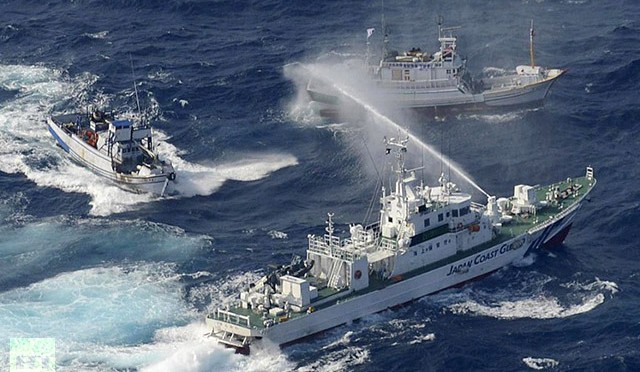

 Discussing the Hong Kong protests and Taiwan’s recent statements in regard to them and China with Dean Cheng… and some India thrown in at the end.