Category Archives: Asia-Pacific

Analysis relating to USPACOM.

China’s Nine-Dashed Line Faces Renewed Assault

By Scott Cheney-Peters

China’s ambiguous claim to the South China Sea, approximately demarcated by a series of hash marks known as the “nine-dashed line,” faced objections from an expanding number of parties over the past two weeks. While a challenge from the United States came from an unsurprising source, actions by Indonesia and Vietnam were unexpected in their tone and timing.
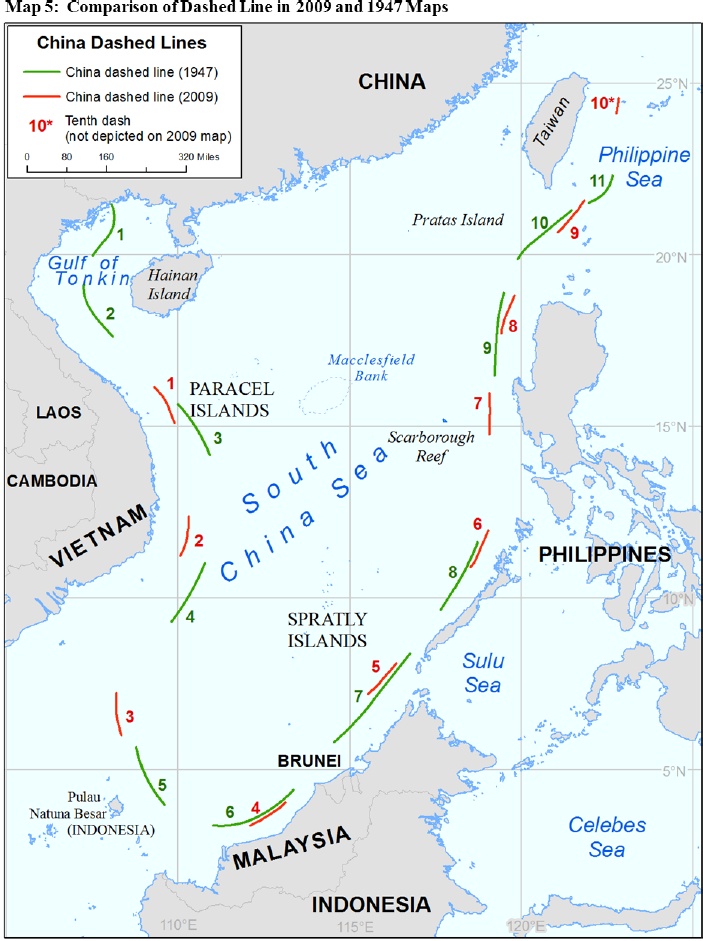
8-e48b8c470eOn December 5th, the U.S. State Department released its analysis of the compatibility of China’s nine-dashed line with international law. The report attempted to set aside the issue of sovereignty and explore “several possible interpretations of the dashed-line claim and the extent to which those interpretations are consistent with the international law of the sea.” The analysis found that as a demarcation of claims to land features within the line and their conferred maritime territory, the least expansive interpretation, the claim is consistent with international law but reiterated that ultimate sovereignty is subject to resolution with the other claimants.

As a national boundary, the report went on, the line “would not have a proper legal basis under the law of the sea,” due to its unilateral nature and its inconsistent distance from land features that could confer maritime territory. Alternately, although many commentators have indicated China bases its claims on “historic” rights pre-dating the UN Convention on the Law of the Sea (UNCLOS) of 1982, the report argued that the history China points to does not fit the narrow “category of historic claims recognized” in UNCLOS under which historic rights may be conferred. Lastly, the report noted that as China has filed no formal claim supporting its nine-dashed line, the ambiguity over the exact nature and location of the line itself undermines under international law China’s argument that it possesses maritime rights to the circumscribed waters, concluding:

“For these reasons, unless China clarifies that the dashed-line claim reflects only a claim to islands within that line and any maritime zones that are generated from those land features in accordance with the international law of the sea, as reflected in the LOS Convention, its dashed-line claim does not accord with the international law of the sea.”

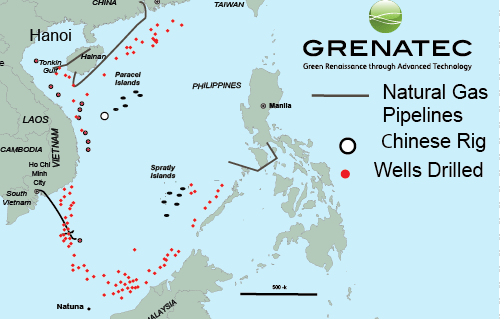
Although such analysis reflects prior U.S. policy positions, less expected were the pointed signals from Indonesia, which has built a reputation as a mediator among ASEAN states in dealing with China and striven to downplay the overlap by the nine-dashed line of its own claimed exclusive economic zone in the South China Sea from Natuna Island. On Tuesday at the think tank Center for Strategic and International Studies (CSIS) in Washington, senior Indonesian presidential advisor Luhut Binsar Panjaitan emphasized that the country was “very firm” that its “sovereignty cannot be negotiated,” while stressing the importance of dialogue to peacefully manage matters. Further, in response to a question from an audience member, Panjaitan stated (56:00 mark in the video below) that the development of gas fields offshore Natuna in cooperation with Chevron would “give a signal to China, ‘you cannot play a game here because of the presence of the U.S.’” Meanwhile Indonesian Maritime Affairs and Fisheries Minister Susi Pudjiastuti noted that after sinking Vietnamese vessels the Indonesian Navy said it had captured illegally fishing she was considering sinking 5 Thai and 22 Chinese vessels also caught.

As Prashanth Parameswaran notes at The Diplomat, Indonesia is playing a balancing act – seeking at the same time to protect its sovereign interests as it attempts to align new president Joko Widodo (Jokowi)’s “Maritime Axis”/“Maritime Fulcrum” initiative with Xi Jinping’s “Maritime Silk Road” and play a leading role in China’s Asian Infrastructure Investment Bank. To some observers, sinking the Thai and Chinese boats is now necessary to preserve Indonesia’s image of impartiality, while others believe such action may be redundant if China heeds the warning that such behavior will no longer be tolerated.

Vietnam too took surprise action over the nine-dashed line, in a move long-mooted but unexpected in its timing. Vietnam’s foreign ministry announced last week that it had filed papers with the Hague arbitral tribunal overseeing the case submitted by the Philippines, asking that its rights and interests be considered in the ruling. Vietnam supported the Philippines position arguing that China’s nine-dashed line is “without legal basis.” While a regional source in The South China Morning Post noted that the action was as much about protecting “Vietnamese interests vis-à-vis the Philippines as it is directed against China,” and Professor Carlyle Thayer described it as “a cheap way of getting into the back door without joining the Philippines’ case,” Thayer also told Bloomberg News that it “raises the stature of the case in the eyes of the arbitrational tribunal.”
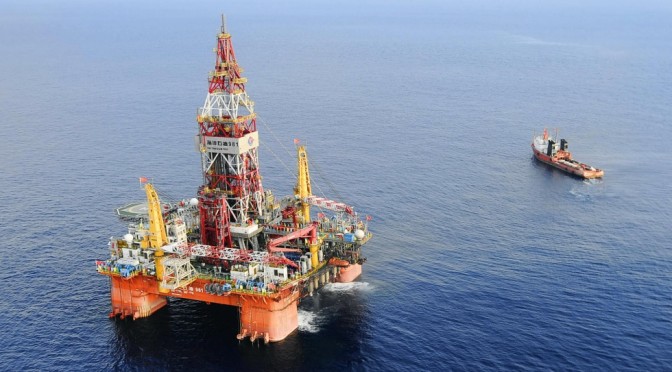
China-Vietnam-RigIf the actions taken by the United States, Indonesia, and Vietnam were surprising, China’s reactions were not. On December 7th, China’s Ministry of Foreign Affairs released a white paper of its own on the Philippines’ arbitration case. The document states that China’s policy, as established in its 2006 statement on UNCLOS ratification, is to exclude maritime delimitation from compulsory arbitration. Additionally, the paper says that while the current arbitration is ostensibly about the compatibility of China’s nine-dashed line with international law, “the essence of the subject-matter” deals with a mater of maritime delimitation and territorial sovereignty. The paper goes on to say that until the matter of sovereignty of the land features in the South China Sea is conclusively settled it is impossible to determine the extent to which China’s claims exceed international law.

In effect, China is taking the position that only after it has conducted and conclude bilateral sovereignty negotiations will its nine-dashed line be open to critique. While the foreign ministry may be right that the Philippines is attempting to force the issue of territorial sovereignty, its argument that this prevents scrutiny of the nine-dashed line’s accordance with international law rings hollow.

At the end of the day, China has repeatedly stated, and its new policy paper affirms, that it will “neither accept nor participate in the arbitration” initiated by the Philippines. Chinese Foreign Ministry Spokesman Hong Lei likewise remarked of Vietnam’s filing with the tribunal that “China will never accept such a claim.” So it is prudent to ask what benefit will come of the legal maneuvers. Some, such as Richard Javad Heydarian, a political-science professor at De La Salle University, point to the economic harm already incurred by the Philippines in opportunity costs and the danger of having created a worse domestic and international environment for settling the disputes. Yet given the lengthening list of states willing to stake a legal position on the matter and the moral weight of a potential court ruling, China can claim and attempt to enforce what it wants, but it will be increasingly clear that it is doing so in contravention of international law.

Scott Cheney-Peters is a surface warfare officer in the U.S. Navy Reserve and the former editor of Surface Warfare magazine. He is the founder and president of the Center for International Maritime Security (CIMSEC), a graduate of Georgetown University and the U.S. Naval War College, and a member of the Truman National Security Project’s Defense Council.
Sea Control from Ashore

The following, written by guest author Niel Kaneshiro, is an abstract from a US Naval War College Directed Research Project of the same name submitted in response to our call for Amphibious Warfare articles. Please direct response articles to nextwar(at)cimsec.org.

The United States faces an increasingly complex security environment in the Indo-Pacific. In the event of a crisis, China’s growing Anti-Access/Area Denial (A2AD) capabilities will allow it to challenge U.S. military access to the region, as well as raise the risks and costs to the U.S. should it intervene on behalf of a regional ally or partner.

By leveraging security treaties and access agreements, the United States can employ ground forces in cooperation with partners to secure maritime choke points and littoral areas, denying their use to an adversary during a crisis or hostilities. These land forces can also create protected areas from A2AD capabilities for combined and joint military operations, ensuring continued access into the region. Furthermore, ground forces can allow naval and air forces to concentrate on operations in areas outside the reach of land based weapon systems. Ground forces can help address the problem of sea control in the Western Pacific in the context of A2AD challenges in several ways. First, ground forces can provide persistent control of choke points and littoral areas using anti-ship missiles, helicopters, and drones. Second, ground forces can conduct maritime intercept operations by employing heliborne troops who can board and capture merchant shipping. Third, ground forces can create protected areas for friendly forces, keeping them clear of adversary air, missile, and surface ship threats.

Ground forces also provide reassurance to allies and partners – indicating U.S. commitment to the region and to its treaty obligations. “Boots on the ground” have significant symbolic and practical importance. For many countries in Asia, the most important military service is their army. Ground forces, specifically the U.S. Army and Marines, can develop important and enduring partnerships with those services, even assisting them with building their own military capability.

U.S. military planners and theorists have proposed strategies and operational concepts that take into account China’s A2AD capability, thus allowing U.S. forces to perform their missions despite an increasingly hostile environment. “Air Sea Battle” (ASB) is an operational concept that proposes to employ closely coordinated air and naval power to defeat A2AD threats. A primary tenet of ASB is the habitual coordination of U.S. Air Force and Navy assets to mount joint attacks on various A2AD systems, which include anti-ship ballistic missiles, over the horizon sensors, long-range bombers, and cruise missile equipped surface ships and submarines while defending U.S. naval forces and bases from attack. The actions inherent in the ASB concept would be one part of a larger strategy to address a crisis. 1

An alternative to conducting ASB operations is “Offshore Control”, a proposed strategy wherein U.S. forces conduct a “distant blockade” against China, avoiding the A2AD problem by remaining out of the range of ballistic missiles and bombers. Offshore Control emphasizes sea control outside of what China refers to as the “first island chain” – the islands that consist of Japan, Taiwan, the Philippines, and Borneo – with the objective of interdicting China’s maritime commerce. This concept would result in a more protracted conflict that would use largely militarily induced pressure on China’s economy to de-escalate a crisis, and would avoid destabilizing attacks on the Chinese mainland; such attacks could lead to escalation, a serious problem when dealing with a nuclear power.2

Neither of the concepts involves significant use of ground forces. The roles for ground forces typically are limited to supporting activities, mainly the defense of ports and airfields from missile attack. Other U.S. military writings suggest joint forcible entry operations, which could consist of air or amphibious raids and assaults against A2AD capabilities or to seize key terrain.3 However, a forcible entry operation in the face of A2AD capabilities and the strength of the Chinese People’s Liberation Army (PLA) is likely a risky and costly proposition. U.S. forces operating in close proximity to the Asian mainland will have to face the same A2AD capabilities that they propose to defeat.

Land power defined is “the ability – by threat, force, or occupation – to gain, sustain, and exploit control over land, resources, and people.”4 By extension, land power means the ability to exploit land areas for other purposes. U.S. military thinkers largely conceive of the Pacific as primarily a U.S. Air Force and Navy theatre; however, there are key islands that make land power relevant to any military campaign in the region. The Second World War in the Pacific was fought for and around islands. Geographically important islands became bases for continuing naval operations and served as unsinkable aircraft carriers for long-range bombers.

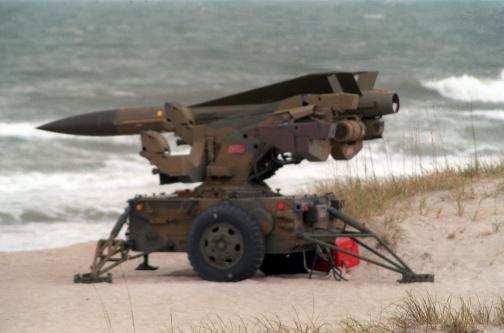
The geography of the Western Pacific has not changed. Modern missiles, sensors, unmanned aerial vehicles (UAV), and helicopters allow ground forces to project combat power out to sea in a way that was not possible before. American ground combat forces – Army or Marine, have the potential to conduct sea control operations and contribute substantively to an offshore control strategy or an ASB type campaign. In other words, land power can be exploited to gain sea control.

Niel Kaneshiro is a former United States Navy and current United States Army analyst as well as a student of the US Naval War College.

1 Air-Sea Battle Office, “Air-Sea Battle: Service Collaboration to Address Anti-Access & Area Denial Challenges”, May 2013: 4.

2 Hammes, T.X. “Offshore Control: A Proposed Strategy for an Unlikely Conflict”, Institute for National Strategic Studies . June 2012: 4-5.

3 U.S. Army and U.S. Marine Corps, “Gaining and Maintaining Access: An Army-Marine Corps Concept”, March 2012: 6.

4 U.S. Department of the Army, “ADRP 3-0 – Unified Land Operations” 2012: Glossary-4

New U.S. Maritime Strategy Coming “Very Soon”

Notes from the U.S. Naval Institute’s Defense Forum Washington 2014

Last week I attended the U.S. Naval Institute’s Defense Forum Washington 2014 – “What Does the Nation Need from its Sea Services?,” which was well attended by fellow CIMSECians. Speakers included legislators, senior researchers, and representatives from the U.S. Navy, U.S. Marine Corps, and U.S. Coast Guard. The full videos of the speakers and an in-depth recap are available here, but I wanted to touch briefly on a few items that stood out.

CooperativestrategyActing Deputy Chief of Naval Operations for Plans, Policy, and Operations, RADM Kevin Donegan, did a good job articulating the questions the sea services have wrestled with in building the forthcoming maritime strategy document known as CS-21R, the revision to the 2007 A Cooperative Strategy for 21st Century Seapower (CS-21). While he didn’t reveal most of the answers to those questions he did acknowledge the conflicting views of what the document should be, or look like. and the difficulty in getting it on the streets, but said it would be published “very soon.” RADM Donegan did note that the underlying assumptions of 2007 in some cases no longer hold true, with a nod to the threats facing Europe. One item he did reveal was that Humanitarian Assistance/Disaster Response (HA/DR) would remain a prioritized mission, something that has been questioned since its inclusion in CS-21, although whether this has a practical impact on budgeting priorities is itself debatable.

There was also some discussion about the manner in which CS-21R will be rolled out to the country, with one audience member asking if there would be educational outreach efforts and town hall meetings – useful components in explaining both the content and its relevance to the American public. But those lines of effort must be just the beginning. If CS-21R is to have the impact that it should, and presuming of course that one agrees with the strategy therein, the release of this document necessitates a full public affairs and internal education campaign plan. This is an important opportunity for the sea services to make their case to the people, Congress, “decision makers,” and their own folks that supporting the nation’s (as Ron O’Rourke put it in a later presentation) maritime strategy must be a priority. In telling the story of why resourcing the Navy, the Coast Guard, and the Marine Corps (as well as other maritime components) should take precedence over other funding priorities, the strategy document owns the part that gives a coherent explanation of what the services want to do with the means requested and why these are the best ways to achieve the ends defined by higher strategic guidance. Luckily there are plenty of recent anecdotes to illustrate the arguments, as VADM Donegan pointed out the practical importance of seapower in the recent Libyan and anti-ISIS campaigns.

A few other items I found interesting:

– CIMSECian ENS Chris O’Keefe asked about both the proper role of and forum for discussing cyber in strategy and was told by the panelists that the answer was cross-cutting in both role and the forum (i.e. blogs, publications, and internal classified discussions).

– RADM Donegan used the term “Indo-Asia-Pacific,” echoing the term “Indo-Pacific” that has in the past two years come into more common usage (typically in place of Asia-Pacific) and views the space stretching from the Indian Ocean through the Pacific as a linked geopolitical concept, particularly in maritime terms.

– The Coast Guard rep, VADM Charles Michel, Deputy Commandant for Operations, noted that the lack of arctic icebreakers hinders not only polar missions but also the ability to clear ice from the Great Lakes and U.S. coasts, forcing a reliance on Canada’s fleet.

– The Marine Corps rep, Brig. Gen. Joseph Shrader, Commander, Marine Corps Systems Command noted that the recently released Expeditionary Force 21 concept requires establishing advance bases for short take-off, vertical launch aircraft operations such as the F-35B.

– The Coast Guard and Marine Corps reps both said that the hardest challenge their Service faces is in balancing the funding needs of readiness and recapitalization (overhauling kit/modernization). Both however gave no indication that intellectual recapitalization was part of this primary concern.

Mellon717_1Over at Chuck Hill’s CG Blog, CIMSECian Chuck takes a look at what was notable from a U.S. Coast Guard perspective, noting that VADM Michel “was the Coast Guard representative on the panel discussion…and did a credible job of representing the Coast Guard.” One of the highlight quotes came in the Q+A session of that panel when, pressed by a reporter for an example of something that the Coast Guard could not do due to budget limitations, VAdm Michel pointed to his time as director of Joint Interagency Task Force-South (JIATF-S). He stated that the lack of vessels to interdict smugglers meant that for 75% of shipments he received intelligence on he could only watch them go by. Chuck goes on to say, in the post entitled “Coast Guard in a Death Spiral?”

But I would like to particularly recommend a portion of the presentation by Ron O’Rourke, who is the Congressional Research Service. He devoted the last few minutes of his presentation to the Coast Guard, beginning about minute 24:30. He does a better job of explaining the crisis in Coast Guard budgeting than I have ever seen done by any Coast Guard representative.

Looking at some of the other speakers, I learned that they have taken the program to replace the Ballistic Missile Submarine Force out of the regular navy shipbuilding budget. I think this is significant, because the effect of the SSBN replacement on the Navy ship building budget, is very similar to the effect of the heavy icebreaker procurement on the Coast Guard budget. Perhaps this might be used as a precedence for a special, separate appropriation for the icebreaker.

Scott Cheney-Peters is a surface warfare officer in the U.S. Navy Reserve and the former editor of Surface Warfare magazine. He is the founder and president of the Center for International Maritime Security (CIMSEC), a graduate of Georgetown University and the U.S. Naval War College, and a member of the Truman National Security Project’s Defense Council.
Look to the Brits for the Keys to a Successful Offset Strategy

A Geographic Rebalance, Technology, and Diplomacy Must Be Used Together

The challenges of the 2nd decade of the 21st century call for another phase in “strategic asymmetry” in order to preserve the security of the United States’ global strategic interests. The two versions of the successful Cold War Containment strategy; the “New Look” and “Flexible Response” appear on the surface to be completely different approaches. The first advocated reliance on the threat of nuclear war to deter aggressive action by the Soviet Union. The second advanced a graduated series of steps to meet the global Communist threat of which nuclear war was one component and precision-guided munitions one supporting pillar. Both however were committed to deterring nuclear war, maintaining global U.S. strategic interests, and preventing the further spread of the Communist ideology. Each too was relatively well-endowed with financial support from a U.S. government that stood at the military, political, and economic apex of a world otherwise devastated by the effects of two massive global conflicts and associated revolutions and chaos.

Unlike the Cold War period, the present United States cannot exercise the same dominance in all three disciplines of global power. The nation is in a period of relative decline. Many Eurasian nations have recovered from the effects of the conflicts of the 20th century and have assumed positions of global economic, political and in some cases military power. It is a situation similar to the situation challenging the last great liberal democratic power at the dawn of the 20th century.

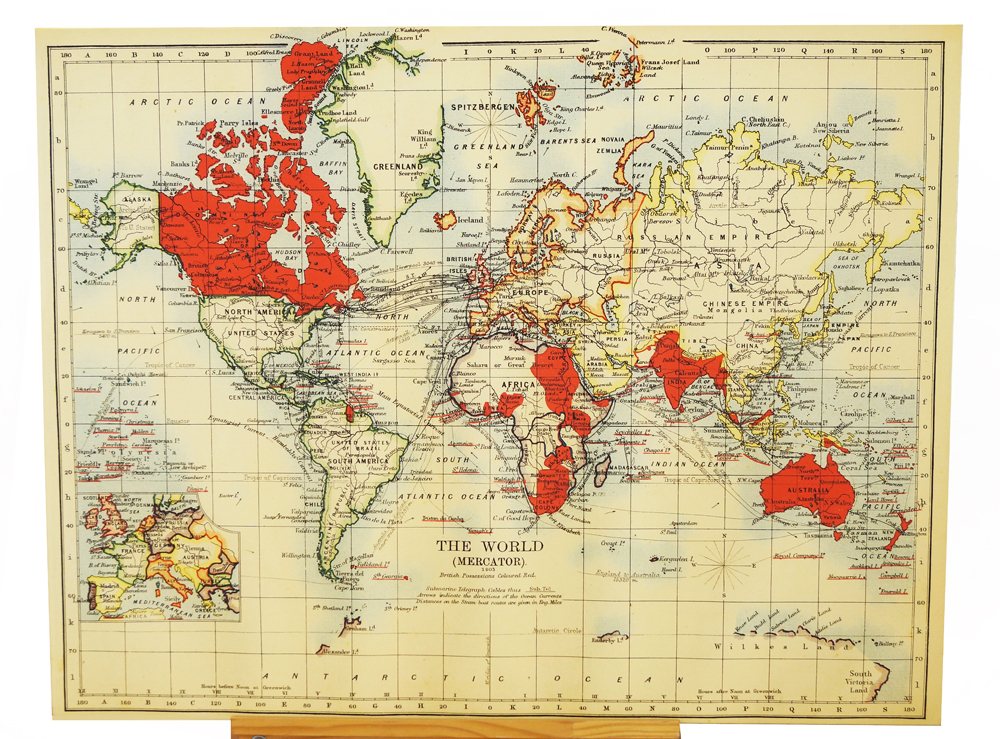
1903-british-empire-map-1000-x-760-r1750-00-jon-colman
British Empire 1903

The present U.S. situation is very similar to that of Great Britain at the end of the 19th century. The British faced many challenges to their economic and maritime supremacy. France recovered from multiple Napoleonic disasters and built a rival colonial empire; Japan emerged from centuries of isolation to compete for dominance of the Western Pacific; Germany and Russia tried to develop “webbed feet” and associated maritime ambitions; and the United States turned its energies from “winning the west” to winning the game of global economic competition. Furthermore, the “moral authority” the British had enjoyed relative to much of the rest of the world had been sullied to a degree by atrocities committed by British forces during the 1899-1901 Boer War against Dutch settlers in South Africa. That conflict also had significant financial costs that competed against those of the Royal Navy (RN), the British nation’s traditional strategic guardian, as well as those of a rising welfare state.

The United States confronts a similar scenario. Its traditional Eurasian allies have recovered from the effects of World War II and the Cold War and are now sometimes economic and political rivals. The Russian state born from the wreckage of the Soviet Union now maneuvers to regain lost territory and advantage. China has emerged as the principal U.S. economic competitor and also has maritime ambitions. The moral authority of the United States is now in question, like post-Boer War Britain, after questionable counter-insurgency conflicts in Southwest Asia and a global internet monitoring effort conducted by the National Security Agency (NSA). The wars of the last decade drew money away from efforts to maintain and improve U.S. naval and air forces. The U.S. military also competes with an expanding U.S. welfare state.

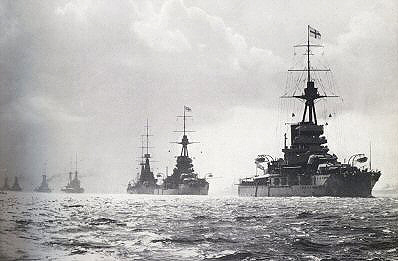
grandfleet_wwi
The British Grand Fleet

The British solution to their own period of relative decline (well detailed in Aaron Freidberg’s book The Weary Titan) is best described in three steps. British statesmen and military leaders first examined the strategic geography of the British Empire in detail and made a frank assessment of the relative importance of its physical, economic, political, and military components. They conducted a global reduction and re-balance of British naval and military assets that reflected the updated strategic geographic assessment and their own financial limitations. Finally, the British sought accords (both official and unspoken) with a number of nations to implement the new strategic geography. They came to agreements with the French and the Russians on a series of long-simmering colonial competitions, and they signed an alliance with the Japanese in order to secure their Pacific trade lines and possessions. They also accepted the peaceful rise of the United States, a “daughter” liberal democratic power, to its eventual position of leading economic power by 1914 to buttress their own economic system. The end product was a British Empire and associated armed forces better prepared to confront the changing and more volatile 20th century. Britain survived two devastating world wars and although much of its physical empire and supporting military and naval forces declined, that change was demanded and conducted by the British public under far better circumstances than would have occurred in the wake of a military defeat.

There are of course significant risks involved in such a radical re-balancing of forces. Britain’s physical retreat from the Americas and the Pacific in the face of rising American and Japanese power likely pushed the dominions of Canada, Australia, and New Zealand away from direct British influence. British leaders in the late 1920’s, allowed the strength of the British armed forces, especially the Royal Navy to significantly degrade to the point that Britain could no longer provide an effective defense of its Asian possessions. The loss of Singapore and the sinking of HMS Prince of Wales and HMS Repulse was the culmination of 25 years of poor strategic planning. It also wrecked British prestige and was a significant tipping point in the drive for Indian independence and the end of the physical British Empire.

The United States should undertake a similar realistic assessment of its global strategic position. Such a review would include not only land and maritime physical spaces, but also air, space and cyberspace “geography” which equally impact U.S. interests. This review must not be confined to mere budgetary and defense program appraisal, but must carefully examine the nation’s long-term interests. It must determine the most significant threats to the republic, and re-balance naval and military forces within budgetary limits to better confront those perils. Those forces must be both suitable for the geographic areas they defend, highly mobile and able to operationally and strategically re-position as circumstances dictate. While the present threat from both national and non-state actors is complex, some positive changes have taken place in recent years. For the first time since 1942, the United States does not face the threat of an immediate ground war other than on the Korean peninsula. The United States however cannot execute overly draconian cuts and still expect to exercise significant global influence. Some balance must be struck between the needs of the expanding U.S. welfare state, and the military forces that guard its very existence.

Finally, the United States should seek solutions to disagreements with nations and/or non-state actors whose intents and actions do not directly threaten U.S. global interest. The United States should also seek close association with present and rising states that share similar interests, since there is no “heir apparent” waiting to support and perhaps supersede the United States in its role as the defender of traditional liberal values as it was for Great Britain. One potential liberal democratic understudy is India, but other candidates may emerge. Although a rising power with aspirations toward greatness, China cannot be considered as a candidate to replace the United States as guarantor and support of the liberal capitalist system that sustains the global economy. Although perhaps no longer a full-fledged communist nation, China remains an authoritarian corporate state that continues to stifle free speech and expression. China, despite a generally warm welcome in the world economic community has instead chosen to bully its economic partners by needlessly antagonizing its neighbors and contributing to rising instability in East Asia.

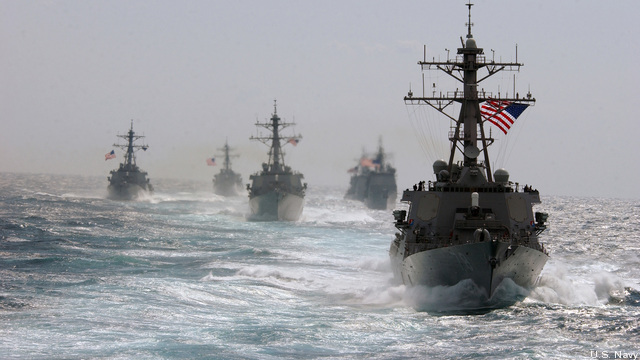
050305-N-4158S-001
US Surface Combatants At Sea

Like Great Britain, the United States can confront challenges to its global interests through an aggressive self-assessment of its strategic goals and means to which they can be accomplished. Unmanned systems, organized in support of traditional manned combat formations in a “Manned and Unmanned” battle concept, offer the United States and Western powers an offensive edge against robust Anti Access/Area Denial (A2/AD) systems. Unmanned systems, however, represent only one component of a greater post-Post Cold War U.S. grand strategy. A technological “offset” alone is insufficient given the expanding threat level that presently confronts U.S. decision-makers. Technological solutions will likely come from civilian industrial sources and be readily duplicated by potential adversaries. Framing the concept of a future grand strategy through unmanned systems, geographic military rebalance, prioritization of threats and movement to accommodate non-threatening, but distracting disputes with others represent the conditions for a successful response to the emerging strategic environment. The United States can still field a capable military force with global reach for a reasonable cost by undertaking such a broad strategic review.

Steve Wills is a retired surface warfare officer and a PhD student in military history at Ohio University. His focus areas are modern U.S. naval and military reorganization efforts and British naval strategy and policy from 1889-1941. He posts here at CIMSEC, sailorbob.com and at informationdissemination.org under the pen name of “Lazarus”.