We have talked about a cutter X before, that is, a cutter larger than the U.S. Webber class, but smaller than the Offshore Patrol Cutter, that would allow more days cruising at a distance from their home ports than is possible for the Webber class.
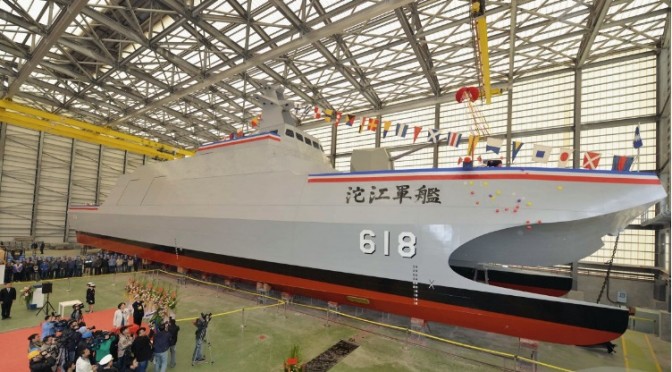
Focus Taiwan is reporting (it is their video above) that Taiwan is building ships in this class but in a very different form, for a very different purpose. It measures 60.4 meters in length and 14 meters in width, with a crew of 41. It is fast at 38 knots and has a range of 2,000 nautical miles (this is actually less than the range of the Webber class, but if this is quoted for a higher cruise speed, the range could actually be greater than that of the Webber class at the same lower speed). The great beam is the giveaway, the hull is something unusual.
Janes.com has pictures of the hull out of the water. A separate Janes report lists the armament as eight Hsiung Feng II (HF-2) and eight ramjet-powered Hsiung Feng III (HF-3) anti-ship missiles, an “Otobreda 76 mm gun, four 12.7 mm machine guns for close-range ship defence and a Mk 15 Phalanx close-in weapon system (CIWS) to defeat incoming projectiles and hostile aircraft.”
We have seen a similar hull form before.
This article originally appeared at Chuck Hill’s CG Blog and was cross-posted by permission. Chuck retired from the Coast Guard after 22 years service. Assignments included four ships, Rescue Coordination Center New Orleans, CG HQ, Fleet Training Group San Diego, Naval War College, and Maritime Defense Zone Pacific/Pacific Area Ops/Readiness/Plans. Along the way he became the first Coast Guard officer to complete the Tactical Action Officer (TAO) course and also completed the Naval Control of Shipping course. He has had a life-long interest in naval ships and history.
Recent months have found uniformed officers and naval strategists writing and speaking about regaining the ability of U.S. Navy (USN) ships to conduct offensive anti-surface warfare (ASuW). The discussion has been lively and featured many authors and many different approaches. Some solutions are incremental, such as fielding more capable long-range weapons in existing launch systems.1 Others are more radical, such as trading large long-range missile defense interceptors for small point defense missiles and building a new generation of multi-role cruise missiles.2
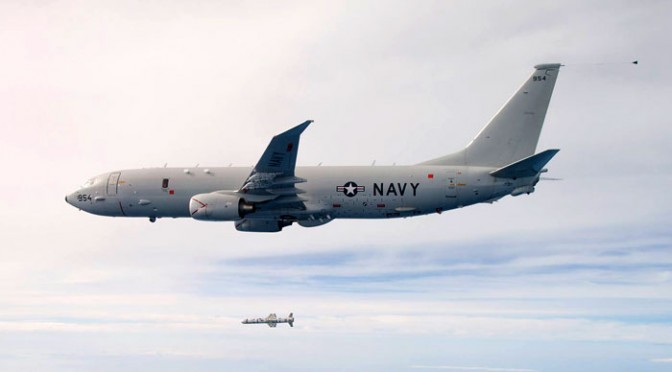
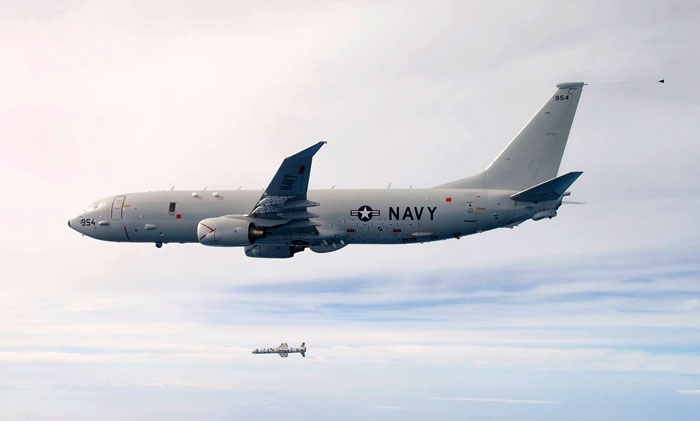
A P-8A test launches an AGM-84D BLK IC Harpoon Missile. (U.S. Navy photo)
Missing from the discussion of future acquisitions and new weapons is how the USN can leverage existing land-based airpower to seize the offensive in ASuW. The P-8 Poseidon maritime patrol aircraft is deployed today, with the range, persistence, sensors, and network architecture to serve as a self-contained “kill chain.” It is able to disperse and operate in an expeditionary environment during peacetime or contingency operations. If equipped with more suitable long-range anti-ship weapons, this aircraft will provide greatly increased capability for the combatant commander. This will allow more flexibility for USN forces to operate in an A2/AD environment when a carrier is not nearby or in the interim until more capable surface-based ASuW weapons are fielded.
Framing the Challenge
During the last three decades, the USN has divested its surface forces of offensive anti-ship firepower as operations shifted to littoral environments with permissive threat profiles. With the retirement of the Tomahawk Anti-Ship Missile, the service has been left without a weapon that can engage targets at a range beyond that of threat anti-ship cruise missiles (ASCM’s).3 Our ships now go to sea armed only with the sub-sonic, medium range Harpoon missile. The removal of Harpoon from Flight IIA DDG-51’s after DDG-79 and proposed cuts to funding for cruisers have exacerbated this glaring deficiency.4 The onus for conducting maritime strike has shifted from our surface ships to the aircraft of the Carrier Strike Group (CSG).
As the reach and number of U.S. ASCM’s have decreased, threat systems have proliferated and improved in range, speed and sophistication. China, Russia, and India all possess advanced supersonic long-range ASCM’s. Foreign militaries are equipping themselves not only with the weapons needed to strike, but also the C4ISR capabilities needed to detect and accurately target adversary forces.5
Commanders, legislators, and the defense industry have responded with a variety of initiatives, including the development of an Offensive Anti-Surface Weapon (OASuW.) This program is aimed at fielding an advanced cruise missile with sufficient range to allow USN ships to employ outside the reach of threat weapons systems. OASuW Increment 1 will begin fielding the Lockheed Martin Long Range Anti-Ship Missile (LRASM) in FY17 for carriage on the F/A-18 Super Hornet and USAF B-1 bombers. OASuW Increment 2 will provide for integration of a long-range anti-surface capability onboard surface ships.6 By equipping the F/A-18 and B-1 with the ability to carry LRASM, the Department of Defense has signaled that regardless of eventual integration of OASuW onboard surface ships, carrier and land-based airpower will remain a key component of the U.S. anti-surface strategy.
Missing from this conversation on OASuW capabilities is the USN’s Maritime Patrol and Reconnaissance (MPR) force. The MPR community is recapitalizing with the P-8 Poseidon aircraft. The sensors, datalink capabilities, and expeditionary nature of this aircraft make it a natural choice to augment the lack of anti-surface punch. The P-8 and RQ-4C UAS are envisioned to play targeting roles in long-range ASuW engagements, so arming P-8 with upgraded weapons is a logical next step. The Poseidon can allow the fleet to seize the initiative in anti-surface employment, especially in situations where the threat makes the reality of deploying the CSG forward politically unpalatable or disadvantageous.
The Solution
The P-8 Poseidon is derived from the Boeing 737 aircraft. It features long-range, high transit speed, solid persistence, and will soon incorporate the ability to perform air-to-air refueling. The open architecture mission systems are easily reconfigurable and allow for rapid improvement of sensor and weapon capabilities. The P-8 features a Mobile Tactical Operations Center (MTOC), which aids in processing data collected during and after mission flights. The MTOC is fully expeditionary, allowing an MPR detachment to quickly relocate in peacetime or disperse away from main operating airfields and continue to fight in wartime.
The ability to disperse is especially critical in an A2/AD environment. The proliferation of theater ballistic missiles (TBM’s) and cruise missiles has allowed previously weak nations to hold an opponent’s forward bases at risk. By deploying aircraft to auxiliary fields away from large military installations, adversary commanders are faced with a much more challenging targeting problem. The increased cost of building more TBM’s may be daunting to a particular military, and the uncertainty of being able to destroy forward forces is a stabilizing influence. P-8’s ability to deploy to medium sized airfields and sustain itself during combat operations is a force multiplier.
P-8 will also carry the Raytheon Advanced Aerial Sensor (AAS) to provide standoff detection and targeting of maritime and land targets. Descended from the highly-classified APS-149 Littoral Surveillance Radar System, AAS will provide Poseidon crews with the ability to detect, classify, and provide targeting solutions of threats even in highly congested littoral areas.7 In A2/AD environments with highly advanced surface to air missile systems, this ability to accurately detect threats from long-range and provide targeting updates to net-enabled weapons isn’t just beneficial, it’s critical.8 A MPR squadron equipped with AAS and appropriate weapons becomes its own self-contained targeting and strike force.
In short, P-8 offers a weapons platform that is uniquely suited to maritime strikes. Its crews are far more familiar with operating in the ASuW role than USAF bomber crews and culturally more pre-disposed to emphasize this mission set. The ability to act as an armed sensor platform allows the Poseidon to close the kill-chain itself. P-8 armed with suitable standoff weapons has the ability to detect and attrite adversary surface ships, preserving the ability for our surface forces to deploy forward in wartime, and decreasing the need for our carriers to surge forward into extremely high-risk areas to eliminate surface threats with the air wing. This provides increased flexibility to the combatant commander.
Needed Changes
The MPR force has the potential to act as a powerful ASuW strike force, however this capability can grow stronger with upgrades and training. P-8 should be equipped with an OASuW capability, ideally allowing it to carry the LRASM rounds that will enter production in FY17. The largest roadblock will not be carriage capability or weapons system engineering, rather finding the funding to provide integration and testing for this weapon onboard P-8.
The P-8 currently carries the Harpoon Block IC, which is insufficient for high-end ASuW. The Block IC is not net-enabled, meaning it cannot receive in-flight updates from targeting platforms via a datalink. This makes the weapon less flexible and precise in congested environments. The aircraft is slated to receive the Harpoon Block II, which is net-enabled, but is still constrained by its short range.9 This lack of reach prevents it from engaging high-end air defense warships without putting the P-8 and its crew at serious risk.
It is best to utilize the synergy that exists in MPR squadrons and equip these aircraft with both the sensors and the weapons required for standoff targeting and strike. Since AAS equipped P-8’s may be required to provide targeting support to OASuW in a complex surface environment, equipping the targeting aircraft with weapons is the logical next step to close the kill chain. Once P-8 is equipped with LRASM, crews must be required to train frequently with AAS equipped targeting aircraft and LRASM equipped shooter aircraft against representative threat pictures. Maritime targeting is a very dynamic and challenging game, and requires practice to execute properly.10
Summary
Equipping the MPR force with a long-range strike capability will capitalize on existing sensors, platforms, and aircrew skills. The ability to call on an existing force structure with incremental upgrades provides a solution to a glaring deficiency in the Navy’s ASuW capabilities. The ability to task highly mobile aircraft rather than SSN’s or carriers to provide ASuW firepower provides a commander with increased options and flexibility. This can reduce risk while raising the enemy’s uncertainty about U.S. operational intentions.
American patrol crews gained fame during World War II for their nighttime raids on Japanese shipping. Operating alone and independent of the carrier they provided a critical force to weaken enemy logistics capability and to disrupt sea lines of control. It is fitting that almost three quarters of a century later we consider the role of our current MPR force. The P-8 can add to our ASuW capability if we make the decision now to properly equip it and provide training to aircrews.
Lieutenant Michael Glynn is an active-duty naval aviator and graduate of the University of Pennsylvania. He most recently served as a P-8 instructor pilot and mission commander with Patrol Squadron (VP) 16. He currently serves as an instructor flying the T-45 with the ‘Fighting Redhawks’ of Training Squadron (VT) 21. The views expressed in this article are entirely his own.
1 Robert Crumplar and Peter Morrison, “Beware the Anti-Ship Cruise Missile,” U.S. Naval Institute Proceedings, vol. 140, no. 1 (January 2014), http://www.usni.org/magazines/proceedings/2014-01/beware-antiship-cruise-missile.
2 Bryan Clark, Commanding the Seas: A Plan to Reinvigorate U.S. Navy Surface Warfare, (Washington, D.C.: Center for Strategic and Budgetary Assessments, 2014), http://www.csbaonline.org/wp-content/uploads/2014/11/A-Plan-To-Reinvigorate-US-Navy-Surface-Warfare.pdf.
4 “LRASM Missiles: Reaching for a Long-Range Punch,” Defense Industry Daily, October 15, 2014, http://www.defenseindustrydaily.com/lrasm-missiles-reaching-for-a-long-reach-punch-06752/.
5 Congressional Research Service, China Naval Modernization: Implications for U.S. Navy Capabilities – Background and Issues for Congress, by Ronald O’Rourke, (Washington, D.C., 2014), 34.
9 Richard R. Burgess, “A ‘Year of Transition’ for the P-8A Poseidon,” Seapower, April 9, 2013, http://seapowermagazine.org/sas/stories/20130409-p-8a.html.
10 Maksim Y. Tokarev, “Kamikazes: The Soviet Legacy,” Naval War College Review, vol. 67, no. 1, (Winter 2014), 61-84. It should be noted that Soviet Tu-95RT “Bear-D” reconnaissance and targeting aircraft were equipped with Uspekh-1 “Big Bulge” maritime search and targeting radar. This system did not feature Inverse Synthetic Aperture Radar (ISAR) capabilities for standoff imaging and identification. The P-8 AAS system and APY-10 search radar both feature ISAR capabilities, simplifying long-range identification challenges. Modern employment scenarios would find ISR aircraft much better able to identify a contact once it had been located and would not be as chaotic as the Soviet experience that Tokarev describes. Maritime targeting still remains an arena that is inherently dynamic and therefore requires proper training to execute reliably and efficiently.
In a short article recently published by The National Interest, Xunchao Zhang argues that blockade is an effective means for the U.S. Navy to conduct a war against China because of its reliance on oil imports and then proposes that China has two options for countering a blockade strategy: vulnerability-reducing and conflict-avoiding. He dismisses the first because the Peoples Liberation Army Navy (PLAN) does not have the capacity to escort oil tanker convoys half-way round the world and China’s overland pipelines would be vulnerable to US strikes. Zhang therefore argues that a policy of avoiding conflict with the United States entirely is the only means for China to counteract a US blockade strategy. Key to this, he claims, is strengthening the Chinese nuclear deterrent and renouncing the No-First-Use policy. Only then will the Chinese nuclear deterrent be sufficient to prevent conflict with the United States and avoid a blockade which would likely be crippling. But this argument misses a fundamental point about deterrence and any US use of blockade in a war with China.
Jugular of the economy
Deterrence is about avoiding war. Zhang argues that by strengthening the Chinese nuclear arsenal, the likelihood of war with the United States would decrease, thereby countering the threat of an American blockade. However, the United States is already unlikely to initiate a war, for numerous reasons. What Zhang calls China’s “minimal nuclear deterrent”, the possible world economic consequences, lack of domestic support for such an endeavor, and the historical unwillingness of the United States to be seen as the aggressor all combine to deter the US from attacking China. Any U.S.-China war would be initiated by China, and therefore a strengthening in the Chinese nuclear arsenal, to include abandoning No-First-Use, does not make a compelling case that the likelihood of war with the United States would be decreased. At best it would have no effect, and at worst it would put the Chinese leadership in a position where a stronger nuclear deterrent could simply increase the attractiveness of conducting a conventional war beneath the nuclear umbrella.
Furthermore, if a conflict-avoiding policy fails, an expanded nuclear arsenal would be useless in stopping the United States from imposing a blockade. Nuclear deterrence operates even in the context of war. It is unlikely that China would turn their nuclear weapons against the United States when under even a crippling blockade because the United States could respond overwhelmingly. A severe economic decline would be difficult to face, but nuclear weapons raining down on Beijing and Shanghai are on an entirely different plane. The incentive to not escalate to the point of nuclear warfare would be significant, and both sides understand this. The United States would have free reign to conduct the blockade without concern of nuclear escalation because of mutual deterrence.
Recent events support this view. In the context of the Ukraine Crisis, the United States has leveraged sanctions against Russia, which has the world’s largest nuclear arsenal, without fear of escalation. Another one or 10,000 Russian nuclear weapons would not change the fact that economic disruption is very different from physical destruction. If the possible effects of a blockade are as serious as Zhang argues, a strengthened nuclear deterrent is not the way to counter it.
Zhang is correct, however, to argue that China’s best way to counteract a potential blockade by the U.S. Navy is to avoid war entirely. Oil pipelines from Russia and Kazakhstan are highly vulnerable. Hitting fixed targets with precision weapons is a skill the United States military has very nearly perfected, with strikes this summer in Syria from carrier-based aircraft and Tomahawk-toting surface ships again proving the point. He also correctly assesses the PLA Navy as insufficient to protect its maritime trade routes. It has no experience conducting convoy operations and has limited, if slowly improving, antisubmarine warfare capabilities. Despite the effort expended to deploy a task force off Somalia, China does not have the capacity to support the number and array of forces necessary to defend its trade routes.
Not your grandpa’s U-Boot
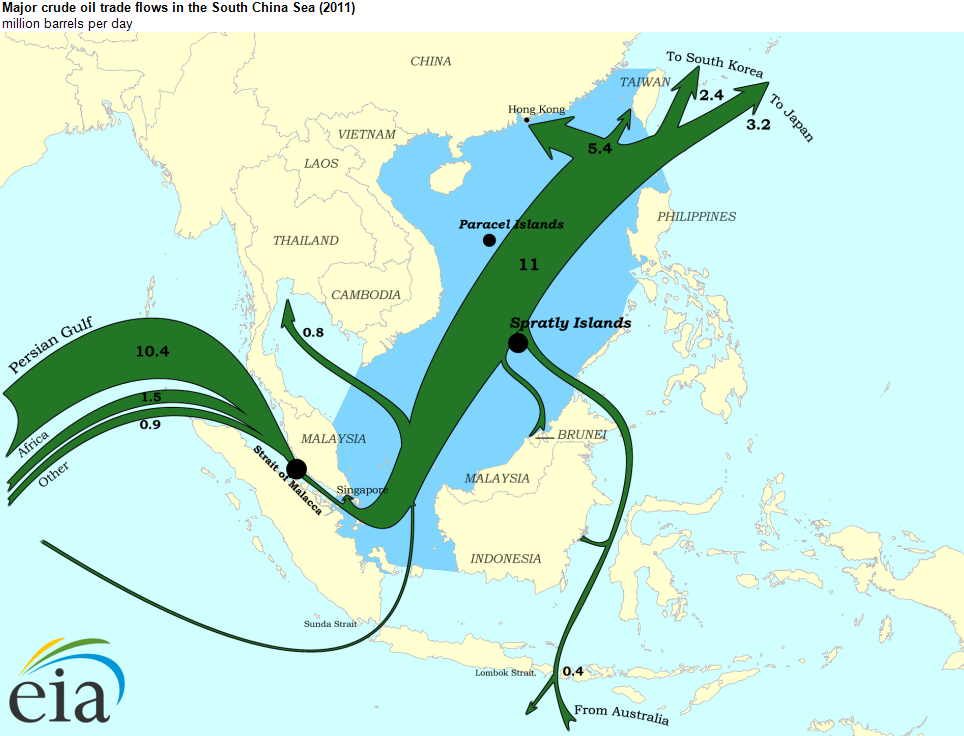
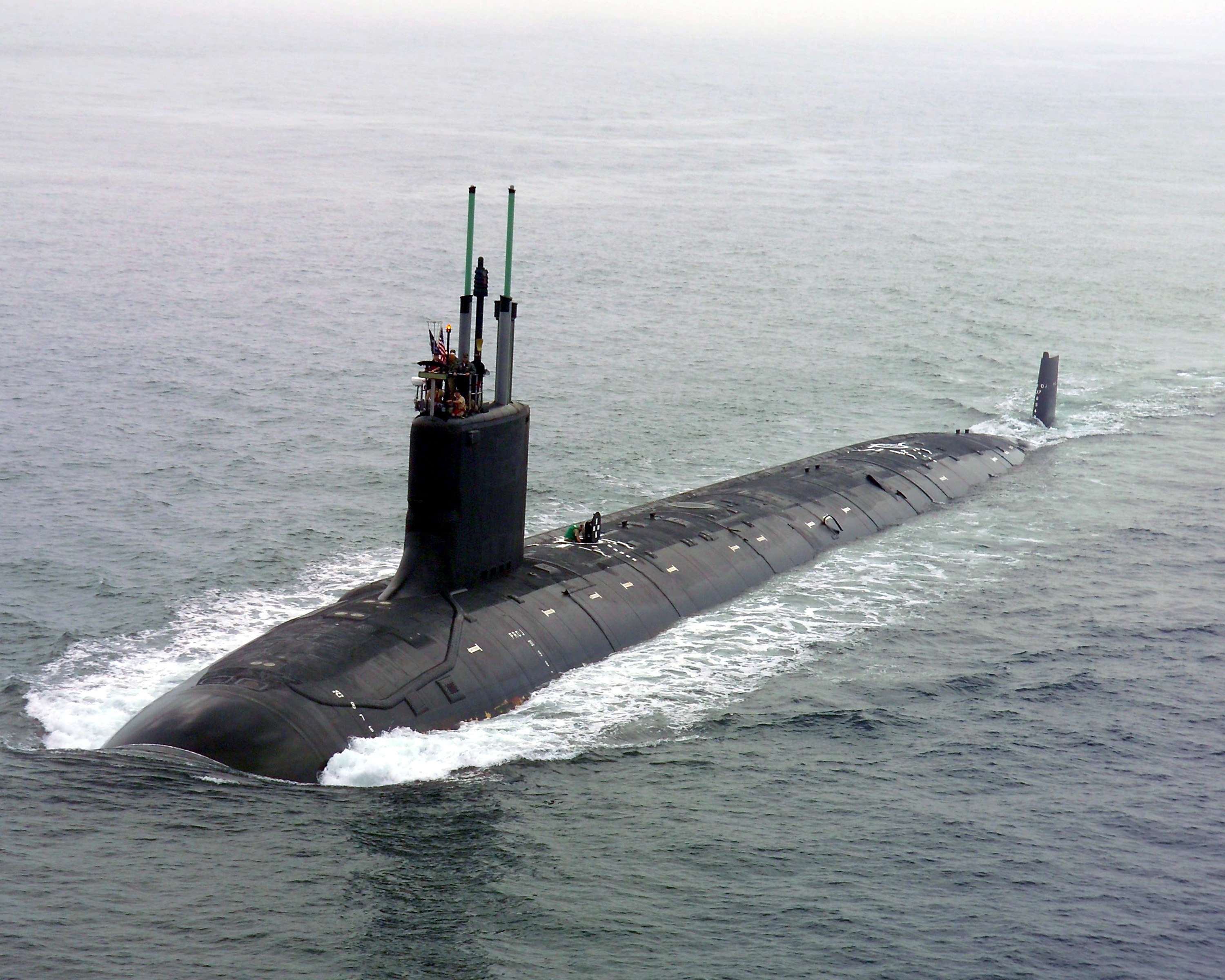
Furthermore, the geography of East Asia contains numerous maritime chokepoints, U.S. submarines are fast, quiet, and have incredible endurance, the U.S. surface fleet has decades of experience conducting maritime interdiction in some of the same waters it would blockade, and the United States has the ability to intercept maritime traffic far outside the range of PLAN capabilities, interdicting oil tankers at their source in the Persian Gulf. While Air-Sea battle in the face of A2/AD capabilities requires the development of any number of new weapons systems, the U.S. Navy has the capacity now and for the foreseeable future to cripple the Chinese economy in the event of war, at ranges far outside those of any existing or upcoming A2/AD capabilities. There is no simple panacea for China to overcome the threat of blockade in the event of war, but Zhang does get it right when he says that China’s best option is to avoid conflict entirely.
______________________________________________
Ian Sundstrom is a surface warfare officer in the United States Navy and holds a master’s degree in War Studies from King’s College London. The views expressed here are his own and do not represent those of the United States Department of Defense.
China’s ambiguous claim to the South China Sea, approximately demarcated by a series of hash marks known as the “nine-dashed line,” faced objections from an expanding number of parties over the past two weeks. While a challenge from the United States came from an unsurprising source, actions by Indonesia and Vietnam were unexpected in their tone and timing.
On December 5th, the U.S. State Department released its analysis of the compatibility of China’s nine-dashed line with international law. The report attempted to set aside the issue of sovereignty and explore “several possible interpretations of the dashed-line claim and the extent to which those interpretations are consistent with the international law of the sea.” The analysis found that as a demarcation of claims to land features within the line and their conferred maritime territory, the least expansive interpretation, the claim is consistent with international law but reiterated that ultimate sovereignty is subject to resolution with the other claimants.
As a national boundary, the report went on, the line “would not have a proper legal basis under the law of the sea,” due to its unilateral nature and its inconsistent distance from land features that could confer maritime territory. Alternately, although many commentators have indicated China bases its claims on “historic” rights pre-dating the UN Convention on the Law of the Sea (UNCLOS) of 1982, the report argued that the history China points to does not fit the narrow “category of historic claims recognized” in UNCLOS under which historic rights may be conferred. Lastly, the report noted that as China has filed no formal claim supporting its nine-dashed line, the ambiguity over the exact nature and location of the line itself undermines under international law China’s argument that it possesses maritime rights to the circumscribed waters, concluding:
“For these reasons, unless China clarifies that the dashed-line claim reflects only a claim to islands within that line and any maritime zones that are generated from those land features in accordance with the international law of the sea, as reflected in the LOS Convention, its dashed-line claim does not accord with the international law of the sea.”
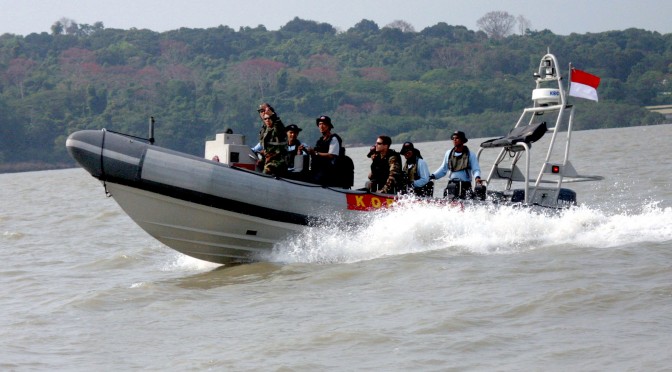
Although such analysis reflects prior U.S. policy positions, less expected were the pointed signals from Indonesia, which has built a reputation as a mediator among ASEAN states in dealing with China and striven to downplay the overlap by the nine-dashed line of its own claimed exclusive economic zone in the South China Sea from Natuna Island. On Tuesday at the think tank Center for Strategic and International Studies (CSIS) in Washington, senior Indonesian presidential advisor Luhut Binsar Panjaitan emphasized that the country was “very firm” that its “sovereignty cannot be negotiated,” while stressing the importance of dialogue to peacefully manage matters. Further, in response to a question from an audience member, Panjaitan stated (56:00 mark in the video below) that the development of gas fields offshore Natuna in cooperation with Chevron would “give a signal to China, ‘you cannot play a game here because of the presence of the U.S.’” Meanwhile Indonesian Maritime Affairs and Fisheries Minister Susi Pudjiastuti noted that after sinking Vietnamese vessels the Indonesian Navy said it had captured illegally fishing she was considering sinking 5 Thai and 22 Chinese vessels also caught.
As Prashanth Parameswaran notes at The Diplomat, Indonesia is playing a balancing act – seeking at the same time to protect its sovereign interests as it attempts to align new president Joko Widodo (Jokowi)’s “Maritime Axis”/“Maritime Fulcrum” initiative with Xi Jinping’s “Maritime Silk Road” and play a leading role in China’s Asian Infrastructure Investment Bank. To some observers, sinking the Thai and Chinese boats is now necessary to preserve Indonesia’s image of impartiality, while others believe such action may be redundant if China heeds the warning that such behavior will no longer be tolerated.
Vietnam too took surprise action over the nine-dashed line, in a move long-mooted but unexpected in its timing. Vietnam’s foreign ministry announced last week that it had filed papers with the Hague arbitral tribunal overseeing the case submitted by the Philippines, asking that its rights and interests be considered in the ruling. Vietnam supported the Philippines position arguing that China’s nine-dashed line is “without legal basis.” While a regional source in The South China Morning Postnoted that the action was as much about protecting “Vietnamese interests vis-à-vis the Philippines as it is directed against China,” and Professor Carlyle Thayer described it as “a cheap way of getting into the back door without joining the Philippines’ case,” Thayer also toldBloomberg Newsthat it “raises the stature of the case in the eyes of the arbitrational tribunal.”
If the actions taken by the United States, Indonesia, and Vietnam were surprising, China’s reactions were not. On December 7th, China’s Ministry of Foreign Affairs released a white paper of its own on the Philippines’ arbitration case. The document states that China’s policy, as established in its 2006 statement on UNCLOS ratification, is to exclude maritime delimitation from compulsory arbitration. Additionally, the paper says that while the current arbitration is ostensibly about the compatibility of China’s nine-dashed line with international law, “the essence of the subject-matter” deals with a mater of maritime delimitation and territorial sovereignty. The paper goes on to say that until the matter of sovereignty of the land features in the South China Sea is conclusively settled it is impossible to determine the extent to which China’s claims exceed international law.
In effect, China is taking the position that only after it has conducted and conclude bilateral sovereignty negotiations will its nine-dashed line be open to critique. While the foreign ministry may be right that the Philippines is attempting to force the issue of territorial sovereignty, its argument that this prevents scrutiny of the nine-dashed line’s accordance with international law rings hollow.
At the end of the day, China has repeatedly stated, and its new policy paper affirms, that it will “neither accept nor participate in the arbitration” initiated by the Philippines. Chinese Foreign Ministry Spokesman Hong Lei likewise remarked of Vietnam’s filing with the tribunal that “China will never accept such a claim.” So it is prudent to ask what benefit will come of the legal maneuvers. Some, such as Richard Javad Heydarian, a political-science professor at De La Salle University, point to the economic harm already incurredby the Philippines in opportunity costs and the danger of having created a worse domestic and international environment for settling the disputes. Yet given the lengthening list of states willing to stake a legal position on the matter and the moral weight of a potential court ruling, China can claim and attempt to enforce what it wants, but it will be increasingly clear that it is doing so in contravention of international law.
Scott Cheney-Peters is a surface warfare officer in the U.S. Navy Reserve and the former editor of Surface Warfare magazine. He is the founder and president of the Center for International Maritime Security (CIMSEC), a graduate of Georgetown University and the U.S. Naval War College, and a member of the Truman National Security Project’s Defense Council.