Category Archives: Asia-Pacific

Analysis relating to USPACOM.

The Father of the Modern Chinese Navy—Liu Huaqing

This is the final piece in our Forgotten Naval Strategists series.
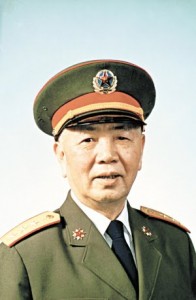
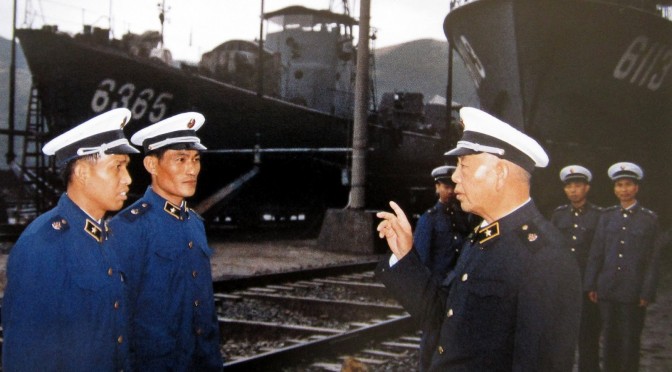
liu2Liu Huaqing is arguably one of China’s most famous naval officers. Often referred to as the “father of the modern Chinese Navy” and “China’s Mahan,” Liu served as commander of China’s Navy, the People’s Liberation Army Navy (PLA Navy) from 1982 to 1987, a period which saw a sea change in China’s naval strategy as it moved away from coastal operations. However, Liu’s legacy is much more complex, given that he was actually more of a ground forces officer assigned to the navy, rather than a life-long naval officer. Rather than being the likely originator of China’s post 1980s naval strategy, he should be better remembered as one of China’s most ardent supporters of a stronger Chinese naval power.

Background

According to Liu’s autobiography, he was born on 20 October 1916, in eastern Hubei Province, China. He was one of six children, having three brothers and two sisters. Liu joined the Chinese Communist Party (CCP) in 1929, at the young age of 13. However, three years later he was kicked out of the CCP after being accused of being a “counterrevolutionary.” Liu was only allowed to rejoin the Party in 1935, during his participation in the Long March (1934-36).1 Despite this early set back, Liu reached the highest ranks of the CCP, serving as a member of China’s elite ruling body, the Politburo Standing Committee, from 1992 to 1997. He died on 16 January 2011, at the age of 94.

In addition to rising through the ranks of the CCP, Liu was a successful military officer. He joined the communist military forces (not yet called the People’s Liberation Army, or PLA) in 1930, at the age of 14.2 He subsequently fought against both the Chinese Nationalists under Chiang Kai-shek and the Japanese military during World War II. Towards the end of his military career, in 1988, he was promoted to the rank of general, and ultimately served as vice chairman of the CCP’s supreme military body, the Central Military Commission (CMC), from 1992 to 1997.

Naval career

Despite his other accomplishments, Liu is best known as modern China’s most famous naval officer. However, despite ultimately becoming PLA Navy commander, Liu was not a typical naval officer. Instead, he’s probably better described as a PLA ground forces officer with naval characteristics, to borrow from a Chinese saying. The majority of Liu’s military career was actually in the army, the (still) dominant service of the PLA—that he is more accurately referred to as “general” rather than “admiral” bears further testament to this fact. Furthermore, Liu’s first encounter with the PLA Navy wasn’t until he was 36 years old (1952), when he was appointed deputy political commissar of the Dalian Naval Academy.3

Once part of the PLA Navy, however, Liu enjoyed a rapid rise through its ranks. In 1958, after completing almost four years of study at the Soviet Union’s Voroshilov Naval Academy (today’s N.G. Kuznetsov Naval Academy), Liu became deputy commander, and subsequently commander, of China’s Lushun Naval Base, near the port city of Dalian.4 In August 1960, he became deputy commander of the newly established North Sea Fleet in Qingdao.5 A year later, he was appointed director of China’s Seventh Research Academy (Warship Research Academy), a newly founded institute that focused on “research and development of ships, weapon systems, equipment, and assimilation of imported technologies.”6

Liu’s appointment to the Seventh Research Academy was an inflection point, and for the next almost two decades, Liu was heavily involved in the research and development of China’s defense industries, particularly its ship building industry. In August 1966, he became deputy director of the National Defense Science and Technology Committee, which he held until 1969.7 Liu then returned to the PLA Navy to direct its shipbuilding industry, and in 1970 he became the deputy chief of staff of the navy, responsible for naval weapons and platform development. Finally, in 1982, Liu was appointed commander of the PLA Navy, a position he held until 1987.

China’s “Offshore Defense” naval strategy

One of Liu’s key accomplishments during his tenure as commander was to oversee a major shift in the PLA Navy’s strategy in the mid 1980s. Until this point, the PLA Navy followed what it called the “Coastal Defense” (jin’an fangyu) strategy, which reflected Beijing’s belief that the primary role of the PLA Navy was to support the ground forces to defend against a Soviet land invasion. According to the PLA’s official encyclopedia, China’s “Coastal Defense” strategy was premised upon three parallel tracks. First, conducting maritime guerrilla operations using small naval and naval aviation formations to attack and harass dispersed and isolated enemy forces. Second, conducting rapid naval sorties to attack the enemy’s sea lanes and coastal targets within China’s immediate periphery. Third, carrying out small coastal naval operations under cover of ground artillery and land-based aircraft.

In 1986, the PLA Navy formally shifted its strategy from “Coastal Defense” to “Offshore Defense” (jinhai fangyu).8 Unlike its predecessor, this strategy called on the PLA Navy to conduct independent naval actions further out from China’s coasts, although not yet true blue water operations. According to Liu’s autobiography, the focus of the “Offshore Defense” strategy was to defend China’s maritime interests within China’s claimed maritime territories. Liu fully recognized that the PLA Navy was unable to meet the requirements of this strategy when first articulated. In order to rectify this, the PLA Navy needed to develop four capabilities:

  • The ability to seize limited sea control in certain areas for a certain period of time
  • The ability to effectively defend China’s sea lanes
  • The ability to fight outside of China’s claimed maritime areas
  • The ability to implement a credible nuclear deterrent.9

Reflecting these requirements, the “Offshore Defense” strategy has both a temporal and geographic component to it. As Bernard D. Cole notes, the PLA Navy’s capability to fulfill the requirements of the “Offshore Defense” strategy were to develop along three phases:

  • Phase 1: to be achieved by 2000, during which time the PLA Navy needed to be able to exert control over the maritime territory within the First Island China, namely the Yellow Sea, East China Sea, and South China Sea (see map)—a goal that Cole argues China has yet to fully achieve.
  • Phase 2: to be achieved by 2020, when the navy’s control was to extend out to the Second Island Chain.
  • Phase 3: to be achieved by 2050, by which time the PLA Navy was to evolve into a true global navy.10
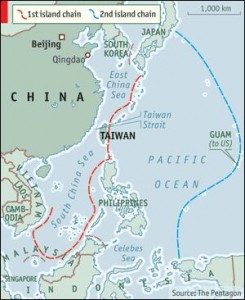
chain

The shift in the PLA’s naval strategy reflected an earlier adjustment in Beijing’s assessment of its international situation. In the late spring of 1985, China, then under the leadership of Deng Xiaoping, reassessed its strategic outlook. According to this assessment, China was no longer under the imminent threat of war, envisioned as a major ground invasion by Soviet forces to the north. Instead, due to a relative parity between the Soviet Union and the United States, China could enjoy a relatively peaceful environment for the foreseeable future.11 This allowed Beijing to take the PLA off a constant pre-war posture and focus more on modernizing and downsizing the military in light of the new requirements to be able to fight a smaller, more technical type of war (referred to as “local war” (jubu zhanzheng) in PLA parlance).

The PLA Navy’s increased focus on China’s maritime domain also followed Beijing’s gradual recognition of the importance of the sea starting in the 1970s. As this author has written elsewhere, in the 1970s, China “began to recognize the potential economic value of controlling the maritime areas”—a region it had more or less ignored until then.12 In particular, Beijing eyed the potential for hydrocarbons and minerals in the seabed, which, if exploited, could be used to benefit China’s economic development. The growing importance of fisheries to China’s economy was also noted. As was the new-found importance of China’s sea lanes, upon which China’s fledgling export economy increasingly depended.

Despite being credited with developing the PLA Navy’s “Offshore Defense” strategy, it is unlikely that Liu was the actual originator of the strategy. His career path and previous military experiences are not commensurate with those of a typical naval strategist. However, that is not to say that Liu didn’t play an influential role in the strategy’s formation. On the contrary, his position as naval commander during this period provided him with the necessary influence to see the strategy adopted in the first place. Furthermore, as CMC vice chairman, Liu would have been in a position to ensure that the PLA Navy developed the capabilities it needed to carry out the “Offshore Defense” strategy. That Liu was allegedly personal friends with Deng Xiaoping probably also helped strengthen Liu’s policy influence.13 In this way, rather than “China’s Mahan,” it might be more accurate to refer to Liu as “China’s Theodore Roosevelt,” at least as far as naval development is concerned.

Conclusion

So what can we derive from this quick review of Liu Huaqing’s influence on the PLA Navy? This article makes four points:

  • First, the importance of having the naval capability to defend a state’s maritime interests. As China’s maritime interests expanded, Liu (and his fellow naval travelers) recognized the need for a naval force capable of safeguarding those interests. This may appear to be a truism, but it is worth repeating.
  • Second, the importance of syncing naval strategy (and subsequent development and procurement requirements) with overall national objectives. The PLA Navy’s switch to the “Offshore Defense” strategy ensured that the naval component of the PLA would align closely with the PLA’s newly established requirements for war fighting. Failure to ensure that the naval and other military services coordinate their respective strategies will only reduce efficiency and waste resources.
  • Third, the importance of developing naval capabilities based upon a strategy, and not vice versa. When the PLA Navy under Liu adopted the “Offshore Defense” strategy, it was fully understood that the navy was incapable of carrying out the new strategy—something China subsequently set about to change. At the end of the day, strategy is still the combination of ends, ways, and means—with ends holding pride of place.
  • Fourth, the importance of an influential lobbying force on behalf of a strong naval capability. The improved capabilities of the PLA Navy over the past two decades are arguably in part the direct result of Liu’s strong influence—especially in the 1990s when he was CMC vice chairman. Without his direct support for China’s naval development, it is unlikely that the PLA Navy would be where it is today.

Daniel Hartnett is a research scientist with The CNA Corporation, where he researches China’s military and security affairs. The views expressed here are his own. He can be followed at @dmhartnett.

1 Liu Huaqing, Liu Huaqing Huiyilu [Memoirs of Liu Huaqing], (Beijing: PLA Publishing House, 2004), pp. 1-6.

2 Liu, p. 7.

3 Liu, p. 253.

4 Liu, pp. 265-274.

5 Liu, p. 282.

6 Sandeep Dewan, China’s Maritime Ambitions and the PLA Navy (New Delhi, India: Vij Books, 2013), p. 18.

7 Liu, p. 307.

8 Some Westerners have translated this term as “near seas defense.” This article sticks with conventional usage, however.

9 Liu, p. 438.

10 Bernard D. Cole, The Great Wall at Sea: China’s Navy in the Twenty-First Century, 2nd edition, (Annapolis, MD: Naval Institute Press, 2010), p. 176.

11 Yao Yunzhu, “The Evolution of Military Doctrine of the Chinese PLA from 1985 to 1995,” The Korean Journal of Defense Analysis 7:2 (1995): 57-62.

12 Daniel M. Hartnett, “China’s Evolving Interests and Activities in the East China Sea,” in Michael A. McDevitt et al., The Long Littoral Project: East China and Yellow Seas—A Maritime Perspective on Indo-Pacific Security (Alexandria, VA: CNA, September 2012), pp. 83-86, http://www.cna.org/sites/default/files/research/IOP-2012-U-002207-Final.pdf.

13 Edward Wong, “Liu Huaqing Dies at 94; Oversaw Modernization of China’s Navy,” New York Times, 16 January 2011.
Chinese Submarines Taste Indian Ocean

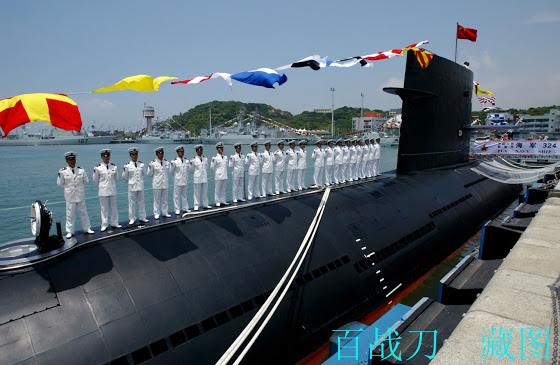
PLAN Song-class submarine in Hong Kong

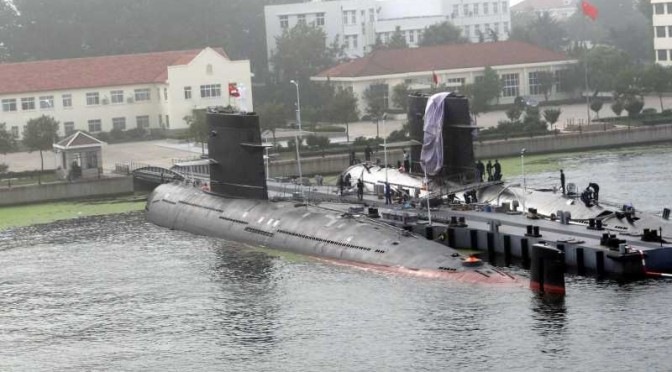
A Chinese military website, ostensibly sponsored by the People’s Liberation Army, quoting Sri Lanka media has reported that a Chinese Type 039 diesel-electric Song-class submarine along with Changxing Dao, a submarine support ship from the North Sea Fleet was sighted berthed alongside at the Colombo International Container Terminal. Although the pictures of the submarine and the support vessel together in the port have not been published either by the Sri Lankan or the Chinese media, it is believed that the submarine arrived in early September just before the Chinese President Xi Jingping’s visit to Sri Lanka. The report also states that the submarine was on a routine deployment and had stopped over for replenishment. Further, a Chinese naval flotilla would call at a Sri Lankan port later in October and November.

In the past, reports about the presence of Chinese submarines in the Indian Ocean have been announced in the media. For instance, the Indian media reported that a type-093 attack nuclear submarine was on deployment (December 2013 to February 2014) in the Indian Ocean and that the Chinese Ministry of National Defense (Foreign Affairs Office) had informed the Indian military attaché in Beijing of the submarine deployment to show ‘respect for India’. Apparently, the information of the deployment was also shared with the United States, Singapore, Indonesia, Pakistan and Russia.

A few issues relating to the presence of Chinese submarines in the Indian Ocean merit attention. First, the Chinese submarine visited Sri Lanka and not Pakistan, a trusted ally of China whose relationship has been labeled as ‘all weather’. The reason for the choice of Sri Lanka could be driven by concerns about Pakistan domestic political instability, which had prompted Xi Jinping to cancel his visit to Islamabad during his South Asia tour last month. Further, the high security risks in Karachi harbour and Gwadar port add to Chinese discomfort.

In the past, there have been a number of terrorist attacks on the naval establishments in Karachi. In 2002, 14 workers of the French marine engineering company Direction des Constructions Navales (DCN) were killed and in 2011, attack on PNS Mehran left three P3C-Orion damaged. The recent report about an attempt to hijack a Chinese-built Pakistani frigate by a terrorist group linked to the Al Qaeda has only reinforced these apprehensions. The Gwadar port is perhaps not yet ready to take on submarines; besides, in the past, three Chinese engineers working in the Gwadar port project were killed in a car bombing and two Chinese engineers working on a hydroelectric dam project in South Waziristan were abducted.

The second issue that warrants attention is that the deployment of the Song-class submarine in the Indian Ocean would be the first ever by a Chinese conventional submarine. This could be a familiarization visit, keeping in mind that the Chinese do not have sufficient oceanographic data about the Indian Ocean. After all, submarine operations are a function of rich knowledge about salinity, temperature and other underwater data. It is plausible that the Pakistan Navy, which has a rich experience of operating in the Arabian Sea, may have shared oceanographic data for submarine operation with the Chinese Navy. Further, the submarine would also get an opportunity to operate far from home and it is for this reason that it was escorted by a submarine tender. It will be useful to recall that China had deployed a number of ships, aircraft and satellite in the southern Indian Ocean in its attempt to locate the debris of MH 370. These factors may have encouraged the Chinese Navy to dispatch the submarine to the Indian Ocean.

Third, if the Chinese are to be believed that they informed Singapore and Indonesia about the deployment of type-093 attack nuclear submarine in the Indian Ocean earlier this year, then the purpose for that was to address the issue of the Southeast Asian Nuclear Weapon Free Zone (SEANWFZ) also referred to as the Bangkok Treaty signed on December 15, 1995, during the fifth Association of Southeast Asian Nations (ASEAN) summit. The nuclear submarine would have entered the Indian Ocean through any of the three straits i.e. Straits of Malacca, Sunda Strait and the Lombok Strait and transited through the SEANWFZ.

The ASEAN countries have been urging the five nuclear weapon states (NWS) – China, France, Russia, United Kingdom and the United States – who operate nuclear powered submarines / warships carrying nuclear weapons, to sign various protocols of the SEANWFZ but have expressed reservations partly driven by the fact that the SEANWFZ curtails the movement of nuclear propelled platforms such as submarines. Indonesia has been at the forefront to ‘encourage the convening of consultations between ASEAN Member States and NWS with a view to the signing of the relevant instruments that enable NWS ratifying the Protocol of SEANWFZ’.

If the presence of Chinese submarines in the Indian Ocean is true, it is fair to suggest that Chinese forays have graduated from diplomatic port calls, training cruises, anti-piracy operations, search and rescue missions, to underwater operations. Further, the choice of platforms deployed in the Indian Ocean has qualitatively advanced from multipurpose frigates to destroyers, amphibious landing ships and now to submarines. The Indian strategic community had long predicted that China would someday deploy its submarines in the Indian Ocean and challenge Indian naval supremacy in its backyard; these concerns have proven right. The Indian Navy has so far followed closely the Chinese surface ships deployments in the Indian Ocean but would now have to contend with the submarines which would necessitate focused development of specialist platforms with strong ASW (anti-submarine warfare) capability.  

Dr Vijay Sakhuja is the Director, National Maritime Foundation, New Delhi. The views expressed are those of the author and do not reflect the official policy or position of the National Maritime Foundation. He can be reached at director.nmf@gmail.com.
 

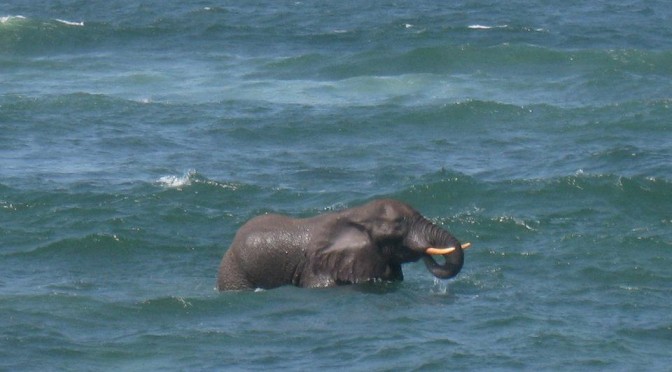
The Elephant at Sea: China’s Naval Outlook

A Brief Overview of China’s Naval Outlook

Naval supremacy is one of the oldest forms of projecting national power. For millennia, the ability to operate well beyond a country’s coastal waters has provided nations with unmatched security. Aircraft carriers multiply naval supremacy exponentially, providing a navy with floating bases, thereby relinquishing any dependence on other governments or local bases. Both practically and symbolically, the aircraft carrier has been central to American power projection over the six decades during which it has dominated the Pacific – but it is those same vessels that are now under threat from China’s vast new array of missiles.

Throughout the history of carrier aviation, it has been said that the first thing a President asks during times of crisis is: “Where is the nearest aircraft carrier?” The U.S. has had a naval presence, including aircraft carriers, in the northwestern Pacific Ocean for over half a century. Beginning with the defeat of Japan in World War II, the U.S. Navy has treated these waters as their own. It has used its unmatched naval power to implement a rules-based international system oriented toward the promotion and preservation of free trade, freedom of navigation, and the democratic rule of law. This dominance was accelerated in 1972 when the U.S. endorsed China’s return to the family of nations, thereby implicitly leading to China’s acceptance of American military dominance in Asia.

While there have always been Chinese antagonists to American naval dominance in the Pacific, one would find it difficult to argue that American dominance in the region has not led to the most stable and prosperous period of China’s modern history. That said, many proponents of China’s imperial ambitions assert that America’s role in the Pacific is crumbling, as China vows to recast its historic military and political might in the region.

Today, China is especially concerned with the security of its seaborne commerce in the area it calls the Near Seas – the coastal waters that include the Yellow, East China, and South China Seas. As such, China is beginning to implement a strategy to exert increased control over the Near Seas, pushing the U.S. Navy farther and farther east. In doing so, China is launching a profound challenge to the U.S.-led order that has been the backbone of China’s own modern economic success.

American military strategists assert that for the past 20 years China has been expanding its military with a keen focus on investments in its “anti-navy” – a series of warships, silent submarines, and precision missiles specifically designed to prevent the U.S. Navy from operating in large areas in the northwestern Pacific Ocean. As Dennis Blair, a retired U.S. Navy admiral who was the commander of U.S. forces in the Pacific region states: “Ninety per cent of [China’s] time is spent on thinking about new and interesting ways to sink our ships and shoot down our planes.”

Some observers believe China wants its naval capabilities to perform as an anti-access/area-denial (A2/AD) force—a force that can deter U.S. intervention in a conflict in China’s Near Seas region, or at a minimum reduce the effectiveness of intervening U.S. forces. That having been said, China currently does not possess a fully operational aircraft carrier – though it is expected to have one in service by 2015.

The U.S. Pacific Fleet, on the other hand, is the world’s largest fleet command, encompassing 160 million square kilometres and consisting of approximately 200 vessels. Of these, two are aircraft carriers.

The U.S. has not lost an aircraft carrier since the Japanese sank the USS Hornet during the Battle of the Santa Cruz Islands in 1942. Today, the mere thought of an aircraft carrier being vulnerable could be enough to restrict its use, as the loss of a carrier would be an unfathomable psychological defeat to American naval prestige and credibility – akin to a Pearl Harbor or 9/11. These sentiments are beginning to be realized in the Pentagon, as a new concept of fighting wars at sea is taking shape.

AirSea Battle, inspired by the AirLand Battle concept, is an integrated battle doctrine that officially became part of U.S. grand strategy in February 2010. The purpose of this doctrine is to shape U.S. military power in such a way as to better address asymmetrical threats in the northwestern Pacific and Persian Gulf – in other words, China and Iran.

By weakening the U.S. Navy’s presence in the Pacific, China hopes to undermine America’s alliances with other Asian countries, thereby reshaping the balance of power in the region. If U.S. influence does indeed decline, China would be in a position to quietly assume a leadership position in Asia, giving it much greater sway over the rules and practices in the global economy. The future of global security hinges on the floating of two vessels in the Pacific, for if one American aircraft carrier were to be sunk, the balance of power would be dramatically altered.

Jasen Sagman is a Junior Research Fellow at the NATO Council of Canada where he writes as part of the Maritime Nation Program. Currently pursuing a Master of Arts in Global Diplomacy from the University of London, SOAS, he also holds an Honours Bachelor of Arts in Political Science from the University of Toronto. He has previously researched for the Jerusalem Centre for Public Affairs and the Chair of Canada’s House of Commons Standing Committee on Foreign Affairs and International Development.

Blue Economy: An Agenda for the Indian Government

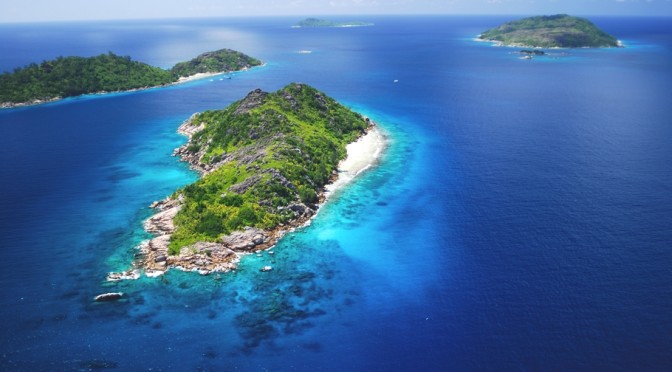
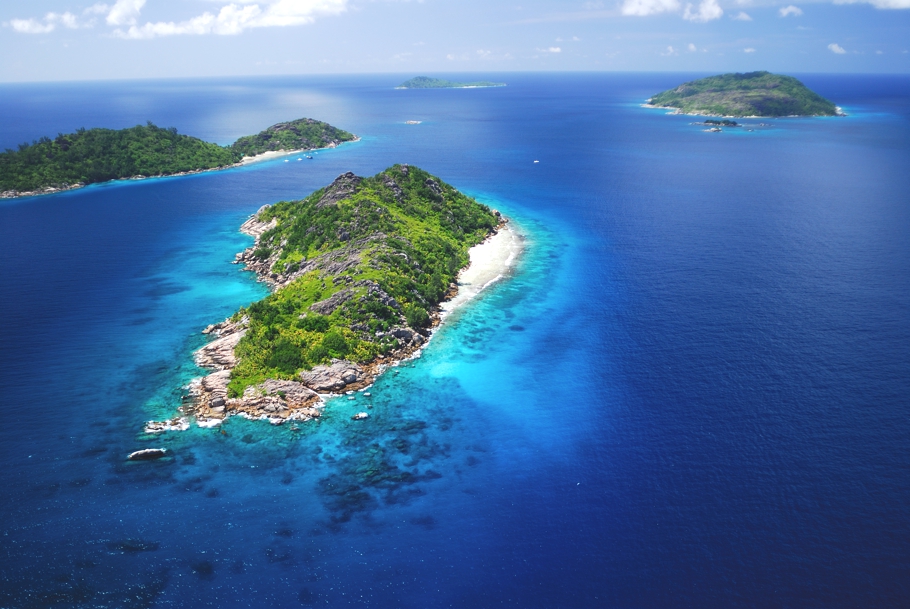
Prime Ministers Narendra Modi of India and Navinchandra Ramgoolam of Mauritius, during their meeting on the sidelines of the swearing-in ceremony of the former in May 2014 in New Delhi, agreed to increase cooperation in ‘maritime security, renewable energy, and the blue-economy, including development of related infrastructure’. Earlier, Seychelles Vice President Danny Faure had stated that his country was ‘working closely with India on developing the Blue Economy concept’ and that both countries had accorded high priority to issues like ‘maritime pollution and overfishing that impact the Indian Ocean’.

Before going any further, it is important to understand ‘blue economy’. The idea of blue economy was argued during the Rio+20 preparatory meetings, where several Small Islands Developing States (SIDS) observed that ‘Green Economy’ had limited relevance for them; instead, ‘Green Economy in a Blue World’ was a good concept and most suitable for the sustainable development and management of ocean resources.

A number of countries have included blue economy in their national strategy and have published white papers and official documents. For instance, China has long followed this idea and has instituted Five-Year Development Plan for National Marine Economy which monitors progress of various marine sectors. China’s State Council has published a White Paper on the subject which notes that the Chinese maritime economy grew at 17 per cent annually in the 1980s, and 20 per cent in the 1990s. In January 2013, China released the 12th Five-Year Development Plan for National Marine Economy which notes that the marine economy is expected to grow at 8 per cent annually up to 2015, generate 2.6 million new jobs, and could be about 10 per cent of the national GDP.

Likewise, the European Union has announced its ‘Blue Growth’ strategy for sustainable development of marine and maritime sectors to contribute to the Europe 2020 strategy for smart, sustainable and inclusive growth. It is estimated that it would result in nearly 5.4 million jobs and a gross added value of about €500 billion annually and generate sustainable jobs and growth. In the Indian context, the idea of blue economy is yet to develop. There are as many as 17 different agencies whose mandate includes matters maritime/marine; ironically, there is no synergy among them partly due to the absence of an overarching agency to facilitate dialogue among these agencies.

SeychellesDuring his first address to the newly constituted 16th Lok Sabha, President Pranab Mukherjee outlined major policy priorities of the new government over the next five years which included setting up of the National Maritime Authority (NMA), an apex body, to address coastal security concerns. This is a significant initiative and addresses gaps in coastal security and would help prevent terrorist attacks from the sea similar to the 26/11 attacks in Mumbai in 2008. It is equally important to harness the seas to enhance the maritime power potential of the country. A multi-disciplinary maritime advisory body can help bring together a number of national / state bodies and can help formulate a maritime vision, draw up plans and coordinate economic, environmental and security activities in the maritime domain which can then work to ‘craft a National Maritime Security Policy’. This could then be integrated with the maritime strategy which would automatically ‘reinforce maritime security’.

Taking this argument further, Prime Minister Modi’s announcement to do away with the eight-member Planning Commission and set up a larger think tank that accommodates the states to do the ‘big thinking and thinking for the future’ could explore the possibility of constituting a group of specialists under a maritime think tank to develop a blueprint for growth of blue economy.

Mauritius and Seychelles are important island nations in the Indian Ocean and have made a strong case for blue economy as an important pillar of their national development strategy. As noted earlier, their leaders have passionately argued about their commitment to sustainable exploitation of living and non-living marine resources and deep seabed minerals to enhance food and energy security. However, these countries are constrained by a number of technological and investment limitations for the development of the maritime sector which is critical for their economic growth and look towards India or even China for support.

At another level, the high decibel security discourse in the Indian Ocean centered on asymmetric threats and challenges appears to have swamped the idea of blue economy and pushed it to the back burner. There is no doubt that security is critical for sustainable development of sea based resources, it will be useful for India, Maldives, Mauritius, Seychelles and Sri Lanka to jointly promote the idea of blue economy in the Indian Ocean and keep environment and ecology high on the agenda.

Dr Vijay Sakhuja is the Director, National Maritime Foundation, New Delhi. The views expressed are those of the author and do not reflect the official policy or position of the Indian Navy or National Maritime Foundation. He can be reached at director.nmf@gmail.com. This article was cross-posted by permission and appeared in its original form at India’s National Maritime Foundation.