Category Archives: Capability Analysis

Analyzing Specific Naval and Maritime Platforms

INS Vikrant Makes Progress at Cochin Shipyard

Guest Post by Chris B.

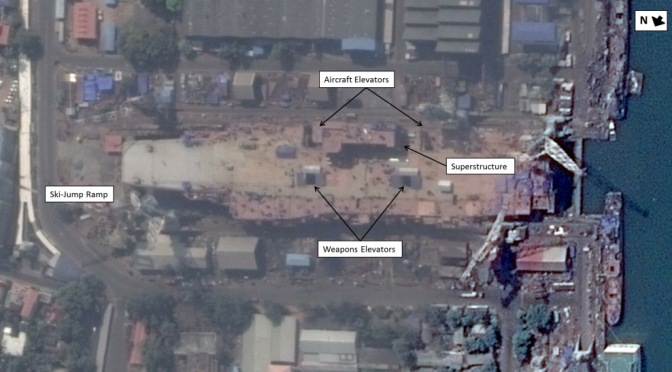
New satellite imagery shows that India’s first indigenous aircraft carrier has made significant progress since it was launched in August 2013, helping India inch towards the goal of a two carrier battle group.

Imagery acquired by commercial satellite firm DigitalGlobe in February 2015 shows further assembly of INS Vikrant, a 40,000 ton aircraft carrier and India’s soon-to-be largest vessel once commissioned. Additional ship modules now welded to the hull have enlarged the deck width — measuring almost 60 meters. The erection of the superstructure reported last November was also confirmed. India’s first domestically produced carrier is currently under construction at state-owned Cochin Shipyard Limited, the country’s largest shipbuilding and maintenance facility located in Kerala on the west coast.

Like other vessels built in India, significant cost overruns and delays have hampered shipbuilding progress. The South Asian country is already four years behind schedule on the project with the latests estimates pushing an operational date closer to December 2018, if not beyond. However, the Indian Navy expects that the vessel will “undock” sometime this month after mounting the propellers on the engine shafts, according to an April statement from Vice Admiral Ashok Subedar. Afterward, the shipyard will continue with the fitting out process.

Originally, India was to have fielded her carrier by 2014, eleven years after the government approved the build. Last July, the Cabinet Committee on Security released an additional Rs 19,000 crore (approx USD 3.18 billion), the lion’s share, to complete the vessel’s construction — on top the USD 585 million already spent. Due to India’s extensive bureaucracy, the funds languished for almost a year halting progress on the project.

“As much as 95 per cent of its hull is complete as is 22,000 tons of [its] steel structure,” Subedar went on to say. That’s 3,500 tons heavier than its August 2013 launch weight though significantly less than its planned 40,000 tons. Of course, much of the that weight will be comprised of two fixed wing squadrons (12 x fighters each) of Russian-built MIG-29K and Indian-built Tejas Light Combat Aircraft, 10 x Ka-31 ASW helicopters as well as necessary ammo, fuel, and other supplies.

Vikrant

Indian Navy Computer Model of INS Vikrant

Featuring a STOBAR (short take-off but arrested recovery) configuration with a ski-jump, India’s indigenous carrier will push naval pilots to master a new launch and recovery system, one very different from its existing STOVL (short take-off and vertical landing). Luckily, Russia helped India build a shore-based testing facility which became operational early last year. Imagery shows that Indian pilots are already hard at work. (INS Vikramaditya also features a STOBAR configuration).

Aircraft aside, India’s latest carrier will be powered by four General Electric LM2500 gas turbines capable of cruising speeds around 18 knots. With an endurance of 7,500 nautical miles the Navy should have few problems projecting force throughout the Indian Ocean region, especially given India’s previous proficiency in carrier operations.

But if issues do arise, the United States has proposed a joint working group to help support Indian ops, share best practices and even possibly, technology. All of which may lead observers to conclude that India’s naval capability has become increasingly important. Prime Minister Modi made that clear while visiting Mauritius in March: “India is becoming more integrated globally. We will be more dependent than before on the ocean and the surrounding regions. We must also assume our responsibility to shape its future. So, [the] Indian Ocean region is at the top of our policy priorities.”

As perhaps it should be. India is already advantaged by its unique geography, jutting out in the Indian Ocean with its 7,500km coastline and island territories. Given India has short distances to travel to manage any regional conflict or rivalry, it only makes sense that India would focus resources on protecting national interests in its own backyard.

DG (11MAR15) PLAN Salalah

Satellite Imagery of PLAN Vessel at Oman’s Salalah port (DigitalGlobe 11MAR15)

However, few regional contenders are making a splash in the maritime space, though emerging challenges from China are certainly on India’s radar. China’s People’s Liberation Army Navy (PLAN) commissioned its first aircraft carrier, the Liaoning, in 2012 and has already started construction on a second. With recent infrastructure established in the South China Sea and additional PLAN deployments in the Indian Ocean region, China appears poised to take a more aggressive maritime stance, a clear departure from India’s Cold War experience.

In response, India is planning a 160-plus-ship navy as it seeks to constrain what it sees as a Chinese incursion into its sphere of influence. Unfortunately for the navy, India is still predominately a land force with the Army maintaining the biggest share of the defense budget. Regardless, India expects that its homegrown carrier program will eventually allow it to maintain two carrier battle groups supporting its respective Eastern and Western Naval Commands.

Named after India’s first aircraft carrier recently scrapped, the INS Vikrant is one of two homegrown carriers planned for the Indian Navy. The second carrier, INS Vishal is currently being fast-tracked—though it’s unknown what this means for Vishal’s construction timeline. In the meantime, India’s lack of experience building carriers and the uncertainty of outside assistance may impede India’s pressing strategic goals, probably pushing the operation of its second carrier to 2025 or beyond.

This article can be found in its original form at Offiziere.ch

Geographic Re-balance the Solution to Right-Sizing the Navy

The new 2015 Maritime Strategy demands a significant part of the Navy be forward based or operated in order to achieve national goals. The current number of ships and their present deployment pattern may not support the new strategy’s goals. Several recent articles have bemoaned the Navy’s shrinking surface ship fleet, or sought to make light of the overall number of ships as a significant determinant of strategic naval power. Both are, in a way, incorrect. The number of ships does matter, but wishing for a return of the halcyon 1980’s and the 600 ship navy is a futile hope in the face of the present budget deficit and growing welfare state. The post World War 2 U.S. Navy deployment structure has been based on the maintenance of a specific number of total ships in order to maintain a consistent overseas naval peacetime presence and credible war fighting force if required. The solution to this combination of forward deployment requirements on a limited budget is a fundamental change to the post-1948 U.S. naval deployment scheme through a global redistribution of U.S. naval assets. Potential threats, strategic geography, and support from potential coalition partners should govern this effort. The Navy should also seek new technologies to reduce overall budget costs. If this sounds familiar, it is not a new concept. Great Britain’s Royal Navy, under the leadership of the fiery transformationalist Admiral Sir John Fisher, executed a similar successful change just over a century ago in a similarly bleak financial environment. A modified version of Fisher’s scheme represents the U.S. Navy’s best hope to assign relevant naval combat power where it is most needed and at the best cost.

Britain’s Successful Rebalance
Like the U.S. today, Great Britain at the turn of the last century was a nation in rapid relative decline. British industry and its share of the world economy were shrinking in response to the rise of Germany, Japan, and the United States. The navies of those nations, as well as traditional enemies like France and Russia were growing in size and capability. Great Britain had just concluded the financially taxing and internationally embarrassing Boer War, which strained the nation’s tax base and earned it international opprobrium for harsh treatment of Boer combatants and civilians. The concept of a British Welfare state had gained significant support, and expenditures for this new government responsibility threatened the budgets of the Army and the Navy; both of which required significant modernization.
Admiral Fisher was selected by the Conservative Party’s First Lord of the Admiralty, Lord Selborne, specifically for his daring pledge to cut naval spending, while increasing the power and overall capability of the Royal Navy (RN). Fisher scrapped large numbers of older warships; created a ready reserve of minimum manned, older, but still capable combatants; reformed the RN’s personnel structure; and argued for the adoption of revolutionary technologies such as turbine engines, oil fuel for ships, director-based gun firing, submarines, and naval aircraft. A succession of Navy civilian leaders from both of the large British political parties supported his efforts. Most importantly, Fisher presided over the biggest re-balancing of British naval assets since the end of the Napoleonic wars. Before Fisher the RN was divided amongst various colonial stations around the world. Its most significant operational commands were the Atlantic and the Mediterranean Fleets that protected Britain’s line of communication to India via the Suez Canal.  Although Fisher’s initial strategy was to counter France and Russia,  the concentration of British naval strength in home waters allowed it to counter rising German threats.  Britain sought simultaneous colonial agreements with France and Russia to reduce tension, and signed an official alliance with the emerging Japanese Empire to secure communications with its Pacific possessions. It also unofficially acquiesced to U.S. naval domination in the Western Hemisphere to eliminate any tensions with the other great English-speaking nation. All told, these efforts allowed Fisher to keep British naval spending at 1905 levels until 1911.1 They also ensured that a significant British naval force was in place for war with Germany in 1914.

Conditions for U.S. Rebalance
The U.S. would be well served to create a global re-balance program along the lines of Admiral Fisher’s for its own Navy. In reverse of Fisher, however, the bulk of America’s naval strength must move from bases in home waters to the periphery of the nation’s interests. Some reductions in overall naval strength will be required to ensure that forward forces are well trained and equipped for both peacetime presence and wartime combat functions. Assignment will depend on regional geography, threat level and the availability of coalition partners to augment, or in some case replace U.S. naval assets.
The large deck nuclear aircraft carrier and its associated air wing are best employed in locations where land-based aviation assets are vulnerable or scarce due to geographic location. For this reason, the bulk of the carrier force should be assigned to distributed bases in the Indo-Pacific region. A force of six large carriers would serve as the core of the Pacific naval component. The surface combatant and attack submarine force based in the Pacific would be a commensurate percentage of its overall strength. They should be sufficient in number to support carrier escort, independent operations, and surface action groups as recommended for the emerging strategy of distributive lethality. This force would be large enough to conduct meaningful fleet and large scale joint exercises in a number of warfighting disciplines.

The carrier’s assignment to the largest ocean area of responsibility (AOR) best supports a joint commander’s warfighting requirements in a predominately maritime environment. The caveat with the assignment of carriers geographically is that the post-1948 deployment pattern of ‘three aircraft carriers equal one forward deployed, active carrier’ must be scrapped. This means retiring two carriers, perhaps the two oldest Nimitz class when the USS Gerald R. Ford is commissioned in next year.  One carrier strike group costs $6.5 million dollars a day to operate.2 The funds saved in the retirement of two carriers could be directed toward the maintenance of and operational costs of the remaining eight, with the proviso that these be consistently ready for service as required.
The Eurasian littoral areas historically supported by east coast naval forces would receive smaller, tailored force packages in this new organization scheme. Given that Eurasian littoral operations can be supported by land-based air units, only two carriers need be assigned to the Atlantic coast with perhaps a third designated as a training carrier.

A Substitute for a Carrier Strike Group
Under this arrangement the Mediterranean and Persian Gulf areas would not see regularly deployed large deck carriers. To offset their absence, it is proposed that two light carrier groups be forward-based on the Mediterranean and Indian Ocean respectively. Such a group would each be centered on an LHA-6 class amphibious warship configured as a light carrier with an airwing of 20+ F-35 Lightning II strike aircraft. The CVL-configured LHA, too small to support the full traditional carrier wing of both attack and support aircraft, would be supported by land-based assets that would provide airborne early warning (AEW), tanking, and other strike missions. Each group would contain three DDG-51 class destroyers for offensive and defensive roles including missile defense, a DDG-1000 class destroyer for surface strike and other warfare roles, and a flotilla of four to six littoral combat ships (LCS) or similar frigates (FF’s) for a variety of low intensity combat and surface strike missions. Attack submarines may be included as needed and an amphibious warfare group similar to the present 7th fleet formation based in Sasebo, Japan round out the numerical assignments. A full amphibious ready group (ARG) with associated Marine Expeditionary Force (MEU) based at Rota could exploit NATO/EU capabilities in the region as well. Most of these rebalancing efforts can be completed between 2020 and 2025, with the fight light carrier group ready by 2017. It may begin operations with the AV-8B II Harrier, but later transition to the F-35B Lightning II. After 2020, an international carrier strike group (CSG) presence might be maintained in the Eastern Mediterranean with British, French, Italian, and Spanish carriers playing a role.3
The Mediterranean offers a number of ports that together are capable of hosting such a force including Rota, Spain, Sigonella, Sicily, and Souda Bay, Crete. The Western Pacific/Indian Ocean represents a more complicated basing picture, but a combination of facilities in Singapore, Darwin, and Perth, with a forward anchorage in Diego Garcia might offer sufficient space to support to forward deployed forces. Both regions offer a number of land-based aviation facilities to support a light carrier formation.
The navies of friends and formal allies offer additional support to this strategy. The U.S. has consistently sought and depended on coalition allies in the conflicts it has engaged in since 1945, and especially since 1990. European fleets have changed from antisubmarine Cold War forces to smaller, but more deployable, larger combatants capable of global operations. Resident European force in the Mediterranean and deployed forces in the Persian Gulf region might augment U.S. efforts in those regions. The Libyan Operation of 2011 (Operation Odyssey Dawn for the U.S.), showcased what a U.S. light carrier group, as centered then on USS Kearsarge, and European forces might accomplish. The British Defence Secretary’s recent announcement that the Royal Navy will develop a base in Bahrain suggests that at least British and perhaps other Commonwealth nations’ navies might support U.S. efforts in the Persian Gulf region.

Options for Cooperation and Technological Offset
Strong U.S. relationships with Western Pacific nations are essential to any re-balancing strategy in that region. The adoption of AEGIS systems by the Japanese Maritime Self Defense Force, the South Korean, and Australian navies significantly aids in cooperative efforts. Close U.S. ties with Singapore, the Philippines, and other regional naval forces are also essential to U.S. efforts. One method of achieving this might be a Western Pacific version of the Standing NATO Maritime Groups. An international squadron with rotating command responsibilities would be useful in easing old tensions and promoting better relations amongst this diverse group of nations.
The “long pole in the tent” of such a re-balancing strategy is how to manage the personnel disruptions such a change would cause. The CONUS-based U.S. deployment strategy, and dependent housing agreements in Japan and some Mediterranean nations has allowed for a great deal of family stability. Sailors can remain reasonably close to their families, even when forward deployed. There is no guarantee that Pacific or Mediterranean nations would accept large increases in the population of U.S. naval personnel and their dependents resident within their borders. In addition to the foreign relation concerns, such additions would cost a considerable amount of money and involve greater security risks in protecting a larger overseas American service and dependent population. The answer to this problem is to ‘dust off’ some of the reduced and creative manning projects of the last decade. While not ideal in many ways, reduced manning, crew swaps, and longer, unaccompanied deployments may become the norm, rather than the exception for American sailors.
Unfortunately, this is the price of putting more credible combat power in forward areas at present or even reduced costs. The U.S. will be hard-pressed to duplicate Admiral Fisher’s other revolutionary changes. The U.S. Navy has retired nearly all of its outdated warships, and further reductions of newer platforms will harm overall naval capabilities. Revolutionary changes in armament such as the rail gun and other directed energy weapons, and continued advances in the electric drive concept may allow for some cost reductions in naval expenditures, but they remain far from mature development. The rail gun is slated for additional afloat testing, but with a barrel life of only 400 rounds, it represents a 21st century equivalent of the arquebus.4 Fisher, by contrast, had relatively mature technological solutions in propulsion, and rushed fire control, aircraft, and submarine advances into full production with mixed results. The present U.S. test and evaluation culture would not permit such bold experimentation.
The U.S. can, however, improve its overall forward naval posture by re-balancing its force structure along geographic lines to better support national interests and regional commanders’ requirements.  Additional force structure will be difficult to achieve in the face of present budget woes. Transformational technology is moving toward initial capabilities, but is not yet ready for immediate, cost savings application. The post-1948 CONUS-based deployment system is becoming more difficult to maintain with fewer ships and persistent commitments. Despite these dilemmas, the U.S. must fundamentally change the deployment and basing structure of the fleet in order to provide credible combat power forward in support of joint commander requirements. The new 2015 Maritime Strategy will not achieve many of its goals using the present CONUS-based deployment construct. Geographic re-balance of the fleet will provide strength were it is most needed.

1.  A detailed explanation of the Fisher/Selborne re-balance strategy may be found in Aaron Friedberg’s The Weary Titan, Britain and the Experience of Relative Decline, 1895-1905, pages 135-208.

2.  Captain Jerry Hendrix, USN (ret), PhD, “At What Cost a Carrier”, Center for New American Security (CNAS), March 2013, p. 7.

3.  Conversation with retired NSWCCD Senior Warfare Analyst James O’Brasky.

4. 15 February statement of Statement of Rear Admiral Mattew L. Klunder, USN, Chief Of Naval Research before the Intelligence, Emerging Threats and Capabilities Subcommittee  of the House Armed Services Committee on the Fiscal Year 2015 Budget Request,  26 March, 2014.

 

China’s Naval Modernization: Implications for U.S. Navy Capabilities

By Dmitry Filipoff

“The U.S.-Chinese military balance in the Pacific could nevertheless influence day-to-day choices made by other Pacific countries, including choices on whether to align their policies more closely with China or the United States.”

Superbly researched and organized, China’s Naval Modernization: Implications for U.S. Navy Capabilities—Background and Issues for Congress by CRS analyst Ronald O’Rourke serves as an excellent resource from which to better understand China’s evolving naval capabilities and how the U.S. Navy can retain its edge in the face of the Anti-Access/Area Denial (A2/AD) challenge. The scope of the report is wide, with information given on a large variety of platform and weapons procurements. The breadth is matched by depth of analysis, as the author assesses the sophistication of individual systems, offers concepts of employment, describes potential conflict scenarios, and explains how naval modernization is tied to broader policy. The report is broadly organized into sections that cover Chinese platforms and weapons, American policy decisions responding to China’s naval rise, key U.S. Navy acquisition programs, relevant sections from the National Defense Authorization Act, and an appendix providing supplemental readings. Certain sections could be strengthened and new areas could be explored to further flesh out the expanse of information, but nonetheless this fact packed publication has plenty to teach.

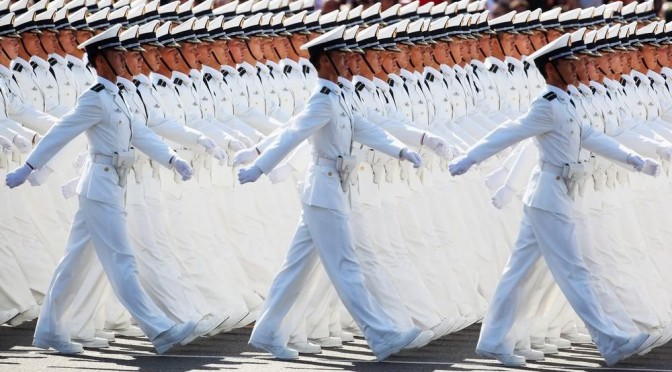
The detailed section on the People’s Liberation Army Navy (PLAN) is thoroughly informative on China’s maturing navy. Every surface combatant the PLAN fields is covered in the report. Each ship class’s capabilities are described along with their production history and projected numbers. Ships are contrasted with the capabilities of the vessels they are replacing, producing an appreciation of progress. Furthermore, certain ships are highlighted for their ability to enable operations that were not feasible until recently, such as the power projection and humanitarian assistance missions that could be conducted by the new Liaoning carrier and Type 071 vessels. Extensive attention is devoted to the new carrier, including the significant limitations posed by a ski-ramp configuration and the critical research role the vessel will play in familiarizing the PLAN with carrier operations. Information is also given on upcoming and prospective designs such as the Type 055 cruiser, Type 081 amphibious assault ship, and Type 095 nuclear attack submarine. In total, these sections combine to produce a clear trajectory of naval modernization.

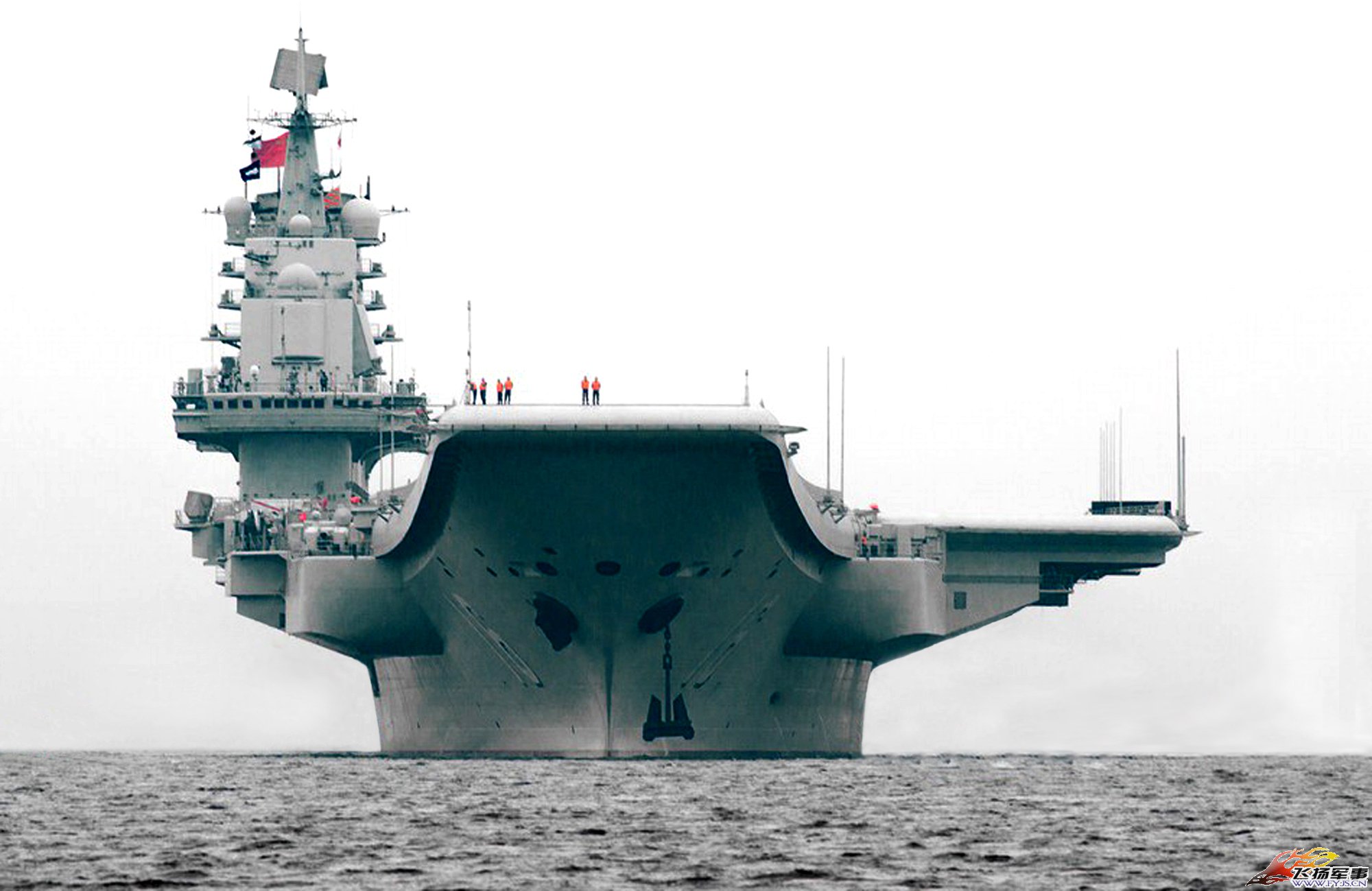
The Liaoning, China’s first aircraft carrier. The vessel was commissioned in 2012, and is being used to familiarize the PLA Navy with carrier operations.

The American perspective is captured as well. The report documents in numbers the changes being made to the Navy’s force posture and forward basing in order to operationalize the Asia Pivot. The Air Sea Battle concept is discussed along with the operational goal of disrupting kill chains in the electromagnetic spectrum. An especially insightful subsection describes the variety of nuances that should inform comparisons between the U.S. and Chinese navies, and naval forces in general. A unique strength of CRS reports, relevant legislation is included, providing key information into how Congress is influencing policy towards China and America’s own naval modernization. These sections in the National efense Authorization Act (NDAA), will help the reader better understand how Congress perceives the implications of China’s naval modernization, and which ongoing U.S. Navy procurement programs have Congressional priority towards meeting the A2/AD challenge. The NDAA also identifies certain knowledge gaps and requires reports be drafted in order to raise awareness, offering a glimpse into potential weaknesses and priorities.  

There are certain key points and gaps of information within the report that need to be addressed in order to fully appreciate the increasing modernity of China’s Navy and A2/AD abilities. For example, the author states “Changes in platform capability have been more dramatic than changes in platform numbers” but this is contradicted by ONI Officer Jesse Karotkin’s testimony that is included in the appendix: “China is implementing much longer production runs of advanced surface combatants and nuclear submarines, suggesting a greater satisfaction in their recent ship designs.” The tables provided by the author on yearly ship comissionings support this conclusion, marking a new and more confident phase of modernization that is gaining momentum. This trend highlights an aspect of modernization that requires greater attention, China’s increasingly formidable shipbuilding industrial base.

China’s naval modernization can be subsumed under a greater A2/AD aspiration, and the author stresses that proper assessment of a potential maritime conflict includes understanding “maritime relevant capabilities that are outside their navies.” Information is included on land based platforms such as backfire bombers procured from Russia, UAV’s, ASBMs, and even EMPs. However, if it is the intent to draw awareness towards addressing the A2/AD threat as a whole, primary attention should be given to China’s robust cruise missile inventory, which is the most significant weapon system towards enabling land based A2/AD. Although the author takes note throughout the report which platforms can field ASCMs and LACMs, the ASCM section lacks information on the precise range and speed of China’s cruise missiles and their advantages relative to comparable weapons fielded by American surface combatants. There is also no information provided on LACM types and capabilities.

The author writes “China’s naval modernization effort also includes reforms and improvements in maintenance and logistics, naval doctrine, personnel quality, education and training, and exercises.” Yet these topics received hardly any attention, and are arguably more critical to the maturity of the PLAN than capabilities borne from more modern platforms and systems.

When it comes to logistics, underway replenishment vessels are the foundation of blue water power projection. The number of these vessels in a Navy’s inventory is indicative of broader policy and the priority placed on projecting presence far from home. China possesses eight such ships, with three constructed from 2012-2014. The five type 903A “Fuchi” class vessels are relatively modern, with the first pair of ships launched in 2004. These ships may be among the most operationally experienced vessels in China’s navy. Since China began its anti-piracy mission in the Gulf of Aden in 2008 there have been twenty deployments, and a replenishment vessel has accompanied every task force sent. The PLAN also operates two type 904 general stores ships, which have delivered necessities to installations in the Spratly Islands.

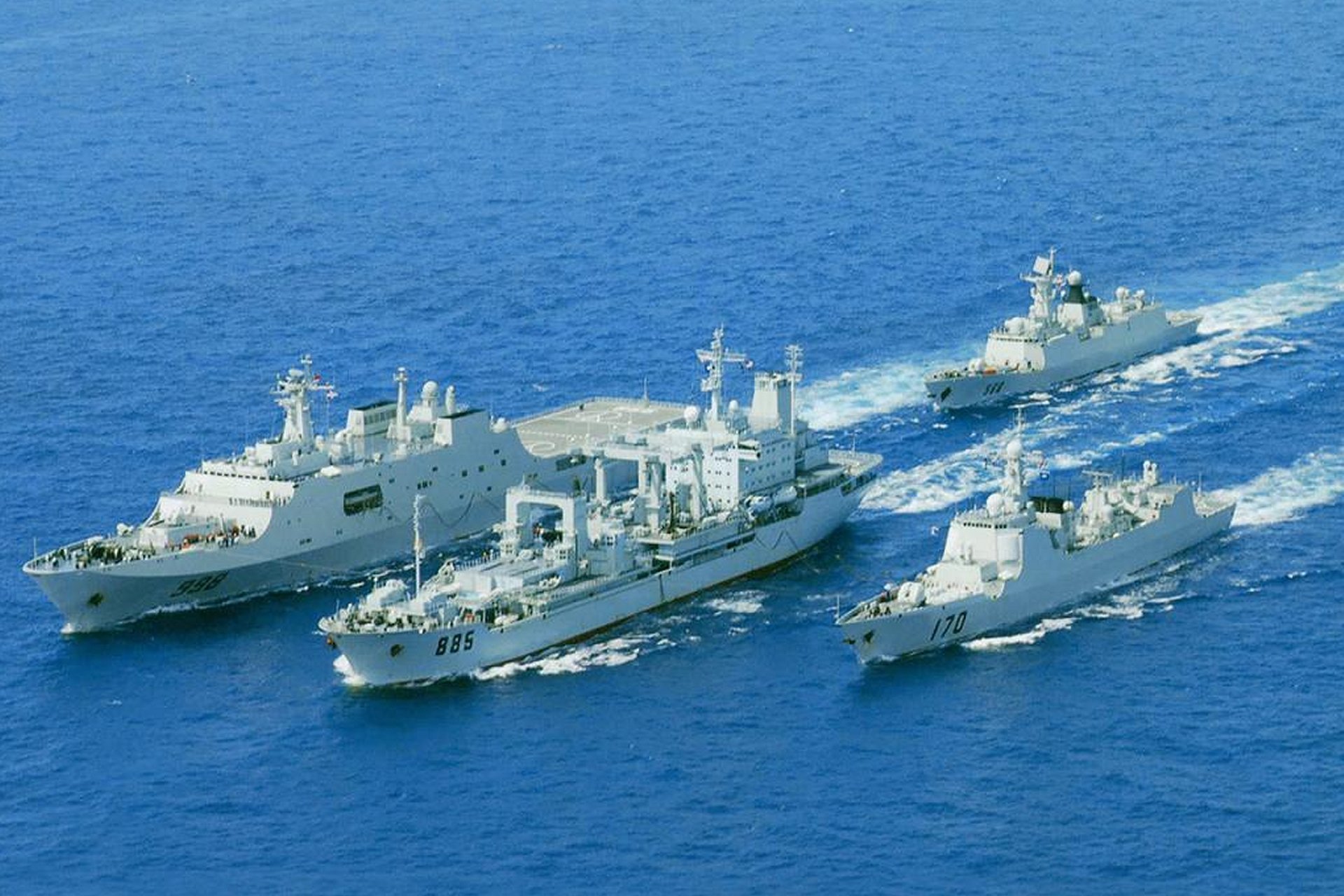
Type 903 Fuchi class vessel conducts simultaneous replenishment of Type 071 landing dock vessel and Type 052C guided missile destroyer

The PLAN is clearly committed to producing personnel with the high degree of technical proficiency necessary to operate modern warfighting platforms and systems, and such investments are already paying off in active operations. The PLAN is partnered with thirteen universities, and financial aid given to enrolled students was doubled to ten thousand RMB in 2009. Beginning in 2012, the PLAN launched programs partnering with specialized vocational schools from which high school graduates chosen through a competitive process would receive senior technical certifications following graduation, and be inducted as NCOs. Skill redundancy is achieved by requiring more technical proficiencies be acquired as an enlisted sailor rises in rank, resulting in units with greater shared expertise.  In 2011, technical evaluation stations were stood up in an effort to standardize assessment of NCO performance, and operate at the level of local units.

Author Ron O’Rourke writes “China’s naval modernization is a broad based effort with many elements” and China’s Naval Modernization certainly captures many of them. However, analysis of China’s military has been dominated by more observable material developments such as ship acquisition and weapons procurement. The trend has been made clear, and now it is as much a given for China to be continually introducing better platforms as it is for the United States. But these developments are subsidiary to more immaterial initiatives. Key elements such as doctrine, organization of forces, personnel education, operational experience, interoperability, and exercises are all more meaningful indicators of the growth of the PLA Navy than new equipment. And all of these areas have undergone their own changes in tandem with procurement programs. The challenges posed by the effective implementation and evaluation of these reforms need to be acknowledged, but this institutional development of the PLA Navy is what will ultimately best empower it to function as an enabler of policy.

Dmitry Filipoff is an Associate Editor with CIMSEC. 

Russia’s Supersonic Tu-160 Bomber Is Back: Should America Worry?

The article can be found in its original form at The National Interest here and was republished with permission.

By Dr. Tom Nichols

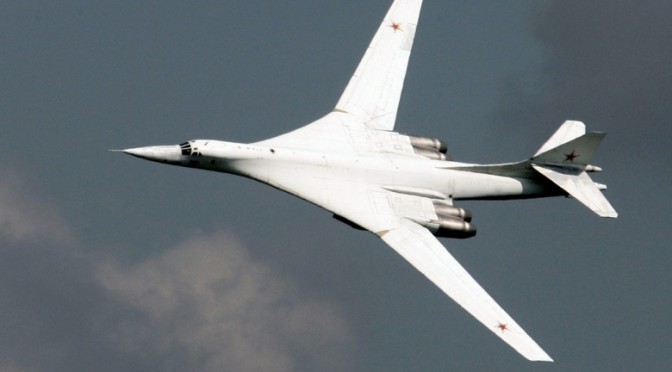
Russian defense minister Sergei Shoigu announced recently that Russia is going to begin production of the Tu-160, a Soviet-era bomber known as the “Blackjack.” The Tu-160 is a nuclear platform, basically something like the Soviet version of an American B-1 bomber: a big, heavy, swing-wing bomber meant to deliver nuclear weapons at long distances. The Soviets built about thirty-five of them in the 1980s, of which only fifteen remain in service.

So what does this mean to the strategic balance between the United States and the Russian Federation in 2015? In reality, it means absolutely nothing in military terms. As a political signal, however, Shoigu’s announcement is just the latest in a series of provocations. No American response is required and none would matter.

The Blackjack, assuming the Russians even manage to build any more of them, is a perfectly capable nuclear bomber that, in time of war, would fold back its swan-like wings and dart toward its targets at top speed. Once in range, it would launch cruise missiles that would make the last part of their journey low and slow under enemy radar. This is pretty much what all bombers would do in a nuclear war. (The one major advantage of the American B-2 is that it could penetrate farther into enemy airspace with less chance of detection.)

To worry about the extra capability of additional Blackjacks, however, requires believing that nuclear bombers matter at all in 2015. During the Cold War, when a “triad” of land, air and sea weapons were the guarantee against a massive surprise attack, both sides invested in various tripartite combinations of ICBMs, sea-launched weapons and bombers. In a massive first-strike, at least some of these weapons would survive and destroy the aggressor, which is why no one could contemplate doing it. (The Soviets likely did not contemplate it very seriously in any case. There’s an interesting declassified CIA report from 1973 you can read here.)

Today, no one seriously worries that the Russians or the Americans will, or can, execute a disabling first strike against the other. A “BOOB,” or “Bolt-Out-Of-the-Blue,” is neither politically likely, nor militarily feasible. The days when command and control, satellites and even strategic delivery systems themselves were all far more shaky are long gone. The ideological competition between two global systems, in which one would seek to destroy the other as rapidly as possible, is also over.

Moreover, the sheer number of strategic weapons isn’t up to the job. In 1981, the United States and the Soviet Union fielded a total of nearly 50,000 weapons against each other. Strategic targets, including opposing nuclear forces, numbered in the thousands. Today, in accordance with the New START treaty, Russia and America will only deploy 1550 warheads each. (Coincidentally, this week marks the fourth anniversary of New START.) Even if both sides were committed to a first strike, there aren’t enough weapons to do it: 1550 means 1550, and it doesn’t matter what platform—bomber, ICBM or submarine—is carrying them.

So why are the Russians even bothering to do this?

For starters, not everything is about us. The Russians have a huge nuclear infrastructure, and a military obsessed with symbols of nuclear power. Building more nuclear toys makes everyone happy: Russia’s nuclear military-industrial complex gets jobs and money, the military gets its nuclear security blanket, and Russian leaders like Shoigu and President Vladimir Putin get to thump their chests about holding back the nuclear savagery of Barack Obama. Outside of Russia, no one except nuclear wonks like me even know what a Tu-160 is, but Russians know of it and many are likely proud of it.

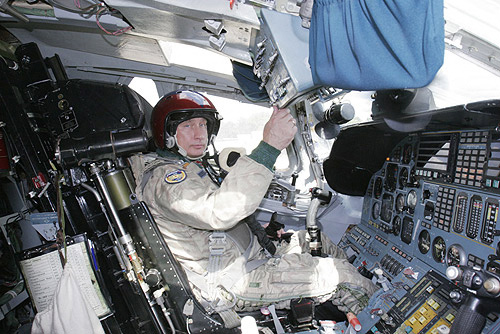
President Vladimir Putin in the cockpit of a TU-160 in August 2005

The part that is about us is more disturbing. The Russians, and Putin in particular, have decided to forego any further pretense of accepting the outcome of the Cold War. Some foreign-policy realists lay Putin’s aggressiveness at NATO’s door, and rightly point out that NATO expansion needlessly handed Russian nationalists a cause. But Putin, it should now be obvious, was never going to accept the Soviet loss. His feints at cooperation were unsustainable, and his Soviet-era nostalgia for the days of the USSR has reasserted itself with a vengeance. If Putin can’t get along with a U.S. president as passive and accommodating as Barack Obama, he can’t get along with anyone.

That’s why the United States has no play to make here, other than to remind the Russians of two things.

First, if we react to Shoigu, we should note only that the United States has a fully capable deterrent that cannot be destroyed, and that we have no interest in Russian bombers, so long as they do not exceed New START’s warhead limits. We do not need to create a new nuclear system, or start returning nuclear weapons to Europe. If Russia means war, they know it will end in 2015 the way it would have ended in 1965: with the destruction of most of Russia and North America, and the deaths of millions of innocent people.

More important, we must reaffirm our commitment to NATO, because Europe, not America, is really the intended audience for Russia’s nuclear antics. Bringing back the Tu-160 is another of the Kremlin’s many attempts to scare the Europeans with the same threat the Russians have been harping on since the 1950s: “If war comes, the Americans will be so afraid of us they will not lift a finger to help you.” Each time we ignore these threats, we encourage more of them.

The way to reassure NATO is match Russian moves not with nuclear threats, but with conventional forces, as U.S. ambassador Steven Pifer and others have argued. This is what the Russians fear most, because they know that the Cold War equation is now flipped, with Russia the weaker conventional power. If Shoigu wants to build more of his pretty bombers, that’s his business, but no Russian leader should think that an attack on NATO can produce anything but a Russian conventional loss, at which point the Russians will have to think about whether they want to face the escalatory burden that once haunted NATO.

Our reaction to Russia’s nuclear threats should be no reaction at all, other than to affirm our ability to defend ourselves—and the most populous, wealthy and powerful alliance in human history—as the mature and confident superpower that we are.

Tom Nichols is Professor of National Security Affairs at the Naval War College and an adjunct at the Harvard Extension School. His most recent book is No Use: Nuclear Weapons and U.S. National Security (University of Pennsylvania, 2014) The views expressed are solely his own. You can follow him on Twitter: @RadioFreeTom