Category Archives: Capability Analysis

Analyzing Specific Naval and Maritime Platforms

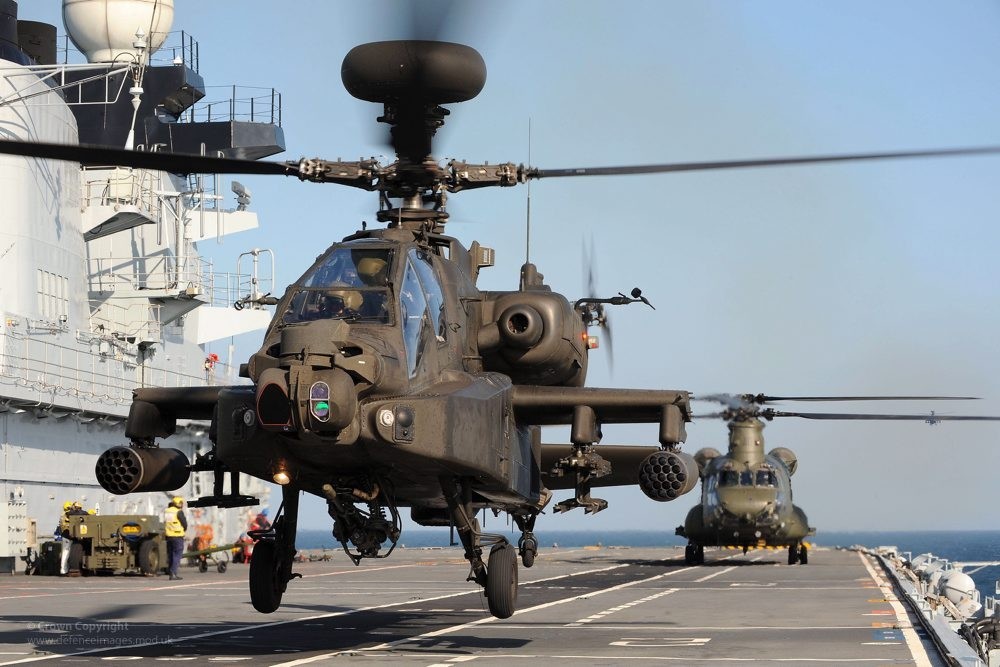
Army’s Apaches Bring Fight to Maritime and Littoral Operations

Littoral Arena Topic Week

By Aaron Jensen

Military operations in the littoral domain are typically associated with the navy and the marines. In the future however, the U.S. Army will also play a key role in maritime and littoral operations. Developments such as the Joint Concept for Access and Maneuver in the Global Commons (JAM-GC)[1], as well as the Asia Pivot, have compelled the army to consider how it can best contribute to possible future conflicts. One area where the army is seeking to contribute is in the maritime domain. The army has been preparing its rotary-wing assets, especially the AH-64 Apache attack helicopter, to fight in the maritime environment.

In recent years, Apache units have begun to train with their navy counterparts. In 2013, the Texas Army National Guard’s 36th Combat Aviation Brigade began testing its helicopters for operations at sea. From March through August, soldiers spent time aboard the amphibious transport docks Ponce and Green Bay, dock landing ship Rushmore and aircraft carrier John C. Stennis. During this time army aviators practiced deck landings, as well as live-fire practice.[i] In 2014, the Army sent eight Apaches from Fort Carson, Colorado to the U.S. Navy’s RIMPAC (Rim of the Pacific) exercise where they conducted deck landings and simulated attacks against enemy ships.[ii]

The Apache’s impressive offensive capability is well suited for operations against smaller vessels at sea. In 2011, the British Army demonstrated the Apache’s lethality against maritime threats. During tests aboard the HMS Ocean, British Apaches fired nine Hellfire missiles (AGM-114) and 550 rounds from its canon against seaborne targets, achieving a 100% success rate.[iii]
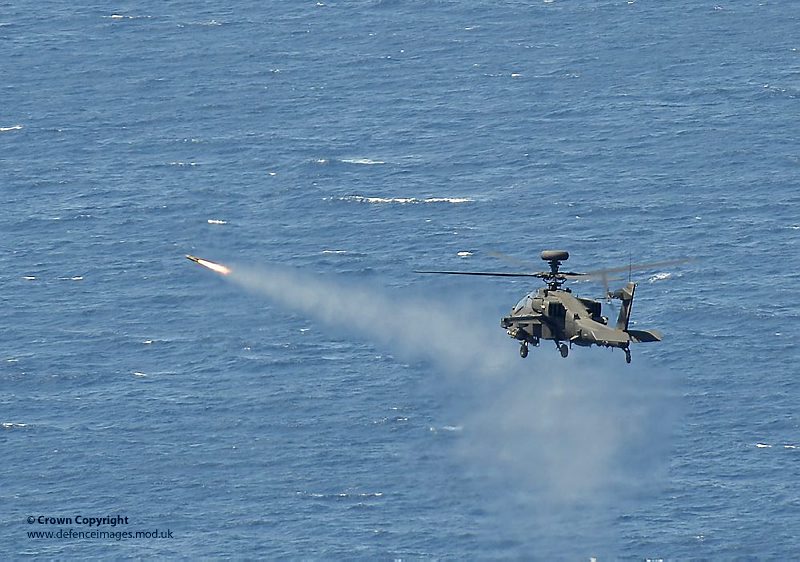
An Apache attack helicopter of 656 Squadron Army Air Corps is pictured firing a Hellfire missile during an exercise conducted from HMS Ocean. Photographer: LA(PHOT) Guy Pool Image 45152700.jpg from www.defenceimages.mod.uk
An Apache attack helicopter of 656 Squadron Army Air Corps is pictured firing a Hellfire missile during an exercise conducted from HMS Ocean.
Photographer: LA(PHOT) Guy Pool
Image 45152700.jpg from www.defenceimages.mod.uk

Tests by the U.S. Army have also verified the Apache’s ability to execute missions in the maritime domain. In August, 2014 the Army Test and Evaluation Command (ATEC) conducted a series of tests on the Apache in different environments and mission tasks. For the maritime segment, Apaches were tasked to secure a shipping lane by defending against swarms of small enemy attack boats. The attack boats carried man-portable infrared missile-simulators to simulate a typical threat that would be posed by small boats. Threat radar systems were also simulated in several cases to simulate the danger from radar-guided missile launches. Over eight maritime mission tests, the Apaches performed well, receiving a score of 4.3 (out of a maximum score of 5) and nearly achieving complete success.[iv]

The Apache has also shown that it can operate from ships to attack land targets. During the 2011 military intervention against Libya (Operation Ellamy), several British Apaches operating from the HMS Ocean successfully destroyed targets in Libya. Utilizing Hellfire missiles and 30mm cannon fire, the Apaches destroyed a radar site and a military checkpoint.[v]

The army is modifying the Apache so that it will function better in a maritime environment. The Apache’s fire control radar will be upgraded so that it can more effectively detect and target small ships. Additional upgrades will also give the Apache the ability to better communicate and share information with assets from other services through a connection with LINK 16, a digital data link used widely by the U.S. Air Force and Navy.[vi] Further upgrades for operations at sea may also be necessary. The British Army is seeking to configure its Apaches with flotation devices to enable crew members to ditch in the event of an emergency over water.[vii] As U.S. Apaches move toward maritime operations, similar modifications may be necessary.

The Apache’s lethality is further amplified by its ability to interface with unmanned aerial systems under the manned-unmanned teaming (MUM-T) concept. The army is in the process of integrating the RQ-7B Shadow tactical unmanned aerial system into Apache units.[viii] Under this arrangement, Apache crews can receive data from the Shadow, and even take control of the drone itself. The development of MUM-T capability appears to be paying off for the Apache. In Afghanistan, some Apache units have received help from drones in 60% of direct fire missions.[ix] The ability to receive information from UAVs will provide Apache crews with greater situational awareness and improved ability to detect targets.
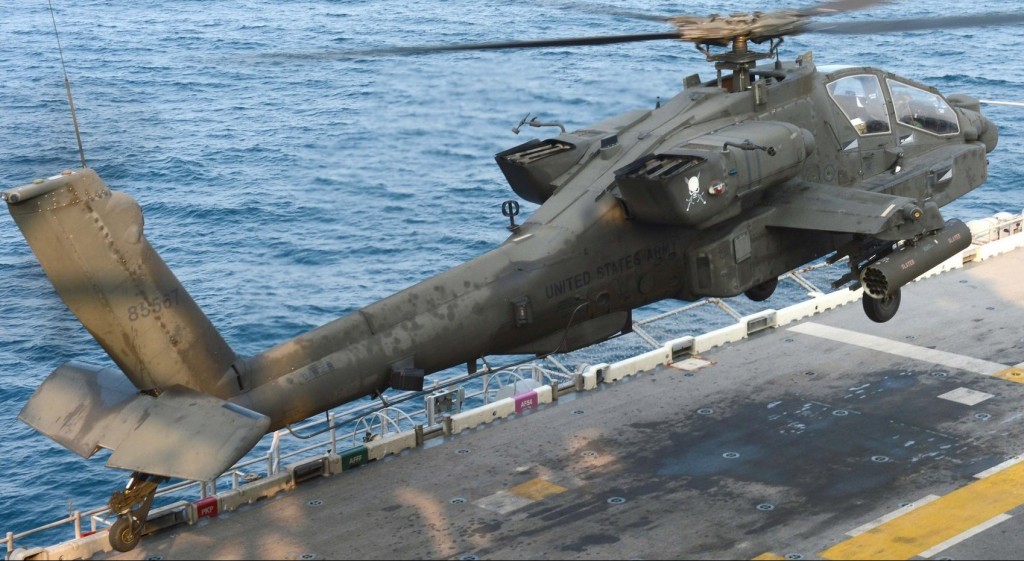
Apache operating on USS Bonhomme Richard. U.S. Navy photo.

In preparation for its new mission, army aviators have been working with their navy counterparts to develop Tactics, Techniques and Procedures (TTP) to effectively utilize Apaches in a maritime role. In 2014, the South Carolina Army National Guard’s 1-151st Attack Reconnaissance Battalion (ARB) sent several aviators to the Naval Strike and Air Warfare Center (NSAWC). During the exchange, U.S. Navy Rotary Wing Weapon School instructors shared information on Strike Coordination and Reconnaissance (SCAR) tactics to protect navy vessels in confined littoral waters.[x] Similarly, the Texas Army National Guard’s 36th Combat Aviation Brigade has also been developing TTPs for operations against small attack craft.

The threat from swarms of fast attack craft operated by countries like Iran poses a serious challenge to the U.S. Navy. The deadly asymmetric which fast attack craft present to larger ships was well documented during exercise Millennium Challenge 2002 (MC02). In this scenario, a Middle Eastern nation conducted attacks on the U.S. Navy with swarms of fast attack craft and anti-ship missiles. The results of the test were disastrous as sixteen ships, including an aircraft carrier and two amphibious assault ships were destroyed.[xi] The intent of countries to employ swarms of small attack boats against larger ships was vividly illustrated in February, 2015 when the Iranian Revolutionary Guard Corps Navy (IRGCN) conducted a live-fire exercise against a mock-up of an aircraft carrier. Expressing confidence in their ability, Admiral Ali Fadavi of the IRGCN boasted that his forces could sink American aircraft carriers.[xii]

In the Pacific, modern fast-attack craft such as the People’s Liberation Army Navy’s (PLAN) Type 022 ‘Houbei’ could also present a serious threat to the U.S. Navy. In recent naval exercises, the PLAN has emphasized the use of the Type 022 fast attack craft against aircraft carriers using multi-axis attacks.[xiii] The Type 022 packs a powerful punch for its size, carrying eight YJ-83 anti-ship cruise missiles with a 135 nm range.

With growing challenges to U.S. military operations in areas such as the Persian Gulf and the South China Sea, the military will need to fully utilize and integrate the full range of its assets. The inclusion of maritime and littoral operations into the Apache’s mission spectrum constitutes an important step in furthering joint operations.

Aaron Jensen is a PhD student in the International Doctoral Program in Asia-Pacific Studies (IDAS) at National Chengchi University (NCCU) in Taipei, Taiwan.

[1] JAM-GC is the successor to the Air-Sea Battle concept.

[i] Meghann Myers, “Army helicopters fly from Navy ships, test joint ops,” Navy Times, September 5, 2103. http://archive.navytimes.com/article/20130905/NEWS/309050004/Army-helicopters-fly-from-Navy-ships-test-joint-ops 

[ii] William Cole, “Army tests Apaches during RIMPAC exercises at sea,” The Honolulu Star-Advertiser, July 28, 2014. http://www.stripes.com/news/pacific/army-tests-apaches-during-rimpac-exercises-at-sea-1.295581/apache-rimpac-2014-1.295605

[iii] “Army’s Apache fires first Hellfire missiles at sea,” UK Ministry of Defence, May 13, 2011.

https://www.gov.uk/government/news/armys-apache-fires-first-hellfire-missiles-at-sea

[iv] “Lot 4 AH-64E Apache Attack Helicopter Follow-on Operational Test and Evaluation (FOT&E) Report” Director, Operational Test and Evaluation (DOT&E), December 15, 2014. http://www.dtic.mil/dtic/tr/fulltext/u2/a617060.pdf

[v] Kim Sengupta, “Libya: Flashes of orange and shattering noise as Apaches go to war” The Telegraph, June 4, 2011. http://www.telegraph.co.uk/news/worldnews/africaandindianocean/libya/8557266/Libya-Flashes-of-orange-and-shattering-noise-as-Apaches-go-to-war.html

[vi] Kris Osborn, “Army Configures Apaches for Sea Duty,” DOD Buzz, October 13, 2014.

http://www.dodbuzz.com/2014/10/13/army-configures-apaches-for-sea-duty/

[vii] Andrew Chuter, “Flotation Equipment slotted for U.K. Apaches,” Defense News, February 8, 2013. http://archive.defensenews.com/article/20130208/DEFREG01/302080018/Flotation-Equipment-Slotted-U-K-Apaches

[viii] Beth Stevenson, “US Army establishes first manned unmanned unit,” Flightglobal, March 24, 2015. https://www.flightglobal.com/news/articles/us-army-establishes-first-manned-unmanned-unit-410504/

[ix] Richard Whittle, “MUM-T Is The Word For AH-64E: Helos Fly, Use Drones” Breaking Defense, January 28, 2015. http://breakingdefense.com/2015/01/mum-t-is-the-word-for-ah-64e-helos-fly-use-drones/

[x] Matt Summey, “1-151st Attack Reconnaissance Battalion holds strong bond with U.S. Navy,” South Carolina National Guard, March 13, 2014. https://www.dvidshub.net/news/printable/121969

[xi] Brett Davis, “LEARNING CURVE: IRANIAN ASYMMETRICAL WARFARE AND MILLENNIUM CHALLENGE 2002,” Center for International Maritime Security (CIMSEC), August 14, 2014. https://cimsec.org/learning-curve-iranian-asymmetrical-warfare-millennium-challenge-2002-2/11640

[xii] Thomas Erdbrink, “Iran’s Navy Blasts Away at a Mock U.S. Carrier,” The New York Times, February 25, 2015. http://www.nytimes.com/2015/02/26/world/middleeast/in-mock-attack-iranian-navy-blasts-away-at-replica-us-aircraft-carrier.html?_r=0

[xiii] John Patch, “Chinese Houbei Fast Attack Craft: Beyond Sea Denial,” in China’s Near Seas Combat Capabilities, edited by Peter Dutton, Andrew S. Erickson, and Ryan Martinson, China Maritime Studies Institute, February 2014. https://www.usnwc.edu/cnws/cmsi/publications
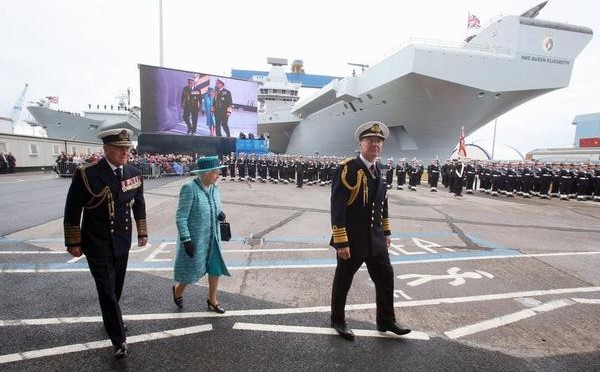

Would Britain Really be Back as a Traditional Carrier Power?

This article originally appeared on RealClearDefense. It can be read in its original form here.

By Ben Ho Wan Beng

The United Kingdom’s new national security document – the Strategic Defence and Security Review 2015 (SDSR 2015) – was released to much fanfare. This document has been generally well received in the defense community with most analysts believing that the review’s proposed changes would profoundly boost Britain’s military capabilities in the coming years. 

Among SDSR 2015’s myriad initiatives, particularly eye-catching is the reiteration by London to have a two-carrier fleet comprising HMS Queen Elizabeth and sister ship Prince of Wales. Paralleled to this is the decision to acquire 138 F-35B Lightning II Vertical/Short Take-Off and Landing (VSTOL) strike fighters over the life of the aircraft program. 

Various defense commentators have lauded these measures, arguing that Britain is now on its way to becoming a traditional aircraft-carrier nation again with the F-35B operating from the Queen Elizabeths. To illustrate, Philip Radford writes at The Strategist that the Royal Navy (RN) would soon have a “viable, independent, strike-carrier capability”. Similarly, a War On The Rocks piece by Matt Schnappauf speaks of the U.K. obtaining the ability to “deliver hard power through traditional carrier strike and maneuver missions.” 

Would this really be the case? Arguably not during the first few years of the two British flat-tops’ projected 50-year service life. This is because their primary striking force – the F-35B complement – is likely to be considerably under-strength during their early years. 

The raison d’etre of the aircraft carrier is its air wing, and the latter’s size and composition dictate the kind of operations the ship can carry out. A major doctrinal role for the flat-top is to project power and being able to carry out offensive missions is therefore essential for the vessel. Being a capital platform, however, the protection of the carrier is of utmost importance to its commanders, and a good portion of the ship’s air wing will invariably be dedicated to fleet air defense. 

The onus is thus on the carrier task force leadership to maintain a judicious balance between defense and offense. Having a sizeable air wing on the carrier would certainly facilitate this endeavor, but this is not something the Queen Elizabeth-class vessels will have up till the year 2023 and maybe even beyond. 

This is because although the new British carriers can each deploy up to 36 F-35Bs as part of its Tailored Air Group, a fraction of that figure is likely to be the norm during the ships’ fledging service period as there will not be enough of the aircraft to go around initially. Indeed, while theQueen Elizabeth and Prince of Wales are slated to be commissioned in 2017 and 2020 respectively, only 42 F-35Bs (24 for carrier deployment, 18 for training) will be in service by 2023 when both vessels and the F-35B are expected to reach full operational capability. 

As Chancellor of the Exchequer George Osborne declared a day before the release of SDSR 2015: “We are going to make sure that when these aircraft carriers are available, they are going to have planes that can fly from them in force (emphasis added)… By 2023, we will be able to have 24 of these jets (F-35Bs)… on the decks of these carriers.”

That being said, it is not entirely clear exactly how many F-35Bs each flat-top will operate. Using the figure provided by the Chancellor, 24 of the aircraft for carrier duty works out to a measly 12 per ship, prima facie. As a matter of fact, various media outlets have reported that the carrier will routinely deploy with only a dozen of the aircraft. However, one informed source states that 15-20 F-35Bs will make up one squadron, of which there will be two. Given that one carrier and its constituents will be at sea at any one time while the other in port for refitting and crew rest, this means that each flat-top is likely to deploy with only one Lightning squadron. 

A tactical combat aircraft complement of 12, or even 15-20, is rather small for traditional carrier operations, especially force-projection ones that are likely to predominate considering the SDSR’s expeditionary-warfare slant. Indeed, it is worth considering the fact that the two British small-deck carriers involved in the Falklands War carried 20-odd Harrier jump jets each, and they were about three times smaller than the Queen Elizabeth-class ships.

In fact, each new carrier might even be operating with a much fighter complement fewer than 15-20 in the years leading up to 2023, giving lie to the phrase “in force” used by George Osborne when he spoke of equipping the carriers with significant airpower. 

In any case, the small fighter constituent means that if the Queen Elizabeth carrier were to get involved in a conflict with an adversary with credible anti-access/area-denial (A2/AD) capabilities, the vessel would be hard-pressed to protect itself, let alone project power. With a displacement of over 70,000 tons and costing over three billion pounds each, the new British carriers will be the crown jewels of the Royal Navy; indeed, HMS Queen Elizabeth is slated to be the RN’s flagship when she comes into service. The protection of the ship would hence be of paramount importance in an era that has witnessed the proliferation of A2/AD capabilities even to developing nations. Hence for a Queen Elizabeth carrying 20 or less Lightnings in such circumstances, it remains to be seen just how many of the aircraft will be earmarked for different duties. 

Should a F-35B air group of that size put to sea, at least half of them will be assigned to the Combat Air Patrol (CAP), leaving barely 10 for offensive duties. It is worth noting that of the 42 Harrier VSTOL jets deployed on HMS Hermes and HMS Invincible during the Falklands War, 28 of them – a substantial two-thirds – had CAP as their primary duty. It is also telling that of the 1,300-odd sorties flown in all by the Harriers, about 83 per cent of them were for CAP. 

Faced with modern A2/AD systems such as stand-off anti-ship missiles, how likely then would the carrier task force commander devote more resources to offense and risk having a vessel named after British royalty attacked and hit? Having said that, having too many planes for defense strengthens the argument made by various carrier critics that the ship is a “self-licking ice cream cone,” in other words, an entity that exists solely to sustain itself. 

The task force commander would thus be caught between a rock and a hard place. Allocate more F-35Bs to strike missions and the susceptibility of the task force to aerial threats increase. Conversely, set aside more aircraft for the CAP and its mother ship’s ability to project power decreases. All in all, with a significantly understrength F-35B air wing, the Queen Elizabethflat-top would be operating under severe constraints, making it incapable of the traditional carrier operations it could have carried out with a larger tactical aircraft complement. Indeed, one naval commentator is right on the mark when he argues that two squadrons with a total of 24 aircraft should be a “sensible minimum standard” for each carrier. 

A counter-argument can be posited that the F-35Bs of the United States Marine Corps (USMC) could deploy off the Queen Elizabeth carriers, and this will surely augment their air groups. Indeed, USNI News reported last September that such an arrangement is in the works. A similar counter-argument can also be made that the British carriers will invariably be operating in the company of the U.S. Navy and its supercarriers, rendering the need for a full-size air group not as pressing. While valid, these two contentions ignore the fact that American assets would only operate together with the Queen Elizabeth carriers during joint operations agreed to by both London and Washington. 

Another counter-argument can be made that the two British flat-tops can operate together once Prince of Wales is commissioned, thus doubling the combat airpower of the carrier task force. This argument is flawed as it does not consider the fact that aircraft carriers are highly complex systems that need regular and lengthy refits. As such, when both Queen Elizabeths are in service, one is likely to be at sea while the other is in port undergoing maintenance, as mentioned earlier. Even if both ships happen to be sea-worthy at the same time, operating the two together, however, means that Britain would not be able to maintain the continuous at-sea carrier presence crucial to protecting its far-flung global interests. 

A different counter-argument can be put forth that aircraft and crew from the 18 training F-35Bs, or even the other carrier, could be “surged” in extremis to the active-duty carrier. This assertion is seemingly more watertight, but it is not certain exactly how many of the aircraft and the requisite personnel to operate and maintain them would be available for redeployment to the flat-top at sea. As an article on the Navy Matters blog argues cogently along these lines: 

“Those who might suggest that the a dozen aircraft are just fine for routine operations and that the rest of the aircraft can be instantly surged are just not seeing reality. The F-35 is not a WWI powered kite that can be piloted by someone with a few hours training and maintained by any mechanic with a pipe wrench. Surging F-35s may take weeks or months and a carrier caught in a moment’s notice conflict will be severely limited in its capabilities.” 

Even if a considerable number of Lightnings and their requisite crew could be surged to the active-duty carrier on relatively short notice, it remains to be seen how effectively the augmented air wing could be utilized. As the aforementioned Navy Matters piece maintains perceptively, the transition from operating a dozen or so aircraft to 30-40 of them is unlikely to be seamless for the carrier; in addition, “(l)earning on the fly on a carrier is a recipe for disaster.” 

Rounding up, the Strategic Defense and Security Review 2015 promises much for Britain in terms of aircraft carrier capability. While the document seeks to re-instate the U.K. as a traditional carrier power, it is still early days to proclaim that this will be a reality like what some have maintained. This is especially so considering the fact that the Queen Elizabeth flat-tops will be operating with a significantly reduced tactical aircraft complement till at least 2023. Of course, if the size of the British carrier’s F-35B complement could be increased, ideally closer to its full strength of 36, more possibilities will definitely open up for the Royal Navy with regard to its carrier capabilities. 

Then again, this is contingent on the availability of financial resources in the years to come. This is especially crucial in view of the fact that various British naval programmers have been truncated or even completely shelved due to austerity. Think the Type 45 destroyer and the Cooperative Engagement Capability initiatives. In fact, HMS Prince of Wales was conceived at one stage to handle more capable catapult-launched aircraft, but prohibitive costs put paid to this idea. 

That being said, if there is one thing that could ameliorate any fiscal problems that may arise in the future, it would be political will. Would Whitehall muster the political will needed to see the F-35B project through to its entirety? This is an issue that the defense community will certainly keep tabs on in the years to come.

Ben Ho Wan Beng is a Senior Analyst with the Military Studies Programme at Singapore’s S. Rajaratnam School of International Studies, and he received his master’s degree in strategic studies from the same institution. Ben’s main research interest is in naval affairs, and his works in this area have been published inBreaking Defense, The Diplomat, War Is Boring, as well as the Center for International Maritime Security’sNextWar blog. He can be reached at iswbho@ntu.edu.sg.

Coming Soon: Information Dissemination’s Jon Solomon Crossposting Series

By Sally DeBoer

CIMSEC is just one of many voices in the discussion of international maritime security and naval affairs.  To enrich our content and expand our own horizons, we’ve developed content sharing relationships with similarly focused organizations.  Information Dissemination: The Intersection of Maritime Security and Strategic Communications consistently provides thought-provoking, meticulously researched, and deeply interesting analysis on naval affairs. On that note, CIMSEC is proud to announce an upcoming series featuring one of ID’s most prolific and interesting voices: Jon Solomon. 

In the coming months, CIMSEC will be crossposting selections from Jon’s portfolio, including his excellent three-part series 21st Century Maritime Operations Under Cyber-Electromagnetic Opposition, in which Jon deftly challenges conventional wisdom and popular understanding of Electronic Warfare (EW) and cyber-warfare as it relates to tomorrow’s conflicts.  In the series, Solomon explores the efficacy of judging a force network’s combat vitality by solely the number of nodes, the unique challenges of identifying and classifying potential targets, and considerations of network geometry/network degradation in times of combat.  Readers can look forward to enjoying Jon’s technical-but-understandable writing style and will likely come away with a broader, more nuanced understanding of the realm (and realities) of EW in modern conflict. This eye-opening series serves as an excellent primer for readers wishing to better grasp the possible practicalities of future high-end naval warfare.

Further, CIMSEC will also be re-publishing Jon’s engrossing series Deception and the Backfire Bomber: Re-examining the Late Cold War Struggle Between Soviet Maritime Reconnaissance and U.S. Navy Counter-targeting.  With a careful eye to detail and a reverent eye to history, Solomon discusses the most compelling aspects of the rarely-discussed (and still largely classified) relationship between U.S. EW assets and Soviet long-range maritime strike capabilities in the period between 1970 and the collapse of the Soviet Union in the early 1990s.  Jon evaluates the evolution of Soviet reconnaissance support for Backfire forces (from pathfinders to overhead) and the U.S. Navy’s counter-targeting efficacy.  Further, the series explores possible deception tactics that may have been used by Backfires and concurrent counter-deception measures.  Current Russian strategies being what they are, Solomon’s analysis seems especially timely and relevant.

In addition to the above series, CIMSEC will include additional re-publications of Solomon’s other exemplary work.  We hope you, the readers, are as excited as we are for this timely, intriguing new series. Look for the ID’s Jon Solomon series in your inbox and featuring on the homepage in the coming weeks.

Sally DeBoer is an Associate Editor and the Book and Publication Review Coordinator for CIMSEC.  She can be reached at sally.l.deboer(at)gmail(dot)com.

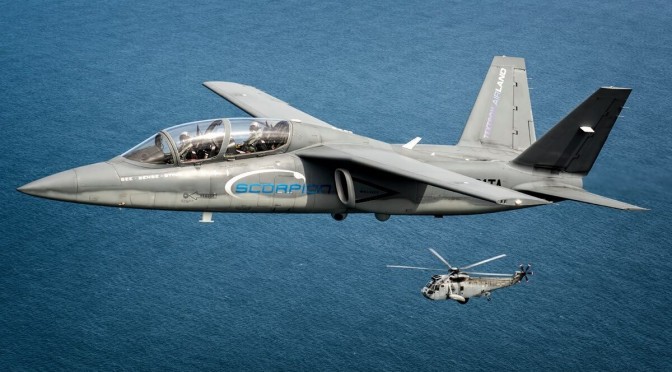
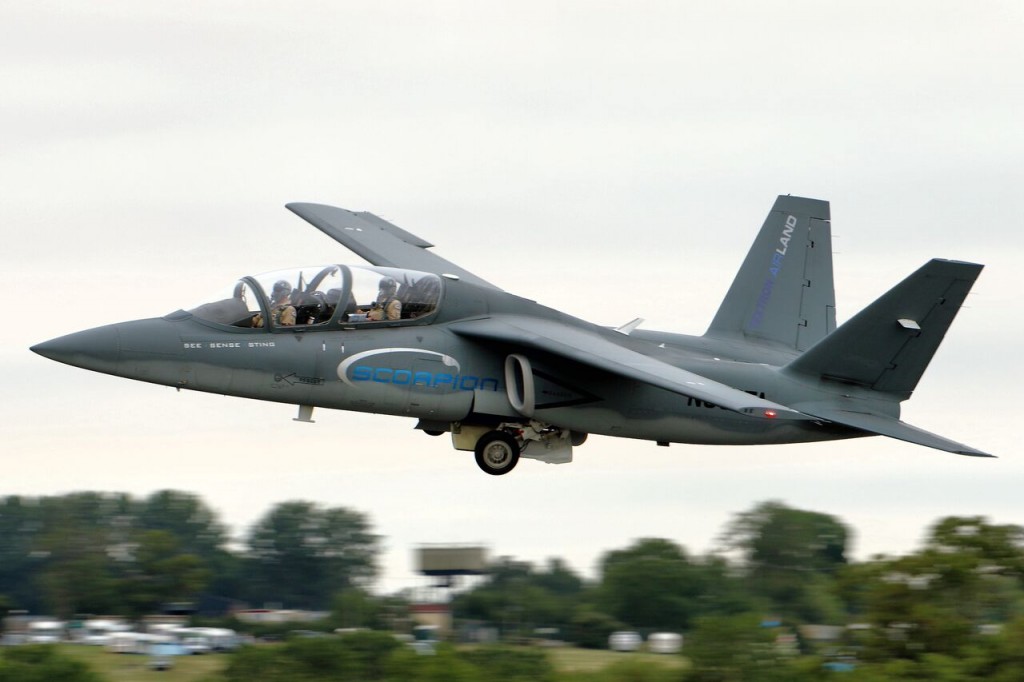
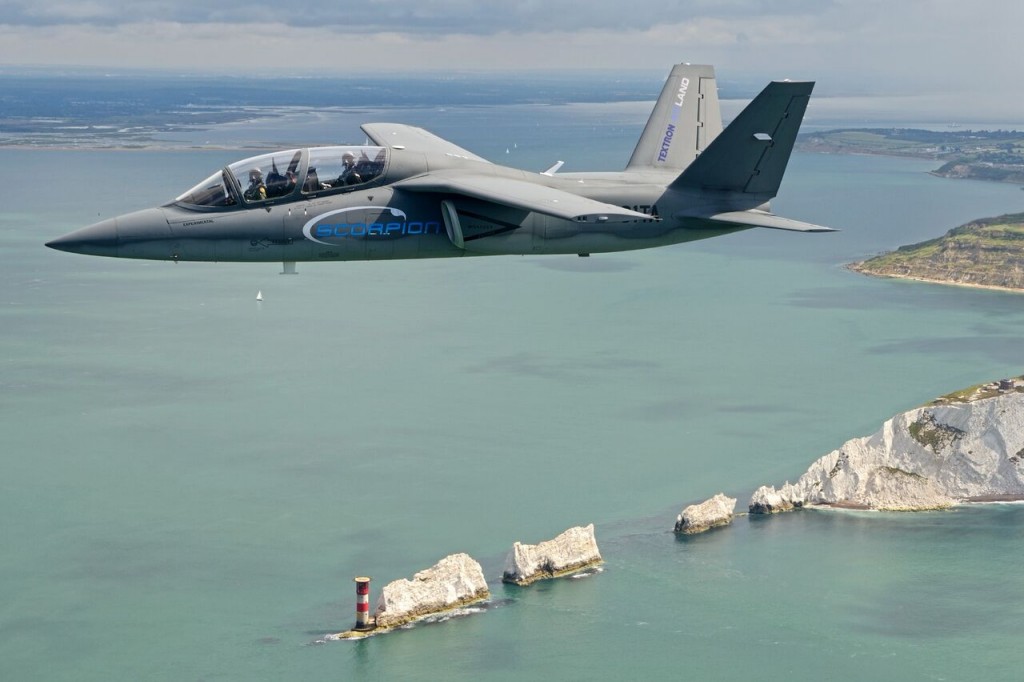
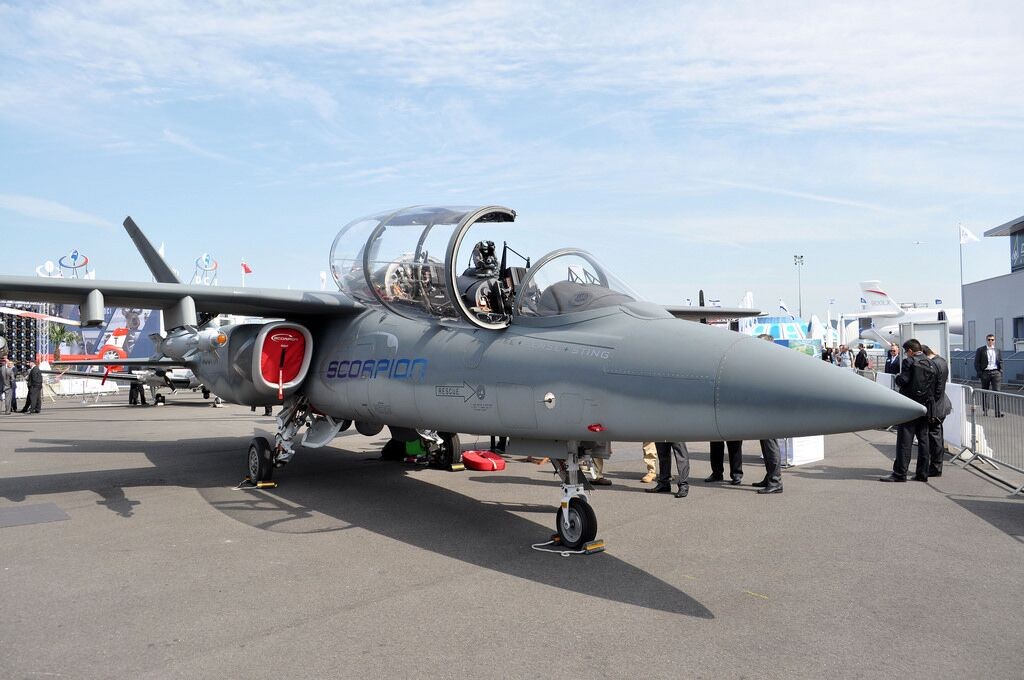
Textron AirLand’s Scorpion: A Smart Gamble

By David J. Van Dyk

In September 2014, BBC released a report detailing future low-cost fighters, headlined “The low-cost fighters to serve tomorrow’s air forces.” They mention the JF-17 platform co-designed by China and Pakistan, and briefly touch on the Yak-130, developed by Russian aircraft maker Irkut Corporation.

For the rest of the 1,100 word article, it focuses exclusively on the Textron AirLand Scorpion.

Why is that?

For starters, the subsonic, twin-engine jet costs $20 million, and operating costs dial in at around $3,000 per flight hour, according to a BBC report by Russell Hotten.

4

For comparison, the efficient A-10 Thunderbolt II, otherwise known as the “Warthog,” costs an initial $19 million and operational costs are estimated at $17,716 per flight hour, though these numbers will vary based on year and modifications. The most expensive weapon in the U.S. military’s arsenal? Say hello to the B-2 Spirit stealth bomber, clocking in at approximately $169,000 per flight hour.

[otw_shortcode_button href=”https://cimsec.org/buying-cimsec-war-bonds/18115″ size=”medium” icon_position=”right” shape=”round” color_class=”otw-blue”]Donate to CIMSEC![/otw_shortcode_button]

These numbers were provided by a report from the Air Force comptroller’s office, obtained by Winslow Wheeler, director of the Straus Military Reform Project. In the report, costs are listed for every airframe in the U.S. Air Force, excluding the F-35 Lightning, manufactured by Lockheed Martin, which is currently undergoing final development and testing.

While the Scorpion beats every combat aircraft listed in the report in cost-per-flight-hour, what may prove more impressive is how it was created.

“It is a clean-sheet design. No kidding, I was actually the first Textron AirLand employee,” said Bill Anderson, CEO of Textron AirLand and vice president of Military and Government Programs at Cessna. “I went out and hired people who I thought could bring real value to the design and to the team.

2

“A small group of us, about nine people, got together and went through the data we had, and said ‘What are we going to build?’ We did a rapid market survey, did a capability matrix, and we started designing the airplane.”

From that point on, the twin-seat jet began taking on the design the creators had in mind. Evaluating markets around the world, the compact team formed the Scorpion into a platform capable of several roles.

“(The Scorpion) morphed from a light attack airplane into a relatively large ISR (intelligence, surveillance and reconnaissance) attack airplane,” Anderson said, “meaning a 21,000 plus-pound airplane (maximum take-off weight). A very unique feature is the center payload bay that has plenty of power for today’s very sophisticated avionics.”

The Scorpion has three hardpoints on each wing, and can last for seven hours on station without undergoing in-flight refueling.

But the fact the Scorpion was built from the ground up in two years raises eyebrows. By allowing creative thinking and quick decision making, Textron AirLand was able to create a state-of-the-art platform quicker than most major contractors take to decide on a design. Add the fact it was all privately financed and aforementioned eyebrows begin to furrow. Why take such a risk? According to Anderson, the time is ripe for the harvest.

“This summer, we went to nine different countries in seven weeks. We did not change one component except the tires,” Anderson said. “The international reception has been absolutely tremendous. The U.S. Air Force has taken a look at the airplane, and most recently, the U.S. Navy is seriously looking at the airplane for some very definite, good mission roles.”

While the Scorpion airframe is currently not a competitor in the Air Force’s T-X program (Anderson made very clear they are still closely monitoring new developments in that domain), Anderson pointed out the Scorpion’s high capabilities for maritime patrol.

“With its over 9,000 pounds of payload and high endurance, (the Scorpion) is ideal for maritime patrol. Most people prefer multi-engine, and the Scorpion is multi-engine. It is ideal for maritime patrol, coastal patrol and maritime surveillance.”

After the Scorpion’s performance at the Royal International Air Tattoo (RIAT) in England, the Royal Navy and Marines in requested the Scorpion to work alongside them for a week of training. According to Anderson, it allowed the program to demonstrate the high-end capability of the Scorpion alongside naval engagements.

While current markets appear favorable, Anderson is also looking long-term, analyzing future engagements and how battles are fought and won.

“There are other airplanes out there that are more expensive than the Scorpion that have higher-end aerodynamic performance, but for the mission sets that we see in today’s security environment and well into the future, we don’t really require those high-end aerodynamic performance packages.”

Anderson is not alone in this thinking of future warfare. Seth Jones, director of the International Security and Defense Policy Center at the RAND Corporation, offered testimony before the House Committee on Armed Services, Subcommittee on Emerging Threats and Capabilities.

3

In the hearing, he highlighted the fact that non-state actors will force us to think outside the box and change our tactics in defeating an unconventional enemy, whether it be terrorist networks operating out of Syria or drug-trafficking groups like the cartels in Mexico and in the jungles of South America.

In battling an enemy who operates within the shadows and tunnels of rough terrain and mountainous expanses, leading scholars have questioned just how effective supersonic, highly advanced jets could be, often incurring high costs of maintenance and unscheduled repairs.

In an age of counter-insurgent warfare, reliability of equipment is gold. Anderson claims to have a trove of it.

“One of the top selling features is exceptionally high reliability,” said Anderson. “So how do you build in high reliability? You use known components. Our reliability, and we’ve accumulated more than 500 flight hours on the airframe, is over 98 percent.”

Anderson is referring to the readiness rate of an aircraft, which essentially means how quickly and efficiently the aircraft can respond to testing, training or an actual mission requirement.

For comparison, the U.S. Marine Corps has run into a snag concerning aircraft readiness, reporting that 19 percent of its inventory was not available for use, according to a Reuters report in April 2015.

An aircraft unavailable, whether due to unscheduled repairs or maintenance, means an acquired target escapes, a hostage waits longer in captivity, or a suspicious vessel eludes authorities.

While the Scorpion has proven it has the right stuff, the trickier part will be selling it. One only has to think of the F-20 Tigershark to cringe at the thought of marketing privately financed military aircraft. In its struggled bid for the fighter contract in the 1980s, the F-5 successor lost out to the more expensive, and flashier, F-16 Fighting Falcon. The RAND Corporation called the F-20 program a marketing failure.

At that point, the axe-wielding Gimli of Lord of the Rings would say “you’ll find more cheer in a graveyard.”

But the team at Textron AirLand has done their homework, and Anderson is confident the interest in the Scorpion will build as time goes on. Already, the production-conforming airframe of the Scorpion is being completed, and discussions with serious buyers are ongoing, according to Anderson.

“With the long endurance (of the Scorpion) for ISR, it being ideal for maritime patrol, and ability to strike a target all from the same airplane, that’s pretty incredible,” said Anderson. “It’s a unique capability, all at a very, very attractive cost point.

“I would say it was a bit of a gamble…a smart gamble.”

David Van Dyk is a graduate of Liberty University with a Bachelor’s of Science in Communications Studies and a member of the Lambda Pi Eta honor society. He is currently pursuing a Master’s in Public Policy with a focus in International Affairs at the Helms School of Government. He can be reached at dvandyk@liberty.edu.

[otw_shortcode_button href=”https://cimsec.org/buying-cimsec-war-bonds/18115″ size=”medium” icon_position=”right” shape=”round” color_class=”otw-blue”]Donate to CIMSEC![/otw_shortcode_button]