Recently the new Chief of Naval Operations issued a document “Design for Maintaining Maritime Superiority” that outlines how, hopefully, the US Navy can maintain a maritime superiority our foes will recognize and avoid confronting.
[otw_shortcode_button href=”https://cimsec.org/buying-cimsec-war-bonds/18115″ size=”medium” icon_position=”right” shape=”round” color_class=”otw-blue”]Donate to CIMSEC![/otw_shortcode_button]
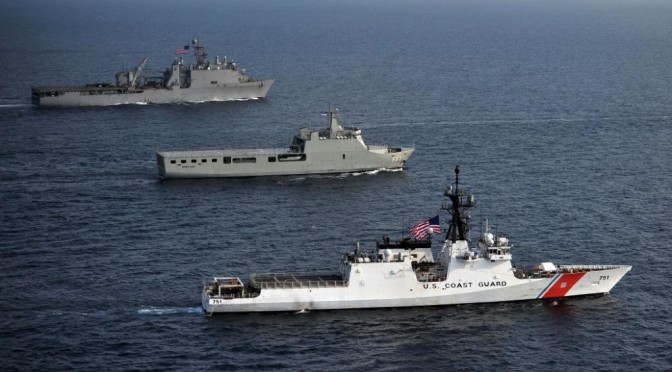
If you look for anything specifically regarding the Coast Guard here, you will not find it (other than the cutter in the formation on the cover). The Coast Guard is not mentioned even once, but it does talk about some things that are Coast Guard related. Perhaps the Coast Guard should not feel bad about this. It only mentions the Marine Corps once.
Three Forces that are Changing the Environment
The first global force is the traffic on the oceans, seas, and waterways, including the sea floor – the classic maritime system.
A second increasingly influential force is the rise of the global information system – the information that rides on the servers, undersea cables, satellites, and wireless networks that increasingly envelop and connect the globe.
The third interrelated force is the increasing rate of technological creation and adoption.
Obviously the Coast Guard facilitates and regulates marine traffic, and is tapped into the global information system. In wartime, these contacts will become essential since they will form the basis for naval control of shipping. He also talks about new trade routes opening in the Arctic. These will only be reliable if we have new icebreakers. He also talks about illegal trafficking.
“This maritime traffic also includes mass and uncontrolled migration and illicit shipment of material and people.”
A Document That Explicitly Recognizes the Competition
“For the first time in 25 years, the United States is facing a return to great power competition. Russia and China both have advanced their military capabilities to act as global powers. Their goals are backed by a growing arsenal of high-end warfighting capabilities, many of which are focused specifically on our vulnerabilities and are increasingly designed from the ground up to leverage the maritime, technological and information systems. They continue to develop and field information-enabled weapons, both kinetic and non-kinetic, with increasing range, precision and destructive capacity. Both China and Russia are also engaging in coercion and competition below the traditional thresholds of high-end conflict, but nonetheless exploit the weakness of accepted norms in space, cyber and the electromagnetic spectrum. The Russian Navy is operating with a frequency and in areas not seen for almost two decades, and the Chinese PLA(N) is extending its reach around the world.
“…Coupled with a continued dedication to furthering its nuclear weapons and missile programs, North Korea’s provocative actions continue to threaten security in North Asia and beyond.
“…while the recent international agreement with Iran is intended to curb its nuclear ambitions, Tehran’s advanced missiles, proxy forces and other conventional capabilities continue to pose threats to which the Navy must remain prepared to respond.
“…international terrorist groups have proven their resilience and adaptability and now pose a long-term threat to stability and security around the world.”
Recognizing Budgetary Limitations
“There is also a fourth ‘force’ that shapes our security environment. Barring an unforeseen change, even as we face new challenges and an increasing pace, the Defense and Navy budgets likely will continue to be under pressure. We will not be able to “buy” our way out of the challenges that we face. The budget environment will force tough choices but must also inspire new thinking.”
Throughout there is an emphasis on understanding history and the strategic concepts of the past. There is also a recognition of the need to work with partners.
“EXPAND AND STRENGTHEN OUR NETWORK OF PARTNERS: Deepen operational relationships with other services, agencies, industry, allies and partners – who operate with the Navy to support our shared interests.”
Other than the Marine Corps, the US Navy has no closer partner than the US Coast Guard. And while only about one eighth the size of the US Navy, in terms of personnel, the US Coast Guard is larger than Britain’s Royal Navy or the French Navy. The partnership has been a long and successful one, but I would like to see the Navy be a better partner to the Coast Guard. This is how the Navy can help the Coast Guard help the Navy.
What I Want to See
If we have a “run out of money, now we have to think” situation, one thing we can do is to try to get the maximum return from the relatively small investment needed to make the Coast Guard an effective naval reserve force.
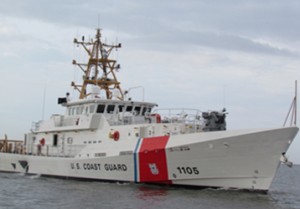
Webber Class WPC, USCGC Margaret Norvell
We need explicit support from the Navy at every level, particularly within Congress and the Administration, for Coast Guard recapitalization.While the Navy’s fleet averages approximately 14 years old. The Coast Guard’s major cutters average over 40. The proposed new ships, are more capable than those they replace. They are better able to work cooperatively with the Navy. The nine unit 4,500 ton “National Security Cutter” program is nearing completion with funds for the ninth ship in the FY2016 budget. The 58 unit, 154 foot, 353 ton Webber Class program is well underway with 32 completed, building, or funded. But the Coast Guard is about to start its largest acquisition in history, 25 LCS sized Offshore Patrol Cutters. Unfortunately, it appears that while the first ship will be funded in FY2018 the last will not be completed until at least 2035. This program really needs to be accelerated.
We need an explicit statement from the Navy that they expect the Coast Guard to defend ports against unconventional threats, so that they can keep more forces forward deployed. This is in fact the current reality. The Sea Frontiers are long gone. Navy vessels no longer patrol the US coast. The surface Navy is concentrated in only a handful of ports. No Navy surface combatants are homeported on the East Coast north of the Chesapeake Bay. If a vessel suspected of being under the control of terrorists approaches the US coast the nearest Navy surface vessel may be hundreds of miles away.
We need the Navy to supply the weapons the Coast Guard need to defend ports against unconventional attack using vessels of any size, with a probability approaching 100%. These should include small missile systems like Hellfire or Griffin to stop small, fast, highly maneuverable threats and we need a ship stopper, probably a light weight anti-ship torpedoes that target propellers to stop larger threats. We need these systems on not just the largest cutters, in fact they are needed more by the the smaller cutters that are far more likely to be in a position to make a difference. These include the Webber class and perhaps even the smaller WPBs.
We need to reactivate the Coast Guard’s ASW program and ensure that all the new large cutters (National Security Cutters and Offshore Patrol Cutters) have an ASW capability, if not installed on all of the cutters, at least planned, prototyped, tested, and practiced on a few ships (particularly in the Pacific). The National Security Cutters and the Offshore Patrol Cutters are (or will be) capable of supporting MH-60R ASW helicopters. Adding a towed array like CAPTAS-4 (the basis for the LCS ASW module) orCAPTAS-2 would give them a useful ASW capability that could be used to escort ARGs, fleet train, or high value cargo shipments. Towed arrays might even help catch semi-submersible drug runners in peacetime.
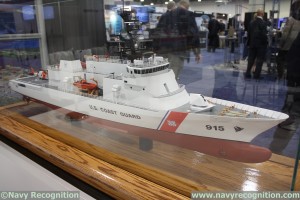
One of three contending designs for the planned 25 Offshore Patrol Cutters.
The Coast Guard is the low end of America’s Naval high-low mix. It is a source of numbers when numbers are needed. The Coast Guard has more assets for low end functions like blockade than the Navy. The Navy has about 105 cruisers, destroyers, LCS, PCs, and is not expected to have more than 125 similar assets for the forseeable future. The Coast Guard has about 165 patrol cutters including 75 patrol boats 87 feet long, about 50 patrol craft 110 to 154 feet in length (58 Webber class WPCs are planned), and about 40 ships 210 foot or larger that can be called on, just as they were during the Vietnam War, when the Coast Guard operated as many as 33 vessels off the coast in support of Operation MarketTime, in spite of the fact that the Navy had almost three times as many surface warships as they do now. The current program of record will provide 34 new generation cutters including nine 4500 ton National Security Cutters and 25 Offshore Patrol Cutters that should be at least 2500 tons.
The Coast Guard provides peacetime maritime security, but is currently under-armed even for this mission. A small investment could make it far more useful in wartime.
(Note here is another post on this looking at the “design” from a Navy point of view.)
Chuck retired from the Coast Guard after 22 years service. Assignments included four ships, Rescue Coordination Center New Orleans, CG HQ, Fleet Training Group San Diego, Naval War College, and Maritime Defense Zone Pacific/Pacific Area Ops/Readiness/Plans. Along the way he became the first Coast Guard officer to complete the Tactical Action Officer (TAO) course and also completed the Naval Control of Shipping course. He has had a life-long interest in naval ships and history. Chuck normally writes for his blog, Chuck Hill’s CG blog.
[otw_shortcode_button href=”https://cimsec.org/buying-cimsec-war-bonds/18115″ size=”medium” icon_position=”right” shape=”round” color_class=”otw-blue”]Donate to CIMSEC![/otw_shortcode_button]
This article originally featured on Defencyclopedia and is republished with permission. It may be read in its original form here.
SUMMARY
The best position for a sensor on a ship, is on top of the highest mast. Multiple sensors mean multiple antennas; hence ending up close together. Such an arrangement requires the need to switch one system off before another one can be used. As all sensor systems are installed separately on the ship, and then subsequently integrated and tested, they add considerably to the time and cost required for building a naval vessel.With recent development of integrated masts for warships, gone are the dozens of antennas and sensors found on practically every flat topside surface of a modern naval vessel.
These integrated masts allow the exploitation of modern materials and technology to improve sensor performance and coverage with pre-outfitting, leading to reduced cost of construction due to reduced time overruns. This article, by Commander Nitin Agarwala, who is now a contributing author for Defencyclopedia, explores the developments in integrated mast design for integration of electronic warfare (EW),communication and Radar and their future in warship construction.
INTRODUCTION
How does an antenna become designated for use in navigation, weapon fire control, communications, electronic countermeasures or for any other reason, and ultimately installed on board a Naval surface ship? The answer should be, it’s part of the antenna design procedure. Though the answer is simple, the process is not. There was a time, when this design procedure, referred to as dart-boarding, was based on an educated guess for the most feasible layout of the antennas, followed by experimental verification.
The multiple mast and cluttered antenna layout on a 1970’s era Soviet Kashin class destroyer
As the reliance on electronic systems such as communications, radar,navigation, gunfire control, friend-or-foe identification, electronic countermeasures, and aircraft operations increased, one realized that complex, intricate below-decks electronic equipment was virtually useless unless matched with satisfactory antenna performance. Hence former methods of antenna design and topside arrangements were no longer adequate and dart-boarding disappeared – to be replaced by careful scientific planning. These electronic systems divided the shipboard antennas into three broad groups.
Omni-directional antennas – used mainly for communications, air navigation, and passive reception. These satisfy the need of ships and aircraft to maneuver independently of each other and fixed radio stations.
Directional antennas – used for transmitting and receiving spatially concentrated energy in one direction at a time. These are used for radar, gunfire control, and satellite communication to obtain information about or from remote objects.
Directional antennas – used to determine bearing of incident radiation; and is used primarily for direction finding navigation and Electronic Countermeasures (ECM).
For an operational naval platform, the basic minimum required sensors are communication antennas from HF to UHF, navigation radar, surveillance radar, IFF, Fire Control Radar, ESM, jammers, electro-optical sensor systems and missile up-links.Providing these large number and variety of distinct services on the antenna in the extremely restricted space presents many very-difficult and different problems which do not arise in other technical disciplines.
Clustering of so many antennas in so little space,plus the necessity for simultaneous emission and reception together with the undesirable, but unavoidable, electromagnetic coupling to, and re-radiation from, a host of other shipboard metal objects, results in a most trying system integration problem for the ship. Strenuous efforts must be made to reach a compromise with all competing topside subsystems so as to provide the least degradation in overall performance.
TYPES OF MASTS
To meet the requirement of these sensors, the Naval Architects have hence used
The various types of masts have been a result of changing requirement of the navies and the developing technology used over the years. Of all these masts, a plated mast, even with a higher weight than a lattice mast, is preferred in most cases due to its advantages of lower radar cross-section, improved through life maintenance (due to enclosed structure), lesser vibration and ability to handle larger weight of modern equipment.
Note the blackening of the area around the radars on the mast
The design of the mast however is not limited to just the placement of thesensors.The mast design has a direct bearing on the design of the vessel itself as its weight will impact the stability performance, air resistance will impact the ships speed and the arrangement of the antennae will affect the top side electromagnetic environment and RADHAZ (radiation hazard).
When designing, one needs to structurally integrate the mast to the ship to ensure strength due to both static and dynamic loads (whipping loads due to hull slamming, air resistance, shock), provide access, power and cooling air and study the effect of the heat plume from the exhausts/funnel impinging on the antennae. The picture of HMAS Perth shows the effect of proximity of the smokestack to the masts on the ship.
NEXT GENERATION MASTS
Conventional warship masts are plagued with a variety of downsides which include large amounts of steel making the ship topside heavy resulting into weight penalty, expensive maintenance due to exposed sensors, wooding as a result of sensor / mast interactions, electromagnetic induction due to spurious reflections and poor screening and impingement in return causing a high radar signature. This has led to designers looking at alternatives.
Accordingly in recent years, there has been a significant interest in the concept of composite masts, with a variety of designs being developed. These designs aim to house sensors and antenna within the protection of the mast and use frequency sensitive shielding to allow the sensors to “see” through the mast panel structure thus offering an improved signature and arc of coverage. Such major initiatives are:
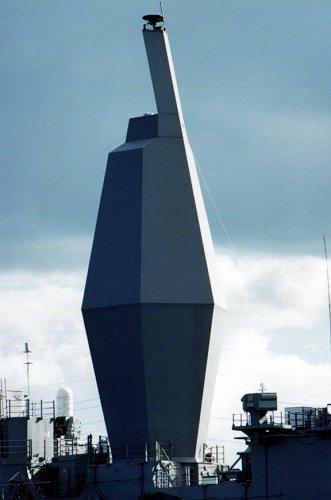
A photo of the enclosed hexagonal mast on the USS Radford
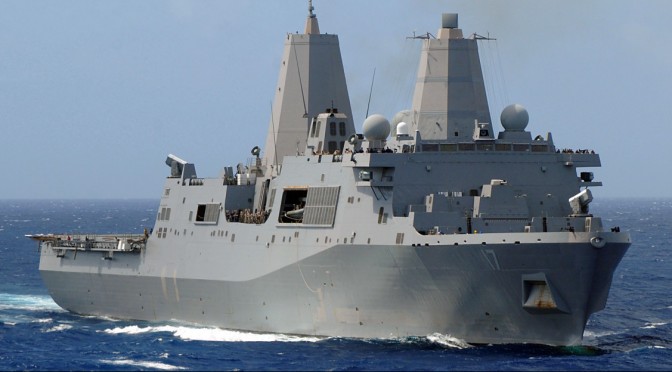
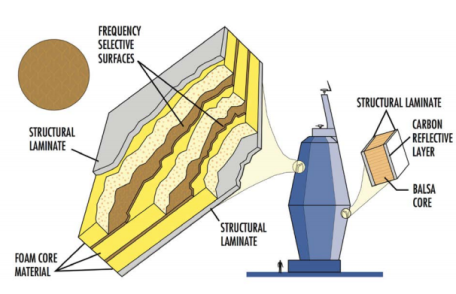
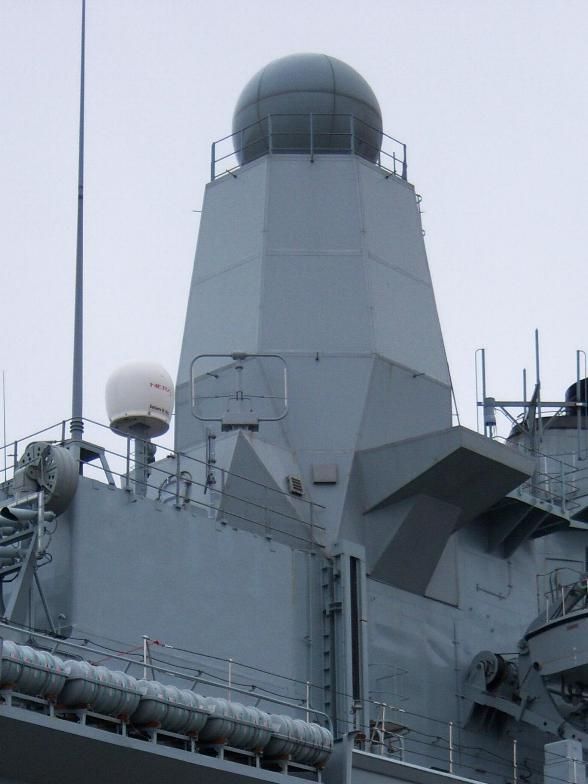
The Advanced Enclosed Mast/Sensor (AEM/S) system designed by the US and initiated in 1995 is a hexagonal (used onboard USS Radford DD-968) or an octagonal (used onboard U.S.S. San AntonioLPD-17) structure. It encloses the existing radar and other sensitive equipment,protecting them from the environment thereby reducing maintenance requirements. The lower half of the AEM/S system serves to hold up the top half. The case of the lower half is balsa. An electromagnetic (EM) shield compartment that uses reflecting metallic shielding is included in a portion of the lower half of the mast to meet design requirements. The top half contains a tailored sandwich composite material made up of a foam core, with frequency selective material, as well as structural laminate skins.
An illustration showing the construction of the mastOctagonal Advanced Enclosed Mast/Sensor on USS San Antonio
The Advanced Technology Mast (ATM) designed by the UK, comprises of a steel substructure clad in advanced fibre reinforced plastic (FRP) composite panels,which incorporate radar-absorbing layers. Sensors are installed in interchangeable modules mounted within the cladding. The philosophy of the mast is intended to support future surface warship designs and retrofit to existing ships. The sensors and radio equipment are completely enclosed in the radar reflective mast structures. The masts look like unstayed pole masts with very large rectangular cross-sections, tapering from the base to the top.
A close-up of the Advanced Technology Mast
HMS Ark Royal was fitted with the Advanced Technology Mast
The Integrated mast (I-MAST) designed by Netherlands, is a completely different design approach from the traditional sensor layout. This mast type integrates the sensors into the structure itself. One central mast structure houses the radar, optronic, and communication sensors and antennas as well as all cabinets and peripherals. The Integrated Mast conceptimproves the undesirable situation of having to equip a ship with sensors and antenna after she has been completed in full. In the I-Mast, the mast and the equipment are built and tested while the ship is under construction. When the ship is ready, the mast is put on the ship as a turnkey system. It has a comparatively simple interface to the ship’s power supply, cooling water supply, combat system, and mechanical deck structure, making installation a plug and play operation.
HNLMS Friesland, a patrol ship of the Netherlands Navy has the I-mast 500 integrated mast
The mast itself is a fully air tight module forming part of the ship’s citadel, providing environmental protection against shock, blast, vibration, solar radiation,temperature, uptake efflux, electromagnetic radiation and chemical, biological, radiological or nuclear weapons. An external load-bearing steel structure has been adopted to facilitate the integration of different types of sensors and communications, with equipment arranged over four deck levels (a top deck,upper antenna deck, lower antenna deck and an equipment deck. A shielded duct or “backbone” routes cabling and cooling circuitry up through the centre of the mast to serve individual equipment.
All processing cabinets are sited on the equipment deck. This is also the floor of the mast module and the interface to the ship platform through a single crew entry hatch and two cable entry panels fitted port and starboard. Services routed through these panels comprise water, air, own-ship data, power supplies, monitoring and control, dual communication, video and combat system buses, and auxiliary interfaces
A cut-out shows the sensor layout in the i-MastAn illustration showing the various types of sensors present on the i-Mast 500
SENSORS OF I-MAST
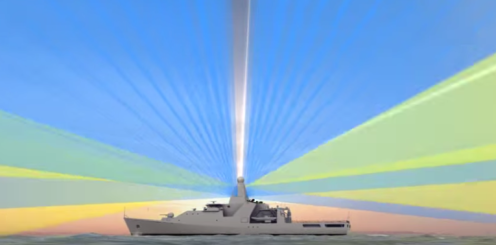
All radars and antennas in an I-Mast not only have a full 360° field of view; they are also developed so as to operate simultaneously without interfering each other.Theseradars are non-rotating, four-faced active phased array radars, which in itself is a major performance enhancement. As the four faces operate simultaneously, the radars achieve four times the time on target achieved by a rotating radar. The surface surveillance radar (Seastar) was developed especially for this purpose and it is capable of detecting and tracking small objects (e.g. divers’ head) between the waves,contributing enormously to situational awareness in littoral environments. The details of the sensors as fitted in an I-Mast are as under:
SeaMaster 400 (also called SMILE) is a non-rotating S-band radar with four faces for air and surface surveillance. It is derived from the proven SMART and APAR radar systems. SM400’s unique concept of multi-beam volume search with four active scanning faces ensures the simultaneous performance of all operational tasks at a high update rate and very low false alarm rate. SM400 also provides helicopter direction and approach capabilities and has three fire control channels. The system’s high number of parallel transmit and receive channels provide a high degree of redundancy.
Seamaster S-band radar
Seawatcher (also called SEASTAR) is a four face non-rotating active phased array X-band radar for naval surface surveillance. The high resolution system automatically detects and tracks asymmetric threats and very small objects such as mines, periscopes. Seawatcher can also be used for helicopter guidance.
Seawatcher X-band radar
Gatekeeper is a 360° panoramic electro-optical surveillance and alerter system based on IR/TV technology. Designed to counter emerging asymmetric threats down to small boats and swimmers, Gatekeeper increases short-range situational awareness in littoral environments.
GatekeeperSATCOM antenna domeA CGI shows the sensors of the I-mast operating together without any blockage of signals
The Integrated Communication Antenna System (ICAS) facilitates the use of standard VHF / UHF communications equipment, is fitted with Link 16 integration, provides excellent transmit/receive isolation, offers estate for auxiliary antennas such as GSM/GPS and is designed for future growth.
Cylindrical IFF array
The non-rotating Identification Friend or Foe (NR IFF) uses a cylindrical array fitted to the top of the structure. It is designed to operate with standard interrogator/transponder systems. It is optimized for operation with a non-rotating primary radar.
NEED FOR AN INTEGRATED MAST
Littoral environments are extremely complex given the high density of natural and man-made clutter, crowded commercial air and sea lanes, vehicle traffic along the coastline, and the effects of anomalous propagation on sensor performance. To further complicate the problem, recent years have seen the emergence of an increasingly“asymmetric” threat set (unmanned air vehicles, fast inshore attack craft, gliders, dinghies, swimmers and mines) that are intrinsically difficult to detect in high clutter backgrounds. To resolve such issues the concept of an integrated mast incorporating the principal surveillance sensors and communication systems has evolved.
By resolving the electromagnetic conflicts and line-of-sight obstructions inherent to traditional topside antenna arrangements, the integrated mast aims at delivering an unobstructed field of view, reduced cross section; ease of electromagnetic friction and to simplify shipboard integration. This in return provides a significant benefit in terms of improved operational performance and availability, shorter shipbuilding time, reduced maintenance requirements and significant savings in below-deck volume.
In an integrated mast various antennae are integrated within the design of the mast itself along with the electronic equipment to be “integrated” in the mast as a single unit. The result is a mast which is a structurally self-supporting module. The integrated mast with its technology of integrated sensor concept delivers huge advantages which are:
Better operational performance
Higher operational availability due to maintenance possible in the protected, sheltered environment of the Mast, meaning that it is no longer necessary to wait for repairs until weather conditions are safe enough
Reduced ship-building time
Reduced maintenance requirements due to non-rotating radars
Enormous savings in below-deck space
Reduced signature / increased arc of coverage
Reduced costs (i) Lower sensor costs due to improved environment(ii) Cheaper maintenance due to lack of corrosion, no re-painting and modular approach
Reduced topside weight / improved stability
Reduced EMI – RAM covered decks
Potential for quick role changes – flexibility, upgradeability
CONCLUSION
Various advanced Mast designs have been produced in the recent past which have been discussed in this paper. All of them have been tested for their structural performance against both environmental and shock loads. One can say with confidence that today the concept of “integrated mast” has become a reality from just a technology demonstration project. Though it is definitely a product which shall become an integral part of the future ship design, however many issues such as the impact of the integrated mast on ship design need to be studied in detail.
One needs to also study issues such as material selection for the mast, access arrangements and structural integration and stability as key aspects among many. Finally the integrated mast designers themselves will continue to be challenged by how to design a mast or series of masts that offer a solution that is sufficiently flexible for fit to a variety of vessel sizes and satisfy differing customer requirements.
Edited by N.R.P
ABOUT THE AUTHOR
Commander (Dr) Nitin Agarwala, a serving Indian Naval Officer commissioned in 1993, is a Naval Architect from Cochin University of Science and Technology and an alumnus of Indian Institute of Technology, Delhi and Kharagpur. The officer has experienced the various facets of a warship as a user, inspector and a maintainer. He is now a part of the design team of naval warships. He has published over 26 papers in various conferences, and journals of national and international repute. His areas of interest are Wave structure interaction problems, Acoustic structure interaction problems, Hydroelasticity related ship structure problems, Corrosion problems associated with ships.
Among the maritime forces of the small Southeast Asian states, the Republic of Singapore Navy (RSN) stands as one of the most robust. As some regional partners, such as the Indonesian Navy, struggle to acquire a submarine fleet, the RSN is currently well-served by two Challenger-class (formerly Sjöormen-class in the Swedish Navy) and two Archer-class (formerly Västergötland-class in the Swedish Navy) diesel-electric submarines, which Singapore began acquiring at the turn of the century. Yet RSN defence planning and strategic intent is difficult to discern, since Singapore has never released a formal maritime strategy or, for that matter, a comprehensive national security strategy. The closest approximation of such a document was released in 2004, which has not been updated since, and discusses the importance of law enforcement and intelligence agencies in the fight against terrorist organizations like Jemaah Islamiyah (JI) and al-Qaeda.
[otw_shortcode_button href=”https://cimsec.org/buying-cimsec-war-bonds/18115″ size=”medium” icon_position=”right” shape=”round” color_class=”otw-blue”]Donate to CIMSEC![/otw_shortcode_button]
In the absence of a clear road map for the development of the RSN, an excellent analysis is offered by Dr. Swee Lean Collin Koh in the 18-page Naval War College Reviewarticle “Seeking Balance: Force Projection, Confidence Building, and the Republic of Singapore Navy,” published in 2012. The author focuses on the evolution of Singapore’s maritime force to date in order to offer some impressions of its future course, detailing how the RSN matured from a “sea-denial” navy to a “sea-control” navy.
With regard to that maturation, Dr. Koh points out three procurement projects that were key to the RSN attaining the capacity for sea control. First, the aforementioned acquisition of a submarine fleet grants the RSN some capacity for force projection and covert intelligence-gathering beyond Singapore’s waters, though this has drawn condemnation from neighbours like Indonesia. It seems the RSN is likely to retain these capabilities in the future, as it was announced in late 2013 that Singapore intends to phase out its two older Challenger-class submarines and replace these vessels with two Type 218 diesel-electric submarines designed by Germany-based ThyssenKrupp Marine Systems, the first of which is to be delivered in 2020.
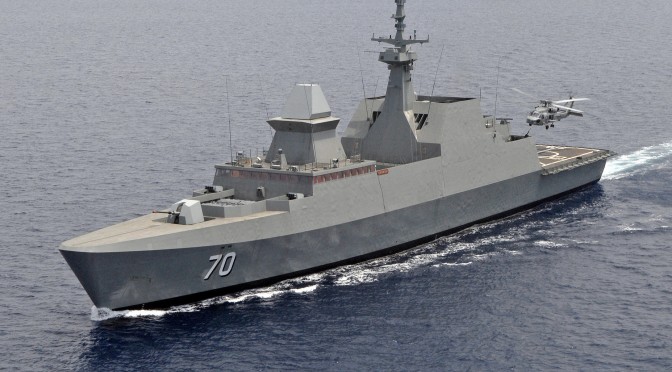
Secondly, the acquisition between 2007 and 2009 of six Formidable-class stealth-capable guided-missile frigates, based on the French La Fayette-class frigate design,
Republic of Singapore frigate Steadfast (FFS 70) steams off the coast of Hawaii during Rim of the Pacific (RIMPAC) 2008. (U.S. Navy photo by Mass Communication Specialist 1st Class Kirk Worley/Released)
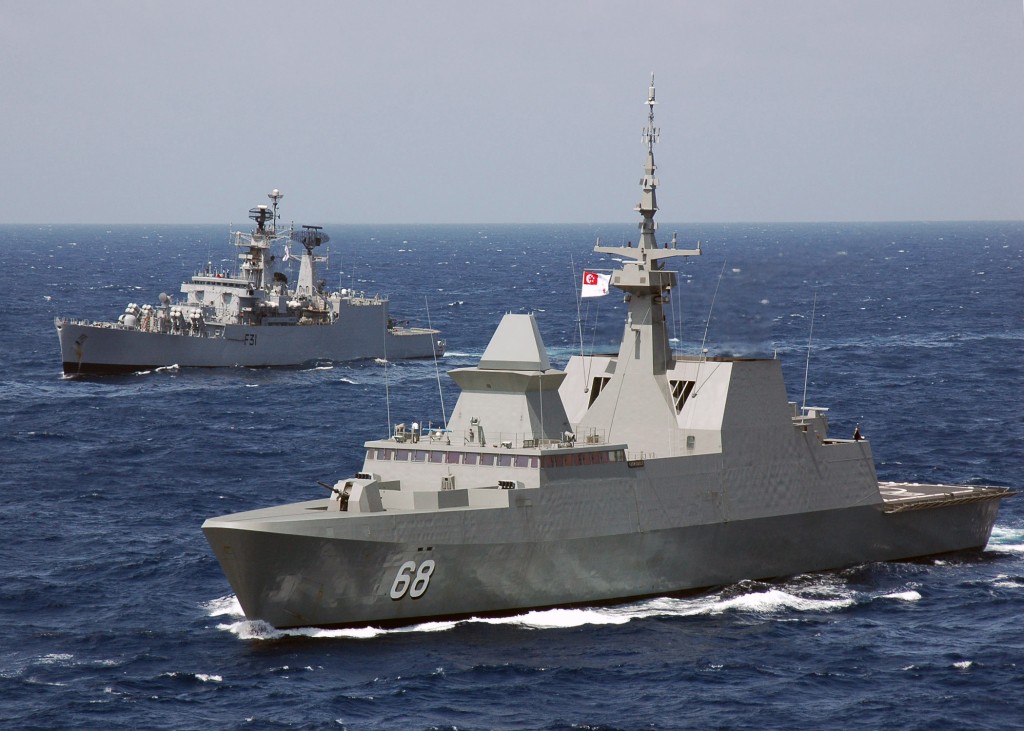
provided the RSN with true blue-water combat capabilities and greatly contribute to the force’s capacity for anti-air and anti-submarine warfare. This was, according to the author, not a procurement ‘out of left field’ but instead built incrementally on existing RSN capabilities, such as the six Victory-class corvettes Singapore acquired from Germany’s Friedrich Lürssen Werft in 1990-1991. In any case, the blue-water capability of the RSN has subsequently been demonstrated by the deployment of Formidable-class frigates RSS Intrepid in 2012 and RSS Tenacious in 2014 in support of Combined Task Force 151 in counter-piracy operations in the Gulf of Aden.
Republic of Singapore Navy frigate RSS Formidable (68) steams alongside the Indian Navy frigate INS Brahmaputra (F 31) in the Bay of Bengal during exercise Malabar (US Navy photo).
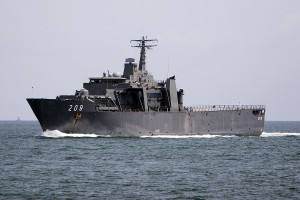
Finally, the RSN’s four locally built Endurance-class landing platform docks (LPDs) provide the force with strategic sealift. These are indicative of Singapore’s strategic intent insofar as the past 15 years of defence procurement are concerned – namely that Singapore intends to employ its navy first and foremost in a humanitarian role in multilateral operations. For example, three of the RSN’s four LPDs were deployed in response to the 2004 tsunami and earthquake in Aceh, Indonesia, providing valuable humanitarian assistance. The LPDs have since been deployed in support of reconstruction efforts in Iraq, counter-piracy operations off the coast of Somalia, and on search and rescue missions in the Indian Ocean region. Interestingly, a fifth vessel of this class was produced by Singapore for export to Thailand in 2012.
This tendency to participate in multilateral operations and exercises, which has increased dramatically since the 1980s, reflects an important undercurrent of Singapore’s defence planning, according to Dr. Koh. Although the resources and equipment available to the RSN could have been much more rapidly expanded, fleet expansion and modernization has been incremental so as to avoid setting off a regional arms race. As a small state, Singapore has a particularly keen interest in conflict prevention, opting to resolve any disputes in the courts rather than on the battlefield. This strategy has served Singapore well, such as when an ongoing dispute between Singapore and Malaysia over ownership of Pedra Branca, several islets at the eastern entrance to the Singapore Strait, was resolved in 2008 by an International Court of Justice decision in favour of Singapore’s claim. Meanwhile, in order to avoid any future tensions with Malaysia, the RSN has delegated patrols of such waterways to the Police Coast Guard, which acquired a fleet of ten specially designed Shark-class patrol boats from Damen Schelde in 2009. These vessels are in fact armed – specifically with a Mk 23 Rafael Typhoon Weapon System with 25mm Bushmaster chain gun and two CIS 50 12.7mm machine guns – but do not share the overtly militaristic impression that an RSN patrol would likely convey.
This could also explain the lack of a formal maritime strategy, though the author does not explicitly draw this connection. By identifying security threats to be addressed by the RSN, there would be the risk of ratcheting up tensions with one neighbour or another. Beyond interfering with any ongoing negotiations Singapore may have with claimants like Malaysia and Indonesia, including territorial disputes in a strategic guidance document would effectively “securitize” relations within Southeast Asia. First introduced as a theory of international relations in the 1990s by the scholars Barry Buzan, Ole Waever, and Jaap de Wilde, securitization occurs when an issue is presented as a security threat that requires the intervention of state
RSS Persistence
authorities and the employment of extraordinary means, such as the use of military force, rather than following the course of political dialogue. Put differently, Singapore’s assertion of ownership over a specific islet or body of water in a kind of ‘National Security Strategy’ would only serve to escalate tensions, prompting neighbours to make equally bold claims and arm themselves to enforce those same claims. Such escalation can be seen in other parts of the Asia-Pacific region due to assertive behaviour from one or more parties; Singapore’s quiet caution has helped to avoid the spread of such conflict and reinforced international legalist norms of behaviour.
A development not anticipated by this article, however, is the emergence of a new, locally-produced ship design to succeed the Fearless-class patrol vessels that have served the RSN for two decades. The Independence-class littoral mission vessel is larger in size, with a displacement of 1,200 tonnes and a length of 80 metres, and will be considerably more adaptable than the previous patrol vessels. In total, eight vessels will be built, the first of which is expected to reach completion by the end of 2016. Given that the LPDs were also built at home, this is very likely an indication that Singapore seeks to develop its domestic shipbuilding industry and it will be worth watching whether this is followed by efforts to promote designs for export. This would not be unprecedented, considering the aforementioned sale of an LPD in 2012 to the Royal Thai Navy. It also leaves some question as to whether Singapore, following the passing of Lee Kuan Yew, may depart from its historically cautious approach and seek a new, more assertive role for the RSN. Until that question is settled, Dr. Koh’s work for the Naval War College Review is the clearest narrative readers may find of RSN fleet modernization and expansion.
Paul Pryce is Political Advisor to the Consul General of Japan in Calgary and a long-time member of the Center for International Maritime Security (CIMSEC). He has previously written as the Senior Research Fellow for the Atlantic Council of Canada’s Maritime Nation Program.
[otw_shortcode_button href=”https://cimsec.org/buying-cimsec-war-bonds/18115″ size=”medium” icon_position=”right” shape=”round” color_class=”otw-blue”]Donate to CIMSEC![/otw_shortcode_button]
This article was originally posted at the National Maritime Foundation. It is republished here with the author’s permission. Read the piece in its original form here.
By Gurpreet S. Khurana
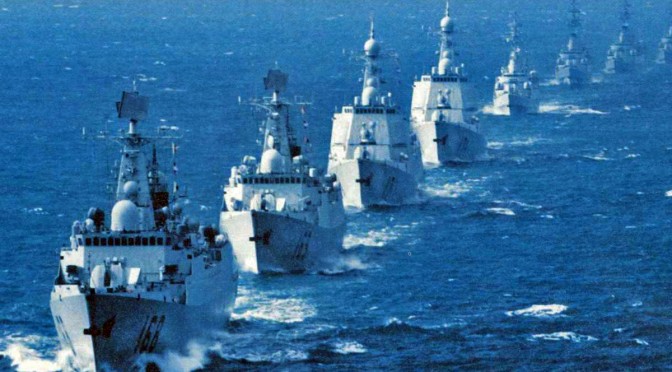
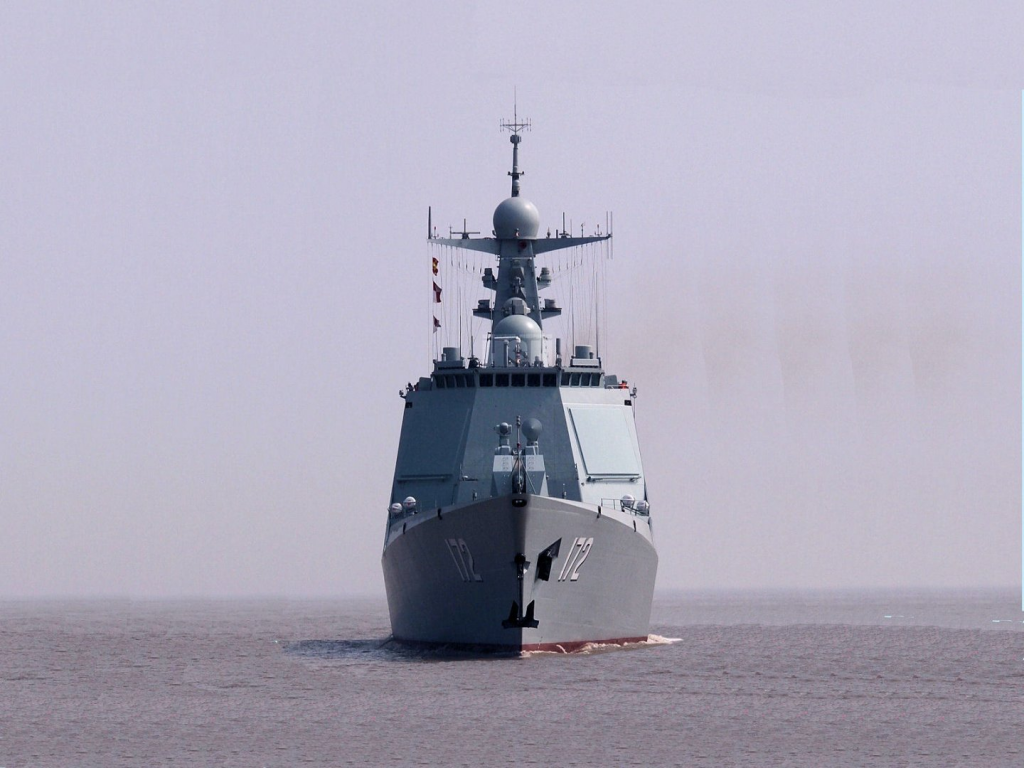
In December 2015, China commissionedHefei (174) – the third Type 052D guided-missile destroyer into its navy. The warship represents the most advanced surface combatant ever operated by the PLA Navy, comparable to the best in the world. It is armed with potent long-range missiles like the HHQ-9 (anti-air), the YJ-18 (anti-ship), and the CJ-10 (land-attack).[ii] This seems incredible considering that until barely a decade ago, China’s navy did not even possess a credible fleet air defence missile system, let alone a land-attack capability.
First in class, Type 052D destroyer, Kunming, DDG-172 underway after its commissioning in March 2015. Photo Credit: Jeff Head.
Notably, all three Type 052D destroyers are based in PLA Navy’s South Sea Fleet (SSF).[iii] This is among the latest indicators of the growing salience and strength of this fleet. The SSF is fast becoming the ‘sword arm’ of the PLA Navy. It is rapidly amassing distant power-projection capabilities with major geopolitical and security ramifications not only for the China’s immediate maritime neighbours in the South China Sea (SCS), but also for the littorals of the Indian Ocean region (IOR). This essay attempts to discern the trends since the rise of China’s naval power in recent decades, and the implications for the Indo-Pacific[iv]region.
Circa 1995-2005: Focus on ESF
Until the 1980s, the PLA Navy was merely a ‘brown-water’ coastal force. Beginning in the mid-1990s, China’s naval power witnessed a quantum jump with the acquisition of the Russian Kilo-class submarines and Sovremenny-class destroyers. The Kilos were considered to be the quietest submarines in the world, whereas the Sovremennys were armed with the lethal S-22 Moskit anti-ship missile – dubbed ‘aircraft-carrier killer’
– whose supersonic speed gives little reaction time to the victim warship to defend itself.
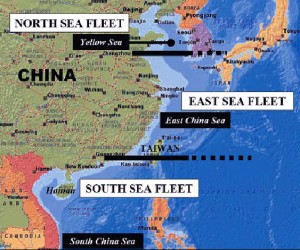
AORs of of the PLA Navy’s three fleets. Photo Credit: India Strategic.
All four Sovremennys[v] and eight Kilos[vi]were added to the East Sea Fleet (ESF). At this time, China’s strategic focus was directed towards its eastern seaboard, primarily to prepare for any adverse contingency involving Taiwan (in light of the 1995-1996 Taiwan Strait crisis). In 1999, China began the indigenous development of its Song-class conventional submarines. The first of these new-generation boats commissioned between 2001 and 2004 were also inducted into the ESF.[vii]
Circa 2005-2010: Focus on the South Sea Fleet
About a decade after the Taiwan Strait crisis, China’s strategic focus began to shift from Taiwan to its maritime-territorial claims in the South China Sea (SCS). The reason for the shift is unclear. It could be attributed to Beijing’s successful ‘Taiwan policy’ that led to a reduced probability of a military conflict across the Taiwan Strait. It is also possible that Beijing had always considered the SCS as its priority, but was ‘biding its time’ due to various geopolitical and capability constraints. All the same, China’s intent became apparent through the increasing ‘capabilities’ being allocated to the SSF, such as those enumerated below.
2004-05: SSF inducts two each of Type 052B and 052C destroyers, the first-ever world-class indigenous warship designs.[viii]
2005: China begins refurbishing the erstwhile Soviet aircraft carrier Varyag for power-projection in the SCS (that later joined SSF as Liaoning).
2006-07: SSF inducts four additional Kilo-class submarines procured from Russia.
End-2007: SSF inducts the first Type 071 Yuzhao-class Landing Platform Dock (LPD), which provided China a distant sealift capability.[ix]
Mid-2008: Satellite-based reports carried pictures of China’s new Yalong Bay base in southern Hainan, indicating entrances to the underground submarine pens and a Jin-class (Type 094) new-generation nuclear ballistic missile submarine (SSBN).
2007-08: Extension of Woody Island airstrip (Paracels) to 8,100 feet. The airstrip was now capable of operating heavier aircraft like bombers, transports and aerial-refuellers.[xi]
Most of these developments were analysed in 2008-2009 bythis author and a few other analysts like James Bussert.However, these writings received little attention. Interestingly, China’s ‘intentions’ became clearer within a couple of years when Beijing declared in 2010 that the SCS was its “core interest” of sovereignty.Two years later, in 2012, China upgraded Sansha City on Woody Island from county-level to a prefecture-city level[xv] to facilitate the administration of all theisland groups in SCSclaimed by China. It also established a military command in Sansha City under Hainan provincial sub-command within the Guangzhou Military Command. While these were largely ‘administrative’ and ‘defensive’ policy measures, these reinforced China intent with regard to its “core interest” of sovereignty.
Recent Developments: Reinforced Focus on SSF
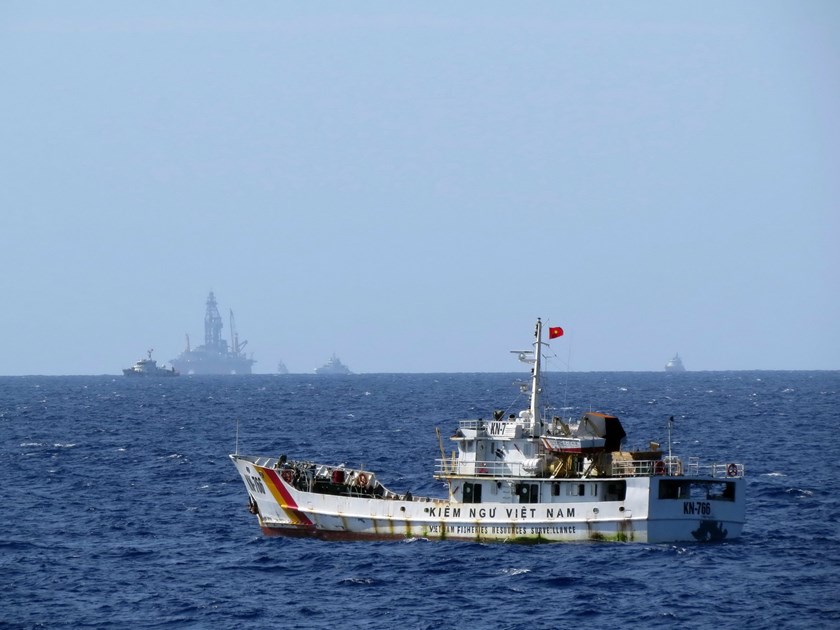
Recent developments clearly indicate that China has persevered with its southward-oriented military-strategic intent. The latest of these is China’s January 2016 redeployment of its Haiyang Shiyou 981 (HD-981) oil rig in disputed waters with Vietnam, which created a major diplomatic rift between the two countries in mid-2014. A CSIS report released in January 2016 notes an “accelerated…frequency of its (China’s) coercive activities and pace of its island-building in the… South China Sea.”[ The report adds that “the PLA in the near future will be operating well beyond the First Island Chain and into the Indian Ocean.” If such predictions are substantive, what precisely may be among the enabling capabilities?
A Vietnamese fisheries surveillance ship enforcing law in the area near the Haiyang Shiyou-981 oil rig that China deployed in Vietnam’s 200-nautical continental shelf since early May 2014. Photo: Doc Lap.
Aircraft Carrier Task Force
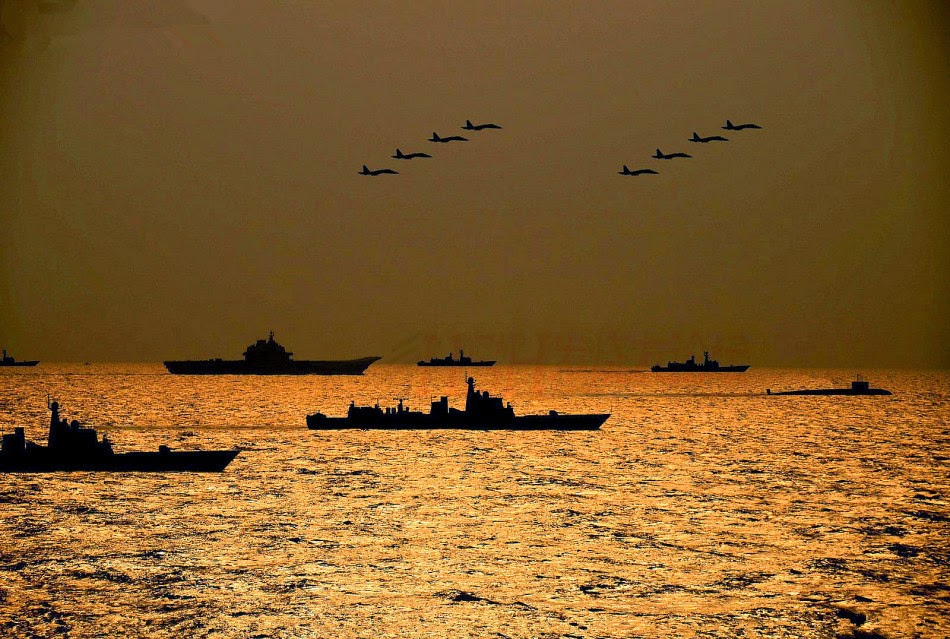
In 2012, Varyag was commissioned as Liaoning, and soon after sea-trials, it was based in the SSF. China is building an indigenous carrier, which is also likely to be based in the SSF for patrols in the disputed South China Sea. These carriers have potent escort combatants. In addition to the Type 052D destroyers, most of the PLA Navy’s latest Jiangkai II class frigates are also based in the SSF. The carrier(s) – along with these escorts – would provide versatility to the SSF to conduct missions in the IOR and SCS across the spectrum of conflict, ranging from humanitarian missions and counter-piracy to flag-showing, and supporting maritime expeditionary operations to military coercion.
PLA Navy Liaoning carrier battle group.
Notably, both Jiangkai II frigates – Liuzhou (573) and Sanya (574) – that participated in India’s International Fleet Review-2016 (IFR-16) at Visakhapatnam in early-February 2016 are based at SSF. The two ships – part of PLA Navy’s 21st anti-piracy task force – made a ‘goodwill’ port call at Chittagong and conducted combined naval exercises with the Bangladesh Navy, before participating in IFR-16. In the coming years, the availability of the carrier in its task force will provide the PLA Navy more operational options, enabling it to undertake other types of missions in the IOR as well.
‘Unsinkable’ Aircraft Carriers in the SCS
China is likely to continue upgrading its airfields in the Paracels and Spratlys. On Woody Island, satellite imagery revealed that since 2007-08, China has added a wide array of aviation infrastructure to the main airstrip, including aircraft hangers, air traffic control buildings and radars, fuel depots, crew accommodation, and berthing facilities for larger warships. This would provide a force-multiplier effect to the PLA Navy’s carrier operations, enabling China to effectively exercise sea control and power-projection in the SCS. It would also enable China to enforce an ADIZ over the SCS, if Beijing were to promulgate it.
New-Generation Submarines
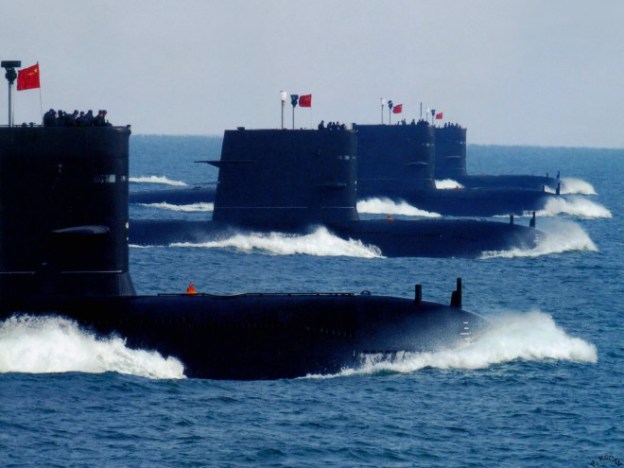
In mid-2015, the PLA Navy commissioned three modified Shang-class SSNs (Type 093A/ 093G). Like Type 052D destroyers, these are likely to be armed with the vertical-launch YJ-18 anti-ship and CJ-10 land-attack missiles. In a few years, China is likely to develop the advanced Jin-class (Type 096) SSBN, which could provide China a more credible nuclear deterrence and first strike capability. Although Yalong Bay (Hainan) may be home base for these nuclear-propelled platforms, their virtually unlimited endurance will enable the PLA Navy to project submarine-based maritime power eastwards far beyond the second island chain, and westwards into the IOR.
China’s latest conventional submarines, the Song-class and the Yuan-class with Air Independent Propulsion (AIP), are also based at Yalong Bay.[xxiv]Notably, all submarines that the PLA Navy has deployed so far in the IOR are based in the SSF. These include the Song-329 that docked in Colombo in September-October 2014[xxv]and the Yuan 335 that spent a week in Karachi harbour in May 2015.
PLA Navy Song class conventional submarines.
Expeditionary Forces
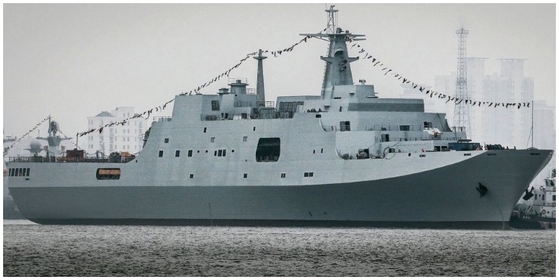
In 2011-12, two more Type 071 LPDs (Jinggang Shan and Changbai Shan) joined the first LPD (Kunlun Shan) in the SSF.In mid-2015, the SSF inducted the PLA Navy’s first Landing Platform (MLP). Based on the novel submersible roll-on/ roll-off (RO-RO) design developed by the United States, MLPs would be able to transport PLA Navy’s heavy Zubr-class air-cushion landing craft to distant littorals.
This enhanced distant sealift capacity would not only enable the SSF to undertake humanitarian missions in the SCS and the IOR, but also provide the fleet a nascent expeditionary capability. Interestingly, the 15,000-men Chinese Marines – who have traditionally trained for amphibious assaults – have lately begun to exercise in continental locales of Mongolia and Xinjiang, which is a pointer to China’s intentionto be involved in out-of-area expeditionary missions.
PLA Navy Type 071 LPD.
Logistic Ships
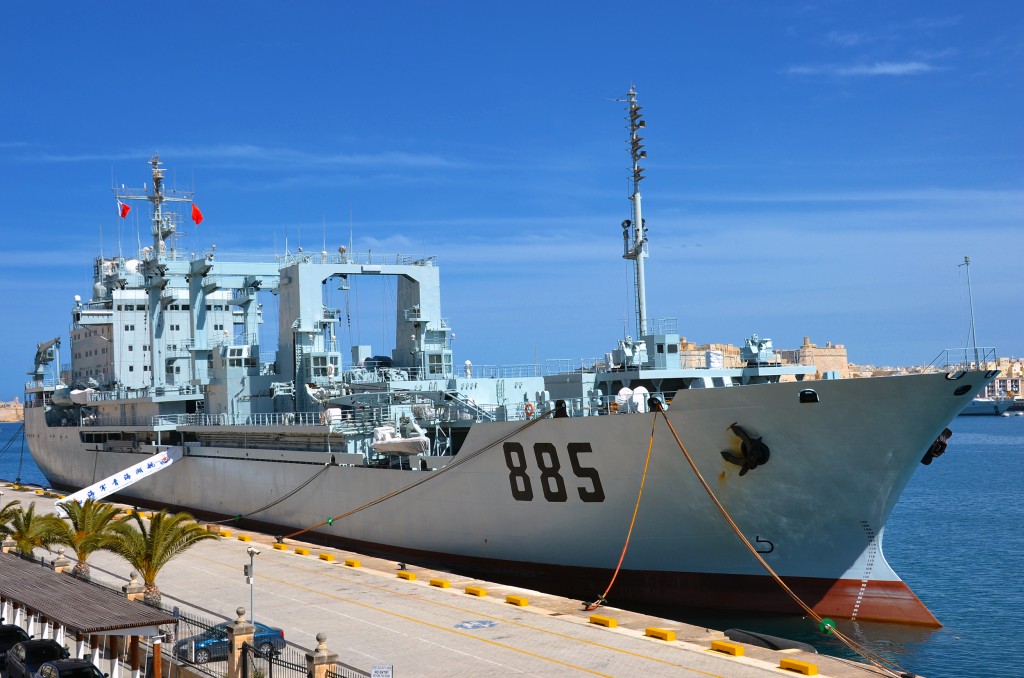
The PLA Navy is also developing ‘longer legs’ through the introduction of high-endurance logistic vessels meant to provide underway replenishment (UNREP) to its principal warships far away from Chinese home bases. Since 2005, it has commissioned six advanced Type 903A (Fuchi-class) UNREP vessel with a full-load displacement of 23,000 tons. Although these are equally divided among the three PLA Navy fleets, the sequence of allocation and other developments indicate a focus on the SSF. In 2015, China launched a new rather massive 45,000 tons logistic vessel of the Qinghaihu-class, which is likely to be allocated to the SSF.
PLA Navy Qinghaihu-class logistics vessel.
Conclusions
In tandem with China’s overall power, the capabilities of the PLA Navy’s SSF is expected to continue to grow in the coming decades, notwithstanding transient ‘hiccups’ in its economic growth. However, China’s geographically expanding economic interests into the IOR and beyond will soon overstretch its resources. Ostensibly, Beijing is well aware of this prognosis, and adopting necessary measures as part of a comprehensive long-term strategy.
Among the two overwhelming imperatives for China is to shape a benign environment in its north-eastern maritime periphery. Towards this end, in March 2013, Beijing amalgamatedits various maritime agencies to form the unified Coast Guard under the State Oceanic Administration.Reportedly, China has also been trying hard to resolve its maritime boundary dispute with South Korea.
The second imperative is to sustain its naval forces in distant waters of the IOR. Towards this end, China is developing military facilities in the IOR, dovetailed with its increasing hardware sales to the regional countries. Through its ‘Maritime Silk Road’ (MSR) initiative (2013), China seems to have effectively blunted the theory of ‘String of Pearls’ (2005). Djibouti may be only the beginning. Similar facilities – supplemented by PLA Navy’s long-legged and ‘sea-based’ assets based in the SSF – would enhance China’s military-strategic and operational options manifold. Such emerging developments – and their extrapolations – need to be factored by the national security establishments of the Indo-Pacific countries.
Captain Gurpreet S Khurana, PhD, is Executive Director, National Maritime Foundation (NMF), New Delhi. The views expressed are his own and do not reflect the official policy or position of the NMF, the Indian Navy, or the Government of India. He can be reached at gurpreet.bulbul@gmail.com.
[ii] The CJ-10 (also called DH-10 or HN-2) is known to feature terrain contour matching (TERCOM) and data from the Chinese Beidou Navigation Satellite System for its guidance.
[iii] PLA Navy is divided into 3 fleets (equivalent of naval commands in India). The North Sea Fleet (NSF) adjoins the Yellow Sea/ Korean Peninsula, the East Sea Fleet (ESF) faces the East China Sea/ Taiwan, and the South Sea Fleet (SSF) overlooks the South China Sea.
[iv] The term refers to the region stretching from East Africa and West Asia to Northeast Asia, across the Indian Ocean and the Western Pacific. Gurpreet S Khurana, ‘Security of Sea Lines: Prospects for India-Japan Cooperation’, Strategic Analysis, Vol 31(1), January 2007, p139-153.
[v] All four Sovremenny-class destroyers were acquired between 1999 and 2006.
[vi] These refer to the eight Kilo-class submarines acquired between 1995 and 2005.
[vii] It refers to pennant numbers 321, 322, 323, 324, 325 and 314. The sole exception was the first Song (320) commissioned in 1999, which was inducted into the SSF, possibly since the waters off Hainan were deep enough for its dived test.
[viii] While more warships of the Type 052 not built, the Type 052C (dubbed ‘Chinese Aegis’) provided the PLA Navy for the first time, a long-range fleet air-defence capability. It is equipped with vertical-launch 90 km range HHQ-9 surface to air missiles (SAM) cued by the AESA phased-array radar with all-round coverage. The Type 052C warships commissioned later were based at the ESF.
[ix] Since long, the SSF has been home to a significant proportion of amphibious vessels and two Marine brigades, but the PLA Navy never possessed distant sealift capability. It may be recalled that China could not even contribute to the multi-nation humanitarian assistance and disaster relief (HADR) mission following the Indian Ocean Tsunami of December 2004. Ostensibly, this provided the trigger for China to build the Type 071 LPD for the SSF.
[xi] Called Yongxing Dao by the Chinese, Woody Island is located 150 nautical miles south-east of Hainan, and is the largest island of the Paracel group. In the 1980s, it accommodated a mere helicopter pad. In 1990, China undertook land reclamation to construct a 1,200-feet airstrip to operate jet fighters.
[xii] Gurpreet S Khurana, ‘China’s South Sea Fleet Gains Strength: Indicators, Intentions & Implications, India Strategic, Vol. 3(10), October 2008, p.48, at http://www.indiastrategic.in/topstories183.htm
[xv] These refer to the hierarchal levels of China’s administrative divisions: Province (first level), Perfecture City (second level) and County (third level).
[xxiv] AIP enhances the operational effectiveness of a conventional submarine substantially by enabling it to remain submerged up to as long as three weeks.
[xxv] Gurpreet S Khurana, ‘PLA Navy’s Submarine Arm ‘Stretches its Sea-legs’ to the Indian Ocean’, National Maritime Foundation , New Delhi, 21 November 2014, at https://independent.academia.edu/khurana
[xxvi] Gurpreet S Khurana, ‘ China’s Yuan-class Submarine Visits Karachi: An Assessment’, National Maritime Foundation , New Delhi, 24 July 2014, at https://independent.academia.edu/khurana
[xxix] In 2014, the Marines conducted the first such training in the grasslands of Inner Mongolia, followed by the second one in December 2015 in the deserts of Xinjiang. The latter came in wake of Beijing passing a new unprecedented legislation that permits the PLA to undertake counter-terrorism missions overseas. Michael Martina and Greg Torode, ‘Chinese marines’ desert operations point to long-range ambitions’, Reuters, 14 January 2016, at http://www.reuters.com/article/us-china-military-marines-idUSKCN0US2QM20160114
[xxxi] In 2014, China and South Korea agreed to initiate a dialogue to delineate their maritime boundary outstanding for two decades. The preliminary talks were held in December 2015. ‘South Korea, China Discuss Fisheries and Boundary Conflict’, Maritime Executive, 22 December 2015, at http://news.xinhuanet.com/english/2015-12/14/c_134916062.htm