
Category Archives: Capability Analysis

Analyzing Specific Naval and Maritime Platforms

Troubled Waters? The Use of the Nigerian Navy and Police in Private Maritime Security Roles

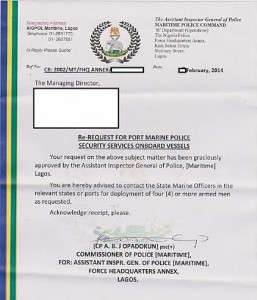
Example of a “permit” issued to a PMSC for embarking Nigerian Maritime Police by the Lagos Police Commissioner (Maritime) without authority of the Lagos state Inspector General of the Police. (Source withheld)

On the night of 23 October 2013, a group of embarked Nigerian policemen on board the tanker HISTRIA CORAL opened fire on a small boat that was approaching a tanker close by on Lagos roads, believing the vessel was under attack by robbers. The small boat, it turned out, was a launch filled with Nigerian Navy personnel, who were about to inspect the ROSE MARY. The episode ended with a stand-off between the Nigerian Navy and the policemen, who eventually locked themselves into the HISTRIA CORAL’s citadel for several days before they were arrested along with the agent who brokered their services.

[otw_shortcode_button href=”https://cimsec.org/buying-cimsec-war-bonds/18115″ size=”medium” icon_position=”right” shape=”round” color_class=”otw-blue”]Donate to CIMSEC![/otw_shortcode_button]

This vignette is symptomatic for the state of maritime security in Nigerian waters. Fundamentally, the problem is that, while legislation and capability exist, the patchy enforcement of the applicable laws encourages ship operators, agents, mid-ranking military personnel and private security providers to search for “alternatives” which tend to emphasise practicality over legality. In this they are ably assisted by local “facilitators”.

Responsibilities in Nigerian Maritime Security

The division of responsibilities between the Nigerian Navy and the Nigerian Maritime Police (NMP, a branch of the Nigerian Police Force, NPF) is relatively clear: the NMP has jurisdiction “on the Territorial Inland Waters, (measured from the inward limits of the coastal waterways from the fairway buoy), Ports, and Harbours.” It may extend beyond those limits in hot pursuit or when assisting other agencies.

The Nigerian Navy’s responsibility extends beyond that to include the Exclusive Economic Zone (EEZ), within the bounds of the United Nations Convention for the Law of the Sea (UNCLOS), which Nigeria has ratified in 1986. The Navy can also act inshore and to landward based on inter-agency agreements, such as when being a part of the Joint Task Force in the Niger Delta.

However, the lead agency for maritime security, as regards the provisions of the ISPS Code, is actually the Nigerian Maritime Safety Agency (NIMASA). Technically charged with providing port security (in collaboration with Nigerian Ports Authority, NPA) and flag administration, this agency has expanded in recent years to assume a quasi-coast guard role. Some of this is being delivered, controversially, through a private supplier – Global West Vessel Service Ltd, an entity controlled by the former Delta-state militant leader and now billionaire Government Ekpemupolo (Tompolo). NIMASA has also proposed a draft bill on piracy and other unlawful acts at sea in 2012, although that still has to be accepted by Nigeria’s legislators.

Outsourcing Maritime security or Public Private Partnerships?
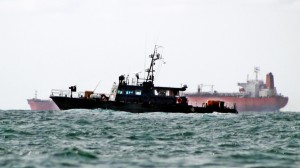
NNS Sword
The privately contracted patrol boat NNS SWORD returning from duty on the Lagos Secure Anchorage Area in in April 2014. (Photo: Dirk Steffen)

NIMASA is not alone though when it comes to contracting private companies in order to render what would appear to be asset protection services, but also for maritime surveillance and law enforcement activities. The Nigerian Navy has a tradition of utilising private suppliers to maintain and manage its vessels such as Intels Logistics, who manage the Bonny River convoy or the likes of Ocean Marine Security (OMS) or Protection Plus, who have been supplying escorts vessel services to the Oil & Gas industry for years. Typically, the procedure involves the private companies supplying vessels to the Navy’s specifications. The vessels receive Nigerian Navy pennant numbers and are manned with Nigerian Navy personnel. This has the benefit of providing an effective asset and management outside the Navy’s largely dysfunctional logistical and administrative infrastructure. At the same time, the Navy gains paid-for operational experience. The operational management, although in the hands of the Navy, also places the onus of maintaining situational awareness and response capability on the private partners. As I have described elsewhere, the Nigerian Navy’s organiation in spite of all efforts continues to fail in its ability to generate and disseminate maritime domain awareness information that would enable it to systematically prevent and respond maritime security incidents.

Arguably, the utilisation of Public Private Partnerships (PPP) is best suited to overcome the Nigerian Navy’s organisational shortcomings in the current situation. Nevertheless, like many such decentralised, commercially-tinged activities involving the Nigerian armed forces it bears the risk for abuse, mismanagement and corruption. Above all, it means that the Nigerian Navy relinquishes control and this was exactly what got the Navy in trouble in late 2012 when a merchant vessel, which had hired a Nigerian Navy team, ended up in Togo with the Nigerian soldiers still on board, resulting in some uncomfortable questions being asked of the Navy. As it turned out the Navy’s Western Naval Command had not endorsed the practice of allowing private companies to hire Nigerian Navy teams. To reinforce the point, future co-operation with private partners was based on a standard Memorandum of Understanding (MoU), in which the Nigerian Navy specified that it would provide personnel only for suitably equipped patrol boats. The creation of the Secure Anchorage Area (SAA) outside Lagos in April 2013 in collaboration with OMS was a manifestation of this approach and built on the PPP model that had served the Nigerian Navy well elsewhere.

Use and Abuse of the System

Nigerian Marine Police in Lagos Channel compressed
Nigerian Marine Police checkpoint in Tarkwa Bay next to the Lagos Channel in April 2014. (Photo: Dirk Steffen)

At least 42 security companies registered in Nigeria have signed the MoU with the Navy, although only a fraction have provided the patrol boats as stipulated in the document while the majority of companies thought that they were allowed to use embarked Navy teams. When the Navy pulled the rug from underneath what had apparently become a source of considerable income for local agents, fixers, mid-ranking naval officers and budding Private Maritime Security Companies (PMSCs), it left the shipping industry with only one recourse: to hire Nigerian Police who conveniently offered themselves for this task, although this too was never officially sanctioned by the Inspector General of the Police (IGP) or formalised through anything resembling a MoU. Instead, local police commissioners issued “permits” to agents, PMSCs and ship operators if they wished to embark NMP, ostensibly on behalf of the IGP.

Again, this practice went on for some time for lack of enforcement until the incident involving the HISTRIA CORAL. Under pressure from the political leadership to clean up their act as well as getting a handle on the illegal bunkering and related piracy situation the Navy reacted. This process of reasserting the Navy’s pre-eminence in maritime security (along with NIMASA) was underlined by the politically-induced re-shuffle of the Nigerian armed forces leadership in February 2014 with a clear presidential mandate to enhance the efficiency of the three services.

On 21 March 2014 the Navy arrested an NMP team aboard the tanker CRETE along with two expat advisors from the security firm Port2Port who had accompanied the ship from Lagos to Warri. Although they were held on the whimsical charge of being engaged in illegal bunkering the incident highlighted the increased awareness of the Navy of the use of rogue NMP teams and the determination to intervene when they had knowledge of the practice. The inability of an embarked NMP team to detect an attack in a timely manner and to prevent casualties on the SP BRUSSELS on 29 April 2014 off the Niger Delta also highlighted the low effectiveness of such “rent-a-cop” teams. However, a large number of shipping agents and PMSCs were now firmly wedded to the concept of using NMP and the chronically underfunded NPF also saw a good opportunity in generating some extra income also for their senior personnel who are held in lower regard (and receive a lower pay) than their Nigerian Navy counterparts.
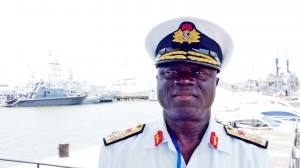
The Nigerian Navy’s Chief of Naval Staff, Vice-Admiral Jibrin, is responsible for the Navy’ enforcement plan against the use of rogue security force teams aboard merchant ships. (Photo: Alexander Drechsel/Adrian Kriesch)

In early June the Nigerian Navy’s Western Naval Command (as well as the two sister commands Central and East) decided to enforce the ban on the use of NMP inside Nigerian territorial waters as directed earlier by the Chief of Naval Staff. Confusingly, the general assertion of authority by the Navy which includes the EEZ (which is part of the Navy’s jurisdiction) was interpreted to imply that the Navy would also enforce this ban on NMP outside territorial waters, which would be in contravention to UNCLOS, leading organisations like the IMO and BIMCO to question the legality of that measure. So far, the Navy has limited itself to inspecting vessels in territorial waters. On 13 June 2014 the Nigerian Navy interrogated a tanker on Lagos roads who first admitted to having embarked security personnel and later denied it. A closer investigation on the 14th revealed the presence of NMP personnel on board and one expat adviser from the same PMSC as on the CRETE. The NMP team was detained and replaced with a Nigerian Navy team so as not to leave the vessel vulnerable to attack.

It is not without irony that within days of the arrests on Lagos roads agents and certain PMSCs signalled their clients in the shipping industry that they had obtained permission to use Nigerian Navy teams – allegedly signed off by a senior naval officer. It is quite plausible that this officer is not yet aware of the “reversal” of the Navy’s enforcement plan that has been enacted in his name and will experience the same surprise as the IGP of Lagos state.

Conclusion

The provision of maritime security services in the Gulf of Guinea is handled more closely by the West African states than has been done by those on the east coast. At the same time effective implementation is slow and frustrating for the shipping industry and the international community.

However, sabotaging the process by playing off law enforcement agencies, or their officers, against each other is unlikely to be helpful in a situation where one of the key problems are fragile states and institutions in the first place. While engaging in collusive corruption (i.e. facilitation payments) the shipping industry is technically not in breach of most anti-corruption legislation, however obtaining an unlawful or “improper” performance from a government agency – even through a third party – might well be subject to more recent anti-bribery legislation such as the UK Bribery Act of 2010 which takes the broader OECD approach to corruption. Furthermore such behaviour perpetuates a system whose unpredictability is a major source of complaint when doing business in Nigeria.

The current modus operandi employed in renting Nigerian government security forces “on the sly” often in contravention of existing but unenforced law and condoned by mid-ranking (and some senior) officers may seem like a good idea now, but in this case it betrays ignorance or casual disregard of the power politics in Nigeria. Choosing to bypass or subvert the Nigerian Navy means antagonising a comparatively influential security service (as opposed to the Nigerian Police) in the Nigerian political system, which is something that is likely to create a backlash in the mid-term as the Nigerian Navy’s organisation continues to strengthen and become more robust as it has, if from a very low level, over the past 7 to 8 years.

Dirk Steffen is the Director Maritime Security for Denmark-based Risk Intelligence. He has been covering the Gulf of Guinea as a consultant and analyst since 2004. He recently deployed to the area with the German Navy in the course of OBANGAME EXPRESS 2014.

[otw_shortcode_button href=”https://cimsec.org/buying-cimsec-war-bonds/18115″ size=”medium” icon_position=”right” shape=”round” color_class=”otw-blue”]Donate to CIMSEC![/otw_shortcode_button]

China’s Conventional Strikes against the U.S. Homeland

Bruce Sugden brings us this dour scenario, representing the last of our “Sacking of Rome” series.    

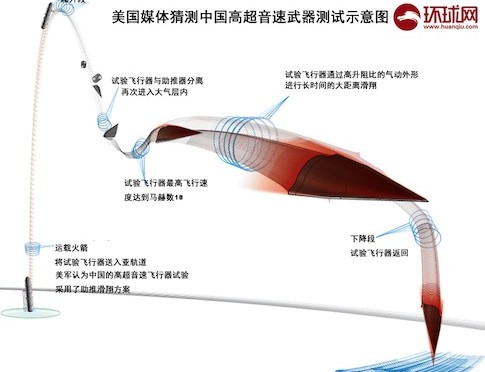
With its precision-strike complex, the United States has conducted conventional strikes on enemy homelands without fear of an in-kind response. Foreign military developments, however, might soon enable enemy long-range conventional strikes against the U.S. homeland. China’s January 2014 test of a hypersonic vehicle, which was boosted by an intercontinental ballistic missile (ICBM), suggests that it has designs on deploying a long-range conventional strike capability akin to the U.S. prompt global strike development effort.[1] If China pushes forward with deployment of a robust long-range conventional strike capability, within 20 years Americans could expect to see the U.S. homeland come under kinetic attack as a result of U.S. intervention in a conflict in the western Pacific region. With conventional power projection capabilities of its own and a secure second-strike nuclear force, China might replace the United States as the preponderant power in East Asia.

The implication of Chinese long-range strike is that U.S. military assets and supporting infrastructure in the deep rear, an area that is for the most part undefended, will be vulnerable to enemy conventional strikes—a vulnerability that U.S. forces have not had to deal with since the Second World War. Furthermore, China would be tempted to leverage its long-range strike capabilities against vital non-military assets, such as power generation facilities and network junctions, major port facilities, and factories that would produce munitions and parts to sustain a protracted U.S. military campaign. The American people and the U.S. government will have to prepare themselves for a type of warfare that they have never experienced before.

Emerging Character of the Precision-Strike Regime

            What we have become familiar with in the conduct of conventional precision-strike warfare since 1991 has been the U.S. use of force in major combat operations. The U.S. precision-strike complex is a battle network, or system, of intelligence surveillance, and reconnaissance (ISR) sensors designed to detect and track enemy forces and facilities, weapons systems to deliver munitions over extended range (e.g., bombers from the U.S. homeland) with high accuracy, and connectivity to command, control, communications, and computers (C4) organized to compress the time span between detection of a target and engagement of that target.[2] Since the 1990s weapons delivery accuracies have been enhanced by linking the guidance systems with a space-based positioning, navigation, and timing (PNT) system.

            China’s People’s Liberation Army (PLA) has studied the employment of the U.S. precision-strike complex and has been building its own for years. Since the 1990s, China has been increasing the number of deployed short- and medium-range ballistic missiles, many of which U.S. observers tend to believe are armed with conventional warheads.[3] China has also been improving the accuracies of its missiles by linking many of them to its space-based PNT system, Beidou. In addition, the PLA has been deploying several types of land-attack and anti-ship cruise missile systems.[4] These weapons systems are part of a layered defense approach that the PLA has adopted to keep foreign military forces, mainly U.S. forces, outside of China’s sphere of interest.

There are indications that China is expanding its precision-strike complex to reach targets further away from Chinese territory and waters. First, as the most recent DOD report on Chinese military power notes, China is developing an intermediate-range (roughly 3,000-5,000 kilometers) ballistic missile that could reach targets in the Second Island Chain, such as U.S. military facilities on Guam, and might also be capable of striking mobile targets at sea, such as U.S. aircraft carriers.[5] Second, the PLA Air Force has developed the H-6K bomber, which might have a combat radius of up to 3,500 kilometers and be able to carry up to six land-attack cruise missiles.[6] Third, as mentioned above, China has tested a hypersonic vehicle using an ICBM.

China’s Interest in Hypersonic Vehicles

            In the previous decade, one American observer of the Chinese military noted that the Chinese defense industry was showing interest in developing long-range precision strike capabilities, including intercontinental-range hypersonic cruise missiles.[7] Drawing from Chinese open-source literature, Lora Saalman believes that “China is developing such systems not simply to bolster its regional defense capabilities at home, but also to erode advantages of potential adversaries abroad, whether ballistic missile defense or other systems.”[8] Moreover, compared with the Chinese literature on kinetic intercept technologies, with “high-precision and high-speed weaponry, the Chinese vision is becoming much clearer, much faster. Beyond speed of acquisition, the fact that nearly one-half of the Chinese studies reviewed cover long-range systems and research low-earth orbit, near space, ballistic trajectories, and reentry vehicles suggests that China’s hypersonic, high-precision, boost-glide systems will also be increasingly long in range.”[9]

            China’s attraction to hypersonic technologies seems to be related to U.S. missile defenses.[10] As many U.S. experts have believed since the 1960s, when the United States first conducted research and development on hypersonic vehicles, such delivery systems provide the speed and maneuverability to circumvent missile defenses.[11] These characteristics enable hypersonic vehicles to complicate missile tracking and engagement radar systems’ attempts to obtain a firing solution for interceptors.

How a Future U.S.-China Conflict Might Unfold

            Although we cannot be certain about how a future military conflict between the United States and China might develop, the ongoing debate over the U.S. Air-Sea Battle concept suggests that alternative approaches to employing U.S. military force against China could persuade the Chinese leadership to order conventional strikes against targets in the U.S. homeland. On the one hand, in response to PLA aggression in the East or South China Seas, an aggressive forward U.S. military posture would include conventional strikes against targets on the Chinese mainland, such as air defense systems, airfields and missile operating locations from which PLA attacks originated, C4 and sensor nodes linked to PLA precision-strike systems, and PLA Navy (PLAN) facilities and ships.[12] These strikes would threaten to weaken PLA military capabilities and raise the ire of the Chinese public and leadership. Even assuming that China opened hostilities with conventional missile strikes against U.S. forces at sea and on U.S. and allied territories (Guam and Japan, respectively) to forestall operations against the PLA, the Chinese public and the PLA might pressure the leadership to respond with similar strikes against the U.S. homeland.

            A less aggressive U.S. military posture, on the other hand, such as implementation of a distant blockade, would focus military resources on choking off China’s importation of energy supplies and denying PLA forces access to the air and seas within the First Island Chain.[13] While this approach might play to the asymmetric advantages of the U.S. military over the PLA, the threat of being cut off from its seaborne energy supplies over an extended period of time might convince Beijing that it needed to reach out and touch the United States in ways that might quickly persuade it to end the blockade.

Targets of Chinese Long-Range Conventional Strikes

            Although many recent PLA doctrinal writings point to the use of conventional ballistic missiles in missions to support combat operations by PLA ground, air, naval, and information operations units, a stand-alone missile campaign could be designed to conduct selective strikes against critical targets.[14] Ron Christman believes that the “goals of such a warning strike would be to display China’s military strength and determination to prevent an ongoing war from escalating, to protect Chinese targets, to limit damage from an adversary’s attack, or to coerce the enemy into yielding to Chinese interests.”[15]

            The PLA’s ideal targets might include low density/high demand military assets, major power generation sites, key economic and political centers, and war-supporting industry.[16] More specifically, with U.S. forces conducting strikes against PLA assets on mainland China, sinking PLAN ships at sea, and blocking energy shipments to China, PLA military planners might be tempted to strike particular fixed targets to weaken U.S. power projection and political will: Whiteman Air Force Base, home of the B-2A bombers; naval facilities and pierside aircraft carriers at San Diego and Kitsap; facilities and pierside submarines at Bangor; space launch facilities at Vandenberg Air Force Base and Cape Canaveral; Lockheed Martin’s joint air-to-surface stand-off missile (JASSM) factory in Troy, Alabama; Travis Air Force Base, where many transport aircraft are based; and major oil refineries in Texas to squeeze the U.S. economy.

Effects of Conventional Strikes against the U.S. Homeland

            It is plausible that Chinese conventional precision strikes against targets in the U.S. homeland would set in train several operational and strategic effects. First, scarce military resources could be damaged and rendered inoperable for significant periods of time, or destroyed. Whether at Whiteman Air Force Base or the west coast naval bases, such losses would impair the conduct of U.S. operations against China. Furthermore, damaged or destroyed munitions factories, logistics nodes, and space launch facilities would undermine the ability of the U.S. military to conduct a protracted war by replenishing forward-deployed forces and replacing lost equipment. The U.S. military might have to re-deploy significant numbers of forces from other regions, such as Europe and the Persian Gulf.

Second, the American people, if they believed that fighting in East Asia was not worth the cost of attacks against the homeland, might turn against the war effort and the politicians that supported it. Even if a majority of Americans were to remain steadfast in support of the war, however, public opinion would not protect critical assets from being struck by Chinese conventional precision strikes.

Third, the operational effects might sow doubt in the minds of U.S. allies about the survivability and effectiveness of the U.S. power projection chain, while American protests in the streets against the U.S. government would undermine allies’ confidence in the resolve of the United States. If the allies judged that the United States lacked the capability or the will to wage war across the Pacific Ocean against China, then they might accommodate China and cut military ties with the United States. The loss of these military alliances, moreover, could result in the disintegration of the international order that the United States has built and sustained with military might for decades.[17]

Fourth, facing damage from strikes against the homeland and perhaps lacking the conventional military means to defend its allies and achieve its war aims, the United States might have to choose between defeat in East Asia or escalation to the use of nuclear weapons to fulfill its security guarantees. U.S. nuclear strikes, of course, might elicit a Chinese nuclear response.

Measures to Mitigate the Effects of Conventional Strikes

            Three approaches come to mind that might mitigate the effects of conventional strikes and, perhaps, dissuade China from expending weapons against the U.S. homeland. The development of less costly but more advanced missile defense technologies that could be deployed in large quantities could protect critical assets. The technologies might remain beyond our grasp, however. Directed energy weapons, for example, would still need to find and track the incoming target for an extended period of time, and then maintain the laser beam on one point on the target to burn through it.[18]

            If missile guidance systems remained tied to space-based PNT in the 2030s, then ground-based jammers might be able to divert incoming hypersonic vehicles off course. Without accurate weapons delivery, the conventional warheads would be less effective against even soft targets. Future onboard navigation systems, however, might enable precise weapons deliveries that would be unaffected by jamming.[19]

            The final and possibly most effective approach takes a page from China’s playbook: disperse and bury key assets and provide hardened, overhead protection for parked aircraft and pierside ships.[20] Because burying some facilities would be cost prohibitive, another protective measure might be to construct hardened shelters (including top covers) around surface installations like industrial infrastructure and munitions factories (though this measure might be cost prohibitive as well).

            This preliminary discussion suggests that cost-effective remedies are infeasible over the next few years, yet the threat of distant conventional military operations extending to the U.S. homeland will likely continue to grow. Therefore, more comprehensive analysis of active and passive defenses as well as other forms of damage limitation is needed to enable senior leaders to make prudent investment decisions on defense and homeland security preparedness against the backdrop of a potential conflict between the United States and China.

Bruce Sugden is a defense analyst at Scitor Corporation in Arlington, Virginia. His opinions are his own and do not represent those of his employer or clients. He thanks Matthew Hallex for valuable comments on earlier drafts of this essay.


[1] On China’s January 2014 test of a hypersonic vehicle, see Benjamin Shreer, “The Strategic Implications of China’s Hypersonic Missile Test,” The Strategist, The Australian Strategic Policy Institute Blog, January 28, 2014; on the U.S. prompt global strike initiative, see Bruce M. Sugden, “Speed Kills: Analyzing the Deployment of Conventional Ballistic Missiles,” International Security, Vol. 34, No. 1 (Summer 2009), pp. 113-146.

[2] For a broad overview of the evolving precision-strike regime, see Thomas G. Mahnken, “Weapons: The Growth and Spread of the Precision-Strike Regime,” Daedalus, 140, No. 3 (Summer 2011), pp. 45-57.

[3] Ron Christman, “Conventional Missions for China’s Second Artillery Corps: Doctrine, Training, and Escalation Control Issues,” in Andrew S. Erickson and Lyle J. Goldstein, eds., Chinese Aerospace Power: Evolving Maritime Roles (Annapolis, Md.: Naval Institute Press, 2011), pp. 307-327.

[4] Dennis Gormley, Andrew S. Erickson, and Jingdong Yuan, “China’s Cruise Missiles: Flying Fast Under the Public’s Radar,” The National Interest web page, May 12, 2014.

[5] Office of the Secretary of Defense, Annual Report to Congress: Military and Security Developments Involving the People’s Republic of China (Washington, D.C.: Department of Defense, 2014), p. 40.

[6] Ibid., p. 9; and Zachary Keck, “Can China’s New Strategic Bomber Reach Hawaii?” The Diplomat, August 13, 2013.

[7] Mark Stokes, China’s Evolving Conventional Strategic Strike Capability: The Anti-Ship Ballistic Missile Challenge to U.S. Maritime Operations in the Western Pacific and Beyond (Arlington, Va.: Project 2049 Institute, September 14, 2009), pp. 33-34.

[8] Lora Saalman, “Prompt Global Strike: China and the Spear,” Independent Faculty Research (Honolulu, Hi.: Asia-Pacific Center for Security Studies, April 2014), p. 12.

[9] Ibid., p. 14.

[10] Office of the Secretary of Defense, Annual Report to Congress: Military and Security Developments Involving the People’s Republic of China, p. 30.

[11] William Yengst, Lightning Bolts: First Maneuvering Reentry Vehicles (Mustang, Okla.: Tate Publishing & Enterprises, LLC, 2010), pp. 111-125.

[12] Jonathan Greenert and Mark Welsh, “Breaking the Kill Chain,” Foreign Policy, 16 May 2013; and Department of Defense, Joint Operational Access Concept (JOAC) Version 1.0, January 17, 2012, p. 16.

[13] T.X. Hammes, “Offshore Control: A Proposed Strategy,” Infinity Journal, Vol. 2, No. 2 (Spring 2012), pp. 10-14.

[14] Christman, “Conventional Missions for China’s Second Artillery Corps,” pp. 318-319.

[15] Ibid., p. 319.

[16] Ibid.

[17] Stephen G. Brooks, G. John Ikenberry, and William C. Wohlforth, “Lean Forward: In Defense of American Engagement,” Foreign Affairs, Vol. 92, No. 1 (Jan-Feb 2013), p. 130.

[18] Sydney J. Freedberg Jr., “The Limits Of Lasers: Missile Defense At Speed Of Light,” Breaking Defense, May 30, 2014.

[19] Sam Jones, “MoD’s ‘Quantum Compass’ Offers Potential to Replace GPS,” Financial Times, May 14, 2014.

[20] Office of the Secretary of Defense, Annual Report to Congress: Military and Security Developments Involving the People’s Republic of China, p. 29.

The Fall of Pax Americana

This is the third article of our “Sacking of Rome” week: red-teaming the global order and learning from history.

“Thus, what is of supreme importance in war is to attack the enemy’s strategy…Next best is to disrupt his alliances…” Sun Tzu, tr. Samuel B. Griffith

This week, we are asked to consider what might bring down America’s global hegemony, considering for comparison the threats faced by Rome’s imperium over the course of its history.

The exact historical causes of the Roman Empire’s final fall (officially in A.D. 476, with the abdication of the last emperor, but arguably in A.D. 410, with the Visigothic sack of Rome) have been the subject of dispute since at least Edward Gibbon’s famous History was published, and will not be resolved here, but it is worth looking at some of the more plausible explanations. A rough consensus emerged in the late 20th century that by the end the Empire was bankrupt and unable to pay for its own defense. This led the anthropologist Joseph Tainter to argue the collapse happened when Rome’s subjects had the opportunity to defect to invading barbarians: the Roman state was too expensive to maintain and could not be made affordable, and the ferocious and appalling tax burden it placed on its citizens (which in extremis caused them to sell their children as slaves to pay their bills) caused them to look for any chance to join a different system; the barbarian incursions in the end were unopposed because, relative to the oppression of the Roman state, they posed less of a material threat. In Tainter’s view, the final collapse was, for the average Roman, a step up rather than down.

Despite the undeniable evidence (though we are, admittedly, working with archaeological specimens that are literally fragments and a handful of literary sources) that Rome was experiencing financial troubles throughout the era of the Empire (which caused it to debase its coinage in an attempt to get through seignorage what it could not through taxation), there is a contrary view, articulated most recently by the Oxford historian Peter Heather. In Heather’s argument, the Empire was doing relatively well financially at the end (the really burdensome taxation may have occurred more in the constant civil war of the 3rd century A.D. than the more peaceful 4th century, and may have had more to do with the depredations of marauding armies than the peacetime needs of the state), and was finally experiencing some domestic tranquility and normalcy. What brought it down was not its own internal rot, but a few well-timed heavy blows: just as Rome was having to arm itself to deal with a resurgent Persia, the Huns arrived in Europe, pushed Germanic barbarian tribes southward, and the combination of this and ineffective Roman diplomacy led to barbarian armies knocking at the gates. In Heather’s formulation, the final crash was simply the result of Germanic tribes operating in larger groups with larger armies in the field than they had previously, having been pushed in that direction by the Huns. Rome could not withstand the pressure, and it was defeated on the battlefield.

One could also point to the classic argument, which began with Edward Gibbon, that Christianity had made Romans less warlike, and that this, in turn, had made the Empire easy prey. This has been questioned in more recent times, but it may have had some effect.

Whatever brought Rome down, one can come up with a reasonably good synthesis of these proposed factors as a means of understanding what challenges await the U.S. One need only suppose that these explanations were all, to some extent, correct. Put in simple terms, the recipe for the downfall of imperium involves increasing need for defense spending, structural inability to cut costs, and a generalized apathy on the part of those within the “empire’s” bounds, combined with a changing geostrategic environment and war weariness at home. A few good, sharp knocks are then quite enough to bring it down. If one were looking for trouble for the U.S. in the near future, this is what one would look for.

At present, the U.S. is having difficulties maintaining its primacy and hegemony. Its defense budget, relative to its GDP, is in decline. Somewhat like Rome, its internal governing structure makes it difficult for it to avoid waste and intelligently allocate resources: at the moment, its political system is near-paralyzed, and whomever one may blame for this state of affairs, this makes it that much more difficult for it to respond to a changing strategic environment. At the same time, as I have noted in past posts, the U.S.’ geopolitical rivals have been rearming; one need only note the ongoing political maneuvers in the East and South China Seas and Russia’s incursions into Ukraine to discover that these rivals not only possess more power, but are increasingly unafraid to use it. In the face of these developments, the U.S.’ allies have remained apathetic: all of them likewise have internal political dynamics (the tradeoff between welfare benefits for aging populations and rearmament) that make it difficult for them to decide to do more, and in the case of Ukraine, economic incentives work against their involvement. The perception of U.S. weakness and reluctance to protect allies has not helped this dynamic.

The sharp shocks might come in the form of a series of crises in which the U.S. was unable or unwilling to act as the global guarantor that it claims to be. Russia under Putin is widely believed to have designs on the Baltic states, which on the one hand are demilitarized and notoriously difficult to defend, and on the other are NATO members that the U.S. is obligated by treaty to protect (the classic “can’t/must” dilemma personified). And while China’s actions with regard to the Senkakus, the Paracels, and (for that matter) Taiwan have to date mostly involved mere posturing, it is easy to imagine a future scenario in which China’s leaders were forced onto a more hawkish and nationalist path by factional rivalry within the ruling Party or by economic stagnation resulting in the need to distract its population.

What if a series of military moves by China and Russia happened against multiple U.S. allies at the same time? The so-called “two war doctrine” is now a relic, but the U.S. military’s capabilities are formidable, and it might be able to respond to attacks on, say, Estonia on the one hand and Taiwan on the other. If caught unprepared, however, it might be forced to cede initiative at least temporarily in one or more theatres, which might be enough time for either China or Russia to turn its takeover of a U.S. ally into a fait accompli. In effect, there is no guarantee that U.S. forces would be in position to stop an aggressive move before it was made and before it initially succeeded. At that point, the U.S. would face not only the cost of mobilizing for war (particularly if the military’s existing resources were inadequate to the task of retaking the lost territory), but also the risks associated with initiating or renewing a major conflict with two nuclear-armed great powers at the same time, possibly in the absence of immediate and substantive assistance from allies. Depending on the U.S. leadership, political situation, and public mood at the time, it is easy to envision political factions uniting around a dovish policy response, possibly with negotiation or ineffective sanctions used as a face-saving measure.

The consequences of such a policy would be disastrous for the U.S.’ international political position. Although the U.S. would retain its economy and (presumably) its armed forces, its allies would quickly make their own arrangements: a great power guarantor that has been shown to be uninterested in one’s protection is at best useless and at worst an unacceptable risk, and states that had previously relied on the U.S. to protect them from Russia and China might decide that it was safer to appease Russia and China. In two major geopolitical regions, the U.S. might quickly find itself friendless and alone.

Truly destroying a great power is difficult, but knocking it off its political perch can be done given the right mix of initiative and opportunity. The American equivalent of the Fall of Rome would be a world in which Americans awoke one morning to discover that they were no more influential than anyone else, and a good bit less than some in some places. The Pax Americana, like the Pax Romana, would give way to something new.

It must be stressed that this scenario is at the moment far-fetched, and far from inevitable. Avoiding it, however, will require a renewed commitment on the part of the American public to putting up the resources necessary to fulfill the role they want their country to play. A dose of political realism and willingness to compromise for the good of the country would not come amiss, either. Or, in Lord Macaulay’s memorable words about America’s mighty world-ruling predecessor: “As we wax hot in faction, in battle we wax cold.”

Martin Skold is currently pursuing a PhD in international relations at the University of St. Andrews, with a thesis analyzing the strategy of international security competition.

Surface Warfare: Taking the Offensive

By RADM Thomas S. Rowden, USN

I am indebted to the leadership of CIMSEC for providing a platform for me and senior members of my team at OPNAV N96 to lay out for readers key parts of our vision for the future direction of Surface Warfare. Captain Jim Kilby started it off with “Surface Warfare: Lynchpin of Naval Integrated Air/Missile Defense”, and Captain Charlie Williams followed up with “Anti-Submarine Warfare (ASW) – The Heart of Surface Warfare” and “Increasing Lethality in Anti-Surface Warfare (ASUW)”.   Both of these officers were recently selected for flag rank, and the Surface Force could not be more fortunate. Their years of fleet experience in these mission areas uniquely qualify them to lead our force in the future. Together with our continuing mastery of land attack and maritime security operations, the three operational thrusts they describe a Surface Force that is moving from a primarily defensive posture to one on the offense. This is an exciting development, and I want to spend a few paragraphs reinforcing their messages.

[otw_shortcode_button href=”https://cimsec.org/buying-cimsec-war-bonds/18115″ size=”medium” icon_position=”right” shape=”round” color_class=”otw-blue”]Donate to CIMSEC![/otw_shortcode_button]
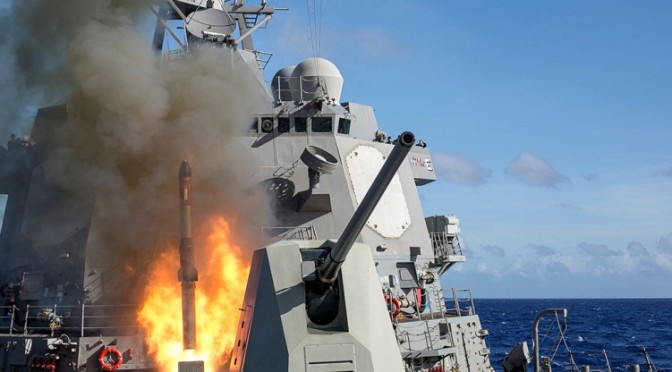
The single most important warfighting advantage that the U.S. Navy brings to the joint force is the ability to project significant amounts of combat power from the sea, thousands of miles from our own shores on relatively short notice and with few geopolitical restraints. No one else can do this, and for the better part of two decades, our ability to do so was unchallenged. Without this challenge, our mastery of the fundamentals of sea control—searching for and killing submarines, over the horizon engagement of enemy fleets, and long range air and missile defense—diminished, even as the world figured out that the best way to neutralize this power projection advantage was to deny us the very seas in which we operate.

Surface Warfare must “go on the offensive” in order to enable future power projection operations. I call this “offensive sea control” and it takes into consideration that in future conflict, we may have to fight to get forward, fight through our own lines, and then fight to stay forward. Pieces of ocean will come to be seen as strategic, like islands and ports, and we will offensively “seize” these maritime operating areas to enable further offensive operations. Put another way, no one viewed the amphibious landings in the Pacific in WWII as “defensive”; there was broad understanding that their seizure was offensive and tied to further offensive objectives. It is now so with the manner in which we will exercise sea control.

What does this mean to fleet Sailors? It means that we have to hit the books, dust off old TACMEMOS and begin to think deeply again what it means to own the inner screen against submarines, to hunt down and destroy adversary surface vessels over the horizon, and to tightly control the outer air battle. We need to study the threats and devise new tactics designed to counter them. We need to master the technology that is coming to the fleet—Navy Integrated Fire Control (Counter Air), or NIFC-CA; the Air and Missile Defense Radar (AMDR); the SQQ-89 A(V)15 ASW Combat System; the LCS ASW Mission Module; the introduction of the Griffin missile in the PC class; new classes of Standard Missiles; Rail Gun; Directed Energy. We will need to use these systems and then do what Sailors always do—figure out ways to employ them that the designers never considered.

Going on the offensive is a mind-set, a way of thinking about naval warfare. It means thinking a good bit more about how to destroy that than how to defend this. Don’t get me wrong—we will still need to be able to defend high value units, amphibious forces, convoys, and logistics—but we will increasingly defend them by reaching out and destroying threats before those threats are able to target what we are defending.

We are moving to a concept of dispersed lethality in the Surface Force, one that presents an adversary with a considerably more complex operational problem. It will not be sufficient to simply try to neutralize our power projection forces. While these will be vigorously defended, other elements of the surface force will act as hunter/killer groups taking the fight to the enemy through the networked power of surface forces exercising high levels of Operational Security (OPSEC) and wielding both lethal over-the-horizon weapons to destroy adversary capabilities and sophisticated electronic warfare suites to confound adversary targeting. Especially in the Pacific, vast expanses of ocean will separate the carrier air wing from dispersed surface operations, so the paradigm of the past few decades that suggested the carrier would provide strike assets to supplement the Surface Force is no longer valid. We will leverage air wing capability, but we will not be dependent upon it.

Working in tandem with shore-based maritime patrol aircraft and our organic helicopters, we will seek out and destroy adversary submarines before they threaten high value units or fielded forces. Bringing together the networked power of surface IAMD forces and the mighty E-2D, we will dominate the outer air battle, eliminating threats to the force at range. The Surface Force will seize strategic “maritime terrain” to enable synchronized follow-on operations.

Those who may ask how the current fiscal environment impacts this vision, my answer is that it does so substantially. We will be forced to favor capability over capacity. We will favor forward deployed readiness over surge readiness. We will continue to invest in forward-looking capabilities through a strong science and technology/research and development budget, while ensuring we accelerate those promising technologies closest to fielding and most effective in advancing our offensive agenda.

We will posture more of the force forward, and more of it in the Pacific. While the total size of the fleet will likely decline if current conditions continue, more of it will be where it needs to be, it will be more effectively networked over a larger more dispersed area, and it will be equipped with the weapons and sensors necessary to enable this offensive shift.

I am bullish on Surface Warfare, and you ought to be too. I look forward to continuing this dialogue on the Renaissance in Surface Warfare, and I am proud to be part of the greatest Surface Force in the greatest Navy the world has ever known!

Rear Admiral Thomas S. Rowden’s current assignment is on the Chief of Naval Operations Staff as director, Surface Warfare Division.A native of Washington, D.C., and a 1982 graduate of the United States Naval Academy, Rear Adm. Rowden has served in a diverse range of sea and shore assignments.

[otw_shortcode_button href=”https://cimsec.org/buying-cimsec-war-bonds/18115″ size=”medium” icon_position=”right” shape=”round” color_class=”otw-blue”]Donate to CIMSEC![/otw_shortcode_button]