All posts by Guest Author

Four Fleet Designs: Which Navy is Best for America?

By George Galdorisi

Perspective

Military leaders often use military-industry conferences to unveil new strategies. Coming on the heels of a new National Security Strategy (NSS) issued in December 2025 and a National Defense Strategy (NDS) issued in January 2026, the U.S. Chief of Naval Operations, Admiral Daryl Caudle, revealed the Navy’s strategy designed to support the NSS and NDS, the U.S. Navy Fighting Instructions in February 2026.

The venue for unveiling this document was The Armed Forces Communications and Electronics Association (AFCEA)/U.S. Naval Institute (USNI) “West” symposium, the largest military/industry symposium on the West Coast with over 10,000 registered attendees. Admiral Caudle was the keynote speaker on day one of this event, and he provided a briefing on the U.S. Navy Fighting Instructions.

One of the key points the CNO made during this keynote, as well as during a subsequent Service Chiefs panel, was that the U.S. Navy is a differentiator. Here is how he described it in the Fighting Instructions:

“Winners set themselves apart by excelling in difficult endeavors. It is what separates successful businesses or world-class athletes from the competition. Doing difficult things well means identifying and delivering differentiated value. For the United States Navy, prioritizing what the Navy does better than anyone else—any other Service, any other Nation—is central to ensuring that the Chief of Naval Operations designs and resources a strategy that ruthlessly prioritizes the Sailors, Foundry, Fleet, and Fight needed to execute our essential global missions. We provide differentiated value to two primary stakeholders: the Nation and the Joint Force.”

The CNO’s emphasis on the U.S. Navy as a differentiator comes at a time when there is intense discussion regarding the different options for what the Navy-After-Next will look like. The discussions within the Navy, the Department of Defense, the Executive Branch, the U.S. Congress, think tanks and a plethora of other stakeholders and influencers and others have never been more varied or intense, and much of that discussion occurred during the “West” symposium.

Which Fleet?

Four options for fleet composition have gained purchase within the U.S. Navy.

The first is the Navy’s current shipbuilding plan as reported by the Congressional Research Service. This includes 381 crewed ships and a number of uncrewed surface vessels. This number comports with the recently released Navy Shipbuilding Plan which envisions a battle force inventory reaching 382 crewed ships in 2056.

The second option that has gained traction is called the “hybrid fleet.” This concept was unveiled by then-Chief of Naval Operations, Admiral Michael Gilday, and endorsed by his successors. This envisions a Navy of 350 crewed ships and 150 uncrewed surface vessels. The idea of a hybrid fleet evolved due the U.S. Navy’s ongoing challenge of building enough crewed ships to adequately meet the Navy’s global commitments.

The next option is called the “hedge fleet.” This envisions a forward-deployed force of robotic autonomous systems and crewed ships to be employed quickly in any crisis. Of the four options, the CNO spoke most extensively about the hedge fleet, explaining the rationale this way: “We need ‘tailored forces’ and a Navy that has other battle formations beyond carrier strike groups. Tailored offsets include capabilities such as attritable and easily replenishable unmanned surface vessels, unmanned undersea systems, mine warfare and cost-effective counter drone defense. The hedge fleet avoids a brittle single-purpose force.”

The final option is the “golden fleet,” a recent initiative announced by President Trump in late 2025 to rapidly expand and modernize the fleet. This plan focuses heavily on battleships alongside frigates and uncrewed surface vessels. While media reporting regarding the golden fleet centers primarily on large ships, knowledgeable observers have suggested that the small- and medium-sized uncrewed surface vessels armed with long range strike and missile defense systems will be the most strategically impactful in the near term.

One common feature among these four options is the inclusion of uncrewed surface vessels as vital assets within a future fleet. There are two reasons for this sea change.

The first is that ships are expensive to build and operate. The cost of Ford-class aircraft carrier is $13B and an Arleigh Burke destroyer is $2.2B. The new Columbia-class ballistic missile submarine approaches $10B. However, those procurement costs only represent the tip of the iceberg. Populating those vessels with sailors is also increasingly expensive, given that seventy percent of the total operating cost (TOC) of a ship over its lifespan is providing a crew year-over-year.

The second is that after over a decade of development the Navy has confidence that uncrewed surface vessels have reached a point in their development that they are no longer prototypes, but production-ready vessels (some are commercial-off-the-shelf or COTS). that are ready to deploy with their crewed counterparts.

As evidence of this technological maturity, the CNO noted how Navy and Marine Corps exercises, experiments, and demonstrations such as the those conducted by Fifth Fleet/CTF-59, Fourth Fleet and a series of uncrewed surface vessel-focused events with NATO allies have accelerated the development of these craft. As just one of many examples of this testing in recent years, MARTAC, a U.S. uncrewed surface vessel designer/builder, has frequently been invited to showcase its MANTAS T12, Devil Ray T24 and Devil Ray T38 unmanned surface vessels (USV) to a wide range of Navy and Marine Corps at-sea events.

These events have included the U.S. Pacific Fleet-led Integrated Battle Problem series of exercises, the Integrated Maritime Exercise series held under the auspices of U.S. Naval Forces Central Command/Commander Task Force 59 in the Arabian Gulf, NATO exercises BALTOPS, REPMUS, and the follow-on Dynamic Messenger, Australian Defence Force Exercise Autonomous Warrior, among others.

The Navy Shipbuilding Plan reveals how this confidence in the technical maturity of uncrewed surface vehicles has given the Navy confidence to provide funding for USVs to: “serve as a direct, dual-use supplement to existing ready forces, providing a flexible “tailored force” to enhance the nation’s maritime posture.”

The number of medium uncrewed surface vessels (MUSVs) projected in the Shipbuilding Plan are substantial, growing from 39 in FY27 to 83 in FY31 when MUSVs will comprise 18% of the Navy’s fleet. As the Plan explains, MUSV integration will unburden higher-value assets, such as Arleigh Burke-class destroyers, as the autonomous fleet can take up long endurance maritime domain awareness missions.

The Road Ahead

Regardless of which design for the Navy-After-Next prevails in the coming years – be it one of the existing conceptual designs, a hybrid design drawing elements from among these options, or a completely different design – a future U.S. Navy comprised of formations of integrated crewed ships and uncrewed surface vessels represents a once-in-a-generation sea change for the U.S. Navy.

While deciding on the composition of the Navy-After-Next is a necessary first step it is not a sufficient one. The U.S. Congress has been reluctant to authorize the Navy’s planned investment of billions of dollars in USVs until the Service can come up with a concept-of-operations (CONOPS) for using them. Congress has a point.

Via the Navy Shipbuilding Plan, the Navy has announced plans to procure large numbers of uncrewed systems—especially medium uncrewed surface vessels—but a CONOPS, in even the most basic form, has not yet emerged. Such a CONOPS must be thoughtfully conceived, analyzed, vetted through stakeholders, war-gamed and widely distributed. Only through this disciplined process can the Navy-After-Next be the strongest Navy the nation can field.

Captain George Galdorisi, USN (Ret.) is a career naval aviator and national security professional. During his 30-year career he had four tours in command and served as a carrier strike group chief of staff. Additionally, he led the U.S. delegation for military-to-military talks with the Chinese Navy. He is the Emeritus Director of Strategic Assessments and Technical Futures at the Naval Information Warfare Center Pacific. He is the author of seventeen books, including four consecutive New York Times bestsellers. His most recent novel, Fire and Ice, is eerily prescient, as it foresaw Russia’s invasion of Ukraine.

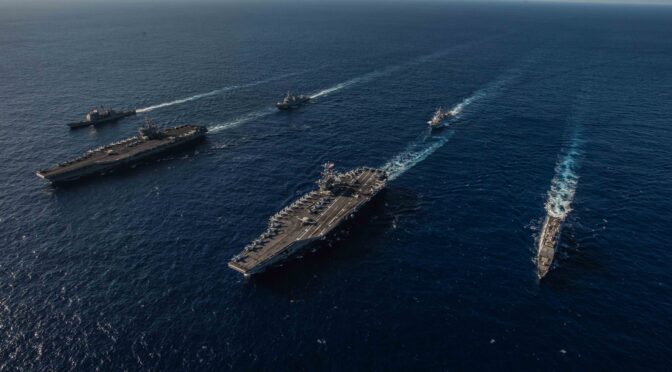
Featured Image: PHILIPPINE SEA (Nov. 16, 2018) Ships with the Ronald Reagan Carrier Strike Group and John C. Stennis Carrier Strike Group transit the Philippine Sea during dual carrier operations. (U.S. Navy photo)

Selective Sea Denial: The Rise of Land-based Anti-Ship Missiles as Political Instruments

By Helge Adrians

Recent conflicts in the Middle East highlight how maritime kill chains from ashore impose risk on global shipping. However, Western navies have yet to fully grasp that within these loosely integrated sensor-to-shooter networks, land-based Anti-Ship Missile (AShM) systems have become the decisive instruments by which littoral actors — both state and non-state — generate coercive effects at sea. It is through these systems that such networks translate dispersed sensing and targeting into episodic operational effects, thereby producing conditions that resemble artificially generated chokepoints or barriers in narrow seas.

Typically consisting of mobile, often truck-mounted launchers, sensor inputs, and command-and-control elements, land-based AShMs — whether ballistic or cruise configurations — facilitate a form of selective sea denial. Rather than enforcing broad area exclusion, they allow actors to threaten specific shipping lanes, vessels, or temporal windows of opportunity, thereby imposing calibrated risk, delay, and uncertainty while avoiding decisive confrontation.

While this approach is not new in principle, its contemporary expression is shaped by the growing integration of land-based AShMs with both traditional and emerging elements of coastal defense, including unmanned systems (UxSs). These combinations enhance target acquisition, extend operational reach, and complicate defensive planning by saturating attention and forcing continuous trade-offs in detection, prioritization, and engagement, thereby creating conditions in which AShMs can be employed to greatest effect — not necessarily through technological sophistication alone, but through dispersion, redundancy, and temporal unpredictability. Within such configurations, AShMs remain the central kinetic enabler, translating otherwise transient sensing and targeting opportunities into tangible maritime effects. Even limited successful engagements can therefore generate disproportionate operational, psychological, and economic consequences, particularly in narrow seas and heavily trafficked maritime corridors.

Accordingly, this form of selective sea denial is more than a tactical adaptation. It reflects a recurring but under-theorized pattern in evolving conflict: the use of land-based strike capabilities, operating in a distributed manner and under the protection of terrestrial topography, to disrupt global maritime trade flows and generate political consequences. Yet Western military thinking still tends to treat land-based AShM systems within sensor-to-shooter architectures as supporting assets rather than as the central coercive instruments, leaving a gap in conceptualization and countermeasures — one that is particularly acute in other narrow seas, especially in inland seas such as Baltic. Closing this conceptual gap demands moving beyond kinetic countermeasures alone and instead finding ways to contain the political utility of AshMs. 

Land-Based Anti-Ship Missiles in Practice: From Tactical Denial to Political Leverage

Land-based AShM systems have often been viewed in the West through the lens of China’s defense posture in the Western Pacific — labeled as ‘anti-access/area-denial’ since 2003 — where they were popularized as ‘carrier killers.’ Although other states also began to acquire or modernize such weapons during this period, their significance has only become globally visible in recent years.

This shift is illustrated by the Houthi campaign in the Red Sea since late November 2023, which shows how rapidly limited military capabilities can generate outsized maritime effects.

What began with drone-based harassment soon expanded into a layered approach that included the recurrent use of land-based AShMs, drawing mostly on Iranian technology, itself rooted in Chinese designs. While UxS established presence and imposed friction, it was the integration of these missiles within a broader multi-vector threat environment that fundamentally altered the character of the battlespace. The coexistence of different trajectories — high/fast for anti-ship ballistic missiles, low-altitude high-speed sea-skimming anti-ship cruise missiles, and low/slow for UxSs — creates a persistent strain on sensor management, as systems can no longer exclude entire kinematic regimes from consideration. This forces continuous tradeoffs in detection, classification, and resource allocation, increasing processing load and degrading overall situational awareness. The destructive characteristics of AShMs — particularly the speed, range, and terminal flight profiles of ballistic variants — introduce a qualitatively different layer of risk, in which even limited successful engagements carry the potential for sudden kinetic loss at sea.

As attacks grew more frequent and less discriminate, the Houthis translated localized military means into broader economic and political consequences. Crucially, these effects were achieved mainly from the mountainous hinterland of Western Yemen, highlighting how even episodic missile employment can exert continuous pressure on commercial traffic.

In response to the escalating situation in the Red Sea, the United States — together with partners — launched multiple rounds of strikes against Houthi targets beginning in early 2024, building on earlier efforts to contain the group’s regional activities. The objective was not solely to eliminate land-based AShMs, but to degrade the broader ecosystem enabling maritime attacks, from sensors to shooter platforms. Precision strikes from the air and the sea hit suspected launch sites, storage facilities, and command elements, yet failed to produce a decisive reduction in the threat. Houthi forces adapted quickly, relying on mobility, concealment, and redundancy to preserve operational capacity. As a result, attacks on commercial shipping persisted, and the risk environment remained largely intact. Within this evolving campaign, land-based AShMs continued to play a central role, illustrating how even under sustained military pressure such systems can endure as instruments of regional disruption.

Structural limitations already visible in operations against the Houthis were reinforced in the joint U.S. and Israeli campaign against Iran since the end of February 2026.

Although U.S. and Israeli forces faced little difficulty in achieving theater entry — again demonstrating the limited effectiveness of Iranian anti-access measures, the ‘outer ring’ — this initial advantage did not translate into control over the threat environment within the ‘inner ring(s).’ This was evident in the maritime domain. For instance, while conventional Iranian naval forces were quickly degraded through stand-off strikes, this did little to affect the more resilient layer of land-based AShMs and UxSs. These dispersed capabilities, likely supported by foreign target acquisition, continued to pose a credible risk to merchant vessels transiting the Persian Gulf, maintaining a persistent sea-denial threat despite continued operational pressure. Operational and public attention, however, remained disproportionately focused on the possibility of mining in the Strait of Hormuz, diverting attention from the more immediate and lethal challenge posed by missile-based sea denial. Air-centric efforts — including strike aircraft and rotary-wing assets operating within a loosely integrated kill web — failed to fully neutralize these systems, highlighting the difficulty of suppressing mobile, land-based AShM threats without escalation or ground presence.

Repeated efforts to suppress these capabilities have highlighted their resilience once dispersed, as well as the limits of strike-centric approaches in countering land-based AShM threats in littoral environments. More importantly, their persistence preserves their value as a coercive instrument: by sustaining risk, they drive up insurance and operating costs, shaping maritime behavior without requiring the physical interdiction of shipping, while allowing actors to effectively switch maritime access on or off at short notice.

Targeting Flows: The Economic Consequences of Selective Sea Denial

Maritime commerce warfare, or the selective targeting of merchant shipping is not a new phenomenon. However, the time-compressed execution from dispersed, protected coastal or peripheral sites introduces a qualitatively higher level of uncertainty regarding when and against which vessels attacks may occur. This situation is structurally reinforced by the inherent difficulty of detecting, locating, and pre-emptively neutralizing modern land-based AShM systems, even for advanced militaries.

Significantly, their effectiveness does not depend on frequent successful strikes, but on the persistent possibility of sudden, high-impact AShM engagements generated by land-based, heterogeneous, sensor-enabled kill chains. Unlike other forms of coastal maritime disruption, such as piracy, these systems derive their strategic effect from their ability to disturb and compress naval decision-making processes under conditions of multi-vector uncertainty. That is, their strategic utility lies less in missile performance than in inducing cognitive overload, misallocation of defensive resources, and degraded engagement sequencing within shipborne combat systems.

This risk environment is rapidly translated into economic calculations through maritime insurance mechanisms, where elevated perceived risk leads to adjusted war risk premiums and the redefinition of high-risk zones along global shipping routes. In this sense, the proliferation of land-based AShMs in geographically constrained maritime environments takes on significance beyond the military domain, informing insurance assessments of emerging high-risk maritime areas.

Rising war risk premiums and associated operating costs undermine the economic viability of transiting affected sea lines of communication. Crucially, these effects are expectation-driven, as perceived rather than actual risk shapes insurance pricing and routing decisions. Even low-intensity or sporadic activity can therefore sustain elevated risk perceptions, allowing the mechanism to persist over time without escalation to major conflict.

Shipping companies are thus forced into costly trade-offs between absorbing higher premiums, rerouting vessels, or suspending operations. Such adjustments increase transit times, fuel consumption, and logistical complexity, reducing supply chain reliability even in the absence of sustained kinetic disruption. Insurers, in turn, aggregate localized threat perceptions into broader high-risk maritime zones, translating tactical developments into systemic market signals. In the wake of repeated conflicts in the Middle East, land-based AShMs have emerged as a distinct risk category within maritime insurance assessments, alongside established threats such as piracy or naval mines.

Insurance markets thus act as amplifiers of localized military signals. Even limited and visible deployments, as well as indications of the acquisition or modernization, of land-based AShMs can generate disproportionate macroeconomic effects. Such actions are incorporated into insurers’ assessments of emerging maritime risk through a feedback loop between perceived threat and commercial behavior. In this dynamic, maritime traffic is redirected not through physical denial, but through the imposition of cost and uncertainty. Over time, this produces not only disruption but a gradual reconfiguration of global shipping routes, as land-based AShMs shape maritime behavior indirectly through economic pressure rather than direct control of sea lines of communication.

From Effects to Strategy: The Political Logic of Selective Sea Denial

The economic effects outlined above are not yet globally diffused in a uniform manner, but are instead mainly concentrated in three regions where land-based AShM capabilities are either already fielded or undergoing sustained modernization: the Middle East, the South China Sea, and the Baltic Sea.

The South China Sea resembles a contested archipelagic space with layered maritime claims. Should a conflict arise there and maritime kill chains — including land-based AShMs — be activated, shipping traffic could still be diverted, as was the case in the Red Sea.

In contrast, the Baltic Sea constitutes a quasi-enclosed maritime corridor with severely constrained routing flexibility, as alternative routes are few — primarily the Kiel Canal and the White Sea-Baltic Canal — and subject to state control. As in the Persian Gulf, disruption to maritime traffic in this region and its associated supply chains would have consequences for the global economy, not primarily through energy exports or trade flows, but through the activation of mutual assistance obligations among European states and the resulting increase in financial market uncertainty.

Building on this systemic exposure, the political significance of land-based AShMs in narrow inland seas lies primarily in their role within escalation dynamics rather than in their direct employment.

Both in the Baltic Sea and in the Persian Gulf prior to the outbreak of the current conflict, these systems remain embedded in broader coastal defense postures of the respective littoral states but continue to be relatively underweighted in crisis planning when compared to more immediately visible instruments of maritime disruption such as warships, naval mines, or naval aviation. Where they are considered, the focus tends to lie on the capabilities of Russia and Iran rather than on those of other regional actors. For instance, the land-based AShM capabilities of Baltic NATO members have so far received comparatively less analytical attention.

The Iranian case nevertheless illustrates that such systems can retain a persistent deterrent effect even under conditions of sustained military pressure, due to their mobility, dispersion, and survivability. Their relevance is therefore not static but contingent, functioning in a manner that can resemble an on/off logic depending on perceived targeting pressure and operational visibility. As such, they can serve as instruments for shaping the order of a maritime space and for exerting coercive pressure in both peacetime and crisis, by enabling a controllable form of escalation.

This is also relevant for Russian strategic considerations in the Baltic Sea, where perceptions of NATO’s qualitative superiority — reinforced by recent Ukrainian tactics and operational innovations in the Black Sea, and concerns about its ‘shadow fleet’ tanker flows — may further incentivize caution in exposing naval assets to comparable attritional dynamics. This translates into land-based AShM deployments in Kaliningrad and around St. Petersburg in the Gulf of Finland, where geographical conditions may generate episodically visible but structurally persistent deterrent effects.

Across these cases, escalation unfolds not as a binary transition but as a staged process, ranging from signaling and sensor deployment to targeting preparation and eventual kinetic employment. Within this framework, the political value of land-based AShMs derives less from their actual use than from their integration into credible escalation pathways that remain visible yet only partially suppressible. This generates a cognitive effect in which perceived survivability and latent operational availability enhance deterrence and coercive leverage even in the absence of engagement.

Selective Sea Denial as a Persistent Condition of Maritime Conflict?

The patterns observed in the Red Sea and the Persian Gulf indicate two transitions. First, they reveal how networked and distributed technologies shape conflict. Second, they demonstrate a shift from episodic disruption to a structurally elevated level of risk in key maritime corridors. Both are defined by the ability to calibrate maritime access through temporally and spatially bounded threats rather than area-wide denial. Looking ahead, other powers, notably China and Russia, may adopt and evolve selective sea denial in regions such as the South China Sea or the Baltic Sea. If this approach becomes a persistent rather than exceptional condition, it is likely to diffuse further as an attractive model of limited escalation under conventional constraint.

The demonstrated effectiveness of land-based AShMs is likely to accelerate their proliferation across multiple channels in the coming years, reinforcing a current structural dilemma for Western militaries. Stand-off strike campaigns and maritime defensive measures have so far proven insufficient to neutralize such capabilities, while the deployment of human ground forces remains politically and operationally unattractive, despite its doctrinal relevance in scenarios such as the South China Sea. This proliferation is likely to be accompanied by operational and doctrinal adaptation, as both state and non-state actors refine how these systems are integrated into broader sensor-to-shooter architectures. As long as traditional arms control and non-proliferation efforts are unlikely to gain traction given the simultaneous offensive and defensive character of these systems, and Western approaches do not overcome risk aversion or find new ways to counter them, they will increasingly have to operate within the constraints of remote and low-visibility forms of warfare.

Restoring the manageability of risk, effective management of the threat will depend less on eliminating elements of land-based AShM systems than on constraining their political utility. Rather than attempting to dismantle the networks in which these systems are embedded, planners must pursue deterrence, resilience, and the protection of critical shipping flows. This requires reducing systemic vulnerabilities to temporally and spatially limited disruptions of global trade, as well as greater resources for managing distributed sensing and engagement demands. Consequently, land-based AShMs should be understood not primarily as tactical enablers, but as relatively easy-to-use instruments of controlled strategic escalation. Accordingly, the strategic focus must shift from targeting platforms to shaping the behavior of the actors and networks that employ them.

Commander Helge Adrians, German Navy, M.A., is a Visiting Fellow at the German Institute for International and Security Affairs.

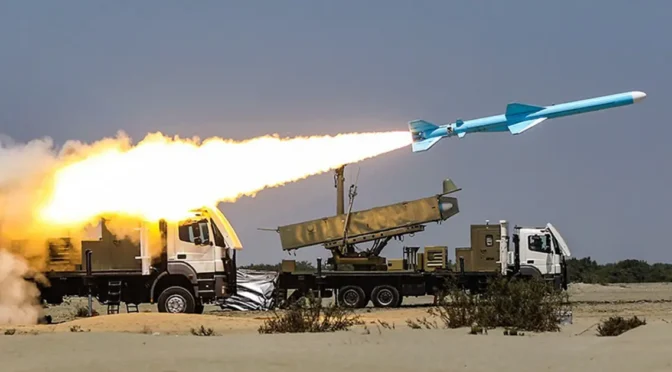
Featured image: An Iranian Qader missile being fired during an exercise in 2020. (Photo via Fars Media Corporation/Wikimedia Commons)

Maritime Cost Imposition: A New Approach to Great Power War

By Greg Malandrino and Aaron Marchant

Operation Epic Fury raises many questions about how well the U.S. military is prepared for the character of a 21st-century great-power war against the People’s Republic of China. While it appears too early to assess the results of this latest war or the effectiveness of the U.S. naval blockade on Iranian shipping, President Trump’s willingness to employ economic warfare in this conflict should raise questions about how well the U.S. military is postured to conduct such operations against a great power adversary. Now is the time to consider how the U.S. military – and the U.S. Navy in particular – should prepare for waging a prolonged great-power war via economic punishment.

Three factors make maritime punishment a potentially effective U.S. option against China. First, threats from China’s reconnaissance strike network potentially push the U.S. Navy’s aircraft carriers and destroyers, its high-end platforms, hundreds of miles from the Chinese mainland, suggesting the need to consider alternative approaches for these units. Second, over the past two decades, Beijing has developed a globe-spanning array of infrastructure, assets, and dependencies, while its military strength, to date, has remained regional. This creates a vulnerability that the United States can exploit given its ability to concentrate force globally. Third, it is plausible that low-cost autonomous systems and stealth platforms, such as submarines, may allow the U.S. Navy to achieve sea denial without relying on traditional surface platforms. If the U.S. Navy fields a customized denial force of submarines and inexpensive autonomous systems, it would relieve its carrier strike groups and surface action groups from this mission, freeing them for global punishment operations.

The U.S. Navy remains intent on using its high-end platforms for sea denial. To its credit, it is developing the kinds of unmanned systems that are ideally suited for this mission, but only at too slow a pace. To optimize its force structure and accelerate the development of technology, the U.S. Navy should instead commit to a strategy of customized, low-end sea denial coupled with high-end global maritime punishment, and then tailor its doctrine, tactics, and weapons systems to each mission.

Why Singular Emphasis on Denial Is Problematic

For years, Taiwan has been a decisive point of Washington’s security approach to the Pacific, and as a result, one of the U.S. Navy’s current foci is denying China the ability to seize the island nation by maritime invasion. The 2026 National Defense Strategy states that the U.S. joint force must be postured to ensure aggression against U.S. interests in the western Pacific fails, a deterrence by denial strategy. Commander, U.S. Indo-Pacific Command, Adm. Samuel Paparo, has likewise testified that the Joint Force’s mandate is to “thwart an invasion of Taiwan” in the Indo-Pacific.

Senior leaders’ emphasis on sea denial implies that U.S Navy high-value, multi-mission platforms will participate in these operations, possibly within range of China’s reconnaissance strike network. For example, U.S. Pacific Fleet Commander Adm. Steve Koehler has emphasized operating within range of China’s anti-ship missiles, arguing for U.S. Navy persistence within China’s weapons engagement zones.

Using high-end U.S. naval platforms to deny the Chinese comes with enormous risks. Per naval combat theory, an engagement’s outcome depends on scouting, setting up screening forces, and firing effectively first. China has an expansive anti-ship missile arsenal, interior lines of communication, and operates close to its own shores. Thus, in a war over Taiwan, particularly the opening phase, China will likely have significant scouting and fires advantages over the U.S. military. These disadvantages pose great risks to carrier strike groups, and in a worst-case scenario, the Navy may lose several.

Given the extreme risks from operating deep within China’s weapons engagement zones, U.S. Navy commanders would likely seek to reduce the risk to force by operating high-end combatants farther from Taiwan. This could significantly reduce the effectiveness of high-end, multi-mission warships during sea denial operations. These platforms are most effective when they are closer to their targets, allowing them to deliver concentrated, decisive attack waves. As an aircraft carrier’s range from the battlefield increases, the number of carrier-based attack waves and the number of munitions per wave decreases exponentially. This results in the synergistic reduction of a carrier fleet’s combat effectiveness compared to when it operates in more permissive environments.

Additionally, a singular emphasis on denial could leave the U.S. military prepared for a situation that might never materialize, limiting high-end unit flexibility to respond to other contingencies. The focus is on defending Taiwan because this is the pacing scenario, with the implied assumption that a high-end maritime force capable of denying an invasion of Taiwan can handle all lesser included cases. This assumption may fail, however, if Beijing seizes Taiwan using other methods, such as an air and maritime blockade coordinated with cyber and sabotage attacks on Taiwan and elsewhere.

Punishment as a Force Employment Option for High-End Platforms

More than just denial, U.S. military planners should offer decision-makers a fuller spectrum of options, specifically maritime punishment, to better prepare for a great power war. In practice, punishment includes deliberate actions designed to diminish an adversary’s defense industrial output and harm its economy to impose costs. These could take the form of kinetic and non-kinetic strikes and blockades that attrit portions of the Chinese economy, curtail its military production capacity, and hold its global infrastructure at risk. The U.S. Navy has historically executed these kinds of operations. It did so during the Second World War when the service executed an unrestricted air and submarine warfare campaign designed to hobble Imperial Japan, and during the Vietnam War, when it offensively mined Haiphong Harbor. The Navy is assuming that role again today in its current blockade of Iranian shipping in support of Operation Epic Fury.

China appears especially vulnerable to global U.S. punitive operations. Since 2013, Beijing’s Belt and Road Initiative has expanded the scope of Chinese global investments, including infrastructure projects in Latin America, the Caribbean, Africa, and across South Asia. Components of China’s economy depend heavily on hydrocarbon shipments, which must pass through some of the world’s most vulnerable choke points. Its merchant fleet is one of the world’s largest, providing a target-rich environment on the high seas for a navy willing to pursue a strategy of systematic commerce raiding.

The U.S. Navy’s unrivaled blue-water experience conducting sustained carrier strike group and large surface combatant operations makes it uniquely capable of holding Chinese vulnerabilities at risk worldwide. In contrast, the People’s Liberation Army lacks the capability and capacity to defend China’s assets across the globe. This is an asymmetry that represents a potential U.S. advantage. However, maximizing the effectiveness of these forces for economic warfare requires rethinking operational concepts. Elucidating the details of what makes an effective maritime punishment force component is critical.

Global reach, multi-mission flexibility, and persistence are necessary characteristics of a maritime punishment force, because such a force must be able to hold targets at risk regardless of where they are in the world, using a wide range of capabilities, and operate independently for extended periods. These traits describe the Navy’s contemporary high-end, multi-mission platforms, such as the nuclear-powered aircraft carriers at the center of the Navy’s carrier strike groups and the Aegis-guided missile destroyers that support them. Most importantly, the U.S. Navy has decades of experience operating these platforms globally, from the high seas to the littorals. This combination of traits makes the carrier strike group a high-end, mobile U.S. base capable of independently attacking targets and defending itself, an invaluable maritime punishment tool.

Dialing in To Defend Taiwan: Customized Denial

While punishing China globally offers promise, denying a Chinese assault remains an essential component of Washington’s deterrence strategy. For multiple reasons, the U.S. military requires the capability to deny Beijing its objectives, even if these denial operations are not equated with decisive battle. Unmanned attack systems in development operating in conjunction with undersea assets can serve as a customized denial force to prevent an invasion of Taiwan. By optimizing the sea denial component of its naval force, the U.S. Navy can then lean into global punishment.

Defeating a Chinese amphibious assault requires destroying many targets, some of which will be well defended; thus, an ideal denial force must be able to generate large weapon salvos while concentrating its fires. Perhaps a decade ago, the only U.S. naval units that could do this were multi-mission platforms massed in carrier strike group formations. Today, however, there are alternatives to high-end platforms for denial-specific naval forces. One of these is the one-way attack unmanned surface vessel, like those used by Ukraine to significant effect in the Black Sea. These systems are hybrids, both vessels and munitions, and as their maximum range improves and resilient command-and-control methods are fielded, they are quickly becoming viable options for holding naval forces, particularly amphibious ships, at risk. Massed, attritable aerial systems like the Low-cost, Uncrewed Combat Attack System could add additional short-range and immediate mass to a denial force component. At the high-end in the undersea, U.S. attack submarines will continue to offer an exquisite, stealthy option for sea denial because they are impervious to China’s anti-ship missiles.

The customized denial force we envision would have less striking power than a force that includes carrier strike group assets, but it could still be enough to make it difficult for the Chinese navy to operate freely around Taiwan. Low-cost sea denial systems have proven remarkably effective recently at stifling maritime traffic in the Black Sea and the Strait of Hormuz, and the U.S. submarine force still retains a qualitative quieting advantage that would allow it to hold high-value surface targets at risk. These capabilities would still sow significant doubt about the success of an invasion operation in the minds of Chinese decisionmakers, which is the hallmark of a deterrence by denial strategy. This keeps the customized denial force we propose in-line with U.S. policymakers’ priorities. With high-end assets preserved for simultaneously conducting economic warfare where China is most vulnerable, Chinese leaders would be even less likely to stomach the potential loss that could result from a decision to invade Taiwan.

Worldwide Maritime Cost Imposition and Customized Regional Denial

A naval strategy of global maritime punishment combined with customized denial aligns well with the U.S. Navy’s latest initiatives. Chief of Naval Operations Adm. Daryl Caudle’s Fighting Instructions drives toward tailored naval “hedge” forces whose functions are optimized for given threat scenarios. Tasking naval forces as we propose is compatible with this intent. Additionally, the Navy’s proposed Golden Fleet envisions new platforms that pair well with a maritime punishment and customized denial concept.

Even with such future forces, however, the U.S. Navy faces several barriers to shifting its thinking toward a maritime punishment-customized denial concept. The first is an acquisition barrier, as the equipment required for customized sea denial does not yet exist. While the U.S. military is employing low-cost aerial systems and the Navy is investing in attritable vessels capable of one-way attacks, the service still has a ways to go before it fields and bases enough assets in theater to deny a Chinese amphibious landing. The Navy must accelerate its efforts to build the doctrine, organization, personnel pipelines, facilities, and equipment required for operating these systems at the scale required for effective sea denial operations. While this will be challenging, it is possible, given Ukraine’s success at using similar systems with an austere budget.

A second barrier to adopting this concept is cultural resistance. Some in the U.S. Navy will shirk at the idea of prioritizing force preservation because it means the service could be deterred from operating in specific theaters. Yet balancing risk to force with risk to mission is a constant necessity, as recent combat against the Houthis and Iran highlights. Appreciating a fuller spectrum of risk and opportunity could help the Navy balance between risk and opportunity and avoid losing irreplaceable naval assets in extreme risk conditions.

There is also a cultural barrier to the idea of punishment itself. The American way of war has excluded punishment operations for some time, as the U.S. military has perfected stunning precision counterforce strikes, shifting away from deliberately targeting its adversaries’ defense industry and economic arteries. But as the conflict in Iran has shown, precision counterforce has its limits. This, plus the fact that the stakes and potential costs in a great power war are enormous, highlights economic warfare’s potential for inflicting pain on China.

Finally, fear of unintended consequences, particularly nuclear escalation and economic blowback, could deter planners from developing the maritime punishment concept for great power war. Eliminating all escalation risk is impossible, but T. X. Hammes points out that deliberate, transparent escalation in conflict is more likely to reduce the risk of nuclear escalation, and maritime punishment can be calibrated and signaled to ensure it does not come as a surprise that could trigger nuclear use. Concurrently, China’s ongoing nuclear modernization may increase strategic nuclear stability between Beijing and Washington, which potentially reduces concerns about Chinese escalation following conventional attacks against military and economic targets.

Targeting Chinese economic assets abroad would indeed have ripple effects on the world economy, as the crisis today around the Strait of Hormuz demonstrates, and neutral states and U.S. allies that trade with Beijing will certainly bear economic pain from U.S. maritime punishment against China. However, information sharing and close coordination between U.S., allied, and perhaps neutral military planners, diplomats, and economists could help limit the unintended secondary economic impacts. This is why it is crucial that the U.S. military establishment articulate a coherent maritime punishment strategy now as opposed to after a great power conflict erupts, so that allies and partners can understand and anticipate U.S. military action and plan accordingly.

While barriers exist and the risks of escalation are real, combined maritime punishment and denial could strengthen Washington’s deterrent. If China perceives the threat of broad punishment, including via blockade, against a host of its worldwide vulnerabilities as graver than the comparatively limited denial of amphibious operations directly against only Chinese military forces, U.S. naval punishment may bolster deterrence.

Conclusion

A great power war against China represents a stark contrast to decades of U.S. conflict experience fighting for limited aims, with partial means, over marginal interests. Considering a fuller set of options focused on economic punishment offers promise for meeting the unprecedentedly high stakes and likely existential nature of great-power war.

As events in Iran and Ukraine have shown, 21st-century war is likely to be protracted, dirty, and attritional rather than quick, precise, and decisive. Over-optimizing for denial in the western Pacific risks winning a battle only to lose the war, especially if the U.S. Navy defeats an initial amphibious invasion but at a great cost. If U.S. planners fail to consider maritime punishment as a viable option in protracted conflict, it is leaving its most dominant advantage—its global reach—on the table and risking long-term strategic failure. Instead, maritime punishment and customized denial should form the two pillars of U.S. maritime strategy. A U.S. Navy able to impose customized denial, while inflicting protracted punishment on the pacing threat, asymmetrically applies U.S. strengths to Chinese weaknesses.

Greg Malandrino is a senior fellow at the Center for Strategic and Budgetary Assessments and is a retired naval aviator.

Aaron Marchant is an active-duty submarine officer in the U.S. Navy. He is currently serving as the U.S. Navy federal executive fellow at the Center for Strategic and Budgetary Assessments.

The opinions expressed are those of the authors and do not reflect the views or policy of the U.S. Defense Department, the Department of the Navy, nor the U.S. government. No federal endorsement is implied or intended.

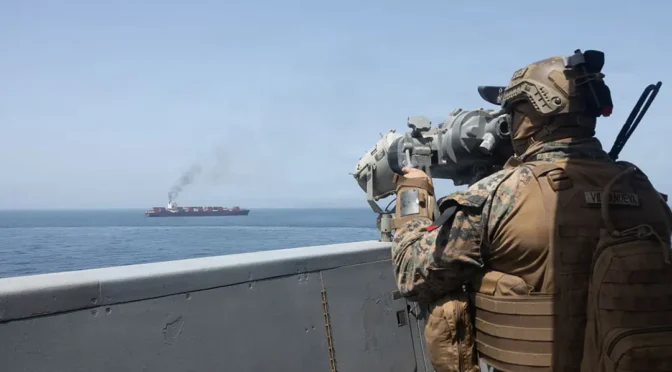
Featured image: U.S. forces patrol the Arabian Sea near M/V Touska on April 20, 2026, after firing upon the Iranian-flagged vessel that the U.S. accused of attempting to violate the U.S. naval blockade of Iranian ports near the Strait of Hormuz. (U.S. Navy photo)

Lost in the Small Surface Combatant Wilderness

By Kevin Eyer

Between January 13 and 15, the 38th Annual Surface Navy Symposium convened in Crystal City, Virginia, offering a detailed look at the state of the surface fleet. Senior leaders—from the Secretary of the Navy to the Chief of Naval Operations and the Commander of Fleet Forces Command—delivered formal presentations outlining priorities and challenges.

On the final morning, a closed session was held exclusively for active-duty and retired captains and commanders. The premise was clear: a room limited to officers who had commanded at sea would allow for a more candid, less scripted discussion. Four senior captains from the Office of the Chief of Naval Operations delivered brief, upbeat remarks before opening the floor.

Soon, a retired captain stepped to the microphone and asked:

“What is the difference between the Littoral Combat Ship and the ‘Future Frigate’ now under development?”

It was, upon consideration, a troubling question. The Littoral Combat Ship program has become, in many respects, a relic—originally planned for 55 ships, later reduced to 35, and widely viewed as misaligned with the Navy’s operational needs. The program endures largely through institutional momentum and the absence of ready alternatives.

By contrast, the Future Frigate—the FF(X) —is presented as the way ahead. A central element of President Trump’s “Golden Fleet” modernization initiative announced in December 2025, it is intended to contribute to a faster, more capable Navy and sustain maritime superiority. The frigate represents an effort to correct decades of uneven performance in designing smaller surface combatants and to expand a segment of the fleet long criticized as both undersized and underpowered—the Small Surface Combatant (SSC) element.

The relationship between the two ship classes had, in fact, been addressed earlier in the symposium by Rear Admiral Derek Trinque, Director of the Surface Warfare Division in the Office of the Chief of Naval Operations. He distinguished the Littoral Combat Ship’s mission-module concept from the frigate’s proposed approach. One of the Littoral Combat Ship’s program difficulties, he explained, was attempting to integrate systems that did not yet exist with a hull still under construction—an ambitious concept that proved harder in practice than in theory. The Future Frigate, by contrast, will incorporate existing systems packaged with defined interfaces to the ship’s combat system, allowing more reliable and rapid changes in capability.

In essence, according to Rear Admiral Trinque, the Future Frigate—like the Littoral Combat Ship—will rely to some extent on modular mission packages. The difference lies in execution: a more disciplined, technically mature integration model.

Yet the retired captain’s question reached beyond a simply question of architectural integration. The deeper issues he posed with his question remained unaddressed: What missions are assigned—or will ultimately be assigned to the Littoral Combat Ship? Will the Future Frigate assume those same roles? What is the envisioned division of labor between these two small surface combatants? What, if any, differences exist in their limitations—and how should those limits shape the missions they are given?

Perhaps most importantly, what can these ships do or not do?

The Future Frigate and the Golden Fleet

On 19 December 2025, Secretary of the Navy John C. Phelan stated: “To deliver at speed and scale, I’ve directed the acquisition of a new frigate class based on HII’s Legend-Class National Security Cutter design: a proven, American-built ship that has been protecting US interests at home and abroad. President Trump and the Secretary of Defense have signed off on this as part of the Golden Fleet. Our goal is clear: launch the first hull in the water in 2028. To expand capacity and production across our maritime industrial base, we will acquire these ships using a lead yard and competitive follow-on strategy for multi-yard construction. Shipyards will be measured against one outcome: delivering combat power to the Fleet as fast as possible.”

As part of the President’s recently advertised “Golden Fleet,” the Navy plans a “high/low” mix of ships, featuring several new classes in addition to combatant classes already in the fleet. On the “high” end, the Navy intends to maintain a Large Surface inventory, including a new guided missile battleship class, supported by both existing and planned Arleigh Burke-class guided missile destroyers, which have been and continue to be built in multiple “Flights.” According to Issues for Congress, the goal is to maintain approximately 87 large combatants. These large combatants are intended for assignment to complex mission sets, potentially involving multiple warfare areas in the most heavily contested waters. For example, an Arleigh Burke-class guided missile destroyer operating in the Red Sea is fully capable of simultaneously escorting merchant ships, providing on-call Tomahawk land-strike capability, and offering the most-sophisticated air defense umbrella for an entire region of the battlespace.

On the “low” end of the spectrum are Small Surface Combatants which include the Navy’s frigates, like the Future Frigate, and the Littoral Combat Ships, as well as mine warfare ships. With the retirement of the Avenger-class there are no more dedicated mine warfare ships in the Navy These ships are smaller, less expensive, manned by smaller crews, and less capable than Large Surface Combatants. While they can operate in conjunction with Large Surface Combatants and other Navy vessels, particularly in higher-threat environments, they are also designed to operate independently in lower-threat settings.

As specified at the Symposium, missions assigned to Small Surface Combatants – including both the LCS and the FF(X) – may include Anti-Surface Warfare (ASuW), Anti-Submarine Warfare (ASW) and Mine Countermeasure Operations (MCM). According to the briefings, these ships will enable a significant expansion of the Navy’s worldwide footprint while increasing fleet capacity in areas of active combat operations. To fill the ranks of these small combatants, the Navy plans to rely on a combination of existing Littoral Combat Ships and the now-planned Future Frigate class.

So, how many Small Surface Combatants does the Navy plan on fielding? 

The Navy’s Fiscal Year 2025 30-year shipbuilding plan calls for a future force of 381 manned battle force ships, including 73 Small Surface Combatants. Of these, 15 are Littoral Combat Ships capable of conducting mine warfare operations, while 58 are designated as guided missile frigates — meaning frigates built to either the original or a modified Flight II design. (A Flight II FFG was, until recently cancelled, the Constellation-class). Under its 2025 budget submission, the Navy proposed maintaining a force of 25 Littoral Combat Ships instead of 15. This adjustment would imply a total of 48 frigates, rather than 58.

However, the Navy has reportedly prepared a new ship force-level objective which will succeed the existing plan. This new objective is predicated upon the requirements outlined for the “Golden Fleet.” As of late December 2025, the force composition of this new objective had not been announced. Still, considering that multiple speakers at the Symposium firmly indicated the Navy intends to maintain 35 Littoral Combat Ships while building perhaps as many as 50 Future Frigates, one might sensibly suppose that the small and large combat fleets will be roughly equal in size – somewhere around 85 hulls for each.

Unclear Missions

It is curious that the Symposium suggested that the ships of the SSC classes may…may…contribute to ASuW, ASW, and MCM. While that seems worthy, RADM Trinque also outlined another, entirely more nebulous, role for the Future Frigate: That ship, he said, is explicitly intended to help alleviate the workload on Arleigh Burke-class destroyers. He framed this need within the perspective of Chief of Naval Operations, Admiral Daryl Caudle, as outlined in hisFighting Instructions.”

Published after the Symposium, on February 9, the Fighting Instructions introduce the “Hedge Strategy,” which calls for a balanced, scalable force mix rather than reliance solely on expensive, high-end formations like carrier strike groups. The strategy emphasizes tailored forces—combinations of ships, aircraft, unmanned systems, and other capabilities—that can be adapted for specific missions and crises, instead of a brittle model optimized only for high-end conflict but with capabilities underutilized in day-to-day operations.

Problematically, the Fighting Instructions are more strategic philosophy than technical manual. They do not prescribe specific weapons, sensors, or deployments, but rather articulate principles for how the fleet should organize, operate, and fight in a complex global environment. While the guidance supports a shift away from using Arleigh Burke-class destroyers as the default solution for every mission – favoring distributed, purpose-built packages – the Littoral Combat Ship and the Future Frigate are not mentioned as relieving the overburdened Burkes.

This raises a key question: where is the Future Frigate’s role—and particularly with regard to relieving the burden on Large Surface Combatants—explicitly defined? Where is this requirement laid down?

The answer is that it is not, which begs the question, what is the real purpose of the ship? Is it ASuW, ASW, or MCM? Is it there to relieve the Arleigh Burke-class? Of what? Or is it something else, as of yet unspecified?

Ambition Beyond Need?

The Navy appears to be aiming for roughly 85 small surface combatants. What is the origin of this number? More important, is that number the correct one to ease pressure on the Arleigh Burkes, and how will that relief be operationalized?

Determining deployable force size requires the application of the Navy’s standard availability model: at any given time, roughly one-third of ships are deployed, one-third are in training and certification cycles, and one-third are in maintenance or modernization

Applied to an 85-ship Small Surface Combatant fleet, that model would yield approximately 28 ships deployed at any given time. That is a striking figure. Some estimates put the total number of active destroyers in the future at 94. 

Ninety-four destroyers and 85 frigates would create an essentially one-for-one situation. Granted: such comparisons are inherently imprecise; however, the implication is notable and suggest a strategic ambition that goes well beyond merely alleviating pressure on the destroyer force.

And, while small combatants may be able to execute ASuW, ASW, and MCM, they are absolutely not a one-for-one replacement for a Large Surface Combatant.

So, what does the term “relief” actually mean, and how does that square with other mission sets mentioned for these ships at the Symposium? And why so many FF(X)s?

The Unexpected Future Frigate Mission

Curiously, at least one slide presented during the Captain/Commander session suggested that the Future Frigate might eventually assume “Anti-Air Warfare Mission Sets.” This raises a significant issue. Neither the Littoral Combat Ship nor the Future Frigate possesses—nor are planned to possess—an organic air defense capability beyond point defense.

Point defense protects only the ship itself. Area-air-defense, by contrast, protects groups of ships or an entire task force.

The proposed baseline armament for the Future Frigate includes a 57mm main gun, a 30mm auxiliary gun, and a Mk-49 launcher carrying 21 Rolling Airframe Missiles, supported by AN/SLQ-32(V)6 electronic warfare systems and Nulka decoy launchers. The ship is expected to carry an AN/SPS-77 air and surface search radar. Mission modules may include containerized weapons such as Naval Strike Missiles or Hellfire missiles installed in a stern payload space. As of now, no specific Combat Management System has been identified

This configuration essentially mirrors the air-defense capability of the Littoral Combat Ship: 21 Rolling Airframe Missiles, and a surveillance radar. It is important to note here that while Rolling Airframe Missiles provide effective self-defense, they cannot perform area air defense. The system is effective only at ranges out to 10km, and for threats below Mach 2. It is not, for example, capable against several classes of air threats, including ballistic missiles, Hypersonic Glide Vehicles, and high and medium altitude aircraft. Further, low magazine depth means that the system may be overwhelmed by saturation.

Modern area defense requires Standard Missiles, a vertical launch system, and a powerful radar integrated with a combat system such as Aegis and AN/SPY-6 radar. Without these elements, a ship cannot reliably counter the full range of modern aerial threats. These are the facts, and they are not in dispute.

Nor is such an upgrade feasible. The Littoral Combat Ship already operates near the limits of its stability, while the Future Frigate is derived from the Legend-class National Security Cutter, a design of roughly 4,500 tons displacement. By comparison, the now-canceled Constellation-class guided-missile frigate, the smallest modern Navy design intended to carry an area-air-defense system, displaced over 7,000 tons. The radar, launch systems, missiles, and supporting equipment required for area defense simply exceed the weight and space margins of a 3,500-ton Littoral Combat Ship or a roughly 4,700-ton Future Frigate.

This reality matters. In U.S. Navy classification, the “G” designation—as in guided missile destroyers or frigates—indicates a ship capable of guided-missile . Suggestion that the Future Frigate can perform Anti-Air warfare missions without such capability is therefore misleading.

Historically, frigates served as ocean escorts, but ships equipped only with point defense cannot safely escort other vessels where air attack is possible. They can defend themselves, but not the ships around them. For the Small Surface Combatants, this obviates escort of merchant shipping or amphibious forces. That mission must fall to the Large Surface Combatants—Arleigh Burkes.

The importance of this distinction—point and area defense capability—is growing as air and missile threats proliferate. A decade ago, it would have seemed implausible that the Houthis in Yemen could challenge shipping with anti-ship ballistic missiles—yet that has been reality since 2023. Meanwhile, advanced systems such as Russia’s Tsirkon and China’s DF-21D anti-ship missiles continue to expand the threat environment in genuinely

The conclusion is unavoidable: Small Surface Combatants cannot operate independently against peer adversaries in high air threat environments. As for missions like Anti-Submarine or Anti-Air Warfare, those missions can only be carried out under the area-air-defense umbrella provided by guided missile destroyers.

Which raises the central question, yet again: if Arleigh Burke destroyers remain the only ships capable of protecting the fleet from the air, what does it truly mean to “relieve the burden” on the destroyer force?

The One True Mission

A major problem for the Navy today is a reliance on sledgehammer solutions for problems that may only require a tack hammer. For example, in 2009, USS Bainbridge (DDG 96) was assigned to anti-piracy operations off Somalia. In March 2025, USS Gravely (DDG 107) was sent to the Gulf of Mexico for a maritime border mission under US Northern Command, helping to deter illegal sea crossings and drug trafficking. Simultaneously, USS Stockdale (DDG 106) deployed off the US–Mexico Pacific coast to support the same operation, with a Coast Guard detachment embarked.

It is troubling that these ships—the critical core of the Navy’s Large Surface Combatant power for the next 50 years—are being expended on missions more appropriately suited to smaller, lightly armed and manned ships. Ships can only accumulate so many operational miles; once Arleigh Burke-class guided missile destroyer miles are used for counter-drug or other low-end tasks, they cannot be reclaimed.

Rear Admiral Trinque touched upon this critical dynamic. According to Trinque, with destroyers focusing on “high-end” missions, there’s room for the Littoral Combat Ship to do the less involved work of countering narcotics trafficking, which has shot to the top of national security priorities in the past year. “If it’s defending the territorial integrity of the United States against illegal trafficking, counter-narcotics, if it’s controlling sea lanes in a lower threat environment, then a small surface combatant should be in your toolkit.”

Rear Admiral Trinque was referring to a mission set known as Maritime Interdiction Operations. However, today, and as noted above, maritime interdictions is not a mission exclusively assigned to Littoral Combat Ships

So, what specific missions should these Small Surface Combatants perform? How can they relieve the Arleigh Burke-class? The answer lies in straightforward yet fundamental Navy tasks that lie below the heavy combat requirements assigned to the destroyers:

Maritime Interdiction Operations: This includes interdiction of drugs, weapons, and human smuggling; enforcement of sanctions and embargoes; counter-piracy; interdiction of terrorist movements and logistics; and prevention of Weapons of Mass Destruction (WMD) proliferation.

Mine Countermeasure Operations: With the retirement of the Avenger-class, there are no purpose-built mine warfare ships in the fleet. For years, the Navy has relied on NATO to provide these capabilities. However, any fight in the Western Pacific cannot be assumed to be mine-free, nor can NATO be expected to supply mine warfare ships. Arleigh Burke-class guided missile destroyers have no such capability; this gap must be filled elsewhere to ensure access for operations such as the defense of Taiwan or Korea.

Multinational and Presence Operations: The Navy routinely operates with allied navies in exercises such as BALTOPS (Baltic), UNITAS (South Ameria), CUTLASS EXPRESS (East Africa/Western Indian Ocean), and FOAL EAGLE/FREEDOM SHIELD (Korean Peninsula). These missions involve dozens of ships annually. Assigning Arleigh Burke-class guided missile destroyers to such low-threat demonstrations is equivalent to sending a sledgehammer to perform tack-hammer work.

of these missions require sophisticated combat systems, larger size, or large and complex crews. Except for Mine Countermeasure Operations, none require operations in high-threat waters. Yet these missions remain core Navy responsibilities. This is not to say that the inclusion of a Large Surface Combatant would not have the value of sending a powerful message to both allies and adversary; however, that choice should be optional.

Three critical missions to ease the burden on the Large Surface Combatants. While these small ships can augment that force in combat areas, without area air capability, they absolutely cannot relieve a single Large Surface Combatant of its duties.

Is This About Shipbuilding?

What stands behind the Secretary of the Navy’s push get the first of very many Future Frigates into the water by 2028 – an extraordinary number since the shortest time recorded for a Littoral Combat to go from keel laying to commission was 36 months.

Is it the need for a significant small combatant force?

In truth, this rush may well be more connected to national shipbuilding concerns that it is to the specific force structure needs of the Navy. The president has repeatedly emphasized the need to revitalize US shipbuilding, which is critical to national security. During World War II, the US outbuilt adversaries and achieved naval dominance; today, fewer than two Arleigh Burke-class guided missile destroyers are delivered per year. The United States has arguably lost the ability to build ships in numbers, and that may tell in a war situation with a peer competitor, like China. 

This is not to say that an American ability to build ships and submarines in number is not a national imperative—it is. It is, in fact, a key element of the National Security Strategy. The published document makes clear that cultivating a strong American industrial base—including critical production capacity – is fundamental to national power and security. This implies that building the capacity to produce ships and other systems is part of national strategy, not just defense programs.

But is building the Future Frigate, at least in part, to stimulate this industrial imperative enough. It is not. The Navy needs to build the right ship, not just a ship. With respect to fleet needs, 85, point defense-equipped frigates is many more than required to either execute the destroyer-relieving missions of Presence, Mine Warfare, Maritime Interdiction, or even combat augmentation.

While building the Future Frigate may be an indispensable win for US shipbuilding, the cost —in money, resources, fleet coherence, and the opportunity to build the next, right warship —remains significant.

What are we Doing and Why?

The central point is this: the Future Frigate is being pursued less as a decisive warfighting innovation than as a means to stabilize a shipbuilding enterprise in distress. Its secondary purpose is to relieve the operational burden on the Arleigh Burke–class destroyers. Beyond that, it functions as a stopgap—bridging the gap until the Navy can define and build the “next” truly capable surface combatant. That ship is not the Future Frigate.

As for the cancelled Constellation-class, which the Secretary of the Navy deemed too expensive, too far behind schedule, and abutting the fleet space occupied by the Arleigh Burke-class guided missile destroyer, that ship most likely would have filled the need for a modern, area air defense capable frigate. The net result of the cancellation is a faster, cheaper solution which can be quickly built in numbers—the Future Frigate—even if that solution is far less capable than the Constellation. But then, this appears to be more about stimulating the industrial base than it is about the warfighting mission.

In the near term, the Navy should take practical steps to maximize the utility of its existing and planned Small Surface Combatants. This is not to argue against making these ships as capable as possible within clearly defined limits. The strategic environment is increasingly unpredictable; even a vessel assigned to counter-piracy could find itself drawn into a broader conflict. Small combatants can and must contribute meaningfully to high-end warfare—but only if their limitations are clearly understood and accepted.

With respect to the Littoral Combat Ship classes, two viable paths present themselves. First, the Independence-class should be rationalized into a single-mission platform focused on mine countermeasures. These ships should be forward-deployed to the Arabian Gulf and Western Pacific—Japan or Guam—along with the necessary shore infrastructure. There, they would provide a credible and responsive mine warfare capability in the theater of greatest risk. While the mine countermeasures module remains immature, the absence of alternative dedicated capability in the fleet makes these ships indispensable. Further, their large flight decks and speed also make them well suited to operate unmanned aerial systems, extending surveillance, reconnaissance, and limited strike capacity across the battlespace, albeit not concurrently with mine operations.

The Freedom-class, by contrast, should be based on the U.S. East Coast and tasked with maritime interdiction operations that currently consume high-end assets. These missions—ranging from counter-narcotics to presence operations—do not require robust air defense and are ill-suited to Arleigh Burke–class destroyers. In peacetime, the forward-deployed Independence-class could supplement these roles as needed. While both Littoral Combat Ship variants are more complex and manpower-intensive than ideal for such missions, they are available and sufficient.

As for the Future Frigate, the Navy must resist the temptation to expand its mission beyond its inherent limits. It will not be, and cannot be, a “pocket destroyer” capable of full-spectrum air warfare. That kind of mission creep—allowing requirements to exceed the physical and power constraints of the hull—was a central factor in the Littoral Combat Ship program’s difficulties.

Anti-Submarine Warfare capability remains particularly uncertain. Senior officials have suggested that more advanced Anti-Submarine Warfare systems may be deferred to later increments, leaving early ships reliant primarily on embarked helicopters. Proposed modular solutions—containerized towed arrays or unmanned systems—remain undefined. Given the cancellation of the Littoral Combat Ship Anti-Submarine module, following years of delay, expectations for a near-term frigate-based solution should be tempered

Consequently, the Future Frigate, with limited point-defense air warfare capability and no clearly defined organic Anti-Submarine Warfare suite, will not be suited to escort duties in contested environments. Missions such as convoy escort, amphibious protection, and area air defense will remain the responsibility of the destroyer force.

Instead, the Future Frigate should be designed to replace the Littoral Combat Ship fleet over time while sustaining the industrial base and maintaining hull numbers for low- to – medium intensity missions. Conceptually, it should resemble an enhanced Coast Guard cutter: equipped with a medium-caliber gun, point-defense missile systems, modest Anti-Submarine Warfare capability, and possibly an over-the-horizon strike weapon, but nothing more ambitious. These ships can augment deployed forces—but only under the protective umbrella of destroyer-provided air defense.

Ultimately, the restoration of U.S. shipbuilding capacity may itself justify the program, even if the resulting force structure exceeds the strict requirements of the Small Surface Combatant mission set. This industrial imperative likely explains the urgency behind the 2028 timeline, despite the lack of fully defined requirements.

The Navy’s enthusiasm for the broader fleet expansion, and for the Future Frigate in particular, appears driven in large part by the need to relieve the unsustainable operational tempo imposed on the Arleigh Burke force—tasked with everything from high-end combat to routine patrol duties.

In that sense, the current leadership has been charged with addressing the cumulative consequences of several troubled acquisition efforts, including the Littoral Combat Ship and the Zumwalt-class destroyer. Yet it is essential to recognize the Future Frigate for what it is: an interim solution, intended as much to sustain shipbuilding as to enhance combat capability.

The real challenge remains the development of the next-generation surface combatant—a ship with the size, power, and growth margin to accommodate future weapons and sensors. That search has eluded the Navy for decades. The Future Frigate is not that answer. Achieving it will require a clean-sheet design, sustained discipline, and a willingness to align ambition with technical reality. Until then, the frigate program represents not a destination, but a holding action.

Captain Kevin Eyer is a retired Surface Warfare Officer who served on active duty for 27 years. He deployed in seven cruisers and commanded three Aegis cruisers; USS Thomas S. Gates (CG 51), USS Shiloh (CG 67), and USS Chancellorsville (CG 62). Captain Eyer completed tours on both the Navy Staff and Joint Staff and attained a master’s from the Fletcher School of Law and Diplomacy at Tuft’s University. He was the US Naval Institute Proceedings Author of the Year in 2017, and three-time winner of the Surface Navy Literary Award.

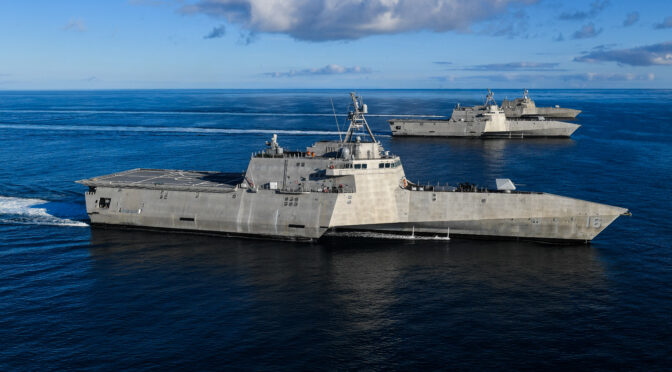
Featured Image: PACIFIC OCEAN (Feb. 27, 2019) The Independence variant littoral combat ships USS Tulsa (LCS 16), right, USS Manchester (LCS 14), center, and USS Independence (LCS 2), left, sail in formation in the eastern Pacific. (U.S. Navy photo by Chief Mass Communication Specialist Shannon Renfroe/Released).