Tag Archives: US Navy

Cam Ranh International Port Visits in Strategic Context

By Zachary Abuza and Nguyen Nhat Anh

On 2 May, the French amphibious assault ship FS Tonnerre arrived in the Cam Ranh International Port (CRIP) for a four day visit. It was the third international visit to the newly established CRIP, nee Cam Ranh Bay, following the mid-March visit of a Singaporean naval vessel and a mid-April visit by two Japanese Maritime Self Defense Force ships. These three visits reflect Vietnam’s strategic interests, most importantly, the development of an omni-directional foreign policy. While much attention will be paid to President Obama’s visit to Vietnam this month, it is important to note both how far bilateral relations have come, but also how much they are only a piece of Vietnam’s overall strategic framework.

The decision to give Cam Ranh the moniker “International Port” was a strategic one. Hanoi has long been called on to open up the port to foreign vessels transiting the region, but wanted to make sure that it was not aimed at any one country. Thus the port, which is one of the finest deep-water ports in the entire region and is full of new construction after the inauguration such as a new berthing area, pier, quay wall, and was opened up to all on a “commercial basis.” This is in line, if not a creative work around, with Hanoi’s “3 Nos” foreign policy (no alliances, no foreign military bases, and no policies that could be construed as being directed against any one state). The argument that any one foreign country could try to gain exclusive access to the port is nonsensical.
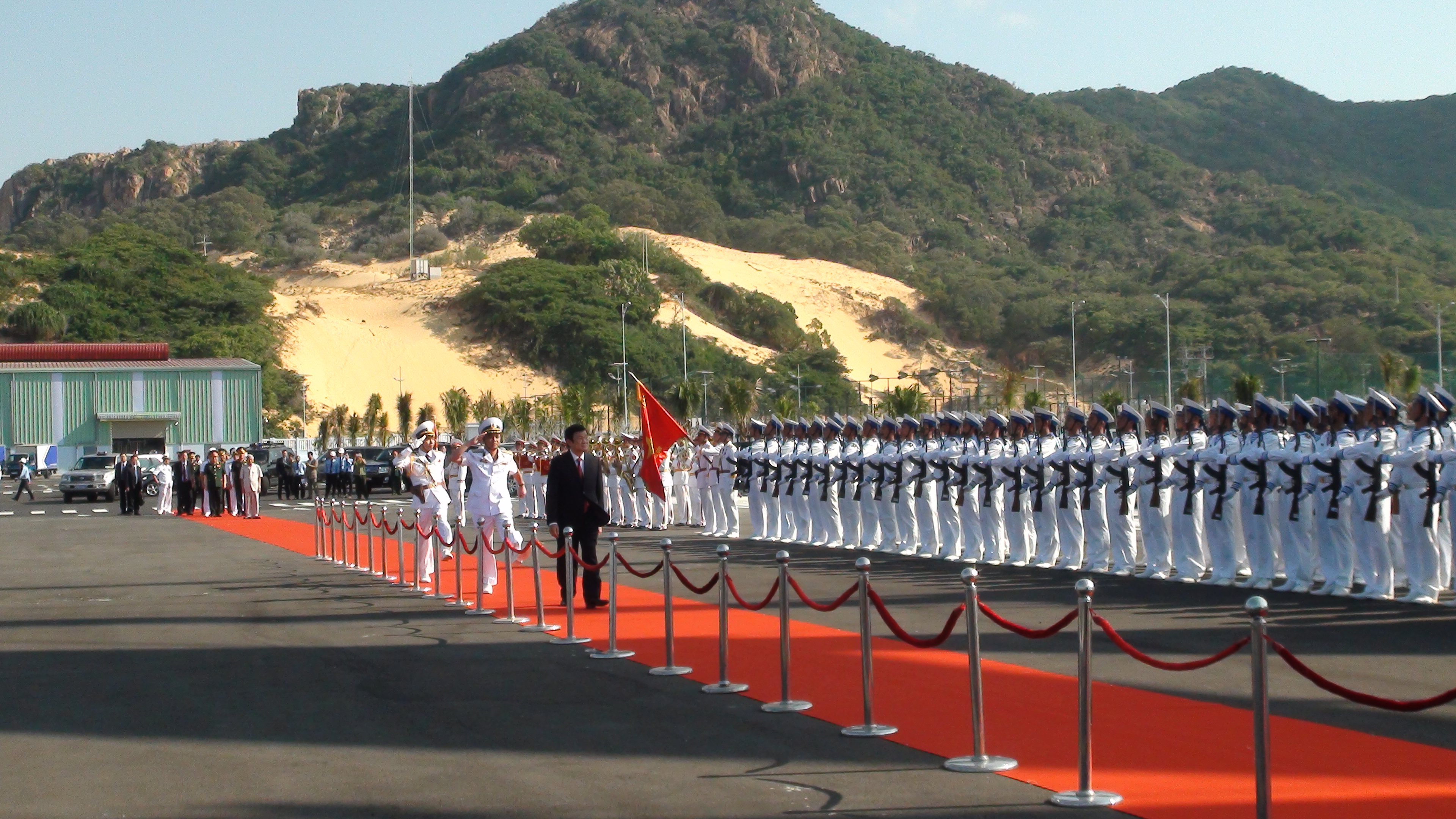
State President Truong Tan Sang at the grand opening ceremony of the Cam Ranh international port in Khanh Hoa Province, Vietnam, March 8, 2016. Photo: Tuoi Tre.
State President Truong Tan Sang at the grand opening ceremony of the Cam Ranh International Port in Khanh Hoa Province, Vietnam, March 8, 2016. Photo: Tuoi Tre.

Indeed, in bilateral defense talks held at the end of March 2016, Vice Minister of Defense Nguyen Chi Vinh said that Vietnam had actively invited Chinese vessels to visit Vietnamese ports, including CRIP. Even though it was an unpopular move domestically, it signals the leadership’s intention that CRIP not be directed against any one country.

While it is clear that Vietnam-U.S. defense cooperation has deepened considerably over the last few years and will continue to do so, both sides seem to be content on the pace with which the relationship is moving for various reasons.

Vietnam clearly has a strategic interest in a more robust U.S. presence in the region, and has actively championed the right of U.S. Naval vessels to conduct freedom of navigation operations (FONOPs), including past features that Vietnam itself claims and occupies. Vietnam also looks to the United States as the only thing between China and the declaration of an Air Defense Identification Zone (ADIZ).

However, although Hanoi is keen to further deepen ties with the United States, there remain many real impediments, including history, the continued legacy of Agent Orange, and the enormous costs associated with the cleanup of Bien Hoa, and criticism over human rights. Indeed, this year, Hanoi responded to the U.S. State Department’s annual human rights report, calling it “biased,” something it has not done and downplayed in the past few years. Furthermore, despite its embrace of the Trans Pacific Partnership, Hanoi is cautious about growing too close to the United States in the security realm, for fear of provoking a harsh reaction from China, hence its intention of displaying CRIP as a neutral, open-to-all port.

From 22-24 May, President Barack Obama will visit Vietnam, reciprocating the historic July 2015 visit to the United States by Vietnam Communist Party chief Nguyen Phu Trong. While many hope that President Obama will fully lift the arms embargo, others argue that Vietnam simply has too many human rights abuses to merit a full lifting. Indeed, his Secretary of Defense recently endorsed lifting the embargo in a Congressional hearing with Senator John McCain, a long proponent of ending the embargo. In early May, right before Obama’s visit, Vietnam hosted a defense symposium to which top U.S. arm corporations, such as Boeing and Lockheed Martin, were invited. This will be more of a symbolic gesture, but in diplomacy, especially in such a historically fraught relationship, symbols matter.
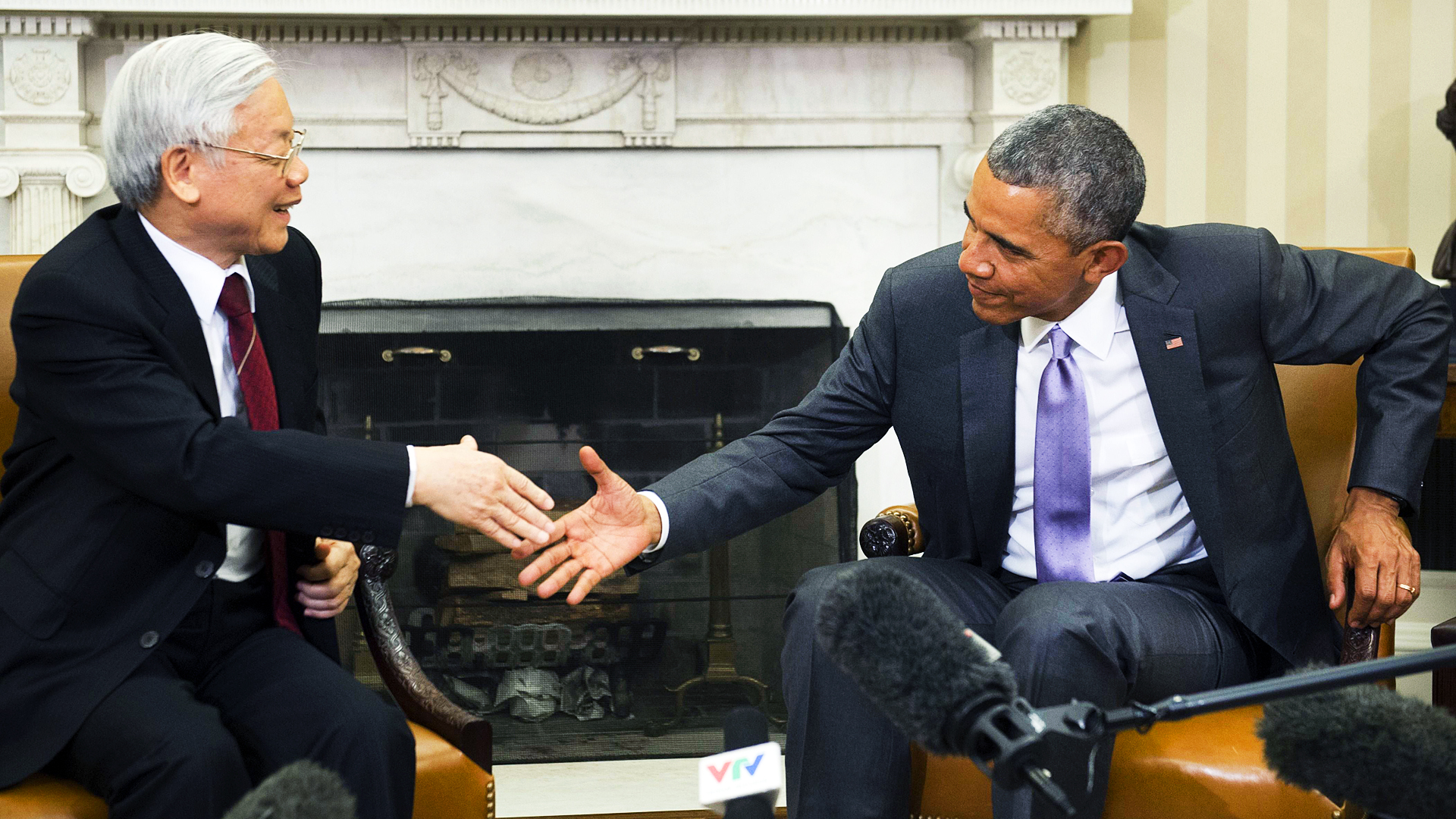
US President Barack Obama and Vietnamese General Secretary Nguyen Phu Trong in the White House in Washington, DC, July 7, 2015. (AFP). AFP PHOTO / SAUL LOEB
U.S. President Barack Obama and Vietnamese General Secretary Nguyen Phu Trong in the White House in Washington, DC, July 7, 2015. AFP PHOTO / SAUL LOEB

But even still, limits exist. There are longstanding concerns about selling advanced technology to Vietnam for fear that it will be shared with Russia. Again, human right issues also interfere with the decision. Nevertheless, this is not to say that Vietnam’s purchase of U.S. weapons is impossible.

The one area that does seem ripe for sales is maritime aviation capabilities, something that the U.S. does have a stark comparative advantage in. Vietnam has expressed an interest in a stripped down P-3 Orion. In April 2016, a group of Vietnamese naval officers visited U.S. Patrol Squadron 47 in Hawaii and notably toured a P-3C in order to better understand its capability. Vietnam has also seen the P-3 in action in January 2016 during a joint HADR exercise between Vietnam and Japan. Boeing has suggested that one of its Intelligence Surveillance and Reconnaissance (ISR) suites would fit Vietnam’s needs.

Despite the regular presence of U.S. Naval vessels, which spend some 700 ship days a year in the South China Sea, and the recent visit by the USS Stennis to the Philippines, and the recent refusal of port access in Hong Kong by China, to date no U.S. vessel has called on CRIP.

Furthermore, Vietnamese rules stipulate that foreign naval vessels, including those of the U.S., can only call on Vietnamese ports once a year. Nevertheless, U.S. logistical ships have visited the port before for repair and maintenance service. In June 2012 USNS Richard E. Byrd, a Military Sealift Command supply ship, stopped at Cam Ranh’s repair facilities, and then-Secretary of Defense Leon Panetta gave a speech on board the moored ship, promising a stronger relationship between the two nations. The U.S. Navy has used their port call annually since 2009, albeit not at Cam Ranh Bay. Furthermore, when reporting the inauguration of CRIP, Vietnamese official media mentioned the possibility of U.S. aircraft carriers calling on the port by mentioning that CRIP can “accommodate military and civilian ships like aircraft carriers of up to 110,000 DWT (deadweight tonnage).” Hence, it is likely that a U.S. Navy ship will call on Cam Ranh Bay in the near future.
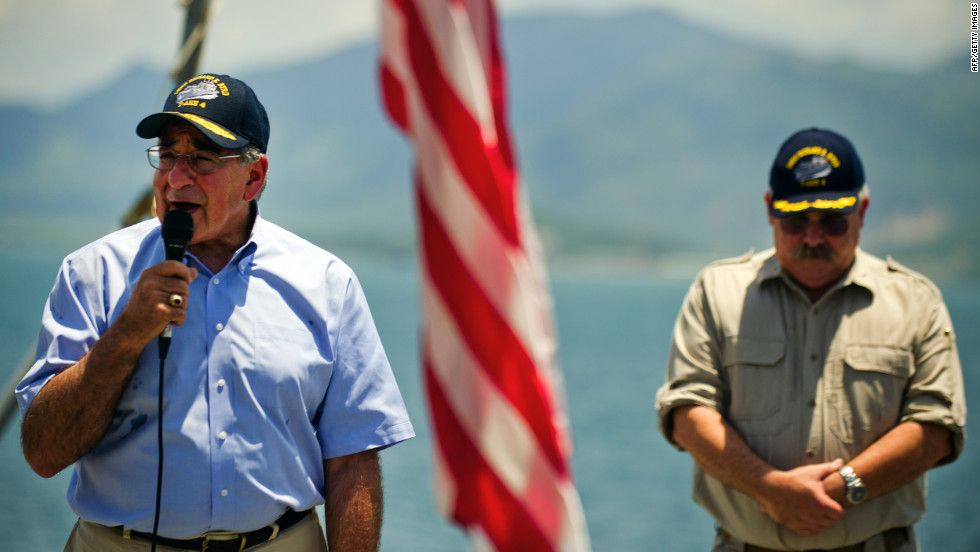
Leon Panetta speaks to the crew of the USNS Richard E. Byrd docked at Vietnam's Cam Ranh Bay in June 2012.
Secretary of Defense Leon Panetta speaks to the crew of the USNS Richard E. Byrd docked at Vietnam’s Cam Ranh Bay in June 2012. AFP/Getty Images.

In addition, the U.S. government has awarded Vietnam $40.1 million in FY2015-16 as part of its Maritime Security Initiative in order to “bolster its maritime Intelligence, Surveillance, and Reconnaissance (ISR) and command and control within Vietnam’s maritime agencies.” The funding will also support the purchase of maritime defense equipment and support training and bilateral HADR exercises to improve interoperability.

The visit by the Singaporean naval vessel should have come as no surprise. ASEAN – for all of its faults and limitations – remains the cornerstone of Vietnamese foreign policy. It works assiduously to counter China’s aggressive moves to divide the grouping, especially ahead of the Permanent Court of Arbitration’s expected ruling. Vietnam and Singapore have pledged to deepen ties and have suggested future bi and multi-lateral defense exercises.

Soon after, Vietnamese naval vessels and special forces soldiers participated in a regional counter-terrorism and anti-piracy exercise with Singapore, Brunei, Thailand and Indonesia. Interestingly, Vietnam sent HQ-381, a BPS-500 type missile corvette instead of its Gepard frigates. The HQ-318 was the first missile corvette built domestically in Vietnam in 1999, and it underwent capability upgrades in 2014. Vietnam has also increased its participation in multilateral exercises, including sending Hospital Ship 561 to the 2016 Komodo naval exercises in Indonesia in April 2016. Vietnam has extended maritime cooperation to entirely new partners as well, including a five day on-shore multilateral course by the Royal Navy’s Maritime Warfare School on EEZ enforcement. 

The visit by the French ship capped a week of the re-emergence of France as a player in Asian security, with the agreement in principle to supply Australia with 12 Barracuda submarines; beating out the Japanese Soryu-class. But the presence of one of France’s largest vessels at CRIP also suggests the potential for defense deals with Vietnam, which has hinted that it wants to reduce its dependence on Russia for its advanced weaponry. Vietnam has already purchased military lift planes from the French-led Airbus consortium. SIPRI, in its arm transfer database, shows that Vietnam has taken delivery of Exocet anti-ship and MICA anti-air missiles from France for its Dutch SIGMA-9814 corvettes; yet, as the negotiation for the corvettes seems to have been suspended, the fate of these missiles is uncertain. Reuters also reported that the Vietnamese military is currently in talk with Dassault on the Rafale multirole fighter as a possible replace for its antiquated but numerous MiG-21s. However, the Rafale’s high cost makes this procurement less likely.

But it is the relationship with Japan that portends the greatest potential. There have now been six high level strategic dialogues, and Japanese ships have made some nine port calls, the majority of which happened in the last five years. There are routine high level engagements. Although Japan has not sold any weapons to Vietnam, in 2014 it pledged to transfer six maritime patrol craft; the last were delivered in November 2015.
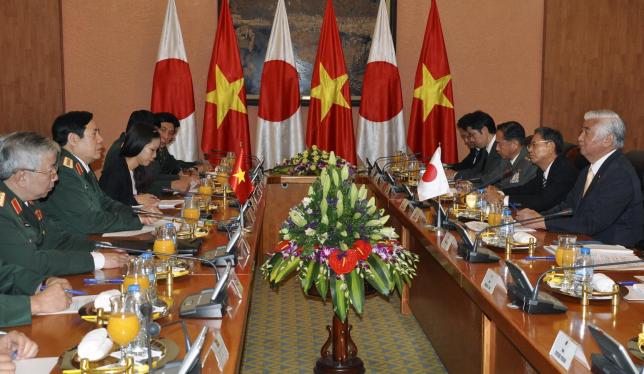
Japan's Defence Minister Gen Nakatani (R) and his Vietnamese counterpart General Phung Quang Thanh (2nd L) talk at the Ministry of Defence in Hanoi, Vietnam November 6, 2015. REUTERS/Stringer
Japan’s Defense Minister Gen Nakatani (R) and his Vietnamese counterpart General Phung Quang Thanh (2nd L) talk at the Ministry of Defense in Hanoi, Vietnam November 6, 2015. REUTERS/Stringer.

The potential for deeper ties is clearly there. A meeting between the respective foreign Ministers in early May 2016 led to calls for deepened defense relations as well as the provision of more maritime patrol craft. As Japan experiences  the loss of the Soryu class vessels sale to Australia, Tokyo still needs a major arms sale to break into the world of the global arms industry. But while Japanese equipment is expensive and r technology transfer is unlikely, the defense relationship, including recent HADR operations, is growing so quickly that it might become a natural byproduct.

Both countries have called for a rules-based system in the South China Sea. Both would like each other to step up their respective operations in the South China Sea. Prime Minister Nguyen Xuan Phuc recently called on Shinzo Abe’s government to make “effective efforts” in the South China Sea, but there are limits. Vietnam in unlikely to be overly confrontational towards China. And while many have called for Japan to join U.S. FONOPs, that is unlikely, simply as China has the ability to escalate its operations in the contested waters around the Senkaku/Diaoyutai Islands. Intercepts of Chinese planes in Japan’s southwest quadrant alone already account for over 50 percent of overall intercepts of foreign aircraft.   In 2015, there were 571 intercepts of Chinese planes, a 23 percent increase from 2014, taxing the Japanese military.

Despite these improvements and deepening cooperation with new defense partners, it is the bilateral defense relationship with Russia that remains the strongest. Newly elected Minister of National Defense Ngo Xuan Lich made his first overseas trip to Russia, where he reiterated that Vietnam will continue to rely on Russia for much of its weaponry and advanced training. Newly elected Prime Minister Nguyen Xuan Phuc will also make Russia his first foreign destination in mid-May, ahead of President Obama’s visit. 

Vietnam’s third Gepard class frigate was recently floated in a Russian shipyard, with the fourth to be launched soon and delivered by September. There are reports that Vietnam will order another two, a total of six, while it has increased production of Molniya class missile ships under license from Russia. Five out of six Kilo submarines that Vietnam ordered from Russia have been delivered, and Russia is helping Vietnam construct the submarine base at Cam Ranh as part of the deal. Vietnam’s recent announcement that it was moving the Ministry of National Defense’s Ba Son Shipyard to a new location, increasing its production capabilities to 2,000 dead weight tons, also suggests increased domestic production under further Russian license.
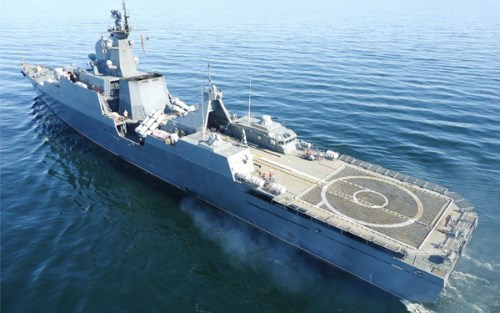
A Gepard-class frigate built by Russia's Gorky Zelenodolsk Plant. Photo credit: Gorky Zelenodolsk Plant.
A Gepard-class frigate built by Russia’s Gorky Zelenodolsk Plant. Photo credit: Gorky Zelenodolsk Plant.

When Vietnam purportedly “invited” Russia back to Cam Ranh, it should not be taken as meaning a reopening of their Cold War era naval base, which closed in 1991, but simply as a commercial user of CRIP facilities. Nonetheless, in 1993 Moscow and Hanoi signed a 25 year agreement that allowed Russia to continue using a facility in Cam Ranh Bay for limited signals intelligence gathering. More recently Russia has deployed aerial refueling tankers from CRIP to support bombers that have flown “provocatively” near US airspace in Guam. U.S. calls on Vietnam to restrict such operations have fallen on deaf ears. Furthermore, in 2014, the procedure for Russian ships calling on Cam Ranh Bay was simplified: they only have to notify Vietnamese authority before doing so.

While there have been occasional reports that Vietnam wants to diversify its sources of advanced weaponry, the reality is Russian equipment is tried and true, very cost effective, and the Vietnamese have long trained on it. Most importantly, the Russians transfer a lot of technology to Vietnam, which produces an array of missiles and ships under license. Vietnam’s relationship with India, also gives it access to the advanced Brahmos anti-ship missiles developed with Russia. This is an enduring strategic defense relationship.

Yet, small diplomatic rifts between Vietnam and Russia have emerged, in particular over Moscow’s support for Beijing over the South China Sea and Permanent Court of Arbitration’s forthcoming ruling. In April 2016, Russian Foreign Minister Sergei Lavrov commented in an interview that claimants in the South China Sea dispute should resolve the matter among themselves and not attempt to internationalize the issue. Vietnamese Ministry of Foreign Affairs immediately rebutted Lavrov by announcing that the dispute should be “settled by all countries concerned,” not simply through bilateral negotiation. Notably, Lich’s visit to Russia occurred only two weeks after this incident. It should be closely watched whether this diplomatic rift will negatively affect Moscow-Hanoi defense relationship in any way.

In sum, since the 12th Party Congress in January 2016, and the early election of key state leaders to their posts ahead of President Obama’s visit, Vietnam has continued with their defense policy: a cautious attempt to bolster defense relations with regional and extra-regional states, the gradual diversification of its arms suppliers, and partaking in joint exercises. While it has brought a lot of new equipment online, giving the country unprecedented power projection capabilities, it is yet to be seen whether they have developed a corresponding doctrine. While no one should underestimate Vietnam’s will and capability to act in self-defense, that robust strategic culture has faltered at the hands of China’s maritime-militia and Coast Guard sovereignty enforcement operations and island construction. However, as Vietnam’s capability improve, it remains cautious about provoking a harsh reaction from Beijing. Yet, at the end of the day, Hanoi’s primary concern continues to be regime survival. The government responded quickly when environmental protests went national, and the regime seems very concerned regarding its ability to control its very wired and socially active population.

Zachary Abuza, PhD, is a Professor at the National War College where he specializes in Southeast Asian security issues. The views expressed here are his own, and not the views of the Department of Defense or National War College. Follow him on Twitter @ZachAbuza.

Nguyen Nhat Anh is a student of International Political Economy at the University of Texas at Dallas. You can follow him on Twitter @anhnnguyen93.

Gepard, Molniya class warships in Cam Ranh naval base. TTVNOL.com. 
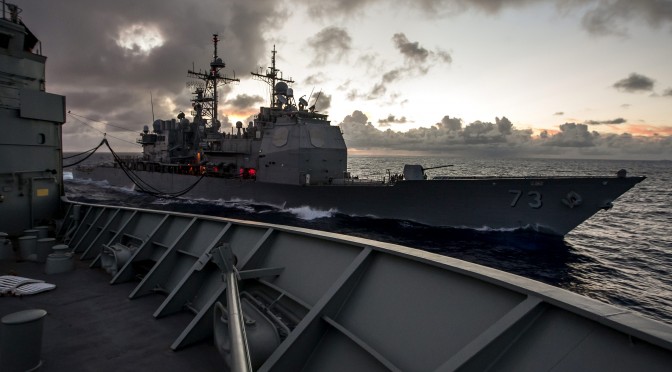
Navy Perspective on Joint Force Interdependence

This piece was originally published by the National Defense University Press, and is republished with permission. Read it in its original form here.

By Admiral Jonathan Greenert

Looking ahead to the Department of Defense’s (DOD’s) fiscal prospects and security challenges in the second half of this decade and beyond, the Services and their partners will have to find ever more ingenious ways to come together. It is time for us to think and act in a more ecumenical way as we build programs and capabilities. We should build stronger ties, streamline intelligently, innovate, and wisely use funds at our disposal. We need a broader conversation about how to capitalize on each Service’s strengths and “domain knowledge” to better integrate capabilities. Moving in this direction is not only about savings or cost avoidance; it is about better warfighting.

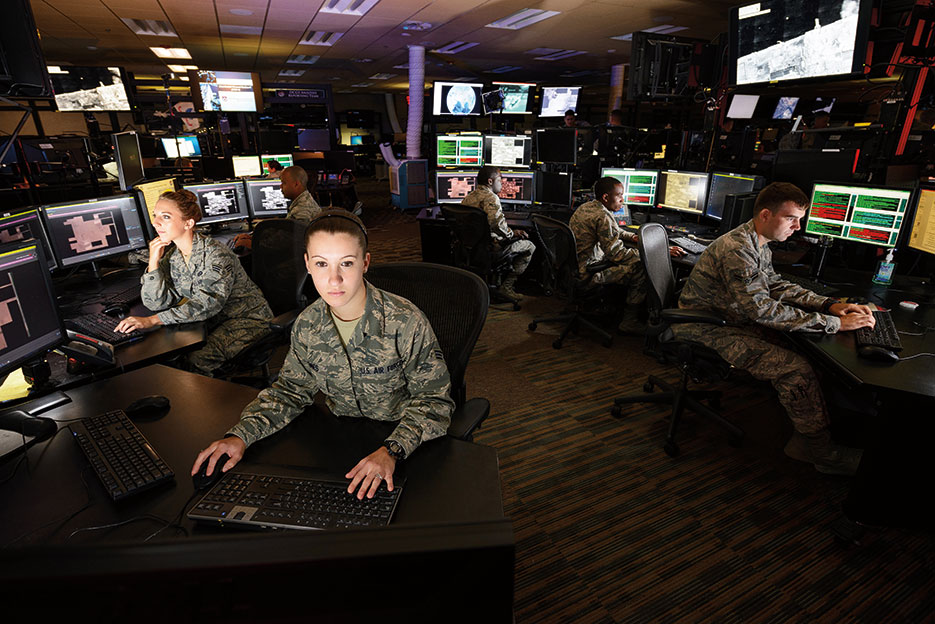
Airmen working on Distributed Ground Station–1 Operations Floor at the U.S. Air Force’s 480th Intelligence, Surveillance, and Reconnaissance Wing (U.S. Air Force)
Airmen working on Distributed Ground Station–1 Operations Floor at the U.S. Air Force’s 480th Intelligence, Surveillance, and Reconnaissance Wing (U.S. Air Force).

The DOD historical track record shows episodic levels of joint deconfliction, coordination, and integration. Wars and contingencies bring us together. Peacetime and budget pressures seem to compel the Services to drift apart, and more dramatic fiscal changes can lead to retrenchment. While Service rivalries are somewhat natural, and a reflection of esprit de corps, they are counterproductive when they interfere with combat performance, reduce capability for operational commanders, or produce unaffordable options for the Nation. Rather than expending our finite energy on rehashing roles and missions, or committing fratricide as resources become constrained, we should find creative ways to build and strengthen our connections. We can either come together more to preserve our military preeminence—as a smaller but more effective fighting force, if necessary—or face potential hollowing in our respective Services by pursuing duplicative endeavors.

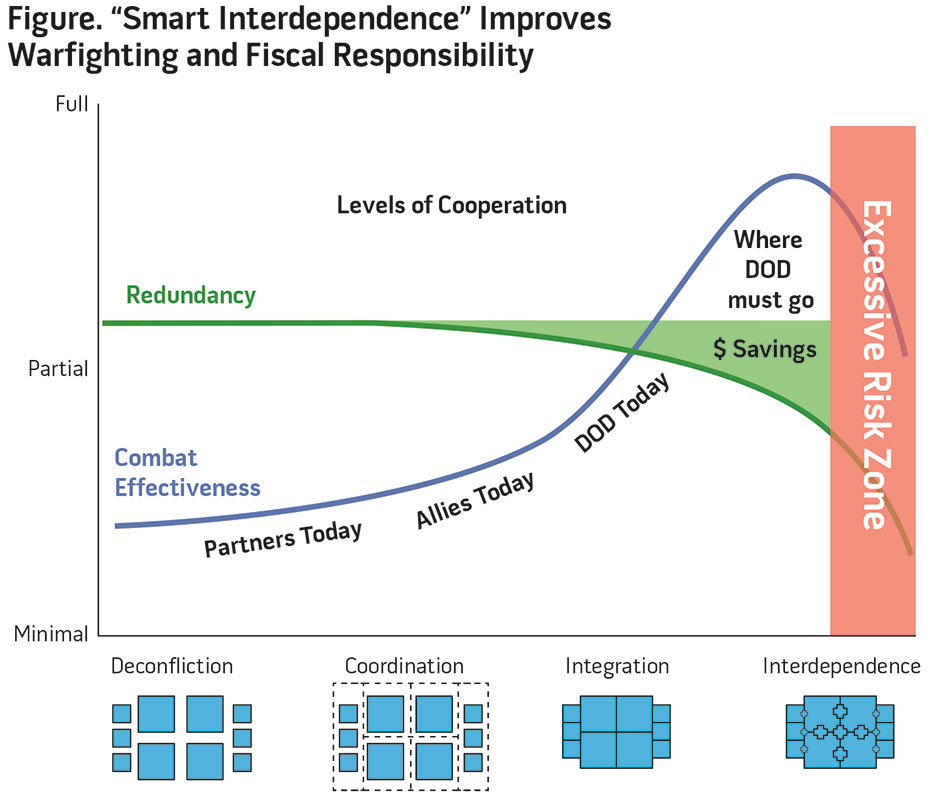
Figure. Smart Interdependence Improves Warfighting and Fiscal Responsibility


Unexplored potential exists in pursuing greater joint force interdependence, that is, a deliberate and selective reliance and trust of each Service on the capabilities of the others to maximize its own effectiveness. It is a mutual activity deeper than simple “interoperability” or “integration,” which essentially means pooling resources for combined action. Interdependence implies a stronger network of organizational ties, better pairing of capabilities at the system component level, willingness to draw upon shared capabilities, and continuous information- sharing and coordination. Chairman of the Joint Chiefs of Staff General Martin Dempsey notes, “The strength of our military is in the synergy and interdependence of the Joint Force.” Many capstone documents emphasize greater interdependency between the Services’ structures and concepts including the Chairman’s Strategic Direction to the Joint Force, which calls for “combining capabilities in innovative ways.”

These concepts ring true for the maritime Services. The Navy–Marine Corps team has operated interdependently for over two centuries. Symbiotic since their inceptions, Marines engaged in ship-to-ship fighting, enforced shipboard discipline, and augmented beach landings as early as the Battle of Nassau in 1776. This relationship has evolved and matured through the ages as we integrated Marine Corps aviation squadrons into carrier air wings in the 1970s, developed amphibious task force and landing force doctrines, and executed mission-tailored Navy–Marine Corps packages on global fleet stations. Land wars over the last decade have caused some of the cohesion to atrophy, but as the Marines shift back to an expeditionary, sea-based crisis response force, we are committed to revitalizing our skills as America’s mobile, forward-engaged “away team” and “first responders.” Building and maintaining synergy is not easy; in fact, it takes hard work and exceptional trust, but the Navy and Marine Corps team has made it work for generations, between themselves and with other global maritime partners.

The Services writ large are not unfamiliar with the notion of cross-domain synergy. Notable examples of historical interdependence include the B-25 Doolittle Raid on Tokyo from the USS Hornet in 1942 and the Army’s longest ever helicopter assault at the start of Operation Enduring Freedom from the USS Kitty Hawk. The Navy has leaned heavily on Air Force tankers for years, and B-52s can contribute to maritime strikes by firing harpoons and seeding maritime mines. Likewise, other Services have relied on Navy/Marine Corps EA-6B aircraft to supply airborne electronic warfare capabilities to the joint force since the 1990s—paving the way for stealth assets or “burning” routes to counter improvised explosive devices. Examples of where the Navy and Army have closely interfaced include Navy sealift and prepositioning of Army materiel overseas, ballistic missile defense, the Army’s use of Navy-developed close-in weapons systems to defend Iraq and Afghanistan forward operating bases, and the use of Army rotary- wing assets from afloat bases. Special operations forces (SOF) come closest to perfecting operational interdependence with tight, deeply embedded interconnections at all levels among capability providers from all Services.

Opportunities exist to build on this foundation and make these examples the rule rather than the exception. We must move from transitory periods of integration to a state of smart interdependence in select warfighting areas and on Title 10 decisions where natural overlaps occur, where streamlining may be appropriate and risk is managed. From my perspective, advancing joint force interdependence translates to:

  • avoiding overspending on similar programs in each Service
  • selecting the right capabilities and systems to be “born joint”
  • better connecting existing tactics, techniques, procedures, concepts, and plans
  • institutionalizing cross-talk on Service research and development, requirements, and programs
  • expanding operational cooperation and more effective joint training and exercises.
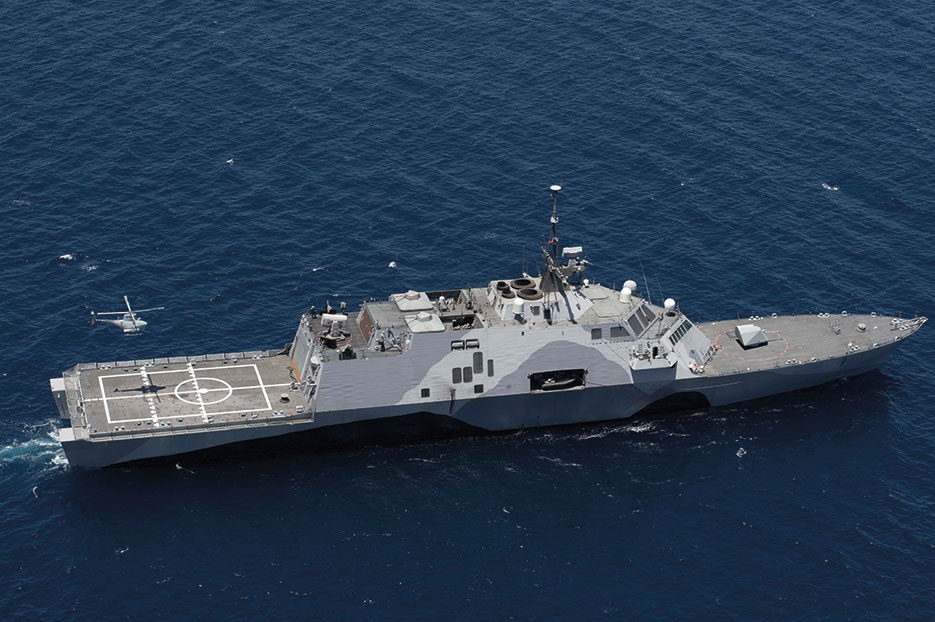
USS Freedom, Littoral Combat Ship 1 (U.S. Navy/Tim D. Godbee)
USS Freedom, Littoral Combat Ship 1 (U.S. Navy/Tim D. Godbee).
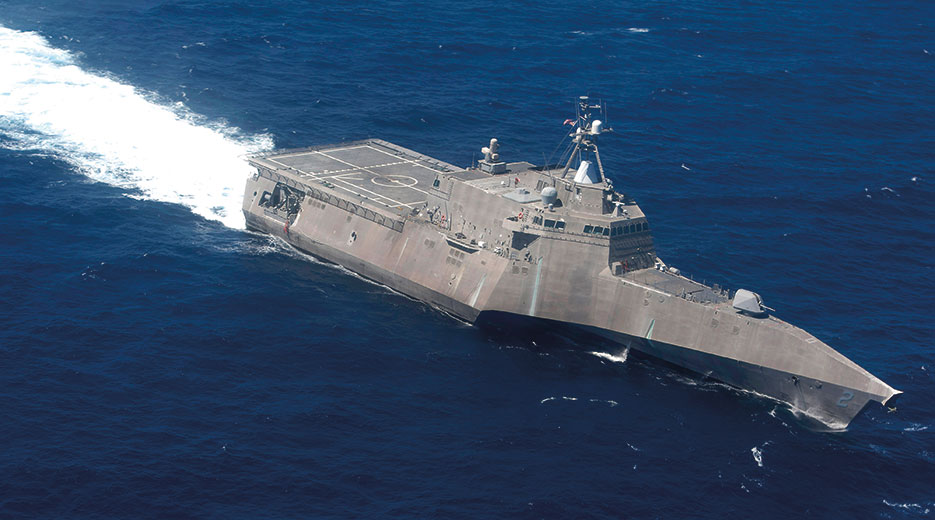
USS Independence, Littoral Combat Ship 2 (U.S. Navy/Carlos Gomez)
USS Independence, Littoral Combat Ship 2 (U.S. Navy/Carlos Gomez).

The Air-Sea Battle (ASB) concept, and the capabilities that underpin it, represent one example of an opportunity to become more interdependent. While good progress has been made on developing the means, techniques, and tactics to enable joint operational access, we have much unfinished business and must be ready to make harder tradeoff decisions. One of the principles of ASB is that the integration of joint forces— across Service, component, and domain lines—begins with force development rather than only after new systems are fielded. We have learned that loosely coupled force design planning and programming results in costly fixes. In the pursuit of sophisticated capability we traded off interoperability and are now doing everything we can to restore it, such as developing solutions for fifth-generation fighters to relay data to fourth-generation ones. ASB has become a forcing function to promote joint warfighting solutions earlier in the development stage. For example, the Navy and Army are avoiding unaffordable duplicative efforts by teaming on the promising capabilities of the electromagnetic railgun, a game-changer in defeating cruise and ballistic missiles afloat and ashore using inexpensive high-velocity projectiles.

Additional areas where interdependence can be further developed include the following.

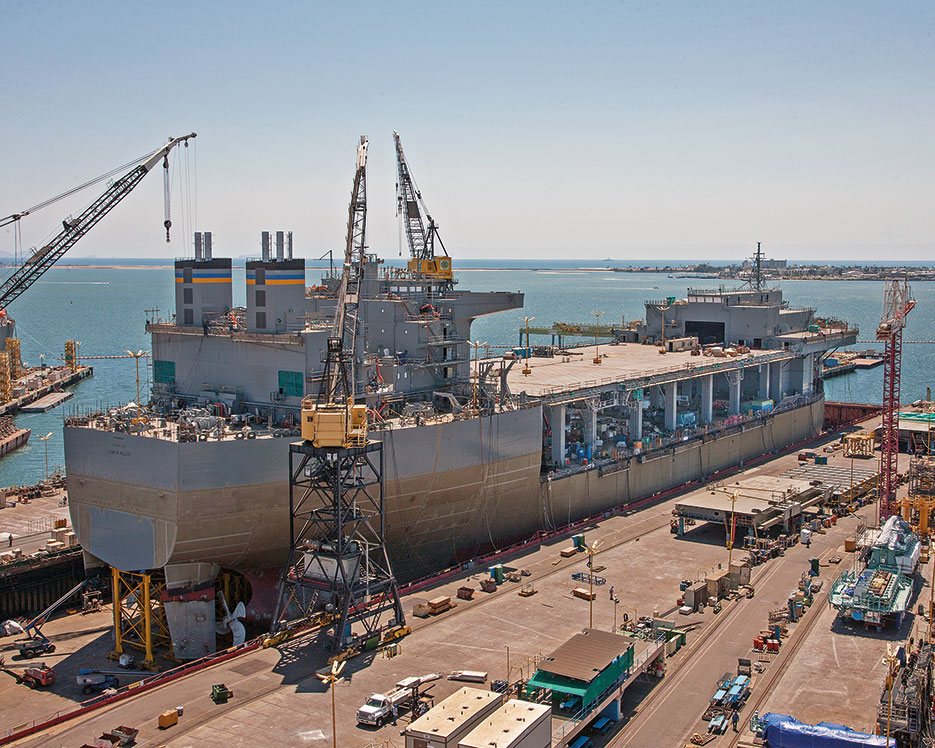
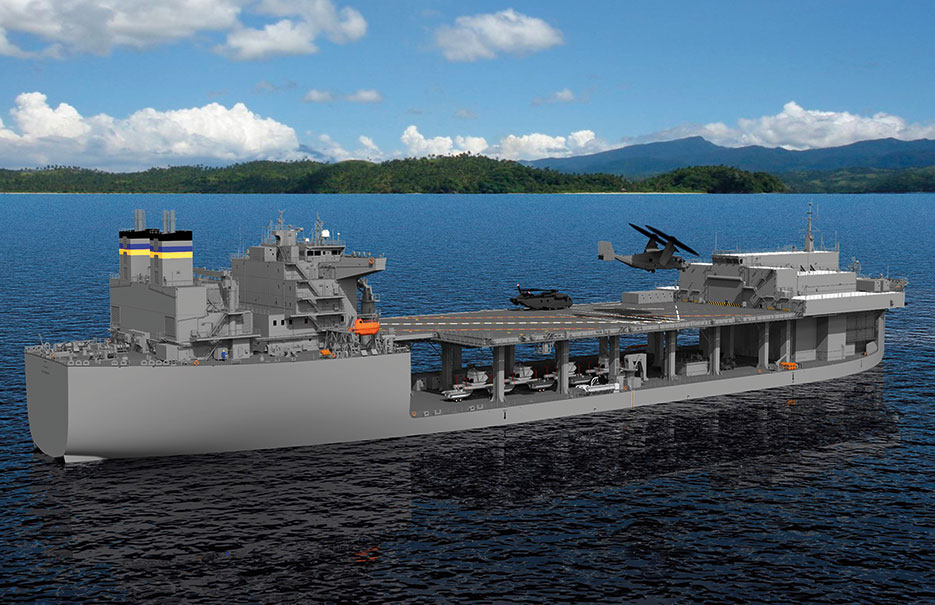
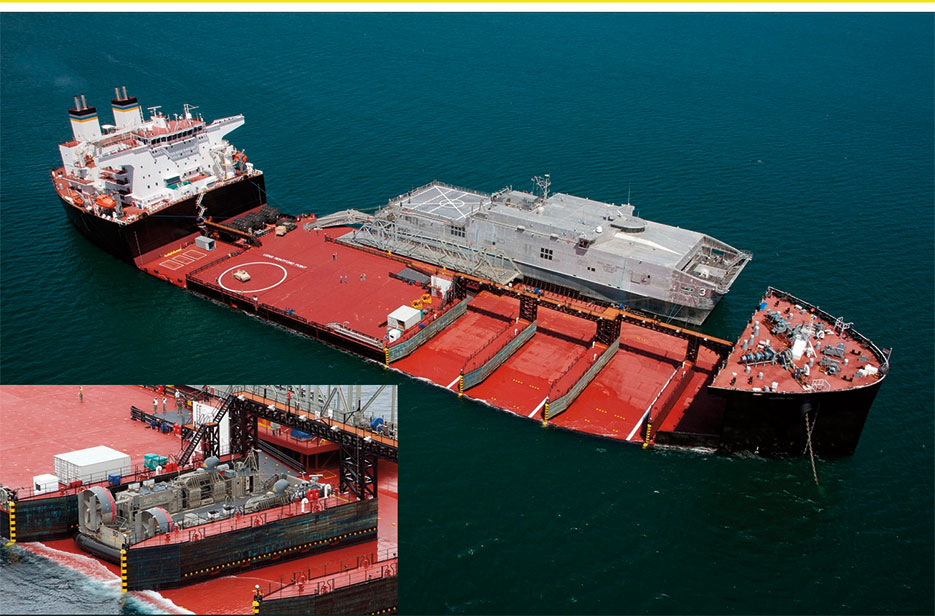
Innovative Employment of Ships. The Navy–Marine Corps team is already developing innovative ways to mix expeditionary capabilities on combatants and auxiliaries, in particular joint high speed vessels, afloat forward staging bases, and mobile landing platforms just starting to join the force. We see opportunities to embark mission-tailored packages with various complements of embarked intelligence, SOF, strike, interagency, and Service capabilities depending on particular mission needs. This concept allows us to take advantage of access provided by the seas to put the right type of force forward— both manned and unmanned—to achieve desired effects. This kind of approach helps us conduct a wider range of operations with allies and partners and improves our ability to conduct persistent distributed operations across all domains to increase sensing, respond more quickly and effectively to crises, and/or confound our adversaries.

Mission-tailored packages for small surface combatants such as the littoral combat ship, and the Navy’s mix of auxiliaries and support ships, would enable them to reduce the demand on large surface combatants such as cruisers and destroyers for maritime security, conventional deterrence, and partnership- building missions. We cannot afford to tie down capital ships in missions that demand only a small fraction of their capabilities, such as contracted airborne intelligence, surveillance, and reconnaissance (ISR) services from Aegis destroyers. We are best served tailoring capability to need, interchanging platforms and their payloads suitable to the missions that they are best designed for. At the end of the day, it is about achieving economy of force.

To make these concepts real, the Navy would support an expanded joint effort to demonstrate roll-on, roll-off packages onto ships to create a set of specialized capability options for joint force commanders. Adaptive force packages could range from remote joint intelligence collection and cyber exploit/attack systems, SOF, modularized Army field medical units, humanitarian assistance/ disaster relief supplies and service teams, to ISR detachments—either airborne, surface, or subsurface. Our ships are ideal platforms to carry specialized configurations, including many small, autonomous, and networked systems, regardless of Service pedigree. The ultimate objective is getting them forward and positioned to make a difference when it matters, where it matters.

Tightly Knitted ISR. We should maximize DOD investments in ISR capabilities, especially the workforce and infrastructure that supports processing, exploitation, and dissemination (PED). SOF and the Air Force are heavily invested in ISR infrastructure, the Army is building more reachback, and the Navy is examining its distribution of PED assets between large deck ships, maritime operations centers, and the Office of Naval Intelligence. While every Service has a responsibility to field ISR assets with sufficient “tail” to fully optimize their collection assets, stovepiped Service-specific solutions are likely too expensive. We should tighten our partnerships between ISR nodes, share resources, and maximize existing DOD investments in people, training, software, information systems, links/circuits, communications pipes, and processes. To paraphrase an old adage, “If we cannot hang together in ISR, we shall surely hang separately.”

ISR operations are arguably very “purple” today, but our PED investment strategies and asset management are not. Each Service collects, exploits, and shares strategic, anticipatory, and operational intelligence of interest to all Services. In many cases, it does not matter what insignia or fin flash is painted on the ISR “truck.” Air Force assets collect on maritime targets (for example, the Predator in the Persian Gulf), and Navy assets collect ashore (the P-3 in Operations Iraqi Freedom and Enduring Freedom). Yet each Service still develops its own particular PED solutions. We should avoid any unnecessary new spending where capability already exists, figure out dynamic joint PED allocation schemes similar to platform management protocols, and increase the level of interdependency between our PED nodes. Not only is this approach more affordable, but it also makes for more effective combat support.

We can also be smarter about developing shared sensor payloads and common control systems among our programmers while we find imaginative ways to better work the ISR “tail.” Each Service should be capitalizing on the extraordinary progress made during Operations Iraqi Freedom and Enduring Freedom in integrating sensors, software, and analytic tools. We should build off those models, share technology where appropriate, and continue to develop capability in this area among joint stakeholders.

USNS Lewis B. Puller, Mobile Landing Platform–3/Afloat Forward Staging Base–1, under construction at General Dynamics National Steel and Shipbuilding Company shipyard
USNS Lewis B. Puller, Mobile Landing Platform–3/Afloat Forward Staging Base–1, under construction at General Dynamics National Steel and Shipbuilding Company shipyard.
Artist’s conception of MLP/AFSB with departing V-22 Osprey (U.S. Navy/Courtesy General Dynamics NASSCO)
Artist’s conception of MLP/AFSB with departing V-22 Osprey (U.S. Navy/Courtesy General Dynamics NASSCO).

Truly Interoperable Combat and Information Systems. The joint force has a shared interest in ensuring sufficient connectivity to effect information-sharing and command and control in all future contingencies. We cannot afford to develop systems that are not interconnected by design, use different data standards/ formats, come without reliable underlying transport mechanisms, or place burdens on our fielded forces to develop time-consuming workarounds. We still find DOD spending extraordinary time and effort healing itself from legacy decisions that did not fully account for the reality that every platform across the joint community will need to be networked.

Greater discipline and communication between planners, programmers, acquisition professionals, and providers for information systems at all classification levels are required. We must view all new information systems as part of a larger family of systems. As such, we should press hard to ensure convergence between the DOD Joint Information Environment and the Intelligence Community’s Information Technology Enterprise initiatives. Why pay twice for similar capabilities already developed somewhere else in the DOD enterprise? Why would we design a different solution to the same functional challenge only because users live in a different classification domain? Ensuring “best of breed” widgets, cloud data/storage/ utility solutions, advanced analytics, and information security capabilities are shared across the force will require heightened awareness, focused planning, inclusive coordination, and enlightened leadership for years to come.

In the world of information systems, enterprise solutions are fundamentally interdependent solutions. They evolve away from Service or classification domain silos. We are not on this path solely because we want to be thriftier. Rationalizing our acquisition of applications, controlling “versioning” of software services, reducing complexity, and operating more compatible systems will serve to increase the flow of integrated national and tactical data to warfighters. This, in turn, leads to a better picture of unfolding events, improved awareness, and more informed decisionmaking at all levels of war. Enterprise approaches will also reduce cyber attack “surfaces” and enable us to be more secure.

In our eagerness to streamline, connect, and secure our networks and platform IT systems, we have to avoid leaving our allies and partners behind. Almost all operations and conflicts are executed as a coalition; therefore, we must develop globally relevant, automated, multilevel information-sharing tools and update associated policies. This capability is long overdue and key to enabling quid pro quo exchanges. Improved information-sharing must become an extensible interdependency objective between joint forces, agencies, allies, and partners alike. Improving the exchange of information on shared maritime challenges continues to be a constant refrain from our friends and allies. We must continue to meet our obligations and exercise a leadership role in supporting regional maritime information hubs such as Singapore’s Information Fusion Center, initiatives such as Shared Awareness and Deconfliction (SHADE) designed for counterpiracy, and other impromptu coalitions formed to deal with unexpected crises.

Other fields to consider advancing joint force interdependence include cyber and electromagnetic spectrum capabilities, assured command and control (including resilient communications), ballistic missile defense, and directed energy weapons.

To conclude, some may submit that “interdependence” is code for “intolerable sacrifices that will destroy statutory Service capabilities.” I agree that literal and total interdependence could do just that. A “single air force,” for example, is not a viable idea. Moreover, each branch of the military has core capabilities that it is expected to own and operate—goods, capabilities, and services no one else provides. As Chief of Naval Operations, I can rely on no other Service for sea-based strategic deterrence, persistent power projection from forward seabases, antisubmarine warfare, mine countermeasures, covert maritime reconnaissance and strike, amphibious transport, underwater explosive ordnance disposal, diving and salvage, or underwater sensors, vehicles, and quieting. I cannot shed or compromise those responsibilities, nor would I ask other Services to rush headlong into a zone of “interdependence” that entails taking excessive risks.

Newest naval platforms include Joint High Speed Vessel, Mobile Landing Platform, and Landing Craft Air Cushion (U.S. Navy)
Newest naval platforms include Joint High Speed Vessel, Mobile Landing Platform, and Landing Craft Air Cushion (U.S. Navy).

Joint interdependence offers the opportunity for the force to be more efficient where possible and more effective where necessary. If examined deliberately and coherently, we can move toward smarter interdependence while avoiding choices that create single points of failure, ignore organic needs of each Service, or create fragility in capability or capacity. Redundancies in some areas are essential for the force to be effective and should not be sacrificed in the interest of efficiency. Nor can we homogenize capabilities so far that they become ill suited to the unique domains in which the Services operate.

Over time, we have moved from deconflicting our forces, to coordinating them, to integrating them. Now it is time to take it a step further and interconnect better, to become more interdependent in select areas. As a Service chief, my job is to organize, train, and equip forces and provide combatant commanders maritime capabilities that they can use to protect American security interests. But these capabilities must be increasingly complementary and integral to forces of the other Services. What we build and how we execute operations once our capabilities are fielded must be powerful and symphonic.

Together, with a commitment to greater cross-domain synergy, the Services can strengthen their hands in shaping inevitable force structure and capability tradeoff decisions on the horizon. We should take the initiative to streamline ourselves into a more affordable and potent joint force. I look forward to working to develop ideas that advance smart joint interdependence. This is a strategic imperative for our time. JFQ

Admiral Jonathan Greenert served as the 30th Chief of Naval Operations of the United States Navy from 2011-2015. 

Members’ Roundup: April 2016

By Sam Cohen

Welcome to the April 2016 members’ roundup. Over the past month CIMSEC members have examined several international maritime security issues, including the strategic implications of China’s land creation in the South China Sea, Russia and China’s testing and deployment of offensive hypersonic weapons, the U.S. Navy’s development of the Next Generation Air Dominance (NGAD) program, India’s maritime ambitions in the Asia-Pacific and finally, increasing maritime tensions between African coastal countrie,s and the resulting naval build-up taking place on the continent.

Beginning the roundup in the Asia-Pacific, Lauren Dickey for the Asia Unbound Series at the Council on Foreign Relations analyzes the current political turmoil challenging the stability of Taiwan’s government. Ms. Dickey explains that Taiwan’s ruling Kuomintang (KMT) party has retreated from an agreement with the country’s opposition Democratic Progressive Party (DPP) to conduct an item-by-item review of a service trade pact arranged with mainland China. The resulting breakout of severe protests by citizens, unions, and the DPP have demonstrate the harmful affects approval of the trade pact would have on Taiwan, including an increase in Beijing’s influence over domestic Taiwanese policy and the ability for large corporations to increase control over Taiwanese industry at the expense of local enterprises. Ms. Dickey highlights the perspective that the KMT party’s decision is one that has and will continue to challenge democratic principles within Taiwan while also creating a public atmosphere non-conducive to cooperative cross-strait relations.

Kyle Mizokami, at Popular Mechanics, discusses the test of China’s new hypersonic weapon, the DF-ZF, at the Wuzhai missile test center in central China. The DF-ZF is likely launched by a DF-21 IRBM, which releases a Hypersonic Glide Vehicle (HGV) just before leaving the atmosphere. Mr. Mizokami explains how the HGV released in the upper atmosphere is capable of travelling at speeds from 4000-7000 miles an hour making it difficult to intercept and capable of reaching almost any target in the world within an hour. In a second article at Popular Mechanics, Mr. Mizokami continues the discussion on hypersonic weapons with Russia’s continued development of its Zircon anti-ship missile. He explains how the missile will increase the surface warfare capabilities of Russia’s aging battlecruisers by providing a new offensive capacity capable of penetrating sophisticated air-defense systems. Dave Majumdar, at the National Interest, also discusses the technicalities and implications of Russia’s development of the Zircon anti-ship missile, which you can find here.    

Harry Kazianis, at The National Interest, highlights China’s primary strategic objective in the South China Sea; that Beijing views complete control of the waters from Taiwan to Malaysia as imperative to supporting regional Chinese sovereignty. Mr. Kazianis notes that Beijing has used a process of incremental aggression throughout the region to slowly, and perhaps unnoticeably, challenge the status-quo maintained by the U.S. with the ultimate goal of achieving regional hegemony. However, as outlined by Mr. Kazianis, there is potential for the U.S. and regional allies to limit and even halt this Chinese aggression at Scarborough Shoal just West of the Philippines, where the U.S. has already begun operations with A-10 Warthogs and Sikorsky HH-60 helicopters providing air and maritime situational awareness to local forces while also articulating to China that reclaiming the reef will not be tolerated.

In a second article at The National Interest, Mr. Kazianis provides a list of different methods for confronting Chinese antagonism in the South China Sea, including a joint U.S. and allied A2/AD strategy, utilizing media and communications to demonstrate a clear U.S. regional objective and lawfare – the notion that the U.S. and regional allies should coordinate legal actions and claims against China to maximize their effectiveness.

James Goldrick, at The Interpreter, discusses the impact China’s artificial island construction in the South China Sea will have on peace and stability in the region when combined with its aggressive territorial claims under a pretense of sovereign rights. He outlines how China’s objective of creating a safe haven for its naval forces in the region will collide with the national interests of the rest of maritime Southeast Asia. He suggests that Beijing should adapt a more sensitive approach to their regional claims as to not risk international, kinetic conflict.

Alex Calvo, for the University of Nottingham’s China Policy Institute Blog, examines the sinking of a Chinese fishing vessel by an Argentinian Coast Guard vessel and highlights the incidents’ significance should China succeed in breaking out of the First Island Chain and seek an expanded posture in the Southern Atlantic. He notes that China operates the world’s largest long-distance fishing fleet and its interaction with foreign nations and their waters should merit appropriate attention considering how similar fishing related events have contributed to an increasingly tense political and security environment in the East and South China Seas.

To conclude the April 2016 Members’ Roundup, Paul Pryce at Offiziere discusses Africa’s rapidly growing naval forces in relation to the rise of piracy threats in the Gulf of Aden and the Gulf Guinea while also noting an increase in maritime boundary disputes rooted in contested off-shore oil deposits. While identifying several examples, Mr. Pryce notes increased tensions between Ghana and Cote d’Ivoire and the corresponding procurement of 40 patrol vessels by Ivorian defense officials in response as a primary example of the new arms-race on the continent. He also mentions the procurement of three HIS 32 interceptor patrol vessels and three Ocean Eagle 43 OPVs by the Mozambican Navy in addition to the procurement of seven Macaé-class OPVs by Angola.

Members at CIMSEC were active elsewhere during the month of April:

At CIMSEC we encourage members to continue writing, either here on CIMSEC or through other means. You can assist us by emailing your works to dmp@cimsec.org.

Sam Cohen is currently studying Honors Specialization Political Science at Western University in Canada. His interests are in the fields of strategic studies, international law and defense policy.

The End of Uniformed Naval Strategic Study?

By Steve Wills

Chief of Naval Operations Admiral John Richardson’s recent decision to dissolve the long-running Strategic Studies Group (SSG) has prompted questions regarding the group’s recent viability, and whether it has made measurable contributions to naval strategy or national security. The answers to these questions are debatable to be sure. The real questions to ask are does the U.S. need mid grade and senior uniformed naval officers to think seriously about naval strategy? Should that “strategy” be something more than mere platform numbers, 30-year shipbuilding plans and associated budgets? What processes best inform and support generation of usable strategy, and how can Navy uniformed personnel, civilians and supporting contractors best support a strong, 21st century U.S. Maritime Strategy. An SSG that is returned to its 1980’s roots is the best process to achieve that goal.

The SSG was founded by CNO Admiral Thomas Hayward in 1981 with the specific mission of supporting a new era of strategic thinking by uniformed naval personnel in how to counter the rising Soviet Navy. A short review of the works of John Hattendorf, Peter Swartz, and John Hanley details the SSG’s significant influence on the development of naval strategy in the 1980’s. The efforts of the SSG were crucial to making the Maritime Strategy work at the operational and even tactical level of execution. It was a “disruptive” organization in that it had direct access to every senior officer in the Navy cosmos of that era. It had a number of innovative individuals within its ranks who later made flag officer rank. This organization was one where the people were as much the product as the concepts they created.

The SSG’s success was perhaps based on its direct association with the 1980’s era Maritime Strategy. The conditions for the SSG’s work and its own charter have considerably changed since the 1980’s. The Cold War ended in 1991, and with it the focus on defeating a global opponent. CNO Admiral Mike Boorda changed the SSG’s charter in 1996 to a focus on “revolutionary naval warfare concepts” rather than “Grand Strategy.” The group is now larger, more “joint” in construct and includes more junior personnel. Perhaps this is the wrong mix for supporting strategic thinking and development?

The SSG may not now seem to be as working well because it does not have a similar grand strategic construct to guide it it as it did in the 1980’s. In his 1990 Senate Armed Services Committee hearings, CNO Admiral Frank Kelso said a nation “didn’t need a strategy if it did not have an enemy.” The Maritime Strategy was soon placed “on the shelf” and was never really replaced. White papers such as “From the Sea” and more detailed concepts such as the 2007 and 2015 Cooperative Maritime Strategies have appeared, but none are in the same league as the 1980’s Maritime Strategy, a concept described by former Dean of Naval Warfare at the Naval War College Barney Rubel as one that could used as a “contingent warfighting doctrine.”

(Oct. 5, 2015) Chief of Naval Operations (CNO) Adm. John Richardson meets with the fellows of the CNO Strategic Studies Group (SSG) at the U.S. Naval War College (NWC). Richardson visited NWC to address the students and faculty and to meet with the SSG. (U.S. Navy photo by Mass Communication Specialist 1st Class Nathan Laird/Released)
(Oct. 5, 2015) Chief of Naval Operations (CNO) Adm. John Richardson meets with the fellows of the CNO Strategic Studies Group (SSG) at the U.S. Naval War College (NWC). (U.S. Navy photo by Mass Communication Specialist 1st Class Nathan Laird/Released)

The disestablishment of the SSG is also, in effect, a dismissal of the efforts of the U.S. Naval War College; the home base of the SSG since its commission in 1981. The SSG was originally anchored to the War College to physically remove its members from corrosive Washington D.C. politics and to leverage the traditional capabilities of the College as a center of strategic excellence. Is the Naval War College now just another Joint Professional Military Education (JPME) degree production location? This decision seems to entirely separate the War College from its traditional role as a center of deep strategic naval thinking. Is it really so difficult and costly to move a dozen Commanders and Captains to Newport, as the 1980’s-era SSG did, so that they can think about big picture ideas without the usual distractions inherent in basing them in the National Capitol Region (NCR)?

The death of the SSG may be indicative of a larger lack of historical self-examination by naval leaders when making significant strategic decisions. The 2003-2012 process where the surface Navy closed the basic training school for new Surface Warfare Officers (SWOSDOC) at Newport, RI, tried to replace it with computer-based training and then subsequently returned to schoolhouse training could have been avoided had people looked at why the surface warfare school training program was instituted. New technology and a desire for greater professionalism caused ADM Zumwalt to implement a more regimented training program for surface officers. It was recognized that the previous, “journeyman” training program of the 1950’s and 1960’s was not sufficient to provide operators for then new ships like the DD 963 class, or deal with the increasing complexity of surface warfare. Those same conditions were in play in the early 2000’s as the fleet decreased in size, but was beset with greater responsibilities, made greater use of commercial off the shelf (COTS) material, and was developing whole-ship computing environments through programs like “smart ship” and IT21. In killing SWOSDOC, the Navy in effect steamed over its own towline and needlessly weakened its junior surface warfare training program. Sadly, the dissolution of the SSG may be following a similar pattern to that of the basic Surface Warfare Officers School. Excellence in a process has become more important than the product that is created.

The Navy seems to be groping again toward a concept of real geopolitical strategy as it did in the 1970’s. The 2015 Maritime Strategy is a step in that direction. The 1991-2010, “strategy” of 30-year shipbuilding plans, force structure, and budget management is no longer sufficient for the current environment that again features peer/near peer competitors in addition to non-state actors. The Navy needs uniformed personnel (preferably with a defined career path such as CNO’s operations analysts) to examine and recommend grand strategy. The global maritime battlespace has always made naval leaders deep strategic thinkers. The other services do not think along the same geographic lines. The U.S. has no strategic land frontier such as the Franco-German one of 1870-1945 where the Army might build grand strategy. The Air Force alternately operates in support of operational Army requirements or ignores geography altogether in its strategic bombing efforts.

The post 1986 Goldwater Nichols era of geographically isolated combatant commanders “drawing lines in the sea” and overly focused on land-based events disrupted the ethos of strategic naval thinking. Naval leadership must support the idea of the naval officer as a strategic thinker. Sadly, dissolution of groups like the SSG makes this more difficult to achieve. The Navy seems to have returned to the conditions of 1981 when incoming Secretary of the Navy John Lehman said that naval officers “did not do strategy.”

There is hope, however, to correct these deficiencies within the CNO’s “Design for Maintaining Maritime Superiority.” It states that, “history should be studied so that old lessons do not have to be relearned.” History suggests that the SSG in its pre-1996 format provided excellent support to the creation and implementation of the Maritime Strategy of the 1980’s. Learning-centered technologies, simulators, online gaming analytics and other tools not available in the mid 1980’s could further expand the reach and impact of 22 mid grade officers working on big picture ideas in the relative quiet of Newport. Such an organization for a new SSG would do much to maximize combat effectiveness and efficiency. It could be a team effort across the Navy’s strategic enterprise and would do much to reinvigorate an assessment culture and processes. An SSG that returns to its pre-1996 roots and adopts the best practices as recommended by “high velocity learning” can have as great an impact in building 21st century maritime strategy as did the SSG of the mid 1980’s.

Steve Wills is a retired surface warfare officer and a PhD candidate in military history at Ohio University. His focus areas are modern U.S. naval and military reorganization efforts and British naval strategy and policy from 1889-1941. 

Featured Image: Chief of Naval Operations Adm. John Richardson speaking at the Naval War College. (Photo: MC1 Nathan Laird, US Navy)