Tag Archives: U.S. Navy

Is A2/AD Still Useful As Doctrinal Language? A CIMSEC Debate

CNO Admiral John Richardson recently struck the term A2/AD from Navy lexicon. The debate that follows aims to ascertain the value of the term and understand the context of the CNO’s decision. Bob Poling takes the affirmative position that A2/AD is still a relevant term while Jon Askonas takes the negative. 

Affirmative: Dear CNO, A2/AD Still Matters…   

By Bob Poling
cno-john-richardson
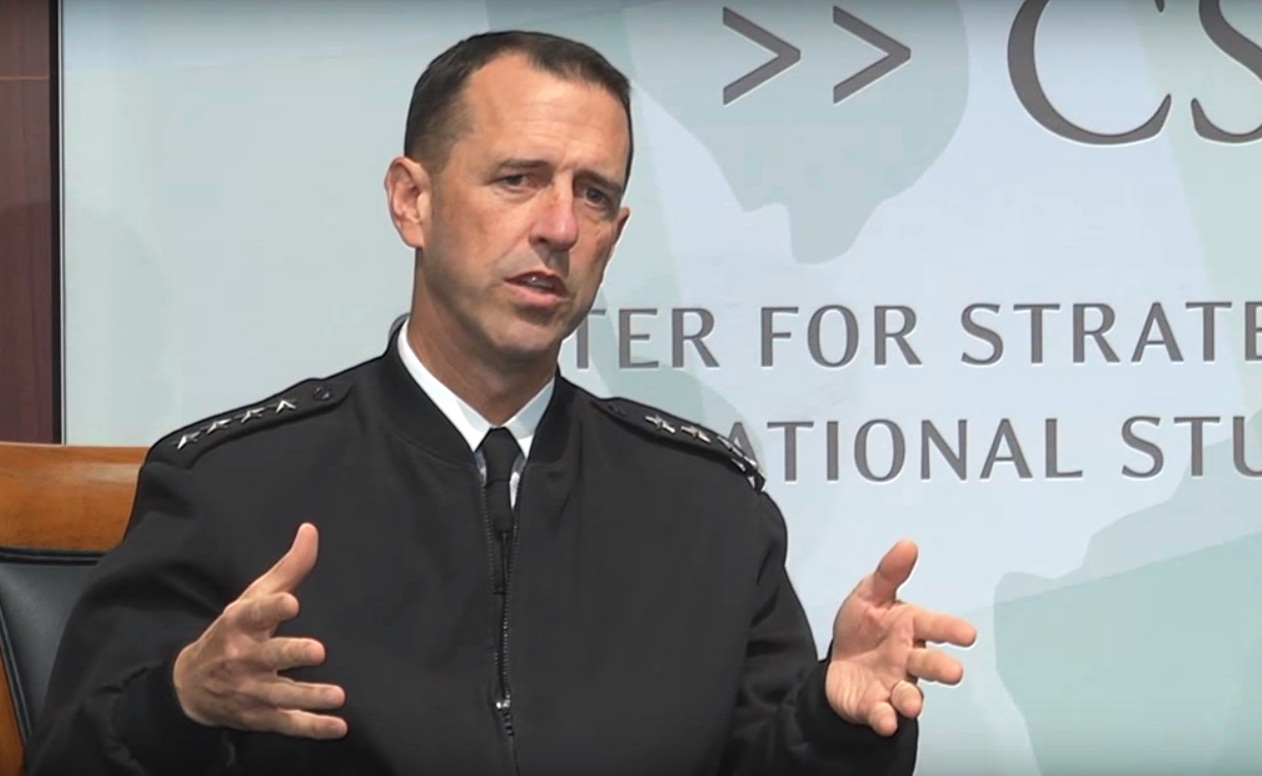
CNO Richardson speaks at CSIS (CSIS)

On October 3, 2016, while participating in a Maritime Security Dialogue at the Center for Strategic and International Studies (CSIS), Chief of Naval Operations Admiral John Richardson announced that the Navy would strike A2/AD from its vocabulary. Admiral Richardson stated, “To some, A2/AD is a code-word, suggesting an impenetrable ‘keep-out zone’ that forces can enter only at extreme peril to themselves. To others, A2/AD refers to a family of technologies. To still others, a strategy. In sum, A2/AD is a term bandied about freely, with no precise definition, that sends a variety of vague or conflicting signals, depending on the context in which it is either transmitted or received.” Richardson went on to say, “To ensure clarity in our thinking and precision in our communications, the Navy will avoid using the term A2/AD as a stand-alone acronym that can mean many things to different people or almost anything to anyone.”

But A2/AD is not just Navy terminology. The acronym is used in any number of joint publications and is recognized as a part of joint doctrine. After all, there is perhaps no topic more “joint” than the study of countering A2/AD, and as such, the Navy should continue to use the same terminology being used by the rest of the services instead of abandoning doctrine.

In Line with Naval Tradition

With his prohibition on A2/AD, CNO has upheld the Navy’s reputation for ignoring doctrine. It is no secret that naval officers rail against doctrine and adhere to it grudgingly. Corbett warned naval strategists to not become enamored with maxims when studying war as it stifles good judgment. Roger W. Barnett in his book on the Navy’s strategic culture provides an accurate description of this anathema noting, “Navy strategists look upon written doctrine as maxims and are wholly uncomfortable with it. To the naval strategist, the combination of definitions and doctrine becomes rather toxic.” Admiral Richardson exemplifies Barnett’s views and if one watches the video of his remarks at CSIS, his disdain for A2/AD is clear. But A2/AD is not just jargon. It is a viable term that if used in the proper context can convey the fidelity CNO is looking for. Moreover, it is a term that the joint force is familiar with and continues to use. Admiral Richardson’s ban on A2/AD has in essence forced the Navy to turn its back on prescribed joint doctrine and terminology

Granted, blind adherence to doctrine is not necessarily a good thing. However, in this case adherence to the terminology laid forth in doctrine is useful, especially since all of the services are so vested in counter A2/AD. In Chapter One of Joint Publication One (JP-1), former Chief of Staff of the U.S. Army, General George H. Decker’s stated, “Doctrine provides a military organization with a common philosophy, a common language, a common purpose and a utility of effort.” The Department of Defense’s position on doctrine is clearly articulated in subsequent paragraphs declaring, “the use of joint doctrine standardizes terminology, training, relationships, responsibilities and processes among all of the U.S. forces to free the joint force commanders (JFCs) and their staffs to focus on solving strategic, operational, and tactical problems.” Finally, Naval Doctrine Publication 1, Naval Warfare defines doctrine thus, “Doctrine is not an impediment to a commander’s exercise of imagination; rather, it is a framework of fundamental principles, practices, techniques, procedures, and terms that guides a commander, commanding officer, or officer-in-charge in employing force(s) to accomplish the mission. Doctrine provides the basis for mutual understanding within and among the Services and national policy makers. It ensures familiarity and efficiency in the execution of procedures and tactics.” Based on these definitions alone, including the Navy’s cut on doctrine, Admiral Richardson’s comments clearly contradict the expectations articulated for the joint force. Instead of fostering unity of effort and a common approach to A2/AD, CNO’s edict has the potential to drive a wedge between the Navy and the other services. 

Need for Inter-Forces Cooperation

Another problem with CNO Richardson’s proclamation is it contradicts the Joint Operational Access Concept (JOAC), 1.0 which guides the joint force on how to approach A2/AD. “The JOAC describes in broad terms how joint forces will operate in response to emerging anti-access and area-denial security challenges” and,  “… envisions a greater degree of integration across domains and at lower echelons than ever before.” Likewise, the JOAC defines anti-access (A2) and area-denial (AD) for the joint force as follows, “Anti-access refers to those actions and capabilities, usually long-range, designed to prevent an opposing force from entering an operational area. Anti-access actions tend to target forces approaching by air and sea predominantly, but also can target the cyber, space, and other forces that support them. Area-denial refers to those actions and capabilities, usually of shorter range, designed not to keep an opposing force out, but to limit its freedom of action within the operational area. Area-denial capabilities target forces in all domains, including land forces.”

Granted these definitions may not be as concise as CNO may like, but they are the accepted joint definitions, and they do cover the spectrum of potential threats. As these definitions are not suitable for CNO then why not approach the A2/AD conundrum in the same fashion as the Navy approaches warfare? For example, the Navy’s approach to Air Defense is just as convoluted as CNO suggests A2/AD is. The Air and Missile Defense Commander (AMDC) is responsible for defending the force against air threats. But air threats can be a variety of things like ballistic missiles, aircraft and anti-ship cruise missiles (ASCM); all of which must be dealt with in a different fashion based on each one’s ranges and capabilities. To manage the variety of threats the AMDC publishes an OPTASK Air Defense plan which provides specific guidance that has been tailored based on the area of operations and the threats that are present, thus leveling the playing field and ensuring all the players are on the same page. The point is, this methodology represents how the Navy has successfully operated for decades. The inherent flexibility of this approach to warfare allows the Navy to adapt to ever changing environments and threats, regardless of the region. It should be no different where A2/AD is concerned.

Conclusion

Admiral Richardson’s decision to strike A2/AD from the Navy’s lexicon only sends conflicting signals to the rest of the Joint Force, our allies, and partners. On the surface, it looks as if the Navy is no longer a team player where A2/AD is concerned. Still, others are no doubt wondering why CNO has done this when none of the other services have gone this route. Arguably, the elimination of A2/AD from the Navy’s vocabulary is more likely to undermine the clarity of thinking and precise communication CNO desires. If I could whisper in CNO’s ear, I would recommend he demand more rigorous thinking and adherence to the JOAC’s vision of A2/AD instead of throwing out the term.

Negative: A2/AD is an Unoriginal and Unhelpful Term In Understanding Threats

By Jonathan D. Askonas

A2/AD, for the uninitiated, stands for “Anti-Access/Area Denial,” shorthand for a variety of technological and tactical changes supposedly creating new and unique military challenges for the United States to confront. What makes doctrinal language useful? It provides a name and set of concepts that help us think about a phenomenon in order to improve military performance. My contention is that A2/AD conceals and obscures more than it clarifies and is thus not useful doctrinal language.

What is an “Anti-Access/Area Denial” military system? In normal use, A2/AD refers to technologies and tactics which, through precision guidance, communications, and firepower, make the deployment and use of American forces riskier and more expensive. Which is to say, they are military systems. One of the beauties of A2/AD is that anything short of tactical scenarios the U.S. military is itching to engage (like a rerun of the 1991 Iraqi Turkey Shoot) becomes “A2/AD.” Anti-ship ballistic missiles (ASBMs)? A2/AD. Small, swarm-tactic Iranian littoral boats? A2/AD. Integrated air defense systems (IADSs)? A2/AD. Diesel attack subs? A2/AD. Any modern military technology that enables a great power to project force past its own borders in ways which even marginally threaten the West’s ability to conduct combined arms operations can be subsumed in a sexy operational concept. But this overbroad idea has at least three fatal problems which doom it to the conceptual dustbin.

A2/AD Deceives Us Into Confusing the Tactical, Operational, and Strategic Levels of Warfare 
4558915505_7abda290a9_z
While their role in an A2/AD strategy is up for a debate, substantial Chinese investment in new technologies, like this Type 039 Song Class diesel-electric submarine, is undeniable. (PRC Stock Photo)

The biggest problem with A2/AD is that it carelessly elides the distinguishing levels of war, smuggling all kinds of assumptions and non sequiturs into our thinking. When most people talk about A2/AD, they refer to technological capabilities which are capable of attacking/hampering Western capabilities (tactical) in ways which increase the risk of the West acting in specific areas (operational), to the end of limiting Western influence (strategic). But reality almost never lines up with this picture, even in the canonical examples of A2/AD. Take the South China Sea, where Chinese investment in ASBMs, diesel attack subs, and other hardware are supposedly part of a strategy of A2/AD designed to minimize American ability to intervene in the region. And yet, this picture falls apart on closer inspection. At the technological level, complex kill-chains create all kinds of vulnerabilities in China’s new (and relatively untested) weapons systems which, when it comes to operational considerations, render them unreliable, particularly as American forces adapt to them (the traditional response to operating in “denied” territory). And at the strategic level, A2/AD as a strategy is absurd. War is politics by other means – how are extra missiles by themselves supposed to force American carrier battle groups not to enforce freedom of the seas? China has not attempted to sink them in the past not because it lacked the capability but because it lacked the will. The ultimate anti-missile defense system is threat of unstoppable violence should the American people be attacked. A2/AD’s conceptual confusion about how technologies, tactics, operations and strategy interrelate undermines any utility the idea might have.

A2/AD Lends Itself To An Overly Cautious, Defensive, and Unhistorical Mindset

As the CNO himself pointed out, A2/AD encourages a cautious, defensive, and unhistorical mindset. To the first point, A2/AD, with its language of “area denial” lends itself to being construed as defensive in nature. For example, “A2AD capability is not offensive or aggressive in nature,”French General Denis Mercier and NATO supreme allied commander for transformation said last October. “It’s principally a defensive measure. So we have to consider it, we have to be aware of it, we have to include it in our planning but it’s not the threat as such.” Because it elides the levels of warfare, A2/AD transforms the defensive capabilities of the weapon (tactical) into a defensive intent on behalf of the enemy (strategic). And yet, as even the most greenhorn strategist knows, because warfare is a competitive activity, changes in relative advantage determine outcomes and shape the overall operational picture, regardless of whether the weapons themselves are offensive or defensive in nature. Moreover, in many cases, the weapon systems in question are not obviously solely defensive in nature, nor only capable of targeting American forces.

To the second point, that A2/AD is anachronistic, it seems peculiar that a concept as old as warfare has been highlighted as the next big new defense threat. The ability to make certain areas of the battlespace difficult or impossible for the enemy to access, thus shaping his choices, is one of the foundational mechanics of warfare. Conceptually, minefields, coastal defense guns, and U-Boats had (or sometimes had) identical functions to contemporary “A2/AD” weaponry. Because it highlights new technologies of area denial, A2/AD hampers rather than helps our ability to use military history and analogical thinking to come up with creative solutions to contemporary military challenges.

A2/AD traps Us Into a Rigid Conception of the Enemy and the Enemy’s Strategy

By fogging up the distinguishing levels of war and highlighting the ways great power rivals are working to defend against U.S. intervention, A2/AD lulls us into projecting our operational challenges onto the intentions of our enemies. In other words, A2/AD tricks us into thinking that, because it is the case that widespread ASBM deployment in the East China Sea or IADSs over Syria increase the relative risk of an American intervention, those actions were taken for that purpose. By tying an operational fact (ASBMs are a threat to American ships) to a strategic assumption (therefore, ASBMs are primarily intended to deny access to American ships), A2/AD hurts our ability to imagine what else the enemy might be up to. The same missiles which can sink an American carrier can also hold Taiwanese naval forces at risk; the same IADS that limits American intervention in Crimea can also target actively target Lithuanian or Estonian fastmovers. I don’t mean to suggest that these are likely possibilities, but they are possibilities, and ones which A2/AD belays. The problem is that the enemy gets a say, too. Just because we have an operational concept which says that Chinese investment in a blue water navy or Russian research into advanced air-to-air missiles are primarily aimed at limiting U.S. influence does not make it so. And, even if this is true today, there is nothing to suggest that the enemy might change his mind. By incorporating assumptions about enemy intent into its model, A2/AD lulls us into thinking we understand the enemy.

Conclusion

At the end of the day, A2/AD furthers a strategic culture that obsesses over the “next big thing” and neglects the fundamentals. To the extent that A2/AD is correct about the need to incorporate standoff weaponry into our tactical calculations, it is trivial; that is a well-understood part of operational art. And to the extent that A2/AD makes non-trivial claims about the enemy’s strategy or intent (or the nature of warfare), it is dangerously blithe, imprecise, and blinkered. Like the Revolution in Military Affairs, Full Spectrum Warfare, and NetWar before it, A2/AD will soon join the graveyard of Pentagon intellectual fads that preceded it. And well it should.

Bob Poling is a retired Surface Warfare Officer who spent 24 years on active duty including tours in cruisers, destroyers and as commanding officer of Maritime Expeditionary Security Squadron TWO and Mission Commander of Southern Partnership Station 2013. From May 2011 to May 2015 Bob served on the faculty of the Air War College teaching in the Departments of Strategy and Warfighting. He was the Naval History and Heritage Command 2014-2015 Samuel Eliot Morison scholar and is pursuing his Ph.D. with the Department of Defence Studies, King’s College London where he is researching Air-Sea Battle concepts used to combat A2/AD challenges encountered during the Solomon Islands Campaign.

Jon Askonas is a 2nd year DPhil candidate in International Relations at the University of Oxford, where he is a Beinecke Scholar and a Healy Scholar. He is interested in the relationship between knowledge production/transmission and decision-making in large organizations. He has a BS in International Politics (summa cum laude) from Georgetown University and a MPhil(Merit) from Oxford. He has worked at the Council on Foreign Relations and the US Embassy in Moscow.

The opinions and assertions contained herein are the private opinions of the authors and are not to be construed as official or reflecting the views of the Department of Defense, the United States Government, or the United States Navy, or any organization – they are the authors’ personal opinions.

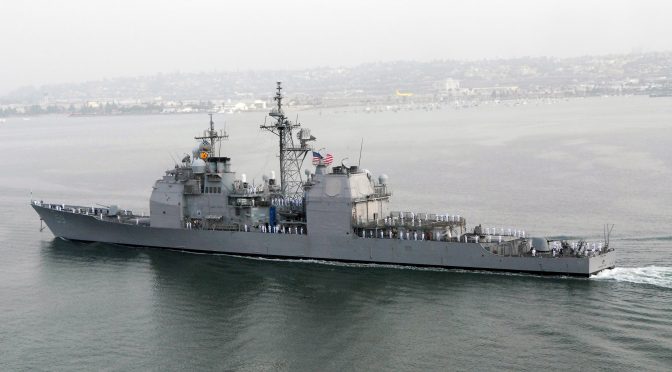
Featured Image: U.S. Navy guided missile cruiser USS Princeton. U.S. Navy Photo by Mass Communication Specialist Seaman Jake Berenguer (Released)
U.S, Israel, and Seapower in the East Med

The following article is adapted from the Report of the Commission on the Eastern Mediterranean sponsored by the University of Haifa and the Hudson Institute. 

By Seth Cropsey

Beginning on 9 October, several missiles were fired at the Arleigh Burke-class guided missile destroyer USS Mason (DDG-87) in the Red Sea from Houthi-controlled territory in war-torn Yemen. Iran supports the Houthis with arms, training, and money. The United States responded by launching several land-attack missiles from the guided missile destroyer USS Nitze (DDG-94) against radar installations and other Houthi targets in Yemen. In response, Iran has deployed a pair of warships to Houthi waters, ostensibly to “protect trade vessels and oil tankers.”

Concurrently, Turkey continues its operations against Syria’s Kurds, using its rapprochement with Russia to give it political cover for more assertive military activity. As he continues tightening his grip on Turkey after the aborted coup attempt in July, President Erdogan’s venture could signal a major divergence between American and Turkish strategic goals.

Meanwhile, the Syrian ceasefire brokered by the U.S. and Russia has all but evaporated. Moscow and Washington have ceased discussions, especially after Russian airstrikes destroyed a UN aid convoy in late September.

The Middle East, never an oasis of tranquility, has reverted to its traditional template of tension and violence. Both Syria and Iraq are now failed states—targets of opportunity—for terrorist groups that burn their victims alive, and dictators that massacre their own people. The region is also home to a major portion of the world’s energy resources, and a large portion of global maritime trade passes through the various chokepoints that surround and suffuse it.

Disengagement is always tempting for great powers. The “Weary Titans” of international politics have an ear for their politicians’ rhetoric of exhaustion and weariness. This encourages isolationism, the cutting of “entanglements,” and the desire to define “national interest” as purely homeland defense. But laying down our burdens rarely works. Enemies’ animosity and ambition is spurred, not deflected if states that benefit from the international order look the other way.

This is the first conclusion of the University of Haifa and Hudson Institute Commission report on the Eastern Mediterranean released last month.  Commission members included American and Israeli political and military leaders from both sides of the partisan aisle. The report reflects their agreement that disengagement is not an option. The economic relevance of the Middle East as a whole, combined with its chronic instability, the pervasiveness of terrorism and radicalism, and the power plays of larger states, will make the region strategically relevant to the U.S. for decades to come.

The authors of this report all agree that American and Israeli interests remain in alignment and that increased engagement will advance the shared interests. Both the Jewish state and the world’s greatest democracy have a critical interest in keeping the seas free for navigation, preventing hegemony on land in the Middle East, and countering both regional and global jihadist movements. The present Middle Eastern strategic situation makes this relationship more important than at any point in the past 30 years, or, arguably, at any point in history.

Israeli seapower is a large and increasing strategic concern for the Jewish state. Ringed by hostile countries, Israel relies on maritime transport for 99% of its trade. Additionally, since the early 2000s, Israel has discovered massive oil and gas reserves in its offshore Exclusive Economic Zone. These reserves are large enough to make Israel a player in the global energy market. Finally, nearly all of Israel’s major population centers lie on its coast. Israel’s economy, resources, and very survival are aided immeasurably by the strength of whatever power controls the Eastern Mediterranean. From 1973 onward, Israel could rely on a robust U.S. Sixth Fleet, complete with at least one aircraft carrier, to secure the seas and preserve its lines of communication. In return, the U.S. could rely on Israel to counterbalance regional threats, and advance its general strategic interests.

Today’s Sixth Fleet is comprised of four guided missile destroyers and a command ship. This is supplemented on occasion by U.S. surface forces that are diverted from their passage through the Mediterranean to the Persian Gulf, or from the Gulf itself, to strike land targets in Syria. Only four American fighting ships are tasked with controlling one of the world’s most critical maritime hubs. This leaves the U.S. and its allies vulnerable.

The report recommends several solutions, including greater cooperation between U.S. and Israeli naval forces, and the involvement of potential regional partners.  However, there is no substitute for American and Israeli seapower. Future administrations and governments in both countries should expand their naval forces, with an eye toward establishing sea control in a contested environment, deterring mischief, and fighting, if necessary.

The Hudson-Haifa report offers future administrations a template for discussing security issues that are critical to two of the world’s most important democracies. Based on sound strategic thinking, rather than ideological biases, it avoids typical Washington political bickering, and analyzes what is in American and Israeli interests. Disengaging from the region, a frequent refrain used by both Democrats and Republicans over the last decade, only makes America weaker at the same time disregarding policy options to the point where no reasonable ones are left. Only through careful analysis and planning can the U.S. and Israel develop proper joint policies to safeguard their joint security and interest.

Read the full report: Report of the Commission on the Eastern Mediterranean.

Seth Cropsey is a Senior Fellow at Hudson Institute, and director of Hudson’s Center for American Seapower. He is a member of the Commission on the Eastern Mediterranean Report sponsored by the University of Haifa and Hudson Institute. Dr. Cropsey served as a naval officer and as deputy Undersecretary of the Navy in the Reagan and George H. W. Bush administrations.

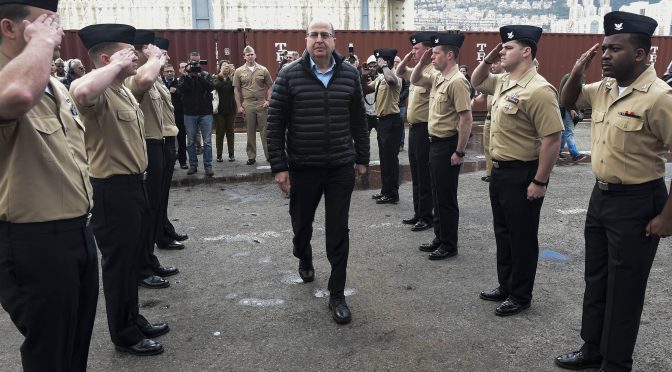
Featured Image: HAIFA, Israel (Feb. 22, 2016) Sailors render honors to Israeli Minister of Defense Moshe Ya’alon during a tour of USS Carney (DDG 64) while in port Haifa, Israel. Carney, an Arleigh Burke-class guided-missile destroyer, forward deployed to Rota, Spain, is conducting a routine patrol in the U. S. 6th Fleet area of operations in support of U.S. national security interests in Europe. (U.S. Navy photo by Ensign David Nelson/Released)

An Interview with Vice Admiral Tom Rowden on the Future of the Surface Navy

By Dmitry Filipoff

Vice Admiral Tom Rowden, Commander, Naval Surface Forces, spoke with CIMSEC about the future of surface warfare and how the surface fleet is supporting the Chief of Naval Operations’ Design for Maintaining Maritime Superiority. In particular, he discussed the ongoing development of the distributed lethality concept, how the surface warfare enterprise is evolving, and what the recently commissioned USS Zumwalt means for the future of the surface navy. This interview has been edited for length and clarity.

You are leading an effort to turn the surface navy into a more distributed force. What efforts have to be synchronized across the surface warfare enterprise to foment this transformation?

As we focus on distributed lethality I think the Distributed Lethality Task Force (DLTF) has done a phenomenal job of directing us in four areas. The first is tactics, and those tactics are focused on winning and sustaining sea control. The second is talent, and I think that is all about attracting and retaining our very best and raising the quality of performance across the force. The third is training. That’s really advanced tactical training and the development of this warrior ethos through a number of centers of excellence that we have in integrated air and missile defense, antisurface warfare, antisubmarine warfare, and antimine warfare. Finally, there’s tools, which entails offensive lethality across the board in the ships that we operate and defensive resiliency in those same ships. Tactics, talent, training, and tools, that’s really what we are focused on.

This year, three destroyers deployed as a Pacific Surface Action Group as a part of the distributed lethality concept’s development. What was learned from this deployment and what further plans do you have for refining and testing the concept?

The deployment is ongoing and we are still assessing the lessons learned. We certainly are in the process of learning about operations in the western pacific and what it means for distributed lethality and sea control. The thing I keep in mind is that when you have the opportunity to combine the lethality of three ships operating in a surface action group, the whole becomes much greater than the sum of the parts. As we look to send a PACSAG across the ocean, how do we think differently about the command and control of those ships and the utilization of their capabilities? What do we project for future surface action groups?

One of the things we are looking into is what we refer to as an upgunned ESG, which is taking a surface action group and putting it under the tactical control of an Expeditionary Strike Group that is operating forward, perhaps one with joint strike fighters. How does that tool look in the commander’s toolbox and how can we utilize that? There are a lot of opportunities to learn from the PACSAG. But as we deploy our forces, can we think differently about our independent deployers and moving them into surface action groups, providing them with a command element, and then issuing specific tasking or things to learn about how to operate those ships in a group. I think this holds great promise for the future.

What institutions are playing a key role in the development of distributed lethality and how are they contributing?

There’s a lot going on across the force. It comes back to Tactics, Talent, Training, and Tools. The Naval Surface and Mine Warfare Development Center (SMWDC) plays a big role in a lot of things we are working on. They are singled up on not only our tactics, but our training and talent as well with some influence in our tools piece, but really those three areas. On the training side of the house, I would also say the numbered fleets and certainly the Afloat Training Groups are helping with their ability to get the ships trained up.

Other folks that are contributing significantly to the development of our tactics are the numbered fleets with the large exercises we are executing such as RIMPAC. On the talent side of the house, in addition to SMWDC and the warfare tactics instructors they are developing, we are working closely with PERS41 in order to make sure from a leadership perspective that we are taking care of and properly progressing the young men and women that are coming into the surface force.

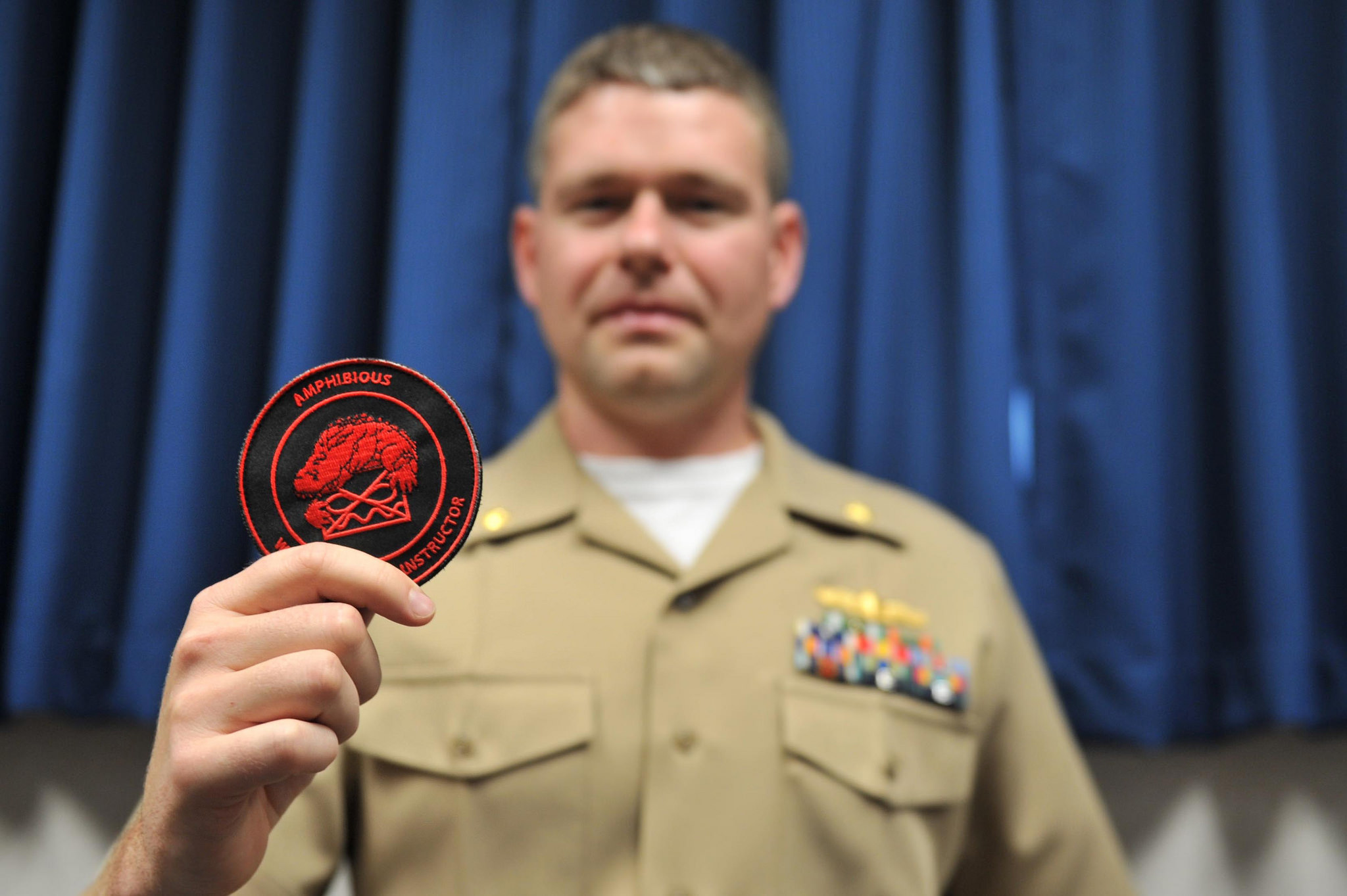
VIRGINIA BEACH, Va. (May 26, 2016) Lt. Cmdr. Dirk Sonnenberg, a graduate of Naval Surface and Mine Warfighting Development Center’s (SMWDC) Amphibious Warfare Tactics Instructor (WTI) course and winner of the course’s Iwo Jima Leadership Award, showcases the patch he and his classmates received upon graduating from the 14-week course. SMWDC is increasing the tactical proficiency of the surface warfare community by selecting elite surface warfare officers to become specialized warfighters called Warfare Tactics Instructors (WTI). (U.S. Navy photo by Mass Communication Specialist 2nd Class Jamie V.
VIRGINIA BEACH, Va. (May 26, 2016) Lt. Cmdr. Dirk Sonnenberg, a graduate of Naval Surface and Mine Warfighting Development Center’s (SMWDC) Amphibious Warfare Tactics Instructor (WTI) course and winner of the course’s Iwo Jima Leadership Award, showcases the patch he and his classmates received upon graduating from the 14-week course. (U.S. Navy photo by Mass Communication Specialist 2nd Class Jamie V)

Finally, the OPNAV staff N96 and the requirements and resource folks working for RADM Boxall, Naval Research Labs, NAVSEA, and NAVAIR are contributing greatly to the “tools” concept.

With respect to the analysis we are executing, there are several significant organizations within the Naval Postgraduate School and the Naval War College that are helping us.

How do communities outside of the surface warfare enterprise such as submarines, aviation, information warfare, and others fit into distributed lethality?

The term was kind of born with the surface force and in some of the conversations we were having back in Washington D.C. when I was working the resource side for the CNO. The concepts applied not only to other communities but across the naval force and the joint force.

Truth be told we are already moving in this direction. The retirement of the SSGNs led the submariners to develop the Virginia payload module, and I think it is going to be a significant asset as we bring it online. The networking capabilities of the F35 creates airborne distributed target networks, and with the F35B coming to our bigdeck amphibs, that’s a tremendous asset we can leverage for sea control and also bring the Marine Corps in on executing the sea control mission.

We certainly are hearing more and more about operating in a more distributed manner with it being referred to as “distributed maritime operations,” which I think is an offshoot of the concept and organizing principle of distributed lethality. I think it stretches across the fleet and the joint force as well.

CIMSEC has launched several topic weeks on distributed lethality, and two in partnership with the Distributed Lethality Task Force. How have these writings contributed to the concept’s development?

We really appreciate all of CIMSEC’s efforts to raise awareness on distributed lethality and to encourage a broad spectrum of people to think about how best to improve our Navy. I think that’s critically important. It is also important to think about how we advance the distributed lethality concept from the conceptual phase into the operational phase. I think the intellectual opportunities CIMSEC provides for a larger group of thinkers is vital, and especially for our junior officers. The JOs I get to interact with on the waterfront– what a talented and excited group of young folks. Any opportunity that we can take to leverage their thoughts, enthusiasm, and professionalism seriously raises the level of discourse and can only add to the discussion.

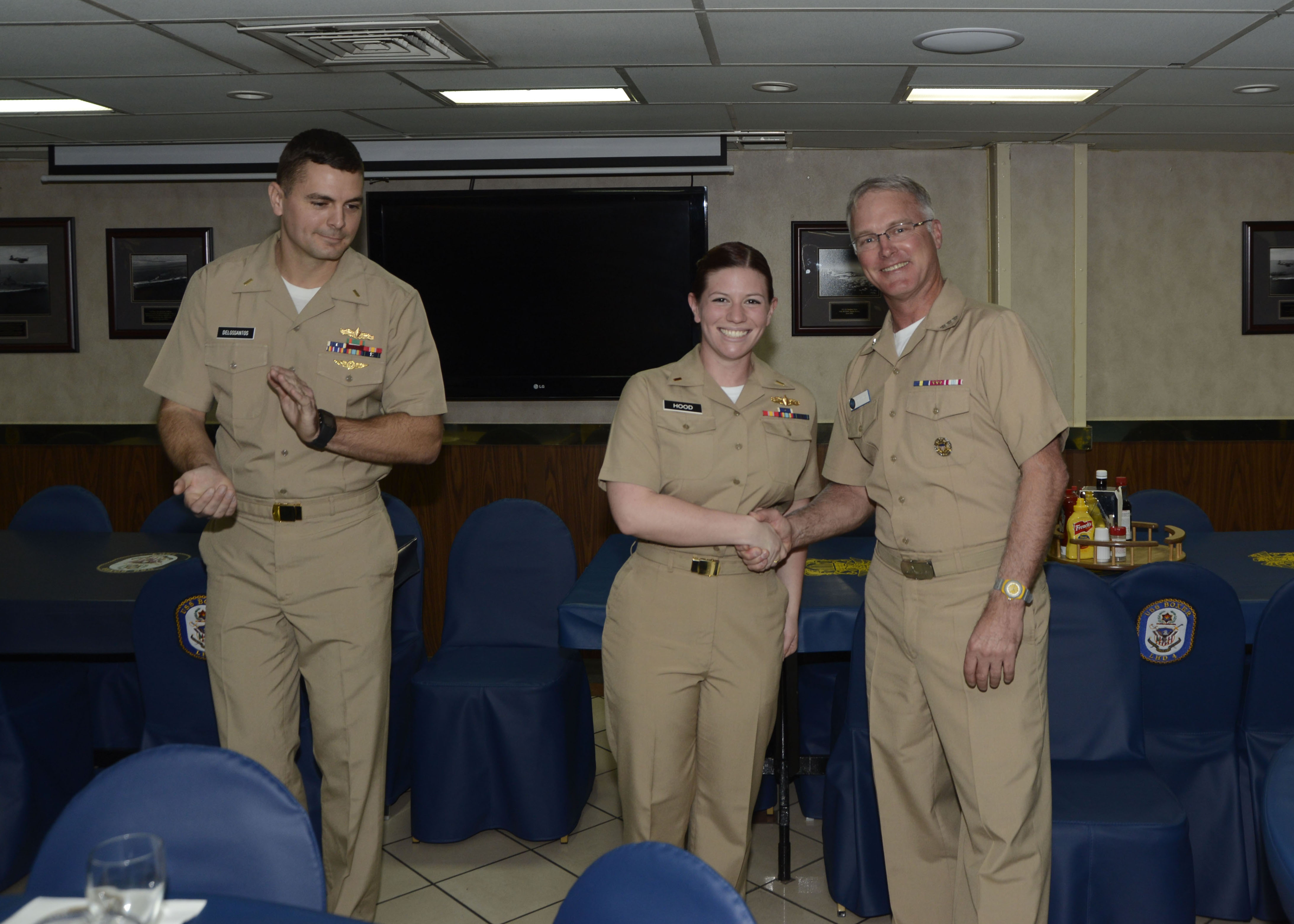
SAN DIEGO (Feb. 9, 2015) - Ens. Lauren Hood, Operations Intelligence Division Officer for the amphibious assault ship USS Boxer (LHD 4) is awarded her Surface Warfare Officer pin by Vice Adm. Thomas S. Rowden, Commander, Naval Surface Forces, in Boxer's wardroom. Boxer is currently undergoing a planned maintenance availability in San Diego. (U.S. Navy photo by Mass Communication Specialist 2nd Class Briana Taylor/Released)
SAN DIEGO (Feb. 9, 2015) – Ens. Lauren Hood, Operations Intelligence Division Officer for the amphibious assault ship USS Boxer (LHD 4) is awarded her Surface Warfare Officer pin by Vice Adm. Thomas S. Rowden, Commander, Naval Surface Forces, in Boxer’s wardroom. (U.S. Navy photo by Mass Communication Specialist 2nd Class Briana Taylor/Released)

Where we are deriving a ton of benefit is from thinking about some of the enablers for distributed lethality. Command and Control, electronic warfare, cryptologic operations, and unmanned vehicle integration are things that are not necessarily touched by surface warfare, but we have the opportunity to reach across a broader spectrum and bring them in. I think that’s vital, and I appreciate CIMSEC’s efforts there.

Distributed lethality is not just about offensive weapons. It is about presenting an adversary with a difficult set of operational problems. Our robust C2, the facets of electronic maneuver warfare, distributed agile logistics, all of that is necessary. All of that has been featured in your forums, and that’s really important for us.

Glad to hear it, sir, thank you. Many have raised the point that more authority should be delegated to more junior commanders in order to truly enable distributed lethality. What is your vision for the command and control of a distributed force?

I envision a scalable C2 structure, and starting with a theoretical limit of perfect sensing and perfect networking. A fleet maritime operations center is capable of centralized planning and decentralized executing of fleet operations, which certainly we’ve seen before. On the other end of the scale, I see distributed operations in a mission command, comms-denied environment. One in which our commanding officers have already practiced, and where they feel confident in the employment of their weapons systems in the pursuit of the last order they received from their commander, all the while exercising the initiative required to exploit the tactical advantage wherever it is presented. That’s really what it is all about.

A week and a half ago you spoke at the USS Zumwalt commissioning ceremony, and in your remarks you stated “She builds upon more than two centuries of fighting spirit and innovation.” What will be your immediate priorities for the Zumwalt when she arrives in San Diego, and what does the Zumwalt tell us about the future of the surface navy?

I often think about what an exciting time it is not only to be a part of our Navy, but especially a part of our surface navy. We’ve got new ships, new classes of ships, and new concepts. We are working hard to recruit and retain the most talented men and women this nation has to offer, and we are working hard to improve our tactics, our training, and our procedures.

With that as a backdrop, we are really looking forward to getting her out here. We’ve got to get her through post delivery availability, through combat systems activation and testing, and to an initial operational capability. The priority is to do everything I can to give Captain Kirk the time to train his crew across the broad spectrum with which we will be able to apply this ship.

For the future of our Navy, I think Zumwalt points to some very meaningful directions. The first I think of is stealth. We specifically designed that ship to significantly reduce its radar cross-section. How can we utilize that in future operations, how we can think differently about the utility of the ship in those operations, and how might we take that knowledge and leverage that into future ship classes that we build?

On size, she is certainly larger than a DDG, but with that increased size comes increased opportunity. Just look at the vertical launch system alone. She has the ability to take much larger missiles into her MK57 VLS than we have in the MK41 VLS. Her computing power, firepower, that huge flight deck, the new undersea warfare systems, we are going to leverage all of that. The power that ship generates — 78 megawatts of power — is more power than we have generated on any other surface ship. How do we utilize and leverage that power for future weapons systems, perhaps directed energy or railguns?

download-5
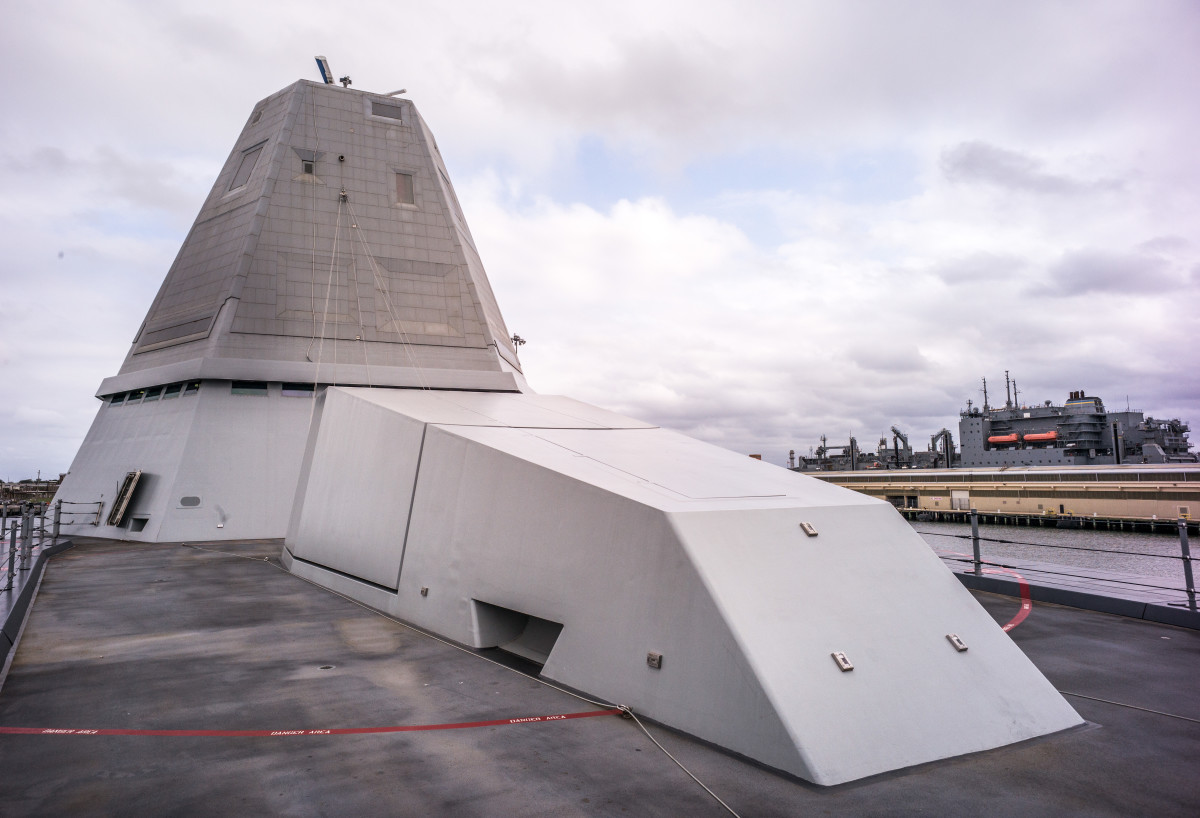
Norfolk Naval Station, VA. (Sept. 16, 2016) The land attack capabilities for Zumwalt comes from the ship’s two 155m m Advanced Gun System that can toss the lethal Long Range Land Attack Projectile nearly 60 miles at a rate of 10 per minute. (Mark D. Faram/Navy Times staff)

From the computing perspective we are looking to understand the ship’s total computing environment and how that impacts our ability to fight the ship. On the survivability piece, she has something called integrated fight-through power, which allows the ship to stay up and operational even if she sustains battle damage.

Those are some of the things that we have put on the ship, and we are gonna get her out, get her operating, get her in the hands of the sailors and Captain Kirk, and have them come back and tell us how we can leverage all of these capabilities to the maximum benefit of the fleet going forward.

Any closing thoughts?

 I see excitement in the fleet on a daily basis. I have the great privilege of being able to go out and spend time on our ships and spend time with our sailors. I was recently on the Makin Island for the penning of the new Chief Petty Officers. There’s a lot of excitement, professionalism, and enthusiasm out there. Not that we haven’t had all of those in the past, but I’ve got to tell you, when I go on board the ships today it is palpable.

I think it is a great time to be serving our country and a great time to be serving on our surface ships. I could not be prouder of all the young men and women that are serving on our ships and all the great folks on the acquisition side, requirements side, and support side that are making these ships great. We will continue to do the best we can for them, and I know they will continue to do their best for us back here at home.

Vice Admiral Thomas S. Rowden is Commander, Naval Surface Forces. A native of Washington, D.C., and a 1982 graduate of the United States Naval Academy, VADM Rowden has served in a diverse range of sea and shore assignments.

Dmitry Filipoff is CIMSEC’s Director of Online Content. Contact him at Nextwar@cimsec.org.

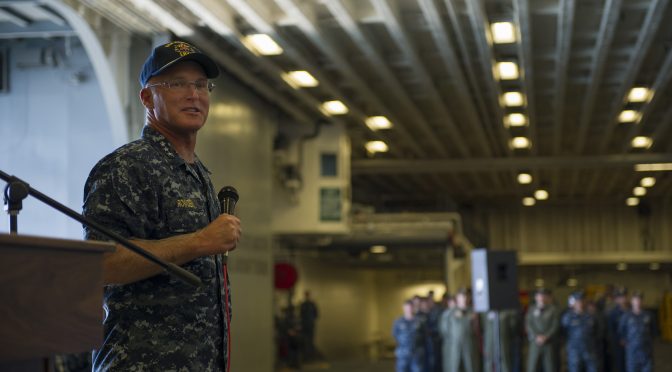
Featured Image: (November 6, 2014) Vice Adm. Thomas S. Rowden, commander, Naval Surface Forces and Naval Surface Force, U.S. Pacific Fleet, speaks to the crew on board amphibious assault ship USS America (LHA 6) during an all-hands call. (U.S. Navy photo by Mass Communication Specialist 1st Class Demetrius Kennon/Released)

Naval Strategy Returns to Lead the POM

By Steve Wills

Introduction

Newly appointed U.S. Navy Secretary John F. Lehman Jr. gave a signature speech at the Naval War College in Newport, RI in 1981. In his remarks Lehman hailed, “the return of naval strategy” to the forefront of the Navy’s planning.Such a message was again issued last week by Chief of Naval Operations Admiral John Richardson. While the CNO’s 18 October naval message (R 182128Z OCT 16) did not have Secretary Lehman’s dramatic turn of phrases, it is no less important and in fact is the most significant change in the role of U.S. naval strategic thinking since late 1991. The CNO’s message implements a major change in the planning and execution of the annual Navy budget statement known as the Program Objective Memorandum (POM.) For the first time since July 1991, the Navy Staff (OPNAV) Operations, Plans and Strategy (N3/N5) office will have the first input to the Navy POM building process. While this may not seem significant at first glance, it is a major course correction in Navy thinking. It could signal a return to the halcyon days of the 1980s when the Navy’s Maritime Strategy served as the service’s global blueprint for operational naval war against the Soviet Union, informing Navy programs, budgets, exercises, war games, education, training, and real world operations.

POM and Strategy Evolution Through the Cold War

The POM was created in 1970 by President Richard Nixon’s Defense Secretary Melvin Laird. It was designed as a response to what was seen as overbearing domination of service programming by the Office of the Secretary of Defense (OSD) in the Kennedy and Johnson administrations under Defense Secretary Robert S. McNamara.The POM was prepared by service rather than Defense Department analysts and was seen as a better way to allow the services to plan for their own futures. The Navy POM was controlled largely by the CNO’s OP 090 programming and budget directorate with the powerful systems analysis divison OP 96 in the lead for the development of Navy programs and associated budgets.

The system remained in place across the 1970s as a trio of influential CNOs brought about the conditions for what Navy strategist Captain Peter Swartz and naval historian John Hattendorf have called, “A renaissance in naval strategic thinking,” that occurred in the 1980s.3 Admirals Elmo Zumwalt Jr, James Holloway III, and Thomas Hayward all explored ideas for global naval strategy against a growing and more capable Soviet fleet. Admiral Zumwalt conducted a major reorganization of the Navy Staff (OPNAV) and worked to create an affordable yet capable fleet to confront its Soviet counterpart. Admiral Holloway explored differing fleet sizes and offensive concepts. Admiral Hayward had conducted significant research into a new offensive naval strategy while serving as the Pacific Fleet Commander. He further tried to reintroduce a strategic culture through the creation of a Naval War College-based, CNO strategy “think tank” called the CNO Strategic Studies Group (SSG) to create operational solutions to naval strategic problems.4 All three of these extraordinary CNOs worked to restore the Navy from its post-Vietnam War doldrums. They laid the groundwork for success in the 1980s, but faced severe policy and budget restraints and did not have optimum mechanisms to translate their naval strategy concepts into solutions acceptable to civilian leaders.

In August 1982, with a new presidential administration in power and a new CNO at the helm of the Navy, Deputy CNO Admiral Small sent an influential message to both the Navy’s strategy (OP 06) and Director of Naval  Warfare (OP 095) offices with a powerful instruction. To this end, Admiral Small (and presumably CNO Admiral James Watkins) adjusted the Navy POM process to give the Strategy branch the first “cut” on the POM building process as opposed to the OP 96 systems analysis branch. Small had been exploring this change for some months. In March 1982, he sent a memo to OP 06 Vice Admiral Sylvester “Bob” Foley in which he stated, “A review of maritime strategy may well change many of the assumptions currently explicit in our systems requirements. I guess the responsibility for this type of thinking lies somewhere between (or among) OP-06 and OP-095, but seems dormant.”The Director of Naval Warfare (OP 095) Rear Admiral W.R. Smedberg IV suggested that, “OP-06 take the lead in this action” and that the strategic setting and operational concept should be spelled out more explicitly as the backdrop of our POM development.” The Navy Programming and Budgeting Director (OP 090) Vice Admiral Carl Trost and the systems analyst division head Rear Admiral Jack Baldwin agreed with Small’s statements. Small submitted an August 1982 memo to, in his words, “Get the whole OPNAV staff moving in that direction (of strategic thinking in POM development).”6 In a 1998 letter, Small recounted that he, “had been increasingly perturbed by a lack of any relationship of POM development to any kind of maritime strategy, not only from an affordability standpoint, but the concomitant failure to challenge the assumptions made by program and platform sponsors.”7

Small’s memo set in motion a historic series of events. If strategy were to play a part in the 1983 POM process, a strategy briefing would need to be prepared in support of the Navy POM input. The OPNAV Strategic Concepts branch head (OP 603) Captain Elizabeth Wylie was ordered to prepare such a strategy appraisal. She selected Lieutenant Commander Stanley Weeks, who was assisted by Commander William Spencer Johnson from OP 605, in preparing this input. Weeks and Johnson’s document became the first iteration of the 1980s Maritime Strategy, which grew in sophistication and influence throughout the early and mid 1980s.

Strategy Adrift in the Post Cold War Era

A Maritime Strategy appraisal (CPAM) remained the first input to the POM process through 1991, but by then the global strategic system had been turned upside down. The passage of the Goldwater Nichols Act of 1986, the collapse of the Warsaw Pact, the end of the Cold War, Desert Storm operational practices, and the looming fall of the Soviet Union itself had precipitated significant changes. The Goldwater Nichols legislation had given the Chairman of the Joint Chiefs of Staff rather than the CNO control of the size and strategy of the fleet, although these powers would not be fully invoked until the accession of General Colin Powell to the chairmanship of the Joint Chiefs in 1989. The collapse of the Soviet opponent further weakened the need for the Maritime Strategy. By the spring of 1990, incoming CNO Admiral Frank Kelso was forced to concede that there was no need for a Maritime strategy in the absence of a great maritime enemy like the Soviet Union. He officially declared the 1980s Maritime strategy as “on the shelf” until again needed during his June 1990 Senate confirmation hearing as CNO.8

Between 1990 and 1991, the Maritime Strategy was replaced by the White Paper Revision, later known as “From the Sea,” as the opening assessment for the POM process. Admiral Kelso later suggested that “From the Sea” would play a similar role to that of the 1980’s Maritime Strategy in getting the Joint Staff, Congress and the Office of the Secretary of Defense to support, “The Navy’s job in the years ahead of us.”9

The new strategy was used in a method similar to its predecessor at the start of its existence. Many of its components were incorporated into a Total Force Assessment (TFA) brief scheduled for the CNO Executive Board (CEB) as a kickoff to the POM cycle by Captain Dick Diamond (OP 603 Branch Chief) to Admiral Kelso on 18 July 1991. Diamond’s brief was undercut at the last minute by an additional slide produced by RADM Dave Oliver’s OP 81 (systems analysis) office entitled, “The Coming USN Budget Train Wreck” that Oliver insisted be inserted into Diamond’s brief. Diamond recalled that Admiral Kelso did not like the littoral warfare focus of Diamond’s presentation and exploded when the OP 81 slide suggesting the Navy would shrink to less than 300 ships by 2010 was displayed.10 Admiral Kelso called Diamond into his office the next day and reversed course, stating that, “the brief was essentially correct and what you recommended is the right path ahead for the Navy…so I am going to do it.”11

Reorganizing OPNAV

The new strategy appeared to have CNO support as a POM influencer, but this condition was only temporary. Over the summer of 1992, Admiral Kelso responded with the most significant reorganization of the OPNAV staff since Admiral Zumwalt’s two decades earlier.12 In a 1994 USNI Proceedings article, Admiral William Owen, Kelso’s lead for the reorganization effort, suggested the reason for Kelso’s massive staff restructure was to implement this new strategy.13 Admiral Kelso stated in his Reminiscences of 2009 that the strategy was merely a rally point behind which Owens as the new N8 would organize programs and their funding.14

The OPNAV staff would now be organized by “N” codes along the Army-centric lines of the Joint Staff. The OP 08 programming office under the leadership of Admiral Owens was re-branded as the N8 and all Navy programmatic activity was effectively centralized under his control. Its primary management tool, the Joint Mission Assessment, was an analysis-driven document, developed by OPNAV flag officers and coordinated by the N81 (formerly OP 81) analysis office. The three star platform “barons” were downgraded to two stars and subordinated to N8.

The OP 603 office had previously conducted its strategy appraisal of the POM as part of the CNO Executive Board Review (CEB) prior to the other POM appraisals. The CEB was disestablished as part of the October 1992 OPNAV reorganization. The list of POM development assessments conducted before the 1992 reorganization includes a “White Paper Revision,” also known as “From the Sea,” described as a successor to the Maritime Strategy. Subsequent lists of POM development assessments make no mention of a strategy assessment.

The apparent demise of a direct service strategy input to the POM in 1992 was paralleled by a rise in the influence of systems and campaign analysis in POM development and management. In 1994, when recruited by CNO Admiral Mike Boorda to work in N81 analysis branch, veteran Navy operations analyst Bruce Powers said Boorda desired, “To revitalize N81 and turn it back into what OP 96 had been earlier.”15

The new analysis branch (formerly OP 81) N8 in time became even more powerful than the old OP 96 office over the next decade. In 2000, Admiral Vern Clark, a 1970s-era alumnus of the OP 96 office, succeeded Admiral Jay Johnson as CNO.16 Clark was a former Joint Staff Operations officer (J3), its director, and the first business school graduate to be appointed CNO. Clark believed that strategy properly belonged to OSD and the Joint system. His own job as a service chief was to manage the organization, training, and equipment provision to the service. Clark desired a “readiness-based” Navy; especially after the 9/11 terrorist attacks.17

Strategy Struggles

The N3/N5 (Deputy CNO for Plans, Policy and Operations) office attempted to get back into the business of influencing the POM in the 1990s and in the 2000s. In 1994, N3/N5 RADM Phillip Dur and his N51 Captain Joe Sestak attempted to improve the 1992 “From the Sea” White Paper with a successor document entitled “Forward From the Sea.” While it had some initial success, it did not achieve any influence in POM development since it was still focused on “blue water” programs and did not “Script a convincing story about how a littoral strategy works.”18 It was further criticized as just a repeat of the Navy’s Cold War presence operations and provoked backlash from the Army and Air Force due to its, “Parochial focus on uniqueness of naval forward presence.”19 “Only “boots on the ground,” combined with robust land-based (as opposed to carrier-based,” aviation could actually influence others.20 Although useful for two years in shaping the Navy POM, it did not achieve lasting influence.21 Further attempts by the N3/N5 office to influence the POM including a Navy Operational Concept, and the Navy Strategic Planning Guidance for POMs 02 and 03 were short-lived and failed to develop lasting influence on the budget cycle. They were greatly overshadowed by Department of Defense strategic initiatives such as the First Quadrennial Review (QDR) and increasing attempts at joint operations.22

In 2002, Admiral Clark told Vice Admiral Kevin Green, the incoming N3/N5 that the Navy did not need a “strategy,” as it already had one and it was called the POM.23 Admiral Clark assigned control of the Navy’s 30-year shipbuilding plan to N81 in 2000.24 The N81 office was also instrumental in developing the Global Concept of Operations (CONOPS) for Admiral Clark’s “Sea Power 21” concept.25

The decade of the 2000s was more successful in terms of re-asserting the influence of strategy on the OPNAV staff. Admiral Mike Mullen became CNO in 2005. Vice Admiral John Morgan was N3/N5 from 2004-2008 and had more success than Vice Admiral Green in pushing strategy documents to a wider audience, but was still outpaced by N81 in terms of POM influence. The Navy Operating Concept for Joint Operations, written by N513 (the strategy office of N3/N5) by contrast was little cited in either POM documents or within the press.

Succeeding strategy documents were also ineffective. The Navy Strategic Plan in support of POM 08 (2006) was signed out six months too late to be of significant influence on its intended POM cycle.26 The Strategic Plan for POM 10 (2007) had some influence in the development of the 2007 Cooperative Strategy for 21st Century Seapower. It was deliberately targeted at Navy Department programmers supporting POM development.27 It had extensive support from N81 including influential officers such as Commander Bryan Clark and Captain John Yurchak to ensure it “fit with the OPNAV POM process.”28 However, this document was Secret only and did not get wide distribution as a result. Unfortunately, the POM 10 Strategic planning effort was lost to a degree in the turmoil of the end of the Bush administration during which operations in Iraq and Afghanistan dominated Defense Department thinking.29 It reflected current and near-term Navy programming already in place rather than attempted to influence future efforts. It did not include the Marine Corps, and had no mechanism to secure OPNAV support, as did the N8 /N81 POM development process.30

Admiral Morgan’s greatest triumph was perhaps the 2007 Cooperative Strategy for 21st Century Seapower. It was championed by CNO Admiral Mullen and drafted by N3/N5 staff member Commander Bryan McGrath, and writers from the other sea services. The 2007 Cooperative Strategy was designed as a tri-service effort in support of POM 12.31 The document had widespread influence in the wider U.S. and international naval community, but again failed to have a significant impact on its intended POM target. Despite its influence, the 2007 document had no direct connection with POM development, unlike the pre-1992 Maritime Strategy CPAM inputs to the POM process.32 The distinct lack of a formal relationship between strategy and the programming process allowed Navy programmers to ignore strategic input from 1992 through the beginning of the second decade of the 21st century.

By contrast, the N81 analysis branch’s formal connection to the programming process has allowed it wide influence.33 Since 2000, the 30-year shipbuilding plan has in effect served as the Navy’s de facto strategy document. Its key supporting element is the Naval Force Structure Assessment (FSA). The FSA is described in OPNAV Instruction 3050.27 (12 February 2015), as a tool that, “determines long-term Navy force structure objectives to support a global posture of distributed mission-tailored ships, aircraft, and units capable of regionally concentrated combat operations and peacetime theater security cooperation efforts.”34 The 2012 FSA was used to, “determine a post-2020 requirement for 306 ships in the battle force and emphasized forward presence while re-examining resourcing requirements for operational plans and defense planning scenarios.”35

Back to the Future

It now appears that Admiral Richardson intends to reverse the last 25 years of total N8-dominated POM development. The POM will now be a three-phase process with the Deputy Chief of Naval Operations (DCNO) for Operations, Plans and Strategy (N3/N5) as the supported commander for the first phase; the N9 Warfare Systems office in charge of the second requirements integration phase, and the N8  leading the third resource integration phase effort. POMs will begin three months earlier than usual in order to ensure “strategic deliberation.” There will be no separate Resource Program Sponsor Proposals (RPSPs) in this new, more transparent POM environment. In addition, billets from the CNO’s own OPNAV “think tank,” office of 00K and the N81 Quadrennial Defense Review Division have been moved to the N50 divison (under N3/N5) to create a powerful new Strategy division capable of managing the first phase of the new POM process. The formal connection of the N50 office to the programming process appears to ensure that the influence of the inputs it creates will not be lost in bureaucratic channels as in the last 25 or so years. The final goal in the words of the message is, “a strategy-based, fiscally balanced, and defendable Navy Program for submission to OSD, which appropriately implements OSD fiscal and programming guidance, addresses SECNAV and CNO priorities, and achieves the best balance of strategic guidance as provided in the CNO guidance.”

Conclusion

Admiral Richardson’s new POM process is a bridge from the days of the 1980s Maritime Strategy across a quarter century of force structure management, and pseudo-strategy to a new era of great power competition. This process is perhaps the beginning a new global maritime strategy with which the Navy can confront the collective and growing maritime power of the Chairman’s “4+1” combination of potential threats (Russia, China, Iran, North Korea, and terrorism.) Admiral Richardson’s change to the Navy’s POM process is perhaps again the beginning of another golden age of American naval strategy.

Steve Wills is a retired surface warfare officer and a PhD candidate in military history at Ohio University. His focus areas are modern U.S. naval and military reorganization efforts and British naval strategy and policy from 1889-1941. 

1. Peter M. Swartz with Karin Duggan, U.S. Navy Capstone Strategies and Concepts, 1981-1990, Strategy, Policy, Concept and Vision Documents, Alexandria, VA, The CNA Corporation, December, 2011, p. 21.

2. Richard A. Hunt, Melvin Laird and the Foundations of the Post-Vietnam Military, 1969-1973,  Washington D.C, The Office of the Secretary of Defense,  Historical Office, The Secretaries of Defense Historical Series, Volume VII, Erin R. Mahan, General Editor,, pp. 16, 17.

3. John B. Hattendorf and Peter M. Swartz, U.S. Naval Strategy in the 1980’s. Selected Documents, Newport R.I, The United States Naval War College, The Newport Papers #33, 2008, p. 4.

4. John Hanley, “Creating the 1980’s Maritime Strategy and Implications for Today,“, Newport, R.I., The United States Naval War College Review, Spring, 2014, Volume 67, No 2, p. 15.

5. John B. Hattendorf, The Evolution of the U.S. Navy’s Maritime Strategy, 1977-1986, Newport, R.I, The United States Naval War College Press, The Newport Papers #19, 2003,  pp. 66-68.

6. Ibid.

7. Fax letter from Admiral William Small USN (ret) to Captain Peter M. Swartz, USN (ret), 02 October 1998, Arlington, VA, The Personal and Professional Papers of Captain Peter M. Swartz, USN (ret), used with permission.

8. “The Nomination of Admiral Frank B. Kelso, Jr USN, to be Chief of Naval Operations,” Hearing before the Committee of the Armed Services, The United States Senate, Second Session of the One Hundred First Congress, 14 June, 1990, pp. 326, 327.

9. Frank B. Kelso II and Paul Stilwell, The Reminiscences of Admiral Frank B. Kelso II U.S. navy (Retired), Annapolis, Md, The United States Naval Institute Press, 2009, p. 687.

10. Email from Captain Richard Diamond, USN (ret) to Dr. John Hattendorf, Naval War College, subject “Paper Review Status” (unpublished narrative of the events leading up to the September 1992 publication of “From the Sea”), 09 September 2006, Filed jointly inThe United States Naval War College, The Naval Historical Collection, The papers of Dr. John Hattendorf, and in the Professional papers of Captain Peter M. Swartz, USN (ret), 1991 “The Way Ahead” file, used with special permission of Dr. John Hattendorf, Captain Swartz and Captain Richard Diamond, USN (ret).

11. Ibid.

12. William A. Owens, High Seas, The Naval Passage to an Uncharted World, Annapolis, MD, The United States Naval Institute Press, 1995, p. 5.

13. William Owens, “The Quest for Consensus,” Annapolis, MD, The United States Naval Institute Proceedings, Vol 120/5/1095, May 1994, pp. 69, 70.

14. Frank B. Kelso II and Paul Stilwell, The Reminiscences of Admiral Frank B. Kelso II U.S. navy (Retired), p. 688.

15. Bob Sheldon and Michael Garrambone, “Military Operations Research Society (MORS) Oral History Project Interview with Mr. Bruce F. Powers,” Military Operations Research, V21 N#2,  2016, doi 10.5711/10825983212107, p. 118.

16. Wayne P. Hughes, Jr., (2002) Navy Operations Research. Operations Research 50(1):103-111. http://dx.doi.org/10.1287/opre.50.1.103.17786,  p. 107.

17. Ronald Ratclift, “CNO and OPNAV Reorganization,” In  David A. Williams (ed.), Case Studies in Policy Making and Implementation. 6th ed,  Newport, RI, The United States  Naval War College Press, 2002 , p.p. 326-328.

18. Edward Rhodes, “…From the Sea and Back Again, Naval Power in the Second American Century,” Newport, RI, The United States Naval War College Review, Vol LXX, No.2, Sequence 366, Spring 1999, p. 32.

19. Peter M. Swartz with Karin Duggan, U.S. Navy Capstone Strategies and Documents, 1991-2000, Alexandria, VA, The CNA Corporation, D0026416.A2/Final, March 2012, p. 93.

20. Ibid.

21. Ibid, p. 95.

22. Ibid, p. 102.

23. Peter Haynes, Toward a New Maritime Strategy, American Naval Thinking in the Post Cold War Era, Annapolis, MD, The United States Naval Institute Press, 2015,  pp. 227, 228.

24. Ronald O’Rourke, “Navy Force Structure and Shipbuilding Plans: Background and Issues for Congress,” Washington D.C., The Congressional Research Service (CRS), 7-5700, 12 June 2015, p. 8.

25. Peter M. Swartz with Karin Duggan, U.S. Navy Capstone Strategies and Documents, 200-2010, Strategy, Policy, Concept and Vision Documents, Alexandria, VA, The CNA Corporation, D0026241.A2/Final, p. 27.

26. Ibid, p. 101.

27. Ibid, p. 127.

28. Ibid, p. 136.

29. Ibid, p. 129

30. Ibid, p. 138

31. Ibid, p. 166.

32. Ibid, p. 189.

33. James A. Russel, James J. Wirtz, Donald Abenheim, Thomas Durrell-Young, and Diana Wueger, “Navy Strategy Development in the 21st Century,” Monterey, CA, The United States Navy Postgraduate School, The Naval Research Program, #FY14-N3/N5-001, June 2015, p. 4, electronic resource, https://www.hsdl.org/?view&did=768350, last assessed 25 October 2016.

34. “OPNAV Instruction 3050.27, Force Structure Assessments,” Washington D.C., The Office of the Chief of Naval Operations, 12 February 2015, p. 1, electronic resource, https://doni.daps.dla.mil/Directives/03000%20Naval%20Operations%20and%20Readiness/03-00%20General%20Operations%20and%20Readiness%20Support/3050.27.pdf, last assessed 5 October 2016.

35. “Report to Congress on the Annual Long Range Plan for Construction of Naval Vessels for Fiscal year 2016,” Washington D.C., The Office of the Chief of Naval Operations, The Deputy Chief of Naval Operations (Integration of Capabilities and Resources,) March 2015, p. 7. Electronic resources, https://news.usni.org/wp-content/uploads/2015/04/FY16-30-Year-Shipbuilding-Plan.pdf, last assessed 5 October 2016.

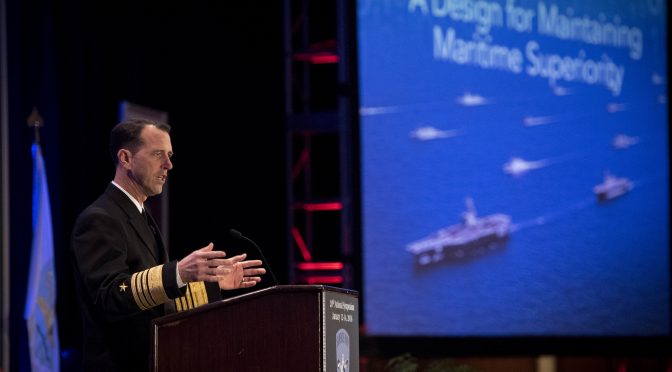
Featured Image: ARLINGTON, Va. (Jan. 12, 2016) Chief of Naval Operations (CNO) Adm. John Richardson delivers remarks during the 28th annual Surface Navy Association (SNA) National Symposium. (U.S. Navy photo by Mass Communication Specialist 1st Class Nathan Laird/Released)