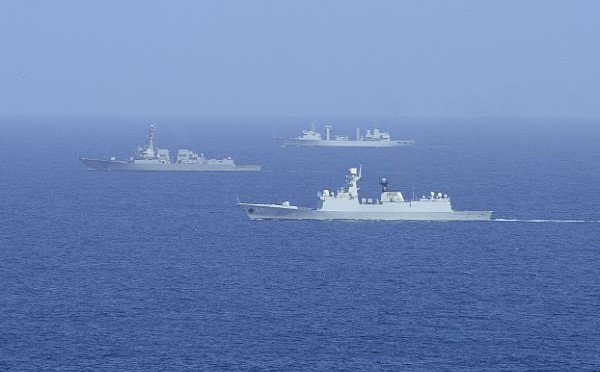
Tag Archives: Strategy

Capability and Intent in Developing Strategy

Robert Haddick argues early in his Fire on the Water that:

This book will make the case that with respect to China, U.S. policymakers will be wise to focus on China’s projected military capabilities and waste little effort attempting to discern the current or future intentions of China’s leaders. The reason is straightforward: intentions, and thus a country’s national security policies, can change suddenly. What matters for a leader’s calculations is whether the adversary has the instruments, including military capacity, to implement a revised policy. (p. 8)

This seems a reasonable proposition that simplifies the difficult problem of developing strategy. Intentions are fickle and subject to sudden change. Capabilities, by contrast, are relatively stable. They are the combined hardware, personnel, and doctrine that make up military forces. They have a substance to them which is countable and relatively certain. Defense analysts can be fairly certain that tanks will not suddenly transform into submarines. This stability makes it attractive to prioritize analyzing an opponent’s capabilities over identifying and analyzing their intent. It also tends towards the strategic shorthand of treating capability as intent. Unfortunately, ignoring intent or equating it with capability leads to flawed analysis for three reasons.

The first is that ignoring intent denies an opponent’s agency. War is a competitive endeavor between at least two opposing parties. If we are developing a strategy to achieve our goals it is because there is an opponent who would see our goals go unrealized. Our opponent can and will act in order to prevent us achieving our objectives. Our opponent will also act to achieve their own objectives, which are either diametrically opposed to ours, of a different nature, or somewhere in between. Ignoring intent is to argue that our opponent’s objectives are irrelevant to their behavior and that our opponent is simply an object to be acted upon. This never has and never will be the case in international relations. Opponents have the agency to act according to their own strategies in order to achieve their own objectives. To be clear, ignoring intent is not the same as saying an opponent’s intentions are difficult or impossible to comprehend. It is often difficult to identify an adversary’s true objectives, but it is always possible to propose a certain set of opponent intentions and assign a probability to each. It is also possible to discard a certain number of possible opponent goals, no matter how achievable. This thought experiment has the benefit of at least attempting to understand where our opponent is most likely to devote their finite resources and how they may develop their own strategy. Acknowledging an opponent’s agency ensures that we appreciate the inherently interactive nature of strategy as we seek to develop our own.

The second reason is that ignoring adversary intent prevents us from prioritizing our own limited resources. Looking at every enemy capability and asking how it will affect our strategy opens up a near infinite set of effects that must be considered and then countered if not moderated by a theory of most-likely adversary intentions. Take the following small example. Say Country A builds a squadron of advanced multi-role fighter aircraft capable of air defense, ground attack, and strike missions. Country B, a potential opponent, sees this and, ignoring Country A’s motives, determines these aircraft pose a threat to its own air, ground, and naval forces. It therefore develops countermeasures for its forces across all three domains, spending its resources to defeat Country A’s capability. Reasonable, no? But what if Country A had no intention of using these aircraft for the strike or ground attack roles? Country B wasted valuable, limited resources developing defenses against these capabilities. Or suppose Country A truly developed its military to defend against Country C. Country B’s resources were entirely wasted. A final case to consider is if Country B invested resources to build a military that never had any hope of matching Country A. In this case, assume that even if Country B devoted 100% of its gross domestic product to defense, Country A would still overmatch B’s military capabilities. Country B’s defense expenditure could be a total loss if the goal was to deter Country A. These are extremely simple examples, but history is rife with cases of wasted military expenditure designed to counter the wrong enemy or to deter the undeterrable. Focusing only on capabilities, the tendency is to expand threat horizons through well intentioned, but nearly infinite, what-ifs. These what-ifs demand answers, and answers cost money, time, and energy, all of which are limited. Again, strategy is interactive and we cannot consider opponent actions in a vacuum of their intentions.

The third reason is that even supposedly dispassionate capability analysis is subject to cognitive biases. The objects that define capabilities may be concrete, but that does not mean they are of necessity a firmer foundation for analysis. Ships are famously black boxes impervious to detailed peacetime analysis. Haze gray and underway, two nation’s destroyers appear roughly the same, and admirals assume they will operate the same way. But this may simply be mirror-imaging. Perhaps, unbounded by our mental shackles, our opponent has developed some new tactic, technique, or procedure or improved weapon system that generates new possibilities for employing their ship. Ignoring to what end our opponent would use their ships, we are left open to assuming our own tactical and operational art on our opponent. A focus on the technical aspects of adversary capabilities, often necessary in the naval context, can also hamper attempts to come to deeper understandings of operational employment. Mirror-imaging is also a criticism leveled at defense analysts attempting to understand Chinese strategy. The argument in the cited article is that American analysts believe China is pursuing an A2/AD strategy because that is what the U.S. would do if it was in the same position as China and had the same capabilities as the People’s Liberation Army. Ignoring Chinese intentions is exactly the logic that results in equating PLA military capability with Chinese national strategy. Continuing to foster analysis that does not engage with Beijing’s known or likely intentions is not likely to result in better analysis. Cognitive bias is possible in analyzing capabilities and in understanding adversary strategies more widely. Ignoring adversary intentions only serves to make the problem worse by discarding half the material available for understanding an opponent’s strategy.

Ultimately, strategy is competitive. It is crafted to deal with living, breathing, thinking opponents. In order to defeat an opponent we must understand them. This requires empathy, which means intimately understanding their thought processes, fears, and ultimately their intentions. If we focus only on their capabilities we run not only the risk of misunderstanding their capabilities, but also projecting our own intentions on our opponents, leading to incorrect strategic conclusions. Analyzing military capability is difficult, and adding intent to the mix only makes it more difficult to create sound strategy. But ignoring an opponent’s intentions in developing strategy is like navigating dangerous waters using a chart without soundings.

Ian Sundstrom is a surface warfare officer in the United States Navy. The views expressed here are his own and do not reflect those of the United States Department of Defense.
Members’ Roundup Part 18

Welcome back to another edition of the Roundup! After a brief hiatus we are back to share with you more of our members’ works. There are plenty of articles to share, ranging from maritime infrastructure development to thoughts on the new maritime strategy.

Back in February Miha Hribernik wrote a piece for The Diplomat regarding piracy in Southeast Asia. Although this presents a significant and worrying problem, it is manageable. Miha presents some suggestions for regional States on how to resolve this issue. You can access the article here. 

To surpass China in Sri Lanka, India needs to pursue proactive and dynamic diplomacy. Nilanthi Samaranayake explains, over at The Diplomat, that the key to reaffirming India’s presence in the region is through infrastructure investment. More specifically, the focus should be on public-private partnership and government to government investment in the maritime domain. You can access Nilanthi’s article here.

Screen Shot 2015-03-20 at 1.53.03 pmJerry Hendrix, from the Center for a New American Security, published a report in February called ‘Avoiding Trivia: A Strategy for Sustainment and Fiscal Security’. In it, he argues that the United States has strayed from its historic and cultural approach to the world, leaving behind its traditional maritime-focused, technologically innovative, free-trade based strategy. The solution to this, according to Hendrix, is a more clear eyed strategy that seeks to avoid trivia and address the US’ current weaknesses in order to shore up its long term strategic position.

Over at War on the Rocks David Wise shares with us an article titled ‘Blowback as National Policy.’ Many of the current security threats that the Western world faces today are a result of those decisions made in years past. Before making the foray into the geostrategic game, which is more than just a big game of Risk, first have a look at David’s cogent words on what we face today.

Mira Rapp-Hooper writes on the Lawfare Institute’s blog a post examining the impact of China’s increased military spending (and the US’ relative decline in spending) on neighbouring countries. You can access her post here.

Following the trend of AMTI posts, Bryan McGrath shares his analysis on how China might view the United States’ revised Maritime Strategy. Given that Bryan was heavily involved in the development of the 2007 strategy, you will certainly find his views on the matter very insightful. You can access his piece here.

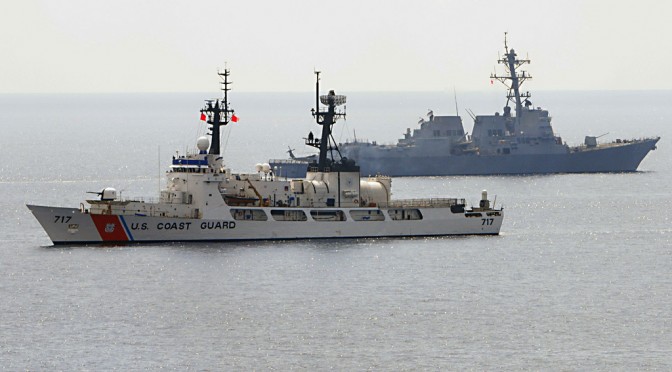
Vice Admiral Robert Thomas, commander of the US 7th Fleet, proposed the creation of joint maritime patrols in the South China Sea by ASEAN member nations – this was quickly met with mix reactions. Scott Cheney-Peters provides some solutions to challenge the arguments presented by the ‘nay-sayers’ and suggests that the presence of the “white hulls” of the U.S. Coast Guard could mitigate many of the perceived drawbacks. You can find out more by accessing his article on the AMTI’s website, here.

Harry Kazianis, on The National Interest, shares an analysis of the core reasons behind China’s ‘massive’ military buildup. He explains the historical roots of the Chinese military psyche due to subjugation at the hands of external powers. The solution to this is to employ an asymmetrical strategy  to defeat, in battle, forces that are superior to its own. You can access his article here.

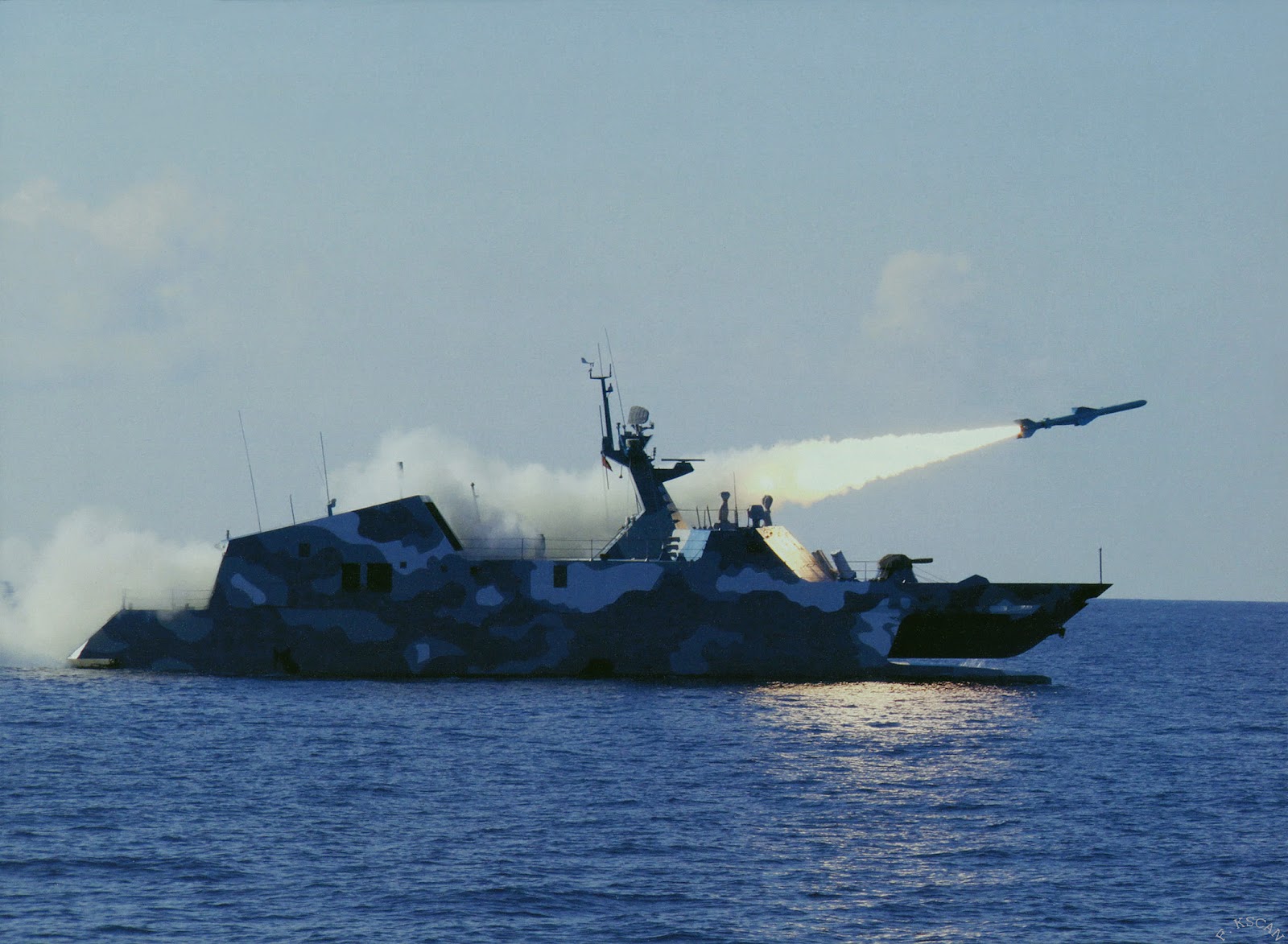
Long range anti-ship missiles contribute to an essential element of China's deterrence.
Anti-Ship Missiles contribute to an essential element of China’s deterrence.

On the National Defense Magazine’s online blog, Sandra Erwin reports that the current pace of shipbuilding and funding will not be able to meet the future demands of the Navy. Given that is an annual obligation of the Navy to tell Congress how many ships it will need and how much they will cost, it should certainly raise some alarm bells for decision-makers in Washington. For more on this, you can access Sandra’s post here.

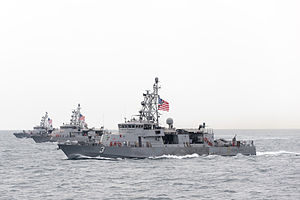
U.S. Navy Cyclone-class coastal patrol ships assigned to Patrol Coastal Squadron 1 (PCRON 1), USS Hurricane (PC-3), USS Chinook (PC-9) and USS Typhoon (PC-5), transit in formation during a divisional tactics exercise in the Persian Gulf.

Bringing the theme of this Roundup to the naval profession, Matthew Hipple in a joint article with Dan Follet and James Davenport, remind us the important role of patrol coastal ships in securing the seas. In this edition of Proceedings, the authors suggest that patrol coastal ships are an “incredible platform for both mission execution and cultivating war fighting.” To read more about why this is the case, you can access their article here.

Over at War on the Rocks, CIMSECian Emil Maine (and company) provide some critique of Congressman Mac Thornberry’s ‘Defense Acquisition Reform’ initiative. Defence acquisition is a necessity, but the question is whether political momentum can be sustained long enough to overcome the usual barriers to wholesale reform. More on this topic here.

Finally we conclude this edition with a shameless plug for my own work. The first is an article featured in the March-April edition of the Australian Defence Force Journal. Titled ‘Evolution of the Battlefield’, I examine existing strategic and legal challenges to developing an effective cyber warfare policy for military planners. My second piece is a brief analysis of the Australian Department of Defence’s new First Priniciples Reviewthis will hopefully provide an insight into some of the organisational challenges faced by the ADF and Department of Defence. Perhaps some of the US readers can find some similarities and provide suggestions for the Australian context. You can access each of the above articles here and here.

At CIMSEC we encourage members to continue writing, either here on the NextWar blog or through other means. You can assist us by emailing your works to dmp@cimsec.org.

A Retired Coastie’s Perspective on the Revised Strategy

AN OVERVIEW:

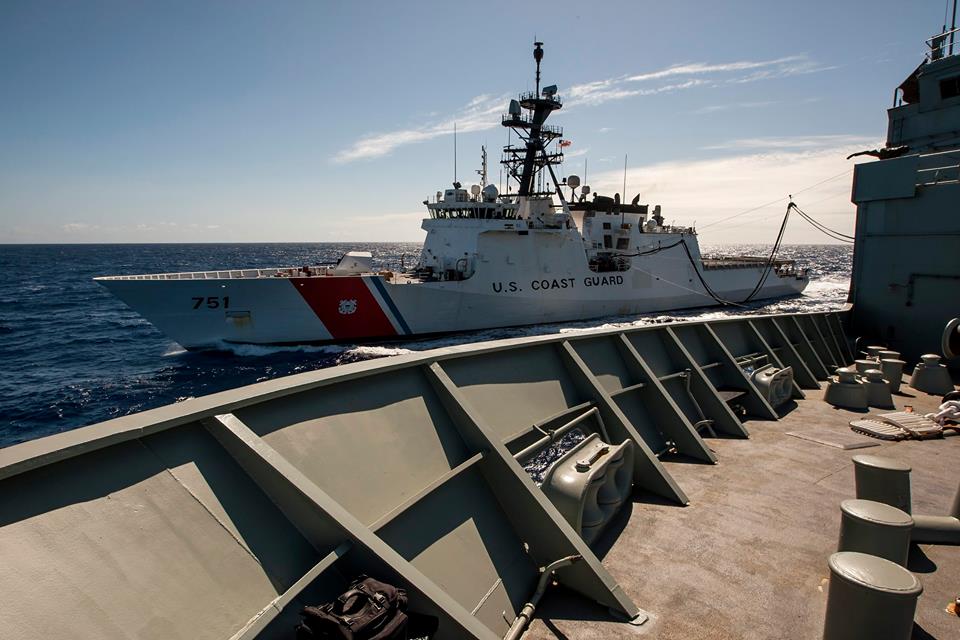
IHMAS Success refuels USCGC Waesche RIMPAC2014n considering this strategy, it is clearly not a strategy for war; it is a strategy for maintaining the peace, the sometimes violent peace that has become the new norm. As such, it assumes the Coast Guard will continue exercising its normal peacetime priorities. Still I feel it should provide a guide for transition to a wartime footing. Unless it is in the classified annex, that guidance is missing, in that it does not define Coast Guard wartime roles or suggest how the Coast Guard might be shaped to be more useful in wartime.

The Coast Guard is, potentially, a significant Naval force. It currently has more personnel than the British Royal Navy. Effectively, the Coast Guard is the low end of the American Naval Forces’ High/Low mix, bringing with it significant numbers of patrol vessels and aircraft. At little marginal cost, it could be made into an effective naval reserve that would serve the nation well in an intense conventional conflict.

If you look at the title, “A Cooperative Strategy for 21st Century Seapower: Forward, Engaged, Ready,” the words cooperative, forward, and engaged are particularly relevant in describing the thrust of the strategy.

It expects US naval forces to cooperate and engage with allied and friendly forces both to improve relations and strengthen and encourage those friendly forces. The Coast Guard has a major role in this, in bringing expertise in a board range of governance functions that friendly navies and coast guards can relate to.

The Navy also expects to have a substantial part of its force “forward.” Not only forward but also geographically widely distributed. This violation of the Mahanian maxim to keep your battle force concentrated has been the norm for decades, but it has been a reflection of the preponderance of the US Navy that may be eroding. It is a calculated risk that, the benefits of working with and assuring allies and being on scene to deal with brush fires, outweighs the potential risk isolated, forward deployed Carrier Strike and/or Amphibious Ready Groups might be overwhelmed in a first strike by a concentration of hostile forces.

The strategy talks about surge forces, but frankly the potential is far more limited than it was when the Navy was larger. For the Coast Guard this “forward” strategy, combined with the apparently ever increasing concentration of US Navy forces in only a few homeports, including foreign ports, has important implications. There are long stretches of the US coast that may be hundreds of miles from the nearest US Navy surface combatant.

If a suspicious vessel is approaching the US, that must be boarded to determine its nature and intent, the boarding is most likely to be done by a Coast Guard cutter, and not by a National Security Cutter, but most likely by something much smaller. The cutter is also unlikely to have any heavily armed backup.

WHAT IS INCLUDED IN THE STRATEGY?

The strategy recognizes and explicitly states an intention to exploit, “…the Coast Guard’s unique legal authorities…(to)…combat the illegal drug trade, human trafficking, and the unlawful exploitation of natural resources…”

In several places there is recognition of the Coast Guard’s potential for capacity building with navies and coast guards of friendly nations.

There is also an apparent commitment to an improved and shared Maritime Domain Awareness.

The apparent intent to increase the availability of modular systems provides a means of quickly adapting Coast Guard assets to wartime roles, but thus far I have seen no official interest in exploiting this possibility.

The Middle East Section seems to suggest that the six Coast Guard patrol boats and their augmented crews, currently stationed in Bahrain, will remain there and, given their age, they may require replacement as the new Webber Class WPC, Fast Response Cutters, come on line. In fact these Webber class patrol craft could be very effective in combatting piracy off Somalia.

These patrol craft essentially fill the same role and face the same threats as the Navy’s Cyclone class patrol craft. Will they receive any of the weapons upgrades that the Navy’s Cyclone class PCs have been given?

WPC Kathleen_Moore

A Webber Class WPC, Fast Response Cutter

Looking at the section on the Western Hemisphere, there is a commitment to, “…employ amphibious ships and other platforms, including Littoral Combat Ships, Joint High Speed Vessels, Afloat Forward Staging Bases, hospital ships, other Military Sealift Command ships, and Coast Guard platforms, to conduct humanitarian assistance and disaster response missions. We will also employ maritime patrol aircraft such as the P-8A Poseidon and unmanned aerial vehicles. Other ships and aircraft will provide periodic presence for recurring military-to-military engagements, theater security cooperation exercises, and other missions.” But there is no specific commitment to employ Navy vessels for drug enforcement. Was this omission intentional?

512px-Antarctica_CIA_svg
Competing claims in the Antarctic

Looking at section on the Arctic and Antarctic,  There is no specific commitment by the Navy, although the DOD does have an Arctic strategy that includes better hydrography and Maritime Domain Awareness. It looks like the Navy is content for the Coast Guard to be the face of US naval presence in the Arctic. There is reference to the use of the Nation Security Cutters (NSC) in the Arctic, but surprisingly no mention of the planned 25 Offshore Patrol Cutters (OPC) even though the OPCs will be ice-strengthened, while the eight planned NSCs are not.

IMG_4135

A model of Eastern’s proposal for the Offshore Patrol Cutter. Eastern is one of three shipyards still in contention to  build the 25 ships planned.

In the Deterrence section, the strategy states, “The Coast Guard maintains a continuous presence in our ports, internal waterways, along our coasts, and offshore, providing an additional layer of defense against maritime threats.” But there is no definition of what threats the Coast Guard is expected to respond to and no definition of the capabilities the Coast Guard is expected to provide to deal with these threats.

A Major Omission:

USCGC_Owasco_(WHEC-39)_conducting_UNREP_Market_Time
Cutter Owasco (WHEC-39) unreps while engaged in Operation Market Time off the coast of Vietnam.

In the Sea Control section there is no mention of a Coast Guard role in Sea Control. There should be. Sea Control frequently involves Visit, Boarding, Search and potentially Seizure of non-military vessels, e.g. merchant and fishing vessels. The Coast Guard is ideally suited for this role and has conducted this type of operation in war zones in the past, notably the Market Time Operation during the Vietnam War. In fact, the common Coast Guard missions of drug and alien migrant interdiction are forms of sea control that potentially protect the US from non-state actors. The strategy does address these particular elements of Sea Control in the Maritime Security section.

When it comes to counting assets that might be used to exercise sea control, the Navy has roughly 110 cruisers, destroyers, frigates, LCS, and patrol craft and most of these, particularly the 85+ cruisers and destroyers, will almost certainly have higher priority missions. The Coast Guard includes over 100 patrol boats and about 40 larger patrol vessels that routinely exercise sea control on a daily basis.

121203-G-XX000-001_CPO Terrell Horne

EVALUATION:

From a Coast Guard perspective, this strategy has largely canonized the status quo and the existing recapitalization program of record. It recognizes the Coast Guard’s unique authorities and its ability to contribute to capacity building. It seems to promise greater integration of a multiservice Maritime Domain Awareness.

On the other hand it does nothing to define Coast Guard wartime missions or how the Coast Guard might transition to a wartime footing. The force structure section does nothing to inform the design of Coast Guard equipment so that it might be more useful in wartime. It also does nothing to help that Coast Guard patrol boat I talked about at the beginning that is about to attempt to stop and board a potential hostile vessel that may be about to make an unconventional attack on a US port.

This is only the second iteration of the three service cooperative strategy. It is a marked improvement in specificity over the previous document. Hopefully there will be a process of continual improvement in succeeding editions.

This post appeared in its original form at Chuck Hill’s CG Blog. Chuck retired from the Coast Guard after 22 years service. Assignments included four ships, Rescue Coordination Center New Orleans, CG HQ, Fleet Training Group San Diego, Naval War College, and Maritime Defense Zone Pacific/Pacific Area Ops/Readiness/Plans. Along the way he became the first Coast Guard officer to complete the Tactical Action Officer (TAO) course and also completed the Naval Control of Shipping course. He has had a life-long interest in naval ships and history.

The Coast Guard’s Role in 21st Century Seapower

By David Van Dyk

With standing room only and camera crews capturing their footage, Chief of Naval Operations Admiral Jonathan Greenert, Commandant of the Marine Corps General Joseph Dunford and Commandant of the Coast Guard Admiral Paul Zukunft took the stage during the Center for Strategic and International Studies (CSIS) event entitled “A Cooperative Strategy for 21st Century Seapower.”

John Hamre, CEO of CSIS since January 2000, introduced the military leadership on stage, remarking that the Navy and Marine Corps have “loved each other like brothers; Cain and Abel.”

While rivalries between the Sea Services were realized years back, a new cooperative strategy looking forward is not only smart but paramount to our nation’s defense and ability to project power on the high seas and around the coastline.

The meeting’s purpose was to establish and introduce a document signed by all three Sea Service chiefs.  “A Cooperative Strategy for 21st Century Seapower: Forward, Engaged, Ready” (CS21R) was penned because of the changing environment, changing threats and changing resources.  While all three changes are major factors in the national stage of security and safety, it requires a unity of effort from not only the United States Sea Services, but of those around the world, working in unison to tackle problems ranging from military aggression to disaster relief.

Changing Environment

In a rapidly changing world, the sea services need to align their focus and adapt to the environment. This requires major changes, one of which is the Arctic. According to CS21R, the Arctic is becoming a major player in maritime trade.

“Rising ocean temperatures present new challenges and opportunities, most notably in the Arctic and Antarctic, where receding ice leads to greater maritime activity,” CS21R states. “In the coming decades, the Arctic Ocean will be increasingly accessible and more broadly used by those seeking access to the region’s abundant resources and trade routes.”

With research vessels and ice breakers blazing their own trails through the region, responsible practices must not only be encouraged but enforced. The Arctic Council, made up of eight partner nations, will be chaired by the United States from 2015 to 2017, allowing American leaders to map out a strategic and engaged plan for the changing northern environment. The Coast Guard, according to the document, will also be entering a design phase for a new icebreaker capable of handling the harsh conditions of the Arctic Ocean.

“Some of our biggest concerns in the Arctic (are that) someone’s going to fall in it or oil spills in it and it affects the way of life in the Arctic domain,” Admiral Zukunft said. “We have an Arctic Strategy in place that aligns with a national strategy for the Arctic region.”

Witnessing firsthand the increasing activity in the Polar Regions, the Coast Guard Cutter Polar Star rescued 26 crewmembers aboard an Australian fishing vessel, the Antarctic Chieftain, that was trapped in freezing temperatures Feb. 18. Since the Polar Star had just finished “Operation Deep Freeze” to replenish McMurdo Station, according to a Reuters report, they were able to sail 800 miles and cut through 150 miles of ice to reach the vessel and save all lives aboard by towing it to open waters.

Another changing environment mentioned in the document is the increasing amount of trade occurring on the oceans, meaning more traffic for important commercial waterways.

“Skyrocketing demand for energy and resources, as evidenced by a projected 56 percent increase of global energy consumption by 2040, underscores the criticality of the free flow of commerce through strategic maritime crossroads, including the Straits of Hormuz and Malacca, as well as the Panama and Suez Canals,” the document reads. “Closer to home, dramatic changes in energy production and transportation, as well as the completion of the Panama Canal expansion project, will fundamentally alter shipping patterns within the United States and globally.”

The Panama Canal expansion project is nearing a conclusion with 85 percent completed, and it is expected to be fully operational early next year, according to the Christian Science Monitor. With post Panamax vessels taking on 14,000 containers, the new enlargement will bring seaborne giants of commerce to East Coast ports, bringing additional security challenges to Navy and Coast Guard assets.

While CS21R does not mention it, Nicaraguan lawmakers have been dealing with a Chinese billionaire named Wang Jing, Chairman and CEO of the Hong Kong Nicaragua Development (HKND) group, in building their own canal to handle, they claim, even larger ships. While details of the plan remain under intense scrutiny, the competition building in this changing region will only grow larger as maritime trade increases.

“Oceans are the lifeblood of the interconnected global community, where seaborne trade is expected to double over the next 15 years,” CS21R states. “Ninety percent of trade by volume travels across the oceans.”

Changing Threats

While operating in a changing environment, the Sea Services recognize the changing threats taking place in and around these areas.  These threats, whether from state or non-state actors, will need to be dealt with both effectively and efficiently.

According to Admiral Zukunft, transnational organized crime is worth $750 billion annually. These networks utilize their illicit activities to help fund terrorist activities as well as their own nefarious enterprises.

“Transnational criminal organizations (TCOs) remain a threat to stability in Africa and the Western Hemisphere, especially in Central America and the southern approaches of the U.S. homeland,” CS21R states. “Their networks facilitate human trafficking and interrelated flows of weapons, narcotics and money, all of which could be exploited by terrorists to attack our homeland, allies and overseas interests.”

Transnational criminal organizations are operating not only along the coastlines and drug transit zones of the western hemisphere, but also throughout Africa, where terrorist and piracy networks often share intelligence and money to fund illicit activities along the African coast.

“Construction Battalions (Seabees), Explosive Ordnance Disposal units, Navy SEALs and other Naval Special Operations Forces, as well as Coast Guardsmen and Marines, will continue working alongside partner security forces to combat terrorism, illicit trafficking, and illegal exploitation of natural resources through initiatives such as the African Maritime Law Enforcement Partnership and the Africa Partnership Station,” CS21R states. “West African nations rely heavily on maritime forces to combat illicit trafficking, which have links to terrorist enterprises.”

Members of a Naval Special Warfare team conduct a fast rope insertion training operation from an SH-60 Seahawk helicopter

Another theatre of operations where there is a changing threat is the Indo-Asia-Pacific region, where China’s actions are being hotly contested by Indo-Asian allies, including Japan, Vietnam, the Philippines and Singapore.

“Consistent with developing strong partnerships and relationships, Filipinos have been strong partners for many years,” General Dunford said. “We had a little bit of a dip in the relationship, but that’s a compelling reason for us to cooperate more closely than we have over the past few years.”

According to Reuters, China’s actions have led Japan to recently sign a security agreement with Vietnam and the Philippines, forming an alliance that will counter China’s growing presence throughout the South and East China Sea.  This agreement includes the first ever joint naval exercises between Japan and the Philippines, as well as intelligence sharing between the geopolitical adversaries of China.

“With strategic attention shifting to the Indo-Asia-Pacific, we will increase the number of ships, aircraft and Marine Corps forces postured there,” CS21R states. “By 2020, approximately 60 percent of Navy ships and aircraft will be based in the (Indo-Asian-Pacific) region. The Navy will maintain a Carrier Strike Group, Carrier Airwing and Amphibious Ready Group in Japan, add an attack submarine to those already in Guam and implement cost-effective approaches such as increasing to four the number of Littoral Combat Ships (LCS) forward-stationed in Singapore.”

The Coast Guard’s strong ties with several other coast guards in the volatile region will aid in diplomatic discussions and information sharing.

“…The Coast Guard will work with regional partners and navies using joint and combined patrols, ship-rider exchanges and multinational exercises to build proficient maritime governance forces, enhance cooperation in maritime safety and security and reduce illegal, unreported and unregulated fishing,” CS21R states. “These multinational efforts are furthered through the Oceania Maritime Security Initiative and participation in the North Pacific Coast Guard Forum.”

Boat crewmen with Maritime Safety and Security Team Los Angeles - Long Beach conduct tactical boat maneuvers during an exercise, July 31, 2012. The exercise was designed to test the unit's ability to protect a ship docked at a pier as well as underway, using four Coast Guard small boats.
Boat crewmen with Maritime Safety and Security Team Los Angeles – Long Beach conduct tactical boat maneuvers during an exercise, July 31, 2012. The exercise was designed to test the unit’s ability to protect a ship docked at a pier as well as underway, using four Coast Guard small boats.

Changing Resources

With budgets under scrutiny and the almighty dollar being hard-pressed, the Sea Services need to fight battles effectively and efficiently by realizing the changing resources available for widespread use.

“In this time of fiscal austerity, our force is sized to support defeating one regional adversary in a large, multi-phased campaign, while denying the objectives of, or imposing unacceptable costs on, another aggressor in a different region,” CS21R states. “This force-sizing construct also ensures our capability and capacity to support global presence requirements.”

In a question and answer period during the CSIS event, Megan Eckstein, a staff writer with USNI News, asked the three admirals how they would handle their services concerning the possible constraints of the FY16 budget, which received acknowledged chuckles from the largely Capitol Hill audience.

“We have to replace the current Ohio-class submarine,” Admiral Greenert said. “We don’t have the money associated to do that without ruining the shipbuilding account which permeates all that this strategy is about for the future. That is my number one conundrum right now.”

Dunford offered a different view into the budget issue, speaking of his recent meeting with Marine Corps leaders reviewing the service’s capabilities in unifying combatant commanders.

“This is really not just FY16 … this is about capability development over the next three to five, frankly seven to eight years,” Dunford said. “It’s not so much about buying more radios. It’s about us coming together and identifying the capability that we need to have and making sure that’s properly resourced.”

According to Zukunft, the Coast Guard needs to not only provide a defensive measure along the coast and in the ports, but also be able to stop dangerous and illegal shipments from even entering the Exclusive Economic Zone (EEZ).

“If you have a shipment destined for the United States, you want a goal line defense inside the sea buoy, or do you want the ability to exert US sovereignty into the territorial seas of where that ship departed?” Zukunft said. “I’d much rather have the latter, but we’re not going to have that as a nation if we don’t make this investment to build affordable ships, but…also the ability to exert our sovereignty well beyond the sea buoy.”

In the revised document, the Sea Services realized the challenges a tighter budget would have on their day to day operations and the need to cooperate on a deeper and more streamlined level.

“A smaller force, driven by additional budget cuts or sequestration, would require us to make hard choices,” CS21R states. “Specifically, in the event of a return to sequestration levels of funding, the Navy’s ability to maintain appropriate forward presence would be placed at risk.”

Changing environments, threats and resources will force the Sea Services to adapt and recognize the fluctuations across world geopolitics. Unifying efforts with allies and partners will enhance America’s own Sea Services, offering opportunities for deeper associations with countries from Latin America to the South China Sea. Whatever the environment and threat may be, America’s Navy, Marines and Coast Guard will remain ready, willing and able to handle the coming century.

David Van Dyk is a senior at Liberty University currently completing his Bachelors of Science in Communications with a focus in journalism. He is a member of the Lambda Pi Eta honor society and the news editor of the university newspaper, the Liberty Champion.  His views are solely his own and do not reflect the views of the Liberty Champion nor that of Liberty University.