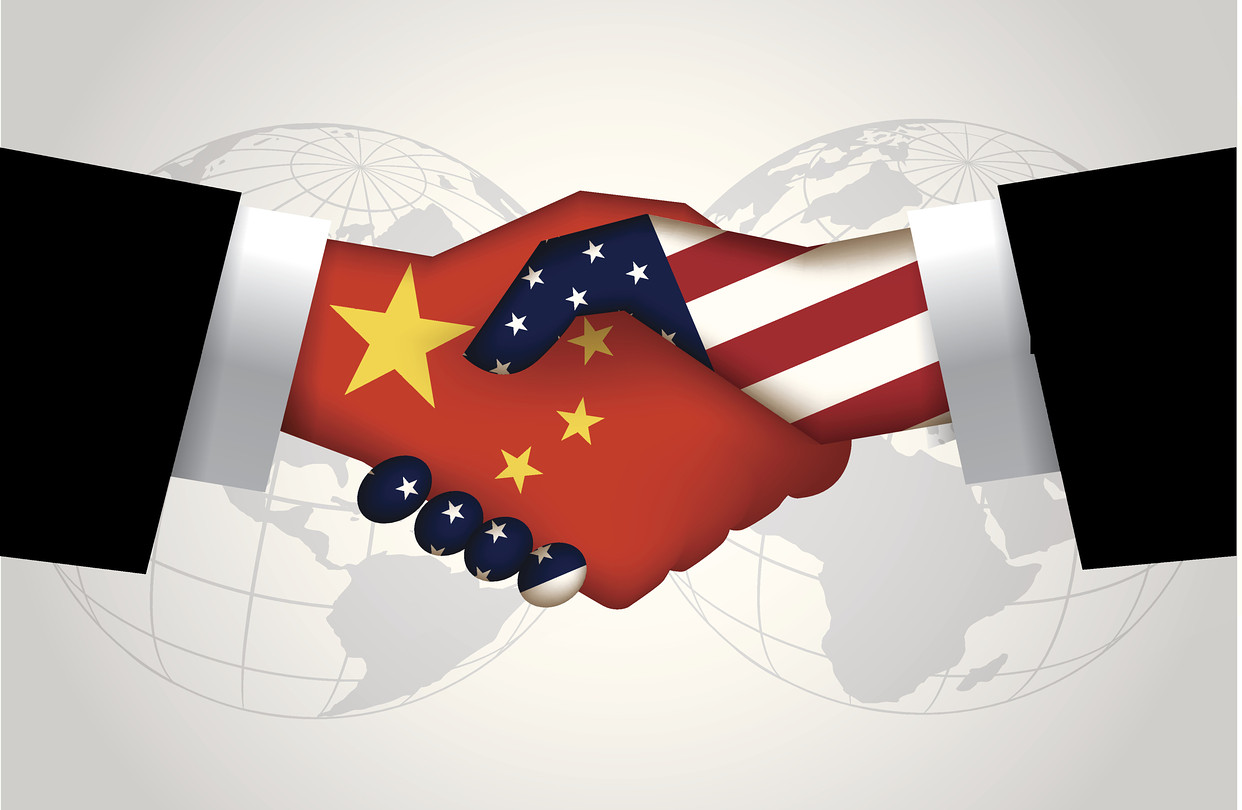
The CIMSEC Chinese Military Strategy topic week ran from August 3-7 and featured experts from around the globe and representing various military branches. Through their work we were exposed to numerous interpretations, challenges, and means to produce meaningful progress as China defines its role.
Numerous questions abound on how to manage the complex rise of China in the Asia-Pacific. How can China militarily rise with power commensurate with defending one of the world’s great economies, while not producing a more uncertain status quo ripe for miscalculation? How can the United States and China both increase their influence in the Asia-Pacific without appearing to contain one another? We should bear in mind the historical origins of trends, areas of convergence and divergence, and competing philosophies on the role of nations as our authors have so eloquently discussed.
The CIMSEC team would like to thank all the authors who responded to our call for articles and used CIMSEC as a platform for their excellent analysis. We would also like to thank guest editor Eric Murphy who handled the numerous details and challenges in executing the topic week.
Keep on the lookout for future calls for articles, and at any time prospective contributors are free to contact the CIMSEC team at Nextwar@cimsec.org to see what we can accomplish.
Thank you again to our topic week contributors, and below is an ordered list of all their articles that featured during the CIMSEC Chinese Military Strategy topic week.
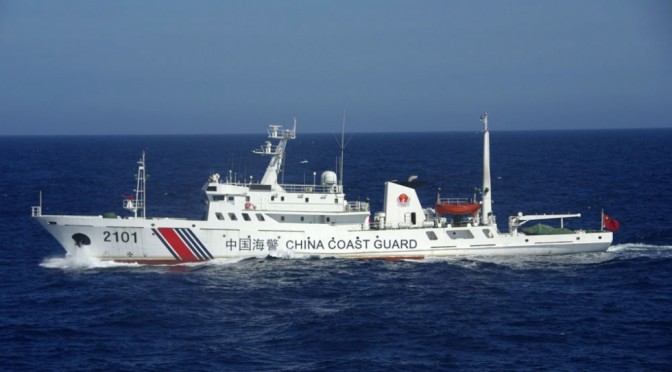
China’s ability to exercise its power in the maritime domain is essential to advancing its economic interests and ensuring its security. Attention to safeguarding maritime rights and interests was documented in China’s 2012 National Defense white paper, and the 2015 Chinese Military Strategy white paper has expanded the People’s Liberation Army Navy (PLAN) area of operations from offshore defense to include open seas protection. As the PLAN moves into the open ocean, the responsibility for offshore defense and protection of China’s interests in its near seas will fall to the China Coast Guard (CCG). Changes in the organizational and operational mandates of the CCG are paving the way for it to become a more important actor in the achievement of the PLA’s traditional and non-traditional security objectives.
Liu Huaqing in March 1996. Associated Press, Greg Baker
Since the 1980s, China’s changing threat perceptions and growing economic interests have catalyzed a shift in the strategic orientation and the perceived utility of naval forces. By 1987, PLAN Commander Admiral Liu Huaqingestablished a strategy referred to as offshore defense, expanding the bounds of China’s maritime defenses beyond coastal waters to deter, delay, and if necessary, degrade potential intervention in a regional conflict. Offshore defense is associated with operations in the Yellow Sea, East China Sea, and South China Sea (China’s near seas), covering 875,000 square nautical miles. The Philippine Sea, a key interdiction area in the event of a conflict over Taiwan or in the South China Sea, expands the battlespace by another 1.5 million. In this vast space, navies and coast guards from seven regional countries and several forward-deployed nations combine with tens of thousands of fishing boats, cargo ships, oil tankers, and other commercial vessels in an area often referred to as “China’s 3 million square km of blue territory.”
From the founding of the PRC in 1949 until the mid-1980s, China’s strategic concept of naval operations was limited to coastal defense (the inherent mission of any coast guard), with an emphasis on defending China’s coast from amphibious invasion. As the PLAN shifts away from patrolling the near seas and expands its area of operations, the CCG will need to meet demands to operate well off China’s coast. Many in the U.S. view the CCG’s activities in the East and South China Seas as a product of a coordinated national strategy. The goal is quiet expansion — as opposed to a loud invasion and occupation by the PLA.
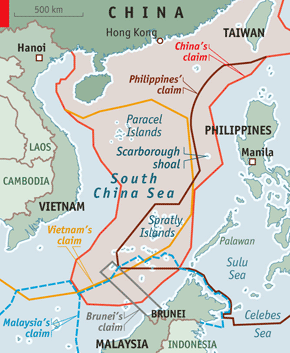
Evidence of a strategy can be traced to possible visions guiding procurement decisions made years in advance, such as the State Council’s approval of plans to purchase dozens of rights protection cutters in 2010. Protecting China’s expanding coastlines, as well as fishermen and maritime companies, requires the CCG to conduct operations further from their home ports and for longer periods of time. For example, a 2012 standoff between China Maritime Surveillance (former CCG) vessels and the Philippines Coast Guard at the disputed Scarborough Shoal lasted for ten weeks, and since then the CCG has maintained a continuous presence there to preempt a recurrence of that event. This could put the CCG in an uncomfortable and unsustainable operating scheme unless it procures large ships, recruits enough officers for numerous and simultaneous rotations at sea, and coordinates communications and collaboration across 3 million square km of blue territory.
In 2013, China consolidated its maritime law enforcement (MLE) agencies to better protect China’s sovereignty and safeguard its maritime interests. During the March 2013 National People’s Congress, the Chinese government announced a new State Oceanic Administration (SOA) that would essentially form a “fist out of fingers” by combining the organizations and the responsibilities of the existing SOA and four MLE agencies into the China Coast Guard (CCG), which maintained a purely civilian status. The consolidation allows the CCG to more flexibly deploy patrol ships from its larger fleet in response to sovereignty challenges and maintain its presence in hotspots.
Additionally, during the last decade, China’s MLE forces have increased both the sizes of their ships and overall capability. As of March 2015, China had 95 large patrol ships (over 1,000 tons) and 100 patrol combatants between (500-1,000 tons). The current phase of the construction program, which began in 2012, will add over 30 large patrol ships and over 20 patrol combatants to the force by the end of 2015. This will increase the overall CCG force level by 25 percent — faster growth than any other coast guard in the world.
Map of territorial disputes in South China Sea.
Although the CCG has taken an increased role in asserting China’s maritime sovereignty over disputed areas, PLAN vessels still share the responsibility for patrols in China’s territorial waters, contiguous zones, and exclusive economic zone (EEZ). The PLAN’s close relationship with the CCG certainly helps deter counter actions by other claimants. When the CCG responds to an incident, the PLAN will likely also deploy destroyers and frigates several dozen miles behind to provide an indirect, over-the-horizon presence. This approach intimidates smaller claimants and contains larger ones, but also limits the potential for confrontations to escalate since most CCG ships are not heavily armed (though some are refitted navy vessels with permanent torpedo tubs and gun turrets that add a factor of intimidation to the CCG’s presence). Given the recurrence of confrontations, China is wise in not using armed ships, but arguably, deploying the CCG allows China to be more aggressive against foreign civilian ships than it could be with the PLAN. Instead, while CCG activities assume a militarized connotation, PLAN ships make friendly port calls to China’s neighbors.
China’s controversial use of the CCG to assert its sovereignty in maritime disputes and expand China’s presence in disputed areas gives it the unique privilege of being the world’s only maritime law enforcement (MLE) agency to regularly make international headlines for activities other than botching rescue missions. The CCG’s press coverage, however, has been overwhelmingly negative for causing conflagrations with China’s neighbors, and the fallout of its activities has reinforced China’s need for its sustained presence. China must reconcile that the CCG’s activities to advance its interests in the South China Sea have inspired Southeast Asian nations to strengthen their own MLE organizations. The Philippines, Vietnam, and Indonesia have already turned to the U.S. and Japan for help increasing their capacity.
China’s use of the CCG has created a conundrum for the U.S. Navy, but it does not want to risk a conflict by using the 7th Fleet to check China’s white hull advance. Meanwhile, the U.S. Coast Guard (USCG) does not have a dedicated presence in the area (its closest port is at Guam), and funding troubles have already stretched its capacity for traditional missions. Even though the USCG has 42,190 active duty service members compared to the new CCG’s 16,296 billets, the USCG is not concentrated in a single region. It has a global mission ranging from the Arctic to NATO countries to the Pacific. Thus, the USCG, like other branches of the U.S. military, has placed emphasis on utilizing and building the capacity of its partners in the region – an asset the U.S. has more of than China (the new military strategy only named Russia as a partner).
The growing possibility of clashes at sea is troubling. If the CCG is able to easily coerce smaller actors in China’s various maritime disputes, especially in the South China Sea, and institute a new status quo to safeguard China’s interests, this would have serious implications for freedom of sea navigation and safety of passage, as well regional stability and peace. If the U.S. and its partners believe this is the goal of a comprehensive strategy, building more capable maritime law enforcement and coast guard organizations in Southeast Asia could deter Beijing from maritime expansion. However, China’s approach to its maritime interests goes beyond the CCG’s veiled offensive, or active defense, maneuvers. China’s hybrid strategy also involves legal, economic, high-tech, and cyber elements that are less likely to provoke a large-scale war and do not fit neatly into challenges addressed by traditional military strategies. Adequately addressing the role of CCG as an increasingly capable civilian implementer of China’s foreign policy and unique tool in China’s military missions will require the U.S. and its partners to consider new, comprehensive policy options in the Asia-Pacific.
Amanda Conklin was a Fulbright in Macau from 2012-13 and is currently working on Asia policy issues in the field of international affairs. The views presented in this article are her own.
CIMSEC content is and always will be free; consider a voluntary monthly donation to offset our operational costs. As always, it is your support and patronage that have allowed us to build this community – and we are incredibly grateful.
In May 2015, the People’s Republic of China’s Ministry of National Defense released its latest Military Strategy white paper. The paper outlines Beijing’s national security concerns, the mission and strategic tasks of the Chinese armed forces, a series of guidelines to strengthen China’s active defense, and an approach to developing China’s armed forces in preparation to counter challenges. In it, China has also highlighted its nuclear ambitions and strategy in the overall context of expanding and intensifying the preparation for military struggle (PMS):
“China’s armed forces must meet the requirement of being capable of fighting and winning, focus on solving major problems and difficulties, and do solid work and make relentless efforts in practical preparations, in order to enhance their overall capabilities for deterrence and warfighting.”
The Second Artillery Force in the Xi Jinping Era
Nuclear forces are a crucial component in Beijing’s military strategy, and the white paper describes China’s nuclear force as a strategic cornerstone for safeguarding national sovereignty and security. The document stresses how the People’s Liberation Army Second Artillery Force (PLASAF) is placing emphasis on both conventional and nuclear missiles, even for precision long-range strikes, stating that
“the PLASAF will continue to keep an appropriate level of vigilance in peacetime. By observing the principles of combining peacetime and wartime demands, maintaining all time vigilance and being action-ready, it will prefect the integrated, functional, agile, and efficient operational duty system.”
According to the Chinese government, Beijing is developing capabilities to maintain strategic deterrence. It is also preparing itself to be able to carry out a nuclear counter-attack. The White Paper also assures that Beijing is committed to its stance on no-first-use of nuclear weapons. This is distinct from its 2013 White Paper, which made no reference to the no-first-use doctrine, leading many to wonder if Beijing was rethinking its policy. The 2015 document also states that Beijing will not attack any non-nuclear state or nuclear weapons free zone with these weapons.
The document does mention Taiwan, however, and reunification remains crucial to China’s national security. And while Beijing has reiterated its stance on no-first-use doctrine this time, however, the no-first use may not be applicable to territories which Beijing considers its own. Therefore, in case of greater resistance from Taiwan, China’s no-first-use doctrine may not apply.
The document also stresses China’s willingness to limit its nuclear weapons to a minimum level sufficient to ensure its national security interests. Beijing also expresses its unwillingness to involve itself in a nuclear arms race with any country, emphasizing that they will optimize their nuclear force structure; improve strategic early warning, command and control, missile penetration, rapid reaction, and survivability of their forces; and deter other countries from using or threatening to use nuclear weapons against China.
China is already working on missile penetration aids and Chinese missiles could be fitted with decoys, chaff, mylar balloons, and sub-munitions. China has also developed missiles flying at depressed and lofted trajectories and is working on multiple independently targetable re-entry vehicles (MIRVs) and maneuverable re-entry vehicles (MARVs) as penetration aids. Chinese engineers are attempting to overcome a hit-to-kill intercept by enclosing the anti-ship ballistic missile (ASBM) warheads in a metallic shroud cooled by liquid nitrogen.
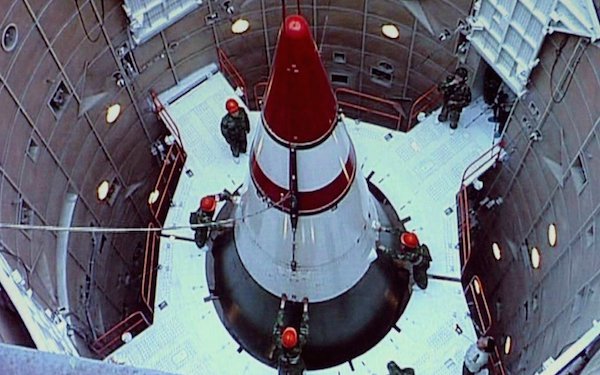
Chinese DF-5, via FAS.
With a no-first-use doctrine, the survivability of nuclear forces is crucial and enables a minimum deterrent posture. Beijing has been working on the survivability of its nuclear forces, including replacing liquid fueled missiles with solid, with only the DF-5 and DF-5A liquid fuel missiles left in its arsenal. It has also been working on developing mobile missile systems, dummy silos near silo-based missile sites, and hard and deep tunnels (in the Hebei Mountains, for example).
China is also believed to be concentrating on an early warning system to detect enemy nuclear capable ballistic missiles. This, along with missile and air defense systems, enables Beijing to not only detect incoming ballistic missiles but also to intercept them and launch a counter-strike.
Deep, protected underground tunnels along with the early warning system will only enhance China’s ability to absorb a first strike and retaliate, thereby strengthening Beijing’s no-first-use policy. Possessing a credible early warning system would also limit the need for China to mating its nuclear warheads with delivery systems during peacetime.
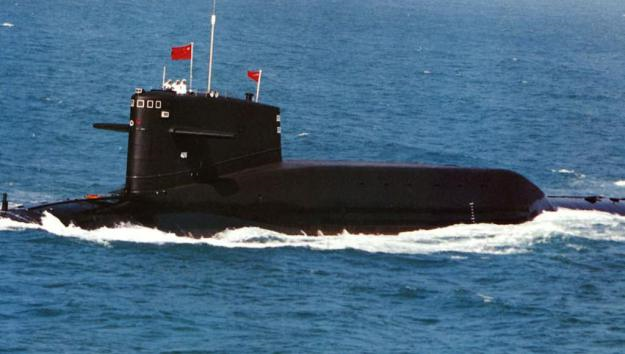
PLAN nuclear ballistic missile submarine, PLAN Photo.
China’s sea-based nuclear deterrent also provides survivability for its nuclear force. Beijing has already developed ballistic missile submarines of the Jin and Xia class. The Xia class submarine can fire the JL-1 submarine launched ballistic missile (SLBM) and the Jin can fire JL-2 SLBM which is of longer range than the JL-1. According to the Federation of American Scientists, naval facilities have been built to service the new ballistic missile submarine fleet which includes upgrades at naval facilities, submarine hull demagnetization facilities, underground facilities and high bay buildings for missile storage and handling, and covered tunnels and railways to conceal these activities.
While the document highlights concerns over the U.S. re-balancing strategy in the Asia Pacific region, it carefully left out concerns over the U.S. ballistic missile defense systems in Taiwan and Japan. There is also no mention of nuclear arms control and nuclear disarmament as an objective in China’s long-term nuclear strategy. At a time when analysts and practitioners of international security are apprehensive of China’s nuclear weapons and have suggested including it in nuclear arms control measures, the exclusion of any mention of control and disarmament leaves it unclear where the country really stands on the issue.
Debalina Ghoshal is a Research Associate with the Delhi Policy Group. The views expressed in this article are her own.
CIMSEC is and always will be free for everyone, but we would be grateful for those who wish to provide a modest regular donation to support our operations.
History has shown that emerging great powers and established or declining great powers are likely to fight major wars in order to determine the balance of power in the international system. There is considerable fear that the U.S. and China are heading towards great power conflict. As Christopher Layne argues, there are “several important — and unsettling — parallels between the Anglo-Germany relationship during the run-up to 1914 and the unfolding Sino-American relationship.” The headline-grabbing dispute in the South China Sea offers an excellent example of one of the several flashpoints that could spark a larger conflict between the U.S. and China. But the probability of great power conflict between the U.S. and China can be reduced if the two states can find ways to better manage interactions in flashpoint areas.
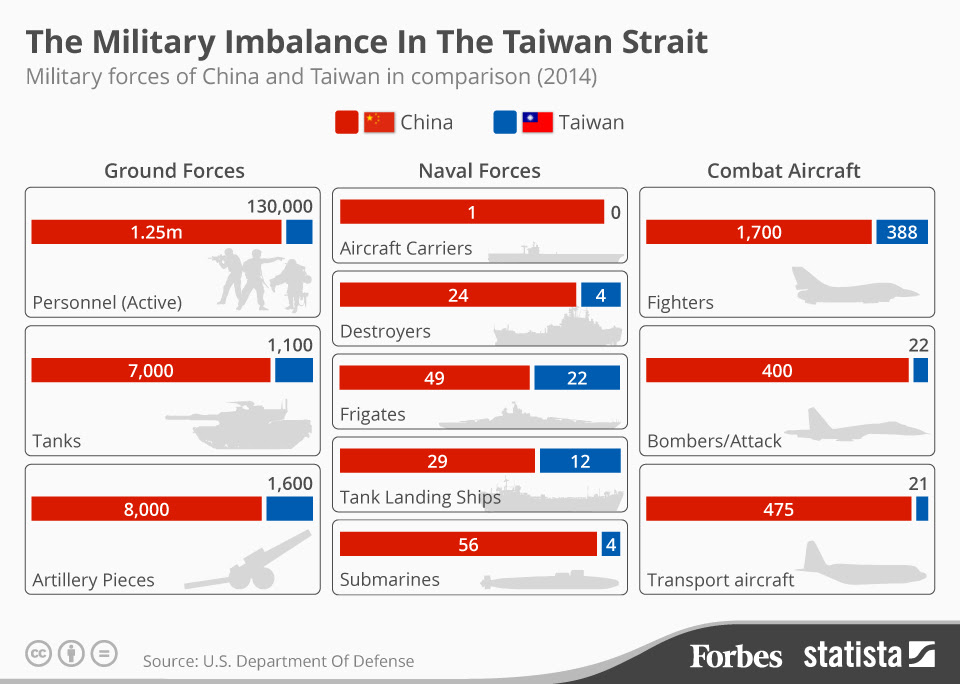
The oldest flashpoint, and the area most important for Chinese domestic politics, is the Taiwan Strait. In 1972, the Shanghai Communique stated that the so-called Taiwan question was the most important issue blocking the normalization of relations between the U.S. and China. This question has yet to be solved, mostly because Taiwan has been able to deter attack through a strong indigenous defense capability backed up by American commitment.
Military Balance in the Taiwan Strait, Forbes.
The status quo in the Taiwan Strait will be unsustainable as China continues to improve its military capabilities and adopt more aggressive military strategies. If the U.S. wants to avert a war with China in the Taiwan Strait, it must start looking for an alternative to the status quo. Taiwan’s strategy of economic accommodation with China under the Ma Ying-jeou administration has brought about benefits. The U.S. should encourage Taiwan to deepen its military and political accommodation with China. This would be a difficult pill for Taiwan to swallow, but it could offer the most sustainable deterrent to armed conflict in the Taiwan Strait.
Military intervention by the U.S. on the behalf of Taiwan would be met with formidable Chinese resistance. China’s anti-access/area denial strategy complicates the U.S.’s ability to project power in the Taiwan Strait. China’s latest maritime strategy document, released in May of this year, states that China’s navy will start shifting its focus further offshore to include open seas protection missions. Such a shift implies an aspirational capability to keep intervening American forces away from Taiwan. American political leaders have not given up on Taiwan, and the 2015 U.S. National Military Strategy places a premium on reassuring allies of America’s commitments. However, the fact that China’s improving military capabilities will make an American military intervention on behalf of Taiwan more and more costly must not be ignored.
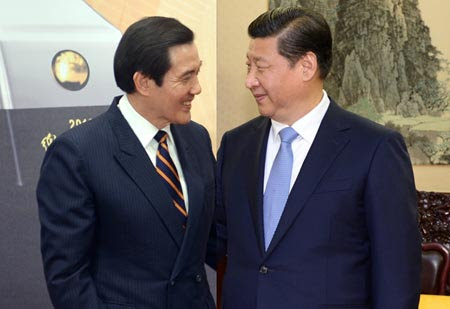
Ma Ying-jeou and Xi Jinping, Xinhua News Photo.
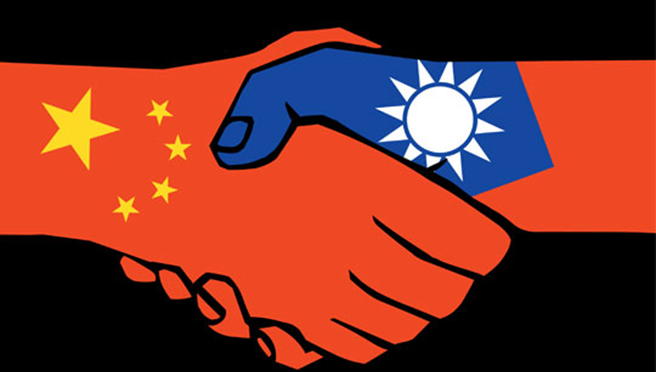
The best option for preventing a war in the Taiwan Strait is deepening the strategy of accommodation that Beijing and Taipei have already started. According to Baohui Zhang, accommodation “relies on expanding common interests, institutionalizing dialogues, promoting security confidence-building and offering assurances to establish mutual trust.” The Ma Ying-jeou administration in Taiwan has tried to use accommodation as a way to lock in the status quo and avoid conflict, but their efforts have been met with more and more popular backlash in Taiwan. China’s military strategy document does acknowledge that “cross-Taiwan Straits relations have sustained a sound momentum of peaceful development, but the root cause of instability has not yet been removed.”
If Taiwan is serious about accommodation as a means of deterring military conflict, then it should cease purchasing military equipment from the U.S. Stopping the arms purchases would send a clear message to Beijing that Taiwan is interested in deeper accommodation. A halt in arms sales would also benefit U.S.-Chinese relations by removing a “major stumbling block for developing bilateral military-to-military ties.” This is certainly a very controversial proposal, and would likely be very difficult to sell to the Taiwanese people, but as I’ve already explained the status quo is becoming more and more untenable.
Getty Images
There are two important things to keep in mind about this proposal which mitigate fears that this is some kind of appeasement to China. First, halting U.S. arms sales does not mean that Taiwan’s self-defense forces would cease to exist. China may be gaining ground on Taiwan militarily, but the pain that Taiwan could inflict on an attacking force is still high. China may be able to defeat Taiwan in a conflict, but the losses its military would take to seize the island would significantly hamper its ability to use its military while it recovers from attacking Taiwan.
Second, there is an easily identifiable off-ramp that can be used by Taiwan if the policy is not successful. Stopping arms purchases is meant to be a way of testing the water. If the Chinese respond positively to the decision by offering greater military cooperation with Taiwan or some form of political concessions then Beijing signals its commitment to the accommodation process. On the other hand, if the Chinese refuse to follow through and meet Taiwan halfway then Beijing signals that it is not actually committed to accommodation. Taiwan would then resume purchasing American weapons with the knowledge that it must find some other way to prevent conflict.
Accommodation by giving up American arms sales is a tough pill for Taiwan to swallow, but it simply does not have many other viable alternatives to preventing conflict. Taiwan could pursue acquiring nuclear weapons, but this would be met by American opposition and would likely trigger a pre-emptive attack by China if the weapons program were discovered. Taiwan could try to avert conflict by increasing military spending to forestall, but this would be difficult to sustain so long as China’s economy and military spending is also growing. Analysts at CSBA have argued for deterrence through protraction, which advocates employing asymmetric guerrilla-style tactics to prevent China from achieving air and sea dominance. This has the highest likelihood of success of the three alternatives mentioned in this paragraph, but it still relies on intervention by outside powers to ultimately save the day.
Taiwan’s military deterrent will not be able to prevent a Chinese attempt to change the status quo by force for much longer. Any conflict in the Taiwan Strait would likely involve a commitment of U.S. forces and could lead to a major war between the U.S. and China. Accommodation could be the best worst option that Taiwan, and the U.S., has for preventing a war with China. Announcing an end to American weapons purchases could bring Taiwan progress on negotiations with China if successful while still providing off-ramps that Taiwan could take if unsuccessful. I admit, the idea of accommodation does have its flaws, and more work needs to be done to flesh out this idea. I hope that this idea of deep accommodation will add to the discussion about the management of the Taiwan Strait issue. The status quo won’t last forever, and a vigorous debate will be needed to arrive at the best possible solution.
Eric Gomezis an independent analyst and recent Master’s graduate of the Bush School of Government and Public Service at Texas A&M University. He is working to develop expertise in regional security issues and U.S. military strategy in East Asia, with a focus on China. He can be reached at gomez.wellesreport@gmail.com.
CIMSEC content is and always will be free; consider a voluntary monthly donation to offset our operational costs. As always, it is your support and patronage that have allowed us to build this community – and we are incredibly grateful.


 From Expediency to the Strategic Chinese Dream?
  Where You Stand Depends on Where You Sit: U.S. & Chinese Strategic Views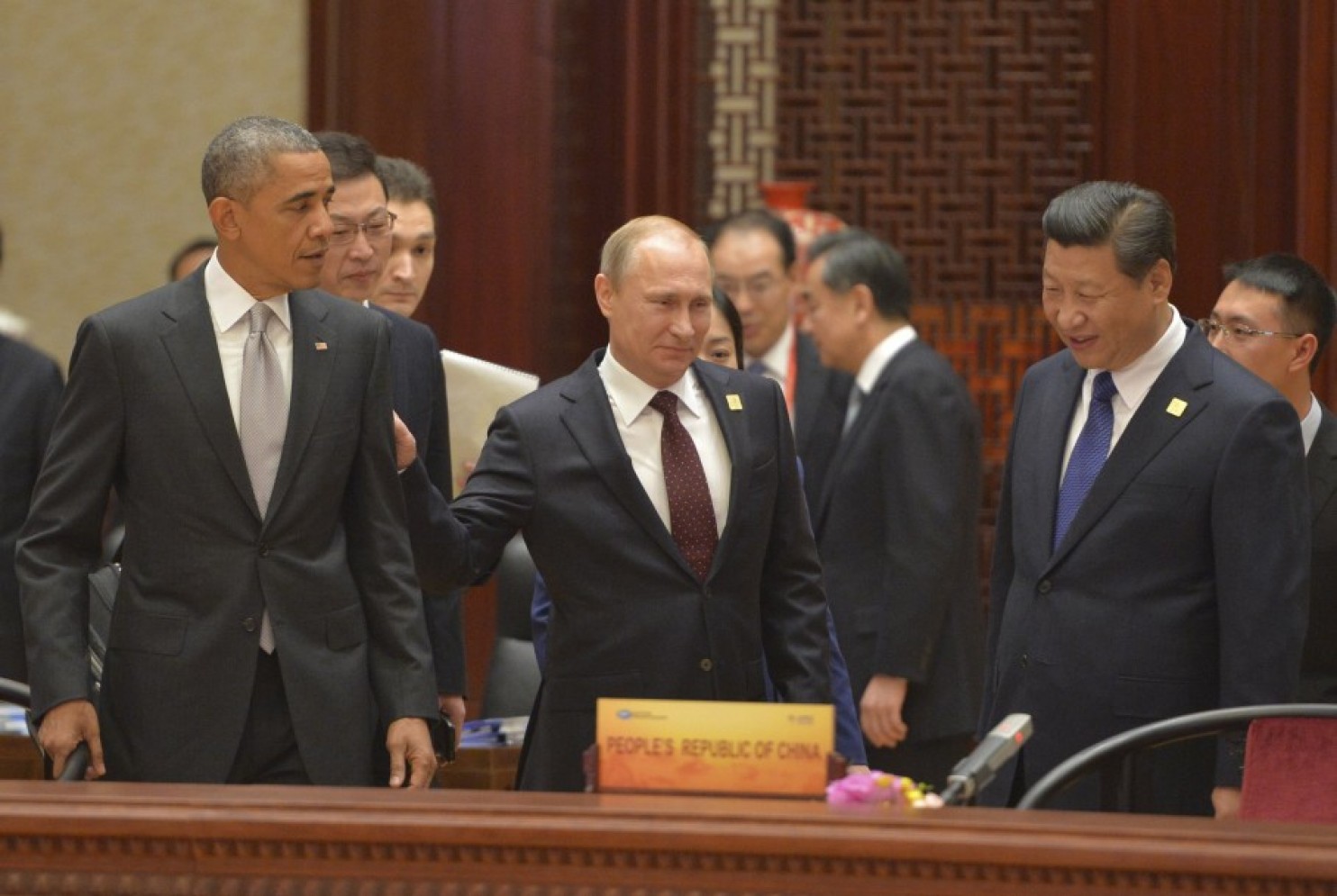
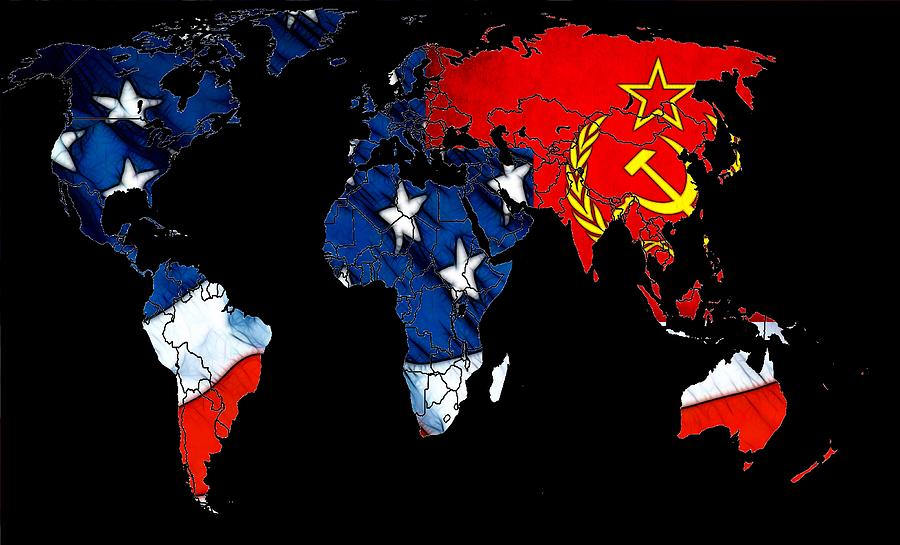 Avoiding Conditions for an Asia-Pacific Cold War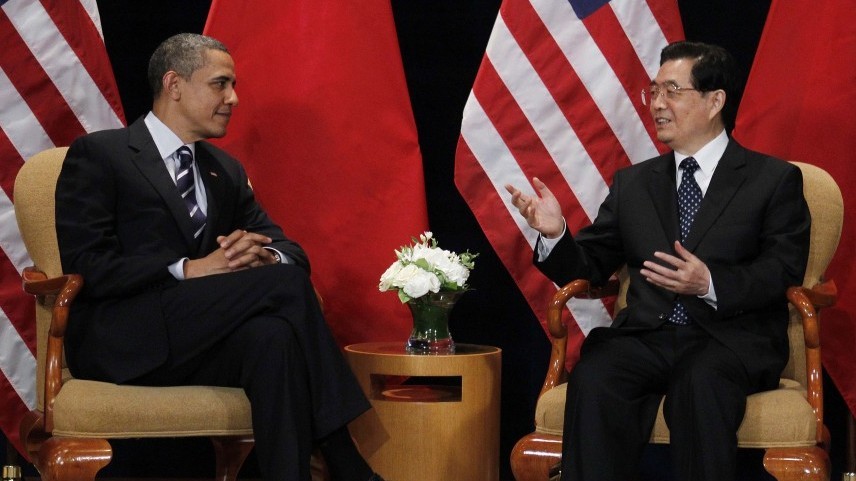
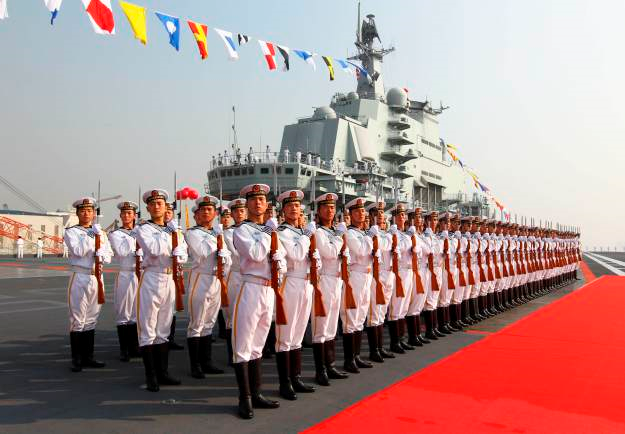 Beyond the Security Dilemma? De-Escalating Tension in the South China Sea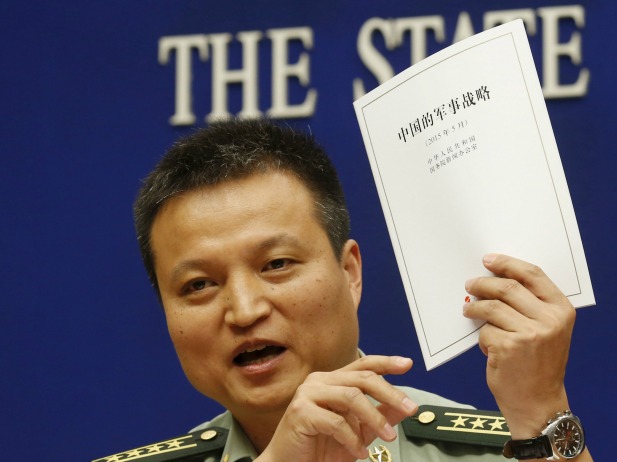
 mmodation: The Best Option for Preventing War in the Taiwan Strait
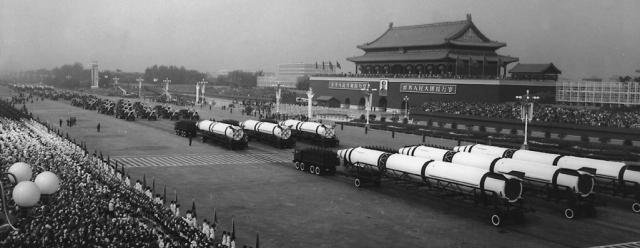 Assessing China’s Nuclear Ambitions
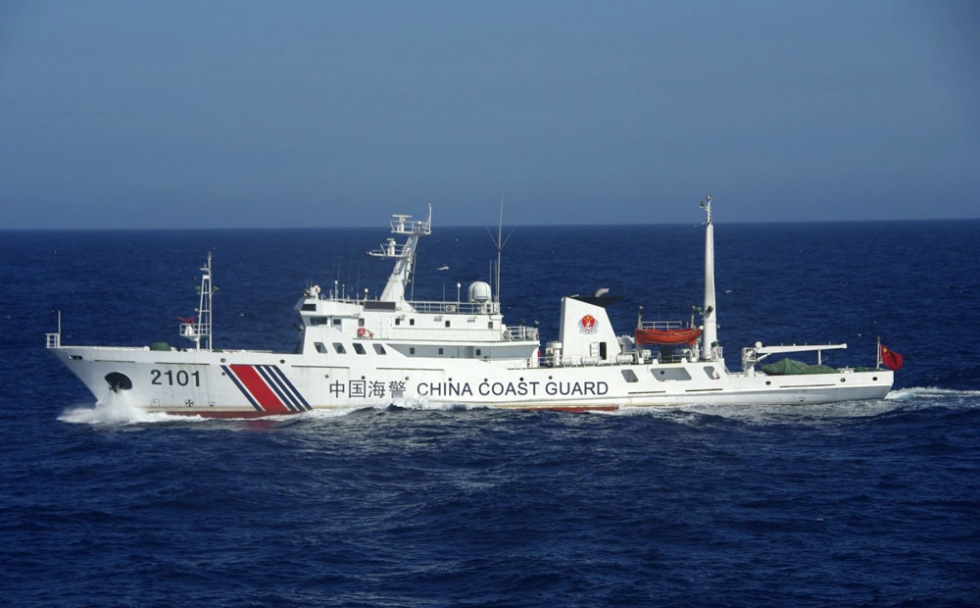 The Unnamed Protagonist in China’s Maritime Objectives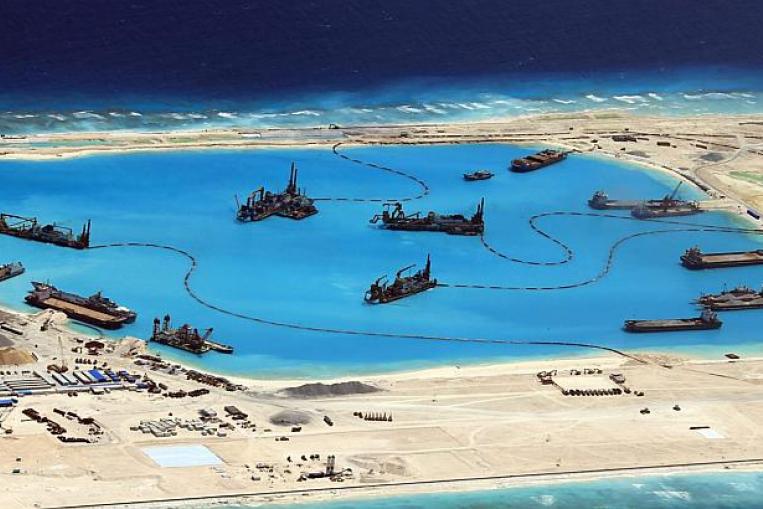
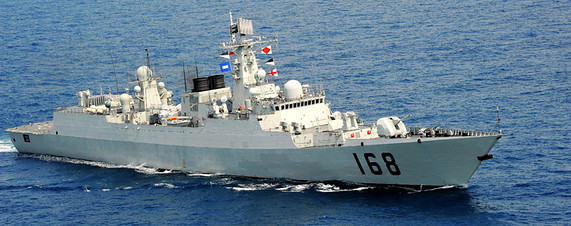 Becoming a Maritime Power? The First Chinese base in the Indian Ocean?