Tag Archives: Indian Ocean

Pakistan’s Navy: A Quick Look

By Alex Calvo

Traditionally the junior service, operating in the Army’s shadow and receiving a ten percent share of the 2015 defence budget of $6.6 billion, Pakistan’s Navy personnel numbers more than 22,000 active, plus 5,000 in the reserve. This secondary role stands in contrast with the economy’s dependence on the sea, with the port city of Karachi contributing 25 percent of GDP and the proposed China Pakistan Economic Corridor (CPEC) raising the country’s maritime profile even further.

Much of the Navy’s backbone, including its seven submarines, five French-made ‘Khalid’ class conventional hunter-killer (SSKs) acquired in the 1990s plus two ‘Hashmat’ class SSKs from the 1970s, is nearing retirement. The Navy is working to acquire new surface and undersea combatants, boosting domestic shipbuilding in the process and in cooperation with Beijing.

Plans include procuring an additional four 3000-ton F-22P/’Zulfiqar’ (Sword) class frigates with improved sensors and weapons (including HQ-17 surface-to-air missiles, developed from Russia’s Tor 1/SA-N-9), as well as six Type-022 Houbei stealth catamaran missile boats. State-owned shipbuilder Karachi Shipyard and Engineering Works (KSEW) is responsible for these programs, and is expanding its facilities with a new foundry, manufacturing areas, and two dry docks of 26,000 and 18,000 dead weight tons, spread over 71 acres. Islamabad had been hoping to procure six Perry-class frigates from the US on easy terms, but congressional hostility has prompted greater reliance on China, a country heavily committed at all levels to Pakistan, being a key to Beijing’s strategy of securing access to the Indian Ocean and keeping New Delhi distracted by a regional rival.
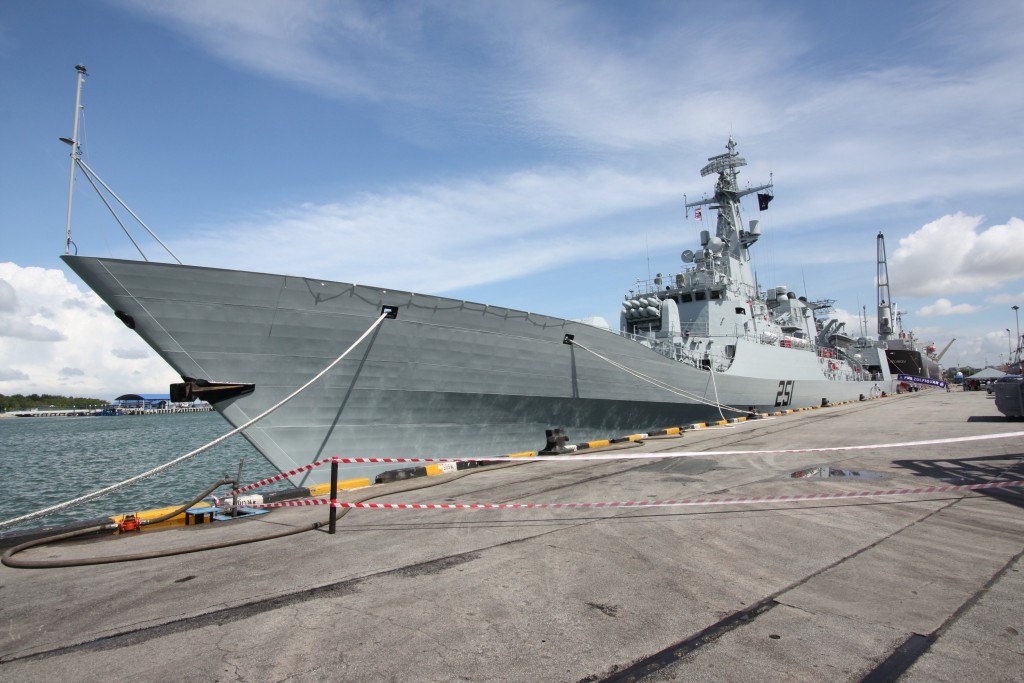
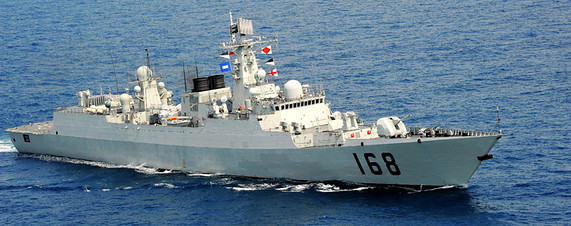
Sword class frigate of the Pakistani Navy.

Karachi is the traditional home of the Pakistani Navy, and remains of the utmost importance, despite diversification into other bases, among them PNS Siddique (in Turbat, in the south-west, close to the strategic deepwater port of Gwadar and the border with Iran), Pasni, and Jinnah Naval Base (also in the south-west). Asked whether security is considered by the Pakistani Navy as a reason to push for further diversification away from the city, Zoha Waseem (PhD Candidate at King’s College London and an expert in Pakistani security and policing) explains that “the situation in Karachi in terms of the ongoing operation is linked with the need of the military to keep investing in Karachi. The construction of military bases, infrastructure, and training centres and accommodation does not appear to be decreasing. Karachi is an ATM machine, and a prime location for any stakeholder to have its assets here.”
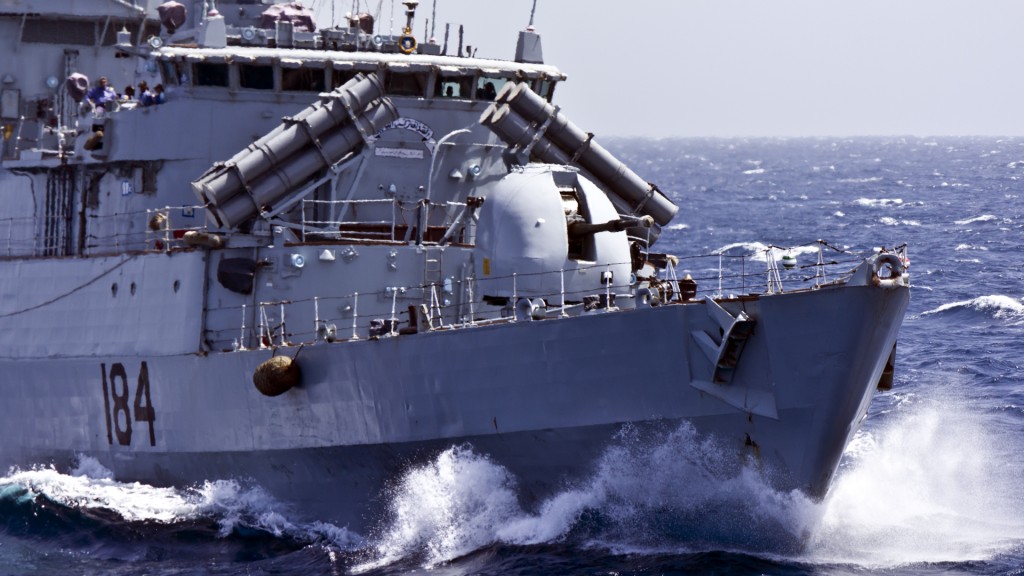
PNS Badr, a British-built Type-21 frigate, was decommissioned in 2014. Despite being the junior service and the country facing a difficult fiscal position, Pakistan's Navy has been pushing for ambitious plans in terms of both surface and undersea combatants. Source Flickr.
PNS Badr, a British-built Type-21 frigate, was decommissioned in 2014. Despite being the junior service and the country facing a difficult fiscal position, Pakistan’s Navy has been pushing for ambitious plans in terms of both surface and undersea combatants. Source Flickr.

While new ships are seen as essential in terms of maritime security and the fight against piracy, it is Pakistani plans to acquire new submarines that have met with the greatest concern in New Delhi. In March 2015, Islamabad announced plans to procure eight new Chinese submarines, and in October 2015 confirmed that four would be purchased from Beijing and four built at KSEW. The package includes a training centre in Karachi and probably includes access to China’s Beidou-II (BDS-2) satellite navigation network. Thanks to similar designs, Beijing, in turn, gets to enjoy the necessary maintenance personnel and facilities enabling her to operate her own submarines much more efficiently in the Indian Ocean, home to vital SLOCs (sea lanes of communication) for China. Ideally the Navy would like a total of 12 new boats. These Chinese-designed submarines will probably be based on the air independent propulsion (AIP) equipped Type 39B Yuan SSK (known as S-20 in its export version). Displacing 2,300 tons, they can fire both cruise missiles and 533 mm torpedoes, and can also deploy mines and special forces. Pakistan, already working on a version of the National Defence Complex Babur missile capable of launch from her old Khalid submarines, sees the S-20 as more than a conventional platform, although preventing an Indian blockade is certainly a major goal in and by itself. A sea-based deterrent would provide Islamabad with a second strike capability, while avoiding perceptions of falling behind India in the nuclear sphere. The resulting improvement in survivability is seen by Mansoor Ahmed (Stanton Nuclear Security junior faculty fellow at the Harvard Kennedy School’s Belfer Center), as providing greater strategic stability to South Asia, given that India could not be sure of completely destroying Pakistani nuclear forces and thus escape unacceptable damage herself.

Work on a sea-based deterrent may also be closely linked to the Navy’s status within the military. According to Scott Cheney-Peters (US Navy reserve officer and CIMSEC founder) “Unless Pakistan’s Navy can develop an at-sea strategic nuclear deterrent it is likely to remain the ‘junior service.’ This means it has a strong institutional incentive to pursue an SLBM second-strike capability. But just as this incentive may not be enough to bring the capability to fruition any time soon, so the second-capability may not be enough to remove the perception of the Navy as a junior partner in the nation’s armed forces.”

Alex Calvo is a guest professor at Nagoya University (Japan) focusing on security and defence policy, international law, and military history in the Indian-Pacific Ocean Region. A member of the Center for International Maritime Security (CIMSEC) and Taiwan’s South China Sea Think-Tank, he is currently writing a book about Asia’s role and contribution to the Allied victory in the Great War. He tweets @Alex__Calvo and his work can be found here.

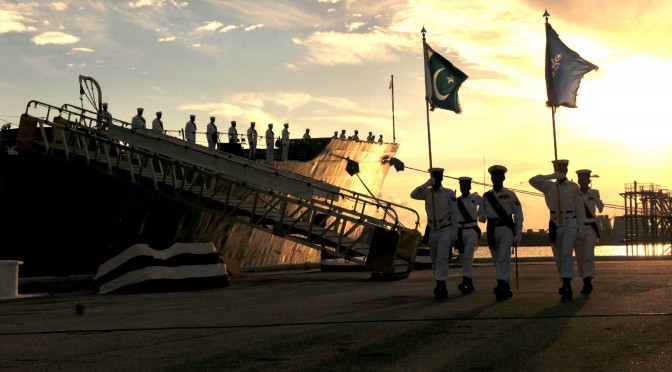
Featured Image: MAYPORT, Fla. (Aug. 31, 2010) Pakistan sailors parade their country’s colors during the decommissioning ceremony of the guided-missile frigate USS McInerney (FFG 8) at Naval Station Mayport. During the ceremony, McInerney was commissioned into the Pakistan navy as PNS Alamgir (F 260). (U.S. Navy photo by Mass Communication Specialist 2nd Class Gary Granger Jr./Released).
The Other Deep-Water Battleground

This article originally featured on Reuters and was republished with the author’s permission. Read it in its original form here

By Peter Marino 

A floating dock of the Indian navy is pictured at the naval base at Port Blair in Andaman and Nicobar Islands, India, July 1, 2015. REUTERS/Sanjeev Miglani

The Indian Ocean may be the only ocean named for a country, but it’ s still heavily contested territory. Both China and India, who have major strategic interests there, are suspicious of each other. Their struggle for leadership in the “emerging world” will play out for decades and all around the globe, but today the Indian Ocean is Ground Zero.

The South China Sea is home to overlapping claims by China, the Philippines, and other countries in the region. And the Arctic Ocean, increasingly, has seen a build-up of U.S. and Russian troops, lured by the possibility of billions of barrels of untapped oil. The Indian Ocean is significant because of its strategically important sea lanes — particularly for India and China, two of the world’s largest importers.

China imports most of its oil by sea, and 80 percent of it crosses the Indian Ocean before it passes through the Straits of Malacca, on its way to the Chinese market. Beijing is very concerned about its dependency on a waterway it does not control, and is using diplomacy, both carrots and sticks, to ensure that it can continue to access the sea lanes. As part of this effort, Xi Jinping’s “maritime silk road” program will offer cheap Chinese financing to cash-strapped governments for trade and industrial infrastructure along such routes.

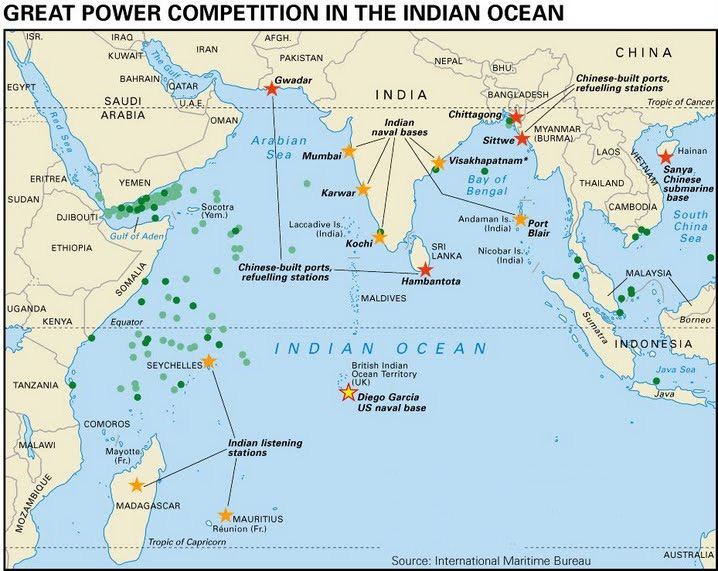
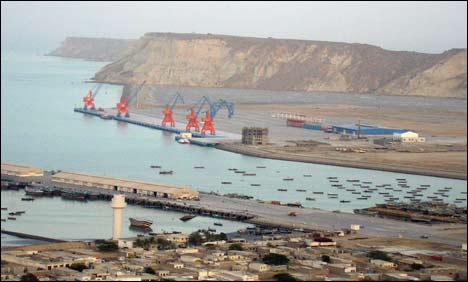
China is using hard power as well. Through China’s longstanding alliance with the Pakistani government, it has funded improvements at the deepwater port of Gwadar, Pakistan, where a state-owned Chinese company now has a 40-year management contract. That agreement allowed the port to host ships owned by the People’s Liberation Army Navy, giving the Chinese a permanent, or at least semi-permanent, presence in the region.

China’s participation, since 2012, in the international anti-piracy coalition that mans the Gulf of Aden has also allowed it to operate in the Western Indian Ocean, where it is reported to be conducting studies of the sea depth, presumably to aid future submarine patrol missions.

Delhi has been paying close attention, and is mobilizing its own diplomatic and hard-power tools to shore up its influence in its home region. Indian foreign aid, while not yet on the scale of Chinese state investment, is being spread liberally to countries near the Indian Ocean, especially to Bangladesh and Sri Lanka. India’s proximity and cultural similarities give it some advantages over the Chinese efforts. Nationalist Prime Minister Narendra Modi has been notably active in this area, making the first trip by an Indian PM to Sri Lanka in 28 years as part of the push to improve bilateral relations.

Moreover, Delhi is aware of the gap between the strength of its own forces, and that of the Chinese People’s Liberation Army, which has been modernizing for 20 years. India is opening up its checkbook for better equipment, including a multi-billion-euro deal for advanced Rafale fighter jets from France to replace its aging Russian Sukhois. And it is becoming less shy about the idea that it is countering China at sea. When U.S. Secretary of Defense Ashton Carter visited Delhi in June this year, he signed early paperwork establishing a collaboration to develop India’s next generation of aircraft carriers. Because China had recently launched its first aircraft carrier, the Liaoning, and was constructing two more, the motivation behind this proposed Indo-U.S. partnership was unmistakable.

Despite these conflicting interests, China and India could still have room to collaborate on several major global issues. As two of the world’s biggest importers of agricultural goods, minerals and energy, they share an interest in working with exporters to help smooth out price volatility in commodity cycles. And as countries that will be “great powers” while still relatively poor, they should work with each other to push through reforms at the United Nations, World Bank and other international groups that were set up by the rich world. Their shared interest in a peaceful and stable Southeast Asia should contribute to their joint participation in peaceful diplomacy there, too.

But for the moment, Delhi and Beijing are mostly in a mode of competition in the Indian Ocean, and the tendrils of their struggle extend even further, across the steppes of Central Asia, to the Western part of Africa, and into the Persian Gulf, as well. The Indian Ocean is the one major ocean not bounded by one of the existing great powers, which makes it the perfect locale in which the struggle for primacy in the “emerging world” can play out. What we are seeing now is only the beginning.

Peter Marino holds an MSc in Global Politics from The London School of Economics and is a graduate of Norwich University. He lived in Shanghai from 2003 to 2008 and served as head of China development for London-based Aurigon, Ltd. He founded and sold Quaternion, a political risk startup, and is currently establishing a new Think Tank for International Affairs aimed at promoting engagement with the “Millennial Generation.” He also produces Globalogues, a video blog with commentary on global politics and economics. The views expressed in this article are his own.

Becoming a Maritime Power? – The First Chinese base in the Indian Ocean

Guest post for Chinese Military Strategy Week by Xunchao Zhang

In May 2015, it was reported that China was going to establish a naval base in the East African nation of Djibouti. In the past, there has been much talk about Chinese overseas bases, but the Chinese official response to this news suggest the base is likely to be more than a rumor. The Chinese Foreign Ministry did not deny the report but instead stated that “Regional peace and stability serves the interests of all countries and meets the aspirations shared by China, Djibouti and other countries around the world. The Chinese side is ready and obliged to make more contributions to that end.” Likewise, the Chinese Defense Ministry also expressed China’s willingness to “make even more contributions” to peace and stability of the region. More directly, the official Xinhua News Agency has argued that time is ripe for a base in Djibouti. The talk of a Chinese naval base in Djibouti seems to confirm a 2014 report from Washington predicting the establishment of Chinese “dual-use” bases in the Indian Ocean serving both commercial and security functions. All of this brings to mind three questions: First, why would China choose to increase its Indian Ocean presence? Second, what is the strategic environment in which China has to operate? And third, what are the strategic implications for Sino-U.S. strategic interactions and China’s maritime strategy?

Strategic Rationale         

The increasing importance of the Indian Ocean to vital Chinese maritime interests form the rationale of having a Chinese base in the area. Although the official white paper “China’s Military Strategy” did not explicit confirm an out-of-area naval base, it did designate several reasons requiring the People’s Liberation Army Navy’s (PLAN) presence in Indian Ocean. A base in the Horn of Africa is consistent with the strategic shift from solely “offshore waters defense” to a combined “offshore waters defense” and “open seas protection.”

The white paper states that the “traditional mentality that ‘land outweighs sea’ must be abandoned” especially regarding sea lines of communication (SLOCs), of which, exports of manufactured goods and crude oil imports are paramount. Since a significant share of these rely on Indian Ocean sea lines, an out-of-area naval presence is almost a necessity. The February PLAN exercise in Lombok Strait sent a strong signal of the increasing Chinese naval footprint in the Indian Ocean. Moreover, the PLAN has responded to several non-traditional security contingencies near the Horn of Africa. For instance, the PLAN has conducted a series of evacuation operations in the nearby states of Yemen, Libya, and Syria. China has also operated in the Gulf of Aden as a part of the international anti-piracy force since 2008. The official white paper states that the abilities and experiences in dealing with non-traditional challenges should be extended into traditional security areas.

Strategic environment

Multiple political and economic factors shape China’s rather favorable environment in the Indian Ocean region. One of the most significant is the lack of direct geopolitical tensions with the regional states. In contrast to the situation in the West Pacific, where China had a wide range of maritime territorial disputes with its neighbors in the South and East China Seas, China has far more cooperative relations with most states in the Indian Ocean region. Beijing not only has strong partnerships with countries like Pakistan but robust commercial and political ties with African states as well.

Under the Xi administration, China has placed greater economic emphasis on the Indian Ocean region. For instance, the recently announced ‘Maritime Silk Road’ involves connecting East Asia with Indian Ocean economies such as India, Pakistan, Kenya and others via the promotion of maritime trade and investment in port infrastructures. Indian analysts have dubbed this the “String of Pearls.” Although the “String of Pearls” concept is an exaggerated reading of largely commercial Chinese infrastructure investments in the Indian Ocean, the scope of Chinese port building does reveal Chinese economic-political weight in the area.

Port in Gwadar, Pakistan.

Many international media observers have zealously pointed out the “conflict” between China’s new overseas base strategy with China’s non-interventionist principles. However, overseas basing is not necessarily incompatible with the principle of non-intervention, as long as base arrangements and military deployments are based upon agreement with rather than coercion of foreign governments. A naval base is also irrelevant to the domestic politics of the state where base is to be located. Hence, in technical sense, it is possible for china to establish overseas bases while maintaining the non-intervention principle at the same time.

Strategic Implications

Realistically speaking, China has a long way to go if it is to fulfill the objectives outlined in the recent defense white paper. China would have to overcome not only the overall capability gap with the U.S., but also the lack of experience in running overseas bases, as well as the doubts concerning the cost-benefit calculus of overseas bases. Comparatively, the U.S. military has operated from its own Djibouti base, Camp Lemonnier, during a variety of naval and counter-terrorism missions since 2001. The U.S. base has more than 4,000 personnel and is likely to be much larger and more functionally comprehensive than the potential first Chinese base. Furthermore, as mentioned in the 2014 NDU report, some voices in China are rather skeptical of overseas bases citing concerns about the principle of non-intervention and the possibility of foreign opposition. Therefore, there is possibility that the function of a first Chinese overseas base in Djibouti would be deliberately kept small to avoid controversy. In addition, even in the official white paper, the goal of transformation from “offshore defense” to “open sea protection” remains a limited one, reflecting the Chinese awareness regarding its own limited power projection capabilities.

In terms of overseas naval operations, the Chinese defense strategy white paper clearly took a reassuring tone emphasizing the cooperative and non-confrontational nature of PLAN open sea protection, and SLOCs security objectives. Chinese naval presence in the Indian Ocean region is neither intended to nor sufficient to pose challenge to the current maritime order. But it does indicates an increasing determination on Beijing’s part to provide security for its own overseas interests rather than merely relying on the “public goods” provided by the U.S. Navy. In this sense, China’s increasing Indian Ocean presence, though insufficient to trigger real strategic competition between the United States and China, is certainly feeding the popular narrative of global Sino-US competition in the media.

In sum, the strategic move towards an overseas base is part of the continuation of changing Chinese strategic culture that is increasingly outward-looking and maritime-oriented. But if the base in Djibouti is to be materialized, even in its most limited form, it is certainly a transformative moment in the strategic cultural shift. The increasing PLAN overseas presence, particularly in the India Ocean region is almost a foregone conclusion. However, it depends on how the PLAN is able to deal with its growing pains, the extent and effectiveness of which remain to be seen.

Currently working for the Australian Institution of International affairs, Xunchao Zhang is an observer of Chinese defense and foreign policy, Zhang is also the sub-editor of ACYA journal of Australia-China Affairs. He has been an intern at the Sea Power and Centre Australia, a guest correspondent of China Radio International, and a member of CIMSEC.

 CIMSEC is and always will be free for everyone, but we would be grateful for those who wish to provide a modest regular donation to support our operations.
Select a Donation Option (USD)

Enter Donation Amount (USD)

China’s Military Strategy White Paper 2015: Far Seas Operations and the Indian Ocean Region

The Security Environment

On 26 May 2015, China released its first ever White Paper focusing exclusively on military strategy. China’s economic rise propelled by an extensive growth strategy has caused its integration with the global economy. It has consequently developed expansive interests linking its fate with that of the global system, most notably its access to African and Persian Gulf resources. China’s transition from the ‘near coast defence’ maritime doctrine in the 1980’s (product of a maritime strategy that was seen only as an extension to the continental strategy) to the ‘near seas control’ doctrine till 2004 calling for China to exercise control up to the first island chain has mirrored China’s increasing integration in the global economy. The conferment of historical missions upon the Chinese Navy post 2004 required it to focus on the distant seas as well. That was symptomatic of the increased stakes China had in influencing the events in the maritime commons, and was a trend that has continued unabated. The document acknowledges this, noting that:

In the new circumstances, the national security issues facing China encompass far more subjects, extend over a greater range, and cover a longer time span than at any time in the country’s history. Internally and externally, the factors at play are more complex than ever before.”

Taiwan’s reunification and safeguarding its territorial claims in the ‘near seas’ remain important to China. However, the emphasis accorded to safeguarding of China’s overseas interests is notable, as observed in the section on National Security Overview which says:

With the growth of China’s national interests, its national security is more vulnerable to international and regional turmoil, terrorism, piracy, serious natural disasters and epidemics, and the security of overseas interests concerning energy and resources, strategic sea lines of communication (SLOCs), as well as institutions, personnel and assets abroad, has become an imminent issue.”

A Blue Water Force

The most revealing part of the strategy indicating China’s aim to build a globe spanning blue water navy says:

“..the PLA Navy (PLAN) will gradually shift its focus from “offshore waters defense” to the combination of “offshore waters defense” with “open seas protection,” and build a combined, multi-functional and efficient marine combat force structure.

The section on force development goes on to say:

The seas and oceans bear on the enduring peace, lasting stability and sustainable development of China. The traditional mentality that land outweighs sea must be abandoned, and great importance has to be attached to managing the seas and oceans and protecting maritime rights and interests. It is necessary for China to develop a modern maritime military force structure commensurate with its national security and development interests, safeguard its national sovereignty and maritime rights and interests, protect the security of strategic SLOCs and overseas interests, and participate in international maritime cooperation, so as to provide strategic support for building itself into a maritime power.”

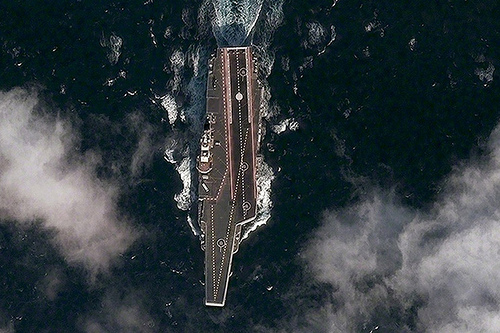
An overhead view of China’s carrier, the Liaoning.

Far Seas Operations

The strategic guideline of active defence is prescribed for the military with a focus on winning local wars in conditions of modern technology and informationisation (with the maritime military struggle aspect being highlighted).

In the section about Preparation for Military Struggle, however a reference is made to the need to strengthen strategic prepositioning. Limited logistical support severely constrains the PLAN’s ability to operate beyond East Asia; and in context of the Indian Ocean, this could be interpreted to refer to the strengthening of a Chinese policy popularly dubbed as the ‘String of Pearls’. Recent talks between China and Djibouti aimed at enhancing Chinese naval operations in the region is part of a Chinese effort to establish a variety of access points in the Indian Ocean Region in the upcoming years.

Further (as seen in the U.S. Office of Naval Intelligence 2015 Report on the PLAN) it is clear that the Chinese naval order of battle is undergoing qualitative improvements as legacy combatants are giving way to larger multi-mission ships capable of undertaking a broader spectrum of missions. The PLAN’s involvement in diversified missions in the far seas is mirrored in both its acquisition patterns and far seas training patterns (as routine deployments in the Philippines, operations in the Mediterranean and increasing incursions in the Indian Ocean indicate).

Looking to the Future

China has enhanced overseas interests, is building a blue water fleet to conduct far seas operations and the Indian Ocean is slated to become an active area of operations for the PLAN. Should this set alarm bells ringing in India? The answer is that it’s too early to tell.

The Chinese fleet is currently optimized for anti-surface warfare and has made substantial investments and developments in advanced Anti-Ship Cruise Missiles and Over the Horizon Targeting systems in pursuit of the same. Proficient as it may be in Anti Surface Warfare and increasingly Anti Air Warfare (shipboard air defences having witnessed dramatic improvements of late) Anti-Submarine Warfare and power projection in contested environments remain weaknesses for China. Given PLAN’s priorities closer to home, the pace at which aircraft carriers, large deck amphibious ships (power projection tools) and its anti-submarine capabilities are bolstered will be indicating the priority PLAN places on being able to sustain far seas operations that can involve high intensity combat operations.

Just as important as adapting to these developments militarily though would be closely mirroring Chinese diplomatic approaches not just in the Indian Ocean region but within China’s backyard as well. Whether or not such an approach is considered feasible depends in large part on whether it is the pursuit of simply a reactive or a pro-active strategy that is being considered. Either way policy must be formulated keeping in mind the fact that China has growing global interests and this is occurring simultaneously with the loosening of its historic reticence for using its military forces in far seas operations.

This piece was originally published as a Viewpoint at the National Maritime Foundation. The author (Himanil Raina) can be reached at himanilraina@gmail.com.