Tag Archives: China

Members’ Roundup Part 18

Welcome back to another edition of the Roundup! After a brief hiatus we are back to share with you more of our members’ works. There are plenty of articles to share, ranging from maritime infrastructure development to thoughts on the new maritime strategy.

Back in February Miha Hribernik wrote a piece for The Diplomat regarding piracy in Southeast Asia. Although this presents a significant and worrying problem, it is manageable. Miha presents some suggestions for regional States on how to resolve this issue. You can access the article here. 

To surpass China in Sri Lanka, India needs to pursue proactive and dynamic diplomacy. Nilanthi Samaranayake explains, over at The Diplomat, that the key to reaffirming India’s presence in the region is through infrastructure investment. More specifically, the focus should be on public-private partnership and government to government investment in the maritime domain. You can access Nilanthi’s article here.

Screen Shot 2015-03-20 at 1.53.03 pmJerry Hendrix, from the Center for a New American Security, published a report in February called ‘Avoiding Trivia: A Strategy for Sustainment and Fiscal Security’. In it, he argues that the United States has strayed from its historic and cultural approach to the world, leaving behind its traditional maritime-focused, technologically innovative, free-trade based strategy. The solution to this, according to Hendrix, is a more clear eyed strategy that seeks to avoid trivia and address the US’ current weaknesses in order to shore up its long term strategic position.

Over at War on the Rocks David Wise shares with us an article titled ‘Blowback as National Policy.’ Many of the current security threats that the Western world faces today are a result of those decisions made in years past. Before making the foray into the geostrategic game, which is more than just a big game of Risk, first have a look at David’s cogent words on what we face today.

Mira Rapp-Hooper writes on the Lawfare Institute’s blog a post examining the impact of China’s increased military spending (and the US’ relative decline in spending) on neighbouring countries. You can access her post here.

Following the trend of AMTI posts, Bryan McGrath shares his analysis on how China might view the United States’ revised Maritime Strategy. Given that Bryan was heavily involved in the development of the 2007 strategy, you will certainly find his views on the matter very insightful. You can access his piece here.

Vice Admiral Robert Thomas, commander of the US 7th Fleet, proposed the creation of joint maritime patrols in the South China Sea by ASEAN member nations – this was quickly met with mix reactions. Scott Cheney-Peters provides some solutions to challenge the arguments presented by the ‘nay-sayers’ and suggests that the presence of the “white hulls” of the U.S. Coast Guard could mitigate many of the perceived drawbacks. You can find out more by accessing his article on the AMTI’s website, here.

Harry Kazianis, on The National Interest, shares an analysis of the core reasons behind China’s ‘massive’ military buildup. He explains the historical roots of the Chinese military psyche due to subjugation at the hands of external powers. The solution to this is to employ an asymmetrical strategy  to defeat, in battle, forces that are superior to its own. You can access his article here.
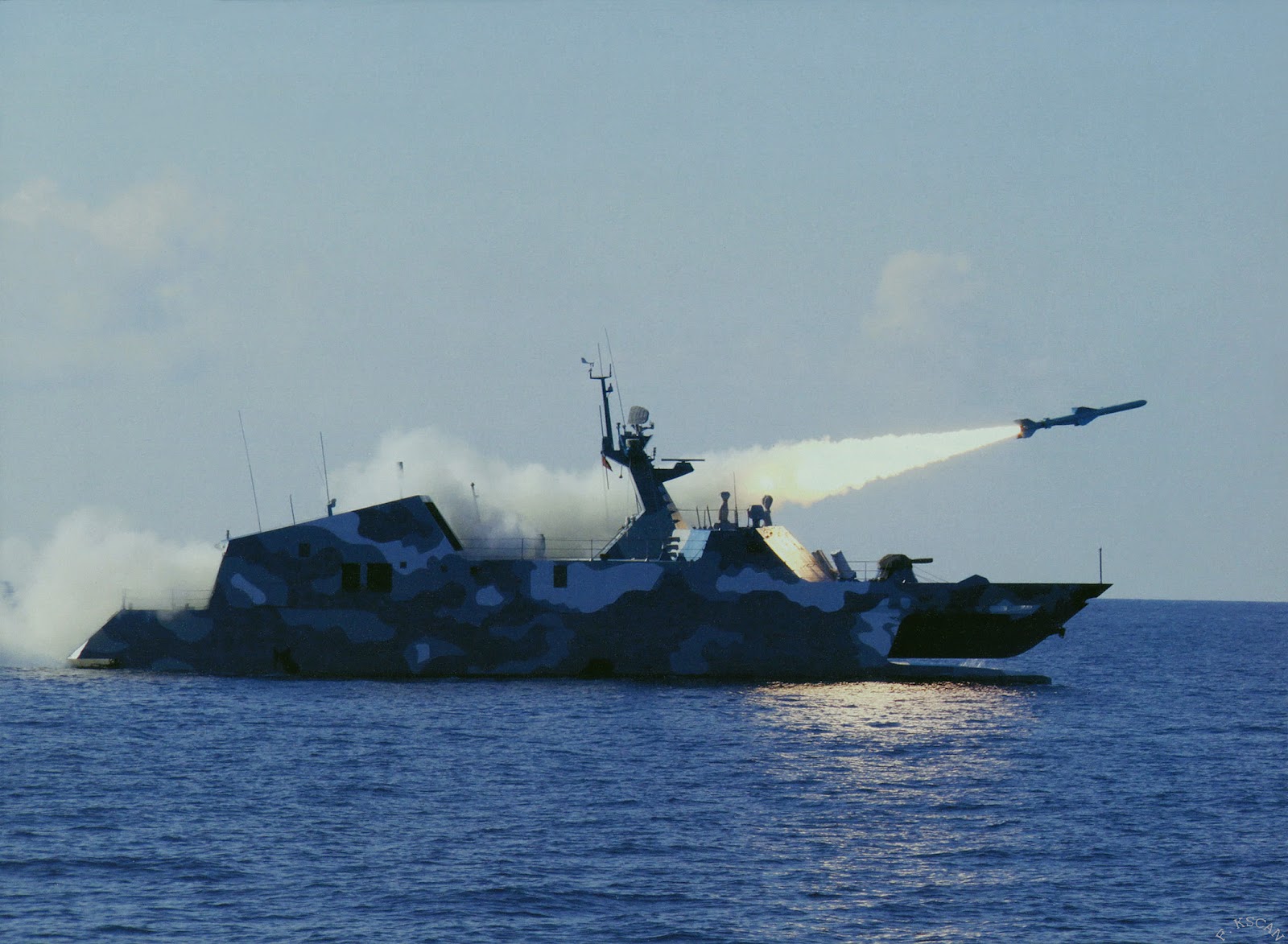
Long range anti-ship missiles contribute to an essential element of China's deterrence.
Anti-Ship Missiles contribute to an essential element of China’s deterrence.

On the National Defense Magazine’s online blog, Sandra Erwin reports that the current pace of shipbuilding and funding will not be able to meet the future demands of the Navy. Given that is an annual obligation of the Navy to tell Congress how many ships it will need and how much they will cost, it should certainly raise some alarm bells for decision-makers in Washington. For more on this, you can access Sandra’s post here.
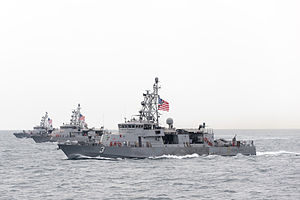
U.S. Navy Cyclone-class coastal patrol ships assigned to Patrol Coastal Squadron 1 (PCRON 1), USS Hurricane (PC-3), USS Chinook (PC-9) and USS Typhoon (PC-5), transit in formation during a divisional tactics exercise in the Persian Gulf.

Bringing the theme of this Roundup to the naval profession, Matthew Hipple in a joint article with Dan Follet and James Davenport, remind us the important role of patrol coastal ships in securing the seas. In this edition of Proceedings, the authors suggest that patrol coastal ships are an “incredible platform for both mission execution and cultivating war fighting.” To read more about why this is the case, you can access their article here.

Over at War on the Rocks, CIMSECian Emil Maine (and company) provide some critique of Congressman Mac Thornberry’s ‘Defense Acquisition Reform’ initiative. Defence acquisition is a necessity, but the question is whether political momentum can be sustained long enough to overcome the usual barriers to wholesale reform. More on this topic here.

Finally we conclude this edition with a shameless plug for my own work. The first is an article featured in the March-April edition of the Australian Defence Force Journal. Titled ‘Evolution of the Battlefield’, I examine existing strategic and legal challenges to developing an effective cyber warfare policy for military planners. My second piece is a brief analysis of the Australian Department of Defence’s new First Priniciples Reviewthis will hopefully provide an insight into some of the organisational challenges faced by the ADF and Department of Defence. Perhaps some of the US readers can find some similarities and provide suggestions for the Australian context. You can access each of the above articles here and here.

At CIMSEC we encourage members to continue writing, either here on the NextWar blog or through other means. You can assist us by emailing your works to dmp@cimsec.org.
Strategic Insights Arctic Special Issue – Call for Papers

The December 2015 special issue of Strategic Insights magazine will deal with maritime security problems associated with the Arctic. Although international attention in recent months has shifted to places such as Russia/Ukraine, Syria/Iraq, Greece, or the South China Sea, the High North retains its unique position and potential as a future site of conflict and cooperation, disruptive technology, and a major maritime trade shortcut. We are looking for thought-provoking contributions that address challenges and risks in the High North, and provide fresh perspectives for our readers. Whether it is a particularly Canadian, American, Russian, Norwegian, Danish, or any other nation-state view, a discussion of current and future operations, or perspectives on maritime security from your particular point of view, all suggestions are welcome.

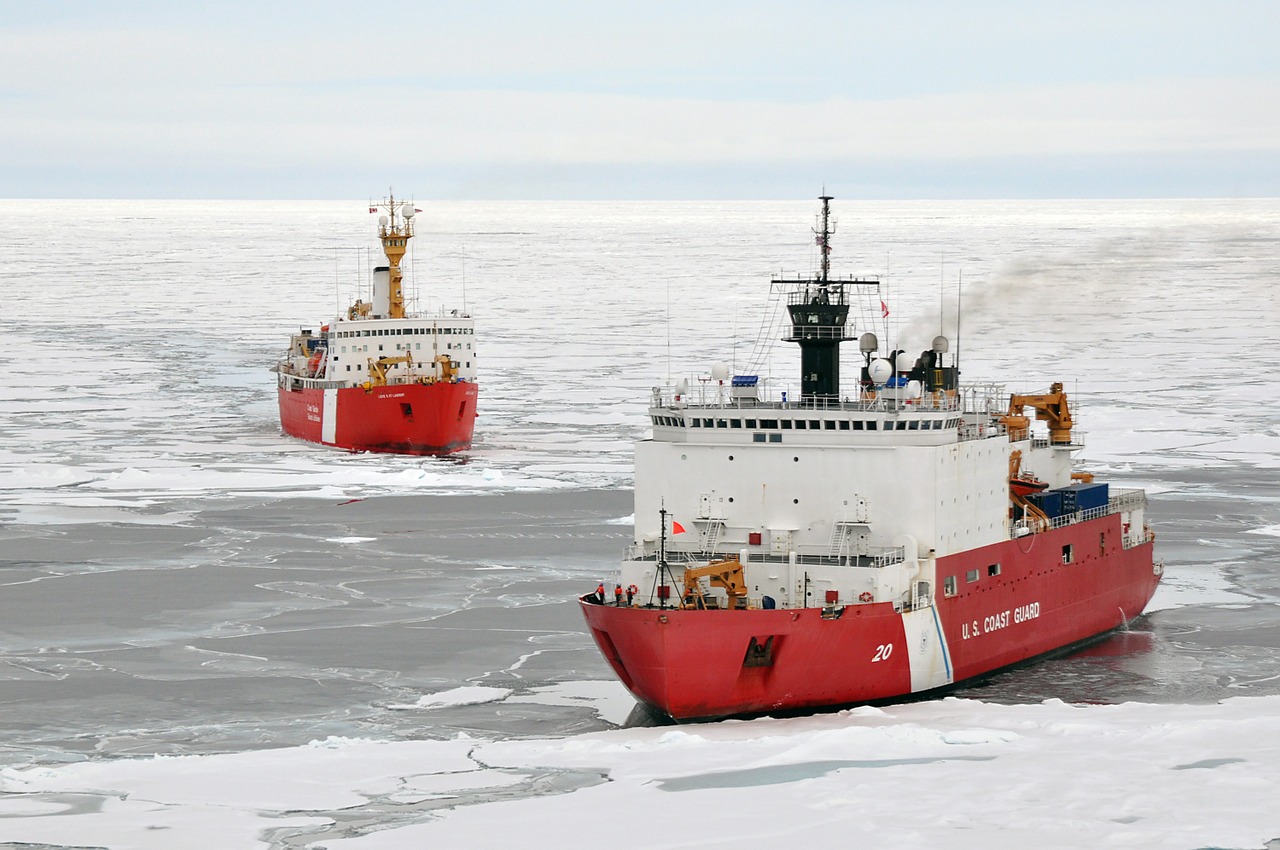
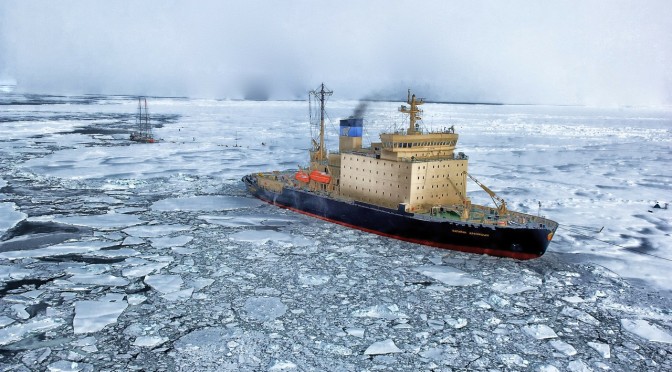
It doesn't happen often that an entire ice-breaking fleet is in one picture... but when it does, it's set to be cool.
It doesn’t happen often that an entire ice-breaking fleet is in one picture… but when it does, it’s set to be cool.

Anyone with an interest in writing an article should send a short note Sebastian Bruns, member of the SI editorial board and fellow CIMSECian, at sb@riskintelligence.eu. Please include a short bullet-point list of what you would like to discuss and provide 2-3 sentences on your professional background. If your article is accepted for publication, remuneration is 300.00 € (or – currently – 335.00 USD) per article and will be paid via bank transfer on the first of the month after publication of the respective issue. The deadline for your final article is 15 November 2015.

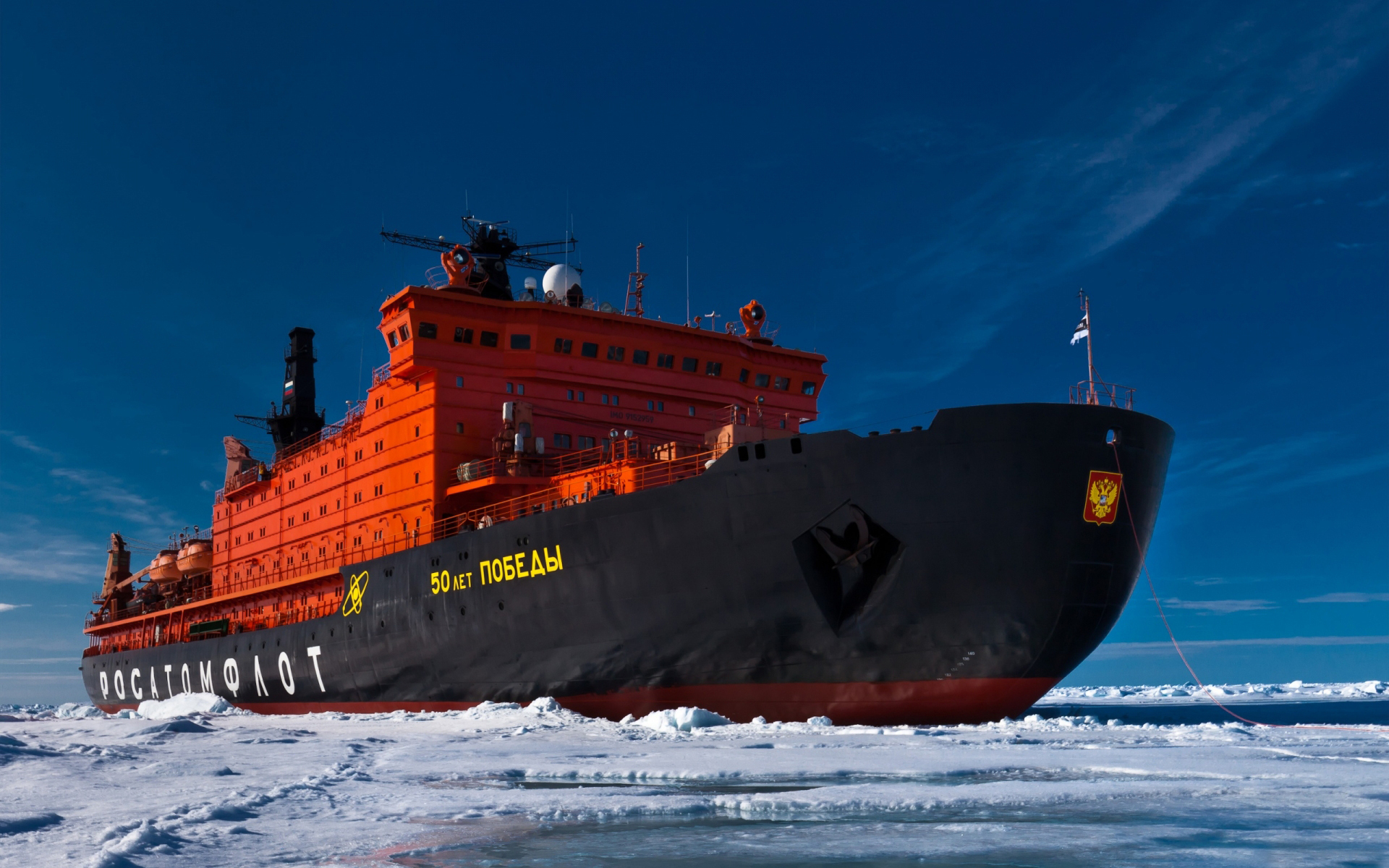
From Russia with love.

Strategic Insights draws on the focus and geographical coverage of Risk Intelligence’s MaRisk maritime security monitor, but takes a wider look at the nature of maritime risk in different threat locations around the world. Each issue goes beyond facts and figures to consider the drivers of maritime security challenges and how these challenges will evolve in the future.
The focus of Strategic Insights is on security threats and political-military developments with a maritime dimension, particularly non-traditional security issues such as piracy, maritime terrorism, insurgency, smuggling, and port security. The journal is read by players in the maritime industry, law enforcement agencies, think tanks and institutions, and inter-governmental regional security bodies. A particular emphasis is placed on articles that offer policy-relevant and operational analysis relevant to the maritime community. The style is a mix of journalism and academic, length about 2,500-3,000 words. Visit the website for more info and to download your complimentary free issue.

Sebastian Bruns is a Research Fellow at the Institute for Security Policy at Kiel University where he is responsible for all things maritime. He is also one of the editors for Strategic Insights magazine.

Japan’s Izumo Helicopter Carrier Commissioned

Post by Chris Biggers

This past week, the Japanese Maritime Self-Defense Force (JMSDF) commissioned the lead vessel of its new class of helicopter carrier at a ceremony at the Yokusuka naval base less than 10 miles south of Yokohama, Japan’s second largest city.

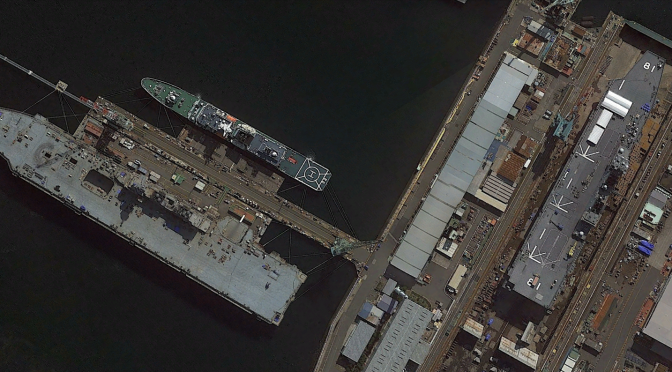
The Izumo (DDH-183) is the island nation’s largest vessel superseding the Hyūga class, Japan’s first helicopter carrier post World War II. To get a clear sense of size, satellite imagery from March 2014 shows both vessels at the IHI Marine United shipyard. At the time, the 248 meter-long Izumo was still in the fitting out process while the 197 meter-long Hyūga (DDH-181) was located in a nearby dry-dock undergoing routine maintenance.

At 24,000 tons, the fully loaded Izumo is noticeably larger than its 19,000 ton predecessor and more capable.[1] Manned by approximately 470 sailors, the vessel can support up to 14 helicopters — broken up into seven Mitsubishi-built SH-60k ASW helicopters and seven Agusta Westland MCM-101 mine countermeasure helicopters.

According to Jane’s, the carrier is equipped with an OQQ-22 bow-mounted sonar for submarine detection, two Raytheon RIM-116 Rolling Airframe Missile SeaRAM launchers and two Phalanx close-in weapon systems for air defense.

“This [vessel] heightens our ability to deal with Chinese submarines that have become more difficult to detect,” an JMSDF officer told the Asahi Shimbum in late March.[2] Downplaying grander ambitions, JMSDF officials have often focused media attention on the ship’s role in undertaking border surveillance and humanitarian assistance missions.

Izumo

Beyond the ship’s standard load, the vessel can also support the Bell-Boeing V-22 Osprey tilt-rotor aircraft and some have even suggested the vertical landing Lockheed Martin F-35 Lighting II Joint Strike Fighter. Although the latter has caused much controversy, putting F-35s on the Izumo seems unlikely given that the advanced fighter was acquired by Japan’s Air Force and not its sea services (to say nothing of the additional retrofit costs that would require of the vessel).

But that hasn’t stopped Chinese assertions and general concerns throughout East Asia of Japanese intent. “The Izumo proves that Japan has the technical capabilities and demand to develop aircraft carriers. It’s also possible that Japan may explore the possibility during the Izumo’s service,” Li Jie, a Beijing-based military commentator, told the Chinese Global Times newspaper. Beyond China, South Korea has also voiced concern.

While no one’s exactly sure how Japan will use the new carrier, its potential for power projection is undeniable. As geopolitical tensions increase, especially with disputed island territories and areas like the South China Sea, it’s not surprising to see Japan push to bolster her navy. With the election of officials like Prime Minister Shinzō Abe, defense spending has gone up and bans on arms exports have been lifted—suggesting Japan is preparing to reinterpret her role on the world stage. What this will ultimately mean for the service is still too early to say.[3]

In the meantime, the USD 1.2 billion Izumo will join JMSDF’s Escort Flotilla 1, based at the Yokosuka naval base, also home of the U.S. Navy Seventh Fleet.[4] The vessel was initially laid down on 27 January 2012 and launched on 06 August 2013. It will later be joined in 2017 by the second vessel in the series, the DDH-184, currently under construction at IHI Marine United Shipyard.

This post can be found in its original form at offiziere.ch 

Notes
[1] Both measurements refer to the vessels at full load.
[2] In 2013, Japan said it detected Chinese submarines navigating near territorial waters of Okinawa and Kagoshima prefectures.
[3] Japan has in recent years participated in amphibious warfare training utilizing the Hyuga class helicopter carrier in concert the US. For Example Dawn Blitz 2013.
[4] Japan has 4 Escort Flotillas with a mix of 7-8 warships each. Bases are located at Yokosuka, Kure,Sasebo, Maizuru, and Moinato. SSKs are organized into 2 Flotillas with bases at Kure and Yokosuka. Remaining Units assigned to 5 regional districts.

The Roles of Navies in the Yemeni Conflict

By Claude Berube, Stephanie Chenault, Louis M-v, Chris Rawley

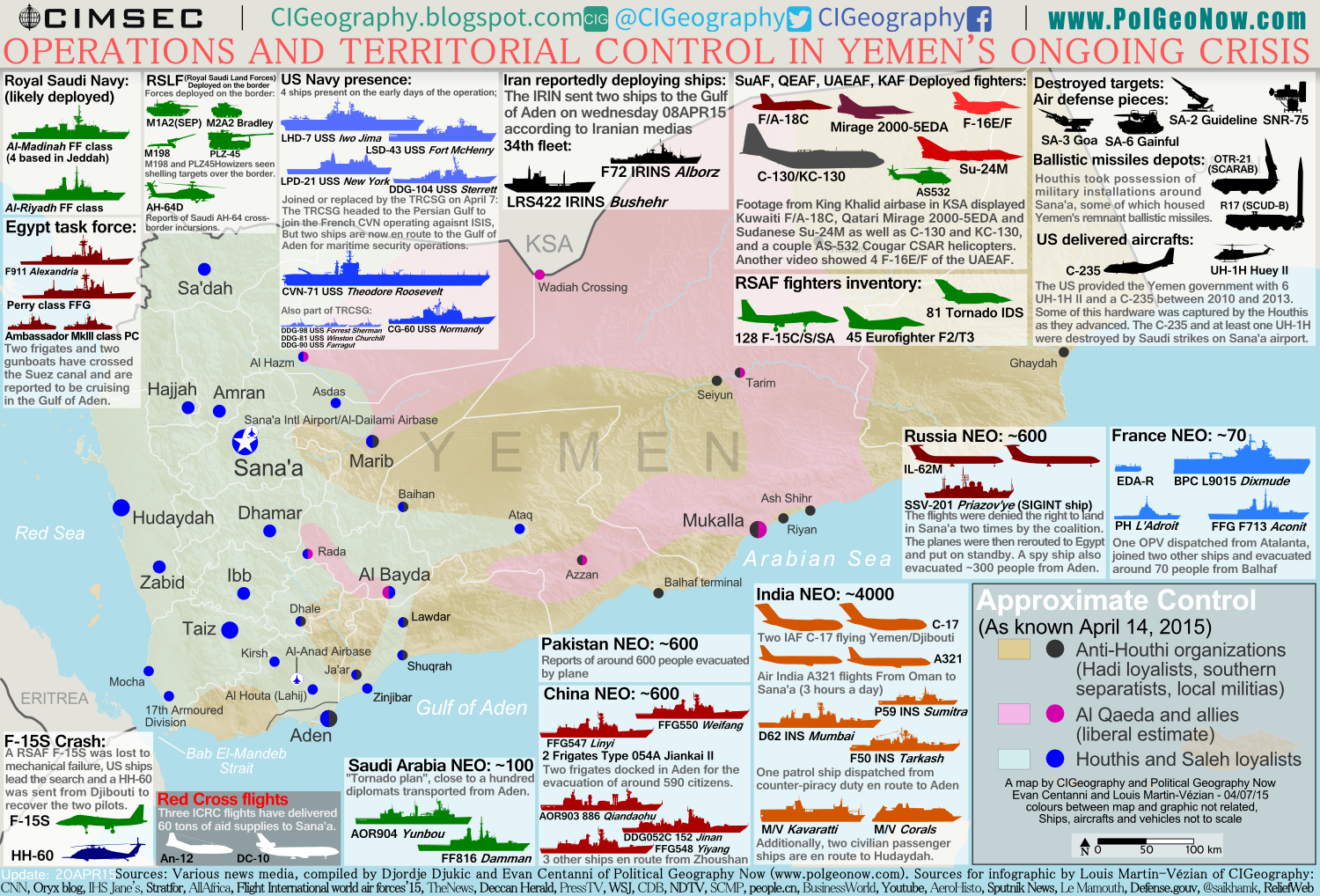
Although the Saudi-led Operation RESOLUTE STORM (alternately translated as DECISIVE STORM) began with air strikes into Yemen on March 26 and continue as of this writing, the heightened level of regional activity also includes maritime operations. These national and multi-national operations highlight the importance of naval platforms and presence. Yemen is strategically located with the heavily-trafficked Red Sea to its west and the Gulf of Aden along its southern coast. Some twenty thousand ships transit the Gulf of Aden annually. Yemen’s ports have been largely closed to commercial traffic.

yemen_cig_pgn_cimsec 17apr15

Graphic courtesy of CIGeography and Political Geography Now.

Evacuation of Citizens

Earlier this year, the US and other nations began pulling out of embassies and recommending their citizens leave Yemen at the earliest opportunity. Once RESOLUTE STORM began, airspace was restricted with limited flights out of the country. Consequently, several countries have been evacuating its citizens via comparatively safer ports such as Aden in the Gulf of Aden and Hodeida situated along the Red Sea. One Pakistan Navy ship got underway from Pakistan on Sunday while a second planned to depart the following day, both for the port of Hodeida where some 600 Pakistani citizens were converging.

India sent five ships to evacuate approximately four thousand nationals from Hodeida. The passenger ships include the M/V Kavaratti and M/V Corals. The Indian Navy ships include the Delhi-class destroyer Mumbai, the Talwar-class frigate Tarkash, and the Saryu-class patrol vessel Sumitra.

China also interrupted the duties of its 19th anti-piracy flotilla off the Horn of Africa to evacuate citizens from Yemen. The PLA/N frigate Weifang was sent to Yemen and evacuated 449 Chinese citizens and others.  Evacuations had taken place at both Aden and Hodeida. Chinese citizens were then taken to Djibouti.

Saudi Arabia’s “Tornado Plan” was employed to transport diplomats in Yemen. The ships included the Al-Riyadh (Lafayette)-class Al-Damman, and a modified Durance-class replenishment ship Yunbou

Maritime Security

Several countries have some concern about the Bab el-Mandeb Strait, approximately 18-20 miles wide at its narrowest point “limiting tanker traffic to two 2-mile-wide channels for inbound and outbound shipments.” According to the U.S. Energy Information Administration, approximately 3.8 million barrels of crude oil and petroleum products transited the Bab el-Mandeb every day in 2013. Although the Iranian-backed Houthis leading the insurgency in Yemen have announced that they would not seek to impact transit through the strait, the more likely threat would be from Al Qaeda in the Arabian Peninsula (AQAP). In 2013, for example, the Yemeni government reportedly disrupted one AQAP plot to attack ships in the Bab el-Mandeb.

According to Reuters, four ships from the Egyptian Navy transited the Suez Canal to secure the region on the first day of the air strikes.

Search and Rescue

The Flight IIA Arleigh Burke-class destroyer USS Sterrett (DDG 104) rescued two Saudi Arabian airmen from the Gulf of Aden after their two-seater F-15 fighter jet crashed on the first day of the air strikes.

Naval Gunfire Support

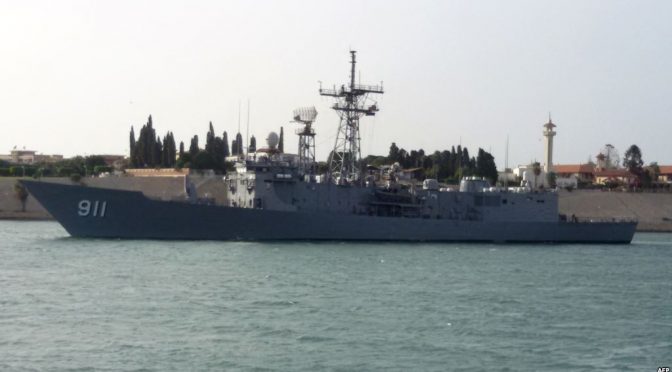
According to one source, Egyptian warships began shelling Houthis outside Aden on March 30.  The Egyptian flotilla includes the U.S. produced Perry-class frigate Alexandria (F911), whose 76 mm OTO-Melara gun can bombard surface targets out to 16 km away.

Analysts’ Assessment

While the majority of Operation RESOLUTE STORM activities have been air strikes with the possibility of a future ground conflict, the domestic instability in Yemen and on-going military operations underscore the importance of naval platforms, presence, and the varied operations that can be conducted by navies. Naval activity in the region by regional and international actors can be expected to continue for the foreseeable future.  Possible future naval missions could include patrols designed to prevent Iran’s resupply of Houthi forces from the sea.  Previous attempts by the Iranians to smuggle modern weapons to Houthi forces, such as the Jeehan 1 in January 2013, were foiled by Yemeni government forces.  It is doubtful such naval capability still exists in non-Houthi Yemeni elements so multi-national forces will need to take on the maritime interdiction role.

The operations also highlight the PLA/N’s increasing capability. China began sending anti-piracy flotillas off the Horn of Africa in 2008 at the height of Somali pirate activity. To date, the PLA/N has sent nineteen flotillas, each comprised of two warships and one supply ship. These uninterrupted operations have enabled the Chinese to become familiar with long-term operations, logistics, and the importance of presence. Without the PLA/N’s experience in the region, it is unknown how or if it could have extracted its citizens from Yemen in a timely fashion.

A new op-ed in a Chinese newspaper on March 30 points out that “China has evacuated hundreds of its nationals from war-torn Yemen by Monday, in demonstrating responsibility and humanistic care toward its citizens. In the era of globalization, coupled with China’s increasing presence in the world, more Chinese nationals are living and working overseas.” Another online commenter on China’s Sina Weibo stated: “The strength of the motherland is not about the visa-free agreements with other countries, but that it could bring you home from danger.” Put simply: The Navy protects you.

One might ask, given budget priorities, have Americans and Europeans forgotten this?

Claude Berube is a history instructor at the U.S. Naval Academy and author.

Stephanie Chenault is the Chief Operating Officer of Venio Inc. and a Policy & Strategy Consultant for the Department of Defense.

Louis Martin-Vézian is the co-president of the French chapter at CIMSEC.org, and the founder of CIGeography, where he post his maps and infographics on various security and defense topics. He is currently studying Geography and Political Science in Lyon, France.

Chris Rawley is an entrepreneur and reserve naval officer.