Tag Archives: China

The Scholar as Portent of Chinese Actions in the South China Sea

South China Sea Topic Week

By Ryan D. Martinson

Chinese leaders, like leaders elsewhere, rely on the advice of outside experts—academics and other professional scholars—to help them cope with the myriad challenges of international politics. Statesmen and scholars, however, come from very different worlds. When leaders craft foreign policy, they place a premium on secrecy. Scholars, by contrast, have powerful motives to share their views and tout their influence.

For those studying an opaque state like the People’s Republic of China (PRC), it is therefore very tempting to regard the “influential” Chinese scholar, who writes and speaks without reserve, as a proxy for the shy statesman he serves. The lure of this approach is especially strong in the case of the South China Sea, where authoritative—and reliable—statements of PRC intentions are particularly scarce. In the aftermath of the recent ruling of the Permanent Court of Arbitration (Case No. 2013-19), the writings of Chinese scholars will no doubt be closely scrutinized for insights about the PRC’s likely response to this desolating blow to its South China Sea claims.

But is this a wise approach?

We must immediately distinguish the advisor from the propagandist. Both have direct connections with the state. Indeed, an individual scholar may serve both functions. As a propagandist, the scholar justifies past and current policy; as an advisor, she seeks to shape future policy. Studying the work of the propagandist has merits: we learn what the PRC wants domestic and international audiences to believe. The statements of the advisor, however, are potentially much more rewarding, for they may suggest future actions. Knowing what a state may do allows one to engage in proactive diplomacy and prepare countermeasures.

Given the legal and strategic complexities of the issues at stake, Chinese scholars have an important advisory role to play in South China Sea policy. However, among the dozens (hundreds?) of Chinese scholars researching the law and politics of the South China Sea, the vast majority will never speak to or have their work read by men and women in positions of real authority. Thus, if one’s aim is to conjecture about the direction of PRC policy, the works of only a tiny number of Chinese scholars—i.e., those with demonstrable influence—are worth considering.

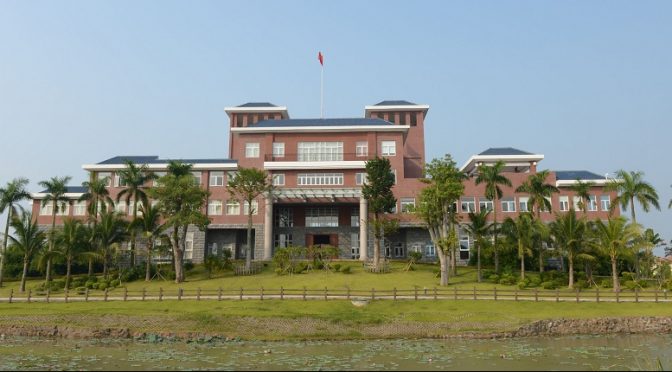
Researchers at the Hainan Center for South China Sea Policy and Law (海南省南海政策与法律研究中心) fall into this category. Examining this institute—and the work of one scholar in particular—allows us to explore what can and cannot be learned from the writings of “influential” Chinese scholars.

Established in December 2011, the Center is based at the Hainan University School of Law. Its mission is to “research the law of the South China Sea and serve national strategy.” It employs 17 full-time and 15 part-time researchers, all studying issues directly and indirectly related to China’s position in the South China Sea.

The Center is very closely connected to the Chinese government. Indeed, the chair of its academic committee is Gao Zhiguo, who directs a major research unit located within the State Oceanic Administration (SOA). Gao lectures widely on maritime issues, his audiences ranging from small communities of specialists to the most senior members of the Chinese party-state. In sum, the Center is a large, well-connected institute that exists to find answers to the most important questions facing Chinese policy in the South China Sea.

Like all academic institutions, the Center seeks to publicize the achievements of its resident experts. To this end, it posts detailed data about the research grants it  receives. As of October 2015, the Center had been awarded dozens of grants totaling millions of RMB from entities such as the National Planning Office of Philosophy and Social Science (NPOPSS), the Ministry of Education, the Ministry of Justice, and the Hainan provincial government.

Such information is valuable in and of itself. Project names and grant amounts suggest which topics are important to the Chinese government. Since 2012, for example, Center researcher Wang Chongmin  received half a million RMB (~$75,000) from SOA in order to do preliminary work on a “maritime basic law,” a comprehensive statement of China’s maritime claims and the roles and responsibilities of state entities charged with defending them. In 2015, Center researcher Chen Yangle was awarded 200,000 RMB (~$30,000) from NPOPSS to examine how China might promote tourism to the disputed Spratly Islands without undermining the “Maritime Silk Road” initiative, a policy aimed at cultivating regional good will. Since 2012, Chen Qiuyun  received 50,000 RMB (~$7,500) from the Ministry of Justice to study how sailing directions (更路簿) supposedly handed down by generations of Chinese fishermen might bolster the legitimacy of PRC claims.

Center researcher Zou Ligang is a special case. From 2010-2012, NPOPSS awarded Zou a total of 120,000 RMB (~$18,000) to complete a project entitled “Research on Legal Issues Associated with the South China Sea Problem and a Program to Resolve It.” This bland title might be easily overlooked, were it not for the fact that NPOPSS appraised Zou’s work as “outstanding”—an honor the Center was eager to promote. Indeed, a closer examination of this project reveals a direct connection between Zou and the highest levels of the Chinese government.

As luck would have it, the Hainan Society of Social Sciences published a lengthy synopsis of Zou’s project. His overall objective was to probe China’s existing South China Sea policy and suggest improvements. One particular focus was the “nine-dashed line,” the undefined cartographical monstrosity that continues to confuse and dismay the coastal states of Southeast Asia. Zou proceeds from the assumption China has “jurisdiction” over all of the two million square kilometers of maritime space within the nine-dashed line. The purpose of his research was to create a legal basis for China to “control” (管控) these waters, and to do so without seriously harming regional stability.
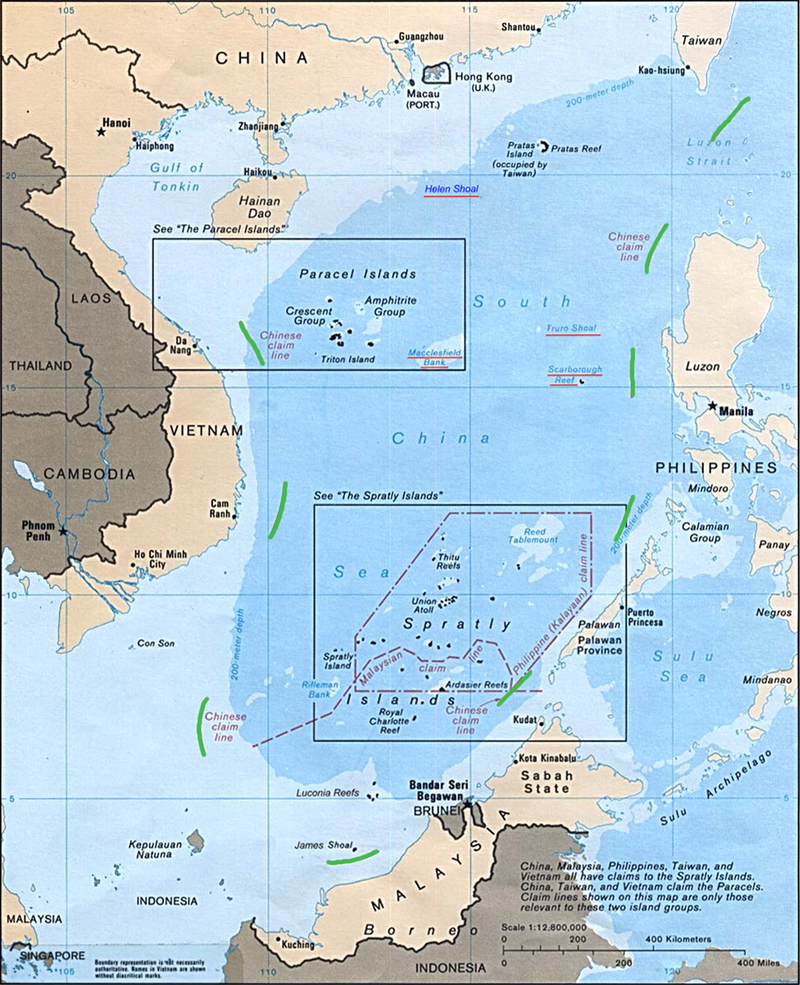
Map of claims in South China Sea (CIA/Wikipedia Commons)

The synopsis outlines Zou’s policy recommendations. Most reflect conventional thinking. For example, China should build and better coordinate its navy, coast guard, and maritime militia and leverage these capabilities in order to increase “routine administrative control” over Chinese-claimed waters. Zou also proposes that China revamp its domestic maritime law—again, a point that many other Chinese experts have been making for years. Other recommendations are less expected. These include taking steps to reduce the Chinese economy’s dependence on foreign powers and paying due regard to the interests of extra-regional powers (such as the U.S.) in the South China Sea.

The synopsis also sketches Zou’s conclusions about the “legal status” of the nine-dashed line. Zou admits that within China there exists no consensus on this question. However, since the UN Convention on the Law of the Sea (UNCLOS) is based on the principle that “the land dominates the sea,” Zou concludes that China’s maritime boundaries in the South China Sea should be largely determined by Chinese-claimed islands and other features. However, Zou asserts, this principle should not “impede China from claiming historic rights to certain specified waters within the nine-dashed line.” Taken together, Zou seems to be recommending that China use UNCLOS to claim as much space within the nine-dashed line as possible, and then use another argument based on “historic rights” to buttress Chinese claims to the remaining space.

If, as Zou suggests, offshore islands should largely determine China’s maritime rights in the South China Sea, the approach China adopts to draw baselines around these islands takes on tremendous importance. Zou has much to say on this topic. While China was correct to draw straight baselines around all of the Chinese-controlled Paracel Islands, this method would not work for the Spratlys because they are too widely dispersed. Thus, Zou recommends using the same approach that China applied to the Diaoyu/Senkaku Islands in the East China Sea. That is, China should draw baselines around different clusters of features within the archipelago, with zones of sovereignty and jurisdiction extending from them. The synopsis does not say which. However, in a 2013 journal article published under this grant number, Zou recommends that China center these clusters on Itu Aba (currently occupied by Taiwan), Thitu Island (the Philippines), West York Island (the Philippines), Spratly Island (Vietnam), and Mischief Reef (China).

Zou’s project was not funded for the sake of truth and knowledge. Its findings were intended to serve as a resource for policymakers. The synopsis states that, aside from journal articles like the one cited above, Zou also produced (or helped produce) 26 research reports for internal consumption. Among these reports, 10 were directly “adopted” by Hainan province, which administers all Chinese-claimed waters in the South China Sea (we do not learn which 10). Even more important, some of Zou’s reports landed on the desks of national Party officials. Three in fact were read and approved with comment (批示) by Xi Jinping and other members of the Politburo. The synopsis cites their titles: 1) “Views on Certain Issues Related to Maritime Law,” 2) “Legal Thinking with Respect to Resolving the Maritime Disputes,” and 3) “Strategic Research on Building the Maritime Silk Road.”

To sum up, we have learned that the Hainan Center for South China Sea Policy and Law is a major research institute producing policy-relevant analysis on the South China Sea for the direct benefit of the Chinese government at both the provincial and national levels. We know the names of individual projects and have the means to track down journal articles produced under specific grant numbers. In the particular case of Zou Ligang, we know that several of his reports were read and approved by the Politburo during a period of great flux in Chinese foreign policy. By reading articles published under this grant number, we can speculate about the advice Zou and his colleagues directly provided China’s most important decision makers.

We might ask, would knowledge of Zou’s proposals have enabled a foreign analyst to anticipate Chinese actions in the 2-3 years since they were submitted? That is, given Zou’s demonstrated advisory role on South China Sea issues, would it have been wise to regard his work as a portent of Chinese policy to come?

To be sure, China has pursued some of the policies recommended in Zou’s reports. It has invested heavily in its navy, coast guard, and militia. It has sought to enhance its control over claimed land and sea. In pushing forward with the drafting of a maritime basic law, it has taken steps to improve the maritime legal regime. However, these proposals reflect mainstream thinking in China. At most, then, Zou merely endorsed the existing consensus.

The legal status of the Spratly Islands, a much debated topic in China, is a more interesting test case. It is still too early to know for sure how China will draw baselines in the Spratlys. However, a recent article published in the PLA Daily under the byline of a research institute within the Central Party School suggests that China could ultimately settle on an approach that approximates Zou’s proposal. The article says that the “most likely and most appropriate” method for drawing baselines in the Spratlys is that used for the Diaoyu/Senkaku Islands. Such an approach, the article goes on, would center baselines around Itu Aba, Thitu Island, West York Island, Spratly Island, and Mischief Reef—the very same features recommended by Zou. If China does ultimately take this path, it is very possible that Zou Ligang will have played a significant role in this decision.

Still, one must acknowledge the limits of this approach. If one had relied on Zou’s work as a guide to future Chinese policy one would fail to foresee by far the most provocative Chinese action in recent memory:  the conversion of tiny Spratly outposts into major military bases. Zou proposed policies that he believed would allow China to realize its aims without destabilizing the region. In choosing to construct new Spratly facilities, PRC leaders are plainly operating on an entirely different set of assumptions.

Thus, even when we are certain that a particular expert has the ear of Chinese leaders, we cannot know which proposals—if any—will ultimately be adopted. On any single issue, Chinese leaders no doubt consult a number of scholars. It is impossible to know whose ideas will have purchase. Moreover, outside academics are not the only source of ideas influencing Chinese policy. Experts employed directly by the state (and writing mostly or entirely for internal audiences) may convince Chinese leaders they have a better grasp of the issues at stake. Ultimately, facts and logic may not even be decisive: domestic politics or intangible factors like “national dignity” might trump expertise.

In conclusion, analyzing the work of “influential” Chinese scholars may help gauge the trajectory of Chinese policy in the South China Sea. This approach is bound to be most fruitful when the products of specific research projects can be directly linked to PRC decision makers. In such cases, policy recommendations may reflect actual policy options under consideration by those in positions of power. However, one must recognize that Chinese academics represent only one source of ideas. By fixating on the work of the scholars, we risk exaggerating their influence. Indeed, too much emphasis on this single source may go a long way to explain the failure of the American China studies community to foresee recent PRC actions—above all, the decision to build the new Spratly facilities that have so dramatically altered the regional balance of power.

Ryan D. Martinson is a researcher in the China Maritime Studies Institute at the U.S. Naval War College. The views expressed are those of the author and do not reflect the official policy or position of the U.S. Navy, Department of Defense or the U.S. Government.

Featured Image: National Institute for South China Sea Studies (NISCSS)
South China Sea Week Kicks Off on CIMSEC

By Dmitry Filipoff

This week CIMSEC is publishing a series of articles on the South China Sea in response to a call for articles issued last month. Our authors assessed the response to the ruling issued by the Permanent Court of Arbitration, discussed military developments in the South China Sea, and provided other relevant insights. We thank our authors for their contributions. 

Below is a list of articles featuring during the topic week. It will be updated as the topic week rolls out and as additional publications are finalized.

The Scholar as Portent of Chinese Actions in the South China Sea by Ryan D. Martinson
Assessing the Military Significance of the South China Sea Land Features by Ching Chang
Sea Control 122 – The PCA Ruling with CAPT James Fanell by Sally DeBoer
The Undersea Dimension of Strategic Competition in the South China Sea by Elsa B. Kania
Clash of Core Interests: Can One Mountain Hold Two Tigers? 核心利益的冲突:一山,不容,二虎? by Tommy Jamison

Dmitry Filipoff is CIMSEC’s Director of Online Content. Contact him at Nexwar@cimsec.org

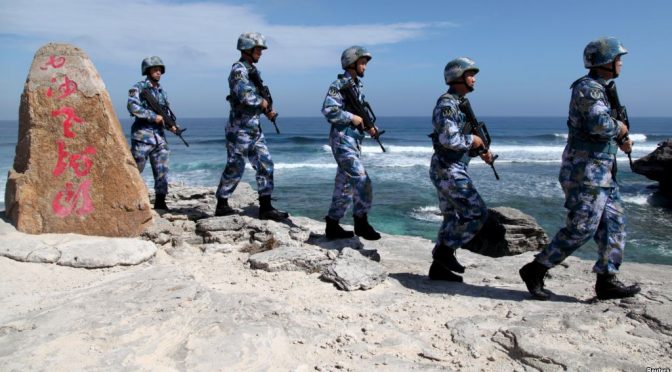
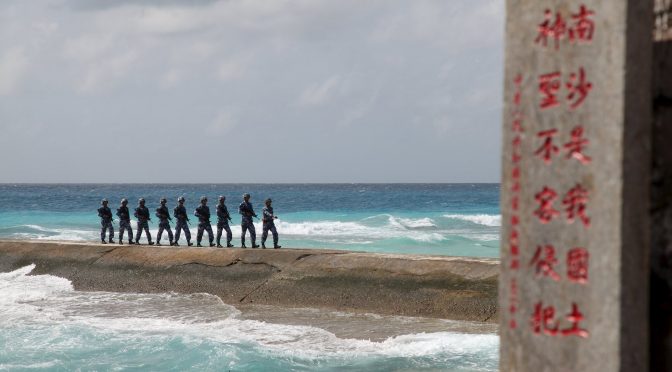
Featured Image: Soldiers of China’s People’s Liberation Army (PLA) Navy patrol in the Spratly Islands. (China Stringer Network/Reuters)

Becoming a Great “Maritime Power”: A Chinese Dream

The following is adapted from the Center for Naval Analyses report Becoming a Great “Maritime Power”: A Chinese Dream. Read a similar article adaptation at The National Interest.

By Michael McDevitt

Introduction

In November 2012, then president Hu Jintao’s work report to the Chinese Communist Party’s 18th Party Congress was a defining moment in China’s maritime history. Hu declared that China’s objective is to be a haiyang qiangguo—that is, a strong or great maritime power. China “should enhance our capacity for exploiting marine resources, develop the marine economy, protect the marine ecological environment, resolutely safeguard China’s maritime rights and interests, and build China into a strong maritime power” (emphasis added).1

Hu’s report also called for building a military (the PLA) that would be “commensurate with China’s international standing.” These two objectives were repeated in the 2012 PRC defense white paper, which was not released until April 2013, after Xi Jinping had assumed Party and national leadership.

According to the white paper: 

“China is a major maritime as well as land country. The seas and oceans provide immense space and abundant resources for China’s sustainable development, and thus are of vital importance to the people’s wellbeing and China’s future. It is an essential national development strategy to exploit, utilize and protect the seas and oceans, and build China into a maritime power.”2

Answering the obvious questions

The study upon which this paper is based addressed a number of questions related to what China’s aspirational goal actually means.3  These are summarized below:

How does China understand the idea of maritime power?

In the Chinese context, maritime power encompasses more than naval power but appreciates the importance of having a world-class navy. The maritime power equation includes a large and effective coast guard; a world-class merchant marine and fishing fleet; a globally recognized shipbuilding capacity; and an ability to harvest or extract economically important maritime resources, especially fish.

The centrality of “power” and “control” in China’s characterization of maritime power

In exploring how Chinese commentators think about maritime power, it was instructive to note how many Chinese conceptualizations included notions of power and control. For example, an article in Qiushi, the Chinese Communist Party’s theoretical journal, stated that a maritime power is a country that could “exert its great comprehensive power to develop, utilize, protect, manage, and control oceans.” It proceeded to opine that China would not become a maritime power until it could deal with the challenges it faces in defense of its maritime sovereignty, rights, and interests, and could deal with the threat of containment from the sea.

Why does China want to become a maritime power?

China’s strategic circumstances have changed dramatically over the past 20 years. The growth in China’s economic and security interests abroad along with longstanding unresolved sovereignty issues such as unification with Taiwan and gaining complete control of land features in the East and South China Seas. Of perhaps equal importance, Xi Jinping has embraced maritime power as an essential element of his “China Dream,” leading to a Weltanschauung within the Party and PLA that becoming a “maritime power” is a necessity for China.4

Finally, it wants to be a maritime power because it deserves to be; China’s reading of history concludes that maritime power is a phenomenon associated with most of the world’s historically dominant powers.5

Anxiety regarding the security of China’s sea lanes

China’s leaders worry about the security of its seaborne trade. The prominence given to sea lane protection and the protection of overseas interests and Chinese citizens in both the 2015 defense white paper and The Science of Military Strategy makes clear that sea lane (SLOC) security is a major preoccupation for the PLA. Chinese security officials can read a map, they appreciate the vulnerability of China’s SLOCs; a concern reinforced by U.S. and western security analysts who write frequently about interrupting China’s sea-lanes in times of conflict.6

When will China become a maritime power?

Remarks made by senior leaders since 2012 make it clear that the long-term goal is for China to be a leader across all aspects of maritime power; having some of these capabilities means that China has some maritime power but that it is “incomplete.” The research for this paper strongly suggests that China will achieve the goal of being the leading maritime power in all areas except its navy, by 2030.

Is becoming a “maritime power” a credible national objective?

China is not embarking on a maritime power quest with the equivalent of a blank sheet of paper. In a few years it will have the world’s second most capable navy. China is already a world leader in shipbuilding, and it has the world’s largest fishing industry. Its merchant marine ranks either first or second in terms of total number of ships owned by citizens. It already has the world’s largest number of coast guard vessels.

The United States inhibits accomplishing the maritime power objective

A significant finding is that from a Chinese perspective U.S. military presence in the Western Pacific impedes Chinese maritime power ambitions. To Beijing, the U.S. rebalance strategy exacerbates this problem. For China to satisfy the maritime power objective, it must be able to defend all of China’s maritime rights and interests in its near seas in spite of U.S. military presence and alliance commitments. In short, it must be able to successfully execute what the latest defense white paper terms “offshore waters defense” for China to be considered a maritime power.

The maritime power vision is global

A wide variety of authoritative sources indicate that maritime power will also have an important global component. The latest Chinese defense white paper indicates that PLA Navy strategy is transitioning from a single-minded focus on “offshore waters defense,” to broader global strategic missions that place significant importance on “distant-water defense.”

Assessing the Elements that Constitute China’s Maritime Power

The PLA Navy (PLAN)

When one counts the number and variety of warships that the PLAN is likely to have in commission by around 2020, China will have both the largest navy in the world (by combatant, underway replenishment, and submarine ship count) and the second most capable “far seas” navy in the world.

To this point, when comparing PLAN’s “blue water” or “far seas” capabilities projected to circa 2020, to other “great” navies of the world, navies that have the experience and capabilities necessary to conduct sustained deployments very far from home waters, the results are interesting. The PLAN will have:

  • A well balanced fleet in terms of the full range of naval capabilities— a smaller version of USN
  • As many nuclear attack submarines (6-7) as UK and France, third behind US and Russia.
  • More SSBNs (5-7) than UK and France, third globally.
  • As many aircraft carriers (2) as the UK and India.
  • 18-20 AEGIS like destroyers—second globally, more than Japan’s 8.
  • More modern multi-mission frigates (FFG) (30-32) than any other navy.
  • A blue-water amphibious force second only to USN in large (LPD/LSD) class ships (6-7)
  • A modern underway replenishment force, behind only the US.
  • A “new far seas” navy; all warships built in 21st century

The total “far seas” capable warships/underway replenishment/submarines forecast to be in PLAN’s inventory around 2020 total between 95 and 104 major warships. If one adds this number to the 175-odd warships/submarines the PLAN has commissioned since 2000 that are largely limited to near seas operations and likely will still be in active service through 2020, the total PLAN warship/replenishment/submarine strength circa 2020 is in the range of 265-273.

This raises the obvious question; how does this stack-up versus the U.S. Navy? The USN will have many more high-end ships in 2020 than the PLAN, including 11 CVNs, 88-91 AEGIS warships, 51 nuclear powered attack submarines, 4 nuclear powered land–attack  cruise missile submarines, 14 SSBNs, 33 modern amphibious ships, and 30 odd underway replacement ships. If one also includes 28 Littoral Combat Ships (LCS), the U.S. Navy is projected to have a force structure of around 260 warship/replenishment/submarines in 2020; in short, the USN and PLAN will be in a position of  rough numeric party, but the USN will maintain a wide qualitative advantage.   

If current plans are carried through, some 60 percent of the total USN force structure, or around 156 warships and submarines, will be assigned to the U.S. Pacific Fleet by 2020.  So, while the U.S. number includes more high-end ships, the total number of combatants the PLAN would have at its disposal for a defensive campaign in East Asia is significant. In this sort of defensive campaign (A2/AD) one must also consider the land based aircraft of PLA Navy and the PLA Air Force as well as the Strategic Rocket Force’s anti-ship ballistic missiles.

How large will the PLAN become?

We don’t know. This is the biggest uncertainty when considering China’s maritime power goal, because China has not revealed that number.

The China Coast Guard (CCG)

The China Coast Guard already has the world’s largest maritime law enforcement fleet. As of this writing, the Office of Naval Intelligence counts 95 large (out of a total 205) hulls in China’s coast guard.7 Chinese commentators believe that China cannot be considered a maritime power until it operates a “truly advanced” maritime law enforcement force. The key will be the successful integration of the discrete bureaucratic entities that have been combined to form the coast guard, and much work remains to be done on this score.

The maritime militia—the third coercive element of China’s maritime power

One of the most important findings of this project is the heretofore underappreciated role that China’s maritime militia plays, especially in the South China Sea. Often, it is China’s first line of defense in the maritime arena. It has allowed China to harass foreign fishermen and defy other coast guards without obviously implicating the Chinese state.

Shipbuilding and China as a maritime power

China became the world leader in merchant shipbuilding in 2010. For the last several years, global demand has shrunk significantly, and China, along with other builders around the world, now faces the reality that it must shed builders and exploit economies of scale by consolidating and creating mega-yards. In short, for China “… to move from a shipbuilding country to shipbuilding power,” it has to focus on quality above quantity.

China’s merchant marine

China’s current merchant fleet is already world class. Beijing’s goal is to be self-sufficient in sea trade. During the past 10 years, the China-owned merchant fleet has more than tripled in size. In response to the Party’s decision for China to become a maritime power, the Ministry of Transport published plans for an even more competitive, efficient, safe, and environmentally friendly Chinese shipping system by 2020.

Fishing is an element of China’s maritime power

China is by far the world’s biggest producer of fishery products (live fishing and aquaculture). It has the largest fishing fleet in the world, with close to 700,000 motorized fishing vessels, some 200,000 of which are marine (sea-going) with another 2,460 classified as distant-water (i.e., global, well beyond China’s seas) in 2014.8 The fishing industry is now viewed in strategic terms; it has a major role in safeguarding national food security and expanding China’s marine economy.

Beijing’s views on its maritime power: What are the shortfalls?

When one considers all the aspects of maritime power—navy, coast guard, militia, merchant marine, port infrastructure,9 shipbuilding, fishing—it is difficult to escape the conclusion that China already is a maritime power, at least in sheer capacity. No other country in the world can match China’s maritime capabilities across the board.

So what is the problem?

Why do China’s leaders characterize becoming a maritime power as a future goal, as opposed to asserting that China is a maritime power? Chinese experts think that China has to improve in several areas:

  • The China Coast Guard needs to complete the integration of the four separate maritime law enforcement entities into a functionally coherent and professional Chinese coast guard.
  • Increased demand for more protein in the Chinese diet means that the fishing industry—in particular, the distant-water fishing (DWF) component—must expand and play a growing role in assuring China’s “food security.”
  • Chinese projections suggest that by 2030 China will surpass Greece and Japan to have the world’s largest merchant fleet by DWT10 and that its “international shipping capacity” will double, to account for 15 percent of the world’s shipping volume. China’s goal is that 85 percent of crude oil should be carried by Chinese-controlled ships. China will become the largest tanker owner by owner nationality around 2017-18.
  • China’s shipbuilding sector is facing a serious period of contraction; thus, the biggest shortcoming is trying to preserve as much capacity as possible: among other things, thousands of jobs are at stake. Chinese builders are also working to ensure the future health of the industry by building economically competitive complex ships and thereby moving up the value chain.
  • China’s most serious impediment to becoming a maritime power is its navy. It wants its navy to be able to deal with the threat of containment, defend its sea lanes, and look after global interests and Chinese citizens abroad. Chinese assessments quite logically conclude that until its navy can accomplish these missions China will not be considered a maritime power.

When will China Become the Leading Maritime Power?

From the perspective of spring 2016, none of these shortcomings appear insurmountable. Past performance suggests that China is likely to achieve all of its maritime power objectives, except perhaps one, sometime between 2020 and 2030.

Shortcomings in the coast guard, maritime militia, and fishing industry are likely to be rectified by around 2025. Chinese experts estimate that the merchant marine objectives will be accomplished by around 2030. China seems determined to move up the value/ship complexity scale in shipbuilding. This is will depend on the success of China’s attempts to create mega-yards to capitalize on economy of scale.

China is forecast to have a larger navy than the United States in five years or so if one simply counts numbers of principal combatants, underway replenishment ships and submarines—virtually all of which will be available in East Asia, facing only a portion of the USN in these waters on a day-to-day basis. China will have a growing quantitative advantage in the Western Pacific while gradually closing the qualitative gap. China also depends on its land based air and missile forces to contribute to the defense of its home waters.

Since it is up to China’s leaders to judge when its navy is strong enough for China to be a maritime power, it is difficult to forecast a date. Their criteria for deciding when its navy meets their standards for being a maritime power are likely to revolve around several publicly stated objectives:

The first objective is to control waters where China’s “maritime rights and interests” are involved. This likely means the ability to achieve “sea and air control” over the maritime approaches to China—i.e., to protect mainland China when U.S. aircraft or cruise missile shooters are close enough to attack it, probably somewhere around the second island chain.11 “Near-waters defense,” known as A2/AD in the United States, is intended to defeat such an attack. A very important uncertainty is when, if ever, China’s leaders will come to believe that its navy can provide such a defense, because the United States is actively working to ensure that it cannot.

The second objective is being able to enforce its maritime rights and interests. If one considers this to be primarily a peacetime problem set, the combination of China’s coast guard and maritime militia are already capable of, and increasingly practiced in, enforcing Chinese rules and regulations in its territorial seas and claimed EEZ (or within the so called nine-dash line) in the South China Sea.

The third objective revolves around the ability to deter or defeat attempts at maritime containment. It is not absolutely clear what China means by “maritime containment.”

  • If “maritime containment” is intended to mean a blockade, a war-time activity, the combination of the capabilities required to “control “ its maritime approaches, addressed above, plus the capabilities associated with the “open seas protection” mission addressed above, pertain.
  • But if deterring maritime containment implies a peacetime activity involving the combination of Chinese conventional and nuclear capabilities and the perception that China’s leaders have the will to act, this deterrent is already in place—and will be enhanced by its newly operational SSBN force.
  • Deterring maritime containment may also address the broader political-military objective of making certain that the United States and other leading maritime powers of Asia do not establish a formal defense treaty relationship where all parties are pledged to come to the aid of one another. (This seems highly unlikely because of China’s economic power, geographic propinquity, and strategic nuclear arsenal, and because it has the largest navy in Asia.)

Implications and Policy Options for the United States

Implications

Whether it is the navy, the merchant marine, or China’s distant-water fishing fleet, the Chinese flag is going to be ubiquitous on the high seas around the world. There may be far more opportunities for USN-PLAN cooperation because the PLAN ships are far removed from Chinese home waters, where sovereignty and maritime claim disputes create a different maritime ambiance.

Collectively, a number of factors—the goals for more Chinese-controlled tankers and other merchant ships, the new focus on “open seas protection” naval capabilities, the bases in the Spratlys, Djibouti, and probably Gwadar, Pakistan, and the ambitious infrastructure plans associated with the 21st Century Maritime Silk Road—suggest that China is doing its best to immunize itself against attempts to interrupt its seaborne trade by either peacetime sanctions or wartime blockades.

One implication for Washington of China’s growing “open seas protection” capable ships is that U.S. authorities can no longer assume unencumbered freedom to posture U.S. naval forces off Middle East and East African hotspots if Chinese interests are involved and differ from Washington’s. Both governments could elect to dispatch naval forces to the waters offshore of the country in question.

Once the reality of a large Chinese navy that routinely operates worldwide sinks into world consciousness, the image of a PLAN “global” navy will over time attenuate perceptions of American power, especially in maritime regions where only the USN or its friends have operated freely since the end of the Cold War.

More significantly, the image of a modern global navy combined with China’s leading position in all other aspects of maritime power will make it easy for Beijing to eventually claim it has become the “world’s leading maritime power,” and argue its views regarding the rules, regulations, and laws that govern the maritime domain must be accommodated.

Policy Options

Becoming a maritime power falls into the category of China doing what China thinks it should do, and there is little that Washington could (or should) do to deflect China from its goal. The maritime power objective is inextricably linked to Chinese sovereignty concerns, real and perceived; its maritime rights and interests broadly and elastically defined; its economic development, jobs, and improved technical expertise; the centrality of fish to its food security goals; and its perception of the attributes that a global power should possess. Furthermore, it is important because the president and general secretary of the CCP have said so.

There is one aspect of Chinese maritime power that U.S. government officials should press their Chinese counterparts to address: just how large will the PLA Navy become? The lack of Chinese transparency on this fundamental fact is understandable only if Beijing worries that the number is large enough to be frightening.

Washington does have considerable leverage on the navy portion of China’s goal because of the direct relationship between the maritime power objective and its impact on America’s ability to access the Western Pacific if alliance partners or Taiwan face an attack by China. U.S. security policy should continue to focus on and resource appropriately the capabilities necessary to achieve access, or what is now known as Joint Concept for Access and Maneuver in the Global Commons (JAM-GC).12

Conclusion

The only thing likely to cause China to reconsider its objective of becoming the leading maritime power is an economic dislocation serious enough to raise questions associated with “how much is enough?” This could cause a major reprioritization of resources away from several maritime endeavors such as the navy, merchant marine, and shipbuilding.

Thus, beyond grasping the magnitude and appreciating the audacity of China’s ambition to turn a country with a historic continental strategic tradition into the world’s leading maritime power, the only practical course for the United States is to ensure that in the eyes of the world it does not lose the military competition over access to East Asia because without assured access the central tenets of America’s traditional East Asian security strategy cannot be credibly executed.

Read the full report here.

Rear Admiral (ret) Michael McDevitt has been at the Center for Naval Analyses since leaving active duty in 1997. During his Navy career, McDevitt held four at-sea commands, including command of an aircraft carrier battle group. He was a Chief of Naval Operations Strategic Studies Group fellow at the Naval War College and was director of the East Asia Policy Office for the Secretary of Defense during the George H.W. Bush Administration. He also served for two years as the director for Strategy, War Plans and Policy (J-5) for U.S. CINCPAC. McDevitt concluded his 34-year active-duty career as the Commandant of the National War College in Washington, D.C.

1. “Full text of Hu Jintao’s Report at the 18th Party Congress,” Xinhua, 17 November 2012, http://news.xinhuanet.com/english/special/18cpcnc/2012-11/17/c_131981259.htm.

2. See State Council Information Office, The Diversified Employment of China’s Armed Forces, Beijing, April 2013. The official English translation is available at: http://news.xinhuanet.com/english/china/2013-04/16/c_132312681.htm. Also see Liu Cigui, “Striving to Realize the Historical Leap From Being a Great Maritime Country to Being a Great Maritime Power,” Jingji Ribao Online, November 2012.

3. The link to the complete study is  https://www.cna.org/CNA_files/PDF/IRM-2016-U-013646.pdf

4. The Diversified Employment of China’s Armed Forces, 2013; China’s Military Strategy; “Xi Jinping Stresses the Need To Show Greater Care About the Ocean, Understand More About the Ocean and Make Strategic Plans for the Use of the Ocean, Push Forward the Building of a Maritime Power and Continuously Make New Achievements at the Eighth Collective Study Session of the CPC Central Committee Political Bureau,” Xinhua, July 31, 2013;  Liu Cigui, “Striving to Realize the Historical Leap From Being a Great Maritime Country to Being a Great Maritime Power,” Jingji Ribao Online,  November 2012.

5. Andrew S. Erickson and Lyle J. Goldstein, “Studying History to Guide China’s Rise as a Maritime Great Power,” Harvard Asia Quarterly 12, no. 3-4 (Winter 2010): 31-38.

6. See for example, Douglas C. Peifer, “China, the German Analogy, and the New Air-Sea Operational Concept,” Orbis 55, no. 1 (Winter 2001);  T.X. Hammes, “Offshore Control: A Proposed Strategy for an Unlikely Conflict,” Strategic Forum 278 (Washington, DC: NDU Press, June 2012); Geoff Dyer, The Contest of the Century: The New Era of Competition with China and How America Can Win (New York: Knopf, 2014), chapter 2; and Sean Mirski, “Stranglehold: Context, Conduct and Consequences of an American Blockade of China,” Journal of Strategic Studies 36, no. 3 (2013).

7.  Office of Naval Intelligence, The PLA Navy: New Capabilities and Missions for the 21st Century, Washington, DC, p. 18, http://www.oni.navy.mil/Intelligence-Community/China, and U.S. Department of Defense, Annual Report to Congress: Military and Security Developments Involving the People’s Republic of China 2015, p. 44, http://www.defense.gov/Portals‌/1/Documents/pubs/2015_China_Military_Power_Report.pdf . For comparison, the Japanese coast guard operates 54 cutters displacing more than 1,000 tons. See the Japan Coast Guard pamphlet available here:  http://www.kaiho.mlit.go.jp/e/pamphlet.pdf. The USCG currently operates 38 cutters displacing more than 1,000 tons. See the USCG website:  http://www.uscg.mil/datasheet/.

8.  “Transform Development Mode, Become a Strong Distant-water Fishing Nation,” China Fishery Daily, 6 April 2015. Online version is available at http://szb.farmer.com.cn/yyb/images/2015-04/06/01/406yy11_Print.pdf.

9. China has 6 of world’s top 10 ports in terms of total metric tons of cargo (Shanghai, Guangzhou, Qingdao, Tianjin, Ningbo, and Dalian) and of  7 of the world’s top 10 ports in terms of container trade, or  TEUs (Shanghai, Shenzen, Hong Kong, Ningbo, Qingdao, Guangzhou, and Tianjin). No other country has more than one. China also has 6 of 10 of the world’s most efficient ports (Tianjin, Qingdao, Ningbo, Yantian, Xiamen, and Nansha). UN Conference on Trade and Development (UNCTAD), Review of Maritime Transport 2015, http://unctad.org/en/PublicationsLibrary/rmt2015_en.pdf.

[10] Deadweight tonnage (DWT) is a measure of how much weight a ship is carrying or can safely carry. It is the sum of the weights of cargo, fuel, fresh water, ballast water, provisions, passengers, and crew.

11. The goal of “control” is found in the 2004 PRC defense white paper, from the Information Office of the State Council of the PRC, December 2004, Beijing, http://english.people.com.cn/whitepaper/defense2004. Western naval strategists/theorists normally define “sea or air control” as being able to use the sea or air at will for as long as one pleases, to accomplish any assigned military objective, while at the same time denying use to the enemy.

12. Sam LaGrone, “Pentagon Drops Air Sea Battle Name, Concept Lives On,” USNI News, January 20, 2015, https://news.usni.org/2015/01/20/pentagon-drops-air-sea-battle-name-concept-lives.

Featured Image:  Soldiers of China’s People’s Liberation Army (PLA) Navy patrol at Woody Island, in the Paracel Archipelago, which is known in China as the Xisha Islands, Jan. 29, 2016. (Reuters)

Members’ Roundup: June 2016

By Sam Cohen

Welcome to the June 2016 members’ roundup. Throughout June, CIMSEC members examined several international maritime security issues, including increased competition in the undersea environment, the Taiwanese Navy’s pursuit of an enhanced air defense capability, Russia’s modernization of the Black Sea Fleet, developments in unmanned aerial vehicle (UAV) technology and carrier based operations, and finally, growing piracy threats off the coast of Libya. 

Beginning the roundup at the Bulletin of the Atomic Scientists, Bryan Clark discusses undersea cables and the future of submarine competition. Mr. Clark explains how at least 95% of voice and internet traffic in addition to more than $4 trillion per year in financial transactions travels through about 300 transoceanic fiber-optic cables along the seabed. Due to the likely economic and military impacts a cable break or sabotage would induce on international security and economic dynamics, the ability to threaten or protect undersea cables and their shore landings will become an increasingly important aspect of future conflict – with procurement of advanced submarine and unmanned underwater vehicle (UUV) technology being critical for  addressing this evolving threat. Mr. Clark highlights several of these technologies, including the rise of a new predominant sensing technology characterized by low-frequency active sonar, the use of undersea ‘battle networks’ and the deployment of fixed seabed-based sensors and outposts to augment UUV and submarine operations.

Harry Kazianis, for The National Interest, provides an analysis on the proliferation of anti-ship ballistic and cruise missiles around the globe and the implications the spread of these weapon systems will have on future U.S. aircraft carrier operations in peace and in conflict. Mr. Kazianis notes that the carrier has been at the forefront of every major U.S. combat operation since World War II, but the short ranges of current carrier based fighter aircraft relative to the longer ranges of certain anti-ship missiles – such as China’s DF-21D, or DF-26 ASBM – may limit the usefulness of the carrier as both an effective deterrent and a reliable platform for power projection in contested areas of operation. The article highlights additional variables affecting the relevance of the flattop in A2/AD environments, including the likelihood of successfully targeting a moving carrier at sea deploying an array of countermeasures.

Ankit Panda, for The Diplomatprovides an overview of a Chinese Naval vessel entering Japanese territorial waters and the incident’s reflection of growing tensions between the two countries. Mr. Panda explains that a Type 815 Dongdiao-class spy ship entered Japanese territorial waters on June 15, a move Beijing has not repeated since 2004, when a Chinese nuclear submarine entered Japan’s 12 nautical mile territorial sea near the Sakishima Islands. The article examines whether the Chinese spy ship was abiding by international law, particularly the provisions governing ‘innocent passage’ under the United Nations Convention on the Law of the Sea. Considering the Chinese vessel was a spy ship and sailed within Japanese waters for several hours, Mr. Panda explains that the Japanese Defense Ministry is investigating whether the PLAN vessel was operating in accordance with international law and if follow-up legal action should be taken.

Michal Thim and his colleague Liao Yen-fan, for Taiwan in Perspective, discuss the restructuring of the Taiwanese Navy, and the goal to acquire enhanced air defense capabilities for the fleet. The authors explain that modernization plans have identified interchangeable Aegis-like integrated combat systems (ACS) that pair powerful radars with advanced anti-air and anti-ship weapons as priority procurement targets. However, the recent breakdown in negotiations between Lockheed Martin and Taiwan’s National Chung-Shan Institute of Science and Technology (NCSIST) over the acquisition and technology transfer of the Mk.41 vertical launch system may limit the Navy’s ability to deploy ACS. They add that this breakdown and the resulting procurement limitations represent inherent challenges associated with Taiwan’s arms indigenization objectives.

To conclude the June members’ roundup, Sam LaGrone for U.S. Naval Institute News provides an overview of Russia’s first deployment of a new frigate to the Black Sea Fleet since the end of the Cold War. The Project 11356-class Admiral Grigorovich was sent to a Russian naval base in Crimea, which Mr. LaGrone explains is the first of many new surface ships the Russian Navy intends to base in the Black Sea. He adds that the delivery of the multi-mission surface combatant, capable of engaging submarine, air and surface threats, is part of a $2.43 billion Black Sea Fleet expansion program that will allow for increased power projection capabilities throughout the Fleet’s area of operation.

Members at CIMSEC were also active elsewhere during the month of June:

  • Bryan McGrath, for The War on the Rocks, explains how the lack of naval competition in the post-Cold War period has resulted in a U.S. fleet posture with limited offensive power. He explains how the Navy has prioritized a defensive mindset for too long, with survivability and defensive capabilities outcompeting offensive capabilities for platform space, budgetary resources and strategic inquiry. Mr. McGrath emphasizes that by adopting and implementing the distributed lethality concept across the fleet – that is increasing the unit-level lethality of virtually every ship in the Navy – U.S. naval forces will increase their capacity to successfully deter and challenge nations opposing U.S. interests and international law at sea.
  • Jerry Hendrix, for Defense One, advocates that the X-47B should be reinserted into carrier operations before the U.S. Navy begins to spend more time and fiscal resources on a new, expensive carrier-based UAV. Mr. Hendrix identifies that the Navy needs a long-range strike asset similar to the X-47B design, while it does not need a long-range surveillance platform – an asset the Navy seems to be leaning towards even though 68 unmanned MQ-4C Triton broad area maritime surveillance vehicles have recently been acquired. He also notes the possibility of evolving the X-47B into a joint strike-refueling platform, which would provide two useful, additional capabilities aboard the carrier that are more appropriate and necessary than a surveillance UAV.
  • Michael McDevitt, for The National Interest, discusses China’s ambitions as a maritime power by contextualizing the maritime environment from Beijing’s perspective. The article examines how China seeks to position itself in the maritime environment both regionally and globally, with the Coast Guard, PLA Navy, shipbuilding capacity, merchant fleet, distant-water fishing challenges, territorial disputes and both strategic and tactical level operations taken into consideration.
  • Paul Pryce, at Offiziere, provides an analysis on the current state of the Libyan Navy and the growing threat of piracy operations off of the country’s coastline. Mr. Pryce explains that the Navy’s one active ship, a Koni-class frigate, in addition to the lack of command and control governing the Navy – the same issue facing all Libyan security forces – is contributing to the refugee problem in the Mediterranean and the rising volume in piracy incidents throughout the region.
  • Robert Farley, for The National Interest, discusses Canada’s late 1950’s CF-105 Avro Arrow high-performance interceptor and the aircraft’s unsung potential as a dominating platform in early Cold War airspace, if only the program had not been cancelled due to shifts in Canadian technology, policy and security priorities. In a second article at The National Interest, Farley examines Russia’s Type 705 Lyra Cold War submarine that was regarded by the West as a profound threat to NATO’s undersea dominance.
  • Christian Davenport, for The Washington Post, highlights new technological advancements that may be transforming the way the pentagon outlines its defense strategy, particularly developments within the fields of robotics, drone swarms, and artificial intelligence. The article highlights emerging communication channels between the technology industry in Silicon Valley and the Pentagon, with Defense Secretary Ashton B. Carter recently meeting with executives at SpaceX and Google.
  • Kyle Mizokami, for Popular Mechanics, discusses the deployment of two U.S. carrier battle groups to the Philippine Sea to conduct exercises following the UN court ruling on China and its claims in the South China Sea. Mr. Mizokami explains that the carrier strike groups (CSGs) consist of two nuclear-powered aircraft carriers, two guided-missile cruisers, six guided-missile destroyers and likely two nuclear attack submarines – although their presence was not confirmed by the Navy. He adds that this is the first two-carrier exercise in the Western Pacific in two years.
  • Dave Majumdar, for The National Interest, examines the Russian submarine threat to NATO’s maritime forces and U.S. naval forces stationed throughout EuropeThe article explains how Russia has successfully incorporated highly agile, technologically advanced and lethal submarines into their overall A2/AD bubble strategy throughout European waters and the significant threat this poses to U.S. and allied undersea posture in the region.  

At CIMSEC we encourage members to continue writing, either here on CIMSEC or through other means. You can assist us by emailing your works to dmp@cimsec.org.

Sam Cohen is currently studying Honors Specialization Political Science at Western University in Canada. His interests are in the fields of strategic studies, international law and defense policy.

Featured Image: Naval vessels of Russia’s Black Sea Fleet (RT)