Category Archives: Strategic Outlook

Predictions and forecasting.

Maritime Cryptology at the Crossroads

After more than a decade of land war and a desire to rebalance to Asia, America’s Navy finds itself smaller, and in many ways weaker in certain respects. One area that should be of great concern is the current practice and future of maritime cryptology.

Cryptology at sea was proven decisive during World War II, beginning with the battle at Midway and the breaking of the Japanese naval code “JN25.”[i] Equally important was the allied program that cracked the German Enigma machines, “Ultra,” especially those used by the German Navy. Winston Churchill famously remarked to King George VI that, “It was thanks to Ultra that we won the war.”[ii]

museum
(A selection of seven Enigma machines and paraphernalia exhibited at the USA’s National Cryptologic Museum. From left to right, the models are: 1) Commercial Enigma; 2) Enigma T; 3) Enigma G; 4) Unidentified; 5) Luftwaffe (Air Force) Enigma; 6) Heer (Army) Enigma; 7) Kriegsmarine (Naval) Enigma—M4.)[iii]
Throughout the ensuring Cold War until the fall of the Berlin Wall, naval cryptology played a vital role in meeting national and tactical intelligence requirements. America gained deep insight and understanding of Soviet and Warsaw Pact allied naval operations and was able to obtain priceless strategic intelligence through collection missions operated by the U.S. Navy. The end of the Cold War, ensuing strategic drift and drawdown was shattered by the terrorist attack of 9/11, yet even in the midst of a worldwide “Global War on Terror,” the pressure remained to cut the naval force. Today, the Navy is at its smallest point since World War I. For the Navy to conduct its maritime cryptology mission, it must have presence in the littorals, especially in key strategic areas of the Western Pacific, Indian Ocean and Arabian Gulf and the Mediterranean and elsewhere. A smaller Navy with fewer platforms means the Navy is not always where it needs to be and when it needs to be there.

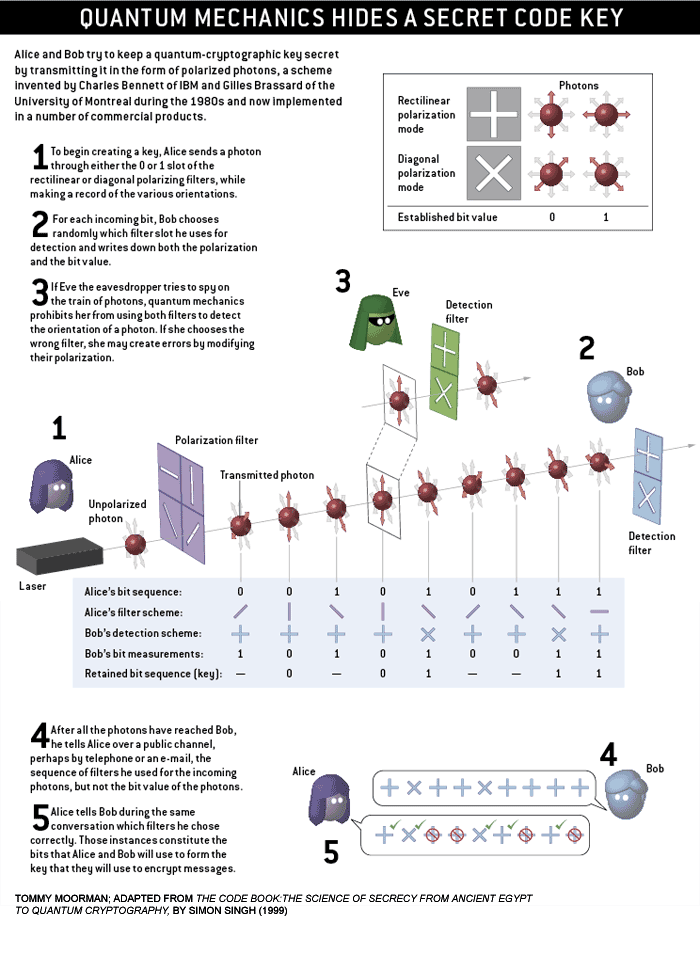
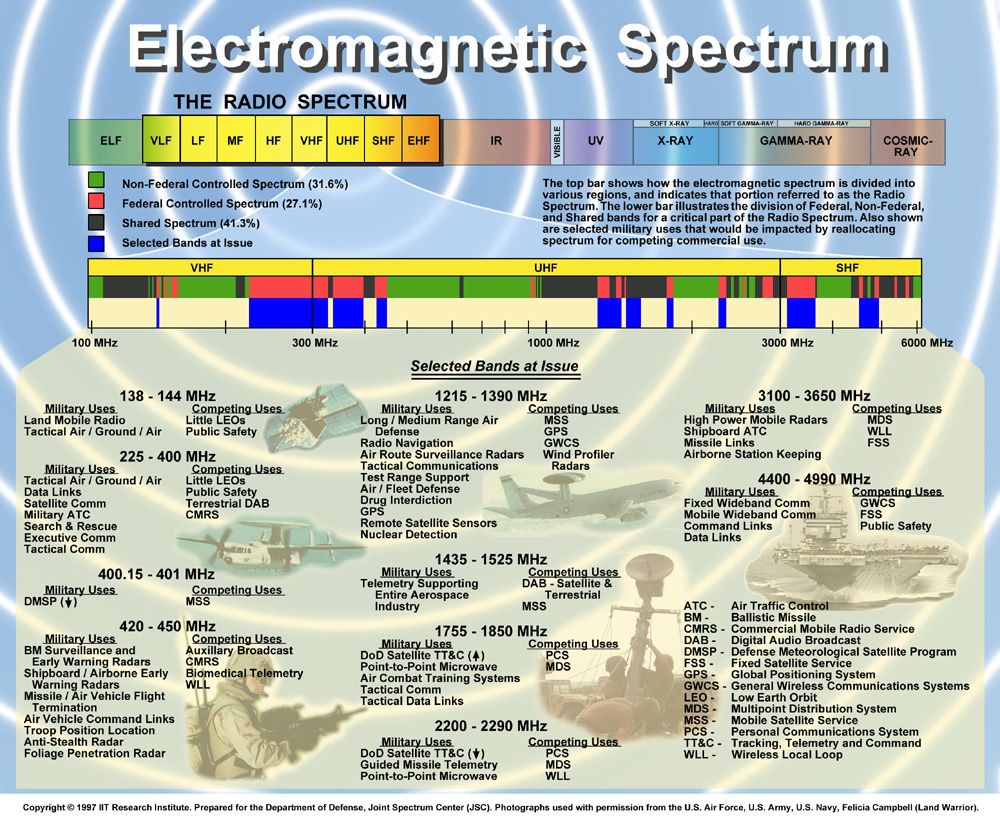
The hope was that through force shaping, automation and remote operations, maritime cryptology could continue to thrive in an ever more complex electromagnetic (EM) environment. Adversarial communications have become far more challenging to detect, exploit and prosecute. The Radio Frequency (RF) environment of today is incredibly complex, with tactical, strategic and data communication links operating in all areas of the spectrum and often at frequencies with a very low probability to intercept. Modern encryption techniques have evolved from mechanical electronics to the use of quantum mechanics.[iv]

crypto

The effects of force shaping, automation and remote operations are beginning to take their toll on the tradecraft of maritime cryptology. Today’s junior Sailors and officers have had their training time cut in order to meet growing operational demands on a shrinking Navy. To be successful in the art of cryptology – and it is a practiced art – one must have a deep understanding of the fundamentals of radio signal transmission as well as more than a passing familiarity with the collection equipment. A junior cryptologic technician and junior officer should be able to draw a basic transmitter-receiver diagram and trace the origin of a signal from its original state, such as voice or data, through the transmitter, across a medium and into the collection gear and the operator’s ears. Foundational knowledge required that the basic operator have a working knowledge of the equipment and be able to perform diagnostic and troubleshooting tasks in the event of a malfunction. Finally, operators and junior officers must understand the process of signal intelligence reporting to the tactical unit at sea (indications and warning intelligence) as well as to the national signal intelligence system.

spectrum

At the same time, emerging cyberspace communication networks place entirely new pressures on maritime cryptology. Modern communication, command, control and information sharing are a “network of networks,” an “Internet of things” that require new skill sets and new acquisition and exploitation technologies. Yet the complexity of data systems and volume of data being passed is growing exponentially, outpacing our acquisition and procurement capability. The Navy has tried to mitigate this by relying on commercial off-the-shelf technology (COTS) but this entails its own set of problems. COTS technology must be compatible with legacy systems – some more than twenty years old and built on architecture and code from the late 1980s and early 1990s – and it relies on bandwidth levels that are not always available and reliable. We often find out the hard way that equipment which works well in the sterile lab environment is not up to the task of performing reliably at sea under arduous conditions.

Maritime cryptology is at a cross roads. We must return to the fundamentals of signal intelligence at the same time we are trying to realize the potential of cyberspace operations at sea. This will require a renewed commitment to recruitment and training, and for many middle grade and senior enlisted cryptologic technicians and officers, it means new formal training. Right now, senior enlisted and officers are being asked to take leadership roles in an emerging cyberspace operations field for which they are receiving inadequate or no formal training. We must reconsider recruitment of new junior Sailors and officers who have the background skills, education and knowledge and provide them a career path that emphasizes cryptologic expertise across the spectrum, from “traditional” signals intelligence to modern wireless exploitation. This career path must be grounded in recognizing that maritime cryptology is more art than science, and to become proficient and experienced, one must practice.

The author would like to thank CDR Kevin Ernest who kindly provided his thoughts on the challenges of modern maritime cryptology.

LT Robert “Jake” Bebber is an information warfare officer assigned to the staff of U.S. Cyber Command. The views expressed here are his own and do not represent those of the Department of Defense, the Department of the Navy or U.S. Cyber Command. He welcomes your comments at jbebber@gmail.com.

[i] http://www.navy.mil/midway/how.html

[ii] http://www.history.co.uk/study-topics/history-of-ww2/code-breaking

[iii] http://en.wikipedia.org/wiki/Enigma_machine#cite_note-9

[iv] http://blogs.scientificamerican.com/guest-blog/2012/11/20/quantum-cryptography-at-the-end-of-your-road/

SUMMARY: CNAS National Security Conference

By: Kiara Earle and Trevor Parkes

On Wednesday June 11, employees of various national security focused companies, agencies, and armed forces branches packed in alongside academics, enthusiasts and students for the eighth annual Center for New American Security’s National Security Conference.  The crowd talked excitedly around the coffee and pastry table in anticipation of the day including panels and presentations on topics from U.S. leadership in the world to the future of the defense industry to robotics on the battlefield, all headlined by addresses from Congressman Paul Ryan and National Security Advisor Susan Rice.

What Does the World Expect from U.S. Leadership?

The opening panel featured Dr. Zhu Feng, German Diplomat Wolfgang Ischinger, and General Amos Yadlin (Ret.), with Judy Woodruff as moderator.  The panel inquired about the role of the U.S. in the world, what it should be doing in the years to come, and strategies of implementation for its foreign policy.

Dr. Feng spoke on the positives of United States leadership in the East Asian region, and the threat of a rising China.  Much of the media proclaims China as the greatest modern rival to U.S. primacy, but the U.S. should not be too concerned because China has little soft power, and is “free riding” on U.S. primacy.

Expressing the sentiment that “America is not listening to us, but listening in on us,” Diplomat Ischinger emphasized the necessity to re-establish trust between Europe and the U.S.  As many of the international institutions experience gridlock, the U.S. should lead an initiative to reform these institutions.

General Yadlin commented on U.S. leadership’s hesitance and critiqued its effect on U.S. diplomacy.  According to the General, diplomacy becomes ineffective once military action is taken off the table.  However, military action should not include occupation of a country.  For U.S. diplomacy to be more effective, U.S. leadership needs to gain a clear direction.

Each panelist was very insightful, and their contributions to the panel gave a clear regional perspective of U.S. leadership continuing, at least, for the next few years.

A Strategy for Renewal

Congressman Paul Ryan said the United States must rebuild lost credibility by improving three sources of our strength: our allies, our military, and our economy.  U.S. credibility with our allies has been shaken by President Obama’s announcement that troops will leave Afghanistan in 2016 and recognition of the Palestinian Authority government including Hamas. We should be pressing NATO countries to invest in a coordinated set of capabilities, make a stand in Eastern Europe, and beef up our Pacific fleet with the refueled U.S.S. George Washington. In regards to the military, the Budget Control Act made progress against the deficit but slashed the defense budget, leaving obsolete equipment and a lack of funding to build technology for tomorrow’s threats.

To strengthen our economy, and therefore our military, we must reform entitlements, balance the budget, and pay off the national debt which is “the greatest threat to American leadership.” Congressman Ryan commented on China’s aggression; China “isn’t trying to bend the rules—it’s trying to rewrite them altogether. It’s stealing our intellectual property. It’s attacking our companies. It’s promoting crony capitalism.” The US has to improve ties with China’s neighbors and show China “it doesn’t pay to break the rules.”  In conclusion Congressman Ryan described himself as Jack Kemp once did, a heavily armed dove, and proclaimed “we constantly renew our strength so we don’t have to use it.”[i]

Creative Disruption: Strategy, Technology and the Future Defense Industry

Panelists, former Deputy Secretary of Defense William J. Lynn III and Admiral James Stavridis (Ret.), with Ben FitzGerald moderating, discussed the future of the defense industry.  The message this panel sent to its audience is that the world is changing, and the defense industry, whether it wants to or not, is changing with it.

Violent extremism and religious warfare increasingly threaten global security as rogue states and terrorist groups are changing warfare itself.  The Department of Defense needs to reform in order to confront these changes.  Admiral Stavridis expressed that some of these changes need to occur by investing more in DoD people.  By investing in language and culture, people within the DoD should be better equipped to approach complex security challenges.

Former Deputy Secretary Lynn shared the same sentiment of reform.  Currently, the U.S. is superior in many fields, such as cyber.  The heavy dependence on cyber technology, however, has created a major vulnerability to critical infrastructure that the U.S. government needs to address.  Evolving strategic challenges threaten U.S. infrastructure, as well as its competitive advantage.

Strategic Risk and Military Power: A Briefing to the Next President

Panelists, General James E. Cartwright (Ret.), CNAS CEO Michele Flournoy, and Roger Zakheim, briefed the 45th president on the strategic risks that will be faced in 2016.  Each panelist presented their reports on how the president should strategically approach new risks and challenges.  The common theme from their reports emphasized ensuring the U.S. would be better equipped with confronting threats posed by non-state actors.  These plans would require not only reform in the DoD’s capabilities and structure, but a more comprehensive economic strategy set by Congress.

Risk and Opportunity in Indo-Pacific Asia

Ambassador R. Nicholas Burns, Dr. David F. Gordon, Stephanie Kleine-Ahlbrandt, Vikram J. Singh, and General James D. Thurman (Ret.) gathered together with moderator Dr. Patrick Cronin to discuss the risk and opportunities that exist for the U.S. in Indo-Pacific Asia.  The instability of the DPRK was discussed, along with the economic rise of China in the region.  China, however, was also discussed as an opportune partner for the U.S.  The panel touched on ASEAN, its potential for highly effective regional governance, and the inefficiencies that limit the organization.  Each panelist shone a different light highlighting various relationships that affect the region and U.S. interests.  The panel collectively expressed that the U.S. has an important role within the region, but this role must work to keep the peace without trying to dominate other countries.

Keynote Address by Ambassador Susan Rice

National Security Advisor Susan Rice echoed President Obama’s West Point Speech and explained that it was not a matter of if the United States would lead the world, but how it would. The U.S. must continue to take a leading role in mobilizing coalitions to handle the toughest problems in the international community such as bringing economic sanctions down on Russia in response to its annexation of Crimea, updating our defense strategies with South Korea and Japan, funding counter-terrorism efforts worldwide, sending humanitarian aid to Syria, and working on a nuclear agreement with Iran.  In addition, National Security Advisor Rice touched on a wide range of issues from stopping disease outbreaks, reversing climate change, and protecting internet security and openness.

Mobilizing coalitions also allows for expanding shared prosperity through trade partnerships, private investment, and achieving the Millennium Development Goals. Finally, coalitions help reinforce universal values that protect human rights, dignity, and health and pressure abusive countries.  National Security Advisor Rice ended by saying “we are stronger still when we mobilize the world on behalf of our common security and common humanity…and that is what’s required to shape a new chapter of American leadership.”[ii]

Visualizing Today’s Veterans Population and Forecasting the Issues of Tomorrow

If the Veterans Administration had seen CNAS Director of the Military, Veterans, and Society Program Phillip Carter’s visualization of the US Veterans Population it might not be a thorn in the Obama administration’s side today.  Director Carter’s project uses data and calculations to show where the veterans population lives, a population projection, what area gets what funding, and how the projection can change given the chance of future conflict. These visualizations show that some counties receive way less or more funding than needed and can help make predictions on what services will be needed in the future.  Given that the VA is under intense scrutiny, Vietnam veterans are hitting the retirement age, and a decade long war is winding down, this information is going to become invaluable as the country moves forward.

Robotics on the Battlefield: The Coming Swarm

Featuring a display of unmanned aircraft, underwater and surface vehicles, and land robotic units taking part in a military operation the Project Director of CNAS’ 20YY Warfare Initiative Paul Scharre laid out the future of robotics on the battlefield.  If a pilot found himself in a fight for his life a swarm of unmanned aircraft could tip the scales.  If a carrier was targeted by long range missiles unmanned vessels carrying anti-missile rockets could protect the ship.  If a landing force faced opposition unmanned robotic units could take the beach without suffering casualties.  Although these projects are still a few years and millions of dollars from deploying, swarming robotics may be the way to overwhelm future challenges with superior numbers and technology while avoiding human casualties.

Energy, Iran and the Future of Gulf Security

The panel of the Honorable Stephen Hadley, CNAS Director of Energy, Environment and Security Program Elizabeth Rosenberg, and Ambassador Dennis Ross discussed continued American involvement in the Middle East. As long as it produces the best crude oil in the world, terrorist groups threaten peace, and Iran defends its nuclear program, America will have a reason to invest interest.  Oil levels worldwide will fluctuate as the shale boom starts and will be exacerbated if Libya and Iran are able to export on the world market.  As Syria is in civil war and Iraq is primed for sectarian violence ISIS has carved out a state for itself, threatening the region.  Looming large is the fact that a nuclear agreement with Iran may not be reached any time soon.   Stability in the Middle East is not in the immediate future and, although the Obama Administration has heralded a Pivot to Asia, it should be prepared to continue its Middle East focus simultaneously.

[i] For Paul Ryan’s Speech see: http://paulryan.house.gov/news/documentsingle.aspx?DocumentID=384106#.U6DyDPldWSo

[ii] For Susan Rice’s Speech see: http://www.whitehouse.gov/the-press-office/2014/06/11/remarks-national-security-advisor-susan-e-rice-keynote-address-center-ne

Sea Control 41: The View From China

seacontrol2Dean Cheng joins us to discuss China. Like a flourless brownie, this podcast is dense and delicious. We hit China’s goals and perspectives: From the Chinese “status quo”, to the South China Sea, to India, to the use of crises as policy tools. If you want to see behind the headlines, this is your podcast.

DOWNLOAD: Sea Control 41 – The View from China

Remember, subscribe on iTunes or Stitcher Stream Radio. Leave a comment and rate five stars!

China’s Conventional Strikes against the U.S. Homeland

Bruce Sugden brings us this dour scenario, representing the last of our “Sacking of Rome” series.    

With its precision-strike complex, the United States has conducted conventional strikes on enemy homelands without fear of an in-kind response. Foreign military developments, however, might soon enable enemy long-range conventional strikes against the U.S. homeland. China’s January 2014 test of a hypersonic vehicle, which was boosted by an intercontinental ballistic missile (ICBM), suggests that it has designs on deploying a long-range conventional strike capability akin to the U.S. prompt global strike development effort.[1] If China pushes forward with deployment of a robust long-range conventional strike capability, within 20 years Americans could expect to see the U.S. homeland come under kinetic attack as a result of U.S. intervention in a conflict in the western Pacific region. With conventional power projection capabilities of its own and a secure second-strike nuclear force, China might replace the United States as the preponderant power in East Asia.

The implication of Chinese long-range strike is that U.S. military assets and supporting infrastructure in the deep rear, an area that is for the most part undefended, will be vulnerable to enemy conventional strikes—a vulnerability that U.S. forces have not had to deal with since the Second World War. Furthermore, China would be tempted to leverage its long-range strike capabilities against vital non-military assets, such as power generation facilities and network junctions, major port facilities, and factories that would produce munitions and parts to sustain a protracted U.S. military campaign. The American people and the U.S. government will have to prepare themselves for a type of warfare that they have never experienced before.

Emerging Character of the Precision-Strike Regime

            What we have become familiar with in the conduct of conventional precision-strike warfare since 1991 has been the U.S. use of force in major combat operations. The U.S. precision-strike complex is a battle network, or system, of intelligence surveillance, and reconnaissance (ISR) sensors designed to detect and track enemy forces and facilities, weapons systems to deliver munitions over extended range (e.g., bombers from the U.S. homeland) with high accuracy, and connectivity to command, control, communications, and computers (C4) organized to compress the time span between detection of a target and engagement of that target.[2] Since the 1990s weapons delivery accuracies have been enhanced by linking the guidance systems with a space-based positioning, navigation, and timing (PNT) system.

            China’s People’s Liberation Army (PLA) has studied the employment of the U.S. precision-strike complex and has been building its own for years. Since the 1990s, China has been increasing the number of deployed short- and medium-range ballistic missiles, many of which U.S. observers tend to believe are armed with conventional warheads.[3] China has also been improving the accuracies of its missiles by linking many of them to its space-based PNT system, Beidou. In addition, the PLA has been deploying several types of land-attack and anti-ship cruise missile systems.[4] These weapons systems are part of a layered defense approach that the PLA has adopted to keep foreign military forces, mainly U.S. forces, outside of China’s sphere of interest.

There are indications that China is expanding its precision-strike complex to reach targets further away from Chinese territory and waters. First, as the most recent DOD report on Chinese military power notes, China is developing an intermediate-range (roughly 3,000-5,000 kilometers) ballistic missile that could reach targets in the Second Island Chain, such as U.S. military facilities on Guam, and might also be capable of striking mobile targets at sea, such as U.S. aircraft carriers.[5] Second, the PLA Air Force has developed the H-6K bomber, which might have a combat radius of up to 3,500 kilometers and be able to carry up to six land-attack cruise missiles.[6] Third, as mentioned above, China has tested a hypersonic vehicle using an ICBM.

China’s Interest in Hypersonic Vehicles

            In the previous decade, one American observer of the Chinese military noted that the Chinese defense industry was showing interest in developing long-range precision strike capabilities, including intercontinental-range hypersonic cruise missiles.[7] Drawing from Chinese open-source literature, Lora Saalman believes that “China is developing such systems not simply to bolster its regional defense capabilities at home, but also to erode advantages of potential adversaries abroad, whether ballistic missile defense or other systems.”[8] Moreover, compared with the Chinese literature on kinetic intercept technologies, with “high-precision and high-speed weaponry, the Chinese vision is becoming much clearer, much faster. Beyond speed of acquisition, the fact that nearly one-half of the Chinese studies reviewed cover long-range systems and research low-earth orbit, near space, ballistic trajectories, and reentry vehicles suggests that China’s hypersonic, high-precision, boost-glide systems will also be increasingly long in range.”[9]

            China’s attraction to hypersonic technologies seems to be related to U.S. missile defenses.[10] As many U.S. experts have believed since the 1960s, when the United States first conducted research and development on hypersonic vehicles, such delivery systems provide the speed and maneuverability to circumvent missile defenses.[11] These characteristics enable hypersonic vehicles to complicate missile tracking and engagement radar systems’ attempts to obtain a firing solution for interceptors.

How a Future U.S.-China Conflict Might Unfold

            Although we cannot be certain about how a future military conflict between the United States and China might develop, the ongoing debate over the U.S. Air-Sea Battle concept suggests that alternative approaches to employing U.S. military force against China could persuade the Chinese leadership to order conventional strikes against targets in the U.S. homeland. On the one hand, in response to PLA aggression in the East or South China Seas, an aggressive forward U.S. military posture would include conventional strikes against targets on the Chinese mainland, such as air defense systems, airfields and missile operating locations from which PLA attacks originated, C4 and sensor nodes linked to PLA precision-strike systems, and PLA Navy (PLAN) facilities and ships.[12] These strikes would threaten to weaken PLA military capabilities and raise the ire of the Chinese public and leadership. Even assuming that China opened hostilities with conventional missile strikes against U.S. forces at sea and on U.S. and allied territories (Guam and Japan, respectively) to forestall operations against the PLA, the Chinese public and the PLA might pressure the leadership to respond with similar strikes against the U.S. homeland.

            A less aggressive U.S. military posture, on the other hand, such as implementation of a distant blockade, would focus military resources on choking off China’s importation of energy supplies and denying PLA forces access to the air and seas within the First Island Chain.[13] While this approach might play to the asymmetric advantages of the U.S. military over the PLA, the threat of being cut off from its seaborne energy supplies over an extended period of time might convince Beijing that it needed to reach out and touch the United States in ways that might quickly persuade it to end the blockade.

Targets of Chinese Long-Range Conventional Strikes

            Although many recent PLA doctrinal writings point to the use of conventional ballistic missiles in missions to support combat operations by PLA ground, air, naval, and information operations units, a stand-alone missile campaign could be designed to conduct selective strikes against critical targets.[14] Ron Christman believes that the “goals of such a warning strike would be to display China’s military strength and determination to prevent an ongoing war from escalating, to protect Chinese targets, to limit damage from an adversary’s attack, or to coerce the enemy into yielding to Chinese interests.”[15]

            The PLA’s ideal targets might include low density/high demand military assets, major power generation sites, key economic and political centers, and war-supporting industry.[16] More specifically, with U.S. forces conducting strikes against PLA assets on mainland China, sinking PLAN ships at sea, and blocking energy shipments to China, PLA military planners might be tempted to strike particular fixed targets to weaken U.S. power projection and political will: Whiteman Air Force Base, home of the B-2A bombers; naval facilities and pierside aircraft carriers at San Diego and Kitsap; facilities and pierside submarines at Bangor; space launch facilities at Vandenberg Air Force Base and Cape Canaveral; Lockheed Martin’s joint air-to-surface stand-off missile (JASSM) factory in Troy, Alabama; Travis Air Force Base, where many transport aircraft are based; and major oil refineries in Texas to squeeze the U.S. economy.

Effects of Conventional Strikes against the U.S. Homeland

            It is plausible that Chinese conventional precision strikes against targets in the U.S. homeland would set in train several operational and strategic effects. First, scarce military resources could be damaged and rendered inoperable for significant periods of time, or destroyed. Whether at Whiteman Air Force Base or the west coast naval bases, such losses would impair the conduct of U.S. operations against China. Furthermore, damaged or destroyed munitions factories, logistics nodes, and space launch facilities would undermine the ability of the U.S. military to conduct a protracted war by replenishing forward-deployed forces and replacing lost equipment. The U.S. military might have to re-deploy significant numbers of forces from other regions, such as Europe and the Persian Gulf.

Second, the American people, if they believed that fighting in East Asia was not worth the cost of attacks against the homeland, might turn against the war effort and the politicians that supported it. Even if a majority of Americans were to remain steadfast in support of the war, however, public opinion would not protect critical assets from being struck by Chinese conventional precision strikes.

Third, the operational effects might sow doubt in the minds of U.S. allies about the survivability and effectiveness of the U.S. power projection chain, while American protests in the streets against the U.S. government would undermine allies’ confidence in the resolve of the United States. If the allies judged that the United States lacked the capability or the will to wage war across the Pacific Ocean against China, then they might accommodate China and cut military ties with the United States. The loss of these military alliances, moreover, could result in the disintegration of the international order that the United States has built and sustained with military might for decades.[17]

Fourth, facing damage from strikes against the homeland and perhaps lacking the conventional military means to defend its allies and achieve its war aims, the United States might have to choose between defeat in East Asia or escalation to the use of nuclear weapons to fulfill its security guarantees. U.S. nuclear strikes, of course, might elicit a Chinese nuclear response.

Measures to Mitigate the Effects of Conventional Strikes

            Three approaches come to mind that might mitigate the effects of conventional strikes and, perhaps, dissuade China from expending weapons against the U.S. homeland. The development of less costly but more advanced missile defense technologies that could be deployed in large quantities could protect critical assets. The technologies might remain beyond our grasp, however. Directed energy weapons, for example, would still need to find and track the incoming target for an extended period of time, and then maintain the laser beam on one point on the target to burn through it.[18]

            If missile guidance systems remained tied to space-based PNT in the 2030s, then ground-based jammers might be able to divert incoming hypersonic vehicles off course. Without accurate weapons delivery, the conventional warheads would be less effective against even soft targets. Future onboard navigation systems, however, might enable precise weapons deliveries that would be unaffected by jamming.[19]

            The final and possibly most effective approach takes a page from China’s playbook: disperse and bury key assets and provide hardened, overhead protection for parked aircraft and pierside ships.[20] Because burying some facilities would be cost prohibitive, another protective measure might be to construct hardened shelters (including top covers) around surface installations like industrial infrastructure and munitions factories (though this measure might be cost prohibitive as well).

            This preliminary discussion suggests that cost-effective remedies are infeasible over the next few years, yet the threat of distant conventional military operations extending to the U.S. homeland will likely continue to grow. Therefore, more comprehensive analysis of active and passive defenses as well as other forms of damage limitation is needed to enable senior leaders to make prudent investment decisions on defense and homeland security preparedness against the backdrop of a potential conflict between the United States and China.

Bruce Sugden is a defense analyst at Scitor Corporation in Arlington, Virginia. His opinions are his own and do not represent those of his employer or clients. He thanks Matthew Hallex for valuable comments on earlier drafts of this essay.


[1] On China’s January 2014 test of a hypersonic vehicle, see Benjamin Shreer, “The Strategic Implications of China’s Hypersonic Missile Test,” The Strategist, The Australian Strategic Policy Institute Blog, January 28, 2014; on the U.S. prompt global strike initiative, see Bruce M. Sugden, “Speed Kills: Analyzing the Deployment of Conventional Ballistic Missiles,” International Security, Vol. 34, No. 1 (Summer 2009), pp. 113-146.

[2] For a broad overview of the evolving precision-strike regime, see Thomas G. Mahnken, “Weapons: The Growth and Spread of the Precision-Strike Regime,” Daedalus, 140, No. 3 (Summer 2011), pp. 45-57.

[3] Ron Christman, “Conventional Missions for China’s Second Artillery Corps: Doctrine, Training, and Escalation Control Issues,” in Andrew S. Erickson and Lyle J. Goldstein, eds., Chinese Aerospace Power: Evolving Maritime Roles (Annapolis, Md.: Naval Institute Press, 2011), pp. 307-327.

[4] Dennis Gormley, Andrew S. Erickson, and Jingdong Yuan, “China’s Cruise Missiles: Flying Fast Under the Public’s Radar,” The National Interest web page, May 12, 2014.

[5] Office of the Secretary of Defense, Annual Report to Congress: Military and Security Developments Involving the People’s Republic of China (Washington, D.C.: Department of Defense, 2014), p. 40.

[6] Ibid., p. 9; and Zachary Keck, “Can China’s New Strategic Bomber Reach Hawaii?” The Diplomat, August 13, 2013.

[7] Mark Stokes, China’s Evolving Conventional Strategic Strike Capability: The Anti-Ship Ballistic Missile Challenge to U.S. Maritime Operations in the Western Pacific and Beyond (Arlington, Va.: Project 2049 Institute, September 14, 2009), pp. 33-34.

[8] Lora Saalman, “Prompt Global Strike: China and the Spear,” Independent Faculty Research (Honolulu, Hi.: Asia-Pacific Center for Security Studies, April 2014), p. 12.

[9] Ibid., p. 14.

[10] Office of the Secretary of Defense, Annual Report to Congress: Military and Security Developments Involving the People’s Republic of China, p. 30.

[11] William Yengst, Lightning Bolts: First Maneuvering Reentry Vehicles (Mustang, Okla.: Tate Publishing & Enterprises, LLC, 2010), pp. 111-125.

[12] Jonathan Greenert and Mark Welsh, “Breaking the Kill Chain,” Foreign Policy, 16 May 2013; and Department of Defense, Joint Operational Access Concept (JOAC) Version 1.0, January 17, 2012, p. 16.

[13] T.X. Hammes, “Offshore Control: A Proposed Strategy,” Infinity Journal, Vol. 2, No. 2 (Spring 2012), pp. 10-14.

[14] Christman, “Conventional Missions for China’s Second Artillery Corps,” pp. 318-319.

[15] Ibid., p. 319.

[16] Ibid.

[17] Stephen G. Brooks, G. John Ikenberry, and William C. Wohlforth, “Lean Forward: In Defense of American Engagement,” Foreign Affairs, Vol. 92, No. 1 (Jan-Feb 2013), p. 130.

[18] Sydney J. Freedberg Jr., “The Limits Of Lasers: Missile Defense At Speed Of Light,” Breaking Defense, May 30, 2014.

[19] Sam Jones, “MoD’s ‘Quantum Compass’ Offers Potential to Replace GPS,” Financial Times, May 14, 2014.

[20] Office of the Secretary of Defense, Annual Report to Congress: Military and Security Developments Involving the People’s Republic of China, p. 29.