Category Archives: History

Naval and maritime history section.

NATO Defense Spending, Past and Present: Part 1

Discussions and data presentations surrounding the recent NATO summit on member state spending levels on defense and the now-metronomic domestic squabbles over the United States’ own military budget have centered on the percentage of gross domestic product (% of GDP) benchmark. GDP is a hoary and problematic macroeconomic metric in its own right. Further, % of GDP offers no natural rationale for defense or any other budgetary programming, per se. Indeed, because of its fuzziness, GDP is thus dually ambiguous in its role as a primary measure of economic viability and as a stake in the ground for national planning. Is NATO’s goal to get military spending up to 2% of GDP in the coming decade plausible?  This question inspired a look at the alliance’s GDP and defense budget history.

The following essay is the first in a three-part series which together provide a macroeconomic overview of the 55 year old defense alliance. This first essay presents the history of NATO member nation defense spending since the alliance was founded in 1949. Eleven of the twelve founding members (Iceland is excluded from the analysis in this series for a lack of defense expenditure data) and four Cold War additions (Germany, Greece, Spain, and Turkey) are plotted individually because their longevity provides substantial history for member and alliance defense spending context. The twelve post-Cold War enlargement members are grouped into a single category in this first essay but are considered individually in the second and third papers.

The second paper will look a little closer at the defense spending history and trends of individual member nations and selected sub-groups. The third will examine the concept of command spending models such as setting a goal for each member to spend “2% of GDP” via a look at several other hypothetical spending models.

The source for NATO member nation defense spending for 1949-2013 is the SIPRI Military Expenditure Database. The SIPRI dataset also has a table containing most—but not all—of the expenditure data computed as a percentage of GDP. In order to fill in some of the missing information, for example for Turkey for the 1953-1959 period, an analytical dataset for member nation population and GDP was created from the Penn World, International Monetary Fund World Economic Outlook (IMF WEO), and Maddison Project datasets, using Bureau of Labor Statistics Consumer Price Index and World Bank Purchasing Power Parity conversion factor for currency conversion to a constant dollar baseline reference. All currency data in this series have been converted into 2014 U.S. dollars (US$2014).

As mentioned at the outset, “GDP” is ambiguous because it can be computed many ways according to the assumptions underlying a given dataset. The Penn World, IMF WEO, and Maddison data sets demonstrate strong correspondence in most cases where their datasets overlap but in some cases they diverge significantly. The Penn World purchasing power parity (PPP) PWT8.0 dataset was supplemented and adjusted with the other datasets and currency conversion sources to provide data for as many years of each member nation’s participation in the alliance as possible. Information on the adjusted dataset assumptions and methodology is available at this link.

The four graphs shown below present NATO member % of GDP spent on defense in direct comparison to, respectively, GDP, per capita GDP, and member share of cumulative NATO defense spending in a scatterplot format. Both horizontal and vertical axis categories are independent and the time-series/chronology is implied in the data rather than explicitly annotated (typically as the independent axis). Thus the entire history of NATO defense spending—who spent how much historically—is available at one glance.

The first graph shows % of GDP verses GDP. Although specific years are not listed, we can infer approximate chronology from the knowledge that constant dollar GDP has generally grown since 1949. Thus, the more recent years are found higher up the vertical logarithmic axis. The basic pattern is a right hook: as a member’s GDP rose, % of GDP spent for defense typically decreased, though, in some cases, there are notable abrupt shifts, as can most noticeably be seen in the last dozen dots for the United Kingdom (dark orange) and the United States (aqua). These shifts to higher % of GDP spending on defense reflect these nations’ budgetary adjustments to the wars of the past decade.
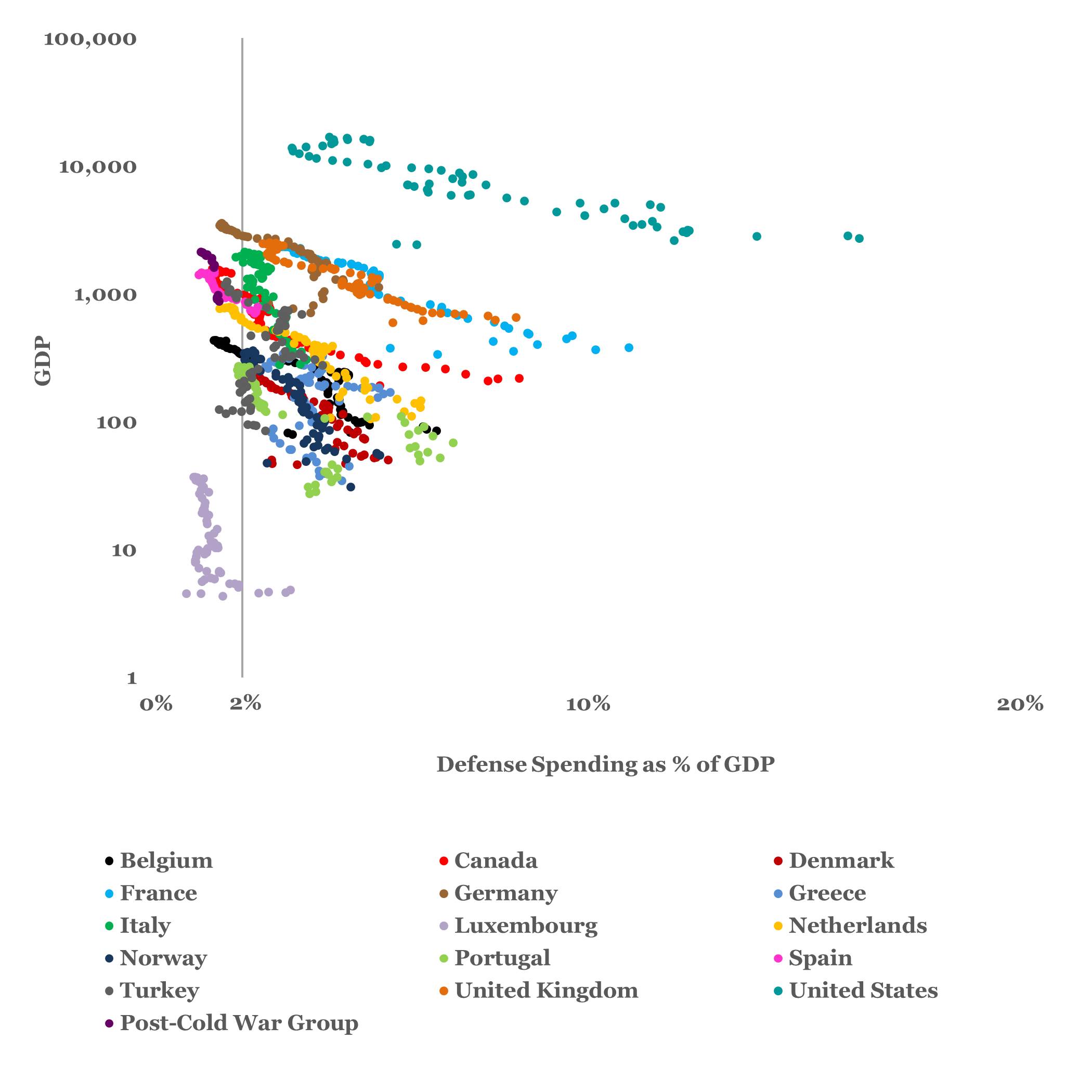
nato_defspnd_part1_img1-1_mbrgdp_v_pergdpMember defense spending as % of GDP v. member GDP (billions)

The second graph plots % of GDP against per capita GDP. This chart in particular illuminates at least one problematic aspect of a %-of-GDP basis for defense spending when per capita national affluence, rather than aggregate national affluence, is emphasized. One may ask why if %-of-GDP is an admittedly arbitrary but plausible defense spending goal, wouldn’t a progressive per capita defense spending rate be more in line with most modern taxation models? Hypothetically, should those individuals who make more, and presumably benefit more from NATO security, perhaps pay more? This and several similar questions about hypothetical defense spending models are briefly examined in the third essay.

nato_defspnd_part1_img1-2_mbrpercapgdp_v_pergdpMember defense spending as % of GDP v. member per capita GDP (thousands)

The second graph shows that defense spending has congregated in the low single digits of % of GDP as per capita GDP has risen. However, several long-serving members have remarkably vertical %-of-GDP defense spending trends: Italy (Kelly green), Luxembourg (lavender), Spain (pink), and Turkey (dark grey) have remained within a relatively tight bracket of from 1-4% of GDP for defense spending throughout their history in the alliance.

The third graph compares % of GDP to the share or percentage each member nation has contributed to annual cumulative defense spending. The U.S. (aqua) and Luxembourg (lavender) are the obvious outliers in terms of magnitude. Generally, the NATO members show fairly consistent behavior, contributing approximately the same relative proportion over time. Only the contributions of Greece (blue-grey), and Italy (Kelly green), Luxembourg (lavender), and Turkey (dark grey) have varied by more than 300% over the duration of their participation in the alliance.
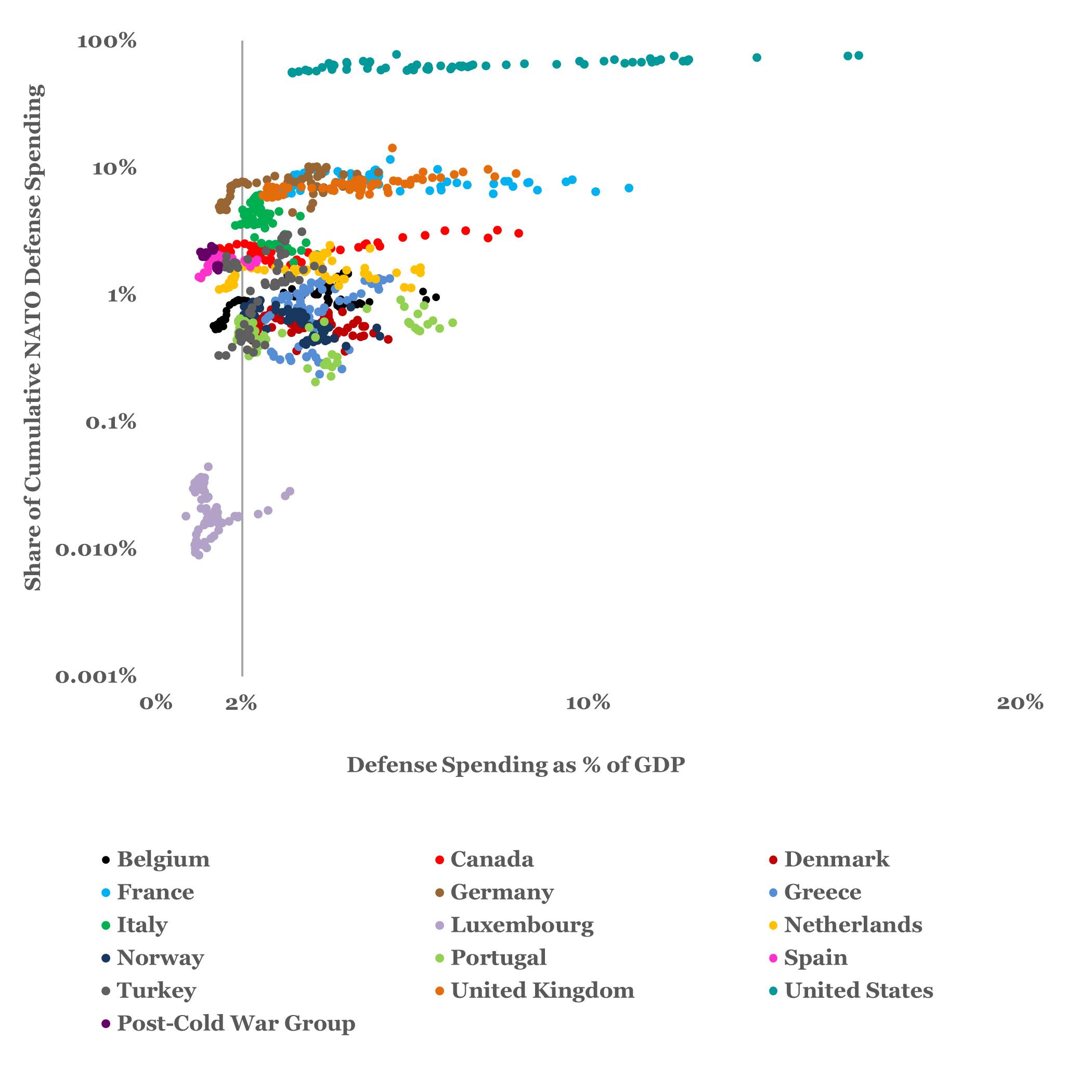
nato_defspnd_part1_img1-3_mbrshareofnato_v_pergdpMember defense spending as % of GDP v. member per share or percentage contribution to cumulative annual NATO defense spending

The format of the fourth graph sets up the more detailed focus on individual member nation spending patterns which will follow in the next two essays. The fourth graph repeats the same data from the third graph but in a simplified format. In place of the dot scatterplot, the centroid or average of each member nations’ data is represented by a single large dot. The data for 2013 is shown as a smaller dot and the 2013 dot is anchored to the average dot to maintain the relationship. The line connecting the two could be interpreted as a curve but keep in mind the log scale of the vertical axis. The dot-connecting lines are primarily a graphical device.

We see in the fourth graph that, in all cases, 2013 defense spending as a % of GDP is significantly lower than the historical average. This is not to advocate for a return to the arbitrary metric of historical average, merely to account for the present in the context of the alliance’s past.

In 2013, the U.S. spent about 4% of its per capita GDP on defense, everyone else paid less than 3%, and some were in the neighborhood of from 1-2%. One may also note by the relative vertical position of the dot pairs that with the exceptions of Luxembourg (lavender), Norway (dark blue), Portugal (light green), Turkey (dark grey), the U.S. (aqua), and the collective post-Cold War group (plum), the other members’ 2013 contributions were also smaller proportions of the NATO whole than their historical averages (smaller dot lower than large dot).
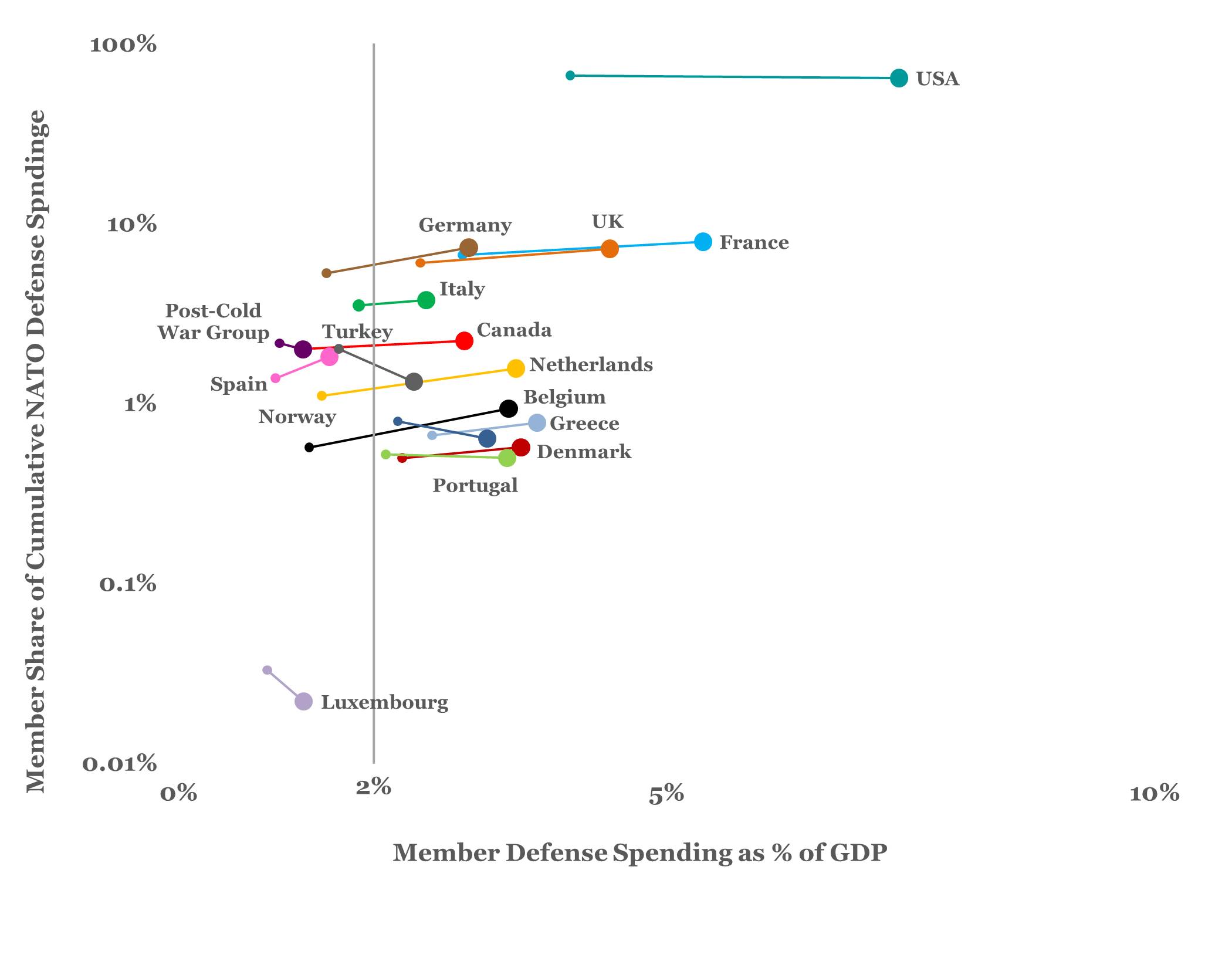
nato_defspnd_part1_img1-4_mbrshareofnato_v_pergdp_simpMember defense spending as % of GDP v. member per share or percentage contribution to cumulative annual NATO defense spending. This is the same information as the third graph simplified.

In sum, any particular member nations’ defense spending in a particular year in terms of historical averages is not necessarily meaningful in the context of the value of the NATO alliance to either the particular member or to the whole. But the history can be useful for framing questions on apportionment, return on investment (in a very broad sense, of course), and the reasonableness (or not) of command spending “requirements” based on gross macroeconomic parameters.

In the next essay, we’ll move from the 30,000′ view and take a more detailed look at the individual members military spending history.


Dave Foster is a civilian analyst for the U.S. Navy. He is a former Marine Corps officer and holds degrees in engineering, history, and management. The views expressed here do not represent those of the Department of Defense or the Department of the Navy.
The Father of the Modern Chinese Navy—Liu Huaqing

This is the final piece in our Forgotten Naval Strategists series.

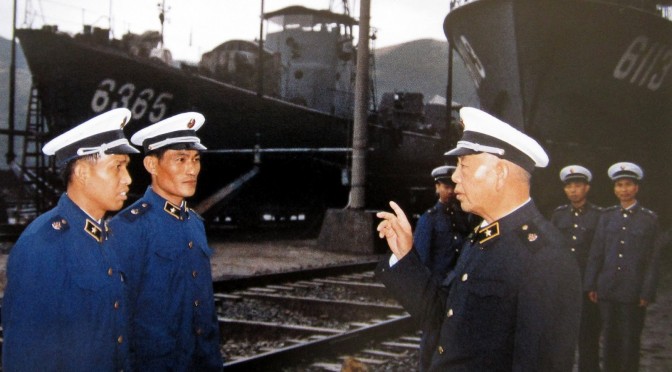
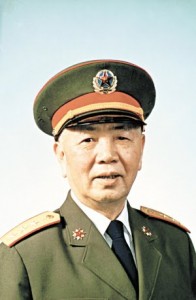
liu2Liu Huaqing is arguably one of China’s most famous naval officers. Often referred to as the “father of the modern Chinese Navy” and “China’s Mahan,” Liu served as commander of China’s Navy, the People’s Liberation Army Navy (PLA Navy) from 1982 to 1987, a period which saw a sea change in China’s naval strategy as it moved away from coastal operations. However, Liu’s legacy is much more complex, given that he was actually more of a ground forces officer assigned to the navy, rather than a life-long naval officer. Rather than being the likely originator of China’s post 1980s naval strategy, he should be better remembered as one of China’s most ardent supporters of a stronger Chinese naval power.
Background

According to Liu’s autobiography, he was born on 20 October 1916, in eastern Hubei Province, China. He was one of six children, having three brothers and two sisters. Liu joined the Chinese Communist Party (CCP) in 1929, at the young age of 13. However, three years later he was kicked out of the CCP after being accused of being a “counterrevolutionary.” Liu was only allowed to rejoin the Party in 1935, during his participation in the Long March (1934-36).[1] Despite this early set back, Liu reached the highest ranks of the CCP, serving as a member of China’s elite ruling body, the Politburo Standing Committee, from 1992 to 1997. He died on 16 January 2011, at the age of 94.

In addition to rising through the ranks of the CCP, Liu was a successful military officer. He joined the communist military forces (not yet called the People’s Liberation Army, or PLA) in 1930, at the age of 14.[2] He subsequently fought against both the Chinese Nationalists under Chiang Kai-shek and the Japanese military during World War II. Towards the end of his military career, in 1988, he was promoted to the rank of general, and ultimately served as vice chairman of the CCP’s supreme military body, the Central Military Commission (CMC), from 1992 to 1997.

Naval career

Despite his other accomplishments, Liu is best known as modern China’s most famous naval officer. However, despite ultimately becoming PLA Navy commander, Liu was not a typical naval officer. Instead, he’s probably better described as a PLA ground forces officer with naval characteristics, to borrow from a Chinese saying. The majority of Liu’s military career was actually in the army, the (still) dominant service of the PLA—that he is more accurately referred to as “general” rather than “admiral” bears further testament to this fact. Furthermore, Liu’s first encounter with the PLA Navy wasn’t until he was 36 years old (1952), when he was appointed deputy political commissar of the Dalian Naval Academy.[3]

Once part of the PLA Navy, however, Liu enjoyed a rapid rise through its ranks. In 1958, after completing almost four years of study at the Soviet Union’s Voroshilov Naval Academy (today’s N.G. Kuznetsov Naval Academy), Liu became deputy commander, and subsequently commander, of China’s Lushun Naval Base, near the port city of Dalian.[4] In August 1960, he became deputy commander of the newly established North Sea Fleet in Qingdao.[5] A year later, he was appointed director of China’s Seventh Research Academy (Warship Research Academy), a newly founded institute that focused on “research and development of ships, weapon systems, equipment, and assimilation of imported technologies.”[6]

Liu’s appointment to the Seventh Research Academy was an inflection point, and for the next almost two decades, Liu was heavily involved in the research and development of China’s defense industries, particularly its ship building industry. In August 1966, he became deputy director of the National Defense Science and Technology Committee, which he held until 1969.[7] Liu then returned to the PLA Navy to direct its shipbuilding industry, and in 1970 he became the deputy chief of staff of the navy, responsible for naval weapons and platform development. Finally, in 1982, Liu was appointed commander of the PLA Navy, a position he held until 1987.

China’s “Offshore Defense” naval strategy

One of Liu’s key accomplishments during his tenure as commander was to oversee a major shift in the PLA Navy’s strategy in the mid 1980s. Until this point, the PLA Navy followed what it called the “Coastal Defense” (jin’an fangyu) strategy, which reflected Beijing’s belief that the primary role of the PLA Navy was to support the ground forces to defend against a Soviet land invasion. According to the PLA’s official encyclopedia, China’s “Coastal Defense” strategy was premised upon three parallel tracks. First, conducting maritime guerrilla operations using small naval and naval aviation formations to attack and harass dispersed and isolated enemy forces. Second, conducting rapid naval sorties to attack the enemy’s sea lanes and coastal targets within China’s immediate periphery. Third, carrying out small coastal naval operations under cover of ground artillery and land-based aircraft.

In 1986, the PLA Navy formally shifted its strategy from “Coastal Defense” to “Offshore Defense” (jinhai fangyu).[8] Unlike its predecessor, this strategy called on the PLA Navy to conduct independent naval actions further out from China’s coasts, although not yet true blue water operations. According to Liu’s autobiography, the focus of the “Offshore Defense” strategy was to defend China’s maritime interests within China’s claimed maritime territories. Liu fully recognized that the PLA Navy was unable to meet the requirements of this strategy when first articulated. In order to rectify this, the PLA Navy needed to develop four capabilities:

  • The ability to seize limited sea control in certain areas for a certain period of time
  • The ability to effectively defend China’s sea lanes
  • The ability to fight outside of China’s claimed maritime areas
  • The ability to implement a credible nuclear deterrent.[9]

Reflecting these requirements, the “Offshore Defense” strategy has both a temporal and geographic component to it. As Bernard D. Cole notes, the PLA Navy’s capability to fulfill the requirements of the “Offshore Defense” strategy were to develop along three phases:

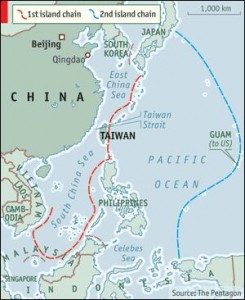
  • Phase 1: to be achieved by 2000, during which time the PLA Navy needed to be able to exert control over the maritime territory within the First Island China, namely the Yellow Sea, East China Sea, and South China Sea (see map)—a goal that Cole argues China has yet to fully achieve.
  • Phase 2: to be achieved by 2020, when the navy’s control was to extend out to the Second Island Chain.
  • Phase 3: to be achieved by 2050, by which time the PLA Navy was to evolve into a true global navy.[10]

chain

The shift in the PLA’s naval strategy reflected an earlier adjustment in Beijing’s assessment of its international situation. In the late spring of 1985, China, then under the leadership of Deng Xiaoping, reassessed its strategic outlook. According to this assessment, China was no longer under the imminent threat of war, envisioned as a major ground invasion by Soviet forces to the north. Instead, due to a relative parity between the Soviet Union and the United States, China could enjoy a relatively peaceful environment for the foreseeable future.[11] This allowed Beijing to take the PLA off a constant pre-war posture and focus more on modernizing and downsizing the military in light of the new requirements to be able to fight a smaller, more technical type of war (referred to as “local war” (jubu zhanzheng) in PLA parlance).

The PLA Navy’s increased focus on China’s maritime domain also followed Beijing’s gradual recognition of the importance of the sea starting in the 1970s. As this author has written elsewhere, in the 1970s, China “began to recognize the potential economic value of controlling the maritime areas”—a region it had more or less ignored until then.[12] In particular, Beijing eyed the potential for hydrocarbons and minerals in the seabed, which, if exploited, could be used to benefit China’s economic development. The growing importance of fisheries to China’s economy was also noted. As was the new-found importance of China’s sea lanes, upon which China’s fledgling export economy increasingly depended.

Despite being credited with developing the PLA Navy’s “Offshore Defense” strategy, it is unlikely that Liu was the actual originator of the strategy. His career path and previous military experiences are not commensurate with those of a typical naval strategist. However, that is not to say that Liu didn’t play an influential role in the strategy’s formation. On the contrary, his position as naval commander during this period provided him with the necessary influence to see the strategy adopted in the first place. Furthermore, as CMC vice chairman, Liu would have been in a position to ensure that the PLA Navy developed the capabilities it needed to carry out the “Offshore Defense” strategy. That Liu was allegedly personal friends with Deng Xiaoping probably also helped strengthen Liu’s policy influence.[13] In this way, rather than “China’s Mahan,” it might be more accurate to refer to Liu as “China’s Theodore Roosevelt,” at least as far as naval development is concerned.

Conclusion

So what can we derive from this quick review of Liu Huaqing’s influence on the PLA Navy? This article makes four points:

  • First, the importance of having the naval capability to defend a state’s maritime interests. As China’s maritime interests expanded, Liu (and his fellow naval travelers) recognized the need for a naval force capable of safeguarding those interests. This may appear to be a truism, but it is worth repeating.
  • Second, the importance of syncing naval strategy (and subsequent development and procurement requirements) with overall national objectives. The PLA Navy’s switch to the “Offshore Defense” strategy ensured that the naval component of the PLA would align closely with the PLA’s newly established requirements for war fighting. Failure to ensure that the naval and other military services coordinate their respective strategies will only reduce efficiency and waste resources.
  • Third, the importance of developing naval capabilities based upon a strategy, and not vice versa. When the PLA Navy under Liu adopted the “Offshore Defense” strategy, it was fully understood that the navy was incapable of carrying out the new strategy—something China subsequently set about to change. At the end of the day, strategy is still the combination of ends, ways, and means—with ends holding pride of place.
  • Fourth, the importance of an influential lobbying force on behalf of a strong naval capability. The improved capabilities of the PLA Navy over the past two decades are arguably in part the direct result of Liu’s strong influence—especially in the 1990s when he was CMC vice chairman. Without his direct support for China’s naval development, it is unlikely that the PLA Navy would be where it is today.

Daniel Hartnett is a research scientist with The CNA Corporation, where he researches China’s military and security affairs. The views expressed here are his own. He can be followed at @dmhartnett.

[1] Liu Huaqing, Liu Huaqing Huiyilu [Memoirs of Liu Huaqing], (Beijing: PLA Publishing House, 2004), pp. 1-6.

[2] Liu, p. 7.

[3] Liu, p. 253.

[4] Liu, pp. 265-274.

[5] Liu, p. 282.

[6] Sandeep Dewan, China’s Maritime Ambitions and the PLA Navy (New Delhi, India: Vij Books, 2013), p. 18.

[7] Liu, p. 307.

[8] Some Westerners have translated this term as “near seas defense.” This article sticks with conventional usage, however.

[9] Liu, p. 438.

[10] Bernard D. Cole, The Great Wall at Sea: China’s Navy in the Twenty-First Century, 2nd edition, (Annapolis, MD: Naval Institute Press, 2010), p. 176.

[11] Yao Yunzhu, “The Evolution of Military Doctrine of the Chinese PLA from 1985 to 1995,” The Korean Journal of Defense Analysis 7:2 (1995): 57-62.

[12] Daniel M. Hartnett, “China’s Evolving Interests and Activities in the East China Sea,” in Michael A. McDevitt et al., The Long Littoral Project: East China and Yellow Seas—A Maritime Perspective on Indo-Pacific Security (Alexandria, VA: CNA, September 2012), pp. 83-86, http://www.cna.org/sites/default/files/research/IOP-2012-U-002207-Final.pdf.

[13] Edward Wong, “Liu Huaqing Dies at 94; Oversaw Modernization of China’s Navy,” New York Times, 16 January 2011.

ADM Fisher: Strategy from the “Fish pond”

This article is part of our Forgotten Naval Strategists Week.

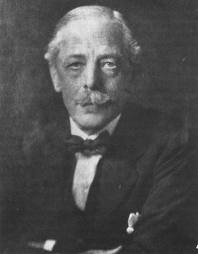
Great Britain’s Royal Navy (RN) that went to war in August 1914 was very much the product of a concerted effort of technological, operational, and personnel change executed over the period from 1904-1914. The RN went from a relatively older, coal-fired, slower, and dispersed force primarily concerned with showing the flag and handling colonial warfare to a modern force of high speed, oil-fired, combatants, seaplane carriers and submarines in the space of little more than a decade. While this was by no means a smooth process, it produced the one European military arm perhaps ready for war in 1914. One man above all others was responsible for executing this strategic sea change. Admiral Sir John Arbuthnot “Jackie” Fisher spent nearly half of his naval career in an effort to drag the Royal Navy from the sleepy 19th century into the violent melee of the 20th. Fisher certainly made many mistakes along the way, and his departure from the Admiralty in 1910 also allowed more traditional leaders in the Royal Navy to limit or discard some of his revolutionary principles. Although a forgotten strategist (and some of his chroniclers even refuse him that title), his strategic concepts have been resurrected through the scholarly work of historians from Arthur Marder in the 1960’s through John Sumida, Angus Ross and Nicholas Lambert (among many) in recent years.

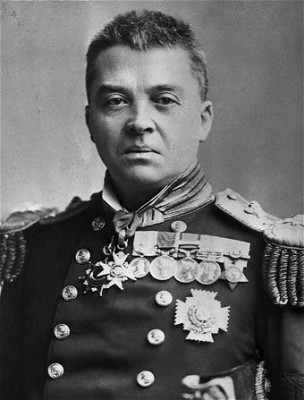
Fisher 3
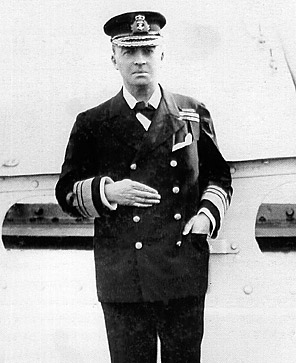
Fisher as a Captain

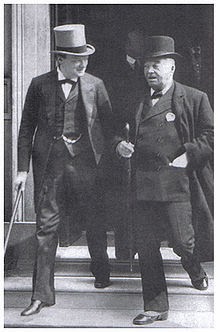
Fisher would have been a colorful character in any age. In office as First Sea Lord (rough equivalent of the U.S. Chief of Naval Operations) from 1904-1910, Fisher became a legend for his unpredictable behavior. He stalked the halls of the Admiralty with signs hanging around his neck that stated “Bring me something to Sign” and “I have no work to do!” He ended his correspondence with vibrant closing such as “yours until charcoal sprouts” and “yours until hell freezes over.” He is credited by the Oxford English Dictionary as the first person to use the phrase “OMG” (Oh my God!” in written English. His quotes include such phrases as “moderation in war is imbecility” and “any fool can obey orders”. His style certainly had an effect on young Winston Churchill, the First Lord of the Admiralty who brought Fisher out of retirement to again serve as First Sea Lord in 1912 and delighted in the Admiral’s colorful verbiage.

Fisher was an engineer by training and much of his efforts entailed advancing technological change. He is known as the foremost advocate of the all-big gun battleship, the first of which he named HMS Dreadnought. He also was a strong supporter of gunnery directors, submarines, naval aircraft, and torpedoes and mines as primary weapons of war. Fisher rejected large quantities of armor in warships preferring tactical speed, operational range, and striking power in all classes of warship. Most importantly, Fisher was the driving force behind the scheme to re-balance the Royal Navy from 19th century naval enforcer to 20th century total warrior. British political leadership decreed the need for change, but Fisher was recognized as the only officer able to implement the sweeping alteration of Royal Navy to suit the emerging 20th century security environment. During his administration of the Admiralty he ruthlessly removed over 130 overage, slow vessels that would be ill-suited for combat in the modern age. He advocated fast ships that could deploy rapidly across great distances in support of British global interests. His efforts were successful in that he reduced the overall size of the Royal Navy over the first 5 years of his office, improved the overall quality and accuracy of its firepower and kept the overall naval budget at 1904 levels until 1909. Fisher also moved to improve the conditions of Royal Navy officer training. He merged engineer and line officer cadet training to improve overall officer technological knowledge, and introduced a longer four year instruction program to ensure officers were well grounded in technical subjects. He added additional physical fitness requirements to naval training. He also changed the officer entrance program from one of pure academic examination to one that included practical as well as pedagogical knowledge.

Corbett
Sir Julian Corbett

Many historians and strategists like to quote the works of British strategic thinker Sir Julian Corbett when they seek to explain the relationship between war at sea and on land. It is useful to remember however that the writings of Julian Corbett might never have reached the influence they hold today without his close association with John Fisher. Corbett did not begin his active career as a naval strategist until 1896.  Fisher had already head the position of Second Sea Lord by the this time and was in the process of thinking through his ideas for high-speed heavily armed cruisers that he believed would replace battleships as the principle shield of the British Empire. The two  met in 1902 and frequently exchanged correspondence on their respective naval ideas. The cross-pollination between the two men expanded both of their intellectual horizons. Thankfully Corbett, unlike Fisher, chose to write down the summation of this relationship in his 1911 Some Principles of Naval Strategy. While Corbett’s work is his own, and his influence on both naval strategy and history significant, one wonders how much influence he would have had in his own time had he not been an intimate member of the “fish pond” (Fisher’s circle of confidants”.

Church Fish
Young Churchill and Fisher

Fisher was far from perfect in many ways. His performance as an operational leader did not measure up to his strengths as a reformer or inspired engineer. He advocated the creation of a Naval General Staff, but failed to institute this body when given the opportunity as First Sea Lord. He vacillated in his support for Winston Churchill’s Gallipoli campaign and eventually opposed it, but still clung to an even more fantastic plan to move shallow-draft heavy warships through the much more heavily-defended Baltic to conduct an amphibious landing on Germany’s Pomeranian coast. His capital ship designs became more fantastic and his personality more irascible as he aged. He frequently clashed with Churchill; not so much over differences but rather over whose radical scheme was more feasible. He finally resigned in May 1915 and eventually died of cancer aged 79 in July 1920. Fisher’s credibility with the service and politicians remained reasonably high even after his resignation. Winston Churchill said “Fisher was right at least nine tenths of the time”.

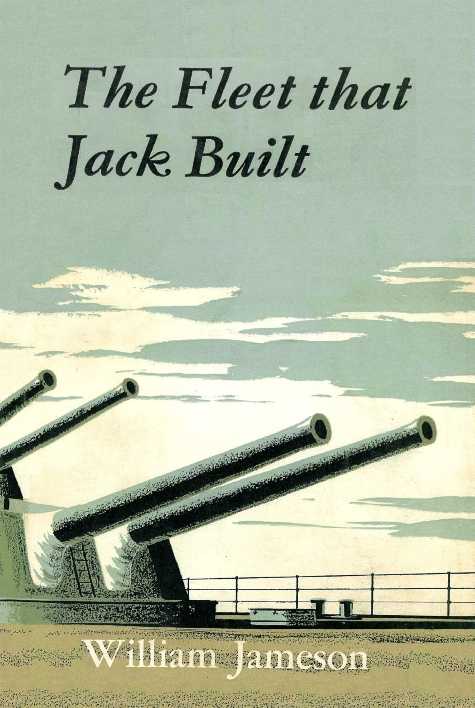
The Royal Navy’s performance during the First World War was far from perfect. Its big gun battleships did not deliver the Trafalgar-like victory so many Britons expected. It could not force the Dardanelles alone without ground support. It did not take action against the German submarine offensive until it was almost too late. Despite these shortcomings later in the fight, the Royal Navy performed much as its leaders anticipated it would before 1914. The RN protected troop and supply movements across the English Channel. It swept both German merchant ships and commerce raiders from the seas. It continued to experiment with new technologies throughout the war and did its best to put them into operational use. It did not charge headlong into German torpedoes and generally showed concern for overly risking its ships and men unlike its Army counterpart that killed millions in meat-grinding trench warfare operations. These positive attributes were the fruits of Fisher’s labors in the gardens of naval strategy and technology. Alone among the armed forces of the European powers, the British Grand Fleet was reasonably well prepared for war in 1914. That fleet could indeed be characterized as British Admiral William Jameson called it in 1962 book as “the fleet that Jack (John Fisher) built.

the fleet that jack built
Cover of Jameson’s book

The U.S Navy should remember John Fisher as it seeks to fundamentally change itself to fight 21st century “hybrid wars” and data-centric conflicts. While Fisher had an inordinate amount of power and influence in his Navy that is difficult, if not impossible to replicate in the present, his example shows the power of one senior officer with a vision. That vision, if logically well articulated can be translated into significant action. Famous British General and early World War 1 War Minister Sir Herbert Kitchener consoled Winston Churchill on his dismissal from the Admiralty by saying, “the fleet was ready; they can’t take that away from you.” He might as well have been speaking to Fisher who created the fleet Britain took to war one hundred years ago last month.

Lessons From History: Themistocles Builds a Navy

This article is part of CIMSEC’s “Forgotten Naval Strategists Week.”

“I never learned how to tune a harp or play upon a lute but I know how to raise a small and obscure city to glory and greatness where to all kindred of the Earth will pilgrim.”

Thus spoke the great warrior politician Themistocles in the 5th Century B.C. Themistocles is famous for a lot of things: his heroic actions at the Battle of Salamis, his secret plot to rebuild Athens’ walls after the Second Persian War, and his six-pack abs in “300: Rise of an Empire” (author’s note: thoroughly underwhelmed by that movie). But his biggest impact on history was his fateful advocacy early in his career for Athens to build a first-rate navy. Themistocles should be recognized as one of the earliest naval theorists because he successfully promulgated a sea-view of the world and brought Athens onto the sea.

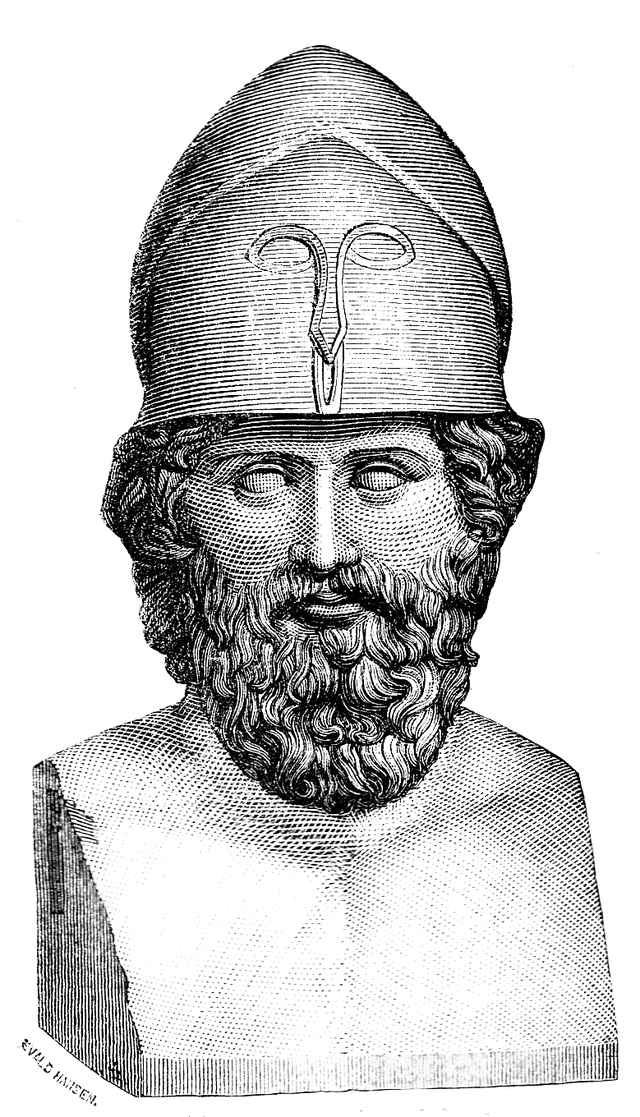
Themistocles

Portrait of a naval theorist.

Athens has gone down in history as a naval powerhouse but that was not always the case. The city of Athens is actually a few miles away from the sea, could only offer up fifty ships during the First Persian War, and did not even have a defensible port until Themistocles’ rise to prominence. Athens was a continental city-state and a poor one at that; it had little to offer in terms of natural resources. The striking of silver in the mines of Laurium in 483 B.C. changed this. Athens was faced with a choice of how to divide up the windfall. The prevailing idea was to take the money and divide it equally among the population. Themistocles, apparently alone, proposed to use the funds to finance construction of a 200 ship fleet and managed to win over the population. The rationale behind his advocacy is controversial to this day: he claimed that the navy’s purpose was to challenge Athens’ island rival, Aegina, but others have attributed to him the base motivations of wanting to secure power or the foresight to see the invasion of Xerxes coming three years later.

Regardless of Themistocles’ true motivations, though the high-minded ones seem more plausible, his success is remarkable because it achieved a full reorientation of Athens’ politico-military focus from land to sea. This was all the more surprising because ancient Greek culture gave primacy to the strength and heroism of land combat. Even Plato complained that Themistocles’ actions transformed the army “from steady soldiers… into mariners and seamen tossed about the sea… [Themistocles] took away from the Athenians the spear and the shield, and bound them to the bench and the oar.”

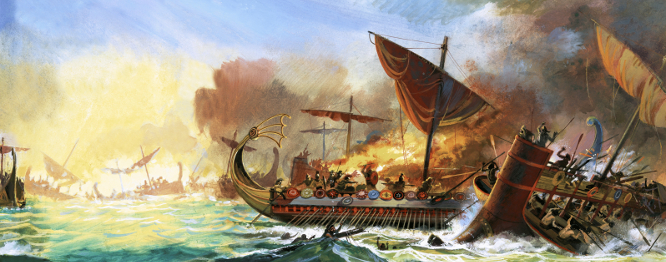
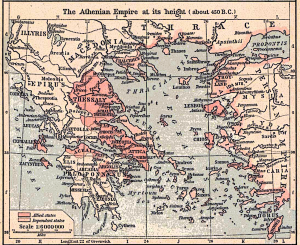
History proved Themistocles right. The 200 Athenian ships, combined with his deft admiralship, were instrumental in defeating the Persians at the Battle of Salamis and, far more than the Battle of Thermopylae, turned the tide of the war in Greece’s favor. Moreover, once the Persians retreated across the Aegean Sea, Athens used its fleet to liberate the occupied islands and Ionian cities in modern Turkey. The new Athenian dependencies evolved into the Athenian Empire whose domination of trade in the Aegean launched Athens’ golden age. Their art and architecture are still the standard by which we judge all others classics. It is difficult to say whether Themistocles foresaw all of these circumstances playing out when he first advocated for the fleet but his strategic argument for the Athenians to take to the sea reflects an appreciation for what dominating the sea could achieve.

Athenian_empire_atheight_450_shepherd1923

The Athenian Empire at its height. If not for Themistocles, they would have had to swim to build it.

Lessons Learned

1) It is never too late to become a sea power.

 History is full of examples of continental powers who failed to embrace the sea to their detriment: the Persians, Ming China, and the Ottomans are but a few. Themistocles’ success demonstrates that states, with proper planning and political determination, can alter policy and project their presence onto the water.

2) States should maintain a military force that augments their commercial interests.

For those following politics in the United States, the parable of the silver mines of Laurium might lead one to assume that Themistocles’ argument supports military spending at the expense of social programs. That is not entirely the case. Blanket military spending does not mean financial stability; the Habsburgs are a great cautionary tale for military spending becoming a money pit. The true reason why the Athenian navy was such a boon to the state was not just its military value but the commercial value in trade that it fostered after the Persian Wars ended. We conclude that the United States should be careful about making budget cuts to military forces that make the global trade system work. In particular, one needs to tread lightly around investments that are meant to counter maritime piracy; it is no accident that shipping insurance rates soar in places where the United States Navy does not patrol.

Matthew Merighi is a Masters Degree candidate at the Fletcher School of Law and Diplomacy at Tufts University.