By Austin McLaughlin
The world’s preeminent naval power launched a vast armada west to secure distant allies from a threatening rival. It underestimated the enemy’s resolve. The rival rallied, repelled the invaders, and left the naval power reeling—its fleet shattered, alliances frayed, and homeland stunned.
This isn’t a U.S.-China clash in the Taiwan Strait, but Athens’ 415 BC Sicilian Expedition–a misstep that doomed it to Spartan domination. Losing over 100 warships and 5,000 troops, Athens’ strategic blunder marked the tipping point of the 431-404 BC Peloponnesian War.1
Today, the U.S. can learn from Athens’ failure–intelligence gaps and tactical errors–as a strategic warning to a rising China, sidestepping a modern parallel.
Introduction – Alcibiades’ and Nicias’ Leadership Preludes Disaster
Pericles’ death in 429 BC left lesser men at the helm of the ancient world’s naval hegemon: the cunning general Alcibiades and the cautious statesman Nicias. Alcibiades drove Athens’ reckless Sicilian gamble, but Nicias spearheaded its destruction. The two willfully ended a six-year peace guaranteed by the 421 BC Peace of Nicias.2
Athens aimed to subdue Sicily for “glory and tribute,” eyeing a base for future incursions against Carthage and Mediterranean Africa.3 Alcibiades sold his plan to a willing assembly infected with “Alcibiades syndrome,” a toxic combination of capability and egotism.4 His charm convinced the assembly to deploy 60 ships. Upstaged by his junior, Nicias opposed this front far from Sparta, insisting Athens could win only by doubling the size of its force in a quixotic attempt to dissuade decisionmakers.5 Nicias’ bluster unintentionally worked – the assembly “far from being scared, eagerly agreed,” mustering 5,100 hoplites aboard 134 triremes and organizing command between Alcibiades, Nicias, and Lamachus.
Alcibiades was slated to spearhead the armada, but the Affair of the Herms in June 415 BC forced his recall–busts of Hermes, symbols of Athenian patriotism, were defaced across Athens and Alcibiades became the chief suspect. Rather than stand trial, he defected to Sparta and advised stationing the general Gylippus in Syracuse to meet the expedition.6
Nicias now headed an expedition he once opposed. Athens, intertwined with its leaders, leapt from foolhardy confidence to trepidation. While personality differences do not presage inferior performance–as exemplified by Admirals Halsey and Spruance in the Pacific Theater during the Second World War–they can alter intelligence assessments and operational planning. Alcibiades’ arrogance engendered overconfidence in the assembly’s assessment of Sicilian affairs and capability, while Nicias’ indecisiveness led to the fleet’s rotting in Syracuse’s harbor and his force’s routing ashore.7
Intelligence Gaps – Hermocrates of Syracuse Outplays Athens’ Assessments
Syracusan general Hermocrates believed Athens was using specious alliances to aggravate existing hostilities and wear out Sicily’s defenses until they could “one day come with a larger armament and seek to bring all of [Sicily] into subjection.”8 In accord with Hermocrates’ argument, Sicily united at the 424 BC Congress of Gela and issued a doctrine of self-determination. In Athens, Sicily had a common enemy.
In 415 BC, Athens misjudged Sicily’s unity, assuming its cities, divided along Ionian and Dorian lines, would not resist en masse. The 416 BC call for aid from Segesta, a Hellenized city, against Selinus, a Dorian city, likely bolstered this belief – Athens expected support from Sicilian Ionians as Greek diaspora and their sympathizers. Athens thus justified the invasion under a pretense of protecting the island’s Ionians from Dorians, concentrated in Syracuse. However, the city state’s assessment of Sicily was overly simplistic, relying on a notion of shared heritage to overcome any local rivalries. Worse, Athens underestimated Sicily’s wariness of Athenian expansionism.
Athens was oblivious to Sicily’s own security assessments. In 415 BC, the Syracusan assembly held debates on whether the Athenians were coming to invade. The prescient Hermocrates claimed “a large Athenian force was sailing on the pretext of helping allies,” but intended to subjugate them.9 He foresaw the invasion, warning of Athens’ intent to subjugate Sicily under the guise of aid. To prepare, Hermocrates advised sending envoys across Sicily, Italy, and Carthage for aid, as well as to Sparta and Corinth to instigate a distracting conflict on Attica. He further urged a forward offensive: an open water attack near the Iapygian peninsula (modern day Apulia) to intercept a weary Athenian armada.
Hermocrates heard of Nicias’ fabled uncertainty, that the “‘most experienced of the Athenian generals’ was reluctant to make the expedition and might seize on evidence of resistance to abandon the project.” Despite public efforts to adhere to the “officially limited purposes” of the expedition, Sicily aptly assessed Athens’ intent.10
Athens had a limited understanding of the Syracusan order of battle. Encountering by fortune no fleet in the harbor, Athens was unprepared for an army at parity with its own.11 During the First Battle of Syracuse, the defenders’ front line was twice the weight of Athens’: sixteen-deep to Athens’ eight-deep phalanxes.12 Most importantly, Syracuse’s cavalry numbered approximately 1,500 to Athens’ 30.
Athenian intelligence gaps on Sicily’s unity, grasp of their true intent, and order of battle set up the expedition for failure. The astute leader Hermocrates had preempted the worst of Athenian aggression through shrewd argumentation and decision making. In the war for information dominance, Syracuse knew its adversary far better than Athens.
Tactical Errors – Nicias Squanders Opportunities and Misapplies Forces
Athens’ defeat in the First and Second Battles of Syracuse stemmed from critical errors: assuming Syracuse’s surrender, neglecting cavalry, and failing to counter Spartan head-on trireme ramming.
At Syracuse, the Athenian general Lamachus envisioned a decision tree with three major branches of action.13 Most optimistically, he hoped to intimidate Syracuse into surrendering without fighting. Failing surrender, Lamachus would challenge Syracuse’s forces to battle outside the city’s walls. And if they refused to fight, he would stage an amphibious landing in the outlying farms, pinning Syracusans and establishing supply lines to feed and quarter his own troops. This last option, Lamachus hoped, would impress Sicilian cities and win their allegiance.
From Catana to the south, Nicias staged the First Battle of Syracuse. Hoplites from Argives pierced Syracuse’s left phalanx while Athens split the center. A thunderstorm caused inexperienced Syracusans to break ranks and flee, fearful of the bad omen. But Athens could not capitalize on victory: with just 30 cavalrymen, Athens could not pursue its helpless enemy.
Nicias clung to Lamachus’s fantasy of winning without fighting. With winter approaching, he sailed back to Catana, making no effort to request cavalry reinforcements. Historian Donald Kagan posits this was “more a failure of purpose than of judgment, that it resulted, at least in part, from his original disinclination for the expedition, from his hope that it would never be necessary to fight at all.”14 Plutarch affirmed Nicias’ delay after victory “destroyed the opportunity for action… in getting up the nerve to act, he was hesitant and timid.”15
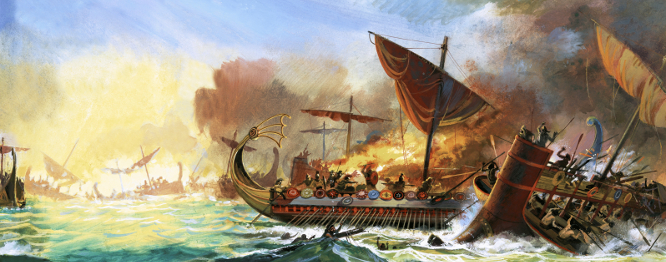
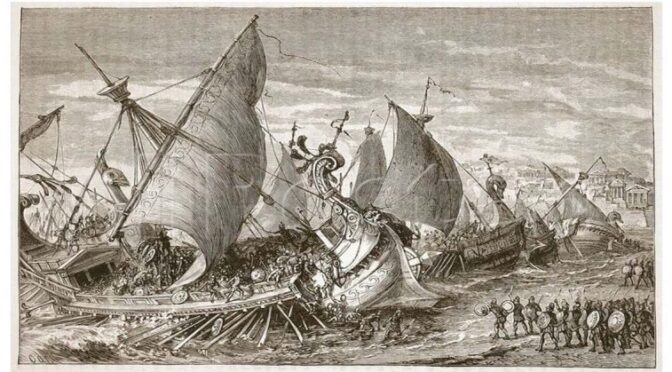
For two years, Athens’ army made no progress sieging Syracuse. Its fleet languished, “rotting in the stagnant waters of the harbor, their crews inactive for over a year, had passed their peak of readiness.”16 Spartan ships fortified with stray-beams attacked the ill-prepared Athenian triremes head on, preventing the Athenians from ramming broadside, their preferred method. Covering their decks with animal hides, the Spartans repulsed Athenian grappling hooks. Deprived of room to maneuver, Sparta trapped Athens’ fleet in the harbor, driving oarsmen to beachheads where inland forces routed them on arrival.
Rather than escape and fearing he would be “put to death on a disgraceful charge,” Nicias heeded superstition surrounding a lunar eclipse and delayed withdrawal. Syracuse and Sparta exploited this opportunity to finish the trapped fleet. With no ships on which to return, Nicias and his men fled to Catana and were routed by cavalry. With survivors enslaved, the Second Battle of Syracuse came to a disastrous end.
Nicias “had let slip the time to action.” He was “slow and wanted assurance to engage,” misusing assets available to him while hoping to win the fight without fighting. Unlike Nicias, the U.S. Navy must use its forces as intended.
Two Lessons for the U.S. Navy Today
During the Peloponnesian War, Athens reignited a great power conflict rather than maintain an uneasy peace, sacrificing sea control because war was seen as foregone. It is incumbent now that the U.S. must not succumb to this same fate–looking back on the Sicilian Expedition reveals two major lessons for U.S. naval intelligence and operations today.
For naval intelligence, assess intent separately from capability. Athens misread Sicily’s will to fight despite a smaller, nominally divided force, predisposing itself to rash action. Athens’ superficial view of Sicilian politics and overreliance on shared values with partners missed Hermocrates’ machinations toward Sicilian unity. Further, despite an initial naval overmatch, Athens grossly underestimated Syracuse’s capabilities on land.
Taiwan’s political divisions today, particularly with the Kuomintang’s status quo orientation, cannot be mistaken for a lack of willingness to fight should an invasion occur. Russia recently repeated this mistake in Ukraine, possibly causing China to delay forceful reunification with Taiwan in the near term. Analysis in the years ahead must focus on changes in tactics, techniques, and procedures as indicators for intent, like shadowing or pressurization behavior and amphibious rehearsals, rather than fleet size and capability. U.S. naval intelligence should emulate Sicily, not Athens, to gauge aspirations hidden behind Chinese posturing.
For naval operators, use forces as they were intended. During the siege of Syracuse, Athens’ navy was misused operationally and tactically. Operationally, its triremes were intended for fast maneuvering in the littorals, not blockading ports in an exposed forward position. Tactically, their concentration in Syracuse’s harbor deprived the triremes freedom of maneuver and thus their preferred method of assault: broadside ramming. Applying the perspective of Jomini, Athens had “invert[ed] the natural order” of its arms.17 The trireme fleet distributed across the Mediterranean Sea, then the global commons, led to Athens’ naval preeminence. Concentrating the force immediately outside Syracuse misapplied this purpose-built utility.
Similarly, U.S. Navy platforms equipped for maritime cooperation and green-water engagement like the Littoral Combat Ship (LCS) are not best-suited for sea denial and blue-water conflict. Ideal application of the LCS, for example, might be as a presence multiplier further from conflict zones. In the last few decades, mission creep led U.S. service branches to extend their capabilities beyond their original purposes. Corrective efforts like the Marine Corps’ Force Design 2030, adjusting “from inland to littoral, and from non-state actor to peer competitor,” are the vanguard.18 The U.S. Navy must also direct present resources around their intended mission.
A Strategic Warning… for China
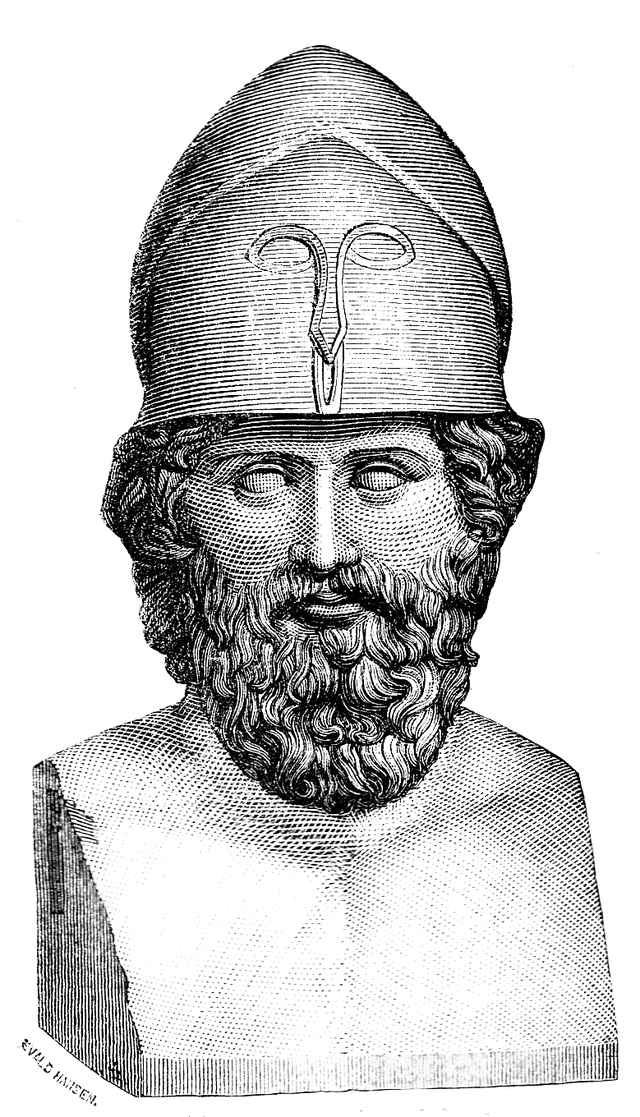
Themistocles, father of Athenian seapower, stated “he who commands the sea has command of everything.”19 In a generation, the arrogance of Alcibiades and the indecision of Nicias destroyed Athens’ fleet and Themistocles’ legacy. Beyond major losses in ships and manpower, Athens lost prestige and morale. In disbelief, the city’s archons and general assembly branded news of their defeat “false intelligence” and discredited or tortured those who spread word of it.20 But they could not stop the internal revolts and Spartan-Persian alliance, eager to “overthrow Athenian seapower in the Aegean,” to follow.21
In 2015, Xi Jinping dismissed the Thucydides Trap, stating there was “no such thing… [but] should major countries time and time again make the mistakes of strategic miscalculation, they might create such traps for themselves.”22 With the Thuycidean dynamic at play, rather than imitate Athens’ reckless abandon, the U.S. must purposefully send its Navy forward to maintain maritime superiority without allowing heightened operational tempo and requirements to reduce readiness. China must engage transparently about its regional ambitions without needlessly antagonizing our nation or its partners throughout the Indo-Pacific.
Athens and Sparta serve as parables for the U.S. and China. While Athens offers lessons to the U.S. as a historic precursor, ultimately it was a foolhardy rising power that collapsed following a disastrous invasion of an island hundreds of miles offshore. Perhaps while the Taiwan Strait is no Ionian Sea and technological advances have long rendered triremes obsolete, this strategic warning is more relevant to China. Sparta, a status quo power like the U.S., simply had to await its adversary’s fatal misjudgment to invade Sicily–the rest is history.
Lieutenant Austin McLaughlin is currently assigned to the U.S. Pacific Fleet in Pearl Harbor, Hawaii. He previously served as intelligence officer for Destroyer Squadron 1 aboard the USS Carl Vinson (CVN-70) in San Diego, California. Before naval service, he was a presidential writer at the White House. He graduated cum laude from Cornell University in 2018.
Notes
1. Strauss, Barry S., and Josiah Ober. The Anatomy of Error: Ancient Military Disasters and Their Lessons for Modern Strategists. St. Martin’s Press, 1992, pp. 61.
2. Strauss and Ober, pp. 66.
3. Strauss and Ober, pp. 60.
4. Strauss and Ober, pp. 51.
5. Strauss and Ober, pp. 61.
6. Strauss and Ober, pp. 63-65.
7. Potter, E.B. “Halsey and Spruance: A Study in Contrasts.” U.S. Naval Institute. April 2016.
8. Thucydides, A History of the Peloponnesian War, 4.58-65.
9. Kagan, Donald. The Peace of Nicias and the Sicilian Expedition. Cornell University Press, 2013, pp. 220.
10. Kagan, pp. 245.
11. Thucydides, 6.52.
12. Kagan, pp. 235.
13. Kagan, pp. 211-216.
14. Kagan, pp. 252.
15. Plutarch, 16.8.
16. Strauss and Ober, pp. 63-65.
17. Jomini, Antoine-Henri. The Art of War. Translated by G.H. Mendell and W.P. Craighill. Philadelphia: J.B. Lippincott & Co., 1862.
18. Berger, David H. Force Design 2030. Department of the Navy, United States Marine Corps. March 2020.
19. Cicero, Letters to Atticus, X, 8. c. 391.
20. Plutarch, Life of Nicias. c. 75. 30.2.
21. Strauss and Ober, pp. 65.
22. Allison, Graham. “The Thucydides Trap: Are the U.S. and China Headed to War?” The Atlantic. September 24, 2015.
Featured Image: Artist rendering of the Sicily Expedition (Courtesy of War History Online)