As a Christmas gift from our friends at Risk Intelligence, we’re sharing two free articles from the publication Strategic Insights by CIMSECians. This first (also available in Pdf form), by myself, originally appeared in the September 2014 issue and provides a background and maritime risk analysis on the Taiwan Strait.
The author’s sole experience transiting the Taiwan Strait was not a pleasant one. Like many on his ship, a US Navy destroyer, he had earlier in the week gone to sleep expecting to awake anchored in Hong Kong harbour for a few days of liberty to celebrate the American holiday of Thanksgiving. Instead, the Chinese government rescinded permission for the U.S.S. Kitty Hawk Strike Group to enter port, causing the aircraft carrier and its escorting vessels to chart a course back to Japan and leave behind many loved ones who had flown to town to rendezvous. Typhoon-spawned weather heightened the crew’s enjoyment as they headed for the Taiwan Strait to undertake a ‘freedom of navigation’ transit. Seven years later, the relationship between China and the United States has not much improved. But that between China and Taiwan has softened markedly, even as 1,600 Chinese missiles remain arrayed against targets in Taiwan. In fact, this change has resulted in a shift in the geopolitical dangers facing those who ply the strait’s waters. This article will examine the outlook of these threats.
Geography of the Taiwan Strait
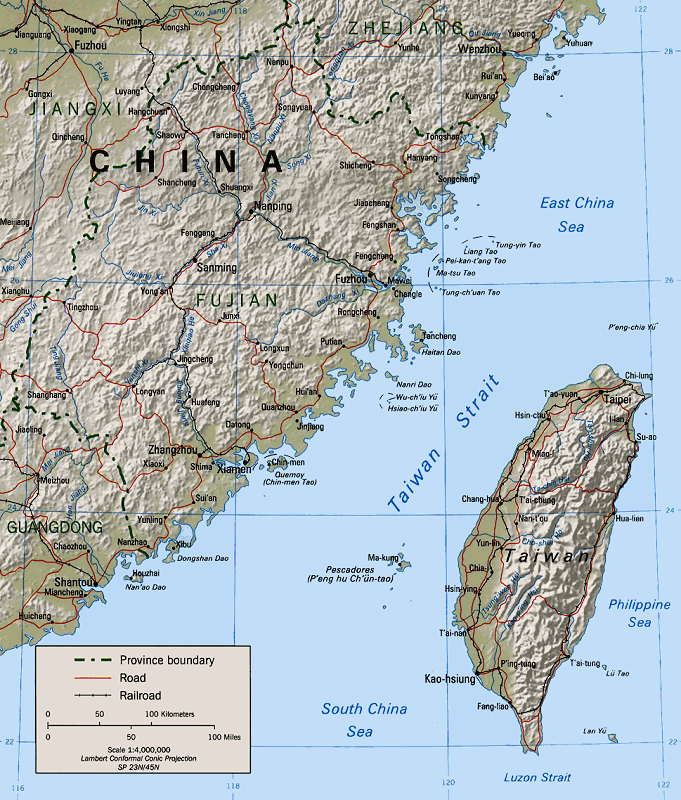
Until 10,000 years ago, a land bridge connected the Neolithic people of Taiwan with those of mainland China, until rising sea levels from melting glaciers at the start of the Holocene epoch created the strait. As described by the late Harvard professor Kuangh-chih Chang, over the subsequent ten millennia the strait’s width expanded and contracted in a series of six ‘sea invasions’ and six ‘withdrawals’ as the waters rose and fell. Today the strait runs 330 km north-east to south-west, and ranges in width from 220 km at its widest to 130 km at its narrowest, with an average width of 180 km. It is bounded in the north by the East China Sea and in the south by the South China Sea, circulating waters between the two bodies with an average depth of 60 m. At its deepest in the Penghu Channel the strait reaches 177 m and is a mere 25 m deep at its shallowest near the centre of the strait’s southern mouth – the ‘Taiwan Shoal’ or ‘Taiwan Banks’.
Seasonal environmental variation has a large impact on the navigability of the strait. The China Coastal Current flows southward in the western part of the strait from a maximum strength in winter months, backed by the northeast monsoon, to its weakest point in the summer. On the eastern side of the strait the northward flowing Kuroshio Branch Current is turned back by the north-east monsoon in the winter after exiting the Penghu Channel, but continues the rest of the year, while reaching its maximum strength in the summer. Each year from July to September, an average of six larger (and, thus, named) tropical storms and typhoons impact the strait. Year-round, the strait is known for strong winds, wave swells, and fog (156.3 days a year of level 6 or higher on the Beaufort Scale), but these effects are amplified during the winter months. Fang Xu and Pingping Chen, writing in Securing the Safety of Navigation in East Asia by Keyuan Zhou and Shicun Wu, note that these conditions impact “not only challenges to safety at sea but also obstacles for efficient search and rescue.”
The largest group of islands in the Taiwan Strait – and the group most impactful to navigation – is the Penghu Islands, consisting of 64 islets of volcanic origin, also known as the Pescadores for the fishing communities the Portuguese encountered in the 17th century. Situated 120 km from the Chinese mainland and separated by the 45 km-wide Penghu Channel from the south-west Taiwan coast, the Penghu Islands total 127 km2, with the namesake island accounting for roughly half that total area and 70 per cent of the total population of 100,400 inhabitants.
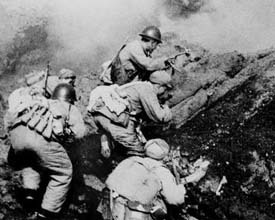
Another archipelago of note – the Kinmen Islands – lies just 2 km from the south-eastern coast of Fujian Province in mainland China, yet is also controlled by the government in Taipei. Consisting of 13 islets of 151 km2 and 120,713 people, the Kinmen, or ‘Quemoy’, are low and flat except for hilly Kinmen proper. These islands, along with the 36 Matsu islets at the north end of the strait, were the scene of fierce artillery duels between forces of the People’s Republic of China (PRC) and those of the Republic of China (ROC) in the 1950s during the First and Second Taiwan Strait Crises. Unlike another pair of island groups in the Taiwan Strait that the ROC controlled at the start of these crises, the Tachen and Yijiangshan islands, the Kinmen and Matsu islands remain under Taiwanese administration.
A unique, informal feature of the Taiwan Strait helps keep the peace between ROC and PRC air and naval forces and prevent misunderstanding by encouraging them to remain on ‘their’ side of the strait. Referred to variously as the Taiwan Strait ‘middle line’, ‘centerline’, or ‘Davis Line’, the 1950s origins – and exact boundary – of this division are murky, but most sources point to its first appearance in 1955 as an incidental by-product of designated American patrol areas. Since the 1958 Second Taiwan Strait Crisis, both sides have in practice mostly followed what remains a tacit understanding between China and Taiwan to prevent their warships and military aircraft from crossing to the other’s side of a line roughly bisecting the strait.
Following remarks by then-Defense Minister Lee Jye in 2004 threatening to shoot down Chinese aircraft crossing the middle line, the Taiwanese Defense Ministry released co-ordinates for their conception of the line. Today, the midline also functions as the jurisdictional boundary for a range of other regimes including the division of responsibility for search and rescue services, although increased cross-strait co-ordination and collaboration is blurring its importance.
Geopolitical Background
While most now know it as the Taiwan Strait, or Strait of Taiwan, the waterway’s aliases are a reflection of its history. The first, ‘The Formosa Strait’, comes from the former Portuguese name for Taiwan, the ilha formosa or ‘beautiful isle’. The origins of this name are shrouded in fascinating tales of doubtful veracity, as depicted in Jonathan Manthorpe’s Forbidden Nation: A History of Taiwan, but the popularisation – of both the name and the discovery of the island – by Dutch spy Jan Huygen van Linschoten in the 1596 book Iteneratio marked a transition. Whereas the 16th century was filled with Portuguese, Japanese, Chinese, and pirate expeditions and warfare in the strait, the exposure of Portugal’s secret trade routes brought Dutch and Spanish traders into that mix in the 17th century, as well as their attempts at colonisation.

The European colonisers were soon followed by Chinese forces. Robert Kaplan notes in Asia’s Cauldron: The South China Sea and the End of a Stable Pacific that although several Chinese dynasties launched earlier expeditions, it wasn’t until the Ming dynasty in the 17th century that an “organic connection” between Taiwan and the mainland was forged. This was achieved first with Cheng Chih-lung’s resettlement of thousands from mainland China’s Fujian province and later with his son Cheng-Kung’s 400-ship, 25,000-troop force to drive out the Dutch, culminating in the 1662 successful siege of Zeelandia.
The second alias for the Taiwan Strait, ‘The Black Ditch’ or ‘Black-water Ditch’, came into use by cross-strait traders by at least the late 17th century. This period, stretching through the 18th century, was a time of increasing integration and trade with mainland China, and the name derived (along with red, white, and green-water ditches) from the colour of the currents crossed during these voyages. In fact, there appear to have been several regional stretches of water called the black ditch, including on either side of the Penghus. One of these is the Penghu Channel, which an 1807 text calls “the most dangerous place in all the ocean. Its depth is unfathomed, and the water is as black as ink,” – but the term has since been applied to the whole of the strait. (For an exploration of the origin of the term ‘The Black Ditch’ and its physical basis see Michael Turton’s online article The Black Water Ditch and the Chinese Claim to the Senkakus from which this quote was taken.)
In the late 1800s, a punitive Japanese military campaign on Taiwan and later French blockade of its ports presaged China’s cession of the island and the Penghus to Japan in 1895 at the end of the Sino-Japanese War. Japan’s administration of the island ran until the end of World War II, when Taiwan was returned to Chinese rule under ROC control and has served as the ROC’s seat of government since its 1949 evacuation from mainland China.
The Third Taiwan Strait Crisis occurred 40 years after the first two, raising the spectre of armed conflict in the strait as PRC military exercises and missile launches were countered by American naval movements over the course of 1995-1996. Following a rocky relationship under Taiwanese President Chen Shui-bian of the Democratic People’s Party (DPP, 2000-2008) and fears that he would precipitate a crisis through an unilateral declaration of independence, cross-strait ties have notably warmed with the election in 2008 (and 2012 re-election) of Ma Ying-jeou of the Kuomintang party (KMT).
In December of 2008, direct cross-strait flights and postal services restarted for the first time in 59 years. More importantly for this paper, the ‘third link’ – direct shipping – also resumed and, according to the US Library of Congress’ Global Legal Monitor, now connects 72 mainland ports with 13 in Taiwan. In 2010, China and Taiwan negotiated and signed the Economic Cooperation Framework Agreement (ECFA) – covering specific tariff reductions and a general understanding that the two sides will work to further lower trade tariffs and investment barriers across a broad swath of the economy. In the most recent sign of friendlier ties between Beijing and Taipei, the director of China’s Taiwan Affairs Office, Zhang Zhijun, met for the first time with Taiwan’s Mainland Affairs Minister Wang Yu-Chi in June.
Activity in the Strait
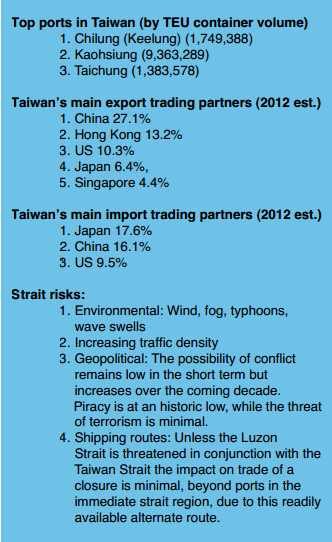
The Taiwan Strait is sometimes touted as a vital shipping route, connecting Asia with the energy supplies of the Middle East. Yet its importance should neither be overstated nor viewed in isolation. Except for cross-strait transits and vessels calling at a port in the immediate vicinity of the strait, the closure of the strait would result in only minor disruptions to Asian and global trade as most international traffic could be re-routed through the Luzon Strait to the west.
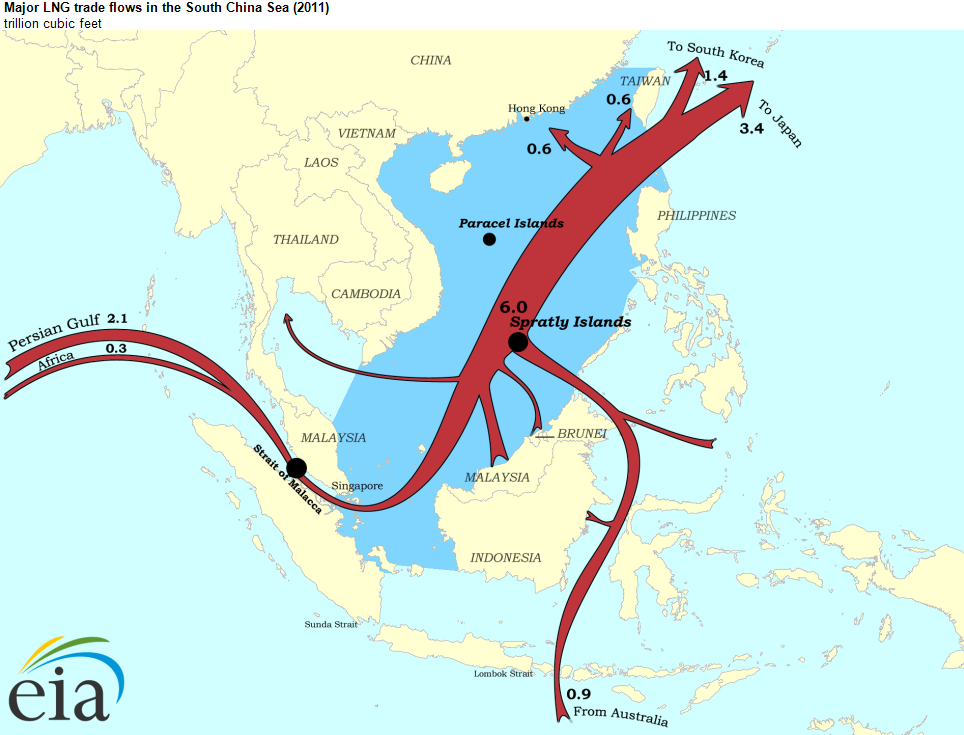
What determines the severity of disruption is whether the Taiwan Strait is closed alone or in conjunction with the Luzon Strait. A paper by Henry Kenny for the US government-sponsored think tank CNA (formerly Center for Naval Analyses) describes what a blockade of Taiwan might look like, with “exclusion zones for normal commercial shipping, as well as harassment of ships that approach the exclusion zone. Mines are another possibility, as is strafing of ships that intentionally or inadvertently approach the island.” It too notes that “disruption might be minimized if shipping to and from Northeast Asia steered clear of Taiwan on a wide berth … of the island, entering/exiting the South China Sea off northern Luzon.”
Other analysts focus not on a conflict in the strait but its potential resolution, arguing that a PRC-controlled Taiwan would enable China to extract concessions from Japan by threatening to close the Taiwan Strait and neighbouring Luzon Strait and thereby cripple its economy. Writing in Asia’s Cauldron, Robert Kaplan says Taiwan’s “de facto independence is key to the integrity of the Taiwan Strait that guarantees Japan’s trade routes.” While both the likelihood of these contingencies and their effects are debatable, a PRC in possession of Taiwan and in conflict with Japan would indeed cause serious disruption of Japan’s trade routes. Former Japanese diplomat Hisahiko Okazaki stated in 2003: “In case of emergency, the only safe [shipping route] for Japan in Asia will be the passage through the Lombok Strait in Indonesia through the east coast of the Philippines.” Kaplan is wrong that the Taiwan Strait guarantees Japan’s trade routes, but Taiwan’s de facto independence does keep them affordable.
This is not to say traffic in the strait is negligible. By 2008 the Taiwanese government counted 400 ships transiting the strait every day, along with 5.4 million barrels of crude oil and 0.6 trillion cubic feet of liquid natural gas (LNG) as of 2011 in an analysis by the US Energy Information Administration (EIA). In comparison, the EIA showed another 5.6 million barrels of oil and 4.8 trillion cubic feet of LNG headed to South Korea and Japan through the Luzon Strait.
Traffic patterns in the strait have changed since the 2008 resumption of direct shipping. Much of today’s cross-strait traffic used to flow through the strait to enter China indirectly via Hong Kong. Now, not only has crossstrait traffic increased by 10% every year since 2008 as annual bilateral trade between the mainland and Taiwan has risen to nearly $200 billion, the overall traffic density has also reportedly increased, swelling the risks of collision. To handle this increase, the Chinese Ministry of Transport is exploring options for managing vessel traffic in the strait, including traffic separation schemes that may be implemented in the next few years.
Scope for Increased Activity
As busy as the strait is today, there are several possible scenarios that would increase congestion further. The South China Morning Post reports China may attempt physically to bridge the strait, having approved in 2013 two such highway projects, although whether the connections would involve bridges or tunnels in unclear. It is also unlikely that this project will come to fruition until much later stages of political and/or economic integration – according to independent intelligence firm Stratfor, the nearterm prospects for the link remain “largely illusory”. But if at some date it does proceed, the project could have an appreciable impact on strait traffic; on the other hand, once completed it would also divert some of the of crossstrait shipping traffic.
Far sooner than any such infrastructure, two follow-ons to the ECFA are likely to increase cross-strait traffic. The first, the Cross-Strait Services Agreement (CSSA), was signed last year and awaits ratification by Taiwan’s legislature. According to The New York Times, the CSSA opens 80 industries to investment in China and 64 in Taiwan. Although these are primarily service-sector openings, the CSSA does include the potential to boost the cross-strait travel industry. The second ECFA follow-on is the Cross-Strait Goods Agreement (CSGA), a tradein-goods pact still under negotiation that would have an even greater impact on vessel traffic.
Lastly, the EIA reports that Taiwan is working with China’s state-owned China National Offshore Oil Corporation (CNOOC) to explore for oil and natural gas in the strait. While these efforts have yet to make any substantial discoveries, and have failed in earlier attempts, any such finds would complicate the strait’s already crowded transit conditions.
Geopolitical Risk Assessment

The current state of reduced tensions between China and Taiwan is likely to continue until at least the next presidential administration in 2016, and cross-strait economic integration is unlikely to abate in the foreseeable future. Nonetheless the risks of a future military conflict in the strait remain real. Scott Kastner of the University of Maryland notes that while even a return to power of the DPP would not dampen the current spirit of co-operation, “the cross-strait relationship has not been fundamentally transformed.” Although economic incentives are increasing for both sides to continue the peaceful status quo, especially given Taiwan’s pragmatic acceptance of ambiguous sovereignty, this does not forestall the potential of a determined policy shift to resolve by force or decree what remains a matter of uncompromising principle – nor of a domestic contingency resulting in an attempt to use the flashpoint issue for political advantage.
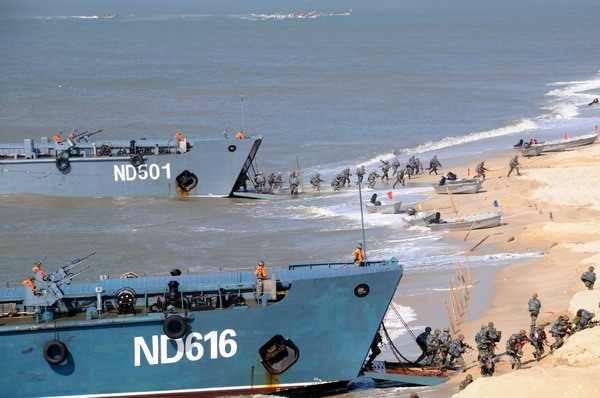
For Taiwan, the growth of economic interdependence and the strength of China’s military have driven the cost of an attempt to alter the status quo to a rationally unacceptable level if it would knowingly invite an armed response from China (see Scott Kastner’s draft paper A Relationship Transformed? Rethinking the Prospects for Conflict and Peace in the Taiwan Strait for an excellent analysis of rational calculations and redlines, from which his prior quote was taken). A declaration of independence is highly unlikely in the next decade, yet a future Taiwanese leader may nonetheless face, or believe he/she faces, what Thomas Christensen writing in the journal International Security terms as a “closing window of opportunity” to maximise Taiwan’s position in respect to its freedom of action and international status. Analysts have given a range of dates when China will be able to defeat Taiwan alone or in conjunction with American assistance, with Taiwan itself (and self-interestedly) predicting a lost edge by 2020. All such assessments are a moving target and based on assumptions about military investments that may not hold true, but they might reinforce a perception that the time for Taiwan to act – even modestly – is sooner rather than later.
 For China’s part, this shift in the balance of power in its favour recommends patience. But such patience has its limits. Given the recent perceived violations of promises regarding Hong Kong’s governance and electoral future it is unlikely for a Taiwanese ruler to agree to an accord along Hong Kong’s model of ‘One China, Two Systems’. Further, as the same balance of power increases in China’s favour it places downward pressure on the cost for China of settling the matter by force. Kastner remarks that if this pressure outweighs the countervailing upward pressure from economic integration it could have the destabilizing effect of tempting future decision-makers to act. This is especially so if coupled with beliefs that work towards a peaceful settlement will be an effort in vain. But, as Zachery Keck of The Diplomat points out, if China is acting rationally it also must include in its calculations the likelihood and cost of armed resistance and pacification after the defeat of Taiwan’s armed forces. On balance then, short of internal domestic upheaval in either polity, the strait will remain the premier demonstration of John Mearsheimer’s “stopping power of water” and locus of anti-access, area-denial capabilities – with China’s arrayed to deter the US Navy from entering the strait and Taiwan’s arrayed to prevent China from crossing it – and this arrangement will remain peaceful.
Conclusion
In its current incarnation, the Taiwan Strait is simultaneously a trade super-highway and a moat. As such, its value is undeniably greatest for Taiwan, but its criticality can be overstated for international trade beyond the ports and economies in the immediate strait region, due to the readily available Luzon Strait route as an alternate.
Scott Cheney-Peters is a surface warfare officer in the U.S. Navy Reserve and the former editor of Surface Warfare magazine. He is the founder and president of the Center for International Maritime Security (CIMSEC), a graduate of Georgetown University and the U.S. Naval War College, and a member of the Truman National Security Project’s Defense Council.