Category Archives: Global Analysis

A Geographical Breakdown of What’s Going on in the World

The Gulf of Guinea is Ready for Maritime Technology

By Dr. Ian Ralby, Dr. David Soud, and Rohini Ralby

Few regions of the world have seen more improvement in maritime security institutions over the last five years than the Gulf of Guinea. At the same time, however, maritime security threats across West and Central Africa have continued to evolve and are increasingly difficult to address. Ironically, the region is becoming a victim of its own success: improved maritime law enforcement drove criminals to become both more brazen and more innovative in how they pursue illicit profit. These heightened challenges, however, are no longer as insurmountable as even basic ones were a decade ago. Having built one of the most sophisticated and promising sets of maritime security architecture in the world, the Gulf of Guinea is actually well-placed to take on the new challenges it faces.

To maximize the efficiency and effectiveness of this architecture in confronting these threats, a new element has to enter the conversation: technology. States, zones, regions, and the wider interregional mechanisms must all explore ways of leveraging technology to realize their respective mandates in the most cost effective way. Five years ago, discussing maritime technology would have been of limited value, as the state and cooperative mechanisms across West and Central Africa were too nascent to take advantage of it. Now, however, the Gulf of Guinea is primed to make better use of maritime security technology. 

The Gulf of Guinea Has Momentum

While progress in developing functional maritime security in the Gulf of Guinea may not have been as fast as some would prefer, it is now moving rapidly, and its trajectory is unmistakable. The signing of the 2013 Code of Conduct Concerning the Repression of Piracy, Armed Robbery against Ships, and Illicit Maritime Activity in West and Central Africa – known informally as the Yaoundé Code of Conduct – catalyzed an intensive process of national, zonal, regional, and interregional improvement that continues to gain momentum. As Article 2 of the Code states, “the Signatories intend to co-operate to the fullest possible extent in the repression of transnational organized crime in the maritime domain, maritime terrorism, IUU fishing, and other illegal activities at sea.” This initiative has given rise to a multi-tiered effort.
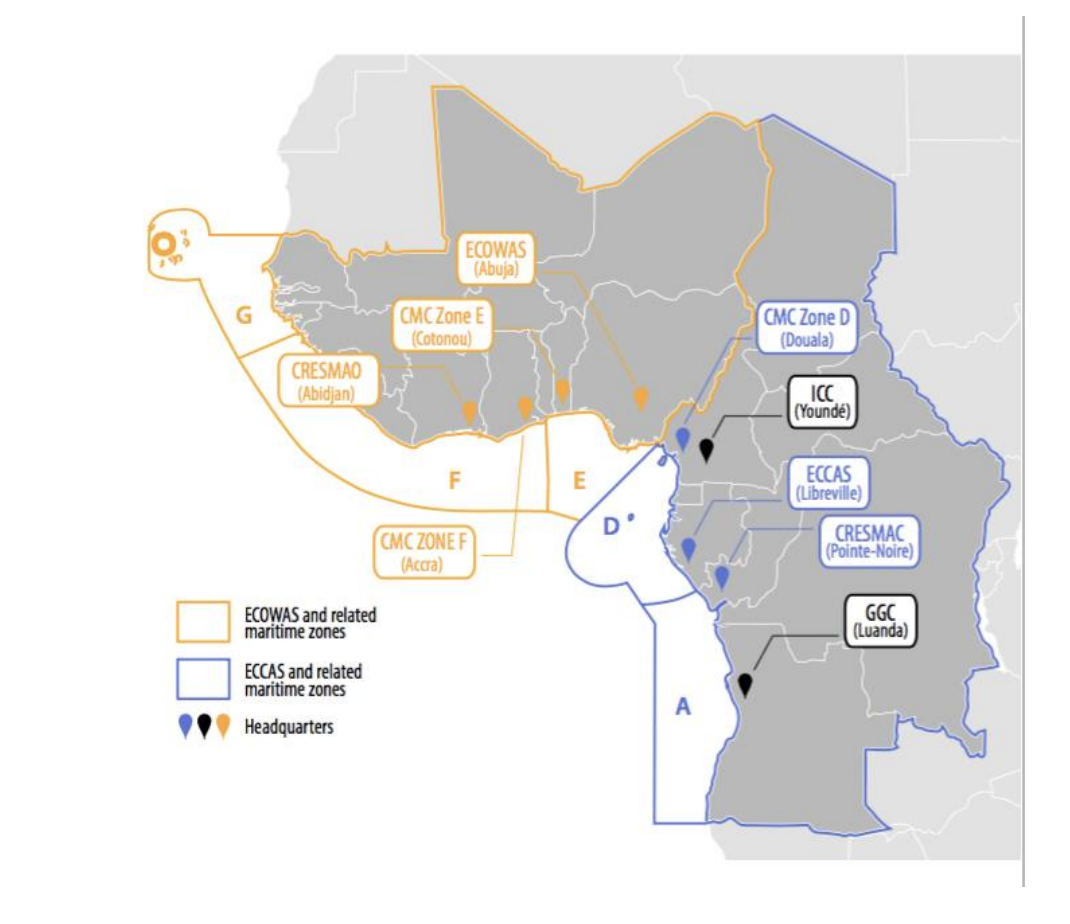
The Gulf of Guinea (Osservatorio Strategico 2017 – Year XIX issue IV)

At the national level, states are working to establish interagency processes for maritime governance, and to develop and implement national maritime strategies. States will remain the fundamental building blocks of maritime security in the Gulf of Guinea. Only through the national laws of the regional states can maritime crimes be effectively prosecuted. Beyond these national efforts, however, the states are engaging in an increasingly integrated, multilateral architecture that facilitates seamless cooperation.

The states, including the landlocked signatories to the Yaoundé Code of Conduct, are grouped by their respective Regional Economic Communities (REC) into maritime Zones. The Economic Community for Central African States (ECCAS) has Zones A and D (there is neither a B nor a C) and the Economic Community for Western African States (ECOWAS) has Zones E, F, and G. The national groupings are as follows, with an asterisk indicating each country that hosts a Zonal Multinational Coordination Center (MCC):

  • Zone A: Angola, Democratic Republic of Congo, Congo
  • Zone D: Cameroon*, Equatorial Guinea, Gabon, São Tomé and Príncipe
  • Zone E: Nigeria, Benin*, Togo, Niger
  • Zone F: Ghana*, Côte d’Ivoire, Burkina Faso, Sierra Leone, Liberia, Guinea
  • Zone G: Cabo Verde*, Senegal, the Gambia, Guinea Bissau, Mali

Each REC also has a corresponding Regional Coordination Center – CRESMAC for ECCAS based in Pointe Noir, Congo, and CRESMAO for ECOWAS based in Abidjan, Côte d’Ivoire. The two regional centers interact and share information with the MCCs to ensure operational cooperation across their respective areas of responsibility.

At the apex of the architecture is the Inter-regional Coordination Center (CIC) in Yaoundé – the intersection of the operational, strategic, and political aspects of maritime safety and security in the Gulf of Guinea. CIC both coordinates and supports the work of the two regional centers, the five zones, and the 25 member states. At the same time, it has the important role of engaging both with international partners and national governments to build political will and ensure the Gulf of Guinea’s momentum continues.

Importantly, the Yaoundé Architecture for Maritime Safety and Security (YAMSS), as the institutional framework is often called, is not merely a nice idea on paper; it is increasingly producing real results on the water. Furthermore, the community of maritime professionals involved in implementing this architectural design are increasingly connected with each other and working collectively to make maritime safety and security a reality in the Gulf of Guinea. As perhaps the most notable example, Zone D already serves as a leading example of how to conduct systematic combined operations at sea for maritime security, not just in Africa but around the world. CRESMAC and CRESMAO are becoming increasingly operational in sharing information across their regions and with each other. And CIC is beginning to garner the attention needed to be successful. At every level, there are encouraging signs of growing momentum and increased community among the maritime professionals in West and Central Africa.

Most technology for maritime law enforcement is procured at the national level. Given the extent of the integration within the Yaoundé architecture, however, there is also an opportunity for technology to be procured at the zonal, regional or inter-regional levels to ensure harmonization, to streamline access to common, inherently interoperable systems and provide a uniform operating picture. 

Technology, some procured within the Gulf of Guinea and some provided by international partners, has been a part of this process from the start. Most of it has involved enhancing visibility to improve maritime domain awareness (MDA). But with the growing coordination across states and regions, and the problem-solving and advance thinking that expansion has generated, key stakeholders have crossed a threshold: they can now discern with confidence what technologies will actually help maximize the impact of maritime operations. The lessons learned along the way merit careful attention from anyone seeking to leverage technology for improved maritime security. What follows are some of those insights.1

Avoiding Information Overload 

Improving MDA has been a major focus for years in Africa. But there is a balance to strike: being aware of everything is almost as challenging as being aware of nothing. Efficiency and effectiveness therefore begin with how information is selected and packaged for use on and off the water. Operators from across different maritime agencies share a keen interest in technology that highlights useful, actionable information, and not only collects but also filters input, helping them focus on key areas of concern rather than providing blanket visibility of all maritime activity. Given the region’s limited human as well as financial resources, such technology could guide them toward confidently engaging in targeted interdiction. This holds true for maritime criminal activity as well as fisheries protection.

But to be used consistently and effectively, the technology must be user-friendly as well. Simplicity is an important differentiator between technology that would improve general maritime domain awareness and technology that would actually help operations in law enforcement, fisheries protection, or search and rescue. For instance, artificial intelligence has now made it possible to have an MDA platform that not only shows ship positions and makes recent AIS anomalies visible, but also aggregates a wide range of real-time and historic data and filters them according to selected parameters, providing instant alerts to suspected illegal activity. That array of functions would allow for both launching decisive interdictions and detecting patterns of illicit activity.

Technology Can Facilitate Inter-Regional Harmonization 

When any one state or even zone is perceived to be weaker than its neighbors, in terms of either its laws or its capacity for law enforcement, that state or zone becomes a magnet for criminality. Consequently, a major focus of the YAMSS is on harmonization to ensure consistency in deterring and addressing maritime crime throughout the Gulf of Guinea. Depending on how it is chosen, distributed and applied, technology could either exacerbate the problem or help resolve it.

When one state has a significant technological advantage over its neighbors, the neighboring states are likely to suffer. Conversely, when shared technologies are deployed across neighboring zones and regions, new possibilities arise for communication, coordination, interoperability, and even harmonization of legal and regulatory frameworks. Some technologies, for example, could provide insight across the region as to where IUU fishing and illicit transshipment most frequently occur, or call attention to ships on erratic or otherwise suspicious courses. This could in turn inform legislative or regulatory action as well as operational decision-making at the national or zonal levels to help address maritime problems where they are most acute. Such an approach can therefore help CIC with building the political will to harmonize, as well as help the operators in their planning and execution of law enforcement activities. The more seamlessly technology is deployed across a region, the more difficult it becomes for criminals to find venues for illicit activity. As the name suggests, transnational crime is borderless; a common operating picture across the regions is therefore vital to identifying that illicit activity.

Not only have the maritime institutions evolved in recent years, the available maritime technology has developed greatly. Surveillance systems to identify illicit activity on the water – from illegal fishing to illicit transshipment to trafficking and smuggling – have improved dramatically. Employing this technology means that operators are not merely patrolling on the off chance they encounter illicit activity. The confidence of law enforcement agencies that they will not be wasting fuel and other resources is greatly enhanced by engaging in targeted interdiction of vessels reasonably certain to be committing offenses based on real-time information.

If law enforcement agencies can show that their efficiency is such that they have successful interdictions nearly every time they deploy assets, that success can become contagious. It can help energize the maritime agencies, deter criminal actors, and at the same time build the political will to ensure the longer-term safety and security of the maritime domain. Politicians are persuaded by success, and technology can greatly increase the odds of operational success.

Culprits Do Not Have to be Caught Red-Handed

In addition to facilitating targeted interdiction, advanced surveillance technologies can offer a further benefit. Just as a robber could be arrested at home for a heist caught on closed caption television (CCTV), it is now possible for vessels to be arrested in port for illicit actions committed at sea and recorded using sophisticated maritime surveillance platforms. Though CCTV is not a possibility on the water, other technologies including the use of the vessels’ Automated Information System (AIS), Synthetic Aperture Radar (SAR), and Electro Optical Imaging (EO) can produce high degrees of certainty regarding illicit activity. While states must ensure that their rules of evidence allow for such electronic and digital data to be used in court, this leveraging of historic surveillance data is another way the technology available today can greatly amplify the impact of limited maritime law enforcement resources. 

Technology that helps counter smuggling will inherently benefit two states simultaneously – the state that is losing the smuggled good, and the state that is losing the tax on the importation of that smuggled product. If implemented effectively, technology could disincentivize the smuggling of certain goods. One crucial example of this is fuel: the cost of doing business in illicit fuel could, with effective law enforcement, become higher than that of selling it legally, thereby making it an unattractive business proposition. A suite of technologies such as molecular marking, GPS tracking of shipments, digital documentation, and state-of-the-art metering, strategically implemented across the Gulf of Guinea, would alter the risk-reward calculus and help West and Central Africa eradicate most cross-border smuggling of fuel. These and related technologies could also appreciably mitigate other modalities of illicit trade, including counterfeit tobacco and pharmaceuticals.

Technology that Pays for Itself Sells Itself

For states and multinational bodies working to secure and govern vast maritime spaces that seldom command the political attention they deserve, investments in technology have to bring returns that justify initial and ongoing expenditure. Technologies that enable more streamlined and cost-effective operations, that combat activities that lead to substantial economic losses, or that actively generate revenue in the form of taxes, fees or various kinds of penalties are preferable to those that run at ongoing cost.

Countering IUU fishing, prosecuting environmental crimes, and combating fuel smuggling are three efforts that could hold precisely this kind of appeal. Acquiring new technology that can stem economic losses from depleted fisheries and degraded marine spaces, elicit substantial financial penalties for illegal fishing or environmental, dumping, recover revenues previously lost to fuel smuggling or prevent subsidies fraud may well find more support among decision-makers than procuring more patrol vessels that need to be crewed, fueled, and maintained. And when the technology begins to pay for itself and lead to more success on the water, investing in new patrol vessels that can amplify that success also begins to look more attractive.

If the political classes can see financial return on investment as well as improved maritime safety, security, and sustainability, wider adoption of the technology becomes more likely. Furthermore, if the procurement approach does not put all the economic burden on the purchaser, but rather balances investment and return, the Gulf of Guinea states are more likely to proceed.

Maritime Safety, Security and Resource Protection Can Share Technology 

The Gulf of Guinea Code of Conduct not only laid the groundwork for an inter-regional security architecture, it also established IUU fishing as a crime coequal with piracy, trafficking, oil theft, and other illicit activities. This move made it possible to establish far more effective legal deterrents than the administrative penalties that often accompany fisheries-related crimes. It also allows for more sharing of technology and information across agencies that combat the full range of illicit maritime activities. In light of how such criminal enterprises as IUU fishing, trafficking, and oil theft often overlap, sharing technology in this fashion can close gaps in law enforcement that criminals have all too often exploited.

Given that limited resources become even more limited when they are divided among multiple agencies trying to accomplish similar tasks, this sort of integration could have an immediate impact on maritime safety, fisheries protection and maritime security. Such sharing of resources, however, necessitates a functional interagency mechanism for maritime governance. Thus the state-level work on both whole-of-government approaches to maritime security and integrated maritime strategy development and implementation go hand-in-hand with the prospects for effective use of such technology. 

Technology Can Both Help and Complicate Legal Finish 

One of the most difficult challenges for the Gulf of Guinea, and indeed for any region, is translating operational successes into legal finish. If no prosecutorial or regulatory action is taken to penalize illicit activity, maritime law enforcement becomes a matter of catch and release. Technology can play an important role in assisting with maritime interdiction, but it also has an essential role to play in effectuating legal finish.

That said, a challenge must first be overcome. Not all legal systems have provisions for technological, digital, or electronic evidence. In order to be able to use the evidence provided by the MDA and monitoring, control, and surveillance (MCS) technologies now emerging, the state’s evidentiary rules must be amended to ensure that technology can be used in court. If those evidentiary rules are more permissive, however, there is another possibility for assisting law enforcement.

Traditionally, in the maritime space, perpetrators have to be caught in the act. But, as noted above, technology that provides evidence of illicit activity at sea could potentially be used to arrest vessels at the pier and on their return from a voyage that involved a breach of the law. In other words, limited vessels or a lack of fuel would not be a barrier to arrest and prosecution. Furthermore, regardless of where a vessel was caught, historical data could be used to increase the charges and penalties for prior offenses as indicated by the technology.

Conclusion 

The Gulf of Guinea is ready to more effectively use technology to enhance the work done to develop and operationalize the cooperative maritime security architecture in West and Central Africa. Cost-neutral or even revenue generating technology is most likely to garner the necessary political will, but from an operator’s standpoint, simplicity is also key. In addition to aiding targeted interdiction, technology can help provide the evidence for pier-side arrests and even enhance charges and penalties based on prior illicit activity. That said, legal systems must account for such technological evidence in court. Harmonized legal finish across the Gulf of Guinea must be a central focus, as that is the only way to change the risk-reward calculus and ensure that no state or zone becomes a magnet for crime.

In a larger, more strategic sense, the individual states and regional bodies pursuing greater maritime security and development in the Gulf of Guinea must also work together to harmonize their more foundational approaches to the challenges facing the region. Too often stakeholders presented with the chance to cooperate or collaborate in confronting such issues fall into the trap of viewing that effort in terms of false dichotomies. They may rightly be keen to exercise autonomy in light of a history in which their sovereignty has been compromised. But they may also unhelpfully misinterpret the cooperative and collaborative harmonization of approaches as being a threat to sovereignty. In an effort to maintain their autonomy, they may therefore isolate themselves, and consequently become more of a magnet to the highly cooperative, transnational criminals they face.

Exercising autonomy Losing sovereignty
Isolating Cooperating and collaborating

This diagram reveals how the terms of a dichotomy are never simply binary, but actually part of a cluster of related terms that are often conflated, or defined in varying ways.2 Failing to get outside the “box” formed by these choices can narrow vision and obstruct communication, and thus frustrate efforts at progress. The stakeholders in the Gulf of Guinea must clarify for themselves and each other the difference between exercising autonomy and isolating themselves, and between cooperating or collaborating and losing sovereignty. If everyone can achieve this “outside-the-box” clarity, progress can happen quickly and effectively. While many of the maritime operators recognize these nuanced dynamics, they have a challenge to overcome in convincing their political leadership to move past a limiting dichotomy centered on autonomy, and instead embrace cooperation and recognize the value in sharing resources and technology to secure, govern, and develop the maritime space in the Gulf of Guinea.

The work of maritime professionals in West and Central Africa to pursue safety, security, and sustainability in the maritime domain has already led to some notable successes. Now it is in a position to begin realizing the ambitious vision of successfully securing, governing, and developing the region’s maritime domain. This is where new, better, and more effectively used technology can play a pivotal role by enabling individual states and regional bodies to make far more effective use of their resources to control the maritime space. Stakeholders must now select the right tools for the job – those that provide the necessary precision, simplicity of use, cost-effectiveness, and ability to link efforts across both agencies and maritime boundaries.

Ian Ralby is a recognized expert in maritime law and security, serving as Adjunct Professor of Maritime Law and Security at the US Department of Defense’s Africa Center for Strategic Studies; a Maritime Crime Expert for UNODC; and as CEO of I.R. Consilium, a family business that works matters of security, governance and development.

David Soud is Head of Research and Analysis at I.R. Consilium and works on issues at the intersection of fisheries governance and transnational organized crime.

Rohini Ralby is Managing Director of I.R. Consilium and works on strategy development and implementation.

References

1. A recent public-private conference organized by the US firm I.R. Consilium, LLC in Freetown, Sierra Leone explored this topic and served as the basis for the key points of this article.

2. The diagram is an example of the “fourchotomy,” a strategic tool devised by Rohini Ralby.

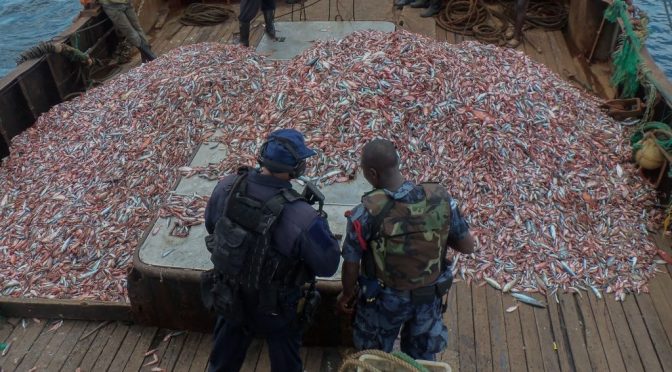
Featured Image:  GULF OF GUINEA (April 2, 2014) A U.S. Coast Guard law enforcement detachment member and a Ghanaian navy sailor inspect a fishing vessel suspected of illegal fishing during the Africa Maritime Law Enforcement Partnership. The partnership is the operational phase of Africa Partnership Station and brings together U.S. Navy, U.S. Coast Guard, and respective Africa partner maritime forces to actively patrol that partner’s territorial waters and economic exclusion zone with the goal of intercepting vessels that may have been involved in illicit activity. (U.S. Navy photo by Kwabena Akuamoah-Boateng/Released)
USNS Comfort’s Latest Humanitarian Mission Throughout Latin America

The Southern Tide

Written by W. Alejandro Sanchez, The Southern Tide addresses maritime security issues throughout Latin America and the Caribbean. It discusses the challenges regional navies face including limited defense budgets, inter-state tensions, and transnational crimes. It also examines how these challenges influence current and future defense strategies, platform acquisitions, and relations with global powers.

“My plain and simple message to our friends in the region is ‘the United States is a reliable and trustworthy security partner….Latin America and the Caribbean are not our backyard. It’s our shared neighborhood… And like the neighborhood … where I grew up, good neighbors respect each other’s sovereignty, treat each other as equal partners with respect, and commit to a strong neighborhood watch.”  –Vice Admiral Craig Faller, USN,  before the Senate Armed Forces Committee, Sep. 25, 2018. 

By W. Alejandro Sanchez

Introduction

USNS Comfort (T-AH-20) has finished another deployment to the Western Hemisphere as part of the Enduring Promise initiative. The U.S. hospital ship’s latest tour took it to Colombia, Ecuador, Honduras, and Peru where it provided free medical assistance to thousands of individuals in need. This is an example of medical diplomacy at work and a great initiative to improve U.S.-Latin American relations at a time when more cohesion among governments in the Western Hemisphere is needed.

Current Deployment

Comfort is a large vessel, with a length of 894 feet and a beam of 105 feet, the same as its sister ship, USNS Mercy (T-AH-19) – the two are converted San Clemente-class super tankers. According to the U.S. Navy, each platform “contain[s] 12 fully-equipped operating rooms, a 1,000 bed hospital facility, digital radiological services, a medical laboratory, a pharmacy, an optometry lab, a CAT-scan and two oxygen producing plants,” along with helicopter decks. Hence, the vessel is able to provide for vast numbers of patients simultaneously with different services. The vessel’s most recent tour, the sixth time that it has been deployed to the region, lasted 11 weeks.

Comfort was well-received by the local populations. For example, the vessel was in the city of Esmeraldas, Ecuador, from 22-26 October. According to the Ecuadorian Ministry of Defense the medical staff attended between 500-750 per day, while a Southern Command press release stated that “Comfort has treated more than 4,000 patients, including nearly 2,500 medical patients, 1,100 optometry patients, 450 dental patients, and performed 81 surgeries.” An Ecuadorian ministry press release explained “The arrival of the vessel is part of the strengthening of defense relations between Ecuador and the USA.”

Comfort then traveled to Paita, in northern Peru, where it treated over 5,000 patients, according to the Peruvian government. The U.S. hospital ship also donated wheelchairs and medical supplies. The Peruvian government noted that this is the third time that Comfort has visited Peru, in 2011 it provided medical assistance to 7,352 patients, and in 2007, it aided 9,223 Peruvian citizens.

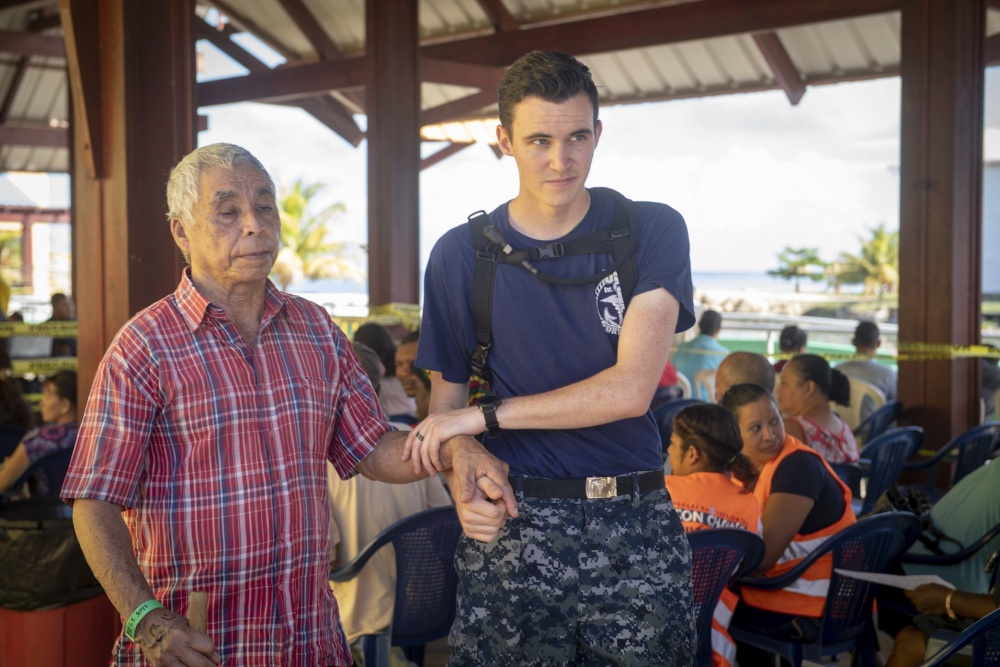
TRUJILLO, Honduras (Dec. 10, 2018) – Hospitalman Eric Trybus, from Oklahoma City, Okla., helps a patient walk to a medical station to receive treatment at one of two medical sites. (U.S. Navy photo by Mass Communication Specialist Seaman J. Keith Wilson/Released)

The vessel’s stops in Colombia and Honduras had similarly positive results. In Colombia, the U.S. hospital ship docked in Turbo (Antioquia) and then Riohacha (La Guajira), with the local government estimating that some 7,400 patients were treated by Comfort’s medical staff. As a final point, it is worth noting that the citizens of these nations were not the only ones to receive treatment aboard Comfort. Case in point, while in Colombia medical personnel also helped Venezuelan migrants who have settled in Riohacha as they flee the political and socio-economic crisis in their homeland.

Discussion 

Enduring Promise is an example of a medical diplomacy initiative that helps promote a positive image of the U.S. In this case, the people that were helped by Comfort, along with their families and other loved ones, will likely now have a more positive view of the U.S. and its military due to the free and professional medical services they received. An indigenous person from the Wayuu ethnic community in Colombia described Comfort’s visit as a “blessing from God” as it helped vulnerable communities, peasants, and Venezuelan migrants, according to Colombia’s daily El Nacional. Even more, governments also get a load taken off their shoulders, as Comfort provided services that local medical services could not offer, or were too financially costly for families to afford. For the U.S. and its partners, this was a win-win situation.

One important fact to mention is that Comfort visited Ecuador. A few years ago, when former President Rafael Correa was in power, this trip would have been unthinkable, as the former South American leader was known for his anti-U.S. sentiments. He famously expelled the U.S. military from its base in Manta, in 2009, and he was a close ally of the late-Venezuelan leader Hugo Chavez.

Nevertheless, President Lenin Moreno has carried out a complete turnaround to Ecuador’s foreign policy by rapproaching the U.S. In recent months, the Ecuadorian Esmeraldas-class corvette BAE Los Ríos (CM 13) participated in the U.S.-sponsored UNITAS multinational exercise in Colombia, personnel from the U.S. Naval Small Craft Instruction and Technical Training School visited the South American country, and Defense Minister Oswaldo Jarrin has visited the headquarters of U.S. Southern Command. Comfort’s visit, thus, is the proverbial cherry on top of the cake of improving bilateral relations.

As for Honduras, the visit is likewise significant as a caravan of Central American migrants, mostly Hondurans, is attempting to enter the U.S. as they escape poverty and violence in their homeland. Comfort’s visit to the Central American state is an example of SOUTHCOM and the U.S. Navy providing humanitarian aid to Hondurans in need, irrespective of the rhetoric coming out of Washington lately. Hence, it is refreshing to read SOUTHCOM’s 25 October communique, which explains that “the embarked medical team will provide care on board and at land-based medical sites, helping to relieve pressure on national medical systems caused partly by an increase in cross-border migrants. The deployment reflects the United States’ enduring promise of friendship, partnership and solidarity with the Americas.”

China’s Peace Ark 

As a caveat to this analysis, it is necessary to mention China’s hospital ship, Peace Ark. In a previous CIMSEC commentary, “The Significance of U.S. and Chinese Hospital Ship Deployments to Latin America,” the author discussed how both Washington and Beijing utilize their hospital vessels as diplomatic tools in order to improve their image in countries that said ships visit during their humanitarian tours. As it turns out, both ships would be deployed simultaneously to the Western Hemisphere. While Comfort visited the aforementioned nations, Peace Ark visited Antigua and Barbuda, Dominica, the Dominican Republic, Grenada, and Venezuela. Even more, on 15 November the Ecuadorian Ministry of Defense announced that the vessel had docked in Guayaquil to provide medical assistance to as many as 3,200 patients.

While governments are free to decide which vessels from foreign powers can enter their ports, it is impossible to avoid the irony that the hospital vessels of two nations that continue to be at odds with each other, from trade wars to incidents in Asian waters, are back-to-back welcomed in the territory of third-party states. As a result, Ecuadorians living in the Esmeraldas and Guayaquil regions enjoyed free medical services from two rival powers, while Quito maintains good relations with both nations.

Final Thoughts 

Medical diplomacy is an effective way to improve bilateral ties between the U.S. and its Latin American allies. Comfort’s visit to four Latin American nations, Colombia, Ecuador, Honduras, and Peru will improve the U.S. image at the grassroot level, as the citizens of these nations that received free and professional medical service will know that, irrespective of the current rhetoric coming out of Washington, U.S. medical personnel are still there to help those in need.

Wilder Alejandro Sanchez is a researcher who focuses on geopolitical, military and cyber security issues in the Western Hemisphere. Follow him on Twitter: @W_Alex_Sanchez.

The views expressed in this article are those of the author alone and do not necessarily reflect those of any institutions with which the author is associated.

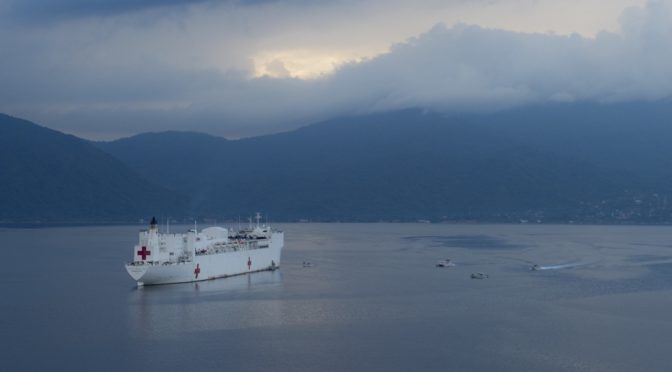
Featured Image: TRUJILLO, Honduras (Dec. 6, 2018) – The hospital ship USNS Comfort (T-AH 20) is anchored off the coast of Honduras as part of an 11-week medical support mission to Central and South America as part of U.S. Southern Command’s Enduring Promise initiative. (U.S. Navy photo by Mass Communication Specialist 1st Class Scott Bigley) 

The Strategic Dimensions of the Sea of Azov

By Ridvan Bari Urcosta

Introduction

The Sea of Azov is a tiny and small sea that historically has not often earned much strategic attention from the countries that possessed it. However, history reveals that the strategic importance of the sea periodically rises when at least two countries possess the shores of this sea. The sea lends itself to regional geopolitical rivalry, and as a result of tensions both sides often create Azov flotillas. Such a contest existed during the Civil War in Russia and the Second World War when both the Soviet Union and Nazi Germany had to establish special naval units in the Sea of Azov. In general, Russia’s historical expansion to the South had three main directions – the Northern Caucasus, the Sea of Azov, and Crimea. All of these three geographical directions are fully interrelated. First, the Russian Azov Flotilla appeared in 1768 in order to fight the Crimean Tatars and Ottoman Empire. Now the geopolitical situation again necessitates that both Kiev and Moscow urgently create Azovian geographical units drawn from their naval forces.

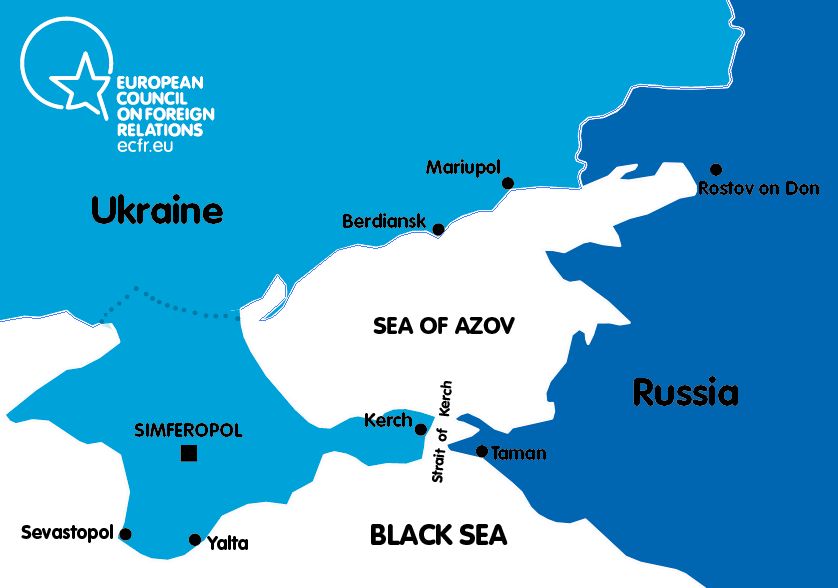
Since the annexation of Crimea in 2014, the Russian Federation became a full-fledged hegemon in the Azov Sea because of how the annexation of Crimea greatly expanded Russian coastal possessions. The Kerch Straits made Russia the keeper of a strategic chokepoint where the Kerch Strait acts as a gate to free waters and to Ukrainian and Russian Azovian ports. Interestingly, Russian river waterways facilitate a connection between the Black Sea with Russian cities that are almost located in Siberia and even deliver goods directly to Moscow or to the Baltics. In these regards, the possession of the Kerch Strait and access to the Sea of Azov has strategic meaning to Russia. As tensions have been building in recent months in the Sea of Azov Russia and Ukraine find themselves poised for further escalation.

Russian Naval and Maritime Strategy in the Sea of Azov

It is crucial to view Russia’s general vision regarding naval strategy and its place in the Sea of Azov since 1991 in order to understand the current state in broader context. Before Vladimir Putin, Russia’s leadership did not pay much attention to the country’s naval forces. But in 2000, the same year Putin came to power, the situation changed. Russia introduced the “Naval Strategy of Russia” in which there was pointed attention from the Kremlin in the Sea of Azov and the Black Sea. Putin personally participated in the drafting of the document. In the document it was clear that these seas, together with the Baltic and Caspian Seas, have serious importance to Russian national interests. With respect to the Sea of Azov Russia had proposed it be labeled as internal waters as the most suitable approach to national interests. Moreover, along with Moscow’s return to the old Soviet Union approach in trying to turn southern seas into “internal seas,” Russia wanted to establish a favored regime that would block every non-Azovian state warship from the entrance into the seas.

Next year in 2001, Russia introduced the “The Russian Maritime Doctrine” where again the Kremlin asserted that the Sea of Azov is a part of national interests. According to the document, the longstanding interests of Russia in the Black and Azov Seas were the restoration of the naval and merchant fleets along with the inland navigation system (Don-Volga canal system), ports, and other infrastructure. It emphasized the necessity of addressing with the Ukrainian government the legal status of the Black Sea Fleet and to ensure that Sevastopol remains the main base of the Fleet. And finally, it discussed the creation of conditions for basing and using the components of maritime potential that would protect the sovereignty as well as international rights of the Russian Federation in the Black and Azov Seas.

A map of the Sea of Azov and Crimea region. (European Council on Foreign Relations)

Next, the “Naval Strategy of Russia 2020” was issued in 2012 and neither of the seas were mentioned. However, it was clear that some aspects of the document were related to the Sea of Azov and that Russia was facing restrictions to full access to the global maritime domain, and faced disputed maritime claims from neighboring countries. After the alteration of the international environment and due to the annexation of Crimea, Moscow released the “Maritime Doctrine 2020” in 2015, and again paid full attention to the region and categorizes the Black and Azov Sea as a part of the “Atlantic Regional Priority Area.” It highlights the region as crucial for national interests partly because it is proximate to NATO.

Thus, according to the document, the following measures were provided:

  • To set more favorable (on the basis of the international law) international regimes for Russia in the Azov and Black Seas
  • Systems of using natural resources of these seas
  • Free use of the oil and gas fields and construction and operating pipelines
  • To set international and legal regulation regimes in the Kerch Strait
  • To enhance and to improve the structure and naval bases of the Black Sea Fleet and the development of its infrastructure in Crimea and Krasnodar Kray
  • Building the related vessels and ships, especially river-sea type, and development of port infrastructure in these seas
  • Creation of three huge regional economic and maritime zones (centers): Crimean, Black Sea-Kuban, and Azovian-Don zones
  • Further development in regional gas and oil pipeline systems. (For instance, according to the Ministry of Energy, in the production structure of the Russian Federation the share of offshore fields in the Azov Sea is 9.4 percent of Russian oil and 14.7 percent of gas.)
  • To provide a direct logistical connection between the Crimean peninsula and Krasnodar Kray. (Here at the moment of adoption of the document, it still was a theoretical scenario for a direct land connection through the territory of Ukraine, but now the recently completed Kerch Bridge has become the sole option.)
  • Exploration of minerals in the seas

On July 20, 2017 Putin signed “The fundamentals of the state policy of the Russian Federation in the field of naval policy for the period up to 2030.” Again, previously mentioned threats were indicated, but the language of the document changed gravely in that it became more antagonistic and aggressive. The Azov Sea was mentioned regarding the necessity of maintaining favorable legal regimes around the state border of the Russian Federation, the border area, in the exclusive economic zone, on the continental shelf, as well as in the waters of the Caspian and Azov Seas. Without the Crimean peninsula it is impossible to fully appreciate the security implications for Russia’s policy in the Azov Sea. In Crimea, according to the document, it was recommended that Russia pursue an increase of the operational and combat capabilities of the Black Sea Fleet by developing an interspecific grouping of forces on the territory of the Crimean peninsula.

A historic moment that sheds light on Russia’s strategic vision in the Sea of Azov is the Yeysk meeting in 2003. The Tuzla Island conflict started on September 29, 2003 when Russia initiated the construction of an artificial dam on the tiny island within the Kerch Strait, and the Yeysk meeting was conducted under Vladimir Putin’s supervision on September 17, 2003. On the same day before Yeysk, he had met with Ukrainian President Leonid Kuchma where he clearly stressed that “the Sea of Azov must be the internal sea of Russia and Ukraine.” Already in Yeysk (an important Russian city on the Azov shores with heavy military presence), Putin held a historical meeting for Russian geopolitical ambitions in its southern region. All the most important ministers responsible for the state military, naval, and security policy were present.

During the meeting, Putin made strong commitments regarding the Black and Azov Seas. At the onset of the meeting he said:

“I would like to talk about the Azov-Black Sea basin as a whole. On military and environmental issues it is a zone that is very important for Russia. This is the zone of our strategic interests. The Black Sea region has a special geopolitical significance. The Black Sea provides Russia’s direct access to the most important global transport routes, including energy.”

In this phrase he outlined the key interests of Russia in this region without which Russian national interests could not be fulfilled. In order to impart this vision in the formal framework, Putin signed the document “Plan of cooperation of ministries and agencies to address the diplomatic and military missions in the Azov-Black Sea region.” The text of the plan was closed from publicity but its general aim was to provide a complex strategy of Russia to this Black-Azov Seas region and the modernization of port and naval facilities. The next point which was raised is the Azov Sea question; according to Putin, it is undergoing a difficult process of negotiations and painstaking efforts to resolve existing problems of the legal status of the borders, regimes of straits, and legal aspects of the use of the water area and resources of the Black and Azov Seas. Moreover, within the meeting he signed a decree “On the establishment of the Black Sea Fleet’s base in Novorossiysk.” Many western and Ukrainian experts and politicians regarded it as a retreat of Russia in the means of her ambitions in the region, but Putin directly stressed that it is not a sign of retreat and that Sevastopol will remain a main base of the Russian Black Sea Fleet. Furthermore, during the meeting Putin emphasized the crucial reason why the Kremlin did not pay attention to the Azov Sea because “For a long time, a large number of ministries and departments were focused on the Caspian Sea. I think that now it is time to come to grips with the problems of the Azov-Black Sea basin.”

A Longstanding Dispute

Negotiations regarding the status of the Sea of Azov and the Kerch Strait began in 1995, and Russia steadily avoided finalizing them on Ukrainian terms. Only after the Tuzla Island crisis in September 2003 did Ukraine and Russia finally sign the agreement in December of the same year. At the same time, the biggest political disaster that Russia faced as a result of Tuzla crisis was the consolidation and hardening of the Ukrainian nation toward Russia. The Tuzla events were partly preconditions for the Orange Revolution in 2004. For the first time in many years it posed the possibility of a direct confrontation between the two nations.

After the Orange Revolution in 2004 new political leadership in Kiev called for a revision of this agreement and considered it a deal that had been imposed on Ukraine by the use of political and diplomatic pressure. Since then, negotiations were conducted many times but Ukranian President Viktor Yushchenko could not manage to settle the issue on Ukrainian terms. It should be taken into account that even the 2003 agreement did not satisfy Moscow, but it was definitely a victory for Moscow after years of contention. Ukraine was holding the largest and richest share of fish zones in the Sea of Azov and had total control of the Kerch-Enikale Canal. But for Russia, it secured the Sea of Azov from any possibility of foreign warships entering the sea, and Russia earned the ability to use the Kerch-Enikale Canal freely. Before, Russian vessels had to pay Ukraine for passage in and out of the Kerch Strait. Finally, the signed treaty that ended the dispute had a positive impact on Russia because Ukraine was forced to recognize the Sea of Azov as an internal sea. Thus the sea was sealed from third-party countries.

Unfortunately, Ukraine in 2003 did not effectively use international law and the influence of the West in order to settle the issue with Russia. NATO behaved in a very tempered manner and avoided taking sides. Ukrainian President Kuchma publicly asked the General Secretary of the NATO Lord George Robertson for an intervention into the confrontation before his departing to Moscow. Moreover, the head of the foreign office of the EU presented almost the same position of NATO and EU when he said the conflict “will be resolved and defused among themselves.” In 2010 when the regime of Yanukovich came to power, Russia made the status of Sevastopol a priority (the Kharkov Agreement), but negotiations about the Kerch Strait and the Sea of Azov never stopped because Russia wanted further expansion. Particularly in terms of favorable regimes, in the Kerch Strait they proposed the creation of a joint venture that would operate in the Strait. In 2013, Putin officially returned to the Sea of Azov question but he never returned to this topic very publicly. Even since the annexation of Crimea, he delegated the issue while he was silent about it himself. After the Maidan Revolution, the new Ukrainian political elite confronted the agreement but did not manage to revise it.

According to the 2003 agreement, Ukraine has legal control over 62 percent of Sea of Azov’s area and Russia only 38 percent, but since the annexation of Crimea, Russia possesses de facto three-quarters of the territory of the sea. It tries to impose this fact in relations with Ukraine. Plus, Russian proxies are possessing additional territories in the East of Ukraine that plays on Russian advances. The whole coastline of the breakaway Donetsk People’s Republic is approximately 45 km. In their territories, there are plans to erect a naval base in the Obryw village. It is more likely that Russia will be denying its involvement in the creation of the base. Therefore, in the Sea of Azov there are three major established naval centers in the zones of control under Ukraine, Russia, and the separatist republic of DPR.

Additionally, a great hindrance to the free navigation of international and Ukrainian ships was incurred with the opening of the Kerch Bridge in May. The bridge has an air draught of 33 meters and a water draught of eight meters which restricts the entrance of larger ships into the Sea of Azov. Notwithstanding the fact that Ukraine is reportedly eager to denounce the 2003 Agreement, Russia could go even further unilaterally – eventually sealing the free passage in the Kerch Strait to the Ukrainian merchant fleet. In this scenario Ukraine could have to pay for passage as Russia did before 2003.

The Sea of Azov after 2014 was more or less a tranquil place compared to the Donbas and Crimea, but the completion of the first phase of the Kerch Bridge required more decisive measures from Russia. Additionally, an incident with a boat arrested by Ukraine further escalated the situation. The Russian Federation still demands that Kiev return the boat and the captain as a main condition for returning to the status quo. Russia continues to use the following measures against Ukraine:

  • Increasing the time for permit issues for the passing to and from the Azov Sea
  • Undertaking additional controls of the vessels in the Azov Sea water going to Ukrainian ports and “luckily” facing one more control when they return after shipment
  • Russia is challenging Ukrainian naval forces when controls are happening very close to Ukrainian shores
  • Pushing Ukrainian fisheries to avoid going to sea
  • Since June until October, Russia inspected 171 vessels and it took on average three days
  • Ukrainian and Georgian vessels undergo more detailed inspections
  • Usually 10 Russian warships are patrolling the Sea of Azov and Moscow sometimes closes parts of the sea under the pretext of naval drills

The Ukrainian economic losses to date are obvious. For instance, only from January to July Ukraine lost 50 percent of fishing, 30 percent of the profit of ports, and most importantly, the share of the ports in metallurgical export deteriorated to 50 percent. This trend will only be broadening and it is even possible to say that in the long-term Russia may attempt to eventually halt commercial activities. This could lead to social and political protests against the current political elite in Kiev if the situation does not change. Furthermore, Russia has plans to extract and use Ukrainian and Crimean Tatar natural resources from Crimea and the Sea of Azov such as the Azov-Berezansky and Indolo-Kubnasky oil and gas fields. Estimated oil and gas deposits in the Sea of Azov are 413 million tons. As a result of the Ukrainian water blockade of Crimea, Moscow may also be desperately seeking the fresh water in the Sea of Azov.

Russia caught Kiev in three main geopolitical traps. First, if Ukraine is going to confront Russia and demonstrate principality in the Azov sea, she should take into account that economic and social deterioration will become a direct consequence of this confrontation. Even though Ukraine goes to a stiff political stance in confronting Russia, international maritime companies will be avoiding this region and will try to find alternative routes. It should be noted that a quite popular idea with Russia is that of mining the Ukrainian coastline. Definitely these kinds of measures do not attract foreign investments. Second, Ukrainian naval forces are incomparable with Russian forces. Moscow is the absolute naval hegemon in this sea. Third, it is a “denunciation” trap. In Ukraine, denunciation is quite popular but some voices are against the argument that Ukraine will be deprived of a free passage through the Kerch Strait for the Ukrainian merchant fleet.

Western Responses and Countermeasures

The Ukrainian answer is offered by several measures. First, is a “law binding” policy. In 2016 Ukraine filed a lawsuit against the Russian Federation to the Permanent Court of Arbitrations – “Dispute Concerning Coastal State Rights in the Black Sea, Sea of Azov and Kerch Strait (Ukraine vs. the Russian Federation).” Interestingly, Russia is actively engaging in the process. Second, it is the establishment of sufficient naval forces (an “Azov flotilla”) by using external and internal sources for naval enforcement – for instance, building additional gunboats “Gurza-M” (Project 58155). For instance, Capitan Andriy Ryzenko presented a strategy of a “Mosquitoes Fleet” as the best option to counter Russia expansion in the sea. Currently, NATO and Ukrainian specialists are engaged in preparation of the “Naval Strategy 2035” that will take into consideration the recent developments in the Sea of Azov. Ukraine is considering the possibility of convoying Ukrainian and European vessels into the Sea of Azov. Additionally some Ukrainian politicians are voicing the necessity of sanctioning Russian ports in the Black and Azov seas for Russia’s unlawful activities and to develop the coastal missile defense systems that could deter Russia from direct invasion of Mariupol and Berdyansk.

Western reaction to the developments in the Sea of Azov have not been prompt since the recent confrontation began in March 2018. On August 30, the U.S State Department issued a press statement “Russia’s Harassment of the International Shipping Transiting the Kerch Strait and Sea of Azov.” The State Department called on Russia to cease its harassment of international shipping. On October 24, the General Secretary of NATO Jens Stoltenberg stressed during a press conference NATO’s concern regarding the situation in the Sea of Azov and about importance of the freedom of navigation both for Ukrainian and NATO ships in this sea. Interestingly, on October 31 there was a regular official meeting of the NATO-Russia Council in Brussels where according to the press release both sides discussed the situation in Ukraine and the escalation in the Sea of Azov but without any public details.       

In Brussels, already in the middle of summer there were some discussions regarding the situation in the Sea of Azov.  For example, on October 9, the European Policy Center conducted the event “Occupied Crimea: The impact on human rights and security in the Black and Azov Seas” that has been dedicated particularly to the recent escalation in the region. Representatives of the European Parliament, Ukrainian Ministers, experts and former NATO officials took part in the event. In the European Parliament of Subcommittee on the Security and Defense (SEDE) a very effective hearing was held with a fruitful discussion and provided analytical grounds for the European Parliament’s Resolution. Additionally, the Chair of the SEDE, Anna Fotyga, together with the other MPs, visited the east of Ukraine on 16-20 September where they observed the security situation in the contact-line in Donbas and in the city of Mariupol. In the SEDE hearings on October 11, “On the Security Situation in the Azov Sea” in the EP there were officials from the European External Action Service responsible for the Eastern dimension of the EU foreign policy, including Ambassador Konstiantyn Yelisieiev who is now the Deputy Head of Presidential Administration to the President of Ukraine and NATO’s officials.

Ms. Fotyga stressed that the Russian approach toward the seas has some similarities and they are to be found even in the Baltic region, where Russia is using its geographical advantage over Poland in the Vistula Lagoon and Strait of Baltiysk. Russia, as she stressed, is seeking ways to establish internal lakes (with limited access) in those seas. The representative of the EEAS stated that in July the EU imposed individual sanctions against persons involved in the Kerch Bridge construction and condemned the deterioration of the situation in the Black and Azov Seas. Mr. Yelisieiev presented a comprehensive and full picture of aggressive Russian behavior not only in the Sea of Azov but also in Crimea and the Black Sea. According to him, Russia pursues the following aims:

  • A land corridor to Crimea
  • Militarization of the Sea of Azov thereby to outflank Ukrainian military positions in the East of Ukraine
  • Social and economic destabilization of the region
  • Total control over the Black and Azov Seas in order to have secure flanks for further expansion

At the same time Yelisieiev outlined the necessity of the technical and economic assistance to Mariupol and Berdyansk. Moreover, on behalf of Ukrainian government, he was asking for the extension of sanctions against southern ports of Russia. As he noted “lack of the common response instigates the aggressor’s appetite.” He reiterated that the best option to deter Russia is to be braver in Ukraine and to finalize the membership action plan.  

NATO representative Radoslava Stefanova, Head of the Russia and Ukraine Section, Political Affairs and Security Policy Division, stated that the case of the Sea of Azov is a much broader problem that is happening in the southern flank of the NATO. Three littoral states have access to the Black Sea together with strategic partners (Ukraine and Georgia) and since the Warsaw Summit NATO is trying to establish stronger presence in this region. During the last year and a half, NATO is actively involved in the assistance of the reconstruction of Ukrainian naval and maritime capability and the associated training. NATO, according to Ms. Stefanova, has reinforced the staff in Kiev and especially to those fields that are related to security and defense, and even sent to Kiev more experts to prepare a Ukrainian naval strategy.

Another event of interest is the Plenary Session in Strasbourg on October 23 “On the Situation in the Sea of Azov” together with the Vice-President of the Commission Federica Mogherini. In her speech, she outlined that the EU is concerned about the situation in the sea and its militarization and reiterated the EU’s support to Ukraine. She emphasized that militarization of the sea is threatening to undermine the wider Black Sea region and this is in no one’s interests. What is also of note is that she said that the Black Sea is a European sea – an idea that is not welcomed in Russia and is considered aggressive. In general, the discussion during the plenary session demonstrated full commitment and almost absolute majority to support Ukrainian sovereignty and asked for further development of sanctions against the Russian Federation.

The resolution adopted on October 24 appears to demonstrate that the European Parliament is firmly committed to reacting to emerging threats in this neighborhood. The resolution goes through crucial details of the confrontation and touches on the problem of the militarization of the Crimean peninsula and Sea of Azov as intertwined cases. Among its contents it also:

  • Condemns Russian violation of the freedom of navigation and construction of the Kerch Bridge
  • Highlights Russia’s plans to extract natural resources (oil and gas resources) from the legal Ukrainian territories
  • Goes through the unacceptability of such a policy not only in the Sea of Azov but in the Vistula Lagoon (Poland)
  • Calls for a more comprehensive EU foreign policy in this region and to appoint an EU Special Envoy to Donbas, Crimea, and the Sea of Azov
  • Underlines the necessity to send mission experts to Mariupol that will be assessing the damage to the region and look at alternative ways of maintaining regional, social, and economic sustainability.

Regarding the recent escalation in the Black Sea zone of the Kerch Strait the western reaction was again quite restrained. The U.S State Department issued a statement indicating that they are concerned with the dangerous escalation in the Kerch Strait and that it “condemns this aggressive Russian action.” Washington again called for both parties to “exercise restraint and abide by their international obligations and commitments. We urge Presidents Poroshenko and Putin to engage directly to resolve this situation.” It is possible to assume that such a vague statement holds little water with Ukraine. Something similar happened with the European Union’s reaction where it defined the situation as dangerous and called on both sides to exercise “utmost restraint” and called for de-escalation. The Turkish Republic also called for the peaceful resolution of the confrontation, and the Turkish Foreign Affairs Ministry stated that it is concerned that Ukrainian vessels were fired upon but it does not make any reference to Russia. Even so, Ukraine together with its allies, managed to conduct an emergency meeting at the UN Security Council but it did not had desired effect. The most lackluster reaction was the aftermath of the private meeting of the Political and Security Committee in Brussels that refrained to go tougher against the Russian Federation.

Thus we could see that the consequences of the incident remain unclear. The international reaction demonstrates to Kiev that it is not ready to escalate the situation. At the same time, it is more likely that both the European Union and the United States are going to provide more measures to deter Russian hegemony in the Sea of Azov and Black Sea.     

Conclusion

History rarely pays attention to the Sea of Azov, but it is always related to the strategic importance of Crimea. When the Russian Federation annexed the Crimean peninsula and further consolidated its military facilities, it became clear that the Sea of Azov will again be playing an important strategic role in East-West relations. After more than 20 years of strategic patience Russia resolved many of its longstanding problems about the Azov and Black Sea regions by annexing Crimea. It is not a mere coincidence when the Foreign Minister of Russia, Sergey Lavrov, on March 21, 2014 straightforwardly pointed out that since the annexation, the Kerch Strait “could not be the subject of negotiations anymore.”

Almost five years after the annexation of the Crimean peninsula it appears that Russia is again trying to impose a long-term strategy to deal a crucial blow in Ukraine via the Sea of Azov. In Moscow they count on strategic patience, and as Putin said “in long-run strategy we must win.” Western answers and reactions have to be strong and preventative. The case of the adopted EU resolution is direct evidence of how interested Western commitments are. But if the recommendations in the resolution remain on paper it means that aggressive Russian behavior is poised to deal another blow to Ukraine and the West.  

Ridvan Bari Urcosta is a research fellow at the Center of Strategic Studies, University of Warsaw.

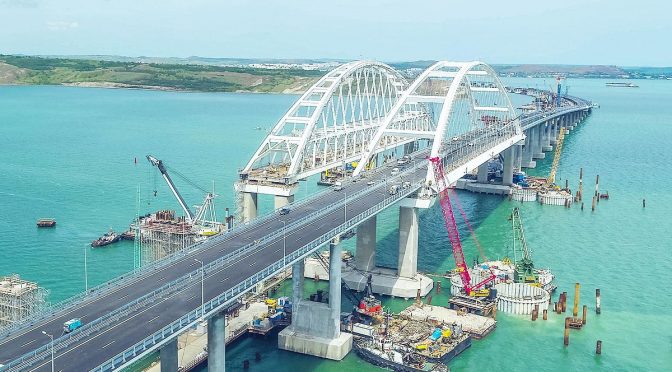
Featured Image: Kerch bridge. (Wikimedia Commons)

Atlantico: Brazil’s New Carrier

The Southern Tide

Written by W. Alejandro Sanchez, The Southern Tide addresses maritime security issues throughout Latin America and the Caribbean. It discusses the challenges regional navies face including limited defense budgets, inter-state tensions, and transnational crimes. It also examines how these challenges influence current and future defense strategies, platform acquisitions, and relations with global powers.

“The security environment in Latin America and the Caribbean is characterized by complex, diverse, and non-traditional challenges to U.S. interests.” –Admiral Kurt W. Tidd, Commander, U.S. Southern Command, before the 114th Congress Senate Armed Services Committee, 10 March 2016.

By Wilder Alejandro Sanchez

Brazil’s new helicopter carrier, PHM Atlantico (A 140), docked in Rio de Janeiro on 25 August 2018 after sailing across the Atlantic Ocean from Plymouth, United Kingdom, its former home. The vessel is the new pride and joy of the Brazilian Navy. However, apart from possessing an imposing appearance, how is this vessel useful to Brazil?

The New Ship

Atlantico was formerly known as HMS Ocean (L 12), an amphibious assault ship that belonged to the British Royal Navy. It was commissioned in 1998 and decommissioned earlier this year. The Brazilian government purchased it for 84 million British pounds. Among its characteristics the vessel displaces 21,000 tons, has a length of 203 meters, a max speed of 21 knots, and a range of up to 8,000 miles. According to the Brazilian Navy, the vessel is equipped with four 30mm DS30M Mk2 guns, two 1007 radars, one 1008 radar, and one Artisan 3D 997 radar. Atlantico transports a crew of 303 with only one female naval officer, Captain Márcia Freitas, chief of the vessel’s medical department. The ship can also transport as many as 800 marines. “It’s a new ship, in good condition. It can be operational for 20 to 30 years,” declared Brazilian Admiral Luiz Roberto Valicente to the Brazilian daily Estadao.

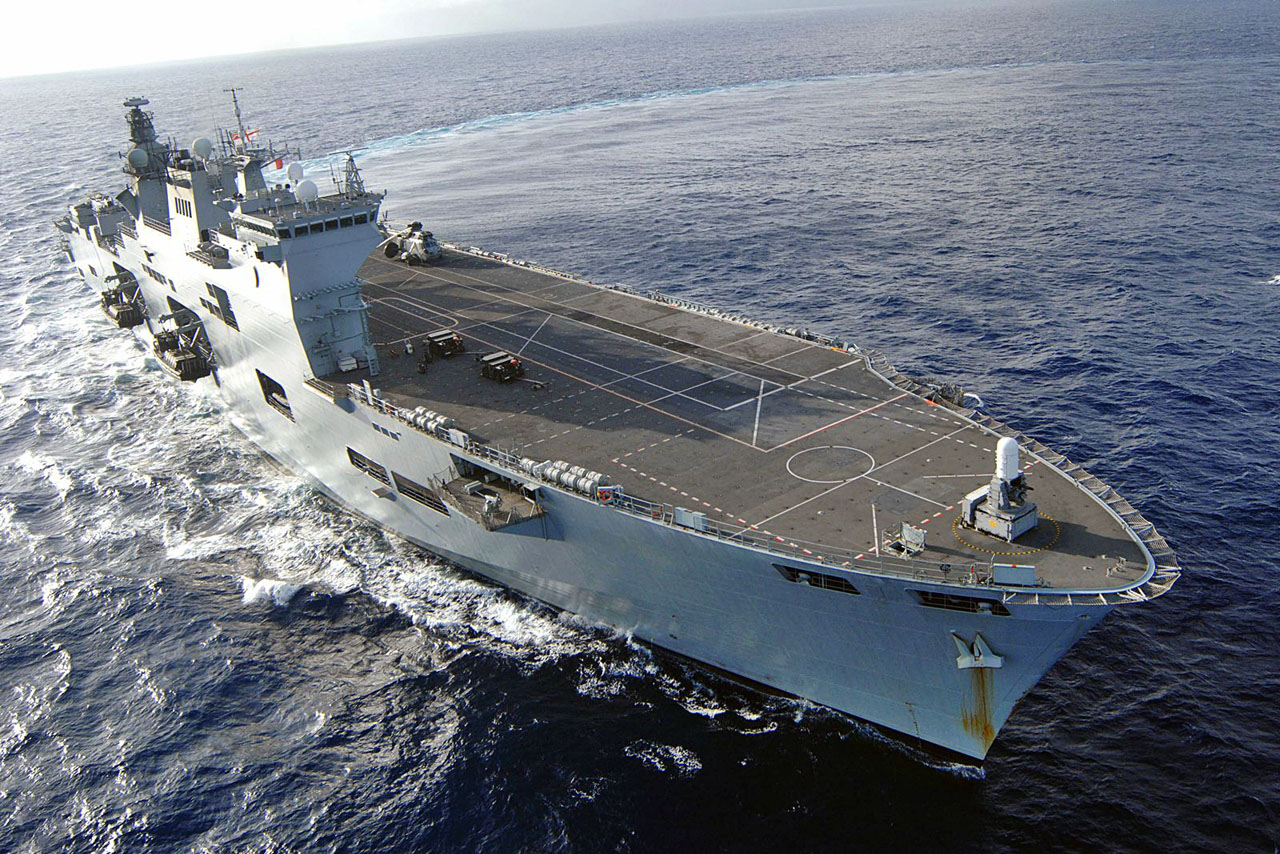
PHM Atlantico (Naval.com.br)

Atlantico can transport as many as 18 helicopters, but it is still unclear which type of aircraft the Brazilian Navy will deploy aboard its new vessel. On 5 September, the Brazilian aerospace company Helibras, a division of Airbus, tweeted a photo of H225M helicopters landing on the deck of Atlantico, hinting that these types of aircraft could be deployed on the new carrier. Additionally, the Estadao article declared that the carrier is compatible with all the models of helicopters currently operated by the Brazilian Navy.

It is worth noting that this is the third carrier that the Brazilian Navy has operated. Atlantico replaces the Clemencau-class carrier Sao Paulo (A 12), which was decommissioned in 2017. Previously, Brazil operated a Colossus-class aircraft carrier Minas Gerais (A 11), which was decommissioned in 2001.

Why Does Brazil Need a Carrier?

The standard explanation out of Brasilia for the purchase of the helicopter carrier is that it will help protect Brazil’s exclusive economic zone, which is rich with maritime resources such as fish and oil deposits. Moreover, in an interview with the Brazilian defense news website Defesanet, Capitan Giovani Corrêa, commander of Atlantico, explained that with the addition of the carrier, “the Navy will have a platform with dissuasive capabilities [which will help the] control of vast maritime areas…will help maintain security in the South Atlantic and…will protect Brazil at the international level.”

The statement about “dissuasive capabilities” raises the question of which nation could possibly attack Brazil in the first place. The country last fought an inter-state war when it deployed an expeditionary force to Europe to fight alongside the Allies during World War II. Even more, when it comes to conflicts with neighboring states, the last war that Brazil participated in was the Acre War (1899-1903) with Bolivia.

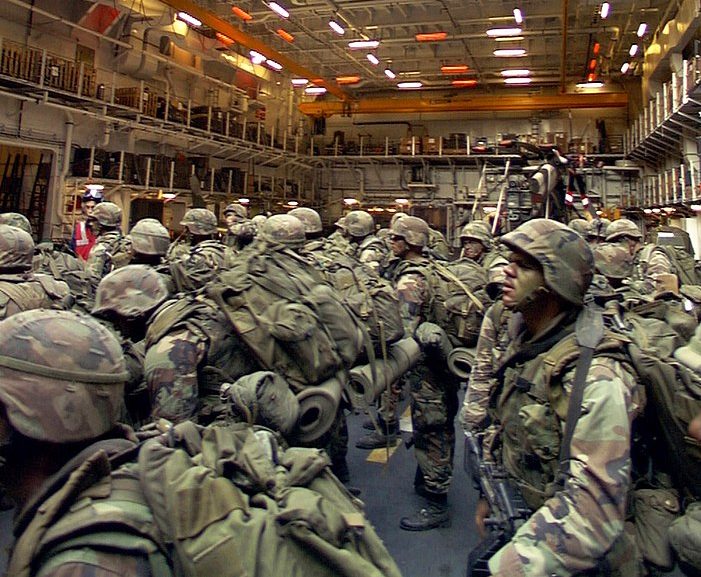
United States Marines from Lima Company, Battalion Landing Team 3/8, ride a lift into the vast hangar bay of the British amphibious assault ship HMS OCEAN (L12), during NORTHERN APPROACH, a NATO exercise in 1999. (Photo by CPL Jimmie Perkins, USMC)

Additionally, it is important to mention that Latin American geopolitics are fairly stable these days (the situation in Venezuela notwithstanding), which means that the rest of the region does not view Brazil’s recent acquisition, or its similarly ambitious submarine and corvette programs, with concern. In other words, there have been no apparent moves by regional navies to upgrade their own defenses in response to the acquisition of Atlantico. Latin America is not experiencing an arms race these days and Brasilia’s relations with its neighbors are fairly cordial, which effectively rules out the hypothesis of a regional state attempting to obtain control of Brazilian waters by force.

Thus, apart from patrolling Brazil’s territorial waters looking for non-traditional threats (such as illegal fishing, drug trafficking, or piracy), what other duties will Atlantico perform? In the aforementioned interview, Captain Corrêa suggested the carrier could be used to support humanitarian operations and as a command and control center for a task force. This raises the hypothesis that the ship could be deployed to United Nations peacekeeping operations. One likely candidate is the UN Interim Force in Lebanon, which has a naval component, the Maritime Task Force. Brazil regularly deploys a vessel to this naval force – the current ship there is the frigate Liberal (F 43). Hence, Atlantico could similarly be deployed to the Mediterranean to serve as a command center, should the task force attempt to carry out a major operation there.  

Finally, and perhaps most importantly for Brasilia, Atlantico will give the Brazilian Navy true blue water capability. That was the main purpose of the previous carrier, Sao Paulo, but the vessel spent more time docked and undergoing repairs than at sea, so hopefully for Brazil, Atlantico will perform much better.

Final Thoughts

The acquisition of the helicopter carrier Atlantico, alongside the PROSUB submarine program and the Tamandare corvette program, are examples of the Brazilian Navy aiming to become a true blue water navy in the 21st century. Domestically speaking, Brazil has little to fear about a conflict with a neighboring state, but Atlantico, should it perform better than its predecessor Sao Paulo, will be of great help to project the image of the marinha do Brasil well past the South Atlantic.

Wilder Alejandro Sanchez is a researcher who focuses on geopolitical, military and cyber security issues in the Western Hemisphere. Follow him on Twitter: @W_Alex_Sanchez.

The views expressed in this article are those of the author alone and do not necessarily reflect those of any institutions with which the author is associated.

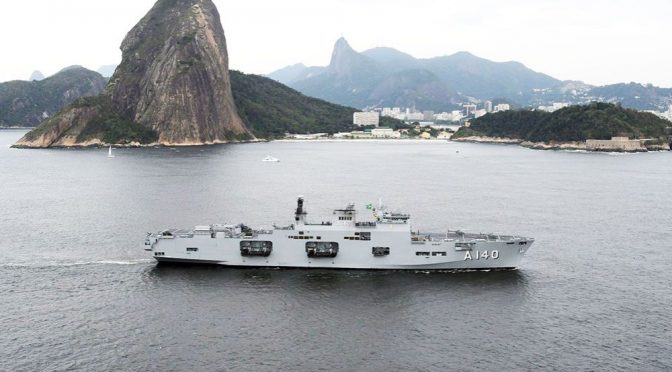
Featured Image: PHM Atlantico entering her home port of Rio do Janeiro (Merco Press)