By Zachary Abuza and Nguyen Nhat Anh
Introduction
The recently concluded 12th Congress of the Vietnamese Communist Party (VCP) has important implications for both Vietnamese and regional security. China’s placement of the HYSY-981 oil rig in disputed waters days before the congress was another stark reminder of just how tenuous regional peace is and how quickly flareups can occur. Despite losses for the reformist and pro-western Camp of the VCP, Vietnamese defense modernization and defense diplomacy will not be adversely affected.
Our bottom line is this: Vietnam will continue with its defense modernization and it will not stop its international defense cooperation, though it is unlikely to accelerate it. While the media focused on the ascendency of the “pro-China” faction, we argue that Vietnam will continue to walk a diplomatic fine line. The party’s overwhelming concern for maintaining its monopoly of power, desire to reassert the primacy of the party, and fear of a colored revolution will lead to a focus on internal security that the Vietnam People’s Army (VPA) has not had in recent years. Although Naval and Air Force modernization programs will continue, it will not be as fast as had a different leadership been selected at the Congress.
Personnel Appointments
The quinquennial leadership meeting elected a 180-member Central Committee, which in turn elected a 19-member Politburo. Much media analysis has been too superficial focusing on how the “pro” or “anti-China” factions. No one in Vietnam is solidly “pro-China.” But there are stark differences on strategies to cope with China that are borne out in factional politics. And to be sure, conservatives do tend to believe – though they are repeatedly proven otherwise – that their historical and ideological relationship with China can help to defuse crises.
Prime Minister Nguyen Tan Dung, the architect of Vietnam’s entry into the Transpacific Partnership (TPP) and closer ties with the West, and in particular the United States, had been the front-runner to become the VCP’s General Secretary. Dung had the most popular support, in large part due to his economic reform programs, but also because he was the only leader to stand up to China in the 2014 crisis when China placed the HYSY-981 oil rig on Vietnam’s continental shelf. His outspoken criticism of China led Dung to deepen the relationship with the United States, and he saw the TPP as a strategic tool to keep the United States engaged in the region, not a mere trade agreement.
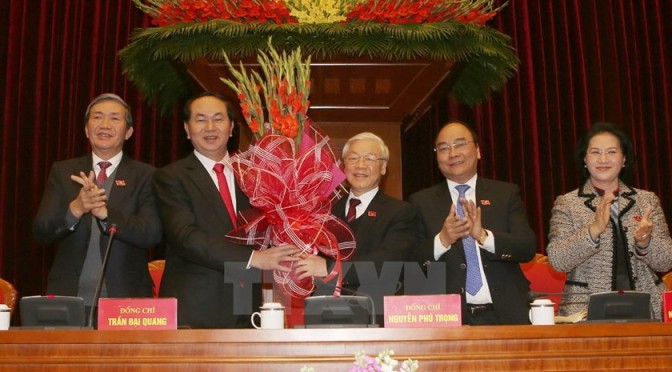
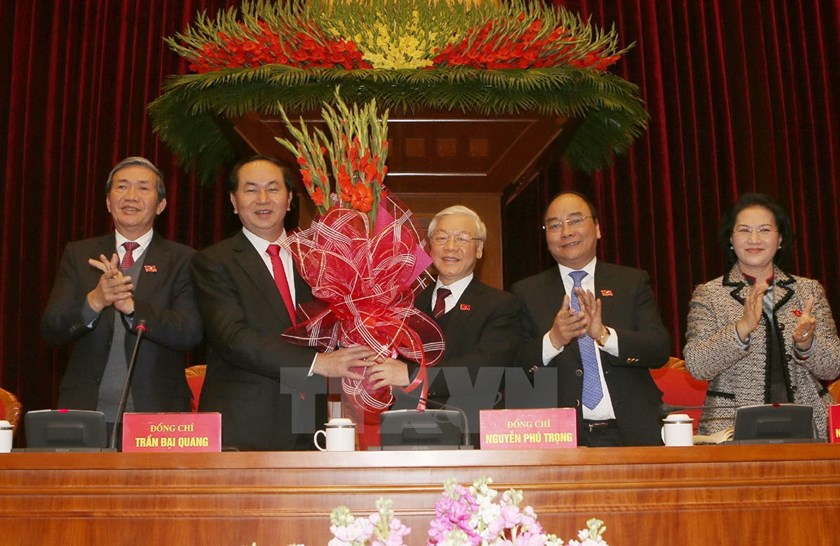
Yet Dung was outmaneuvered by a conservative faction at the Congress. When they could not get their own man for the job, the party’s top ideologue Dinh The Huynh, they were able to pull together an “anyone but Dung” coalition, and presented incumbent Nguyen Phu Trong as the compromise candidate. Although Dung fought back from the floor of the Congress, his strategic vision for the country, which included heightened economic reform, faster privatization of state owned enterprises, and closer economic ties with the West, proved unsettling to many in the leadership that prefer a cautious economic approach and a more balanced foreign policy.
Nguyen Phu Trong may be ideologically closer to China, but there is no doubt that he evolved significantly since 2012, endorsing the TPP and making a historically unprecedented trip to the United States in July 2015, where he met with President Obama in the Oval Office. But he has also tried to diffuse tensions with China, focusing on a shared history and socialist solidarity. Had Dung won, one could have expected a more confrontational foreign policy towards China, deepened ties and greater security cooperation with the United States and other regional partners. But what he accomplished is unlikely to be reversed by the new leadership which has already pledged to continue economic reforms.
The composition of the Politburo really represents the two inter-connected goals of the VCP: To maintain its monopoly of power while growing the economy. While there are an unprecedented number of economic technocrats on the Politburo, political control is clearly a priority. To that end, the Politburo includes four people with Ministry of Public Security/police backgrounds.
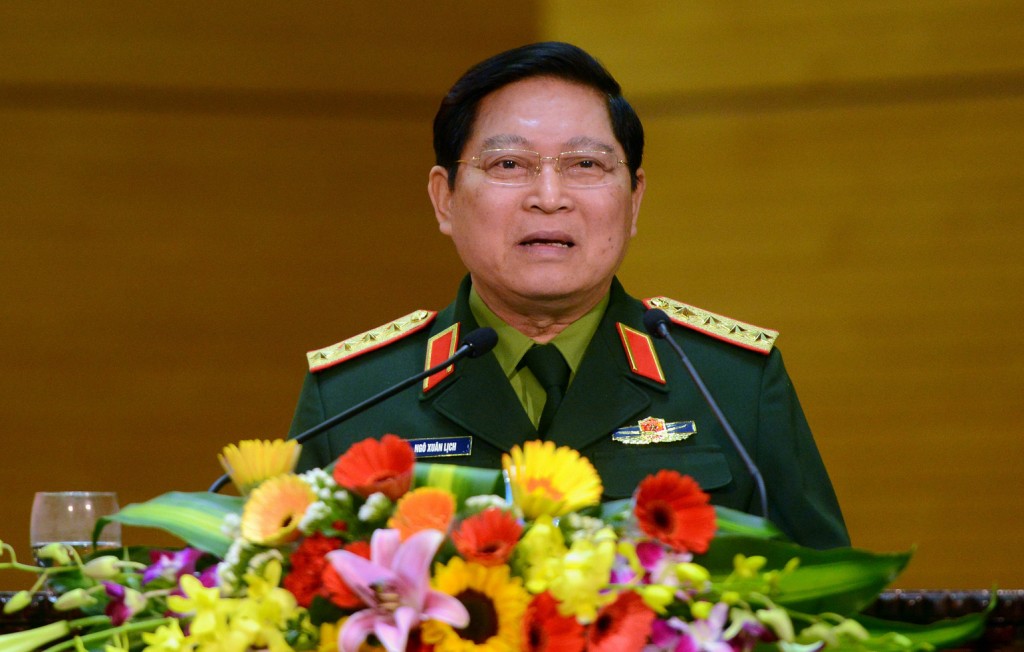
Even more troubling, the incoming Minister of National Defense General Ngo Xuan Lich, is a career political commissar who has never had command or operational experience. A political commissar is important when it comes to fighting “people’s war,” but the Vietnam People’s Army (VPA) has undergone a fundamental transformation in the past decade and now fields arguably the most offensively capable military in Southeast Asia. Vietnam’s navy is now one of the most modern and capable in the region.
And of great concern is that Gen Do Ba Ty, the Deputy Minister of Defense and VPA’s Chief-of-Staff, who has overseen much of that modernization, got passed over by a political commissar. Ty was seen as being too close to Prime Minister Dung.
In addition, one of the three members of the VCP’s Secretariat, the office responsible for running the day to day affairs of the VCP, is also a former VPA political commissar. The other two Secretariat members both have their origins in the Ministry of Public Security.
One cannot look at the composition of the leadership and not come to the conclusion that maintaining the political loyalty of the military and police remains a paramount concern. The leadership was alarmed when in 2014, a petition by former officers called for a re-writing of the constitution to make the VPA legally bound to defend the country, not the party. Such calls have been amplified in Vietnam’s surprisingly open social media. Tensions with China in 2014-15 led to greater public discussion as to why the VPA’s primary responsibility was to defend the regime, not the country, in the face of heightened Chinese aggression.
But it also reflects the leadership’s ongoing fear of “colored revolutions.” The heavy commissar representation suggests that the leadership remains prepared to use the VPA for internal security operations should the need ever arise.
Nonetheless, even though there is a heavy commissar representation in the Politburo and the Secretariat, the majority of military officers, including Do Ba Ty, recently elected to the 12th Central Committee come from either the General Staff or from one of Vietnam’s eight military districts.
The VPA holds 22 seats on the Central Committee (12.2 percent), making it the third largest sectoral block, following provincial representation (28.3 percent) and central government representation (20 percent).
The VPA’s 22 member representation includes five political commissars. That is the same number as in the 11th Congress, though the difference is that this also includes the incoming Minister of National Defense. The other four include two vice chiefs of the Political Directorate and the political commissars of Military Districts 5 and 9.
Other VPA members of the Central Committee include the commanders of Military Districts 1, 2, 3, 4 and 7, as well as the commanders of the People’s Navy, People’s Air Force and the Border Guards.
There are four members from the General Staff. Another three hold the rank of Deputy Minister: one comes from the military intelligence, one from the Border Guards and one from Military District 7.
The final two members are the deputy head of the National Defense University and the General Director of Viettel, the country’s military-owned and largest telecommunications firm, which the military has staunchly resisted divesting; ostensibly because it produces communication equipment for the military and the intelligence’s gathering functions, but also because it is greatly profitable.
It is not all bad. As mentioned above, the Politburo includes a number of technocrats who will continue to steer Vietnam towards TPP compliance, reform and privatization of the state owned sector.
The 12th Central Committee also includes three highly skilled and US educated diplomats, who have been architects of closer ties with the US, Japan and other countries in the region. Minister of Foreign Affairs Pham Binh Minh has been outspokenly critical of China, and Beijing is most certainly unhappy to see him finally elevated to the top decision making body. He favors a closer relationship with the West and away from China, and one can reasonably expect that Vietnam’s current trend of inching toward the West will not be stopped. Two of his deputies are also on the Central Committee, and both are firm proponents of deeper integration with the West and a more proactive role for the United States in regional security.
It is also important to note that Sr. Lt. Gen. Nguyen Chi Vinh remains on the Central Committee and will stay on as Deputy Minister of National Defense. Vinh, who has an intelligence back ground, is arguably the country’s most important strategist and has been the leading driver of military relations with the United States, Japan, India, Israel and other countries in the region.
All military and state appointments will be ratified in May when the National Assembly convenes. And even within the top echelons of the VCP, personnel appointments were still being made a week after the Congress concluded.
Policy Implications
The 12th Congress will not lead to substantial changes in Vietnamese foreign policy or defense relations.
In his speech to the 12th Congress, Gen Lich stated that he would remain committed to defense modernization, territorial defense and international military cooperation. But these were giveaways, and he really provided no detail of the country’s evolving security strategy. There is ample concern whether the appointment of a career commissar will slow the military’s modernization efforts.
The VPA will draft a new White Paper later this year and we do not know what shape it will take with the new leadership. But we see no meaningful shift in its “Three No’s Policy”, as iterated in the last White Paper:
- No foreign alliances,
- No foreign military bases, and
- No ganging up with one country against a third.
But Vietnam was already creatively working around some of them by 2015.
The 2011 MOU signed with the US Department of Defense has been gradually implemented as trust has been built. Although the United States remains only able to have one port visit a year, that does not include CARAT and other naval exercises or HADR operations.
And while Hanoi will never allow a foreign military base in its deep-water port of Cam Ranh Bay, in mid-2015, it announced that it would be an open port that any country could use for resupply and repairs. Japan has already entered into negotiations and the United States, too, has expressed interest. In fact, the United States has already sent several ships, albeit auxiliary vessels, into Cam Ranh Bay for repair and resupply.
Vietnam and the US have increased military cooperation. In May 2015, Vietnam participated in the US Pacific Command (PACOM) Amphibious Leaders Symposium (PALS) together with other Asia-Pacific countries, though not China. PALS seeks to develop amphibious operations, capability development,interoperability, and builds on areas of previous cooperation such as HADR missions and peace keeping operations.
Vietnam and the US are proceeding with their annual defense Bilateral Defense Dialogue/Mid-Term Review in February 2016. No changes are expected due to the 12th Congress. And Vietnam was a key beneficiary of US Secretary of Defense Ashton Carter’s Southeast Asia Maritime Security Initiative, announced in mid 2015. Under this agreement, Vietnam is to receive $122 million in assistance in order to help “bolster its maritime Intelligence, Surveillance, and Reconnaissance (ISR) and command and control within Vietnam’s maritime agencies.”
And already the defense relationship seems like it will remain on a very solid footing. On 30 January, the USS Curtis Wilbur entered within 12 nautical miles of Triton Island in the Paracel Archipelago, which China forcibly seized from Vietnam in 1977. Vietnam’s Ministry of Foreign Affairs immediately stated that Vietnam supported the right to innocent passage, as long as they follow international rules. This is contrary to the last US FONOP on 26 October 2015 in the Spratly Islands, when Vietnam remained officially silent, though privately supporting the FONOP.
In sum, despite changes in the leadership, proponents of deeper ties with the Unites States, in particular Sr. Lt Gen Vinh and Foreign Minister Pham Binh Minh are in very strong positions. The trend of improved ties and greater bilateral defense cooperation with the United States is likely to continue, and it certainly will not be reversed or stopped abruptly. Even Trong has changed since taking power in 2012, as seen from his trip to the US in 2015 and the approval of TPP from the Politburo. Vietnam is determined to continue senior level engagement, including participating at the US-ASEAN summit at Sunnylands 15-16 February 2015, as well as potentially hosting President Obama in May 2016.
Vietnam will continue to develop its “omni-directional” foreign policy. Vietnam has developed very close security ties with India, most recently announcing that it will establish a ground station for Indian satellites, giving Hanoi access to geo-spacial intelligence over the South China Sea. India has been training Vietnamese crews for its six new Kilo-class submarines. India has emerged as a key exporter of weaponry to Vietnam, and is increasingly maintaining a greater naval presence in the South China Sea. Hanoi is dispatching a naval vessel to India’s fleet review, the longest deployment in Vietnamese naval history.
Vietnam has also worked towards interoperability with other ASEAN members, many of whom use US-made weapons. Last year, Vietnam paid port visits to the Philippines and Indonesia. It is likely to continue to participate in regional multilateral exercises.
The 12th Congress did re-emphasize relations with Vietnam’s two neighbors, Laos and Cambodia, though for different reasons. Laos is the current chairman of ASEAN, and as such it is already being courted by all sides involved in the South China Sea. The Vietnamese leadership was clearly bolstered by the results of the 10th Congress of the Lao People’s Revolutionary Party, in January 2016, which saw the pro-Hanoi Bounnhang Vorachit elected as the new secretary-general. Vorachit has rained concern about Chinese domination of Laos, and has looked to reverse the swing towards China since Beijing bailed out the Lao kip in the 1997-98 financial crisis. Already, US Secretary of State has won a pledge from the new Lao leadership to use its position to counter Chinese assertiveness in the South China Sea. Vietnam, too, will court Laos, not least by increased military delegations.
Cambodia remains a more difficult case for Hanoi. The Cambodian foreign minister told Secretary Kerry that Cambodia’s position on the South China Sea is unchanged. Hanoi must expect Phnom Penh to continue to obstruct ASEAN unity over the South China Sea. However, with the simmering unrest along the border in summer 2015, Vietnam cannot afford to pay no attention to Cambodia. And as the 2018 general election nears, it is highly likely that bilateral tensions will increase, as all sides in Cambodian politics engage in populist politics, xenophobic nationalism, and scapegoating of the country’s Vietnamese community.
This may explain that of the 22 military officers on the Central Committee, two come from the Border Guards, as well as the commander of the Military District 7 and the military Commissar of Military District 9, both of which abut Cambodia. Two other senior officers on the general Staff have long experience in these two military districts, as well. On the last Central Committee, only two military personnel had experience along the Cambodian border.
There is one area where the appointment of Trong over Dung may see a discernible difference in policy: In mid-2014, Vietnam seemed on the verge of joining the Philippine suit at the International Court of Arbitration (ICA). Top leaders, including the Prime Minister, suggested that it was a less a matter of if, but when. Yet the high level visit of the Chinese State Counselor Yang Jiechi who told Hanoi to “stop hyping up” the dispute, and implicit threats led Hanoi to drop their filing.
In December 2014, Hanoi did file a position paper with the ICA asking that they take Vietnam’s interests into consideration in their ruling. When in October 2015, the ICA rejected China’s contention that the court had no standing and would proceed with the merits of the case, the leadership in Hanoi must have been kicking themselves. Under the leadership of Nguyen Tan Dung, one could have countenanced Vietnam filing a similar suit. But that seems unlikely under the continued leadership of Nguyen Phu Trong, who is unlikely to openly provoke China. And that is truly a setback because it is the legal weakness of Beijing’s claims that gives Hanoi the greatest leverage.
Chinese assertiveness in the South China Sea will remain Hanoi’s greatest strategic conundrum. That does not change with the Congress or the election of people Beijing preferred to see in office. Vietnam’s’s border forces reported increased Chinese aggression, including 57 intrusions by boats conducting espionage in 2015 alone.
The irony is that the more conservative members of the leadership always believe that they can use their historical and ideological ties to China to diffuse situations. And yet, they have never been able to get China to reverse course or abandon its aggressive strategies, whether it be putting oil concessions on Vietnam’s continental shelf for tender, placing oil rigs in Vietnamese claimed waters or the construction of artificial islands on low tide elevations. The reality is the leadership selection could actually embolden China to step up its assertive action, knowing too well that the current leadership is less willing to engage the United States and provoke an open confrontation with Beijing.
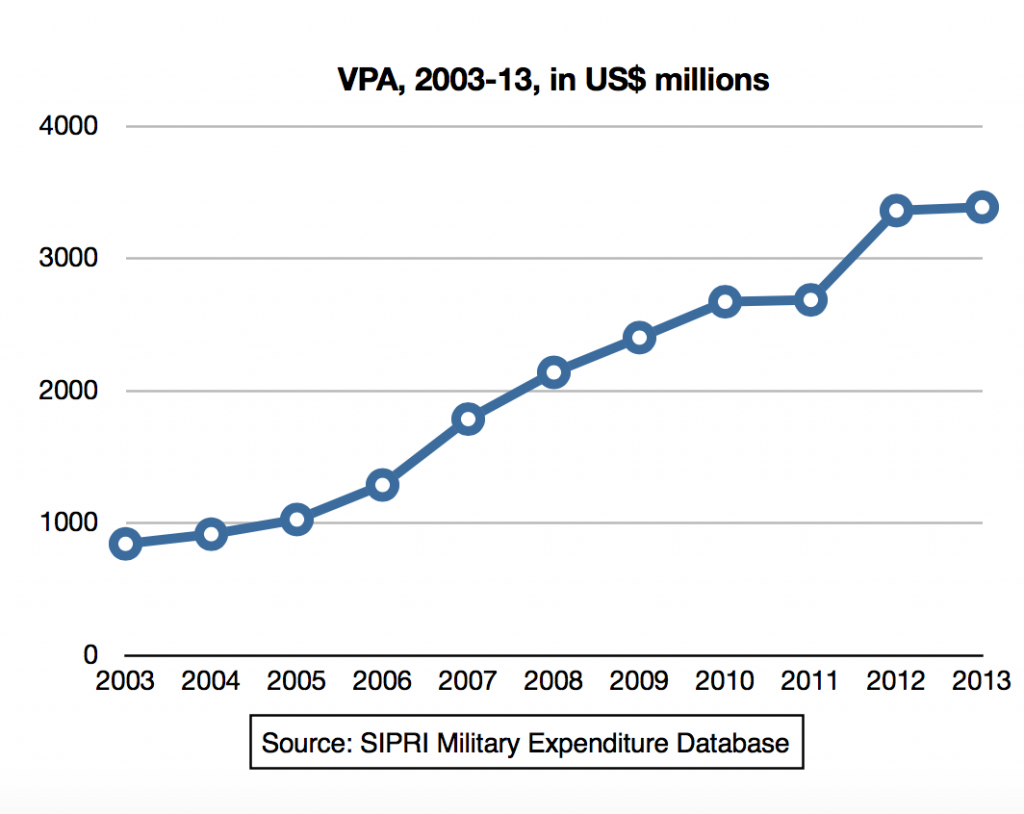
But the real policy implication of the 12th Congress is this: Vietnamese defense modernization is contingent on sustained economic growth. While the leadership has tried to assuage the international community that economic reforms will continue, most believe that such reforms would be accelerated had Dung won. Vietnam’s military spending increased by 270 percent between 2004 and 2013. Defense spacing accounted for 2.3 percent of GDP in 2013, third in the region behind Myanmar and Singapore. Defense expenditures averaged 2.27 percent between 2004-13. But in terms of per capita military spending Vietnam ranks fourth in the region – a mere $37.6 – placing it behind Singapore, Malaysia and Thailand. Vietnamese security is highly contingent on maintaining the highest rates of economic growth in Southeast Asia, which it was able to do in 2013-15, but requires skilled leadership and good policies.
But not all signs are good. The low price of oil, now only contributes 7 percent of the budget, adding to a widening deficit, while the trade deficit and public debt are both increasing. Although the economic reform program is unlikely to be reversed, the cautious leadership of Trong will be unable to seize a window of opportunity availed by Thailand’s continued political stasis and resulting economic meltdown, Indonesia’s economic nationalism and endemic corruption, and Malaysia’s self-inflicted wounds owing to Prime Minister Najib Razak’s scandal plagued administration.
Procurement
So what does all this mean for the VPA’s defense procurement program? Despite the signs that the leadership is looking to maintain party control over the security sectors, this by no means means that there is going to be any reversal of its military modernization program. Vietnam remains committed to field the most modern and lethal military in Southeast Asia. In terms of procurement, Vietnam has done a lot to diversify its weapon sources, and this trend is unlikely to be reversed with the new leadership.
In the past decade, the lion’s share of modernization funds has gone to building up power projection capabilities. The VPA has gotten slightly smaller, and its procurements have been more modest, particularly in small arms. The VPA is looking for contenders to replace its 1960s T-54/55, or to at least upgrade them to a more capable version.
Its defense partnership with Israel is still likely to deepen, far more than people are probably aware of. Vietnam has been producing Israeli small arms under license, and is now producing an Israeli variant drone. Vietnam has also acquired Israeli Spyder AA missile and Accular guided artillery missile, and there are reasons to believe that Vietnam also wants to self-produce these weapon systems.
Other weapon systems from non-traditional suppliers include CAESAR self-propelled artillery system from France and patrol boats given by Japan.
Apart from the training of submariners in Indian bases, India has recently become a more important arms supplier to Vietnam. In 2014, Vietnam began negotiating the purchase of BrahMos anti-ship missile, co-developed by Russia and India. Vietnam has already been deemed one of the countries friendly enough to India and Russia to possess this weapon; and in mid 2015 reports surfaced that Russia had approved the sale. Also in 2014, India announced that it would extend a $100 million credit line to Vietnam for the purchase of four patrol boats.
Vietnam will take delivery of two more Gepard-class frigates from Russia in 2017-2018, and is negotiating two more. Vietnam has built six Molniya-class corvettes recently for the Navy and expects to build four more under license.
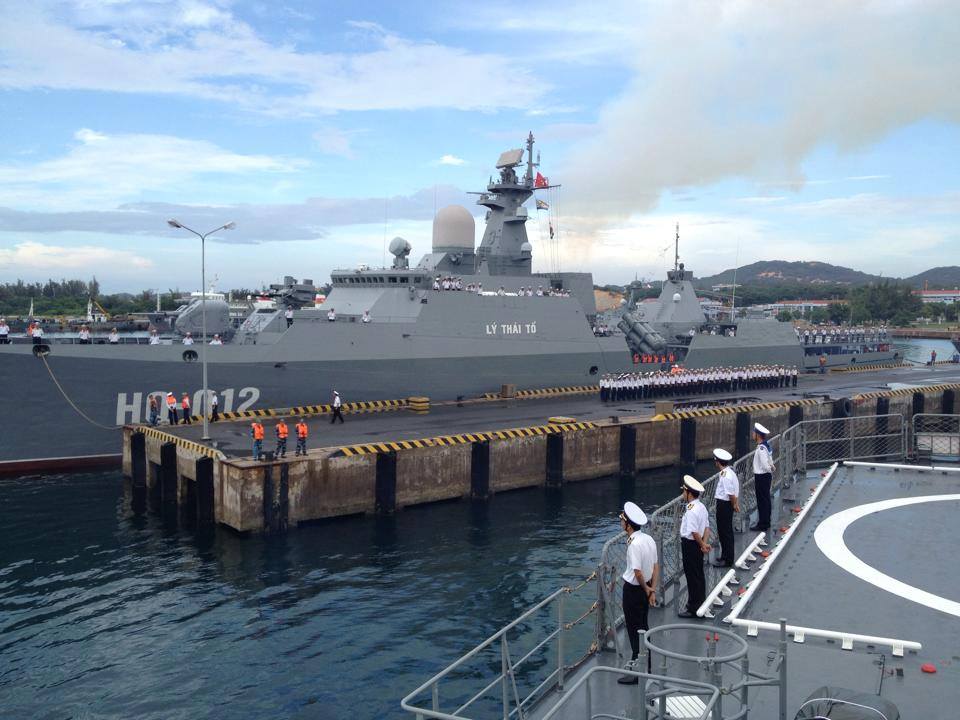
Outgoing Prime Minister Nguyen Tan Dung is still pushing forward with his privatization agenda in his final four months in office. On 3 February, the government announced that it had sold a 70 percent share of Song Cam shipyard to Dutch shipbuilder Damen. Song Cam is the most modern and profitable of the eight subsidiaries of the Shipbuilding Industry Corporation. It produces most of Vietnam’s coast guard vessels and is expected to ramp up production.
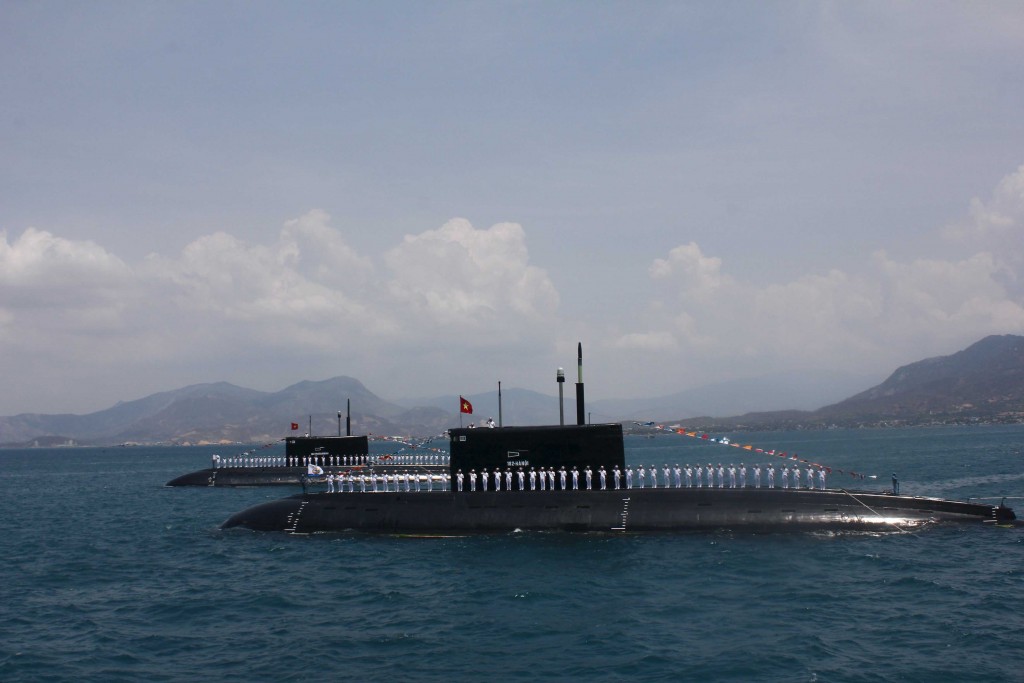
As of now, five out of six Russian-built Kilo class submarines ordered by Vietnam have arrived at the Cam Ranh naval base. The first began patrols in the South China Sea in December 2015. Not only has Vietnam acquired these state-of-the-art vessels for its deterrence, but it has also equipped them with offensive capability by being the first country in South East Asia to purchase submarine-launched land cruise missile, the Klub-S. This is the export version of the cruise missile Russia used to bombard ISIS force from the Caspian Sea, launched from Gepard class frigates, which Vietnam possesses. Russia has offered to sell the Klub for Vietnam to equip its Gepard and Molniya vessels, but no official news has been confirmed. Nevertheless, fielding silent submarines with anti-shore cruise missile will surely alter China’s calculation.
Vietnam is in the market to purchase new jet fighter to replace its aging fleet of 144 Mig-21s and 38 SU-22s. While there was plenty of speculation that with the lifting of the US embargo, that Vietnam was in the market for US jets, that was unlikely then, and even more so following the 12th Congress.
Vietnam will most likely remain within the Russian orbit of weaponry. It recently purchased another squadron of Russian Sukhoi Su-30s, and there are hints that Hanoi may consider the Eurofighter Typhoon or Gripen JAS-39E jet fighter in a bid to diversify is sources of advanced weapons.
While many in the VPA have been pushing for the purchase of American P8s to bolster its limited maritime surveillance capabilities, the potential backlash from China could result in the purchase of a European variant or even the new Kawasaki P-1 from Japan, as it begins to enter into the global arms global. In 2014, Vietnam purchased maritime surveillance planes from Canada and several Casa C-295 military cargo planes from EADS.
Vietnam has largely pushed for the lifting of the US arms embargo as a matter of principle. While they may purchase niche items that are not available from their traditional suppliers, in particular long range maritime surveillance craft, it is unlikely that there will be a broader based shift to US arms; they are simply too expensive.
Apart from acquiring weapons from abroad, Vietnam has had a strong emphasis on self-producing many of its need. As a result of this focus, Vietnam has been more successful than most countries in acquiring licensing for indigenous manufacture, and has shown that it is ready to move to another non-traditional supplier to achieve this. Indeed, the reason that Vietnam chose Israeli Military Industry Galil ACE family over the traditional Russian Kalashnikov weapons is because it was able to obtain production license for this family. Vietnam has also been able to self-manufacture other type of infantry weapons, such as RPG or automatic grenade launchers.
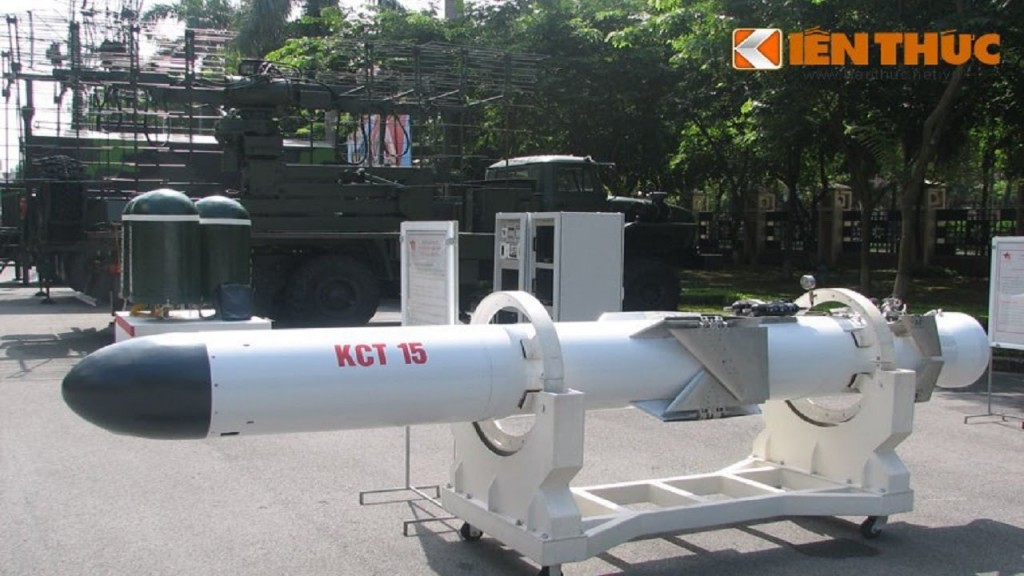
More special for the Vietnamese Military Industry in 2015, it has succeeded in manufacturing its indigenous version of the Russian Kh-35E Uran anti-ship missile, called KCT-15. The Kh-35 Uran is the mainstay of the Vietnamese Navy, being equipped on all Gepard and Molniya frigates. The KCT-15 can be configured to be carried by fighter jets or naval helicopters that Vietnam currently fields. An anti-ground capable Kh-35 version has also been proposed; if this materializes, it would be a much cheaper option to the expensive Klub-S cruise missile.
Vietnam has also progressed silently but surely in the field of intelligence, surveillance and reconnaissance (ISR), especially in satellite and UAV surveillance. In addition to the satellite agreement with India, Vietnam has developed and operated several satellites with US Lockheed Martin and French SAS Atrium, and aims to be able to produce its own indigenous satellite in the next few years. Vietnam is also leasing a Heron UAV from Israel. Viettel Corporation, the VPA-owned telecommunication company, has produced small UAVs itself and is aiming to produce a high altitude long endurance drone with Belorussian cooperation. The UAV HS-6L, unveiled in December 2015, has an endurance of 35 hours and a range of 4,000km and will greatly increase Vietnam ISR capability over the South China Sea. Viettel produces warning radars to support anti-air missile batteries and recently developed a new C4ISR system for the VPA.
The first time inclusion of Viettel’s Director on the Central Committee may signify both a focus on indigenous production as well as cybersecurity and monitoring.
In general, Vietnam will continue to diversify its weapon sources, and try to improve its self-production capability. Very quietly, Vietnam has emerged as the leading producer of advanced arms in Southeast Asia.
Zachary Abuza, PhD, is Professor at the National War College where he specializes in Southeast Asian security issues. Follow him on Twitter @ZachAbuza.
Nguyen Nhat Anh is a student of International Political Economy at the University of Texas at Dallas. You can follow him on Twitter @anhnnguyen93.