This article originally featured on Bharat Shakti. It may be read in its original form here.
By Vice Admiral Pradeep Chauhan, AVSM & Bar, VSM, IN (Ret.)
The year 2022 arrived as a harried harbinger of tidings of war and woe in the Indo-Pacific — a geo-strategic region central to the security calculus of both, regional and extra-regional players. From the United States of America to Japan, strategic advisers and military practitioners began reading-up their several carefully-prepared contingency plans, each focused upon the increasingly violent writhing of the Chinese dragon.
Although the danger-signs of a precipitous economic decline within the People’s Republic had appeared even before 2015, the sheer speed of contraction of the Chinese economy took the world completely by surprise. The internal repercussions within China were so extreme that news of the violent unrest within the Middle Kingdom easily transcended the efforts made by the CCP to keep matters under wraps. Widespread rioting became commonplace as socio-economic fault lines — centred upon income inequality, curbs on rural labour becoming permanent urban-dwellers, and the huge economic disparity between southern coastal cities and the hinterland — could no longer be papered over by ‘gloss’ and ‘bling.’
The CCP’s recurring nightmare of regime-collapse threatened to become a grim reality. Faced with increasingly belligerent responses from the USA, India, Vietnam, the Philippines — and even Indonesia — to its earlier attempts to convert the South China Sea into a Chinese lake through machinations such as the Nine Dash Line, the Chinese leadership turned to the oldest trick in the book to reunite the country. It pointed to a ‘malevolent’ axis of alignment between India, the USA, Japan and Australia as being responsible for a series of carefully orchestrated actions designed specifically to stunt and reverse China’s economic miracle. Indian duplicity was specifically and repeatedly referred-to and, in the ensuing vituperative polemics, much was made of teaching ‘upstart’ India a lasting lesson. Chinese media was repeatedly drawing the people’s attention to Indian adventurism along the still-unresolved border.
As a supposed ‘restrained and proportionate response’, deep incursions by Chinese troops began across the entire Sino-Indian border. Most worrying to India was the significant Chinese build-up in Demchok and in the Chumbi Valley. Paying scant regard to the protestations of Bhutan, Chinese troops had begun occupying the western extremities of Bhutan that they had been long been claiming as their own. This widened the ‘point’ of the Chumbi Valley and the danger to India’s ‘Chicken’s neck’ was seen as being clear and present.
Over the past few years, Indian mountain infrastructure had certainly improved, but was far from ideal. Nevertheless, New Delhi directed its newly raised Mountain Strike Corps (its embryonic state notwithstanding), to deploy in the Gaygong-Geegong gap. IAF Forward Air Bases in Nyoming, Daulat Beg Oldi (DBO) and several more in Arunachal Pradesh were brought up to full combat capability and ammunition pre-positioned. The roar of Su-30 aircraft became incessant at Tezpur.
Many forward-looking Indian planners had high hopes of the Indian Navy being able to achieve a ‘strategic outflanking’ of the Chinese at sea — yet, the Chinese Navy seemed to have pre-empted matters: In the Gulf of Aden, the 44th Chinese anti-piracy Escort Force, comprising two Luyang-II (Type 052C) destroyers, one Jiangkai-II (Type 054A) frigate and one Fuchi Class (Type 903A) replenishment ship, was supplemented by a significant flotilla consisting of four Luyang-III (Type 052D) destroyers led by the Changsha, six Jiangkai-II frigates, an Underway Replenishment Group (URG) comprising two Fuchi Class ships, and, oneShang Class SSN. The ships berthed at Djibouti while the SSN, having called at Karachi, was last reported at the newly-developed submarine berth at Gwadar.
Luyang III: Chinese Missile Destroyer (Picture Courtesy: Chinese Military Review)
Just north of Indonesia’s Natuna Island, a confirmed sighting was registered of a Chinese amphibious flotilla centred upon the aircraft carrier Liaoning, along with three Luyang-III destroyers, three Sovremenny Class destroyers, three Jiangwei-II and four Jiangkai-I Class frigates, apparently escorting four Yuzhao Class LPDs and accompanied by two Type 901 Fast Combat Support SHIP (FCSS). Three Zulfiquar Class frigates of the Pakistan Navy — an unusually large number — had also been deployed with the ‘Coalition Task Force 150’, while three Agosta-90B submarines (all capable of Air-Independent Propulsion) were notably absent from any of Pakistan’s naval harbours. It was manifestly clear that battle lines had been drawn….
How and under which circumstances the Government of India might realise and decide that the Union of India — in its entirety (as opposed to just the Army) — was in a state of armed conflict against the People’s Republic of China is a matter of conjecture and debate. Yet, the above scenario provides a plausible enough backdrop against which the state of advancement of Indian warships and warship-building needs to be examined.
Tonnage is a very good indicator of the ability of a warship to endure the violence of the maritime environment — something that generally increases with distance from the coast. Thus, warships of heavier displacement-tonnage are more likely to be suitable for protracted deployments in ‘blue waters’ than are those of lighter displacement-tonnage.
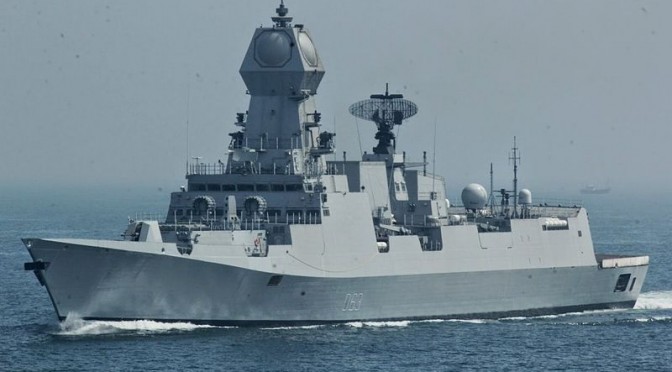
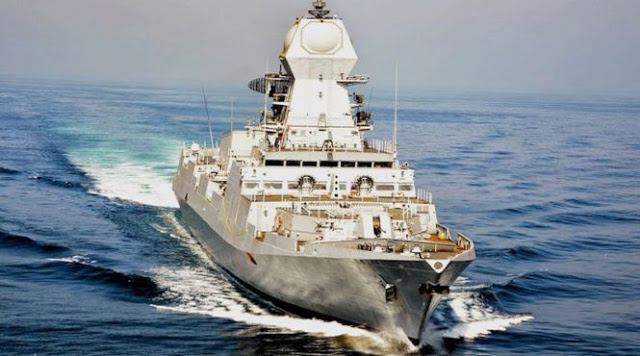
INS Kolkata (Picture Courtesy: Indian Defence News)
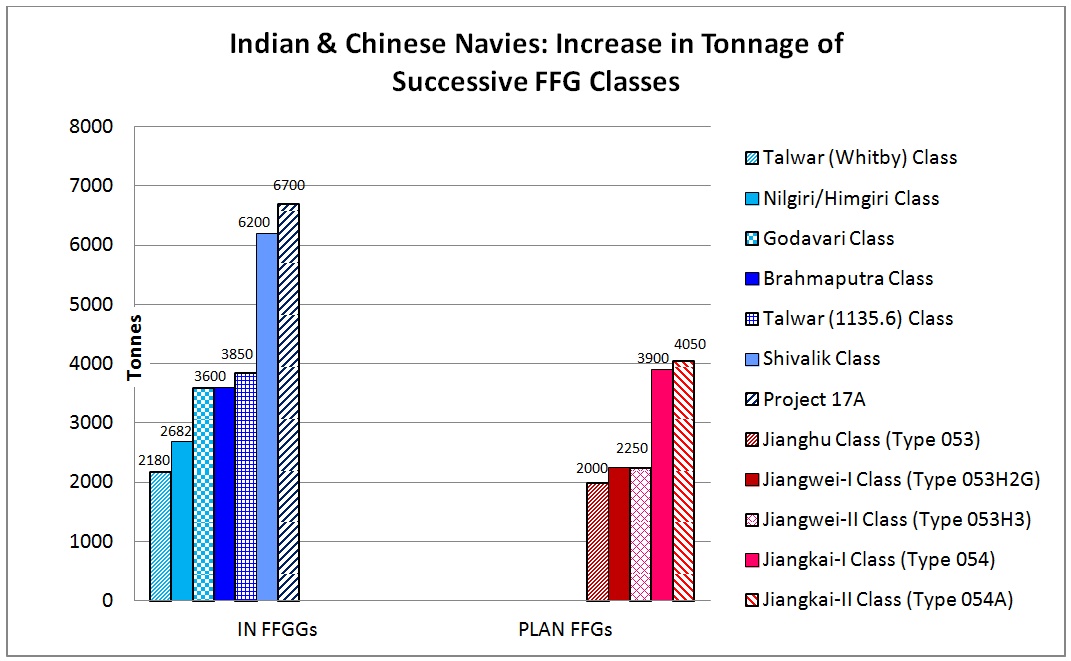
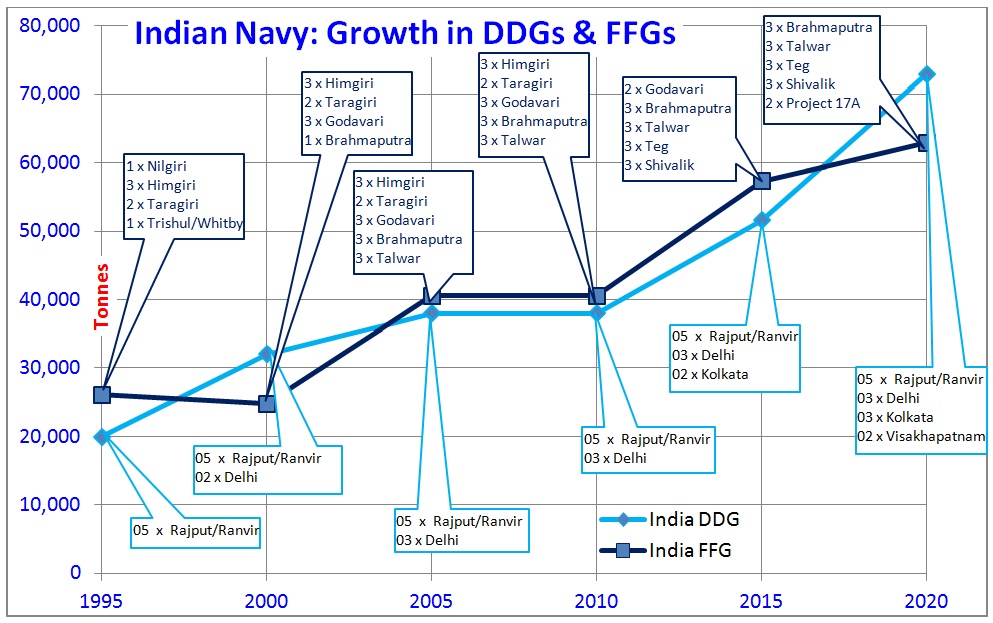
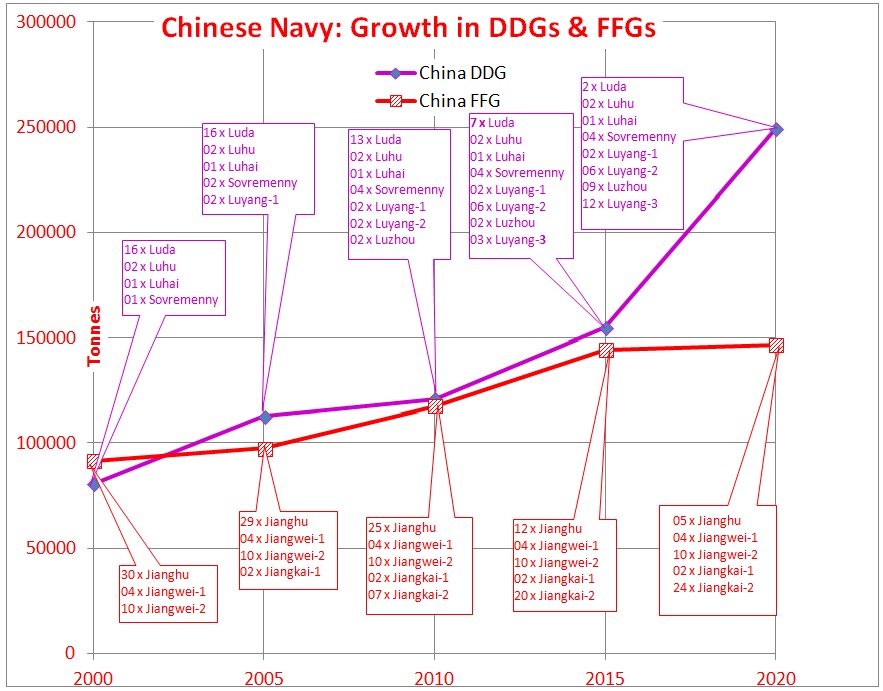
In this regard, the tonnage of the Indian Navy’s frontline surface-combatants (guided-missile destroyers and frigates) — taken individually as well as collectively over the 25-year period from 1995 to 2020 — shows a consistent and impressive increase. However, the Chinese Navy, too, has been demonstrating a nearly identical trend. This is a clear sign of the steady consolidation of the ‘Blue-water’ capacities of both navies, and may be readily discerned from the following graphs. Contemporary DDGs in both navies have displacement-tonnages in the region of 7,000 tonnes, making them eminently suitable for protracted deployments in distant waters. It may also be seen that the Indian Navy has far fewer classes of Guided Missile Destroyers (DDGs) than does its Chinese counterpart.
The reverse is true when it comes to Guided Missile Frigates (FFG). Here, the Indian Navy’s contemporary classes are certainly pushing the limits of what might reasonably be termed a ‘frigate.’ In most countries, ships of the Shivalik Class and those of ‘Project 17A’ to follow — both classes displacing 7000 tonnes or more — would be certainly categorised as ‘destroyers.’ Were this to be done, the number of ship-classes in both categories (DDGs and FFGs) would be very similar in both navies.
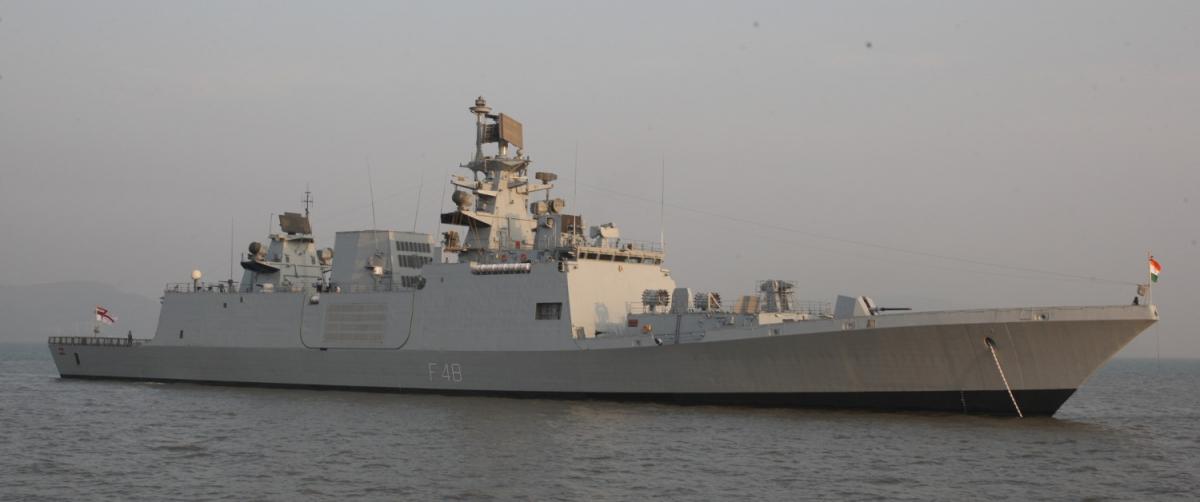
INS Satpura.
The past and projected growth of the Indian Navy in terms of numbers of DDGs and FFGs over the period from 1995 to 2020 may be seen through the following graphical depiction, which details the numbers of warships in each class of destroyers and frigates respectively.
It is important to note that while the tonnage of the individual warship-classes that constitute each navy has been rising, and while
there is not much to give or take between the comparative tonnages of Chinese and Indian frigates or destroyers, it is the stark disparity in the sheer numbers of Chinese and Indian warships that make the overall tonnage that each navy can put to sea so different from each other. The huge impact that these ‘numbers’ have in terms of the overall tonnage that both navies can put to sea may be readily discerned once these are plotted on the same scale.
What all this brings out quite starkly is that although Indian warship construction / induction is certainly picking-up and although the tonnage-trend is a healthy one, it is, nevertheless, very nearly a case of ‘too-little-too-late.’ Indian ship-building has to show a dramatic increase of the type shown by Chinese shipyards, most especially in the period after 2010.
This, of course, is a realisation that is somewhat more sobering than the breezy optimism that comes embedded in the official pronouncements that emanate from New Delhi. Despite the proclivity of our defence shipyards to ‘cut-off their noses to spite their faces’ by refusing to accept their capacity-limitations and encourage private players, there is an urgent need for greenfield shipyards in the country to either build relatively low-end platforms so as to free-up capacity in the more established defence shipyards, or to take up construction of major surface-combatants themselves. The latter could, perhaps, be under a ‘prime system-integrator’ model as was done for the Daring Class ‘Type 45’ guided-missile destroyers of the British Royal Navy. As such. there is, enormous scope for private players in the national effort to ratchet-up numbers in the Indian Navy’s DDG and FFG holdings.
In the interim, the Government of India and its Navy will have to rely upon nimble-footedness at the strategic level as well as at the level of operational art, so that even if a conflict with China arise, the entire numerical strength of the principal combatants of the Chinese Navy are not capable of being arrayed against it en masse. The plans and strategems for this, are, of course, subjects for a far more detailed analysis.
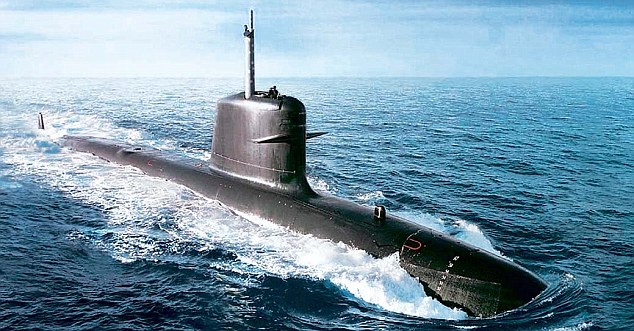
Yet, there is some cause for quiet satisfaction, too. For instance, the overall combat capabilities — comprising the various weapon-sensor suites, the software-intensive integration systems, the integral-air capacity, and, the propulsion and power-generation plants — of both, contemporary Indian guided-missile destroyers (DDGs) and guided-missile frigates (FFGs) compare quite favourably with those of the Chinese Navy. In a combat encounter between major surface combatants, the Indian Navy is very likely to acquit itself well. For this, the uniformed and civilian segments of the Indian Navy (they are very nearly equal in numbers), the DRDO and our ship-builders must be given much credit. That said, naval warfare is typically one in which the ‘hunter’ and the ‘hunted’ switch roles with disconcerting frequency and often operate in entirely different mediums. Thus, the capability of current and future Indian warships must also be assessed against air threats (including anti-ship missiles) and underwater threats emanating from both, conventionally and nuclear-propelled submarines.
Anti-Submarine Warfare (ASW) within most parts of the northern Indian Ocean — most especially in the Arabian Sea — is adversely impacted by a ubiquitous negative temperature-gradient. This significantly shortens the detection range of hull-mounted sonars. On the other hand, towed-array sonars and ship-mounted variable-depth sonars impose often-unaffordable operational penalties in terms of maneuverability and speed — quite apart from a host of maintenance-related technological challenges that industry needs to wrestle with.
Indian FFG and DDG ship-designs have long featured the carriage of two 10-13 tonne multi-role / ASW helicopters aboard every such platform. An ASW helicopter, equipped with a variable-depth sonar with high-end processing capabilities, sonobuoys, and a good EW suite, is the optimum platform for seaborne ASW and the Navy requires these in adequate numbers so as to take advantage of the potential offered by excellent ship-design. For the present, the absence of multi-role helicopters has rendered this design-advantage null and void. Much promise was initially held out by the indigenous ‘Advanced Light Helicopter’ (ALH) Dhruv. However, the technological challenges of folding rotor-blades and minimising the downwash while the helicopter is in hover continue to frustrate efforts to embed this helicopter within the integral-air capacity of the Indian Navy.
As and when our otherwise very-capable surface-combatants need to operate in a combat-environment characterised by a substantive subsurface threat, this lack of integral ASW helicopters might well prove decisive. In contrast, Chinese ships have a carrying-capacity of just a single helicopter, but successful reverse-engineering of the French Dauphin has resulted in the Harbin-Z that is integral to Chinese warships.
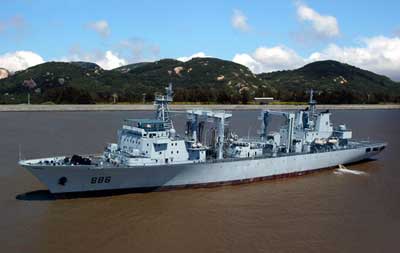
Perhaps the most telling factor weighing in favour of the ‘reach’ of the Chinese Navy is its impressive holding of refuelling-tankers and stores/ammunition-supply ships, particularly those capable of ‘underway replenishment.’
Qiandaohu Ship (Picture Courtesy: en.people.cn)
The six Qiandaohu Class (Type 903A) replenishment vessels displace 23,000 tonnes, compared with the two 19500-tonne replenishment-tankers of the Indian Navy’s Deepak Class. Although the five Dayun Class (Type 904) stores-supply ships of the Chinese Navy are incapable of underway replenishment, they do add significantly to their Navy’s amphibious follow-on capacity. Seeking to catch-up, the Government of India had floated a global Request for Information (RFI) for the construction of five large 40,000-tonne ‘Fleet Support Ships’ for the Indian Navy. Although the delivery of the first ship has been specified as 36 months (with subsequent ships being delivered at six-monthly intervals), there is little evidence as yet of any significant progress. This notwithstanding, opportunities for Indian industry in terms of the equipment-fit of these ships is, once again, enormous.
In conclusion, if India is to be able to handle the fictitious 2022-scenario that this brief piece began with, there is an urgent need to address the shortfall in numbers of major-combatants and fleet-support ships. It is true that over 45 warships are currently building in Indian shipyards, but the rate of production is painfully slow and as a consequence, the numbers may not be enough in the available time before such a scenario shifts from absorbing fiction into frightening fact.
Vice Admiral Pradeep Chauhan(ret.) retired as Commandant of the Indian Naval Academy at Ezhimala. An alumnus of the prestigious National Defence College.
(Disclaimer: The views and opinions expressed in this article are those of the author and do not necessarily reflect the official policy or position of BharatShakti.in)
Week Dates: Apr. 25 – May 2. 2016 Articles Due: Apr. 24 2016 Article Length: 800-1800 Words (with flexibility) Submit to: Nextwar@cimsec.org
Much has been made of great power competition in the Asia-Pacific, with the U.S. and China considered the main actors, but India is a powerhouse in the making. India’s rapidly growing economy and modernizing military ensures its relevance as a regional power to be reckoned with.
India and China have a longstanding strategic rivalry. Both nations engaged in a brief but intense war in 1962, and to date have an unresolved border dispute that still experiences incursions and tension. Reports of a Chinese submarine transiting into the Indian Ocean for the first time in 2015 were met with alarm in India. China remains wary of strengthening defense ties between India and the U.S., which have manifested in various ways including aircraft carrier technology sharing. The Indian peninsula juts 1000 km into the Indian ocean, providing India’s carrier equipped navy superb positioning to affect sea lines of communication flowing towards the strait of Malacca.
The Deputy Chief of General Staff of the Chinese PLA, Gen. Ma Xiaotian calls on the Chief of Naval Staff, Admiral Nirmal Verma, in New Delhi on December 09, 2011.
Prime Minister Modi aligned India with U.S. policy towards South China Sea maritime disputes in a joint statement affirming “the importance of safeguarding maritime security and ensuring freedom of navigation and over flight throughout the region…” Senior U.S. defense officials such as Defense Secretary Ash Carter and Under Secretary of Defense for Acquisition, Technology, and Logistics Frank Kendall will be visiting India this month to discuss strengthening defense bonds and military technology sharing agreements. Additionally, India plans on increasing its military expenditures by 13% from 16-17, and its defense budget is experiencing greater growth than any other major power.
U.S. Secretary of Defense Ashton Carter, left, with India’s Defence Minister, Manohar Parikkar, in New Delhi last year. PHOTO: HINDUSTAN TIMES VIA GETTY IMAGES.
How might the strategic rivalry between India and China evolve? How may India’s role in Asia-Pacific security broaden? What are the larger implications of India rapid defense modernization and stronger ties to the U.S.? Prospective contributors can analyze these topics and more. Please submit draft contributions to Nextwar@cimsec.org.
Editor’s Note: This topic week has since concluded and the writings submitted in response to this call for articles may be viewed here.
Dmitry Filipoff is CIMSEC’s Director of Online Content. Reach the CIMSEC editorial team at Nextwar@cimsec.org.
On 4th February 2016, India and China held their first-ever ‘Maritime Affairs Dialogue’ at New Delhi. While the Indian side was led by the Joint Secretary (Disarmament and International Security Affairs) in the Ministry of External Affairs (MEA), the Chinese delegation was led by the Assistant Minister of the Chinese Ministry of Foreign Affairs (MFA). Given that the two sides agreed to institutionalize a dialogue, the inaugural event was indeed ‘seminal.’ Although the details of the discussions are not yet available in the public domain, this essay attempts to extrapolate the open-source reports, and ‘look beyond’ it in context of emerging imperatives.
Since the turn of the new millennium, or even earlier, it began to be realized and acknowledged world-wide that the texture of future security and geopolitical environment in the ‘resurgent’ Asia will depend much upon how the two resident regional powers – India and China – will shape their relations at the bilateral level. The two countries have traditionally been continental neighbours. However, since at least a decade ago, the waters of the Indo-Pacific have become an arena for a maritime interface between the two in diverse arenas encompassing geopolitics, economics and security issues. The need, therefore, for the two countries to institutionalize a maritime dialogue has been long overdue. It may be recalled that the foreign ministers of two sides had first decided to initiate the maritime dialogue nearly four years ago in March 2012. Such an arrangement is essential to foster cooperation, while also preventing unproductive competition and confrontation.
Representatives of India and China meet for inaugural Maritime Dialogue. Photo Source: PRC MFA.
Soon after the first Dialogue, the Indian MEA issued a press-release indicating its essentials. It states:
“The dialogue covered issues of mutual interest, including exchange of perspectives on maritime security, developments in international regimes such as UNCLOS (United Nations Convention on the Law of the Sea, 1982) and (the other) IMO (-related treaties) and prospects for maritime cooperation”.
“Both sides introduced their respective maritime development strategies and their respective stance and views on current maritime security situation, and agreed to enhance policy dialogue and expand practical cooperation in such areas as marine scientific research, navy exchanges, fishery and navigation in a joint effort to ensure maritime security and harmony.”
The ‘exchange of views and perspectives on maritime security’ may have begun with the two sides drawing satisfaction from the successful multinational anti-piracy mission in the Gulf of Aden, wherein India and China have been coordinating their policies and naval operations since 2008, including at the ‘Contact Group on Piracy off the Coast of Somalia’ (CGPCS). The discussions may have also included other issues relating to good order at sea in the Indo-Pacific region.
The “international regimes” are likely to have been discussed in the context of the developments in the South China Sea (SCS) relating to the maritime-territorial disputes, freedom of navigation, and resource exploration. These discussions would have been valuable for both sides. For India, it is necessary to tell China its position on its hydrocarbon exploration in the SCS and its growing naval engagements with the other SCS littoral countries. To China, it was an opportunity to present its perspectives, achieve transparency of policies, and allay concerns of the regional countries over its increased politico-military assertiveness in the region.
It seems, however, that the first India-China Maritime Dialogue was essentially an ‘ice-breaker,’ and in their own ways, both sides had envisaged their objectives to be rather limited, rather than symbolic. Since the Indian side was led by a Joint Secretary, the representation from the ‘functional’ agencies/ navy would have been pitched at the ‘Director/ one-star’ level or even below. From China’s perspective, the dialogue seems to have been accorded even lesser significance. The photograph released by the Chinese MFA indicates that the Chinese side did not have any naval representation at all, at least not in uniform.
Notably, two days earlier, a Chinese delegation under the same leadership was in Islamabad for thesecond China-Pakistan Maritime Dialogue; the first dialogue having been held in Beijing in July 2014. Since Pakistan’s delegation was headed by an Additional Secretary of the Foreign Ministry, functionaries much above the ‘Director/ one-star’ level would have been represented. The Islamabad event itself, the higher level of representation and the indicative scope of the discussions encompassing ‘maritime connectivity’, ‘security of international shipping lanes’ (ISL), ‘marine scientific research’, ‘search and rescue’ and ‘naval and coast-guard cooperation’ reveal the difference.
Admiral Muhammad Zakaullah, Chief of the Naval Staff of Pakistan, arrives in Beijing on an official visit to China at the invitation of Admiral Wu Shengli, Chief of the PLA Navy in March 2015. [Photo/China.org.cn].On the Dialogue in New Delhi, neither the Indian nor the Chinese official report mentions any discussion on China’s ‘Maritime Silk Road’ (MSR) initiative, which is surprising. Further, the discussions on ‘practical cooperation’ on each of the issues mentioned in the Chinese MFA report is unlikely to have gone beyond China gauging whether and to what extent India is amenable to the prospect of cooperation on a particular issue. The mention of ‘marine scientific research’ is particularly instructive. It is a pointer to China’s emergence as a major maritime power and its intent to undertake such research in the Indian Ocean, with major strategic implications for India.
The next round of the India-China Maritime Dialogue is planned to “be held in Beijing on a mutually convenient date.” The agenda for this – and the ensuing dialogues – may need to be more ‘encompassing’, and include key issues that hold the key to a ‘harmonious’ maritime interface between the two countries. Most of these substantive issues broadly relate to China’s strategic intent in the Indian Ocean. These include ironing out the prevailing ambiguities of China’s MSR initiative, the rationale behind its emphasis on cooperating on ‘marine scientific research’’, and an agreement on a naval code of conduct for both force deployments and unintended tactical encounters, which could then be reciprocated by India with regard to its own naval units in the western Pacific.
To address these issues, Dr. Ouyang Gouxing of China’s Hainan Academy for World Watch (HNIWW) aptly recommends a 2+2 Dialogue, wherein both sides are represented at the apex level by their respective foreign and defence ministries. He adds that the Chinese delegation would need to include a PLA Navy contingent from its South Sea Fleet (SSF), which is being integrated to the South War Zone responsible for China’s Indian Ocean strategy. India may also need to upgrade its naval participation accordingly. Hopefully, in due course, the two sides would be able to transcend bilateral issues and develop sufficient mutual trust to contribute to maritime security and stability in the Indo-Pacific region.
Captain Gurpreet S Khurana, PhD is Executive Director, National Maritime Foundation (NMF), New Delhi. The views expressed are his own and do not reflect the official policy or position of the NMF, the Indian Navy, or the Government of India. He can be reached at gurpreet.bulbul@gmail.com.
Featured Image: Rear Admiral Han Xiaohu, Commander PLAN Training Ship Task Group, and Rear Admiral Li Jianjun, Assistant Chief of Staff and Political Commissar of PLA Dalian Naval Academy visited the Headquarters, Eastern Naval Command to meet with Vice Admiral Anil Chopra, Flag Officer Commanding-in-Chief of the Indian Navy on May 19, 2014. Source: Indian Navy.
In less than a century, the notion of humanitarian assistance evolved from a global rarity to a significant component of international relations. Military involvement has escalated so much that brief mentions in early strategy documents have turned into entire sections and mission areas dedicated to the subject. From 1970 to 2000, the U.S. military was diverted from its regular schedule to conduct humanitarian assistance/disaster relief (HA/DR) operations 366 times.[1] This leads to so many questions around the issue of military involvement in HA/DR. For example, what does the United States gain from doing HA/DR? With so many more serious priorities, why do we need to examine HA/DR? A professional warfighter may say they specialize in destroying things, not fixing them, therefore concluding that HA/DR should not be in the military skillset. Overall, what is the future of the military’s role in HA/DR?
To help answer these questions, we will have to look at the connection between American strategy and maritime strategy. Throughout history, maritime forces were solely defined by their hard power capability. The focus of maritime strategy has historically been the protection of commerce, denial of resources to an enemy, and enabling of ground forces.[2][3] Previous maritime strategists like Alfred Thayer Mahan, Sir Halford Mackinder, and Julian Corbett make no mention of using maritime forces for assistance related missions. However, the grand strategy of American primacy is founded on maintaining the liberal international order, protecting open commerce and international trade, and spreading American values of freedom and self-determination. Additionally, U.S. interests remain inextricably linked to the peace and security of other countries. With globalization, a disruption to the international system like a natural disaster challenges the security of the United States and the rest of the world—particularly the highly interconnected economic system. And getting back to our maritime strategists–that economic system is primarily safeguarded by the forward presence of U.S. maritime forces. It is those same forces that are well positioned to respond to a natural disaster and minimize the disruption through relief operations. It is the convergence of significant economic interests, international responsibility to the world order, and the global humanitarian values that provides strategic motivations for continued involvement in HA/DR operations.
Humanitarian assistance/disaster relief has emerged as a noteworthy piece of U.S. national strategy. The critical turning point was the strategic, political, and military lessons learned from the 2004 Indian Ocean earthquake and tsunami. As a result, HA/DR operations have elevated not only within U.S. strategy, but also received similar attention from navies around the world. For the first time, HA/DR was formally named a maritime core capability in the 2007 Cooperative Strategy for the 21st Century Seapower. While the continued justifications for military involvement in HA/DR vary greatly, the increasing emphasis on this subset of the mission has undeniably grown. Understanding the early military contributions to humanitarian assistance, studying what happened in 2004, and examining the strategic guidance afterward reflects the monumental strategic shift of using hard power assets for this soft power mission. This article captures why HA/DR rose to such a high place in national and military strategy and why the military will most likely increase involvement in HA/DR missions in the future.
Military Support of HA/DR Before 2004
The United States uses all instruments of national power to support U.S. strategic goals. As an instrument of national power, the military can bring significant capability to a disaster relief operation beyond the host nation and international community’s capacity. While all services can and do play a role in humanitarian assistance/disaster relief, the Navy and Marine Corps are uniquely positioned for this mission. Largely self-sustainable, forward deployed, flexible, and trained for mobilization of sea-to-shore assets, the maritime services can provide assistance quickly, on location, and without exacerbating the ashore capacity constraints. Additionally, strategic lift, medical support, construction battalions, air traffic controllers, and maritime pre-positioning ships all contribute to HA/DR.
With the end of the Cold War, the 1990s saw the rise of naval presence as a mission set in and of itself. Peace and economic prosperity were facilitated by developing and maintaining regional stability through the Navy’s forward presence. Also, forward presence could shift from unobtrusive peacetime operations to power projection in short order demonstrating United States commitment while simultaneously promoting American interests.[4] The Navy and Marine Corps evolved as the key crisis responder in a variety of military-operations-other-than-war. Planning and conducting HA/DR was included in this broader category.[5] Reflecting U.S. values, the Naval Operational Concept of 1997 stated: “When disaster strikes, we provide humanitarian assistance, showing American compassion in action.”[6] HA/DR also provided an opportunity to work with joint and coalition partners to improve operational cohesion and mutual trust. While HA/DR was by no means predominant, it was routinely mentioned in naval guidance as one of the operational capabilities of the service.
After the terrorist attacks of September 11, 2001, President Bush increased humanitarian assistance particularly in support of spreading democracy throughout the world.[7] In pursuit of the global war on terror, aid was provided to states for improving governance—particularly in areas with ungoverned spaces in which terrorists could dwell. Military-conducted humanitarian assistance was considered part of the preventative actions in the active, layered defense of the United States homeland.[8]After 9/11, military involvement in humanitarian assistance shifted to preventative measures in the fight against terrorism. While these are two very different justifications for humanitarian assistance, the events of the 2004 Indian Ocean earthquake and tsunami significantly altered the role of humanitarian assistance/disaster relief in U.S. strategy and for the military.
2004 Indian Ocean Earthquake and Tsunami
At 7:59 A.M. on December 26, 2004, a 9.15 magnitude earthquake occurred off the western coast of the Sumatra island of Indonesia in the Indian Ocean. During the earthquake, the seabed rose by as much as 16 feet in some areas—displacing an estimated seven cubic miles of water and causing tsunamis across the Indian Ocean. In total, there were over 225,000 reported fatalities and missing people and nearly 1.2 million displaced people.[9] The worst damage occurred in the Banda Aceh province on an island of Sumatra, Indonesia, resulting in 163,000 people dead or missing and over half a million displaced.[10] Basic infrastructure like shelter, medical capacity, transportation routes, emergency services, power, communication, and sanitation were lost. The main highway connecting Banda Aceh to the rest of the island was washed away, cutting off the major city from land-based support. Thailand also reported 8,000 dead or missing.[11] Sri Lanka reported 38,000 dead and missing and 500,000 displaced, and India reported 16,000 dead or missing.[12] Other countries impacted include Maldives, Seychelles, Somalia, Tanzania, Kenya, and one fatality recorded as far away as South Africa. Overall, this one event had a significant impact on all countries around the Indian Ocean and for a variety of reasons had a global affect as well.
Animation of 2004 Indonesia tsunami Source: heche un gas [http://www.noaanews.noaa.gov/video/tsunami-indonesia2004.mov video Animation provided by Vasily V. Titov, Associate Director, Tsunami Inundation Mapping Efforts (TIME), NOAA/PMEL – UW/JISAO, USA.American Political Response
President George W. Bush made the first public commitment of support three days after the earthquake and tsunami.[13] On December 29, 2004, he announced the initial aid contribution of $15 million and military assistance. As more accurate reports came in, he increased the aid to $35 million on the same day.[14] While the primary responses of state department and defense department were already taking action to coordinate efforts within the region, the perception of delayed global leadership put both President Bush and Secretary of State Colin Powell on the defensive. The United Nations Emergency Relief Coordinator, Jan Egeland, openly accused the United States of being stingy with respect to the global crisis.[15] Although massive mobilization was occurring to support relief efforts, the president was losing ground with international public relations and the perception of weak U.S. leadership. By December 31, based on more accurate reports of the damage, President Bush increased the United States contribution to $350 million.
The American response far out-weighed the contributions of any other state, however, the political handling of the situation displayed a perceived passivity, lack of global leadership, and general lack of respect for human life abroad. While untrue, there was the perception that American actions did not match American values. As the United States proceeded in coordinating the global response until the international humanitarian system became established, President Bush consistently had to battle the negative global perception that happened at the start of the event. By the end the United States government donated $950M and American citizens donated $700M to charities.[16]
American Military Response
The U.S. military response was immediate. While the State Department holds the lead in foreign disaster relief, geographic combatant commanders have the ability to act in a window of 72 hours without President/Secretary of Defense approval, provided the combatant commander coordinated with the local Chief of Mission.[17] Based on this authority, the United States military response started before the political response in the 2004 Indian Ocean earthquake and tsunami. Immediately upon notification of the tsunamis, Admiral Thomas Fargo of Pacific Command (PACOM) and Admiral Walter Doran of Pacific Fleet (PACFLT)authorized ship movements toward the region—particularly off the coast of Indonesia.[18] Soon thereafter, at the direction of the President, the Secretary of Defense authorized PACOM to establish a disaster response operation: Operation Unified Assistance.[19] By December 28, before President Bush publically announced the first proclamations of U.S. support, PACOM already established Joint Task Force 536 (JTF 536) and appointed USMC Lieutenant General Robert Blackman from 3rd Marine Expeditionary Force to lead the efforts. By December 30, the first C-130s arrived and December 31 the first helicopters arrived. The headquarters was up and running by January 2—one week after the event. On January 3, the JTF evolved to Combined Support Force 536 (CSF 536) to include and coordinate the assets brought forth from other nations. Australia brought 900 troops to Aceh province, Japan contributed two ships and 350 troops, Singapore provided tank landing ships and helicopters, and Britain, Germany and China supplied medical teams.[20] By January 5, a week and a half after the event, the United States had 25 ships, 45 fixed-wing aircraft, and 58 helicopters and a total of over thirteen thousand military personnel supporting the HA/DR mission.[21]
The district of Banda Aceh in Aceh province, located on Indonesia’s Sumatra island, just days after the massive Boxing Day tsunami of 2004, and below it the same location photographed on December 1, 2014.
Maritime support was vital to this HA/DR mission. The concept of sea-basing was put to the test since Banda Aceh lacked the land based connection and U.S. ships with supplies were available right off the coast. This kept the U.S. military footprint ashore to a minimum, while still delivering significant amounts of aid on short notice. Aid was loaded onto aircraft and maritime pre-positioning ships coming from Japan, Guam, and Singapore staged with relief supplies. Those ships would transfer the supplies to the other ships off the coast and then return for more supplies. Then, the carrier strike group and amphibious readiness group would send supplies ashore using helicopters and Landing Craft Air Cushions (LCAC). The majority of the personnel working relief operations never had to be housed or fed ashore. Operation Unified Assistance proved the operational merit of sea-basing.
The first week focused on the delivery of food and water, rescuing survivors in isolated, cut off areas and delivering medical aid. By the second week, clearing rubble, demolition, tearing down damaged buildings, and salvaging materials to rebuild became the major focus. Most immediate needs were met by mid-February and international and non-governmental organizations were now in place to continue the delivery of aid. CSF 536 ceased operations on February 14, 2005. The total military operation lasted a month and a half, but delivered over twenty-four million pounds of relief supplies and performed 19,512 medical procedures.[22][23]
Indonesians from the village of Tjalang, Sumatra, Indonesia, rush towards a SH-60 Seahawk helicopter, assigned to Helicopter Anti-Submarine Squadron 2, as the helicopter touches down to drop off food supplies, Jan. 8, 2005. (U.S. Navy photo by Petty Officer 2nd Class Philip A McDaniel)
Lessons Learned and After Effects
Numerous lessons learned emerged from the experience with the 2004 earthquake and tsunami. First, the greatest lesson learned by the United States was to better manage the politics and public relations. While the state and defense departments responded with immediacy, the delayed public statements by President Bush gave the impression that the United States would not live up to its values nor lead in a time of need. In the end, the United States, particularly the military, displayed leadership and coordination in a time of crisis and provided solid support to the overwhelmed host nations, United Nations, and governmental and non-governmental organizations all trying to help. The strength of naval capability and coordination also proved the sea-basing concept in support of humanitarian missions in sensitive areas. Another key result for the United States was a reassurance of military support in the future to allied countries in Asia as well as an improved relationship with Indonesia. After Operation Unified Assistance, the United States ended an embargo on military goods and normalized diplomatic relations with Indonesia.[24] U.S. actions also countered the anti-Muslim perception created by the Iraq War and increased public opinion of the U.S. in Indonesia by 39%[25]Internationally, key lessons included education, preventative measures, and pre-coordination. Finally, given that the same event affected so many countries, this showed that countries that had conducted previous exercises and coordination events to prepare for a natural disaster fared better in responding to an actual disaster.
These lessons permanently changed the perception of state response to HA/DR. Internationally, the norms of humanitarianism and state-to-state collaboration had evolved to such a degree that states are expected to offer assistance in times of need. The minimal response of China, a rising international actor, was internationally ridiculed. The delayed political response of United States signaled strategic weakness in global leadership, holes in the security umbrella, willingness to come to the assistance of allies, gaps in forward presence supporting the economic system, and a compromise of U.S. values. Whether true or not, and most of this is untrue, the United States became acutely aware that the proper handling of this type of HA/DR mission has significant strategic consequences.
Shortly after the 2004 Indian Ocean earthquake and tsunami, two major events also supported a changed mindset for humanitarian assistance/disaster relief. On August 29, 2005, Hurricane Katrina struck the Gulf coast of the United States resulting in over 1,800 fatalities and $125 billion in economic damages. Then, on October, 8, 2005, a devastating earthquake in Pakistan killed over 73,000 people and displaced 500,000, prompting another large-scale U.S. HA/DR response supported by the military. Both events created a heightened awareness for the impact of natural disasters and reinforced the lessons of the 2004 Indian Ocean earthquake and tsunami. National strategy started to reflect the new approach.
Impact on United States Strategy
This section chronicles the various ways HA/DR permeated U.S. strategic guidance after the 2004 Indian Ocean earthquake and tsunami. President George W. Bush’s 2006 National Security Strategy listed humanitarian assistance in a stand-alone section at the end of the document addressing international engagement and globalization. Factors like trade, investment, information, and technology were changing the geopolitical landscape in ways that could threaten national security. This strategy placed humanitarian disasters in a category with failed states and ungoverned areas that could become safe havens for terrorists. [26] While climate change was not specifically mentioned, environmental destruction (man-made or natural) addressed these disasters. The tone was matter-of-fact, that the capacities of local governments may be overwhelmed requiring a larger international response and the “full exercise of national power, up to and including traditional security instruments.” [27] United States assistance demonstrated global leadership, unattended events could threaten national security, the U.S. was willing to create new partnerships, and had ardent desire for preparedness and improved coordination.
The 2006 Quadrennial Defense Review also included an assessment of the 2004 Indian Ocean response among several other humanitarian assistance related items. This document connected military support of humanitarian assistance with everything from large scale disaster relief operations, to promoting regional stability in general, stability and reconstruction operations specifically, working with international allies and partners, promoting U.S. values abroad, and homeland security after Hurricane Katrina. [28] Fighting the long war continued to include humanitarian and early prevention measures to keep America safe. The QDR stated:
“U.S. forces continue to conduct humanitarian assistance and disaster relief operations around the globe. Preventing crises from worsening and alleviating suffering are goals consistent with American values. They are also in the United States’ interest. By alleviating suffering and dealing with crises in their early stages, U.S. forces help prevent disorder from spiraling into wider conflict or crisis. They also demonstrate the goodwill and compassion of the United States.”[29]
It was the 2007 Cooperative Strategy for 21st Century Seapower, signed by the service chiefs of the Navy, Marine Corps, and Coast Guard, that fully elevated humanitarian assistance and disaster response to one of the six core capabilities of the sea services.[30] The strategy in general placed a great emphasis on the maritime role in maintaining the global economic system and international order—reflecting a broader strategic perspective compared to a typical threat-based approach. HA/DR now held its own place amongst the traditional maritime capabilities of forward presence, deterrence, sea control, power projection, and maritime security.
In 2010, President Barack Obama’s National Security Strategy broadly addressed both climate change and humanitarian assistance. Not only did this reflect the change in leadership, but also the devastating effect of the 2010 Haiti earthquake that resulted in over 222,000 fatalities. The new strategy included humanitarian assistance as part of promoting dignity through meeting basic needs and broad international cooperation for global challenges. For the first time, a national security document reflected the Intergovernmental Panel on Climate Change (IPCC) reports that portend that as a result of climate change, natural disasters will be increasing in frequency and effect.[31][32]
Follow-on strategy documents continue to reiterate the humanitarian assistance mission in a wide variety of contexts. Secretary Robert Gates’ 2010 Quadrennial Defense Review connected HA/DR with climate change and energy security as well as regional destabilization as a result of climate change. The 2011 National Military Strategy addressed HA/DR in strengthening international and regional security—focusing on the joint, interagency, and theater security cooperation aspects before, during, and after an event.[33] The 2012 Defense Strategic Guidance includes HA/DR domestically in support of civil authorities and internationally to provide military response options to major events.[34] By the 2014 Quadrennial Defense Review, HA/DR was listed as one of twelve mission priorities requiring military advice to the President. The QDR also categorized HA/DR as part of the power projection capability of the military.[35] In President Obama’s 2015 National Security Strategy, HA/DR is also mentioned in the context of building our national defense, building partner capacity, and confronting climate change. [36] As the documents show, while the HA/DR mission is a constant, the highlighted reasons for doing it keep shifting.
In the 2015 Cooperative Strategy for 21st Century Seapower, HA/DR is included among the naval functions of defending the homeland, deterring conflict, responding to crises, defeating aggression, protecting the maritime commons, and strengthening partnerships.[37] Following the 2014 QDR categorization of HA/DR as power projection, HA/DR is a “smart power” mission of power projection highlighting the use of military forces as an element of national power for diplomatic, informational, and also economic ends. The HA/DR segment highlights the 2010 Haiti earthquake response, 2011 earthquake/tsunami in Japan, and the 2013 typhoon Haiyan response in the Philippines. The maritime strategy emphasized the increased number of large scale events and the corresponding importance of HA/DR to maritime strategy.
So Why Do HA/DR?
Several trends converge that keep humanitarian assistance/disaster relief on the agenda. First and foremost, as learned after the 2004 Indian Ocean earthquake and tsunami response, if the United States is going to protect strategic, political, economic, and ideological interests abroad, then we must employ all instruments of national power to support HA/DR missions. The consequences of not doing so invite too much risk to destabilizing the current world order. Assisting in response and recovery support U.S. interests by rebuilding economic trade capacity, reassuring allies, shoring up ungoverned spaces that destabilize regions and germinate terrorist safe havens, and living up to the American values. The number of large scale natural disasters continues to escalate since the 2004 earthquake/tsunami and climate change scientists predict increased incidences and severity of natural disasters. Whether HA/DR is a derivative of forward presence or an embedded capability of power projection, whether it is labeled environmental destruction or climate change, whether it is to fight terrorism or promote broad international cooperation for global challenges—the evidence shows that HA/DR will remain a mission for the armed services no matter who is leading the country. Whatever the justification for doing HA/DR operations, it will continue to support U.S. interests and the strategic consequences of getting it wrong are too great. So, let’s do our part in doing it better!
Commander Andrea H. Cameron is a Permanent Military Professor in the National Security Affairs Department teaching policy analysis. She is also a member of the NWC Civilian-Military Humanitarian Response Program (HRP) which partners with leading universities and humanitarian organizations in order to advance civilian-military engagement and coordination during complex emergencies and disasters.
[1] W. Eugene Cobble, H.H. Gaffney, Dmitry Gorenberg. For the Record: All U.S. Forces’ Responses to Situations, 1970-2000 (Alexandria: Center for Naval Analyses Corporation, 2005).
[2]Alfred Thayer Mahan. The Influence of Seapower on History (New York: Dover Publications, Inc., 1890).
[3]Julian S. Corbett. Some Principles of Maritime Strategy (London: Longmans, Green and Co., 1918)
[4]“…From the Sea” reprinted in U.S. Naval Strategy in the 1990s, ed. John B. Hattendorf (Newport: Naval War College Press, 2006) p 91-92. Retrieved from https://www.usnwc.edu/Publications/Naval-War-College-Press/-Newport-Papers/Documents/27-pdf.aspx
[5] Naval Warfare (Naval Doctrine Publication 1) reprinted in U.S. Naval Strategy in the 1990s, ed. John B. Hattendorf (Newport: Naval War College Press, 2006) p 115-116.
[6]“The Naval Operational Concept,” signed by Chief of Naval Operations Admiral Jay L. Johnson, reprinted in U.S. Naval Strategy in the 1990s, ed. John B. Hattendorf (Newport: Naval War College Press, 2006) p 163.
[7]National Security Strategy 2002, signed by President George W. Bush.
[8]National Defense Strategy 2005, signed by Secretary of Defense Donald H. Rumsfeld, p 12.
[9]Office of U.S. Foreign Disaster Assistance (OFDA) Annual Report for Fiscal Year 2005. (Washington, D.C., U.S. Agency for International Development, 2005), 15. Retrieved from http://pdf.usaid.gov/pdf_docs/PDACH800.pdf on 18 October 2014.
[17]Department of Defense Directive 5100.46. Foreign Disaster Relief (FDR). Signed by Ashton B. Carter, Assistant Secretary of Defense on July 6, 2012.
[30]Cooperative Strategy for 21st Century Seapower-2007, signed by Commandant of the Marine Corps, General James T. Conway, Chief of Naval Operations Admiral Gary Roughead, and Commandant of the Coast Guard, Admiral Thad W. Allen, p 14.
[31] IPCC, 2007: Climate Change 2007:The Physical Science Basis. Contribution of Working Groups I to the Fourth Assessment Report of the Intergovernmental Panel on Climate Change [Core Writing Team, Pachauri, R.K and Meyer, L.(eds.)]. IPCC, Geneva, Switzerland.
[32] IPCC, 2007: Climate Change 2007:Impacts, Adaptation and Vulnerability. Contribution of Working Groups II to the Fourth Assessment Report of the Intergovernmental Panel on Climate Change [Core Writing Team, Pachauri, R.K and Meyer, L.(eds.)]. IPCC, Geneva, Switzerland.
[33]National Military Strategy 2011, signed by the Chairman of the Joint Chiefs of Staff, Admiral Michael G. Mullen, p 15.
[34]Defense Strategic Guidance 2012, signed by President Barack Obama, p 6.
[35]Quadrennial Defense Review 2014, signed by Secretary of Defense Chuck Hagel, p 60-61.
[36]National Security Strategy 2015, signed by President Barack Obama, p 7.
[37]Cooperative Strategy for 21st Century Seapower-2015, signed by Commandant of the Marine Corps, General Joseph F. Dunford, Jr., Chief of Naval Operations Admiral Jonathan W. Greenert, and Commandant of the Coast Guard, Admiral Paul F. Zukunft, p 19.