Category Archives: Asia-Pacific

Analysis relating to USPACOM.

Trump-Xi Summit, Looking Back One Month Later

By Tuan N. Pham

As the dust settles and more disclosures are made, what can be said now of the Trump-Xi Summit a month later? 

Last month, I wrote an article titled “After the Summit: Where Do U.S.-China Relations Go From Here?” where I posited that China appeared to have a lot to be gratified about in 2016 in terms of advancing its rising regional and international role. The 6-7 April Trump-Xi Summit was the latest strategic signaling to the world that Beijing has abandoned its longstanding state policy of “hide capabilities and bide time” and will now assume its rightful place on the world stage as a destined global power. I also suggested that the heavily choreographed summit seemed more about atmospherics than substance as evidenced by President Xi’s exacting protocol demands prior to the summit, President Trump’s decision to launch missile strikes against Syria during the summit, and the summit itself not yielding any concrete accomplishments beyond pledges of increased cooperation, new frameworks for dialogue, and a state visit to Beijing by Trump later in the year. One month later, as the dust settles and more disclosures are made, what can be said now of the summit?

Part 1 of this two-part series asks what the perceived and actual outcomes are from a Chinese, American, and international perspective. Part 2 will then ask which leader came out relatively stronger, what the ramifications for U.S.-China strategic relations are, what to expect when Trump visits China later in the year, and finally where the strategic opportunities are for the U.S. and how Washington can leverage them.

The Chinese Perspective

Looking back at China’s official public releases, think tank commentaries, and authoritative media reports of the summit, an overarching strategic communications theme was apparent across the tightly controlled and synchronized Chinese public information domain – “the summit charted a course and provided a roadmap for the China-U.S. relations, and established a new cooperation mechanism that will enhance and protect the all-important strategic bilateral relationship.” Supporting talking points shared (and probably coordinated) amongst the various Chinese interlocutors encompassed: (1) complementarity between the economies of China and the United States far exceeds any competition between them, (2) a thousand reasons for two countries to be good partners and not a single reason to damage the China-U.S. relations, (3) that China is firmly committed to the path of peaceful development, does not wish to play a zero-sum game, is not seeking hegemony, and is willing to work with the United States to maintain world peace, stability, and prosperity, and (4) that the U.S. relationship with China will depend on the hope for a “new pattern of relations between great powers” based on the principle of “no confrontation, no conflict, mutual respect, and win-win cooperation.” Common catchphrases used by Chinese government officials, pundits, and news media to characterize the summit included “mutual understanding, mutual trust, mutual respect, and mutual shaping.”

Given the circumstances, it seems that the Chinese public diplomacy apparatus – which Beijing uses to signal its policy priorities – struggled to make the case that the summit resulted in any substantive or tangible outcomes. Instead it expended an inordinate amount of attention on the intangible personal relationship between Xi and Trump and on the former’s proposed four dialogue mechanisms covering diplomacy and security, economics, law enforcement and cybersecurity, and social and people-to-people exchanges. This is not too surprising considering that Chinese think tank punditry and authoritative media reporting prior to the summit were, by and large, focused on building up Xi, jockeying for summit positions, expressing desired outcomes, and in some cases, grandstanding and hedging.            

What may be more telling is the coverage by China’s Ministry of Foreign Affairs, think tanks, and authoritative media of areas of bilateral tensions – North Korea, Taiwan, South China Sea (SCS), and trade and commerce – during and after the summit. To date, they have been largely limited, vague, positive, and most importantly, provided no indication that Beijing is considering major changes in its policies in the aftermath of the summit.

The one exception may be North Korea. There have been sporadic dialogues in the Chinese media – most notably in the Global Times, a nationalist newspaper run by the state-run People’s Daily, that suggest a growing policy debate within China questioning Beijing’s longstanding support to North Korea, warn of potential sanctions, and caution Pyongyang if it “carries out a sixth nuclear test as expected, it is more likely than ever that the situation will cross the point of no return…all stakeholders will bear the consequences, with Pyongyang sure to suffer the greatest losses.” These media commentaries, while sometimes used to test reactions to potential foreign policies, do not necessarily represent the views of the state. But the warnings appear consistent with Beijing’s recent actions to include implementation of previous United Nations Security Council sanctions and the Xi-Trump phone call on 24 April to discuss possible solutions to the North Korean nuclear issue and denuclearization on the Korean Peninsula.

However, while encouraging, these latest Chinese cooperative moves may be motivated more by Xi’s desire to project goodwill with Trump than to help resolve the North Korean problem. Beijing has shown time and time again that its strategic interests in maintaining the status quo on the Korean Peninsula and ensuring a stable North Korea along its border override its desire to cooperate with Washington to denuclearize the peninsula. The coming months will reveal Beijing’s true intent, and more importantly, its sincerity and resolve this time around. Placating words are meaningless without persistent and consistent actions. Washington should trust but verify.   

The American Perspective 

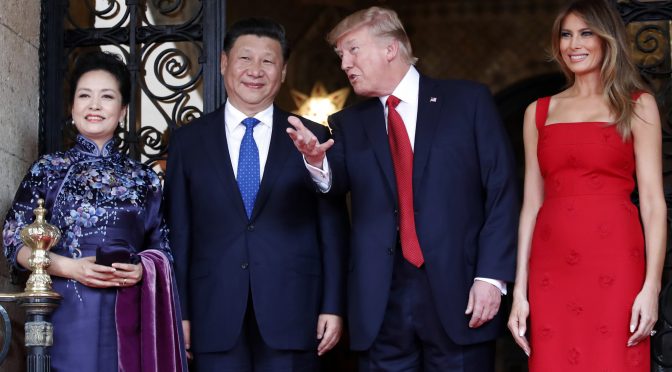
The White House praised the summit as a positive and productive opportunity for both presidents and their wives to get to know one another, and for their respective staffs to build rapport for the work ahead in reviewing the state of strategic bilateral relations and generating results-focused outcomes that would benefit both countries. Trump and Xi agreed to work in concert to expand areas of cooperation while managing differences based on mutual respect and to elevate existing bilateral talks to reflect the importance of making progress on strategic issues of mutual concern. 

Overall, the meeting details were rather sparse for policy flexibility and probably indicative of the U.S. limited objectives for the summit considering the timing and duration of the meeting: (1) get through the state visit without any enduring policy encumbrances; (2) size up Chinese counterparts for future negotiations (trade, commerce, North Korea, Taiwan, SCS, etc.); and (3) set favorable conditions for the forthcoming and more substantive cabinet-level dialogues and state visit to China. Generally speaking, a major summit within the first 100 days of taking office may be too soon, particularly with the principal nation-state competitor, understaffed national security team, and an unsettled China policy.

Despite the positive and upbeat portrayals of the summit by Beijing and Washington, there was a wide divergence on whether the state visit was a success or not amongst U.S. think tank and media analysts. Some read the lack of a joint press conference or joint press statement as a failure; while others judged the summit as successful simply because it provided an opportunity for Trump and Xi to meet, lower heightened tensions, and set the conditions for future dialogues and negotiations. However, most agreed that the U.S. missile strikes on Syria overshadowed the summit and the summit itself produced few substantive or tangible results. That being said, many saw enough pleasantry between the two sides for restrained optimism in the coming year.

The International Perspective

Most foreign media outlets were cautiously hopeful prior to the summit. Many welcomed the meeting as an occasion to reduce the rising tensions between Beijing and Washington, lower the risk of a disruptive trade war with global ramifications, and explore a new constructive and stabilizing relationship between the two economic and military juggernauts. After the summit, the same foreign media outlets largely acknowledged that there were few substantive or tangible outcomes and the U.S. missile strikes against Syria detracted from the meeting. Some even intimated that the latter may have been a subtle signal to China that the United States is ready to act militarily and unilaterally when faced with threats abroad to include North Korea. Nevertheless, the cordial tone and lack of controversy were generally considered positive steps towards ameliorating tensions in U.S.-China relations during the first eventful months of the Trump Administration.  

U.S. regional allies and partners were rather anxious that Washington would make some sort of unilateral accommodation to Beijing without consultation and at their expense. In Tokyo, there had been apprehensions that the Trump Administration would attempt to use “the scent of a huge deal with China” as leverage to extract concessions from Japan, ease plans to step up pressure on Pyongyang, and give ground in the East China Sea (ECS) and SCS. In Seoul, there were fears that Washington would offer uncoordinated peninsular concessions to Beijing in exchange for pressuring Pyongyang. In Taipei, there were concerns that Trump would continue to use Taiwan as a bargaining chip in its trade negotiations with Beijing and possibly for North Korea, too. In Canberra, there were worries of being left behind on potential economic agreements.

All appear relieved with the summit’s lackluster outcomes. Trump’s telephone calls with Japanese Prime Minister Abe before and after the meeting seemed to allay the Japanese concerns. The Korean response was generally mixed with the Korean Foreign Ministry hailing the summit as successful and meaningful, while the Korean media calling out the meeting for its lack of any agreement on the North Korean nuclear and missile issue. The Taiwanese were likely reassured that the Chinese proposal for a Fourth Communique did not come up, in which Trump would again accede to Xi’s wishes by agreeing that there is but one China and that Taiwan is part of it, instead of the U.S. longstanding policy that it acknowledges the Chinese viewpoint but does not accept the viewpoint. The Australians were simply content that no economic agreements were made that upset their robust bilateral trade relations with China. As for the rest of the region, the media provided limited coverage – as is typical for events outside the region – with post-summit commentary predominantly observed in Singapore. As expected, Singapore took a neutral and measured position of the summit – “does not appear to have gone badly…and achieved little more than just sketching out the challenges which lie ahead on North Korea, SCS, and trade and commerce.”

Conclusion    

This concludes the short discourse on the perceived and actual outcomes from a Chinese, American, and international Regional perspective on the Trump-Xi summit and sets the conditions for further discussion in part 2 on the assessment of which leader came out relatively stronger, ramifications for the U.S.-China strategic relations, expectations of Trump’s visit to China later in the year, and U.S. strategic opportunities and how Washington can leverage them.     

Tuan Pham has extensive experience in the Indo-Asia-Pacific, and is widely published in national security affairs. The views expressed therein are their own and do not reflect the official policy or position of the U.S. Government.

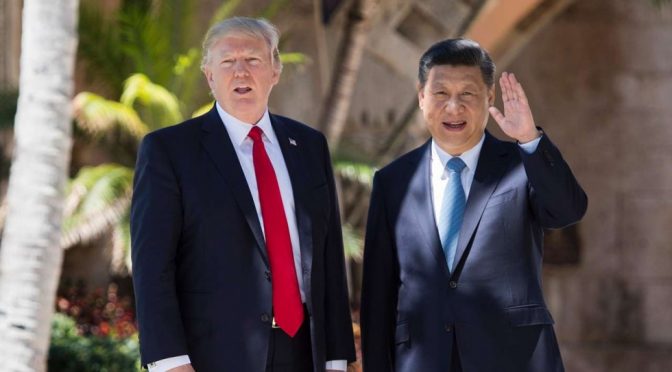
Featured Image: Talks between Chinese President Xi Jinping and US President Donald Trump at the Mar-a-Lago estate in West Palm Beach, Florida, on Thursday and Friday have put bilateral ties back on track. (AFP)

Call for Articles: North Korea

By Dmitry Filipoff

Week Dates: May 29-June 2, 2017
Articles Due: May 24, 2017
Article Length: 1000-3000 words 
Submit to: Nextwar@cimsec.org

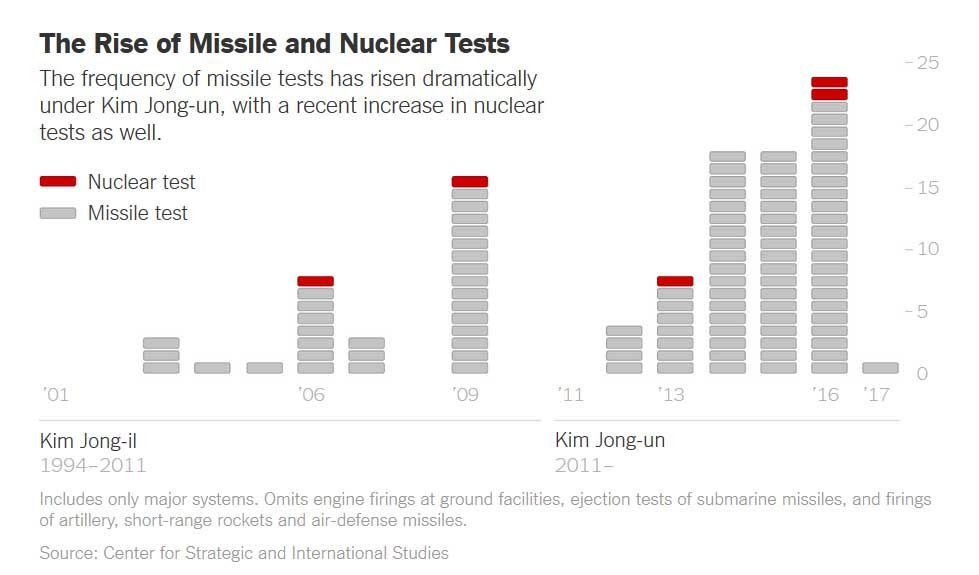
North Korea’s ongoing ballistic missile development program and nuclear testing has continued unabated despite international sanctions and pressure. A highly-secretive state with thousands of tons of chemical weapons, a populace cut off from the world, and over a million men under arms, North Korea poses a grave challenge for any attempting to shape its behavior or contain its potential collapse.

How could a military contingency unfold and what are its considerations? How does the U.S.-China relationship affect North Korea? How could North Korea resolve its strategic predicament? Submissions can answer these questions and more to help understand and mitigate the threat North Korea poses.

Dmitry Filipoff is CIMSEC’s Director of Online Content. Contact him at Nextwar@cimsec.org

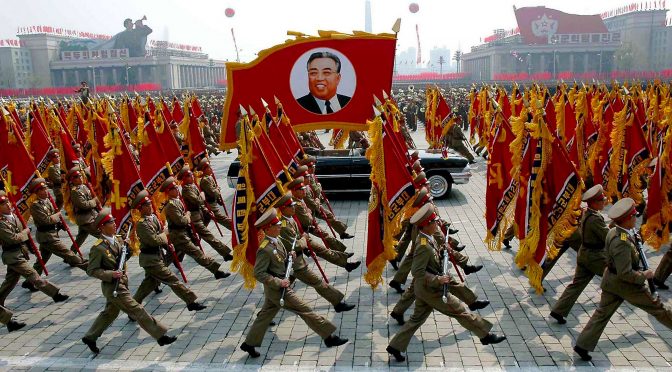
Featured Image: A flag with a portrait of North Korea’s late leader Kim Il Sung is displayed as soldiers march during a massive military parade at Kim Il Sung Square in Pyongyang, North Korea, Wednesday, April 25, 2007, to mark the 75th anniversary of the Korean People’s Army. (AP Photo/Korean Central News Agency via Korea News Service) 

China: Connected Strategic Themes Across Global Commons Pt. 2

Are there connected Chinese strategic themes that cut across the contested and interlinked global commons (domains) of maritime, space, and cyberspace? If so, what are they and what could the United States do about them?

By Tuan N. Pham

Part 1 of this two ­part series explored the cross-domain nexus between the maritime, space, and cyberspace global commons by examining the latest Chinese white paper and strategies. Repeated refrains included the Chinese Dream (national rejuvenation); global interests, peace and development, security, and the development of national laws to advance China’s national interests in the three contested battlespaces. Special emphasis was given to the contentious concept of cyberspace sovereignty in support of national security and social stability. With this backdrop, Part 2 will now derive possibly connected strategic themes that cut across the interlinked global commons and discuss how the United States could best respond.   

The Chinese Dream

Chinese Manifest Destiny. Chinese strategists have long called for a comprehensive and enduring set of strategies to better integrate and synchronize the multiple strategic lines of effort in furtherance of national goals (ambitions) and as part of a grand strategy for regional preeminence, and perhaps ultimately global preeminence. China’s dream of national rejuvenation may be the answer to their calling. The prevailing leadership’s sentiment appears now expansionist and revisionist. The time has come for Beijing to finally abandon the long-standing state policy of hide capabilities and bide time championed by the iconic former President Deng Xiaoping; right a perceived historical wrong; put behind the painful humiliation of the past; and assume its rightful place on the world stage as a destined global power. China is unquestionably a confident economic juggernaut and rising global power, able to manifest its own national destiny – the Chinese Dream – and dictate increasing power and influence across the contested and interlinked global commons in support of national rejuvenation.     

Global Commons Sovereignty (Economic Prosperity vs National Security). Beijing’s maritime activities are driven by its strategic vision of the ocean as “blue economic space and blue territory” crucial for its national development, security, and status. China seems to regard space and cyberspace very much in the same manner in terms of economic potential (value) and sovereign territory that requires developing and defending respectively. For now, there appears more policy clarity, guidance, and direction for sovereignty in cyberspace, while space sovereignty seems more fluid and may still be evolving policy-wise. Nevertheless, Beijing still needs to balance two competing national priorities – developing the domain economy (economic prosperity) and defending domain rights and interests (national security) – in all three contested and interlinked global commons. Many anticipate the initial emphasis will be on the economy since it is an enduring asymmetric counterbalance to the preeminent United States. The rationale calculus is simple for Beijing. Why would China opt to directly confront a militarily and economically stronger United States now when it can subtly and quietly undermine American preeminence through lasting economic partnerships and enduring political agreements (bilateral preferably and multilateral when necessary)? Beijing can always recalibrate later based on the fluid strategic conditions and confront Washington more directly and forcibly when opportunities arise, or if and when the balance of power shifts more in its favor.     

Shaping Law to Support Strategy. Last year, China announced its intent to create new domestic maritime laws in support of its evolving maritime strategy. These developing domestic maritime laws bear watching as a possible harbinger for the other contested and interlinked global commons of space and cyberspace and as an attempt to right a perceived historical wrong. The former is part of a continuing effort to set the terms for international legal disputes that Beijing expects will grow as its domain reach expands; the latter reflects China feeling disadvantaged (and taken advantage of) by a Western-dominated system of international laws established when it was weak as a nation and had little say in its formulation. In general, the broad legal approach makes a lot of legal, political, and military sense from Beijing’s perspective. China wants to set the enabling conditions for its future strategies across the contested and interlinked global commons in terms of implementation and sustainment. Beijing seeks to expand its domain borders through buffer zones. It will buttress and justify with legal underpinnings its growing domain presence and operations and also exert greater control within those buffer zones. China seeks to eventually shape international laws and norms (and develop accompanying domestic laws) to be more equitable and complementary to its national interests.

U.S. Strategic Opportunities

Maintain Preeminence. Just as maritime preeminence is necessary to guarantee the freedom of the seas, so too are space and cyberspace preeminence needed to guarantee the freedoms of space and cyberspace. By committing to preeminence in all three contested and interlinked global commons, the United States will better protect its critical strengths; enhance its deterrence posture by being able to impose larger costs, deny greater benefits, and encourage more restraint, and reverse the growing perception of American decline. Having complementary domain policies and strategies fosters unity of effort, optimizes resource allocation, sends a strong deterrent message to potential adversaries, and reassures allies and partners. To do otherwise invites strategic misalignment and miscommunication and encourages potential competitors like China to further advance their counter-balancing efforts in the maritime, space, and cyberspace global commons.    

Protect the Global Commons. Now is not the time to cede territory in the contested and interlinked global commons of maritime, space, and cyberspace. China pursues very broad, long-term, and synchronized domain policies and strategies, and may view any perceived U.S. force posture reduction as another opportunity to reset the international accepted norms in its favor. Reduction may also increase Beijing’s confidence in its ability to shape and influence Washington’s decisions and encourage China to press the United States for additional domain concessions in return for vague and passing promises of restraint while it quietly and steadily expands and strengthens its positions in the global commons.                               

Dominate the Narrative. To compete with Beijing short of conflict, Washington needs to reframe the narrative that China dominates with accusations of containment. The United States could be more proactive and seize the messaging initiative like it does in the maritime domain. Former Secretary of Defense Carter hit the right resonance notes during the Shangri La Dialogue in June and in the November/December 2016 edition of Foreign Affairs with his gentle reminders to the region of America’s traditional role as the principal underwriter of maritime security, political stability, and economic prosperity in the Indo-Asia-Pacific; warning China not to build a “Great Wall of self-isolation”; and using the catchall concept of “principled security network of alliances and partnerships” to outline a vision that the United States has long sought to describe. The same needs to be done in the contested and interlinked global commons of space and cyberspace. The “balancing” message needs to be reiterated at every opportunity and at the highest level, and synchronized throughout the whole-of-government and with allies and partners. There can be no U.S. policy seams or diplomatic space for Beijing to exploit. In short, acknowledge that both countries have competing visions and encourage China to act as (or become) a more responsible global stakeholder that contributes positively to the international system.

Seize the Initiative. The maritime strategy and accompanying domestic maritime laws are coming, but China has not said when. The same can be largely said in the space and cyberspace global commons. Hence, Washington could privately and publicly ask Beijing now for discussions and briefings on its developing domain strategies and laws; challenge vague or problematic content and context, such as how the security and economic pieces fit together, and inquire how they comport with international law and rule of law, and if they do not, why not. Otherwise, silence concedes the strategic initiative to Beijing and allows it to control the strategic narrative.

Conclusion

At the end of the day, the strategic window of opportunity to shape and influence Beijing’s developing domain strategies may soon close for Washington. To China, U.S. inaction implies tacit acknowledgement and consent to execute its domain strategies and strategic ambitions unhindered and unchallenged. At stake is nothing less than U.S. preeminence in the contested and interlinked global commons of maritime, space, and cyberspace, and ultimately as a global power. For decline is a deliberate choice, not an imposed reality. 

Tuan Pham has extensive experience in the Indo-Asia-Pacific, and is published in national security affairs. The views expressed therein are his own and do not reflect the official policy or position of the U.S. Government.

Featured Image: The Tianhe-2 Chinese supercomputer at the National University of Defense Technology in Changsha. (Zhao Zilong/Imaginechina, via Associated Press)

The Beijing Consensus: A Threat of our own Creation

NAFAC Week

By Jhana Gottlieb

Over the past 40 years, Beijing’s domestic policies have successfully transformed China from an impoverished nation into a world superpower; yet, they did so without a basic tenant of Western development theory—democracy.1 In 2004, China’s startling growth led Joshua Ramo to coin the term “Beijing Consensus.”2 This moniker nods to the “Washington Consensus,” the set of political and economic development prescriptions issued by Washington technocrats to Latin American countries in the late 1980s in an attempt to spur regional development. To some Western academics and politicians, the Beijing Consensus poses a threat to the United States’ soft power, particularly within developing nations. Yet to what extent does the Beijing Consensus truly represent an international ideological danger? Contrary to the beliefs of Western alarmists, the Beijing Consensus’ power derives mostly from its definition as an alternative to Western neoliberalism, not from any ideological strength of its own. In emphasizing the dichotomy between the Washington and Beijing Consensuses, Western observers thereby only further extend China’s ideational power.

The overarching argument for China’s ideological threat contends that China’s successful growth has provided an attractive alternative development model founded on authoritarianism, which lacks fundamental Western values such as universal human rights or democratic institutions. This model, when combined with China’s increasing political and economic expansion into developing regions, is slowly replacing the West’s soft power across vast territories, particularly Africa and Latin America. In his book, The Beijing Consensus: Legitimizing Authoritarianism in our Time, Stefan Halper argues that the “net effect of these developments is to reduce Western and particularly American influence on the global stage—along both economic and ideational axes.”3 Furthermore, this threat supersedes all others, for it “will have a vastly greater impact than will the tactical military and economic ‘China threats’ concerning Washington today.”4 Essentially, the U.S.’s grip on global soft power dynamics is weakening as a result of an ongoing battle between dominant ideologies.

While initially compelling, Halper’s argument ultimately falls short in its most basic assumption—that China and the U.S. truly represent two intrinsically antithetical ideologies. Since its initial release in the 1980s, the “Washington Consensus” has come to more generally to represent a cohesive development model in which democratic institutions and neoliberal economics mutually reinforce each other. It rests upon a strong ideological foundation dating back to Adam Smith’s political economy model in the Wealth of Nations. The Beijing Consensus lacks a comparable historical foundation and cohesive political economic definition. It is often referred to as state capitalism, implying some sort of state-controlled economic liberalization; beyond this general understanding, its specifics remain rather vague. In fact, its defining tenant lies within this ambiguity. Shaun Breslin, a leading expert on China’s political economy, explains that “not being identified as the promoter of any specific normative position is in itself a normative position.”Rather than representing a concrete political economic model, the Beijing Consensus “is simply concerned with doing what works in the long term, and is not driven by any plan.”Therefore, in comparing the two, the Washington Consensus is the specific combination of democratic institutions and free market economics, while the Beijing Consensus seems to be most any other combination of political and economic factors that foster development.

In reality, upon closer analysis of China’s path to economic growth, it is startlingly similar to Western neoliberalism. Scott Kennedy finds that China actually followed eight of the ten mandates of the Washington Consensus during its Opening and Reform period.Economically, the two are quite similar; it is only upon including political ideology that they truly diverge. While the Washington Consensus is firmly based in democracy, Breslin argues that, “for most observers, it is this experimentation and non-ideological commitment to doing whatever it takes to promote growth while maintaining political stability that is the defining hallmark of the Chinese mode of governance.”8 Therefore, the Beijing Consensus is not its own political economic system. Rather, it is a model of political stability and economic growth by some combination other than the Washington Consensus’ unique pairing of democracy and free market capitalism. Thus, the Beijing Consensus derives its strength by being defined as everything outside the Washington Consensus, not its own ideational foundation.

However this definition is the very reason that the Beijing Consensus does not necessarily need a strong ideational basis. “The China model isn’t important for others because of the specifics of what has happened in China; rather, it is important for establishing what can be done if other countries do what is best for themselves based on their own concrete circumstances and not simply what they are told to do by others.”Not telling others what to do is highly antithetical to the Washington Consensus, which was forcibly imposed upon Latin American countries. The Beijing Consensus’ ideational power therefore lies in its respect for autonomy and individualized growth, a power that is enabled by its continual comparison to the Washington Consensus.

Definition by comparison further strengthens the Beijing Consensus in light of the 2008 economic crash. “Before the 2008 financial crisis, the Beijing Consensus was an interesting idea that animated discussions at academic seminars and conferences, mostly in Western countries. This is no longer the case.”10 Free market failure naturally strengthened the ideational weight of all other models, including the Beijing Consensus.

Ironically, the Beijing Consensus now represents a form of Chinese soft power, but was originally propagated by Western theorists. Breslin argues that the Beijing Consensus is a, “speech act—talking of it, and defining it in a specific way, makes it real and gives it real power.”11 Therefore, Western insistence on this dichotomy is not only the source of the Beijing Consensus’ ideational strength, but also leads to the expansion of its power.

In reality, China’s development shares many similarities with the Western model. It is only through Western theorists highlighting the differences and compiling them into an intellectual concept that China has developed as an ideological competitor. Continual emphasis on these differences is the source of its strength, as the Beijing Consensus has no ideology of its own upon which to rest. If the West wishes to limit China’s ideational power, it must cease propagating an ideological dichotomy and instead emphasize the similarities China shares with the West. As of now, the Beijing Consensus is an ideational threat of our own creation, and will be so as long as we continue to define it by what it is not.

Jhana Gottlieb is a senior IPE major at Colorado College. She is passionate about conflict resolution, and plans to pursue international mediation post-graduation. On campus, Jhana is a member of the John Quincy Adams society on American foreign policy, a peer tutor at the CC writing center, and a student assistant in the Political Science Department. In her free time, she loves to travel and ballroom dance, as well as explore Colorado’s exquisite natural world through backpacking, skiing, and rock climbing.

Bibliography

Breslin, Shaun. “The ‘China model’ and the global crisis: from Friedrich List to a Chinese mode of governance?” The Royal Institute of International Affairs 87:6 (2011): 1323-1343. Accessed March 3, 2016.

Halper, Stefan. The Beijing Consensus: Legitimizing Authoritarianism in our Time. New York: Basic Books, 2010.

Huang, Yasheng. “Rethinking the Beijing Consensus.” Asia Policy 11 (2011): 1-26. Accessed March 2, 2016.

Kennedy, Scott. “The Myth of the Beijing Consensus.” Journal of Contemporary China 19.65 (2010): 461-477. Accessed March 3, 2016.

References

1. This paper was adapted from an earlier written assignment, composed for the class “Topics in Politics: China and World,” taken in March 2016.

2. Scott Kennedy, “The Myth of the Beijing Consensus,” Journal of Contemporary China 19.65 (2010): 462, accessed March 3, 2016.

3. Stefan Halper, The Beijing Consensus: Legitimizing Authoritarianism in our Time (New York: Basic Books, 2010), 3.

4. Ibid.

5. Shaun Breslin, “The ‘China model’ and the global crisis: from Friedrich List to a Chinese mode of governance?” The Royal Institute of International Affairs 87:6 (2011): 1338, accessed March 3, 2016.

6. Ibid., 1382.

7. Kennedy, “The Myth of the Beijing Consensus,” 470.

8. Breslin, “The ‘China model’ and the global crisis,” 1328.

9. Ibid., 1338.

10. Yasheng Huang, “Rethinking the Beijing Consensus,” Asia Policy 11 (2011): 4, accessed March 2, 2016.

11. Breslin, “The ‘China model’ and the global crisis,” 1324.

Featured Image: A paramilitary police officer in plain-clothes holding an umbrella keeps watch on Beijing’s Tiananmen Square, August 27, 2015. (Reuters/Jason Lee)