The rise, fall, and rebirth of the Puntland Maritime Police Force (PMPF) is a bizarre and thrilling story that I have been following, to the point of obsession, for the last two years. As CIMSEC readers are surely aware, one is hard pressed to find a report on Somali piracy that does not advocate an onshore solution for this maritime crime.
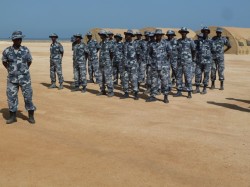
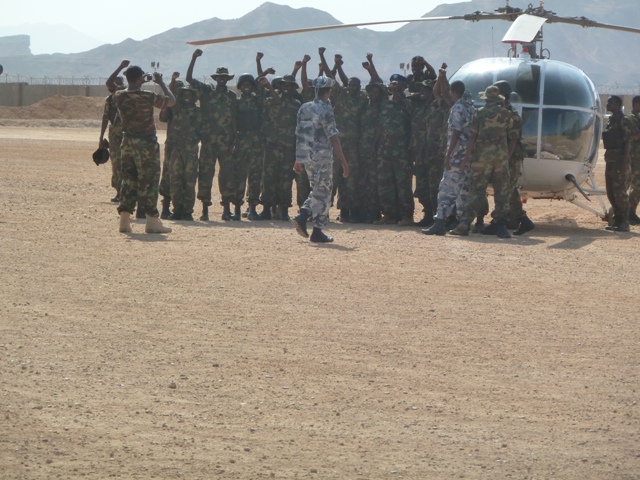
PMPF marines and their expat-piloted Alouette III helicopter
When it came to actually establishing security and rooting out pirate bases in the autonomous region of Puntland however, it was not NATO, the EU, the U.S, or U.K. that took the lead, but a South African private military company financed by the United Arab Emirates.
The PMPF has earned international praise for denying pirate gangs an onshore sanctuary and for rescuing hostage mariners, but has also been labeled an unaccountable private army by UN monitors. Despite international pressure, financial arrears, and pirate infiltration the PMPF and its South African mentors continue to march on. With piracy now largely eliminated, the marines appear to have engaged a new foe—the Islamist insurgents of al-Shabaab.
Note: The views expressed are solely those of the authors and do not necessarily represent those of their governments, militaries, employers or the Center for International Maritime Security.
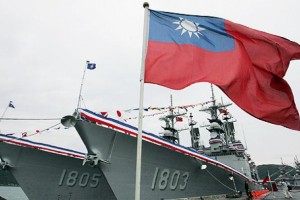
Taiwan on Sunday sent a task force of three Coast Guard Administration vessels and one Lafayette-class navy frigate to waters near the northern Philippines, joining a Knox-class frigate already in the area. The move follows the death of a Taiwanese fisherman last Thursday that has strained ties between the neighbors.
The 65-year-old fisherman was aboard the fishing vessel Kuang Ta Hsin No 28 when he was killed in a confrontation with Philippine coastguardsmen aboard the Bureau of Fisheries and Aquatic Resources (BFAR) vessel MCS 3001, an incident now under investigation by the Philippines government.
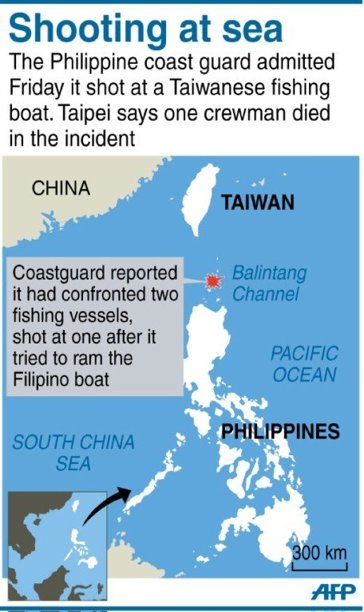
On Friday, the Philippines confirmed that it had confronted two fishing vessels and fired at one, but only after it says a vessel tried to ram the 30-meter MCS 3001. Philippine Coast Guard spokesman Commander Armand Balilo said that the BFAR ship fired to disable the ship’s engines, and before the coastguardsmen were aware of the injury, they saw “a big white ship“ that apparently scared them off. “Our people felt threatened so they left the area,” he said,according to AFP News.
It is important to note that although the Philippines insists the incident took place in its undisputed waters, so far Taiwan has not acknowledged that assertion, backing the Kuang Ta Hsin‘s claims that they were in an area of overlapping Exclusive Economic Zones (EEZs).
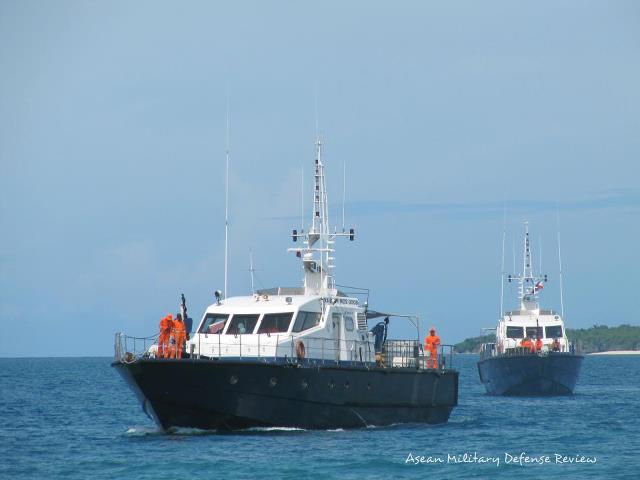
A pair of BFAR MCSDespite an increase in Filipino naval spending, Taiwan has more naval forces to call upon as a result of decades of inter-strait tension.
Two additional Taiwanese fishing vessels reportedly rescued the Kuang Ta Hsin after it called for help and “towed the boat back to a port in southern Taiwan.”
Taiwan responded on Friday by demanding compensation from the Philippine Coast Guard, prosecution for those responsible, and an apology within 72 hours. Failure to comply would lead to a freeze on the hiring of Filipino nationals in Taiwan, said the spokeswoman for Taiwan’s presidential office, Lee Chia-fei.
The Philippines, however, are waiting for the result of their official investigation, with no word on its expected duration and in the mean time sticking by claims of justifiable self-defense. “If somebody died, they deserve our sympathy but not an apology,” said Balilo. Nonetheless, the personnel involved have been suspended as a matter of routine pending the investigation’s outcome. Interestingly, another Filipino news site says video exists of the incident and will be used in the investigation but is not available for public viewing.
Meanwhilehackers from both nations have targeted each others’ government websites.
Aaron Willschick on the tension over the recent Russian military exercise in the Black Sea and how Russian President Vladimir Putin should put an end to his persistent warmongering.
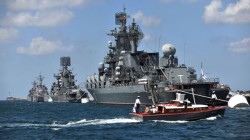
In what is becoming an almost daily occurrence, the Russian government has again stolen the front page news headlines with its recent military exercise involving more than thirty warships, 250 combat vehicles and up to 7, 000 troops. The exercise has been met with confusion and anxiety from the international community with regards to what in fact Russia’s intention was with ordering the surprise maritime exercise.
The country that has had the strongest reaction against the exercise is Georgia. Tensions have been high between the two countries ever since they went to war in 2008 over the separatist republics of Abkhazia and South Ossetia. In response to the exercise, the Georgian government said Russian military action in the Black Sea was “at odds with the interests of stability.” The official Russian statement on the drills from state-run news agency RIA Novosti was that they were meant to ensure regional stability ahead of next year’s Winter Olympics in Sochi on Russia’s Black Sea coast.
On April 1st, the Russian Foreign Ministry dismissed Georgia’s condemnation, stating that Tbilisi’s assertion was groundless and out of sync with its declared commitment to normalize its relationship with Russia. The Foreign Ministry also stated that Georgia’s claims that the military drills were destabilizing reflects its own regional aggressions. Russian Foreign Ministry spokesman Alexander Lukashevich said the Georgian reaction was “a public inflation of a Russian threat to cover its own confrontational policy.” NATO has not offered an official response to the exercise, but a NATO-member diplomat suggested that there was some unease over the surprise nature of the drill. There was no official objection from Ukraine either, but some members of the parliament chose to voice their displeasure.
Under international law, maritime exercises of this size do not need to be announced to other countries in advance, but as evidenced by some of the reaction, it has only added to the mounting international skepticism over Russia’s global intentions. Despite the rising tension, it is fairly clear that the Black Sea military exercise is yet more warmongering by the Kremlin and Putin and what we have come to expect during his lengthy tenure as either Russian President or Prime Minister. Putin himself even chose to attend the exercise in the Black Sea town of Anapa, along with Defense Minister Sergei Shoigu. During his time in office, Putin has used his role as commander-in-chief to cast himself as a strong leader for whom national security is foremost. Particularly since returning to the presidency last May, Putin has stressed the importance of a strong and agile military. He has often cited external threats in his thirteen years in power when discussing the need for reliable armed forces. It has been reported that spontaneous training missions resembling this one are apparently set to become routine in the Russian military.
Despite Russian denials, it is quite apparent that this exercise is part of some grand strategy of standing up to the West and asserting Russia’s regional dominance. Putin seems intent on projecting Russian power towards Europe as well as the Middle East. In late February, Putin ordered military leaders to make urgent improvements to the armed forces in the next few years, saying Russia must thwart Western attempts to tip the balance of power. He said that manoeuvres must be held with less advance warning to keep soldiers ready and prepared. Observers have commented that the drill is likely part of a wider attempt to reconfirm that the Russian navy and military are still able to play a political and geopolitical role in the south.
It is time for Putin to put an end to his regular attempts at flexing Russia’s geopolitical and military might. It has become all too regular an occurrence that it has now grown to be predictable and reminiscent of Soviet rhetoric during the Cold War. As a leader, Putin seems intent on making himself feared on the international stage which is unrealistic in this day and age. All the strength he is putting into trying to raise Russia’s geopolitical prominence could be spent on re-establishing and reinforcing relationships with Western powers. Unfortunately, it seems unlikely that this will happen until Putin has decided that his time in the Russian political spotlight has come to an end, a remote possibility unlikely to occur any time soon.
Aaron Willschick is a recent graduate from the MA program in European, Russian and Eurasian Studies at the University of Toronto’s Munk School of Global Affairs. He also holds an MA degree in political science from York University and a BaH from York University’s Glendon College. His research interests include the European Union, European security and defense policy, NATO enlargement to Eastern Europe and democratization. He has extensive experience in policy and research, having worked as a trade assistant at the U.S. Consulate in Toronto and a research assistant to well-known Canadian author Anna Porter and York University political science professor Heather MacRae.
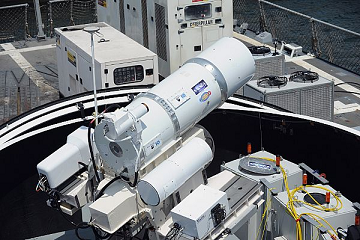
She blinded me with science: the LaWS installed on the USS DEWEY.
We may not have servant robots or flying cars, but it America is finally ready to deploy functional lasers. Next year, the USS PONCE will receive the military’s first field-ready Laser Weapon System (LaWS). The navy, and nation, are justifiably excited to finally embrace military laser technology. However, it is important for us to realize the tactical and technological limitations of our new system before rushing too quickly to rely on them too often. Lasers still face great challenges from the weather, ability to detect hits, and power demands.
Red Sky in Morning:
Lasers are nothing more than light: deadly, deadly light. Like all light, lasers as at the mercy of the atmospheric conditions they encounter. In particular, lasers are at the mercy of refraction and scattering. Refraction changes the angle that occurs as light moves through an atmosphere of varying density and makeup. As lasers are designed for longer ranges, or short range lasers encounter areas of differing conditions, the trajectory will change. This could pose challenges as targets move through areas of varying range and atmospheric density over long ranges.
Fog and house music, LaWS’ greatest enemy.
Laser light weakens over distance. Navigation types know this as “nominal range,” the range at which light can be seen in perfect conditions. A military laser’s effective destructive range is shorter, but the concepts are the same. “Luminous range” is the actual range of light due to atmospheric conditions. That range can be shortened by scattering caused by atmospheric conditions or precipitation. Lasers will be affected by such conditions as well, their effectiveness ranges shrinking in fog, rain, snow, etc… Depending how far the navy is willing to rely on laser technology, this could pose significant challenges to a fleet more beholden to the weather than before.
Eyes on Target:
Unlike kinetic rounds, lasers cannot be tracked en route to their target. An SM-2 explosion can be detected, the 76MM’s MK 98 tracks each splash and can be corrected by operators, and the CIWS system tracks each CIWS round for automatic ballistic correction. The refraction and scattering effects, combined with the time needed for LaWS to be effective, make judging effectiveness particularly important. The laser is not powerful enough to cause immediate destruction of target detectable by radar. If atmospheric interference prevents an IR tracker from detecting the laser heat signature on target, there is no way to verify trajectory and correct. This imposes, at times, a dangerous “wait and see” aspect to the use of LaWS. If a ship is engaging multiple C-802’s, and a LaWS has (hypothetically) range of 6nm, 37 seconds is not a long time for a ship to worry if its measures are effective.
Not Enough Potatoes in the World:
Enough power for a small city… or an array of space-age weaponry.
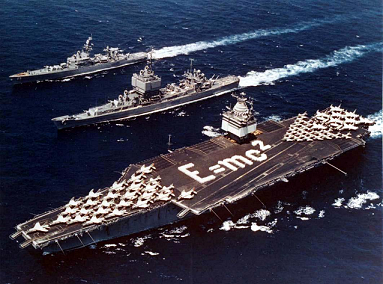
Missiles and guns come with the kinetic energy stored either in fuel or a charge; 100% of a laser’s power is drawn from the ship’s power supply. This means greater demands from the ship’s grid, as well as a greater scope of variation on grid demand as a laser powers up and down. This pumping of massive demand could cause problems for EOOW’s trying to maintain plant stability. Lasers will naturally require either vast changes in plant layout to support greater power production, or a collection of either batteries or capacitors to act as a buffer for the fluctuations in power demands. There is also the possibility of adding nuclear-powered defensive laser batteries to our mostly defenseless carriers, especially if they were allowed to increase their power output. What some are starting to call the “most expensive fleet auxiliary” will gain a invaluable punch for self-defense and defense of ships in company. For lasers to be effective, the projected power “magazine depth” under real combat conditions will need to be determined and supported.
Proper Room Clearance:
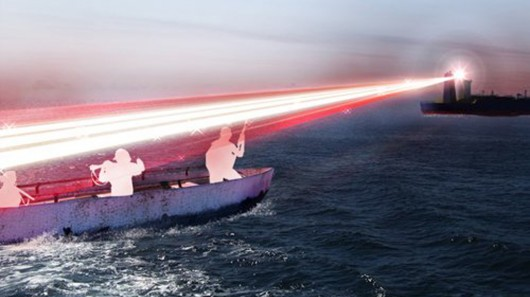
Pirates: When “arrrr” becomes “ahhhh!”
As Peter A. Morrision, program officer for ONR’s Sold-State Laser Technology Maturation Program has said, “the future is here.” Before calling the, “all clear,” on this future, the navy should properly clear the room. Laser technology has amazing cost savings and lethal possibilities, but still has serious weaknesses in weather susceptibility, verification of hits, and power demands that need solving. Other shadowy possibilities exist, such as enemies employing laser-reflective coatings that would require lasers to change wavelength to increase effectiveness. As the technology stands now, it is a worthy display of American technological supremacy that saves money on CIWS rounds and SM-2’s for limited instances. For the technology to truly carry the battles, it must be far more powerful and far better supported by ship-board systems.
Matt Hipple is a surface warfare officer in the U.S. Navy. The opinions and views expressed in this post are his alone and are presented in his personal capacity. They do not necessarily represent the views of U.S. Department of Defense or the U.S. Navy.