This week CIMSEC is running a topic week on Naval Humanitarian Assistance/Disaster Relief (HA/DR). Our audience replied to the call for articles with strong contributions featuring varied and in-depth analyses. Their writings explore the complex and urgent nature of HA/DR missions, the importance of demonstrating goodwill to the international community, and provide recommendations to better perform this key mission. We thank our authors for their contributions.
Below is a list of articles featuring during the topic week. It will be updated as the topic week rolls out and as prospective authors finalize additional publications.
Dmitry Filipoff is CIMSEC’s Director of Online Content. Contact the CIMSEC editorial team at Nextwar@cimsec.org.
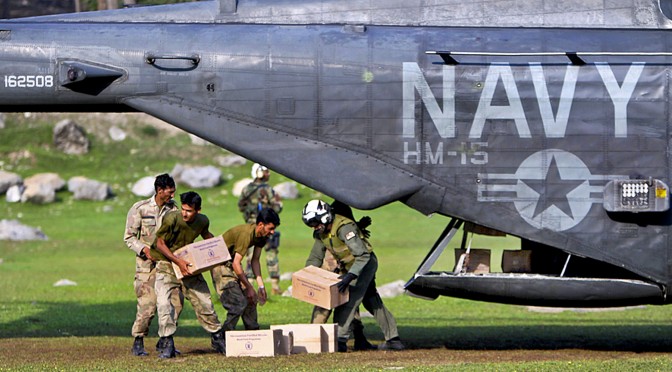
Featured Image: A U.S. Navy aircrew helps Pakistani soldiers load relief supplies aboard a U.S. Navy MH-53E Sea Dragon helicopter during humanitarian relief efforts in Pakistan’s Khyber-Pakhtunkhwa province, Aug. 21, 2010. The U.S. crew, assigned to Helicopter Mine Countermeasures Squadron 15, is embarked aboard the amphibious assault ship USS Peleliu to support the Pakistan government in flooded regions of Pakistan. U.S. Marine Corps photo by Capt. Paul Duncan.
Do you know where your computer data is stored? Generally not. Previously, servers were located within companies. According to Didier Renard, director of Cloudwatt, a French company specialized in cloud computing founded in 2012 by Orange and Thales, said that “in the early 1990s, when computer engineers were making the network architecture diagrams where you had to place equipment such as servers, they drew a cloud whenever they rose out of corporate networks.”
What was then the exception has now become the rule. In most cases, IT infrastructures are outsourced. We save all our documents online on sites like Google, iCloud, Dropbox etc. For a few euros, you can buy storage megabytes. If this article was read by millions of readers, CIMSEC should subscribe to such services so that our website could meet the demand. The cloud is clearly essential to the functioning of the Internet.
Unfortunately, these outsourced data centers contain many servers that generate a lot of heat. If it is too high, servers fail to function properly. That is why they are usually located in very cold places like Alaska and Finland (Google) or Sweden (Facebook).
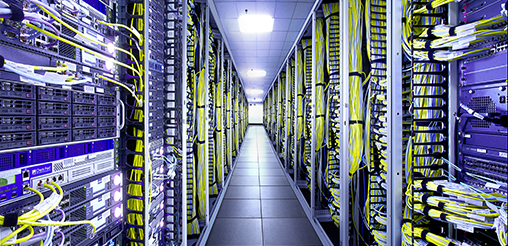
A data center. Source: ABB.
Facebook also created a data center in Clonee, Ireland, where there is significant wind energy resources and Google based its servers in Hamina, Finland, where the company uses sea water for cooling.The goal is always to reduce energy costs to cool the servers.
These data centers also consume a lot of electricity. Indeed, they facilitate strong economic growth, because they are also large consumers of electricity and oil for their operation and cooling. Those located in France account for 9% of the total electricity consumption. In the US, data centers owned by Google and Facebook consume as much power as a city of 250,000 inhabitants.
The Natick Project and the Leona Philpot Prototype
Eager to reduce energy consumption in its data centers, market leader Microsoft has been working for three years on a project called Microsoft Natick. This is to determine the technical feasibility of a new type of data center that could be submerged at the bottom of the ocean. A first prototype of 17 tons, the Leona Philpot (named after a character in the Xbox game Halo Nation -you must be geek to understand everything!), has been immersed in over thirty meters off California. The idea began in February 2013 Sean James, a Microsoft employee and a former submariner in the US Navy. This article then caught the eye of Norm Whitaker, another Microsoft executive who had served in DARPA (Defense Advanced Research Projects Agency). In 2014, Whitaker created a team within the NEXT unit of Microsoft (New Experiences and Technologies) to launch the project Natick. This represents a technological and energy challenge.
During deployment in 2015, the Leona Philpot prototype was powered by onshore electricity, but now the plan is for it to harness tidal energy and wave energy in order to supply electricity. In addition, at thirty meters deep, the cold surrounding seawater would lower its temperature and thus prevent overheating.
Finally, these data centers would be located near the coast, where most of the world population lives (50% of the US population lives within 200 kilometers of the sea), which would accelerate computer data transmission. This is why Leona Philpot was located 1 kilometer off the coast between August and November 2015.
Microsoft’s aim is therefore to diminish the distance and thus the latency-that is to say the time taken by certain data to get from the source to destination-between the place where the data is stored and final users.
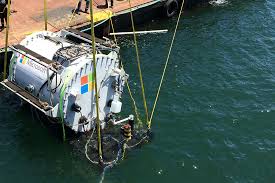
Microsoft’s Project Natick. Source: Microsoft.
According to Whitaker, it would be possible to deploy a submarine data center within 90 days versus two years for a land-based data center. This could allow a rapid response to demand, particularly during natural disasters or when organizing a large event such as the World Cup.
After a deployment cycle of five years, which corresponds to the life of the computers it embarks, the Leona Philpot would be removed, the computers renewed and the prototype would be returned to water. The submarine data center could then run between ten and twenty years without the need for on-site personnel. It would then be recovered and recycled. But making data center fully resistant to the marine environment presents major technical difficulties.
What could Microsoft do in case of failure, breakdown or leak in the prototype? We must also take into account the usual parameters such as currents, corrosion, wildlife, marine traffic, pressure, humidity, etc. Leona Philpot is well equipped with a hundred sensors to track the daily state of the data center and computers in it, but the slightest incident could turn into a real rescue mission.
Testing of the prototype will be extended. This first conclusive test has allowed Microsoft to launch the construction of three similar prototypes. Microsoft plans further tests in 2016, particularly in Florida and the North Sea. The research group is designing a submarine system that will be three times larger and will be coupled to an alternative energy system that has not yet been chosen.
What Environmental Impact?
The Microsoft team says that marine life has quickly adapted to the presence of the prototype. But some are concerned about whether the presence of data centers in the ocean could warm it up. The Natick program could perhaps help Microsoft get back in the ranking by Greenpeace on the environmental impact of data centers. However, if data centers flourish under the sea, maritime traffic will have to adapt. The sea is clearly becoming a very busy economical place!
Alix previously served as a French Navy’s Deputy Bureau Chief for State Action at Sea, New Caledonia Maritime Zone and as a policy advisor to the New Zealand Consul General in New Caledonia. She now works in the marine renewable energy sector and is currently writing her PhD on the laws regarding the exploitation of marine energies and deep sea minerals (by the way, if you know anything about that, please contact her at newcaledonia@cimsec.org).
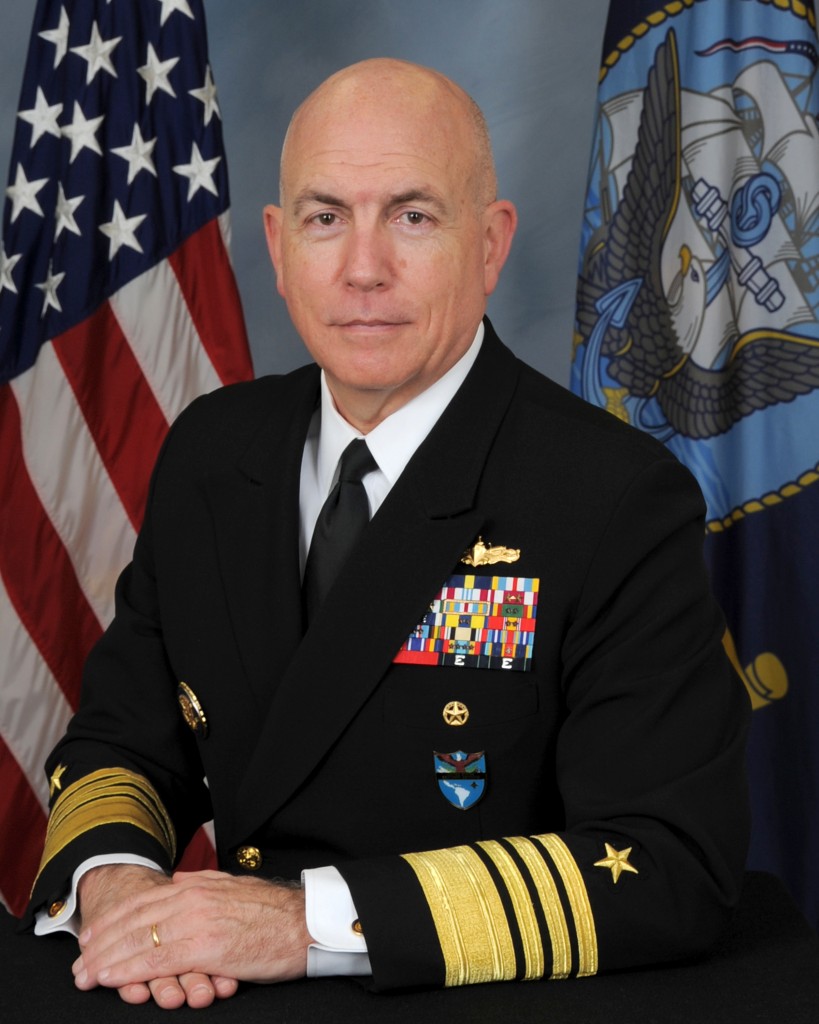
On March 10 Admiral Kurt Tidd, the new commander of Southern Command (SOUTHCOM), testified before the Senate Armed Services Committee and presented his posture statement. In his analysis of Western Hemisphere geopolitics and security issues, he acknowledged that he does not possess sufficient vessels to carry out SOUTHCOM’s multiple maritime operations. This statement serves as an ideal point of departure for one of SOUTHCOM’s arguably least well-known agencies, the U.S. Fourth Fleet (FOURTHFLT).
A (Very) Brief History
The history of the Fourth Fleet is actually fairly brief. It was created in 1943 and tasked with protecting the South Atlantic Ocean from Axis warships and submarines. Nazi German vessels had a fairly constant presence in that area, best exemplified by the Admiral Graf Spee incident in 1939. The FOURTHFLT existed for a short period after the war ended as it was dissolved in 1950 and its area of operations was inherited by the Second Fleet.
In 2008, then-President George W. Bush reactivated the Fourth Fleet. It was officially reestablished on July 12 and its headquarters is shared with U.S. Naval Forces Southern Command (USNAVSO). The commander of USNAVSO (COMUSNAVSO) is also the commander of the Fourth Fleet; currently that officer is Rear Admiral George Ballance.
It is important to note that the current SOUTHCOM commander is no stranger to the Fourth Fleet since then-Rear Admiral Tidd was the COMUSNAVSO/FOURTHFLT commander from 2011 to 2012. He first relieved Rear Admiral Vic Guillory and was subsequently relieved by Rear Admiral Sinclair Harris a year later. “The mission executed day in and day out by the men and women of the NAVSO/4th Fleet team is important; we are operating on the seas and in the littorals throughout the region every day, building and strengthening partnerships with nations who share a common heritage and a common sense of purpose with us,” Admiral Tidd said during the 2012 change of command ceremony. Admiral Tidd would return to SOUTHCOM this past January 14, when he became its newest commander.
Commander Bio Photo: Adm. Kurt W. Tidd. Source: SOUTHCOM.
The Fourth Fleet’s reestablishment must be placed in the proper geopolitical context. In 2008, the hemisphere was sprinkled with several Latin American governments that held anti-U.S. sentiments. Then-President Hugo Chavez spent billions of Venezuelan petro-dollars to modernize his country’s military by purchasing equipment from Russia and China, while critiquing “el imperio.” The governments in Bolivia, Ecuador, and Nicaragua had a similar ideology, while the Lula government in Brazil and the Kirchners in Argentina were neutral at best, if not occasional critics of Washington’s historical hegemony in the region. Moreover, in 2008 Russian warships visited the Caribbean, carrying out exercises with the Venezuelan Navy.
In other words, in 2008 there was a geopolitical logic for reestablishing the Fourth Fleet. This was a highly-visible method for Washington to remind the world that it remained the sole military power in the Western Hemisphere.
No vessels or aircrafts will be permanently assigned to U.S. Fourth Fleet as part of the re-establishment. U.S. Fourth Fleet is an organizational fleet staffed to fulfill a planning and coordination mission. U.S. Fourth Fleet is focused on strengthening friendships and partnerships and will have five missions: support for peacekeeping, Humanitarian Assistance, Disaster Relief, traditional maritime exercises, and counterdrug support operations.
Even though it has no permanently assigned vessels, the ships it oversees have helped the FOURTHFLT have an ongoing presence in Latin American and Caribbean waters. A major initiative occurred in late 2015 when the carrier USS George Washington and its support vessels (i.e. the USS Bighorn, USS Guadalupe, among others), took part in the Southern Seas 2015 deployment. This included their participation in the multinational UNITAS 2015 exercises as well as making port calls in Brazil, Chile, and Peru. The previous year, the USS America took a tour of the Western Hemisphere during which it docked in Colombia, Brazil, Chile, and Peru.
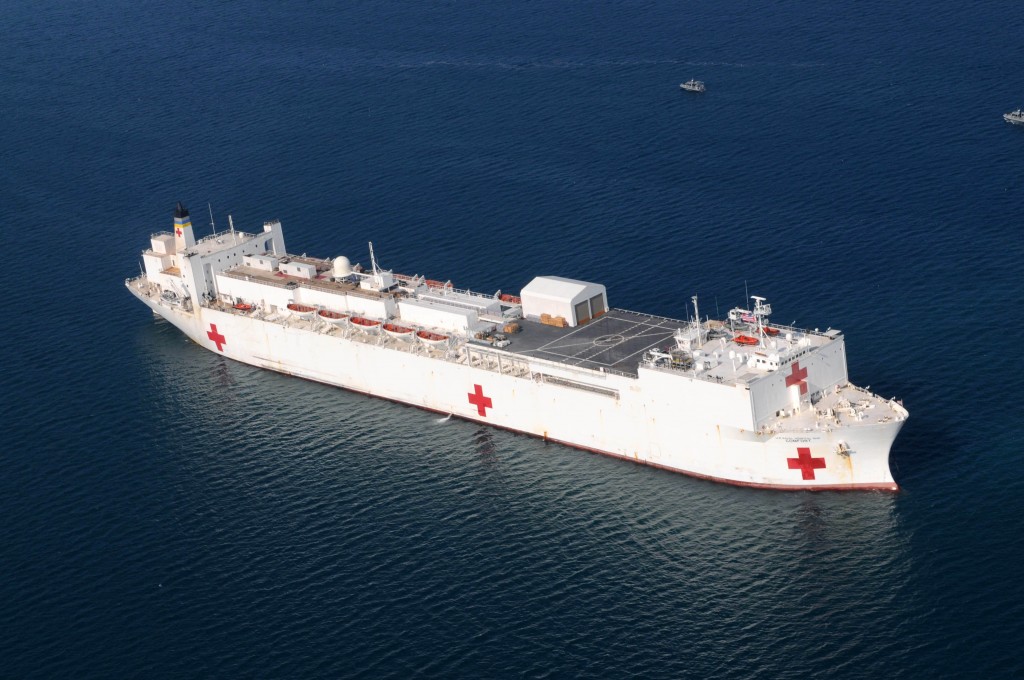
As impressive as the carrier George Washington is, it is the USNS Comfort which arguably has the most continuous presence in the region. The U.S. Navy’s hospital vessel regularly travels throughout the Caribbean and Central America to provide humanitarian support. From April to September of last year, the vessel took in part in Continuing Promise 2015, in which the Comfort visited a total of 11 countries, from Guatemala to Dominica, carrying out procedures like general surgery, ophthalmologic surgery, veterinary services and public health training. This was the Comfort’s fourth trip as part of the Continuing Promise initiative. According to SOUTHCOM, the vessel previously participated in the mission’s 2007, 2009 and 2011 incarnations.
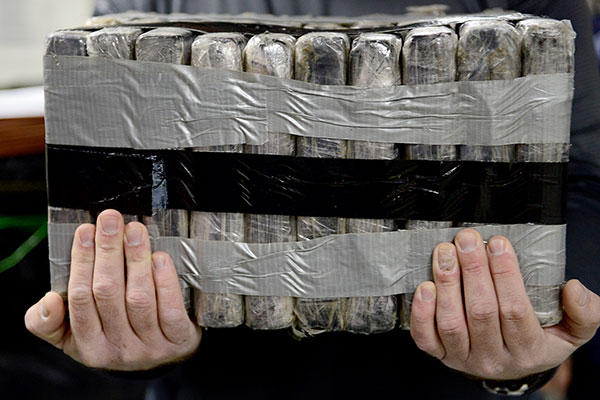
Finally, various U.S. Navy warships regularly patrol the Caribbean Sea in order to help partner nations combat illicit trafficking. In the interest of brevity we will provide only a couple of examples. In 2014, the USS Vandegrift, in a joint operation with the U.S. Coast Guard, successfully stopped a suspicious vessel off the coast of Central America. Upon boarding the vessel, security personnel found almost two thousand pounds of cocaine. More recently, in January 2015, the USS Gary and the U.S. Coast Guard successfully seized more than 1644 kilograms of cocaine from a “go fast” vessel. These two operations were part of Operation Martillo.
Coast Guard and other federal law enforcement officials work together to offload more than eight and a half tons of cocaine from the USS Vandergrift at Naval Base San Diego, Dec. 19, 2014. (USCG photo by Petty Officer 2nd Class Connie Terrell).
As for the Fourth Fleet’s upcoming operations, in an interview with the author, a USNAVSO/FOURTHFLT spokesperson explained that it “will conduct Southern Partnership Station 2016 with USNS Spearhead (JHSV-1) and multinational exercises UNITAS and PANAMAX 2016. We are also supporting a bilateral exercise with Peru, Silent Forces Exercise, and Integrated Advance with SOUTHCOM, this year being a mass migration exercise.” Additionally, ships like the USS Lassen and USS Shamal will participate in Operation Martillo.
The aforementioned examples demonstrate how the FOURFLT has an active presence in Latin American and Caribbean waters, and has successfully partnered with friendly nations to jointly crack down on transnational maritime crimes.
Does the Navy Need The FOURTHFLT?
The intention of this commentary is not to criticize U.S. naval operations in Latin America and the Caribbean. Rather, the goal here is to understand how the FOURTHFLT has helped SOUTHCOM.
On February 12, the American Enterprise Institute (AEI) organized an on-the-record event entitled “A Navy in Balance? A Conversation with Admiral John Richardson, Chief of Naval Operations.”During the Question & Answer section, this author asked Admiral Richardson whether the Fourth Fleet is necessary, given that it only seems to have the USNS Comfort on a quasi-regular basis while it rotates its other vessels instead of having any permanently deployed to it. The Admiral responded that the Fourth Fleet is “very important” and mentioned the aforementioned USS George Washington deployment and the success of security operations in the Caribbean. “The productivity of that fleet continues to show its value,” the Admiral declared.
The uses of the Fourth Fleet can be divided in three arguments:
1. This author asked the aforementioned FOURTHFLT spokesperson how its reestablishment has helped SOUTHCOM, particularly from an administrative and logistical point of view. The response was that by being “dual-hatted” and reporting to both the CNO and SOUTHCOM, “we are able to represent multiple operations and opportunities for our partner nations in the Navy specific chain of command as well as the Combatant Command chain of command. The establishment of Fourth Fleet elevated us from an echelon 3 command to echelon 2.” Moreover, the reestablishment of the FOURTHFLT has allowed the training of a Maritime Operations Center Staff “to include the USNAVSO Fleet Command Center that planned and executed Lines of Operations in support of USSOUTHCOMs Theater Campaign Plan.”
Indeed, having a Fourth Fleet has also provided a command chain that allows SOUTHCOM to deal with major operations. As the FOURTHFLT spokesperson explains, “a key event was our response to the earthquake in Haiti in January 2010 where 4th Fleet served as the Navy Component Commander during Operation Unified Response, the Navy’s largest ever Humanitarian Assistance/Disaster Relief (HA/DR) contingency response. The response consisted of 17 ships, 89 aircraft, and over 15,000 Sailors and Marines assigned to Commander, Task Force Forty, and the Joint Force Maritime Component Commander in support of Joint Task Force Haiti.”
010120-N-4995K-038 PORT-AU-PRINCE, Haiti (Jan. 20, 2010) The 1,000 bed hospital ship USNS Comfort anchored just off of the coast of Haiti in support of Operation Unified Relief: Haiti. (U.S. Navy photo by Mass Communication Specialist 2nd Class (AW) Chelsea Kennedy/RELEASED).
2. Another issue is whether the Fourth Fleet has brought any clear budget or equipment-related advantages to SOUTHCOM. In 2014, six years after the Fourth Fleet was reinstated, then-SOUTHCOM commander General John Kelly declared in his posture statement to the House Armed Services Committee that, “as the lowest priority Geographic Combatant Command, U.S. Southern Command will likely receive little, if any, ‘trickle down’ of restored funding. Ultimately, the cumulative impact of our reduced engagement will be measured in terms of U.S. influence, leadership, and relationships in the Western Hemisphere.”The former commander indirectly talked about the Fourth Fleet, stating that “insufficient maritime surface vessels and intelligence, surveillance, and reconnaissance platforms impair our primary mission to detect threats and defend the southern approaches to the U.S. homeland.” (The 2014, 2015, and 2016 posture statements list activities carried out by USNAVSO/FOURTHFLT).
Regarding the acquisition of additional equipment, in an interview with the author, SOUTHCOM spokesperson Jose Ruiz explained that SOUTHCOM “submits requests for naval resources, including personnel, ships and aircraft, through the Joint Staff. We work the requests with our naval component, [USNAVSO]. The military services weigh all geographic combatant command requests for people and platforms against prioritized national security requirements around the globe, and allocate resources to our command based on what is available after higher priority national security needs are met.” Spokesperson Ruiz added SOUTHCOM does not exclusively rely on the U.S. Navy “for maritime resources to accomplish important missions […] Other important interagency partners, such as the U.S. Coast Guard and U.S. Customs and Border Protection also provide key sea and air platforms and forces to support those missions.” (This author has discussed U.S. Coast Guard activities in the Greater Caribbean in “The US Coast Guard’s Western Hemisphere Strategy”).
In his posture statement Admiral Tidd explained the success of the various U.S. security and defense agencies (including the Coast Guard and law enforcement agencies) that come together under the umbrella of Joint Interagency Task Force South (JIATF-S) to combat transnational organized crime (TOC) in SOUTHCOM’s area of operations. Nevertheless, during his testimony to the Senate, when asked about his lack of resources he simply stated that “I do not have the ships, I do not have the aircraft” to deal with the amount of TOC in the region. He explained that at any given time, he may have on average five to six surface ships, namely Coast Guard platforms, and one to two Navy platforms, while he ideally needs 21 vessels. Thus, it would appear that the FOURTFLT has not brought additional resources to SOUTHCOM.
3. The one clear advantage brought by the reestablishment of the Fleet is that it helped the U.S. military appear to have a bigger presence in the Western Hemisphere in the eyes of Latin American and Caribbean states, not to mention nations like Russia and China. The word “fleet” conjures images of a plethora of frigates, submarines, and a carrier or two docked in Florida, under SOUTHCOM’s command. Hence, it comes as no surprise when the FOURTHFLT was reinstated, media outlets around the region published numerous commentaries about Washington’s plans – case in point, a 2008 commentary in the Colombian daily El Espectador has the headline “The Return of the Fourth Fleet: What is the objective of this new initiative by the U.S. government?” Unsurprisingly, the Venezuelan government critiqued this decision.
Nevertheless, Admiral Tidd’s posture statement explains that “Russia’s actions [in Latin America and the Caribbean] are directly connected to its broader global efforts to demonstrate that Russia is a global power capable of challenging U.S. leadership and the established rules-based international system.” (P. 8-9). Thus, the FOURTHFLT’s shortage of Naval platforms (Coast Guard vessels notwithstanding) is arguably affecting SOUTHCOM’s, and by extension Washington’s, influence in Latin America and the Caribbean to Moscow’s benefit.
Final Thoughts
At the aforementioned AEI event CNO Admiral Richardson declared that the Navy “will continue to support [the Fourth Fleet] with every resource that we can spare.” Nevertheless, the CNO also stated that allocating resources is “fundamentally a matter of prioritization.” It is clear that SOUTHCOM is low in Washington’s list of defense priorities. Admiral Tidd understands this as he stated in his 2016 posture statement that “because no nation in the region poses a direct, conventional military threat to the United States, Latin America tends to rank fairly low on force allocation priorities.” (P. 2)
To recapitulate, the objective of this analysis is not to critique U.S. naval operations, but rather question the necessity of the Fourth Fleet itself. U.S. Navy vessels have participated in training exercises with regional partners as well as security initiatives like Operation Martillo. Moreover, the 2010 Haiti earthquake highlights how having the Fourth Fleet has provided a more robust command chain which SOUTHCOM can utilize for future major operations.
Nevertheless, it is the opinion of this author that the Fourth Fleet’s reestablishment has not brought any major budgetary or equipment-related advantages. Moreover, given Washington’s focus on Syria, Russia and China, it is unlikely that SOUTHCOM will receive additional naval resources soon.
The views presented in this essay are the sole responsibility of the author and do not necessarily reflect those of any institutions with which the author is associated.
W. Alejandro Sanchez is a researcher who focuses on geopolitical, military and cyber security issues in the Western Hemisphere. Follow him on Twitter: @W_Alex_Sanchez.
The author would like to thank the Public Affairs offices of SOUTHCOM and USNAVSO/FOURTHFLT for their help in drafting this report.
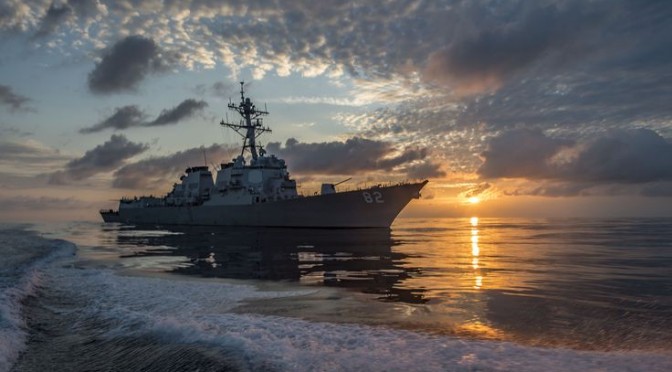
Featured Image: 160310-N-MD297-161 PACIFIC OCEAN (March 10, 2016) Arleigh Burke-class guided-missile destroyer USS Lassen (DDG 82) patrols the Eastern Pacific. Lassen is currently underway in support of Operation Martillo, a joint operation with the U.S. Coast Guard and partner nations within the 4th Fleet area of responsibility. (U.S. Navy photo by Mass Communication Specialist 2nd Class Huey D. Younger Jr./Released)
Recently the new Chief of Naval Operations issued a document “Design for Maintaining Maritime Superiority” that outlines how, hopefully, the US Navy can maintain a maritime superiority our foes will recognize and avoid confronting.
[otw_shortcode_button href=”https://cimsec.org/buying-cimsec-war-bonds/18115″ size=”medium” icon_position=”right” shape=”round” color_class=”otw-blue”]Donate to CIMSEC![/otw_shortcode_button]
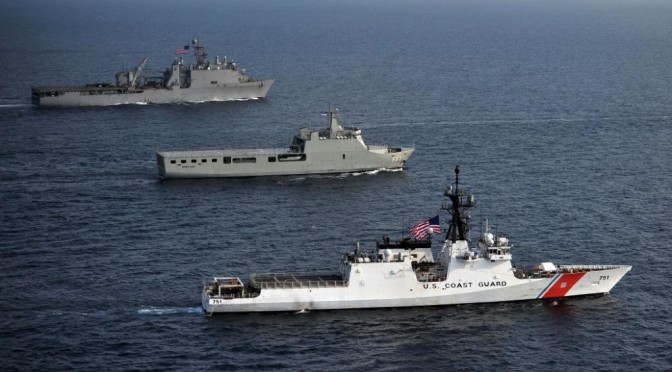
If you look for anything specifically regarding the Coast Guard here, you will not find it (other than the cutter in the formation on the cover). The Coast Guard is not mentioned even once, but it does talk about some things that are Coast Guard related. Perhaps the Coast Guard should not feel bad about this. It only mentions the Marine Corps once.
Three Forces that are Changing the Environment
The first global force is the traffic on the oceans, seas, and waterways, including the sea floor – the classic maritime system.
A second increasingly influential force is the rise of the global information system – the information that rides on the servers, undersea cables, satellites, and wireless networks that increasingly envelop and connect the globe.
The third interrelated force is the increasing rate of technological creation and adoption.
Obviously the Coast Guard facilitates and regulates marine traffic, and is tapped into the global information system. In wartime, these contacts will become essential since they will form the basis for naval control of shipping. He also talks about new trade routes opening in the Arctic. These will only be reliable if we have new icebreakers. He also talks about illegal trafficking.
“This maritime traffic also includes mass and uncontrolled migration and illicit shipment of material and people.”
A Document That Explicitly Recognizes the Competition
“For the first time in 25 years, the United States is facing a return to great power competition. Russia and China both have advanced their military capabilities to act as global powers. Their goals are backed by a growing arsenal of high-end warfighting capabilities, many of which are focused specifically on our vulnerabilities and are increasingly designed from the ground up to leverage the maritime, technological and information systems. They continue to develop and field information-enabled weapons, both kinetic and non-kinetic, with increasing range, precision and destructive capacity. Both China and Russia are also engaging in coercion and competition below the traditional thresholds of high-end conflict, but nonetheless exploit the weakness of accepted norms in space, cyber and the electromagnetic spectrum. The Russian Navy is operating with a frequency and in areas not seen for almost two decades, and the Chinese PLA(N) is extending its reach around the world.
“…Coupled with a continued dedication to furthering its nuclear weapons and missile programs, North Korea’s provocative actions continue to threaten security in North Asia and beyond.
“…while the recent international agreement with Iran is intended to curb its nuclear ambitions, Tehran’s advanced missiles, proxy forces and other conventional capabilities continue to pose threats to which the Navy must remain prepared to respond.
“…international terrorist groups have proven their resilience and adaptability and now pose a long-term threat to stability and security around the world.”
Recognizing Budgetary Limitations
“There is also a fourth ‘force’ that shapes our security environment. Barring an unforeseen change, even as we face new challenges and an increasing pace, the Defense and Navy budgets likely will continue to be under pressure. We will not be able to “buy” our way out of the challenges that we face. The budget environment will force tough choices but must also inspire new thinking.”
Throughout there is an emphasis on understanding history and the strategic concepts of the past. There is also a recognition of the need to work with partners.
“EXPAND AND STRENGTHEN OUR NETWORK OF PARTNERS: Deepen operational relationships with other services, agencies, industry, allies and partners – who operate with the Navy to support our shared interests.”
Other than the Marine Corps, the US Navy has no closer partner than the US Coast Guard. And while only about one eighth the size of the US Navy, in terms of personnel, the US Coast Guard is larger than Britain’s Royal Navy or the French Navy. The partnership has been a long and successful one, but I would like to see the Navy be a better partner to the Coast Guard. This is how the Navy can help the Coast Guard help the Navy.
What I Want to See
If we have a “run out of money, now we have to think” situation, one thing we can do is to try to get the maximum return from the relatively small investment needed to make the Coast Guard an effective naval reserve force.
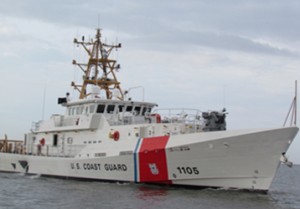
Webber Class WPC, USCGC Margaret Norvell
We need explicit support from the Navy at every level, particularly within Congress and the Administration, for Coast Guard recapitalization.While the Navy’s fleet averages approximately 14 years old. The Coast Guard’s major cutters average over 40. The proposed new ships, are more capable than those they replace. They are better able to work cooperatively with the Navy. The nine unit 4,500 ton “National Security Cutter” program is nearing completion with funds for the ninth ship in the FY2016 budget. The 58 unit, 154 foot, 353 ton Webber Class program is well underway with 32 completed, building, or funded. But the Coast Guard is about to start its largest acquisition in history, 25 LCS sized Offshore Patrol Cutters. Unfortunately, it appears that while the first ship will be funded in FY2018 the last will not be completed until at least 2035. This program really needs to be accelerated.
We need an explicit statement from the Navy that they expect the Coast Guard to defend ports against unconventional threats, so that they can keep more forces forward deployed. This is in fact the current reality. The Sea Frontiers are long gone. Navy vessels no longer patrol the US coast. The surface Navy is concentrated in only a handful of ports. No Navy surface combatants are homeported on the East Coast north of the Chesapeake Bay. If a vessel suspected of being under the control of terrorists approaches the US coast the nearest Navy surface vessel may be hundreds of miles away.
We need the Navy to supply the weapons the Coast Guard need to defend ports against unconventional attack using vessels of any size, with a probability approaching 100%. These should include small missile systems like Hellfire or Griffin to stop small, fast, highly maneuverable threats and we need a ship stopper, probably a light weight anti-ship torpedoes that target propellers to stop larger threats. We need these systems on not just the largest cutters, in fact they are needed more by the the smaller cutters that are far more likely to be in a position to make a difference. These include the Webber class and perhaps even the smaller WPBs.
We need to reactivate the Coast Guard’s ASW program and ensure that all the new large cutters (National Security Cutters and Offshore Patrol Cutters) have an ASW capability, if not installed on all of the cutters, at least planned, prototyped, tested, and practiced on a few ships (particularly in the Pacific). The National Security Cutters and the Offshore Patrol Cutters are (or will be) capable of supporting MH-60R ASW helicopters. Adding a towed array like CAPTAS-4 (the basis for the LCS ASW module) orCAPTAS-2 would give them a useful ASW capability that could be used to escort ARGs, fleet train, or high value cargo shipments. Towed arrays might even help catch semi-submersible drug runners in peacetime.
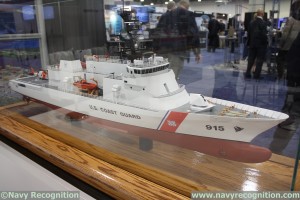
One of three contending designs for the planned 25 Offshore Patrol Cutters.
The Coast Guard is the low end of America’s Naval high-low mix. It is a source of numbers when numbers are needed. The Coast Guard has more assets for low end functions like blockade than the Navy. The Navy has about 105 cruisers, destroyers, LCS, PCs, and is not expected to have more than 125 similar assets for the forseeable future. The Coast Guard has about 165 patrol cutters including 75 patrol boats 87 feet long, about 50 patrol craft 110 to 154 feet in length (58 Webber class WPCs are planned), and about 40 ships 210 foot or larger that can be called on, just as they were during the Vietnam War, when the Coast Guard operated as many as 33 vessels off the coast in support of Operation MarketTime, in spite of the fact that the Navy had almost three times as many surface warships as they do now. The current program of record will provide 34 new generation cutters including nine 4500 ton National Security Cutters and 25 Offshore Patrol Cutters that should be at least 2500 tons.
The Coast Guard provides peacetime maritime security, but is currently under-armed even for this mission. A small investment could make it far more useful in wartime.
(Note here is another post on this looking at the “design” from a Navy point of view.)
Chuck retired from the Coast Guard after 22 years service. Assignments included four ships, Rescue Coordination Center New Orleans, CG HQ, Fleet Training Group San Diego, Naval War College, and Maritime Defense Zone Pacific/Pacific Area Ops/Readiness/Plans. Along the way he became the first Coast Guard officer to complete the Tactical Action Officer (TAO) course and also completed the Naval Control of Shipping course. He has had a life-long interest in naval ships and history. Chuck normally writes for his blog, Chuck Hill’s CG blog.
[otw_shortcode_button href=”https://cimsec.org/buying-cimsec-war-bonds/18115″ size=”medium” icon_position=”right” shape=”round” color_class=”otw-blue”]Donate to CIMSEC![/otw_shortcode_button]