Category Archives: Capability Analysis

Analyzing Specific Naval and Maritime Platforms

A Tactical Doctrine for Distributed Lethality

Distributed Lethality Topic Week

By Jeffrey E. Kline, CAPT, USN (ret)

“…strike effectively first…”

–Wayne P. Hughes, Captain, United States Navy (ret)[i]

Introduction

In January of 2015 the U.S. Navy’s surface leadership publicly described the concept of distributed lethality.[ii] In broad terms, distributed lethality proposes creating small offensive adaptive force packages comprised of surface action groups (SAG) with a variety of support elements that operate  across a wide region and under an adversary’s anti-access sea denial umbrella. Its purpose is to confound adversary locating and targeting while introducing a threat to their sea control ambitions. It is an offensive concept for the U.S. surface forces. After decades of investment in defensive technology, systems, and training to counter cruise missiles, ballistic missiles, and submarines, distributed lethality represents a course change for surface warfare, or at least a return to accepting a major role in sea strike that had been ceded to the carrier air wings. With several world powers developing challenging sea denial capabilities, establishing sea control in contested areas is again a concern of naval planners. A return to the offensive capability of surface action groups (SAG) is necessary to add resilience to a naval force structure operating in these contested areas. It also leverages the tactical offense, which in naval warfare is advantageous to overemphasizing defensive capabilities.

This paper describes a tactical doctrine to mature the concept of distributed lethality. By tactical doctrine we mean fundamental principles by which surface forces operate in the function-specific case of naval surface-to-surface engagements in a challenging electronic emission condition where adversaries may have an advantage in long-range detection of contacts.[iii] Its purpose is to guide efforts in providing surface forces with capabilities to conduct independent offensive actions and to develop specific combat tactics to employ organic surveillance assets, ships, and weapon systems to find, fix, and finish enemy surface ships in wartime.
thumb_Harpoon_Valiant_Shield_2014
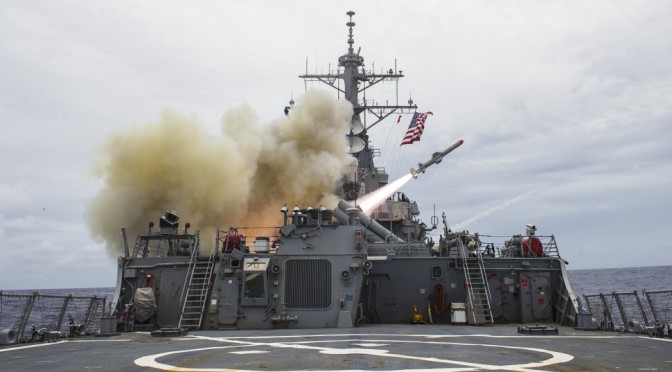
Distributed Lethality empowers the surface navy to reclaim a role in sea strike. The Arleigh Burke-class guided-missile destroyer USS Stethem (DDG 63) fires a Harpoon missile during a sinking exercise as part of Valiant Shield 2014. (U.S. Navy photo).

The tactical doctrine’s essence is that continuous emissions will be fatal and allow the enemy to strike first. It is not meant to preclude use of additional capabilities provided by cross-domain contributions, but it does focus first on the ship as the basic unit to build a distributed lethality system. This is a key philosophy for surface ship survival in a modern missile surface duel and somewhat of a sea change: we must use networked systems when they are available, but not rely on them.  To do otherwise invites creating our own vulnerability for the enemy to exploit. 

This tactical doctrine is based on three principal objectives:

  • Out think the enemy
  • Out scout the enemy
  • Out shoot the enemy

Out Think the Enemy: Delegated C2 and Independent SAG Tactical Operations

Ensuring a Captain’s technical ability to exercise his ship’s entire kill chain, as well as the authority to employ his weapons under the general guidance of commander’s intent, relieves an external command and control burden, provides the fleet a faster search-to-kill decision cycle, and increases fleet resiliency to operate in the most demanding electromagnetic environments.[iv] Many individual SAG operations, each within their own operating areas controlling their own search assets, tasked with obtaining sea control in a restricted emissions control status, strive to achieve an overall cumulative sea control effect.[v] When a central authority can provide broad area targeting information, a blind broadcast across the operating area may be made. This concept mimics submarine independent operations to establish undersea dominance with each submarine having its own water space. It is not efficient in a network-centric sense, but it does complicate the enemy’s surveillance, search, command and control efforts and therefore enhances our fleet wide survivability.

Delegated command authority is not a new concept to the U.S. Navy. It empowers American initiative at the lowest level of command. We, however, must be careful that our desire for efficiencies in technological investments does not inhibit an individual Captain from exercising all his weapon systems and thereby restrict command initiative. For example, a communal surveillance resource like a maritime Global Hawk controlled from ashore provides cost-efficient sensor coverage usable by all in an operating area. But, if we rely on it, and it is lost due to enemy fire or intrusion, we blind all our SAGs. Instead, we should leverage its coverage when available, but rely on a SAG’s organic sensors to provide over the horizon targeting within its own operating area. Empowering American initiative at the lowest level of command is the most effective counter to a tactical surprise by an enemy.[vi]

This distributed lethality tactical doctrine implies each ship’s crew is trained to find, target, and kill without off-ship support, under a full range of emission control conditions. As ships are added to a surface action group, and other platforms added to the adaptive force package, the group must also be capable of fighting as a team, in any emission control condition. Specific techniques will be addressed in the scouting section.

Out Scout the Enemy: Fighting in the “Electronic Night”

Just as the U.S. land forces’ motto is “we own the night,” U.S. surface forces must be capable and proficient in fighting in the electronic night, or without the benefit of our powerful sensors and communications networks. Each additional electronic emission we rely on to find an enemy’s surface group increases the risk of counter-detection, and therefore being detected, localized and targeted by the enemy. The surface force’s objective must be to achieve this search-to-kill cycle faster than any adversary.
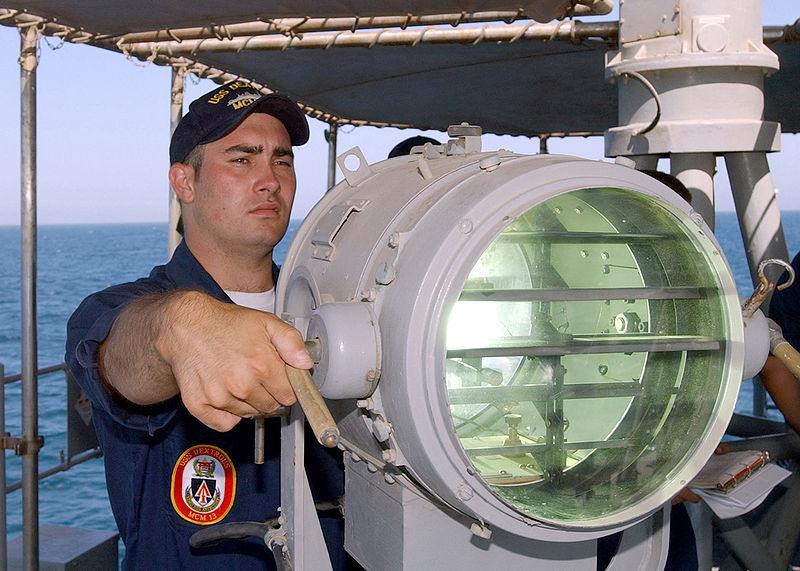
800px-US_Navy_020623-N-5329L-007_Signalman_2nd_Class_Eric_Palmer_signals_the_U.S._Navy_mine_hunter_coastal_ship_USS_Raven_%28MHC_61
Passive electro-optic communications will need to be developed again between ships operating under the most restrictive emissions control (US Navy photo).

In Fleet Tactics, Wayne Hughes addresses both scouting and anti-scouting as methods to achieve a faster targeting cycle than the enemy.[vii] The U.S. surface navy’s current Distributed Lethality Task Force recognizes this and is exploring a concept of “deceive-target-destroy” to use both anti-scouting and scouting methods to gain the advantage.[viii] This paper will refer to these two broad categories while making tactical suggestions influenced by emission control conditions (or loss level of the EM spectrum) and number of platforms in an adaptive force package.

Single Ship Operation: Alone and Unafraid

Although adaptive force packages are envisioned as teams of several ship types with other support elements, the ability for each ship to operate independently in the most challenging emission control environment is a desired quality for force flexibility and resilience. In a truly contested environment friendly attrition may demand it. Technologies such as Low Probability of Intercept (LPI) radar operations, burst communications and bi-statistic active-passive operations using remote active sensors may allow for active emissions while limiting counter-detection. Nevertheless, we first address single ship operations in a completely passive condition with no organic air support or external targeting support. This is the most demanding scouting environment and is an effective anti-scouting technique particularly when combined with active decoys.

Completely passive scouting techniques for a single ship include visual, electronic surveillance, and acoustic surveillance. These techniques rely on the older concept of firing solutions being a function of the target’s relative position to the shooter, instead of requiring global positioning. Visual targeting is, of course, the least desirable as it exposes both forces to simultaneous targeting, but with many historical examples of combating forces “stumbling” upon each other, and as both surface forces may be conducting passive search, U.S. surface forces need to train for “quick response” firing. Technologies such laser target designators, long range guided gun munitions, wire-guided heavyweight torpedoes for surface ships, and visually fired missile systems may need to be developed to enhance U.S. combatants in the race to shoot first.
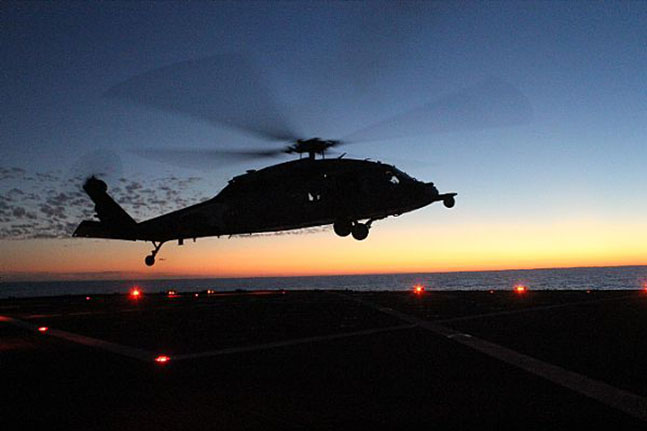
Passive and active search tactics with organic assets will need to be developed for each ship and helicopter pair (US Navy Photo).

Beyond visual range, passive electronic and acoustic surveillance may be conducted with onboard electronic surveillance receivers and passive hull mounted and towed array hydrophones. Their information can be converted to a targeting technique through the use of Ekelund ranging and target motion analysis as used by the U.S. submarine force. [ix] Depending on atmospheric ducting and ocean convergent zone conditions, these passive techniques may allow detection as far as 50 nautical miles, with area of uncertainty for targeting dependent on line of bearing error and suspected target range. The decision to shoot passively either on a line of bearing or with a bearing-range solution rests on the factors of missile seeker capability, size of area of uncertainty, the risk of counter-detection, and the level of concern for clutter.[x]

Relaxing the tactical condition slightly by receiving information from off-board organic sensors, we add the use of organic tactical air reconnaissance from embarked helicopters or UAVs, and employment of sonobouys as trip-wires. These assets can either enable passive cross fixing for cooperative targets[xi], visual targeting, or in the case of an intelligent passive sonobouy trip wire design, range information. For air assets, use of off-axis, passive low flying and pop up techniques are anti-scouting tactics to mitigate the risk of enemy counter-detection.

As additional emission control relaxations are allowed like the use of LPI radar, dual use radar (military or civilian), or allowing organic air or unmanned surface assets to conduct active search while the host remains passive (bi-static active-passive operations), additional area may be added to the surface ship’s search space and its area of operations. Use of air asset active radar sensors will extend search areas, but expose manned helicopters to the risk of being engaged. Specific active-passive tactics combined with pop maneuvers should be a priority for each ship-helicopter pair to develop. Care to use off-axis operations and random active search with these remote assets to avoid counter detection must be a given. One advantage to remote active operations is the possibility of seducing an adversary operating in passive mode to risk active emissions for a better defense condition, thereby increasing the U.S. ship’s chance to combine active and passive targeting information. This is different than the anti-scouting use of active decoys to entice the enemy to misuse their own targeting and striking assets, which is another appropriate tactic in this contested environment. Both techniques  enhance the “Deceive-Target-Destroy” operating philosophy.

In addition to tactical deception using decoys, other anti-scouting techniques for single surface ship operations include concealment and evasion. Concealment may involve operations close to land to mask radar returns or confound missile seekers and electro-optic sensors; the use of commercial shipping or fishers to mask movement; or a combination of both. High speed evasion is used to increase the enemy’s area of uncertainty if we believe we have been localized by opening what is their datum on us.

As information is received from non-organic methods (national intelligence, higher command, or orbiting maritime aircraft) it may be silently fused with these other information to provide or enhance strike operations. Since these sources approach today’s normal methods of targeting they need not be expanded upon here.

The most challenging command decision for a Captain in this environment is when to switch from a passive offensive mode to an active defense condition in the face of a potential threat. If this is done too early based on only a few indicators we become susceptible to the enemy’s decoy seduction for us to provide targeting information to him. If too late, we mitigate our advantage in defensive hard kill systems. The Captain must weigh the timing and compounding of evidence and consider employing defensive soft kill systems first since these have been historically more effective than hard kill, and reveal less to the enemy’s scouting efforts. Activation of short range hard kill systems should follow and long range radar and hard kill systems employed last, all to give as little information to enemy scouts as possible. Of course, an active missile homing signal with a rapid increasing frequency shift is a red flag for all active defense systems. After an actual attack and successful defense when any electronic emissions are employed, passive high speed evasion should immediately follow.

Multiple Ship Operations: Better as a Team

Most capabilities for tactical employment of scouting  and anti-scouting in various levels of emission control for a single ship apply to a multiple ship surface action group or an adaptive force package. Additional ships require formation configuration to best capitalize on passive cross bearing fixes allowing for environmental and acoustic conditions. For example, a two ship SAG may steam in a staggered line of bearing perpendicular to a threat axis with a distance between ships that gives a good cross fix area of uncertainty[xii] while allowing for mutual defense and electro-optic communications.  Another example is a three-ship SAG steaming in roughly a triangular formation when no threat axis is available to cover a 360 degree passive surveillance area. Frequent individual course changes should be made along base course to put passive towed array beams in the best position to acquire acoustic information.

Exchanging information across a surface hunter-killer group in a strict emission control environment requires local C4I networks relaying on electro-optic communications such as laser, visual, or IR transmitters and receivers. Use of atmospheric layers by bending and reflecting signals may be explored to extend beyond line of sight, but intra-SAG communication that has no or little electromagnetic emissions will enhance SAG anti-scouting efforts.[xiii]

As emission control conditions are relaxed to employ organic off board sensors, helicopters, UAVs, or USVs may be positioned to either “complete triangles” in a two ship SAG, or be positioned forward to offset the threat axis and provide right angle passive surveillance. UAVs may be used as communication relays with low power emission or electro optic transmitters and receivers.

Options for dispersed SAG operations exist where one or two ships are sent miles ahead along a known threat axis in completely silent emission control. The ships in the rear are active on radar and control forward unmanned sensors, transmitting their information to ships in the van to create an opportunity for covert and surprise attack. This increases the intermittent risk to the active ships, but use of anti-scouting techniques of remote active decoys, LPI radar, and random active operations may be used mitigate the danger.

Multiple levels of active defense become an option with multi-ship SAG operations. Depending on indications and warnings of an attack, a SAG commander may decide the most capable air defense ship go active with hard kill systems while others employ soft kill only, or all go active, or some passively evade while others go active with hard kill. Again, these decisions are weighed against inadvertently providing targeting information to an enemy SAG too early in a defense cycle. The advantage of combat tactical doctrine is to permit training and rapid advances in tactical readiness through practice.

Out Shoot the Enemy: Don’t Take a Knife to a Gun Fight

Hughes writes “..the battle will be decided by scouting effectiveness and weapon range” and “the choice of tactics will also be governed by scouting effectiveness and weapons range.”[xiv] The obvious statement must be made that a SAG may kill no further than its longest missile system. Ship to ship missile systems should be designed for as much range as possible limited only by weight and size considerations for ship employment and possibly the ability to reload at sea. It is dangerous, and a bit arrogant for weapons systems designers to limit a missile range based on assumed future tactical situations.

Payload constraints of organic air assets limit the aggregate firepower needed to attack a capable enemy effectively, although they may be used to augment a shipborne attack, or attack independently with the purpose of making an uncooperative enemy go into active defense to provide better targeting data.

Traditionally, the key to effective surface missile attack is to penetrate enemy defenses by having missiles arrive while they are in a passive search mode (surprise), or to overwhelm his defenses with sufficient missiles arriving simultaneously. Another method is to attack with enough missiles, UAVs, and/or decoys to exhaust enemy weapon magazines and then follow with another attack. U.S. surface forces are susceptible to this tactic by nations with UCAV swarm capabilities.
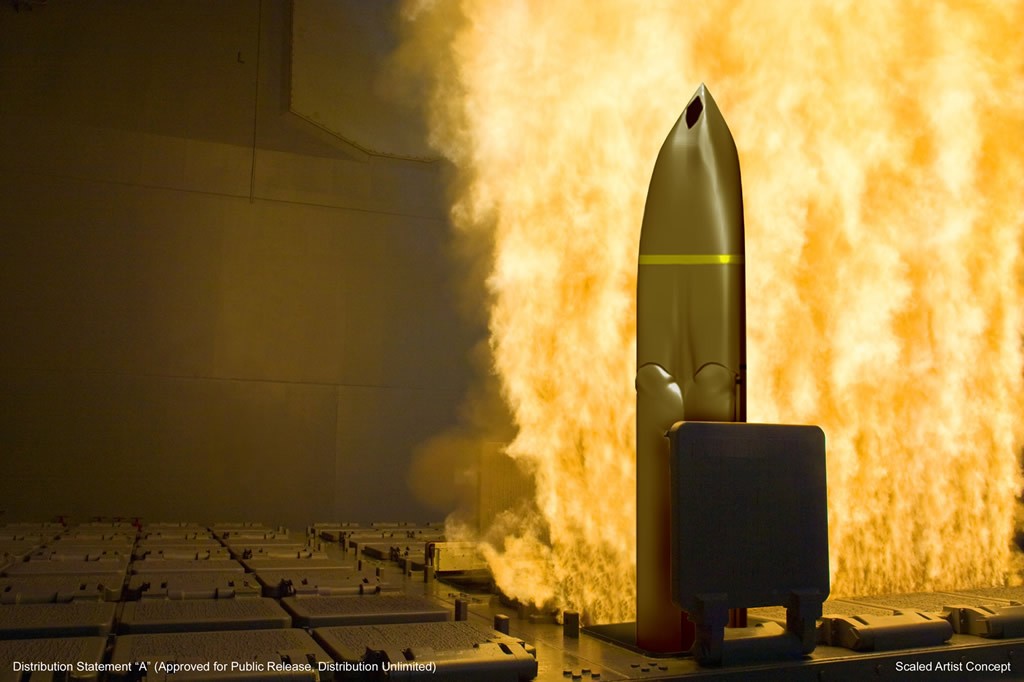
ORD_LRASM-A_Mk41_VLS_Launch_Concept_LMCO_lg
Long range missile capability will be critical for effective surface action group offensive operations” Photo Information: LMCO artist conception of LRASM.

When U.S. missile systems have the same range, or greater range than an enemy, a simultaneous attack is best conducted when sufficient scouting information is available for a targeting solution. If U.S. systems are out ranged by an enemy, the dispersed SAG tactic of silent shooters along the threat axis with active ships in the rear may be employed to get ships silently within range of their quarry. [xv] In both cases it is preferred to conduct missile launches in an emission control constrained status to make the arrival of the missiles a short notice event for the enemy.

Conclusions

With the guidance that doctrine serves the glue of tactics, [xvi] this paper’s purpose is to provide direction for specific tactic development to employ ships and weapon systems under the distributed lethality concept. This includes specific passive target acquisition techniques informed by electronic and acoustic capabilities and environmental conditions, targeting methods informed by missile seeker capabilities, and passive defense measures informed by enemy missile seeker capabilities. By nature these tactics will be in the classified realm and modified as new technologies are introduced for the SAG or emerge as a threat from our adversaries. However, the general goals of out thinking the enemy by creating situations to allow a faster search to kill cycle and resilient operational employment; out scouting the enemy through the intelligent use of scouting and anti-scouting techniques; and out shooting the enemy through missile range and/or tactics provide a foundation for detailed tactic exploration, at sea experimentation, and refinement.

A retired naval officer with 26 years of service, Jeff is currently a Professor of Practice in the Operations Research department and holds the Chair of Systems Engineering Analysis. He teaches Joint Campaign Analysis, executive risk assessment and coordinates maritime security education programs offered at NPS. Jeff supports applied analytical research in maritime operations and security, theater ballistic missile defense, and future force composition studies. He has served on several Naval Study Board Committees. His NPS faculty awards include the Superior Civilian Service Medal, 2011 Institute for Operations Research and Management Science (INFORMS) Award for Teaching of OR Practice, 2009 American Institute of Aeronautics and Astronautics Homeland Security Award, 2007 Hamming Award for interdisciplinary research, 2007 Wayne E. Meyers Award for Excellence in Systems Engineering Research, and the 2005 Northrop Grumman Award for Excellence in Systems Engineering. He is a member of the Military Operations Research Society and the Institute for Operations Research and Management Science. 

[i] Hughes, Wayne.  Fleet Tactics and Coastal Combat, Second Edition, Annapolis: Naval Institute Press, Annapolis Maryland, 2000

[ii] Rowden, Thomas,  Gumataotao, Peter, and Fanta, Peter.  “Distributed Lethality,” U.S. Naval Institute Proceedings, January 2015

[iii] For a discussion on functional specific doctrine see James J. Tritten paper “Naval Perspectives for Military Doctrine Development” at http://www.dtic.mil/doctrine/doctrine/research/p198.pdf

[iv] By resiliency I mean the ability for the fleet to absorb attrition yet still complete a campaign’s objective

[v] For a discussion on accelerated cumulative warfare see Kline, Jeffrey E. “Joint Vision 2010 and Accelerated Cumulative Warfare.” Washington DC: National Defense University Press, 1997.

[vi] The caution of technologically constraining individual command initiative is raised in Responding to Capability Surprise: A Strategy for U.S. Naval Forces, National Research Council of the National Academies, The National Academies Press, Washington, D.C, 2013

[vii] Hughes, Wayne.  Fleet Tactics and Coastal Combat, Second Edition, Annapolis: Naval Institute Press, Annapolis Maryland, 2000 pp 193,198

[viii] Personal communication with CAPT Joe Cahill, USN, Director U.S. Surface Force Distributed Lethality Task Force February 2016

[ix] While many sources are available describing Elelund ranging and TMA, a good unclassified overview is Coll, Peter F. “Target Motion Analysis from a Diesel Submarine’s Perspective” Master of Operations Research Thesis, Naval Postgraduate School, September, 1994

[x] “Clobber” is a term for a sea skimming missile flying without seeker turn on  accidently hitting a ship that is not the target, but along the bearing of the flight path.

[xi] The term cooperative target here means one that is radiating either electronically or acoustically

[xii] “Good” here is defined as an area of uncertainty which a surface missile seeker can cover when it goes active or if passive, the area coverage of its sensor.  Depending on environment conditions, missile seeker size and passive sensor error, a distance between ships of 10 – 15 nautical miles and provide adequate targeting for a cooperative target to 100 nautical miles

[xiii] A team of Naval Postgraduate researchers including Bordetsky, Brutzman, Benson and Hughes are exploring a concept of “Network optional warfare” and proposing technologies to create a “mess network” for the SAG

[xiv] Hughes, p 270

[xv] Hughes, p 272

[xvi] Hughes, p 29
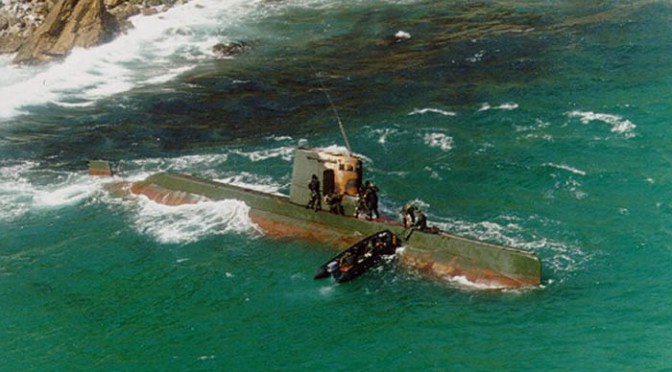
North Korea and Asymmetric Naval Warfare

By Paul Pryce

In recent years, several detailed analyses have been produced on Iranian efforts to develop the doctrine and capabilities necessary to wage ‘asymmetric naval warfare.’ This has involved preparing the Islamic Republic of Iran Navy (IRIN) and Iranian Revolutionary Guard Corps’ Navy (IRGCN) to wage a kind of insurgency in the Strait of Hormuz and the Persian Gulf, employing ‘swarming’ tactics with well-armed small boats and fast-attack craft along with naval mines, submarines, and anything else that might allow Iran to exploit the vulnerabilities of a technologically superior enemy like the United States Navy (USN). In 2008, the Washington Institute for Near East Policy released an excellent example of this analysis less than a year after IRGCN forces captured 15 British Royal Navy personnel that had been operating in Iraqi waters.

Yet there are few detailed analyses of whether the Korean People’s Navy (KPN) – the maritime force of the Democratic People’s Republic of Korea (DPRK) – could similarly employ asymmetric warfare to counter the technological superiority of the Republic of Korea (ROK) and its US allies. This is particularly surprising when one considers how Iran has only recently begun to develop such asymmetric capabilities since its mining of the Persian Gulf during the Iran-Iraq War, which saw significant damage to the guided missile frigate USS Samuel B. Roberts in April 1988. The DPRK, meanwhile, has been contending with a capability gap against its southern adversary for far longer. Although IRIN must divide its attention somewhat between the Persian Gulf and the Caspian Sea, the KPN is truly split into two distinct fleets, one concerned with the Yellow Sea to the west and the other concerned with the Sea of Japan to the east. Simple geography prevents the KPN from ever truly consolidating its forces. This extends, of course, even to shipbuilding, with many vessels in the Eastern Fleet originating at Wonsan Shipyard and much of the vessels in the Western Fleet originating at Nampo Shipyard.

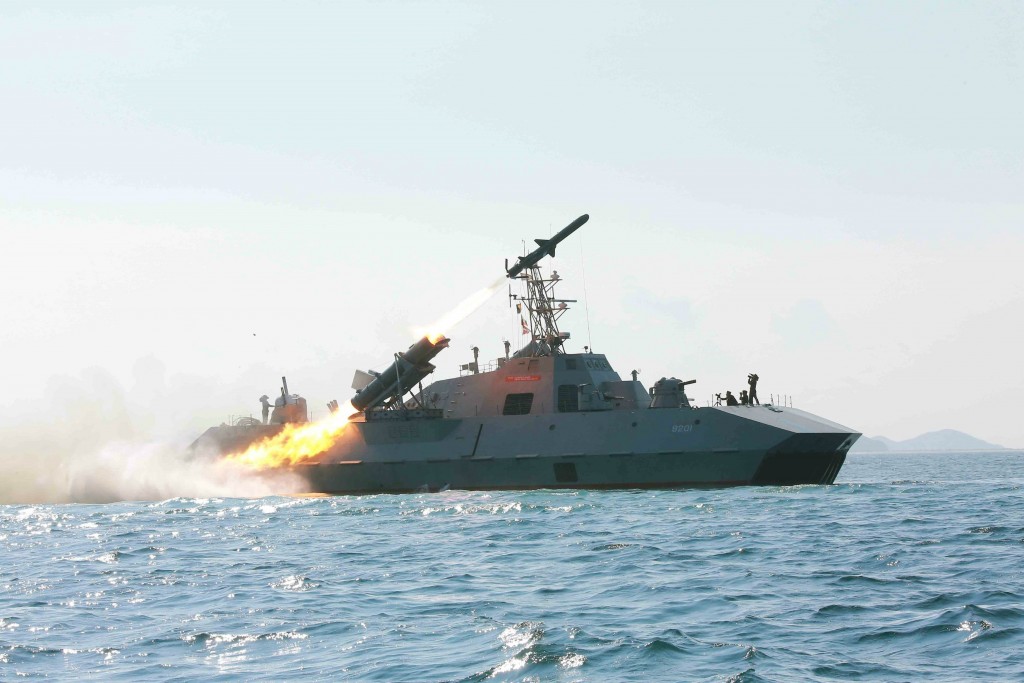
Helped along by the dissolution of the Soviet Union and the decline in availability of Russian military equipment, it seems the DPRK has set about developing its own defence industry and is producing new vessels that, while clearly unable to square off against ROK counterparts, could prove effective at waging asymmetric warfare at sea. Well-suited to swarming, the Nongo-class fast attack craft, which appears to be 35 metres long and displace 200 tons, could harass ROK and USN vessels. Rare glimpses of this vessel in DPRK propaganda footage suggest that the Nongo-class is equipped with a turret-mounted 76mm gun, possibly reverse-engineered from the Italian-designed OTO Melara 76mm, along with a complement of Russian-produced Zvezda Kh-35U subsonic anti-ship missiles.

Nongo class missile boat.

The prominence of submarines in KPN modernization efforts is also telling. The old Romeo- and Whiskey-class diesel-electric submarines received from the Soviet Union are being phased out in favour of some domestically produced designs. Satellite imagery as recent as July 2014 indicates North Korea is building a submarine with a length of 65.5 metres and a displacement of between 1,000 and 1,500 tons, which has been dubbed the Sinpo-class, for addition to its East Fleet. South Korean media sources, such as Yonhap News, claim that the design is reverse-engineered from a Soviet Golf-II diesel-electric submarine and could deploy ballistic missiles. Others, like the US-Korea Institute at Johns Hopkins University’s School of Advanced International Studies, believe the design to be based on older Yugoslavian designs like the Heroj- and Sava-classes. However, little else can be discerned about the lone vessel of this class spotted in satellite imagery.

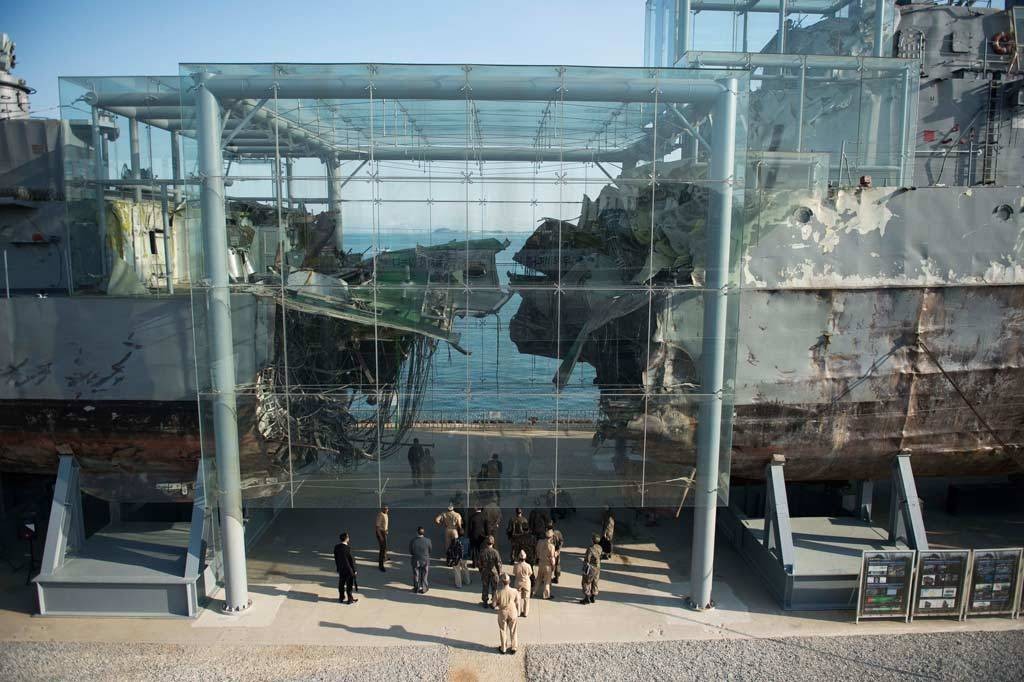
The most compelling aspect of KPN asymmetric warfare to date is the continued prevalence of the Yeono-class midget submarines. First introduced in 1965, these vessels require a crew of only two to operate but can carry six or seven passengers, proving useful for DPRK covert operations against South Korea and Japan. With a submerged displacement of 130 tons and a length of approximately 20 metres, each is armed with two 533mm torpedo tubes. It is believed that a Yeono-class submarine fired the torpedo that sank ROKS Cheonan, one of South Korea’s Pohang-class corvettes, in March 2010. Although the KPN reportedly has only ten Yeono-class submarines left in operation, the attack on ROKS Cheonan demonstrates how such a weapon, deemed obsolete by Western standards, might still present a very real threat to network-centric navies like that of the ROK.

CNO Admiral Jon Greenert visits the Cheonan memorial in May 2013. U.S. Navy photo.

The North Koreans are not alone in recognizing the potency of midget submarines like the Yeono-class. Since 2007, Iran has acquired 14 submarines of this class and is domestically producing its own derivative of the design, known as the Ghadir-class. The convergence of Iranian and North Korean naval doctrine underscores the need for further analysis of the latter’s intentions, capabilities, and potential impact on the security of the Korean Peninsula’s littorals. The KPN’s Soviet submarines and swarms of small Kusong-class torpedo boats might have once seemed to American and South Korean defence planners to be sufficiently straightforward a threat to counter. But the vessels described here demonstrate that the DPRK is adapting to its strategically disadvantaged position and lack of technological sophistication.

This is particularly problematic for the ROK Navy, which has focused so heavily in recent years to attain blue-water status. According to the analysis of Vice Admiral (retired) Yoji Koda of the Japan Maritime Self-Defense Force, the ROK has limited anti-submarine warfare capabilities. In this sense, the Yeono-class perfectly exploits one of the ROK Navy’s most glaring capability deficits. Satellite imagery may have picked out a vessel as substantial as the Sinpo-class, but what might it miss? Based on the successful engagement against ROKS Cheonan, it would not be a surprise if the DPRK were actively working on a new design based on the Yeono-class. Such small vessels would not be spotted as readily as a 1,500 ton submarine openly berthed at Sinpo South Shipyard.

Another area of some uncertainty regarding DPRK asymmetric capabilities is minelaying. Naval mines were of significant importance to the KPN during the Korean War – so much so that 70% of the casualties suffered by USN vessels during that conflict were due to mines laid by DPRK forces. Yet subsequent research suggests those mines were laid with significant Soviet guidance and training, and it would be a stretch to assume DPRK mine warfare has gained much in sophistication since then. There are also no indications whether the KPN currently operates dedicated minelaying vessels. In the absence of such, DPRK mine warfare would certainly be inefficient but it could, in the most desperate of circumstances, even employ civilian vessels in such a role. For example, during the Korean War blockade of Wonsan, the DPRK made use of local sampans as minelayers. It would be wise of the ROK Navy to not bet on that scenario and invest in improved mine countermeasures.

The DPRK is among the most secretive regimes and so detailed information on its military capabilities is scarce as has been indicated here. Yet what little can be prised from open source information shows that the DPRK is at least as advanced as Iran in its ability for asymmetric warfare at sea. It is vital that further attention be paid to the evolution of the KPN so that, first and foremost, incidents like the sinking of ROKS Cheonan are not repeated, but also to ensure that any potential intervention by the international community against the DPRK proceeds without significant loss of life or assets for the ROK and its allies.

Paul Pryce is Political Advisor to the Consul General of Japan in Calgary and a long-time member of the Center for International Maritime Security (CIMSEC). He has previously written as the Senior Research Fellow for the Atlantic Council of Canada’s Maritime Nation Program.

Distributed Lethality Task Force Launches CIMSEC Topic Week

Week Dates: Feb. 22-28 2016
Articles Due: Feb. 21 2016
Article Length: 800-1800 Words (with flexibility)
Submit to: Nextwar@cimsec.org

By Ryan Kelly

Since we last discussed the Surface Navy’s operational concept of Distributed Lethality (DL) in July 2015, there has been a tremendous amount of progress on the topic.  Distributed Lethality is the condition gained by increasing the offensive power and defensive hardening of individual warships and then employing them not only in traditional roles, but also in different ways than has been the practice in the past few decades. Distributed Lethality enables Naval Surface Forces to provide forward, visible and ready combat power for the nation.  Operating forward, Naval Surface Warships execute military diplomacy across a wide geography, building greater transparency, reducing the risk of miscalculation or conflict, and promoting a shared maritime environment.  Maintaining a persistent visible presence, Naval Surface Warships assure allies and partners and promote stability by deterring actions against U.S. interests.  Providing credible combat power, Naval Surface Warships are ready to respond when called upon in times of crisis providing operational commanders’ options to control increased ocean areas and hold potential adversaries at risk, at range, whether at sea or ashore.

More recently, as highlighted at the Surface Navy Association’s annual Surface Navy Symposium, we were introduced to a deeper and more holistic update on Distributed Lethality, in terms of its value as both an organizational and operational concept.   Organizationally, we heard that Distributed Lethality involves a comprehensive effort (much of VADM Rowden’s remarks discussed), that is focused on Tactics, Training, Talent and Tools (i.e., weapons, sensors and platforms; “if it floats it fights…,” of which the Director of Surface Warfare RADM Fanta’s presentation revealed).  Operationally, we learned that Distributed Lethality involves harnessing 3 key initiatives to ensure we can fight and win in any environment: those initiatives are “to Deceive, Target and Destroy.”

There has been a significant investment in thinking about the problem throughout the past year. More recently, the approach to understanding the concept has been largely twofold: first, we’ve worked to understand what value DL could bring to the Surface Force and a step further, to the larger Fleet. We’ve approached this through three primary lines of effort: wargaming, analytics and operational experimentation.  Studying the results of more than 15 wargames in 2015 alone, substantial analytics from multiple sources and operational experimentation deepened our understanding of the value that a distributed and more lethal Naval Surface Force can provide across a number of scenarios and ranges of conflict. We are training now for our first Adaptive Force Package deployment this Spring.  

During the final week of February, CIMSEC will host a series focused on the next chapter of Distributed Lethality. The theme of the next chapter gravitates around the question of “how we fight” as a more lethal and distributed force. As such, we’ve listed some of the key issues that we seek to better understand. For example: How should the upcoming Adaptive Force Package be employed:  including Tactical Situation (TACSIT) execution, organic and inorganic targeting, fielding of modified weapons, and improved integration with Amphibious Forces and Expeditionary Marine Corps units in support of sea control operations? What role does Distributed Lethality play in other joint concepts such as the DOD Joint Operational Access Concept (JOAC)?  How will the utilization and fielding of the F-35 (Navy and Marine Corps variants) contribute to the effectiveness of Distributed Lethality? What effect will cyber warfare have on the surface forces in the context of Distributed Lethality, both offensively and defensively? How can we better utilize the signature spectrum in a complex Anti-Access/Area Denial environment? How will the addition of a long range surface-to-surface missile affect both the deterrent and warfighting ability of the Surface Navy in the various phases of conflict? What are the legal implications of arming MSC ships, both for self-defense and for a more robust offensive role? How and to what extent should the Surface Navy incorporate other nations into Distributed Lethality? What are the risks of Distributed Lethality across the various phases of conflict?

Contributions can focus on the aforementioned key issues, or can explore Distributed Lethality in a broader strategic and operational context. Submissions should be between 800 and 1800 words in length (with flexibility) and submitted no later than February 21 to the CIMSEC editorial team at Nextwar@cimsec.org.

Editors Note: This topic week has since concluded and writings submitted in response to this call for articles may be viewed here

Ryan Kelly is a Surface Warfare Officer in the United States Navy currently assigned to Commander, Naval Surface Forces Distributed Lethality Task Force.

Trailblazers in Warfighting: The Maritime Militia of Danzhou

Exhibit 1: Sendoff Ceremony for Danzhou’s Flotilla.

By Andrew S. Erickson and Conor M. Kennedy

This is the second article in a five-part series exploring Hainan Province’s maritime militia, an important but little-understood player in the South China Sea and participant in its ongoing disputes. Our first article covered the maritime militia of Sanya City on Hainan Island’s southern coast, China’s closest naval and geo-cultural analogue to Honolulu. Now we direct our focus to Hainan’s northwestern shore, home to Baimajing (白马井, lit. “White Horse Well”) Fishing Port in Danzhou Bay. If Sanya and its Fugang Fisheries Co., Ltd. can be considered a wellspring of recent frontline activities by irregular Chinese forces in the South China Sea, Danzhou and its succession of fisheries companies—the current incarnation being Hainan Provincial Marine Fishing Industry Group (海南省海洋渔业集团)—may be regarded as some of the pioneers of military applications for Chinese maritime militia use in recent decades. Examining Danzhou’s forces in detail thus offers a comprehensive window into the origins, contributions, and ongoing development of China’s maritime militia to help elucidate these irregular actors.

Exhibit 2: Map of Hainan Province—Danzhou Militia’s Homeport Baimajing Located in Red Box. Image Credit: China Maps

China’s maritime militia forces are responsible for both peacetime and wartime roles. Most recently, their peacetime mission has focused on the protection of China’s maritime rights and interests. Maritime militia charged with the peacetime mission of “rights protection” (维权) could engage in the simple flooding of disputed waters with Chinese vessels, resisting foreign vessels’ attempts to drive them away. During wartime, maritime militia detachments might provide logistic support to active duty forces, or even lay sea mines themselves.

In the decades following the founding of the People’s Republic of China (PRC), the maritime militia served important coastal patrol functions, providing regular sea monitoring during their normal operations, and preventing Nationalist agents from infiltrating the mainland. While recent examples of irregular forces such as the Sanya maritime militia performing rights protection actions are available for observers to study, the fortunate absence of any recent maritime conflict leaves their potential use during any actual future combat less clear. Open sources can nevertheless help elucidate this important yet understudied issue. The maritime militia’s current training program for wartime missions is well-documented. Further insights may be gleaned by studying its actions during a previous conflict and in particular during a naval battle, which should serve as useful sources of insight into how the People’s Liberation Army (PLA) Navy (PLAN) may undertake any future potential coordination with the maritime militia. This conflict is the PLA Navy’s employment of the South China Sea Fisheries Company’s maritime militia during the 1974 contest between China and South Vietnam (hereafter, “Vietnam”) over the Paracels.

Although the mission roles of the maritime militia have evolved since 1974, they still retain many wartime functions deemed important by Chinese leaders. Considering that both the Paracel and Spratly archipelagoes are widely dispersed; and that some features are occupied by China’s weaker neighbors, with at least one maintaining a military alliance with Washington; any employment of the maritime militia in a limited Spratly conflagration could potentially resemble the 1974 conflict in important respects. Maritime militia activities could conceivably form a tripwire for confrontation that Chinese leaders might believe could confound American intervention, especially if the costs of intervening promised to damage U.S.-China relations significantly.

Danzhou Bay’s Baimajing Fishing Port holds a unique place in China’s recent history as the PLA’s first landing site during the Hainan Island Campaign (海南岛战役) in 1950. There, on 5 March, the PLA made the first of a series of landings that collectively allowed it to link up with the local guerilla resistance to achieve an overwhelming victory over Nationalist forces by 1 May and to expel surviving enemy soldiers completely from the island. Subsequently, Baimajing became home to the South China Sea Fisheries Company (南海水产公司). Established in Guangzhou, in neighboring Guangdong Province, it became one of the metropolis’s largest fishing companies before moving to Baimajing in 1958. In a sign of the interconnected nature of such enterprises, the South China Sea Fisheries Company still maintained operations in Guangzhou.

Two trawlers employed by the South China Sea Fisheries Company served in a variety of supporting roles for the PLA Navy during the January 1974 Battle of the Paracel Islands (西沙海战). From the outset, the militia’s presence agitated the Vietnamese naval forces, and served to steal the initiative from them. Vietnamese destroyer commanders were preoccupied with determining how to deal with these trawlers without resorting to armed force, affording the PLA Navy time to coordinate its own forces. The militia was tasked with monitoring the Vietnamese flotilla, and rescue and repair of a badly damaged PLA Navy mine sweeper. After the PLA Navy repelled the Vietnamese flotilla, the two trawlers provided transportation for 500 troops—two companies and an amphibious reconnaissance team from the Hainan military district—onto the remaining Vietnamese-occupied features. The Vietnamese hold-outs on the islands were quickly overwhelmed and surrendered. While small in scale, the important supporting role these irregular forces played during a period of PLA Navy weakness helped China secure ground crucial to supporting its current maritime strategy in the South China Sea.

In 1974, Vietnamese commanders were forced to choose between open conflict and a Chinese fait accompli. When confrontation began and PLA Navy assets became involved, Saigon reached out to its ally, Washington, for assistance. However, perceiving Sino-American rapprochement as more critical than the fate of a few features in the South China Sea, the United States did not come to the aid of the Vietnamese. Today, Second Thomas Shoal presents a similar potential flashpoint. There, Chinese maritime militia forces might seek to dislodge the few Philippine marines stationed on the Sierra Madre. With Mischief Reef—an established Chinese fishing outpost that has recently undergone large-scale reclamation and militarily-relevant infrastructure development—only 15 miles away, maritime militia vessels could be rapidly deployed to Second Thomas Shoal in greater numbers. The Paracels Battle began with the appearance of two Chinese trawlers in the waters around Robert Island, approximately 54 miles from the nearest harbor on Woody Island. Closer in proximity to Second Thomas Shoal, Mischief Reef provides an even more advantageous base of operations and supply for militia action than Woody Island did, should conflict occur.

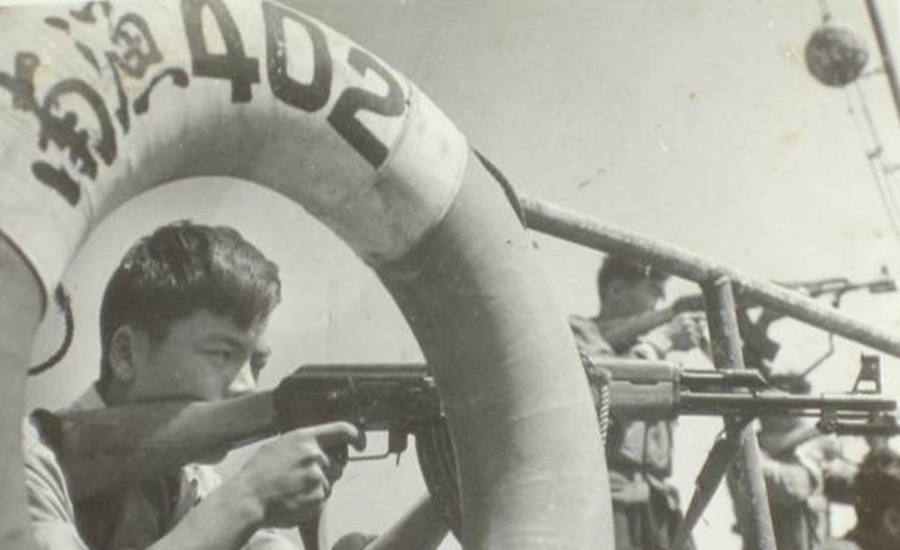
Exhibit 3: Personnel aboard Trawler 402 Bearing Arms.

Building on Glorious History: “Catching Government Fish and Casting Nets of Sovereignty”

Economic and institutional structures, which form the basis and strength of the maritime militia’s organization, quite literally underpin Danzhou’s maritime militia. As a state-owned enterprise, the South China Sea Fisheries Company and its successor organizations have been a major presence, both in Baimajing fishing port and province-wide. Having operated the harbor’s fishing pier for over five decades under various names, currently Hainan Provincial Marine Fishing Industry Group, it is now one of Hainan’s largest marine fisheries companies.

That said, the company’s close ties with provincial and local governments, as well as China’s broader political and economic development, have imposed a complex organizational history. In 1981, the company divided organizationally into separate entities, with personnel, and vessels apportioned between Hainan Island and Guangzhou; to the best of our knowledge, these geographic entities have subsequently enjoyed commercial ties, but have never re-merged organizationally. In 1988, Hainan Island and China’s wide-ranging South China Sea claims were separated from their previous administrative position within Guangdong Province to become a province in their own right. The Hainan branch of the South China Sea Fisheries Company changed its name to Hainan Provincial Marine Fishery Corporation (海南省海洋渔业总公司). Inspired by the designation of Hainan as a Special Economic Zone (SEZ) at the time of provincial formation in 1988, and its subsequent economic boom, the company began investing heavily in real estate. In 1992, Hainan’s real estate bubble burst, sending the corporation into severe debt.

Today’s success is built on yesterday’s reform. Heavily indebted, and entering bankruptcy, Hainan Provincial Marine Fishery Corporation suspended operations in 2003. In 2006, however, Deputy Provincial Governor Wu Changyuan (吴昌元) held special meetings to address the company’s collapse. A new company, the South China Sea Modern Fishery Company (南海现代渔业公司), was established. Several years of restructuring returned the enterprise to profitability.

In 2009, Danzhou’s fishing enterprise entered its latest incarnation as Hainan Provincial Marine Fishing Industry Group. It has re-established its presence across Hainan, revamping existing subsidiaries in places like Baimajing and Tanmen Village, as well as initiating development projects elsewhere, such as in Ledong’s Lingtou Port. This new company is intended to serve as a leading platform for government investment into Hainan’s marine fishing industry and fishing harbor development. The company and provincial government have major plans for fisheries development in the South China Sea, starting with fishing harbor infrastructure projects and the organization of multiple fishing flotillas to operate in the Spratlys. The Hainan provincial and Danzhou municipal governments together have reportedly invested over 200 million RMB ($30.4 million) in the construction of Baimajing’s harbor, including expanded piers and deeper berths to facilitate large-scale aquatic product processing. Recent municipal committee meetings reaffirmed the government’s support for Baimajing’s harbor development. The aforementioned flotilla operations were introduced in our last piece analyzing Sanya’s maritime militia, foremost among them the Fugang Fisheries Co. Ltd., also among the province’s five leading fisheries enterprises. All fishing vessels seeking to operate in the Spratlys must join these group formations, according to article ten of China’s “Nansha Fishery Regulations.” The regulations stipulate rules for fishing vessels operating south of 12-degrees North latitude in the South China Sea, including requirements for each formation to designate and operate a command and communications vessel for reporting to shore-based stations. This could be a single trawler, or a larger command and supply ship supervising the other trawlers.  

The South China Sea Modern Fisheries Group’s ties with the military did not begin with the 1974 action in the Paracels. As early as 1961, its predecessor, the South China Sea Fisheries Company, established a People’s Armed Forces Department (PAFD) to be managed directly by the Hainan military district. In 1967, during the Cultural Revolution, the South China Sea Fisheries Company came under direct management by the military and received 80 sailors from the PLA Navy. It officially established a militia headquarters in 1975, possibly linked to its success in the Paracels Battle as well as the national political campaigns of the time.

Called Hainan Provincial Marine Fishing Industry Group today, the company has not forgotten its glorious past. Its website proudly recounts its predecessor organization’s participation in the Paracels Battle, and proclaims that it will carry out the nation’s policy of “protecting sovereignty” and “emphasizing presence” in the South China Sea through its current focus on fishing port development and dispatching supply ships (capable of supporting trawlers from multiple localities) to fishing grounds in the Spratlys. It further states: “Grasp the principles of ‘being both military and commercial, both soldiers and civilians, combining war and peacetime and civilian-military dual use’ to organize a Spratly fisheries supply fleet. [They will] organize and drive the fishermen masses to go to the Spratlys on a large scale and open up new fishing grounds, ‘catching government fish and casting nets of sovereignty’ to display sovereignty and let the Chinese flag wave over waters in the Spratlys” (抓紧以 “亦军亦企、亦兵亦民、平战结合、军民两用” 的原则组建南沙渔业生产补给船队,组织和带动群众渔民大规模地赴南沙开辟新渔场,“打政治鱼、撒主权网”,让五星红旗飘扬在南沙海域,彰显主权).

One news report states that the company plans to establish 20-30 of the aforementioned “Nansha Fishery Regulations”-mandated flotillas, each with a large command and supply ship leading 30 fishing vessels. The article elaborates that these supply ships will “try out militia reserve structures” (实习民兵预备役编制). Together with the local government, the company is focusing on building the necessary infrastructure—deeper harbors, piers, ice factories, etc.—to support these operations. Danzhou’s Baimajing and Sanya’s Yazhou Fishing Port are both officially ranked as “core fishing ports” (中心渔港). China’s fishing ports are divided among four tiers based on their size and capacity; core fishing ports receive national-level investment and guidance. Based on the activities of Sanya’s Fugang Fisheries Company, it can be inferred that the South China Sea Modern Fisheries Group, with its similarly close government ties, may assume future maritime militia responsibilities.

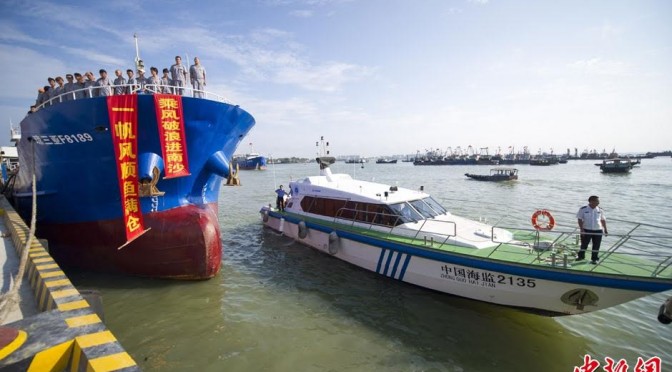
Danzhou’s flotilla made its inaugural “rights protection” expedition to the Spratlys, departing Baimajing’s piers in May 2013. Thirty 100-plus-ton trawlers led by a 4,000-ton command and supply ship and a 1,500-ton cargo ship made a 40-day trip to the Spratly fishing grounds. Interestingly, the two ships leading them—bearing hull numbers Qiong Sanya F8138 and F8198—belong to a Sanya-based company. This indicates a degree of cooperation between areas to mount these fishing expeditions, potentially reflecting broader government guidance. En route to the Spratlys, the flotilla experienced a nighttime encounter with two law enforcement vessels of unknown origin, likely Vietnamese, but were able to proceed without incident.

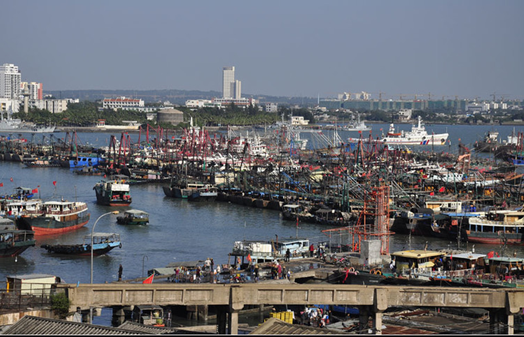
Exhibit 4: View of Danzhou Harbor from Baimajing, With Fishing Fleet, Maritime Law Enforcement, and Navy Ships.

While the Danzhou excursion was modeled expressly on the formation described above, other entrepreneurs have also promoted ideas to boost local fishing fleets’ ability to operate in the Spratlys, centered on the same concept of using a mobile base of operations to sustain extended fishing expeditions. The Fucun Collective (福村合作社), located in Baimajing township, submitted proposals to the provincial government to help it expand its current fleet of fishing vessels, and to begin a major overhaul of its operations within five years. To facilitate large-scale fishery operations, Fucun requested government assistance for the purchase of a 10,000-ton mother ship and seven 1,000-ton subordinate shuttling supply ships. The mother ship would conceivably function as a command center, floating base, and transfer dock to coordinate, supply, and process the catches of, numerous smaller fishing boats. By contrast, much of Hainan’s fishing fleet is still composed of small, wooden “hook industry” (钓业) vessels incapable of reaching the Spratlys. Relying on such a large platform and accompanying supply ships could potentially allow numerous smaller craft to operate more permanently in the Spratlys, unlike the temporary expeditions of flotillas composed of larger trawlers. The Hainan Oceanic and Fisheries Department’s conditional response to the proposal did not deny assistance outright, but rather underscored and enforced its growth control policies, whereby collectives must first dispose of old, obsolete vessels before building new hulls. This example suggests the extent of local initiatives to increase presence in the Spratlys, as well as what the provincial government deems acceptable measures.

As China attempts to resuscitate its depleted coastal fisheries and becomes increasing reliant on distant water fishing, creative entrepreneurs like those in Fucun are proposing projects that would facilitate the movement of its more numerous smaller-sized fishing trawlers to the Spratlys in search of better fishing grounds. Although this could conceivably alleviate the strain on coastal fisheries, it runs counter to the larger national effort to modernize Chinese fishing fleets overall, and to embed reliable maritime militia capabilities within some of them specifically. Instead of fostering continued reliance on smaller, wooden fishing vessels that cannot sustain operations far from shore, the government prefers to support larger tonnage, steel-hulled vessels that are more capable of distant water fishing—and may effectively double as sovereignty support tools in the South China Sea. Modern fishing vessels can endure rougher seas, collisions with foreign vessels, and employ more advanced equipment (communications), thereby granting maritime militia on such vessels greater capacity to serve in a variety of mission roles. While attempting to manipulate or parry policies from above to better suit one’s local or even personal interest is a time-honored technique vis-à-vis China’s gargantuan bureaucracy, sustained government prioritization of maritime militia development to serve state sovereignty and security interests at sea appears to be winning the day.

In further evidence of sustained, systematic support for maritime militia building, numerous articles on the maritime militia by local military officials urge local governments to establish a legally-based support system to protect the militia and supply much needed economic incentives for militia units to actively fulfill their duties. He Zhixiang, head of the Guangdong Military Region mobilization department, which oversees Hainan’s mobilization work, penned an article in early 2015 exhorting governments to purchase insurance and provide financial assistance according to “Naval Personnel At-Sea Standards” (海军海员出海标准) for fishermen recruited into the maritime militia. The Nansha Fishing Regulations provide rules for fuel subsidies for fishing fleets operating in the Spratlys, as well as compensation if they are harmed by foreign vessels. There are also benefits specific to the maritime militia, such as additional compensation for wages forgone through participation in training or missions. Militia members are eligible to receive superior insurance subsidies, according to a Hainan Daily news article. It states that Hainan’s provincial Department of Human Resources and Social Security plans to include fishermen in the work-related injury insurance system and provides greater insurance subsidies for the maritime militia. Danzhou, for instance, provides its militia with a “disability pension” of 56,400 RMB ($8,636) a year if they become disabled in the line of duty—a sum that might well be considered significant in a fishing village with a relatively low cost of living.

This figure is not much less than the pensions to which People’s Police (人民警察), regular municipal law enforcement) or state personnel/functionaries (国家机关工作人) are entitled if similarly disabled in the course of their work. This is part of a broader pattern of implementation of national-level law entitled “Measures for the Administration of Disability Pensions” (伤残抚恤管理办法), whereby reservists, militia, and migrant workers harmed in war, field exercises, training, or other service duties are categorized together and entitled to equivalent disability pensions. Ongoing PLA legal reforms may further shape these and other laws and regulations concerning China’s maritime militia. The leaders of Danzhou, and many other localities, appear prepared to spend considerable time and effort finding the right mix of economic incentives, aggrandizing propaganda, and patriotism to mobilize the maritime militia under their jurisdiction.

The Gray Zone

Hainan’s maritime militia are assigned an important role in protecting China’s sovereignty and maritime rights and interests in the South China Sea, but they could also be of service in a variety of roles that fall somewhere between peace and war. Fishing flotilla formations deployed with increasing frequency in the South China Sea greatly increase the organizational efficiency of the maritime militia units that sometimes participate in their operations. For China’s maritime law enforcement and naval forces, these formations can increase their ability to monitor large numbers of vessels, since the command and supply ships provide dedicated on-site management and communications with the fishing fleet. Furthermore, even if only the supply ships had militia organizations on-board, those militia members could conceivably requisition some of the flotilla’s trawlers and mobilize them for specific operations. On scene requisition could enable reconnaissance or rights protection actions without delay, allowing for an immediate response to foreign incursions into Chinese-claimed waters. Maritime militia participating in a flotilla operation in the Spratlys could also provide an excellent source of reserve manpower and vessels for assisting PLA Navy operations farther away from the support of their bases on China’s southern coast.  

In recent years, like many other Hainan province localities, Danzhou has increased emphasis on maritime militia building. Danzhou’s leadership regularly issues statements to support strengthening the maritime militia. One example is that of former PAFD head Fu Huaming, who included maritime militia building as an important focus when giving orders to the heads of Danzhou’s grassroots PAFDs in 2011. To gain the military’s support for Danzhou’s development, Fu joined a delegation of Danzhou officials to the provincial military district headquarters in early 2014. Zhang Qi, formerly Party Secretary of Danzhou and now Party Secretary of maritime militia powerhouse Sanya City, reportedly included in his remarks during the visit the full extent of Danzhou’s maritime militia building efforts. This suggests that the performance of local officials in militia building, already one of their responsibilities, helps to some degree in currying favor with local military officials. PLA support could bring greater benefits to Danzhou’s development projects—especially since, located on Hainan’s relatively arid, isolated west coast, they receive far less tourism than popular destinations like Sanya City. Perhaps in part thanks to his militia-building efforts, PAFD head Fu Huaming was subsequently promoted to Deputy Chief of Staff of the Hainan provincial military district. As the political tide of the “Maritime Power” development strategy officially promulgated by paramount leader Xi Jinping himself swells, it appears that maritime militia building may be an important link in the machinations of local political and military officials looking to rise up the provincial ranks.

Amid these broader trends, Danzhou’s new leadership has taken up the mantle of local militia building. During a PAFD transfer-of-leadership meeting in late 2014, in which Danzhou Party Secretary Yan Chaojun was appointed first secretary of the PAFD, Yan extolled Danzhou’s location on the “frontier” (前沿) of the South China Sea. He called for “strengthening the national defense reserve forces, with maritime militia building of particular importance” (加强国防后备力量建设尤其是海上民兵建设极其重要). In early 2015, Danzhou’s leadership held a meeting on militia reserve work, declaring that the city would strengthen the maritime militia and land-based emergency response militia in “preparation for military struggle in the South China Sea” (南海军事斗争准备). The support of both local party and military leaders will determine Danzhou’s maritime militia growth and effectiveness, as they share a direct responsibility for militia building within their jurisdiction.

Exhibit 5: Standing on Baimajing’s Pier in December 2015, PAFD Political Commissar Zhang Yun Presents Danzhou’s Maritime Militia Work to Deputy Provincial Governor Lu Junhua.

The Central Government has signaled the importance of maritime militia building to local governments. In January 2014, the State National Defense Mobilization Committee held the “Maritime Mobilization – 1312” symposium in Hainan’s Qionghai City to discuss the province’s maritime militia. During this event, maritime militia rights protection and warfighting support exercises were held at Tanmen Village with Danzhou’s maritime militia detachment featured prominently. The exercises extended from October 2013 to January 2014. Former Danzhou Deputy Party Secretary Wang Qiongzhu convened a meeting in Danzhou to review the results of the symposium and their maritime militia’s participation. Wang Qiongzhu declared maritime militia building to be a part of national maritime strategy and “an act of the state.” With plans to build three new maritime militia units, Danzhou has completed construction of its first unit in Baimajing. It has been over four decades since trawlers from Baimajing were dispatched to the Paracels, where they supported China’s victory against the Vietnamese. Today, we are witnessing a maritime militia revival, with the avowed purpose of both protecting China’s rights and supporting active duty forces in military struggle.

In probing potential wartime applications of China’s maritime militia, it is important to consider that China’s militia is an official component of its armed forces. Militiamen are not independent citizens independently organizing themselves into militia, or self-directed fishermen driven extemporaneously by personal patriotic fervor. Rather, in today’s China, local government and PLA organs are responsible for militia building, and will mobilize their local militia in times of emergency, as directed by higher authorities in a process involving the PLA chain of command. The idea of the militia often evokes old Maoist ideas about People’s War, an approach to conflict that utilizes Chinese traditional advantages in terrain, population, and fighting stratagems. China’s military still embraces the concept, and has adjusted its content to suit changes in modern warfighting. Beijing included the concept of “Maritime People’s War” (海上人民战争) in its 2006 Defense White Paper, stating that its navy was “exploring the strategy and tactics of maritime people’s war.” Ge Yonghong, head of the Nanjing Military Region’s mobilization department, formulated the military actions encompassed by Maritime People’s War, or the related concept of “People’s War at Sea” (海上的人民战争), most of which assign important roles to the militia. While official Chinese sources typically do not describe the Paracels Battle explicitly as an example of Maritime People’s War, the clear use of classic People’s War tactics in the battle itself may further inform our understanding of possible Chinese employment of maritime militia in a potential future crisis or conflict in the South China Sea. Specifically, the combined employment of the main forces (the PLA Navy) with mobilized local civilian forces (the militia) using unconventional tactics to overcome a superior enemy force exemplifies the People’s War approach. Despite the marked differences in China’s armed forces between 1974 and the present, its continued emphasis on the maritime militia suggests the possibility of a repeat scenario today vis-à-vis disputed flash points such as the Spratly Islands.

Today Danzhou’s maritime militia forces and the fishing organizations in which they are based are being revitalized and developed further, even as they enjoy increasing interconnections with counterparts in Sanya and Tanmen. The last is home to another major maritime militia, the subject of the next article in our series on the leading maritime militias of Hainan Province. This third, forthcoming, article will explore the maritime militia of Tanmen Village, north of Bo’ao on Hainan’s east coast. It will build on our previous scholarship in this area, which traces a Tanmen maritime militia company’s designation as a “model militia work unit” (民兵工作模范单位), “militia advanced grassroots work unit” (民兵基层建设先进单位), and “advanced border and coastal work unit” (边海防工作先进单位) following an official visit to Tanmen’s fishing harbor and maritime militia by Xi Jinping in April 2013. Different levels of PLA command have all recognized the Tanmen maritime militia for their perseverance, bravery, and patriotism in protecting China’s claimed sovereignty in the South China Sea. In keeping with general incentives for Chinese officials to learn from Party-and-government-sanctioned examples, a delegation including Sansha City’s Mayor and Party Secretary Xiao Jie has visited Tanmen, and then-Danzhou Party Secretary Zhang Qi led a delegation there in November 2013. Beyond the basics of militia development and mobilization, what might these officials be learning about and be planning for their own forces to prepare for? We have traced direct Tanmen militia involvement in international controversies and incidents, including “island construction” in the Spratlys and the 2012 Scarborough Shoal Standoff.

Stay tuned for further analysis of China’s leading irregular forces at sea!

Dr. Andrew S. Erickson is a Professor of Strategy in, and a core founding member of, the U.S. Naval War College’s China Maritime Studies Institute. He serves on the Naval War College Review’s Editorial Board. He is an Associate in Research at Harvard University’s John King Fairbank Center for Chinese Studies and an expert contributor to the Wall Street Journal’s China Real Time Report. In 2013, while deployed in the Pacific as a Regional Security Education Program scholar aboard USS Nimitz, he delivered twenty-five hours of presentations. Erickson is the author of Chinese Anti-Ship Ballistic Missile Development (Jamestown Foundation, 2013). He received his Ph.D. from Princeton University. Erickson blogs at www.andrewerickson.com and www.chinasignpost.com. The views expressed here are Erickson’s alone and do not represent the policies or estimates of the U.S. Navy or any other organization of the U.S. government.

Conor Kennedy is a research assistant in the China Maritime Studies Institute at the US Naval War College in Newport, Rhode Island. He received his MA at the Johns Hopkins University – Nanjing University Center for Chinese and American Studies.