Category Archives: Capability Analysis

Analyzing Specific Naval and Maritime Platforms

Dynamite at the Speed of Light: How Directed Energy Can Transform the U.S. Navy

By Tim McGeehan and Douglas Wahl

Attrition

On December 7, 1941, shortly after the attack on Pearl Harbor, Chief of Naval Operations (CNO) Admiral Stark issued the directive “Execute Against Japan Unrestricted Air and Submarine Warfare.”  This was the opening phase of America’s strategy to engage Japan in a long war of attrition. Japan, on the other hand, had hoped for a short and limited war that would be concluded before America could fully mobilize. The American population, economy, and industrial base were asymmetric advantages that the Japanese could not hope to counter in the long run. Simply put, we could replace combat losses of people and platforms while they could not.

Now, our potential adversaries favor Anti-Access/Area Denial (A2/AD) strategies that seek to keep our military at arm’s length and limit our power projection. Underlying this strategy is the familiar concept of attrition. To fight the “away game” our military will have to successfully penetrate multi-layered defenses extending well offshore and survive continuous engagement to carry the fight to our adversaries’ homeland. The recent proliferation of technology including long-range sensors, anti-ship ballistic and cruise missiles, and electronic warfare capabilities that aim to disrupt our command, control, communications, computers, intelligence, surveillance, and reconnaissance (C4ISR) are making their A2/AD strategies increasingly viable.

While our Navy is accustomed to fighting the “away game,” attrition is a strategy we can ill afford today. Unlike World War II, with the 24-hour news cycle and the speed of information via the Internet, the United States can no longer politically accept a war with heavy losses of personnel or platforms. We no longer possess the production facilities to rapidly replace extensive combat losses of materiel that we could in World War II. Though we are the world’s largest Navy, our number of capital ships is limited and future investments to numerically grow the Fleet must be weighed against the need for development of advanced capabilities. If we are going to successfully engage adversaries relying on A2/AD strategies, our Navy needs bold and innovative solutions that can successfully counter their attrition focus.

The Salvo Competition

Sun Tzu reminds us that it is most important to attack the enemy’s strategy and we need to do just that. A key aspect our adversaries rely on to achieve the desired attrition is winning the “salvo competition.” As we approach their coasts, our adversaries believe they can overwhelm our ships based on the sheer number of long-range anti-ship and ballistic missiles they can deliver versus the more limited number we can defend against based on our current magazine depth. Our surface ships have advanced “hard kill” point defenses such as the Standard Missile (SM-2), Close-in-Weapon System (CIWS), Evolved Sea Sparrow Missile (ESSM), Rolling Airframe Missile (RAM), and SeaRAM. No matter how effective these systems are, they may run out of missiles and ordnance long before our adversary does, opening the door to unsustainable losses. To help increase survivability, the Navy is upgrading our softkill systems such as AN/SLQ-32 as part of the Surface Electronic Warfare Improvement Program (SEWIP).1 However, as the sophistication of adversary weapons continuously increases, the continued ability of these systems to adapt is uncertain.

We need to turn the tables on attrition by changing the asymmetric balance of the salvo competition between A2/AD assets and power-projecting naval forces. However, we cannot continue to rely on incremental advances by linearly extrapolating our capabilities; instead we must take advantage of highly non-linear opportunities provided by leveraging emerging technology. In 2015, former CNO Admiral Greenert challenged the Science and Technology community to “get us off gunpowder.”The Navy needs to rise to this challenge and accelerate the investment, development, and fielding of directed energy weapons across the Fleet.3

Technologies and Advantages

Directed energy weapons offer many advantages to help us defeat an A2/AD strategy, increasing lethality and survivability while decreasing cost and logistical burdens. With a range exceeding 100 nautical miles, the Electromagnetic Rail Gun (EMRG) can execute multiple missions at significantly greater range than today’s “conventional” gun systems, including anti-surface, naval surface fire support (NSFS), air defense, and ballistic missile defense.4 Additionally, although the existing Tomahawk Land Attack Missile (TLAM) and strike aircraft have strike ranges greater than the EMRG, many targets will be well within the EMRG’s range which would allow us to husband those more limited and expensive strike resources. Additionally, the EMRG round’s small size, high speed, and kinetic energy make it extremely hard to intercept or defend against. Technical progress continues, working toward the future fielding of EMRG at sea.5

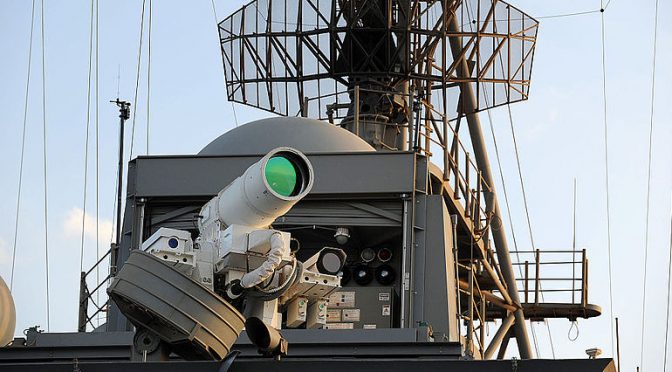
The solid-state 30 kilowatt (kW) Laser Weapons System (LaWS), on the other hand, was already operationally deployed on the USS Ponce in the U.S. Central Command AOR in 2014.6 It demonstrated the ability to disable an Unmanned Aerial Vehicle (UAV), disable a small boat engine, and detonate ammunition.Follow-on Navy efforts continue: at the 2017 Surface Navy Association (SNA) symposium, Rear Admiral Boxall, Director of Surface Warfare, announced plans to test fire a 150 kW weapon from a ship in the near future, and at the 2018 SNA symposium it was announced that USS Portland will soon host a new laser system in another technology demonstration.8 Likewise, efforts are underway with the Navy’s High Energy Laser with Integrated Optical-Dazzler and Surveillance (HELIOS) project (60kW with potential growth to 150kW) as well as the Defense Advanced Research Projects Agency’s (DARPA) High Energy Liquid Laser Area Defense System (HELLADS) project (in the 150 kW range), which may present future opportunities for demonstration at sea.9

https://gfycat.com/HeartfeltAdorableDuckbillplatypus

LaWS test (U.S. Navy video)

High-powered microwave weapons are another category of directed energy weapons that could be soon employed at sea. High power microwaves can be used for electronic attack to destroy or disrupt specific components of adversary communication and sensor systems or even be applied to counter- improvised explosive device (IED) operations.10 In 2012, the Air Force Research Lab successfully demonstrated the Counter-electronics High-power microwave Advanced Missile Project (CHAMP) that developed an air-launched cruise missile outfitted with a high-power microwave payload.11

Collectively, these directed energy weapons will allow us to counter A2/AD by winning the salvo competition. The small size of EMRG rounds also translates into a vastly expanded magazine when compared to the limited number of Vertical Launch System (VLS) cells of our current surface combatants. LaWS and high-powered microwave weapons go even further, offering a virtually bottomless magazine, limited only by power generation. These new weapons also shift the cost curve in our favor. For short-range strike missions, a TLAM costs between $1.1 and 1.4 million12 per missile and an F/A-18E/F Super Hornet flying over the beach costs $80+ million,13 not including the cost to recruit, train, and maintain the pilot. On the defensive side, existing Naval surface-to-air missiles vary in cost from about $900,000 for a RAM to over $20 million for an SM-3 Block IIA for ballistic missile defense.14 In contrast, an EMRG round costs $25,000 and LaWS costs $1 per shot, making them extremely cost effective alternatives.15 The combination of decreased physical size and lower cost will also enable our surface Fleet to counter the missile, UAV, and small boat swarms of A2/AD without being overwhelmed. 

Another aspect of countering the A2/AD attrition calculus is increasing survivability. In today’s environment almost any hit to a ship is a mission kill, which places a premium on not getting hit in the first place. The increased range of EMRG allows for increased standoff distance during littoral strike or naval surface fire support missions in support of forces ashore. LaWS could engage incoming missiles at a greater range than existing CIWS systems, which have such short range that shrapnel from a destroyed anti-ship missile could still have enough kinetic energy to damage a ship and provide a mission kill. The EMRG could even be armed with a “point defense” projectile that deploys submunitions of flechette, airburst, or grapeshot against incoming threats. The increased power systems required for EMRG could also enable more powerful electronic warfare capabilities that in turn could defeat incoming missiles. However, the shift to directed energy weapons will have the greatest boost to surface ship survivability because they lack what is traditionally the most vulnerable part of the ship – the explosives in its magazine. Storing explosive rounds and propellants onboard also necessitates additional damage control systems and armor, which could be reduced, allowing tradeoffs in the constant naval architecture balance of size and weight.

Directed energy weapons also have a second order benefit in countering A2/AD by decreasing our logistics burden. Our surface Fleet is constrained and restrained by logistics – specifically our supply ships that are an often overlooked critical vulnerability. While our forward deployed Fleet relies almost exclusively on them for the resupply of food, parts, and fuel, there are very few of these ships in the inventory. On top of their limited availability, logistic ships have limited defenses and in a hostile environment will require an armed escort, which will in turn detract from forces available for the fight. Moreover, they have to cover long distances to and from logistics hubs. With directed energy weapons, our Fleet could have deeper magazines and still trade some space to carry more fuel, parts, and stores. This would reduce the Fleet’s dependence on combat replenishment, both limiting the exposure of and the burden on these scarce, vulnerable assets. Furthermore, replenishment of EMRG magazines could occur at sea and on station. Reloading of VLS cells, on the other hand, currently must be done pier-side in port, in a protected anchorage, or in optimal conditions at sea.16 Depending on the availability of these areas and their proximity to the front, combatants may incur a significant loss of time on station while transiting to and from them.

The logistical benefits of directed energy weapons may extend beyond the A2/AD environment. In future conflicts we may have to begin the fight closer to home – against enemy submarines and forward deployed long-range aircraft. Fighting our way across the ocean will entail long transits before we even get in position to fight the “away game” in our adversary’s waters. Reducing the frequency of required resupply operations will reduce the exposure and vulnerability of our limited logistics force.

Questions, Barriers, and Integration

There are additional force structure, strategic laydown, and force employment questions to consider with the adoption of directed energy weapons. How will the integration of weapons like EMRG and LaWS and their assumption of air defense and short-range strike missions impact the future requirements and composition of the Air Wing and the Strike Group? In the future, with drastically deeper magazines, one ship will have the capacity of several existing ships. Since the number of ships on station is often related to the aggregate number and type of missiles in their VLS cells, will there be a decreased requirement for the number of ships and submarines to be in theater or on station? It is true that a ship can only be in one place at a time, but with the longer range each EMRG ship could impact a greater area.

https://gfycat.com/PastelPerfumedIrishwolfhound

EMRG test (U.S. Navy video via AiirSource)

Could the aircraft carrier reach a point where it won’t require a “shotgun” and strike group escorts can be detached for independent operations? Could an EMRG equipped DDG-1000 holding the bulk of the theater’s projectile and missile magazines act as an “arsenal ship” that challenges the aircraft carrier as the new premier capital ship? How will directed energy weapons impact manpower? Will the technicians who maintain and operate directed energy systems and their power supplies be lured away by a private industry focusing on the next generation of battery and energy storage technology – similar to the way the defense contractor UAV market has recruited UAV pilots out of the Air Force? Will EMRG find uses beyond weapons delivery? The National Aeronautics and Space Administration (NASA) has considered building a massive EMRG to launch objects into space.17 Could a Navy EMRG someday be used to inject nanosatellites into low-earth orbit and rapidly reconstitute or augment a constellation in response to adversary attacks on our space-based systems? 

With a reduced footprint and fewer electrical requirements, LaWS (or its successor) can be deployed on a wider variety of platforms. However, USS Ponce’s laser was powered by a diesel engine independent of the ship’s power system. Likewise, during a test onboard USS Dewey (DDG-105), LaWS was powered by an independent, commercial generator system and not integrated into the ship’s power grid.18 Fielding EMRG on a vessel will require it to be able to accommodate the equipment for energy generation and storage, pulse forming, and cooling. Even with expected achievements in increased battery storage and power production, the EMRG will likely have to be installed on larger platforms such as the DDG-1000 to be feasible. But given there will be just three Zumwalt destroyers, the Navy will only be able to reap the benefits of directed energy with the next generation of surface combatants (absent a technological revolution that would enable it to be fielded on today’s combatants) and therefore directed energy must play a key role in setting the requirements for these ships.  The Navy requires additional enablers to realize and take advantage of directed energy weapons and harness the technological advances in battery technology from firms like Tesla as they move from powering cars to powering homes and building smart electrical grids.

There are risks associated with fielding directed energy weapons. As electronics-intensive systems, will they require significant modification of their components to shield against electromagnetic pulse (EMP) and microwave weapons? Likewise, the environmental impact of environments featuring extensive dust, sand, precipitation, and clouds for weapons like LaWS are unclear. Will LaWS be a ‘fair weather’ weapon and require redundant foul-weather backup capability such as the CIWS? Finally, there are damage control concerns with the extensive battery systems. Can a ship’s crew repair battle damage at sea, swap out modular battery components, or fight hurt?  

The issues extend beyond the technical barriers. Alfred Thayer Mahan wrote “an improvement of weapons is due to the energy of one or two men, while changes in tactics have to overcome the inertia of a conservative class.”19  Experimentation like the demonstrations of LaWS on the USS Ponce are important, but integrating new capabilities into major exercises and wargames will be required to prove new capabilities, develop tactics, techniques, and procedures, and overcome skepticism from those who are heavily invested in outdated systems and concepts.

Conclusion

The U.S. Navy must continue to leverage emerging technology to counter adversary A2/AD strategies. Directed energy weapons offer a means of denying attrition by winning the salvo competition and increasing survivability. We are on the verge of realizing the full potential of these game-changing technologies. Fielding them across the Fleet will have implications that span most aspects of the Navy, from force structure to strategic laydown, and from missions to personnel. Any change in weapons or tactics involves risk but we must not shy away from it if we are to remain ahead. In the words of President Eisenhower from his First Inaugural Address “We must be ready to dare all for our country. For history does not long entrust the care of freedom to the weak or the timid.”20

Tim McGeehan is a U.S. Navy Officer currently serving in Washington.

Douglas T. Wahl is a Systems Engineer at Science Applications International Corporation.

 The ideas presented are those of the authors alone and do not reflect the views of the Department of the Navy, Department of Defense, or Science Applications International Corporation. 

This article is an adaptation from an essay that was awarded Second Place in the 2016 U.S. Naval Institute’s 2016 Emerging & Disruptive Technologies Essay Contest which was sponsored by Leidos.

References

[1] http://www.navy.mil/navydata/fact_display.asp?cid=2100&tid=475&ct=2

[2] David Smalley, CNO: Here’s What We Need for the Future Force, Navy News Service, February 5, 2015, http://www.navy.mil/submit/display.asp?story_id=85464

[3] Note that for the purposes of this report “directed energy weapons” includes electromagnetic railgun

[4] Office of Naval Research Fact Sheet, Electromagnetic Railgun, http://www.onr.navy.mil/Media-Center/Fact-Sheets/Electromagnetic-Railgun.aspx

[5] Sydney Freedberg, Navy Railgun Ramps up in Test Shots, Breaking Defense, May 19, 2017, https://breakingdefense.com/2017/05/navy-railgun-ramps-up-in-test-shots/

[6] David Smalley, Historic Leap: Navy Shipboard Laser Operates in the Arabian Gulf, Navy News, December 10, 2014, http://www.navy.mil/submit/display.asp?story_id=84805

[7] Sam LaGrone, U.S. Navy Allowed to Use Persian Gulf Laser for Defense, USNI, December 11, 2014, http://news.usni.org/2014/12/10/u-s-navy-allowed-use-persian-gulf-laser-defense

[8] Maike Fabey and Kris Osborn, The U.S. Navy is Moving at Warp Speed to Develop Super Lasers, The National Interest, January 24, 2017, http://nationalinterest.org/blog/the-buzz/the-us-navy-moving-warp-speed-develop-super-lasers-19165 ; Megan Eckstein, LPD Portland Will Host ONR Laser Weapon Demonstrator, Serve as RIMPAC 2018 Flagship, USNI News, January 10, 2018, https://news.usni.org/2018/01/10/lpd-portland-selected-host-onr-laser-weapon-demonstrator-serve-rimpac-2018-flagship

[9] John Wallace, General Atomics to build a second 150 kW HELLADS military laser, this one for the U.S. Navy, January 29, 2013, Laser Focus World,  http://www.laserfocusworld.com/articles/2013/01/general-atomics-to-build-a-second-150-kw-hellads-military-laser-.html ; DARPA, Notice of Intent to Award Sole Source Contract For High Energy Liquid Laser Area Defense System (HELLADS) Laser, FebBizOps, January 17, 2013, https://www.fbo.gov/index?s=opportunity&mode=form&id=f05c2a61208344f5e3586e17b60127d3&tab=core&_cview=0 ; DARPA Press Release, HELLADS Laser Achieves Acceptance For Field Testing, May 21, 2015, http://www.darpa.mil/news-events/2015-05-21-2 ; Ronald O’Rourke, Navy Lasers, Railgun, and Hypervelocity Projectile: Background and Issues for Congress, December 8, 2017, Congressional Research Service, https://fas.org/sgp/crs/weapons/R44175.pdf

[10] Richard Carlin, DoD Energy and Power Roadmap (brief to Energy & Power Community of Interest), March 25, 2015, http://www.defenseinnovationmarketplace.mil/resources/EP_COI_NDIA_BriefingDistA20150325.pdf

[11] CSBA, Directed Energy Summit-Summary Report, July 28, 2015, 2015 Directed Energy Summit – Summary Report – Center … ; Boeing Press Release, Boeing CHAMP Missile Completes 1st Flight Test, September 22, 2011, http://boeing.mediaroom.com/2011-09-22-Boeing-CHAMP-Missile-Completes-1st-Flight-Test ; Boeing, CHAMP – Lights Out, October 22, 2012, http://www.boeing.com/features/2012/10/bds-champ-10-22-12.page ; George I. Seffers, CHAMP Prepares For Future Fights, February 1, 2016, http://www.afcea.org/content/?q=Article-champ-prepares-future-fights; Bud Cordova, AFRL division chief presents abilities of high-powered microwave weapons, September 16, 2016, http://www.wpafb.af.mil/News/Article-Display/Article/948603/afrl-division-chief-presents-abilities-of-high-powered-microwave-weapons

[12] Federation of American Scientists, BGM-109 Tomahawk, http://fas.org/man/dod-101/sys/smart/bgm-109.htm

[13] F/A-18E/F Super Hornet, Aeroweb, http://www.bga-aeroweb.com/Defense/F-18-Super-Hornet.html

[14] Ron O’Rourke, Navy Lasers, Railgun, and Hypervelocity Projectile: Background and Issues for Congress, Congressional Research Service, November 6, 2015, https://www.fas.org/sgp/crs/weapons/R44175.pdf, p. 3

[15] Ron O’Rourke, Navy Lasers, Railgun, and Hypervelocity Projectile: Background and Issues for Congress, Congressional Research Service, November 6, 2015, https://www.fas.org/sgp/crs/weapons/R44175.pdf, p. 4

[16] Hunter Stires, CNO Announces the Return of Vertical Launch System At-Sea Reloading, The National Interest, July 5, 2017, http://nationalinterest.org/feature/exclusive-cno-announces-the-return-vertical-launch-system-21425 

[17] Rena Marie Pacella, NASA Engineers Propose Combining a Rail Gun and a Scramjet to Fire Spacecraft Into Orbit, Popular Science, December 17, 2010, http://www.popsci.com/technology/article/2010-11/nasa-engineers-propose-combining-rail-gun-and-scramjet-fire-spacecraft-orbit

[18] Spencer Ackerman, Watch the Navy’s New Ship-Mounted Laser Cannon Kill a Drone, April 8, 2013, http://www.wired.com/2013/04/laser-warfare-system/

[19] Alfred T. Mahan, The Influence of Sea Power Upon History 1660-1783, page 7

[20] Dwight Eisenhower, Inaugural Address, January 20, 1953, PBS:  American Experience, http://www.pbs.org/wgbh/americanexperience/features/primary-resources/eisenhower-inaugural53/

Featured Image: The U.S. Navy Afloat Forward Staging Base (Interim) USS Ponce (AFSB(I)-15) conducts an operational demonstration of the Office of Naval Research (ONR)-sponsored Laser Weapon System (LaWS) while deployed to the Arabian Gulf. (U.S. Navy photo by John F. Williams)
Narcosubmarines: Nexus of Terrorism and Drug Trafficking?  

By John Stryker

One year after the ratification of their historic peace agreement, the Colombian government and Fuerzas Armadas Revolucionarias de Colombia (FARC; Revolutionary Armed Forces of Colombia) continue to make joint steps towards the peaceful demobilization and assimilation of former FARC members into Colombian society. A few hiccups aside, the deal has seen the reintegration of over 7,000 former fighters into camps designed to facilitate their transition into society.1 While countless points regarding FARC’s innovation and longevity merit examination, one infrequently analyzed item stands out: FARC’s drug submarines. Drug submarines (hereafter referred to as narcosubmarines) are manufactured in the thick jungles of eastern Colombia and are not the primitive vessels of one’s imagination. FARC’s narcosubmarines boast sophisticated anti-detection features and navigation, can haul up to 10 tons of cocaine, and can cost upwards of ten million U.S. dollars. Narcosubmarine development has spurred many scholars into hazy gesticulations of narco-terrorism. This paper provides an expose of the issue and more thoroughly considers its implications. 

The Development of Narcosubmarines

Narcosubmarines did not appear overnight. They are the technological byproduct of a shifty competitive relationship between trafficking groups and those that pursue them.2 As security forces improved their tracking strategies in the 1990s and 2000s, drug trafficking organizations (DTOs) responded in kind to avoid them. They are notoriously flexible. Once Caribbean mainstays, DTOs switched to Pacific trafficking routes to avoid detection. They often utilize other clever modes of cocaine transport, such as underwater containers bolted underneath the hulls of boats. Originally, creatively-named ‘go-fast’ boats were the first vehicles of choice in moving cocaine up the coasts of Central America. Yet improvements in radar surveillance as well as increased patrolling saw more speedboats interdicted. The development of sub-surface vessels became increasingly attractive. Sub-surface activity was first documented with the 1993 discovery of the ‘San Andrés’ self-propelled semi-submersible (SPSS) near the San Andrés islands of Colombia.3 A crude ship, it was smaller and slower than contemporary subs and could be easily spotted by air. SPSSs were soon supplemented by low profile vessels (LPVs), which avoid detection by riding just above water level. Meanwhile, the first fully-submersible submarine was discovered dense jungle terrain near the town of Facatativá, Colombia in 2000. This Russian-designed sub was not completed, but was predicted to feature advanced navigation equipment, a carrying capacity of 150-200 tons, and the ability to dive to over 300 feet underwater.4 While a precise estimate is impossible to establish, analysts have theorized that dozens of these subs are being churned out every year.5

Supremacy of the Submarines

While high-profile submarine seizures garner attention in the press,6 the combined efforts of U.S. and Central American governments have been unable to seriously address the overall stream of drugs.7

For one, drug trafficking events are extremely difficult to detect:

“American operations analysis shows that given good intelligence of a drug event and a patrol box of a certain length and width, a surface vessel operating alone has only a 5 percent probability of detecting (PD) that event. A surface vessel with an embarked helicopter increases the PD to 30 percent, and by adding a Maritime Patrol Aircraft to the mix, the PD goes up to 70 percent. Analysis by the Colombian Navy shows that adding one of their submarines to the mix raises the PD to 90 percent.”8

Even with the luxury of advanced warning, a resource-intensive, multi-faceted, and (ideally) intergovernmental effort is needed to make interception of the vehicle likely. Sufficient resources are not in place for these missions. Due to budget cuts, “SOUTHCOM is unable to pursue 74 percent of suspected maritime drug trafficking.”9 General John F. Kelly of the U.S. Southern Command (SOUTHCOM) lamented to Congress in 2014 that:

“I simply sit and watch it (drug trafficking) go by…”10

Further still, when narcosubs are actually interdicted, crew members will typically scuttle the vessel via a system of sophisticated drainage valves.11 Millions of dollars’ worth of evidence can be sunk in a matter of minutes. The recovery of cocaine then morphs into the recovery of the crew members which sank it. Although the United States’ Drug Trafficking Vessel Interdiction Act of 2008 now incriminates unidentified submarine crews for attempting to evade authorities, law enforcement cannot typically prosecute for the submarine and its cargo lying on the ocean floor.

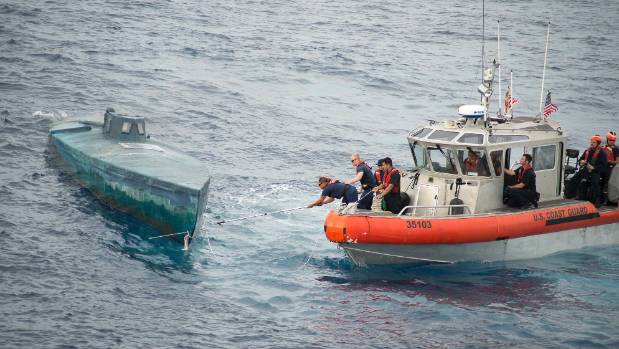
Crew from the US Coast Guard Cutter Stratton stop a Self-Propelled Semi Submersible (SPSS) off the coast of Central America. (U.S. Coast Guard photo)

Finally, in a general sense, interdiction is a problem of scale. 30 percent of the maritime flow of drugs from South America up through Central America is estimated to make use of narcosubmarines.12 Given that maritime routes are roughly estimated to account for 80 percent of drugs shipped north,13 narcosubmarines carry around 24 percent (0.8 x 0.3) of total product, almost a quarter of the entire drug stream. While a single narcosub interdiction may eradicate hundreds of millions of dollars’ worth of cocaine, DTOs’ diversified drug portfolio still renders their cost-benefit analyses profitable. Yet their innovation with respect to narcosubmarines poses challenges for more than the U.S. Coast Guard and regional partners. It raises compelling concerns for U.S. national security.  

Narco-Terrorism?

The wealth garnered by DTOs undermines national security through the endemic corruption and poor rule of law it breeds in its host countries. Many DTOs are powerful enough to form pseudo-states, areas of military primacy (especially in rural or isolated areas) where centralized federal government authority is weak. In this vein, FARC has been characterized as possessing:

“…an enormous capacity to leverage economic resources, to control some territory, and to maintain a superficial presence in others…[as] their local, armed patronage and their ability to take advantage of rural youth unemployment keeps them afloat and even enables them to establish pockets of legitimacy and support in many regions of the country.”14

Narcosubmarines also pose international security threats. While a more sophisticated analysis of these threats may exist in the classified sphere, open source literature provides a useful primer of the issue. Lamentably, analyses of terrorism are always an exercise in a sort of speculative predication which may very well fail to materialize. A narcosubmarine-based attack on the United States might be shelved as a ‘black swan’ event, a game-changing development difficult to even contrive hypothetically.15 Still, a number of points are difficult to dismiss. Three factors must be considered: the establishment of motive, the acquisition of a narcosub, and the execution of an attack.

Motivations

Many scholars have posited that South America provides fertile ground for terrorist groups and their ideologies. While some have cited widespread disaffection amongst Latin America’s citizenry as a possible motive for terrorism, frustrations with policy, inequality, corruption, and other shortcomings related to governance provide conditions that promote insurgencies. A 2016 congressional report on the subject noted that “most terrorist acts occur in the Andean region of South America,” specifically FARC and the National Liberation Army (ELN) in Colombia and the Shining Path (SL) in Peru.16 Kidnappings, attacks on infrastructure, and the killing of civilians and local authorities are common tactics. With a focus on domestic politics, grassroots terrorism has not accompanied drug shipments in their northward journeys to countries like the United States. Latin America does not present the United States with extreme, anti-Western ideological sentiments common in other regions afflicted with insurgency. Nor is the measurable level of anti-Americanism amongst the general populace especially high.17

Putting domestic terrorism aside, the intersection of foreign terrorist organizations (FTOs) and DTOs must subsequently be considered. FTOs have been active in South America in their own right. Two bombings of the Israeli embassy and the Argentine-Israeli mutual association took place in Argentina the early 1990s.18 Venezuela has been frequently accused of collaborating with Iran and funding extremist groups like Hezbollah, which holds documented connections with FARC.19 Russian engineering was responsible for the birth of the Facatativá sub, and Russia has maintained connections with the Cali cartel, another Colombian DTO.20 In 2001, three members of the Irish terrorist group the Provisional Irish Republic Army (PIRA) were arrested for “training FARC militants in the use of explosives, including homemade mortars.”21 FARC utilized this kind of training in its subversive campaigns against Colombian urban centers. Most importantly, South America’s security framework has difficulty preventing these kinds of events. Counterterrorism efforts with respect to FTOs have been plagued by “corruption, weak government institutions, insufficient interagency cooperation, weak or non-existent legislation, and a lack of resources.”22 In this globalized environment, the insertion of FTOs into the narcosubmarine context is entirely plausible.  

While terrorist attacks in Latin America are relatively infrequent and usually domestic in nature, the combination of weak government authority in isolated regions and verified connections to well-established terrorist organizations cannot conclusively rule out the possibility of a group plotting a narcosubmarine-enabled attack on the United States.  

Submarine Acquisition

On a basic level, the acquisition of a narcosubmarine is a purely pecuniary issue. Given a prospective buyer operating near the location of the submarine and the means to negotiate an exchange, purchasing technological blueprints or the submarine outright would only require a monetary transfer. Yet the story is much more complex. First, in all likelihood, terrorist organizations would need to purchase an entire sub. Obtaining the necessary materials and chartering the technological know-how to bring them together would be burdensome and time-consuming. At best, the finished products – which would also require familiarity with local supply chains and the tropical terrain – would be far inferior to the original submarine models. Secondly, Donald Davis stresses that for a DTO such as FARC, the “opportunity cost of a single voyage could exceed $275 million USD.”23 In other words, DTOs would need to reap a profit greater than that which the sub could otherwise garner, calculated to approach a whopping three hundred million dollars. These sums are well beyond the means of the wealthiest terrorist organizations. Further still, a successful terrorist strike on the United States would immediately engender “a swift and decisive military response…[that] could significantly alter the DTO’s ability to function…”24 Inciting retaliatory measures would cut into profits if not totally destroy the DTO. In this way, the chartering of a narcosubmarine appears beyond the means of even the most fanciful ITO.

The most compelling threat is the break-up of FARC, a wild-card variable that presents an uncertain trajectory. FARC’s demilitarization has created a power vacuum in rural Colombia. The Colombian NGO Indepaz has predicted “a territorial reorganization of the ‘narco-paramilitary groups’ in the aftermath of a peace accord with the FARC with the Bacrim (Spanish acronym for ‘bandas criminales’) groups vying to take over FARC drug and illegal mining businesses.”25 Relegated to the peripheries26 under FARC, these groups are competing amongst themselves for dominance in the emerging power vacuum. According to the Internal Displacement Monitoring Center (IDMC), fighting amongst competing groups “has resulted in more than 56,000 displacements in the first half of 2017.”27 These paramilitary organizations include the Ejército de Liberación Nacional (ELN; National Liberation Army) and the Ejército Popular de Liberación (EPL; Popular Liberation Army), as well as a host of smaller gangs. Even indigenous communities — many of which are hostile to the federal government and its efforts to eradicate coca production — are prone to violence.28 At least one narcosubmarine has been produced post-demilitarization.29 In July, the Colombian military seized a narcosubmarine built by the ELN.[30] With the opportunity generated by FARC’s retirement and less formalized, looser hierarchical structures, peace agreements with these organizations a la FARC appears unlikely.31 Finally, one must consider FARC’s organizational structure. Prior to the settlement, FARC was “divided into six different commands, each composed of at least five fronts that represent different geographic territories,” all relatively decentralized and autonomous.32 Breakdown of the structural hierarchy raises the probability that individual members33 transfer submarine technology to external agents. When not trafficking cocaine, the aforementioned cost-benefit scenario changes: why not profit from the sale of idle narcosubmarines or the jungle laboratories that built them? Like the ‘loose nukes’ unaccounted for after the breakup of the USSR, control of narcosubmarines, the expertise related to their production, and their assembly sites post-accord is unclear. With FARC’s abdication and continued power swings amongst old and emerging groups in present-day Colombia, the sale of a loose narcosub remains a serious concern.

Although DTOs and FTOs have many reasons to shun technological exchanges, the uncertainty with respect to changing power dynamics amongst sub-national groups in Colombia today cannot rule out FTO acquisition of a narcosubmarine.

Execution of an Attack

How might a drug submarine be used in a terrorist attack? Transportation and detonation of a weapon of mass destruction (WMD) would clearly represent the gravest of scenarios. On paper, many narcosubs are large enough to carry a WMD.34 Delivery on the water additionally allows submarines to reach urban centers on both the East and West Coasts. Yet the list of prohibitive hurdles involved in such an endeavor is enormous, the most pressing of which are not specific to submarines. The use of narcosubmarines for improvised attacks is most concerning.

Described by Admiral James Stavridis in 2008 as “…clearly the next big thing,”35 autonomous narcosubmarine technology has outpaced anti-submarine defenses. They are particularly difficult to expose. Kenneth Sherman notes that “submerged submarines are detected almost exclusively acoustically, and unlike the louder Soviet nuclear subs of the Cold War, modern diesel-electric submarines are extremely difficult to detect, localize, and track.”36 The electric subs FARC regularly employed37 are “virtually impossible to detect using passive acoustic measures.”38 Amid sequestration and budget cuts, the U.S. Coast Guard’s defenses are even less likely to detect and neutralize a narcosubmarine on their own.  

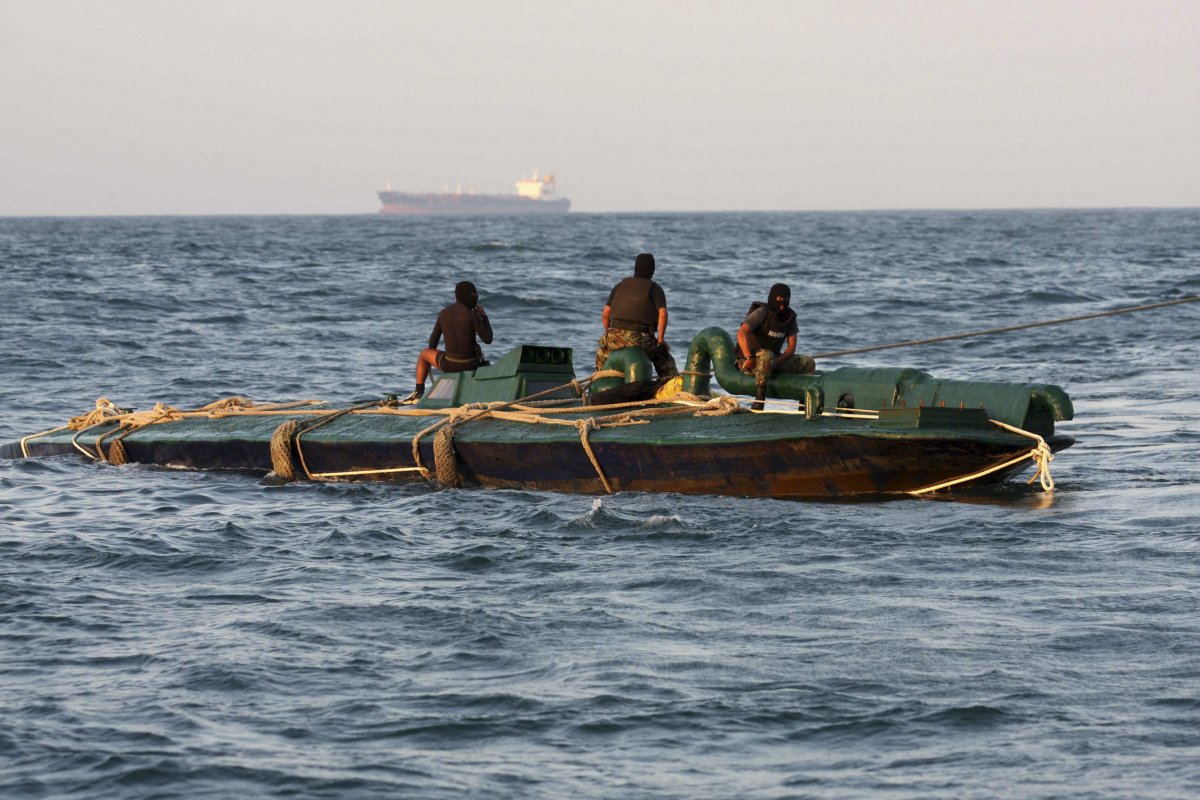
Navy sailors ride atop a 10-meter submarine packed with 5.8 tons of cocaine, as it is being towed into the port of Salina Cruz, Mexico, Friday, July 18, 2008. Navy vice admiral Jose Maria Ortegon said the submarine, seized off Mexico’s southern Pacific coast on Wednesday, was equipped with GPS and a compass and had planned to drop off its shipment on Mexican shores. Four Colombian crew members were taken into custody. (Luis Alberto Cruz Hernandez/AP)

An attacking blueprint could take many forms. In 2000, the USS Cole was rammed by a small boat laden with explosives.39 Seventeen Americans were killed and scores more injured in this suicide attack. An attack on a Navy vessel like the USS Cole in this style is altogether feasible.40 A sub-surface approach with a large payload could do even more damage with little to no warning. In this sense, U.S. harbors on both coasts could be susceptible. And the target need not be military-affiliated. Large groups of people (often headed by and including American citizens) frequent cruise ships which regularly traverse the Caribbean and Pacific coastline. These cruise ships are bulky, difficult to maneuver, and possess no inherent defense systems. Stavridis reiterates the point: cruise ships are ‘lucrative’ targets for terrorists.41 Total destruction of a cruise ship, the worst-case scenario, could result in hundreds of deaths and almost $2 billion dollars’ worth of damages.42 The fallout from such an event would be unprecedented. Even a failed attack with respect to cruise ships could send worldwide cruise markets into sharp decline, as evidenced by the infamous ‘Poop Cruise’ of 2013.43

Above all, the definitive features of a terrorist attack are the reverberations it induces in society. Here narcosubmarines would add a unique and powerful twist to the panic. As Davis dryly remarks, “the overall shock value would be stunning.”44 Submarines possess a tangible mystique which borders on enchantment. Gliding silently along the depths of the ocean, submarines represent a sort of impalpable yet eerily present threat, alarming if activated. In the public eye, characterization of a narcosub attack could read as follows:

A lone submarine built painstakingly by hand in the dense jungles of South America by a demilitarized non-state entity traveled thousands of miles north utterly undetected to successfully strike the shores of the United States, which boasts the strongest and most technologically advanced Navy of all time.

Given the improbable establishment of motive and the acquisition of the necessary technologies, a submarine-based terrorist attack on the United States is not inconceivable given the scenarios considered here and envisaged elsewhere.45

Conclusions

Given the difficulties charting modern submarines post-USSR,46 the security forces of the United States should pay special attention to the evolving world of external submarine development by non-state actors. Narco-terrorism in Colombia follows a fairly intuitive procedural logic on paper. While the idea may seem far-fetched, prudent U.S. policy should continue to plan for the possibility of such an attack.  

John Stryker is a senior studying International Relations and Hispanic Studies at the College of William and Mary. 

Bibliography

Austin, Christina. “Disaster Timeline: How Carnival Went from ‘Fun Ship’ To ‘Poop Cruise’.” Business Insider. February 20 2013. Web. <http://www.businessinsider.com/how-carnival-went-from-fun-ship-to-poop-cruise-2013-2>. 

Baker, Andy, and David Cupery. “Gringo Stay Here!” Americas Quarterly. Spring 2013. Web. <http://www.americasquarterly.org/gringo-stay-here>.

Cragin, Kim, et al. “Sharing the Dragon’s Teeth: Terrorist Groups and the Exchange of New Technologies.” RAND. 2007. Web. <https://www.rand.org/content/dam/rand/pubs/monographs/2007/RAND_MG485.pdf>.

Crisp, Wil. “The New Struggle for Colombia’s Countryside after FARC.” Al Jazeera. October 24 2017. Web. <http://www.aljazeera.com/news/2017/10/struggle-colombia-countryside-farc-171023111815468.html>.

Davis, Donald. “The Submersible Threat to Maritime Homeland Security.” Naval Postgraduate School. September 2013. Web. <https://calhoun.nps.edu/handle/10945/37609>.

Farley, Robert. “Submarines, Cocaine, and Aquatic Terrorism?” Prospect. June 11 2009. Web. <http://prospect.org/article/submarines-cocaine-and-aquatic-terrorism>.

Ferkaluk, Brian. “Latin America: Terrorist Actors on a Nuclear Stage.” Global Security Studies. Fall 2010. Web. <http://globalsecuritystudies.com/Ferkaluk%20Latin%20America.pdf>.

Jaramillo, Michelle. “The Revolutionary Armed Forces of Colombia (FARC) and the Development of Narco-Submarines.” University of South Florida Scholar Commons. Web. <http://scholarcommons.usf.edu/jss/vol9/iss1/6/?utm_source=scholarcommons.usf.edu%2Fjss%2Fvol9%2Fiss1%2F6&utm_medium=PDF&utm_campaign=PDFCoverPages>.

Kraul, Chris. “Colombia Has a Peace Deal, but Can It Be Implemented?” LA Times. March 13 2017. Web. <http://www.latimes.com/world/mexico-americas/la-fg-colombia-peace-outlook-2017-story.html>.

Pelcastre, Julieta. “Colombian Military Forces Attack Drug Trafficking in Operation Barbudo.” Dialogo Americas. October 6 2017. Web. <https://dialogo-americas.com/en/articles/colombian-military-forces-attack-drug-trafficking-operation-barbudo>.

Perez, Janelle. “Fighting Terrorism with Foreign Aid: A Case for Continued US Assistance in Latin America.” John Hopkins. January 5 2015. Web. <https://jscholarship-library-jhu-edu.proxy.wm.edu/handle/1774.2/37232>.

Ramirez, Byron, and Robert Bunker. “Narco-Submarines: Specially Fabricated Vessels Used for Drug Smuggling Purposes.” Scholarship at Claremont. 2015. Web. <http://scholarship.claremont.edu/cgi/viewcontent.cgi?article=1029&context=cgu_facbooks>.

Ramirez, Byron. “Narco-Submarines: Drug Cartels’ Innovative Technology.” CIMSEC. August 2 2014. Web. <https://cimsec.org/narco-submarines-drug-cartels-innovative-technology/12314>.

Sherman, Kenneth. “Mini-Subs: The Next Terrorist Threat?” ProQuest. July 2003. Web. <https://search-proquest-com.proxy.wm.edu/docview/206603319?pq-origsite=summon>.

Sullivan, Mark, and June Beittel. “Latin America: Terrorism Issues.” Federation of American Scientists. December 15 2016. Web. <https://fas.org/sgp/crs/terror/RS21049.pdf>.

Szoldra, Paul. “A Retired Navy Admiral is ‘Very Concerned’ about Terrorists Attacking Cruise Ships.” Business Insider. June 30 2017. Web. <http://www.businessinsider.com/stavridis-terrorist-attacks-at-sea-2017-6>.

“U.S. Coast Guard Intercepts Semi-Submersible Vessel Packed with 3,800 Pounds of Cocaine.” USA Today. December 11 2017. Web. <https://www.usatoday.com/story/news/nation-now/2017/12/11/u-s-coast-guard-intercepts-semi-submersible-vessel-packed-3-800-pounds-cocaine/939668001/>.

Vargas, Ricardo. “The Revolutionary Armed Forces of Colombia (FARC) and the Illicit Drug Trade.” TNI. June 7 1999. Web. <https://www.tni.org/en/publication/the-revolutionary-armed-forces-of-colombia-farc-and-the-illicit-drug-trade>.

Watkins, Lance. “Self-Propelled Semi-Submersibles: The Next Great Threat to Regional Security and Stability.” Naval Postgraduate School. June 2011. Web. <https://calhoun.nps.edu/bitstream/handle/10945/5629/11Jun_Watkins.pdf?sequence=1&isAllowed=y>.

References

[1] Kraul, “Colombia Has a Peace Deal, but Can It Be Implemented?”.

[2] Ramirez, “Narco-Submarines: Drug Cartels’ Innovative Technology.”

[3] Note that SPSSs are not true submersibles, although they are equally difficult to detect, as discussed further on; Ramirez and Bunker, “Narco-Submarines: Specially Fabricated Vessels Used for Drug Smuggling Purposes,” 29.

[4] IBID, 34.

[5] IBID, 12.

[6] “U.S. Coast Guard Intercepts Semi-Submersible Vessel Packed with 3,800 Pounds of Cocaine.”

[7] Note that “the Coast Guard is the lead federal agency for maritime drug interdiction in the transit zone, responsible for the apprehension of cocaine transporting vessels …”; Wakins, “Self-Propelled Semi-Submersibles: The Next Great Threat to Regional Security and Stability,” 6. 

[8] Ramirez and Bunker, “Narco-Submarines: Specially Fabricated Vessels Used for Drug Smuggling Purposes,” 47.

[9] IBID, 7.

[10] IBID, 7.

[11] After successful missions, the vessels are also sunk this way; IBID, 25.

[12] IBID, 7.

[13] IBID, 6.

[14] Vargas, “The Revolutionary Armed Forces of Colombia (FARC) and the Illicit Drug Trade.”

[15] Davis, “The Submersible Threat to Maritime Homeland Security,” 39.

[16] Sullivan and Beittel, “Latin America: Terrorism Issues,” Summary.

[17] Baker and Cupery, “Gringo Stay Here!”.

[18] Ferkaluk, “Latin America: Terrorist Actors on a Nuclear Stage” 115.

[19] Davis, “The Submersible Threat to Maritime Homeland Security,” 24.

[20] IBID, 24.

[21] Cragin et al., “Sharing the Dragon’s Teeth: Terrorist Groups and the Exchange of New Technologies,” 71.  

[22] Perez, “Fighting Terrorism with Foreign Aid: A Case for Continued US Assistance in Latin America,” 52.  

[23] Davis, “The Submersible Threat to Maritime Homeland Security,” 45.

[24] IBID, 45.

[25] Sullivan and Beittel, “Latin America: Terrorism Issues,” 4.

[26] Although significant actors with notable histories in their own right.

[27] Crisp, “The New Struggle for Colombia’s Countryside after FARC.”

[28] IBID.

[29] It is impossible to predict how many narcosubs continue to be produced. Retroactive seizures, as seen with sporadic interdictions of drug subs since the 1990s, are a poor proxy for an overall estimate.

[30] Pelcastre, “Colombian Military Forces Attack Drug Trafficking in Operation Barbudo.”   

[31] Crisp, “The New Struggle for Colombia’s Countryside after FARC.”

[32] Jaramillo, “The Revolutionary Armed Forces of Colombia (FARC) and the Development of Narco-Submarines,” 53.

[33] Especially those hard-liners unwilling to participate in the surrender, or even de-militarized members wishing to return the previous way of life given difficulties reintegrating into everyday society. 

[34] Davis, “The Submersible Threat to Maritime Homeland Security,” 42.  

[35] Watkins, “Self-Propelled Semi-Submersibles: The Next Great Threat to Regional Security and Stability,” 51.

[36] Sherman, “Mini-Subs: The Next Terrorist Threat?”.

[37] Davis, “The Submersible Threat to Maritime Homeland Security,” 25.  

[38] Sherman, “Mini-Subs: The Next Terrorist Threat?”.

[39] Farley, “Submarines, Cocaine, and Aquatic Terrorism?”.

[40] IBID.  

[41] Szoldra, “A Retired Navy Admiral is ‘Very Concerned’ about Terrorists Attacking Cruise Ships.”

[42] Davis, “The Submersible Threat to Maritime Homeland Security,” 52.

[43] Austin, “Disaster Timeline: How Carnival Went from ‘Fun Ship’ To ‘Poop Cruise’.”

[44] Davis, “The Submersible Threat to Maritime Homeland Security,” 39.  

[45] Jane’s Terrorism and Security Monitor’s “Insurgent Submersibles” provides a favorable (albeit subscription-based) account of the issue. 

[46] See James Moltz’s piece “Submarines and Autonomous Vessel Proliferation: Implications for Future Strategic Stability at Sea.”

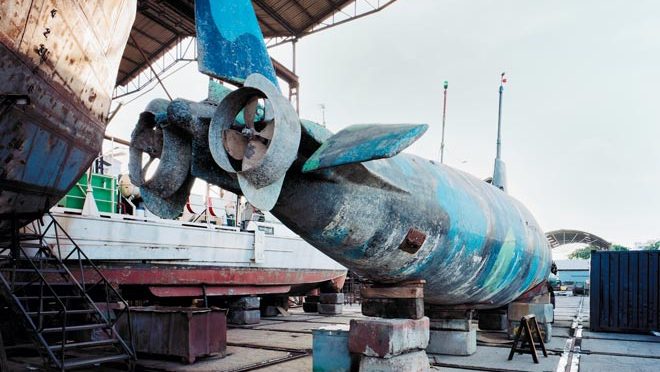
Featured Image: Seized narcosubmarine (Christoph Morlinghaus)

The Dimensions of Russian Sea Denial in the Baltic Sea

By Tobias Oder

Introduction

Over the last few years, the Russian Federation pursued an increasingly assertive foreign policy in Eastern Europe. Geopolitical infringements on Crimea and Eastern Ukraine are coupled with hybrid warfare and aggressive rhetoric. The buildup and modernization of the Russian armed forces underpins this repositioning and Russia has taken major steps in increasing its conventional and nuclear capabilities.

The significant rearmament of its Western exclave Kaliningrad requires special attention.1 The recent buildup of Russian A2/AD forces in Kaliningrad, coupled with increasingly assertive behavior in the Baltic Sea, poses a serious challenge for European naval policy. Should Russia make active use of its sea denial forces, it could potentially shut down access to the Baltic Sea and cut maritime supply lines to the Baltic states. The full range of Russia’s A2/AD capabilities in Kaliningrad comprises a wide array of different weapon systems, ranging from SA-21 Growler surface-to-air missiles2 to a squadron of Su-27 Flanker fighters and another squadron of Su-24 Fencer attack aircraftsthat can be scrambled at a moment’s notice to contest Baltic Sea access.4 German naval capabilities to counter the SS-C-5 Stooge anti-ship missile system,Russia’s mining of sea lanes, and its attack submarines are of particular interest in retaining Baltic sea control.

Russian A2/AD Systems

The K300 Bastion-P system includes in its optional equipment a Monolit-B self-propelled coastal radar targeting system.6 This radar system is capable of, according to its manufacturer, “searching, detection, tracking and classification of sea-surface targets by active radar; over-the-horizon detection, classification, and determination of the coordinates of radiating radars, using the means of passive radar detection and ranging.”7The manufacturer further states that sea-surface detection with active radar ranges up to 250 kilometers under perfect conditions, while the range of sea surface detection with passive detection reaches 450 kilometers.8

With regard to its undersea warfare capabilities, the Russian Baltic Fleet currently only operates two Kilo-class submarines. Of these diesel-powered submarines, only one is currently operational with the other unavailable due to repairs for the foreseeable future.However, the entire Russian Navy’s submarine fleet is currently undergoing rapid modernization and the Baltic Fleet will receive reinforcements consisting of additional improved Kilo-class submarines.10 Despite the fact that the Baltic fleet remains relatively small in size, these upgrades amount to “a level of Russian capability that we haven’t seen before” in recent years.11

With its formidable ability to float through waters largely undetected and versatile missile equipment options capable of attacking targets on water and land, the Kilo-class presents a serious threat to naval security in the region.12 In fact, its low noise level has earned it the nickname “The Black Hole.”13

The Baltic Sea is relatively small in size and has only a few navigable passageways that create chokepoints. Therefore, it resembles perfect terrain for the possible use of sea mines.14 While often underestimated, sea mines can have a devastating impact on naval vessels. Affordable in price and hard to detect, they can be an effective area-denial tool if spread out in high quantities.15 Russia still possesses the largest arsenal of naval mines, and according to one observer, Russia has “a good capability to put weapons in the water both overtly and covertly.”16 The versatility of possible launch platforms, ranging from full-sized frigates to fishing boats, makes an assessment of current capabilities in Kaliningrad a difficult endeavor.

A Possible Scenario for Russian A2/AD Operations in the Baltic Sea

Given Russia’s long-term strategic inferiority to western conventional capabilities, a realistic scenario will bear in mind that Russia is not interested in vertical conflict escalation. Instead, it is primarily interested in exploiting its temporary regional power superiority.17 Thus, its endgame will not be to destroy as many enemy vessels as possible, but rather to send a signal to opponents and deter them from navigating their ships east of German territorial waters as long as needed.18 Ultimately, A2/AD capabilities only have to inflict so much damage to make defending the Baltic States appear unattractive or too costly to decision makers, especially if those measures can create the perception of Russian escalation dominance.19

Russia is very inclined to use means that offer plausible deniability, to possibly include sea mines.20 The Baltic Sea is still riddled with sea mines from both World Wars21 and if Russia manages to lay sea mines undetected, it can make the argument that any incidents in the Baltic Sea involving sea mines were simply due to old, leftover mines instead of newly deployed Russian systems.

Should measures to deploy sea mines in the Baltic Sea fail, Russia may consider use of a  more overt, multi-layered approach to sea denial. We can expect that a realistic scenario will feature a mixture of above-mentioned approaches that include submarine warfare as well as the use of anti-ship missiles. Russia could also make use of its naval aviation assets and other missile capabilities stationed in Kaliningrad.

Strategic Implications and NATO’s Interests

It is difficult to interpret the deployment of these weapon systems and missiles as anything different than an addition to Russia’s A2/AD capabilities. Russia is actively trying to improve it strategic position to deter possible troops movements on land as well as on the water.22 They mirror Russia’s claims to its sphere of influence in Eastern Europe and serve as an example of Russia’s attempts to exert authority over its periphery, effectively giving Russia the potential to deny access to the Baltic Sea east of Germany.

If Russia increases its A2/AD capabilities in the Baltic Sea, it complicates NATO’s access to the Baltic states during a potential crisis. This is especially startling due to the fact that NATO troops are currently stationed in the Baltics and cutting off maritime supply routes would leave those troops extremely vulnerable. If Russia can effectively cut off NATO’s access to the Baltic states, it increases the “attractiveness to Russia of a fait-accompli.”23 Ben Hodges, then-commanding general of the United States Army in Europe, shared these concerns: “They could make it very difficult for any of us to get up into the Baltic Sea if we needed to in a contingency.”24 In case regional states will be called to fulfill its alliance commitments in the Baltic Sea, Russian submarine blockades, along with mining and missile deployments, will be a major roadblock and possibly threaten safe passage for European vessels.

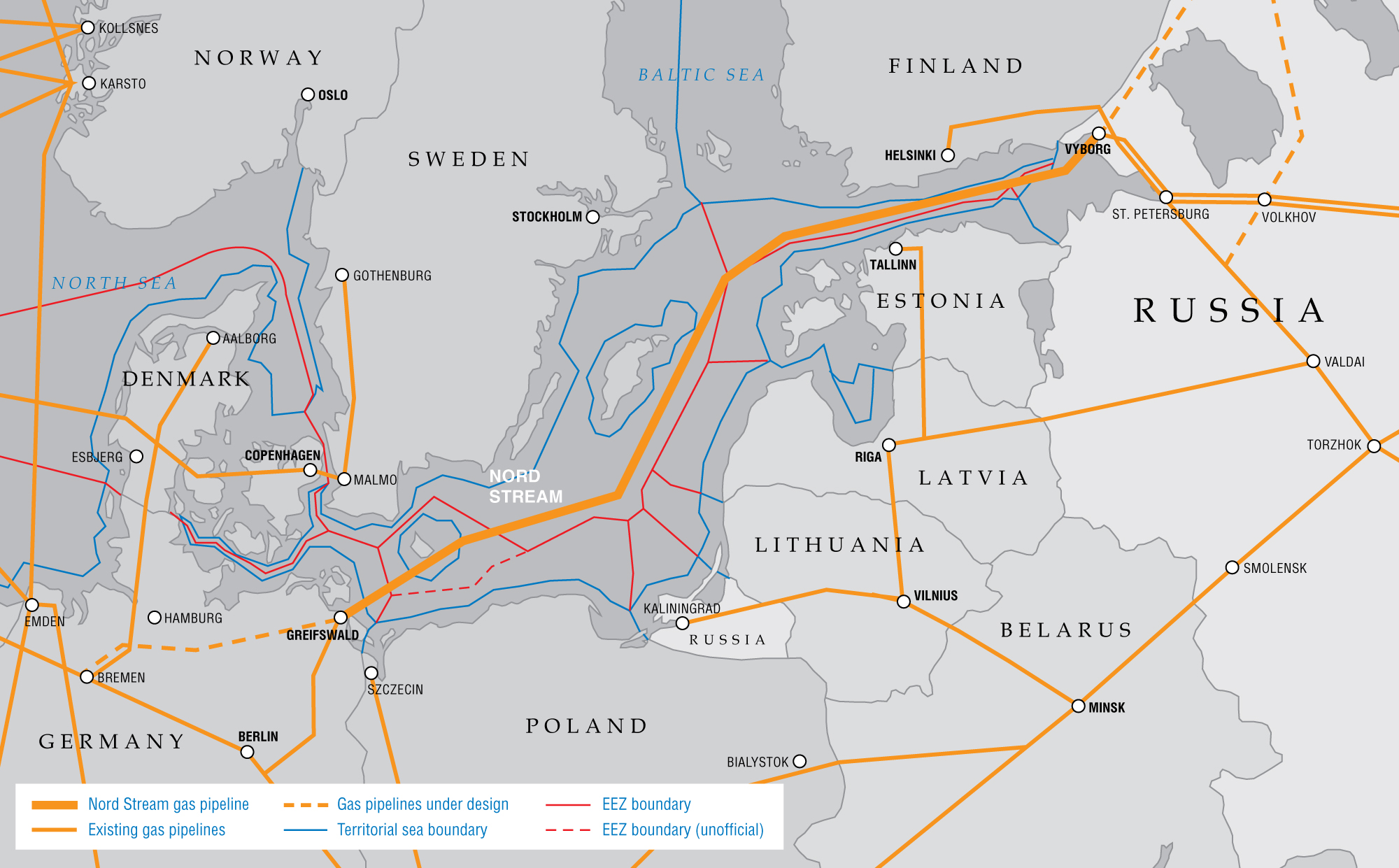
NATO has an immense national interest in maintaining freedom of navigation in the Baltic Sea and ensuring free access. On average, 2,500 ships are navigating the Baltic Sea at any time and its shipping routes are vital to European economic activity.25 In the 2016 German Defence White Paper, this is clearly identified: “Securing maritime supply routes and ensuring freedom of the high seas is of significant importance for an exporting nation like Germany which is highly dependent on unimpeded maritime trade. Disruptions to our supply routes caused by piracy, terrorism and regional conflicts can have negative repercussions on our country’s prosperity.”26 Thus, if Russia impedes freedom of navigation in this area with its A2/AD capabilities, it will significantly damage Germany’s and other European nations’ export potential. However, vulnerabilities are not limited to shipping routes but also include the Nord Stream gas pipeline and undersea cables upon which a large part of European economies depend.27

A map of the Nord Stream infrastructure project (Gazprom)

In sum, Russia’s A2/AD systems, along with updated submarine capabilities and the potentially disastrous effects of disrupted undersea pipelines and communication cables, enhance Russia’s strategic position and makes hybrid warfare a more realistic scenario. This kind of instability would have serious security and economic implications for NATO.

Recommendations

Should the Baltic Sea fall under de facto authority of the Russian Federation or witness conventional or hybrid conflict, then NATO would face dire economic consequences and live with a conflict zone at its doorstep. This is especially concerning given the poor state of Germany’s naval power in particular. The German Navy lacks most capabilities that would qualify it as a medium-sized navy, and its strategy is mostly agnostic of a threat with significant A2/AD capabilities just East of its own territorial waters.28 Since it is in Germany’s vital interest to maintain freedom of navigation in the Baltic Sea and plan for a potential use of Russian A2/AD capabilities, the German Navy should shift its operational focus to the Baltic Sea. Having outlined the means through which Russia can deny access to the Baltic Sea, specific recommended actions can follow.

Effectively countering the effects of anti-ship missiles stationed in Kaliningrad requires two measures. First, it requires the German Navy to equip its ships and submarines with standoff strike capabilities that enable them to engage Russian radars and anti-ship missiles from outside their A2/AD zone.29 In practice, this requires the procurement of conventional long-range land-strike capabilities for the German Navy. To this day, the entire German fleet lacks any form of long-range land-attack weapon for both surface vessels and submarines.30 Second, if the German Navy has to operate within Russia’s A2/AD environment, it should equip its surface ships with more advanced electronic warfare countermeasures that disrupt sensing and enable unit-level deception.

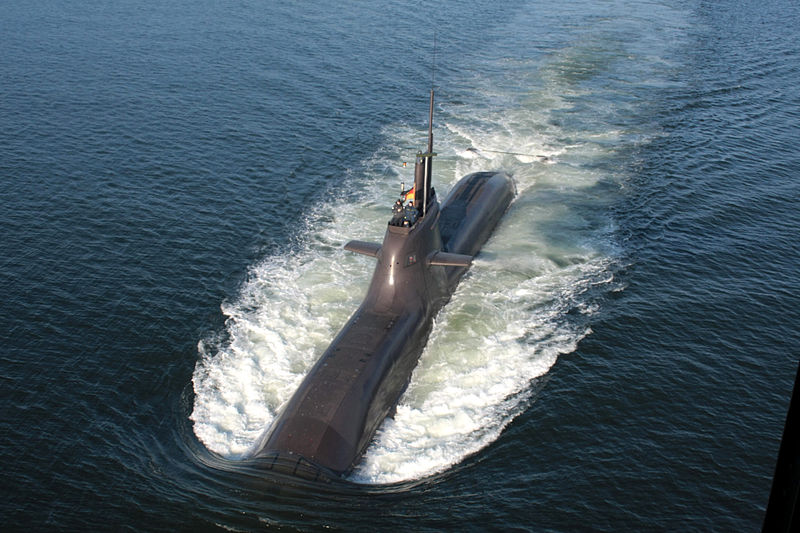
Russia’s submarines are traditionally hard to detect, but they can be countered by Germany’s own class of 212A submarines. Those feature better sonars and are even quieter, giving them an advantage over Russia’s submarines.31 However, in order to fully exploit this advantage, Germany has to do a better job of committing resources to the maintenance of its submarines as all six of its active submarines are currently not operational due to maintenance.32

German Type 212A submarine U-32. (Bundeswehr/Schönbrodt)

A large part of the effectiveness of anti-mine operations hinges on preemptive detecting. If Germany and other NATO allies can catch Russia in the act of laying mines, it will actively decrease the possible damage those mines can do to vessels in the future and thus their effect on sea denial.33 It can do so by increasing its sea patrols in the region. These patrols can include minimally armed vessels such as the Ensdorf and Frankenthal classes in order to avoid incidental confrontations and to assume a non-threatening stance toward Russia. If preventive action fails, Germany should be ready to employ a NATO Mine Countermeasure Group in order to clear as many mines as possible and to ensure safe passage of ships.

Conclusion

The buildup of forces on Russia’s Western border is paired with a more aggressive stance by the Russian military. Over the last months, the Baltic Sea became “congested” with Russian military activity, leading to increasingly closer encounters.34 In April 2014, an unarmed Russian Su-24 jet made several low-passes near a U.S. missile destroyer, the USS Donald Cook in the Baltic Sea.35 Later in 2014, a small Russian submarine navigating in Swedish territorial waters spurred a Swedish military buildup along its coast due to “foreign underwater activity.”36 And during July 2017, Russia conducted joint naval exercises with China in the Baltic Sea. By conducting a joint naval drill with China in these waters, the Russian military demonstrated strength and flexed its military muscle in a message specifically directed at NATO.37 These actions by the Russian military all point toward conveying the message that Russia does not want the presence of foreign militaries in Baltic Sea waters and is capable of taking countermeasures to exert its sovereignty in the region.

Tobias Oder is a graduate student in International Affairs at the Bush School of Government and Public Service at Texas A&M University. He focuses on international security, grand strategy, and transatlantic relations

References

[1]  “The Baltic Sea and Current German Naval Strategy,” Center for International Maritime Security, last modified July 20, 2016, accessed September 22, 2017, https://cimsec.org/baltic-sea-current-german-navy-strategy/26194.

[2] Also known as S-400 Triumf.

[3]  “Chapter Five: Russia and Eurasia,” The Military Balance 117, no. 1 (2017), 183-236.

[4]  “Entering the Bear’s Lair: Russia’s A2/AD Bubble in the Baltic Sea,” The National Interest, last modified September 20, 2016, accessed September 24, 2017, http://nationalinterest.org/blog/the-buzz/entering-the-bears-lair-russias-a2-ad-bubble-the-baltic-sea-17766?page=show.

[5] Also known as K-300P Bastion-P.

[6]  “K-300P Bastion-P System Deliveries Begin,” Jane’s, last modified March 5, 2009, accessed November 20, 2017, https://my.ihs.com/Janes?th=janes&callingurl=http%3A%2F%2Fjanes.ihs.com%2FMissilesRockets%2FDisplay%2F1200191.

[7]  “Monolit-B,” Rosoboronexport,, accessed November 20, 2017, http://roe.ru/eng/catalog/naval-systems/stationary-electronic-systems/monolit-b/.

[8] Ibid.

[9]  Kathleen H. Hicks et al., Undersea Warfare in Northern Europe (Washington, D.C.: Center for Strategic and International Studies, 2016).

[10]  Karl Soper, “All Four Russian Fleets to Receive Improved Kilos,” Jane’s Navy International 119, no. 3 (2014).

[11]  “Russia Readies Two of its most Advanced Submarines for Launch in 2017,” The Washington Post, last modified December 29, 2016, accessed September 23, 2017, https://www.washingtonpost.com/news/checkpoint/wp/2016/12/29/russia-readies-two-of-its-most-advanced-submarines-for-launch-in-2017/?utm_term=.2976db8c1710.

[12]  “The Kilo-Class Submarine: Why Russia’s Enemies Fear “the Black Hole”, The National Interest, last modified October 23, 2016, accessed November 21, 2017, http://nationalinterest.org/blog/the-kilo-class-submarine-why-russias-enemies-fear-the-black-18140.

[13]  “Silent Killer: Russian Varshavyanka Project 636.3 Submarine,” Strategic Culture Foundation, last modified July 14, 2016, accessed November 21, 2017, https://www.strategic-culture.org/news/2016/07/14/silent-killer-russian-varshavyanka-project-636-3-submarine.html.

[14]  Stephan Frühling and Guillaume Lasconjarias, “NATO, A2/AD and the Kaliningrad Challenge,” Survival 58, no. 2 (April-May, 2016), 95-116.; Alexander Lanoszka and Michael A. Hunzeker, “Confronting the Anti-Access/Area Denial and Precision Strike Challenge in the Baltic Region,” The RUSI Journal 161, no. 5 (October/November, 2016), 12-18.; Hicks et al., Undersea Warfare in Northern Europe.

[15]  “Sea Mines: The most Lethal Naval Weapon on the Planet,” The National Interest, last modified September 1, 2016, accessed November 21, 2017, http://nationalinterest.org/blog/the-buzz/sea-mines-the-most-lethal-naval-weapon-the-planet-17559. In fact, even a small number of sea mines have the capability to disrupt marine traffic due to the perceived risk of a possible lethal encounter (Caitlin Talmadge, “Closing Time: Assessing the Iranian Threat to the Strait of Hormuz,” International Security 33, no. 1 (Summer, 2008), 82-117.).

[16]  “Minefields at Sea: From the Tsars to Putin,” Breaking Defense, last modified March 23, 2015, accessed November 21, 2017, https://breakingdefense.com/2015/03/shutting-down-the-sea-russia-china-iran-and-the-hidden-danger-of-sea-mines/.

[17]  Frühling and Lasconjarias, NATO, A2/AD and the Kaliningrad Challenge, 95-116, 100.

[18]  Lanoszka and Hunzeker, Confronting the Anti-Access/Area Denial and Precision Strike Challenge in the Baltic Region, 12-18 Specifically, commentators outline various scenarios that all share the basic notion that the ultimate goal is to deny NATO forces access to its eastern flank (“Anti-Access/Area Denial Isn’t just for Asia Anymore,” Defense One, last modified April 2, 2015, accessed November 20, 2017, http://www.defenseone.com/ideas/2015/04/anti-accessarea-denial-isnt-just-asia-anymore/109108/).

[19]  Andrew F. Krepinevich, Why AirSea Battle? (Washington, D.C.: CSBA, 2010). For a more detailed discussion of potential Russian escalation dominance, see David A. Shlapak and Michael W. Johnson, Reinforcing Deterrence on NATO’s Eastern Flank (Santa Monica, CA: RAND Corporation, 2016); “Demystifying the A2/AD Buzz,” War on the Rocks, last modified January 4, 2017, accessed September 24, 2017, https://warontherocks.com/2017/01/demystifying-the-a2ad-buzz/.

[20]  Rod Thornton and Manos Karagiannis, “The Russian Threat to the Baltic states: The Problems of Shaping Local Defense Mechanisms,” The Journal of Slavic Military Studies 29, no. 3 (2016), 331-351. The idea behind plausible deniability states that Russia will only make use of means to disrupt Western forces if they cannot explicitly trace their origins back to Russia and that they cannot hold Russia accountable for these actions. This, in turn, leads to insecurity among NATO allies and prevents the alliance from taking collective action.

[21]  “German Waters Teeming with WWII Munitions,” Der Spiegel, last modified April 11, 2013, accessed November 25, 2017, http://www.spiegel.de/international/germany/dangers-of-unexploded-wwii-munitions-in-north-and-baltic-seas-a-893113.html.

[22]  Martin Murphy, Frank G. Hoffman and Gary Jr Schaub, Hybrid Maritime Warfare and the Baltic Sea Region (Copenhagen: Centre for Military Studies (University of Copenhagen), 2016), 10.

[23]  “The Russia – NATO A2AD Environment,” Center for Strategic & International Studies, last modified January 3, 2017, accessed September 23, 2017, https://missilethreat.csis.org/russia-nato-a2ad-environment/.

[24]  “Russia could Block Access to Baltic Sea, US General Says,” Defense One, last modified December 9, 2015, accessed September 23, 2017, http://www.defenseone.com/threats/2015/12/russia-could-block-access-baltic-sea-us-general-says/124361/.

[25]  Frank G. Hoffman, Assessing Baltic Sea Regional Maritime Security (Philadelphia: Foreign Policy Research Institute, 2017), 6.

[26]  Federal Ministry of Defence, White Paper on German Security Policy and the Future of the Bundeswehr (Berlin: Federal Ministry of Defence, 2016), 50.

[27]  Murphy, Hoffman and Schaub, Hybrid Maritime Warfare and the Baltic Sea Region.

[28]  Bruns, The Baltic Sea and Current German Naval Strategy.

[29]  Andreas Schmidt, “Countering Anti-Access/Area Denial: Future Capability Requirements in NATO,” JAPCC Journal 23 (Autumn/Winter, 2016), 69-77.

[30]  Hicks et al., Undersea Warfare in Northern Europe.

[31]  Hicks et al., Undersea Warfare in Northern Europe.

[32]  “All of Germany’s Submarines are Currently Down,” DefenseNews, last modified October 20, 2017, accessed November 21, 2017, https://www.defensenews.com/naval/2017/10/20/all-of-germanys-submarines-are-currently-down/.

[33]  Talmadge, Closing Time: Assessing the Iranian Threat to the Strait of Hormuz, 82-117, 98.

[34]  “Russian Warships in Latvian Exclusive Economic Zone: Confrontational, Not Unlawful,” Center for International Maritime Security, last modified May 15, 2017, accessed September 23, 2017, https://cimsec.org/russian-warships-latvias-exclusive-economic-zone-confrontational-not-unlawful/32588.

[35]  “Russian Jet’s Passes Near U.S. Ship in Black Sea ‘Provocative’ -Pentagon,” Reuters, last modified April 14, 2014, accessed September 23, 2017, https://www.reuters.com/article/usa-russia-blacksea/update-1-russian-jets-passes-near-u-s-ship-in-black-sea-provocative-pentagon-idUSL2N0N60V520140414.

[36]  “Sweden Steps Up Hunt for “Foreign Underwater Activity”,” Reuters, last modified October 18, 2014, accessed September 23, 2017, https://www.reuters.com/article/us-sweden-deployment/sweden-steps-up-hunt-for-foreign-underwater-activity-idUSKCN0I70L420141018.

[37]  “Russia Says its Baltic Sea War Games with Chinese Navy Not a Threat,” Reuters, last modified July 26, 2017, accessed September 23, 2017, https://www.reuters.com/article/us-russia-china-wargame/russia-says-its-baltic-sea-war-games-with-chinese-navy-not-a-threat-idUSKBN1AB1D6.

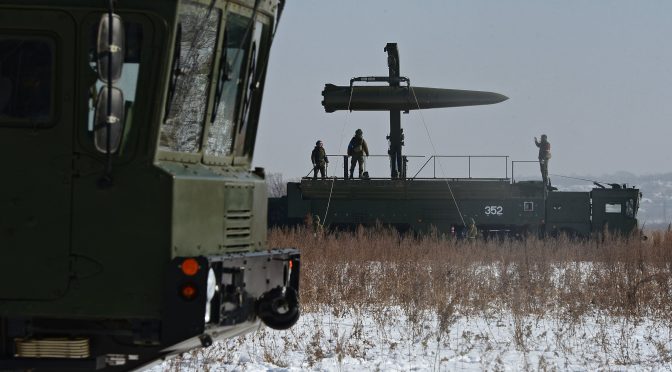
Featured Image: Russian troops load an Iskander missile. (Sputnik/ Sergey Orlov)

Call for Articles: Restoring Warfighting Readiness

By Dmitry Filipoff

Articles Due: February 5, 2018
Week Dates: February 12-16, 2018

Article Length: 1000-3000 words 
Submit to: Nextwar@cimsec.org

The U.S. Navy finds itself at an inflection point in the aftermath of two high-profile ship collisions that killed 17 sailors. But for years the Surface Navy in particular has struggled amidst crushing operational tempo and initiatives that backfired in attempts to reform training, maintenance, and manning. While numerous leaders at varying levels of seniority were relieved and remedial reforms are under way, the underlying problems that caused these collisions are deep-seated, pervasive, and self-inflicted. 

This was made clear enough in both the Comprehensive and the Strategic Readiness Reviews that sought to make sense of these fatal mishaps. These findings come in the midst of numerous other issues that challenge the overall readiness of the Navy, such as how the Government Accountability Office claimed nearly 14,000 operational days have been lost over five fiscal years – days that ships were not available for operations – due to maintenance overruns. These claims come against a backdrop of hopeful ambition where the Navy hopes to grow to a planned 355 ships even while it struggles mightily to maintain the smaller fleet it has today. 

Authors are encouraged to analyze the state of the U.S. Navy’s readiness and offer recommendations for reform. The emphasis should be on institutional means to improve warfighting readiness beyond simply buying new equipment. These recommendations can run the gambit from train, man, and equip activities to the nature of the operational employment and strategic tasking of the Navy. Authors are encouraged to cast a wide net and address looming issues that may become tomorrow’s tragic headline. 

Dmitry Filipoff is CIMSEC’s Director of Online Content. Contact him at Nextwar@cimsec.org

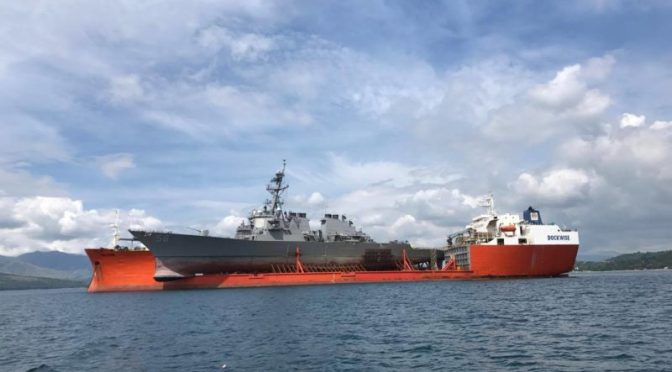
Featured Image:  The Arleigh Burke-class guided missile destroyer USS John S. McCain (DDG 56) loaded on heavy lift transport MV Treasure. (U.S. Navy Photo)